
Camino de Santiago is one of the most famous hiking journeys in the world. For some, it’s a pilgrimage, for others a sporting challenge, and for others still — an opportunity to be alone with themselves and live for a few days in a completely different rhythm.
Not everyone can complete one of the long routes in full. Most routes take from two to five weeks. That’s why many travelers choose a compromise — to walk the last 100 km to Santiago de Compostela. It’s this distance that allows you to receive the official pilgrim certificate — the Compostela, provided that you follow the established rules.
I myself have already completed five Camino routes ending precisely in Santiago (and even more if not ending there): Camino Francés, Camino Portugués, Camino del Norte, Camino Primitivo, and Camino Finisterre. Each one is completely different in atmosphere, landscapes, and the number of people. So if you are just getting acquainted with the Camino, the choice of route truly matters.
Why do most people choose the last 100 km?
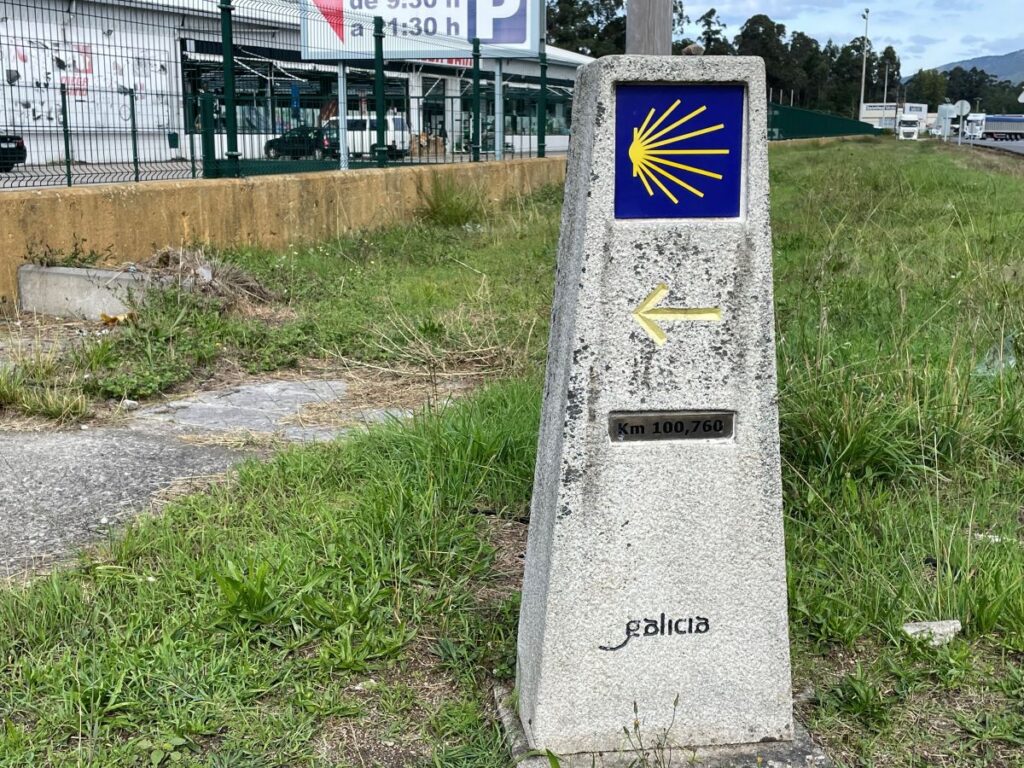
One hundred kilometers is about 4–6 days of leisurely walking. During this time you can get to know the Camino and other pilgrims, try living in an albergue, and figure out if you like this way of traveling and why people keep coming back here again and again.
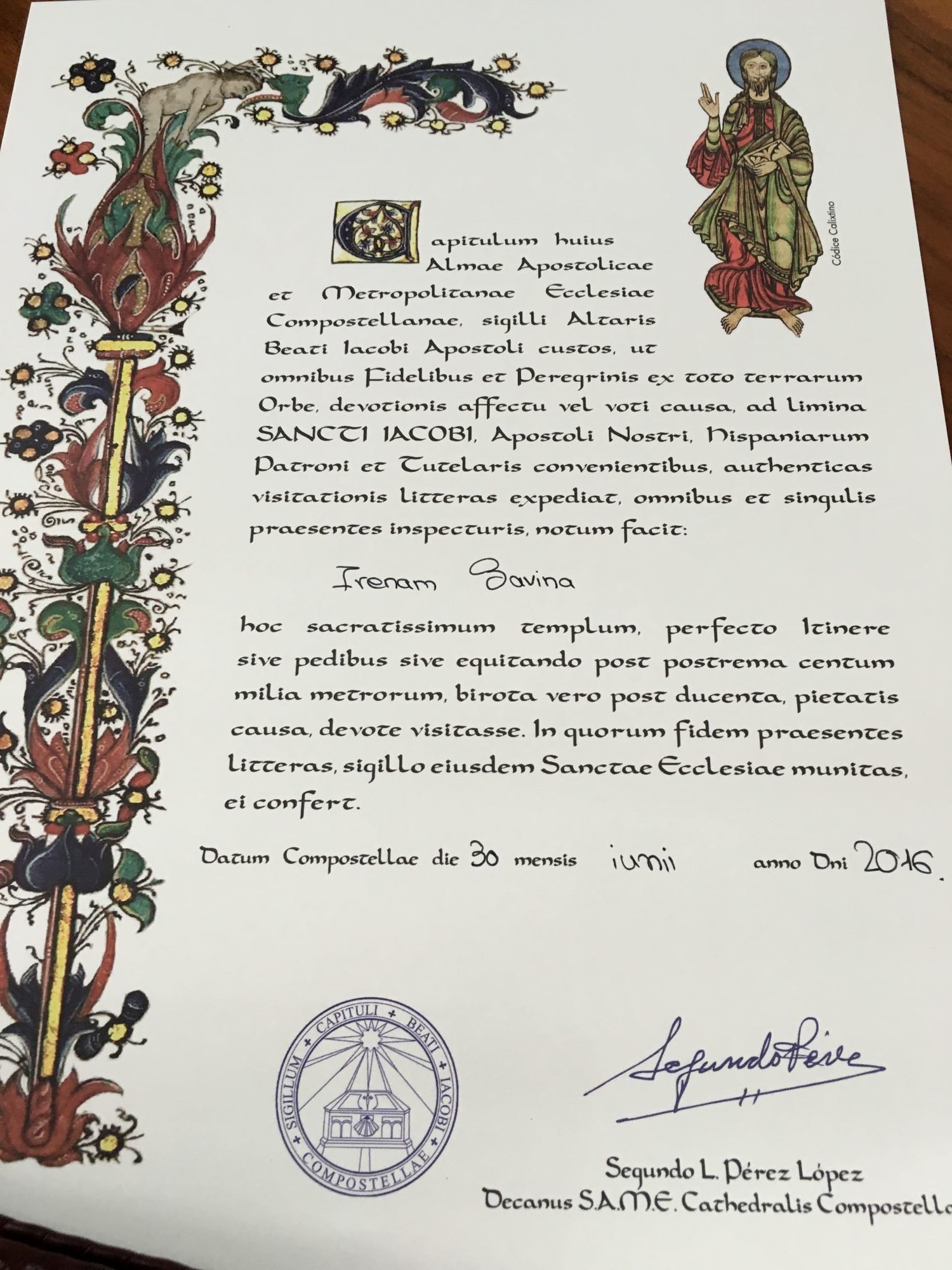
Moreover, this distance is the minimum required to obtain the Compostela pilgrim certificate.
From 2025 new rules apply. To receive the certificate, you must:
- walk at least 100 km continuously along one of the official Camino routes;
- finish the route in Santiago de Compostela;
- at least 70 km of these 100 must pass through Spain.
If the certificate doesn’t interest you, you can walk any part of the route, in any direction, and for as many days as you like. But that’s a topic for another article (The Best Hundred Kilometers on the Camino, But Not Finishing in Santiago).
Pilgrim Passport and Stamps
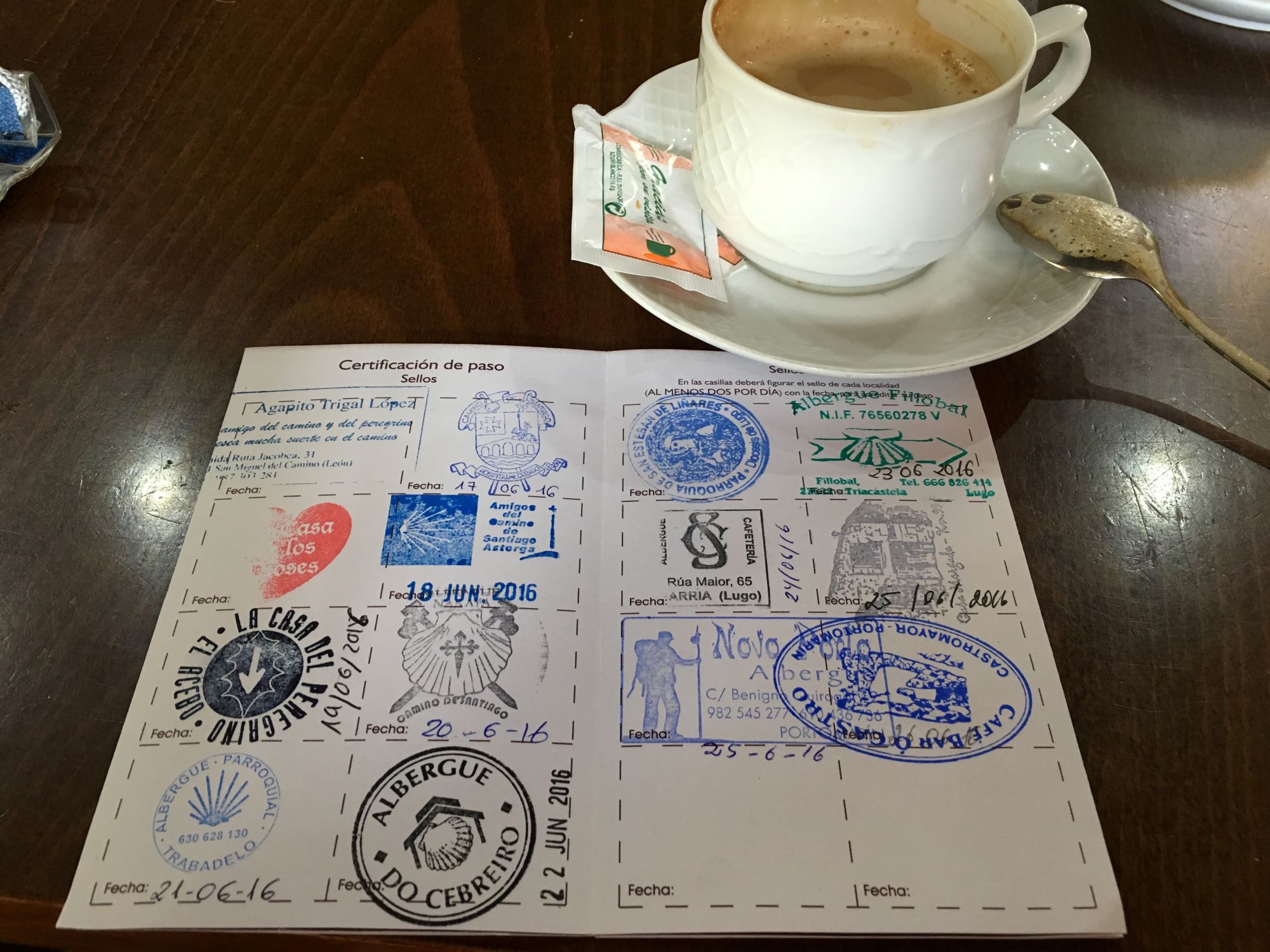
Before you start the route, you need to get a pilgrim passport (Credencial del Peregrino). In it, you collect stamps from all the places where you stay:
- albergues;
- churches;
- cafés;
- restaurants;
- hotels;
- tourist offices;
- shops and other private businesses that exist along the Camino.
If you are walking only the last 100 km, you must collect at least two stamps per day — one at the start of the day and another at the end. You can collect more stamps without restrictions — it’s up to you, just make sure you have enough space in your credential.
If you are traveling by bicycle, the minimum distance to receive the Compostela is already 200 km.
The Last 100 km to Santiago via Different Camino Routes
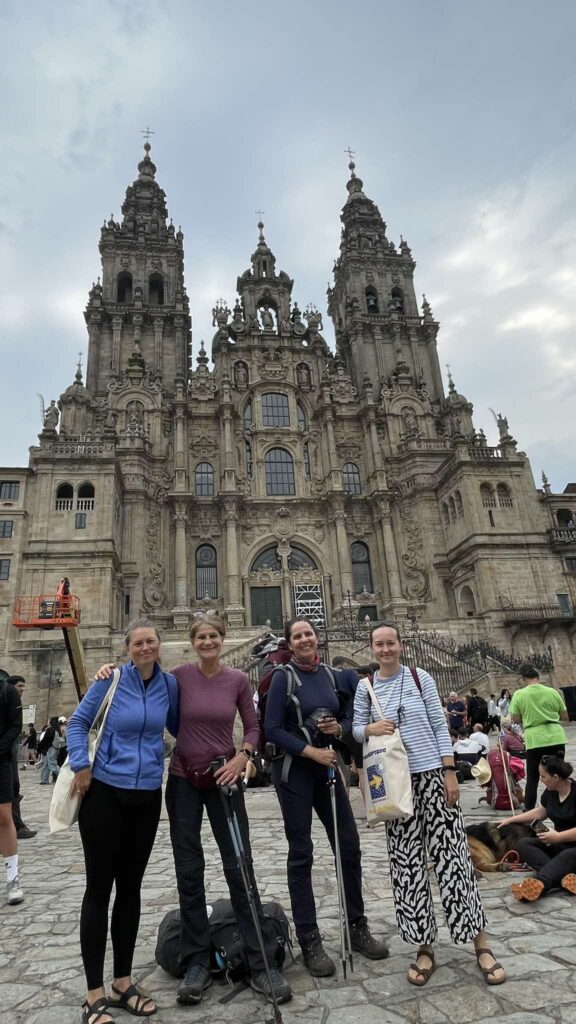
According to the latest rules, you don’t have to walk specifically the last 100 km; you can complete any 100 km, considering only the last stage to Santiago. For some Camino routes (for example, Camino Portuguese, Camino Inglés), it still makes sense to do the last 100 km.
There are many Camino de Santiago routes that begin in different parts of Spain and Europe. Most of them merge with one of the main routes somewhere along the way. You can walk the last 100 km to Santiago along seven different Camino routes:
- Camino Francés,
- Camino Portuguese,
- Camino Inglés,
- Camino del Norte,
- Camino Primitivo,
- Camino Sanabrés,
- Camino de Invierno.
But in reality, these seven routes boil down to four routes that enter Santiago de Compostela. These are:
- Camino Francés (Camino Primitivo merges with the French route in Melide, Camino del Norte merges with it at Arzúa). They have the same entrance into Santiago.
- The same is true for Camino Sanabrés (Camino de Invierno merges with Sanabrés at A Laxe).
- But the Camino Portuguese and Camino Inglés routes have completely different entrances to Santiago.
There is one route — Camino Finisterre, which begins, not ends, in Santiago. It’s a pilgrimage route, but you don’t get the Compostela for walking it. Instead, you receive a separate certificate — Fisterrana. Though some walk it in the reverse direction — from Finisterre to Santiago.
Next are details about each of the last 100 km routes.
Camino Francés from Sarria
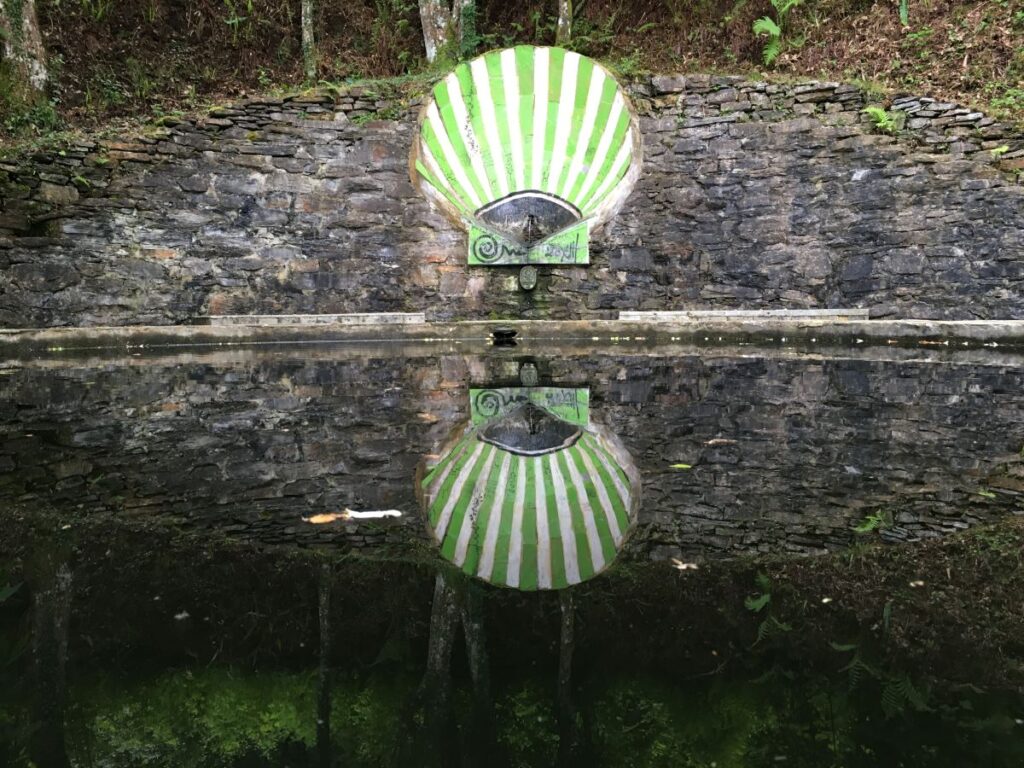
Distance: 116 km
Duration: 5 days
Popularity: ⭐⭐⭐⭐⭐
This is the most famous last 100 km of the Camino. About half of all pilgrims on the French Way start specifically from Sarria. Portomarín is the most beautiful town on the route. Pulpo a la Gallega — octopus cooked in olive oil, served with paprika on a bed of boiled potatoes. This is a must-try dish in Galicia, one of its culinary specialties.
Pros
- the best infrastructure;
- dozens of albergues;
- many cafés and restaurants;
- practically impossible to get lost;
- easy to organize even your first pilgrimage.
Cons
In July, August, and September, it’s very crowded here. Sometimes it feels more like a tourist trail than a pilgrimage route.
Stages of the Last 100 km from Sarria
- Sarria — Portomarín (22 km)
- Portomarín — Palas de Rei (25 km)
- Palas de Rei — Arzúa (29 km)
- Arzúa — O Pedrouzo (20 km)
- O Pedrouzo — Santiago (20 km)
Recommended reading: My Camino Francés — A Walk in Parts Over Several Years
Camino Portugués from Tui
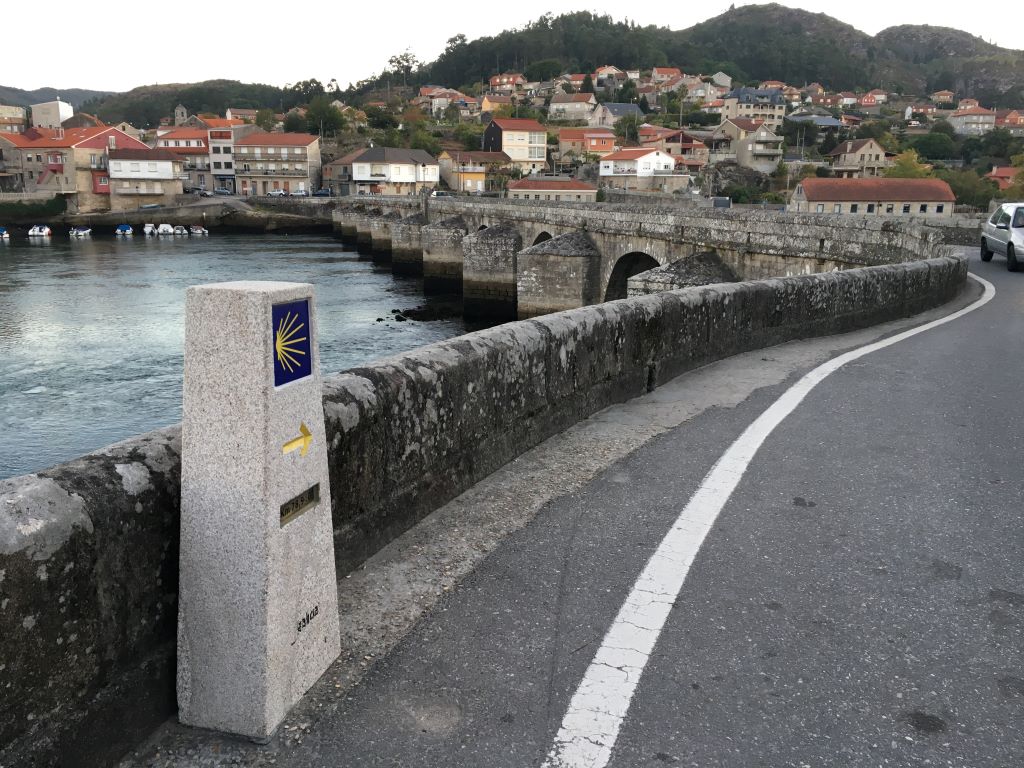
Distance: 119 km
Duration: 5–6 days
Popularity: ⭐⭐⭐⭐⭐
This is the second most popular route. You can start either from Spanish Tui or Portuguese Valença. The towns are separated only by a bridge over the Minho River. The route is much calmer than the French Camino, but offers excellent infrastructure.
The Most Interesting Towns
- Redondela
- Pontevedra
- Caldas de Reis
- Padrón
In Padrón, be sure to try the famous Pimientos de Padrón — small fried green peppers. Although they are available across Spain, they were originally cultivated in Padrón — in the town center there is a statue of a woman selling Padrón peppers.
Stages of the Last 100 km from Tui
- Tui — O Porriño (15.5 km)
- O Porriño — Redondela (16 km) – the first two can be combined into one
- Redondela — Pontevedra (20.6 km)
- Pontevedra — Caldas de Reis (21 km)
- Caldas de Reis — Padrón (18.5 km)
- Padrón — Santiago (25.5 km)
Recommended reading: My Portuguese Camino — Central Route from Porto to Santiago de Compostela
Camino Inglés from Ferrol
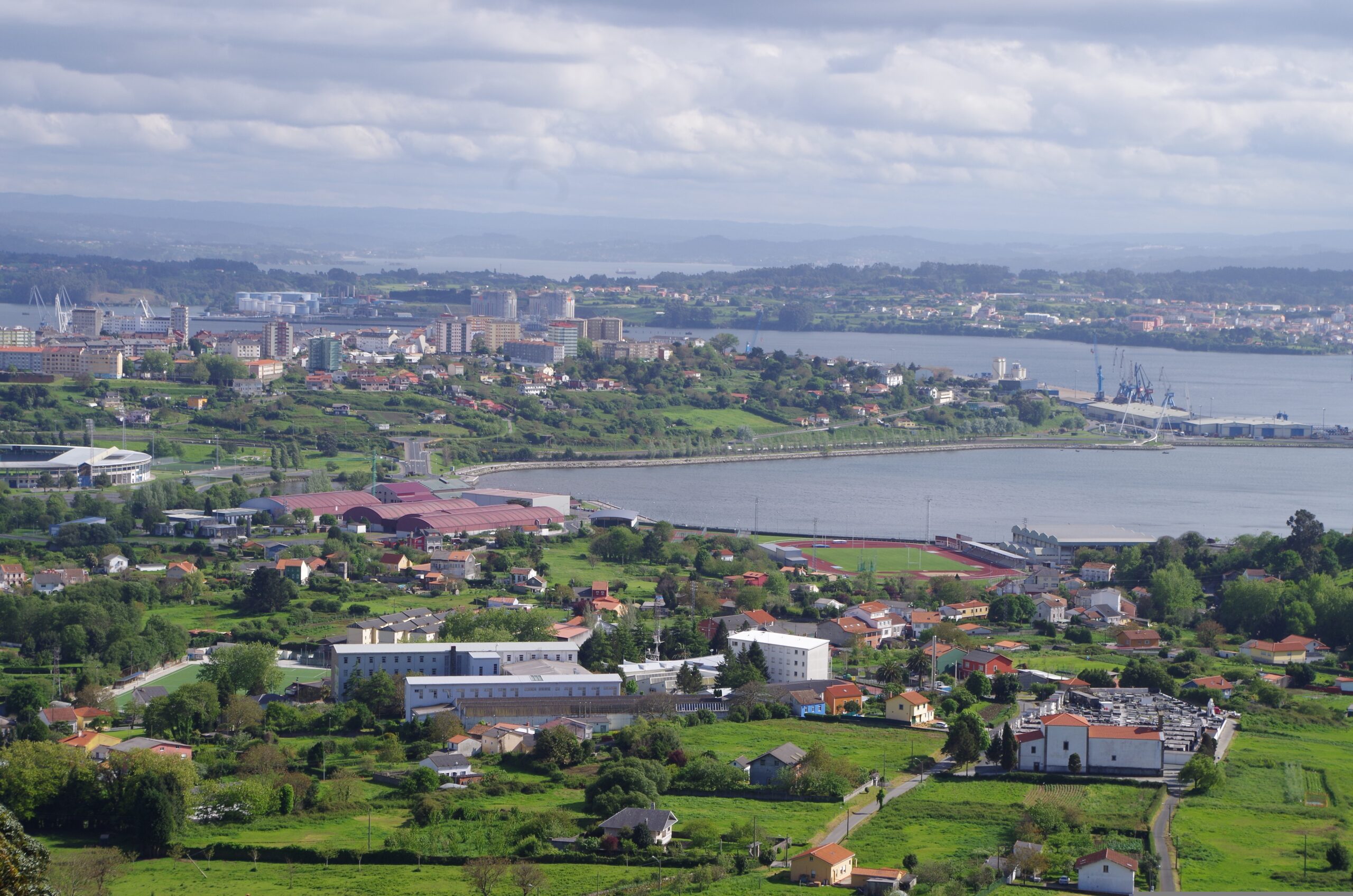
Distance: 116 km
Duration: 5 days
Popularity: ⭐⭐
In my opinion, this is one of the easiest Camino routes. Its main advantage — you walk the entire route, not just the last part of a larger path. There are significantly fewer people here, but all necessary infrastructure is in place.
Stages of 100 km Camino from Ferrol
- Ferrol — Pontedeume (28 km)
- Pontedeume — Betanzos (23 km)
- Betanzos — Hospital de Bruma (25 km)
- Hospital de Bruma — Sigüeiro (24 km)
- Sigüeiro — Santiago (16 km)
Camino Primitivo from Lugo
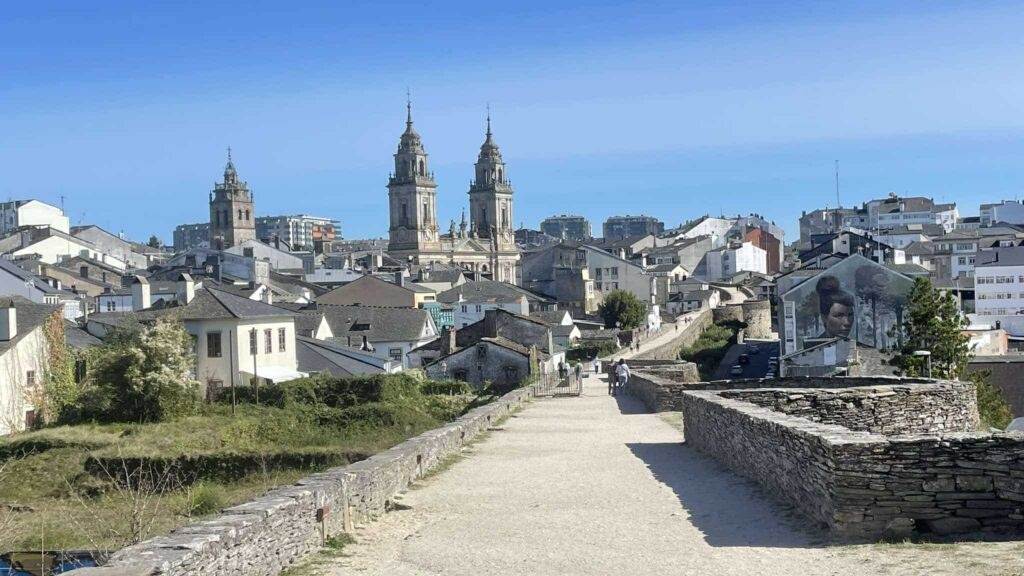
Distance: 102 km
Duration: 4–5 days
Popularity: ⭐⭐
This is the oldest Camino route – Primitivo means primal. It was along it that King Alfonso II walked to the tomb of Saint James in the 9th century. The best place to start the last 100 km is Lugo, and I would recommend allowing an extra day in this city before starting the Camino. The town itself is worth a separate trip — it’s completely surrounded by perfectly preserved Roman walls that you can walk along. There is a wonderful cathedral and a historic center — a true gem of Galicia.
The first days of the route go through forests and hills, and after Melide the path joins the Camino Francés.
Stages of 100 km from Lugo
- Lugo — San Romao da Retorta (21 km)
- San Romao — Melide (28 km)
- Melide — O Pedrouzo (33 km)
- O Pedrouzo — Santiago (20 km)
Recommended reading: My Camino Primitivo — Walking from Oviedo to Santiago de Compostela
Camino del Norte from Baamonde
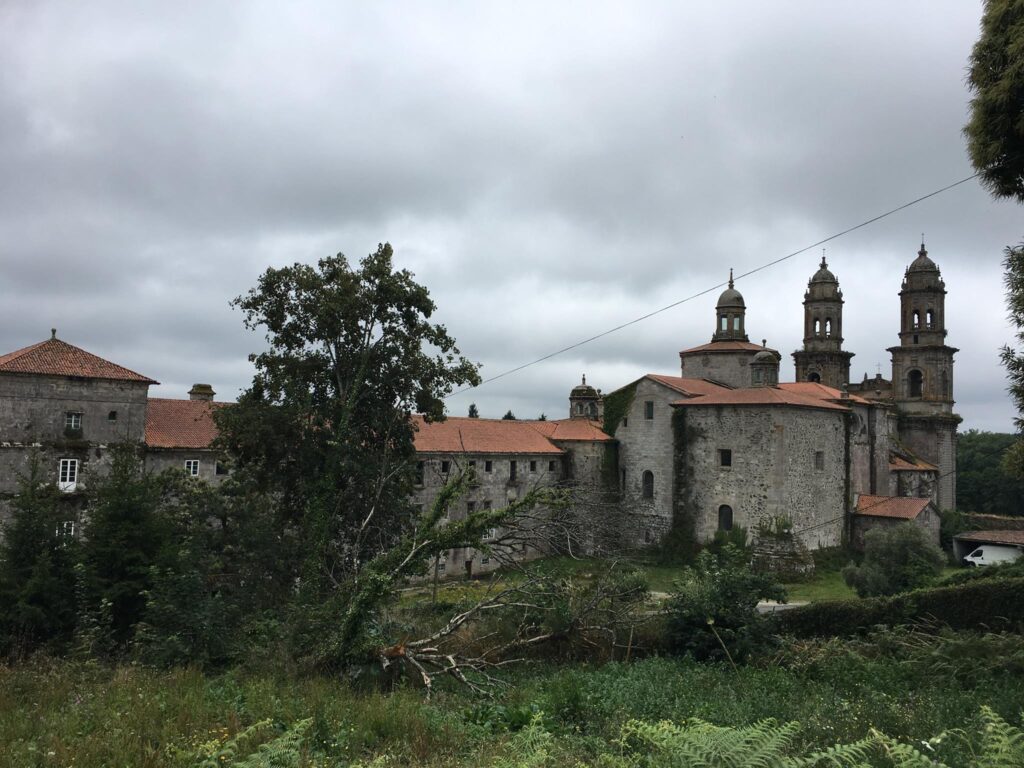
Distance: 102 km
Duration: 5 days
Popularity: ⭐⭐
This is one of my favorite routes. But there’s one nuance. If you walk only the last 100 km, you will no longer see the famous Atlantic coast. The route has long turned inland into Galicia. That’s why I recommend doing a slightly longer stretch, to see the coastline that Camino del Norte is truly known for.
The most interesting site of the final stages is the Sobrado dos Monxes monastery, where you can spend the night right in the monastery. It’s a place truly worth an overnight — memories for a lifetime!
Stages of 100 km from Baamonde
- Baamonde – Miraz (15.5 km)
- Miraz – Sobrado dos Monxes (24.5 km)
- Sobrado dos Monxes – Arzúa (22 km)
- Arzúa – O Pedrouzo (20 km)
- O Pedrouzo – Santiago de Compostela (20 km)
Recommended reading: My Camino del Norte — Route Through Northern Spain Along The Ocean
Camino Sanabrés from Ourense

Distance: 105 km
Duration: 4–5 days
Popularity: ⭐
Camino Sanabrés is one of the options of the Camino de la Plata route. If you want peace, this route will be an excellent choice. There are not many pilgrims here, but the infrastructure is much more modest. Do not expect a café or shop every few kilometers. It’s best to carry water and snacks with you.
Stages of 100 km from Ourense
- Ourense – Cea (22.5 km)
- Cea – A Laxe (32.5 km)
- A Laxe – Outeiro (33 km)
- Videiro – Santiago de Compostela (17 km)
Camino de Invierno from Chantada
Distance: 103 km
Duration: 4–5 days
Popularity: ⭐
Camino Invierno or the Winter Route was created as an alternative to the French Camino when the O Cebreiro pass is covered with snow. Today very few people walk it, and it’s an excellent path for a peaceful walk to Santiago. If you like less crowded routes and a true sense of adventure, this is one of the most interesting options. I plan to walk it next year.
The Winter Camino merges with Camino Sanabrés near A Laxe, about 50 km before Santiago. The second half of the route is the same as on Camino Sanabrés.
Stages of 100 km from Chantada
- Chantada – Rodeiro (25 km)
- From Rodeiro – A Laxe (28 km)
- A Laxe – Outeiro (33 km)
- Outeiro – Santiago de Compostela (17 km)
Camino Finisterre from Santiago to Finisterre
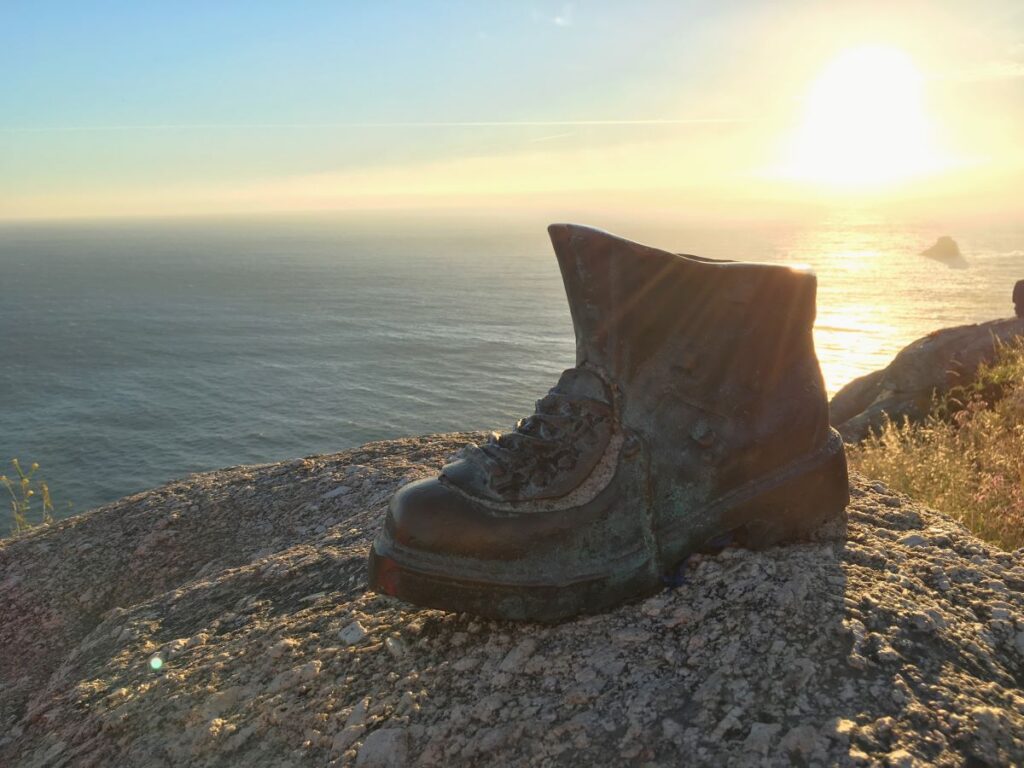
Distance: 103 km
Duration: 4-5 days
Popularity: ⭐
Unlike other routes, this path starts in Santiago de Compostela. It leads to Cape Finisterre — a place that was considered the “end of the world” in the Middle Ages. That’s why the Compostela is not issued for this route. Instead, pilgrims can obtain separate certificates:
- Fisterrana — in Finisterre;
- Muxiana — in Muxía.
This route is an excellent continuation of the Camino after arriving in Santiago.
Recommended reading: My Camino Finisterre — a quiet path to the end of the world
Stages of 100 km to Finisterre
- Santiago – Negreira (21 km)
- Negreira – Lago (Mazaricos) (28.6 km)
- Lago – Cee (25.4 km)
- Cee – Finisterre (15.5 km)
- Finisterre – Muxía (27.5 km)
Recommended reading: My Camino Finisterre — a quiet path to the end of the world
When is the best time to walk the Camino?

The most comfortable time:
- May;
- June;
- September.
During this period it’s warm, the days are long, and the weather is usually good. July and August can be very hot, especially on inland routes. Also, this is when there are the most pilgrims.
If you want to avoid the crowds, consider:
- the second half of April;
- October.
It’s also possible to walk the Camino in winter, but you should be prepared for rain, and in some regions — even snow.
Which route to choose?
If this is your first Camino, I would recommend one of three options.
- Camino Francés from Sarria — the simplest to arrange. Here you’ll find the most albergues, cafés, and other pilgrims.
- Camino Portugués from Tui — a bit calmer, very picturesque, and passes through beautiful Galician towns.
- But my personal favorite remains Camino Finisterre. There are far fewer people here than on the French or Portuguese Camino, but the infrastructure is just as good, the walks are easy, and the atmosphere is delightful. And at the end, the ocean awaits you!
If you have already walked the popular routes and are looking for more peace and solitude, consider Camino Sanabrés or Camino de Invierno. They require a bit more preparation, but offer a completely different Camino feeling.
What you will need for the Camino de Santiago
- Don’t skimp on medical insurance — it’s convenient to buy it online on HotlineFinance.
- If I don’t stay in albergues, I book hostels or guesthouses via Booking.com. I do this in the evening for the next day.
- I buy bus tickets in Spain on the website of the Spanish carrier Alsa.
- Train tickets in Spain – on the website of the Spanish rail company Renfe.
Useful articles and links:
- My Camino Portugues Costal — Portuguese route from Porto along the ocean
- My Camino Lebaniego — Route to Picos de Europa
- Camino de Santiago — Which Route to Choose
- Camino de Santiago — How to Prepare for the Pilgrim’s Way?
- My Camino Mozarabe — The Way of St. James through Andalusia