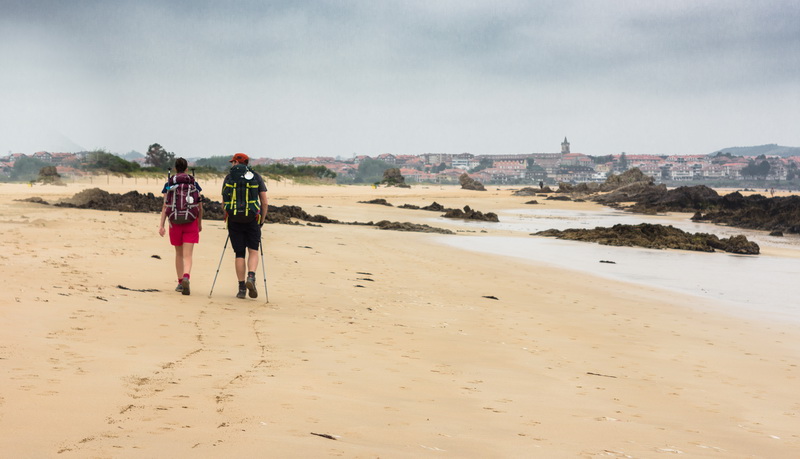
Why did I decide to write about my experience of this route? Because I still consider it my best way to Santiago.
I covered almost 800 km on my own feet, it took me four weeks, which were a wonderful part of my life. Over four weeks, my body and spirit went through various transformative moments: from losing weight and strengthening muscles, to accepting all the sufferings on the way. And in the end – great gratitude to the world, which gave the opportunity to walk the Camino del Norte, beautiful and a bit harsh. But this is the happiness of being a pilgrim – going your own way no matter what.
I completed this route back in 2017, perhaps some albergues no longer exist. But most often I stayed in cheap municipal hostels for pilgrims, so most of them are still quite relevant.
History of the Camino del Norte
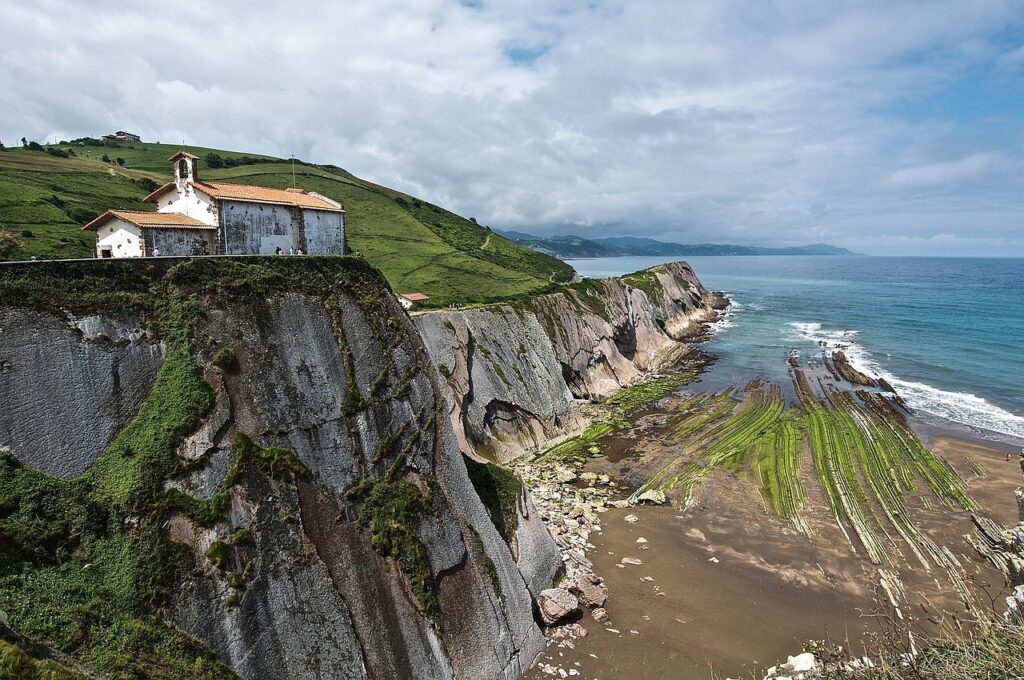
The Northern Way, also known as the Coastal Way, starts its history from the 9th century. This was about the time when the remains of the Apostle James were found in Padron. Along with the French Way, it is one of the oldest routes to Santiago de Compostela. Historically, the first is considered to be the Primitivo Way (the original route), when King Alfonso was the first to walk it to Santiago.
The Northern and French routes appeared with very little difference in time. At this time, the Moors dominated the south of Spain, so it was safest for Christians to travel through the north of the country. Although it was easier to travel along the French Way, the Northern Way soon began to be used to reach Compostela. In fact, it was the safest way because it was far from the battles of the Reconquista, which were fought on the Iberian Peninsula at that time.
The expansion and popularity of the Northern Way coincided with the expansion of the territories of the Kingdom of Asturias. With this expansion, the news of the discovery of the remains of Saint James quickly spread, and the number of pilgrims walking along the coast began to increase.
Features of the Camino del Norte route
835 km / 32 days on foot

Camino del Norte is an 835-kilometer route across Spain that crosses four regions: the Basque Country, Cantabria, Asturias, and Galicia. The scenery on this Camino is simply fantastic: untouched sandy beaches, steep cliffs, emerald meadows, the Atlantic Ocean (the Bay of Biscay), wonderful historic cities and towns, and lush green eucalyptus forests. This route is a great alternative to the popular French Camino (Camino Frances). Both routes run parallel: Norte goes along the coast, and the French Way – to the north, but inland.
Facts about Camino del Norte
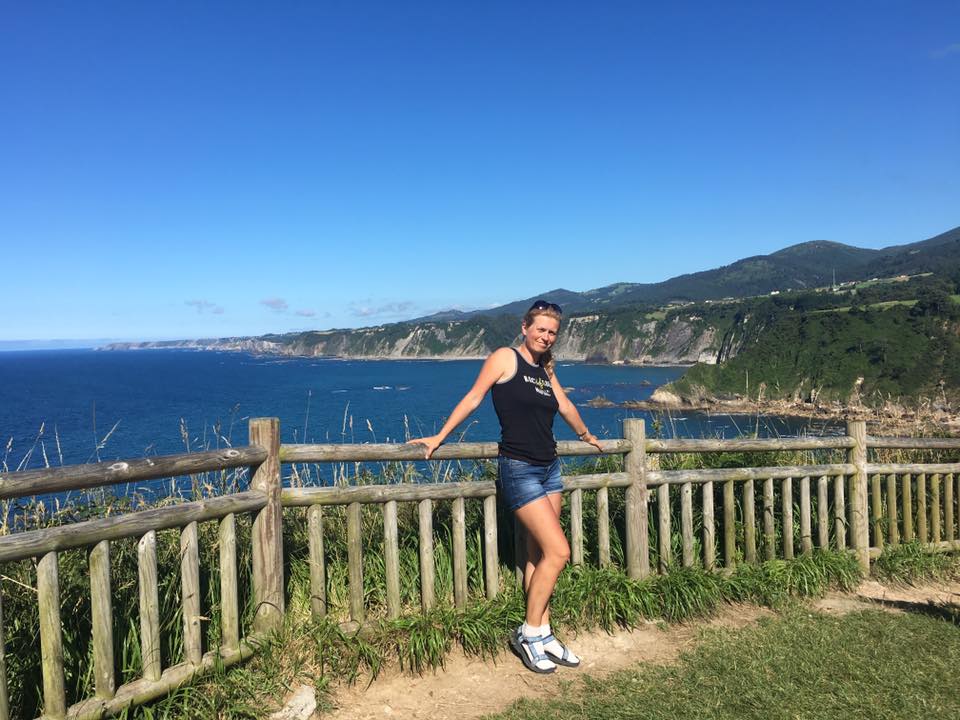
- Total distance – 835 km (it can be more if you deviate from the arrows a bit or walk alternative paths).
- Number of days – 30-34 (I completed it in 32 days).
- Starting point – Irun, Basque Country, Spain (I started from San Sebastian).
- Finish point – Santiago de Compostela, Galicia, Spain.
- Average daily cost – 30 euros per person per day (if you stay in municipal albergues, cook for yourself more often).
- Average distance – 25-30 km per day.
- Route difficulty – quite difficult: the first week – mountains and hills, you are not always walking by the ocean, but even so, you have to constantly climb and descend, a lot of asphalt even though the route is considered wilder.
- Accommodation – Municipal and private albergues, hostels (there are also hotels which are more expensive). There are not many municipal albergues, and private hostels are also fewer than on the Frances and Portuguese routes near the ocean.
- Tip: if you’re afraid you won’t find a place in an albergue in cities indicated in the guides as the start and end points of a stage, go to passing villages and towns, where you have a better chance to find a free spot. That’s what I often did – I would rest in bigger towns, but slept in smaller ones.
- Note, that many municipal albergues on the Camino del Norte do not work all year round – some from May to October, and some only in the summer. Unlike other routes, on Camino Frances and Camino Portugués (from Porto) there are many albergues that work all year.
- Route marking – yellow shells and arrows.
- Route surface – asphalt, dirt road, paving stones, sand on beaches
Of course, the indicated distance is official. It may change depending on the route options, or from the starting point where you begin your journey.
Camino del Norte was my second Camino de Santiago, which I walked in 2017, one year after Camino Frances (from León to Santiago de Compostela) – I completed the first part of the French route in 2021 (I always do things the other way around). In my opinion, Norte was the most difficult of all routes I have walked: French, two Portuguese, and Primitivo. But also the most beautiful of them!
How to Prepare for the Camino del Norte

- Before you set off, it is advisable to start taking long walks a few weeks in advance to check your physical condition and get used to the shoes you will wear on the road.
- The most common problems on the Camino are foot and back pain caused by overloaded backpacks.
- The main thing on the Camino del Norte (and on all other routes) is to keep your own pace and adapt to your own strength to reach the finish. This way, you can enjoy the many cultural, gastronomic, religious, and entertainment activities along the St. James Way.
Remember, you can always adapt to the route and walk it according to your needs and how you feel at each stage. That is, if you get sick, or feel pain, or the weather is so bad that it is impossible to walk – you can always take a bus and travel part of the way. Because health is more important – without it you will not be able to walk the rest of the way.
Day 0: Arrival in Spain and Overnight in San Sebastian
I flew from Lviv to Madrid on a flight that landed at one in the morning. So I had to sit until six at the airport and then travel six hours by bus to San Sebastian. In the arrivals zone of Madrid airport there is a McDonald’s, where I spent the night, trying not to fall asleep. Around five I went to the bus station and then tried to sleep on the bus with the air conditioner on. It was summer – June, the air conditioner was working at full power – I still wonder how I didn’t get sick.
I was too tired to get to Irun (the town where the Camino del Norte starts), and I really wanted to see San Sebastian. So I decided to start my journey from here – from the wonderful Donostia, that is what San Sebastián is called in Basque.

If you start from Irun, you will immediately face a tough stage on the first day: two long ascents and descents on the way to San Sebastian. The first steep climb, which starts 3 km after Irun, is a gain of 250 m followed by a descent to Pasaia – a town located midway between Irun and San Sebastian. In Pasaia you cross the river by a small boat, it takes 1 minute. Then you face another steep ascent from Pasaya, a gain of 200 m followed by a descent into San Sebastian. But everyone who walked there says the views of the first day are incredible – one of the most beautiful days on the route. There will be several fountains to refill water along the way.
San Sebastian

San Sebastian is a beautiful city on the Camino del Norte. It has everything a demanding traveler looks for: huge sandy beaches, the Old Town with a pleasant atmosphere, many pintxo bars and cafes. It is very hard to resist temptation – where else can you try fresh oysters in such a luxurious setting? Although Basque cuisine also has more affordable but no less tasty delicacies. Basque sandwiches with seafood, fish, vegetables, and wonderful sauces are called pintxos.

This cozy and posh little town is located near the French border. Here you can more often hear French than Spanish. Basque inscriptions are duplicated everywhere in the official names of the Basque Country. That is why the city officially has two names: Donostia – San Sebastian (literally from Basque Dono (saint) + stia (the ending from Sebastian)).

The city seems to embrace the bay La–Concha. From the two high hills on the sides of the bay, there is a wonderful view of the Bay of Biscay and the boulevard with the curve of a huge beach. The boulevard is the heart of San Sebastian: at dawn athletes run along it, during the day beach-goers fill the whole area, and in the evening, by the light of the lanterns, tourists satisfied with life stroll or sit in restaurants.
I walked around the city and the beach, a bit tired, but still enjoyed the atmosphere of the city. I walked to the municipal albergue to buy a credencial (pilgrims’ passport) and put the first stamp in it. On the way back, I entered the cathedral, sat for a while and felt – right now I could fall asleep on this bench. Time to go to the hostel and get some sleep, because tomorrow is the start of my long camino along the ocean.
Where to stay in San Sebastian:
- Koba Hostel≫ – I stayed in this hostel because it has a great location in the city center. Clean beds and showers, large kitchen with breakfasts.
- A Room In The City Hostel≫ – great location 5 minutes from the boulevard. There is a private courtyard, clean beds with a few in the room.
- Albergue juvenil Ondarreta – La Sirena≫ – rather expensive pilgrims’ albergue (20 Euros) for a place on a bunk bed in a large room. Albergue is located at the end of the city, so if you walked far from Irun and are tired – it will be difficult to return to the center of San Sebastian. That’s why I didn’t stay here – I wanted to see the city.
Day 1: San Sebastian – Getaria
Distance: 26 km – San Sebastian – Orio – Zarautz – Getaria
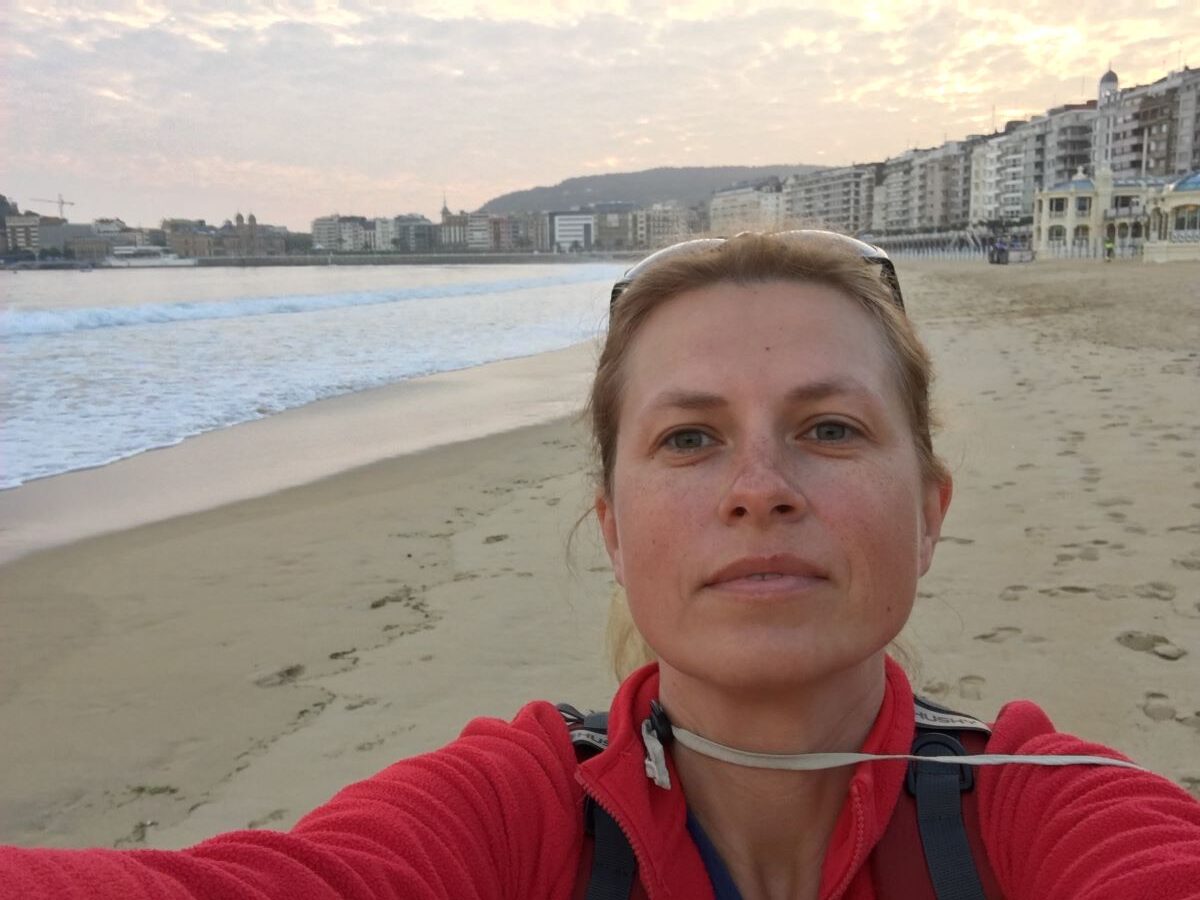
This is one of the most beautiful stages on the Camino del Norte. I left the hostel and headed towards the boulevard to walk along it once more. At dawn, there were many runners doing their morning jog. At the end of the boulevard I had to go up to climb the slope that rises on the left side of the city.
The first part of the walk between San Sebastian and Orio runs through woods and fields, there are two places where you can get water. If you are planning to do this Camino in the summer (as I did), be sure to start early in the morning to cover most of the way while it’s still cool.

On this day, you can spend the night in Zarautz instead of walking on to Getaria. But for me, that wasn’t enough kilometers. Besides, the walk from Zarautz to Getaria is very beautiful and easy. Most of it goes along the sea, with wonderful views of both towns. By the time I reached Zarautz, it was already quite hot, so at the beach I changed from pants to shorts and walked the rest of the way to the albergue on the outskirts of Getaria in them.
Getaria

Getaria is a small ancient town with a fortress towering on a high hill. The old town is very cozy, and there are several nice bars serving delicious pintxos. I first checked into the municipal albergue, dropped my things on the bed, put on my swimsuit and went to the Playa de Malkorbe beach. Getaria has a small beach compared to the huge beach in Zarautz. But due to a small lagoon, the water warms up better here in the summer. I was able to swim and sunbathe for a couple of hours.
In the evening I went to the Old Town – to sit in a bar, try pintxos with crab, and have a glass of wine. That’s how I celebrated my first day on the Camino del Norte.
Where to stay in Getaria:
- Hostel Getaria≫ – a private hostel with very clean rooms, a kitchen, washing machine, and dryer. Located 300 meters from Playa de Malkorbe.
- Zarautz Hostel≫ – a cool hostel in the town of Zarautz, 3 km from Getaria. Here is a huge beach and promenade, lots of bars and restaurants. There are surfing schools – if you have enough strength and desire, you can try to surf.
- Kein Hostel≫ – also a nice hostel in Zarautz, located on the boulevard with a surf atmosphere.
Day 2: Getaria – Deba
Distance: 22 km, Getaria – Zumaia – Itziar – Deba

The first 5 km after Getaria there are no places to stop for food – make sure you have enough water and have breakfast in Getaria at a café or at the hostel. I had breakfast in Zumaia, because I set off around seven in the morning and reached there just in time for breakfast.

To see ocean views choose the alternative path on the map. After 5 km, you will reach Zumaia – another seaside town offering stunning views of the ocean and striped cliffs. Then the path went over hills, up and down – with vineyards and gardens. At one point on the road, I saw a goat with huge horns – he was watching me: would I be afraid to walk past him. I had to make a little detour – those horns could be dangerous.
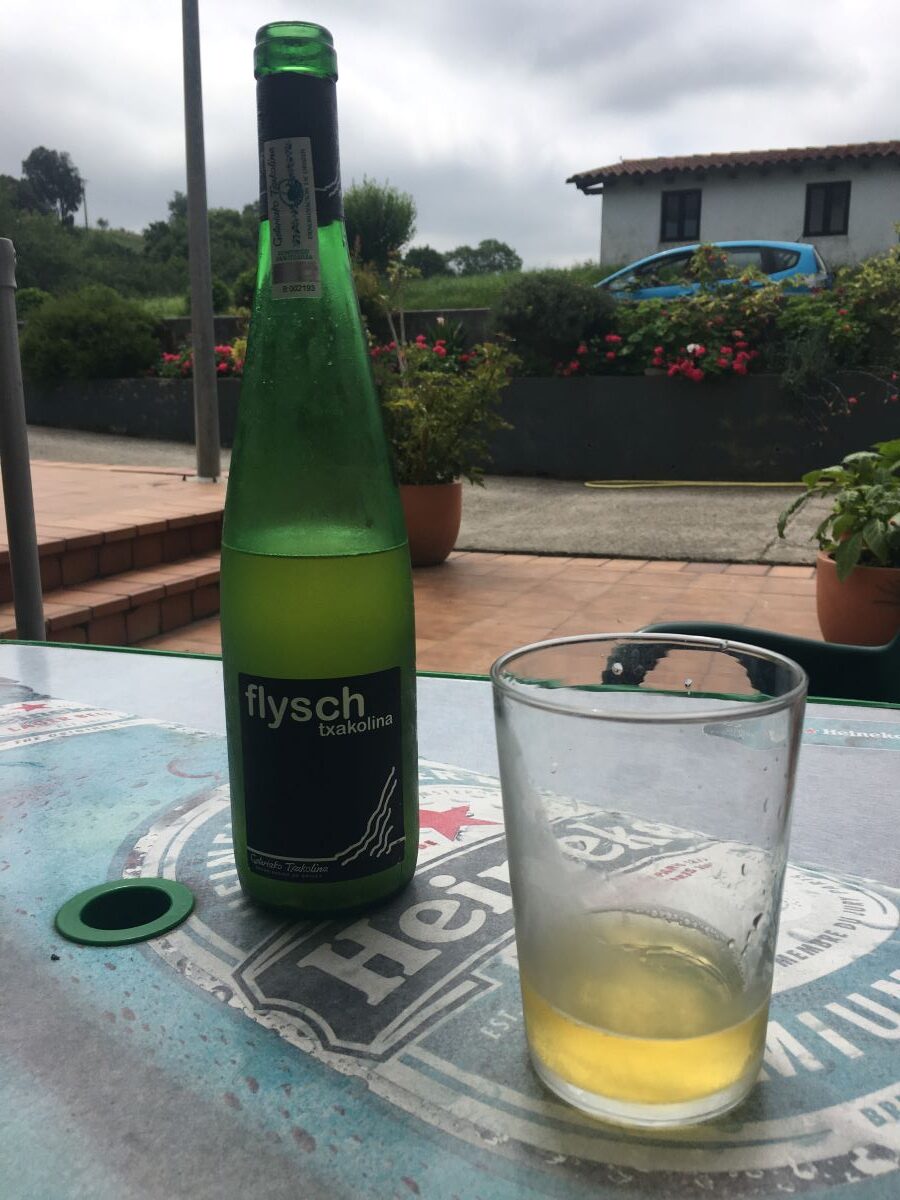

After this, at the 9 km mark there is a bar, 200 meters before which I saw by the road a box of bottles of cider for 2 Euros. It was cold, and in the midday heat – so I left a two-euro coin in the box, took a bottle and went looking for someone to open it. At the bar, I met a couple of pilgrims – I asked for glasses for everyone and to open my bottle. They didn’t refuse – I treated everyone with cider and myself enjoyed this sour cold drink made from local grapes.

The first half of the walk was ups and downs, hiking through fields and open areas, the second half a bit along the road (not very busy, but still a bit unnerving after cider) and then through forest. But around two o’clock I reached the town of Deba, where I settled in the municipal albergue at the train station.
Deba

Imagine a small town’s train station. On the ground floor, a ticket office and vending machines. And on the second – accommodation for pilgrims, who have come on foot and are washing themselves, washing their clothes, and drying laundry on ropes by the station. Colorful, right? Sure is!

That’s what happened to me: I went up to the second floor, paid the hospitero for accommodation, got a top bunk (all the bottom ones were already taken). And at night I slept under the roof, listening to the snoring and passing trains. Romance!
But after the walk I went to see the town, eat some tasty pintxos, buy something for breakfast and for the next day’s route. Because the next stage was through the mountains and I needed to buy food in advance so I wouldn’t starve during the mountain paths. I also went to the ocean, sat on the huge warm stones of the pier that protects the river mouth – also called Deba – from the ocean waves.
Where to stay in Deba:
- Albergue de peregrinos Geltoki – this is the municipal albergue for 8 Euros where I stayed. It is still open – I recommend going here.
- Albergue Izarbide aterpetxea – this is a backup option already outside the town in the mountains if you run out of space in the municipal hostel. It’s more expensive but also good. And actually after that there is only forest and more than 20 km to the next town. So calculate your strength.
Day 3: Deba – Markina
25 km: Deba – Ermita de Calvario de Maya – Olatz – Markina
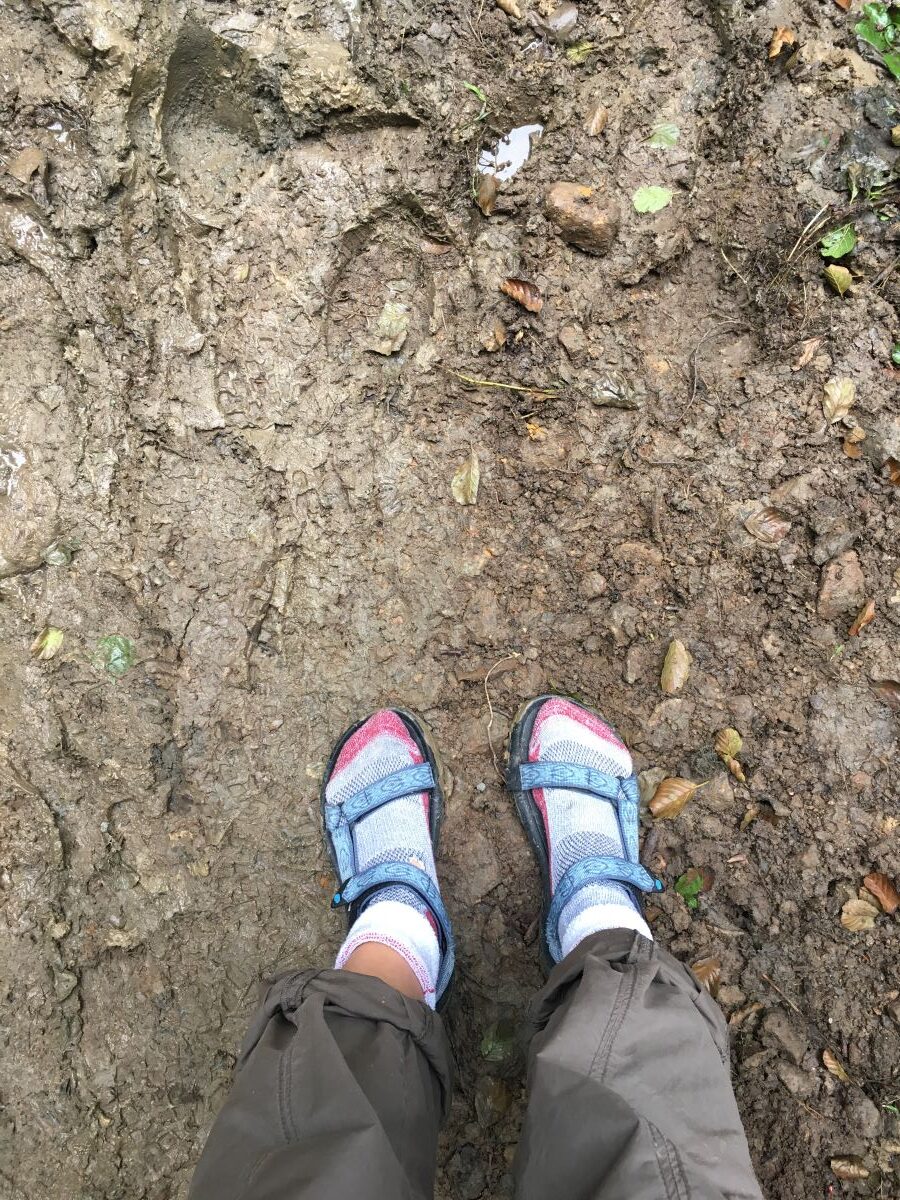
In the morning it rained, but so lightly that I didn’t want to put on a raincoat and boots. I went in a fleece and sandals with thick socks. By the way, on this Camino I mostly walked in sandals, just changing the sock thickness depending on the weather and terrain (thicker in the mountains to not feel small stones). I only put on boots in heavy rain – just as wet, but they give better foot support, because walking in wet sandals is riskier.
On this day, I and other pilgrims faced steep ascents and descents:
- Steep ascent from Deba to Ermita del Calvario, elevation gain 200 m.
- Steep ascent from Olatz (Taberna Zelaieta, elevation gain 250 m).
- Long and steep descent before Markina with some very muddy sections, 350 meters down.

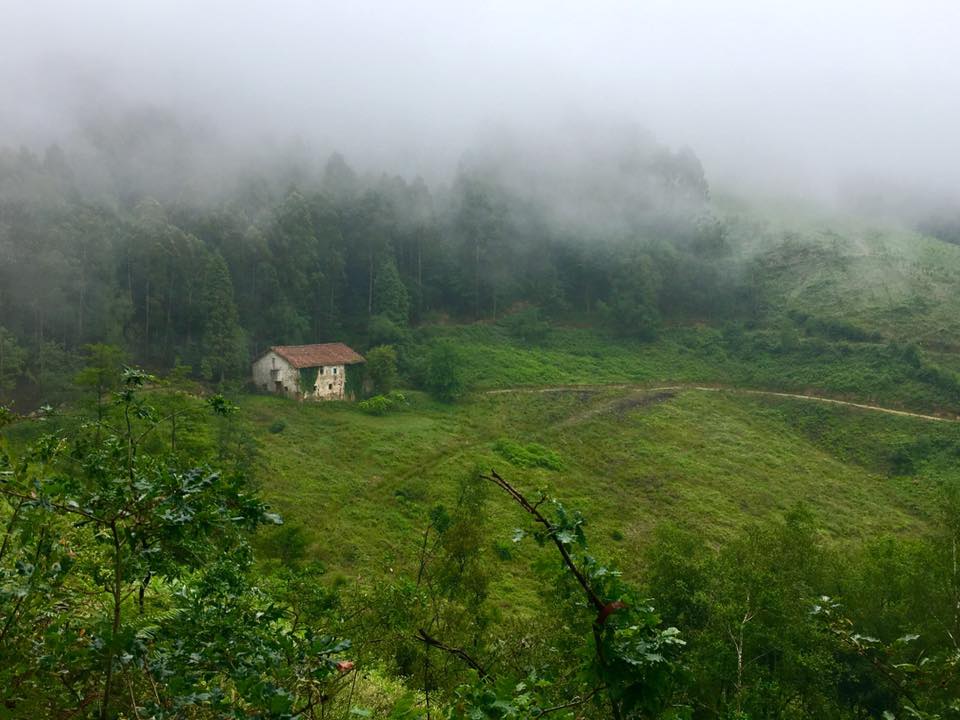
In Deba you need to walk another 1 km to get to the other side of the river. Then the hills and slopes of low mountains begin. Between Deba and Markina there are no towns or villages, except for a couple of restaurants along the way. I felt like a hedgehog entering and exiting fog. Almost all day I walked in the damp eucalyptus forested hills. In some places the forest was cut down, and it was very sad. I understand that eucalyptus is grown, cut, and replanted here for a reason.

I stopped at Zelaieta Taberna Jatetxea café for breakfast – fresh hot tortilla with coffee were just what I needed at that moment. I warmed up and continued on. Several pilgrims were walking parallel, we overtook each other. But most of the time I was alone in the forest on wet dirt roads. But I made it to Markina, where I stayed at a monastery albergue.
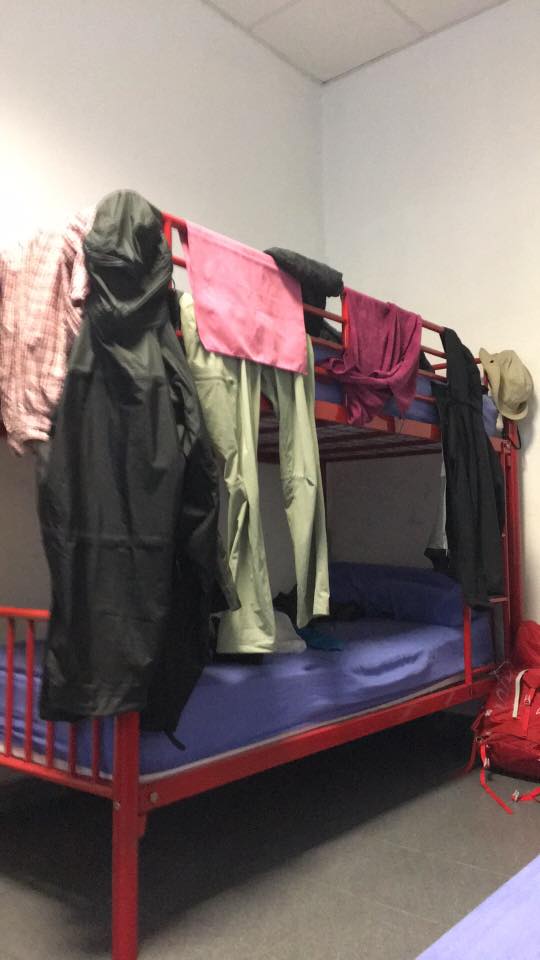
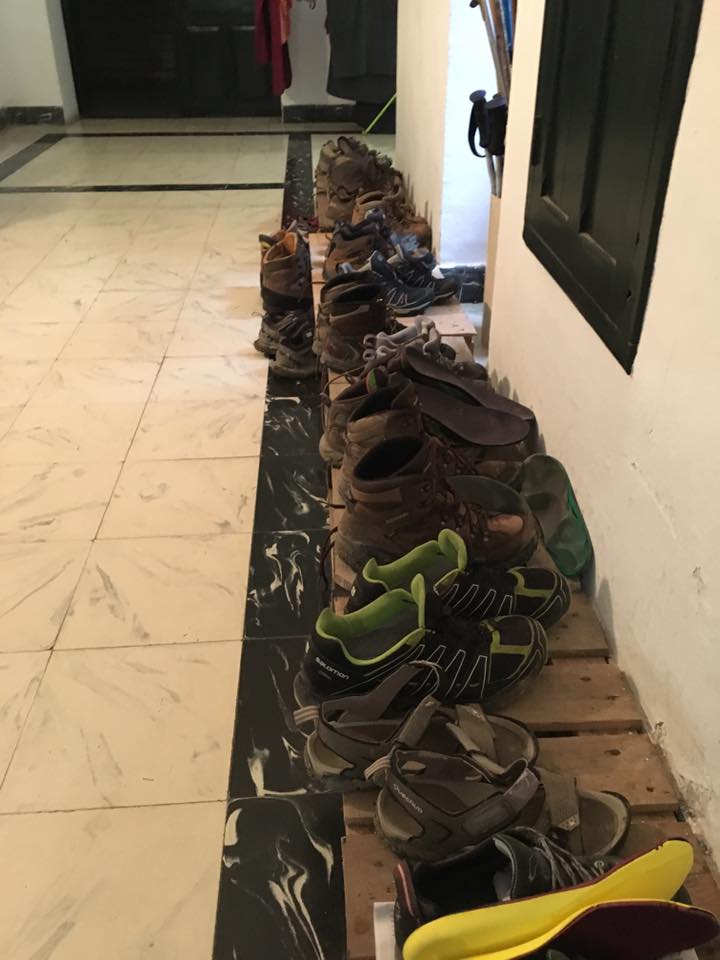
There is also an alternative option – you can walk an additional 7 km from Markina to the Zenarruza monastery and stay there overnight. Next day on the way I stopped at the monastery, but stayed overnight at the monastery in Markina.
Markina
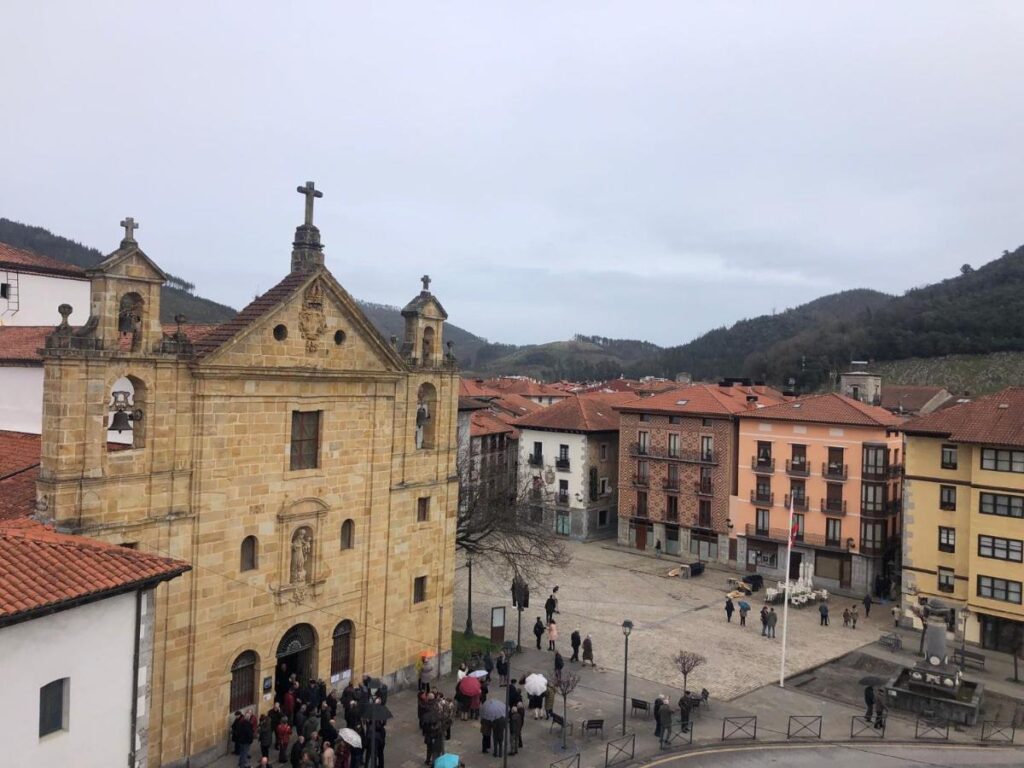
Because of the rain I hardly saw this town, located among the mountains. But on the way to the albergue I stopped in a rather interesting place. You will definitely walk past it – so I recommend looking inside the Ermita de San Miguel de Arretxinaga, in the middle of which there is a huge stone. This stone is impressive because it looks like a primordial altar, and the modern lighting only increases the eclectic effect of the styles and eras.
The Convento del Carmen albergue where I stayed overnight is very basic, but it has everything a pilgrim needs. Rooms for 6 people, showers, kitchen – they offer simple breakfasts, a patio that I did not enjoy due to the rain.
Where to stay in Markina:
- Albergue de peregrinos Convento del Carmen – a very basic place with the main necessary services. They accept all pilgrims, creating a true atmosphere of welcome for pilgrims. The kitchen is not for cooking – there is only a microwave and tables for eating.
- Pilgrimshouse – This is a great apartment with 3 bedrooms and a fully equipped kitchen, ideal for a group of pilgrims.
- Dúplex Markina Xemein – beautifully furnished apartment right in the city center. The balcony overlooks the main square and the church/monastery.
Day 4: Markina – Gernika
25 km: Markina – Iruzubieta – Bolibar – Monasterio de Zenarruza – Munitibar – Berriondo – Gernika

My things almost didn’t dry because it rained all night. I paid for a not very tasty breakfast at the albergue because I decided to leave early and faced a day ahead without bars or cafes.
Again the trail led uphill into the mountains, where the very beautiful Zenarruza monastery is located – elevation gain of 250 m. If not for the weather, you could have seen lovely views from the hill where it’s situated. But I went into the monastery to see its ancient architecture.

Further along the route, there were a few more climbs and descents, mud on the paths like the day before, but I had already decided to go in my boots because it was slippery in sandals. And it was the right decision – I even had to tackle wet slippery wooden steps, which are very slick in bad weather.
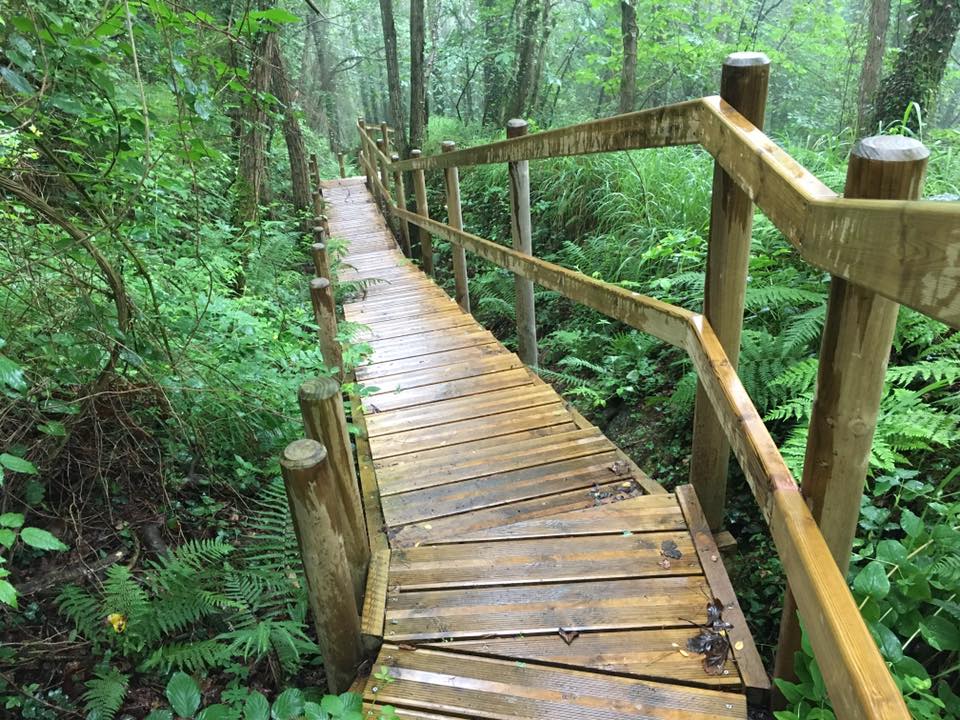
But then the sun came out and I saw a wonderful old bridge that was built back in Roman times. I stopped to photograph it from the river.

The Puente siglo XVI-ARTZUBI- Zubi XVI bridge is located 10–15 minutes before you enter the outskirts of Gernika. All pilgrims cross it, just as they did 700 years ago. For some reason it made such a strong impression on me that I still remember this place and the warm sun that came out in the second half of the day and lit up the bridge for me and this photo.
Gernika


The entrance to Gernika is a long, somewhat tough descent, especially if, like me, you are in not-very-comfortable boots. I walked in the mountains for a very long time that day, so when I got to the municipal albergue there were no more free places. This was unpleasant, considering that hotels in Gernika are quite expensive. But the hospitalero gave me the address of a small hotel where you could get a room for 30 Euros (instead of 10 Euros in the albergue – now, of course, prices are different). Basically, this was a restaurant with rooms above the bar to rent to pilgrims. Fortunately, unlike the albergue, the hotel was right in the center—so there were plenty of bars and restaurants nearby. And you could relax and enjoy walking around this world-famous town.
I walked around the city, ate some pintxos in a bar, drank a glass of wine – Basque cuisine has become my favorite of everything I’ve tasted in Spain.
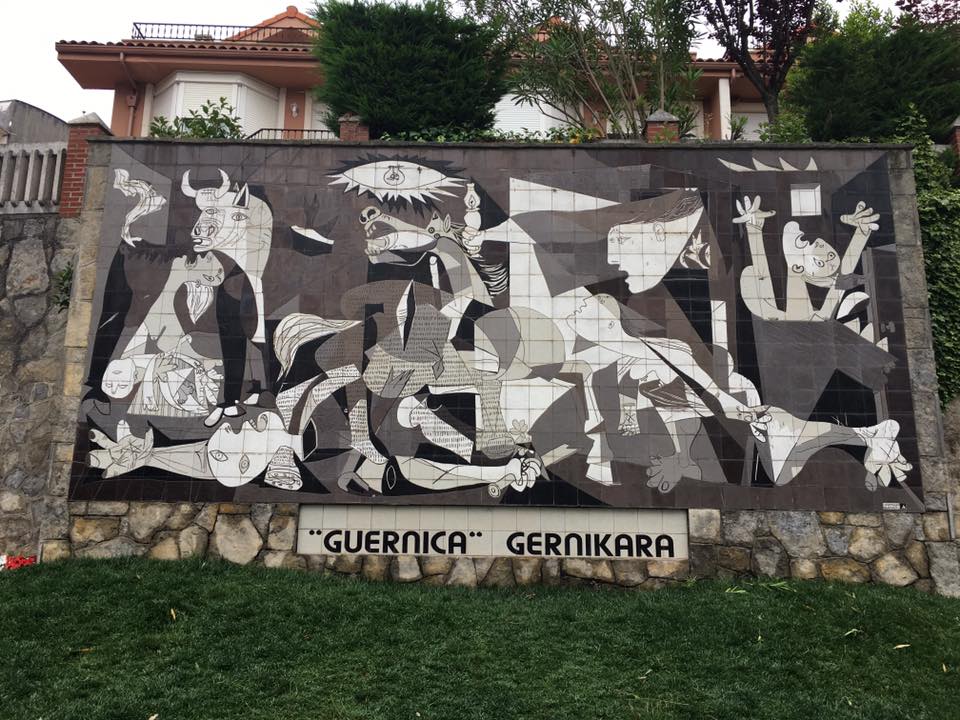
Gernika is the former capital of the Basque Country, which united all Basque people. It is here that the Basque tree is located, which, like the entire city, suffered in 1937, when during the Spanish Civil War Franco decided to destroy the Basque Country and its capital. In agreement with Hitler’s Luftwaffe, he gave the order to bomb the city from the air. The operation opened the way for Franco’s seizure of Bilbao and victory of his troops in northern Spain.
The city was completely destroyed and then rebuilt. But Gernika remained a symbol of Basque freedom. Picasso dedicated his painting “Guernica” to this tragedy – a mosaic of this painting can be seen on one of the city walls.
Where to stay in Gernika:
- Akelarre Ostatua – hotel with small, simple rooms in the city center.
- Hotel Boliña – simple rooms at 50 Euros for two, a good alternative to albergues, especially if you are not going in summer, when albergues are closed.
Day 5–6: Gernika – Bilbao
33 km: Gernika – Larrabetzu – Lezama – Bilbao
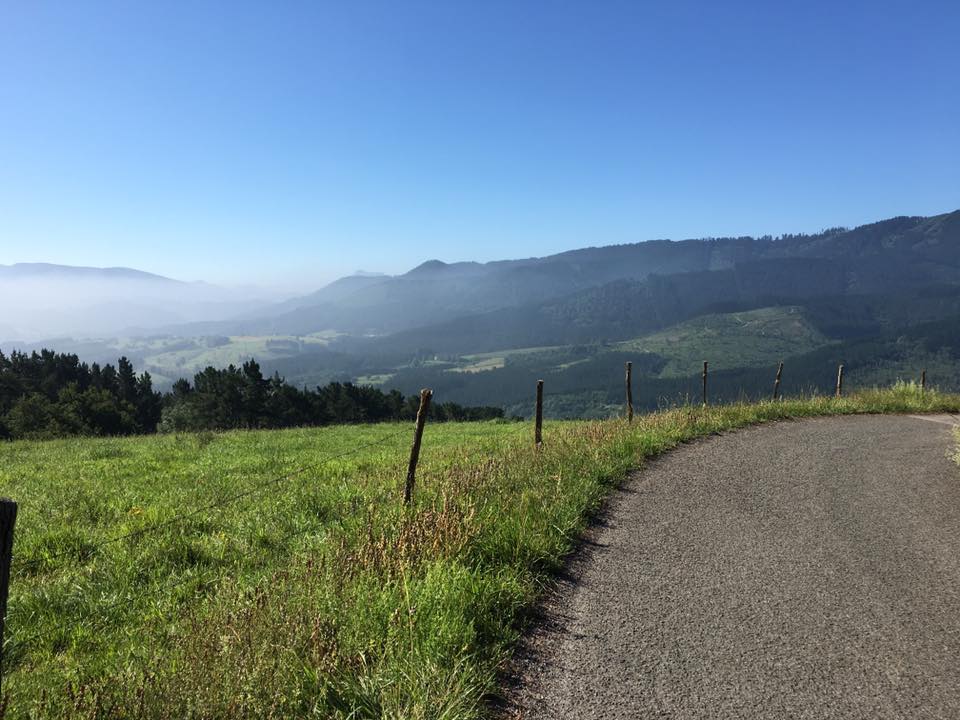
This is a long and difficult stage on the Camino del Norte. Many people split it into two parts, since it goes through the mountains and there are no bars or rest stops in the middle. The last 8 km are the industrial outskirts of Bilbao – factories and huge fences you have to walk along for several hours (if it’s too hard, unpleasant, or very hot – you can always take a bus).
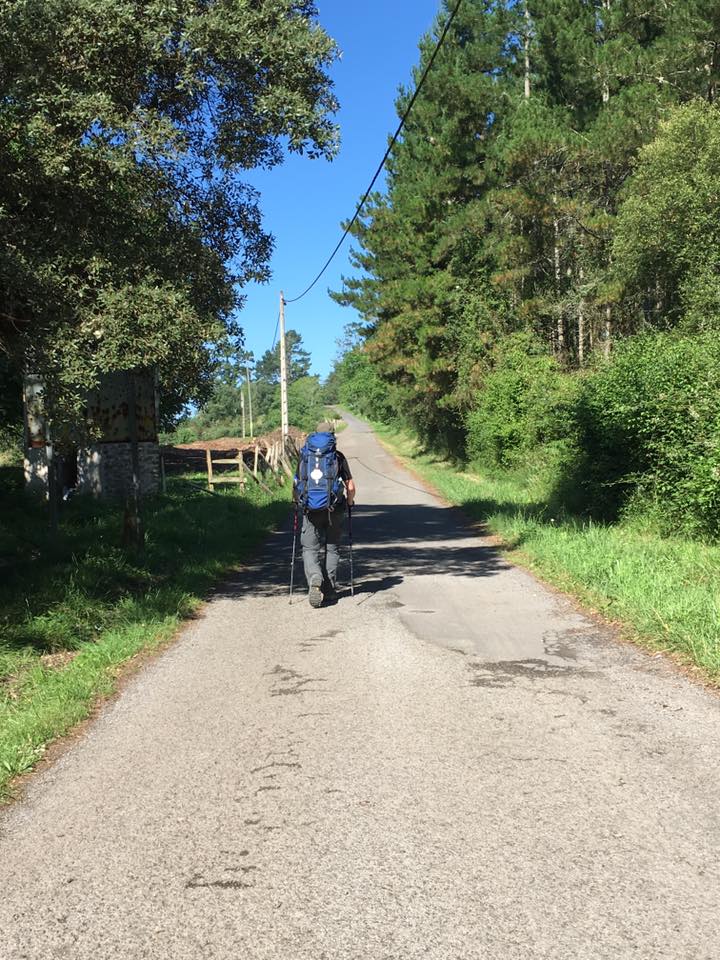
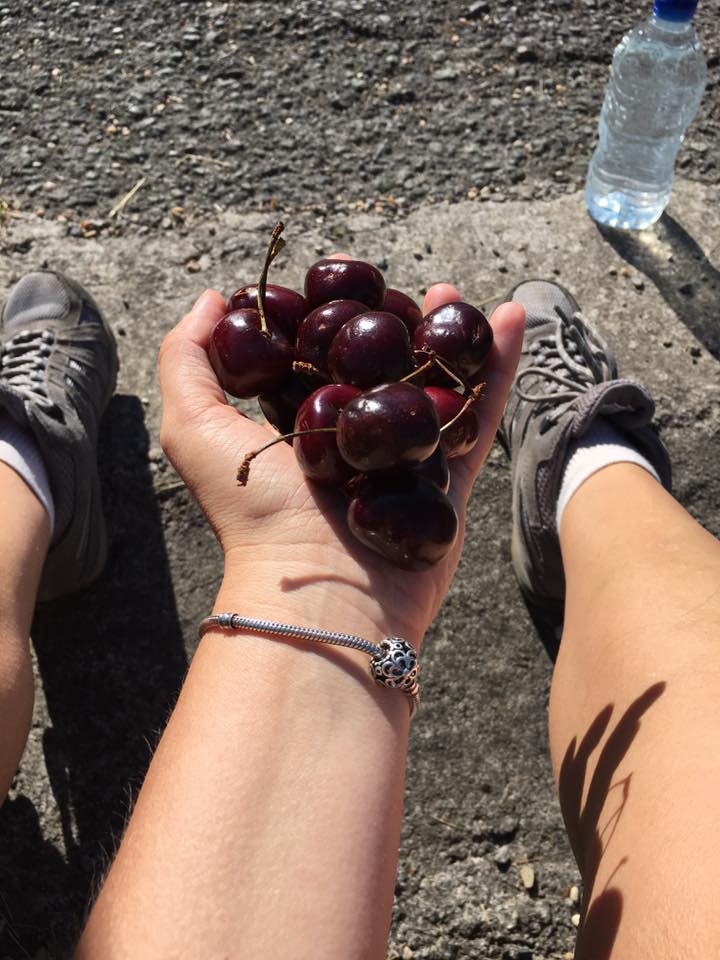
The first half of the route is all ascents and descents. You’ll face a steep climb out of Gernika and a 220 m gain. Also, for the first 17 km, there are no places to stop and eat – take some snacks with you. I had breakfast in a cafe in Gernika, and on the way a pilgrim treated me to delicious cherries.
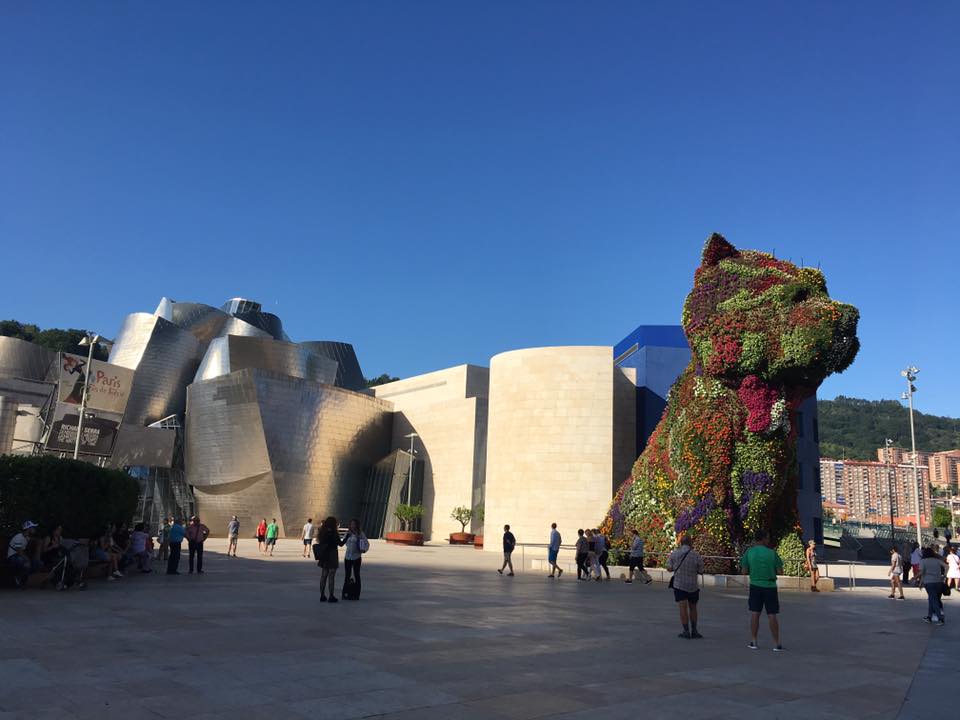
I was lucky – that day the sun finally came out, but some sections, at around 13 km, were dirt and very muddy. The stretch of road from Goiko Elexalde to Zamudio, about 10 km, has no shade. And there is a very steep climb to Monte Aro, followed by a steep descent into Bilbao, 320 m up and down. Keep this in mind, it was very hot.
Bilbao

Bilbao is a large city with a lovely historic center, many hotels, hostels, restaurants, supermarkets, ATMs, and more. If you have time and want to stay two days in one place, Bilbao is a great city for it.

I had long dreamed of seeing Bilbao, so I stayed here for two nights in a hostel. Plus, it was the weekend and the city had a festival of lights, the bars were full of people in carnival costumes. It was very interesting and fun. Also, I wanted to visit a beautiful place near Bilbao – on San Juan de Gaztelugatxe island, which I reached by bus.
And next to it, there is a wonderful beach – Playa de Bakio, which I walked to after visiting the islet with a chapel on it. It was very hot, I swam in the ocean and watched in amazement as the ocean “breathed” — I saw the tide arrive while swimming.
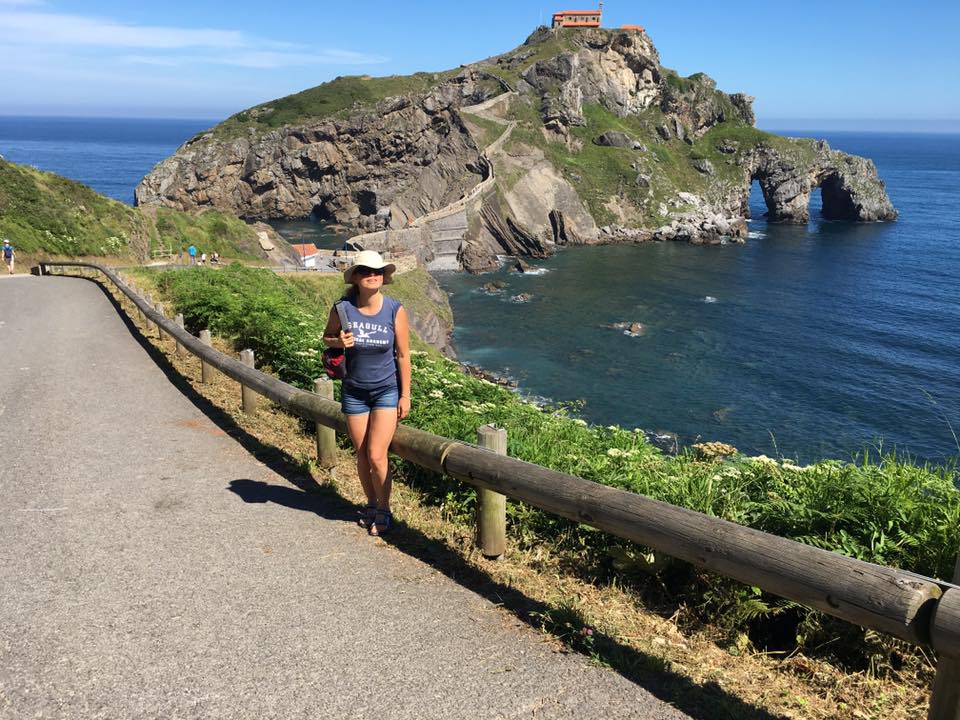
Also, when staying in Bilbao, you must check out the modern part of the city, Guggenheim Museum, Paseo de la Memoria, Park da Ribera, etc.
Specially about Gaztelugatxe

30 km from Bilbao there is the island of Gaztelugatxe, which was formed millions of years ago as a result of a volcanic eruption. The island is connected to the mainland by a long man-made bridge. At the top of the island stands the San Juan de Gaztelugatxe Chapel, built back in the 10th century in honor of Saint John the Baptist.


There are steep stone stairs with 237 steps leading up to it. According to legend, it took the saint only three steps to cross the small island and catch up with the devil he was chasing. In honor of such a peculiar record, at the site of the victory of good over evil, the chapel was built.
According to historical records lost in the mists of time, in the 11th century the chapel belonged to the order of the Templars. It then briefly became a monastery, sheltering monks for several centuries. In the 14th century, they were in turn succeeded by the knights of Biscay, who fought on the impregnable rocks with the king.
In the 16th century, a hermit lived in the chapel, warning sailors of storms by ringing the bell. Perhaps that’s why local sailors developed a tradition of giving thanks to Saint John for the safe return home.
Today the church resembles a museum, which collects donations from people seeking the saint’s intercession and help. Fragments of boats adorn the altar, and paintings by the local artist—who is also a church warden—hang on the walls. Tourists love this place for the beauty of the views and the opportunity to make a wish, striking the bell three times. It is sure to come true, as long as the wish is sincere.
Where to stay in Bilbao:
- Bilbao Akelarre Hostel – I stayed for two days in this hostel in the city center on the riverbank. A very nice and convenient place for city walks, also nearby is a bus stop going to the island of Gaztelugatxe.
- Hostel Claret Enea – a municipal albergue, located on the trail, but not in the city center, rather the opposite. It operates from May to October.
- Pension H30 SALCES Licencia HBI01292 – a very nice guesthouse with clean beautiful rooms and a reasonable price, located in Old Bilbao.
Day 7: Bilbao – Pobeña
26 km: Bilbao – Getxo (river)/Cruces – Retuerto – Sestao (mountains) – Portugalete – La Arena – Pobeña
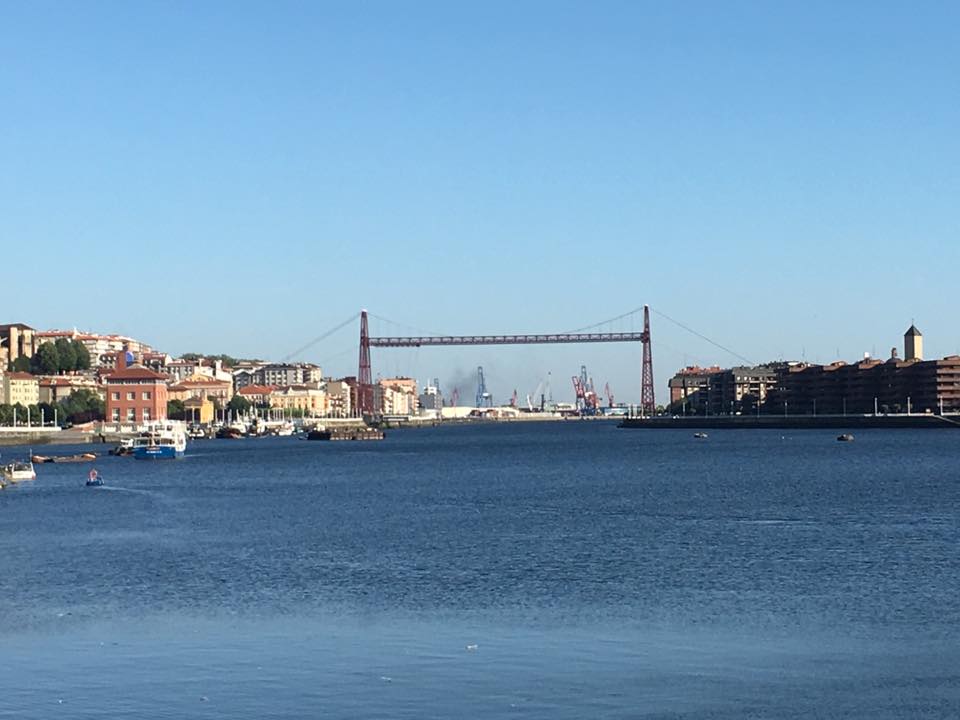
There are two ways to leave Bilbao on the Camino: the first—along the river through the suburb of Portugalete, the second—climbing up and away from the river. The first is easier and more interesting, the second is longer and does not pass through the modern part of Bilbao, for example, the Guggenheim Museum, plus it features a steep ascent and descents.
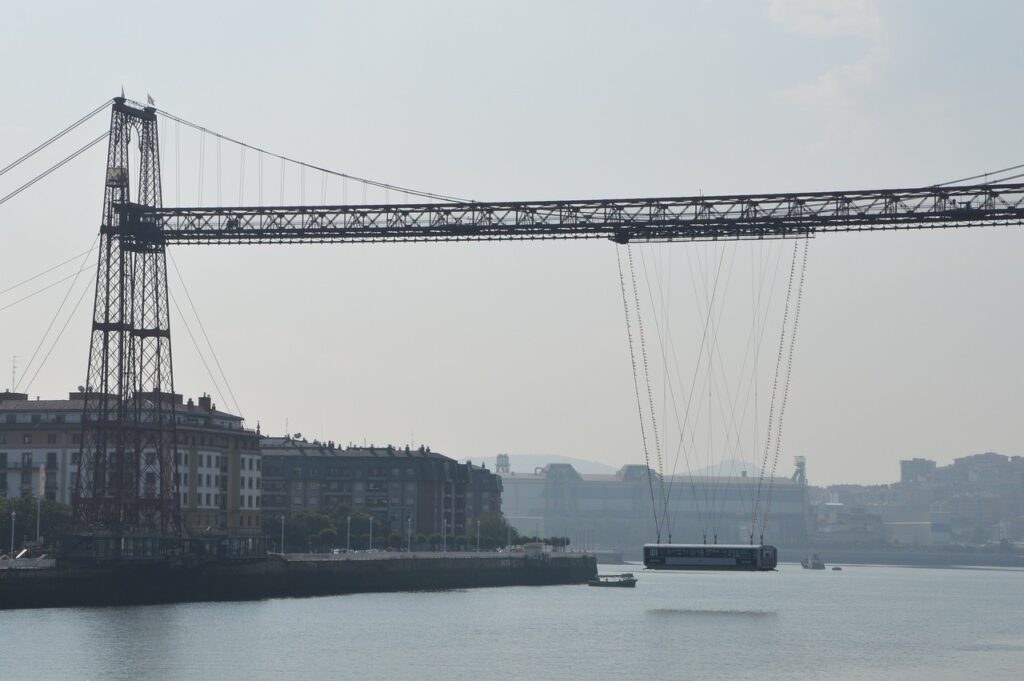
I walked along the promenade to the unusual transport hanging bridge of Biscay (Vizcaya), which connects both banks and two suburbs: Portugalete and Getxo. The start of the walk was beautiful: along the river, past the modern part of the city. The second half passed through the industrial outskirts of Bilbao. To get to the opposite side, you will have to cross the bridge. Crossing this moving bridge takes 2 minutes and 2 euros.
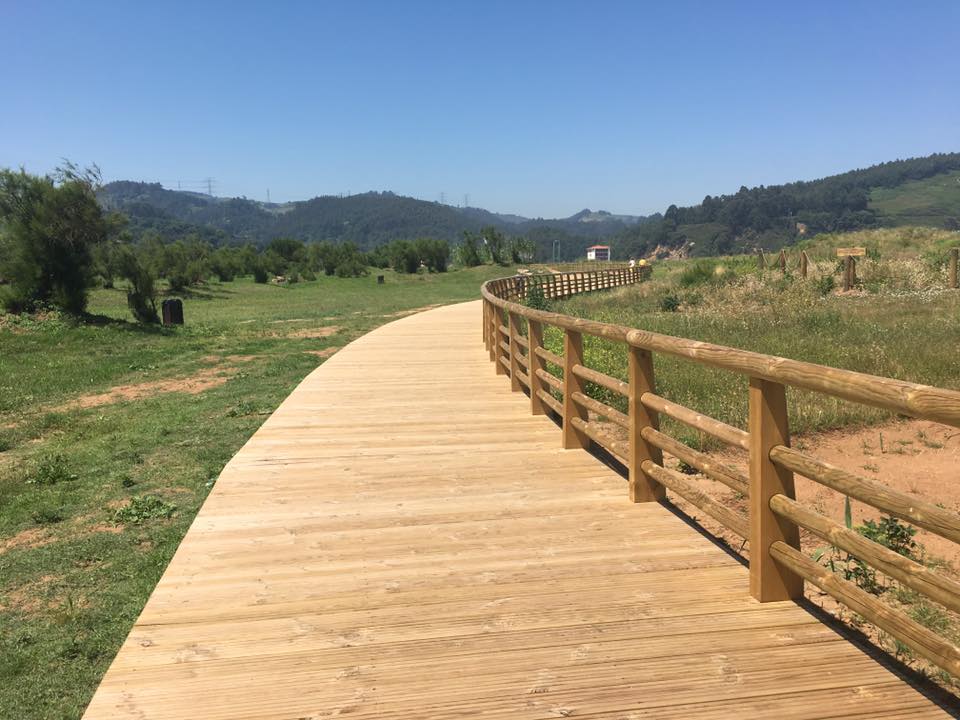
Some people skip this part and take a bus from Bilbao to Portugalete, because they don’t want to walk through the city’s industrial areas. For about 8 km after the modern part of Bilbao to Getxo, you go through the industrial zone, quite a boring landscape.
I followed the official (historical) route, which goes along the bike/pedestrian path almost all the way to La-Arena beach. The alternative route is more urbanized and goes through some towns and roads.
Pobeña
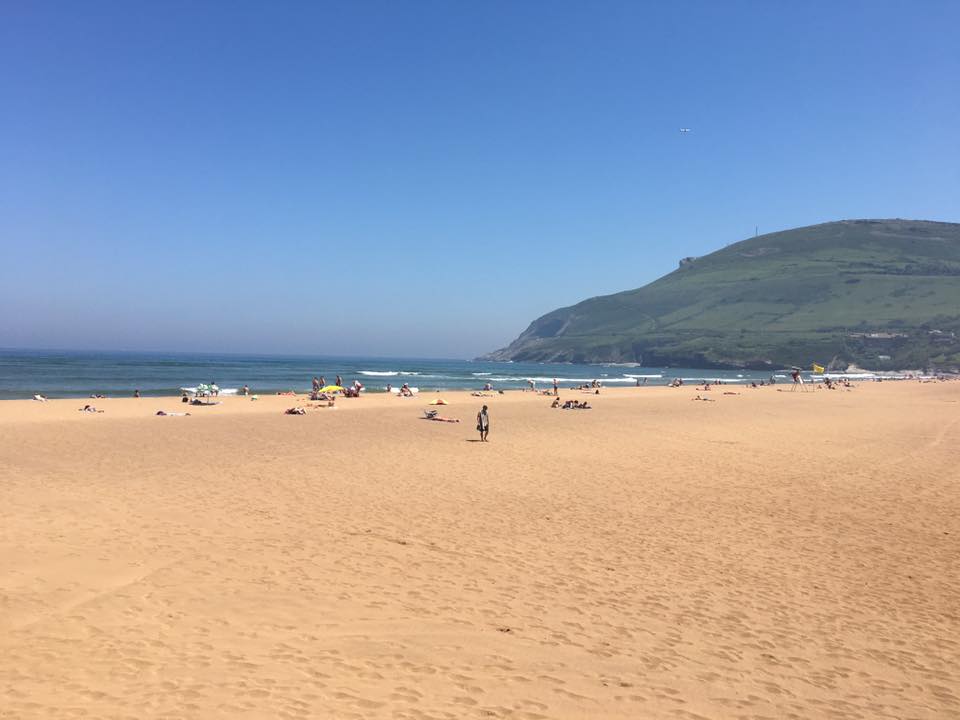
This is a tiny village by the beach; there’s nothing to do here except go to the beach, sit in a bar, etc. I arrived at the albergue an hour before check-in, stood in line (here settlement depends on who arrives first). I waited for check-in, dropped off my things, and went to the beach. I didn’t swim, just looked at the ocean.
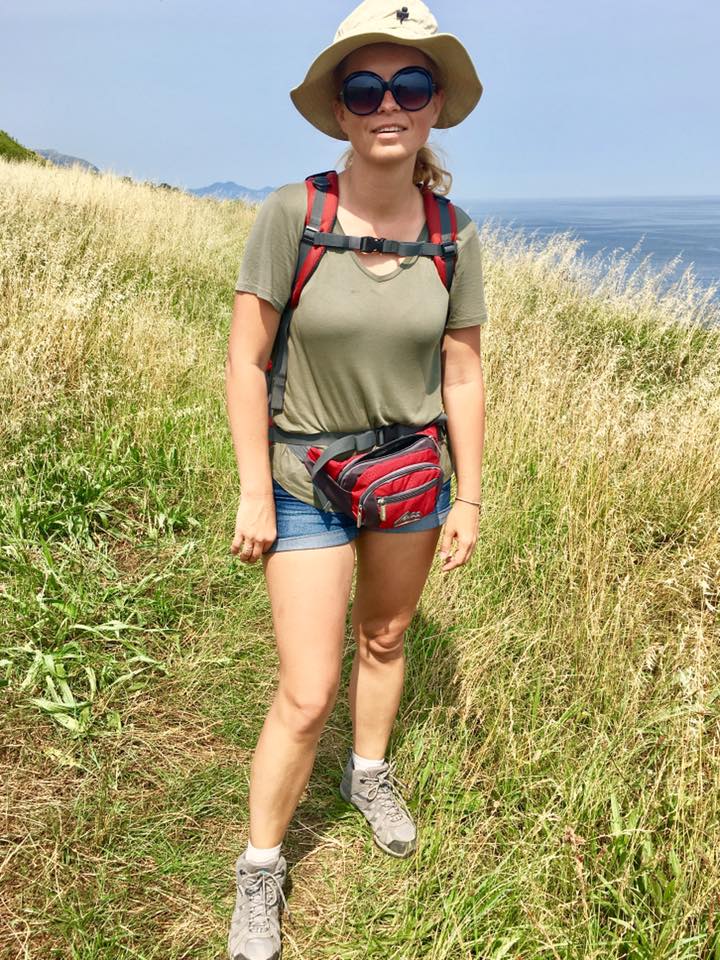
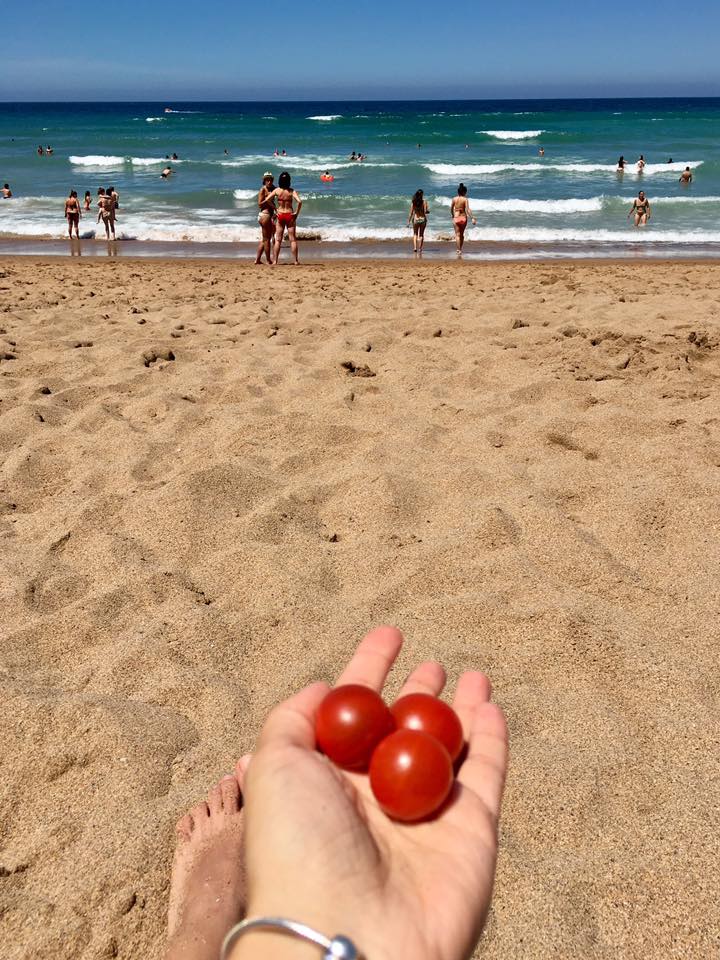
The albergue is very basic, donativo – you give as much as you can (at that time it was believed that the minimum was 5 Euros, now probably 8-10). I especially remember that evening—there were lots of pilgrims, some slept on mattresses on the floor. And some even in tents outside. And at night there was a downpour, and they also came inside and slept on their mats in the kitchen on the floor.
Generally, that albergue is more like a pioneer camp—the hospitalero, like a disciplinarian, yelled at everyone after 10 pm, didn’t allow to even whisper. And everyone in the room found it so funny that instead of silence there was laughter—we giggled like children, it was such a hilarious situation.
Where to stay in Pobeña:
- Albergue de peregrinos de Pobeña – municipal albergue donativo—there’s a washing machine, microwave, several showers, beach nearby. 25-30 people per room.
- Casa Rural Mugarri – a house with nice rooms, bed linen and towels, and a very nice restaurant nearby.
Day 8: Pobeña – Islares
23 km: Pobeña – Ontón – Baltezana – Santullán – Castro Urdiales – Islares

Today the Camino almost the whole day goes along the coast. I started my journey early in the morning and was able to enjoy a beautiful sunrise—the best view of the day.
The wonderful Paseo Itsaslur trail, the first part of the route from Pobeña, with ocean views, stretches for about 5 km. After passing it, I leave behind the Basque Country and enter Cantabria, which is no less stunningly beautiful, but a bit cheaper.
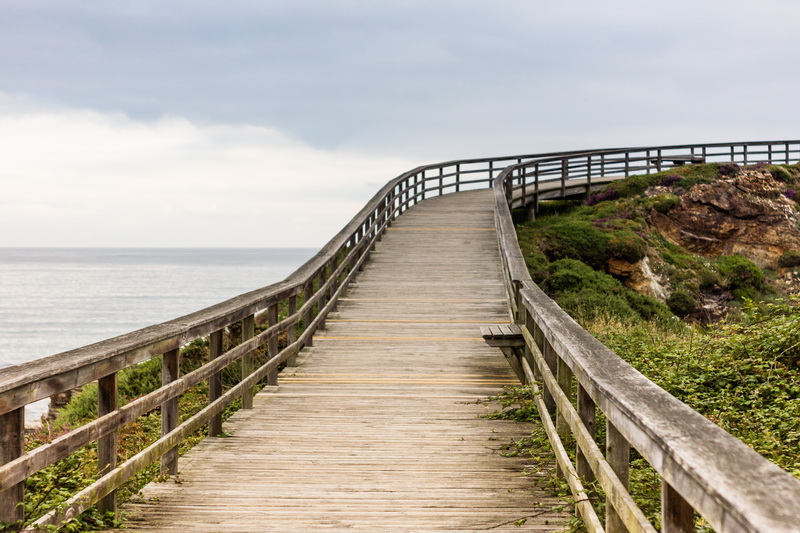
In Ontón, the route splits into two parts (I wandered here a bit to get to the one that goes by the sea). So, one route goes along the coast (alternative path), and the other goes inland—uphill (original path). Both routes are marked.
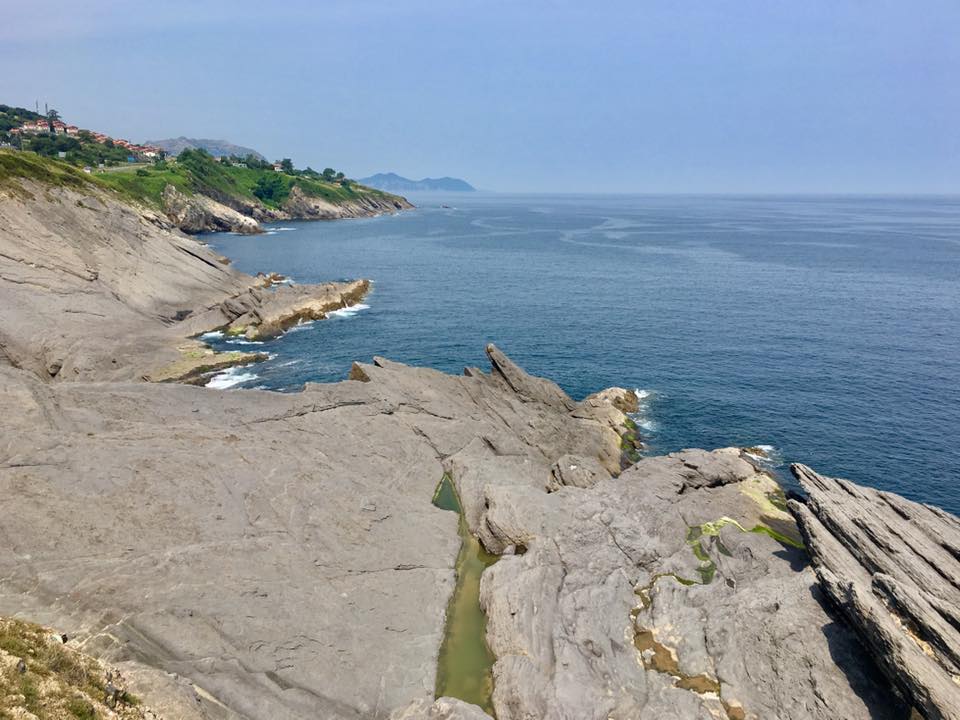
The coastal route is about 5 km shorter than the official one and you really do see more of the coast. But there is a downside—you have to walk a couple of kilometers along a winding road.
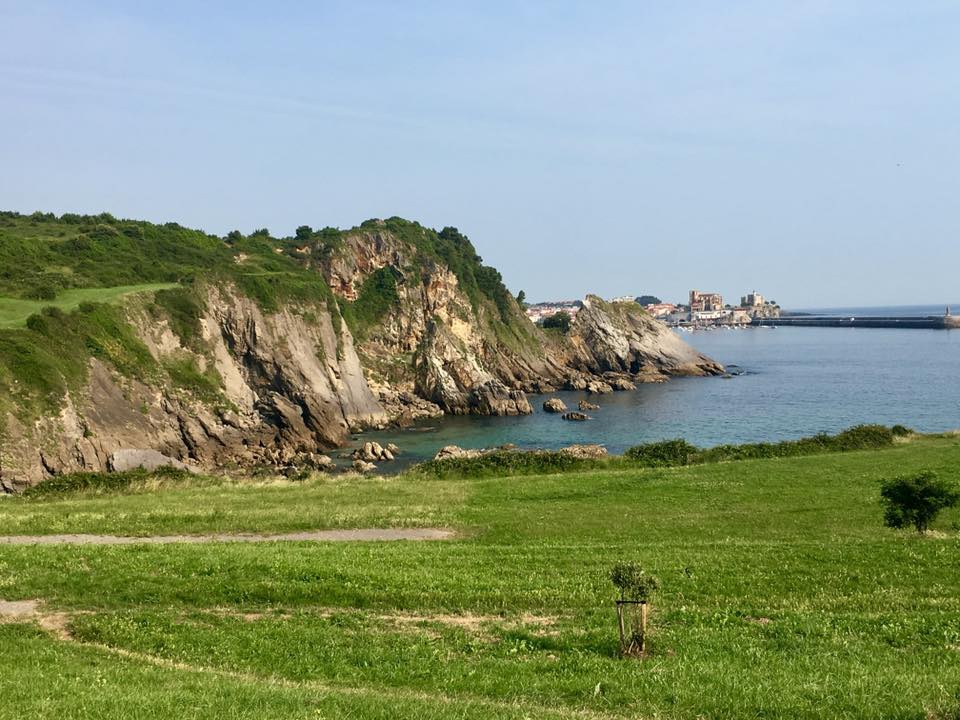
If you plan to stay in Castro Urdiales, choose the longer route, otherwise you will arrive in the city too early and have to wait a couple of hours until the albergues open. If you plan to walk further—that’s what I did—I recommend buying food in Castro Urdiales, there are no other shops along the way. I bought fruit and vegetables because I planned to stay overnight at the campsite on the ocean shore.
Castro Urdiales

Castro Urdiales — a wonderful town with a beautiful promenade, a lovely castle, several churches, many bars, and restaurants. I spent a couple of hours in this town—had some coffee, looked at the promenade and the wonderful Iglesia de Santa María de la Asunción. I highly recommend seeing it inside—it is incredibly beautiful. I was especially impressed by the statues of the saints and Jesus—they seem alive, it gave me goosebumps.
Then my path (about 2 km) went along trails and pastures by the ocean. As usual, I got lost a couple of times, scraped my knees on bushes, but got back on track after seeing Camino arrows. When I arrived in Islares, I was a little disappointed.
Rest in camp
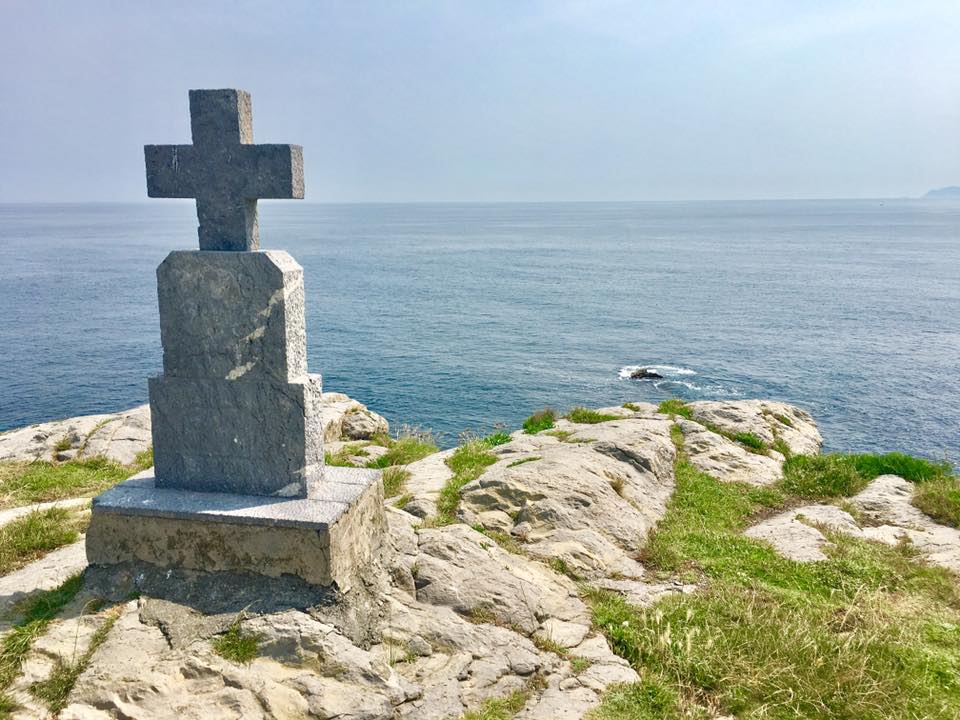
After 21 km, I was hoping for the simplest pleasures—a bed, a hot shower and the chance to cook dinner in the kitchen. But instead—the hostel was closed for maintenance or repair, so Ira, keep going another 3-4 km in the heat. That brings tears to your eyes and an overwhelming sadness, together with a huge blister, which makes every step feel like a bullet in the back.
A local resident showed the way to a campsite where you could spend the night.
I went to a nearby campsite where pilgrims were given discounts—you could share a small cabin (a metal hut) with someone, or stay in an 8-bed tent. I got a spot in a cabin with an elderly pilgrim who snored heavily. But earplugs always solve those problems. So I decided to radically deal with my blisters, again took off the compeed, cut off all the extra useless skin and left this beauty to dry out overnight. And it worked!
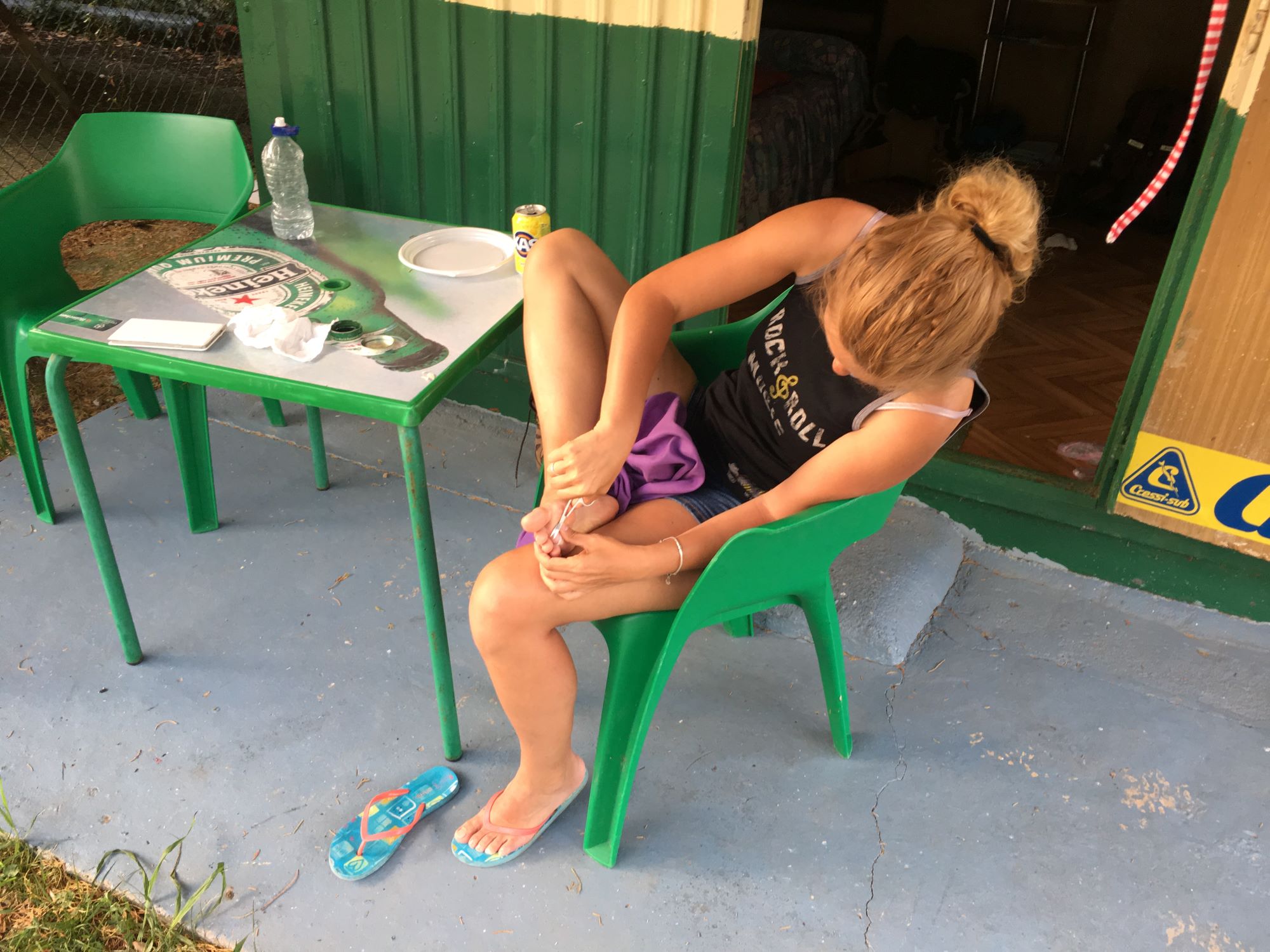
After settling in, I went to the local beach and even managed to swim in the ocean before the water receded from the shore. I watched the sunset and went off to feed the mosquitoes, which ate me alive that evening at the campsite.
Where to stay in Castro Urdiales/Islares:
- Camping Playa Arenillas – campsite in Islares, where I spent the night by the ocean.
- Albergue de Santullán – clean inexpensive albergue in Castro Urdiales, which can be booked in advance on Booking.com
Day 9: Islares – Santoña
22 km: Islares – El Pontarrón – El Puente – Liendo – Laredo – Santoña
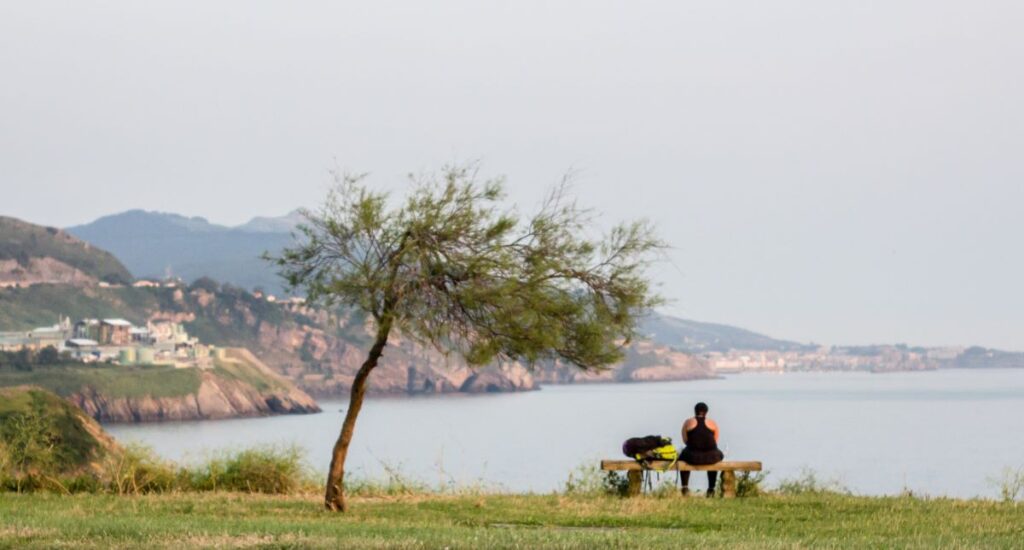
In the first half of the stage, you will need to go around the river via a bridge located in the village of El Pontarrón. Also, right by the bridge, you’ll need to choose one of the paths: the official mountain route, or partly along the main road and then along the ocean—the alternative route. I chose the one closer to the sea, even though I had to walk about 6 km to Liendo along the busy roadside.
The official route is much longer, the difference is about 6 km longer than the one I took. Also, the official has a rather long and steep climb. But I got to see stunning sea views along the way between Liendo and Laredo. The trail goes high in the mountains towering above the water—the views here are fantastically beautiful.
Laredo
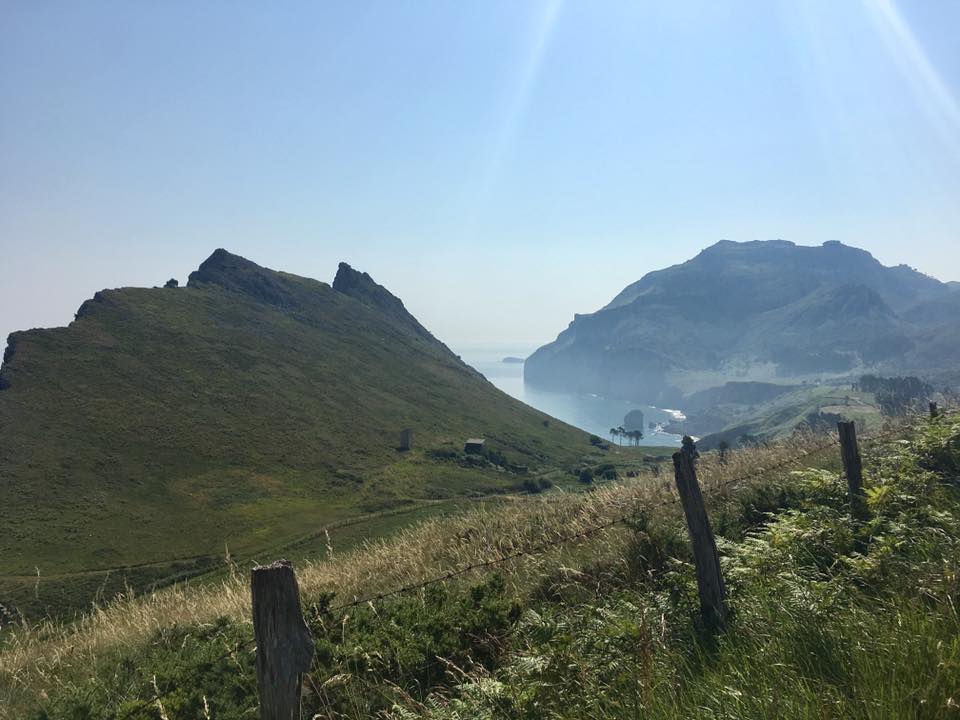
I walked through the mountains along the sea, with a persistent feeling that I was back in Crimea. I remembered my first trek in Crimea in the summer of 2007 and nearly burst into tears—how things change: Crimea is occupied, I may never visit it again, and yet here in Spain the scenery and feelings were just as fresh.
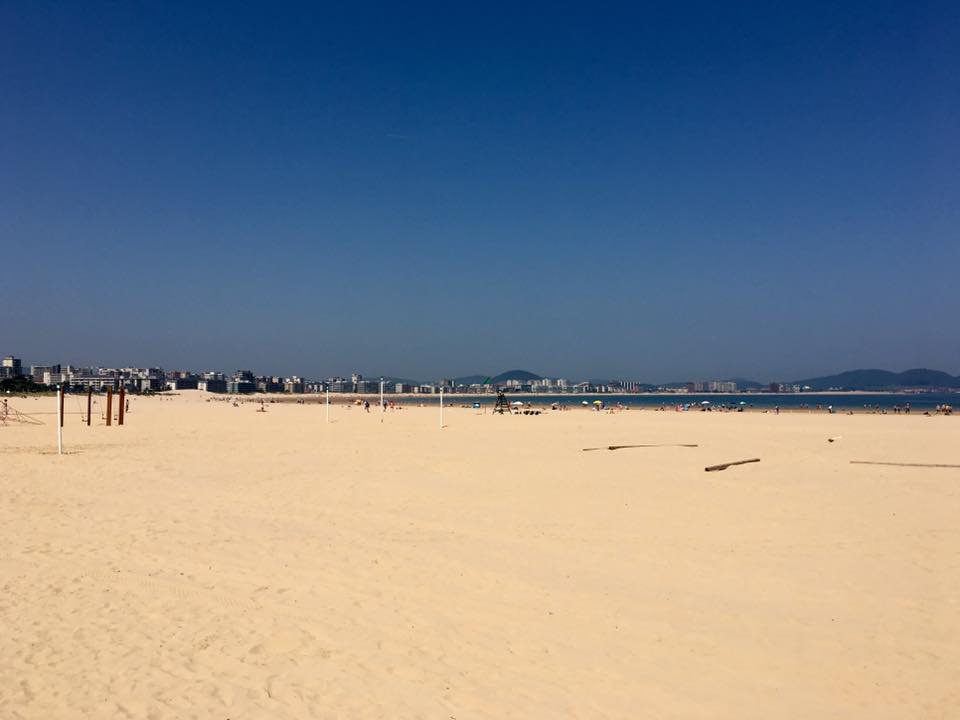
Then for five kilometers I descended like a baked potato to Laredo—a resort on a vast sandy spit, where during the day there’s nowhere to hide your body from the merciless sun. The town of Laredo—a huge beach—impresses, the route goes through Old Laredo with its many restaurants and bars.
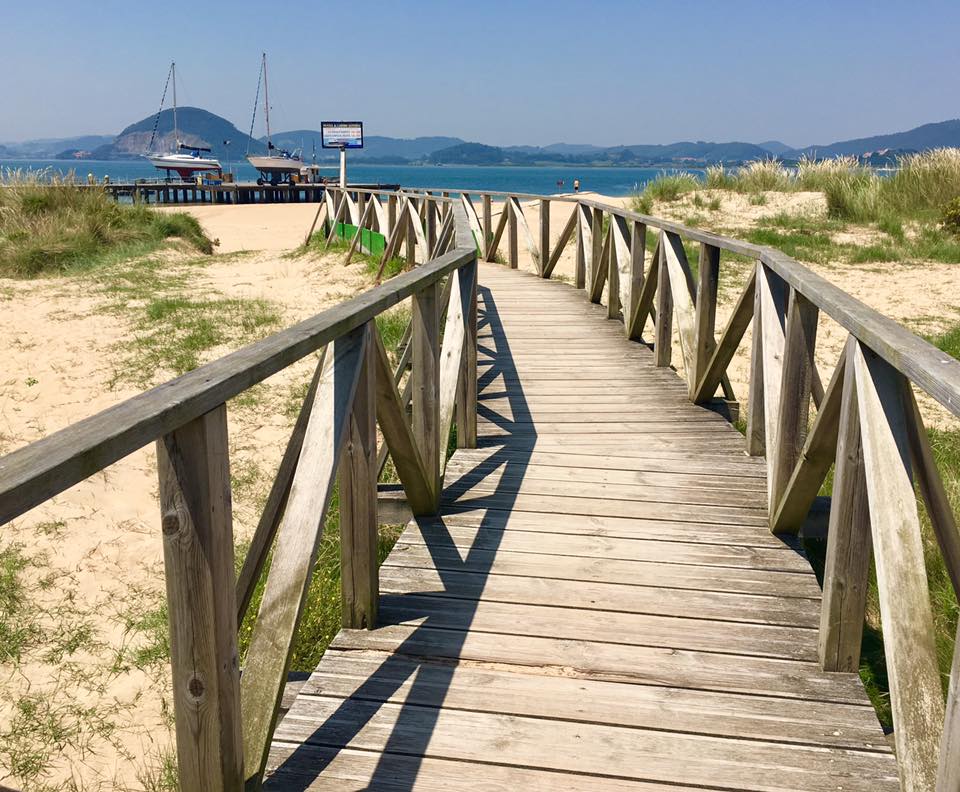
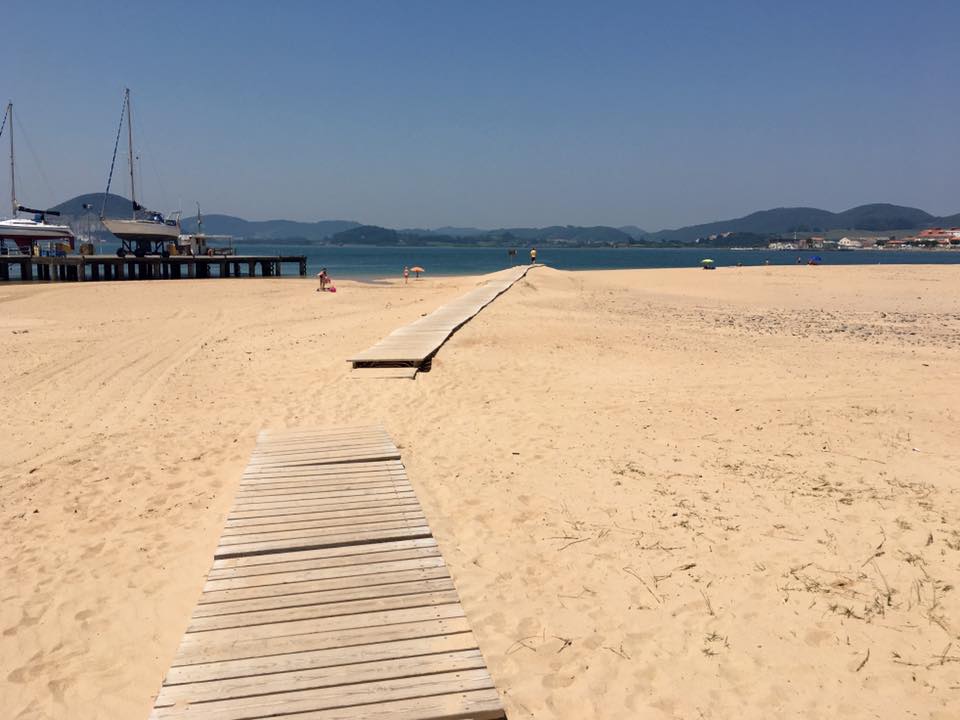
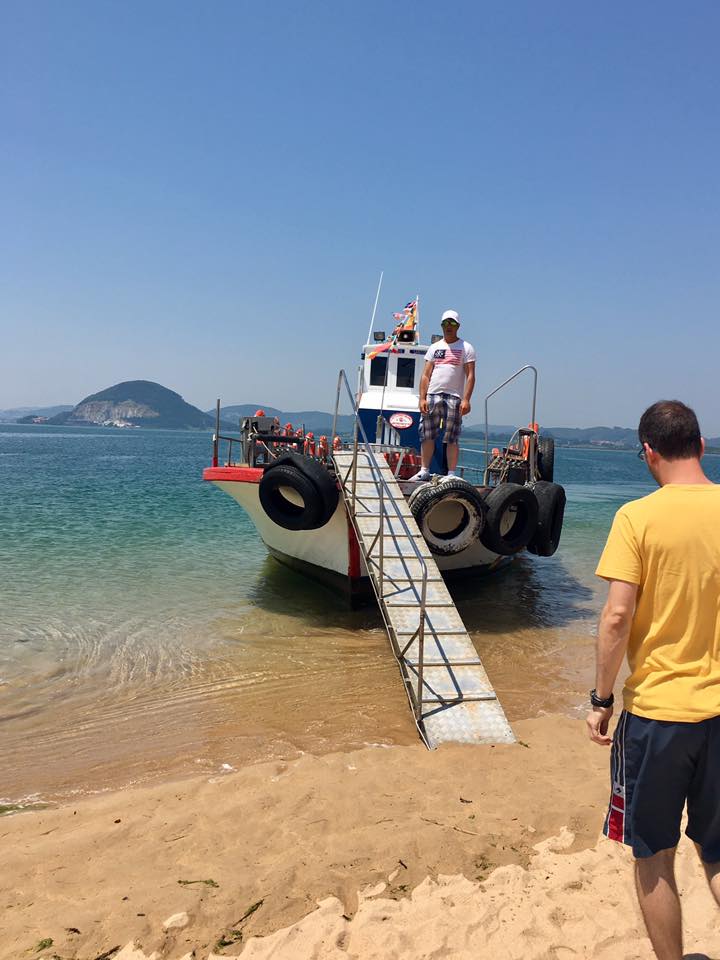
But I planned to go further, to Santoña, so I had to leave the sea and go through modern neighborhoods to reach the ferry (boat) that takes passengers across the lagoon. To get from Laredo to Santoña, you need to take a small ferry; the first leaves at 9 am, then runs continuously. The crossing takes about 5 minutes.
Santoña
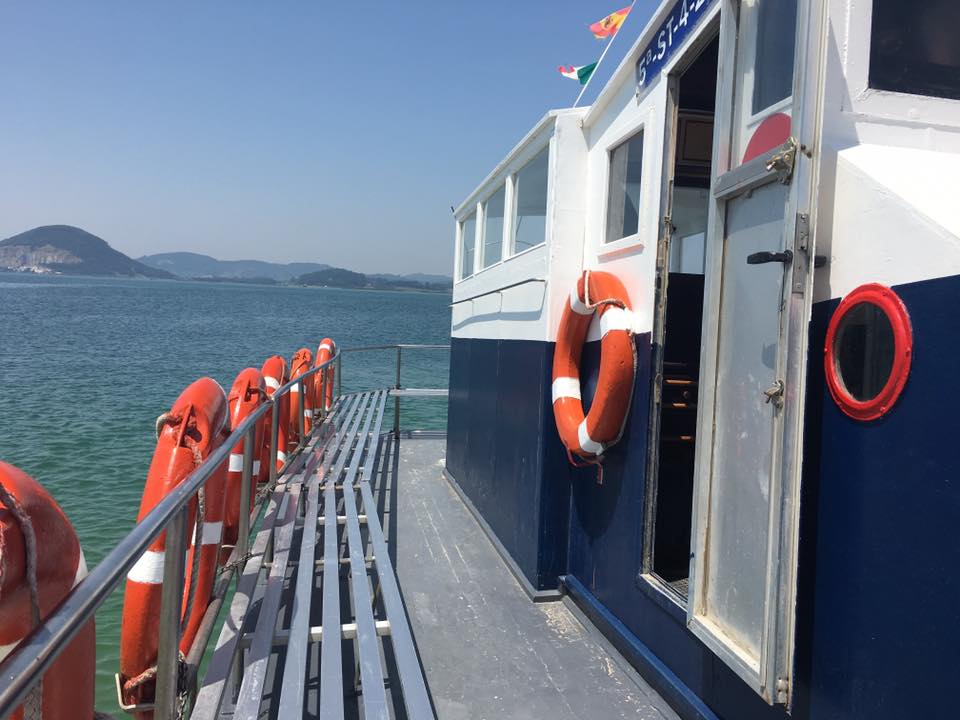
When the boat brought me from the hot sandy spit of Laredo to the lovely town of Santoña, I immediately came back to life. The smell of the sea and seafood, the white walls of the coastal town, fragrant fruits and vegetables, and the albergue in an old building with high ceilings. Paradise…
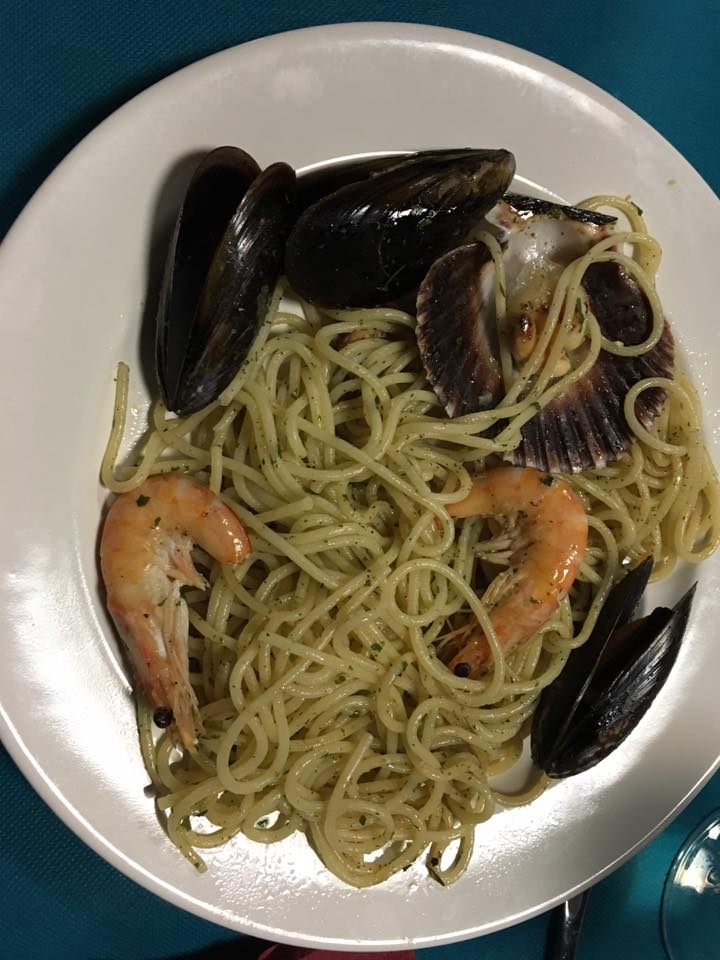
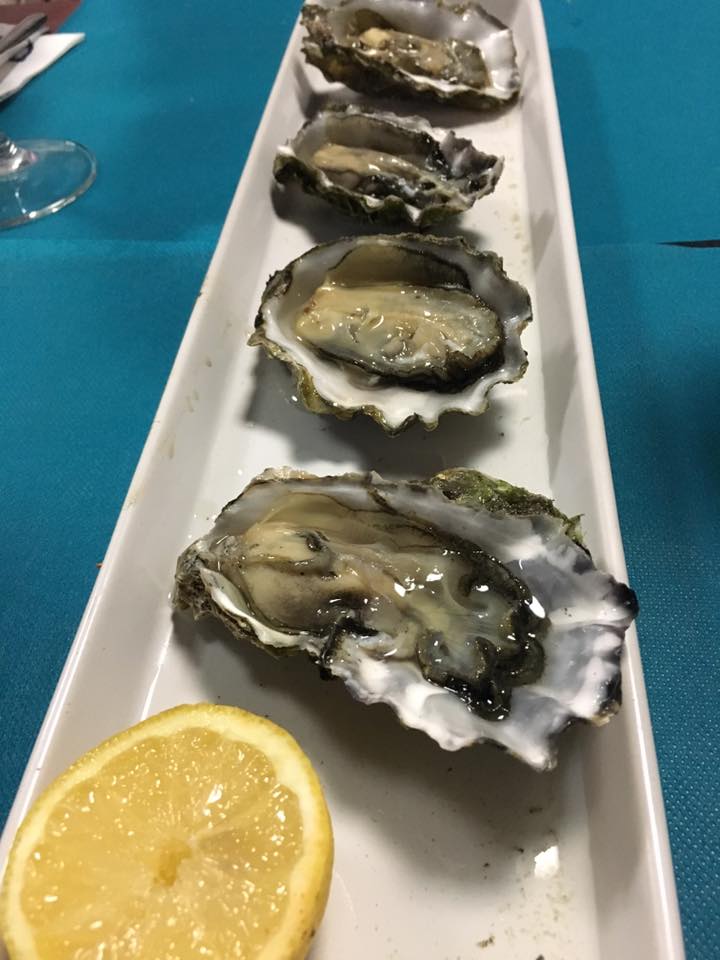
I washed up, rested, and in the evening went looking for something to eat. It really is paradise—every cafe and restaurant offered seafood cuisine. I ordered scallops, seafood pasta, wine. I ate so much that I could be rolled down the street. But I walked along the promenade to shake off at least a few calories.
I ate on the Camino del Norte like crazy—because the food here is so delicious. These seafood creatures, pintxos, fish, and tortilla nullify all the kilometers I walked during the day. My weight didn’t change, but for some reason my figure got better.
Where to stay in Santoña/Laredo
- Albergue juvenil Turístico-Deportivo de Santoña – a nice cheap albergue in Santoña with all the amenities.
- ALOJAMIENTO CASA LEÓN – very clean rooms in a guesthouse at a low price.
- Alojamiento Miramar – also affordable nice rooms at a reasonable price—good for a couple, there are also single rooms.
- Albergue-Residencia Casa de la Trinidad – inexpensive albergue in Laredo, for 10 Euros—a dormitory bed, for 15 euros—a private room.
Day 10: Santoña – Santander
28 km: Santoña – Gama – San Miguel de Meruelo – Noja -Galizano – Somo – Santander

By the way, from Laredo you can walk either the coastal route through Santoña, or go inland via Colindres. I tried to always stay by the ocean to see several beautiful beaches: Playa de Berria, Playa de Trengandin, cliffs, hills, and more.
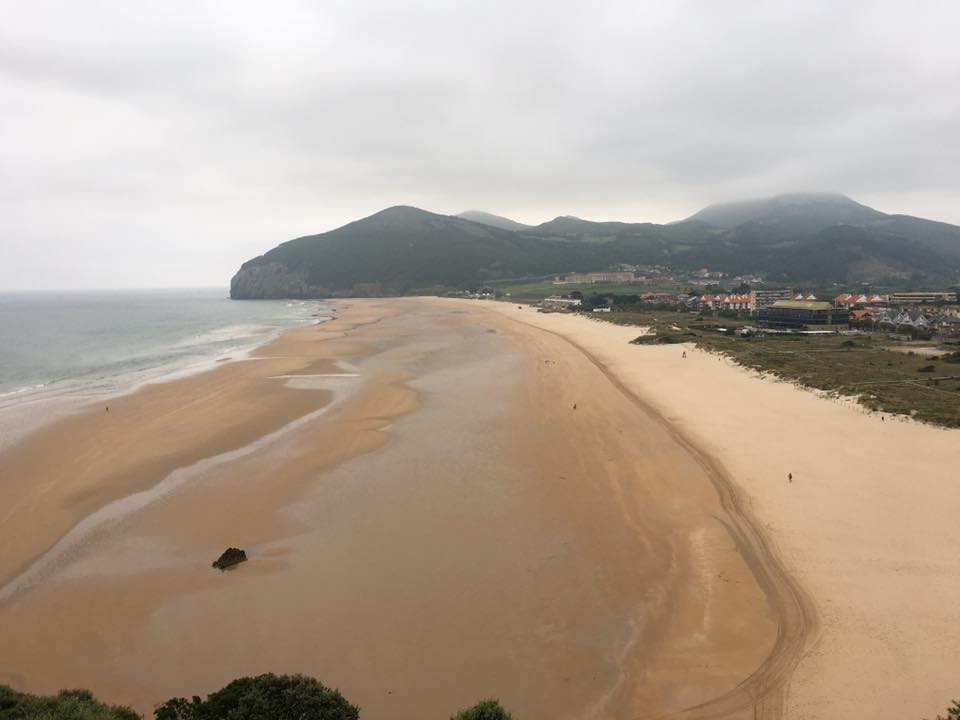
But in the morning I left Santoña and went toward the ocean. The weather suddenly changed from 34 to 22 degrees, you can walk for a long time, only your feet won’t allow you to go further. I passed by a huge prison, and finally reached the beach. The path goes along the sand, but you have to climb over a hill that separates the two beaches. In principle, it’s not hard if you don’t have knee problems—the whole hill Punta El Brusco is covered in sand that slips from under your boots.
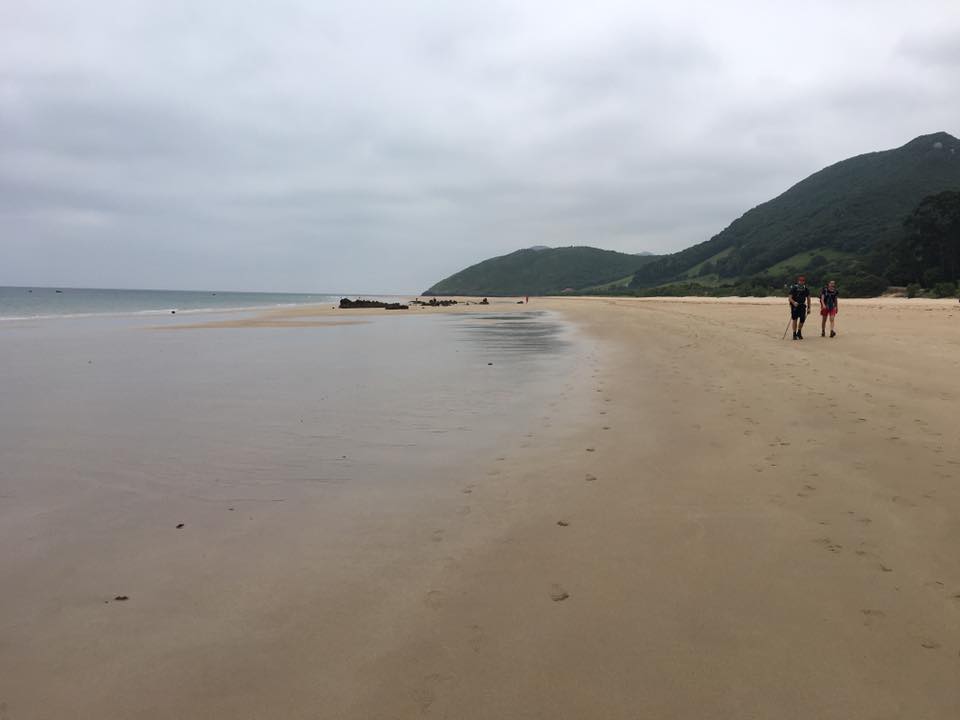
Very beautiful beaches Playa de Berria and Playa Trengandín, at the end of the latter on the coast is the town of Noja. Here you can have coffee at a beachfront cafe or on Plaza de la Villa, or visit the San Pedro church.
Guemes
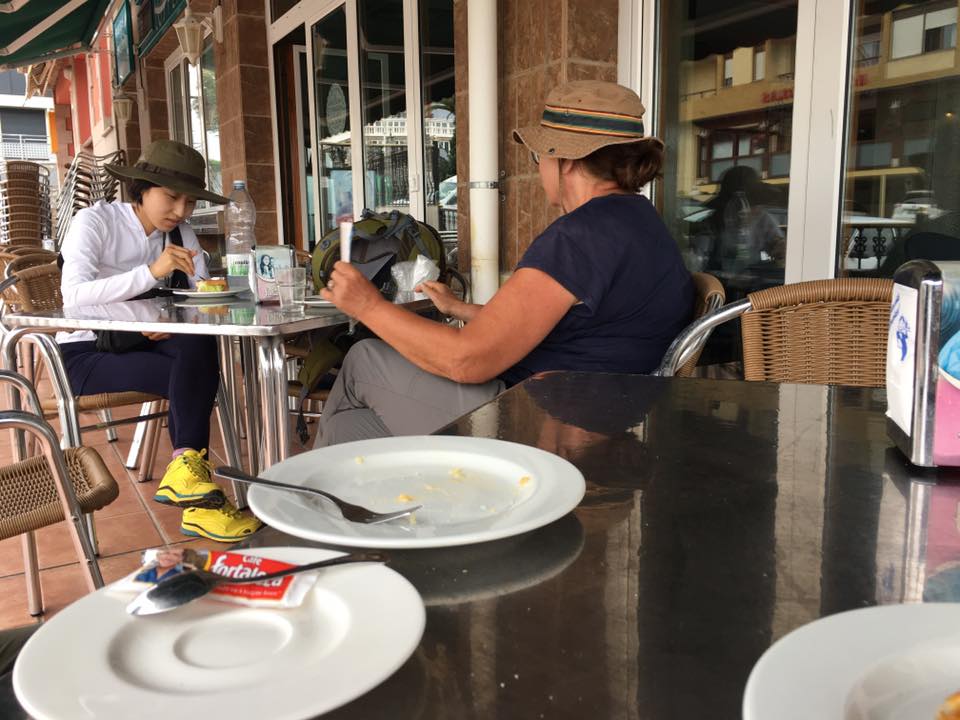
Most pilgrims plan to spend the night at the Albergue in Guemes—Albergue de Peregrinos de Guemes. This albergue was opened by a Camino enthusiast—Padre Ernesto. He did a lot for the spread of information about the Camino—a truly legendary figure.
But apart from that, every evening he greets pilgrims and provides them with accommodation for a small fee. For this, pilgrims listen to his sermons about world peace (in fact, his own views on various things, which may not coincide with yours). I didn’t want to be part of this man’s daily performance, and it’s impossible to opt out. So I went further to Santander.
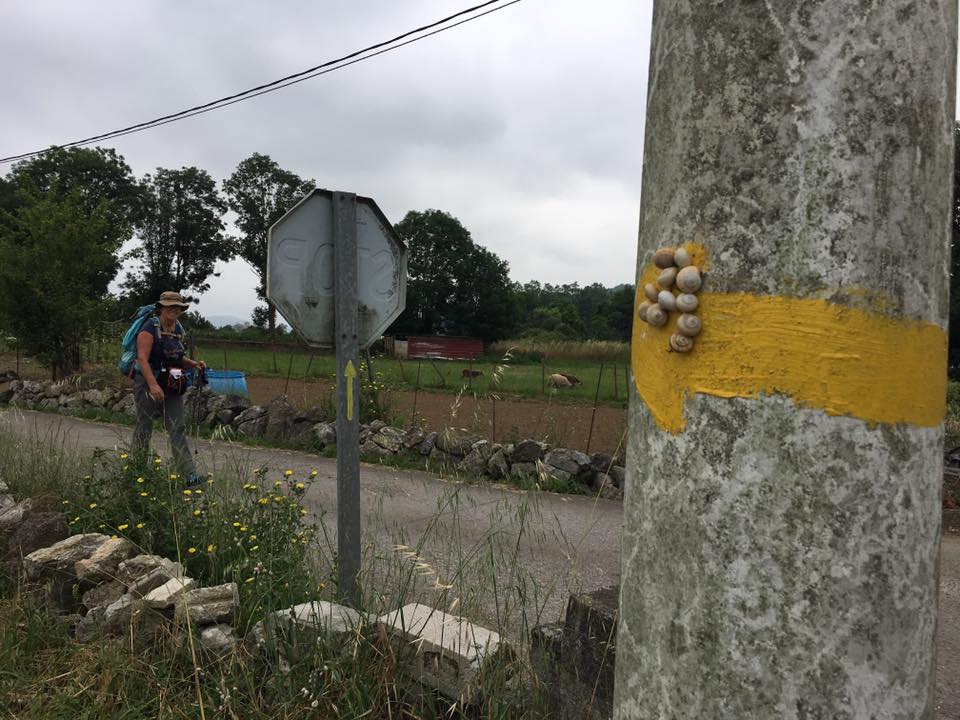
From Guemes you have two route options: 15 km and 13 km. The longer route is the most beautiful; from here, there are some of the best views on the Camino del Norte. The route goes along the coast past hidden beaches, impressive cliffs, and unreal scenery.
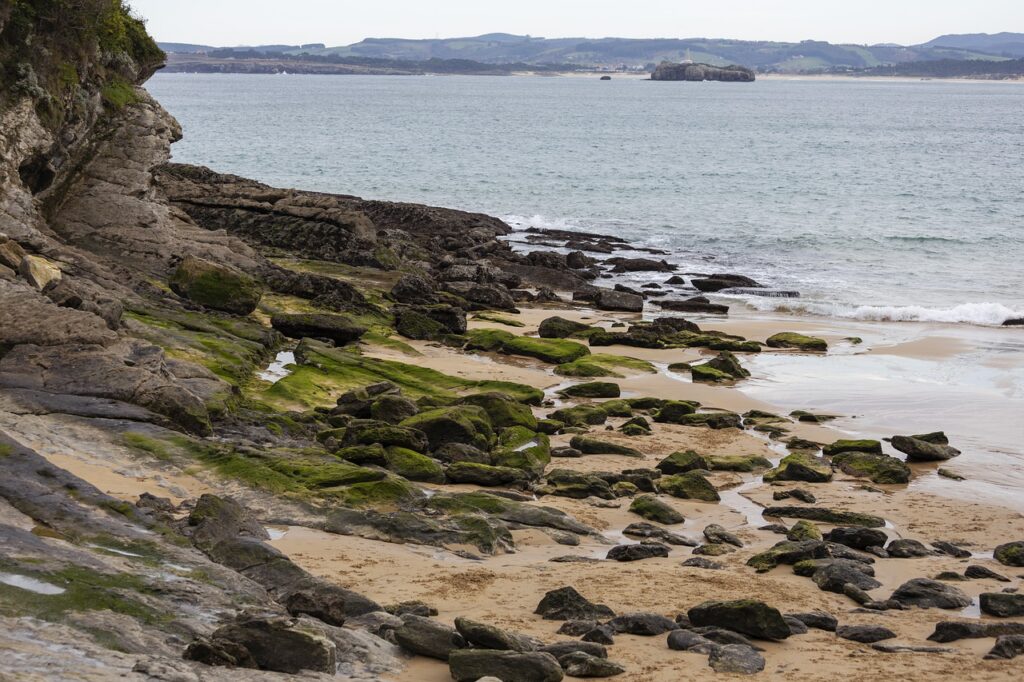
The last part of the way from Laredo to Somo goes along the beach. If the day is nice, you may want to stop here to swim or simply enjoy the view. Even in summer, there aren’t many people on this beach. But when I walked there, it was cloudy, and I didn’t feel like swimming, just wanted to get to lodging as soon as possible—I was so tired.
Santander

That day I decided to walk 28 km, but when I was going to the hostel in Santander, I felt that I might not make it to my bed—my legs hurt so badly that the soles were on fire. By the way, it’s already day 10. And although one of them was a “rest” day in Bilbao, I still managed to walk about 25 km there—I can’t sit still.
I was saved from Somo by a boat that crosses the lagoon. Instead of walking extra kilometers around via the motorway, I crossed it in 15 minutes by boat.

If you have extra time, it is better to stay for two days in Santander. This is a very beautiful city with wonderful beaches, restaurants and bars, as well as many interesting places worth visiting. But unfortunately, I didn’t have time, and my legs hurt very badly. I couldn’t walk—I could only lie down or sit on the edge of the bathtub, dipping my feet in cold water. Even going out to eat was only possible with great pain in my feet.
Where to stay in Santander:
- Albergue de peregrinos Santos Mártires – a cheap simple albergue that accepts pilgrims.
- Santander Central Hostel – I stayed at this hostel, booked it a day ahead via Booking.com.
- Hospedaje Magallanes – a nice guesthouse if you’re traveling as a couple, double rooms at a very reasonable price.
Day 11 – Santander – Izzaria
30 km: Santander – Mar – Boo de Piélagos – Santillana del Mar – Oreña – Caborredondo

In the morning I was already feeling better, but my feet still hurt. Today, according to two pilgrims (those who had already walked here), I learned that there’s no point in slogging all 37 km from Santander to Santillana del Mar. They recommended, given my condition, to take part of the way by train. I didn’t miss anything important, skipping the industrial part of Santander, where you have to walk by fences and sidewalks between houses and factories.

I took the train and got to Boo de Piélagos, from where I walked first across the bridge over the Pas river, and on through villages and fields. In the second half, about 2 km after Polanco, the scenery of rural countryside begins: towns, villages, and chapels. I had bought some wonderfully huge cherries in Santander, ate them on the way, and even hung them from my ears like earrings, just like in childhood.
Santillana del Mar

Santillana del Mar is a charming town with many interesting sights both in and around it. Santillana del Mar turned out not to be by the sea as its name might suggest, but quite far from it (if you’re walking). The town is nice, tourist-groomed.

But the number of bus tourists and pilgrims scared me—I decided not to stay here overnight. Strolling, seeing the town, having coffee—fine. An hour was enough to look at the outward trappings and decide I needed to get further away from museums and their visitors.
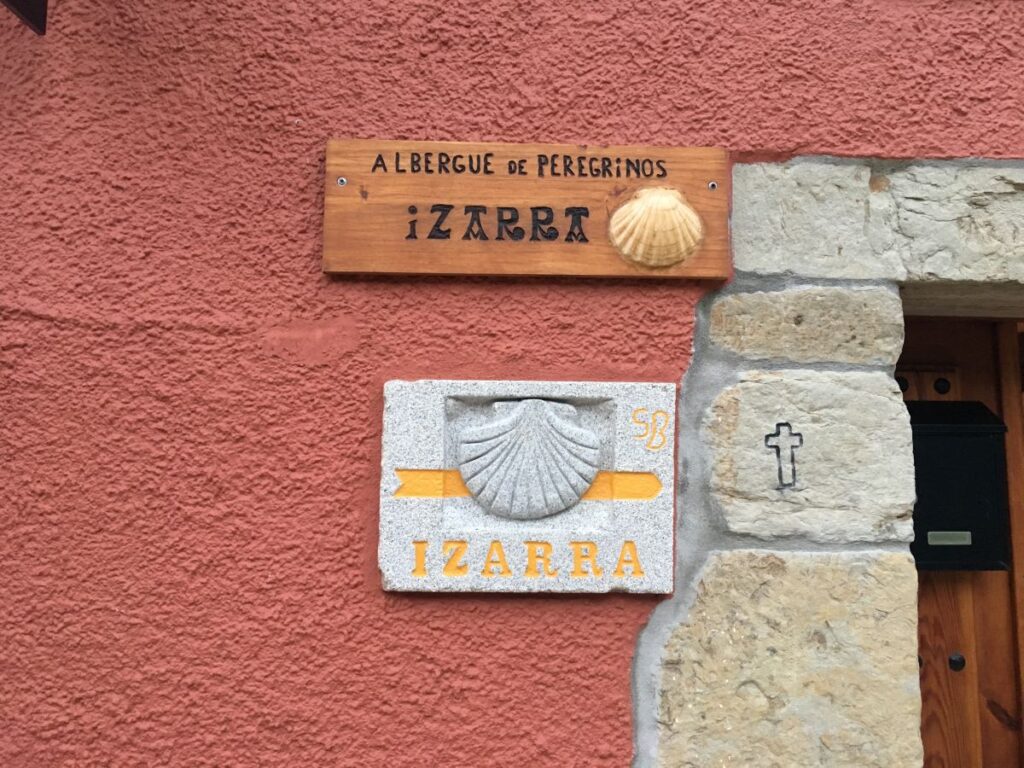
On the advice of a fellow pilgrim Irina, I walked another five or six kilometers and ended up in the village of Caborredondo. There I checked into albergue Izzara. A cozy albergue for 20 beds, half of which stayed empty, friendly owner, clean and quiet. I crashed at 5 pm and woke up at 9, had dinner at the neighboring bar and fell asleep again—yesterday’s fatigue caught up with me—I was regaining strength for the next day.
Where to stay in Santillana del Mar:
- Hostel El Convento – hostel for pilgrims in a monastery, provides accommodation, dinner, and breakfast.
- Albergue Gándara – 3–4 bed dormitory rooms at a low price.
- Hotel Los Angeles – inexpensive private rooms with breakfast included, triple rooms with separate beds for groups of pilgrims.
Day 12: Caborredondo – San Vicente de la Barquera
22 km: Caborredondo – Sobrellano – Comillas – San Vicente de la Barquera
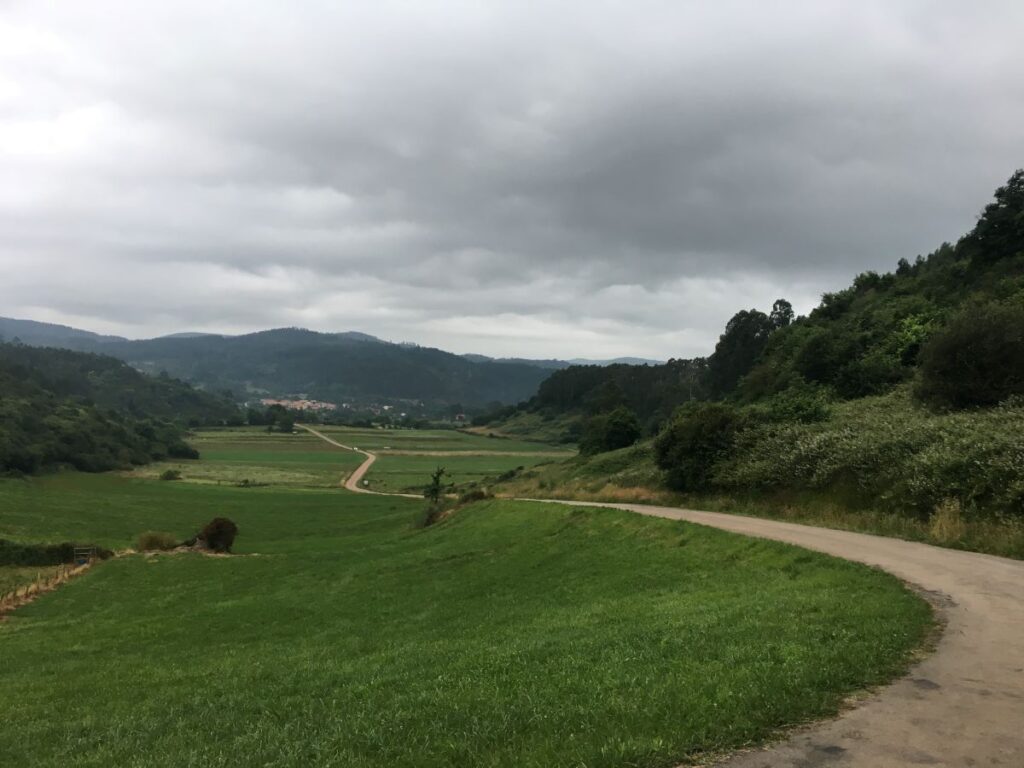
This day was wonderful, I walked all day through villages, shot hills and beaches with my camera, roads hidden by tree leaves like tunnels, some fantastically beautiful churches—the architecture just changed and here there is often plenty of Gothic.
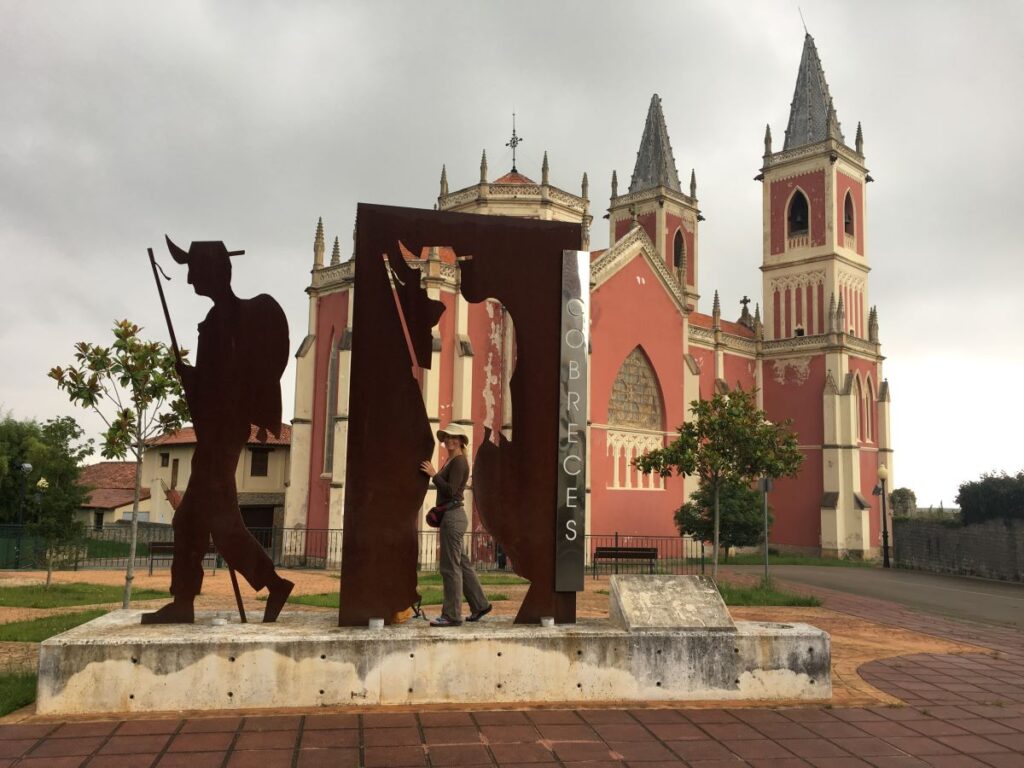
I easily walked 22 km, met Sarah from Australia and Leon from Switzerland, whom I last saw about a week ago, in the mountains before Gernika. The same faces keep flashing by—you smile and wave to each other, live in the same places, chat.
The blister is healing, sandals save me from fatigue. The physical suffering is beginning to ease—I started to enjoy the long journey.
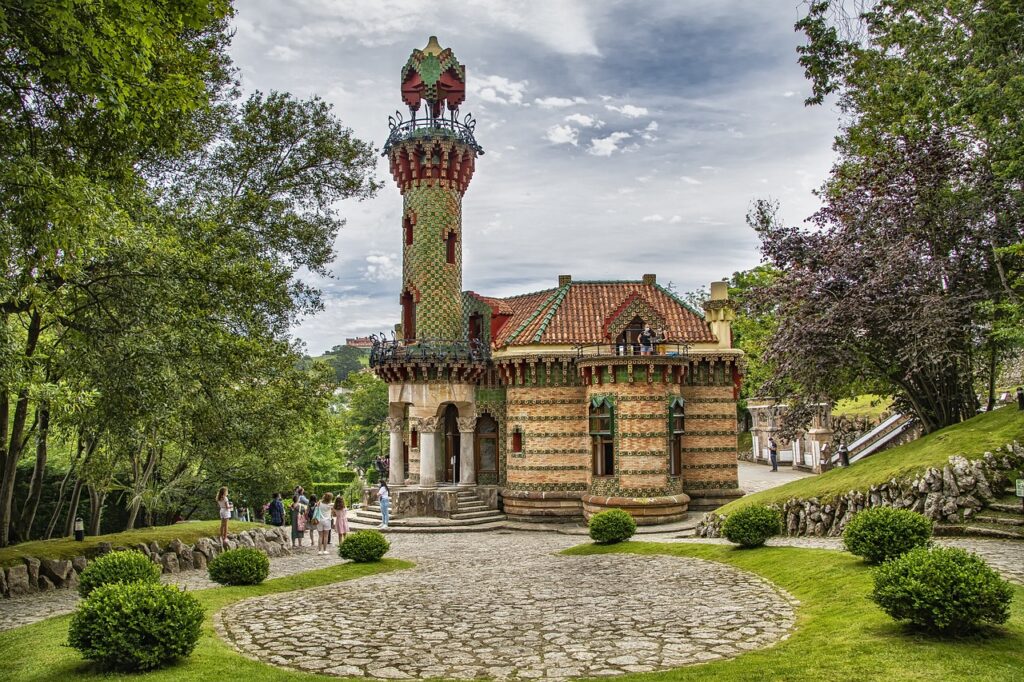
A beautiful sea view at the entrance to Comillas—a lovely town with amazing landmarks, beaches, a beautiful square, many bars and bakeries. In Comillas there is a not-so-widely-known Gaudí masterpiece—the palace El Capricho—a summer mansion built in 1883–1885 to a design by Antoni Gaudí.
San Vicente de la Barquera
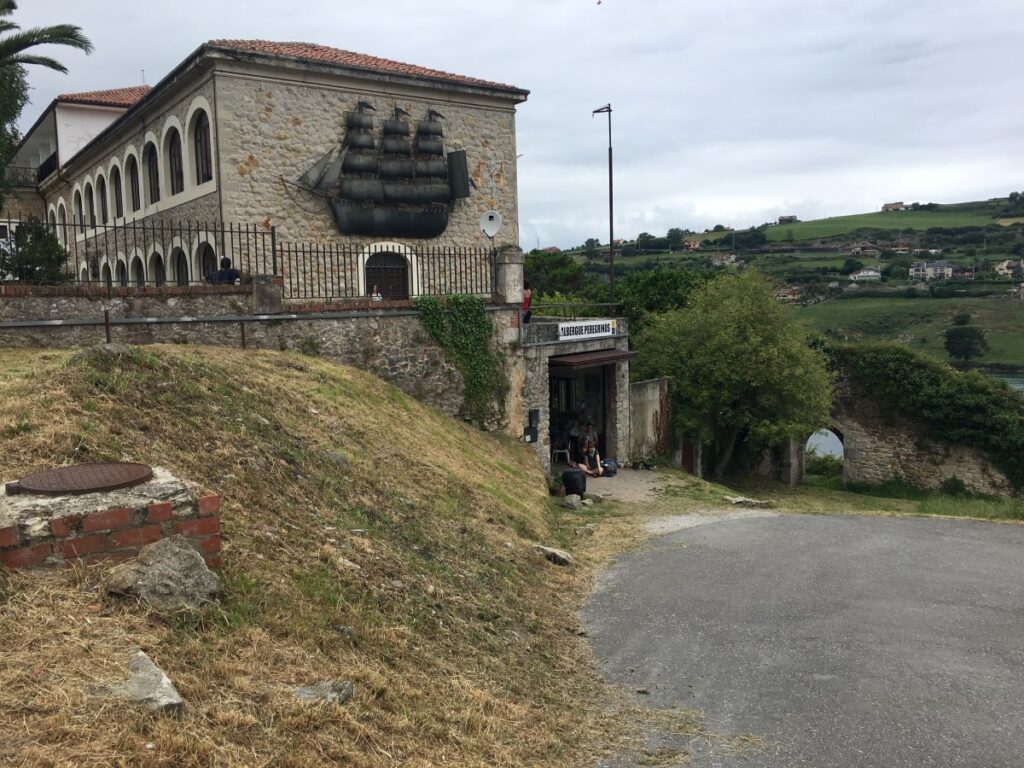
In San Vicente de la Barquera I stayed at the Nómada Hostel albergue near the Church of Santa María de los Ángeles (I don’t think this church has anything to do with the USA)).
In general, a wonderful town, from here, by the way, another route starts—the Camino Lebaniego. And the municipal albergue accepts both pilgrims on the Norte and those just starting their journey from the sea to the mountains.


If you have enough time—I recommend before going into town, at the entrance to San Vicente de la Barquera, you can go down to the beach and walk on the sand through the city to the Puente de la Maza bridge. The beach road is a bit shorter, you skip a few hills, and it’s really pleasant to take off your shoes and walk barefoot on the sand.
Where to stay in San Vicente de la Barquera:
- Pensión Arenal – simple and cheap guesthouse with single and double rooms at a low price.
- Nómada Hostel – I stayed here for the night: nice hospitalero, small rooms, kitchen available, breakfast offered.
- Posada El Labrador – wonderful private guesthouse with single and double rooms and breakfasts.
Day 13: San Vicente de la Barquera – Buelna
26.5 km: San Vicente de la Barquera – Colombres – El Peral – La Franca – Buelna

In the morning, I wanted to put on my favorite blue top and realized I had left it drying far away at my previous albergue. Well, time to say goodbye to it.
After breakfast at the albergue, and bidding a heartfelt farewell to the hospitalero, I continued on following the arrows. After 2.5 km marching through the fields, something clicked in my head (just in time), and I realized I had forgotten my iPhone charger. Fun! But this is not some old top—this piece is essential for safety, for being able to call or write instantly. So, I went back. Everyone coming toward me asked where I was headed. I had to work up quite a sweat getting back—hills both ways.
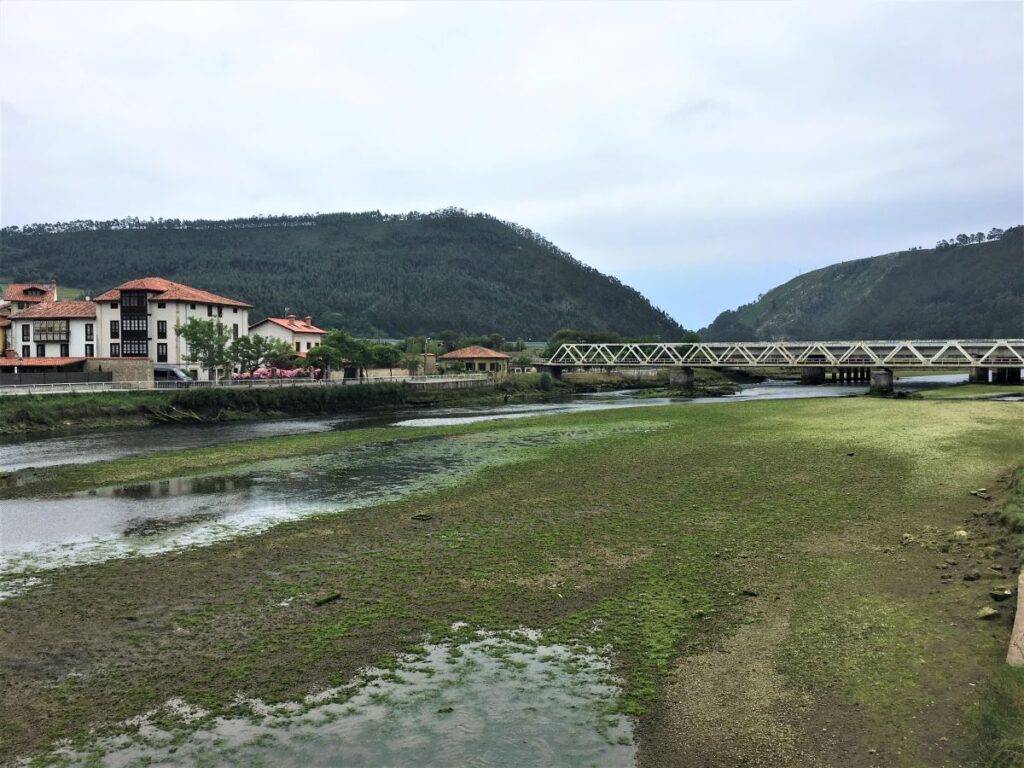
As a result, I clocked an extra five kilometers. And of course lost about an hour and a half. After that, I walked less cheerfully than at the start, but eventually overtook a few Germans, an Australian, and someone else I had passed while running for my charger.
Colonial buildings in Unquera
It turned out to be a pretty long walking day with several hills to tackle and a few places to stop and eat between them. In the town of Unquera I crossed from the province of Cantabria into Asturias. In the town of Colombres, I had a tart and coffee at noon, stood for five minutes at mass in some church, and then moved on. Part of the path went beside the railway, part along roads, but there were forest areas to stroll through as well.
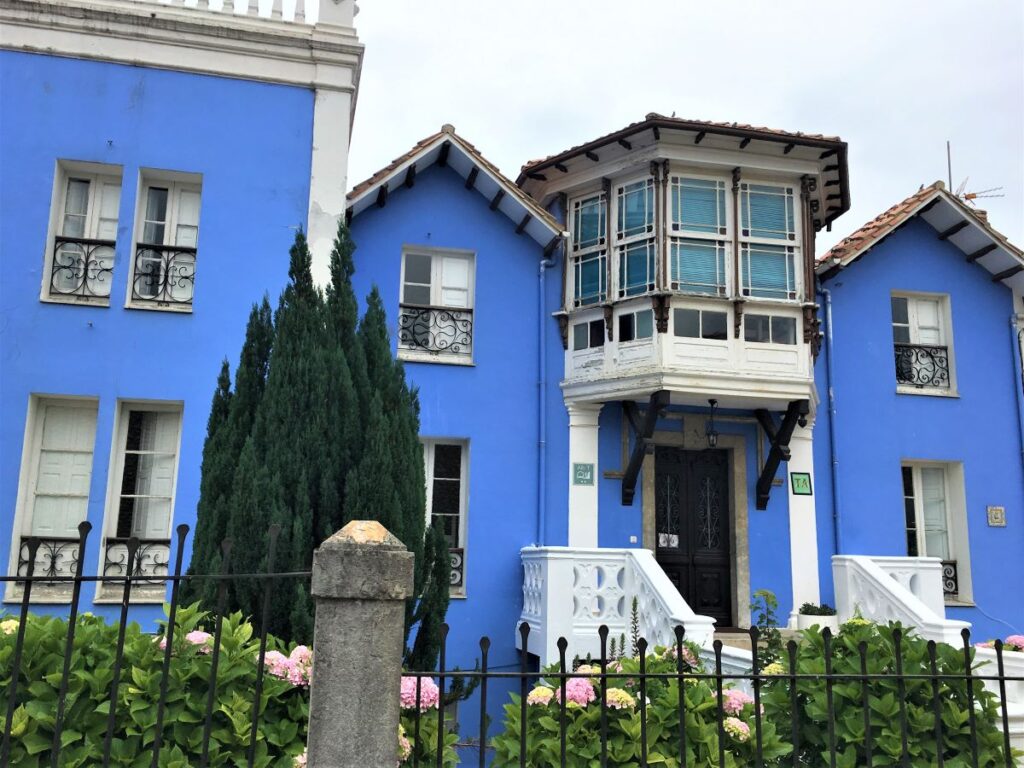
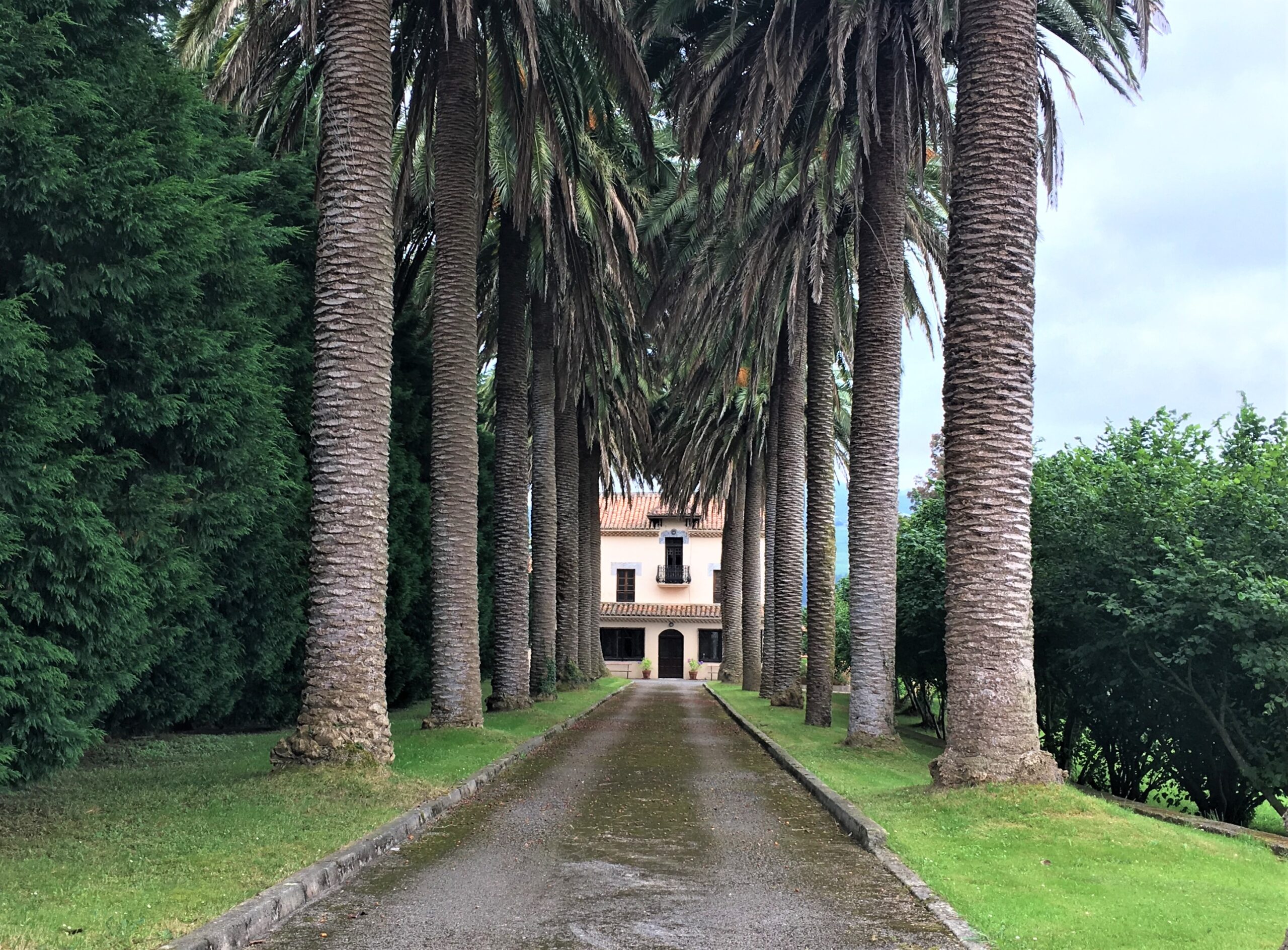
Note that in Colombres you’ll see some very beautiful colonial-style buildings. In Spain, these were built especially in Asturias. You can even see plaques with descriptions of the owners by some of them. Such houses were built by so-called “Indianos”—emigrants who returned rich after stays in America. Very beautiful architecture.
For the first 9 km after Colombres, there’s only one route, which goes along the road. After that in Pendueles you can choose between the official route and staying on the roadside or taking the Sendero de la Costa.
Buelna
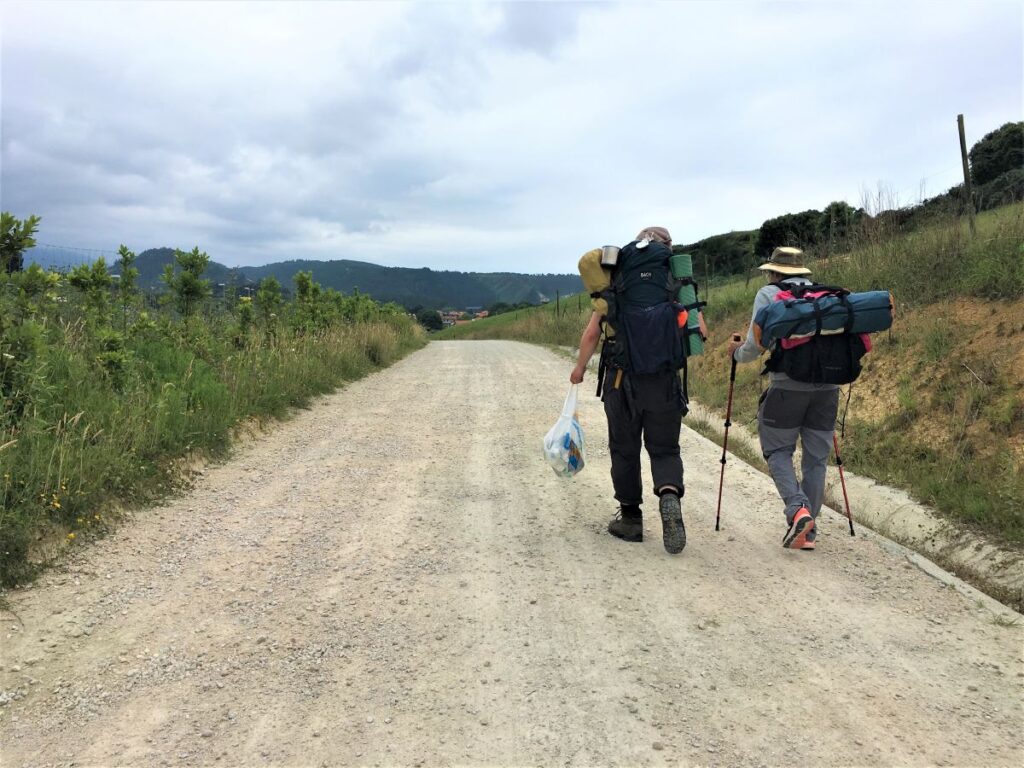
I didn’t reach Llanes that day—instead I stopped in the passing village of Buelna at Albergue Santa Marina. It turned out the local owner is some important pilgrim—his photos with cardinals hang all over the albergue. They offered dinner here, because the village has only one bar with drinks. There’s nowhere else to walk. I should have pushed through to Llanes, but it is what it is.
At night the rain started. This Asturian rain would pour for five days almost without stopping. I would have to go through all the stages of accepting rain.
Where to stay in Buelna / Colombres:
- Albergue Casa de Peregrinos Colombres – nice donativo albergue in Colombres.
- Valbanera – affordable and very clean guesthouse with rooms for 2–4 people—a good alternative for a group of pilgrims.
- Albergue Santa Marina – Great hostel if you’re walking El Camino. Good breakfast and tasty dinner available on the premises. Very friendly staff. Overall very convenient place, but the beds could be better.
Day 14: Buelna – Poo
16 km: Buelna – Llanes – Poo

The official route is a little shorter and involves a lot of walking along the road with a few forest landscapes. The coastal Camino del Norte route is longer, it goes along the pedestrian path along the coast, opening up impressive views. To get to the coastal route in Pendueles, first follow the path to Camping La Paz (Playa de Bretones), from there follow the GR-E9 trail which will bring you to Llanes.
I walked along the ocean
What’s better—walking in 35-degree heat or being soaked all day in the rain? I choose the heat, though that’s my constant conscious choice and not a whim for today. Although it can be really hard to walk under the burning sun sometimes.
In the morning I looked out the window, it was pouring, just like all night long. Got dressed and went out—waterproof boots (haha), a really serious raincoat—I dragged it around for two weeks. An hour later I was already sloshing around in my boots, and the rain was slyly finding its way under the raincoat. Good thing I decided to wear shorts, not pants—wet pant legs sticking to your legs are much worse than bare wet legs. The rain was warm—+21 outside, it’s like walking for half a day under a refreshing summer shower, only with a backpack on your shoulders.
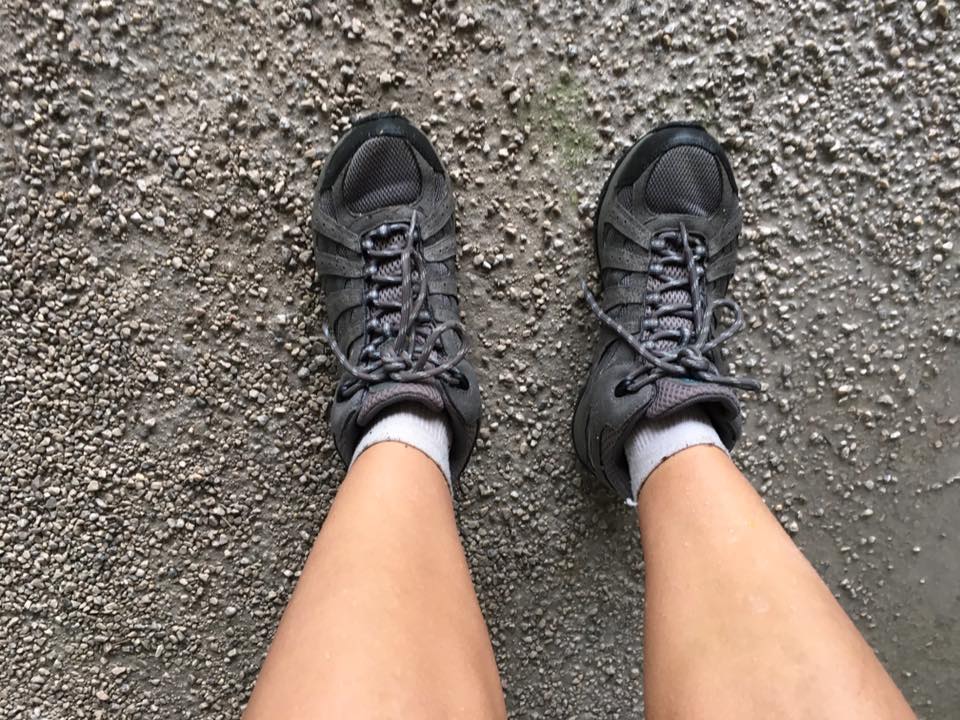
At first, it seemed to me that everything was absolutely uncomfortable, but a human is a resilient creature—after a couple of hours a philosophical attitude appeared toward what was happening, and after a few more I went along like a true Buddhist, not thinking about the rain, just walking.
After about five hours reaching the town of Llanes, I felt it getting warmer, then the rain eased, and when it stopped completely I thought: what a wonder—as soon as you get close to the albergue, the weather changes. So to the 16 km walked in the rain I added another 6 km by trails above the ocean.
Llanes
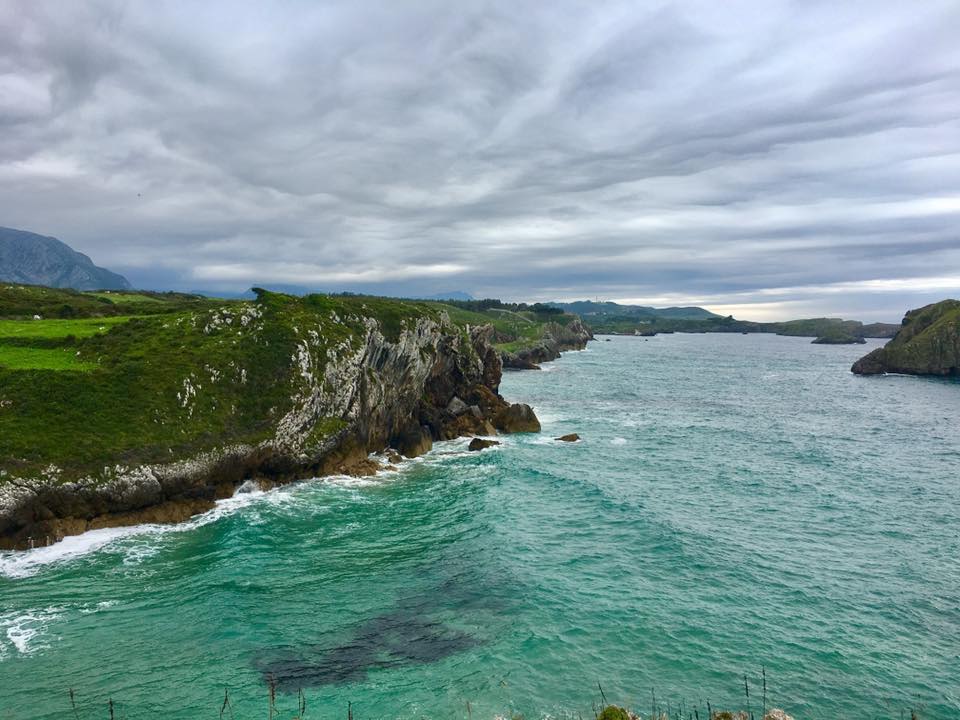
Finally, I saw (the ocean) again today. Otherwise, walking in the rain, you only see your wet boots and mud alternating with asphalt. Blue water, small but noisy waves, cliffs and the smell—fresh and marine. No tourist town can compare to this riot of nature, there are no words for how it recharges me, its wild untamed spaces. Thank you for the gaps in the sky and the chance to see something great and grand.

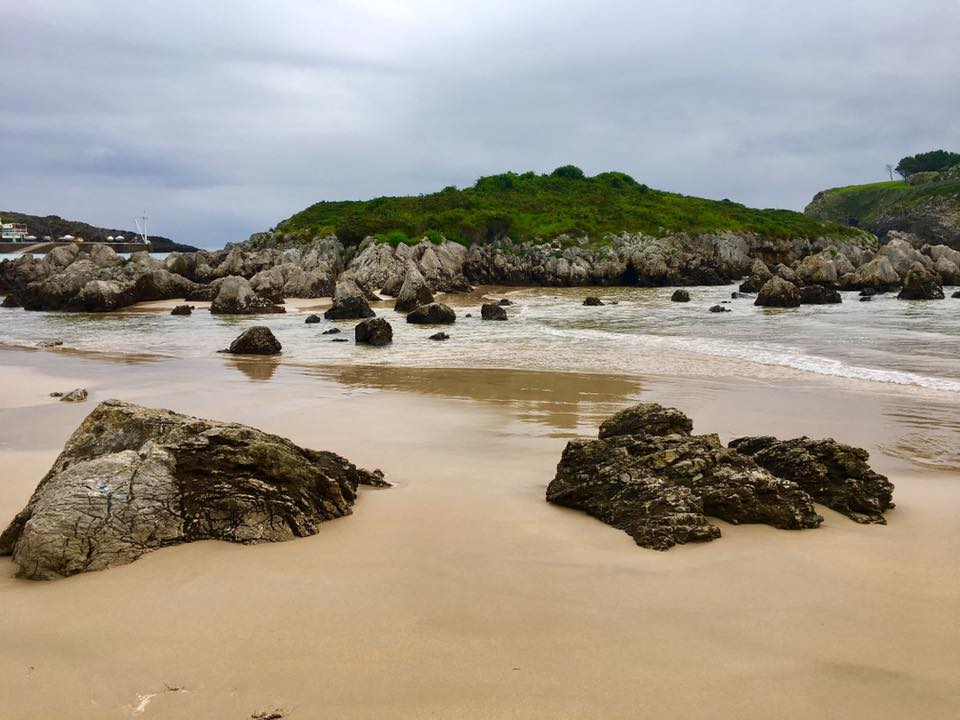
Llanes is a beautiful town with many restaurants, bakeries, a colorful harbor, narrow streets, and so on. But when you’re wet and your feet are turning to mush in your boots, all this beauty is hard to appreciate. I walked the streets of Llanes dreaming of a hot shower and dry clothes.

I went to the next village, Poo, where I found everything I’d dreamed of all day. Today I’m staying in a wonderful private albergue (municipals are in short supply here). It’s located not far from the beach, they serve a breakfast of homemade products—dairy, yogurts, a local hen laid a fresh egg for me for breakfast.
Where to stay in Llanes/Poo:
- Albergue La Estación – another municipal albergue at the station in Llanes—basic but inexpensive and comfortable.
- Casa de Aldea la Galeria – quiet and calm guesthouse in Poo, ideal for a couple.
Day 15: Poo – Cuerres/Ribadesella
21 km: Poo-Selorio-Barro- Cuerres
Another rainy day, a few hours walking dry, and then it poured again, with lightning and thunder booming loudly. I ended up in a thunderstorm!
But I was already used to wrapping myself in my raincoat and splashing through puddles, diving deep into my own mind. I dived so deep that I went the wrong way, lost the arrows. Result: knee-deep in mud and nettles, I wandered through the forest searching for the way—barely found it. Whew!
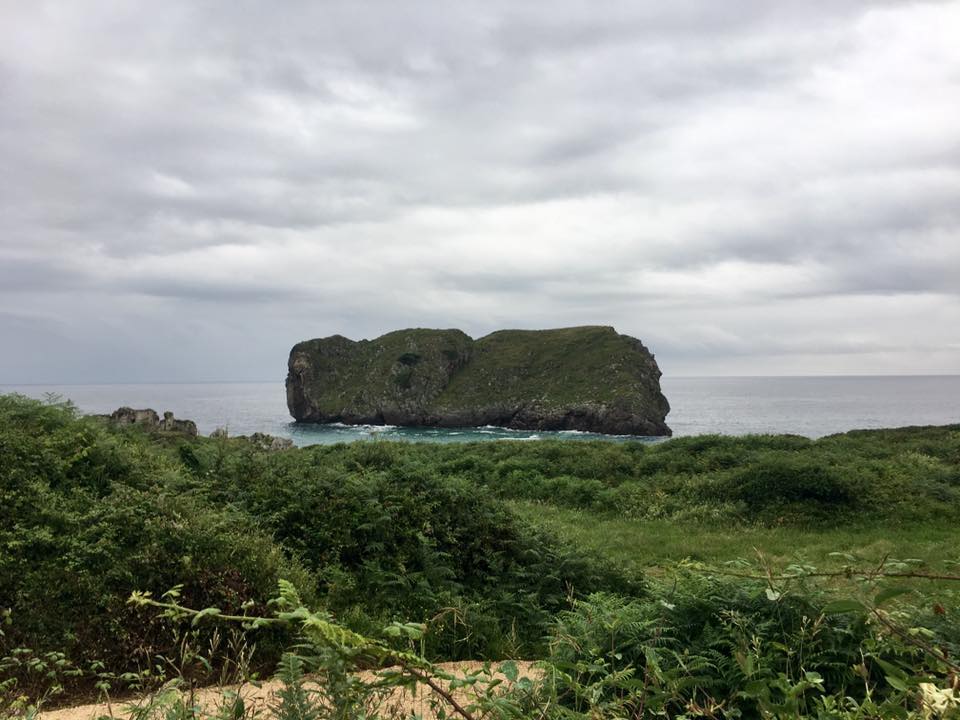
Good hiking stage on the Camino del Norte, mostly by trail with a small road, past lovely villages, through forests. The route is fairly well marked, there are a few bars and restaurants on the way. The last 7 km to Ribadesella are just fields.
Saw along the way:
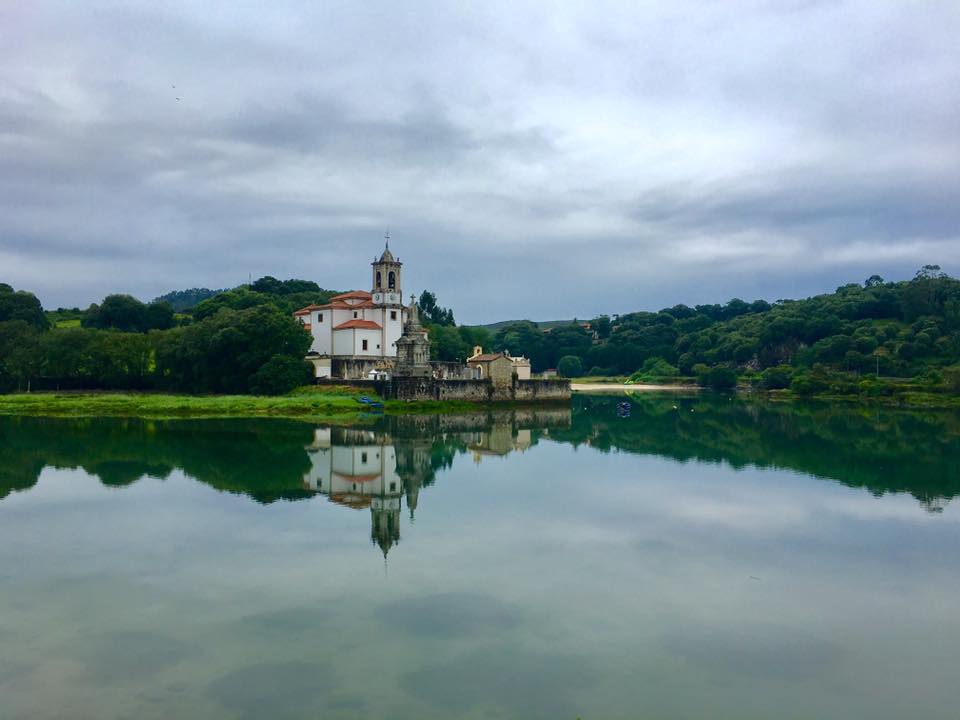
- The church Nuestra Señora de los Dolores on the beach near Niembro
- San Antolín beach, past Niembro
When there were about five kilometers left to the town of Ribadesella, which I was heading for, I came across a brand new albergue at the time—Reposo del Andayon in the village of Cuerres. I asked the pilgrims sitting at the entrance about the price—Donation! Wow, what luck—only ten places, but what a wonderful night’s rest I got after two weeks of sleeping who-knows-where and how. Paradise opened its doors to me.
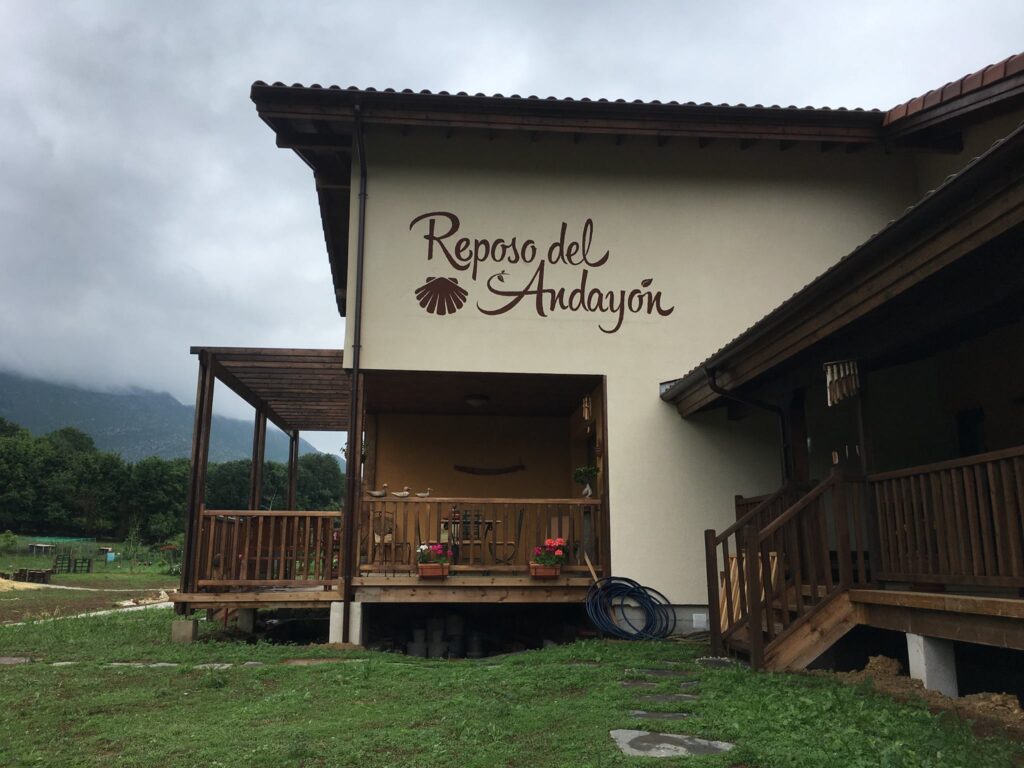

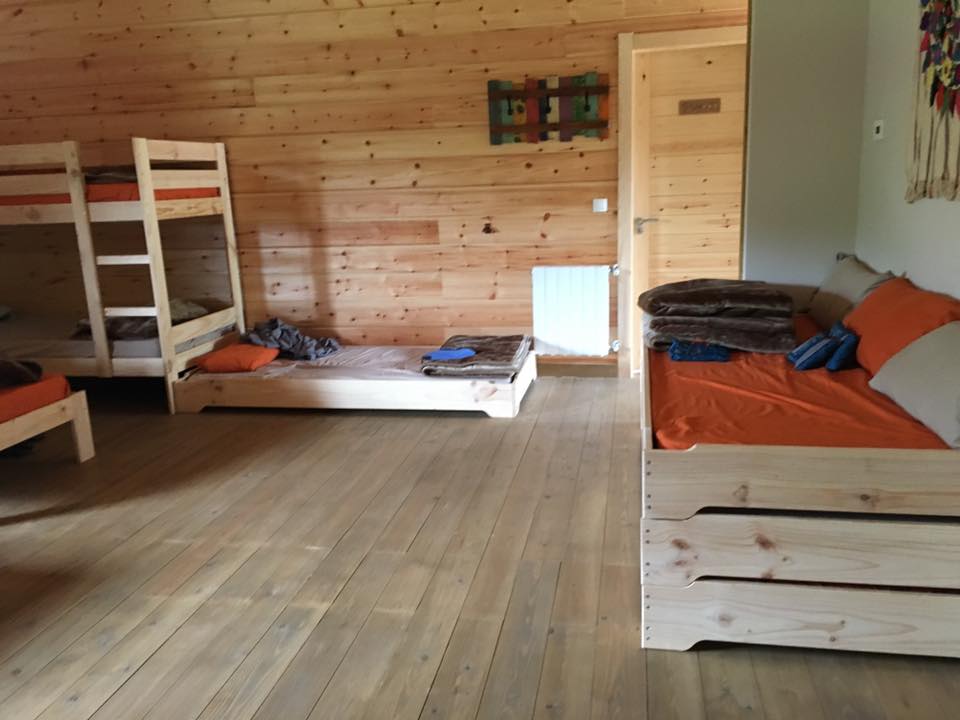
Its owner, Catherine, spent the whole time with us, we talked a lot, sang to the guitar—the evening was just fantastic. The atmosphere, comfort, place, and the hostess—I will never forget this evening and this wonderful albergue.
(Since 2019, this wonderful house has worked as an eco-hotel casa-rural)
Accommodation in Ribadesella
There is no albergue in this very touristy town—so you have to either go further, or spend the night in guesthouses or the Camping Playa Sauces campsite outside the town.
- Pensión Argüelles≫ – inexpensive guesthouse in Ribadesella, prices are lower than in hotels.
- Pensión Arbidel≫ – another option for single/double accommodation.
Day 16: Cuerres – La Isla
22 km: Cuerres – Ribadesella – La Espasa – La Isla
I’m in La Isla, in a municipal albergue for five euros—a wild contrast with the place I stayed last night. But in order.
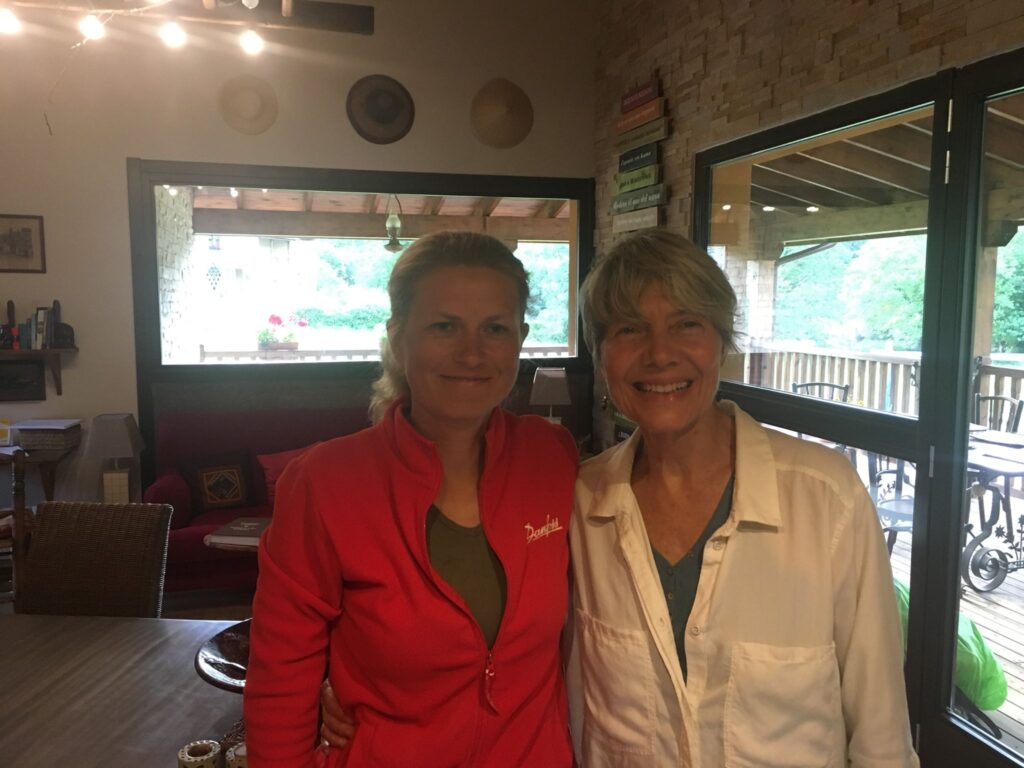
In the morning I said goodbye to Katharina—the wonderful owner of the albergue—and walked through fields and mostly asphalt roads to Ribadesella. This is a cozy surfing town with a couple of little restaurants in the old town (before the bridge), a picturesque harbor, and a beautiful beach Playa de Santa Marina.
Today the whole way was rain-free, the sun even came out. Good weather inspired me to head for the nearest beach, off the marked route. There were supposed to be fossil dinosaur tracks. So I went down paths and trails along the ocean—and did not regret it. Beautiful!

Bought some fruit at the market in Ribadesella and set off for adventure. Went down to Huellas Dinosaurio Acantilados de Tereñes beach with fossil dinosaur tracks and found a print.
Then I got back on the trail and again switched it for the chance to walk the vast Playa de la Vega beach. It was a lovely walk along the coast with pristine beaches on the way to La Isla.
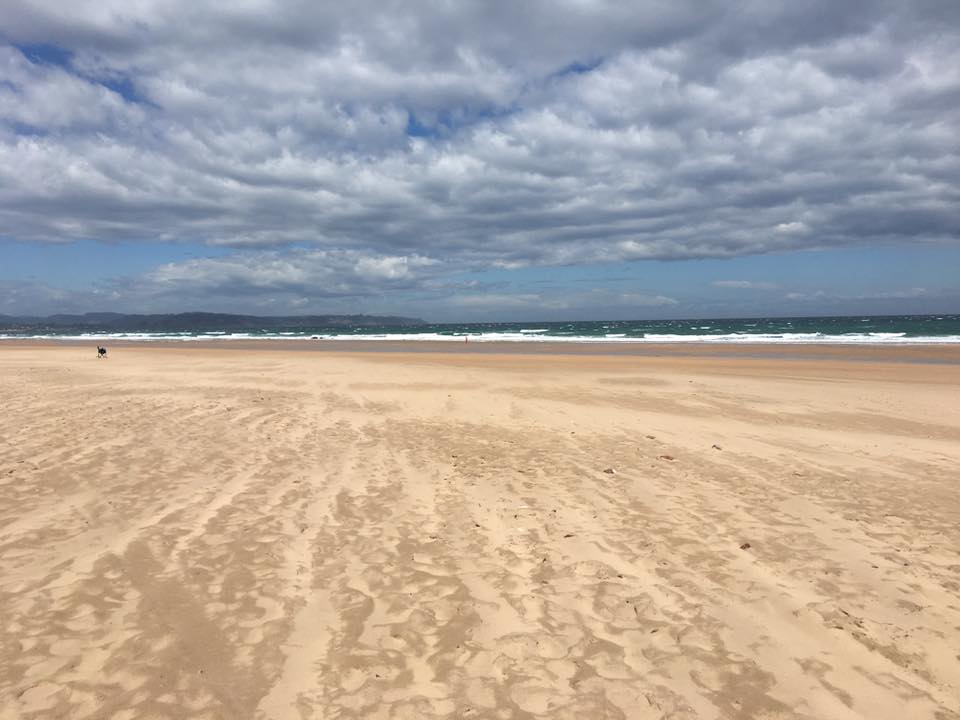
There was a strong wind, but these sandy empty endless spaces made me very happy—there were almost no people. After the beach, shoes full of sand and as a result +2 huge blisters.
By around 3 pm I got to the albergue, there were still plenty of places, washed my clothes, at five went to the shop with familiar pilgrims. We cooked pasta with tomatoes and cheese, had cider and wine, played cards, and laughed until our mouths and stomachs hurt.
Accommodation in La Isla/Colunga
Municipal albergue in La Isla – very neglected, a room for 22 people, but there was a kitchen and washing machine where for extra money you could wash your things. Together with familiar pilgrims we loaded everything into one washing machine and saved money. We also cooked a delicious dinner together. That’s why the shabby albergue is remembered for its good atmosphere.
In Colunga there are only private accommodations—Villa de Colunga is a very nice guesthouse, where for 50 euros you can get a private room.
Day 17: La Isla – Villaviciosa
23 km: La Isla – Colunga – Sebrayu – Muslera – La Payariega – Villaviciosa
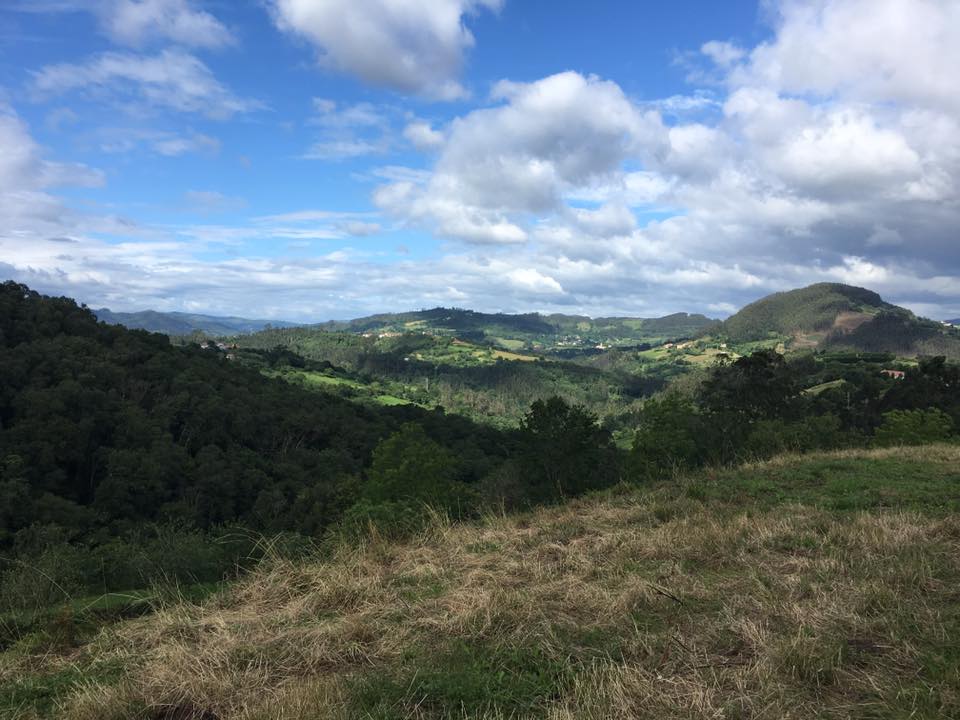
Quite a challenging stage of the Camino del Norte, mainly due to several hills up and down with beautiful scenery. Peaceful forest and mountain landscapes between Colunga and Villaviciosa. Colunga is the only town on the way to Villaviciosa with ATMs and supermarkets. If you plan to stay at the municipal albergue in Sebrayu, you need to buy food in Colunga. Sebrayu is just a couple of houses and nothing more.
I reached Villaviciosa and stayed in the private albergue AlFerria—donativo. A very cozy place, which in 2024 is closed—they didn’t survive the pandemic…

Some pilgrims with whom I had spent the last 3-4 evenings—Sarah, Giorgio, and Paul—arrived there just before me, and then other familiar faces joined in. Only 12 places—cozy and friendly.
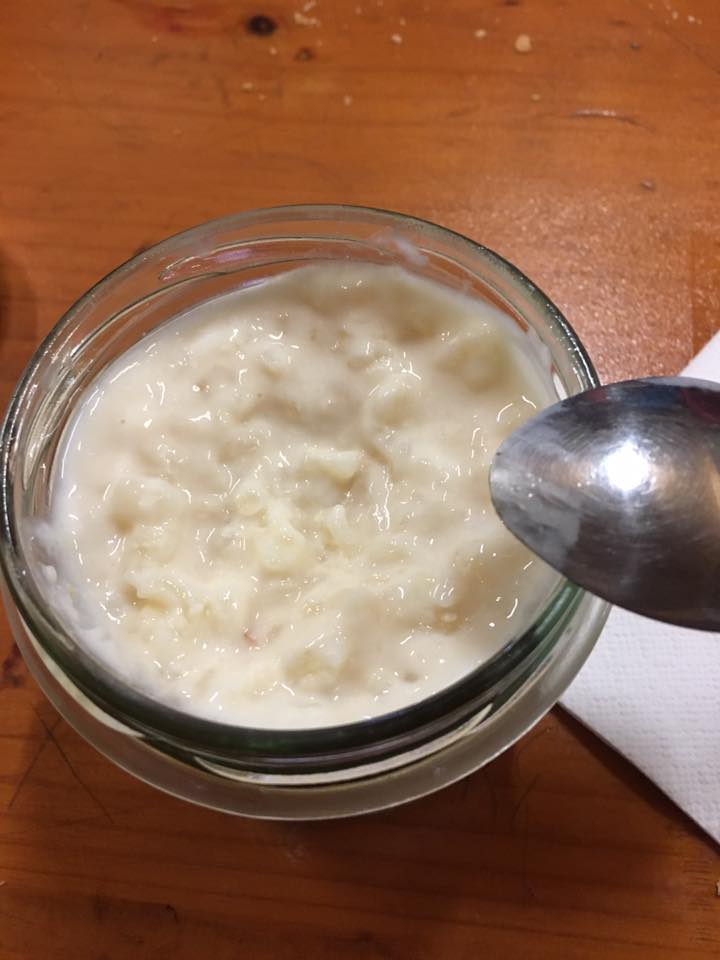
We were served a family dinner—soup (I’d dreamed about it all day and someone from above answered my wishes). Salad, wine, and a homemade recipe dessert. When I tasted it—it was like falling into childhood. Remember the school rice pudding, when it cools and stiffens to pudding consistency? That’s it! With cinnamon, it was nice.
And then we sat until eleven at night over wine and conversations—debating political questions, world views from Germans, Italians, Ukrainians, and Czechs.
Accommodation in Villaviciosa:
- Hostel Villaviciosa – private hostel, accommodation €15–18
- Hostel El Congreso – also a private hostel, more attractive and slightly more expensive—€14–17
Day 18: Villaviciosa – Gijón/Avilés
29 km: Villaviciosa – Amandi – Casquita – Peon – El Pinal – Camping Deva – Gijón – (train to Avilés)
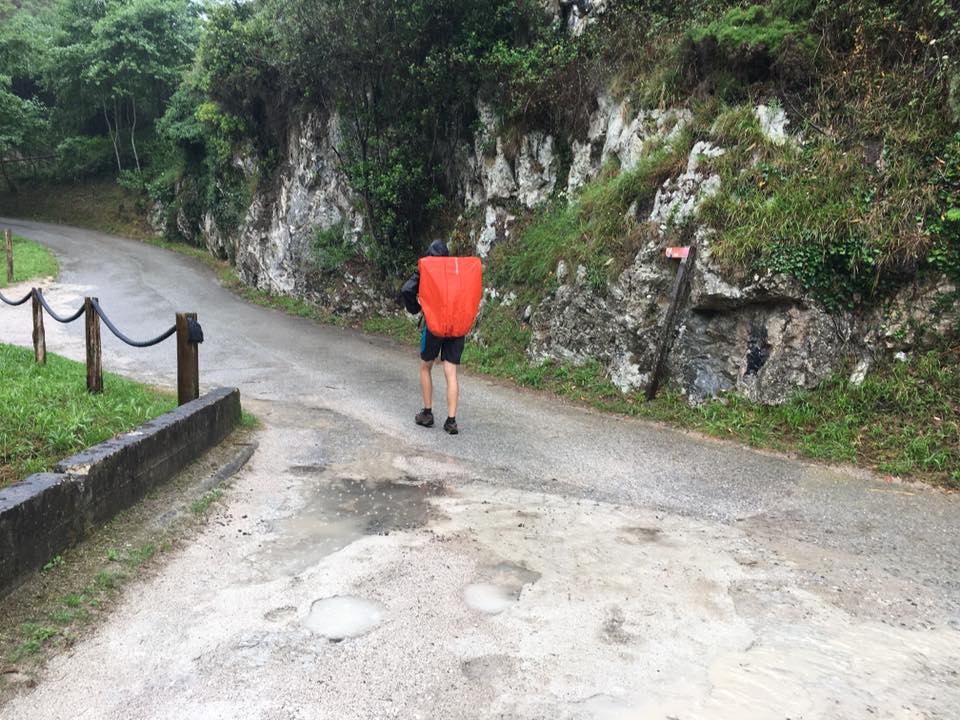
Today was a day on foot and then by train to Avilés. I chose to walk 29 km and then ride another 30 km in order to make it to Santiago by July 14–15. And to not have to go through the unpleasant outskirts of Gijón.
It turned out I’m a bad planner—I miscalculated my strength and according to my last calculations, I wouldn’t have time to walk the whole route and catch my return flight home. Before starting, I thought I could manage 25–30 km a day as on the French Way. But… the French Way is like luxury compared to the Norte.
It poured all day, it was cold, and along the way I realized that after walking several days in wet shoes, I’d caught a bladder infection. And that’s a total disaster, to keep walking in this state. So those last kilometers to Gijón were pure torment, until the antibiotic from my first-aid kit kicked in.
A few impressions about this day and important information
This is one of the hardest days on the Norte, but you will be rewarded with beautiful panoramas from the top of the hill at Alto de la Cruz.
Also, expect a very steep and long climb from Nievares to Alto de la Cruz, about 300 meters. The following descent isn’t as steep but is quite long. There’s another climb at Alto de Curbiello—not as steep as the first, but still pretty tough, about 150 meters.
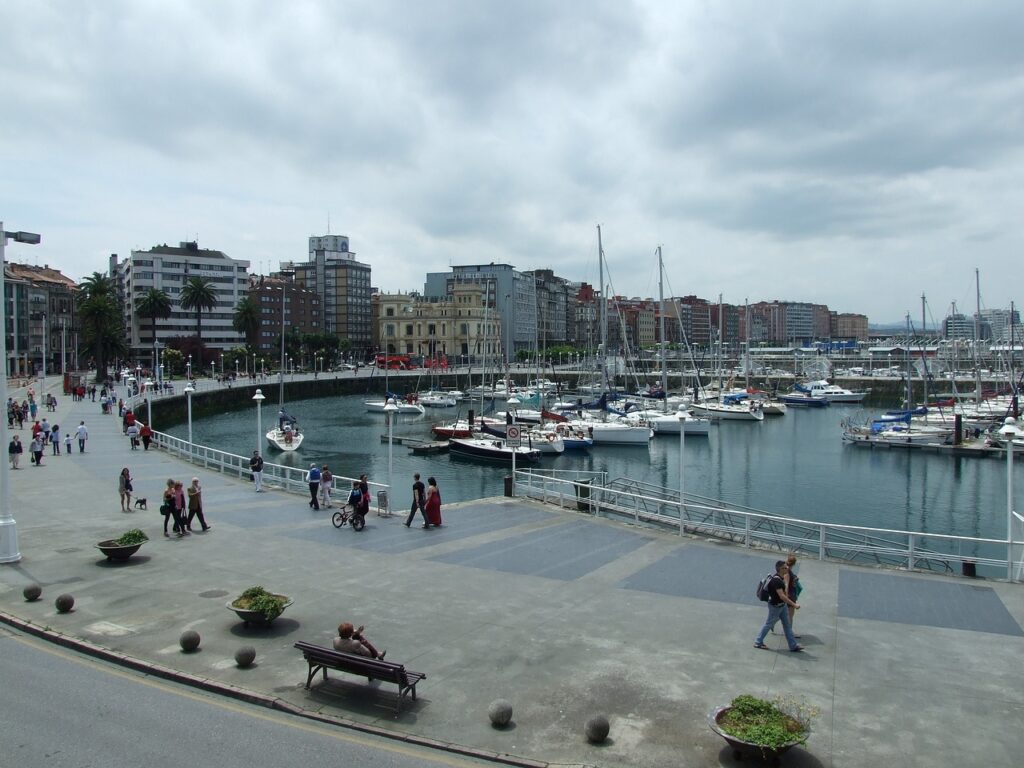
But Gijón is worth seeing and maybe even spending a day there (I regret zipping through it too quickly). There’s an interesting historic center, huge beaches, and a beautiful promenade.
Afterwards I took the train to Avilés, and never regretted doing so. The rain kept getting worse, and I looked out the window at the industrial area, which most pilgrims skip. And I dreamed of a warm albergue and a hot shower.
Important: In Casquita, 3 km from Villaviciosa, there is a fork in the way: one route heads to Oviedo and joins the Camino Primitivo, and the second continues along Camino del Norte to Gijón. To Oviedo via the connecting path takes 2 days. From Oviedo you can take the Camino Primitivo route to Santiago de Compostela.
That’s where some of my companions went—Sarah, Giorgio, and Paul. But I wanted to stay as close to the ocean as possible. Back then, I didn’t even dream of the Primitivo, as it goes through mountains, and I was already a little tired of them on the Norte.
Spoiler: I walked the Camino Primitivo in 2024—a super cool route and not that very hard.
Accommodation in Avilés
- Albergue de peregrinos Pedro Solís – cheap hostel for pilgrims for 10 euros.
- Hotel Alda Palacio Valdés – pleasant and, importantly, inexpensive guesthouse for a pair of pilgrims.
Day 19: Avilés – Cudillero
31 km: Avilés – San Martín de Laspra – Soto de Barco – Muros de Nalón –El Pito – Cudillero


The sun returned to our Asturian lands, and with it, health and the desire to keep walking the route. I enjoyed walking through the forest and fields after the previous day, which I’d basically spent on the train through the industrial zones (no regrets) and road walking. There are a few places along the way to stop for food—bring snacks and water with you.
Along the way, in the town of El Pito you’ll find the Palacio Selgas palace and park complex—a beautiful palace and garden in El Pito, also called the Asturian Versailles. Entry to the park and palace is paid, and you need to arrange your tour time in advance.
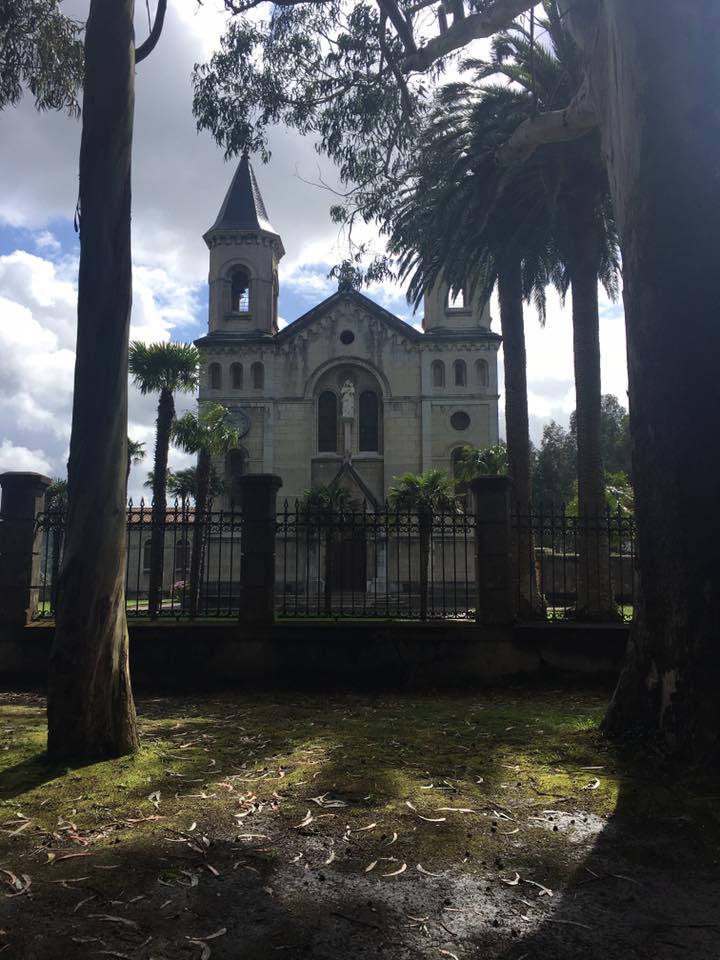

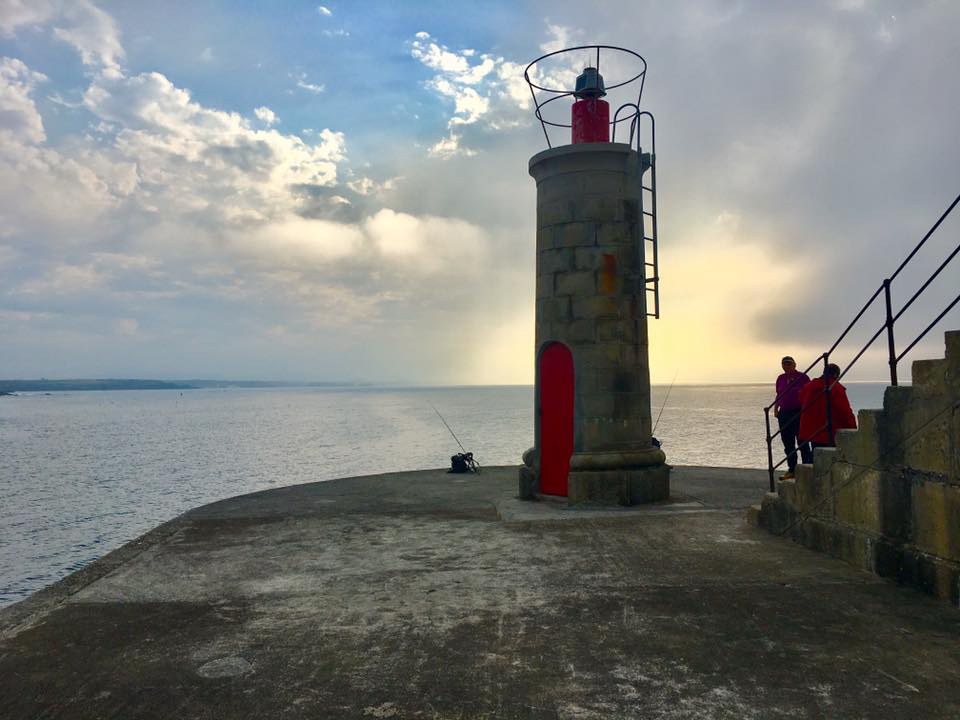
But in Cudillero there are also free attractions—above all, the views from the observation decks of the ocean battering the breakwaters protecting the village from the rough sea. And the wonderful lighthouse standing firmly at the tip of a small cape, as if to show its strength against the raging elements.
At first, I planned to go as far as Soto de Luina, but on the way stood the tiny fishing town of Cudillero. Actually, it was a kilometer and a half off the route. A week before I got here, I met a young talkative Spaniard—he told me about Cudillero. He had so many vivid epithets about this village that I couldn’t resist and stayed overnight in a neighboring village at a hostel for the wildest price of the Camino—18 euros for a bed.
Cudillero


I remember the Spaniard warned me—not to eat in Cudillero, everything is crazy expensive! But as soon as I stepped onto the town’s narrow staircase streets, all the warnings disappeared—I walked like a zombie, following the scent of seafood. Aaaaah, how it smelled! Impossible to resist, and I didn’t—I ate some amazing seafood soup, fish, washed it down with white wine, and then coffee… in the end I left the same amount at the cafe as in the hostel. Horror! This is budget destruction, and I still had miles to go.
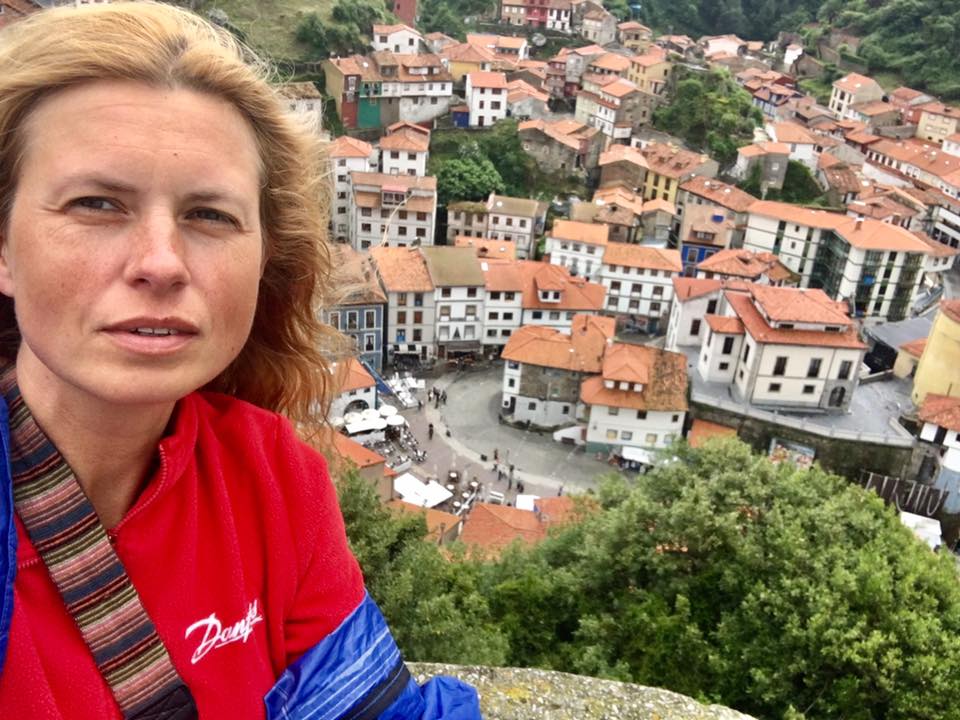
But Cudillero is wonderful—at the tip of the cape I found my perfect lighthouse, climbed a steep viewpoint with rickety stairs, drunkenly admired the ocean and the tiny town. The weather changed every minute: the sun came out, then suddenly it rained, the wind tried to tear off my raincoat—a full set of sensations. But how beautiful and delicious!
Accommodation in El Pito/Cudillero
Casa de peregrinos la Concha II≫ – very basic, somewhat neglected hostel for pilgrims, with only one bathroom.
Casa Carmen 2≫ – excellent apartments in Cudillero—for four pilgrims you can overnight in great conditions with a kitchen right in the center of town.
Day 20: Cudillero – Cadavedo
29 km: Cudillero-El Pito – Relayo – Soto de Luiña- Novellana – Santa Marina – Ballota – Cadavedo
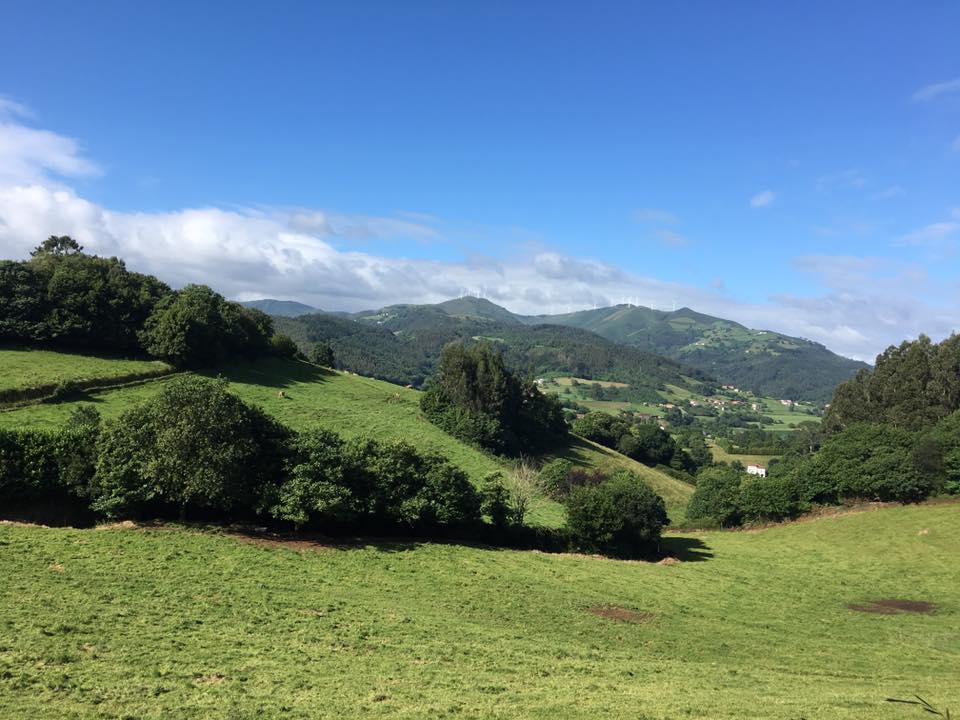
In the morning I decided not to stop at the planned Soto de Luiña—only 11 km away—but go on to Cadavedo. In Soto de Luiña, the albergue has as many as 24 beds! And in Cadavedo—12 in the municipal and just as many in the commercial one. But 11 km is too little.
Those very 11 km were fairly easy and pleasant—I first walked along the highway, then went down to the beautiful Playa de La Concha de Artedo beach. There was a marker for a cafe on the map, where I dreamed of having coffee. But it was closed. However, the beach was excellent and worth the couple extra kilometers detour.
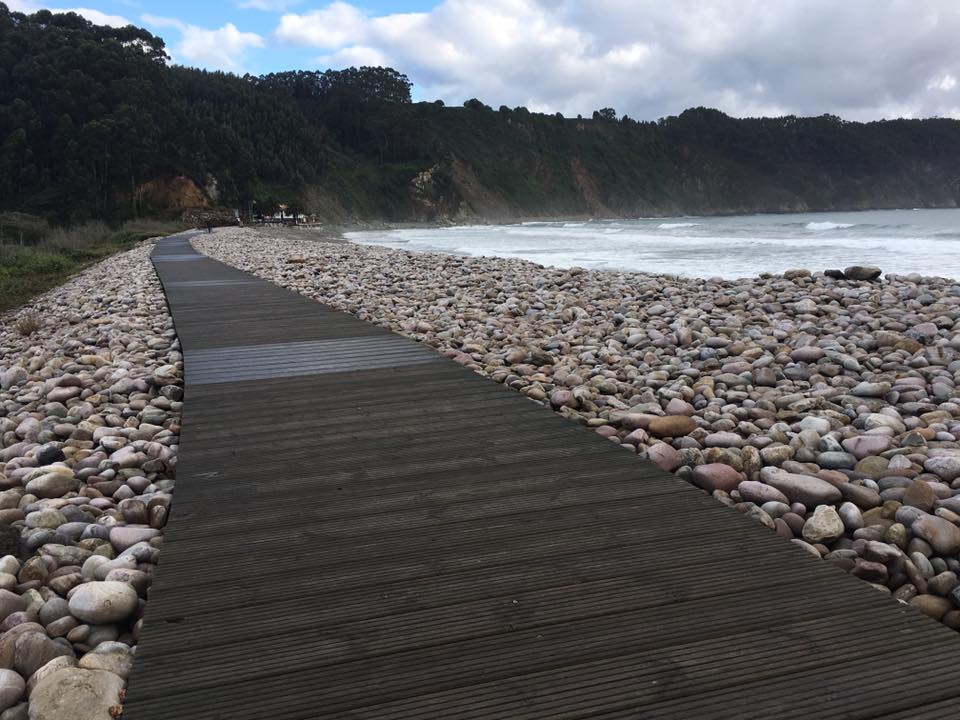
In Soto de Luiña there was a bar (where you get the key to the municipal albergue and the stamp)—I had coffee and learned that there are two ways from Soto de Luiña to Cadavedo. One of them goes through the mountains, another goes along the coast—the Costa way.
The standard scallop-shell signs lead you into the mountains, and only yellow arrows go along the coast. It’s better to follow the arrows, because the mountain route is harder and 4 km longer. They say the mountain route is dangerous, many steep ascents and descents and poorly marked. For 17 km there are no food stops.
The easy way
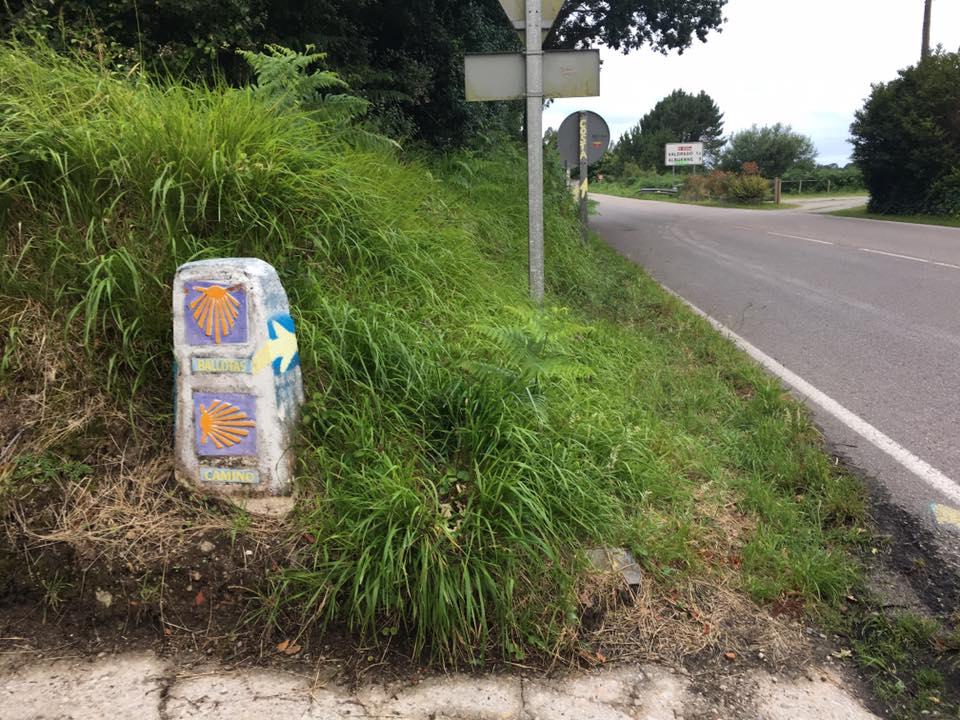
I chose the easy way (the one not through the mountains), and it turned out generally not difficult—same as everywhere: sometimes up, sometimes down—the typical ups and downs of the Northern Way for three weeks. But many of those I stayed with last night started from Gijón, and it’s their third day, and they were a bit shocked by the landscape.
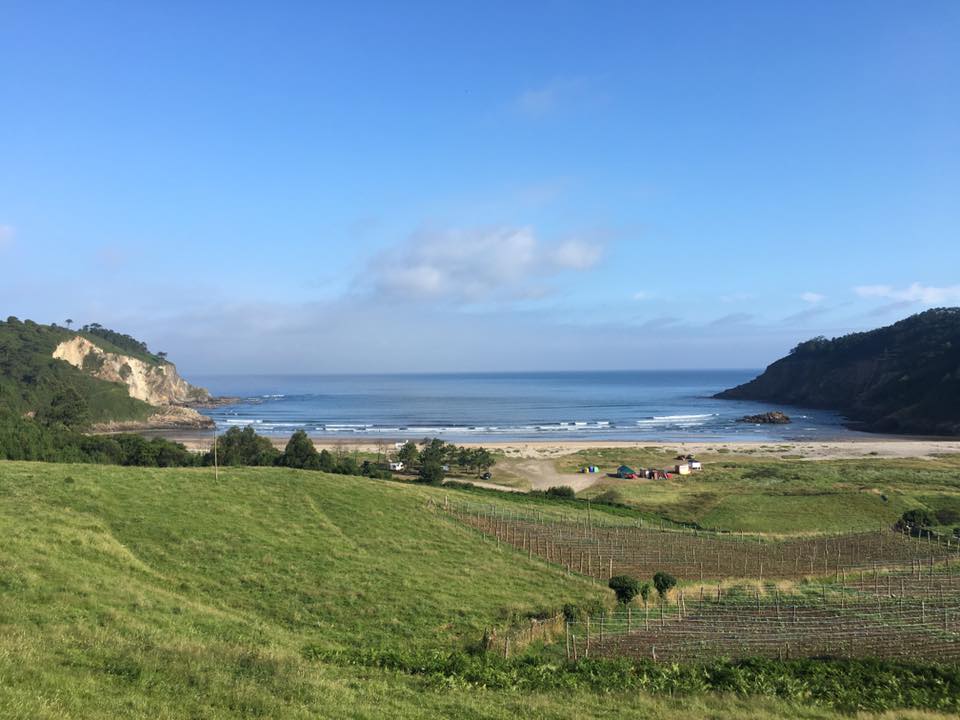
But for those like me, who have already been walking for twenty days from Irun or San Sebastián, nothing fazes us—we just plod on, trying to overtake newbies and get a place in the albergue. Such races get more frequent the closer you get to Santiago.
Cadavedo

Cadavedo is a small rural village with a couple of restaurants/bars. The beach and coastal views are gorgeous—if you have time, take a walk to the coast. You won’t regret it!
Went to the shop, feasted on blue cheese salad, olives, and a tomato I’d been carrying around for three days (huge bugger, but there was no time to eat it). Sunbathed, napped, woke up and met some new pilgrims (my previous friends were now 50 km behind, and some went onto the Primitivo).

There was Karin—a wonderful girl from Croatia, who called her parents every evening so they wouldn’t worry—she was doing fine. For the next 2 weeks, we walked together and became friends. Five years later, I would visit her in Croatia, meet her family. But for now, we had just met and the friendship was beginning.
Where to stay in Cadavedo:
- Albergue de peregrinos de Cadavedo – municipal albergue with 12 beds, very basic and cramped, but has everything you need.
- Astur Regal – nice guesthouse for a small price if there are no places in the municipal albergue.
Day 21: Cadavedo – Navia
37 Km: Cadavedo – Luarca – Pinera – Navia
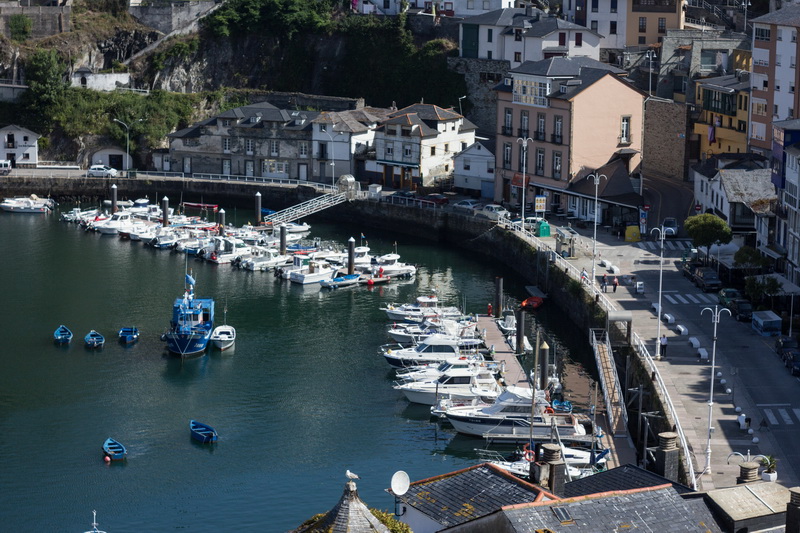
The best day on this Camino! It finally happened! I’d been waiting for this feeling for 20 whole days—finally, I was flying! What do I mean? It’s hard to explain in words, but I’ll try.
Eventually, a moment comes when it feels as if wings have grown behind your back and the World turns to you with its best side, its brightest images, showing all the beauty and joy that we don’t notice right under our noses. I was in flow all day, every step brought incredible joy and pleasure, every moment of the journey I was present in the moment, every turn in the road or trail brought such happiness that I wanted to fly, and I was flying.

I absolutely didn’t feel the backpack on my back, nor my legs or blisters, no discomfort at all: I would take off up the hills like a bird and run lightly down them.
Let me warn you, I didn’t smoke anything and certainly didn’t drink. I felt the same thing on the third day of the Camino last year, and then it just never left me. In these moments, I see the true purpose of the way—to merge with it, become one with the Camino, and this is not just words—it’s the essence of this journey.
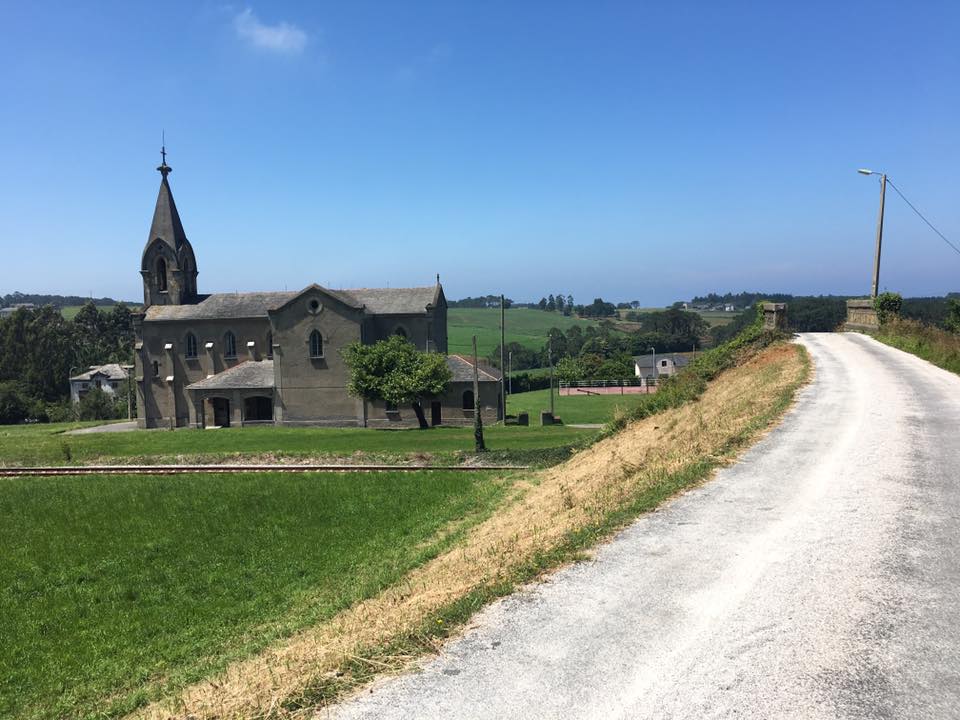
And it doesn’t matter if I’m following the arrows or wandering away from them, I don’t need a map to know I’m on the right path. You can even walk along the edge of a field and find the way again—it finds you. Absolutely no feeling of fatigue almost all day—just water besides breakfast. And an absolute feeling of flight! One such day is worth all the effort and struggle. It’s these days you remember later as the brightest moment of the Camino.
Luarca
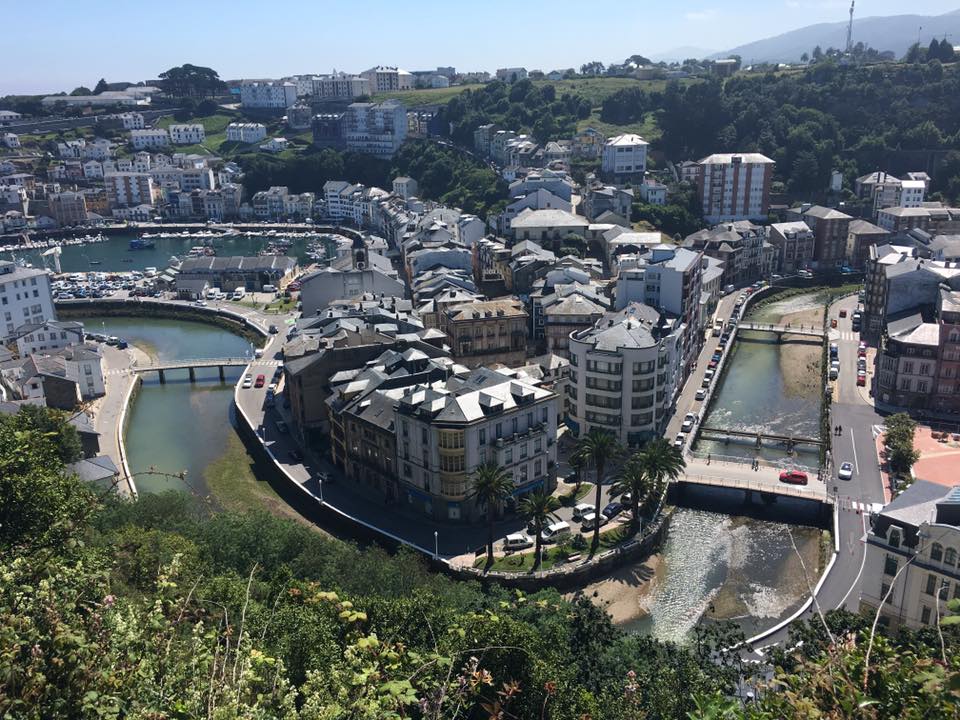
I hadn’t planned anything, thought I’d reach Luarca (16 km)—a very beautiful town. I even looked up hostels the night before, but then realized there’s no sense in stopping when it feels so good. And I’m glad I listened to myself and trusted my feelings—they didn’t let me down.
In Luarca I had coffee in a wonderful coffee and candy shop, walked around the town, took some photos. Then I climbed the hill above the sea and the town. I saw a tiny chapel, continued on. There were some steep hills ahead of me—I crossed them easily, striding forward and forward!
Navia
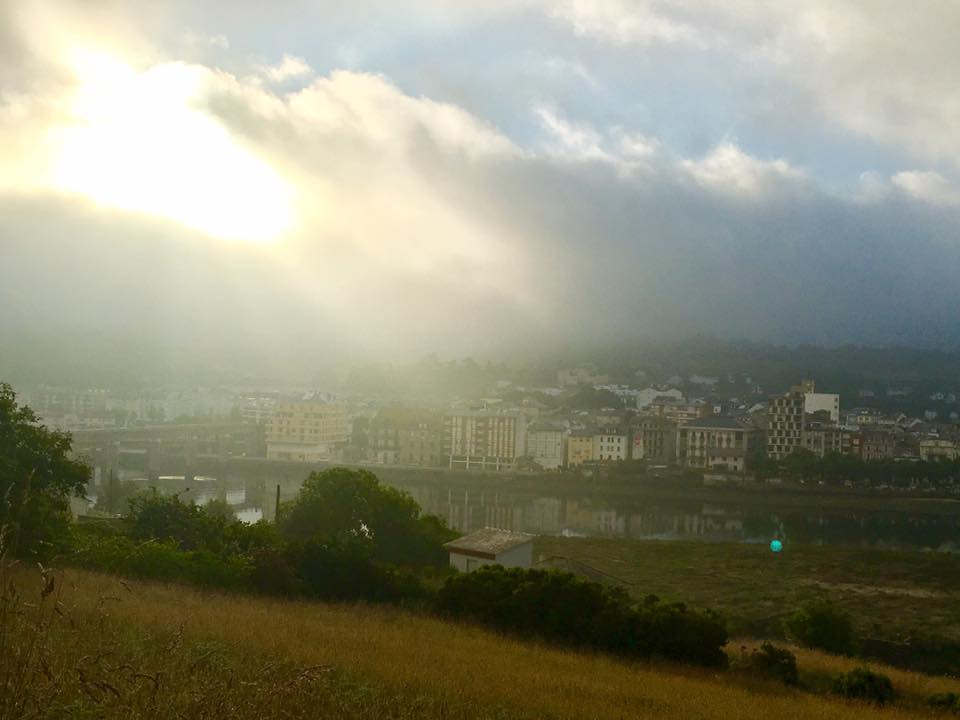
I’m spending the night in Navia, in a new albergue—opened just a month ago. Hospitalero Aurelio treated me to some cold watermelon and stunned me with a number. I sincerely believed I’d walked 30 km, as my iOS app showed. In fact, it was 37 and I still wanted to keep going. Honestly, the numbers don’t matter if your legs just keep carrying you down the road. How I wish this feeling of flying would last all the days remaining.
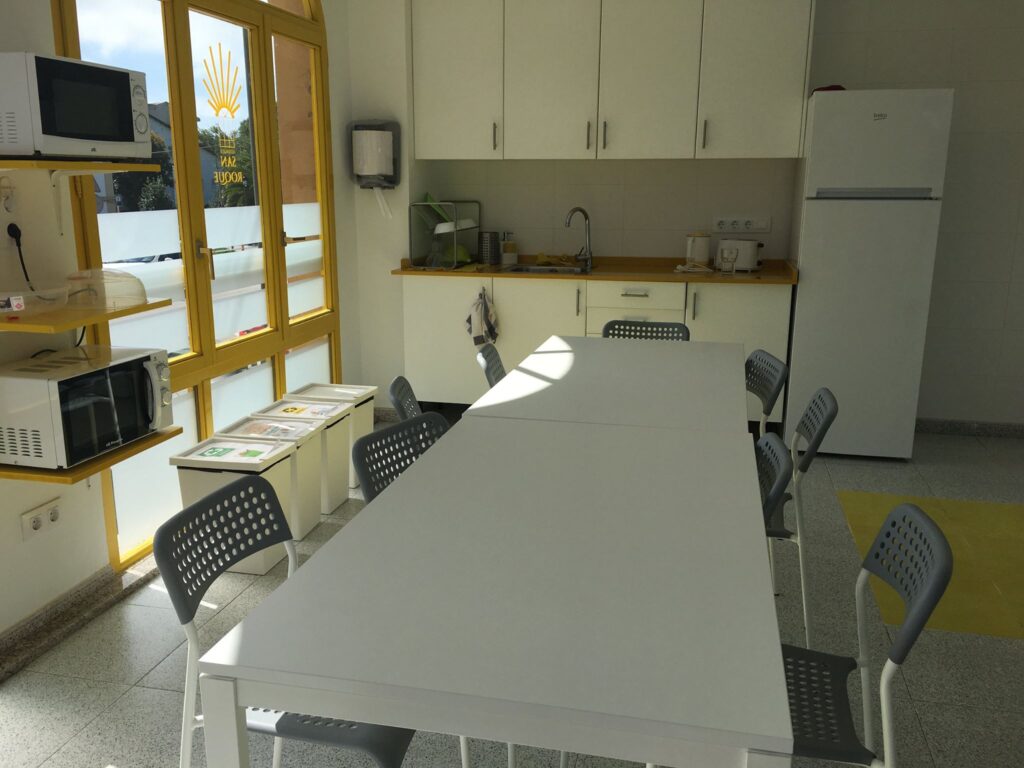
I checked into the wonderful new and clean at the time Albergue San Roque. Took a quick walk into town to the shop and back. Great kitchen, everything you need to cook—it’s nice not to have to go out anywhere after 37 km on foot.
Where to stay in Navia:
- Albergue San Roque – very nice hostel for pilgrims and tourists, kitchen, laundry facilities.
- Hotel Arco Navia – a wonderful inexpensive hotel for those traveling as a couple.
Day 22: Navia – Tapia de Casariego
21 km: Navia – Jarro – La Caridad – Tapia de Casariego
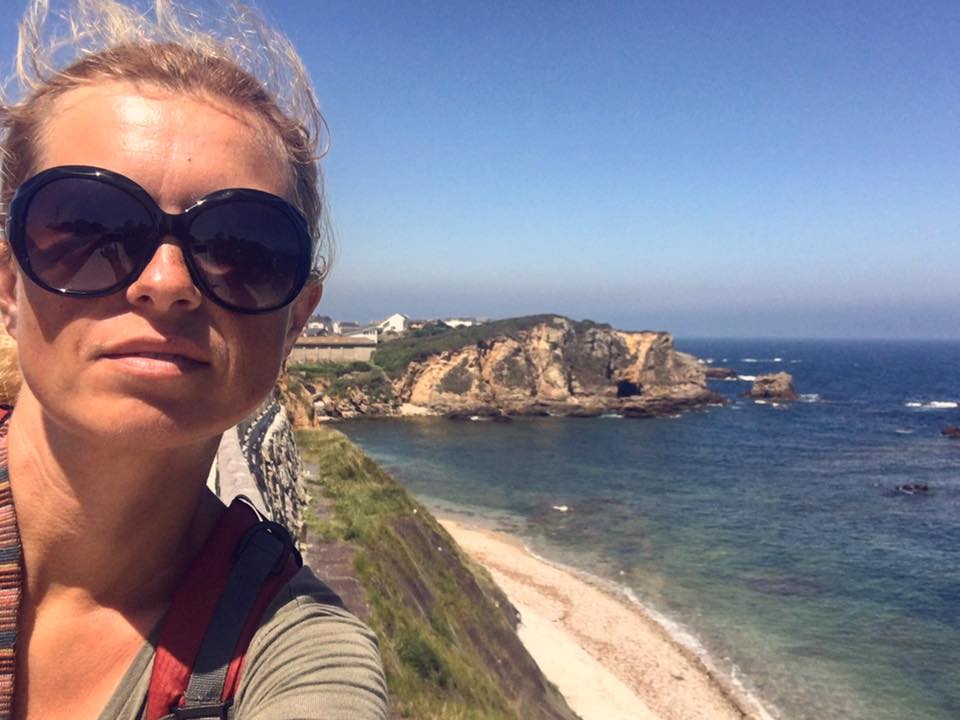
Another split on the Camino del Norte, full of alternative sections. As I’ve mentioned earlier, I tried to always choose the coastal option. This day was no exception—I headed towards the coast to Tapia de Casariego. This was the penultimate chance to walk by the sea (so I thought), before entering Galicia the next day, when the route would go inland.

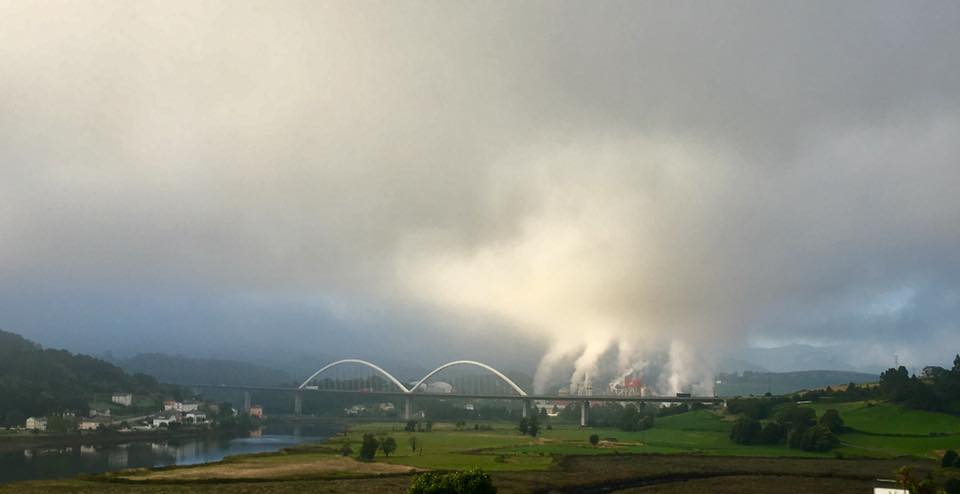
In Navia there’s some factory that gives off a lot of vapor—the whole morning, the sky was full of clouds. But later the sun came out and it got really warm. I even felt as though I wasn’t in Asturias. Asturian rains seemed long gone—it became easy and pleasant to walk.
This was an easy day passing many villages with no bars or restaurants. So if you want to stop for breakfast, coffee, or a snack, do it back in Navia.
Tapia
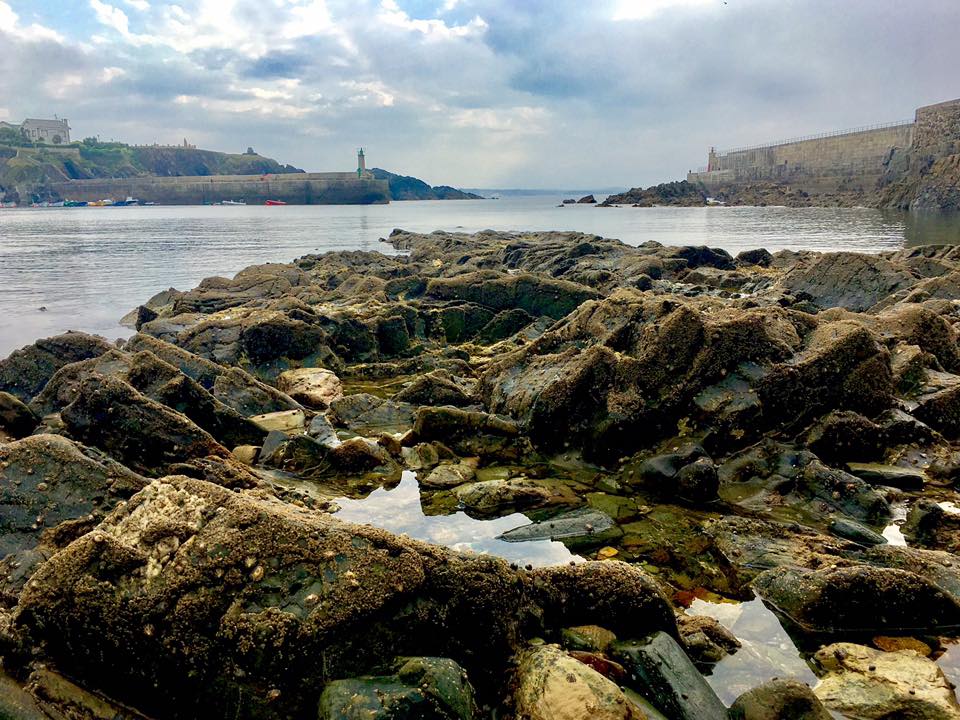
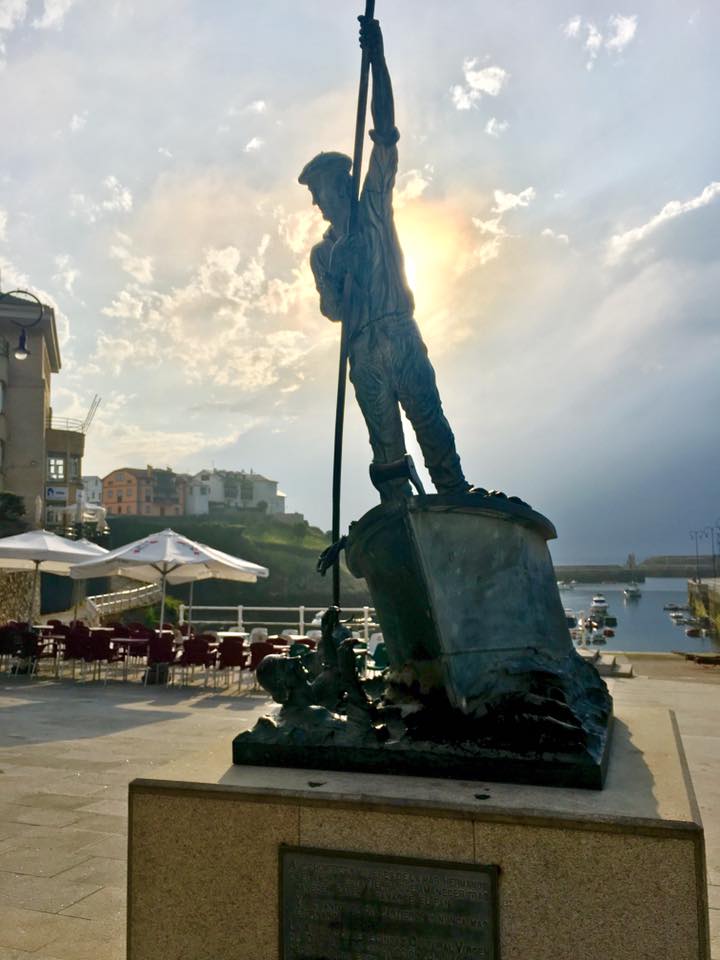
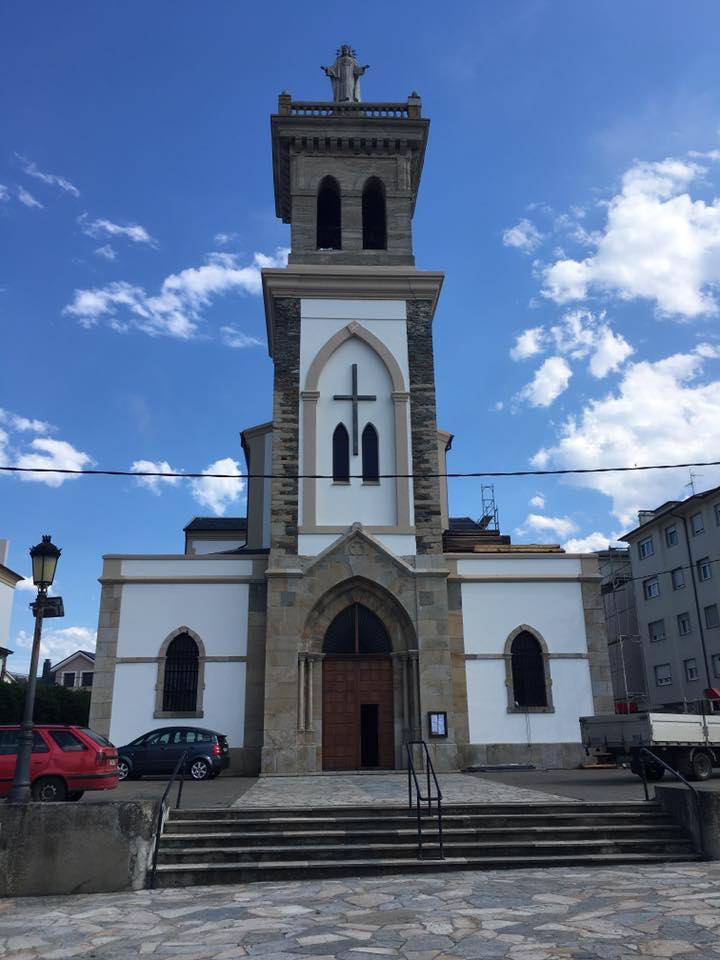
Just a wonderful town, which should not be missed even though it has the worst albergue on the entire Camino del Norte. Although at the same time, it’s also one of the best albergues on the whole route. I specifically went to Google to check out recent reviews—nothing has changed in 8 years—it’s still dirty, neglected, like a doss house.

But this white house on the cliff by the ocean seems to remind you: seize every moment, sit by the ocean, look out at the blue distance, breathe the salty breeze while you have the chance. And I breathed, watched a thunderstorm over the ocean, ate simple supermarket food and went down to the beach below the albergue to soak my tired feet.
We met Sarah from Germany, walked around Tapia together, went to the lighthouse, had lemon beer with churros served as a free tapa. Watched the sunset—the beautiful quiet ocean offered the last best days by its side, taking pity on us after storms and rains.

While a thunderstorm raged above, I ran out several times to watch the lightning streak over the ocean. Now it’s rumbling outside the cracked window, softening the snores of the pilgrims.
Alternative route—is to go from La Caridad away from the ocean. This is the Camino Histórico (por Vegadeo), which doesn’t go through Ribadeo at all. Some walk it, but far fewer, because most pilgrims want to stay by the ocean as long as possible.
Accommodation in Tapia
- Albergue Tapia de Casariego – the only cheap lodging in this town, 7 euros per night, don’t expect good mattresses, but the ocean at the door makes up for everything.
- Apartamentos Turísticos El Peñón – nice double room with kitchen and all amenities, also located not far from the beach.
Day 23: Tapia de Casariego – Ribadeo
13 km: Tapia de Casariego – Ribadeo
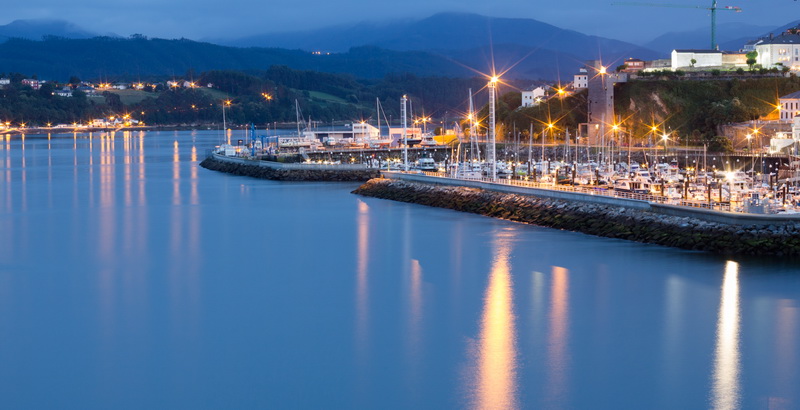
Today I walk to Ribadeo, only 13 km—you could go further. But I couldn’t tear myself away from the ocean and I wanted to see the famous Praia Das Catedralis beach. And then spend a week walking through Galicia to Santiago.
Today Asturias ends and the way along the ocean comes to a close—two provinces divided by the Ría de Eo river. The border passes through the middle of the Ponte dos Santos bridge.
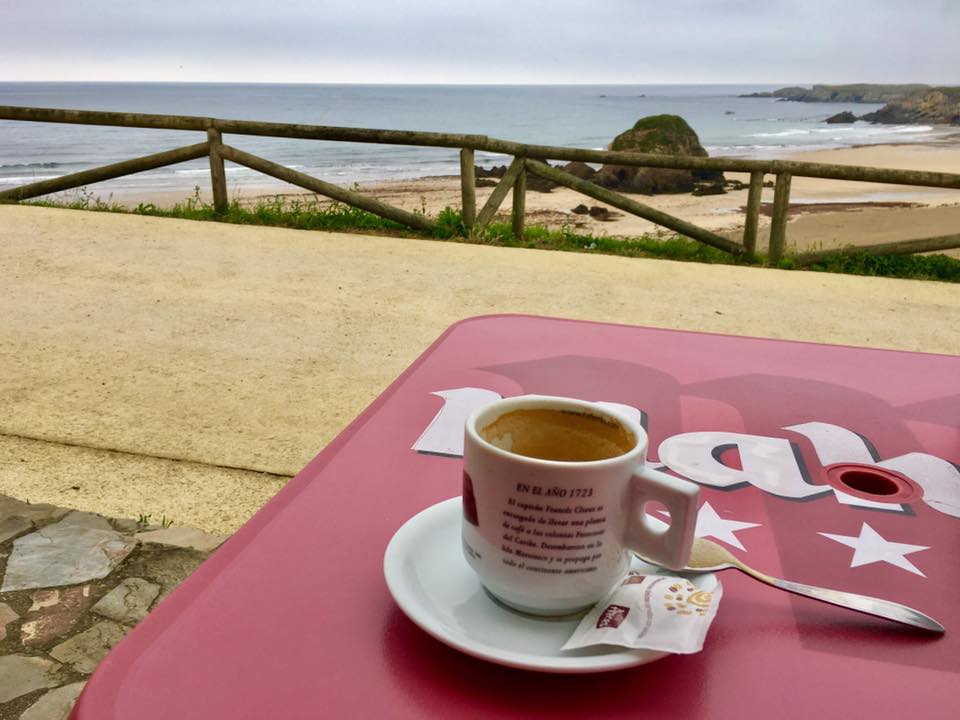
I was given a beautiful and easy day of walking with stunning ocean views. I stopped for breakfast by Playa de Penarronda beach. Restaurante Parajes offered coffee and a wonderful view of the beach.
Ribadeo
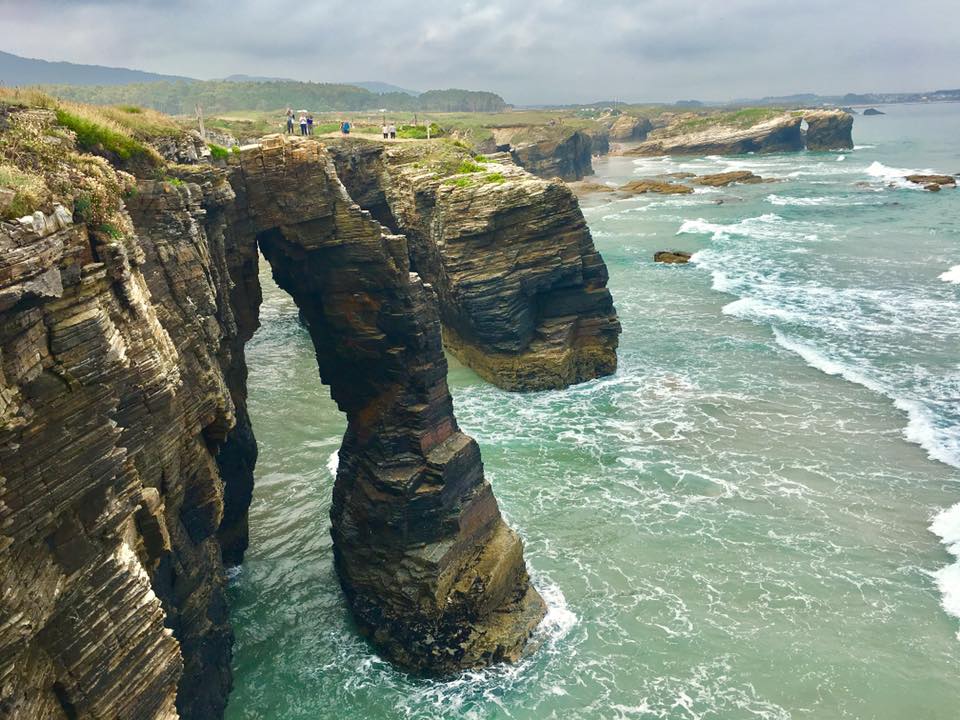
Ribadeo is a beautiful town with places to eat, a small old center. And most importantly—18 km away is the wildly beautiful beach popular with tourists, Praia Das Catedralis.
Praia Das Catedralis
I arrived at the municipal albergue, where there were no beds left. There was even a woman with her teenage son trying to negotiate to sleep together on one top bunk. The hospitalero had not yet arrived and I decided that if the woman was allowed to share the bed with her son, I’d go find another place to stay. If not—that bed would go to me. I was sure she wouldn’t be allowed—and that’s what happened. The bed went to me, and the hospitalero helped the mom and son find a cheap room through his contacts.
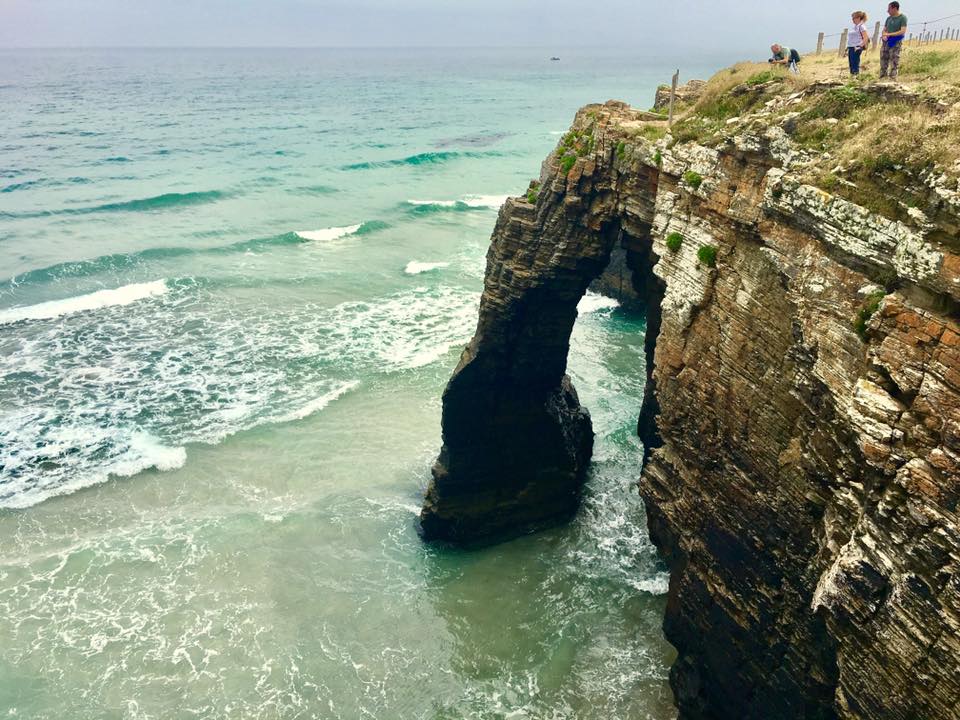
Leaving my backpack, I ran out to the train to see this magical beach. At the time, I didn’t know you needed to register in advance to visit. I just got on the train, went two stops, got out in the fields, passed a cowshed, and reached the beach. During the day, the water was high, but it was still beautiful. There were lots of people, but nobody asked for a ticket. I strolled around above the beach for a while and went back to Ribadeo. I checked the timetable of high and low tides—in my mind, I planned to catch the first morning train to meet sunrise at the beach, when there’d be no water under the arches.
In the evening we gathered in the albergue kitchen. Karin and Sarah joined us, and we also met an Italian girl—Maria. We drank wine, laughed, and I told them that tomorrow before dawn I’d take the train to catch the sunrise at the Cathedral Beach. They loved the idea—so we decided to go together.
Accommodation in Ribadeo
- Albergue A Ponte Ribadeo – clean and cozy hostel for a nice price in the city center. They offer affordable breakfasts—good for the price. Price 18 euros.
- Municipal albergue Ribadeo – has only 12 beds, 10 euros per place, as usual beds go to those who arrive first. There is a kitchen with dishes, the place is clean and nice, located closer to the bridge over the river.
- Apartamentos Tesón Ribadeo – A full apartment with all amenities for two people. The owner is very friendly, the location is great, not far from shops and restaurants.
Day 24: Ribadeo – Vilanova de Lourenzá
27 km: Ribadeo – Gondán – San Xusto – Vilanova de Lourenzá
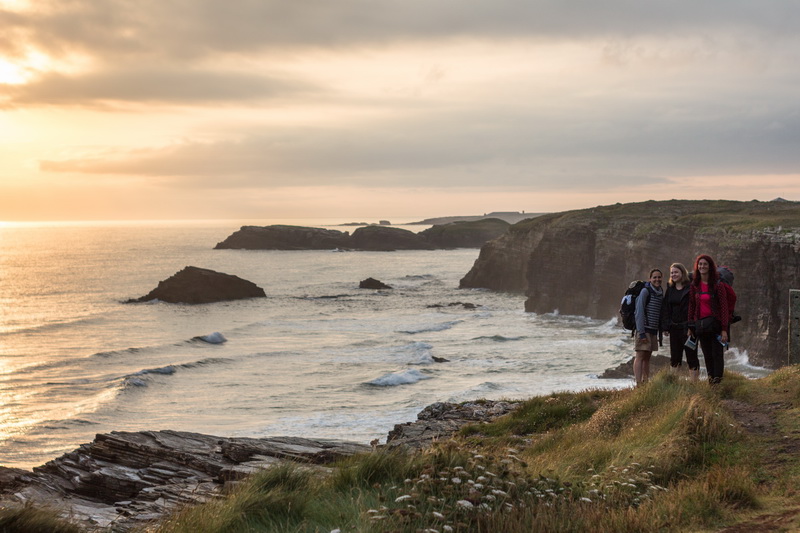
Today the hills and eucalyptus forests of Galicia begin. But we get up at 5 a.m. and quickly head to the first train. The station is empty, the ticket office is closed—we’ll buy a ticket from the conductor inside. The girls still don’t know what I’ve gotten them into, but they’re overflowing with a sense of adventure. All the other pilgrims are still sleeping, and we’re already off to meet adventure.
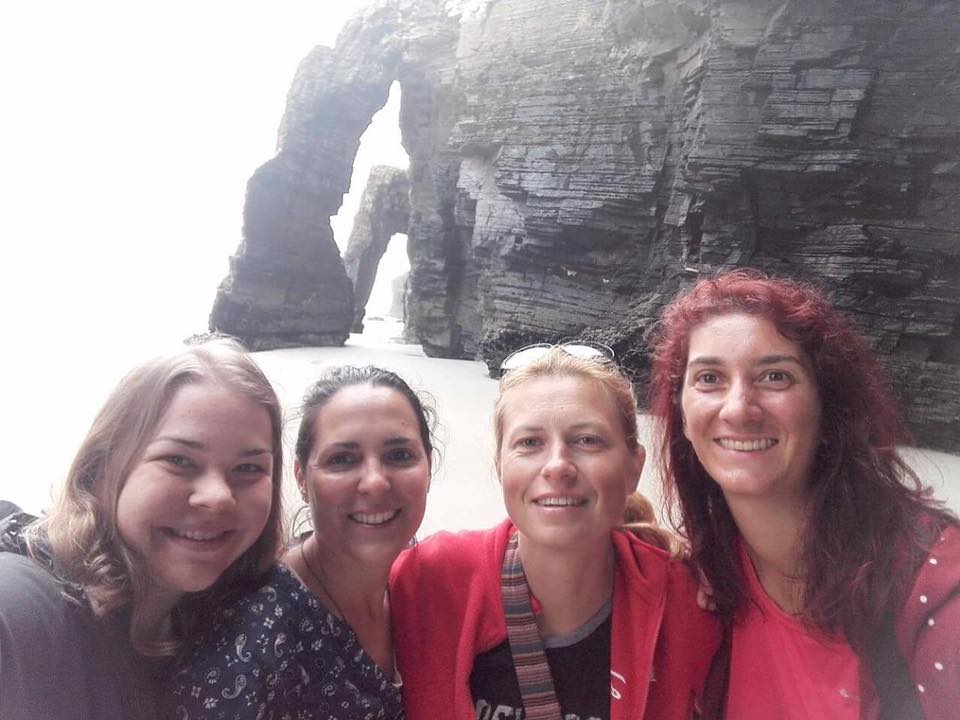
Praia Das Catedralis is one of the most beautiful beaches in Spain, where natural stone arches briefly expose their feet at low tide and hide again under high water. Thousands of tourists come here, with organized buses right for the morning and evening low tides.
But the best is to come to this beach at dawn, when your foot is the first to step on the sand newly uncovered by the retreating sea, and there’s not a soul around (except for crazy Camino friends who agreed over a glass of wine in the evening to join you).


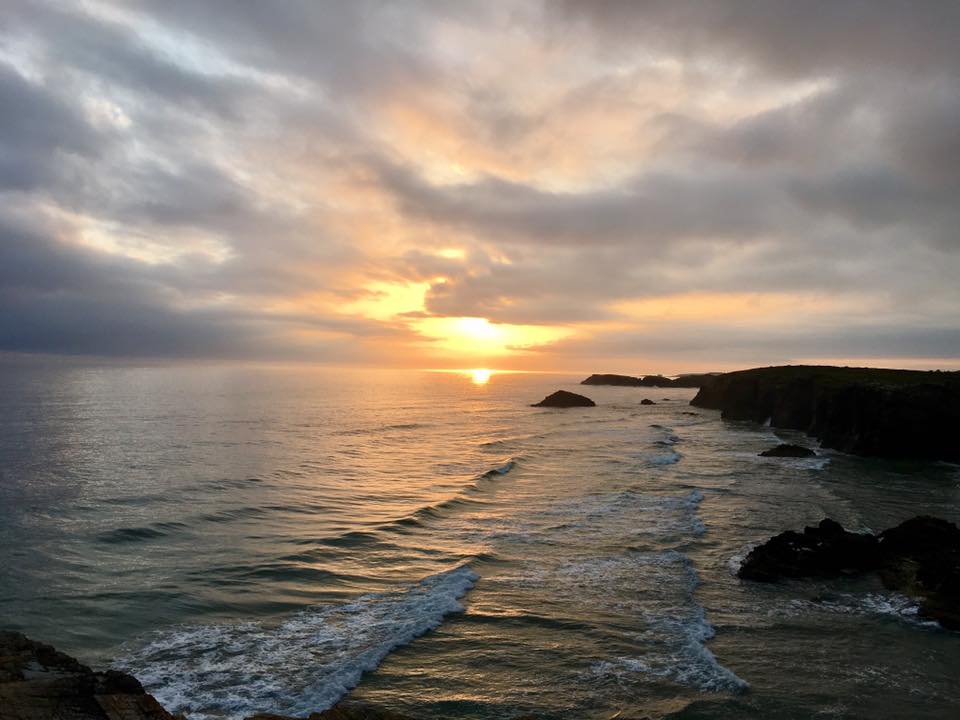
And even though the forecast didn’t promise a beautiful sunrise, at that moment when you’re walking on the bare seabed, the clouds part and the first rays break through the sky, reflecting in the sea and in your tears of gratitude for everything that’s happened on this journey.
Way to Vilanova de Lourenzá
And we run after those first amazing minutes to the stone arches, fool around and take selfies, trying to capture the earth’s beauty, hugging each other, grateful to share our brightest emotions. We haven’t known each other long, but we’ve already shared so much together—Camino brings together the most diverse people from different countries: Croatia, Ukraine, Germany, Italy—we’re all different and yet so alike in striving for the best.
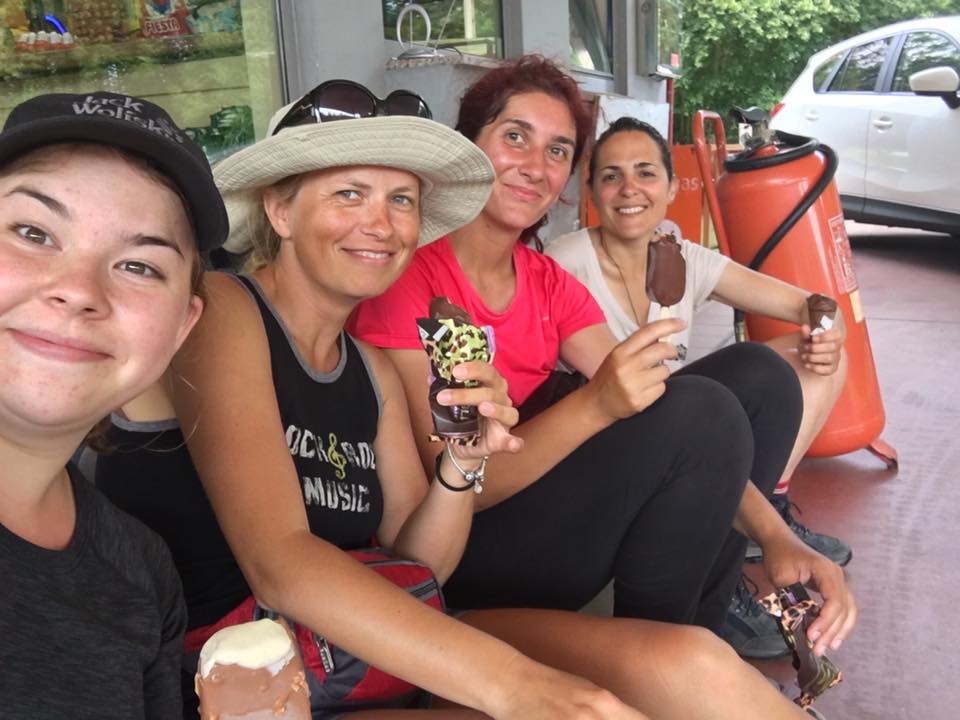
Then we returned by train to Ribadeo and set out walking through the Galician hills. The trail mainly passes through woods and fields, past small villages where there aren’t many places to stop for a meal. We could only get a proper meal in Vilanova Grande, where we saw a petrol station on the roadside and bought some delicious ice cream.
Some pilgrims stop in the town of Vilamartín Pequeño, where there is a donativo albergue. But others go further, as we did, to Vilanova, where besides the municipal there are several private hostels.
Don’t forget to get a stamp in the Concello de Lourenzá cathedral—they let us in to see it inside, even though there was no mass that day.
Where to stay in Vilanova
- Municipal albergue Lourenzá – nothing special, but there is a kitchen with dishes, and we were able to make dinner together. Standard price 10 euros.
- Pensión Albergue O Pedregal – a guesthouse with double rooms as well as 4-bed dorm rooms, where you can comfortably stay in a group of other pilgrims.
Day 25: Vilanova de Lourenzá – Abadín
25 km: Vilanova de Lourenzá – Mondoñedo – Gontán – Abadín
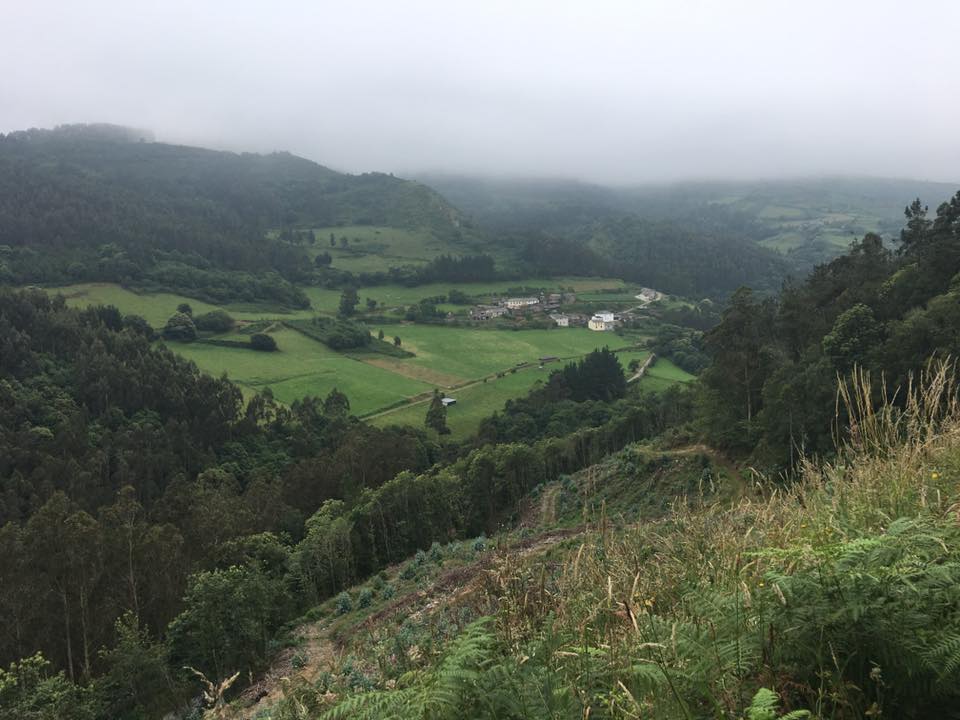
After Vilanova you face a small ascent in the morning—you’ll have to pant a bit at first, but then you get used to it. The trail goes through hills and forests, and here and there you can see ancient chapels and small churches.
Next on the way was the old city of Mondoñedo — a beautiful town with a small picturesque historic center. It attracts tourists, so if you’re planning to stay here—it’s best to book your hostel ahead of time.
We had breakfast here because cafes and shops were open. I write WE because now I walk together with Karin, with whom I made friends in the last few days and naturally just kept walking with. We’ll reach Santiago and Muxía like this. Then, four years later, I’ll come visit her in Croatia.
Keep in mind—the next place to eat is about 17 km away in Gontán, there’s nothing in between. So either have breakfast in Mondoñedo or buy food and water.
After the Mondoñedo cathedral there are two routes: the official and the alternative (Complementario), but the one marked Complementario is actually the original route. That’s the paradox.
The official Camino del Norte route descends from the cathedral and follows a trail, it’s 7 km shorter, but has a very steep and quite long climb.
The Complementario route goes up from the cathedral, leaves the city past the municipal albergue, turns left, and follows the road (almost without cars). This is 7 km longer than the official route and has a steeper climb. Both routes go through mountains and offer wonderful views.
We chose the official route. If it’s raining, it gets quite muddy—we were lucky, there was no rain.
Abadín
A small town where, besides the municipal albergue (located 1 km from the center, in the Gontán suburb), there’s a church, a couple of shops and bars, and a doctor’s reception room—very handy because Sarah (the German girl), who arrived later than us, decided to stay here for two days due to severe leg pain. She went to this doctor and got medicine and advice to take a break. We never saw each other again—our pace was very different.
There’s not much to do in Abadín—we cooked in the albergue, did laundry, lay around and really rested, because the next day held 33 km for us.
Where to stay in Abadín
- Municipal albergue in Gontán – classic large albergue with kitchen, plenty of showers and toilets. In Galicia, almost all municipals are like that. Price 10 euros.
- Albergue Goas – private albergue in Abadín, 17 euros, much cozier than the municipal one.
Day 26: Abadín – Miraz
33 km: Abadín – Castromaior – Martiñán – Vilalba – San Xoán de Alba – Baamonde – Miraz
Sunny morning and wonderful weather—Karin and I set off, we need to walk 33 km to the small village of Miraz, where there’s a wonderful donativo albergue run by volunteers. Why did we decide to go so far? Because we read reviews about the albergue, didn’t want to stay in big towns as the 100 km mark toward Santiago de Compostela was starting. There were a lot more people now—so in-between villages and albergues were more accessible.
And the next day awaited us with a long stretch with no cafes or villages, with ascents and descents. So we shortened it and made it a bit easier.
So it was a hot and quite long stage with few places to stop and eat along the way. We had breakfast at the albergue (bought food at the supermarket beforehand), the next place to stop was Vilalba, 12 km away. The walk was pretty easy, without ups and downs. If you don’t want to go the whole way, you can stop in Vilalba, it has two albergues: one municipal and one private.
Baamonde—a small town with a few restaurants and a couple of shops, not much to do or see here.
Where to stay in Baamonde and Miraz

- Hostel CSJ San Martín – Miraz – highly recommend this donativo albergue, it’s cozy, clean, they offer a simple breakfast for a separate donation. There’s a washing machine, a nice garden for relaxing, and in the village there’s a small cafe with a pilgrim menu—meals are good.
- Km101 – guesthouse located in Baamonde, reasonably priced if you’re traveling as a pair.
Day 27: Miraz – Sobrado
29 km: Miraz – As Laxas – A Roxica – A Cabana – O Mesón – Sobrado dos Monxes (original route)
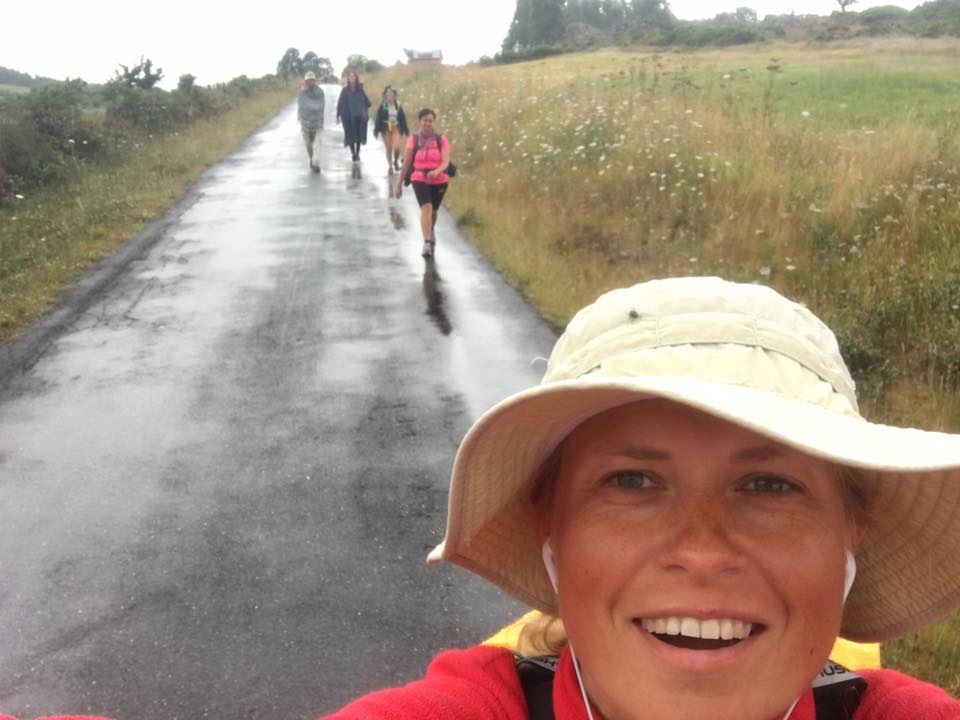
This is the last 100 km of the way—the number of pilgrims keeps increasing, they’re clean, not tired, one girl even read a massive book at the albergue. When you’re walking 800 km you really think twice before carrying extra weight, and honestly you don’t really want to read.
In the morning it rained, and we went as a big company under the rain. Walking under the rain all day in sandals and socks, in a thoroughly soaked hat and fleece—not hard at all. You just put on headphones and dive deep into your thoughts. Yes, in this weather I do a lot of thinking on the way—energy stops bubbling, it’s all spent conserving body heat.
Sometimes it even got hot, the main thing is to get a good pace and not stop. At home +17 with light nasty drizzle would be freezing me. I can hardly imagine myself in a big city walking around like this. But there’s no limit to what you can get used to! In these moments the wildest ideas come, plans are made, lots gets sorted out and put on the shelf. Useful weather for future planning and shedding the husks of the past.
The only minus after almost 30 km in the rain is that the next morning my leg started hurting—I strained a tendon and did the last 80 km on painkillers (ibuprofen 600 lasted 4 hours a tablet). When I got home I limped for a month and only rest and heat cured it.
Sobrado dos Monxes
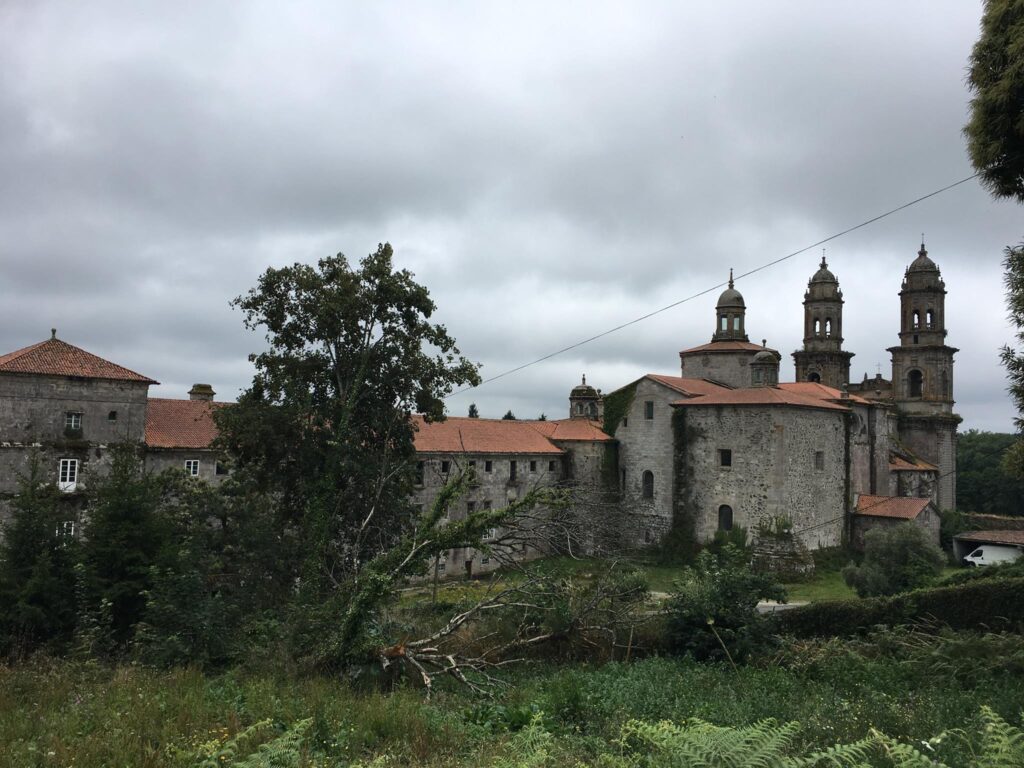
This is a town that formed around a huge monastery, where we are stopping tonight. Before this, I had only ever overnighted in a monastery once (in León, when I started my very first Camino). I’d never seen anything like it.
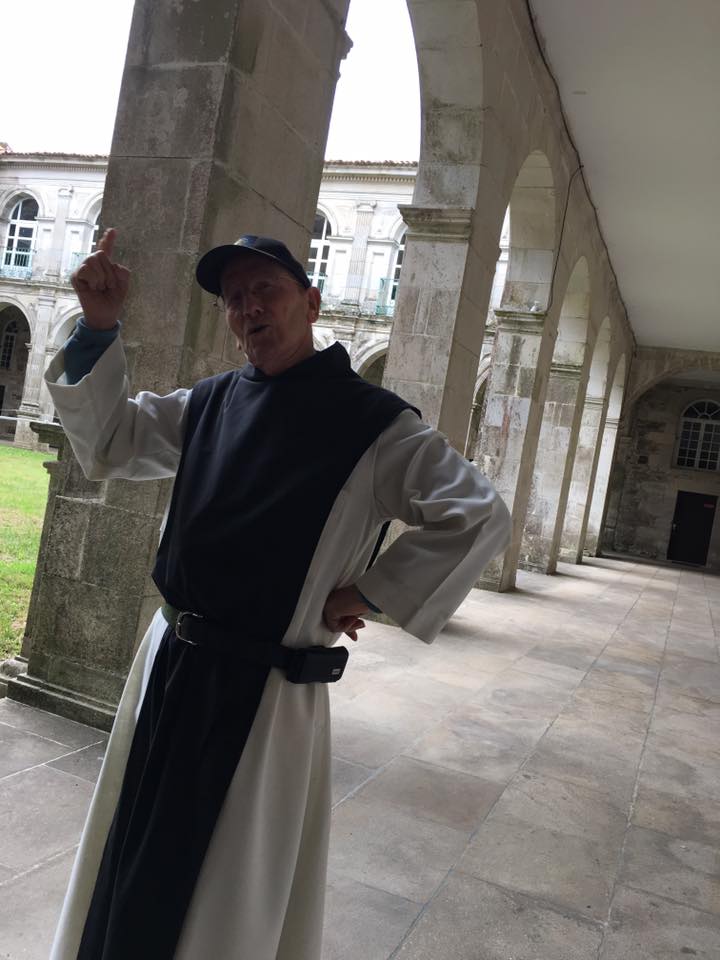
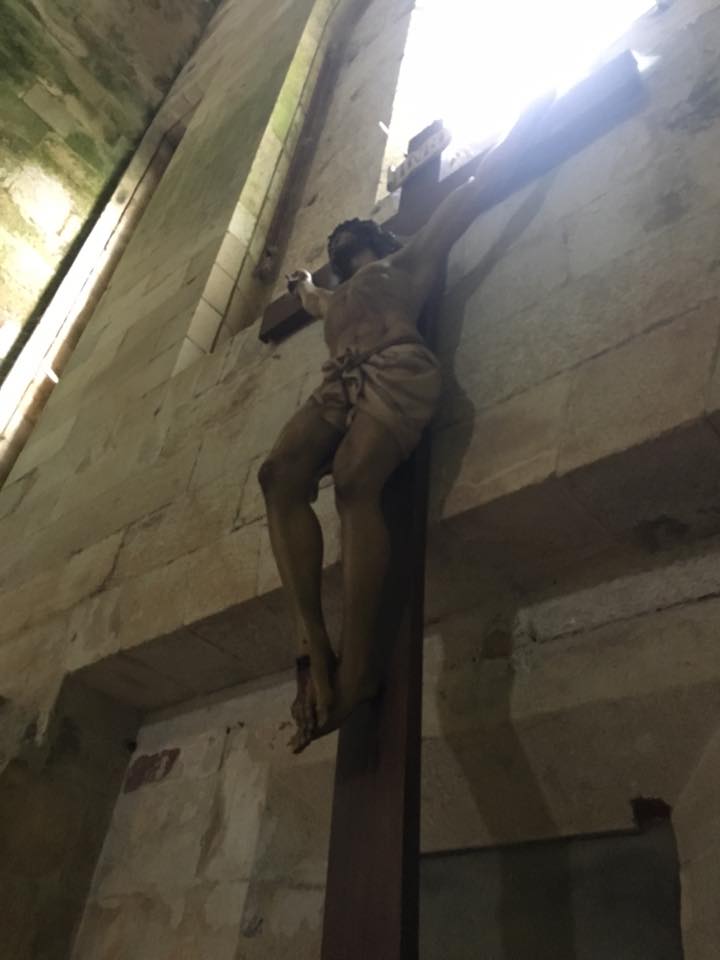
Hospitalero Santiago (yes, that was the monk’s name—Camino keeps up its ironic sense of humor) gave us the survival briefing for these ancient, moss-covered walls.
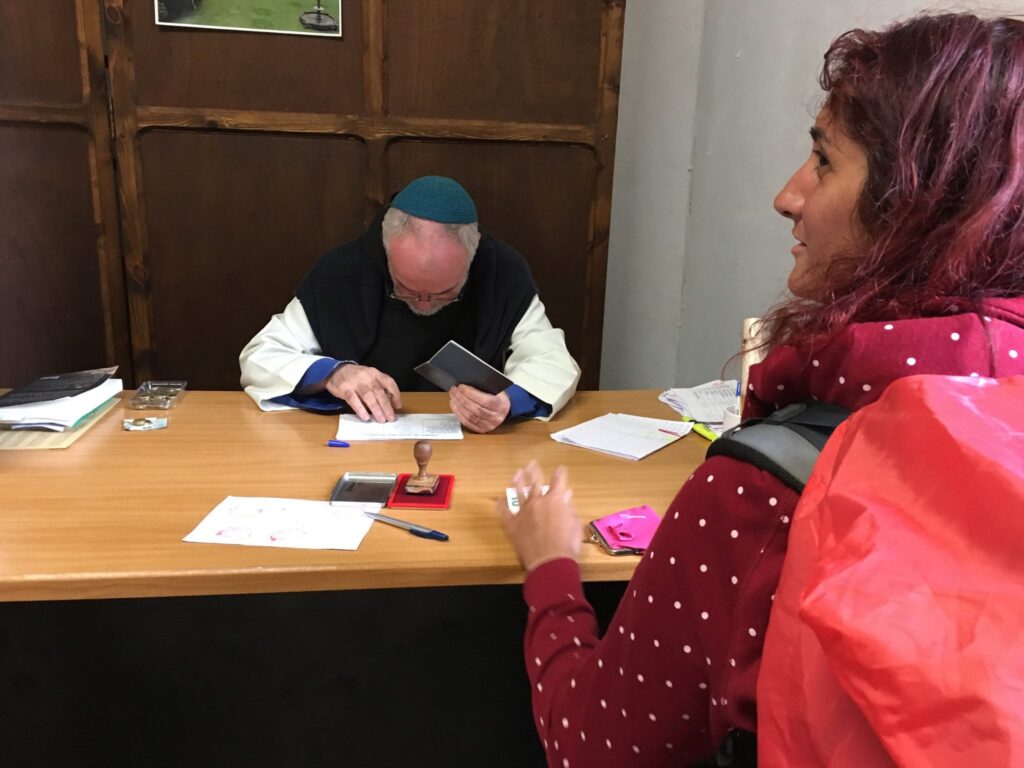
But pilgrims are allowed to visit inside for free—it’s incredibly impressive. In 2017 there hadn’t yet been modern restoration. The inner walls of the cathedral were green with moss, and young trees grew on its bell towers outside. Now there’s money and it looks very neat, but back then it seemed like nature was swallowing the holy place. I recommend walking through the cathedral and nearby rooms—you’ll see ancient wonderful frescoes, the atmosphere there is incredible!
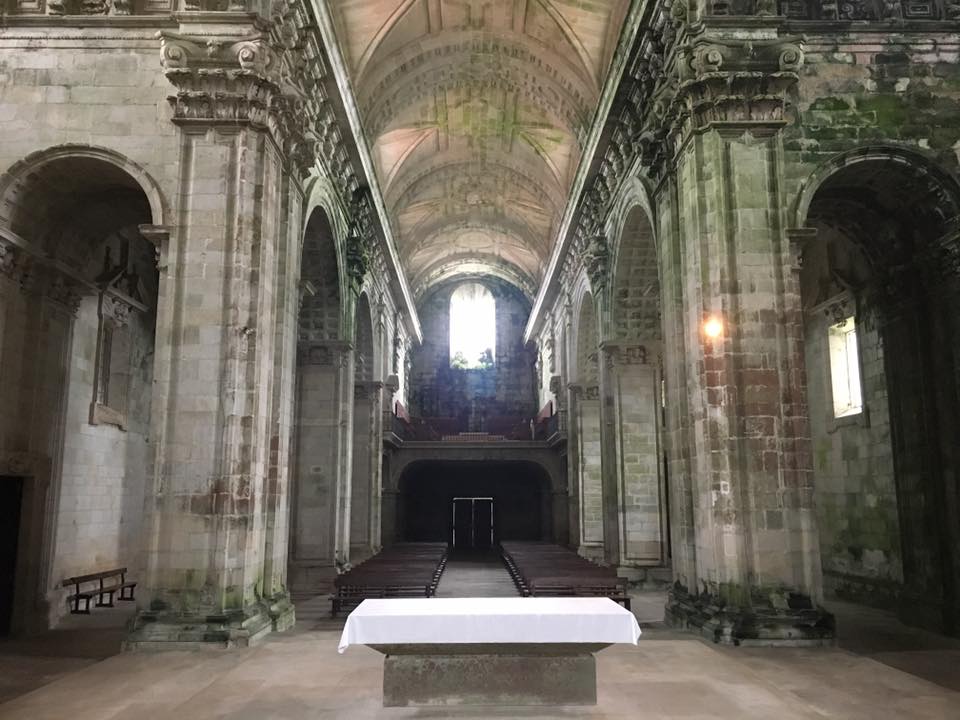
While waiting for it to open (they let us in just after 4), I warmed up in a nearby cafe and ate like never before—walking in the rain really takes a lot out of you, both physically and emotionally, and you need to refuel. It seemed I saw everyone who’d been walking along with me since the beginning, and in Santiago we’ll all arrive in sync.
Accommodation in Sobrado
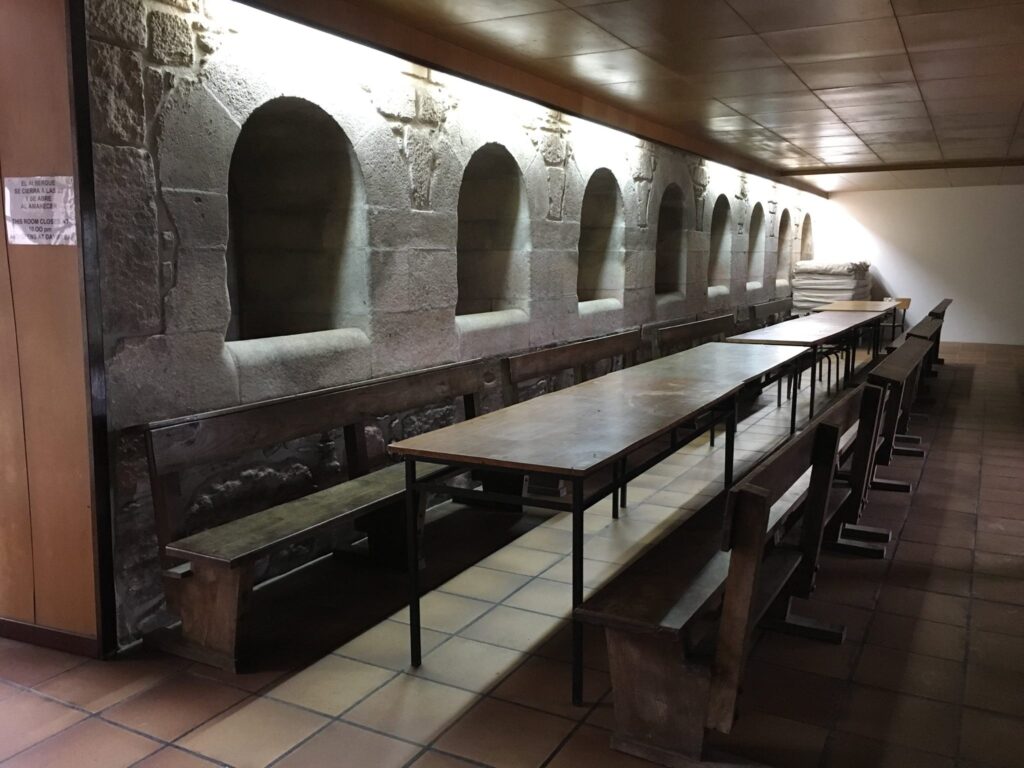
To stay in the monastery costs 10 euros—pilgrims only, everyone else pays 1 euro for a brief tour. 12-bed cells, showers—nearly boiling water (through half-walls you hear songs from the men’s shower, while in the women’s everyone is just as they are, with all their folds and tattoos on the most intimate spots). I was very impressed by this place, and I went to mass, expecting it to be in the cathedral. But no—for that they have a beautifully restored chamber.
Day 28: Sobrado – Salceda
33 km: Sobrado – Boimíl – A Gandara (Boimorto) – Arzúa – Salceda

Today is the last day on the Norte—we head toward the town of Arzúa, which already lies on the French Way. I was there a year ago, saw crowds of pilgrims and, to be honest, already started missing the wonderful atmosphere of the Norte. The French Way is the most popular Camino route, especially the last 100 km from Sarria to Santiago. From Arzúa there will be more restaurants, bars, albergues, etc.
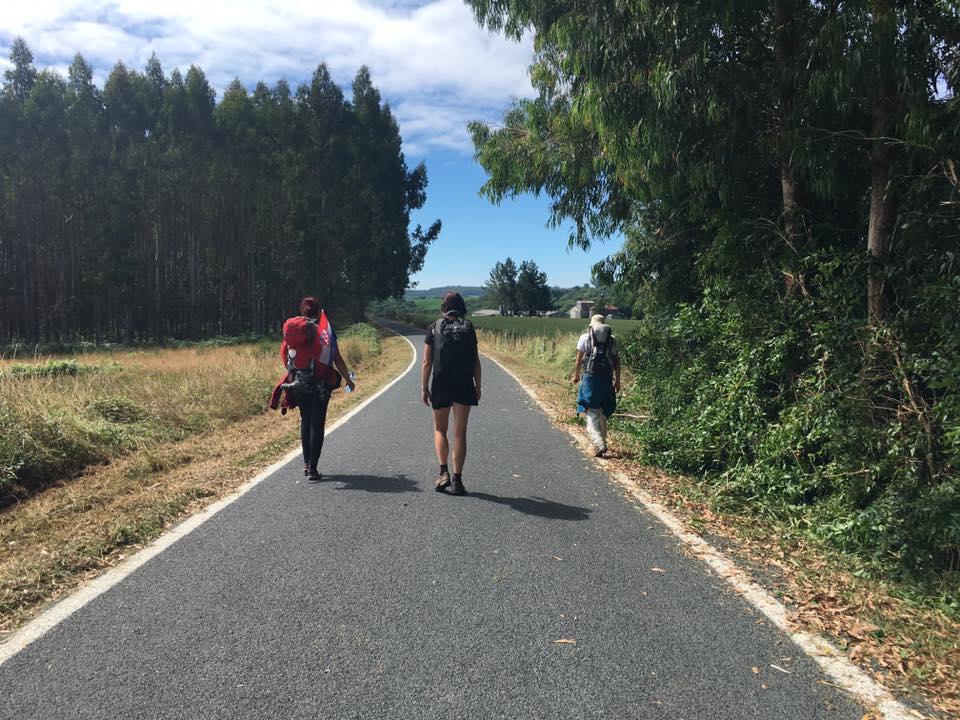
The whole day on asphalt—that doesn’t impress much, I got a new blister and my leg started to hurt, the same unfortunate tendon.
Karin and I reached Arzúa, had lunch there and decided to go further—a lot of people stopped there. We hadn’t booked anything—almost all of the Norte I walked without bookings and mostly stayed in municipal albergues. Now, maybe that’s only possible if you walk very quickly or skip important guidebook points. Instead of 22 km, we walked 33—totally exhausted on the hot asphalt.
Accommodation in Salceda and Arzúa
In Arzúa there are plenty of hostels and albergues—if there’s no space in the municipal, you’ll always find a place in a private one. Here are a few of them.
- Albergue Ultreia – Wonderful hostel, with attention to detail. Each bed has its own lamp, socket, and a small shelf for the phone; there are hooks for each bed. The height of the bunk beds allows you to comfortably use the lower bunk. It is extremely clean and well kept. There are real sheets (not the paper ones usually used on the Camino), plus plush blankets. Towels are provided. The hostel also has a cafe open from early morning. Bathrooms are clean; there is also a laundry and an outdoor terrace. I stayed here when I did the Francés a year before the Norte.
- Domus Gallery Pension – has 2- and 4-bed rooms, good for a group, an old building converted into a beautiful guesthouse, clean and cozy, fair price.
Day 29: Salceda – Monte do Gozo
24 km: Salceda – A Brea – Santa Irene – A Rúa – O Pedrouzo – San Paio – Lavacolla – San Marcos – Monte do Gozo
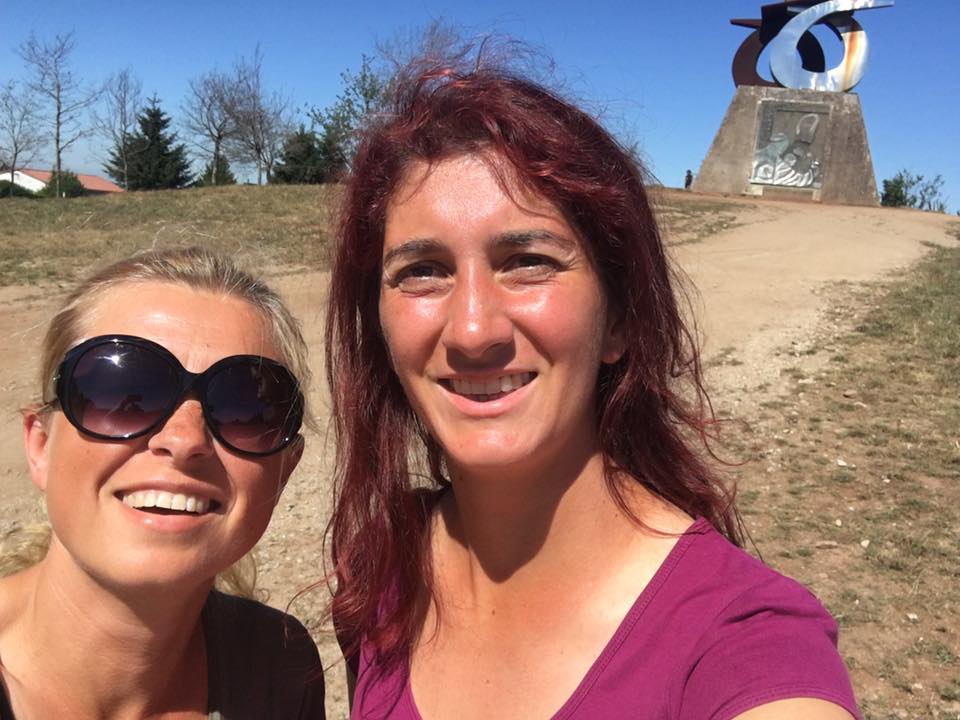
We walked the final day towards Santiago—only 5 km left to the cathedral—we spend the night at the Monte do Gozo Albergue (400 beds). Most pilgrims stop in the town of O Pedrouzo today, which is a street lined with albergues, restaurants, and cafes. But from there it’s still about 15 km to the cathedral—it’s better not to be in a big crowd both in the evening and in the morning when all those hundreds of pilgrims set out for their last kilometers.
For two days, Karin and I walked the French Way slightly out of sync with other pilgrims—it wasn’t as noisy as it could have been, and I’m glad about that. I felt a bit sad seeing places from last year, comparing this final section with the Norte (here it’s quite dirty—as is to be expected, where there are more people, there’s more rubbish).

But my body already feels the way ending and has started hitting me with nasty surprises. New blisters—I’m used to them and just accept them as part of the journey. But yesterday a muscle in my back started jamming—it’s very painful to walk. The body really does work together with the brain, and it’s already sent the signal to finish—”we saw all this last year and it’s no longer interesting to us, go home, Ira”…
Monte do Gozo
We settled into this huge and wonderful albergue, washed up, made dinner together. And then went to say goodbye to the sun at the Monte do Gozo hill. This hill, beautiful park, and huge albergue were built to honor the visit of Pope John Paul II to Santiago. He spoke his sermons here, there were many ceremonial events. Now pilgrims stroll here.

Climb up to the Pilgrims’ Statue, from here you can see the cathedral beautifully—in the evening, when the sun sets, this place is beautifully lit by the rays.
Tomorrow morning we’ll go to mass, I’ll collect my Compostela, and then go to Finisterre—to finally finish my unfinished business—walk 30 km to Muxía. You need to pay your debts and do what you originally intended to the very end.
Day 30: Monte do Gozo – Santiago de Compostela
5 km—through the city and streets of Santiago de Compostela
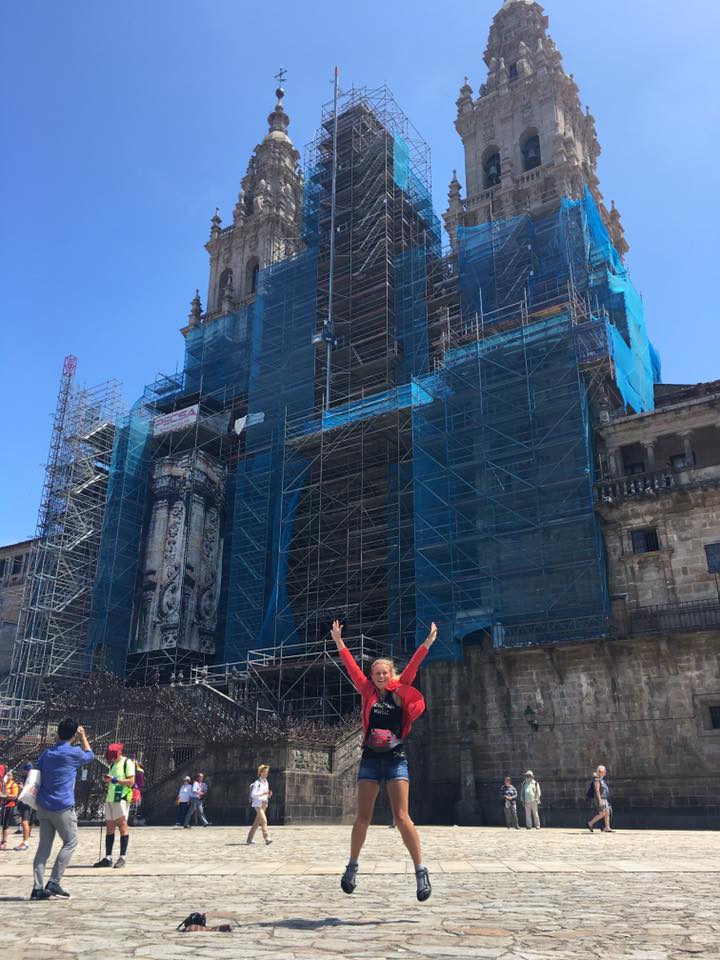

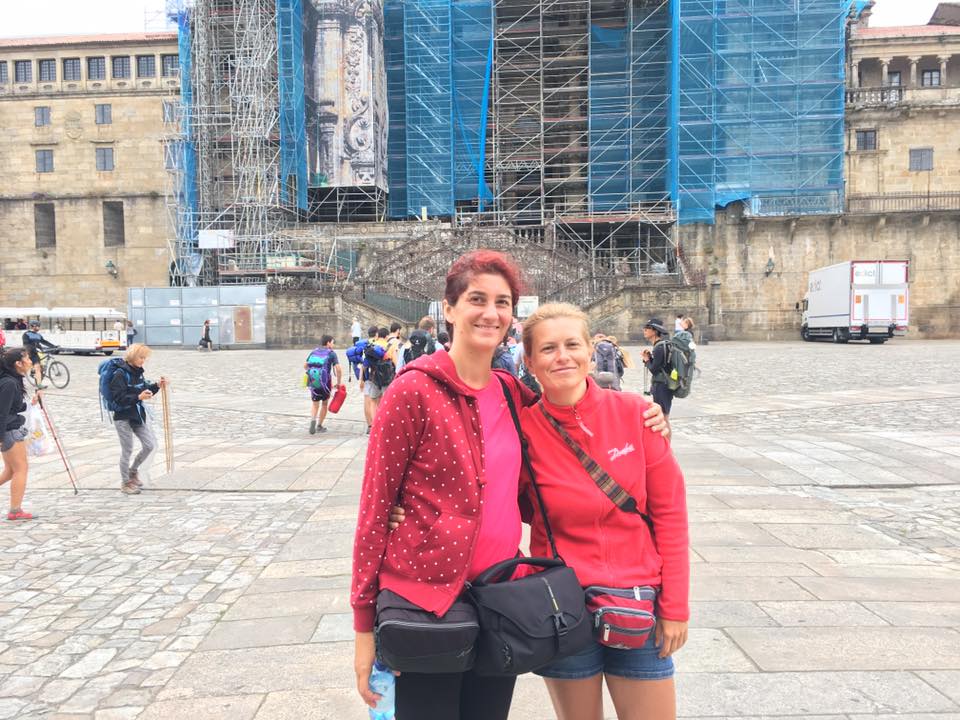
Recommendation: start early if you want to attend the pilgrimage mass at 12:00 in the cathedral.
Arrival in Santiago is the most amazing feeling on the Camino; when you enter the Plaza de Obradoiro and see all the pilgrims sitting around taking pictures—you feel like part of something big and important, don’t rush and enjoy this moment—you’ve been waiting for it for over a month.
Recommended reading: Santiago de Compostela, Spain—a mini guide to the Galician capital
We went to mass, saw the miracle of the botafumeiro again—last year I cried from this beauty, and now again I felt goosebumps from the organ and how beautifully the botafumeiro swings under the cathedral ceiling.
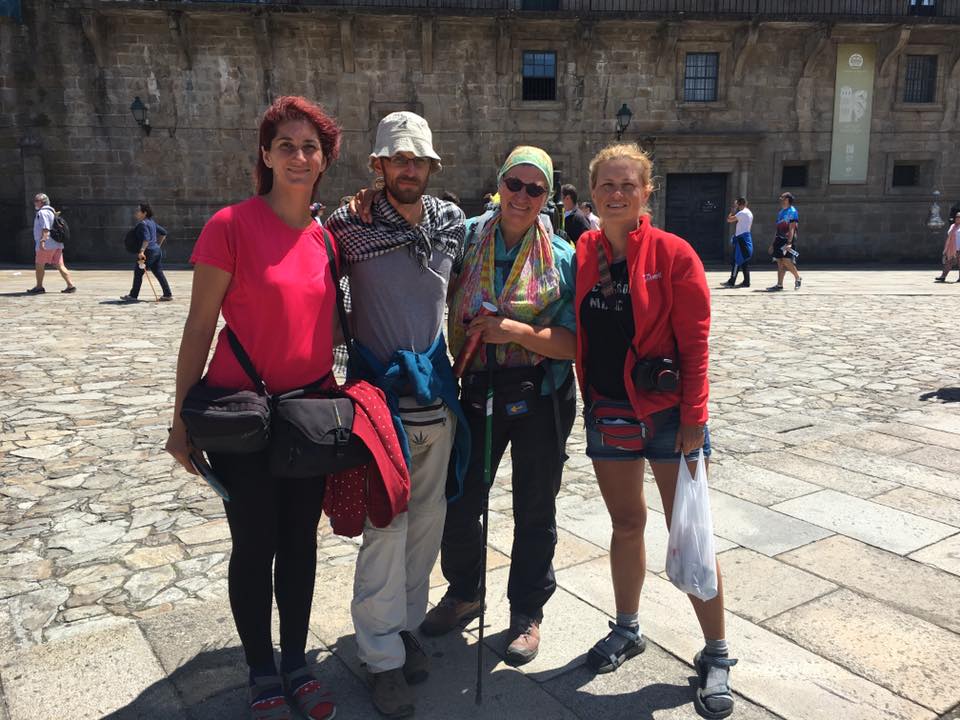
After the mass we went to the square by the cathedral to see those we’d walked with in the previous weeks. In the evening we gathered at a restaurant to celebrate the end of the Camino.
We checked into the most popular pilgrim hostal Albergue Seminario Menor. This huge albergue on one of Santiago’s hills has more than 170 beds, with a good price-quality ratio. And in the morning we went by bus to Finisterre, from where we will still walk 33 km to Muxía.
Day 30-31-32: Santiago-Finisterre-Muxía
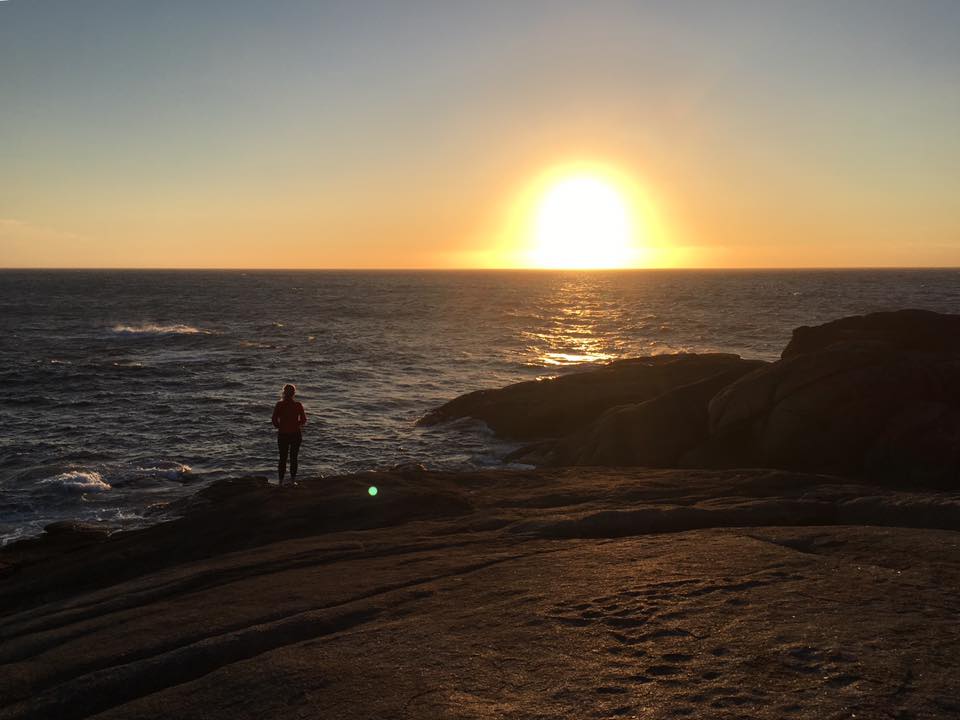
These days, Karin and I walked from Finisterre to Muxía, saw wonderful sunsets over the ocean, wild beaches where I swam naked, fantastically beautiful eucalyptus forests along the Costa da Morte coast. But I wrote separately and in detail about the route to Finisterre and Muxía because I also walked it and it is incredibly wonderful. Some even consider it a separate Camino—and it really is, that’s why they issue the Fisterrana (the Compostela equivalent for this route).
Recommended reading: My Camino Finisterre—the quiet route to the end of the world
Instead of a brief conclusion
I have already walked 9 Camino routes, and also a bunch of similar trails in Italy and Portugal. But Camino del Norte is still the most beautiful and the most important of all I have seen and walked.
I dream of doing some other long route, because as I already wrote—in four weeks, everyone goes through a remarkable physical and emotional transformation. No, I didn’t become a different person, but I learned to accept the flaws and challenges of the path, trust it, to look for the good and beautiful in simple things. And to feel very happy—and that’s priceless.
What you will need for traveling in Spain
- Don’t skimp on medical insurance – you can easily buy it online at HotlineFinance. Healthcare in Spain is expensive, but for a small fee you can get insurance covering €30,000.
- If I don’t stay in an albergue, I book hostels or pensions via Booking.com. I do this in the evening for the next day.
- I buy buses in Spain on the website of the Spanish carrier Alsa.
- Train tickets in Spain—on the website of the Spanish railway company Renfe.
Useful articles and links:
- Camino Mozárabe – The Saint James’ Way through Andalusia
- Camino Portugues – Portuguese route from Porto along the ocean
- Camino de Santiago – how to prepare for the pilgrimage?
- Hotels in Barcelona – which area is better to stay in
- Toledo—a city for a day trip from Madrid