
Most tourists come to the north of Spain for the ocean, green mountains, surfing, and small fishing towns. But there is one city that is quite unlike the rest. This is Bilbao—the largest city of the Basque Country and a true cultural and industrial center of northern Spain.
A few decades ago, Bilbao was one of the main industrial centers of the country. Shipyards, metallurgical plants, the port, and factories defined the life of the city for over a century. Today, it’s hard to recognize. The old industrial districts have been transformed into modern cultural spaces, the embankments have become favorite spots for walks and jogging. And the Guggenheim Museum made Bilbao one of the most famous cities in Europe.
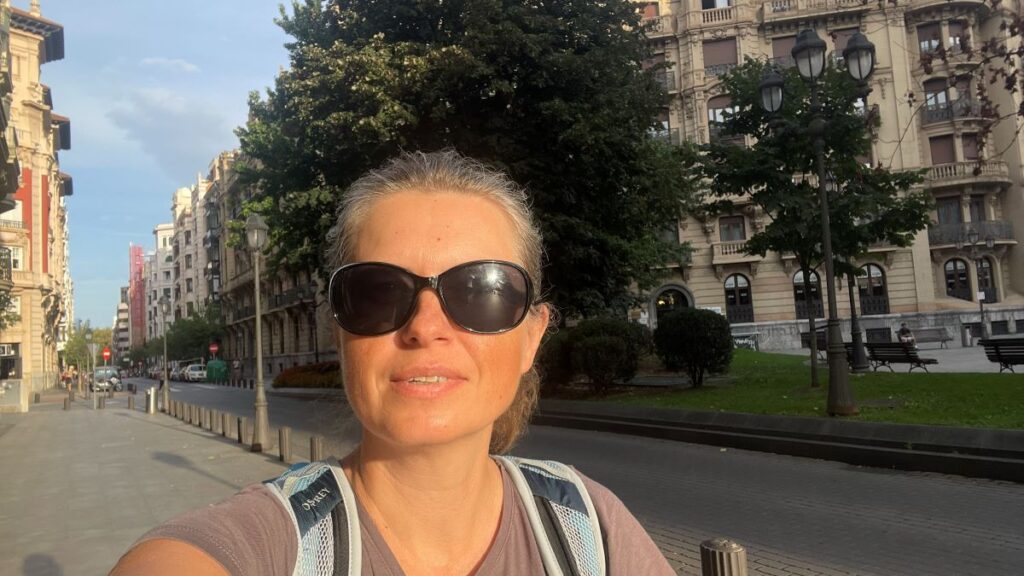
The most interesting thing is that the city has not lost its own character. The Basque culture is still very much felt here, as is the locals’ love for their language, traditions, and gastronomy. That’s why Bilbao is nothing like either Barcelona, nor Madrid, nor the neighboring San Sebastián.
And around the city, there are incredible natural locations. In just half an hour, you can find yourself among high cliffs of the Atlantic coast, wide sandy beaches, surfer towns, or small fishing villages. That’s why, to explore Bilbao, I recommend allocating at least three days.
During this time, you can not only see the city’s main sights but also understand why the Basque Country is so different from the rest of Spain.
How to get to Bilbao
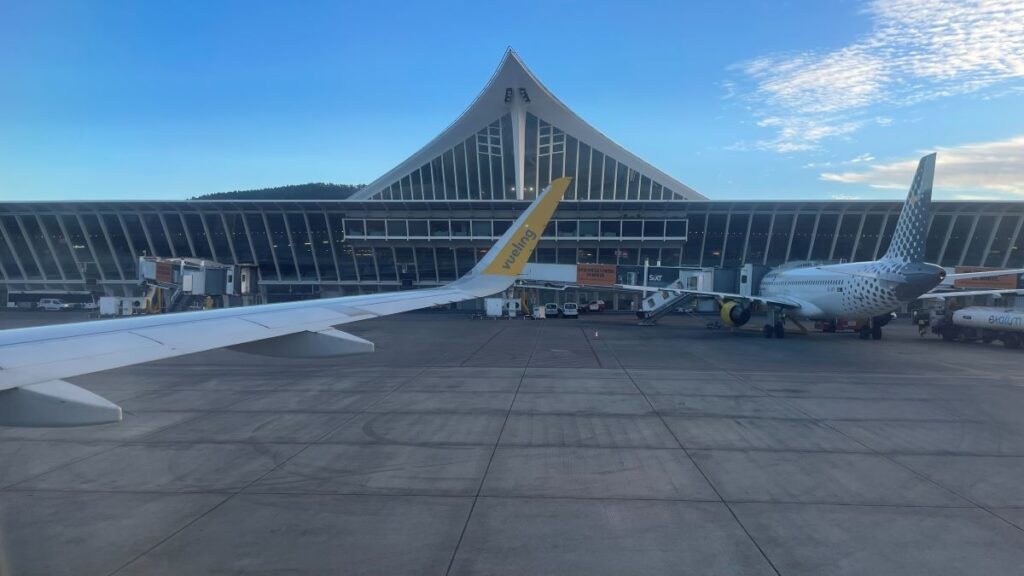
Bilbao has an international airport, so the most convenient way to get here is by plane. It is located about 12 km from the city center and serves dozens of domestic and international flights.
There are direct connections from the airport to many cities in Spain and Europe, including Barcelona, Madrid, London, Paris, Amsterdam, Frankfurt, Lisbon, Milan, Brussels, Dublin, and others. Overall, the airport has over 60 regular destinations, served by dozens of airlines. (Aena)
By plane

The most convenient options to get to Bilbao:
- via Barcelona;
- via Madrid;
- via Warsaw;
- via Vienna;
- via Munich;
- via Amsterdam.
If you are traveling from western Ukraine, it is often more advantageous to fly from airports in Poland or Hungary. You can reach them from Kyiv, Lviv, or Odesa by bus or train.
Via Madrid or Barcelona
If you plan to combine Bilbao with other regions of Spain, consider flying into Madrid or Barcelona.
From Madrid to Bilbao, there are numerous daily domestic flights, as well as high-speed trains and intercity buses.
From Barcelona, there are also regular flights by Vueling—which I took in just 1 hour. The drive by car takes about 6 hours.
By train
If you are already traveling in Spain, you can reach Bilbao by train.
The most popular routes:
- Madrid — about 4.5–5 hours;
- San Sebastián — about 2.5–3 hours;
The railway is a good choice for those who do not want to rent a car.
By bus
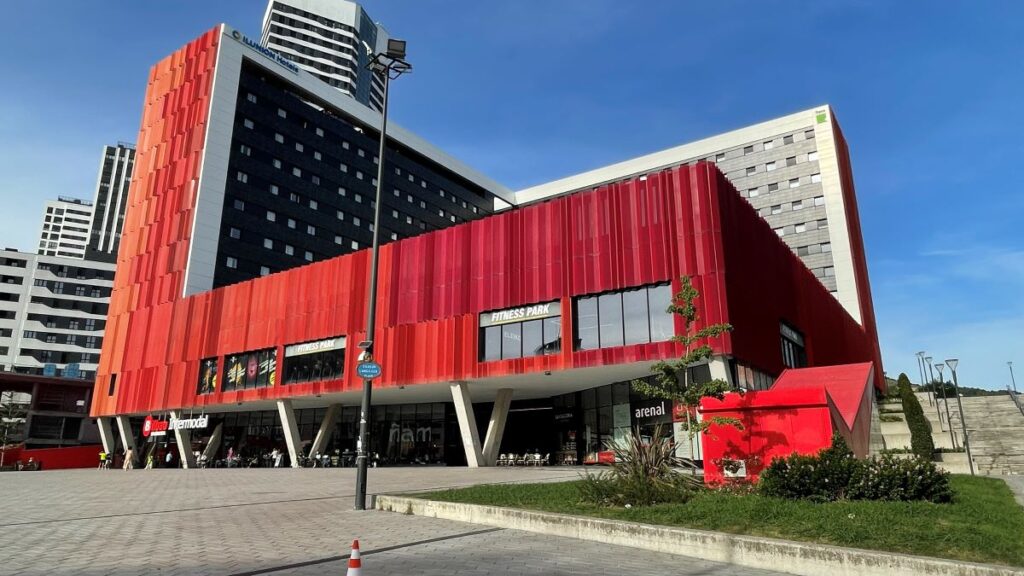
Intercity buses in Spain are often even more convenient than trains. Companies ALSA and FlixBus run regular routes to Bilbao from almost all major cities in the country.
For example:
- San Sebastián — about 1 hour 20 minutes;
- Santander — 1.5–2 hours;
- Madrid — 4–5 hours.
The buses are modern, comfortable, and often cheaper than the railway.
How to get from the airport to the city center
The easiest way from the airport to the center of Bilbao is by A3247 (Bizkaibus) bus.
- Travel time — about 20–25 minutes.
- Ticket price — 5 euros.
- Buses run approximately every 15–20 minutes.
- The final stop is near Moyúa Square, from where you can easily walk to most hotels or take the metro.
If you are traveling as a group or have a lot of luggage, you can take a taxi. The ride to the center takes about 15 minutes, depending on traffic.
Where is the best place for tourists to stay in Bilbao?
Bilbao is a rather compact city. Most of the main sights are 20–30 minutes’ walk from each other, and the metro and tram make it easy to get to even the more remote neighborhoods. So it’s hard to go wrong choosing a hotel here. However, each area has its own character, and depending on the purpose of your trip, some will suit you better than others.
Old Town (Casco Viejo)—the best choice for a first visit
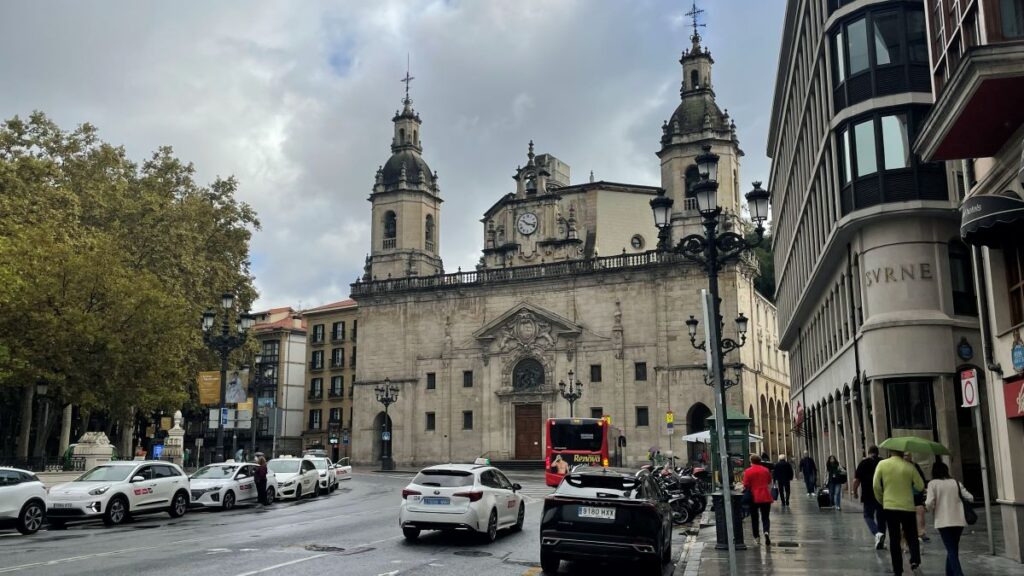
If you are coming to Bilbao for the first time, I would definitely recommend staying here.
The Old Town is the heart of Bilbao. Here you will find the famous Seven Streets (Zazpikaleak), the Cathedral of Santiago, the Mercado de la Ribera market, dozens of historic buildings, traditional Basque taverns, and the best pintxo bars.
In the morning, you’ll wake up among ancient stone houses; during the day, you can walk to almost all the main attractions, and in the evening, you won’t have to worry about how to get back after dinner or a glass of txakoli.
The only nuance — on weekends it can be quite noisy here due to the abundance of bars and the constant festivals organized by the Nervión river.
Hotels in Bilbao Old Town:
- Casual Fuentes Bilbao – Nice clean spacious room with comfortable beds. Air conditioning. Good location—close to the Archaeological Museum and metro. Seamless online check-in. The apartments have a fridge and microwave.
- Iturrienea Ostatua – This feels more like a family home than a hotel. Excellent location. Everything is close by. You can order a hearty breakfast if you wish.
- Casual Gurea Bilbao – Great place to stay in the old town, and also just a few minutes from the main road where buses and trams go to other parts of the city, such as the Guggenheim Museum. Rooms are comfortable and clean, staff are pleasant.
Abando—the most convenient neighborhood for most tourists
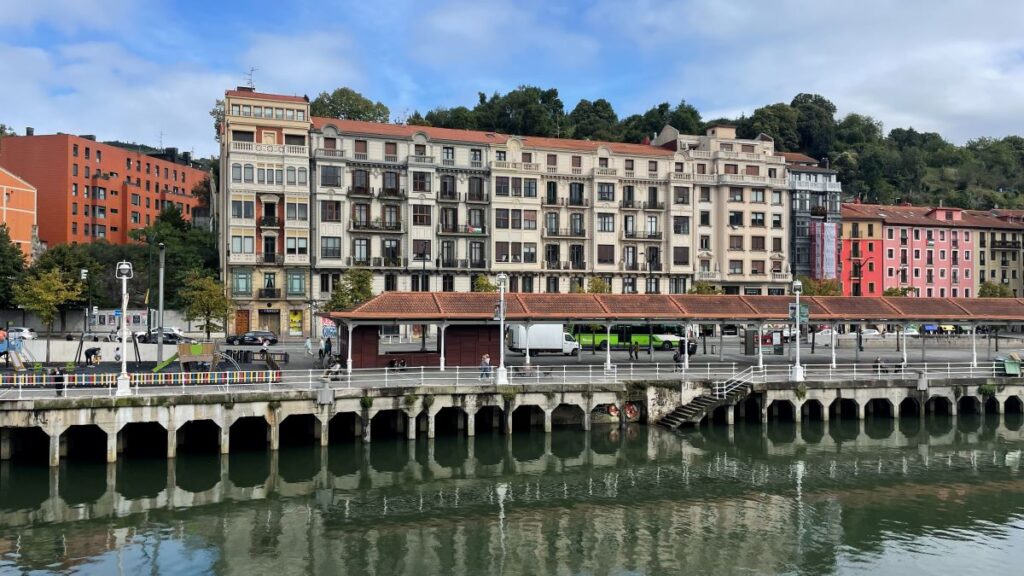
If the Old Town is Bilbao’s historic heart, Abando is its modern center. Here are the main shopping street Gran Vía, Moyua Square, the Guggenheim Museum, numerous restaurants, shops, and business centers.
The district is very well-kept, calm, and safe. There is a wide selection of modern hotels, apartments, and good transport connections. It is especially convenient for those planning lots of travel by public transport or for visitors staying only a few days.
You can walk to the Old Town in about 10–15 minutes.
Hotels in the Abando area:
- Zubia Urban Rooms – I stayed in this hostel, there are private rooms. I liked the location and the convenient check-in and check-out. Rooms are clean, beds comfortable.
- LATROUPE La Granja – a nice clean hostel in Abando, 2 showers and 2 toilets for the room as well as 2 washbasins. The bed area is comfortably zoned, with a light and outlet next to the pillow. Late check-in is available.
- Hotel ILUNION Abando Bilbao – the hotel has a great location, it’s easy to get to the main attractions on foot.
Indautxu—comfortable area without tourist crowds
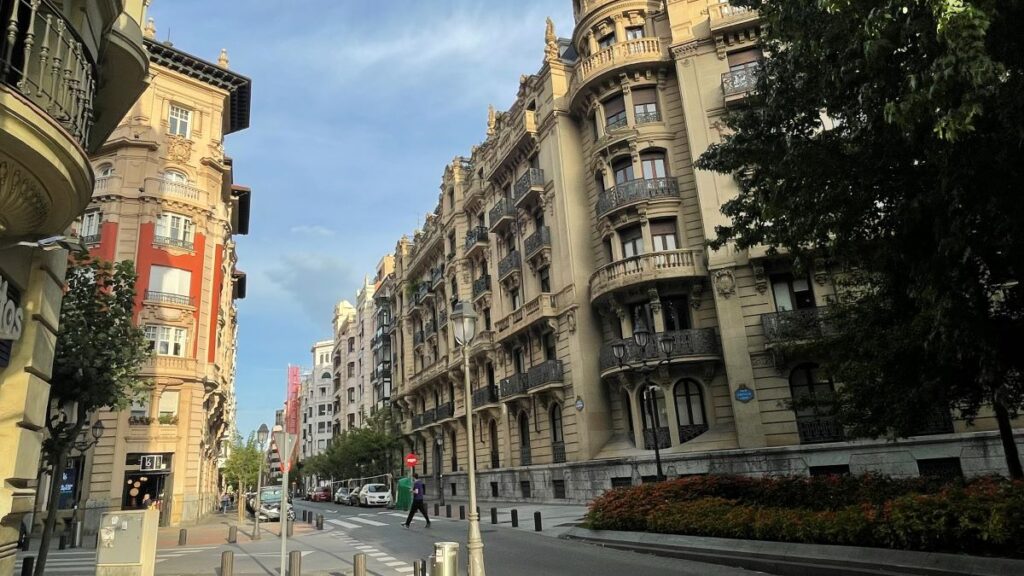
If you want to live among locals but not far from the center, take a look at Indautxu. This is one of the most popular residential districts in Bilbao, located next to Abando.
There are significantly fewer tourists here, but many good cafés, patisseries, restaurants, and shops. This is the place to experience everyday city life.
The Guggenheim Museum is about a 15-minute walk away, the Old Town about 20 minutes. Accommodation prices are often a bit lower than right in the center.
Hotels in Indautxu area:
- Hotel Ilunion Bilbao – Hotel with a good location and infrastructure. The location is simply fantastic. 20 minutes by bus from the airport and 5 minutes on foot from the stop to the hotel. Everything is nearby: stadium, museum, promenade, city center. Right next to the hotel are great bars and restaurants.
- Eurostars Indautxu – Convenient location, underground parking €20/day. Spacious rooms with large terrace, friendly staff, close to the metro station.
- Hotel Ilunion San Mamés – A clean hotel with a good location, very good sized rooms, excellent breakfast, and parking at 16 euros per day.
Deusto—for those looking to save money
Deusto district is located a bit west of the city center. Here is one of the most famous universities of the Basque Country, so the area has a youthful atmosphere.
Accommodation prices here are noticeably lower than in the center, and you can reach the Guggenheim Museum in about 20 minutes on foot or quickly by metro.
If you’re traveling on a budget, this is a very good option.
Hotels in the Deusto area:
- NH Bilbao Deusto – Really great hotel, located not far from the center of Bilbao. Spacious and clean rooms with air conditioning. Also good Wi-Fi. Excellent and friendly staff. Tasty hot breakfast.
- BIG LUX BEACHCITi – Apartment with a great location. A short walk to the museum on the other side of the river. 5 minutes on foot to the metro. A residential area with locals, local bars, bakeries, etc. Supermarket 1 minute away.
Which area to choose?
In short, my recommendation is as follows:
- Casco Viejo — best option for a first trip, history, and gastronomy.
- Abando — universal choice with the most convenient location.
- Indautxu — comfortable accommodation a bit cheaper than right in the center.
- Deusto — a good option for budget travel.
- Getxo — for those who want to live by the ocean.
- San Francisco — for fans of alternative neighborhoods and creative atmosphere.
If I came to Bilbao for the first time, I would choose a hotel in Casco Viejo or Abando. These neighborhoods allow you to fully experience the city’s atmosphere, hardly use transport, and easily reach all major attractions. This is, in my opinion, the best way to start exploring the capital of the Basque Country.
Day 1. From medieval Bilbao to modern architecture
The first day is best dedicated entirely to the city itself. The route will be quite busy, so it’s best to start in the morning. Be prepared to walk many kilometers throughout the day. But you will see almost all of the most important areas of Bilbao, and clearly see how the city has evolved from a medieval trading port to one of the most modern cities in Europe.
Santiago Cathedral
The best way to start your introduction is from the Old Town, because this is exactly where Bilbao first appeared more than seven centuries ago.
Its main landmark is the Santiago Cathedral — one of the oldest churches in the city. The temple was built over several centuries, so today you can see a beautiful combination of Gothic and later architectural styles.
Pay special attention to the cloister courtyard and the Puerta del Angel portal. It was through these gates that pilgrims passed for many centuries on the famous Camino de Santiago route to Santiago de Compostela.
Even if you are not interested in religious architecture, it is worth stepping inside for at least a few minutes. It is very quiet and cool inside, and it is easy to imagine what the city was like several centuries ago.
Zazpikaleak — the heart of old Bilbao
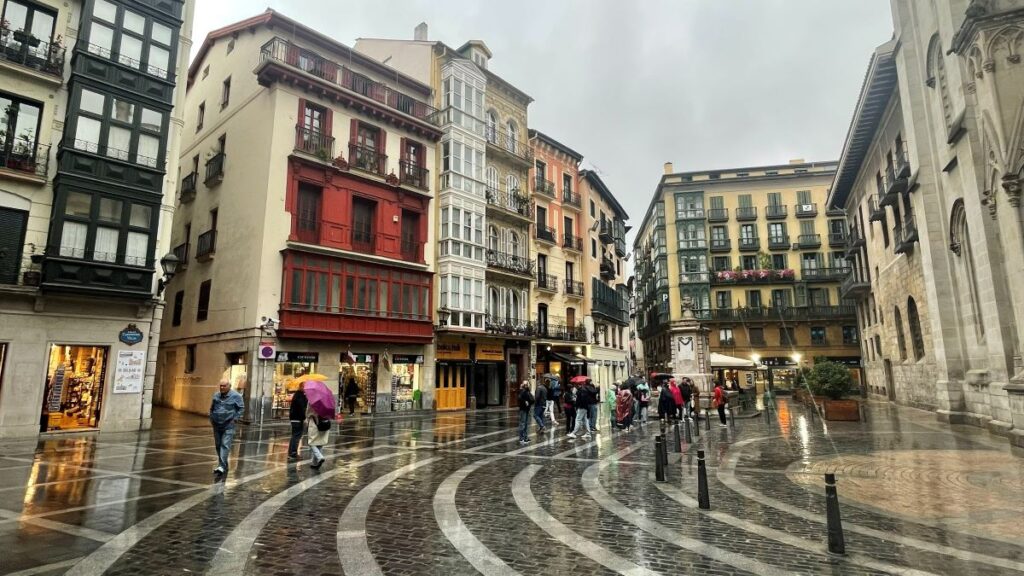
Leaving the cathedral, you will find yourself in the most atmospheric part of the city — the Zazpikaleak district, which in Basque means “Seven Streets“.
Bilbao began here back in the 13th century. Despite hundreds of years of history, this district is still alive. It is not just tourists strolling here — locals live here, family shops, old bars, and markets operate.
The best thing you can do in this neighborhood is not to rush. Just wander the narrow stone streets, peek into courtyards, examine the old house facades, and observe local life. This is where you can best feel the atmosphere of the Basque Country.
What you should definitely see in the Old Town
During your walk, don’t miss several iconic locations.
San Anton Church
This 15th-century Gothic temple stands right by the Nervion River. Its silhouette can be seen on the Bilbao coat of arms.
Together with the neighboring San Anton bridge, this church has become one of the city’s symbols.
Mercado de la Ribera
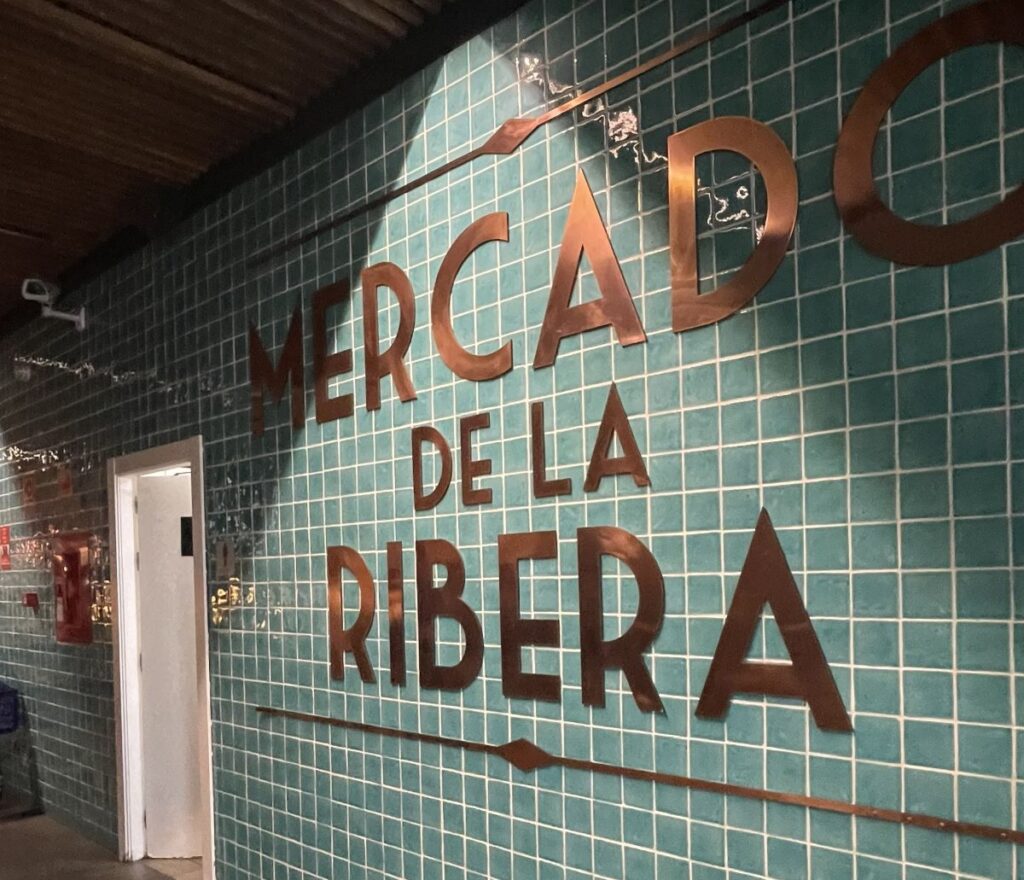
This is the largest covered market not only in Bilbao, but also one of the largest in all of Europe. Even if you do not plan to buy anything, it is worth coming here for the atmosphere.
On the first floor, the freshest seafood, fish, jamón, cheeses, and vegetables are sold. On the second floor, there is a gastronomy zone where you can sample Basque pintxos, fresh oysters, or a glass of local cider.
If you want a budget lunch, this is one of the best places in the city.
Plaza Nueva Square
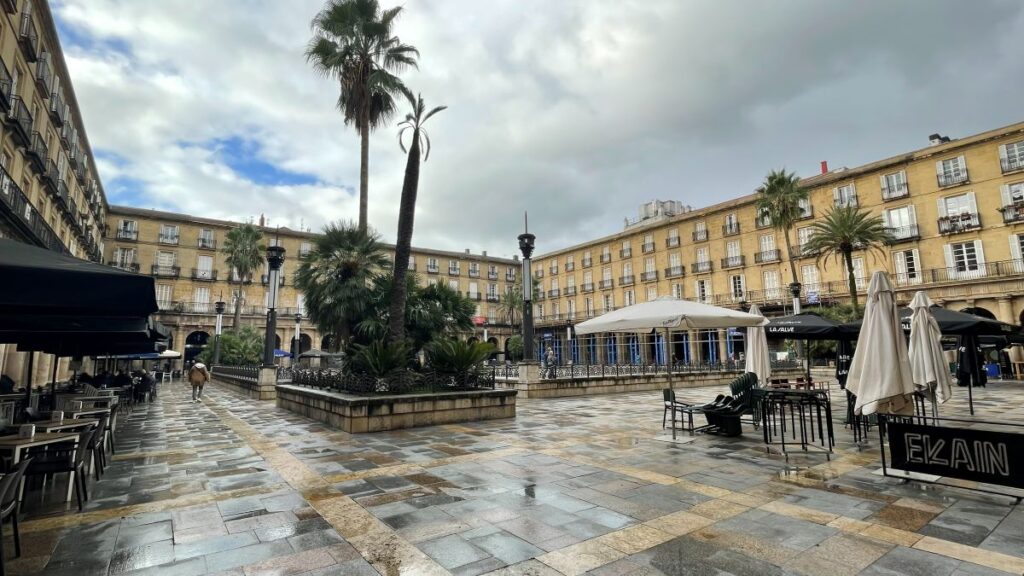
This is probably the most famous square in Bilbao. The arcades around it are filled with dozens of cafes, bars, and restaurants serving the famous Basque pintxos.
If you are visiting the Basque Country for the first time, this is the place to make your first gastronomic stop.
Basque Museum or Archaeological Museum
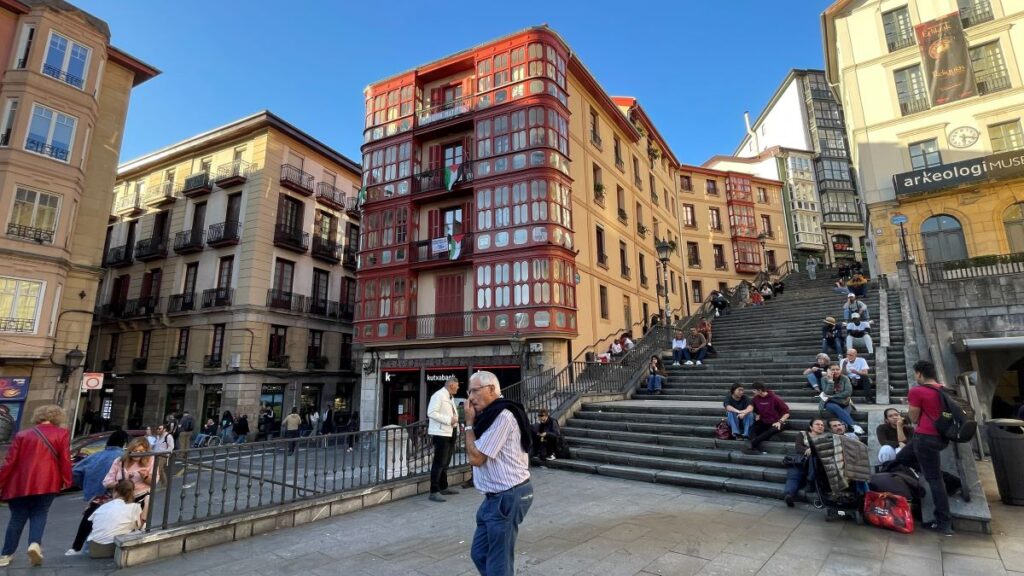
If you want to better understand the local culture, set aside about an hour for one of the two museums.
- The Basque Museum introduces you to the traditions, language, crafts, and history of this unique region. You may not know that the Basque language is a unique language isolate, which does not belong to the Indo-European family and has no proven connections to any other language in the world. And all the names in the Basque Country are duplicated from Spanish into Basque.
- The Archaeological Museum will be more interesting to those who are curious about ancient history and the development of settlements in the territory of today’s Basque Country.
Both museums are small, so it is easy to visit them even as part of a busy itinerary.
Time to Try Pintxos

After a few hours of walking, it’s just the right time for a pause. In the Old Town, traditional Basque bars operate literally on every corner. Pintxos are my passion and love. You won’t taste such delicious and varied sandwiches anywhere except the Basque Country.
Be sure to order a few different pintxos — small appetizers considered the real gastronomic pride of the region. These could be slices of baguette with jamón, tuna, cod, shrimp, cheese, or caramelized onion. The combination of flavors and textures in them is very unpredictable — you will definitely be surprised. But they are sssssso tasty!
In Bilbao, it’s not customary to sit for a long time in one place. Locals move from bar to bar, tasting several different pintxos in each one. This bar surfing especially increases on Friday evenings—people enjoy life after work.
I recommend the following pintxos bars in Bilbao:
- Café Iruña – This is a very famous café in Bilbao among locals and foreigners. Located in the Abando district. A large selection of pintxos, I especially liked the small grilled skewers.
- Ledesma N°5 – a bar located just around the corner from Iruña, with a huge variety of pintxos of different flavors.
- Mercado de la Ribera – on the second floor of the huge market you will find a wide variety of pintxos and other snacks. The atmosphere here is very lively, and it’s always crowded. But the food is really delicious here.
Arriaga Theater
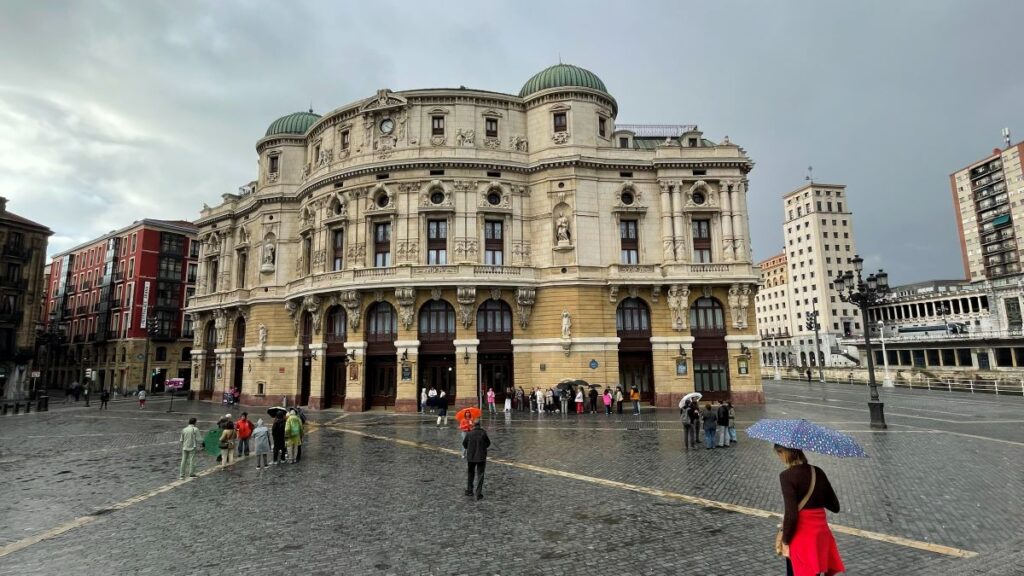
The route then leads to the beautiful Arriaga Theater, which stands right by the river. It was opened at the end of the 19th century, when Bilbao was rapidly becoming wealthy thanks to industrial development.
The building closely resembles the Paris Opera — the same sumptuous neo-baroque style, lots of decorative details, and a luxurious façade.
If you plan on staying in town in the evening, check the playbill. Concerts, ballet performances, and theatrical productions are often held here.
Crossing to the Abando District
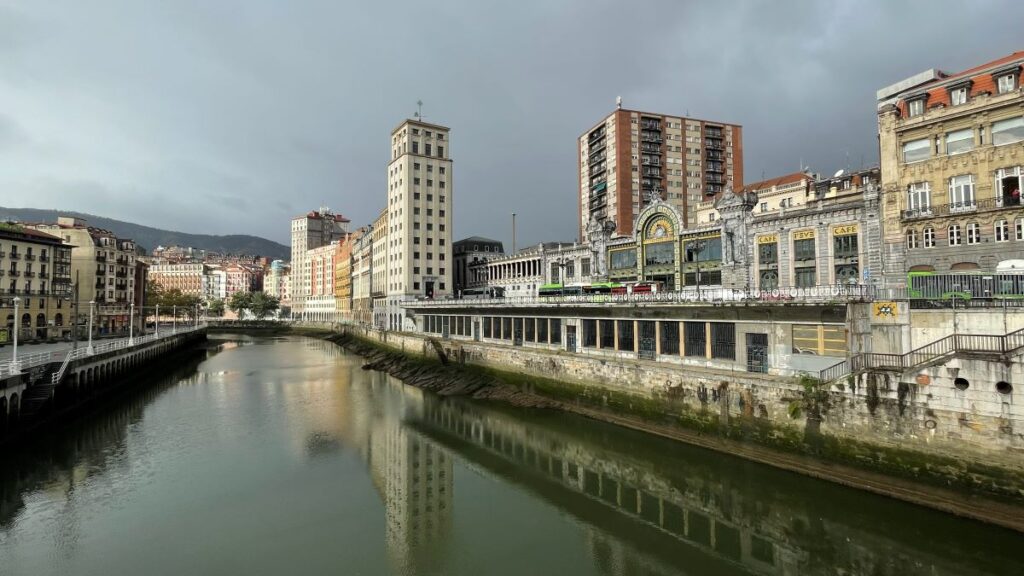
Cross the Arenal Bridge, and you’ll immediately notice how the city changes. Instead of narrow medieval streets, wide avenues appear, elegant 19th-century buildings, large squares, and expensive shops.
This is where you’ll find the Abando district — the new center of Bilbao, formed during the industrial boom. This is where the city’s business life gradually shifted when Bilbao became one of the richest industrial centers in Spain.
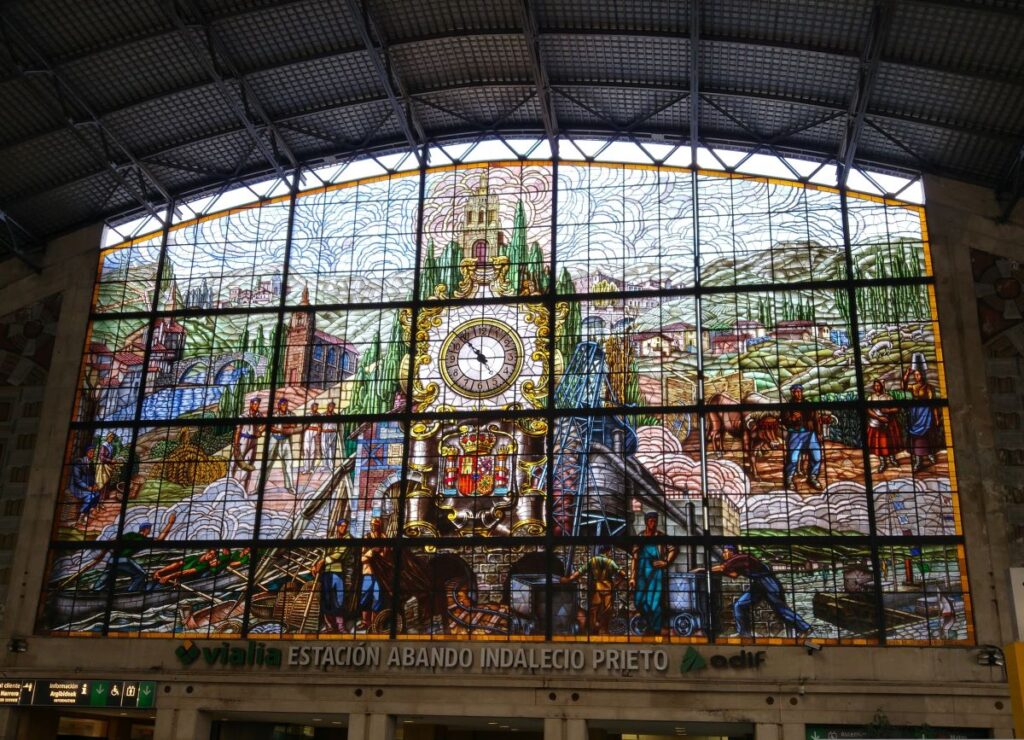
And this is also where the Abando railway station is located, which you have to see with your own eyes. Even if you don’t plan to take a train, be sure to go inside the station.
The main reason — a huge colorful stained-glass window that decorates the central hall. It depicts scenes from the history of the Basque Country, industry, seafaring, and everyday life of the region. This is one of the most beautiful architectural features in all of Bilbao.
Moyua Square — the Heart of Modern Bilbao
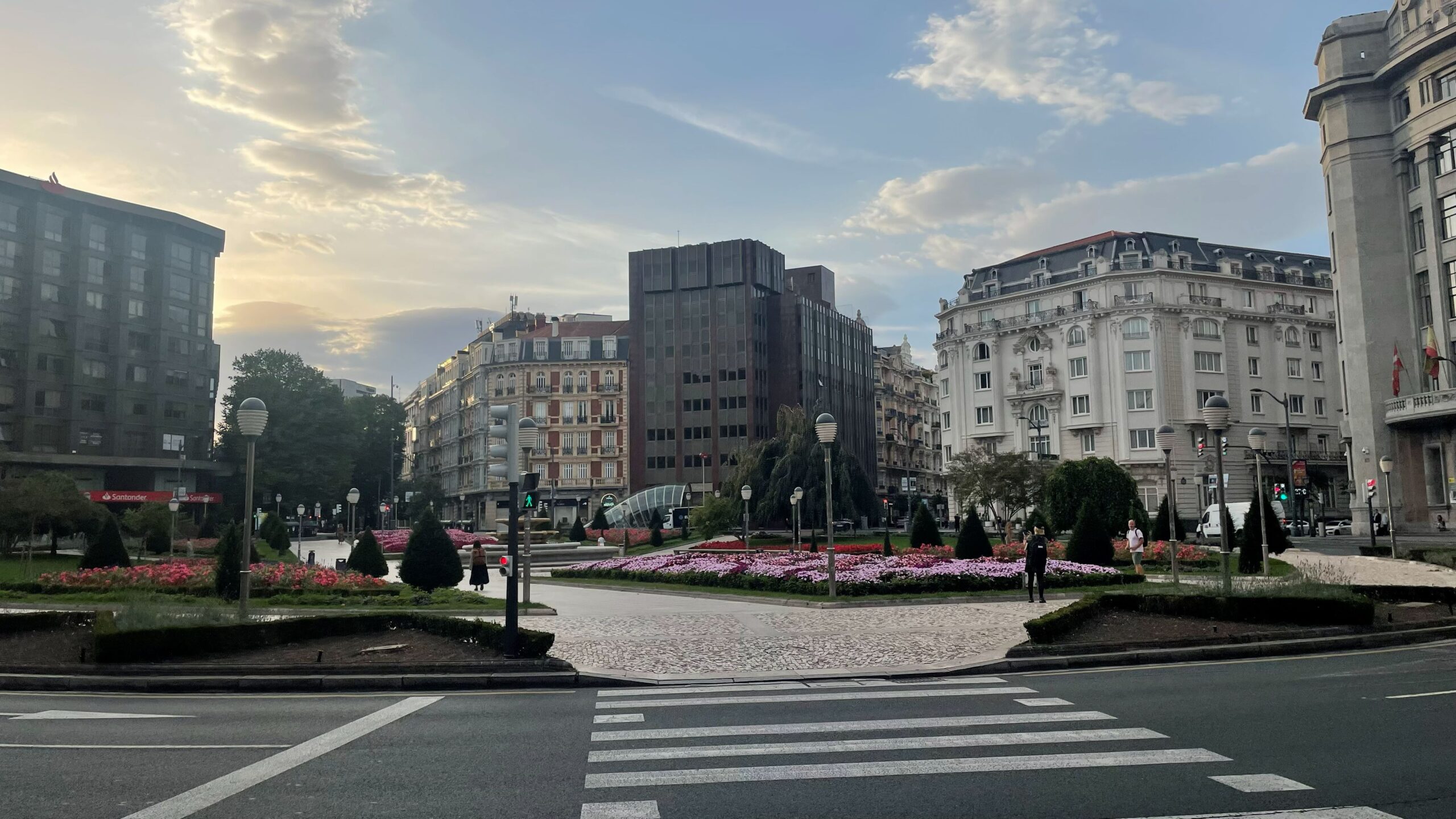
From Abando station, walk along Gran Vía Avenue, considered the main street of modern Bilbao. Here you’ll find upscale shops, historic hotels, banks, and office buildings that recall the times when the city was one of the wealthiest industrial centers in Spain.
Soon you’ll reach Moyua Square — one of the most beautiful squares in the city. It’s round, adorned with a fountain, flower beds, and well-kept gardens. This is the perfect place to begin your acquaintance with modern Bilbao (by the way, the airport bus arrives here).
If you want a short break after your morning walk through the Old Town, this is a great place to have coffee on a summer terrace and watch city life go by.
Campos Elíseos Theater
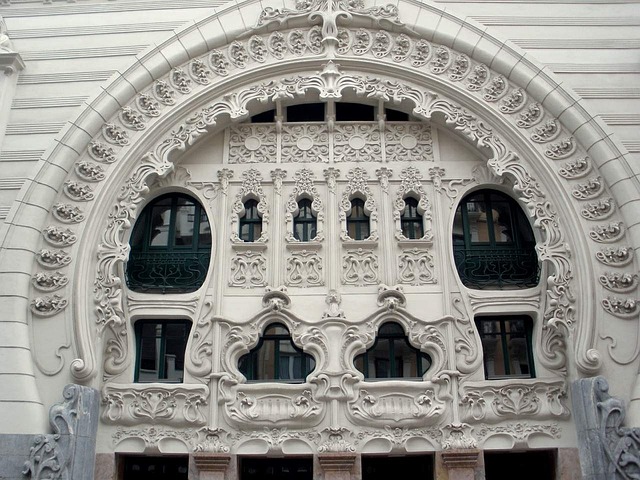
A few minutes’ walk from the square is one of the most beautiful buildings in the city — Campos Elíseos Theater. It’s easily recognized by its highly decorative Art Nouveau facade. The building was opened at the beginning of the 20th century and still remains one of the symbols of architecture of that era.
Even if you do not plan to attend a performance, it is worth pausing just to admire the many decorative elements of the facade.
Azkuna Zentroa — how an old wine warehouse became a cultural center
Another ten-minute walk — and you’ll find yourself by Azkuna Zentroa (formerly Alhóndiga).
Once this was a huge warehouse for storing wine, and today it’s one of Bilbao’s most interesting public spaces. After a large-scale reconstruction, the building was transformed into a modern cultural center. Here you’ll find exhibition halls, a library, a cinema, restaurants, a sports complex, and even a swimming pool with a glass bottom that can be seen right from the lobby.
The central atrium is especially impressive. It is supported by dozens of totally different columns — no two are alike. This is one of those details you’ll want to examine for a long time. Even if you don’t plan to attend exhibitions, be sure to step inside. Entry to the main lobby is free.
Doña Casilda Park — a green oasis in the city
After a few hours of walking, it’s just the right time to rest a bit.
Doña Casilda Iturrizar Park is considered the main city park in Bilbao. It’s a large green oasis with fountains, ponds, alleys, and well-maintained lawns.
You can often see locals here relaxing on benches, playing sports, or just walking with their children.
If the weather is nice, this is a great place to relax before visiting the city’s main attraction.
Guggenheim Museum — the symbol of the new Bilbao
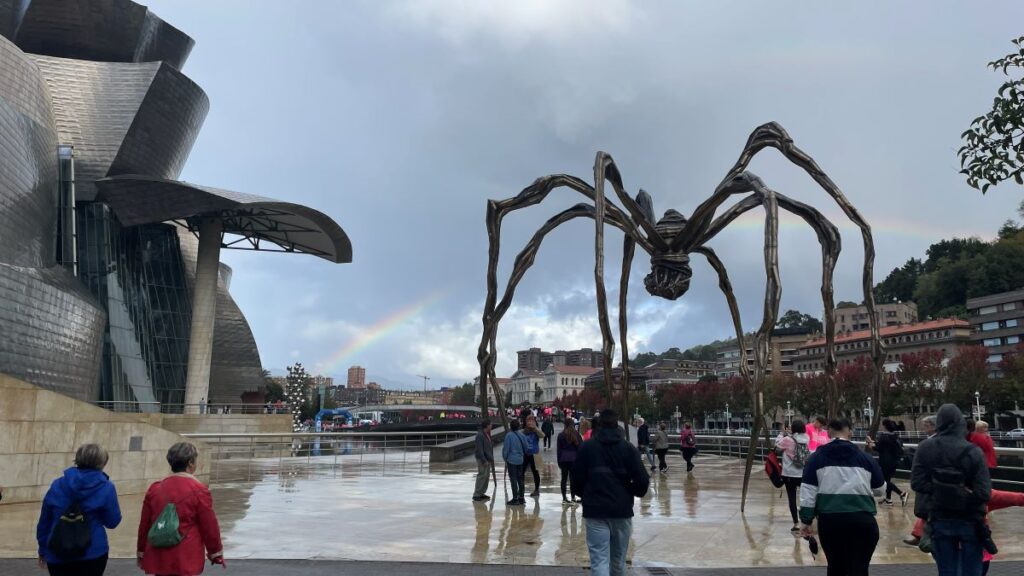
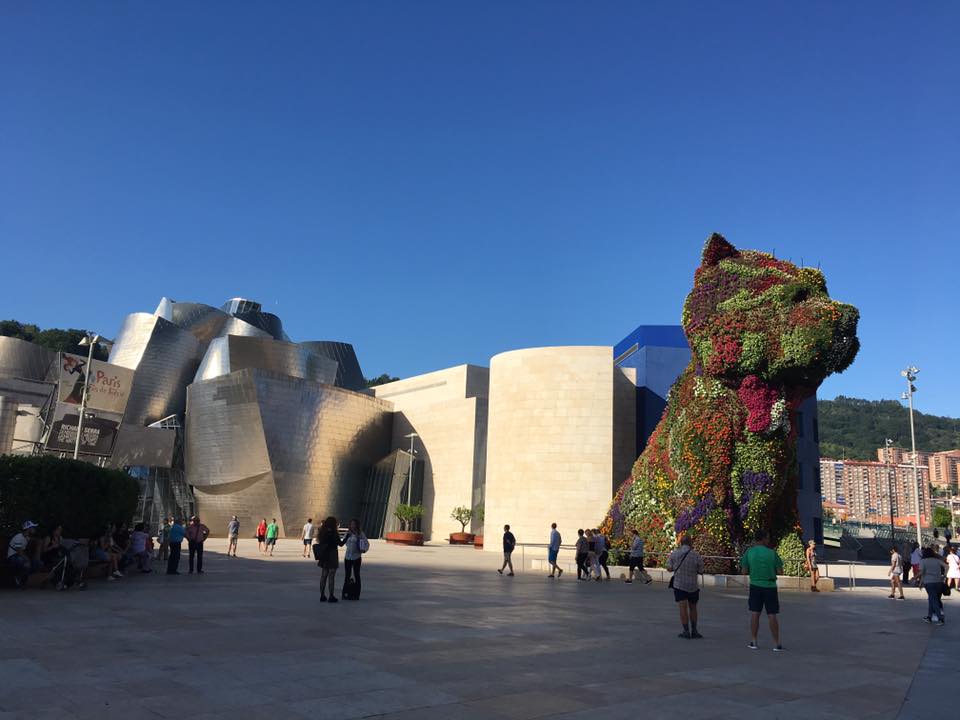
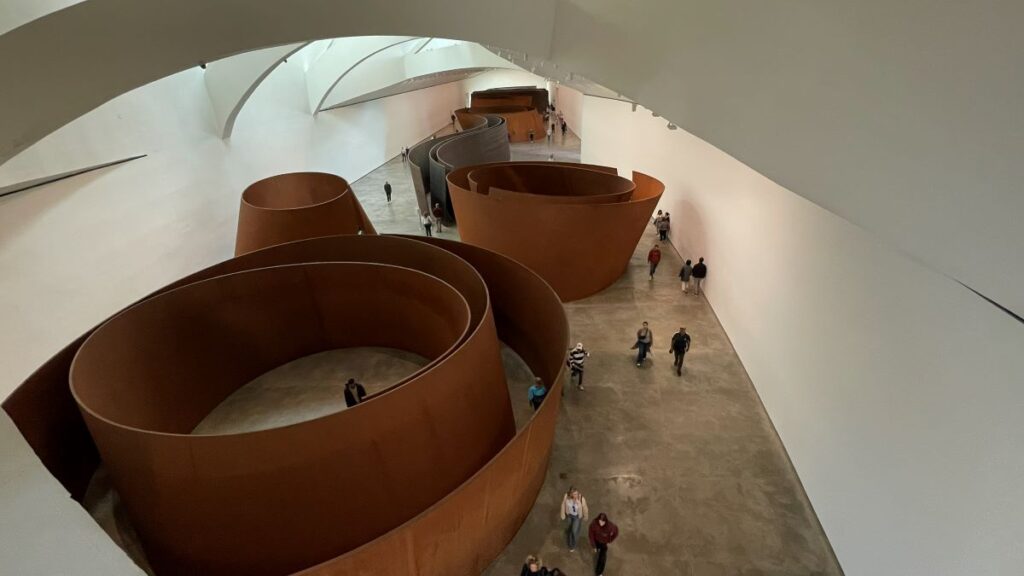
It’s hard to find someone who hasn’t seen a photo of this building at least once. The Guggenheim Museum became the symbol of Bilbao’s revival and turned it into one of the most famous cultural centers in Europe.
The building with its curved titanium panels was designed by the famous architect Frank Gehry. Even if you are not at all interested in contemporary art, it is worth coming here just for the architecture itself.
The best view of the museum is from the embankment. That’s where you get the classic views of its futuristic shapes. Don’t forget to pay attention to the famous sculptures near the entrance.
- The most famous of them is the huge Puppy flower dog, created by Jeff Koons. Depending on the season, its “fur” completely changes thanks to living flowers.
- On the other side of the museum is the no less famous giant metal spider Maman by Louise Bourgeois.
Even if you’re not planning to buy a ticket, walking around the museum will be one of the most vivid moments of your day.
If contemporary art interests you, be sure to allow at least two hours to see the exhibition.
By the way, if you want a special experience and your budget allows, check out the Nerua restaurant, which is located right inside the Guggenheim Museum. It has a Michelin star and is considered one of the best restaurants in the Basque Country.
Artxanda Funicular — the best panorama of Bilbao
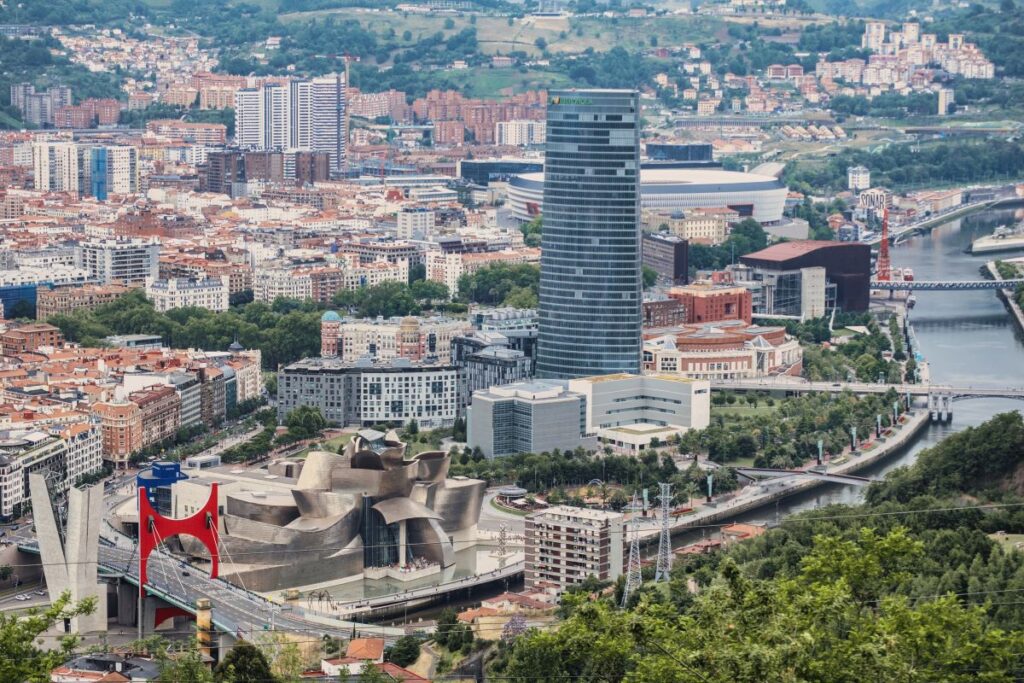
And in the evening, it’s exactly the right time to see the city from above. From the museum, it’s only a few minutes’ walk to the lower station of the Artxanda Funicular, located at Funicular Square (Funikularreko Plaza). Just a three-minute ride up — and a panorama of almost all of Bilbao opens up before you.
From here you can clearly see how the city stretches along the Nervion River between green hills. The Guggenheim Museum, the Old Town, and numerous bridges are clearly visible.
It’s especially beautiful here before sunset, when the city slowly starts turning on its evening lights. If you have time, take a short walk in the park above. Here it’s much calmer than in the city center.
The funicular runs every 15 minutes, starting early in the morning and continuing until 10:00 PM. A round-trip ticket costs 4 euros.
Dinner in the Olabeaga District

After coming down from the mountain, I suggest changing up the tourist route and seeing another side of Bilbao — lesser-known, but very atmospheric.
Olabeaga was once a typical working-class neighborhood near the port docks. Shipbuilders, dockworkers, and factory workers lived here.
Today the district is gradually experiencing a second birth. Old industrial buildings are being converted into creative spaces, and trendy restaurants, pubs, and craft bars are opening in former warehouses.
If you like discovering non-touristy places, you’ll definitely enjoy it here. This is exactly where locals often come for dinner. Be sure to try fresh seafood, octopus, squid, or traditional Basque fish.
If you still have energy after a busy day, have a glass of local cider or the famous Basque liqueur pacharán. It’s a great way to wrap up your first day in Bilbao.
Day 2. Bilbao beyond the tourist routes — ocean, surfing and Basque towns
After a busy first day, you’ve already managed to see the main sights of Bilbao. Now it’s time to discover another side of the city — the one best known by the Basques themselves.
Today we will hardly walk the historic center. Instead, we’ll go to the ocean, see some of the most beautiful beaches of the Bay of Biscay, stroll through elegant seaside districts where more than a hundred years ago Spain’s wealthiest families built their palaces, and in the evening, if you’re lucky, feel the atmosphere of the legendary San Mamés stadium.
This day helps explain why Bilbao’s residents love their city so much.
Morning on the Ocean — Askada Beach
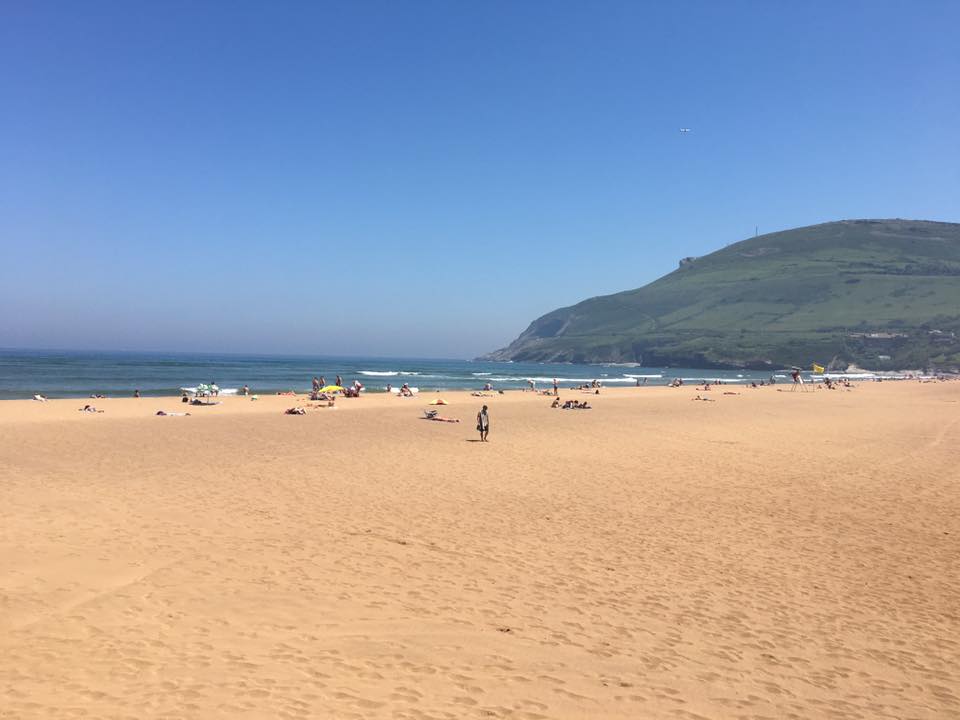
If you are traveling during the warm season, the best way to start your day is a trip to the Atlantic Ocean. Just 30–40 minutes by metro from the center of Bilbao is Playa de Askada beach.
The journey here is beautiful in itself—the bus leaves the city districts, and soon green hills, private houses, and fantastic panoramas of the Bay of Biscay appear outside the window.
The first view of Askada almost always inspires awe. A wide golden beach, the mighty waves of the Atlantic, dozens of surfers in the water, and tall cliffs all around create a completely different atmosphere from the Mediterranean resorts of Spain. This is what the true Basque coast looks like.
Even if you do not plan to swim, it is worth coming here just for the views.
Getxo — The Most Elegant Suburb of Bilbao
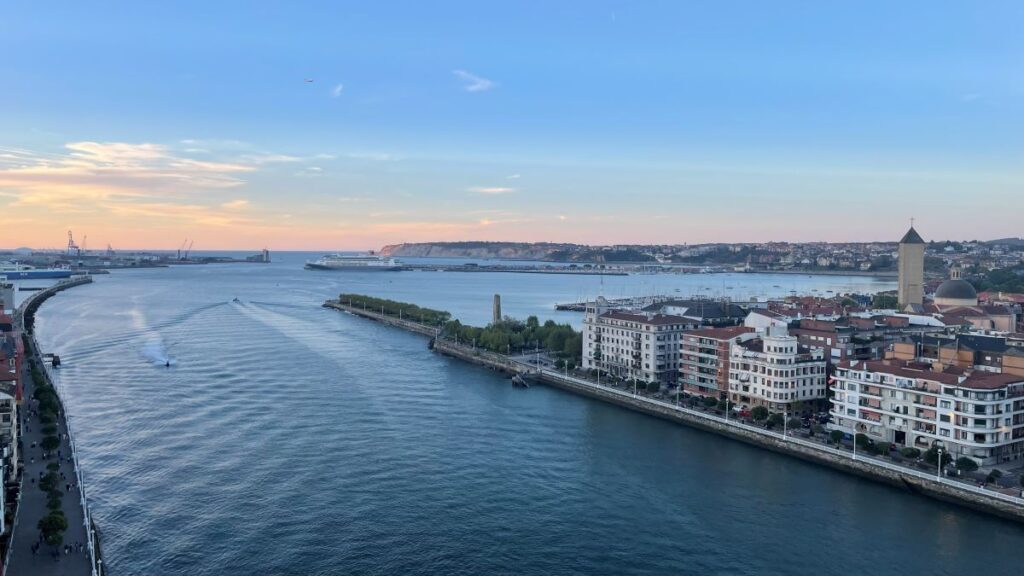
After the beach, it is worth heading farther along the coast — to Getxo. It was here that the wealthiest industrialists of Bilbao once lived. When factories and shipyards filled the city with smoke, they built their luxurious mansions closer to the ocean.
Today, Getxo feels more like a prestigious seaside resort than a suburb of a big city. It’s pleasant here to simply wander without a clear goal. The streets are lush with greenery, old villas are hidden behind high fences, and wonderful views of the Bay of Biscay open from the promenade.
Las Arenas and the Vizcaya Bridge
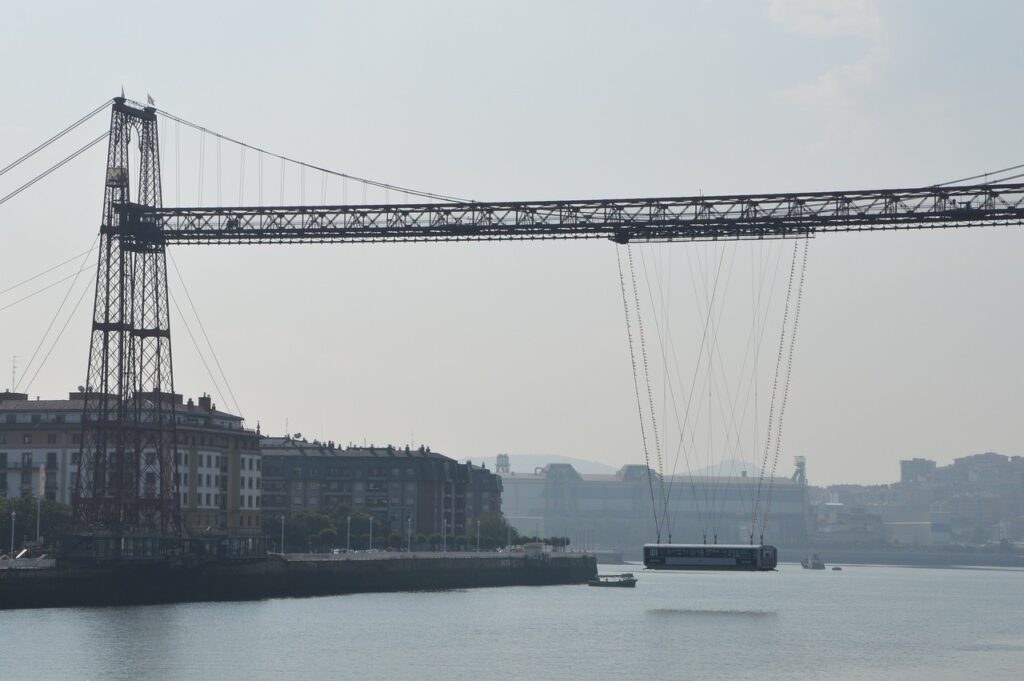
It is best to begin your discovery in the Las Arenas district. Here is one of the most famous engineering structures in Spain — the transporter bridge across the Nervión River, which is included in the UNESCO World Heritage List.
The unusual construction has transported people in a small suspended gondola between the two banks of the river for over a hundred years. Even today, locals use it daily.
You can also go up to the top of the bridge—there is an elevator (the ticket costs 10 euros). From above, you get completely different views of Getxo and Portugalete—two suburbs of Bilbao located on opposite sides of the Nervión River.
San Mamés — The Temple of Basque Football
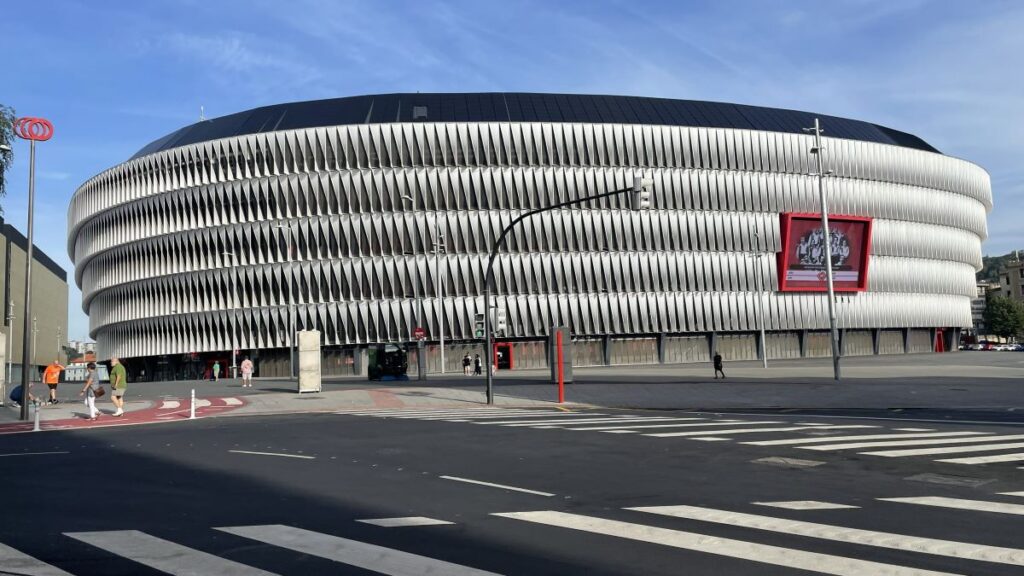
Returning to Bilbao, if you have time left, be sure to visit San Mamés stadium. Even if you are not a passionate football fan, this place is worth your attention.
The home stadium of Athletic Club Bilbao is simply called “The Cathedral” by locals. And this is no exaggeration. For Basques, football is part of their identity.
Athletic Club is a unique club that almost exclusively invites players of Basque origin or those who grew up in the region’s footballing system. That is why matches here are not just sports events, but real celebrations for the whole city.
If you are lucky enough to be in Bilbao on a home game day, don’t hesitate—buy a ticket. The atmosphere in the stands leaves an unforgettable impression even on those who are usually indifferent to football.
Evening on the Riverside Promenade

After such a busy day, there’s no need to rush anywhere else. The Nervión riverfront in the evening looks completely different than in the daytime.
The illuminated Guggenheim Museum, bridges, modern architecture, and the reflection of lights on the water create a special atmosphere.
Now is the perfect time to stroll along the river, find a cozy bar with a terrace and enjoy Basque cuisine once again.
Bilbao is not one of those cities you need to “rush to see.” You need to feel it—with a glass of txakoli, under the sound of the Atlantic, and in conversations with locals who are never in a hurry.
Day 3 – Trip to San Juan de Gaztelugatxe and Nearby Coastal Towns
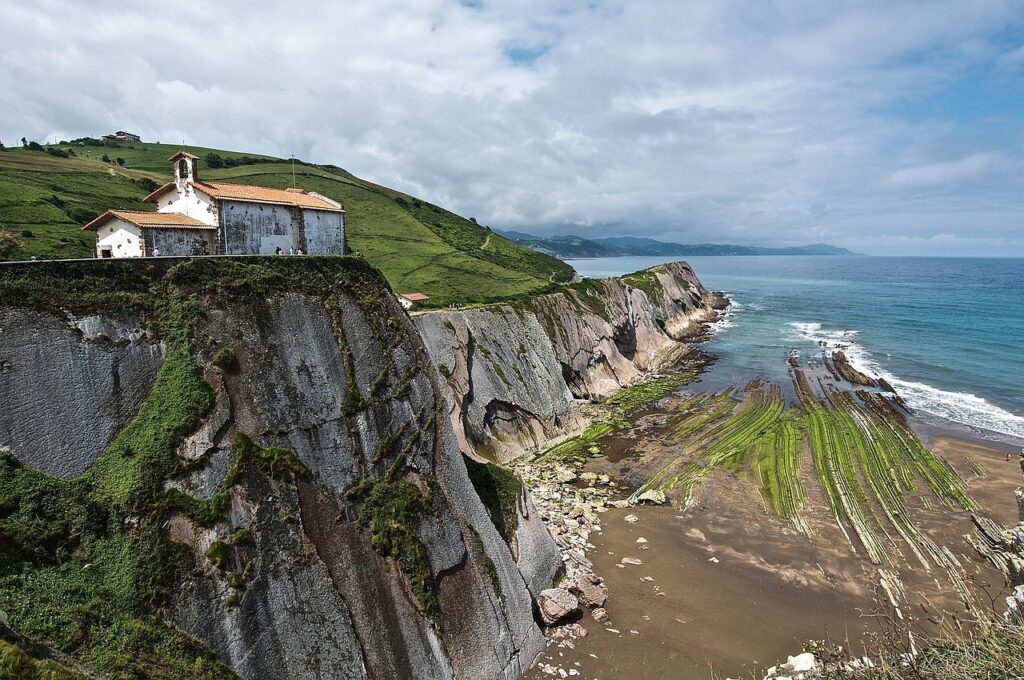
If you have a free—third—day, I’d recommend leaving the city behind and heading for the nearby coast, which is full of wonderful towns and natural areas.
Many companies organize such trips at prices from 40 to 70 euros per person, or you can rent a car and drive the route yourself. Here are the towns you shouldn’t miss:
San Juan de Gaztelugatxe

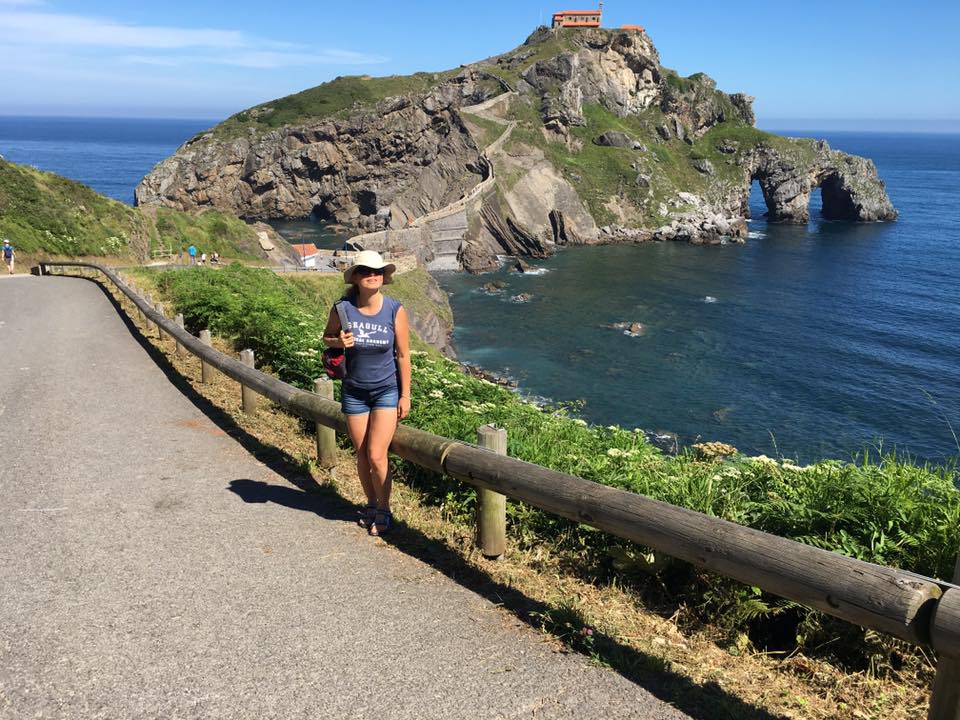
The first point you should include in your journey is San Juan de Gaztelugatxe. This chapel, one of the most famous attractions of the Basque Country, is located on a small rocky peninsula towering over the Cantabrian Sea, surrounded by cliffs, and is definitely a must-see during your visit to Bilbao.
The spot is so impressive that HBO chose it as the place on which the fictional city of Dragonstone is based. And if HBO chose it, you know it’s good…
Tip: On the way to Zumaia you can make a stop (get off the train) in the town of Mundaka. This is a world-famous spot for surfing. Due to the so-called Mundaka left wave, which can reach up to 400 meters in length, it attracts surfers from around the world. While the entire tourist world knows about the huge waves in Portuguese Nazaré, the Mundaka wave is renowned by surfers—plan to see it too.
How to get there: by bus No. 3517
Zumaia — a Place Created by Nature Itself
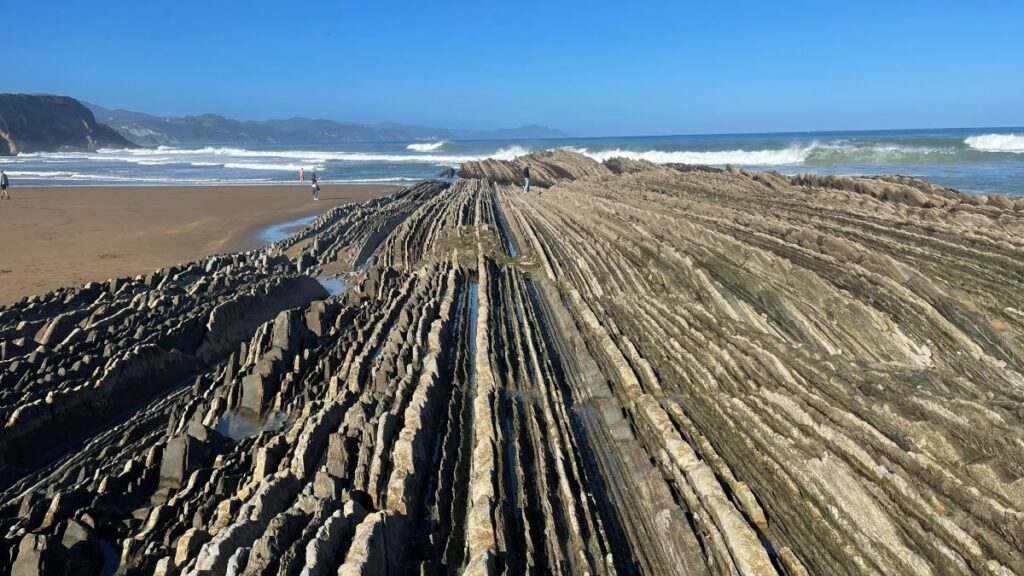
If you want to see something truly unique, head a bit farther—to Zumaia. Here you’ll find the famous flysch cliffs.
Flysch are geological layers that formed tens of millions of years ago. Due to the movement of the earth’s crust, they rose above the ocean, forming fantastic stone “teeth” and “steps” that go straight into the sea.
This is one of the most unique geological spots in Europe. No wonder it was chosen as a filming location for “Game of Thrones.”
It’s best to come here at low tide—when the ocean recedes and reveals rocky teeth on the beach. So check in advance when low tide will be. For example here.
How to get there: by E1 train
Gernika — the True Symbol of the Basque Country
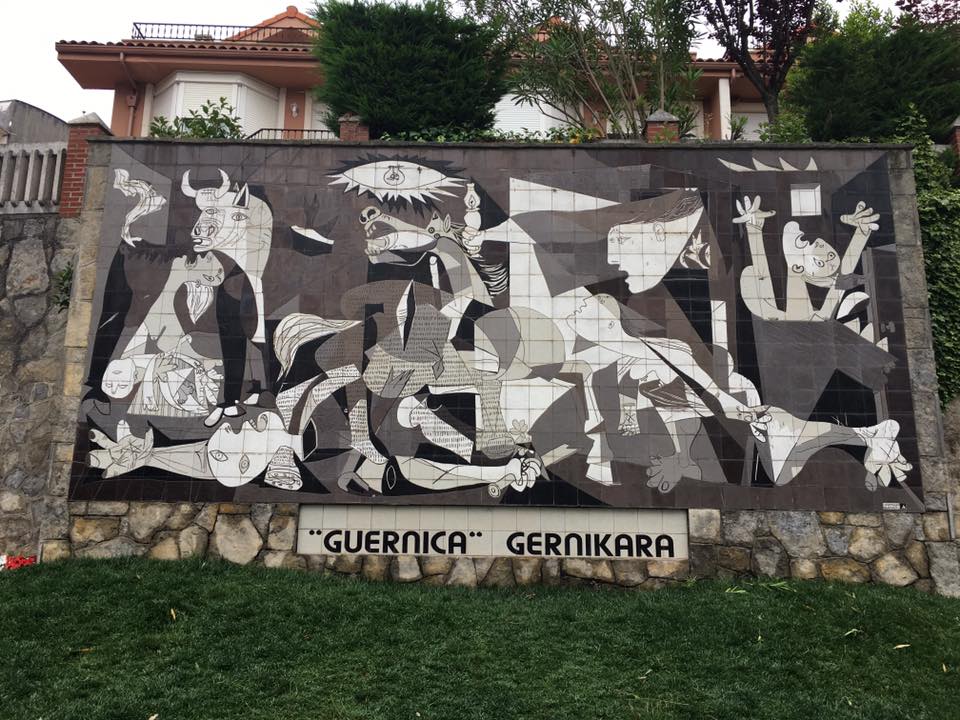
A lovely small town, the symbolic capital of the Basque Country since the time of fascist bombings during the Spanish Civil War—the aftermath of which Pablo Picasso immortalized in “Guernica”. One of the few things to survive the cityscape after the bombings was the Gernika oak—an ancient tree that now symbolizes peace and freedom.
How to get there: by E4 train
Tips for a Three-Day Trip to Bilbao
To make your trip as comfortable as possible, you should consider a few features of the region.
- Allow plenty of time for walking. Most interesting places in Bilbao itself can be seen on foot, so comfortable shoes are indispensable.
- Don’t be surprised by the weather. Even in summer, the Atlantic coast can be cool, windy, or rainy. A light jacket will be useful any time of year.
- Try the local cuisine. The Basque Country is considered the gastronomic capital of Spain. Don’t limit yourself to pintxos—order dishes with fresh fish, seafood, or traditional Basque cod.
- If you plan to see the surroundings and don’t want to rely on public transportation—rent a car. Public transport can take you to many places, but a car will allow you to see much more and not depend on the schedule.
Conclusion
Bilbao is a city that knows how to surprise. It does not resemble the classic Spanish destinations with palm trees, beach resorts, and historic squares. Here, industrial heritage is harmoniously combined with modern architecture, Basque traditions, and the incredible nature of the Atlantic coast.
In three days, you will manage to see medieval quarters, visit one of the world’s most famous museums of modern art, stroll ocean beaches, taste the famous Basque pintxos, and visit places that became sets for “Game of Thrones.”
But most importantly—you will feel the true character of the Basque Country. It’s what makes Bilbao one of the most interesting cities not only in Spain, but in all of Europe.
Useful links:
Car rental – check for cheap car rental options at DiscoverCars
Hotels – I traditionally book at Booking.com
You can purchase insurance online at Hotline.Finance.
What else to read:
- Barcelona – what to see in three days
- Things to do and must-sees in Granada, Spain
- The perfect weekend in Seville – what to see in two days in the capital of Andalusia
- One day in Logroño – what to do and must-sees in the capital of La Rioja