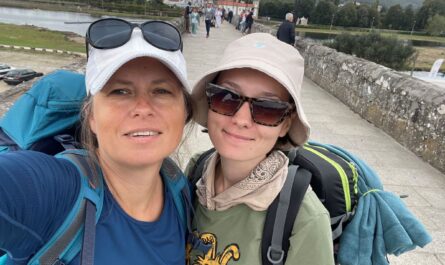
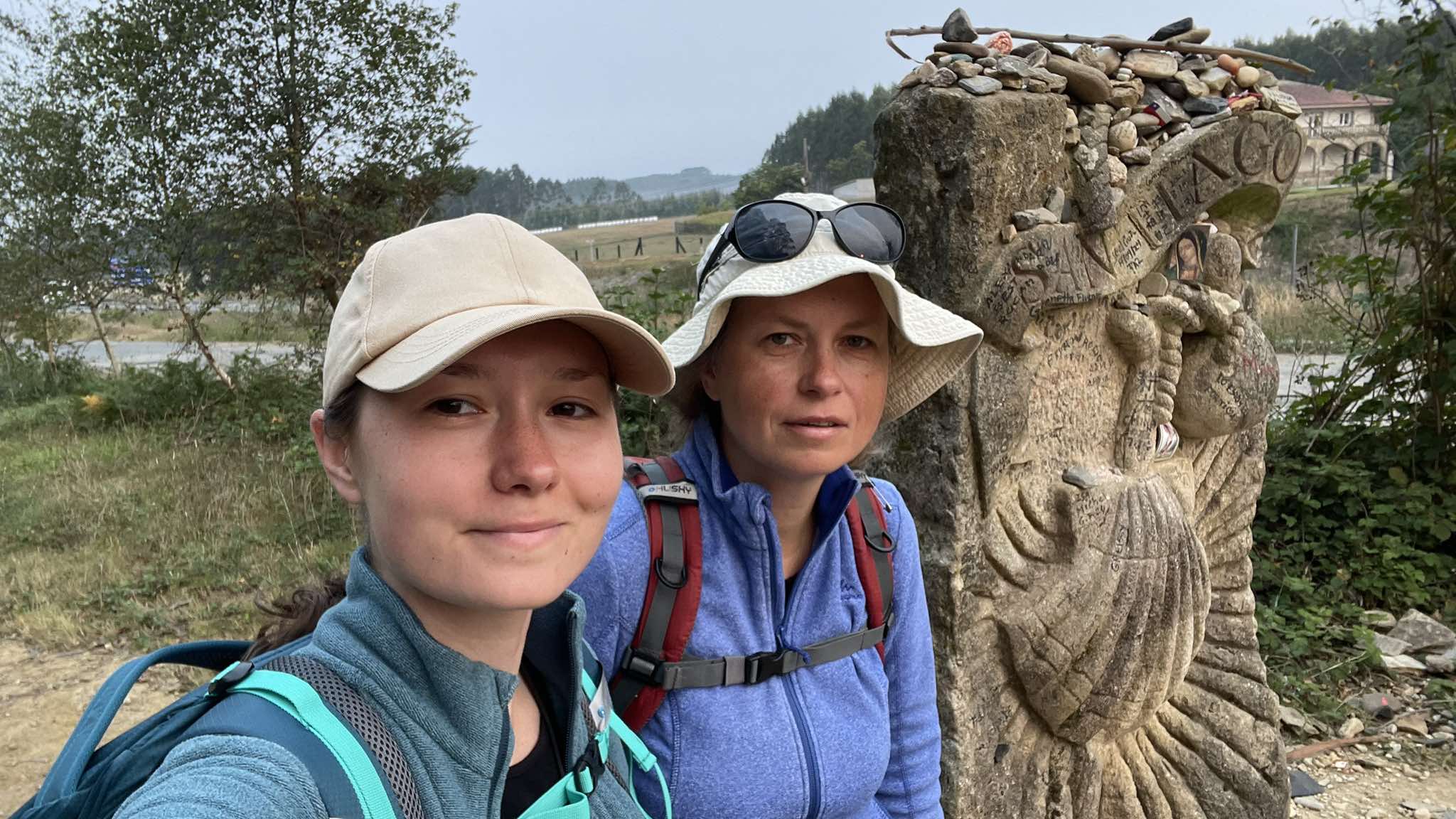
Camino Primitivo – my experience and advice for pilgrims: how difficult this route is, when is the best time to do it, how much this Camino costs.
Once I read a tale about Native American guides who were hired by some Europeans on an expedition. They were put in a car and quickly driven to the start of the hiking route. After that, the poor Europeans spent several days fussing around the guides, who sat calmly by the fire, trying to persuade them to get their things and start moving up the mountain.
At some point, which was no different from any other, the guides stood up, gathered their things, and went where they were needed.
When the expedition leader asked: “What was that?!”, one of the guides explained: “You see, White Brother, your souls are fast, but ours are slow. They don’t know how to ride in cars. They travel on foot. So we had to wait for them. How could we go to the mountains without our souls?”
This explains a lot to me. Now I understand that my slow soul travels with me when I walk.
Active travel instead of the beach: why I choose long routes and mountain hikes
Camino Primitivo – a bit of history
Camino Primitivo is the oldest of all the Camino routes. It was in Oviedo, then the capital of the Kingdom of Asturias, that in 813 King Alfonso II was informed about the discovery of the tomb of Saint James. And he immediately set off for the location, thus practically becoming the first person to complete the Camino (though not on foot).
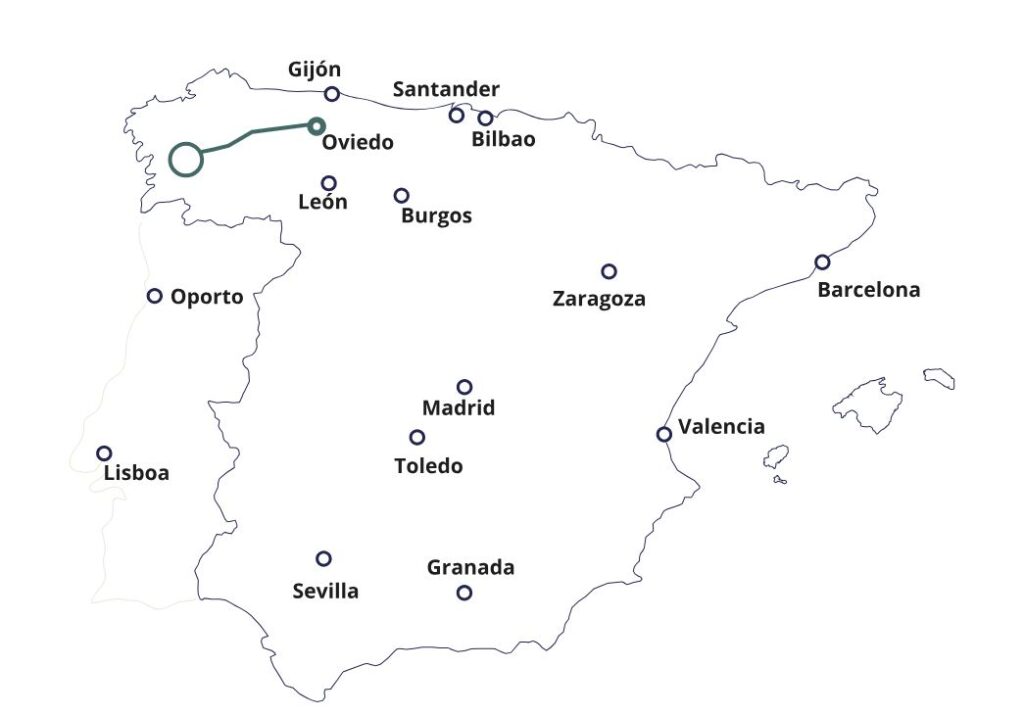
Camino Primitivo starts in Oviedo and joins the Camino Francés in Melide. However, some pilgrims on the Camino del Norte start it from Villaviciosa. The total distance of the Camino Primitivo is 321 km, which can be completed in two weeks. The route passes through two Spanish provinces – Asturias and Galicia and offers wonderful natural experiences combined with good infrastructure.
Geography and general information
This route is considered one of the most challenging because it passes through mountainous terrain for the first eight or nine days. You will face plenty of steep ascents and descents. It’s almost impossible to walk here in winter if there’s snow in the mountains. However, the ascents and descents only enhance the beauty of the landscapes, and in summer, the route is manageable for any prepared hiker.
The number of pilgrims on this route is relatively small compared to the Camino Francés and Camino Portugués (from Porto along the coast). But enough to maintain good company and the race for cheap beds in high season (June–September).
Camino Primitivo was my eighth pilgrimage, completed in September 2024. I hesitated for a long time, as it often rains there, and I don’t like walking wet (my experience in Asturias during the Camino del Norte led to unpleasant health complications). But I did it and am very happy that Camino Primitivo happened to me.
Advice for pilgrims planning Camino Primitivo
From my own experience, I can give the following advice for walking this Camino. There is not much difference in what things are needed or which season to choose for the Primitivo or Norte. They are similar in relief and weather. The only difference is the number of kilometers and the absence of the ocean on the Primitivo (a swimsuit here will definitely be unnecessary, although…)
When is the best time for Primitivo?
Summer is the best season for walking the Camino. It’s warm, with less precipitation, although mountain weather is unpredictable and changes quickly. July and August are the busiest months for this Camino with the best weather. But due to major climate warming in recent years, September is also a high season for doing Primitivo. We walked the route from September 7 to 19 and it was very warm, sometimes even hot. Only in the mountains was there a little rain for 2 days.
It is not recommended to walk Camino Primitivo in the off-season from November to March, since many albergues are closed during this period, and it is cold, very rainy, and there is snow in the mountains.
What is the terrain like on the Primitivo?
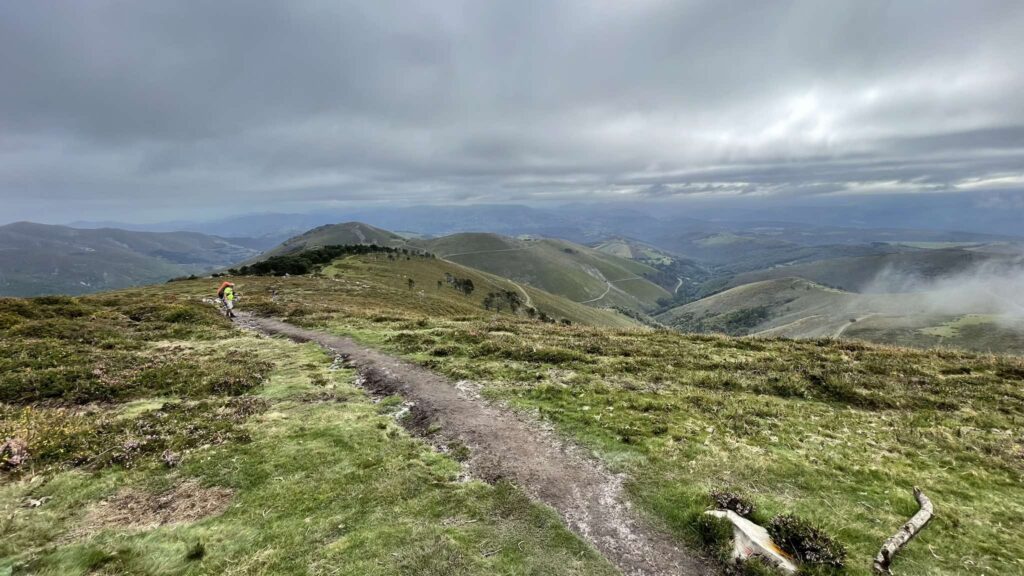
Get ready for numerous ascents and descents. Many pilgrims who only walked the Portuguese along the ocean coast are put off by this route precisely because of the hills and mountains. I’ll say this: it’s not much harder than the Norte (the part in the Basque Country), and the mountain pass along the Ruta Hospetales is not harder than walking from Saint-Jean-Pied-de-Port to Roncesvalles – that’s the first day on the Camino Francés.
On Ruta Hospetales the ascent goes up to 1100 meters, on the pass in the Pyrenees – up to 1750 meters.
But the numerous hills are indeed exhausting at times. For me, it’s better to go uphill all day than to descend into the valley. Descents hurt the nails and knees, and my back hurts a lot (my own feelings and problems). Therefore, my advice – do not take extra things to make your journey harder.
Waymarking on Camino Primitivo
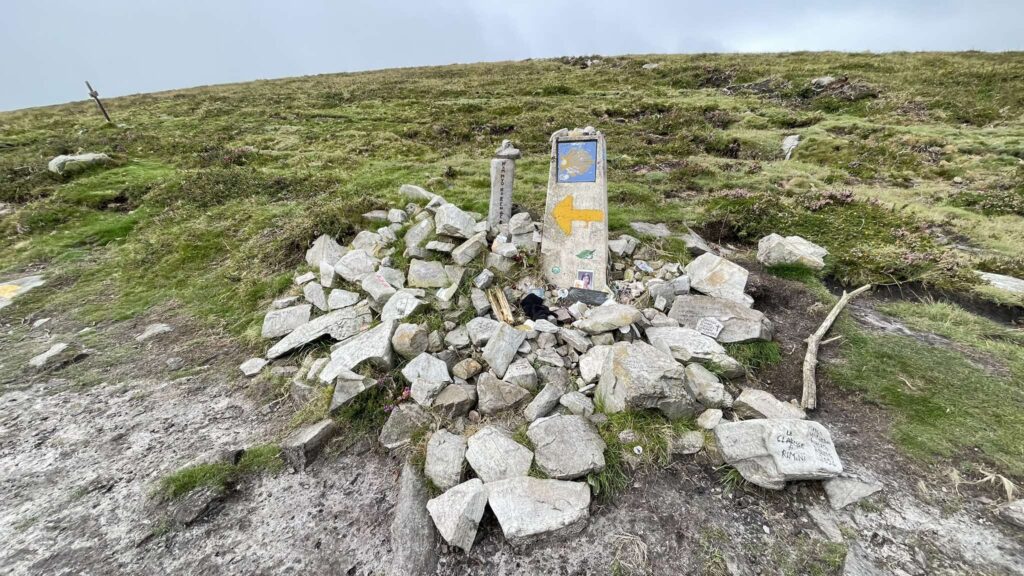
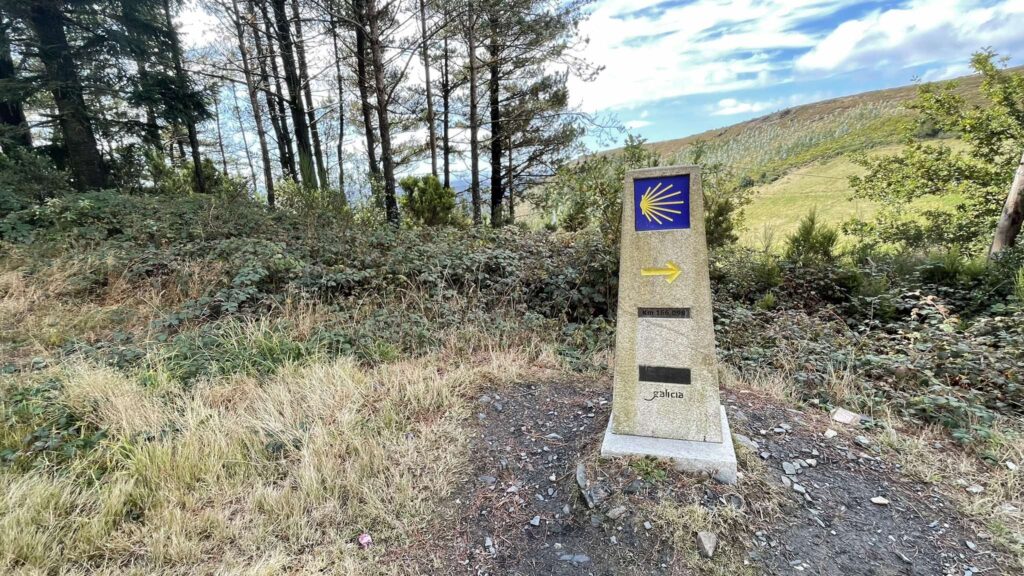
Here, the yellow arrows and Camino shells also work. But remember: in Asturias, the shells are turned in the opposite direction. On most Caminos, the shell points the way with the rays forward, but in Asturias, it’s the other way around – the cluster of rays is the indicator.
I learned about this on the Camino del Norte, where at first everything is as usual—in Cantabria, in the Basque Country, but in Asturias, you see inverted shells. Yet in Galicia, the rays point forward again. Such an unusual quirk.
Accommodation on the Primitivo:
On the Camino there are special hostels for pilgrims, called “albergue”. Albergues can be municipal or private. You cannot book municipal (public) albergues; they operate on a first-come, first-served basis, so the first to arrive gets a bed. Private albergues can be reserved in advance through online booking services, such as Booking.com, or by phone.
How much does an albergue on Camino Primitivo cost in 2024:
- Most municipal albergues on Camino Primitivo cost about 7.5–10 euros per person.
- Private albergues usually have better amenities, are more comfortable and modern, and the price is about 15–20 euros.
Most albergues have washing machines and dryers. The cost of laundry is 4–7 euros, the same for drying. Make arrangements with other pilgrims to do laundry and dry clothes together to save money.
Tip from personal experience: it is quite difficult to get a bed in a municipal albergue – they are often small (10–16 places), and for this you not only have to start early in the morning but also walk fast. Primitivo is mountains; if you are not a sporty person or just don’t walk quickly – do not count on cheap municipal albergues. Book today for tomorrow or plan your Camino in advance and book accommodation in stages where there are few hostels for pilgrims. Or they have few beds available.
Especially make reservations in advance at albergues (private hostels) for the last 100 km. Why?
- Firstly, after Lugo, the last 100 km see a significant increase in people. As is known, after walking only 100 km, you can get a Compostela – a Camino completion certificate.
- Secondly, Camino Primitivo merges with Camino Francés in the town of Melide. And in the next town – Arzúa – those who walked Camino del Norte join too. It is in the last 3–4 days that you will be competing for the available beds with crowds of pilgrims. There were not enough places even in the second half of September.
- Therefore I recommend: starting from Lugo, plan your next days and book accommodation 1–2 days ahead!
Clothes and shoes – what to bring on Camino Primitivo?
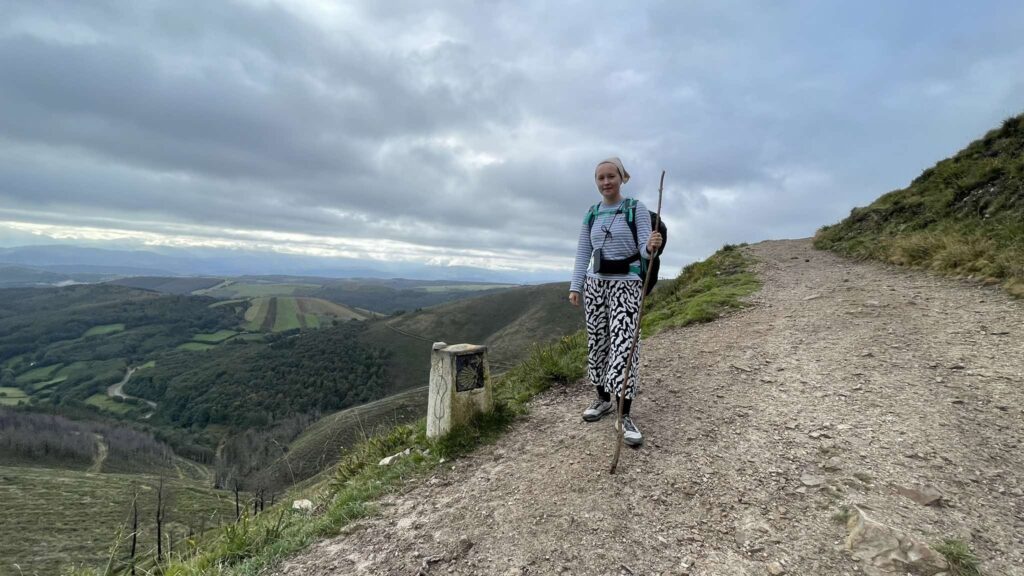
My main advice: don’t take too many things on Camino Primitivo. Remember, you’ll have to carry everything for weeks, unless you plan to use a luggage transportation service.
Our backpacks weighed about 6–7 kg each (mine and my daughter’s), depending on the amount of water and food. This included all our things, my small tablet, each had their own medical kit, only two spare T-shirts, and instead of heavy pants, we chose two pairs of leggings each. For warmth: a fleece, a long sleeve shirt, and a rain-wind jacket. Backpack weight – 1 kg; if yours is lighter, that’s good.
Two important things to have are comfortable shoes for the Camino – on Primitivo, that’s sneakers with thick Vibram soles – and a good backpack – mine was 28 liters, with adjustable straps.
Don’t carry unnecessary things! You’ll be walking among mountains and hills – it is very difficult and a little annoying to carry things you don’t need. It’s better to wash things or, if necessary, buy new items – there aren’t many shops on the way, but there are some in towns.
Prices on Camino Primitivo in 2026
There is no fixed price for the Camino de Santiago. How much you spend depends on many factors. You can
complete the Camino Primitivo for 25 euros per day, or spend over 50 euros a day. I had days when I spent as little as 16 euros or as much as 50 euros in a day. It all depends on what you can and want to spend, how much comfort you need, etc.
Budget 25 euros per day:
- Accommodation – public albergues, 9 euros
- Food – buying food in shops – 10–12 euros
Budget 35–40 euros per day:
- Accommodation – private albergues, 14–15 euros
- Food – Menu del Día – 14 euros; breakfast – 3–4 euros; food in shops – 8 euros.
Budget 50+ euros per day:
- Accommodation – separate room in a hotel or non-budget (special albergue), about 20 euros per person (if two people in a double room), about 35–40 euros for a single room.
- Food – Menu del Día – 14 euros; breakfast – 3–4 euros; dinner – 20 euros.
Additional costs:
- Laundry – 3–5 euros for washing, 4–7 euros for drying.
- Luggage transfer service – 5–7 euros per backpack per stage.
This year, my daughter and I went together and spent on average 60–80 euros per day for two.
Day 0: Oviedo
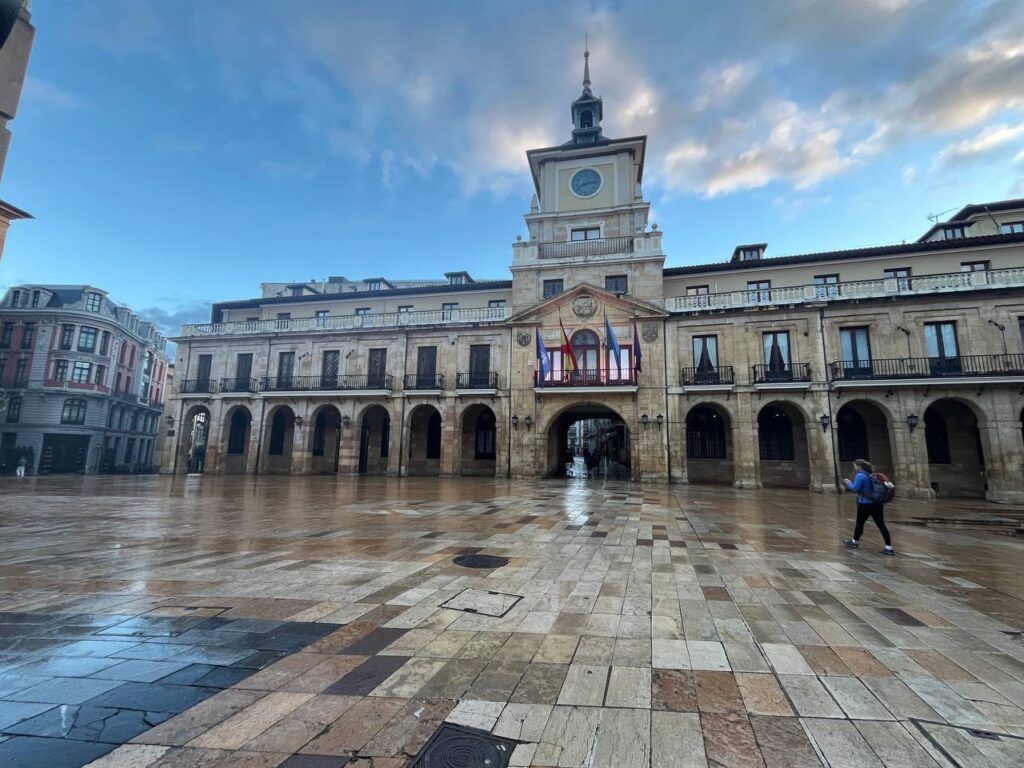
Camino Primitivo starts from the Cathedral in Oviedo, and most pilgrims arrive here the day before to have time to explore the city. We did the same, arriving by train from Madrid, where our flight had landed.
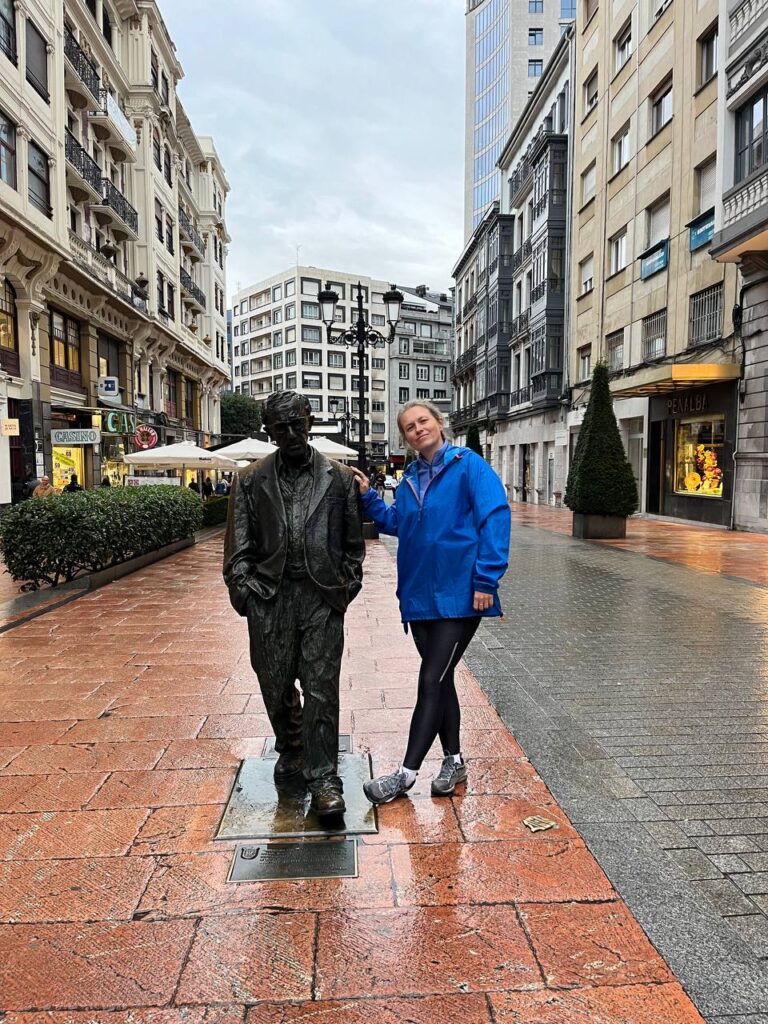
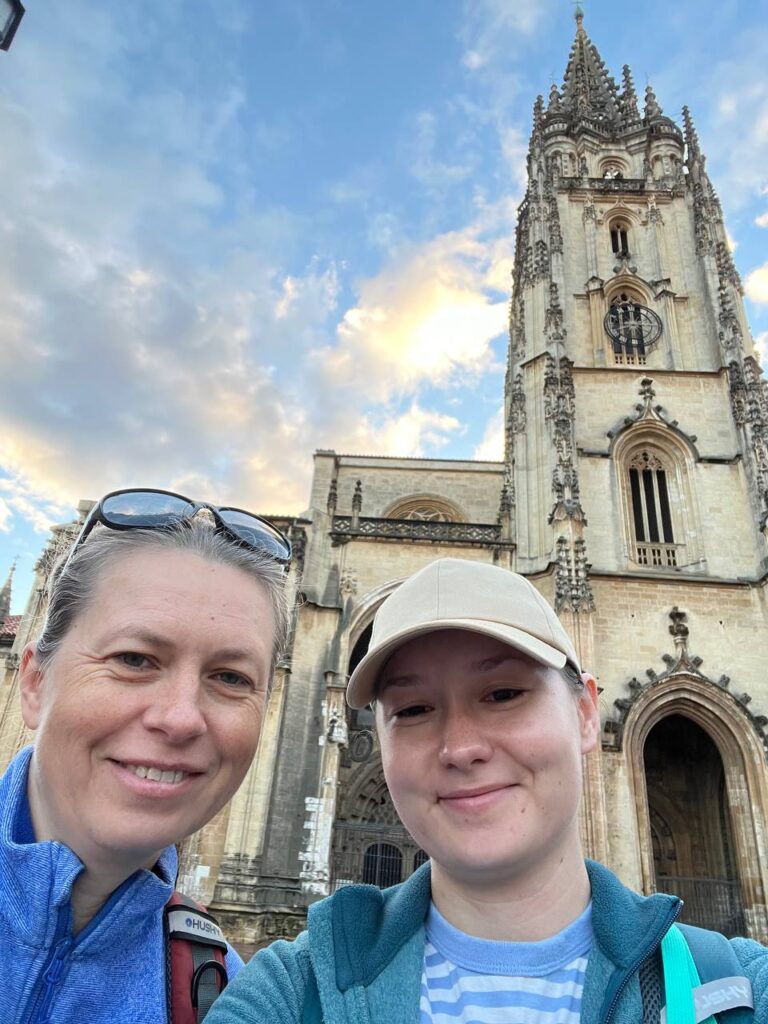
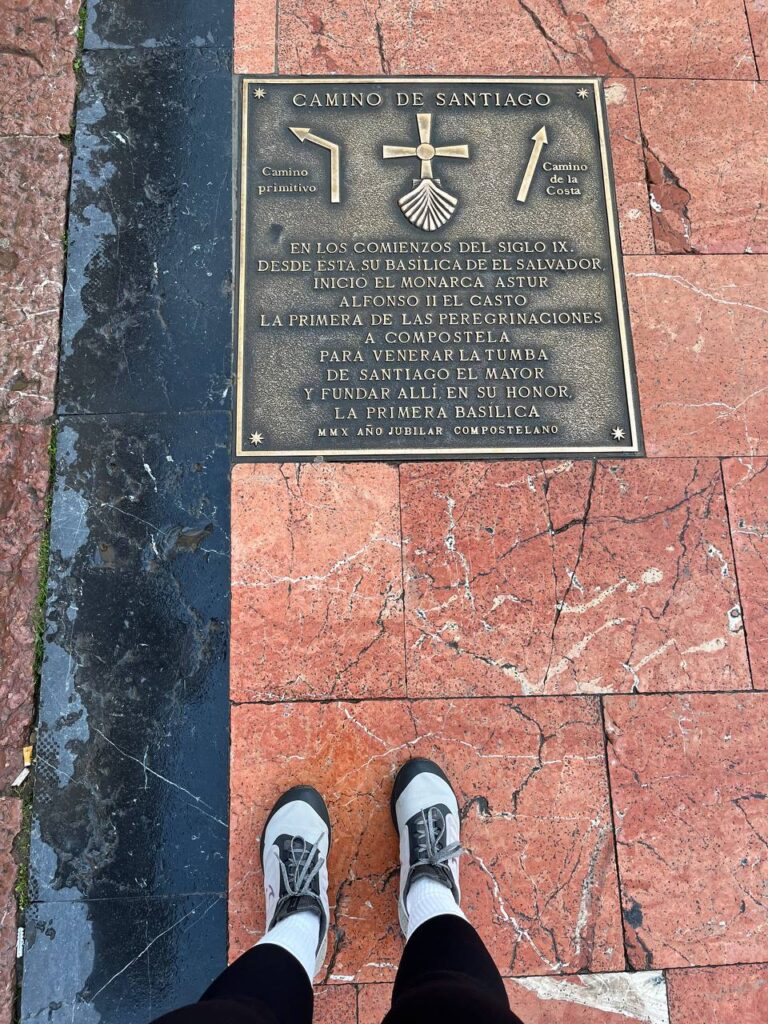
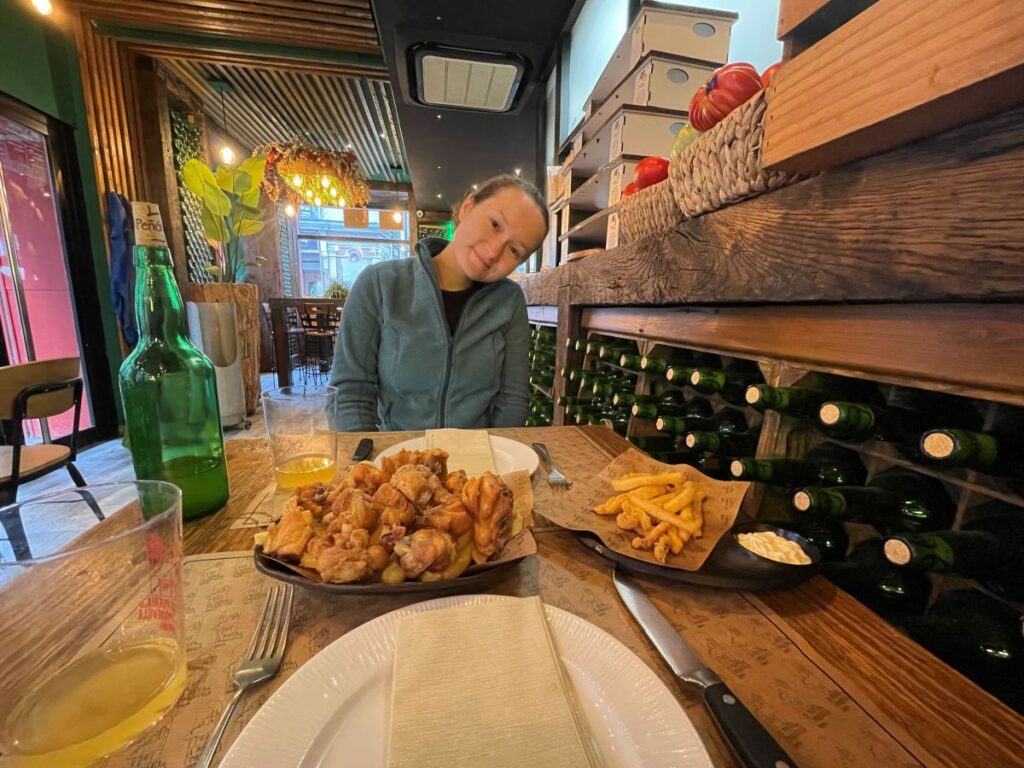
Oviedo is a beautiful city with typical cobblestone streets, a magnificent cathedral, many restaurants, bars, and cider houses. Since it was raining and it took a long time to settle into the albergue, we only went for a walk in the evening. We found the Woody Allen monument, walked through the old town, but didn’t have time to see the cathedral inside – it was already closed. But we found a wonderful cider house, where we enjoyed delicious Asturian cider with chicken and baby squid.
Before checking in, we went to the post office and sent excess things to Santiago – we do this regularly to avoid carrying extra kilos. After the Camino, we planned to spend a week on the Costa del Sol – the coast of Andalusia, so dresses and swimsuits went off in a parcel to Santiago.
In the albergue, we received our credencials and first stamps (cost of credencial – pilgrim’s passport 3 euros). We met a Polish girl – Julia planned to camp in a tent, which she carried in her backpack. We wished her a good Camino (we will meet again in strange circumstances).
Accommodation in Oviedo:
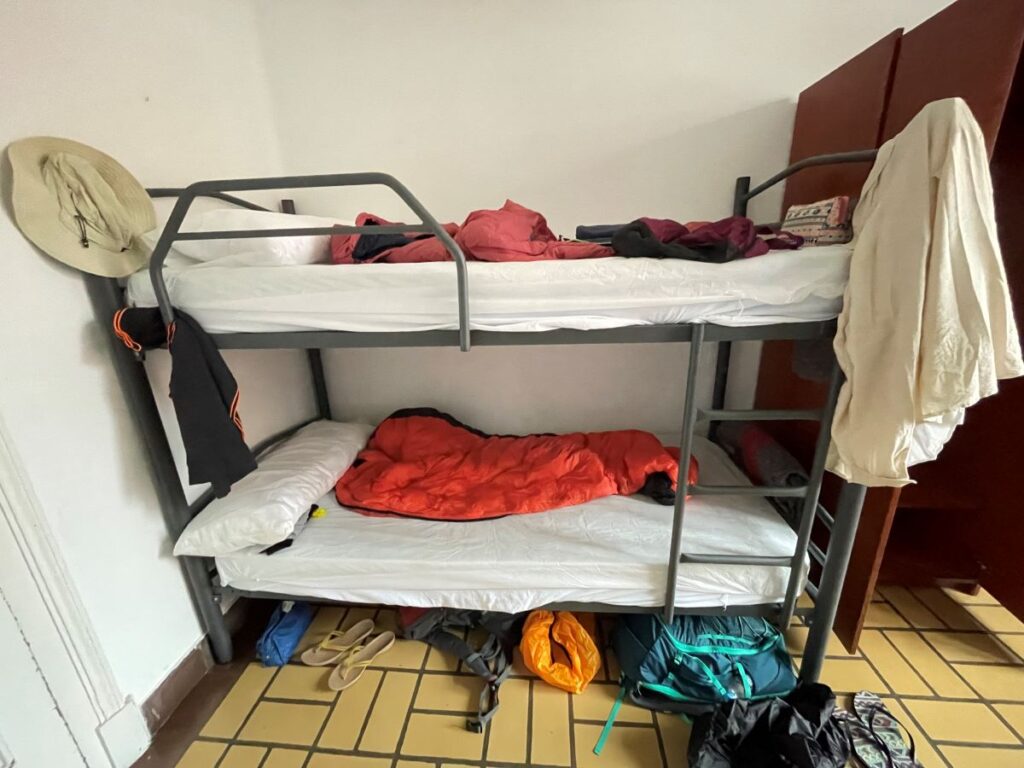
We stayed at the municipal albergue Albergue de peregrinos de El Salvador – a clean, classic hostel with small rooms for 3–5 people. Women are separated from men, there are women’s and men’s showers, a kitchen with a microwave, everything works well. Only they settle very slowly – because this albergue issues Salvadoriana – a certificate of completion of Camino San Salvador. We waited in line of 10 people for 1.5 hours. The price is 7.5 euros, lots of beds.
If you want to stay in Oviedo for a couple of days, book a private hostel:
- Green Hostel Oviedo≫ – Ideal location in the historic center next to the tourist office and the cathedral. The room is clean, with a shared kitchen equipped with everything needed.
- Hostal Álvarez≫ – Easy to get to from the railway station, and the city center is also close, but in a calmer area.
Day 1. Oviedo – Grado
25 km. Oviedo – San Lázaro – La Bolguina – El Escamplero – Paladín – Grado
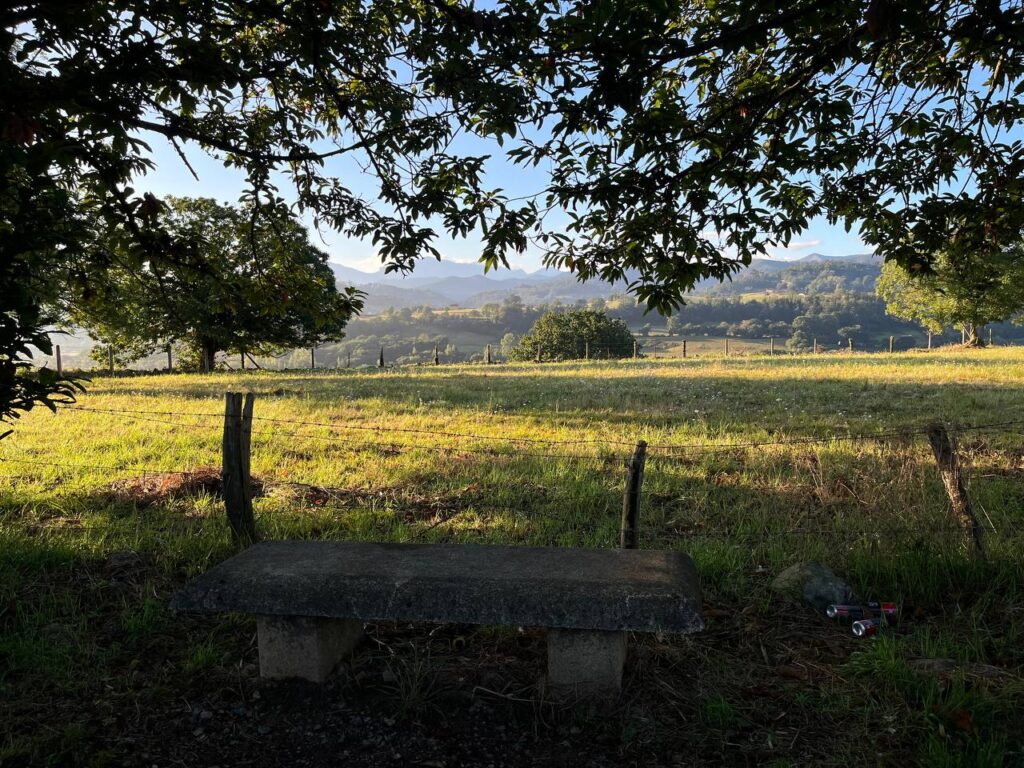
It’s important to start the Camino early so there’s enough time on the way for several rest breaks. In our case, early means 8 a.m.—we left the city calmly and unrushed, looking along the way for a café with coffee and breakfast.
The Camino Primitivo route starts by the Cathedral in Oviedo and then goes through the town into the hills. The first day is always tough on any Camino. This stage is considered quite difficult due to several steep ascents and descents. But it’s actually very pleasant since you walk either on paths or narrow country roads.
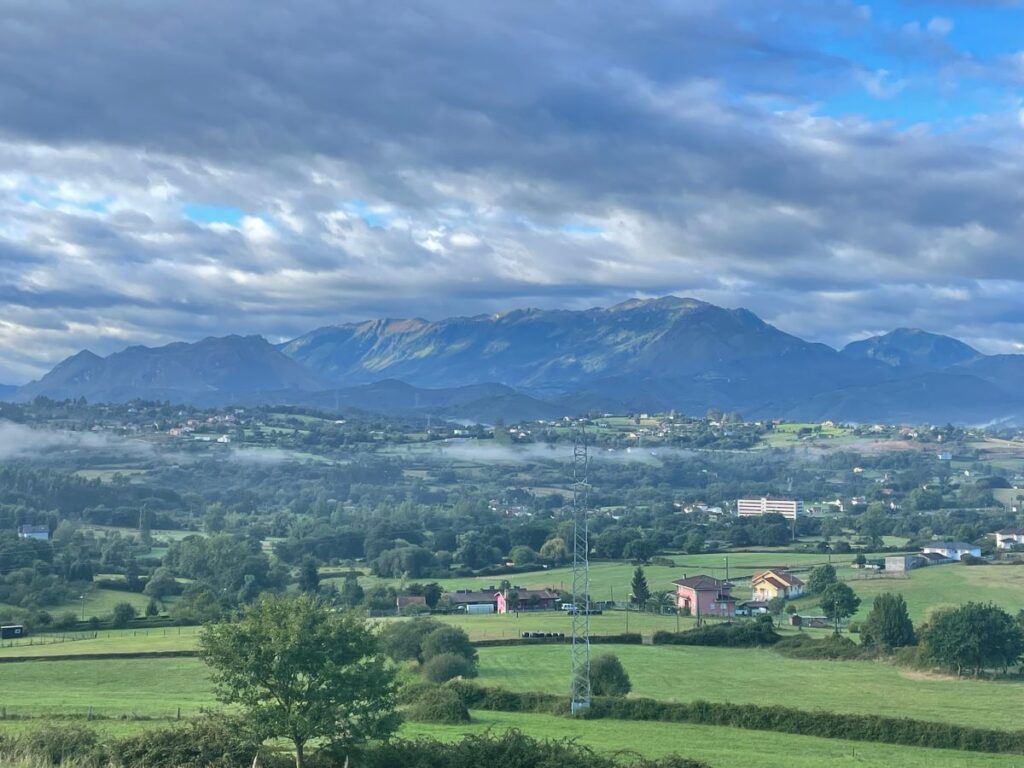
We got a stamp in the Ermita del Carmen (Llampaxuga) church and then stopped for breakfast at the café Casa Valdés, Bar Rte. LA BOLGUINA, La Bolguina.
After a few hours in the countryside, we reached the highway to cross the Nalón River at Puente de Peñaflor. Here, the river has cut a small canyon—a beautiful spot.
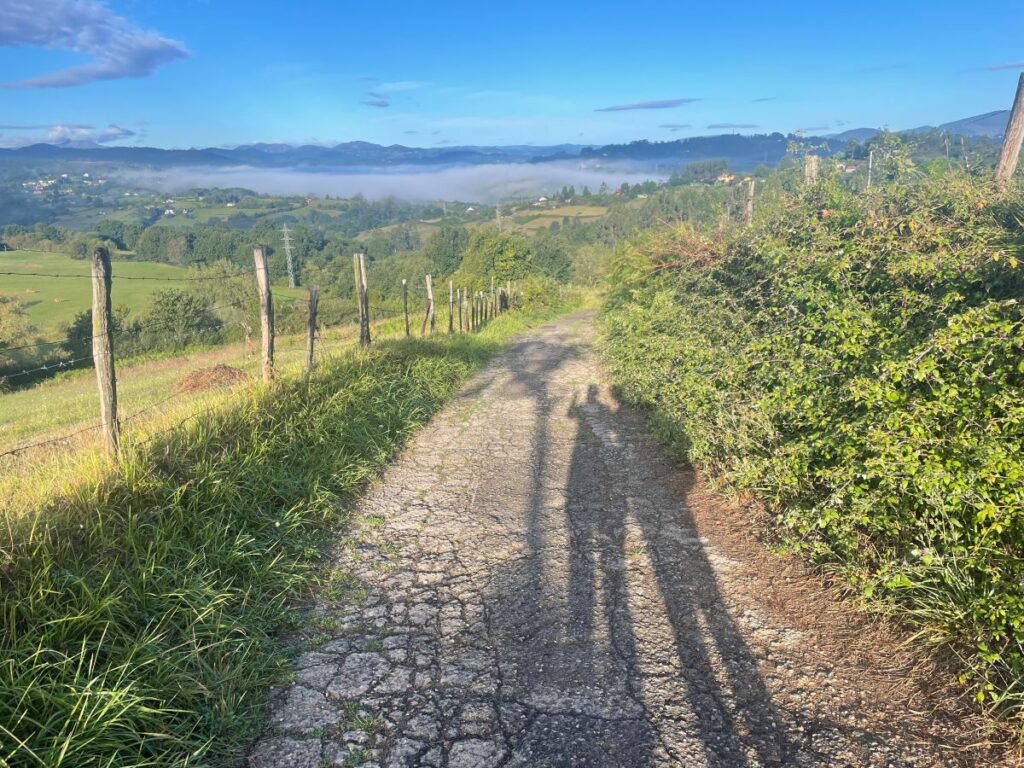
Tip: You can split the first day of Camino Primitivo into two if you are a beginner and have extra time:
from Oviedo to El Escamplero – 12 km, and the next day from El Escamplero to Grado – 13 km. This is also a good option for those who don’t plan to stay overnight in Oviedo and want to start the Camino right after arriving in town.
Grado
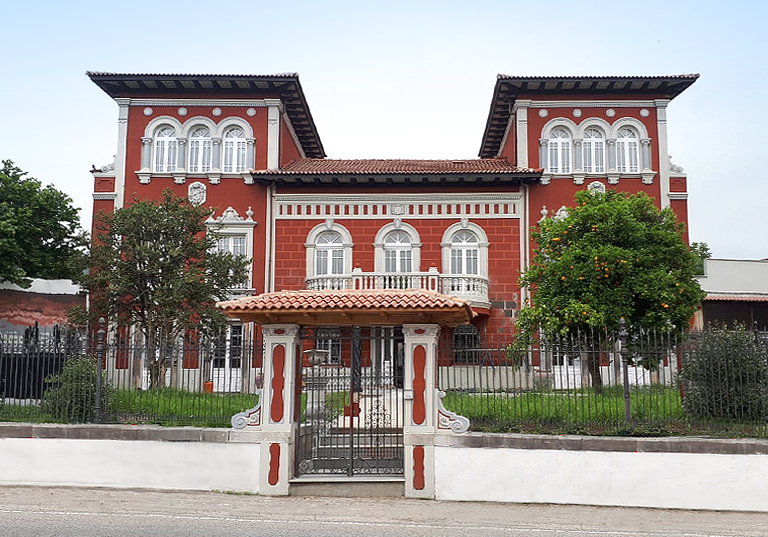
This city did not impress me; there is almost no old part, only a nice park next to the donativo albergue, which we couldn’t get into because of a large number of people for only 16 beds.
We were a bit disappointed, but then headed for the next private albergue, Albergue La Quintana, hoping there would be more beds, but it was fully booked. We saw a pile of suitcases and bags at the entrance and realized that everything was reserved by some group. Rather annoying.
We had to search for other options—the next place in Grado was a bar-pension with rooms at 40 euros for two. This was a bit more expensive than the private hostel (which was 15 euros per bed). Ksusha called the bar and booked a room in very basic Spanish.
It turned out that this was the last available room—the pension was filled by a large group of teenage footballers. We were very lucky to get a tiny room with a bed and a half (not a proper double). But we are not very big girls, so we somehow managed to sleep and rest. Plus, under the bar there was access to a supermarket—we also had a tasty and affordable dinner on the first day.
Tip: If you don’t get a cheap albergue spot in Grado, or a room like in our case, the next albergue is 5 km further and you have to go steeply uphill. Some pilgrims took a taxi to reach the Albergue de peregrinos de San Juan de Villapañada; there were still available beds. But buy food and supplies in Grado—there is absolutely nothing there, no shops, no cafés!
Accommodation in Grado:
- Pilgrims’ Hostel Villa de Grado – a donativo hostel located next to the central park. Reservations are not possible, you have to arrive on time and claim a bed. We did not get a spot…
- Albergue La Quintana – very nice, but with small rooms; there’s a lovely garden with orange trees. Great atmosphere.
- Hotel Auto-Bar – this is where we found a room and were lucky to stay and get a good rest in Grado. We had no energy to go further in the heat on our first day on Camino Primitivo.
- Albergue de peregrinos de San Juan de Villapañada – this albergue is 5 km further from Grado and requires an uphill walk. 7.5 euros and lights out time.
Day 2: Grado – Salas
24 km: Grado – Villapañada – La Doriga – Cornellana – Casasorrina – Salas
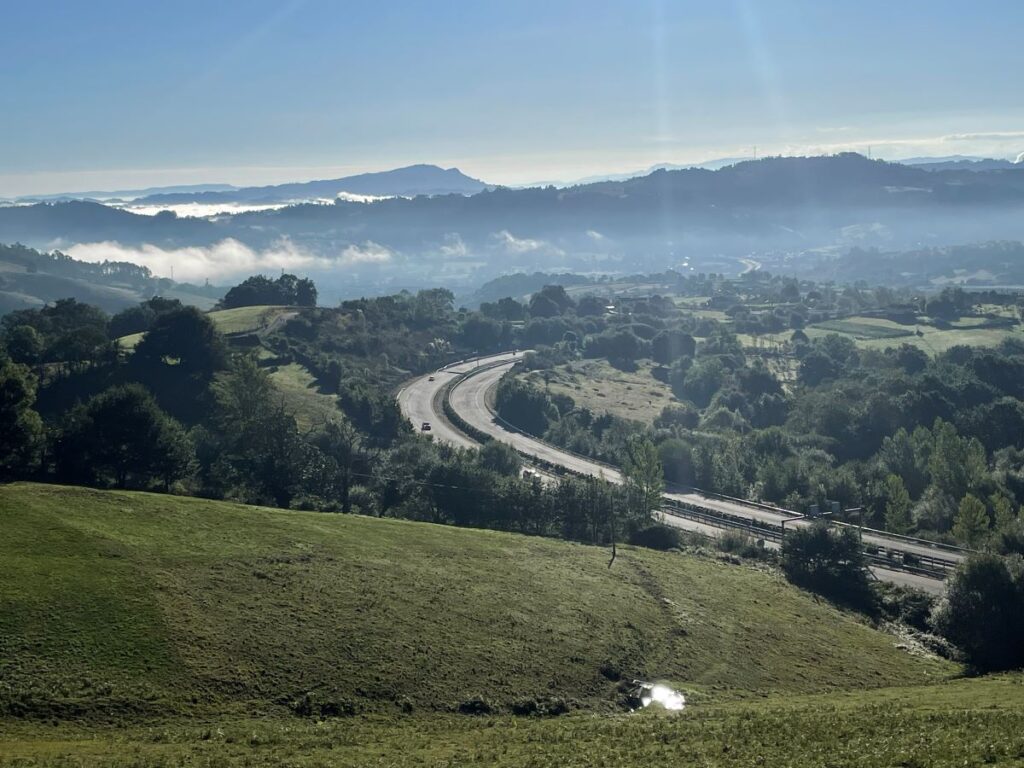
Today the forecast was +25, which is very hot for Asturias. We tried to wake up earlier, but as always, we leave around 7:30 for a bar, have breakfast with the group of footballer teenagers, and again wonder how lucky we were to get a room on the day the city was holding a kids’ tournament.
Because of this, we decided to book accommodation for the second night, so there would be no surprises: arrive, rest at the planned albergue, and not panic about where we would sleep tonight.
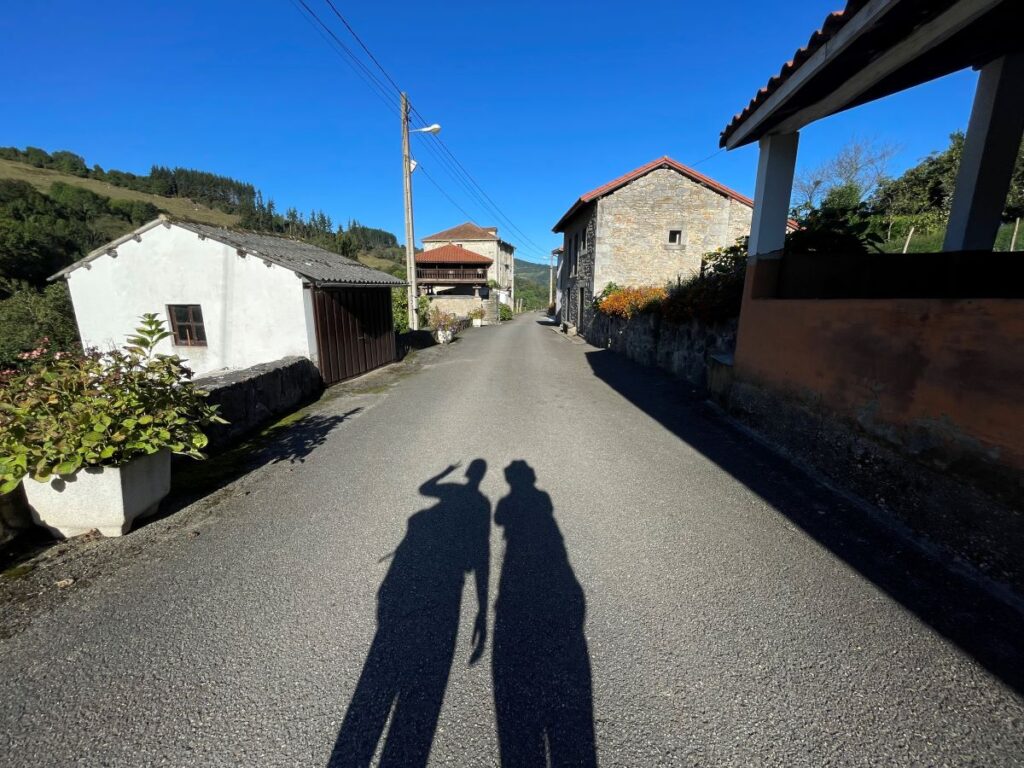
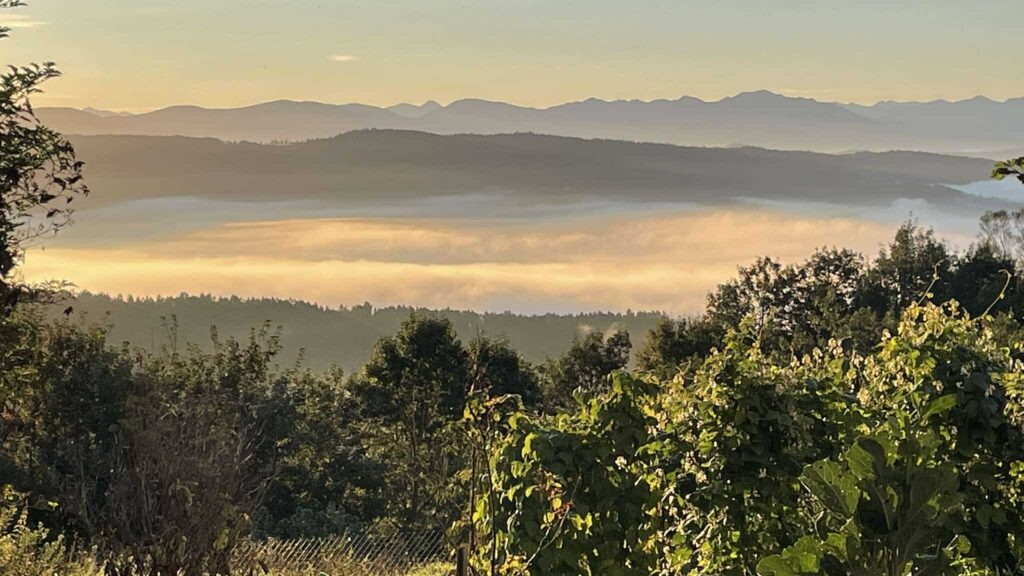
After Grado there is a long uphill climb on asphalt—mist floats in the valley between the mountains, we’re already sweating in the sun and stepping upwards. Further, we mostly walked through forest trails, but it was nice since the trees provided shade from the sun.
We crossed a pedestrian bridge over the highway and then the trail led us through private gardens to the river. Some pilgrims ahead of us missed this turn, so later they had to descend steeply from the road. The elderly men laughed—lucky they didn’t fall.
The path along the creek leads to the village of San Marcello, where apart from a nice church there is nothing—no bars or water sources. Good thing we filled up with water and had something to drink—it was hot. In the next village we saw a huge restaurant with a terrace and parking, but we weren’t hungry yet. We had ham, bread, and fruit. Today was Sunday and Asturias Day (9 September)—so we had to stock up, thinking all the shops, restaurants, and bars would be closed (needlessly).
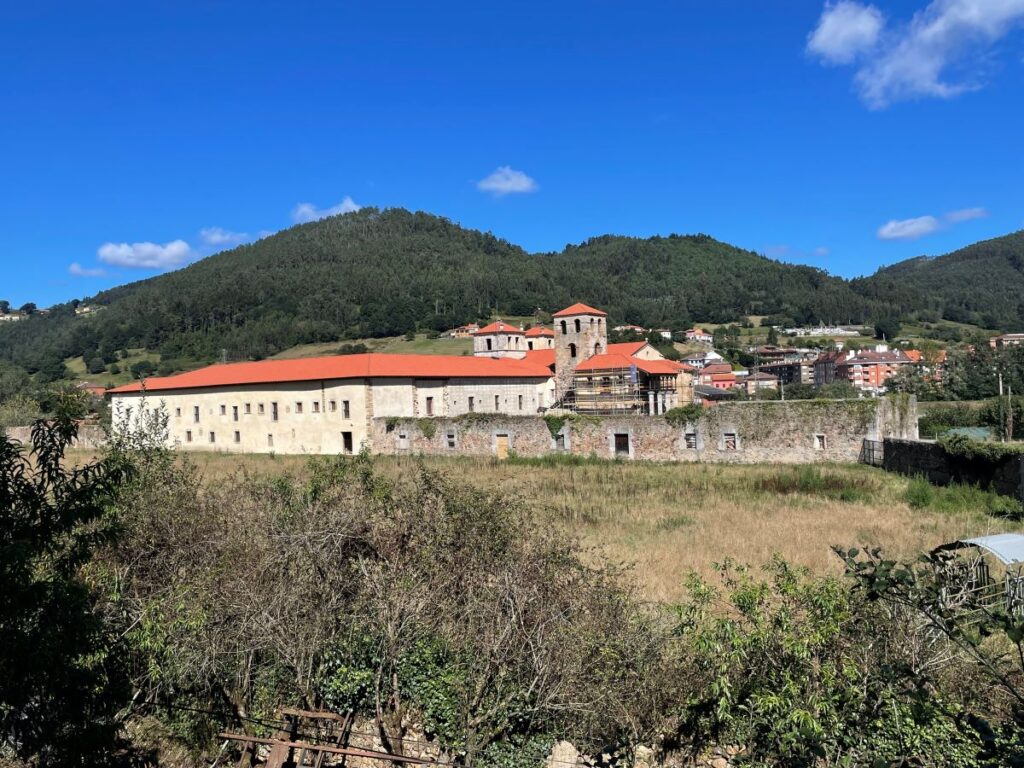
In Cornellana we had coffee and breakfast, found an open shop—bought yogurt for breakfast. We also saw a wonderful (but closed) monastery Monastery of San Salvador de Cornellana. If you want, you can stay overnight in the monastery albergue (8 euros), but we went on to Salas.
Salas
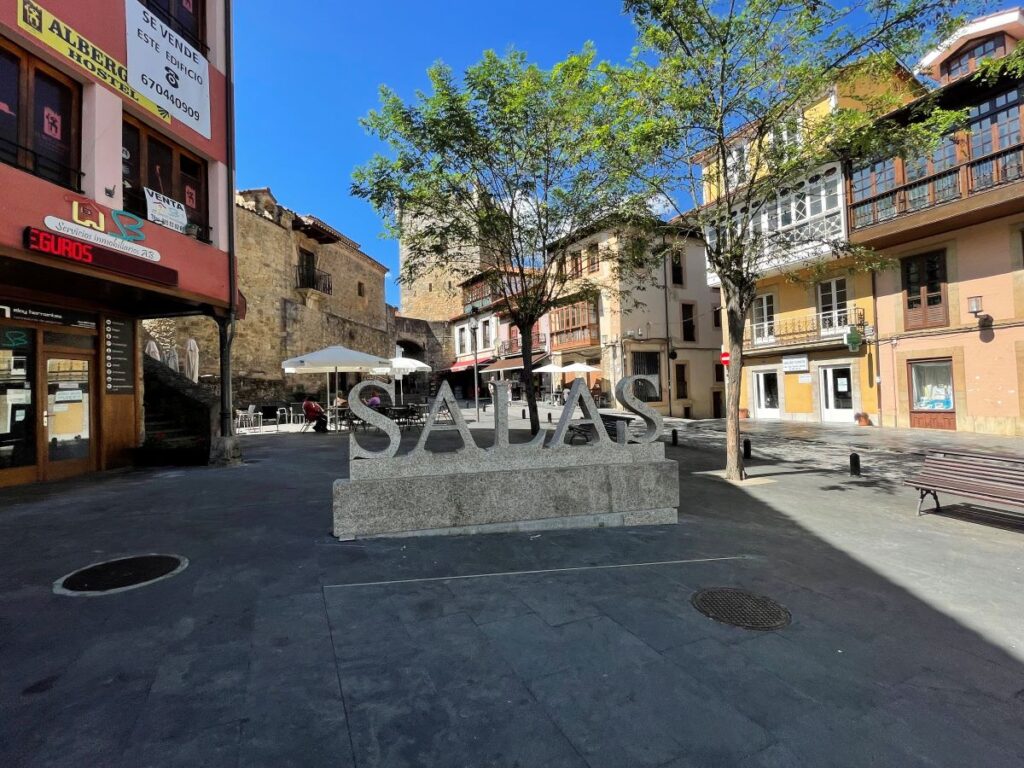
A very beautiful (unexpectedly) town among high hills with a wonderful church of Santa María la Mayor and the impressive Valdés Salas Castle, which houses the Pre-Romanesque Museum San Martín de Salas.
We checked into a private albergue in the city center. But there are a few others a bit further on that are great—we saw them the next morning when we continued. I’ll mention all of them below.
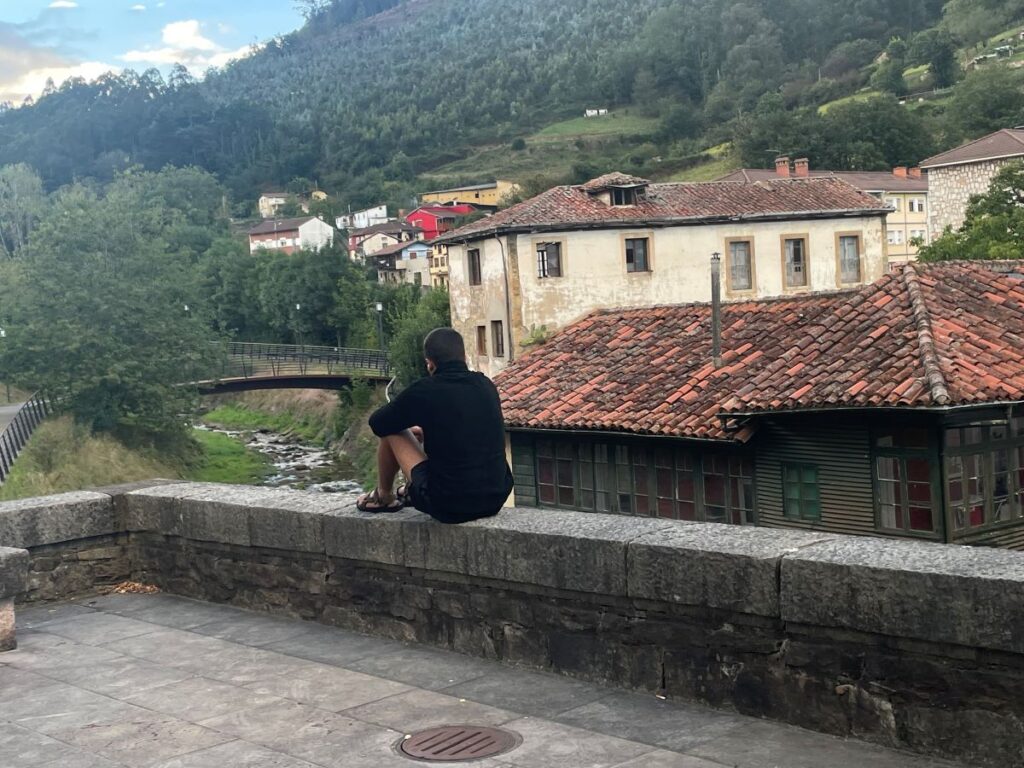
But at the albergue we chose, we met several companions whom we would see almost every day. And we would say goodbye to them only in Santiago de Compostela. There was Jose from Seville, who had many adventures on the way—because he walked slowly, he often arrived at the albergue very late and sometimes even got lost in the forest. There was Lars from Denmark, who was a very pleasant conversationalist and spent the last day in Santiago with us. So everything that happens, happens for good.
Accommodation in Salas:
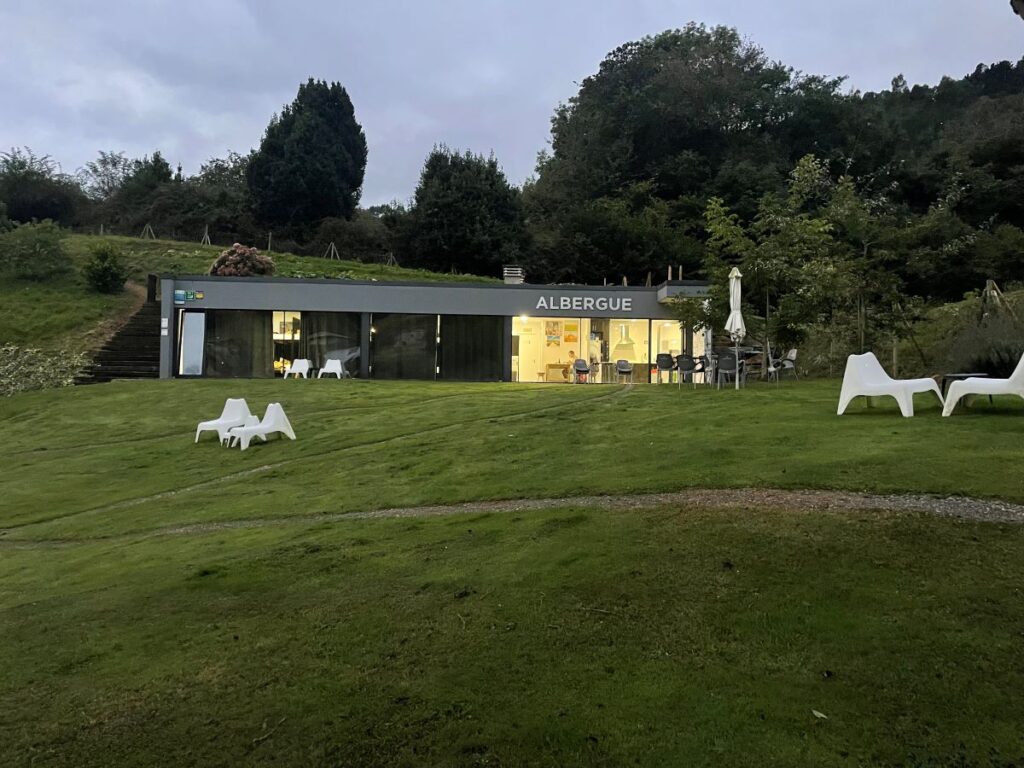
- Municipal albergue Salas – located on the outskirts of Salas, only 16 beds. So don’t count on a free place in high season (summer or September) if you don’t start the route early in the morning or don’t walk fast. Reservations are not possible.
- Albergue Casa Sueño – I highly recommend this albergue, a modern and super comfortable hostel closer to the exit from Salas. But it’s 5 minutes on foot to the center if you want to go to a bar or restaurant. The owners offer dinner and breakfast, there is a kitchen, a washing machine, and a dryer—all for an additional fee.
- Hostel El Tulipán de Salas – hostel for pilgrims and tourists, in the center of Salas, a bit cramped but very cozy. We stayed here because it was cheaper and more central.
- Posada de peregrinos Fontenonaya – if you have the strength to go another 7 km (all uphill!) to the village of Bodenaya, I recommend stopping at this albergue (donativo). There’s a great atmosphere thanks to the owner, Nicolas. Our friends who stayed here remembered the place warmly for the warm, cozy welcome and the delicious signature paella.
Day 3: Salas – Tineo
20 km: Salas – Bodenaya – La Espina – Tineo
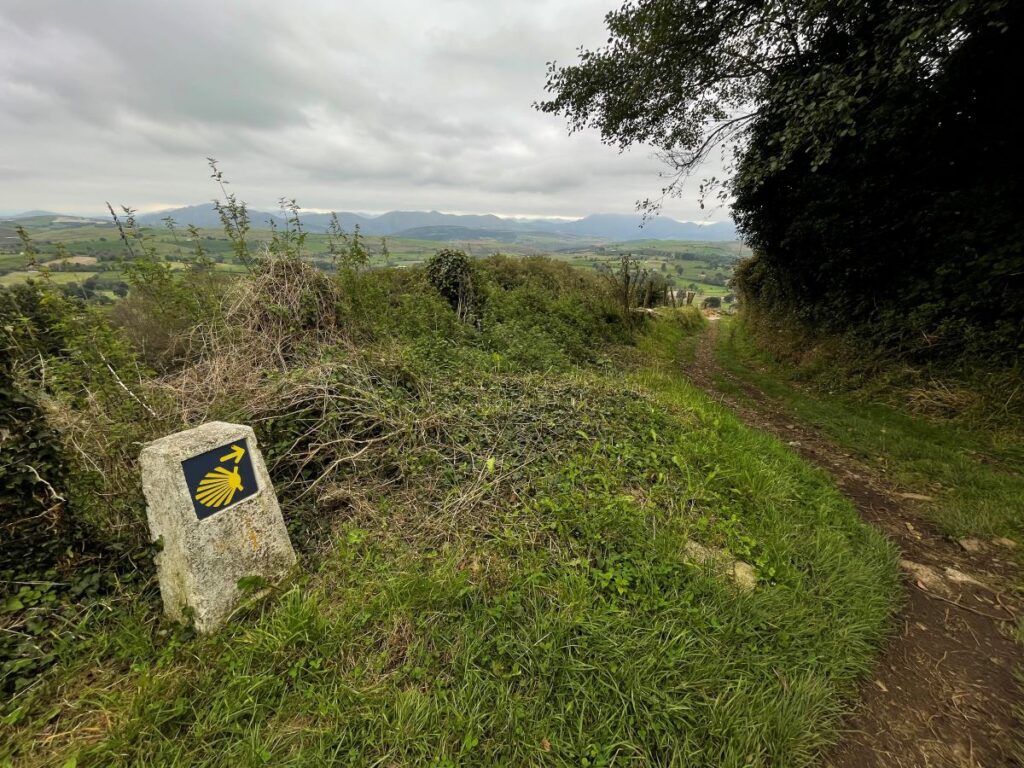
This day was a bit more difficult than the previous ones due to more climbs and the weather, which spoiled the views a bit. We got up at seven in the morning and left for the trail without breakfast. For me it’s much easier to start without breakfast and after 5–10 km find a café and quietly rest with a cup of coffee and a hearty breakfast.
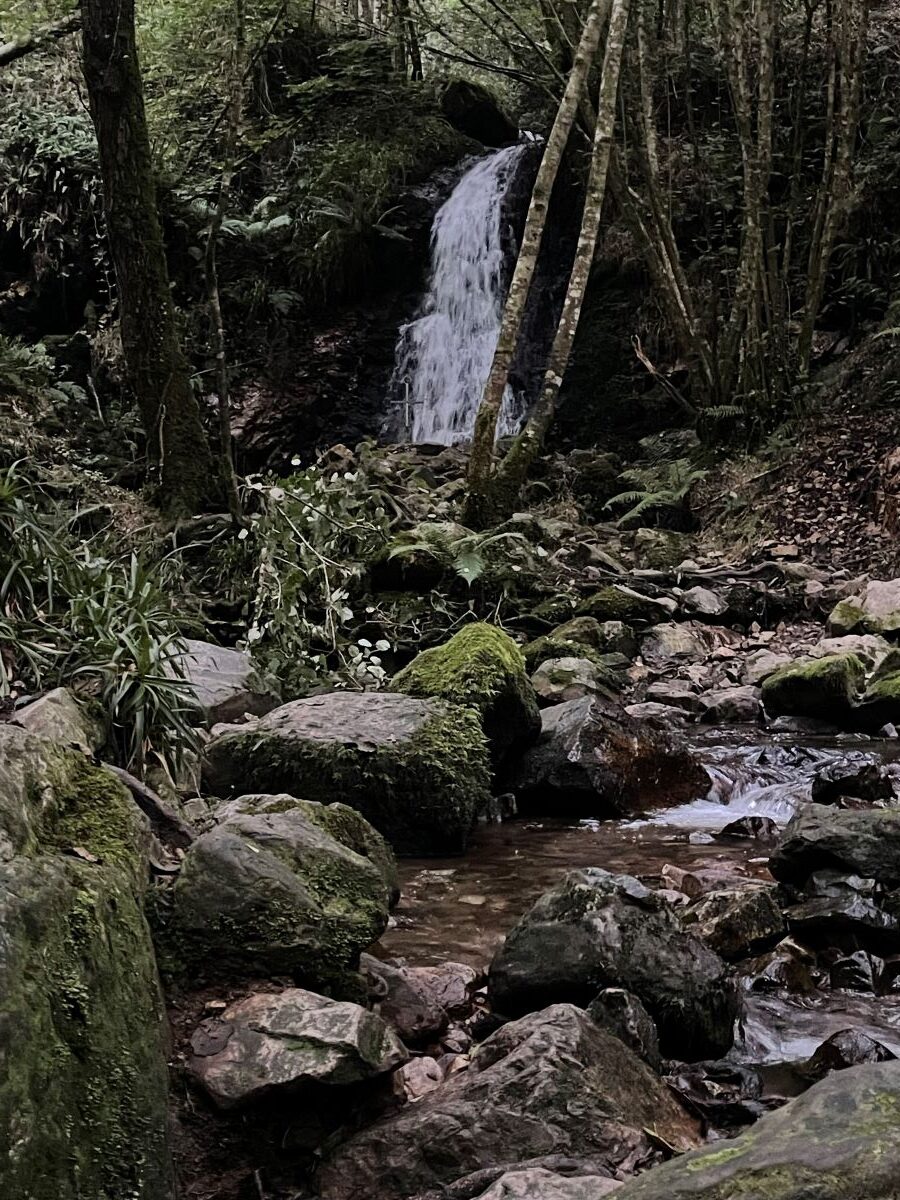
At first the trail from Salas leads into the forest—along the way you can see an old viaduct bridge, and if you want, you can descend to a waterfall located 250 meters from the trail. We and a couple of other pilgrims went to see it. After the waterfall, you have to climb sharply uphill since it’s down below. Not everyone likes this idea.
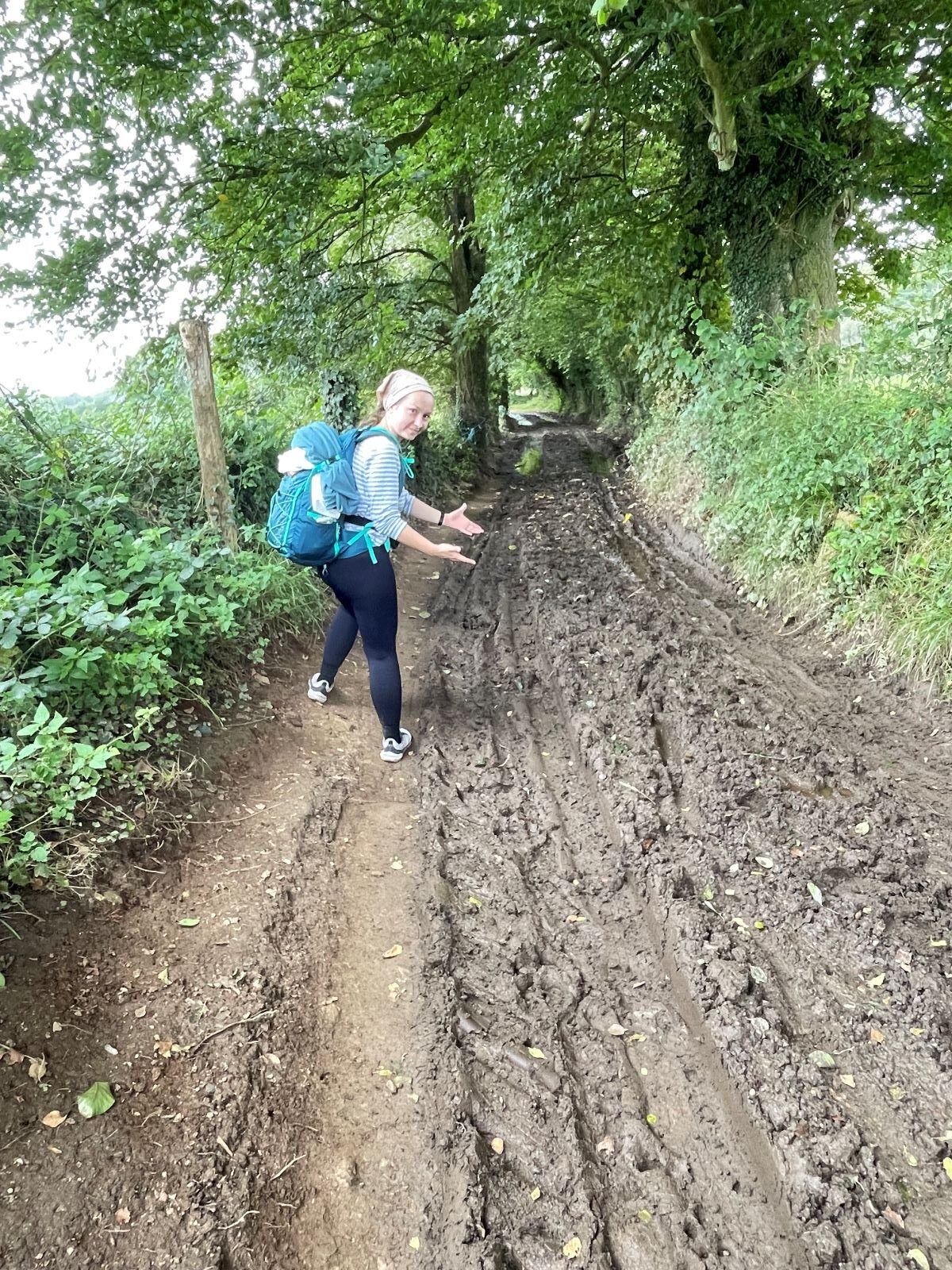
We returned to the trail, walked a bit more, and then the first steep ascent in three days began, not on a road. It was really steep, as we got a bit out of breath – you have to gain 500 meters of elevation in 7 km. But it’s not very long – it leads to the road, which you then follow to the town of La Espina.
We had coffee at a bar, had breakfast, and walked on – almost all the trails were muddy from the rains and mists. Tractors working the fields also use them. Walking was very difficult, especially without sticks – we hadn’t planned to look for sticks so early since you don’t really need them for hills. But we realized it was time to find something in the forest to help us jump over puddles and mud.
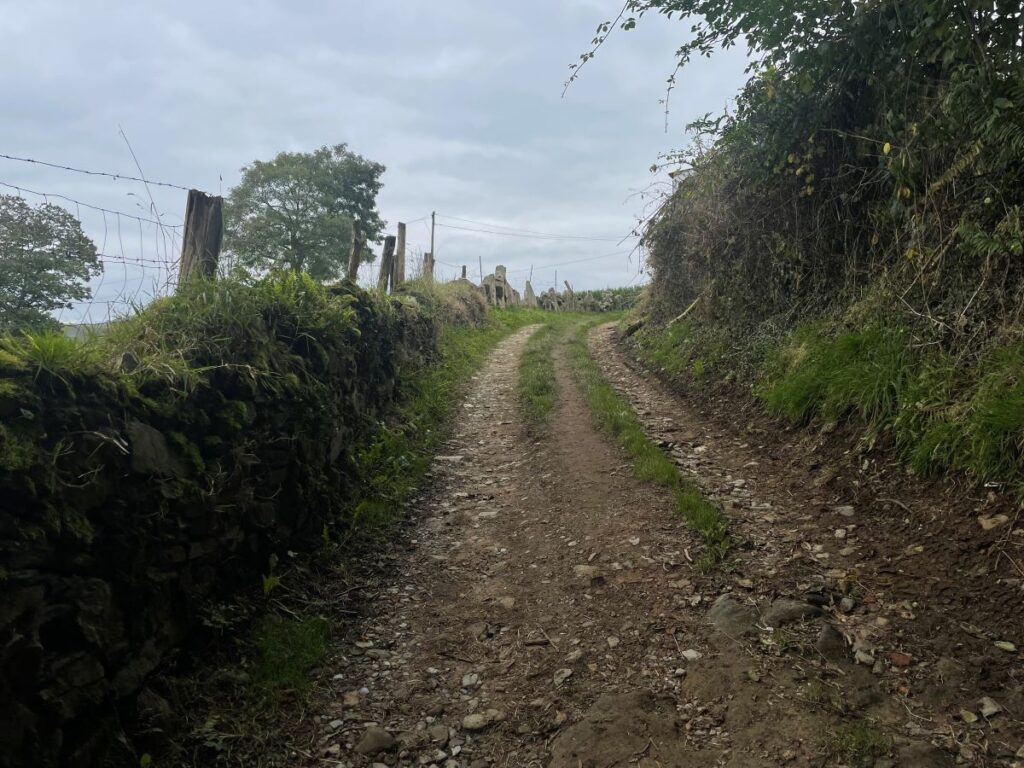
We climbed the hill above La Espina and got into a cloud hanging with fog – nothing was visible around, and a cold wind blew in. Walking was very unpleasant, but it was still too early to put on raincoats.
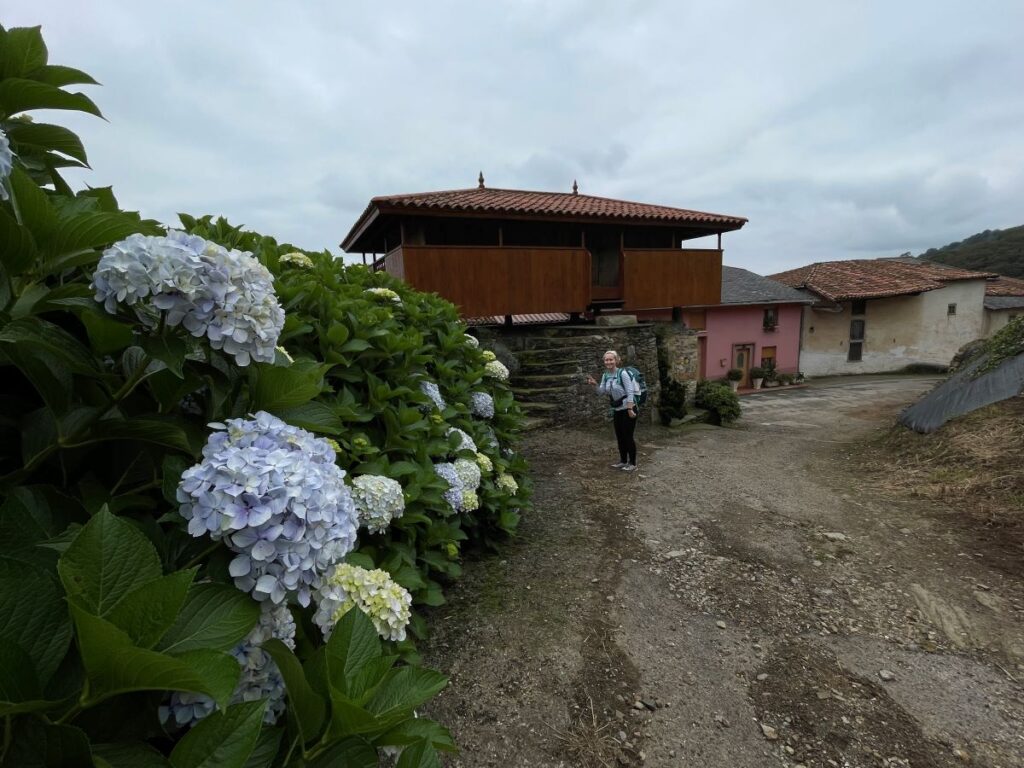
Then we descended to the village of La Pedregal and switched to asphalt. After that it was a little easier and cleaner. Before Tineo we walked again through forest and mud but somehow got to the city quite quickly. And we were lucky to settle in the municipal albergue, which had 22 beds and half of them were free. That’s because the municipal is located a little farther from the city center, where there were several private albergues, one of them very large with 53 beds for pilgrims.
Tineo
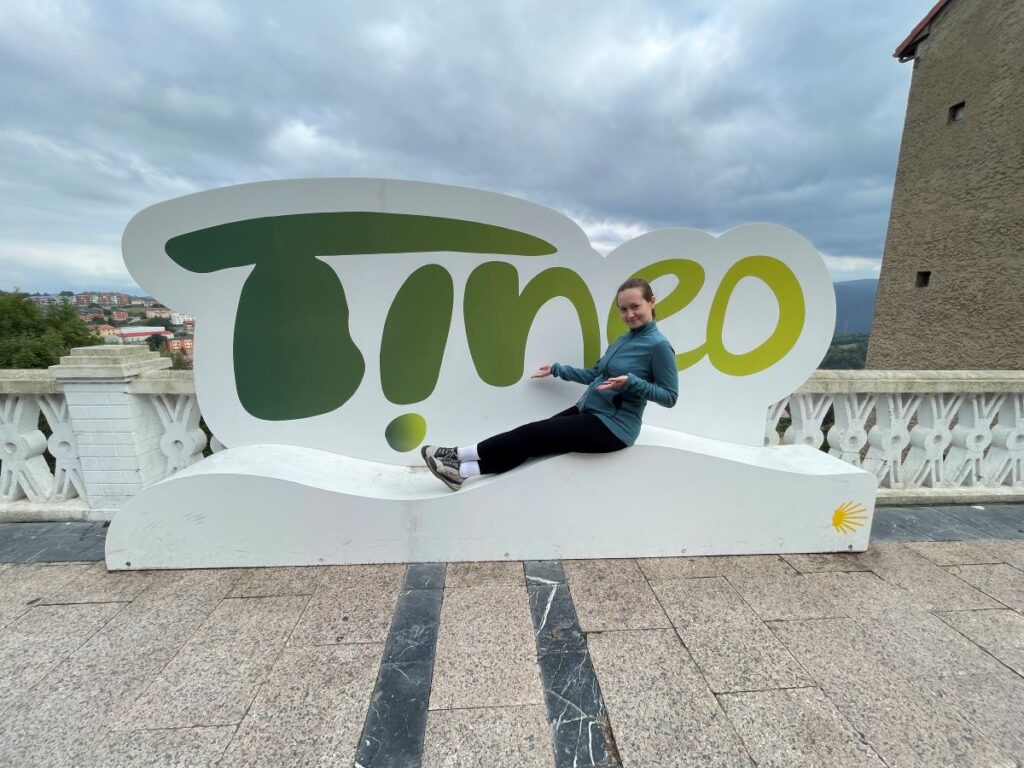
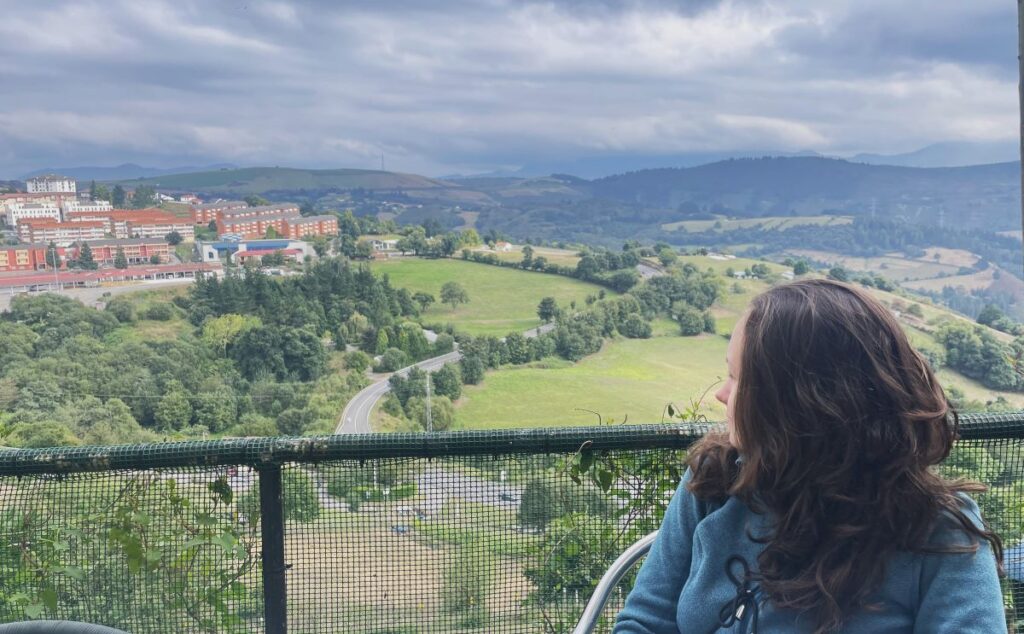
A fairly large city on the Primitivo route with a wonderful view of the valley and the mountains. Tineo is located on the top of a hill, and the streets on its slopes are built like terraces. There’s an old part and new buildings. The municipal albergue is 1 km from the old center.
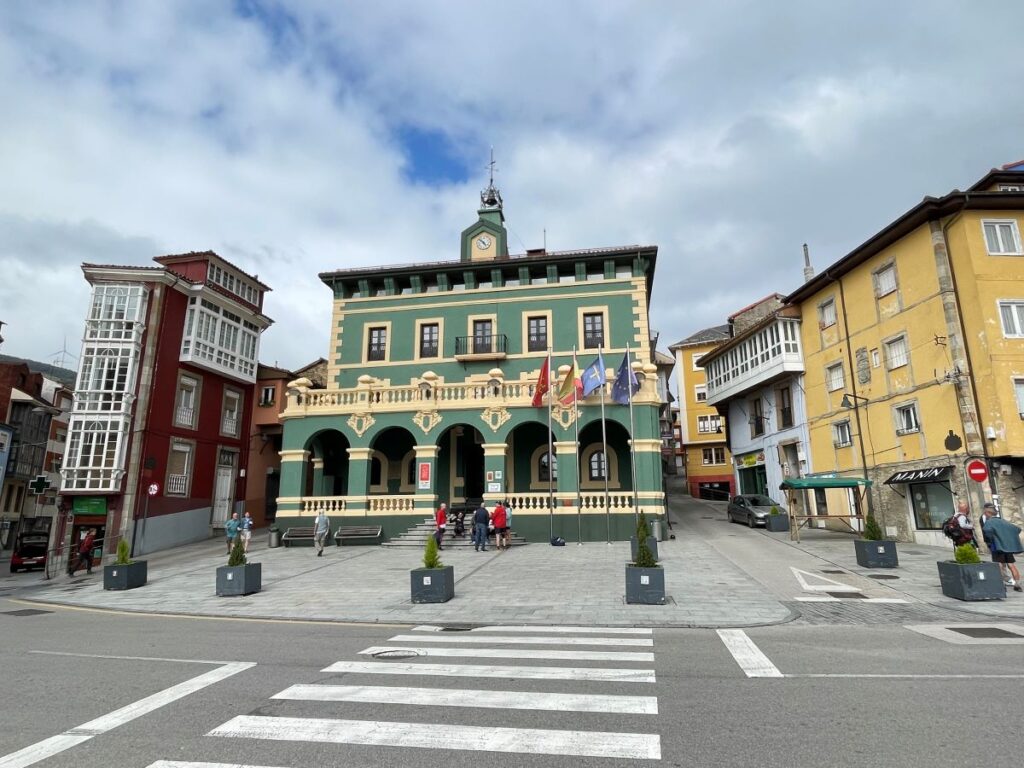
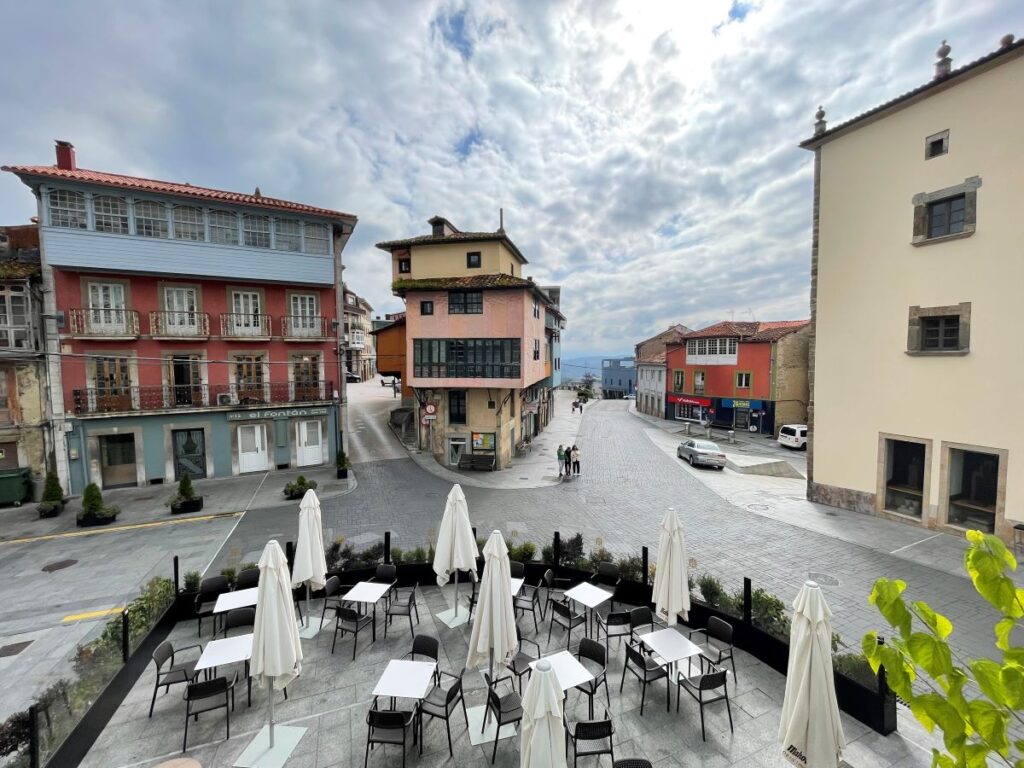
The old part of Tineo is very charming—the Plaza del Ayuntamiento, where the city hall is, and you can find several cafes and two albergues next to it. If you enter the next courtyard behind these albergues, you’ll find a wonderful cider house, Sidrería El refugio—we ordered a bottle of cider for 4 euros and enjoyed the great view, which you can see from the bar’s street terrace.
And then when the cafés and restaurants opened, we returned to our albergue and about a hundred meters from it found an affordable restaurant, Restaurante Cafetería Alhambra. Here we decided to try a local Asturian dish—breaded ham—Chosco de Tineo—pork ham with spices, which didn’t really impress us. We’re from Ukraine—our pork is no less tasty, and bread crumbed ham wasn’t very appealing. We didn’t eat the breading because it was very fatty, and as for the ham—well, ham is ham.
What surprised us was that—honestly, as we walked, we saw no pig farms anywhere—just beef cattle grazing on the mountain pastures. Where are the pigs hiding? It’s a mystery to me to this day)))
Where to stay in Tineo:
- We were lucky to get places in the municipal albergue in Tineo—the price was a pleasant 9 euros. There are separate showers for men and women, a kitchen with a microwave, washer and dryer—we used them because the price was pretty affordable (4 euros each). The 20-bed room is not very cozy but everything is clean and comfortable.
- A small private Albergue de peregrinos La Plaza – not many beds here, but it’s cozy and comfortable.
- Albergue at the hotel Albergue de Peregrinos Palacio de Meras—more than 50 beds here, good conditions, although the albergue premises are in a semi-basement. Precisely because there are lots of beds here, the municipal albergue had plenty of free spots.
Day 4: Tineo – Borres
17 km: Tineo – Campiello – Borres
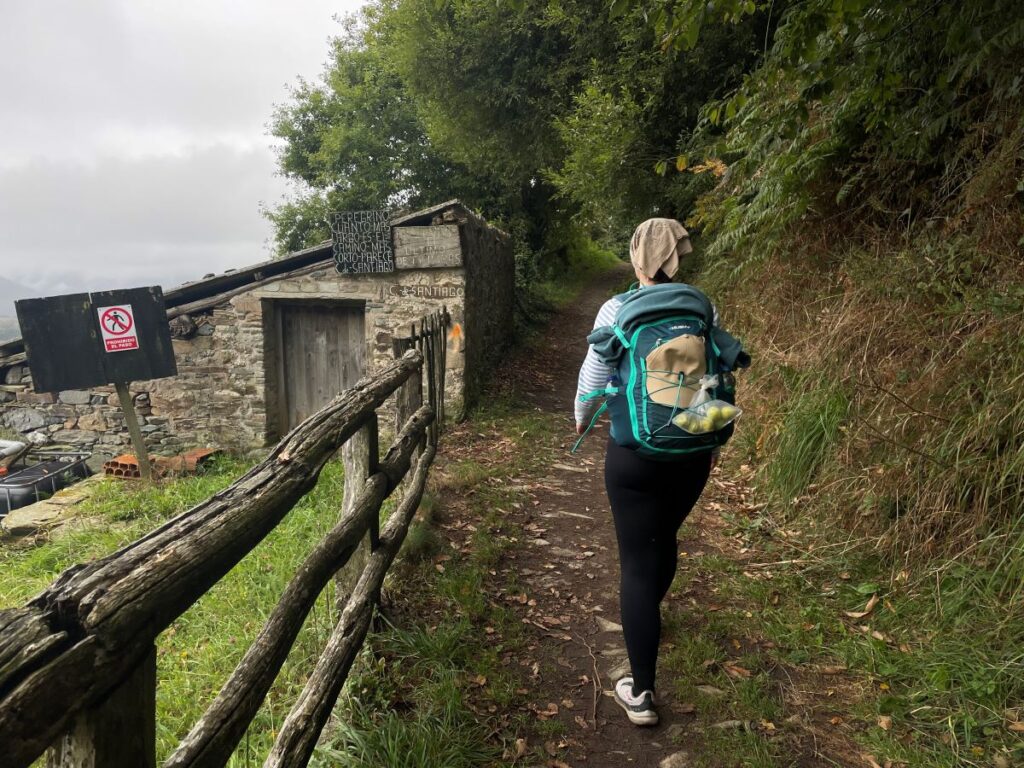
Today we had a very short walking day, and as it turned out—it became very important for my daughter’s health for the rest of the journey. But one thing at a time.
We woke up in the morning, around eight arrived at the central square to have coffee and breakfast. At Bar Centro across from the town hall, we had a piece of tasty cake and coffee. We also bought fruit in the square—figs and pears for the road. Then we headed into the mist—clouds hung over the hills that we had to walk through. But first, we were treated to a beautiful morning view of Tineo from the hilltop.
On this day there are two alternative accommodation options:

- Pilgrims who plan to walk the mountain route Ruta Hospitales the next day have a short day to the village of Borres—located at the start of Ruta Hospitales (a tough mountain section of 24 km without any infrastructure—just mountains).
- Those who think Ruta Hospitales is too challenging go from Tineo to Pola de Allande. The next day they cross the mountains without going over the ridge, but instead of 24 km, they walk 23 km on an alternative route.
So, we had to choose between a short day today and a more difficult mountain crossing—staying overnight at Borres.
Or to walk 28 km instead of 18 to Pola de Allande, and the next day to walk 23 easier kilometers.
We chose the first—18 km to Borres. Because I dreamed of seeing the mountain ridge Ruta Hospitales—it’s very beautiful in good weather and this path isn’t hard for me. If you’ve hiked in the Carpathians—it’s the same as climbing Hoverla and descending. Maybe a little harder, or maybe not.
Some people choose to do 18 km to Borres first, and then go to Pola de Allande the next day—breaking one day into two. If you have the time and desire—why not?
What was on the way?
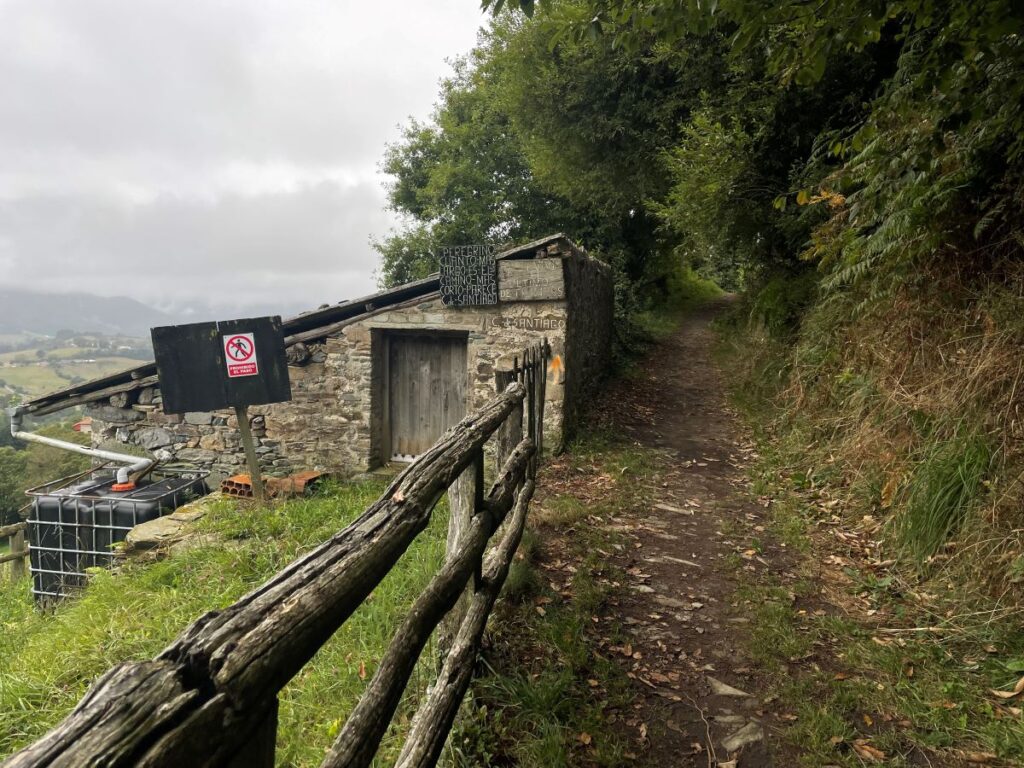
In Tineo, on the way from the albergue, there’s a bakery that opens at 6 a.m. You can buy fresh bread, rolls, pies, etc. The next place to stop for coffee or lunch is Campiello, 14 km in. We stopped here for lunch—we had booked a very nice donativo albergue—Casa Pascual, Albergue de Donativo en El Espín. But they weren’t expecting us until after 3 p.m.
So we ordered coffee and a tortilla—a potato omelet; mine came with pieces of ham, my daughter’s with chorizo, which is a spicy and very fatty sausage. As soon as Ksyusha ate her omelet—she felt sick from the fatty food. For the last 4 km she barely made it—her stomach hurt so much. It was a big mistake to order such dishes—Asturian food is very heavy and fatty. Keep this in mind if you have pancreatic issues.
Borres
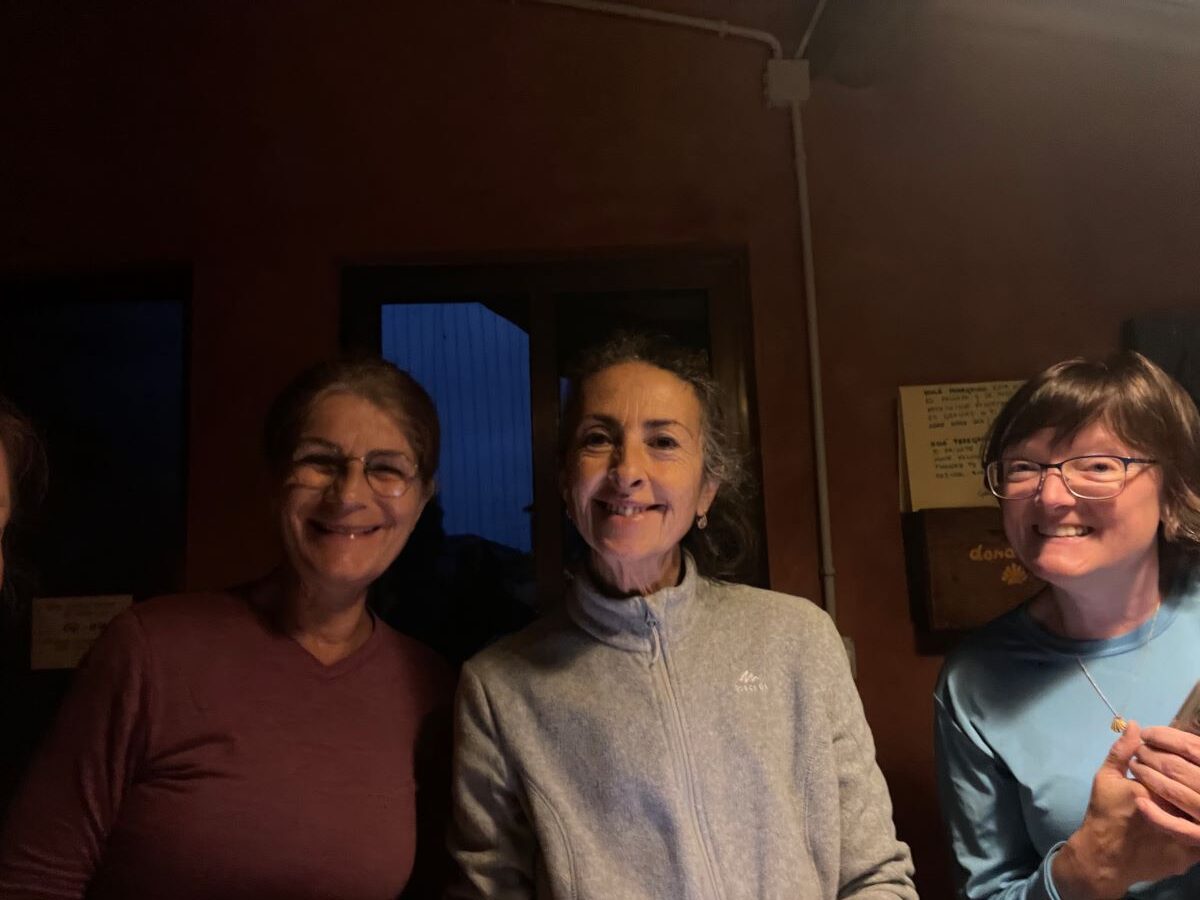
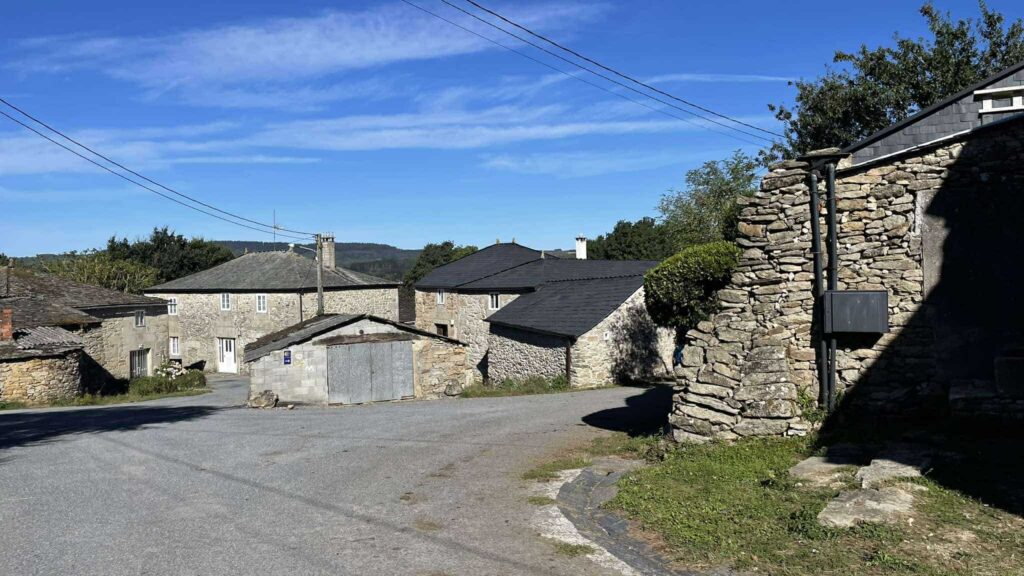
Borres is a tiny village with an albergue and a vending bar, but no shop. Note that the albergue in Borres is very basic and has no kitchen, but you can get food and coffee at the bar.
But we stayed 1 km from the municipal—in the donativo albergue Albergue de Donativo en El Espín. The owner—Italian Silvia—created a great atmosphere for pilgrims. She saved Ksyusha from stomach issues—offered mint tea, a glass of soda water, and helped stopped the poisoning.
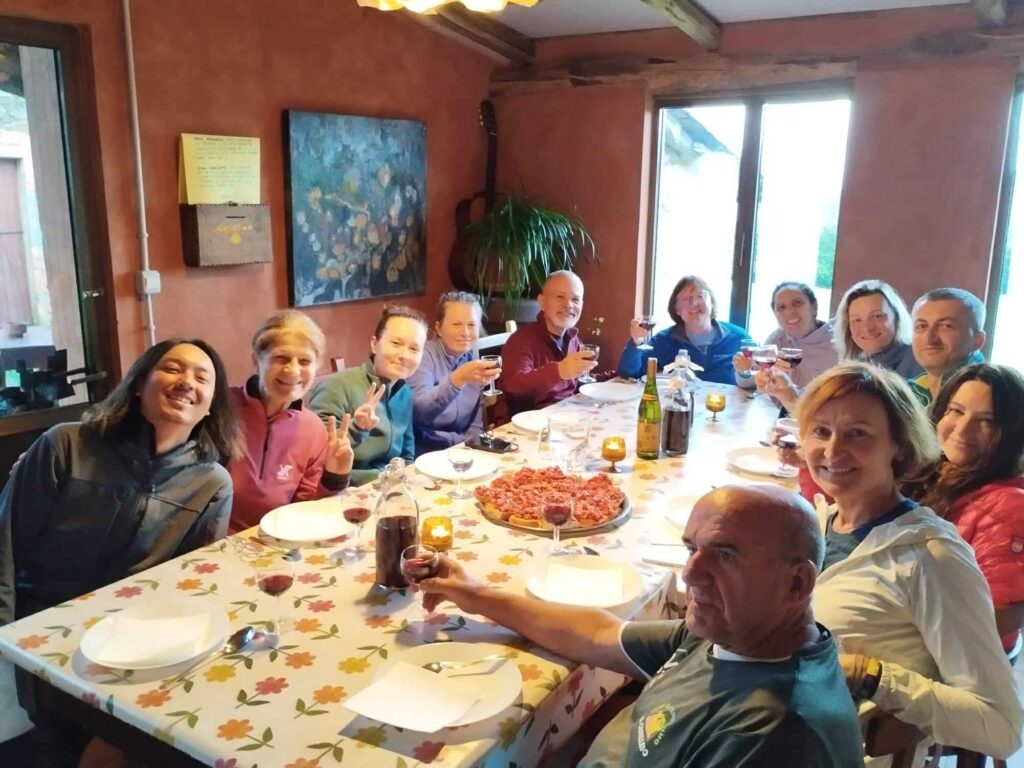
About an hour after us, other pilgrims started to arrive, with whom we would spend the night, have a communal dinner, and become good friends in the following days. It was a wonderful evening of conversation, and the owner Silvia created the atmosphere—she made a wonderful dinner: bruschetta with tomatoes, pasta with zucchini and cheese, delicious ice cream, and wine that loosened everyone’s tongues.
Beth, her husband Jose from the USA, Anya and Andrzej from Poland, two friends—Kasia and Anetta—also from Poland, Maria from Brazil, Ulrike from Berlin, Chu from Taiwan, and Antonio—the Spaniard, who mostly kept quiet, but then cried from emotion in such a warm, fun company.
Accommodation in Borres and Pola de Allande
To sum up about lodging there:
- Municipal albergue in Borres – one of the worst on this route, very uncomfortable, no kitchen, not even a kettle or microwave, bunk beds (there’s even a triple-level one). Bring food with you, planning for dinner and the next day on Ruta Hospitales.
- Municipal albergue de Pola de Allande – great place to overnight on the way; five minutes’ walk to the town, where there are several ATMs, supermarkets, and laundries, plus good spacious showers and separate toilets, a large dining area, and sofas for relaxing.
- Donativo Polagrino – Incredible hostel in Pola de Allande. The atmosphere and hospitality they offer pilgrims are amazing. They offer a bed with sheets, dinner, and breakfast.
- Hotel Nueva Allandesa – private hotel in Pola de Allande with clean double rooms in a great spot on Camino Primitivo.
Day 5: Borres – Berducedo
24 km: via Ruta Hospitales
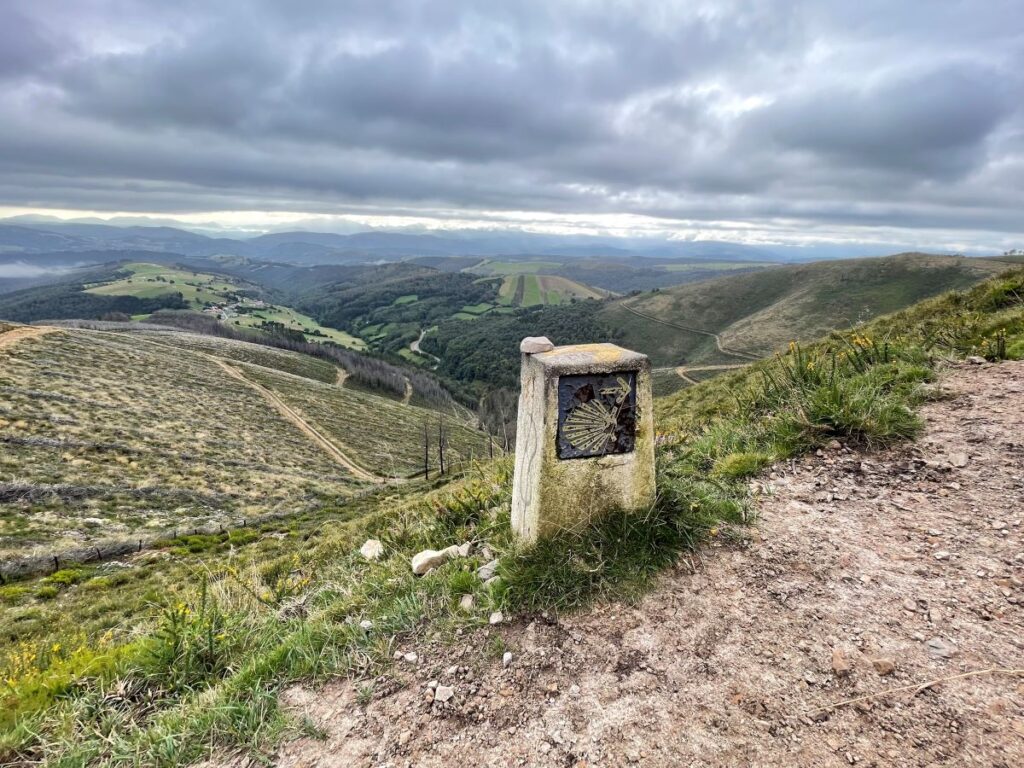
And so this day came—the reason we went to Camino Primitivo. Namely, to hike through the mountains on the world-famous Hospitales Trail, or Ruta Hospitales.
Today was supposed to be one of the most beautiful of the journey. And at first it was—sun, mountains, wonderful mists we climbed above. The first three hours of ascent were like that—we cheerfully hiked upward and it even got hot due to the steep climb. We could already see ourselves on the mountain ridge with endless mountain views all around.
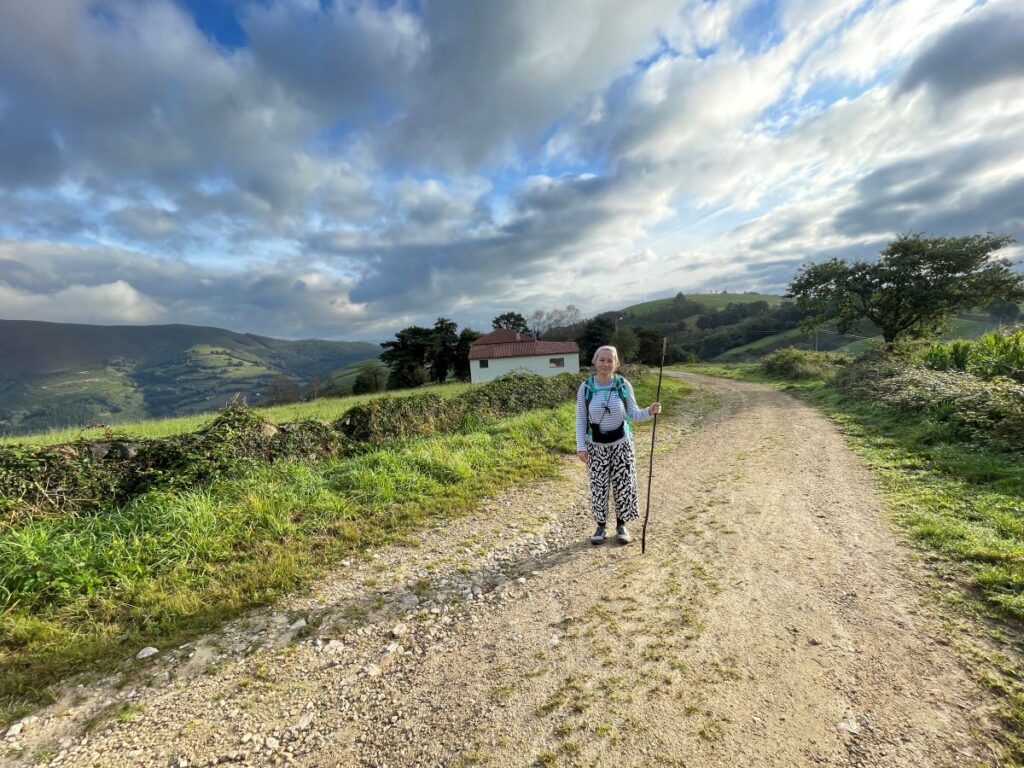
But no—that was only the beginning of a 24-km walk in the mountains. Somewhere near the ruins of old shelters, we entered a cloud. And didn’t leave it until nearly Berducedo. So, we didn’t see much around, but there was still a lot of beauty. There were cows and horses that live on the mountain pastures and get their own food and water in little mountain lakes.
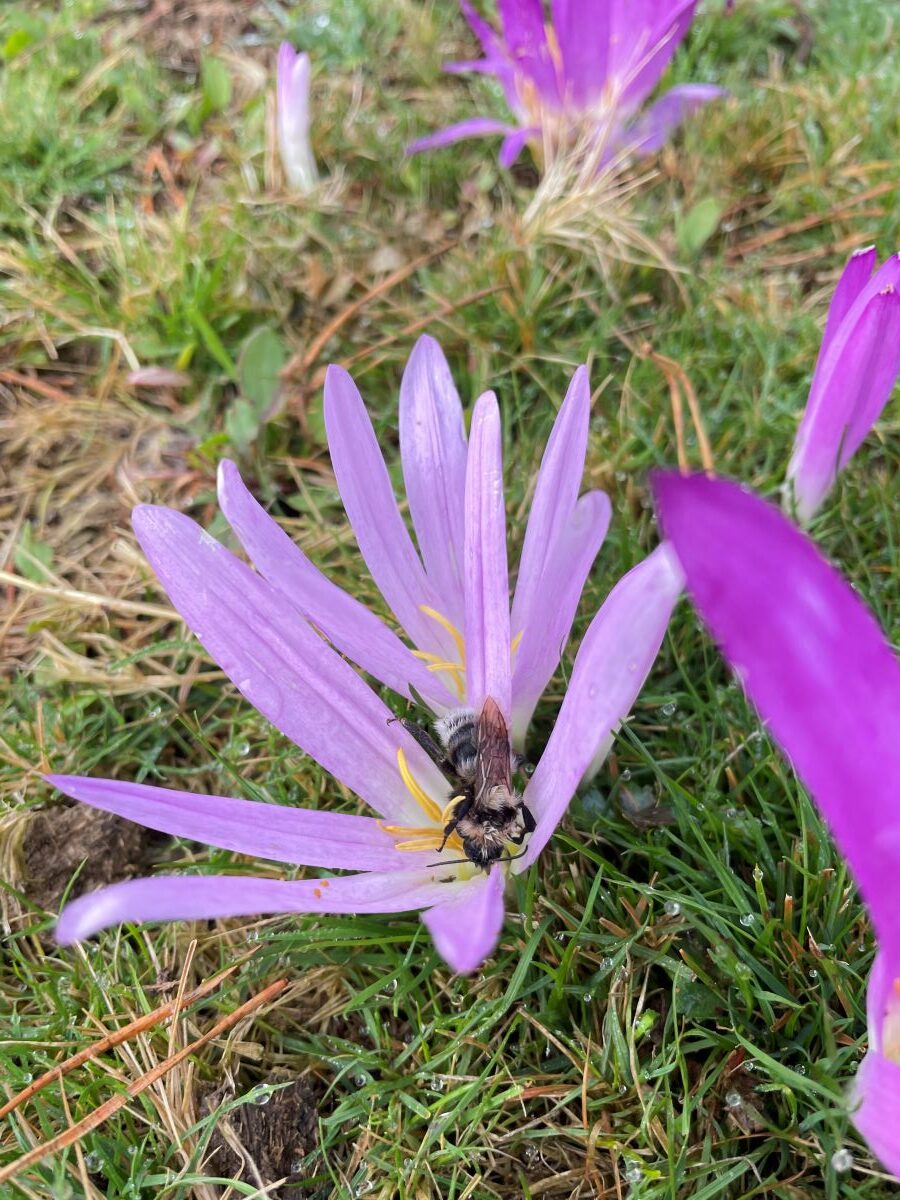
We saw giant autumn crocuses—the hillsides were covered with them along with cow dung.
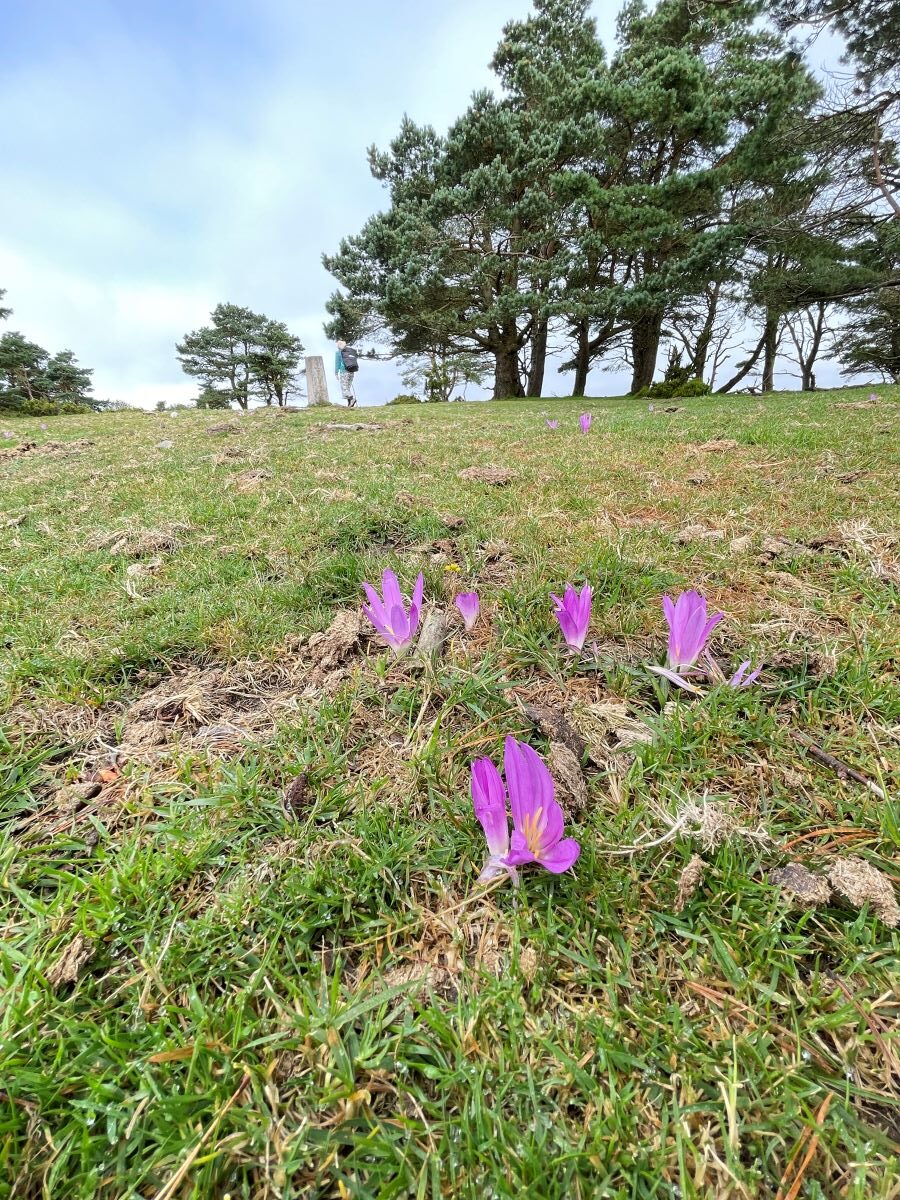
We walked along trails where pilgrims had traveled hundreds of years ago, hiding in their cloaks from cold and rain. And we felt a bit like wanderers ourselves. We descended from the mountains crouched down because the loose stones didn’t allow us to set our feet securely on the trail.
8 hours without a break, because there was nowhere to sit and everything was wet. We snacked on the go with pears and Snickers, drank water as we walked, and didn’t sit down even once. And we had not booked accommodation—we really hoped to be among the first to arrive and catch a place in the municipal albergue, which was highly praised in all the reviews. But no! Somehow we arrived second-to-last.
I oriented myself toward the pilgrims who were going to Berducedo from Borres. I completely forgot about the majority who were not coming via Ruta Hospitales—they arrived from Pola first and took up almost all the places in almost all the albergues in Berducedo. So my advice—in high season, book your accommodation in advance!
Technical information about Ruta Hospitales
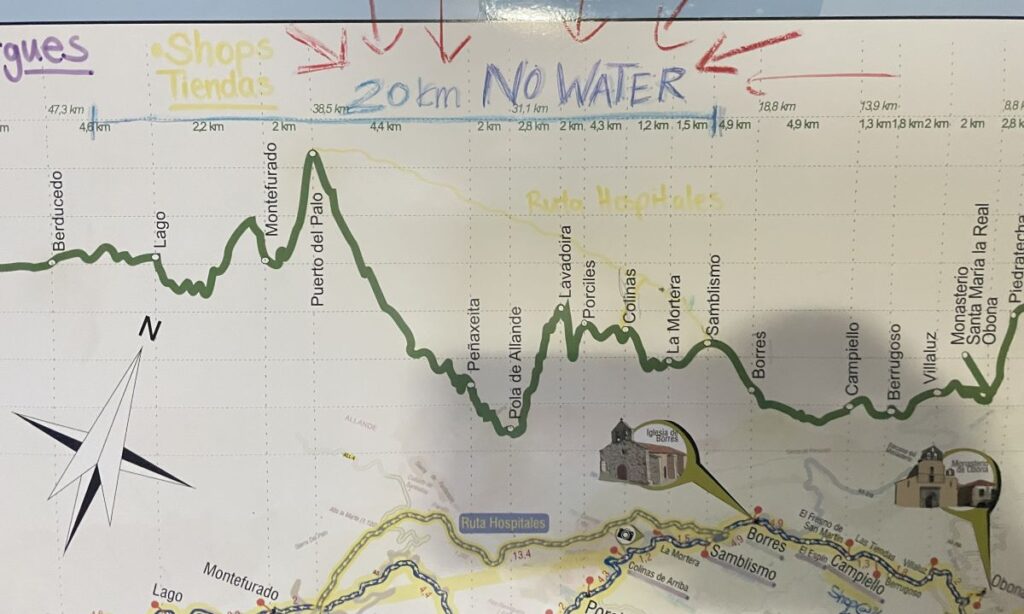
This stage can be done in one of two ways—either the traditional way, with intermediary villages and a chance to overnight, or via Ruta Hospitales along the mountain ridge, gaining about 600 m up to 1200 m in elevation and descending about 300 m. Absolutely no infrastructure. It is considered technically difficult. Only mountains, cows, and horses. And the ruins of ancient pilgrim shelters from the 13th–15th centuries. It was along this route that pilgrims historically made their way to Santiago de Compostela.
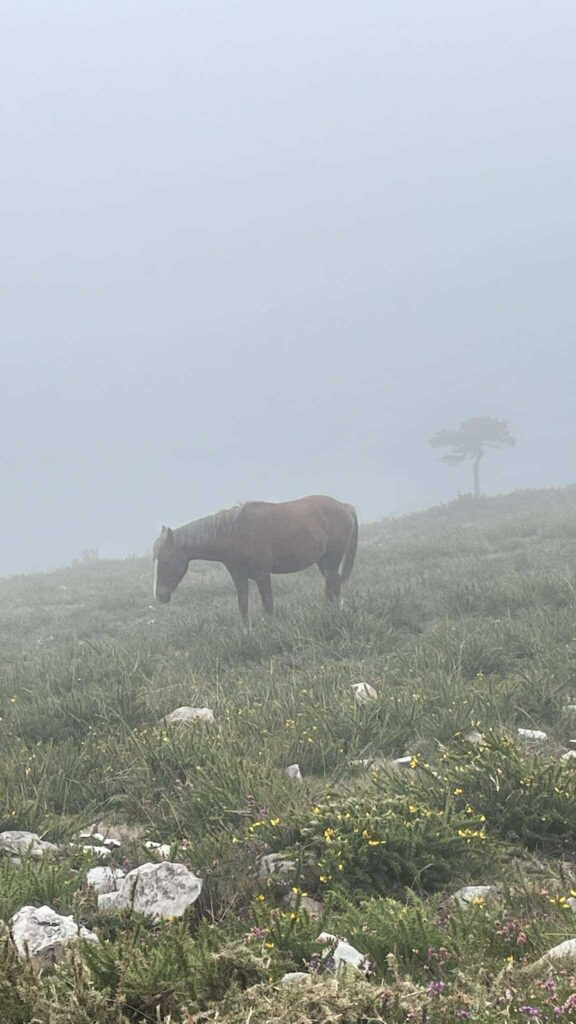
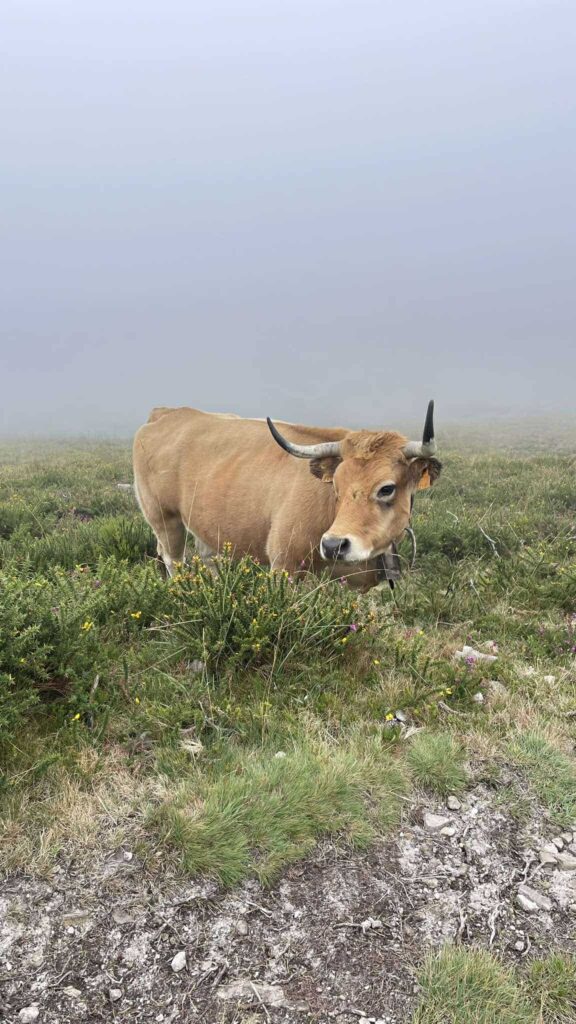
From the start of the day, you begin walking uphill—this is considered the hardest hiking day on the Camino Primitivo. The trail goes through mountains for hours with nowhere to stop for coffee or lunch; the next place is Berducedo, 24 km away. There’s nowhere to fill your water, no food—you need to take everything with you. There’s tiny Montefurado—a miniscule village on the hilltop with old stone houses and walls, only one resident, and many cows. But the locals don’t accept pilgrims—there is no water here.
In fact, Ruta Hospitales is not very hard for those who at least hike mountains once a year. Our Carpathians are just as challenging, if not sometimes harder.
Don’t be afraid of getting lost—waymarking on Ruta Hospitales is very good and frequent. But still use a GPS navigator—download offline maps just in case (we didn’t even use them since the signposts were enough).
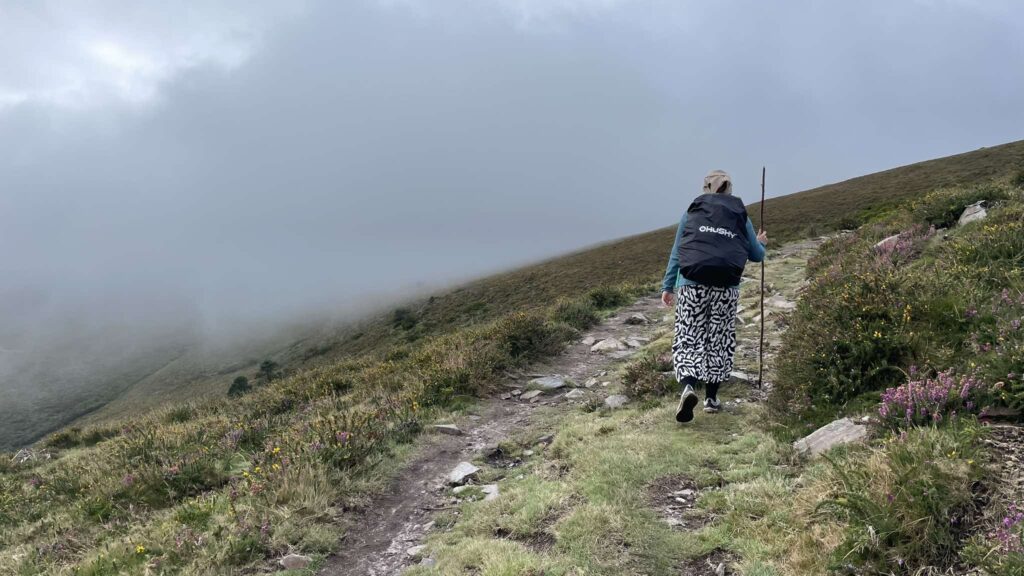
There is no serious danger on this route, the path is not hard, the ascents and descents are manageable. It was just a bit cold, windy, and wet. And, most frustrating—there was nothing to see around.
After that begins a very steep descent along loose stones. Good thing that a friend who walked this route a year ago advised me to find a stick at least somewhere in the forest. We did just that after Tineo—picked up sticks and went with them like real pilgrims in old times.))) Without a stick, descending is pretty difficult—you have to keep your balance all the time because the stones roll under your feet. The descent is steep.
Berducedo
This is a very small village nestled under the mountains after descending from Ruta Hospitales. There are at most 10 houses, some of which are two private and one municipal albergue. There’s also a small shop and a couple of bars that belong to the private albergues. You can cook only in the municipal albergue; there are no kitchens in the private ones. So we didn’t buy food there but just had salad and our remaining food in the bar at the albergue.
So, we descended from the mountains hoping to get into the municipal, since everyone praised it. But just as we were approaching, a group of four young pilgrims passed us and took the last available beds. I cursed, and we went off to search for accommodation. In the next albergue there was only one bed left. Further on there was another albergue, and our hope kept diminishing—to end up without a place to stay or to go farther after such a walk was a bad idea.
Fortunately, in the last private albergue there were still a few unreserved beds, and we were able to rest. After such a day, we decided never to rely on municipal again and to book accommodation in advance. Let it be nearly twice the price, but most important is not to be left out on the street after a long day on your feet. Maybe some people like that, but I pass! I need a shower and a bed to sleep so that in the morning I have energy to walk further.
There’s nothing to do or see in Berducedo—and after Hospitales, there’s no strength left anyway. We just went to bed so we could rest for the next day, which turned out to be far more difficult for me.
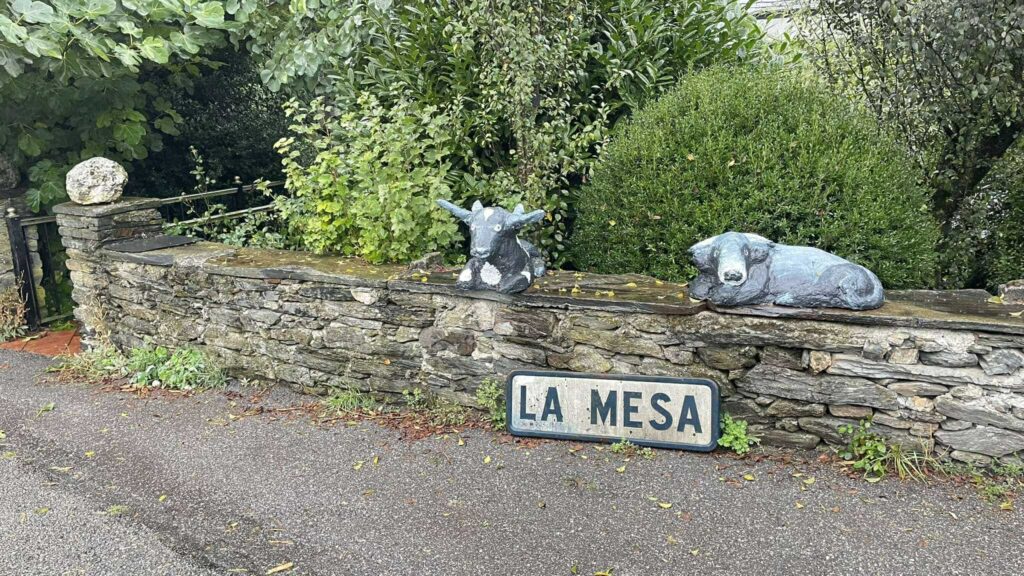
Accommodation in Berducedo – La Mesa
- Albergue de Peregrinos de Berducedo – Municipal albergue in Berducedo – 21 beds, nice kitchen where you can cook, clean beds and showers with toilets. This is one of the best municipals on Camino Primitivo. Unfortunately, we didn’t get a bed. Price 9 euros.
- Albergue Bar Restaurante Camino Primitivo – this is where we stayed, booking possible by phone or on WhatsApp +34985906670 – price 15 euros per bed.
- Casa Uría – Cam. Santiago – these are apartments for those who want to sleep separately from other pilgrims.
- Albergue Miguelin – Nice hostel, very tidy and clean, and spacious rooms. The dorm is for 20 people. The food they serve—pilgrim menu for 15 euros. We had breakfast here in the morning—delicious breakfasts with homemade pastries for 6 euros.
- Municipal albergue in La Mesa – it doesn’t have very good reviews, so consider it as a last resort if other places are full.
Day 6: Berducedo – Grandas de Salime
22 km: La Mesa – Salime Dam – Grandas de Salime
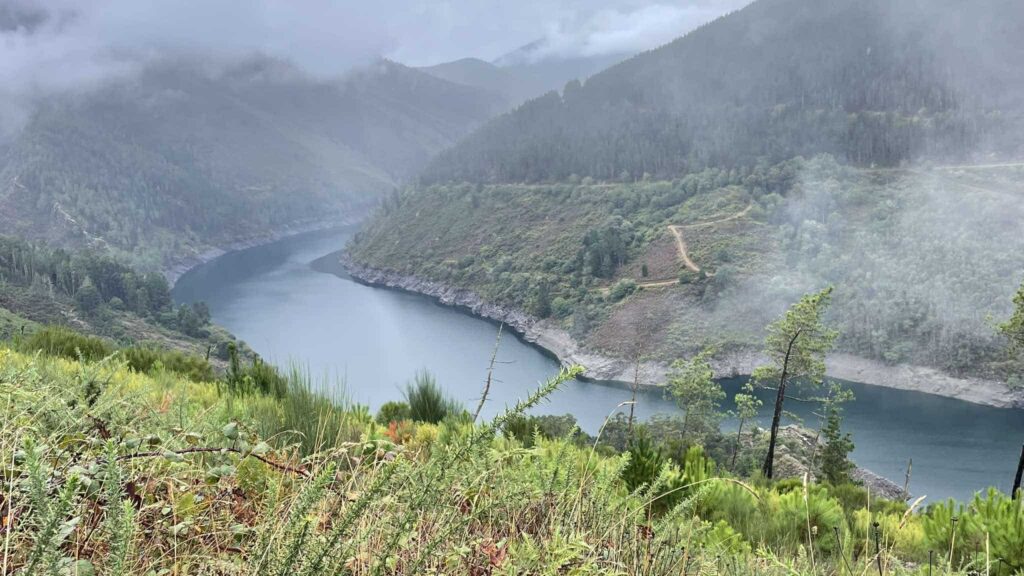
I thought yesterday was the hard day—but no, the hardest day on Camino Primitivo was today for me. Why? Because it was the only day when we walked in rain and raincoats, when we had to go downhill almost the whole half day and then ascend again. And after a mountain traverse the day before, when fatigue had accumulated, it was really a challenge.
The morning started with a light, unpleasant rain. Another unpleasant thing was that in the albergue where we stayed, it was required to leave shoes in metal lockers outside. So we arrived yesterday in wet sneakers, which didn’t dry at all—in fact, they got even colder and wetter. Such rules are common in most albergues on the Primitivo—it’s to prevent dirt inside. But since this route is so damp, pilgrims suffer from wet shoes.
Due to fatigue, wet shoes, and constant downhill walking, I developed several large blisters that day. And my big toenails turned blue from the descent.
Features of the route on the Berducedo – La Mesa stage
The first part from Berducedo to La Mesa is a small pass of about 6 km, after which a warm albergue with a wonderful café and hot breakfast awaits you.
After that began an endless descent to the reservoir—in the rain, on stones, pebbles, mud, sand, clay, asphalt. And all inside the clouds—we saw nothing around us.
Yesterday, Julia (the girl from Poland), who had lost her father’s shirt along the way, wrote to us. She very much asked us to pick it up if we saw it. And we did—we saw a wet, dirty shirt lying next to the path, and it was very heavy. But we promised, so we put it in our backpack.
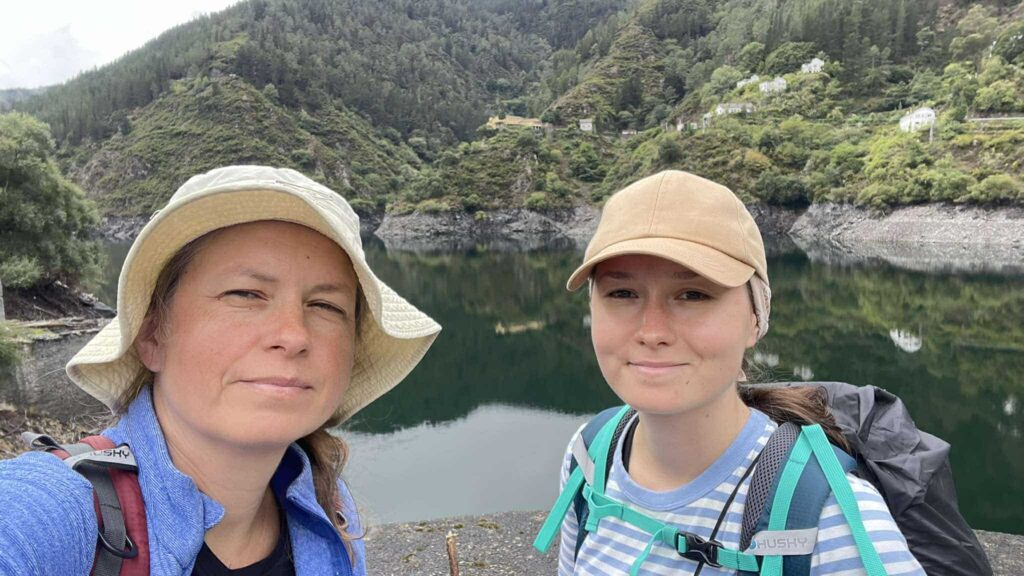
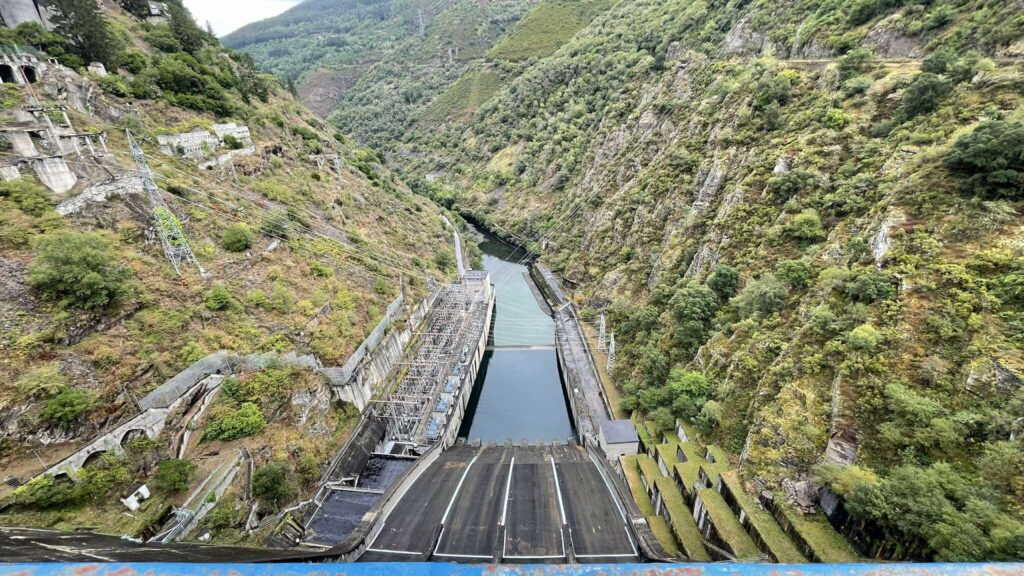
After a boring, difficult descent, we finally saw the reservoir and the huge Embalse de Salime dam. This structure, built in the 1950s, was at that time the second largest hydroelectric dam in Europe. A serious and powerful facility that, even after 80 years, is impressive.
After that, the path was on asphalt and gradually went uphill. It should have been much easier than going downhill. But my back began to hurt very badly. Every 10–15 minutes I had to stop for a rest because of the unbearable pain. In short, I’ll remember this day for a long time—even with a light backpack, I was very tired.
By the dam there is a restaurant where most pilgrims stopped for lunch and a rest. But we were so tired and wanted a shower and to lie in bed so much that we didn’t stop and walked on.
The distance is not great, but the elevation profile is challenging—a steep 900 m descent followed by a 350 m climb really takes its toll—your back and legs need a break.
Grandas de Salime
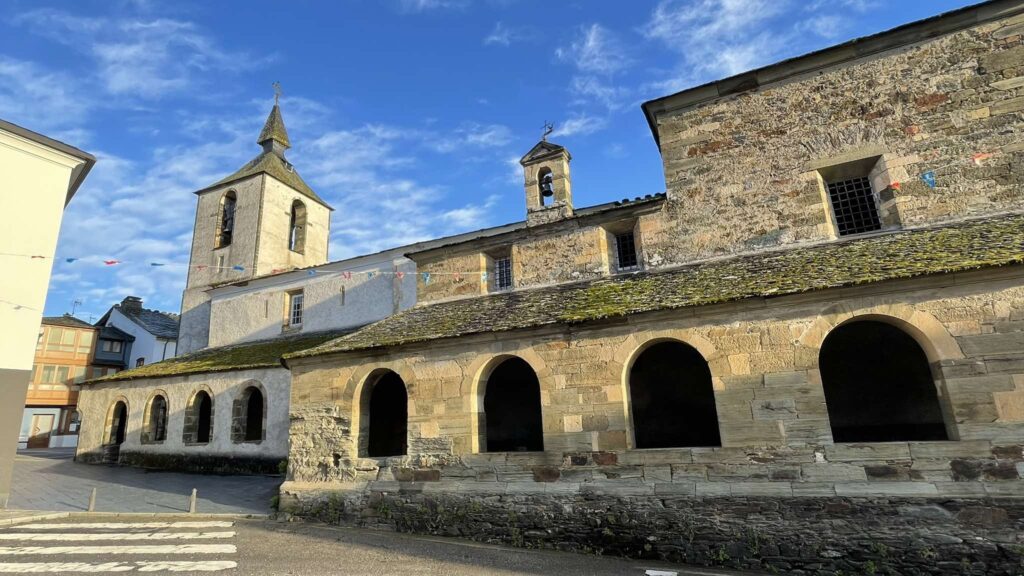
A lovely town—we were very glad we decided to stay at the start of the town—in the wonderful Albergue Porta de Grandas. There are cafés and restaurants in the town, but the albergue had a kitchen with everything needed, so we bought food in the shop and cooked our own dinner.
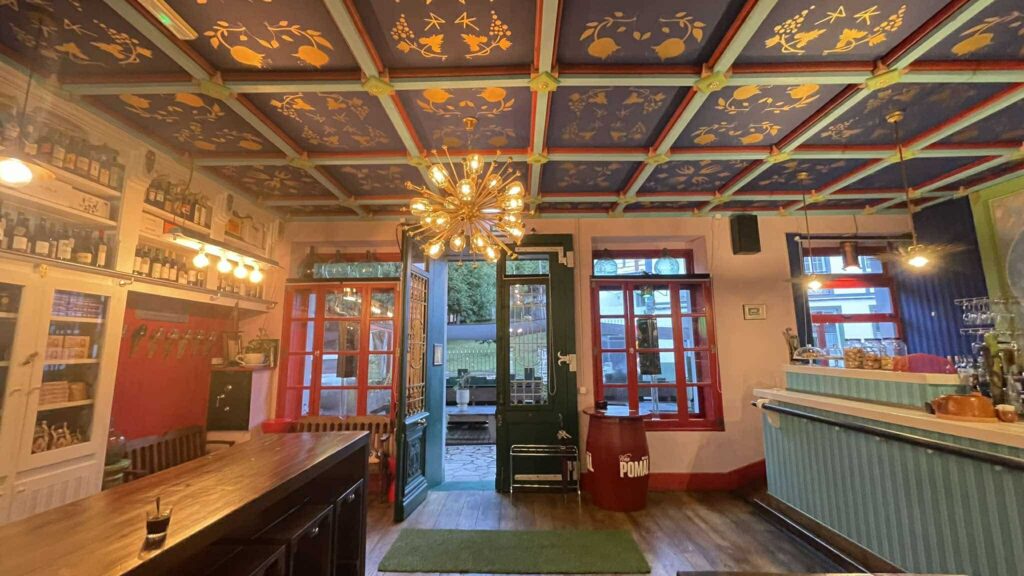
There is also the Museum of Anthropology in Grandas de Salime—entry is 1.5 euros. And simply an incredible bar, Bar La Parrilla. The design is amazing for such a small town—a former shop converted into a bar and eco-grocery store. The coffee is very tasty—we had it there the next morning accompanied by classical music. Impressive!
Accommodation in Grandas de Salime
There are albergues here, one municipal and one private, and several pensions:
- Albergue Porta de Grandas – private albergue (15 euros) with all amenities: kitchen, lots of different utensils, rooms on two floors with toilets and showers—there was enough for everyone. You can wash and dry clothes (5 euros per option). Clean towels, blankets, and sheets; you can sleep without a sleeping bag.
- Albergue Casa Sánchez – a great place with a fully equipped kitchen. Only thing—there aren’t that many showers or toilets in the albergue.
- Albergue Municipal El Salvador – a good hostel with little space between the bunk beds, and the bathroom fills with a lot of water after you finish bathing. But this is not an obstacle for overnight, and the administrator gives you plenty of info about places for good food.
Day 7: Grandas de Salime – A Fonsagrada
28 km: Grandas de Salime – Chereixeira – Castro – Venta del Acebo – Barbeitos – A Fonsagrada
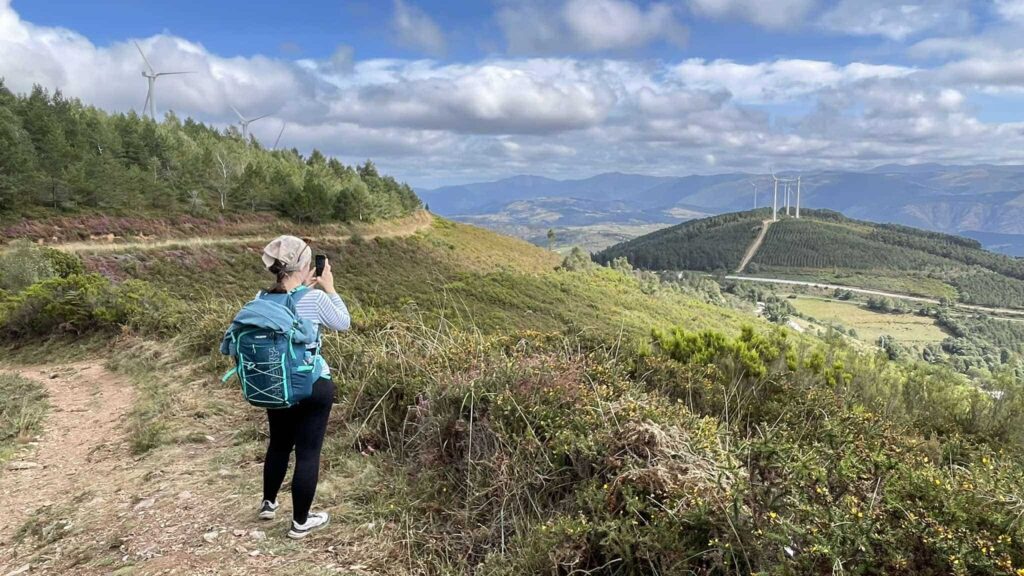
In the morning the sun came out, which meant that despite huge, painful blisters, a good day awaited us!
We had coffee in a wonderful bar and headed to the next town, where we again booked accommodation in advance. We had no hope of catching a spot in the municipal—sore feet, unclear situation with my back—this clearly did not mean we’d be walking fast.
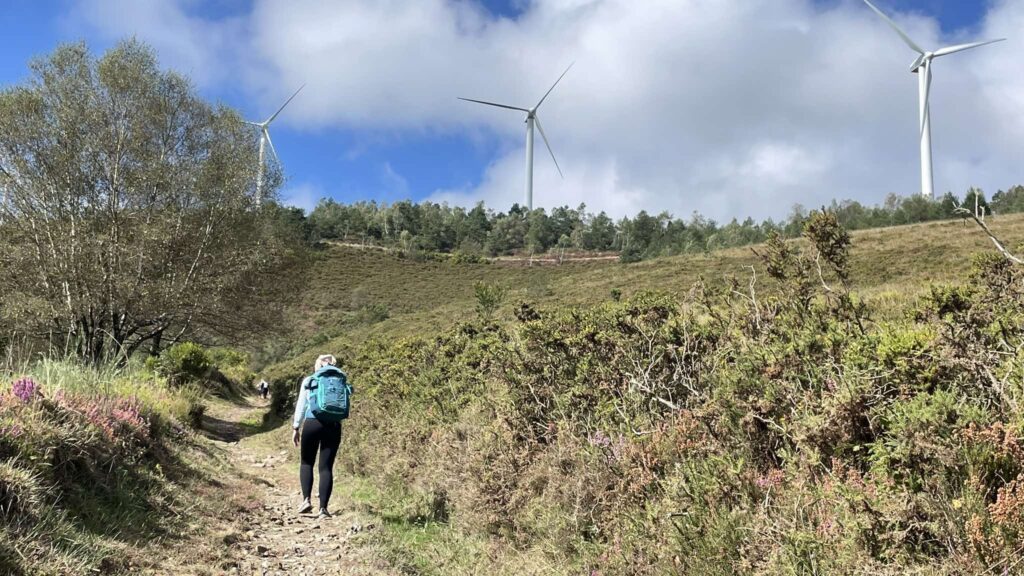
But it turned out to be a very nice walking day with some uphill climbs, woodland walks, and a few muddy roads. The day passed quickly for us—other than the blisters, nothing hurt, and the sun added joy to our hike in the Asturian hills.
We got very close to wind turbines, ate blackberries in the forest, stopped for coffee in several cafés—a great day. One bar was at the border between Asturias and Galicia—we celebrated this with lemon beer, marking the transition to a new province. Hello, dear Galicia!
Note: a very steep climb awaits you right at the end into A Fonsagrada. All our pilgrim friends were shocked by this climb—we were too.
Fonsagrada
A nice and fairly large town with several albergues, hostels, and pensions. There are also buses here—if you need to take a break and then catch up later, you can go to neighboring villages from here. There are also supermarkets, pharmacies, shops, etc. In short, this is real civilization, which we reached in a week.
Accommodation in Fonsagrada
- Albergue Casa Cuartel – we stayed in this albergue in a shared room for 10 people. It’s a bit cramped, but very clean. There’s a good supermarket opposite; the albergue has a well-equipped kitchen—we cooked dinner together with our pilgrim friends. Price per bed 15 euros.
- Pension Casa Manolo – good, inexpensive single or double rooms for those tired of dormitories and hostels.
- Casa da Lembranza – 1.5 km past Fonsagrada, on the Camino.
Day 8: Fonsagrada – O Cadavo Baleira – Vilar de Cas
15 km: Fonsagrada – O Cadavo – Vilabade – Castroverde – Vilar de Cas
In the morning I woke up with swollen feet and blisters—barely able to walk. It was an unpleasant surprise, as I thought the blisters had gotten a bit smaller yesterday. At first, I thought—I’ll just suffer through it and get used to the pain. But on reflection, I decided—if there is a bus in this town, that’s a chance to give my legs a break. I also urgently needed to change my sneakers. Yesterday we walked a lot on asphalt, and my mountain shoes were too stiff for that. Maybe that caused the blisters.
We decided to take a stage by bus—to O Cadavo, and try to buy new sneakers there. Google Maps showed there was a shoe store in the town. Then walk another 15 km—the half of what was planned for the next day. That way, the legs would rest and perhaps I’d find more comfortable shoes.
At 8 a.m. we got on the bus and drove winding routes among the hills and mist—it was very beautiful and strange to see the route from a bus window. I really regret not being able to walk this section—it’s very beautiful. There is a long descent and lots of rather steep climbs. With sore feet, this would have been very difficult.
O Cadavo
A small and rather depressing town with three albergues—one municipal and two private. A little away from the albergue, there are a few bars where you can get free tapas with drinks.
The shoe store shown on Google was closed—most likely permanently (of course, no one updated it on the map). We had coffee, ate a croissant, and decided to move on. It was Saturday, and there was hope that the next town, Castroverde, would have more shops and maybe I would find something. I really needed it; I was really limping by this point. And on Sunday, even if I reach Lugo, everything will definitely be closed. On Sundays, almost nothing works in Spanish towns.
Castroverde
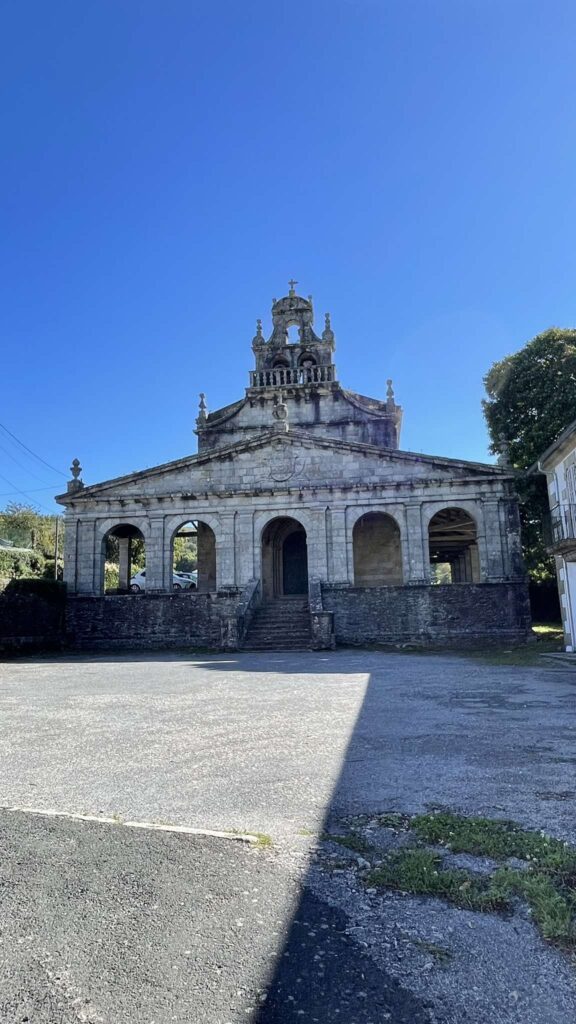
Despite the pain, I really enjoyed this section of the route—it’s cozy and peaceful. We even walked a few extra kilometers by choosing the longer route. After the village of Pradeda, you need to choose one of the ways—a shorter one along the road, or a slightly longer path through the town of Vilabade. If you don’t need to go all 30 km to Lugo that day, I recommend the longer one—there’s a beautiful church and views.
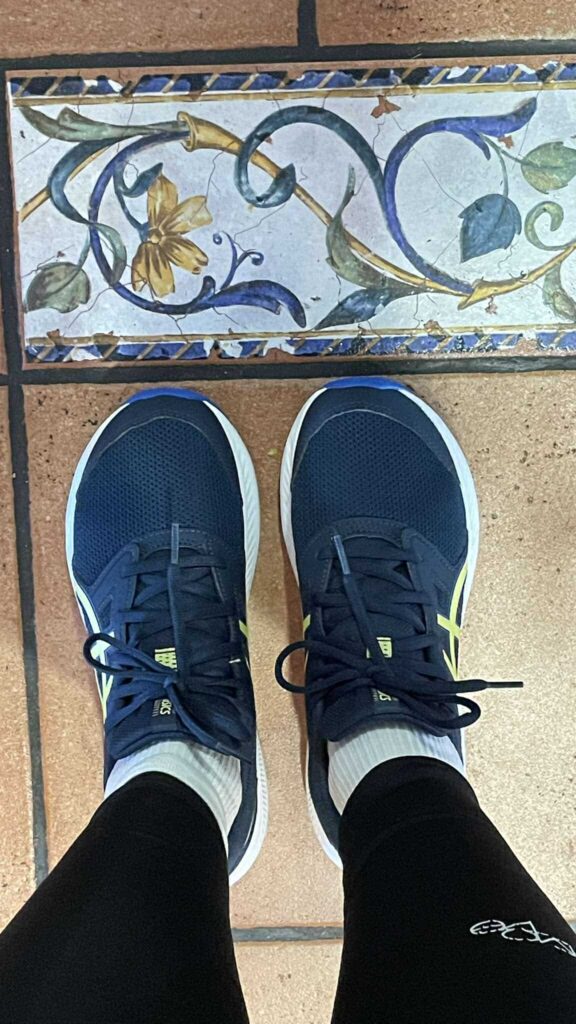
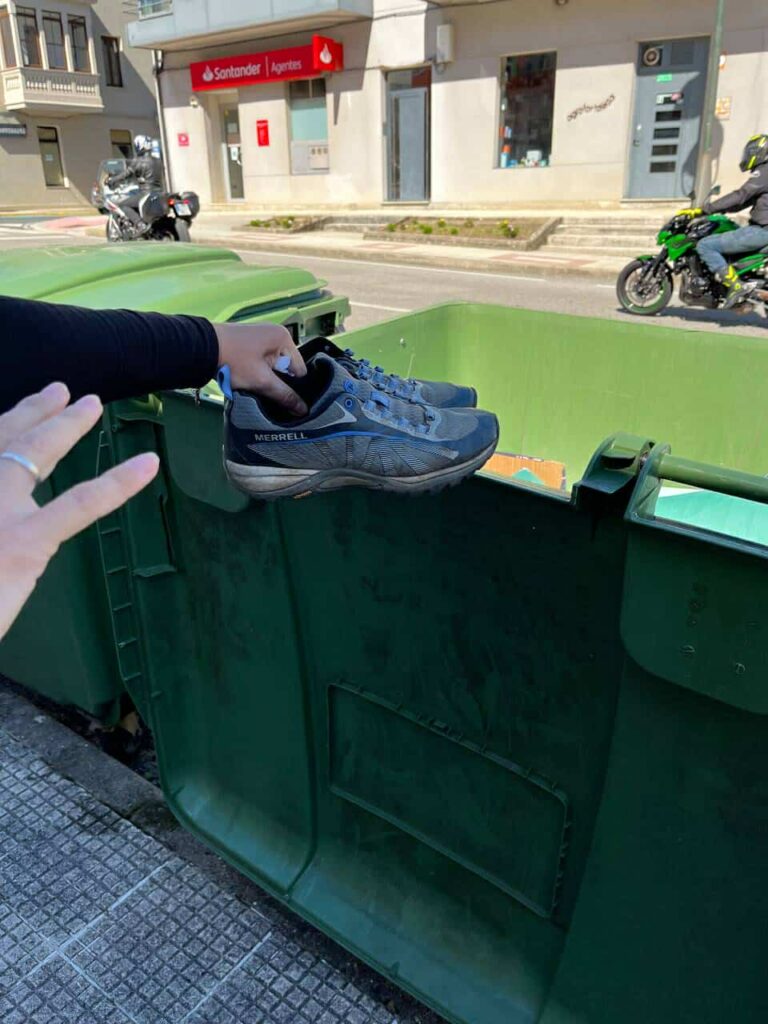
Then we walked another 5 km to Castroverde. It was midday, and—surprise!—all the stores were still open. I found a shop with clothes and shoes. It wasn’t a specialized hiking store, but some items were aimed at pilgrims. And they had sneakers. I was determined to find something, and I did! They were Isics for walking, and I tried several models, but these were the most comfortable. For 60 euros I bought them and never regretted it. My blisters healed very quickly in these new sneakers—all thanks to the thick and soft sole that resisted the hard asphalt.
The old sneakers were already cracked, so I decided it was time to toss them in the bin. Once I bought them in California and hiked Yosemite National Park, walked the Rota Vicentina in Portugal, and the Camino Podolico in Ukraine. They served me well even in the mountains on Camino Primitivo. But now it was time to say goodbye!
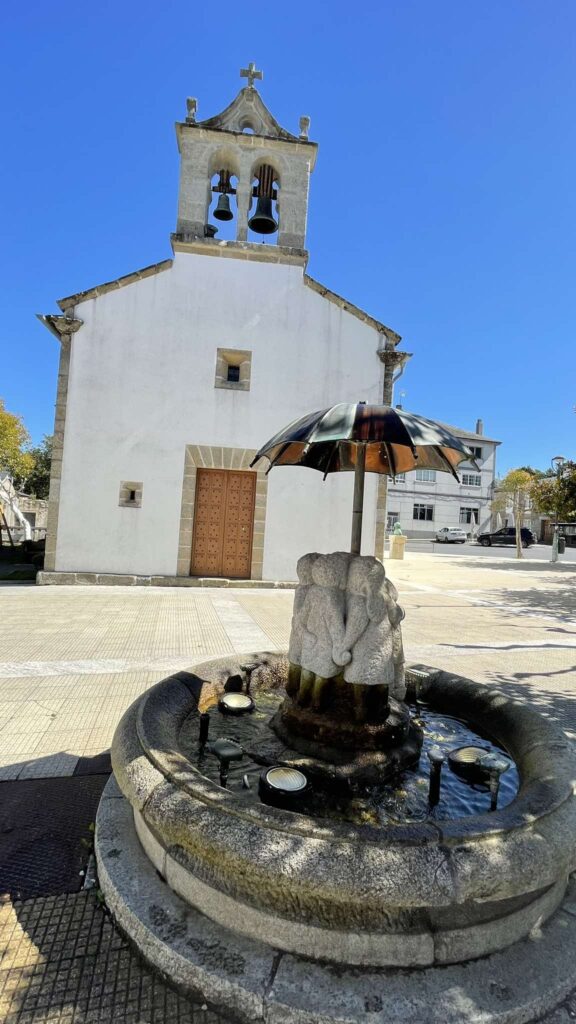
We had lunch in Castroverde, walked past a wonderful umbrella fountain, and then walked another 7 km from Castroverde toward Lugo because we really wanted to stay in one of the most beautiful albergues on this route.
Accommodation in Castroverde and O Cádavo
- Municipal pilgrim albergue O Cádavo (Baleira) – a simple albergue at the entrance to the town, there is a kitchen but little tableware. Price is 10 euros per bed.
- Albergue Pension Porta Santa – a private albergue in the center on O Cádavo square, close to shops and cafes, more pleasant than the municipal one. Price 15 Euros.
- In Castroverde there is a municipal albergue for 10 Euros, overall a very pleasant town for an overnight stay.
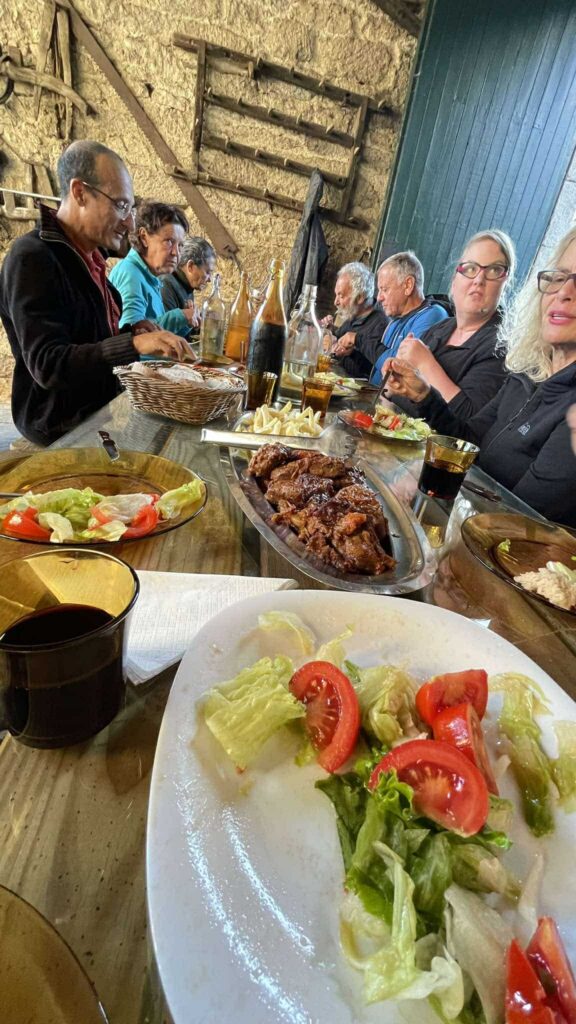
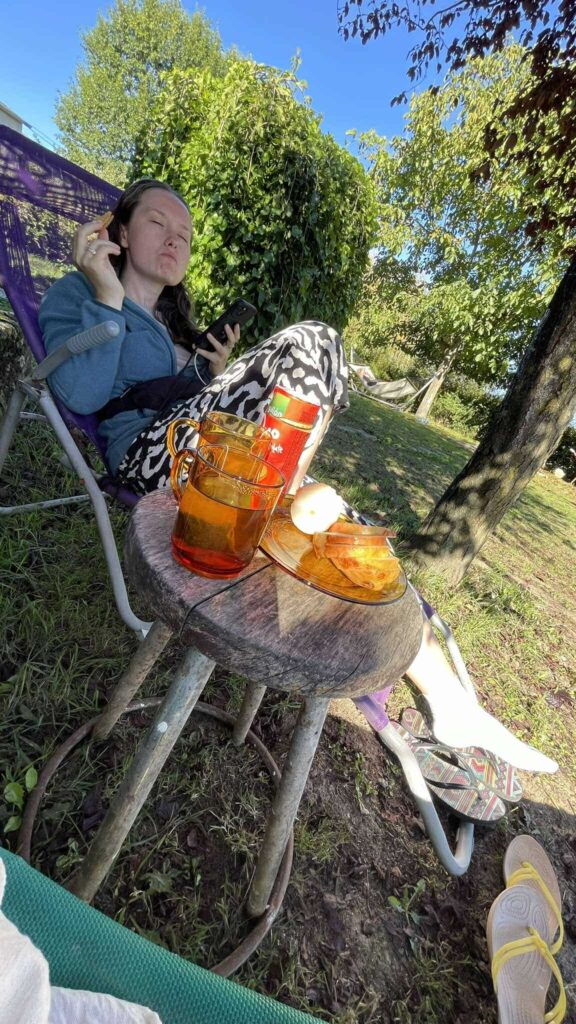
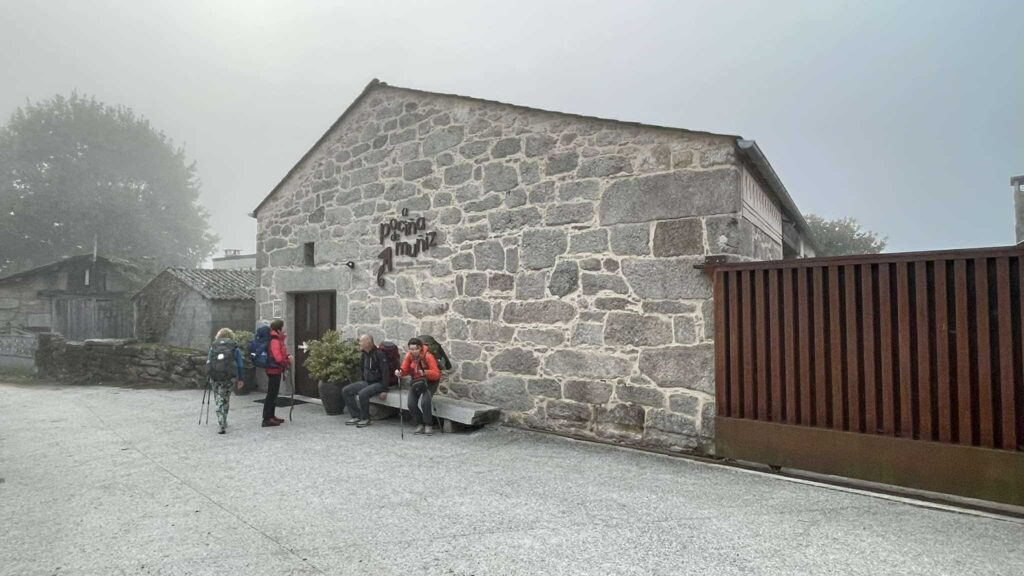
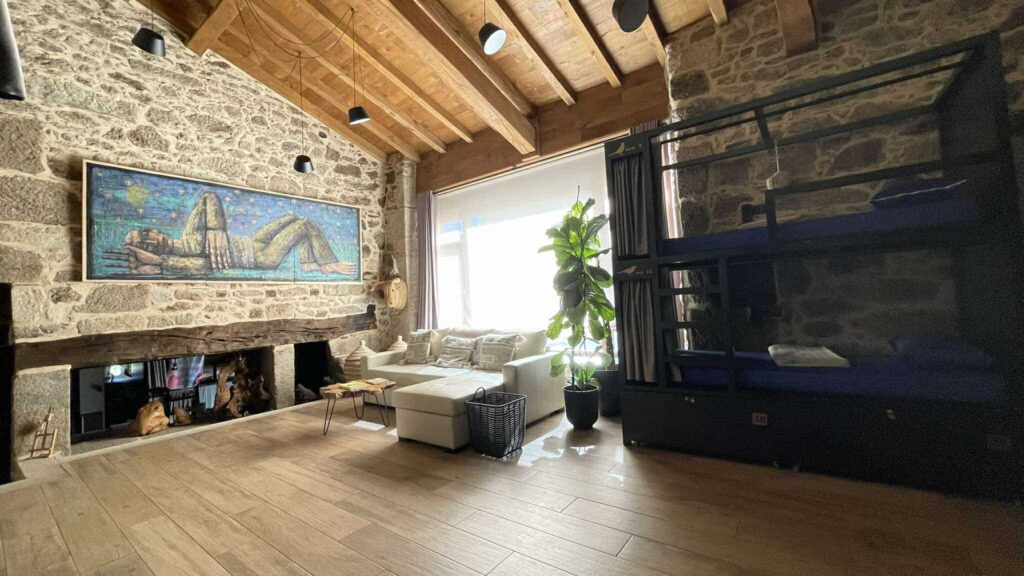
Hostel A Pociña de Muñiz – we stayed at this luxurious hostel, which was recommended to me by a friend. It is definitely the best of the many I’ve seen in eight years of Camino. This is the place to end your stage and enjoy everything they offer: a wonderful house, super clean interiors decorated with incredible design, and very comfortable beds with sheets where you rest as if at home. We also really liked the food – we paid for a communal dinner. Everything homemade, very generous portions, and also made from local products. A special mention to the family who runs the hostel. They are very welcoming, help with everything you need, and you can tell they like the Camino and pilgrims. You can feel it. Price 20 euros per bed.
Day 9: Vilar de Cas – Lugo
15 km: Vilar de Cas – Gondar – Castelo – Lugo
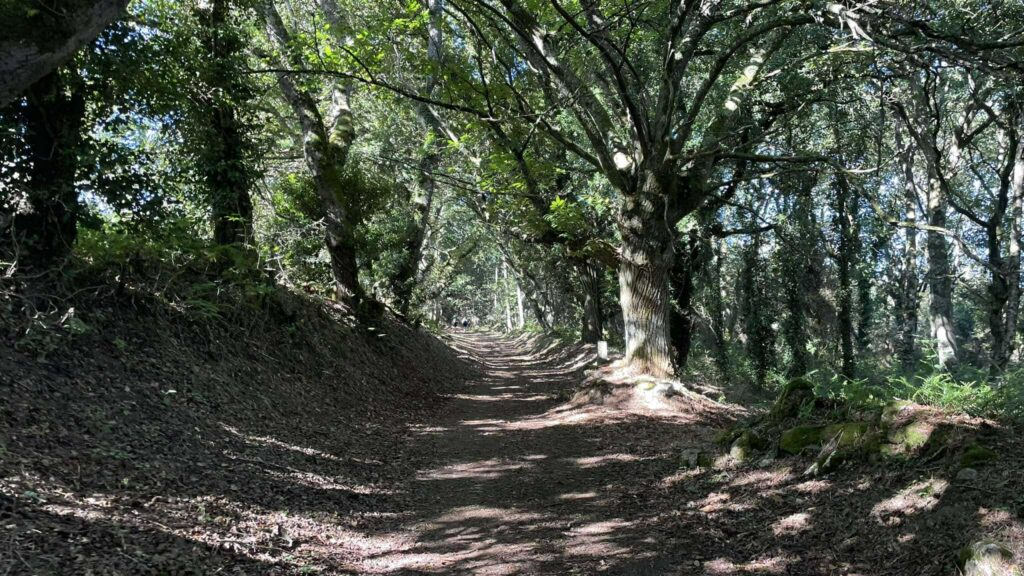
I highly recommend starting the day early if you are leaving from O Cádavo or Castroverde – to have more time in Lugo, it is a beautiful city with plenty to see.
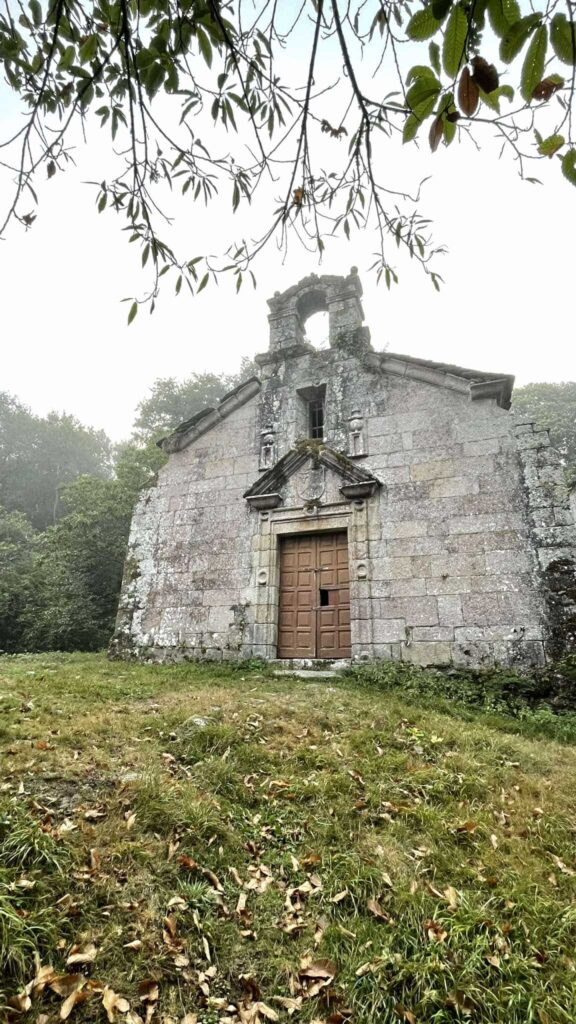
This stretch is peaceful and leads almost the entire way through rural areas, without major roads. Only on the approach to Lugo will you encounter cars and a couple of kilometers along them here and there. Otherwise – a seamless pastoral, ancient chapels on the alternative path after Vilar de Cas (I highly recommend taking it – wonderful).
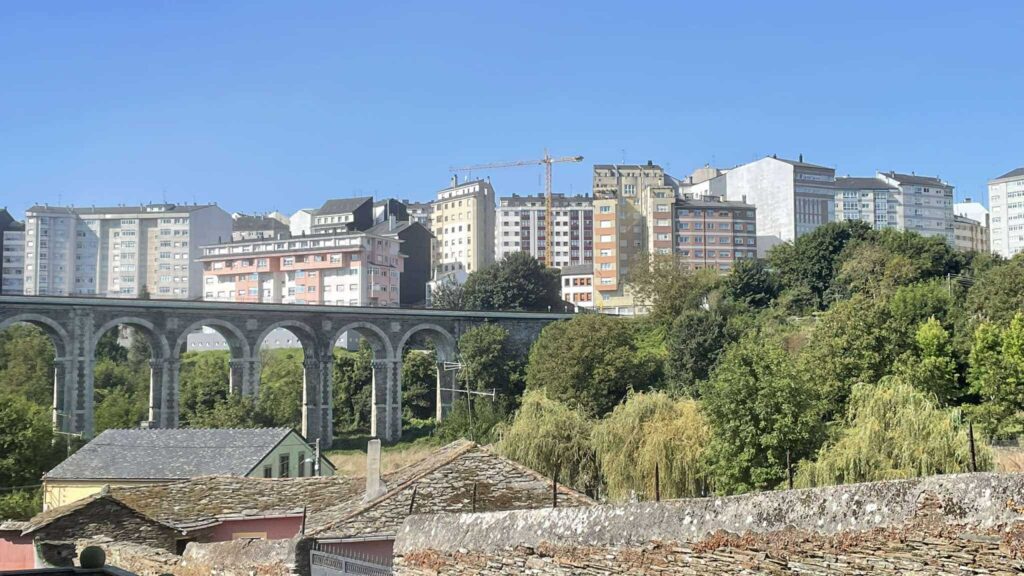
On the approach to Lugo, you see an ancient arched bridge over the river. Along the way you’ll find not only yellow arrows but also information boards about historical sites in Lugo – cool and interesting. There is also a huge metal stele – 100 KM, by which everyone takes pictures. Because Lugo is located 100 km from Santiago de Compostela and pilgrims who do not want to walk the whole path can start from here to receive the certificate – the Compostela.
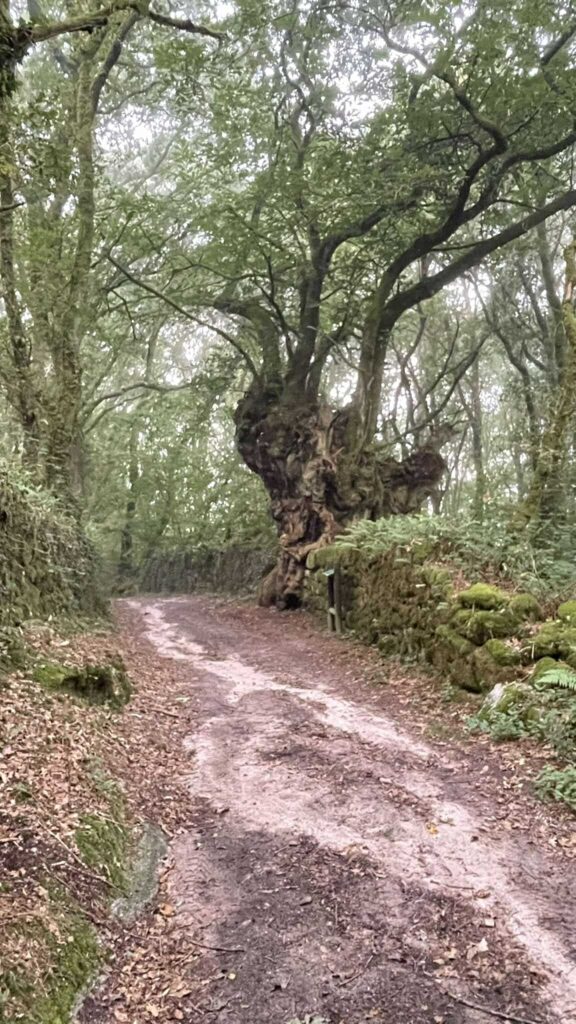
We got up early, had breakfast in the hostel at 7 am and were in Lugo by about 12. The municipal albergue in Lugo has only 40 places, so if you arrive late, you may not find a spot. But there are many private albergues and hostels. We waited for the albergue to open and got beds – it turned out that many pilgrims did not go to the municipal because they wanted to stay in Lugo for two days. This is a good idea for rest and for enjoying this wonderful city. So you need to stay somewhere in a hotel or private hostel – this way you can spend two nights, but in the municipal one you are allowed only one.
Lugo
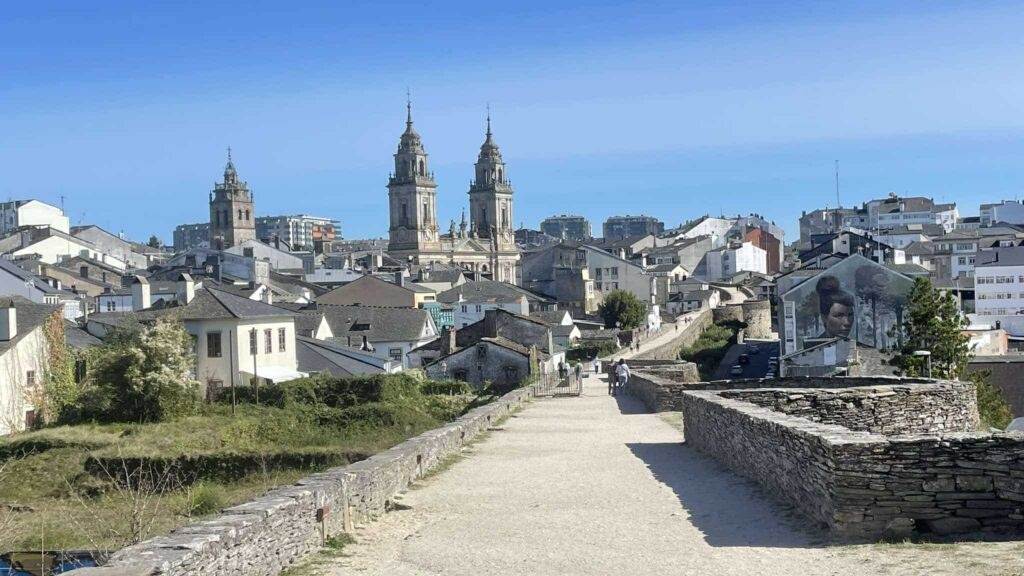
A large city with a beautiful historic center behind old Roman walls; cobblestones, a cathedral, churches, museums, etc. Some of our friends from the Camino, who were too tired to walk around the city, stayed here for two days to have time to see it. Remember, you are not allowed to stay two nights in the municipal albergue, but private albergues won’t mind.
- The historic city of Lugo; it has impressive huge Roman walls, a Gothic cathedral, and cobblestone streets.
- Calle de Los Vinos in Lugo (the street near the cathedral), do not miss it, especially on weekends, there are several bars where if you order drinks, you get free tapas, small beer 1.20 euros, large – 2 euros.
- Wonderful cathedral in Lugo – I recommend going to a mass to see it from the inside for free, and also to get a stamp in the credencial – as a souvenir.
Accommodation in Lugo:
- City municipal Albergue – 3-story building, classic albergue in Galicia. Large clean rooms (women and men separately), there is no kitchen, but that’s not needed – there are many cafes and gastropubs in Lugo that you cannot miss. 10 euros per bed. It’s nice that the albergue is located right in the center of the old town.
- Hostel Cross – a nice hostel in the center, and it’s pleasant that every bed has curtains – you can have some privacy from others.
- Hotel España – Ideal location by the city wall near the cathedral. Very friendly staff. You can use their laundry service. Rooms are simple but comfortable.
- Four Rooms Hostel – Very modern, clean and quiet hostel, comfortable room with a nice personal touch, very friendly and helpful reception. Excellent room with great comfort and space.
Day 10: Lugo – Ferreira
26 km: Lugo – San Lázaro – San Vicenzo do Burgo – San Romao da Retorta – Ferreira
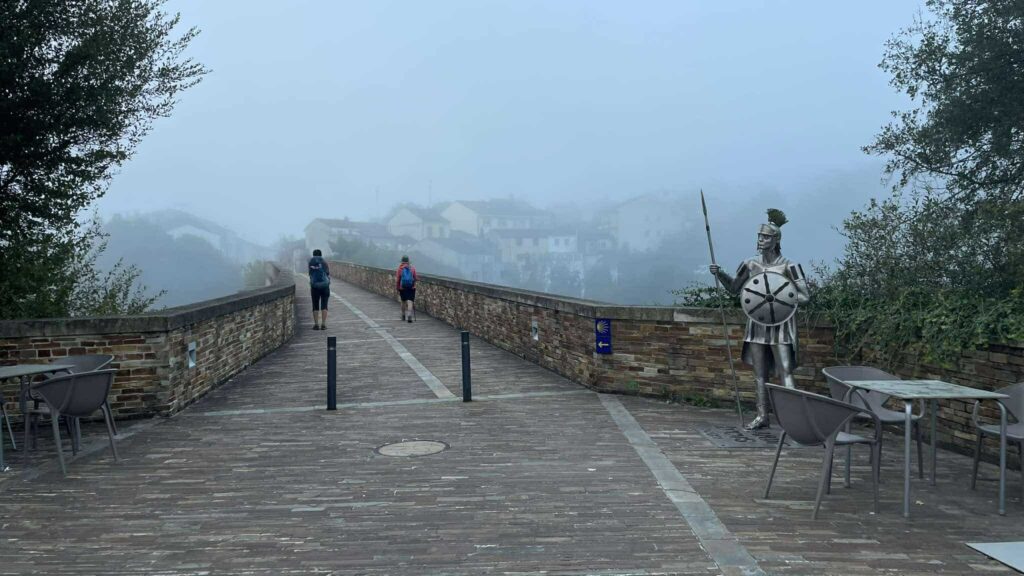
We woke up at seven, left the city at eight after a cup of coffee with churros as a complimentary treat. In general, only in Galicia did I truly feel what free treats with drinks are. In Lugo and in other cities a little farther from Santiago they serve snacks with beer, wine, coffee, etc. The closer you are to the Galician capital, the less chance of getting them.
Third morning in a row with morning fogs – it means it will be hot during the day. And so it was.
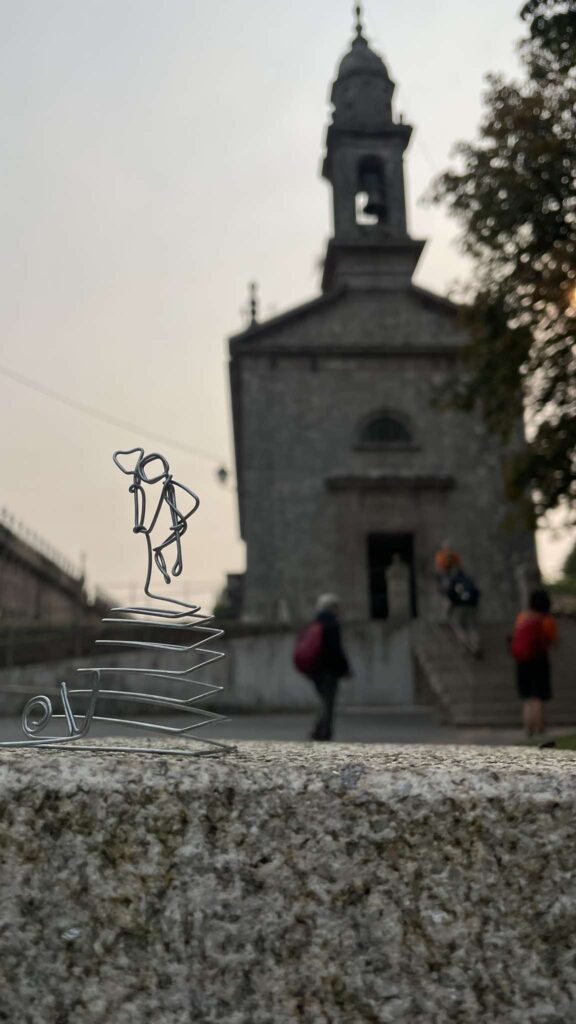
On the road there are a bunch of brand-new, clean pilgrims with small backpacks. These are those who cannot afford to walk long, or just do not want to walk more than 100 km. And after 100 km on the Camino, you get the Compostela. These hundred-kilometer-pilgrims have joined in large numbers those walking the Primitivo, or who turned onto the Primitivo from the Norte.
This is how we met two Ukrainian women – both named Lyudmyla, who have long lived in Rome. They were accompanied by an Italian guide who promised to make real pilgrims out of them. In the half hour that we talked, both Lyudmyla’s gathered all the info they needed about prices, realized they had paid the guide much more. But they were not upset – they stayed in hotels, their suitcases were sent by delivery service, and next time they will go on their own, if they like it.
It would have been an easy day of walking, across gentle hills of Galicia. But I’d like to note – almost no cafes on this part of the route – have some snack and water with you. There is a coffee vending machine somewhere in the middle, and then a cafe in San Romao da Retorta.
It was also hot and by two o’clock we were really burned – unexpectedly warm weather arrived. When going uphill and then downhill, you just want to hide in the shade and not go anywhere. Also – half of the day you’ll have to walk along the road, although it’s not very busy.
Accommodation in Ferreira
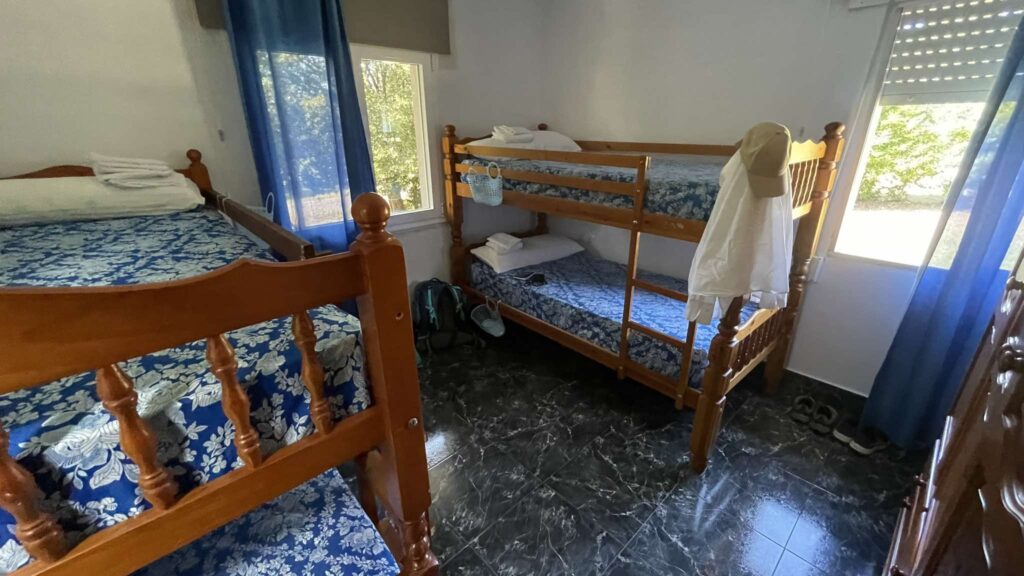
- Albergue Ponte Ferreira – most of our Camino friends went to this albergue. But I carefully read the reviews and did not want to stay there because there is only one toilet and shower for a full room of people. The rooms are cramped, no access to the kitchen (you cannot boil water or heat food), no access to the washing machine (if you want to use it, you have to give your dirty laundry to the woman at the reception and after a while she will give it back to you clean, but wet. Because there is no dryer). There is no Wi-Fi. Price 15 euros.
- Albergue A Nave de Ferreira – Very clean and tidy place, great location on the Camino Primitivo, huge living/dining room and a very nice garden. Laundry service and bar, good selection of drinks, small but well equipped rooms. There is also a nearby restaurant with decent food options.
- Cruz de Ferreira – this albergue is located 1 km from Ferreira and a little off the Camino (there are signs and direction boards). We stayed here because of the good price, although there was one bad review. I didn’t really understand why, because it’s quiet, tidy and you can order a pilgrim menu for 12 euros. There is a huge lawn next to the albergue – we sunbathed there. And in a room for 4 people there were only 3. I liked it here. Price 12 euros per bed.
- Pensión KM73 – a guesthouse with double rooms, although it has one room for 4 people with bunk beds. Consider it if everywhere else is fully booked.
Day 11: Ferreira – Boente
27 km: Ferreira – As Seixas – Casacamino – Irago de Arriba – Melide – Boente
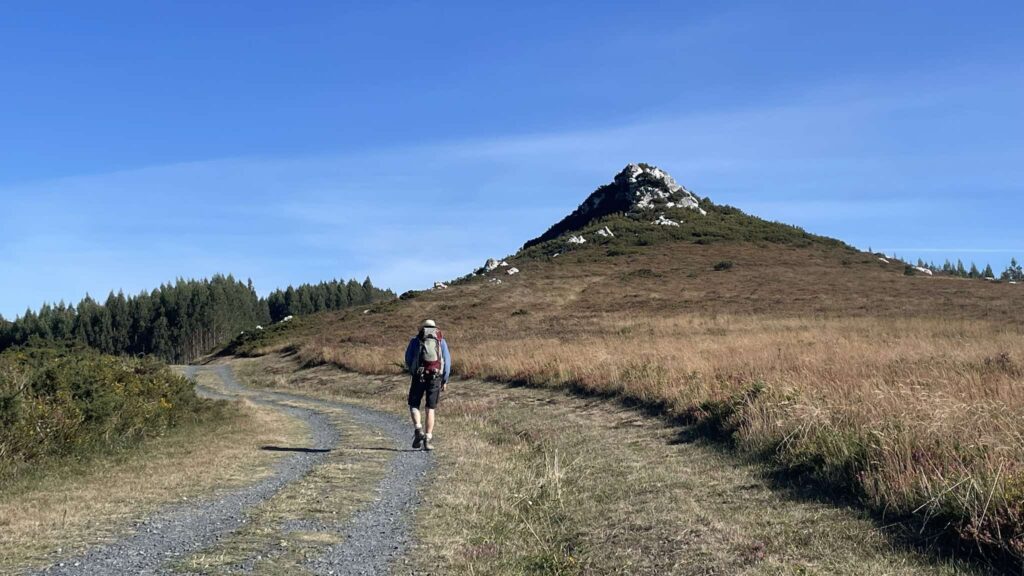
And so, the day has come when the Camino Primitivo has ended. Why, you may ask – it’s still three days’ walk to Santiago. The reason is that today we join a different route – the better-known and most popular Camino Frances.
This makes one a little sad, for various reasons. Because another Camino comes to an end, because I’ve already been on the Frances, and I’ve walked its final part twice (the second time from Arzua – that’s where the Camino del Norte joins in). And because here, there are crowds, mostly of those pilgrims who started in the last 100 km.
Some parts of the trail go through the forest – which is a relief in the heat. But honestly, the last three days of the Camino Primitivo are less impressive than the beginning.
The Camino Primitivo merges with Camino Frances in Melide. When you reach this town, don’t be surprised – there will be hundreds of pilgrims. The last part of the French Way from Sarria is the most popular route of the Camino. Don’t worry about accommodation, there are plenty of albergues, including a municipal one for 120 people. The city is famous for its pulperias – restaurants that serve pulpo (octopus cooked with spices).
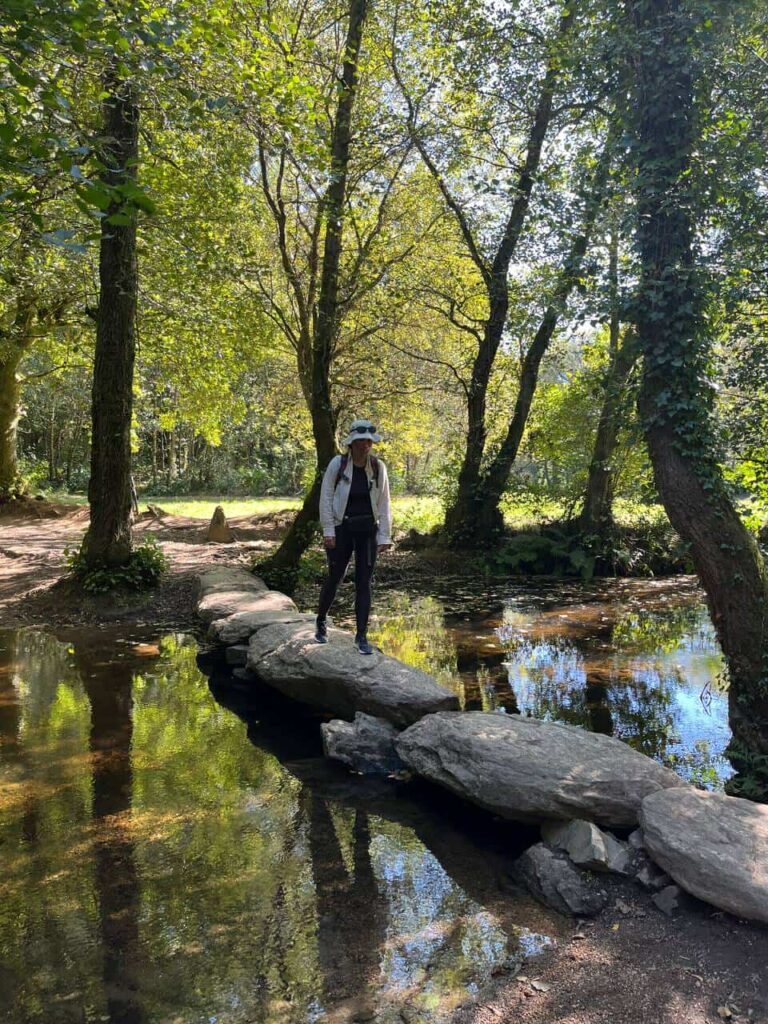
But we decided to go further, to Boente, booking places at an albergue there that had loads of good reviews – Albergue El Aleman (16 euro per night). We had very bad luck – in this clean modern albergue, bed bugs bit Ksyusha. And they were enormous and numerous under the mattress. In the morning, we told the owner (or manager), who immediately started blaming us – you brought them, that’s why they bit you. Yeah, sure, we brought them and put them under your mattress.
We were furious – it would have been normal for him to sympathize and offer help. But it’s unacceptable to respond this rudely. I demanded he give us something against the bed bugs so we could treat our backpacks and things and not carry this “goodness” to another albergue. Fortunately, they gave it to us. All day, our backpacks stank of chemicals, but there was nothing for it – everything had to be treated for these nasties (in Spanish: chinches – bed bugs).
Accommodation in Melide and the Next 10 km
- Municipal Pilgrim Hostel Melide – classic municipal for 120 people, price 10 euros, with nice toilets and showers.
- Albergue Pereiro – everything is clean, there are big lockers, good bathrooms, and not too many people at once.
- Albergue Arraigos – Perfect location, right in the city center, meaning easy access to food and groceries. Also, the albergue is on the second floor so it’s quieter, even though it’s by the roadside. Every pilgrim gets a key to the door – no curfew. There’s a small kitchen (no stove), but everything else is there. There’s a small laundry with a washer and dryer, which work with coins.
- Albergue Boente – Great albergue. Good food. There’s a pool – it’s nice to dip your feet in it after a long walk. There’s also a laundry area – nice bonus. Excellent amenities at a reasonable price. One of the best deals on the Camino!
Day 12: Boente – A Rua
30 km: Boente – A Fraga Alta – Ribadiso da Baixo – Arzua – Calle – Salceda – Mojon – O Empalme – Santa Irene – A Rua
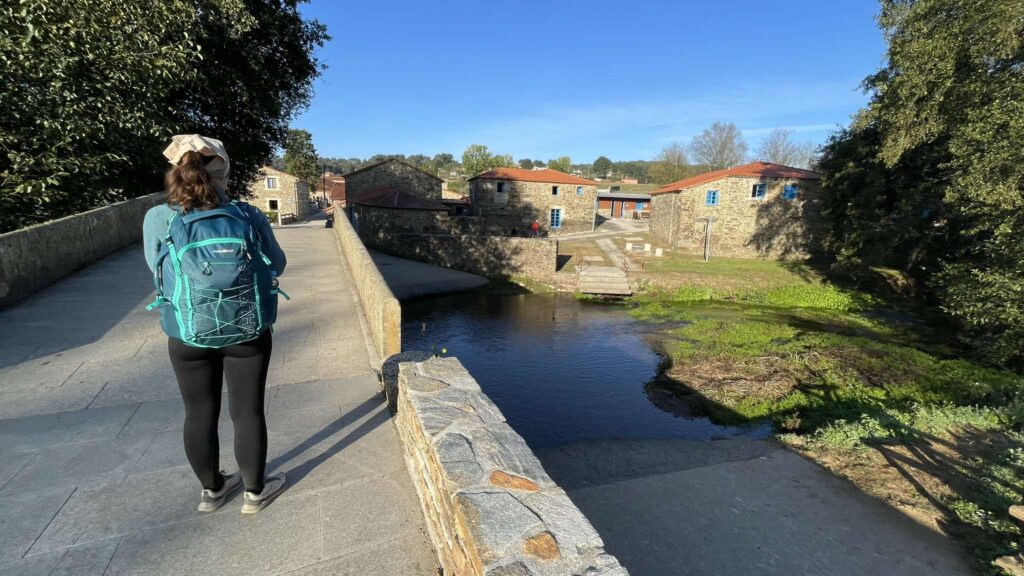
This day was hard, hot, and unremarkable – we walked in a crowd of pilgrims, pelegrinos, and “tourigrinos.” After the quiet of the Camino Primitivo, you are now on the French Camino with hundreds, if not thousands, of other pilgrims. There are plenty of cafés, restaurants, and albergues, at least every 5 km along the way.
We had breakfast in Arzua – here is where the Camino del Norte joins the Camino Frances. I’ve already been here twice and know this city on the trail very well. We bought tasty orange juice, fruit, and did those 30 km with many breaks in eucalyptus groves.
Accommodation for the Last Night Before Entering Santiago de Compostela
O Pedrouzo. I don’t know if this place would exist without the Camino – it’s just one street with many albergues, restaurants, cafes, etc. There are several private albergues/hostels and hotels, as well as one municipal albergue.
This time we stayed at Albergue Espiritu Xacobeo – it’s a couple of kilometers before O Pedrouzo, in peace and quiet, although the albergue is quite simple. The owners really try to help – they even drove us for free to a supermarket and back. We were able to buy food and cook dinner and breakfast in the albergue kitchen. Price 15 euro per bed.
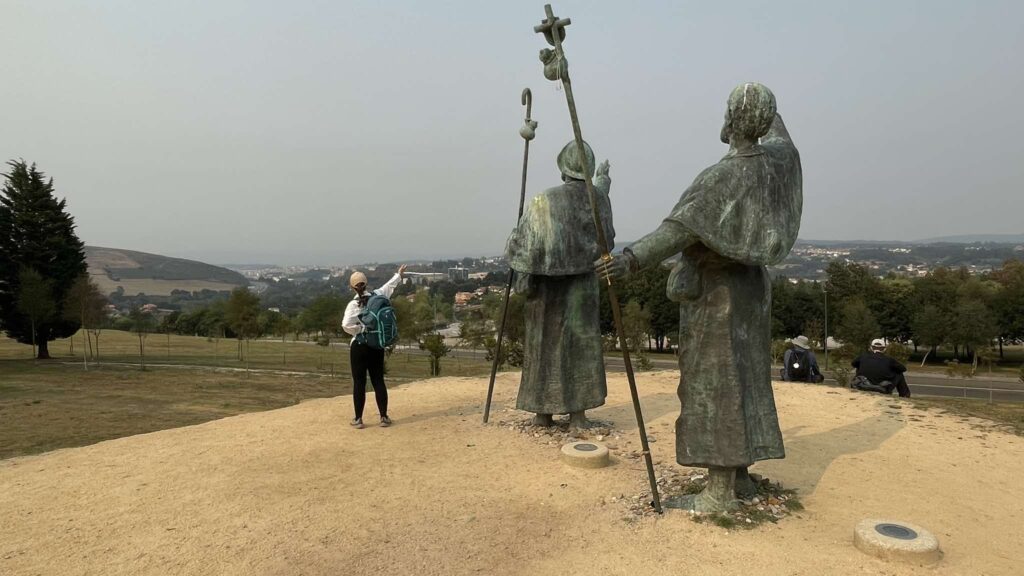
Monte do Gozo. The ideal place to spend the night is at the Municipal Albergue at Monte do Gozo. Here is the largest albergue on the entire Camino – with 450 beds. It was built in the early 2000s, when Pope John Paul II came to Santiago. Back then, a huge complex was built at Monte do Gozo for his visit. I’ve stayed at this albergue twice – it’s fantastic. And it feels great to wake up here in the morning and walk to the cathedral for mass at 12:00, then you have time to get your credential and store your things in the luggage storage at the post office near the cathedral. That’s what we always do when arriving in Santiago, because backpacks are not allowed inside the cathedral.
Day 13. A Rua – Santiago de Compostela
22 km: A Rua – O Pedrouzo – San Paio – Lavacolla – Monte do Gozo – Santiago de Compostela
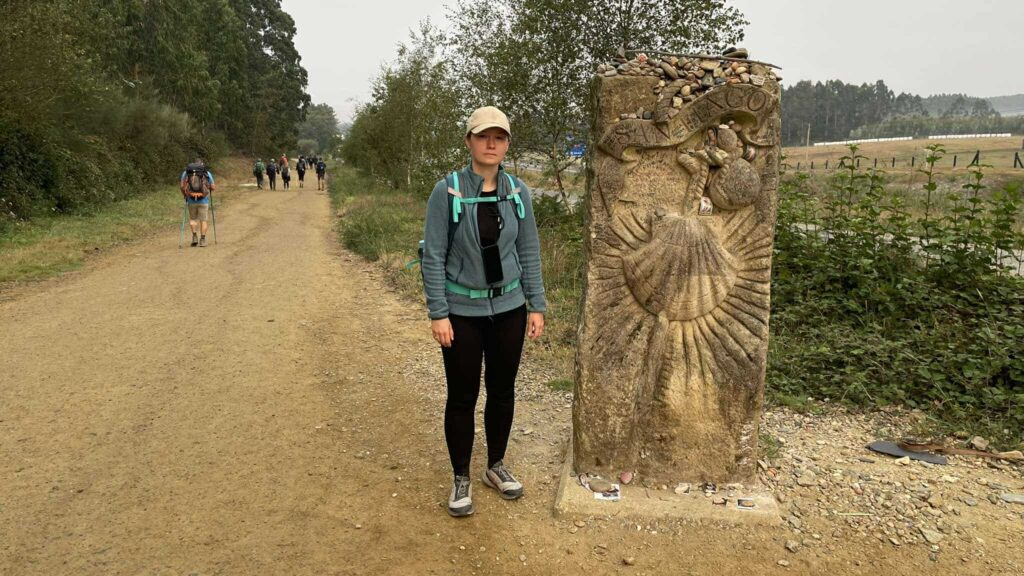
On the last day on the Camino Primitivo we suggest starting earlier if you want to make it to the pilgrim mass at 12:00 (there’s also a pilgrim mass at 19:30). Remember that you are not allowed to enter the cathedral with a backpack; you can leave it at your albergue or at the pilgrim reception office 100 meters from the cathedral. Or as we do – at the post office near the Santiago cathedral.
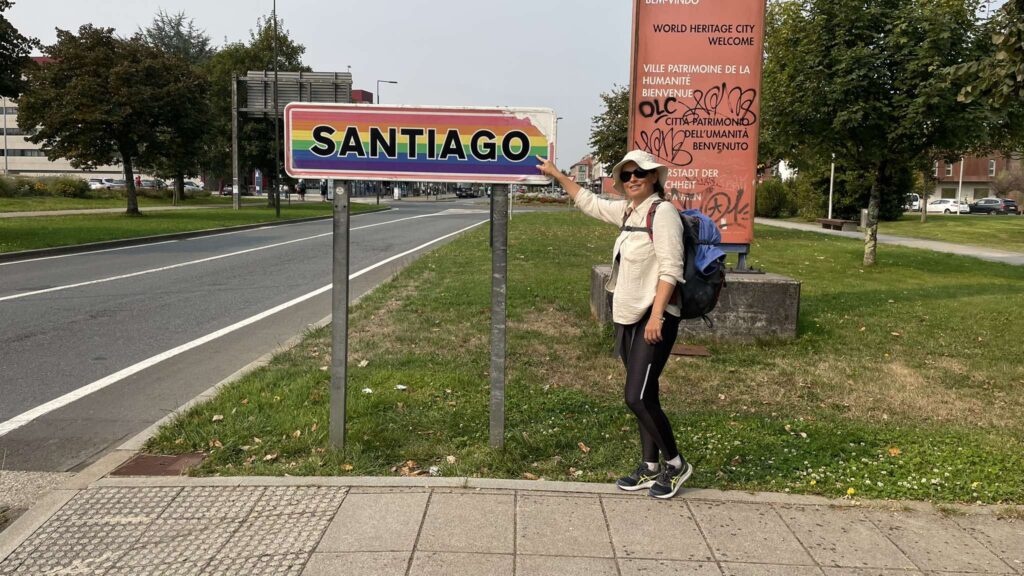
The easiest option is to stay at one of the albergues along the way to the cathedral, you can just leave your backpack there and continue on foot. But private albergues are more likely to allow this – we slept at the largest municipal albergue in Santiago de Compostela – Seminario Menor, and there check-in is after 14:00, and it’s not possible to leave backpacks before checking in.
On the way you’ll pass through a stunning forest immediately after O Pedrouzo. And, if you’re lucky, you’ll see planes taking off from Santiago airport.
Santiago de Compostela
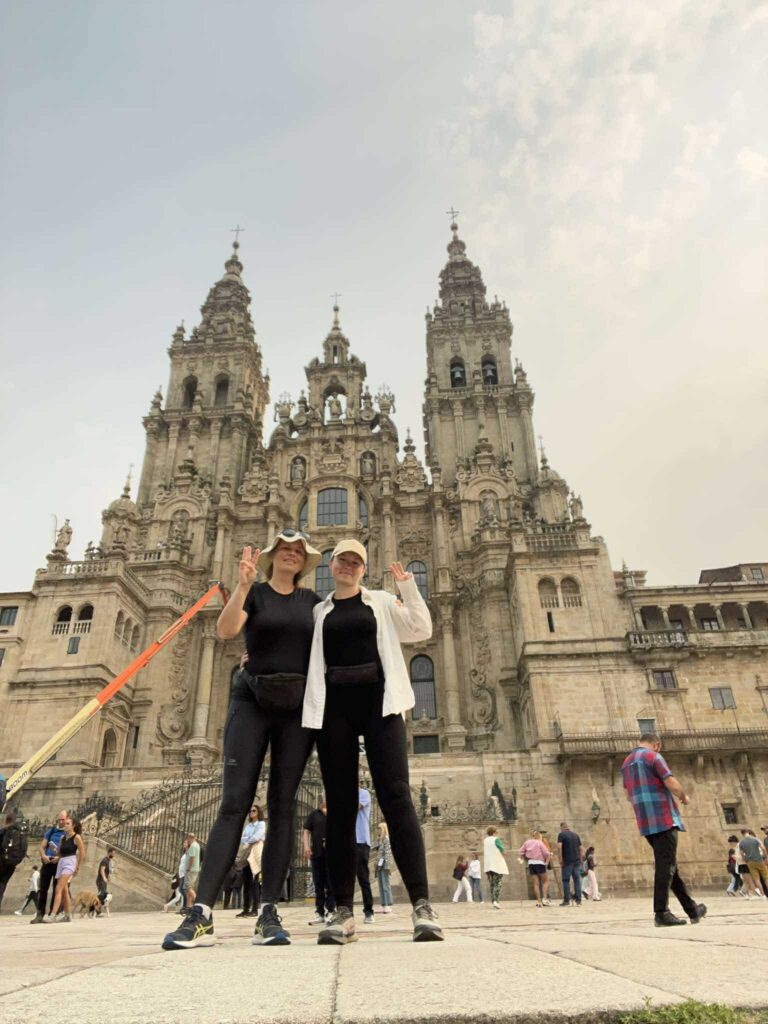
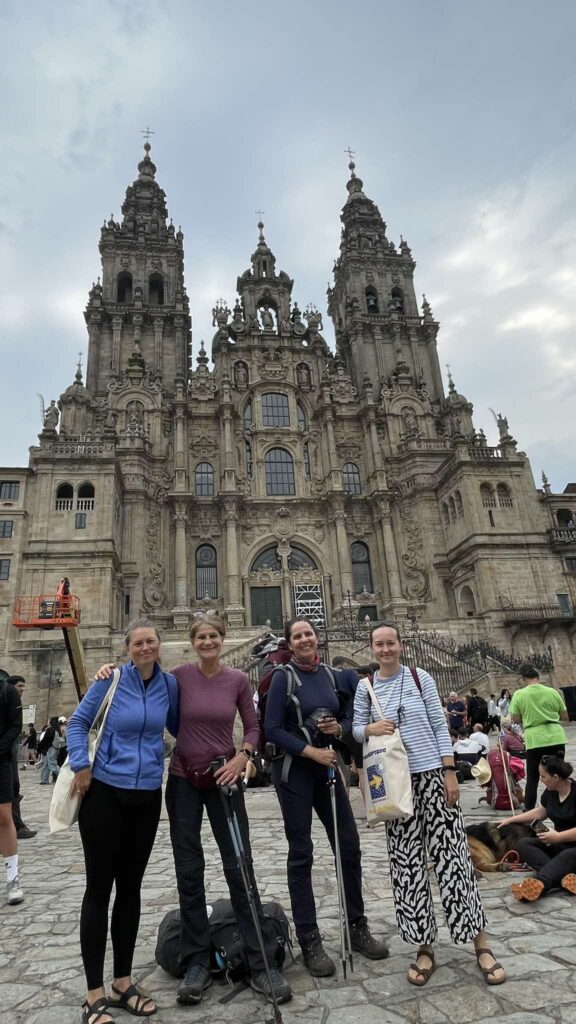
We made it to the morning mass, and earlier picked up our Compostelas at the Pilgrims’ Office. It was nice that the mass was in English this time, so I finally understood what it was about. It was also nice to hear about us, when they listed the pilgrims who arrived that day in the Cathedral. I even cried when I heard about the Ukrainians who came from Oviedo. And then they started the Botafumeiro – this marvel is not seen every day. But we’ve been lucky enough to see it several times (just lucky) and every time it gives you goosebumps and tears of happiness – we did it again, we walked the Camino again, and we are already planning the next route.
Recommended reading: Santiago de Compostela, Spain – a mini guide to the capital of Galicia
We checked in at the most popular albergue among pilgrims Albergue Seminario Menor. A huge albergue on one of the hills of Santiago, here are more than 170 beds and the price is quite reasonable for the quality of the stay.
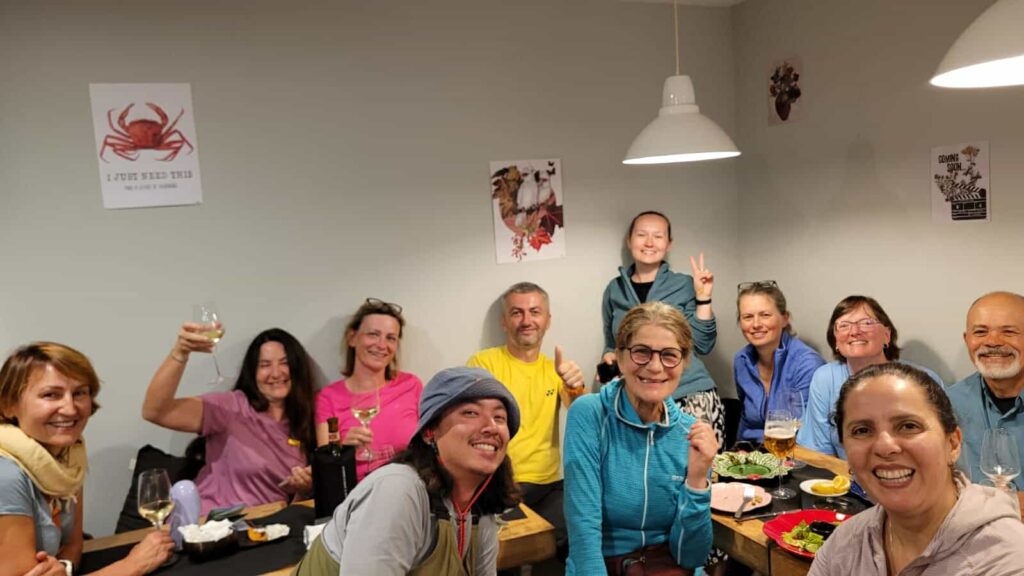
In the evening, all our Camino friends gathered and we went to celebrate the Camino finish. It was fun and delicious, these are the best moments after finishing, when you can celebrate this day together.
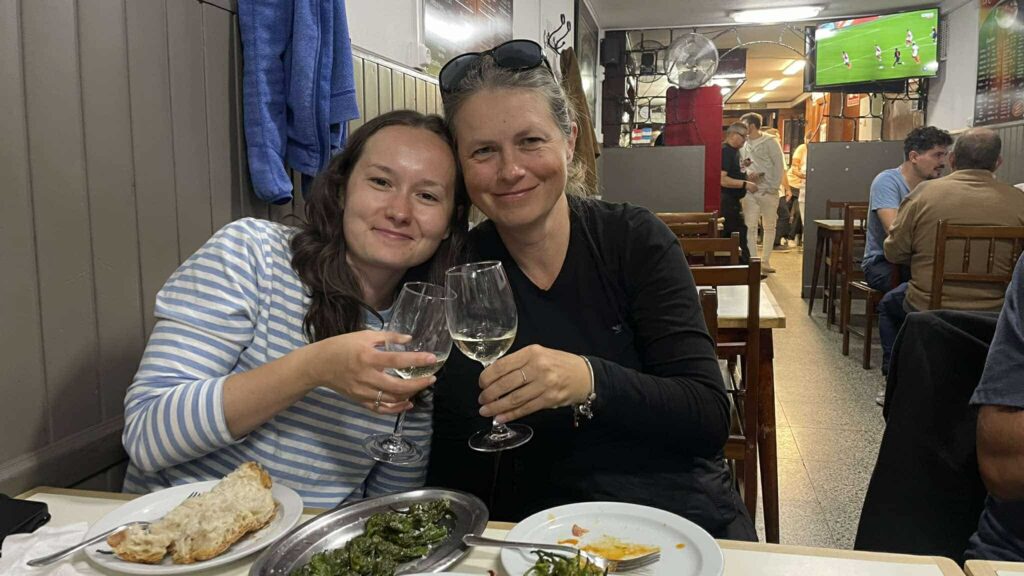
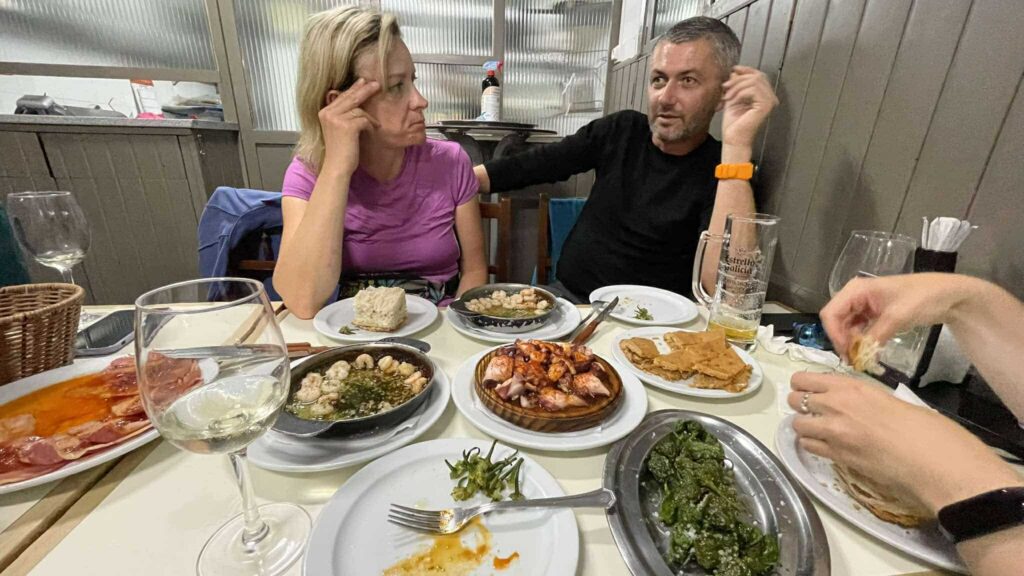
There are plenty of interesting things to do for a couple of days in Santiago de Compostela: from going out for wine and tapas to visiting museums and day trips to the coast. We stayed two nights to be able to calmly walk around the city and then fly on to Andalusia for a road trip along the Costa del Sol coast.
And despite all the troubles on this Camino – I really enjoyed it. Because this route is still not very popular (compared to others), it nicely mixes pilgrimage and tourism. Such a pleasant load, that after it you easily run up 5-10 storeys and feel like a bird.
Where to Stay in Santiago de Compostela
- Albergue SP 55 by Bossh! Hotels – a nice hostel, rooms for 4 people with private shower and toilet. Electronic locks. 15 minutes on foot to the Cathedral and central bus station.
- Hotel Pombal Rooms – wonderful rooms with windows overlooking the cathedral.
- Municipal albergue in Santiago de Compostela – Seminario Menor – designed for more than 160 pilgrims, very good accommodation conditions, you can stay for two nights.
What You’ll Need for Travelling in Spain
- Don’t skimp on medical insurance – it’s convenient to buy it online at the HotlineFinance portal.
- If I’m not staying at an albergue, I book hostels or guesthouses through Booking.com. I do this in the evening for the next day.
- I buy buses in Spain on the website of the Spanish carrier Alsa.
- Train tickets in Spain – on the website of the Spanish railway company Renfe.
Useful Articles and Links:
- Via Francigena – my experience walking from Lucca to Rome
- Rota Vicentina – walking along the ocean
- Camino de Santiago – how to prepare for the pilgrim route?
- My Camino Portugues – Portuguese route from Porto along the ocean
- My Camino Mozarabe – St. James’s Way across Andalusia