Is it really possible today to have a budget seaside vacation? After all, it seems that every year air tickets get more expensive, hotel prices rise, and dinner at a restaurant in a popular resort can cost as much as an entire day’s budget for the trip.
After dozens of trips around Europe, I can say one thing: a cheap seaside holiday in 2026 is absolutely possible. In June, I already visited one of the cheapest countries for a seaside vacation.
Today it’s not enough to just open the first site with tours and book a hotel. Those who save the most are the ones who choose the right country, time of travel, and mode of travel.
Over the past few years I have visited Albania, Greece, Croatia, Italy, Portugal, Madeira and Mallorca. And every time I was convinced: sometimes a country that seems expensive ends up being cheaper than a “budget” destination. It all depends on the details.
For example, Croatia is often called expensive. But if you travel with your own car, book apartments with a kitchen, and travel in September, then such a vacation can cost less than a week in a popular hotel in Bulgaria in August.
Or another example — Turkey. Many people think that it’s only about huge resorts with an “all inclusive” system. In fact, this is where you can find some of the best value package tours in Europe today. Sometimes a full package with flight, transfer, food, and accommodation costs less than an independent trip to Greece.
In this article, I’ve gathered destinations that really let you enjoy the sea without excessive expenses. This isn’t just a list of cheap countries, but a practical guide that will help you understand:
- where the most affordable prices are right now;
- where it’s better to fly and where it’s better to drive by car;
- where it’s more advantageous to choose an all inclusive hotel;
- how to avoid hidden costs;
- when to book a trip so as not to overpay.
Where is the cheapest sea in 2026
In short, the most cost-effective directions this year remain:
| Country | Best for | Budget | Biggest Advantage |
|---|---|---|---|
| Bulgaria | families with children | ★★★★★ | best value for money |
| Albania | independent travelers | ★★★★★ | turquoise sea and affordable prices |
| Turkey | All Inclusive lovers | ★★★★★ | very good package tours |
| Romania | cheap Black Sea | ★★★★☆ | sea like in Odesa |
| Greece | active tourists | ★★★★☆ | wonderful islands and cuisine |
| Croatia | road trips | ★★★★☆ | savings on air tickets |
| Polish Coast | families and road trips | ★★★★☆ | wide beaches and comfort |
Interestingly, a 2026 price study of popular tourist destinations showed: Turkey remains one of the most affordable countries in terms of total spending. And among European destinations, Bulgaria, Albania, and Portugal also look very advantageous.
However, for europeans tourists, Bulgaria, Albania, Turkey, Greece, and Croatia remain the most interesting due to a good combination of prices, transportation, and vacation quality.
The main rule of a budget vacation
To be honest, most tourists make their biggest mistake before the trip even starts. They try to find the cheapest hotel.
In reality, this is not where you should be saving. The biggest chunk of money is spent on things like:
- season of the trip – if traveling in July-August;
- air tickets – if bought without planning;
- transportation or car hire – this is one of the high costs for travel, especially for large families;
- food – if eating in restaurants all the time;
- tourist taxes – this hidden cost, many only discover at the last moment when it’s time to pay.
This is why two absolutely identical vacations can differ in price by several hundred euros.
How to save on a seaside vacation in 2026
1. Don’t go in August
If possible, choose the second half of June or September.
At this time:
- the sea is already well warmed up;
- there is no exhausting heat;
- the beaches are much less crowded;
- air tickets are cheaper;
- accommodation prices may be 20–40% lower.
Almost all of our best trips, such as to Croatia and Albania, were in September and June. The sea was still warm, but already there were no endless lines at restaurants and traffic jams on the roads.
2. Don’t be afraid of apartments
If you are traveling as a family, apartments often turn out to be more profitable than a hotel. Especially if there is a kitchen.
Breakfast and lunch can be cooked by yourself, and dinner can be spent in a local tavern or restaurant. This is not only cheaper, but also lets you better experience the local cuisine.
In Albania, this is exactly how we traveled. We bought fresh fruit, cheese, vegetables, bakery goods, and in the evenings discovered new family restaurants. As a result, expenses were much lower than during daily meals only at tourist spots.
3. All Inclusive sometimes saves money
Many believe that the “all inclusive” system is expensive. In truth, it’s quite the opposite.
In Turkey or Egypt, a package tour with flight, transfer, and three meals a day is very often cheaper than booking tickets, hotel, and restaurants on your own.
This is especially advantageous for families with children.
4. Travel by car if possible
For Croatia, the Polish Baltic coast or northern Italy, a car often becomes the cheapest means of transport.
You save not only on air tickets, but also gain freedom of movement. You can visit beautiful coves, national parks or small towns where public transport doesn’t reach.
This is how we discovered many lesser-known beaches in Croatia and Albania, which became the brightest memories of the whole trip.
5. Always check for hidden costs
A cheap hotel doesn’t always mean a cheap vacation. Before booking, pay attention to:
- is there a tourist tax – it is paid separately and in some cities it amounts to a significant sum;
- how much does the transfer cost if offered by the hotel – it might be cheaper and simpler to get to by airport bus;
- is parking at the hotel paid – read up on what the parking situation is in the place you’re visiting, so you don’t have to pay 25–30 euros a day for your car;
- are sunbeds on the beach included in the price – many hotels don’t have their own beach amenities, so you have to pay extra;
- do you need to pay separately for air conditioning or a safe – extra payment for air conditioning is common, for example, in Cyprus; read hotel reviews carefully.
Sometimes these small things add another 100–200 euros to the budget.
Which destination to choose?
Each country has its own strengths.
- Bulgaria is great for family vacations.
- Albania will appeal to those who want to discover new places and see incredibly beautiful turquoise sea without huge crowds (provided you choose somewhere other than Ksamil or Saranda in high season).
- Turkey remains one of the best options for a carefree all inclusive holiday.
- Egypt has almost no rivals if you want a warm sea in autumn, winter, or early spring. But you can vacation here in summer too—just pick the right resort and hotel.
- Greece combines wonderful cuisine, atmosphere, beautiful islands, and lots of options for active travel.
- And Croatia is our favorite destination for road trips.
Bulgaria — best value for money
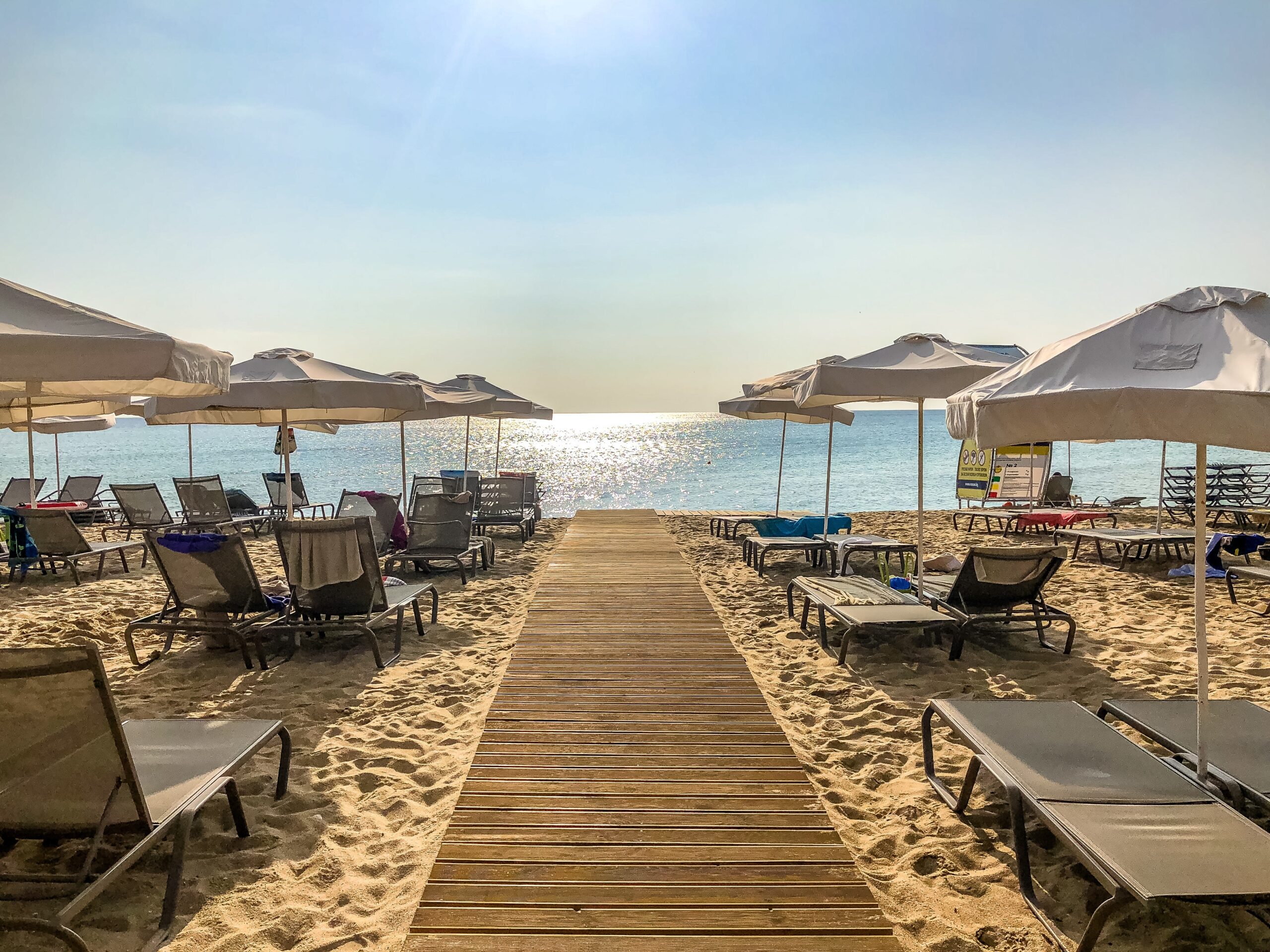
If I’m asked, where to go to the sea for a cheap first vacation, I almost always say Bulgaria. And it’s not just because this is one of Europe’s cheapest resorts. Here, it’s very easy to organize a comfortable holiday with almost any budget.
Bulgaria long ago stopped being a destination with a “Soviet flavor” many remember from childhood. Over the past years, the resorts have changed a lot: modern hotels appeared, well-maintained promenades, restaurants, water parks, and great tourist infrastructure. At the same time, prices here are still lower than in Greece, Italy, or Croatia.
For families with children it’s one of the best options. Long sandy beaches, a gentle entry into the sea, warm water from June, and a big selection of family hotels make Bulgaria an almost win-win choice.
How much does a vacation in Bulgaria cost in 2026
Bulgaria is still one of the most affordable countries on the Black Sea. Approximate budget for one person when traveling independently:
- transfer — from 80–180 euros (depending on season);
- apartments — from 35–70 euros per night;
- good hotel — from 70–130 euros;
- dinner in a restaurant — 10–18 euros;
- coffee — about 2 euros;
- ice cream — 2–3 euros.
If you book a package tour in advance or catch a last-minute deal, the vacation might cost even less than self-organization.
Which resort to choose in Bulgaria
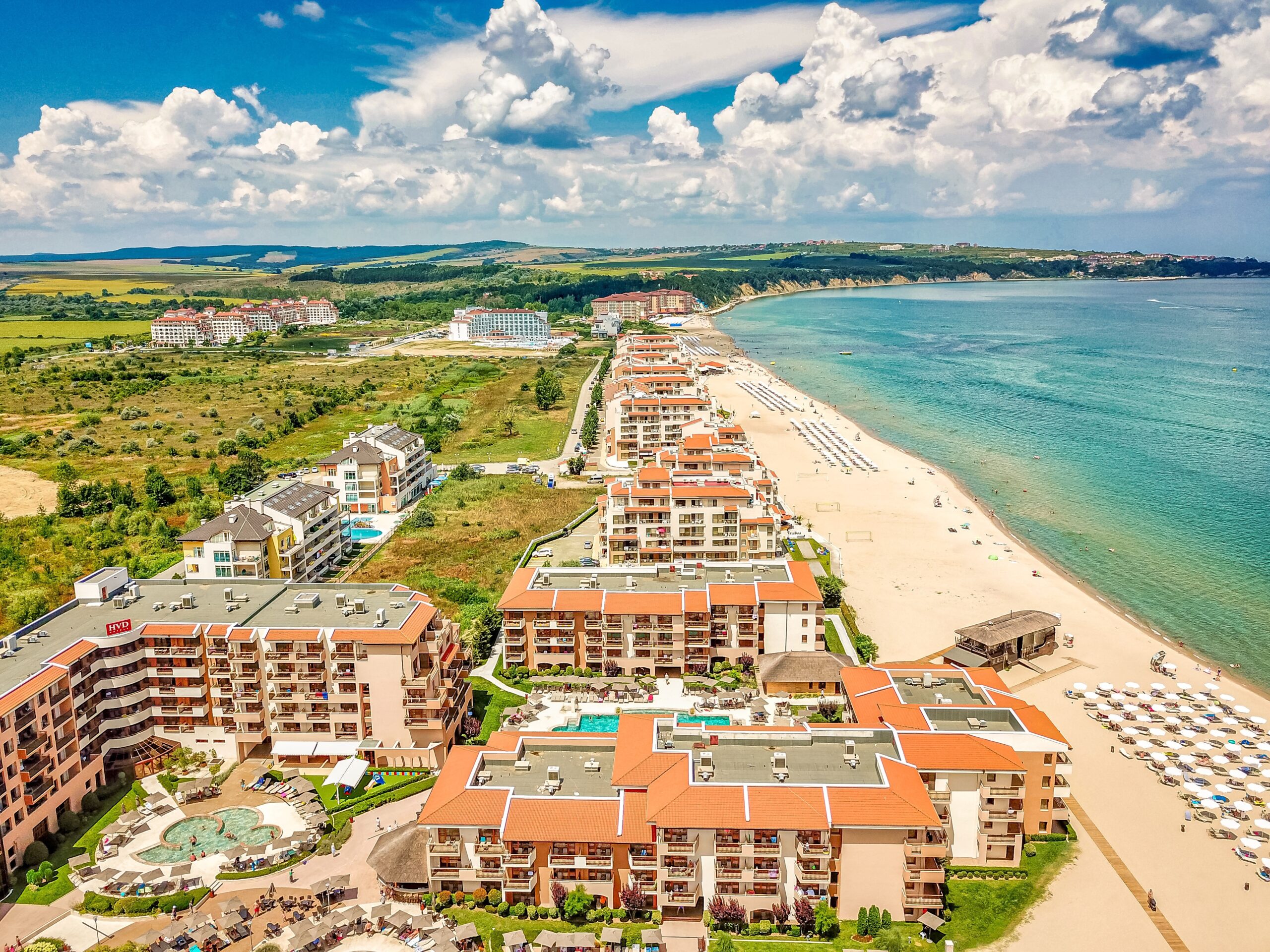
Sunny Beach
This is Bulgaria’s most famous resort. Here you’ll find a huge selection of hotels, dozens of restaurants, water parks, water activities, and a wide sandy beach.
Ideal for:
- families;
- youth;
- those who enjoy an active lifestyle.
If you’re looking for peace and quiet, it’s better to consider other resorts.
Nesebar
In my opinion, Nesebar is the true gem of the Bulgarian coast. The old town is on a small peninsula and is a UNESCO World Heritage site. Stone streets, ancient churches, houses with wooden facades, and cozy cafes create an atmosphere entirely different from large resorts.
Even if you live in Sunny Beach, it’s worth visiting here at least for one evening.
Golden Sands
Another popular resort with wide beaches and great infrastructure. It’s often chosen by families and young couples.
Varna
Varna feels more like a large seaside city than a classic resort. Here you can combine beach rest with city walks, museums, parks, and restaurants.
If you don’t enjoy spending all day on the beach, this option might turn out to be the most interesting.
Advantages of Bulgaria
- ✔ some of the lowest prices in Europe;
- ✔ sandy beaches;
- ✔ warm sea;
- ✔ large choice of family hotels;
- ✔ inexpensive food;
- ✔ many package tours.
Disadvantages
Like any popular destination, Bulgaria has its downsides.
In July and August, the most popular resorts are quite crowded. Also, not all hotels are equally good — there are still some older properties, so always read reviews before booking.
Albania — the most beautiful sea for a reasonable price
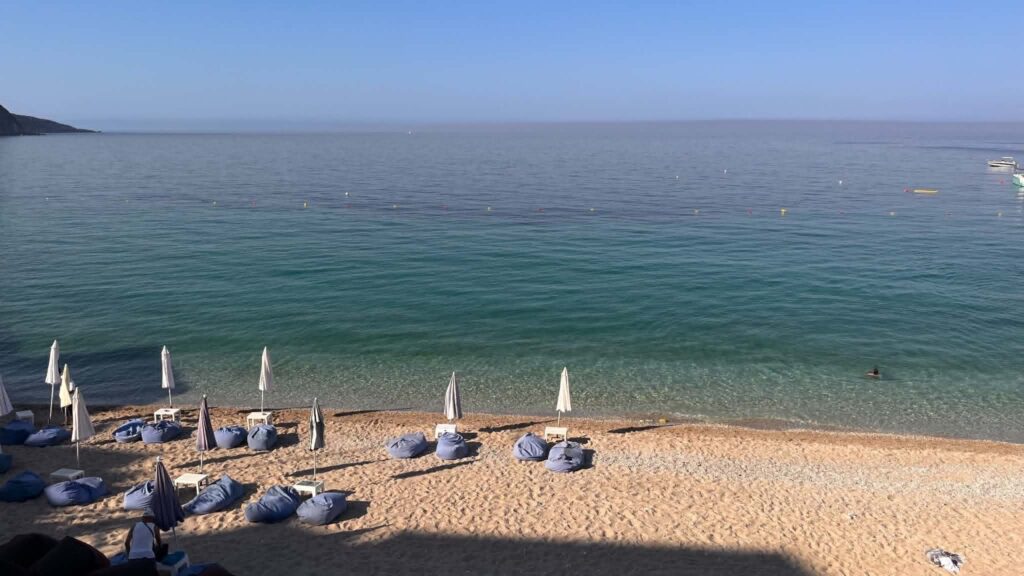
We went to Albania without any particular expectations. We just wanted to see a new country, walk through beautiful mountains, and spend a few days by the sea. In the end, Albania became one of the big discoveries of recent years.
The water here is incredibly clear, the mountains are beautiful, and many beaches are no worse than Greek or Croatian ones. At the same time, the rest is still much cheaper than in those countries. The water is very clean, especially in the morning, an incredibly colorful and transparent shade.
Is Albania cheap?
Yes. Especially if you compare it to neighboring Greece or Croatia.
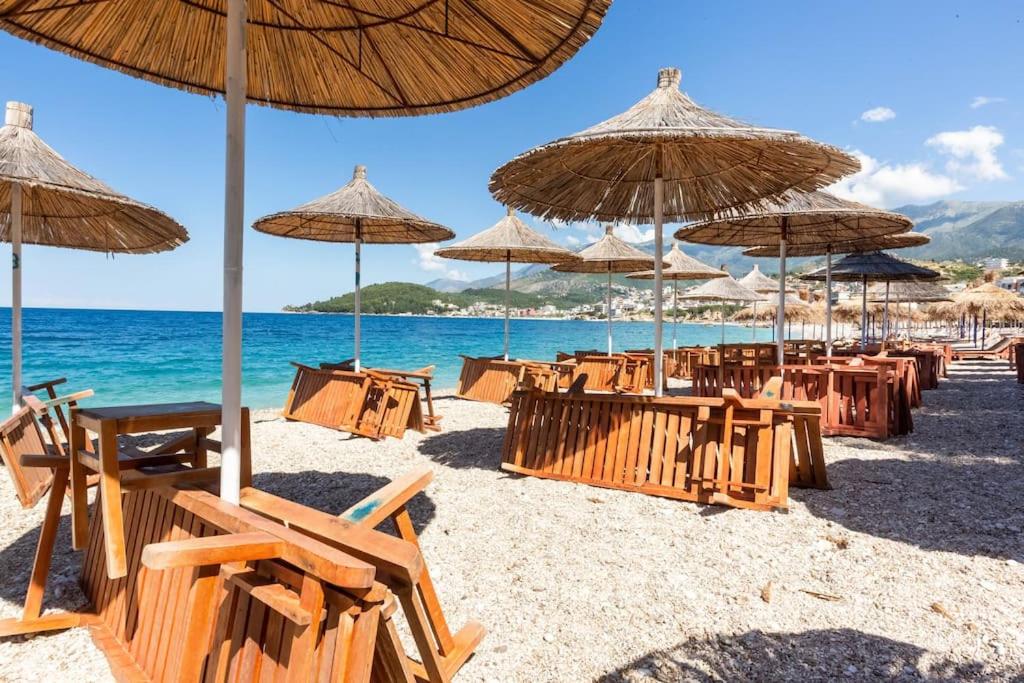
Approximate prices in mid-June, which we paid in Himara in 2026:
- air tickets – 150-250 euros;
- hotel (no kitchen but with a balcony facing the sea and private parking) – from 45 euros;
- apartments — from 40–70 euros;
- dinner for two — 20–25 euros;
- coffee — 1.5–2 euros;
- beach cafe — cheaper than in most Mediterranean countries;
- two sunbeds and an umbrella — 10 euros.
However, you need to consider one special point. Albania is rapidly gaining popularity. Every year there are more and more tourists, so in July and August the prices aren’t as low as in June, and not like they were several years ago.
If you want to save, it’s best to come in June or September.
Ksamil
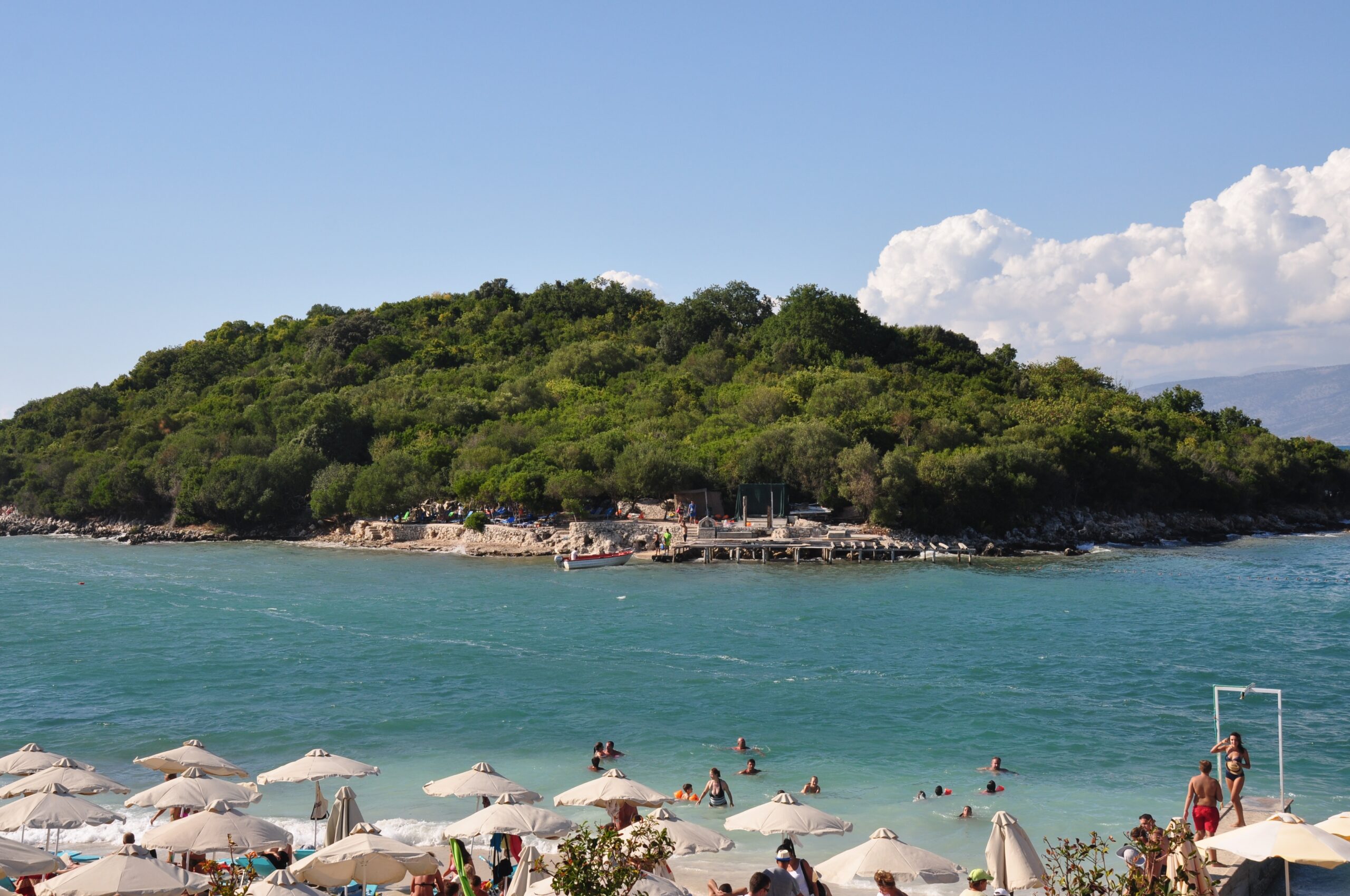
It’s Ksamil’s photos that are most often seen on social media. Turquoise water, small islands near the shore, white beaches — it all looks almost unreal.
But there’s a catch. During high season, thousands of tourists come here. So if you want to see Ksamil as it looks in the beautiful photos, come to the beach early in the morning or visit in September.
Saranda
Saranda is the main tourist center of southern Albania. This is the most convenient place to explore the whole coast. There’s an immense choice of restaurants, hotels, cafes, and excursions.
From here, it’s easy to get to these places:
- Ksamil;
- Blue Eye springs;
- Butrint National Park;
- numerous Albanian Riviera beaches;
- the historic city of Gjirokastër.
Vlorë
This city is located at the meeting point of the Adriatic and Ionian Seas. This is where the famous Albanian Riviera begins.
If you’re planning a road trip, be sure to allocate time to drive the SH8 road over the Llogara Pass. In my view, it’s one of the most beautiful coastal roads in Europe. On one side — mountains, on the other — an endless sea.
Such views are remembered for a long time.
Durrës
The nearest major resort to the country’s capital. It’s often chosen by those who arrive for just a few days or don’t want to travel far from the airport.
The beaches here are long and sandy, but if possible, I would still recommend heading further south — to the Albanian Riviera. The sea there is much more beautiful and cleaner.
Recommended to read: Seaside vacation in Himare, Albania
What I liked most about Albania
What impressed me most was not even the sea, but the mountains in northern Albania—unexpectedly good infrastructure for hiking and incredible scenery. And also the people—Albanians are very open, friendly, and genuinely happy to see tourists.
In small family restaurants, we were repeatedly treated to coffee and homemade dessert just because they were happy to have guests. Such moments are as memorable as beautiful beaches.
Of course, there are also negative moments about people—drivers there are just crazy, and traffic rules barely exist…
Advantages of Albania
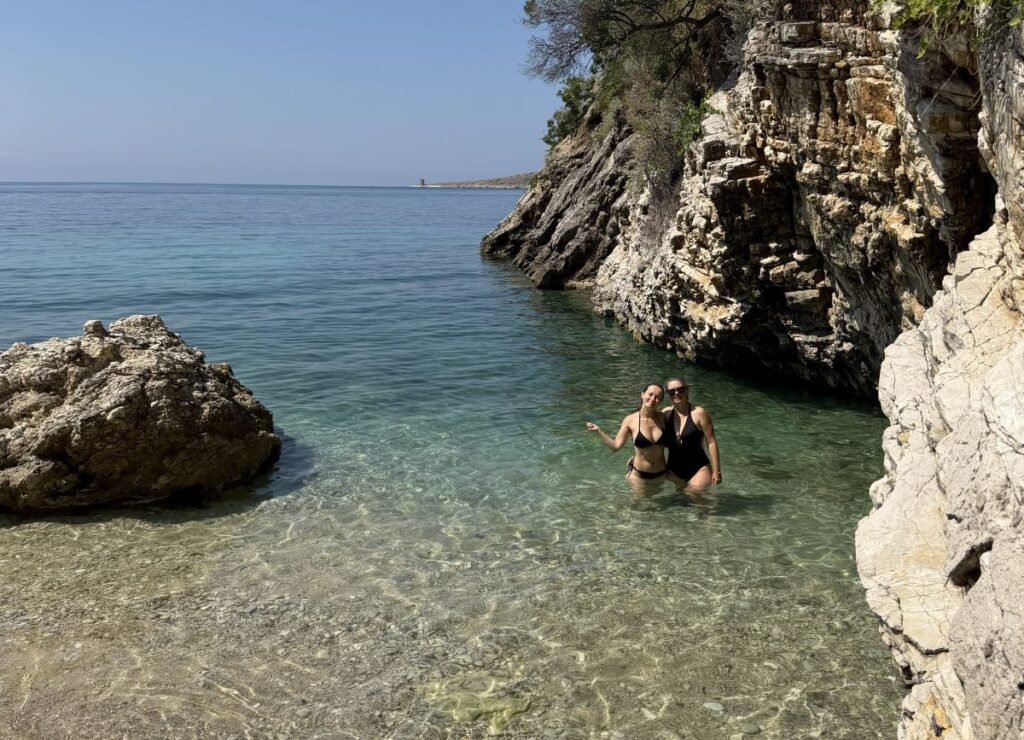
- ✔ very clean Ionian Sea – the Adriatic is less clean and transparent because rivers flow into it in the north;
- ✔ beautiful mountain landscapes;
- ✔ lower prices than in many neighboring countries;
- ✔ delicious cuisine;
- ✔ many less crowded beaches outside Ksamil and Saranda;
- ✔ a great option for a varied road trip.
Disadvantages
There are no perfect countries, so you need to know what to expect in Albania:
- In July – August the roads can be very busy.
- On popular beaches in Ksamil, it’s hard to find a spot after ten in the morning. And in the water, it feels like “soup” of people.
- Also, tourist infrastructure is still actively developing. In some places, the service is still behind Turkey or Greece.
- Drivers behave dangerously on the roads – you need to react quickly and drive with experience.
But honestly, it’s this small imperfection that makes Albania so interesting. It hasn’t lost its authenticity yet, and right now, before the country becomes too popular, is a great time to go.
If you like discovering new places, beautiful views, and aren’t afraid of a little adventure, Albania just might become your best discovery of the summer.
Recommended to read: Albania by car – all you need to know before the trip
Greece — a country you want to return to

If there’s a country you can fall in love with not only because of the sea, it’s Greece.
Of course, people come here for the beautiful beaches, turquoise water, and sun. But what attracts me most are the people, the atmosphere, and the feeling of ease that appears already on the first day of vacation. Greeks are never in a hurry, love long dinners, enjoy lively company, and know how to enjoy simple things.
Many people think Greece is an expensive country. In reality, that’s not quite true.
Yes, in August the popular islands can surprise you with high prices. But move your trip to June or September—even October (Crete, Santorini)—and the cost of accommodation becomes much lower. Moreover, it’s not as hot, and the sea is still great for swimming.
How much does a vacation in Greece cost
Greece is no longer a budget destination, but it’s not overly expensive either.
Approximate budget:
- air tickets — from 120–250 euros;
- apartments — from 50–90 euros;
- good hotel — from 90–170 euros (of course there are much pricier ones with all inclusive, great views, pools, etc.);
- dinner for two — 30–50 euros;
- Greek salad — 8–12 euros;
- gyros — from 5 euros;
- coffee — 2.5–4 euros.
The biggest savings can be made on accommodation. In September – October, prices are often 20–30% lower than in August.
Rhodes
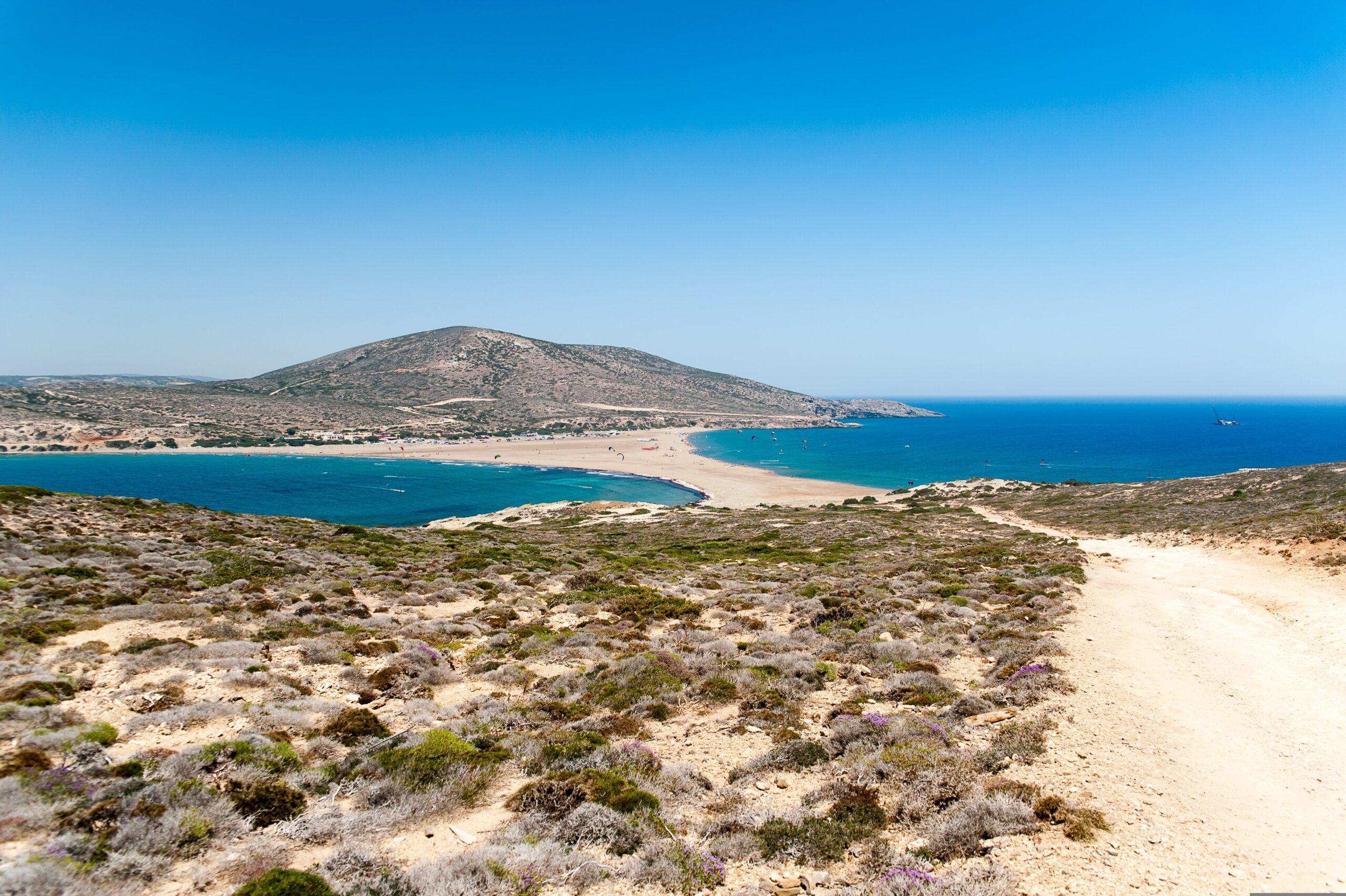
Rhodes is one of the most beautiful and interesting Greek islands. It’s perfect for those who don’t want to just lie on one beach all day.
Here you can combine the sea, old towns, fortresses, small bays, scenic roads, and great restaurants. In three or four days you can easily drive around almost the entire island by car.
Recommended to read: Rhodes in three days – how to experience the island
Crete

Crete is almost a country of its own and the southernmost island of Greece. If you come for just a week, you can see only a small part — it’s that huge.
There are many interesting and beautiful places to see and lots of activities:
- Balos lagoon;
- Elafonissi beach;
- Samaria gorge;
- Chania;
- Rethymno;
- Knossos Palace.
Crete is especially liked by those who enjoy combining the beach with active travel.
Corfu
The greenest Greek island. It’s often chosen by families and nature lovers. There are many olive groves, scenic bays, and lookout points.
And with Corfu it’s much easier to get to southern Albania—the island is near the Albanian Riviera. Fly to Corfu, hop on a ferry, and in two hours you’re in Saranda.
Thasos
If you want a more peaceful holiday without the huge crowds of tourists, consider Thasos. It’s often called the “emerald island” due to its large pine forests.
How to save in Greece
From my own experience I can recommend a few simple things.
- First, you do not have to book a hotel by the most famous beach. Or with a view of the caldera, as on Santorini—you can stay on the opposite side near great beaches. Booking a hotel not in the tourist hub will be cheaper. Often it’s enough to drive ten minutes by car for noticeably lower prices.
- Second, pay attention to family-run tavernas. The best moussaka, fresh fish, or Greek salad we almost always found a few blocks from the sea, not on the first line.
- And another tip: do not rush to buy excursions. If you rent a car for even two or three days, you can see much more and often save money.
Recommended to read: Where to stay in Santorini – best places and accommodation options
Croatia — the sea easiest to reach by car

There are countries you want to return to time and again. For me, Croatia is exactly that. Some people like the islands best. Some prefer small fishing towns. And some fall in love with the crystal-clear water of the Adriatic so much they return every summer.
Yes, in recent years Croatia has become more expensive. Especially after switching to the euro. But if you look at the total travel budget, things aren’t so simple.
If you go by car, savings on air tickets often compensate for higher accommodation or restaurant costs. That’s why Croatia remains one of the best options for a road trip.
Why you should consider campsites
Croatia is known not only for its beautiful sea, but also for its enormous selection of seaside campsites. Many people still think camping is a small tent and minimal comfort. In reality, modern Croatian campsites are more like small holiday towns.
They have all the infrastructure you need for a holiday and more:
- mobile homes;
- swimming pools;
- restaurants;
- children’s playgrounds;
- supermarkets;
- private beaches.
And most importantly — almost always the sea is just a few minutes’ walk away. If what matters most is waking up to the sound of waves and having breakfast in the pine woods, rather than city strolls, camping might be the perfect option for a holiday in Croatia.
Independent road trip through Croatia – route, roads, and transport expenses
How much does a vacation cost
Approximate budget for a modern vacation in Croatia:
- apartments — from 70–140 euros;
- camping — from 50–120 euros;
- dinner at a restaurant for two — 35–60 euros;
- coffee — 2–4 euros;
- car parking – from 2 euros;
- tickets to national parks (Krka, Plitvice Lakes) – 40 euros.
Yes, prices are no longer as low as they were five years ago. But if you buy groceries at the supermarket and cook for yourself more often, you can significantly reduce expenses.
When is the best time to go

If possible, choose September — in my opinion, this is the best month for Croatia. We were there from September 10 to 17, and it was just wonderful! The sea is still very warm, there are significantly fewer people, and the roads are freer. And prices are already starting to drop by at least 20%.
I recommend reading: When is the best time to vacation in Croatia
The best resorts in Croatia for a budget vacation
Croatia has dozens of resorts, each with its own character. If you are traveling by car, you can easily combine time at the seaside with visits to historic towns and national parks.
Makarska Riviera
Makarska Riviera is one of the most beautiful regions in Croatia. The resorts of Makarska, Baška Voda, Brela, and Tučepi are known for their crystal-clear water, pebble beaches, and picturesque pine alleys. Thanks to the Biokovo mountain range, here you’ll find some of the most spectacular views of the Adriatic.
I recommend reading about my favorite places on the Makarska Riviera.
Baška Voda

Baška Voda is one of the coziest resorts on the Makarska Riviera. This small town combines well-maintained pebble beaches, crystal-clear sea, and a beautiful promenade with cafes and restaurants. Thanks to the gentle entrance into the water, this resort is especially popular among families with children. From here, it’s easy to reach Makarska, Brela, or the Biokovo Nature Park.
I recommend reading: Apartments and hotels in Baška Voda, Croatia – where is better to stay for your vacation
Brela

Brela often appears in lists of the most beautiful resorts in Croatia. It is here that you will find the famous Kamen Brela rock, which has become one of the symbols of the country. The resort is renowned for its scenic pebble beaches, pine forests, and transparent turquoise water. Along the coast stretches a several-kilometer-long pedestrian promenade that is a pleasure to stroll along in the evenings.
I recommend reading: Brela – the most beautiful beaches of the Makarska Riviera
Primošten

Primošten is one of the most beautiful historic towns on the Adriatic coast. The old town is located on a small peninsula and is connected to the mainland by a narrow isthmus. Here you can stroll along narrow stone streets, admire old houses, and visit cozy restaurants with sea views.
Around Primošten there are many wonderful pebble beaches, and nearby are famous vineyards, even included in the UNESCO Cultural Heritage List.
Zadar
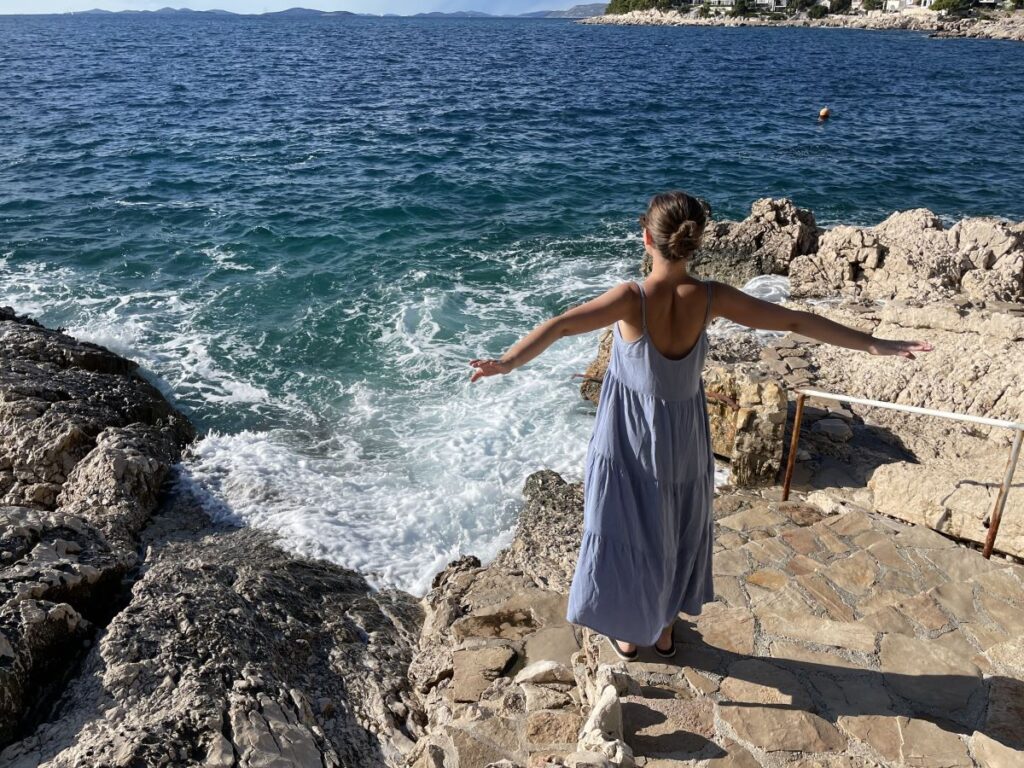
Zadar is a great choice for those who want to combine a beach vacation with getting acquainted with Croatian history and culture. The old town has preserved Roman ruins, medieval churches, and atmospheric squares.
It is here you’ll find two unique attractions — the Sea Organ, which creates music thanks to the waves, and the Greeting to the Sun installation, which is especially spectacular after sunset. Zadar also makes a great base for trips to the national parks of Paklenica, Krka, Kornati, and Plitvice Lakes.
I recommend reading: Zadar, Croatia – where to stay for a beach vacation
Omiš

Omiš is one of the most interesting resorts in Croatia for those who can’t imagine a vacation only on the beach. The town is located where the Cetina River flows into the Adriatic Sea, and above the old part of the town rise steep cliffs.
Here you can combine swimming in the sea with active recreation: go rafting or kayaking on the Cetina, hike through the canyon, or climb to the Mirabela and Starigrad fortresses for incredible panoramic views of the coast. Beaches in Omiš are mainly sandy and fine-pebble with a gentle entry into the water, making it an excellent choice for families with children.
Omiš is also convenient to use as a base for trips to Split, Makarska Riviera, and the island of Brač.
My tip: if you are traveling by car, do not stick to just one resort. The most interesting thing about Croatia is the opportunity to discover new beaches, bays, and old towns every day, as the distances between them are often quite small.
Turkey — when “all inclusive” really helps you save

Ten years ago, I thought that Turkey was exclusively about huge hotels, endless buffets, and a vacation where you don’t even want to leave the resort grounds. But in recent years my attitude towards this country has changed. Since the country was always open during COVID-19, I was able to see its best sides.
Turkey remains one of the most cost-effective destinations for beach holidays, but today it’s worth considering not only for the All Inclusive system, but also for its excellent price-to-quality ratio.
If you compare the same budget, very often in Turkey you will get a higher-level hotel than in many other Mediterranean countries. This is why it has remained one of the most popular destinations for family vacations for many years.
Why is Turkey so affordable
At first glance, it may seem strange that a vacation with flights, transfers, meals, and drinks can cost less than an independent trip to Europe. In fact, it’s quite simple.
Turkey has a well-developed mass tourism industry. Large resort regions welcome millions of tourists every year, so there is serious competition among hotels. This is why you can find great offers even in the height of summer.
According to research on vacation costs for 2026, Turkey also remains one of the most affordable countries in terms of prices among popular tourist destinations.
How much does a vacation cost in Turkey
Of course, everything depends on the hotel class and the season.
On average, you can count on the following prices:
- package tour for a week — from 600–900 euros per person;
- good four-star hotel — from 80 euros per night;
- five-star hotel — from 120–180 euros;
- dinner outside the hotel — 15–20 euros;
- coffee — 2–3 euros.
If you book a vacation for June or September–October, prices can be significantly lower.
Car rental in Turkey – review and personal experience choosing a rental office
Antalya

Antalya is not only Turkey’s main tourist gateway but also an interesting city in its own right. Most tourists immediately head to the resort hotels, but if you have at least one free day, be sure to stroll through the old Kaleiçi district.
Narrow streets, old houses, cozy cafes, and the harbor are nothing like a classic resort.
I recommend reading: Beach holiday on the Antalya coast – review of a beach vacation
Side
Many people like Side because here you can easily combine a beach holiday with history. Right by the sea are ancient ruins, and the famous Temple of Apollo is especially beautiful at sunset. This is one of those resorts where you won’t want to spend the whole day just by the pool.
The beaches are sandy, endless and beautiful — the pool can wait if the sea is already (or still) warm.
Kemer

If you prefer mountains over endless sandy beaches, pay attention to Kemer. The landscapes here are quite different. The mountains come almost right up to the sea, the water is a deep turquoise, and the air is filled with the aroma of pine forests.
If you want to combine a beach holiday and active recreation, I recommend taking trips along the Lycian Way, which begins right here (the eastern part).
Alanya
Alanya is traditionally considered one of the most affordable resorts in Turkey. It is here that you often find very attractive deals on hotels with “all inclusive”. In addition to beaches, be sure to visit the medieval fortress, cable car, and the famous Cleopatra Beach.
Here, too, you’ll find the longest beach season and the warmest sea in October. So if you plan to go to the beach in mid-autumn, look toward Alanya.
Is it worth getting All Inclusive?
If you’re traveling as a family — almost always yes. Especially if you have small children. When all drinks, ice cream, snacks, and main meals are already included in the price, it’s much easier to stay within your budget.
If you plan to travel a lot around the country, rent a car, and hardly be at the hotel, then it’s better to consider a regular hotel or apartment.
Advantages of Turkey
- ✔ very advantageous package tours;
- ✔ high level of service;
- ✔ huge choice of hotels;
- ✔ warm sea;
- ✔ lots of sandy beaches;
- ✔ excellent option for families.
Disadvantages
In July and August, it is very hot at popular resorts and prices rise together with the temperatures.
Temperatures easily exceed +35 °C, so if you do not tolerate heat well, it’s better to plan your trip for June or September/October.
Polish Baltic Coast — an unexpectedly interesting alternative

A few years ago I didn’t even consider the Polish coast as a place for a summer holiday. It seemed that the Baltic Sea was cold, windy, and nothing like the Mediterranean.
But after a trip to the Baltic, my opinion changed drastically. Yes, the water here is cooler. But in return, you get huge sandy beaches, pine forests, very clean air, and wonderful cycling infrastructure. That’s why in recent years Polish resorts have become very popular. This was also influenced by the increasing summer heat — it’s much easier to handle here.
Kołobrzeg
One of the most famous Polish resorts. There are beautiful beaches, a well-kept promenade, and many modern hotels.
Łeba

Łeba is known primarily for its moving dunes. Sometimes it feels like you are in a little desert.
If you are vacationing nearby, be sure to set aside a day to walk in Słowiński National Park.
Świnoujście
A resort almost on the German border. Here you’ll find very wide beaches and a large number of cycling routes.
I recommend reading: TOP-10 seaside beaches in Poland for a summer holiday
Why the Baltic can be a good alternative
If you don’t like exhausting heat or travel with small children, the Baltic Sea can be a pleasant surprise. The air temperature here is more comfortable. There’s no forty-degree heat. And long evening walks on the beach leave a very different impression compared to crowded Mediterranean resorts.
It’s also easy to get here by car, which means you can significantly save on transportation.
Of course, the rather cool sea water deters many who are only used to swimming when the water is above +25 degrees. But look at this vacation differently — there are many nice hotels with pools that are heated. And that sweet, thick, pine-scented air is a pleasure you’ll hardly find on southern beaches.
Romania — affordable seaside on the Black Sea

When it comes to a budget-friendly seaside vacation, Romania is mentioned less often than Bulgaria or Turkey. And that’s a shame. If you are traveling by your own car and don’t want to spend a lot of time and money on the road, the Romanian Black Sea coast could be a very good option.
Of course, the sea here is not as turquoise as in Albania or Croatia. And the resorts are not as developed as in Turkey. But if your main priorities are a warm sea, wide sandy beaches, and moderate prices, Romania definitely deserves attention.
How much does a vacation in Romania cost in 2026
Romania remains more affordable than many Mediterranean destinations in terms of holiday costs.
Approximate prices:
- apartments — from 40–80 euros per night;
- hotels — from 70–130 euros;
- dinner for two — 20–35 euros;
- coffee — 2–3 euros;
- beach loungers — from 8–15 euros per set.
If you travel by car, you can also save a lot on transportation, especially if the whole family travels together.
Mamaia — the most famous resort in Romania

If Bulgaria has Sunny Beach, then for Romania that resort is Mamaia. It’s a long sandy spit between the Black Sea and Lake Siutghiol, where dozens of modern aparthotels, restaurants, beach clubs, and entertainment are concentrated.
The beaches here are wide, with fine golden sand and a gentle entry into the sea, so Mamaia is especially loved by families with children.
At the same time, it is quite crowded in the height of summer, and prices are slightly higher than at other Romanian resorts.
I recommend reading: Black Sea beaches of Romania
Constanța — sea and ancient city
Constanța is rather not a resort, but the largest port city in Romania that has sea beaches. The place is a twin city of Odesa, with a similar vibe.
If you like to combine a beach holiday with city walks, museums, and beautiful architecture, this will be a great option.
Be sure to see:
- the famous Constanța Casino;
- Old Town;
- Ovidiu Square;
- the promenade;
- archaeological museum.
The beaches here are well-maintained, but many tourists use Constanța as a base for trips to neighboring resorts.
Eforie Nord — a popular family resort
Eforie Nord has been one of the best places for family vacations for many years. The resort is known not only for the sea, but also for the healing mud of Lake Techirghiol. This is why people often come not only to sunbathe, but also for health treatments.
The beaches are wide and sandy, with a gradual entry into the water. There are many small hotels and apartments, and the atmosphere is much quieter than in Mamaia.
Neptun — lots of greenery and fewer tourists

If big resorts seem too noisy for you, pay attention to Neptun. It’s more like a resort town in the middle of a pine forest.
There aren’t as many nightclubs, but there’s lots of greenery, clean air, and a more peaceful atmosphere. That’s why Neptun is often chosen by families with children and people who just want to relax by the sea.
Venus, Jupiter, and Saturn
Yes, the names of these resorts really are associated with planets. They are located very close to each other and are a lot alike.
There aren’t a lot of attractions, but there are long sandy beaches, small hotels, and a much calmer atmosphere than in Mamaia. If you are looking for a quiet family holiday, these resorts can be a good choice.
Mangalia — the southernmost major resort
Mangalia is just a few kilometers from the Bulgarian border. There are fewer tourists than in Mamaia, but more locals. That’s why the atmosphere feels more authentic.
Besides the sea, you can stroll through the old part of the city, visit the archaeological museum, or simply enjoy the evening promenade.
Advantages of Romania
- ✔ easy to reach by car from the Bucharest airport;
- ✔ the wide sandy beaches. Most of them have a gentle entry into the sea, so they are perfect for a holiday with children;
- ✔ affordable accommodation prices;
- ✔ many family-friendly resorts;
- ✔ you can combine the sea with excursions to the Danube Delta, Constanța, or the castles of Transylvania.
Disadvantages
If you dream of turquoise water like in Greece or Albania, Romania may be a little disappointing.
Here, the sea has the usual color for the Black Sea, and the infrastructure at some resorts still lags behind Turkey or Bulgaria.
However, if for you the most important things are a comfortable road trip, sandy beaches, and moderate prices, the Romanian coast will be a very good alternative to more popular destinations.
I would especially recommend Romania for those traveling by car, resting with small children, or wanting to spend a few days by the sea without long drives and significant expenses.
I recommend reading: Black Sea beaches of Romania
Which destination should you choose?
To sum up briefly, the recommendations are as follows.
Bulgaria — for families who want maximum comfort for little money.
Albania — for those who love discovering new countries, beautiful beaches, and traveling by car.
Turkey — if you want to forget about all the vacation planning and just enjoy the sea and service.
Romania — very cheap accommodations, wide sandy beaches.
Greece — for those who want not only to sunbathe but also to travel, explore culture, cuisine, and atmosphere.
Croatia — an excellent option for a road trip and a holiday among picturesque Adriatic bays.
Polish Baltic Sea coast — for those looking for a calm retreat without the heat, love long walks on the beach, and travel by their own car.
How not to overpay for your vacation: expenses that are often forgotten

When we plan a travel budget, we usually first look at two numbers — the cost of plane tickets and the hotel. But if you don’t check other expenses, you might find on the spot that money starts to “melt away” much faster than expected.
After years of traveling, we’ve seen more than once that it’s the small expenses that can increase your vacation budget by several hundred euros. The good news is that most of them are easy to anticipate before you book.
Baggage
Budget airlines often offer very cheap tickets. But add a suitcase, seat selection, or priority boarding — and the ticket price almost doubles.
Before purchasing tickets, always check:
- whether carry-on luggage is included;
- what the allowed weight and size are for checked baggage/Priority (cabin suitcase);
- whether you need to pay separately for a stroller or sports equipment.
If you are traveling as a couple or family, sometimes one large suitcase for everyone is enough.
Airport transfer
Most package tours already include a transfer to your hotel. If you are organizing the trip on your own, be sure to check how to reach your accommodation.
Taxis by the airport almost always cost more. In many countries, public transport or shuttle buses work perfectly and can save you dozens of euros. Check public bus schedules in advance, especially if your flight arrives or departs at night or early morning.
Tourist tax
This is one of those expenses tourists often learn about only at check-in.
In many European countries, the tourist fee is not included in the accommodation price. It must be paid separately and it’s often cash only.
Depending on the country, this can be from one to ten euros per person per night. Pay particular attention if you’re traveling with a large family.
I recommend reading: Tourist taxes – which countries and cities are introducing and increasing fees in 2026
Toll roads
If you go by car to Croatia, Italy, or Slovenia, consider in advance:
- vignettes;
- toll highways;
- tunnels;
- bridges.
Sometimes the round trip can cost more than it seems at first glance. But it’s not always so straightforward: often paying for a highway is cheaper than taking free roads. On those, you have to drive slowly through villages, spending more time and fuel.
Parking
In many resort towns there are almost no free parking options.
Before booking accommodation, be sure to check:
- whether there is private parking;
- how much it costs;
- how convenient it is to park, especially if you plan to drive around daily;
- whether you need to book a place in advance.
Beach equipment
In some countries, sunbeds and umbrellas are already included in the hotel price. In others, you’ll have to pay 20–50 euros per day for a set. Even in inexpensive Albania (Ksamil), during peak season, sunbeds and an umbrella can cost from 30 to 50 euros.
If you plan to travel extensively along the coast, sometimes it’s more cost-effective to buy your own beach umbrella than to rent one every day.
How to save without losing comfort
Over the years of travel, we’ve acquired a few simple rules. They seem obvious but allow the biggest savings.
Book in advance
The best accommodation prices often appear a few months before the season. This is especially true of the popular islands of Greece, Croatia, and Albania.
Compare different airports
Sometimes a ticket to a neighboring city can be a hundred euros cheaper. If the travel difference is only an hour or two, such savings are fully justified.
Rent a car only when you really need it
On islands or in mountain regions, a car opens many more options. But if you plan to spend the whole week by the sea, it may sit unused.
Eat where the locals eat
In almost every country, the most expensive restaurants are on the beachfront. Just a few minutes inland and you’ll find much tastier cuisine at lower prices. This rule works almost everywhere.
Buy water at supermarkets
In tourist areas, a bottle of water can be three times more expensive than in a regular shop. This is especially noticeable in summer.
Budget traveler checklist
Before each trip I check this list. It helps avoid unnecessary expenses and not forget anything.
- ✔ International passport.
- ✔ Medical insurance.
- ✔ Bank card without high fees abroad.
- ✔ First aid kit.
- ✔ Sunscreen.
- ✔ Sunglasses.
- ✔ Hat or cap.
- ✔ Reusable water bottle/or a regular plastic one, to fill with water at airports.
- ✔ Power bank.
- ✔ Socket adapter (if needed — depending on the country you’re visiting).
- ✔ Downloaded offline maps.
- ✔ Public transport app, or use the international app Omio.
- ✔ Copies and scans of important documents.
- ✔ Swimsuit (better two) and beach towel.
It seems like little things. But buying all these at a resort is much more expensive.
When is the cheapest time to go to the sea?
If your main goal is to save as much as possible, the best time for a vacation is:
Second half of June or September.
During this period:
- the sea is already warm;
- the temperatures are more comfortable;
- fewer tourists;
- cheaper air tickets;
- more good accommodation options.
If you are not tied to specific dates, you can also keep an eye out for last minute deals.
Sometimes there really are very advantageous offers.
FAQ – Frequently Asked Questions

Where is the cheapest sea in 2026?
In terms of value for money, some of the most cost-effective destinations remain Bulgaria, Albania, and Turkey.
Which country is the cheapest for All Inclusive?
The undisputed leaders remain Turkey and Egypt. It is here that you can most often find great value package tours.
But if you’re ready for a little adventure and can fly to any country on a last-minute package, also look at Greece (especially Crete) and Spain, where there is also a selection of all inclusive hotels.
Where is it best to travel by car?
The most convenient destinations for car travel are Croatia or the Polish Baltic coast.
A car is also a great choice for a road trip in Albania or Greece.
Where is the cheapest food?
Some of the most affordable options are Bulgaria, Albania, and Turkey.
In tourist areas of Greece or Croatia, restaurants can be noticeably more expensive.
When to book a summer holiday?
If you plan to travel in July or August, it’s better to book accommodation in winter or spring.
For June or September, good options can often be found even a few months before the trip.
Is it really possible to vacation by the sea for 500 euros?
Yes. The best chances are if you travel in the off-season, choose Bulgaria or Albania, stay in apartments and organize your own meals.
Which is cheaper — hotel or apartments?
For two travelers the difference is not always big.
But for a family with children, apartments often allow you to save several hundred euros just on food.
Which country is suitable for a first independent trip?
I would recommend Bulgaria or Greece. The tourist infrastructure is well developed here, and organizing a vacation is straightforward even without a tour operator.
Conclusion
After all our travels, I am more and more convinced that cheap vacation is not about picking the cheapest country.
The real secret is something else:
- Pick the right season.
- Don’t overpay for transportation.
- Book accommodation in advance.
- Don’t be afraid to travel by car.
- Sometimes forego a popular resort in favor of a lesser-known town.
This is the way to see more, spend less, and get much brighter impressions from your trip. The main thing is to find the destination that suits you. Even an inexpensive trip can then become one of the best of your life.
Useful articles and links:
- Palma de Mallorca – what to see in one or two days
- Holidays in June at European resorts – where to find warm sea
- 6 destinations for beach holidays in Europe in April
- TOP-5 resorts for a holiday in Montenegro
Car rental – Economybookings.com
Travel health insurance – online at HotlineFinance
Hotel bookings and apartments – Booking.com