Rent a car in Turkey: pros and cons of international and local companies, what documents are needed to rent a car, roads and fuel in Turkey, driving style of locals.
We rented a car to travel around Turkey. How we traveled, our route through Pamukkale, Saklikent, Fethiye, Kash, and Cirali – I have written separately. I’d like to tell you more about the nuances of driving, road quality, and how to rent a car in Turkey.
What documents are needed to rent a car in Turkey
- Driving license;
- Credit card – although there are many cases when cars were rented using a bank debit card. It all depends on who the rental company is: if it’s an international company, you need a credit card with the name and surname of the cardholder. If it’s a local Turkish rental company, it’s much easier to negotiate, you can even give cash or money from your wife’s or other passenger’s card as a deposit (my friends traveled like this last year);
- Foreign passport, which will be used to draw up the lease agreement.
Where to rent a car – international or local rental
Before traveling to Turkey, I read a lot of reviews about local and international car rental companies. I was especially interested in the ones at Antalya Airport (that’s where we flew in). All of them have both advantages and disadvantages. After searching for information on aggregators, I decided to book with an international distributor. Let me explain exactly why.
Pros and cons of international rental companies:
- One of the advantages is that international rental companies have offices at major and minor airports in Turkey. It’s much more convenient to fly in and complete all the paperwork right away. Instead of waiting for the car in the agreed place, fill out all the documents on the hood. That’s what we did in Jordan – they brought us a car to the hotel, and we filled out the paperwork in the dark in the rain. But there was no choice – there are no rental company offices at Aqaba Airport.
- Clear fuel policy – Full tank – Full tank and deposit. It turned out to be quite small – we were frozen about $70 on the card, which was returned three days later, after the car was returned.
- We got the car with a low mileage of 7000 km. and it was diesel (cheaper fuel at the time + better for climbing mountains).
- On the downside, the rental price was a bit more expensive than that of Turkish rental companies: we paid $23 per day, although there were options for $18 from Turkish rental companies.
Pros and cons of Turkish rentacars:
- The main advantage is a lower price and a small deposit (sometimes it is not even taken at all) compared to international bookmakers.
- Often, Turkish car rental companies agree (offer) to deliver and pick up a car in a more convenient place for you. For example, they can drive you to the hotel at the agreed time.
- At the same time, Turkish rental companies are more likely to have“tired” cars with high mileage. It’s stressful, especially if you’re traveling long distances or in the mountains. I don’t want anything to break down in the middle of the road.
- Turkish rental companies often give out a car with a minimum of fuel in the tank – you have to return the car with the same level. But no matter how hard you try, you will still return more fuel. I prefer the Full tank – Full tank scheme, i.e., getting a car with a full tank and returning it with a full tank.
- Not all Turkish rental companies are present at airports.
In any case, it’s up to you to choose. Most international car rental companies in Turkey can be found on DiscoverCars – that’s how we found our inexpensive option from the European company Budget.
How we received and returned the car at Antalya airport
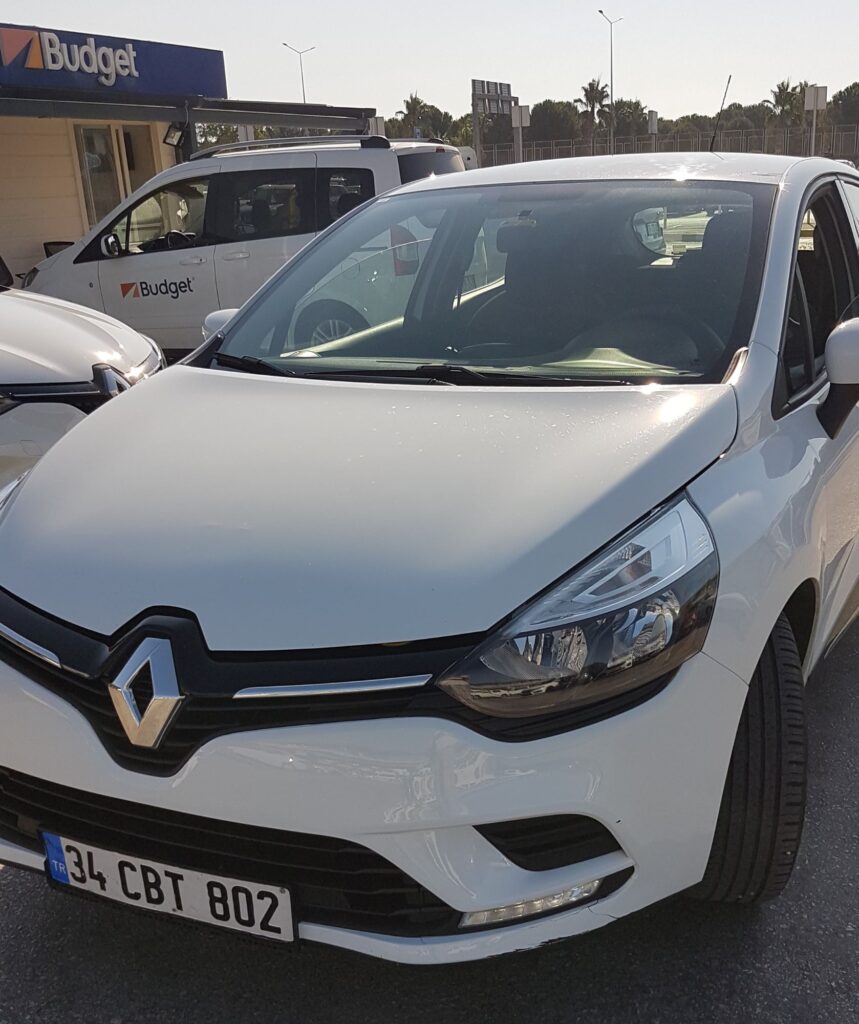
We booked an hour after arrival to have time to go through customs procedures. As a result, we left in 20 minutes and immediately went to look for a rental office. Our flight arrived at Terminal 2, and the Budget office is located in Terminal 1.
We found the office without any problems and arranged a car rental in ten minutes. We got a Renault Clio, 1.2 engine, diesel. It’s not the fastest car, but it pulled two people around Turkish serpentines just fine. But it was economical with fuel – we spent a little more than one tank for 1200 km.
We were given documents with which we went to the parking lot located opposite Terminal 2. Here we were given a car and checked the fuel gauge. According to the terms of the contract, the tank was full. We also checked the scratches and recorded them in the documents. We immediately went on a road trip through Turkey.
We returned the car in the same place – two hours before our flight home. We received the car promptly, and the money from the deposit was returned three days after the car was returned. In general, we were satisfied with the rental company, the car and our experience of traveling in a rental car in Turkey. We hardly felt any difference with the European experience.
Rules and peculiarities of driving in Turkey
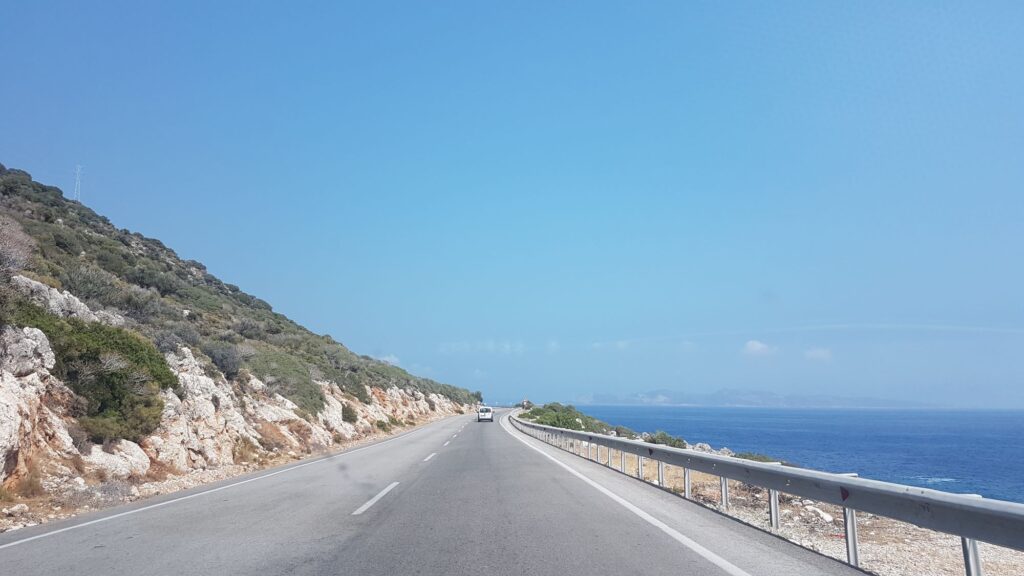
The habits of Turkish drivers are practically no different from those of ordinary European drivers. On the highways, it’s the same – sometimes the signs can be in Turkish. For example, the stop sign is “DUR“. In cities, Turkish drivers behave in the same way as in Ukraine. The only difference is that almost no one lets pedestrians cross the street. It seems that this is not accepted in Turkey.
The following speed limits apply in Turkey:
In the city – 50 km/h
Outside the city – 90 km/h
On highways – 120 km/h
I will not write about toll roads here. During our trip to Antalya and Muğla province, there were no toll roads.
Parkings in Turkey
On the coast and in small towns along our journey, parking was free everywhere. We used to leave the car on the side of the road if there was no “no parking” sign.
in Pamukkale we could park the car for free near the hotel, but there was a paid parking lot near the travertines. By the way, the parking lot and the bus stop are denoted by the same word – Durak.
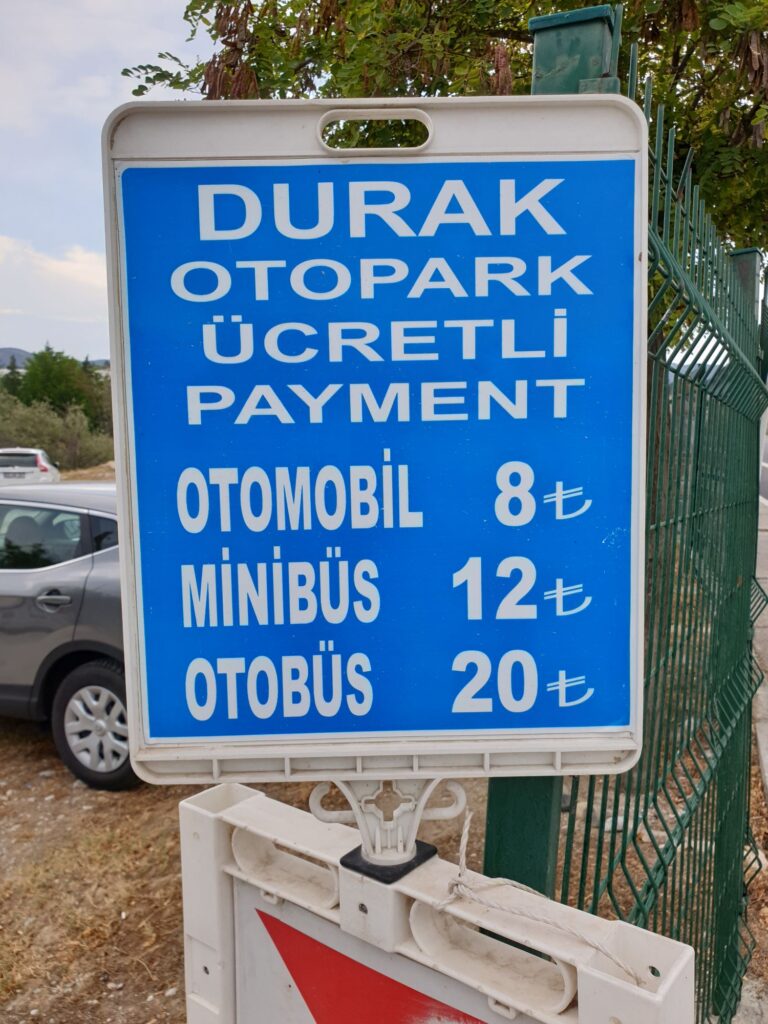
In big cities, you can’t park for free, unless you park your car near a large shopping mall for a few hours. Traditionally, a person in a vest pays for parking. In Istanbul, we left the car in a multi-level parking lot and paid the guard in cash. I haven’t even seen parking meters in Istanbul, although they may already be there.
Fuel and roads in Turkey
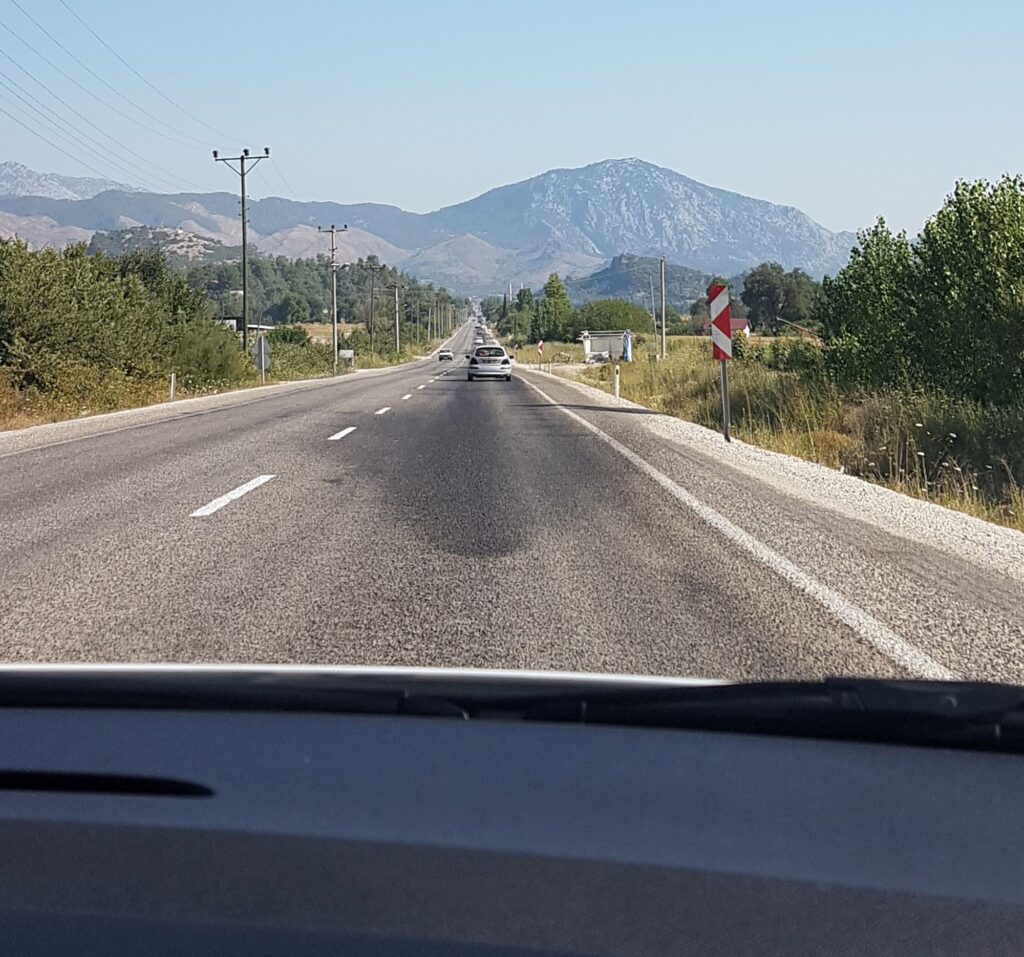
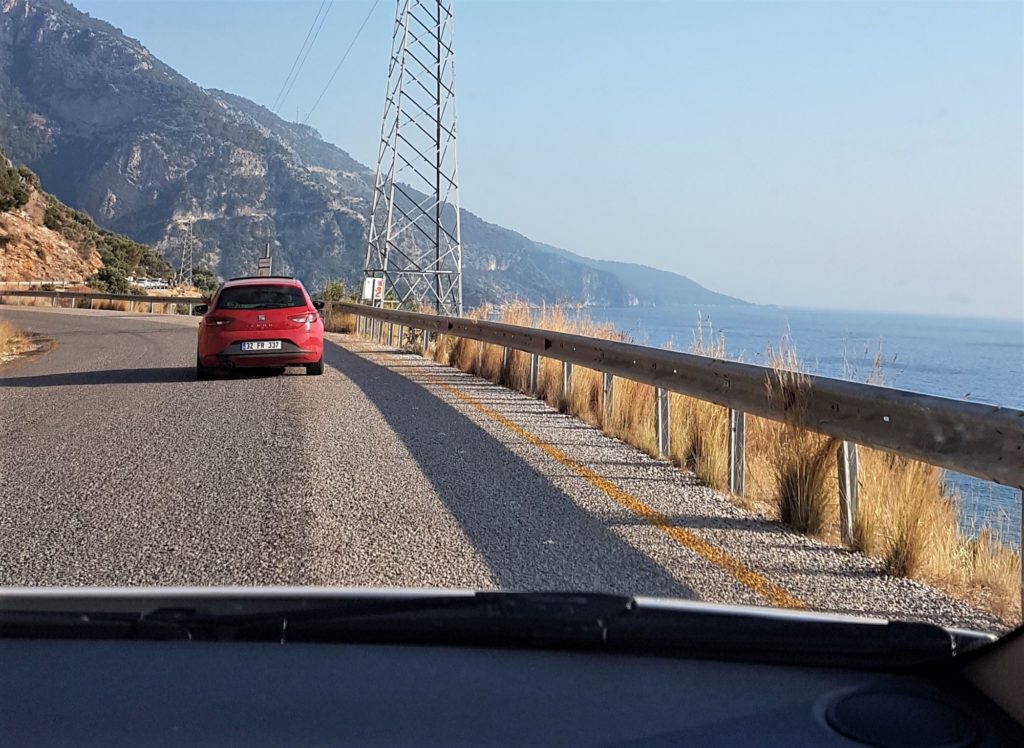
The roads in Turkey are of excellent quality. We drove more than 1000 km along highways, mountain serpentines and narrow country roads. Almost everywhere the asphalt was excellent, unlike back roads, Turkey has normal roadsides. Only in one place, the village of Kabak near Oludeniz, was there no asphalt. But it seems to be a feature of this hipster town. I also wrote about it in detail – it was a very cool vacation there!
I recommend reading Kabak – rest in a non-touristy place near the touristy Oludeniz.
Gas stations in Turkey offer three types of fuel:
- Kursunsuz 95 – Gasoline grade 95
- Kursunsuz 97/98 – Gasoline grade 97/98
- Motorin – Diesel
The cost of fuel in Turkey depends on many factors. The price is influenced by the brand of the gas station, who is the fuel supplier, and where the gas station is located (a major highway, a city, or a small village). And, of course, the Turkish lira exchange rate, which has been falling rapidly in recent years. This means that the cost of fuel is rising in lira.
Therefore, it is better to look at current fuel prices at Turkish sources. For example, here. We paid for fuel everywhere with a card – there are no problems with this in Turkey.
Recommendations for organizing a trip to Turkey
Rent a car – I highly recommend it, because without it, you will spend a lot of time waiting or adjusting your plans to public transportation. You can find the best option for a rental company on the aggregator DiscoverCars – Here you can find a budget option and read reviews about rental companies.
Book your accommodation in advance – remember that in Turkey Booking.com is not allowed in Turkey, so it’s better to find and book a hotel at home. Or use a VPN while in Turkey.
Do not neglect health insurance – on the portal HotlineFinance you can buy insurance without leaving your home, and you can also choose the best insurance company by comparing insurance packages right on the website.
Useful articles and links:
- Kas is the most romantic and cozy city in Turkey
- Fethiye and Oludeniz – features of the beaches where it is better to book accommodation for your vacation
- Lycian coast – big guide to unusual Turkey
- Patara Beach – instructions for independent travelers