What is the cheapest and best way to get around Malta and between the islands of the archipelago? How much does transport cost, where can I find public bus and ferry schedules? What is the best option for a company, family or solo travel in Malta? What are the peculiarities of driving on the islands?
I’m going to talk about all of this as much as possible in this article.
Car rental and driving in Malta

You can rent a car at Malta Airport. The roads on the islands are not bad, although often quite narrow.
I always recommend renting a car when traveling with at least two people. Or a family with children. Having your own car makes it easy to explore the islands at your own pace. And you’ll never have to worry about bus schedules, taxi prices, or bus route connections.
Numerous international and local car rental companies operate in Malta. You will find all the well-known international companies such as Hertz, Avis, Budget, Europcar and Sixt, as well as several local providers. It is convenient to compare and search for a car through DiscoverCarswhere all providers located at Malta Airport are presented.
The rental price per day is 15-20 euros, which includes unlimited mileage and insurance against damage, accidents, and theft.
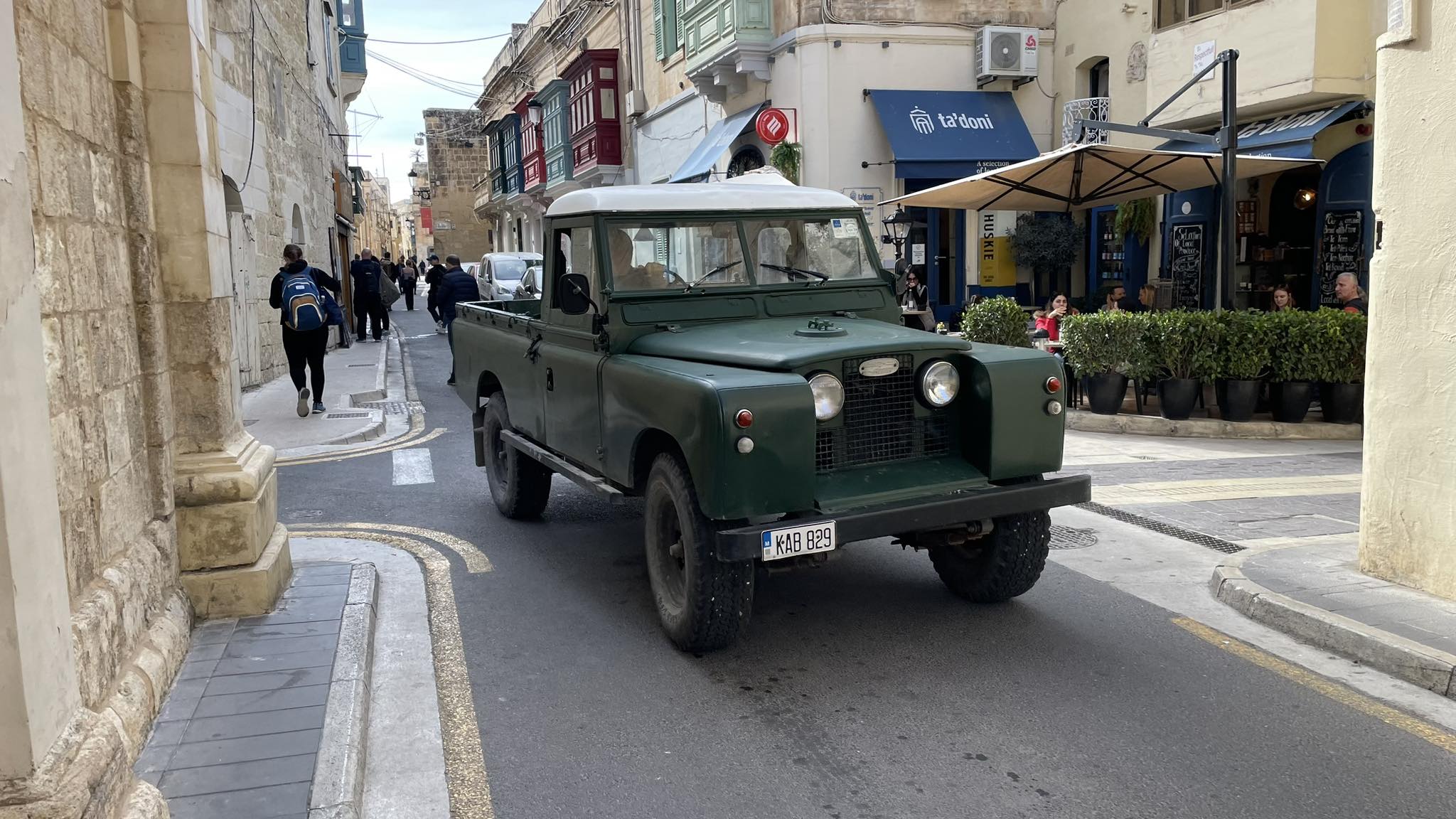
But before you start looking for a car, it is important to know about the peculiarities of driving in Malta. Here, left-hand traffic is like in the UK! You need to be mentally prepared for this, because the roads in Malta are a bit narrow and you shouldn’t make mistakes.
Driving in Malta
No matter where you are, driving in a new country can be stressful. However, having a car often means an eventful trip, where you will see much more than traveling by bus.
So, if you are planning to rent a car, it is important to note the following:
If you are coming from a country that has right-hand traffic, the first thing you need to know is that Malta has left-hand traffic. If you’re not used to it, get ready for a rough first few hours of driving.
The main tip is to always remember that the sidewalk, curb, or pavement should be on the front passenger’s side. This means that the sidewalk should be on the left (passenger side) and the road markings on the right (driver side).
Road conditions: The Maltese government maintains fairly good roads in areas with heavy traffic. However, on roads with less traffic or on more impassable roads, you should be prepared for a lot of potholes and very narrow lanes. You will almost certainly be shocked by the tiny size of some two-way roads in small towns and villages. In these places, it is very important to drive slowly and give way safely. especially in rural areas, where roads are becoming narrower and less convenient for cars.
Roundabouts: Malta usually does not have intersections – instead, there are roundabouts. They are no different from those in neighboring countries, such as Italy. But there is one main rule: you have to drive on the left (as in the UK). So you need to be very, very careful about which direction to go. circular motion.
When turning into a roundabout, always give way to traffic coming from the right.
Driving style
Maltese drivers are known for their unpredictable driving style, especially during peak hours from 8:00 to 10:00 am and from 16:00 to 18:00. The movement can be tense, leading to impatience and loud horns. Drivers also constantly forget about signage – they don’t show where they plan to turn.
To ensure smooth driving, you should always use your turn signals, drive in accordance with the speed limit(80 km/h on open roads and 50 km/h in populated areas), and drive in the left lane (right overtaking lane).
Navigation systems such as Google maps will be very useful. But road intersections where you might be turning are often hard to see until the last second, meaning you’re likely to be driving by them a lot.
I advise you to read it: Malta – how to plan a trip for 7 days
Areas of restricted traffic and parking zones
Traffic is restricted to Valletta through the CVA (Controlled Vehicle Access) system. Vehicles that want to enter Valletta city center must pay at a certain time, and the cost depends on the length of stay in the zone.
However, electric cars can enter the city center for free. Vehicles entering the CVA zone after 14:00 on weekdays and throughout the day on Saturdays, Sundays, and public holidays are not charged.
Since the city can still be difficult to navigate and the number of parking spaces in Valletta is very limited, it is better to park in the Florian district, where there are free parking spaces, or in a paid public parking lot. Some parking lots can be paid by card. However, many of them are controlled by a state-licensed parking attendant, in which case payment is made in cash.
Valletta also has a color-coded parking system: white parking spaces are for everyone without restrictions; green parking spaces are for Valletta residents only; blue parking spaces are reserved for residents from 18:00 to 06:00.
In other settlements, you will usually find several white spaces where you can safely park. Or yellow seats, which means that it will be a reserved seat. In some cities, such as St. Julian’s, parking spaces are timed. That is, you can park for only 120 minutes. So watch out for these signs.
If you are staying at a hotel, you are usually allowed to park in the designated hotel parking area at no extra charge.
Attention: no transport has access to Mdina at any time of the day, except for residents of the city. Therefore, leave your car in a parking lot in Rabat.
Traveling by bus on Malta and Gozo

Public transport in Malta for most tourists is the main and basic way to get around. These are buses of the Malta Public Transport company. They run around the islands of Malta and Gozo daily from 5:30 to 23:00.
In total, there are more than 200 routes connecting various localities with Malta’s main centers: Valletta, St. Julians, Mellieħa and the Airport, as well as other destinations.
There are 15 different routes on the island of Gozo, mostly departing from the central Victoria bus station to various settlements and natural attractions on the island. Bus service to Gozo is also served by Malta’s public transport, and passengers visiting the island can use the same bus and travel tickets as those used in Malta.
Be careful when choosing the direction of travel by bus: Malta has left-hand traffic, so you need to choose a stop taking into account that vehicles and buses usually move in the left lane. Many tourists (including me the first time) get confused.
Designation of of buses
- As a rule, one- or two-digit routes (e.g., 1, 2, 3, … 12 … 94) indicate trunk routes that run through Valletta from different locations.
- Express routes and buses to the airport are marked with an “X“. Night buses are marked with the“N” sign.
- Route numbers starting with 100 are local routes that run within the same settlement or city. At the same time, buses on these routes run quite rarely.
- Intercity bus routes start at 200.
- On the island of Gozo, there are bus routes starting from 300.
Cost of bus and travel tickets

The bus fare for two hours is 2.5 euros, including transfers from one bus to another. Night buses cost 3 euros.
Tickets can be purchased from vending machines at major bus stations or directly from the driver when boarding the bus. Payment in cash or by card with Paypas.
Note that there are tourist old buses in Valletta that you can take, for example, from Valletta to Rabat (via Sliema and St. Julians). The price for this bus is the same as for a regular bus – 2.5 euros.
For active travel around the islands of Malta and Gozo, it is worth buying a 7-day Explore Card, which pays off quickly (adult – 25 Euros / child – 7 Euros). Each time you enter the bus, you just need to attach it to the validator, which, when triggered, will let the passenger on the bus.
Passes are sold at bus stations or at the Malta airport – at the Malta Public Transport kiosk, which is located directly opposite the exit from the arrivals hall and is open 24 hours a day.
Look for travel options (1.4 days and others) on the website of the transport company.
Schedule and route network
Please note that the schedule on weekdays, weekends, and holidays varies.
Timetable, route network and description of the travel card system are available on the website of the Malta bus company. All signs and stops are duplicated in English. In buses, the names of the stops are displayed on the board inside the cabin and are also announced by the announcer (though a little unclear, but if you look at the board, it’s fine).
Timetables and directions are available at each stop. Buses usually run on schedule, at least departing from their final destination on time. And at intermediate stops, there may be delays. This happens because the streets and roads in Malta are quite narrow, and bus drivers often have to wait for oncoming drivers to let the bus pass. Or someone parked their car badly.
Ferries and boats in Malta

Malta is an island nation, so it has a well-developed water transport network.
Malta and Gozo are connected by a passenger and car ferry that runs daily between Cirkewwa (Malta) and Mġarr (Gozo). Several buses go to Cirkewwa from different towns and villages around the island, as well as from Mgarr to Victoria (Gozo). Ferries run from 06:00-6:45 to 23:00 with an interval of 20 minutes, travel time – half an hour, round-trip fare – 4.65Euro/adult, 2Euro/child (round-trip car transportation costs 15.7 €). Schedule on the website of the ferry service.
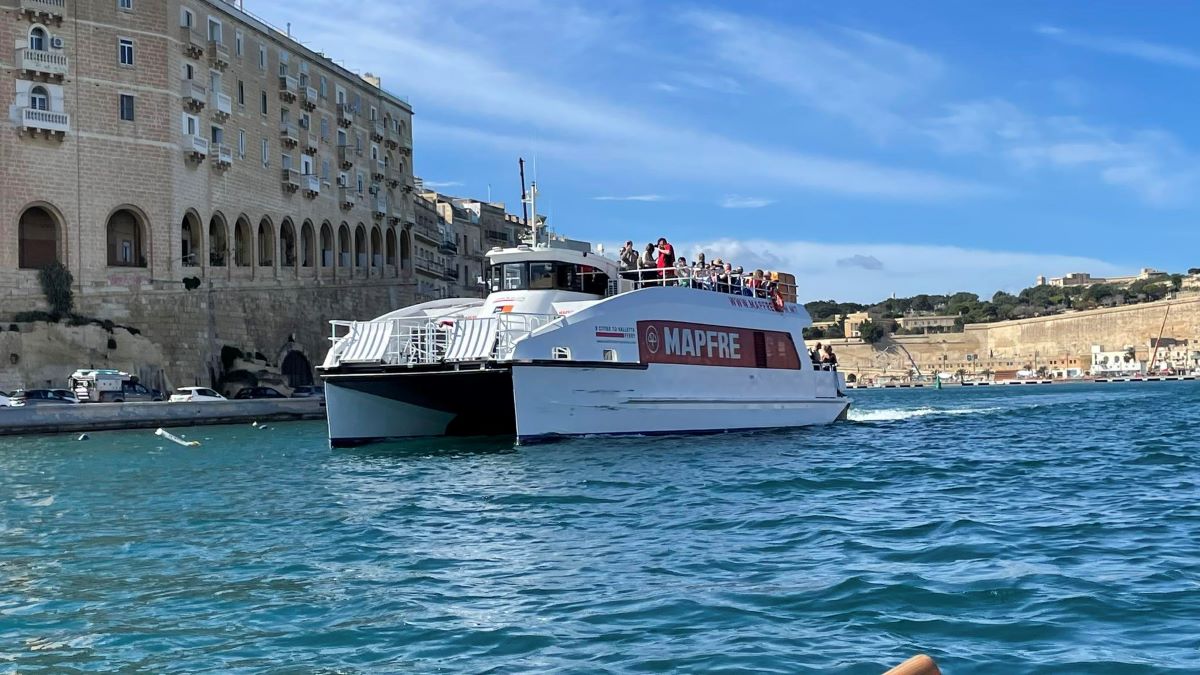
There are also high-speed passenger ferries from Valletta to Gozo(7.5 euros one way, 15 euros round trip). I strongly advise you to check the weather and wind speed before buying a ticket for this ferry. Because even in a small storm, the high-speed port can sway very strongly. It was in a storm that I was riding it to Gozo and almost everyone around me was vomiting. That is, even if you do not have problems with the vestibular system, it is not a pleasant experience to be among people who feel sick from motion sickness.
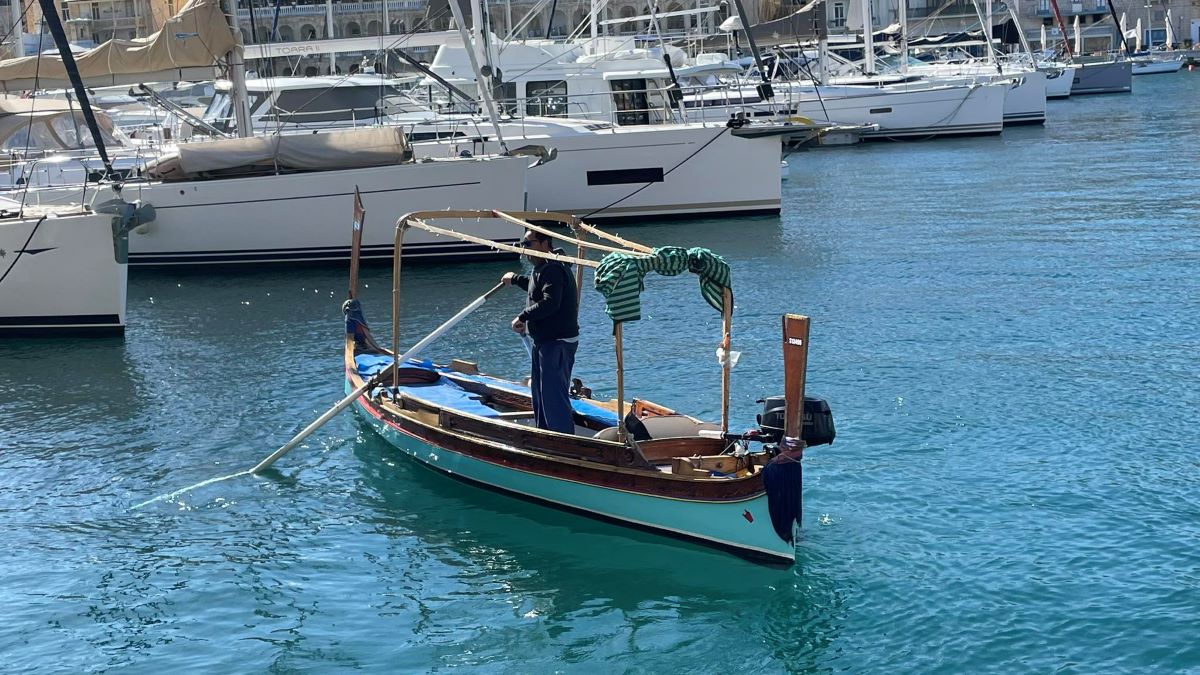
Small ferries (actually boats) that ply the Great Bay of Valletta from one shore to the other (2 euros).
Dgħajsa boats also ply between the shores of Valletta Bay, with a capacity of 6 people per boat (2 euros).
Boats (ferries) to the island of Comino
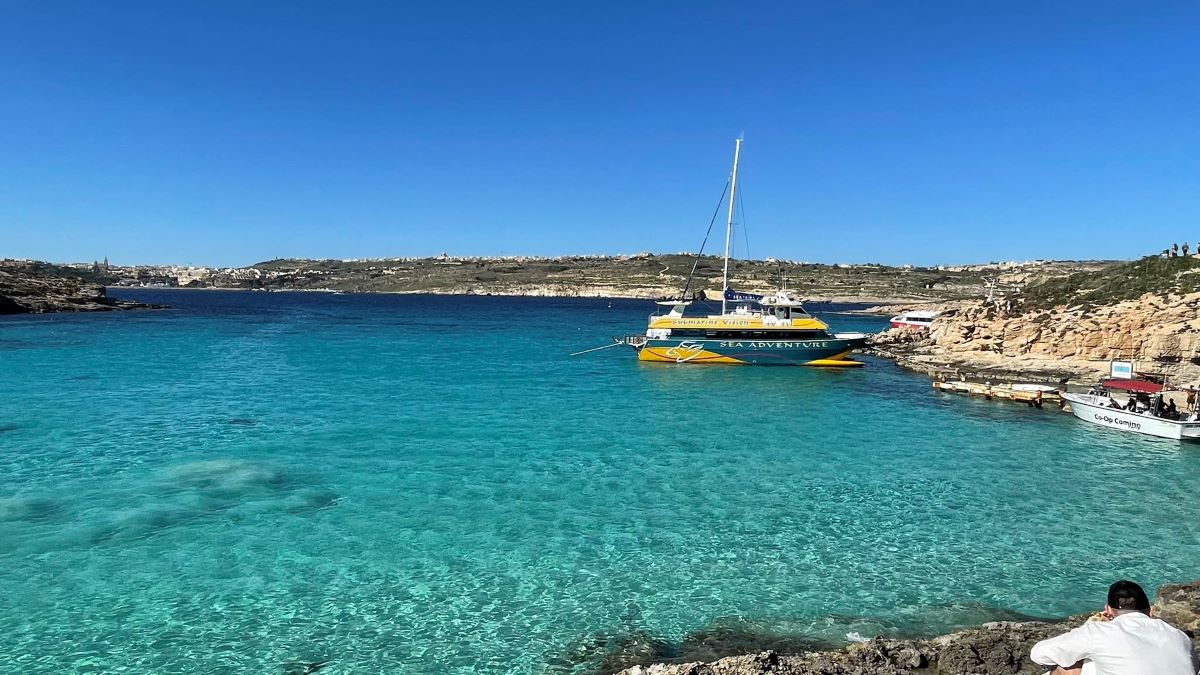
Another issue is how to get to Comino Island and Blue Lagoon. This is a separate transport that runs to Comino from both Malta and Gozo. They are also ferries (at least that’s what the locals call them), and in fact they are motor boats of different sizes. All of them are part of the so-called cooperation of ferries operating on the Comino. That’s why they all have the same prices.
There are several options for prices and routes:
- Ferry Gozo-Comino-Gozo – 10 euros for a regular round-trip ticket, 15 euros with the opportunity to see the grottoes of Comino.
- The Malta-Comino-Malta ferry is the same, 10 euros for a regular round-trip ticket, 15 euros with the opportunity to see the Comino grottoes.
- You can also pay for a one-way ticket (5 Euros). For example, you can sail from Malta to Comino, stay there, and then catch a ferry to Gozo, paying another 5 (or 10) euros, depending on whether you want to see the grottoes. This option is possible, but boat owners are not very happy when asked about it. So they may refuse – be aware of this as well.
These routes are operated by different boat owners (companies), so if you buy a round-trip ticket from one, you will be returning with the same one. Other ferries will not take you, so follow the schedule of your company (it is printed on the ticket).
Tickets in each company have a different color: blue, orange, black, green tickets. The color of the ticket indicates boarding. That is, everyone is standing in a pile on the pier, a ferry boat comes up, you ask the waterman, or he tells you the color of the ticket.
In principle, everything is simple, you just need to understand this system a little bit.
Taxi in Malta
Taxis can be found at designated taxi stands. Especially in busy areas, such as airports, ferry terminals, and popular tourist destinations. You can also order a taxi by phone or through the hotel reception.
Taxis in Malta are usually metered, and the government sets the fares. The tariff structure includes a basic rate plus the distance traveled and waiting time. Always make sure that the meter is turned on when you start your trip.
Taxis accept both cash and cards. However, it is worth having some cash on hand, especially for shorter trips.
Licensed taxis in Malta are easily recognizable by their white color and the TAXI sign on the roof. Drivers must have proper identification and documents.
You can also order a taxi in advance through the online service Kiwitaxi .
Personally, I would recommend using modern taxis – Bolt and Uber operate in Malta, as official “white taxis”, as they are called locally, are usually more expensive and of lower quality. Payment by card through the app. Bolt offers the ability to book a taxi in advance. Uber doesn’t have such a service yet.
Useful links for traveling to Malta:
Car rental – I am looking for inexpensive options on DiscoverCars
Booking hotels and apartments – traditionally on Booking.com
Excursions in Malta – book in advance on GetYourGuide
Buses in Malta and Gozo on the website of the transport company of Malta.
High-speed ferry from Malta to Gozo – tickets are available at the ticket office or online on the port’s website.
Omio – ticketing service gives a 10 Euro discount
What else to read:
- Features of a road trip in Portugal – route from Lisbon to Porto
- Tropea – beach vacation in Calabria, Italy
- Algarve – the best beaches in Portugal
- Route of independent travel by car in Croatia – what to do in 10 days of relaxation