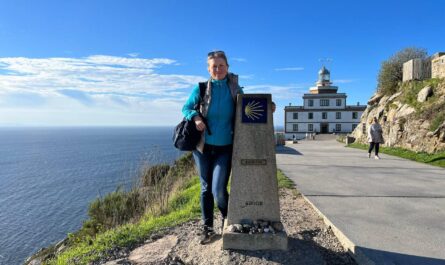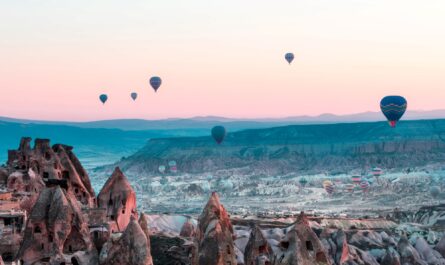

Alternative Camino de Santiago routes in Portugal, Italy, Japan, Norway, Turkey, Romania, and Ukraine.
Camino de Santiago is one of the most famous walking routes in human history. Every year, nearly 350,000 people undertake the pilgrimage ending at the cathedral of Santiago de Compostela.
But this also means that the most popular route options – the French, Portuguese, and Northern Norte – are overcrowded. While the large number of pilgrims gives you the opportunity to socialize with other walkers, it leaves little room for self-reflection.
However, there are a number of other routes across Europe and the rest of the world that offer the Camino experience. They are also ideal if you’ve already walked one or two routes of the famous pilgrimage and are looking (like me) for other long-distance hiking routes.
Here are some of the best alternatives to the El Camino de Santiago – you can consider these as my plans for the future (apart from those that have already been realized).
Camino Mozárabe – a not very well-known Camino

If you want to take a walk in Spain – there are shorter, tougher, and less-known journeys that are also made by Christian pilgrims. The Mozarabic Way or Camino Mozárabe is a series of walking routes that start in various locations across Andalusia and converge in Mérida near the border with Portugal.
These were the roads used by Christians in the territory of Andalusia. So you can learn about the history of Spain while on a pleasant walk. Some of the oldest sections run along Roman roads, offering yet another opportunity for historical discoveries.
The route can start from Granada, or you can go inland from Malaga and Almería, passing through different paths that vary in length and difficulty. In total, the length of the routes is about 1,500 km, all the way to the Cathedral of Saint James in Galicia.
I recommend reading: My own experience walking the Camino Mozárabe
Via Transilvanica – Romania’s answer to the Camino de Santiago

In Romania, a newly opened 1,400-kilometer hiking route stretches from north to south through 108 towns and villages. The idea originated in the mind of 52-year-old Alin Useriu 10 years ago. He wanted to create something similar to the ancient pilgrim route Camino de Santiago or the American Pacific Crest Trail.
More than 10,000 volunteers helped make Useriu’s dream a reality, waymarking the Transilvanica route, which runs through the Romanian Carpathians. Four years from the start, the task is finally complete and the hiking trail has just been opened. Useriu was the first person to walk it, taking two months from Putna in northern Romania to the end of the Via Transilvanica at Drobeta-Turnu Severin near the Serbian border.
Via Francigena – through Switzerland and Italy to Rome and the Vatican

Another ancient road and pilgrimage trail is the Via Francigena. It stretches for over a thousand kilometers, and most people start from the Great Saint Bernard Pass in Switzerland and make their way to the Eternal City, Rome.
This is one of the oldest documented pilgrimage routes in Europe. The full historical route takes travelers from Canterbury Cathedral in England to the tomb of the Apostles Peter and Paul at the Holy See in Rome. If you plan to walk the entire route, which is over 2,000 km, allow more than 90 days for this journey.
The trail offers an exceptional experience away from the famous route and allows you to visit various interesting towns along the way. But while the Spanish Camino has albergues and hostels for pilgrims – on the Via Francigena you can spend the night in monasteries and shelters organized by different churches.
I walked 420 km from Lucca to Rome and received the Testimonium in the Vatican – it turned out to be a fantastic route with good infrastructure.
I recommend reading – Via Francigena – how to prepare and walk the Italian Camino
Pilgrim Route to Montserrat Mountain, Barcelona (Catalonia)
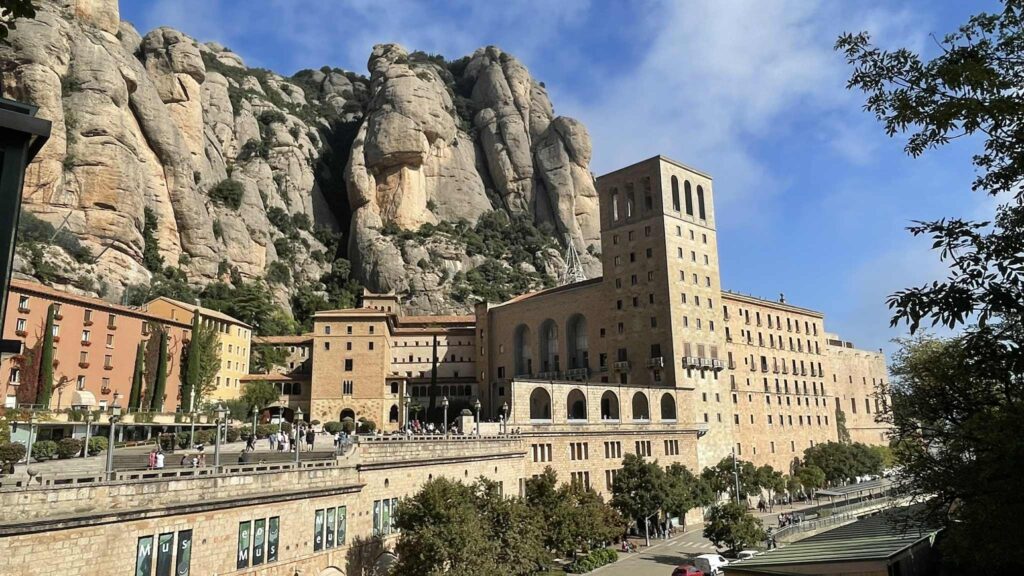
If you don’t have several free weeks, but you have a burning desire to make a pilgrimage on foot or simply take a short mountain hike of incredible beauty, you should take a look at the famous Montserrat Monastery located near Barcelona.
Montserrat is not just a monastery with a museum and a winery at an altitude of 720 meters. It is quite a bizarre mountain range, offering wonderful views of the suburbs and neighboring cliffs. On the mountain, there are five official and many unofficial trails for walks.
The most famous: Prayer Route (Rosari Monumental de Montserrat), which leads to the Holy Cave (Capella de la Santa Cova), where in the 9th century the first sculpture of the Virgin of Montserrat was found. A copy of the statue, which stands in the abbey cathedral, is still kept in the cave.
You can also approach this Madonna and touch her, make a wish, and avoid the queue that gathers in the main church. Along the way, there are 15 early 20th-century sculptures depicting scenes from the life of Christ and the Virgin. On the way down, you’ll see wonderful views of neighboring rocks and areas.
Technical details of the route
Route length: 1.5 km one way. Travel time is 30–40 minutes one way. At first, go down the wide paved road to the Sant Joan funicular station (the route can be shortened by half if you take the cable car from the entrance to the abbey). Then the path climbs up to the cave.
The “cave” is a small chapel, quiet and cool with no crowds. Inside, there is a statue of the Virgin, a bronze sculpture of Christ, and a special room for objects left as gifts to the Virgin for wishes.
After that, you need to return to the monastery the same way. Although the route is considered easy, someone unprepared should still be careful, wear comfortable shoes, and carry a supply of water, especially if you are here in summer and your mini-hike is in the daytime.
There are also routes on the mountain of 5–7 km along narrower mountain trails from the monastery up to the chapel of St. Michael (Cami de Sant Miquel). To reach St. Michael’s Cross (Creu de Sant Miquel), you can take a short path or the more difficult La Font Seca trail, which leads to a viewpoint past 19th-century cannons.
Kumano Kodo and Shikoku Henro – Camino sisters in Japan

If you are looking for something further from Europe, Japan has two walking trails that are twinned with the Camino de Santiago.
Kumano Kodo is a 70-kilometer pilgrimage route located on the Kii Peninsula on one of Japan’s largest islands. It consists of several trails leading to the Kumano temple, which emerged in the Middle Ages. The paths cross a number of southeastern Japanese regions, running through mountains and beautiful villages.
Shikoku Henro is another route, located on the island of Shikoku. It is circular, covers 1,200 kilometers, and allows you to visit 88 temples along the way. There are four sections of the route, which correspond to the four prefectures of the island. Like Kumano Kodo, the route dates back to the Middle Ages and was first mapped by the Buddhist monk Kukai, also known as Kobo Daishi. Kobo Daishi is considered an important figure in Shingon Buddhism and spent much of his life spreading this branch of religion throughout Japan.
Camino de Ronda (Catalonia)
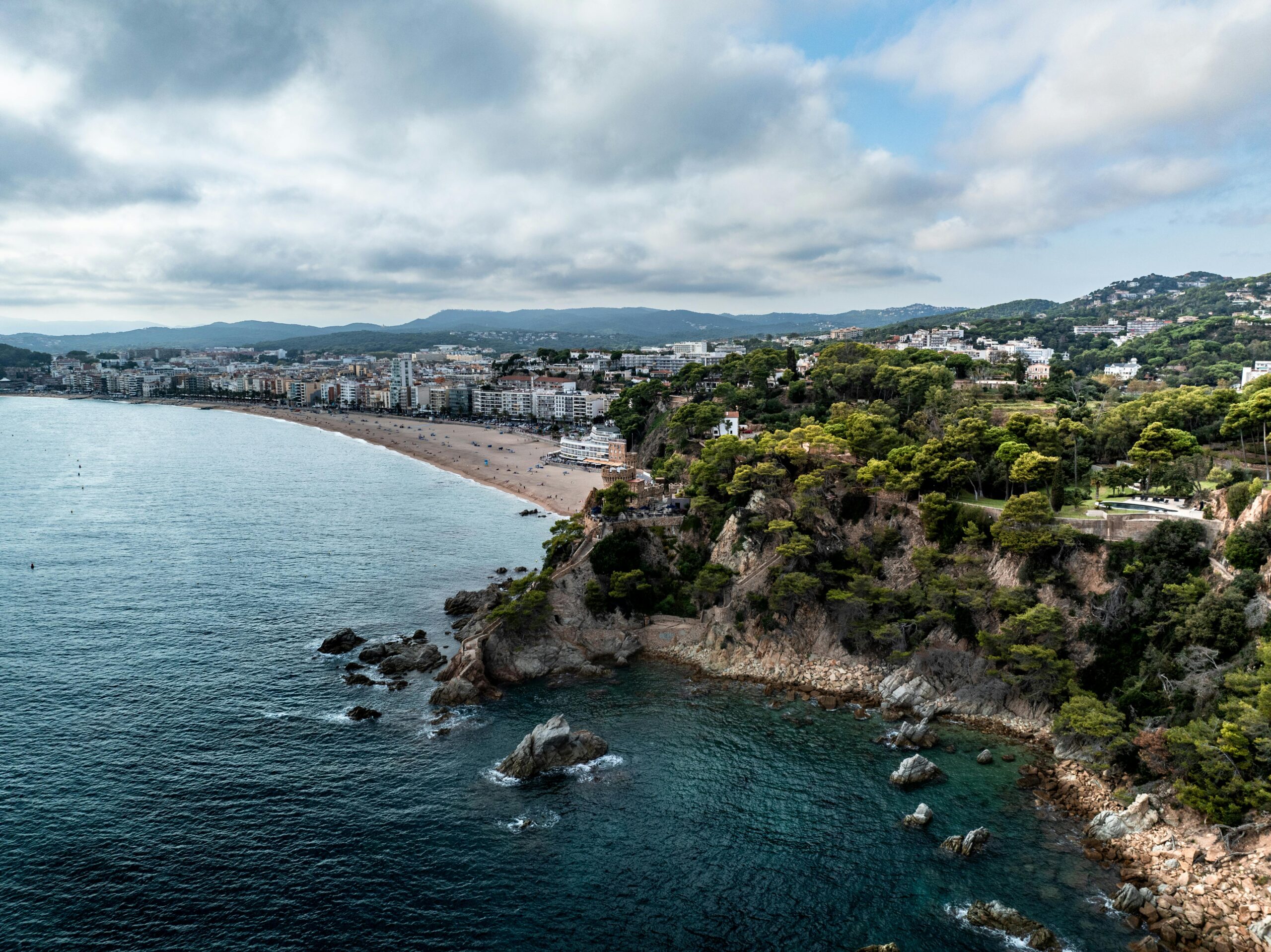
Camino de Ronda (the Catalan Cami de Ronda) is a path that has survived since the late 18th century and originally ran along the entire coast of Catalonia. The road was used both by the civil guard for patrolling coastal borders and marine territory, and by fishermen who landed far from their village during a storm. Pirates and smugglers also made their way along this Camino.
Eventually, the route fell into disrepair, some parts collapsed with stones, and as a result, it split into several sections. Today, several segments from 2 to 13 km long on the Costa Brava have been restored and serve as tourist trails for pleasant walks.
Routs and parts
– San Pol – S’Agaro: a beautiful path under pine trees along the rocky seashore. Walking time – 1 hour. Suitable for cyclists too, and some places are equipped with ramps for wheelchairs. The road has markers, green arrows GR-92.
– Roc de San Gaileta – Platja Llarga: a broad promenade 2.5 km long with viewpoints and opportunities to descend to the sea for a swim. Two-thirds of the path is an asphalted sea promenade, the last third is a wooden deck. Along the way, you can see beautiful houses and an old church.
– Vilanova – Sitges: a 7 km dirt trail with white-red markers and several route options. You can stick a little inland or follow the coastline. The latter trail is more scenic, but sometimes runs along the cliffs and over small hills. It is positioned as easy for walking with children, but it’s not recommended to bring very small children or strollers here. Comfortable trekking shoes are more than desirable.
Nowadays Camino de Ronda is also a part of GR’92 (Grand Recorrer) – a huge 561 km hiking trail stretching along the entire Mediterranean coast from Portbou to Tarifa, passing through Catalonia, Valencia, Murcia, and Andalusia. If you wish and have the right preparation, you can walk this entire long route.
I recommend reading: Costa Brava, Spain – seaside vacation and interesting places
St. Olav’s Way – on foot through Norway’s fjords and mountains

St. Olav’s Way in Norway is another ancient pilgrimage on the list of hiking routes in Europe. There are seven possible routes that lead travelers through the rural areas of the country to Nidaros Cathedral in Trondheim, where St. Olav is said to be buried.
Travelers have been using this route since 1032, with a series of shelters built along the path across hundreds of years of history.
This route requires a bit more planning, as hotels and accommodation are farther apart than on other routes. The time of year you go is also important, considering bad weather and short days if you begin your journey in September. The optimal season is from May to August.
A Walk Along Turkey’s Coast: The Lycian Way

This route is a combination of several ancient paths once used by the Lycians. It will take you along the rocky coast by flat turquoise waters and deserted beaches.
Lycia is the historical name of the Tekke Peninsula, which juts into the Mediterranean Sea on the southern coast of Turkey. This 509 km route passes through places where you can see remnants of the ancient civilization that once ruled the region.
On the Lycian Way, accommodations are far apart, and some villages are too distant to walk between them in one day. This means you may have to carry a tent and spend the night at campsites in the mountains or on the beaches.
This is exactly what I did, hiking the western part of the Lycian Way – you can read about it here.
Rota Vicentina – Walking in Portugal on the Fishermen’s Trail

Rota Vicentina (St. Vincent Route) is located on Portugal’s northwestern coast. It is divided into two routes – the Fishermen’s Trail and the Historical Way.
The Historical Way (Caminho Histórico) leads from Santiago do Cacém to Cape Saint Vincent. Its length is 262 kilometers. The route is divided into 13 stages – from 12 to 33 km long. The Historical Way goes through fields and hills, passing through towns and villages. You can get to know the culture and life of southern Portugal. The route is not difficult, with virtually no elevation changes.
The Fishermen’s Trail (Trilho dos Pescadores) runs mostly along the ocean – from Porto Covo to Lagos. It’s 226 kilometers long, split into 13 stages, with daily distances from 10 to 22 km. This route is perfect for those who prefer solitude and silence. However, it is tougher than the Historical route due to sandy dunes and elevation gain.
I chose the coastal road along the ocean and completed it in 11 days. I went from north to south – you can read about it here.
Camino Podolico – Ukrainian Saint James Way across Podillia

Camino Podolico – the Podillia Saint James Way, laid from Vinnytsia to Kamianets-Podilskyi. Camino Podolico starts in Vinnytsia at the Church of the Virgin Mary, then goes through Hnivan, Brailiv, Zhmerynka, and Bar to Kamianets-Podilskyi itself. The length of Camino Podolico is about 250 kilometers and it’s designed for 10–12 days.
The route passes along secondary roads and trails, by churches and old Polish manors, through landscape parks, fields, and forests. This is not so much a religious route as a cultural-ethnographic one – for pilgrims and regular tourists who want to test themselves, learn and see something new in their own country.
There are no albergues or hostels here, but there are small and cheap hotels, and you can also stay with locals who are happy to cooperate with the route organizers, provide accommodation, and tell you a lot about their towns and villages.
Useful articles and links:
- Dolomites Alps – hiking the most beautiful routes
- Nepal travel guide – how to prepare for an independent trip
- Wild camping in Europe – where you can and where you can’t spend the night in a tent
Travel medical insurance – online at HotlineFinance
Hotel and apartment bookings – Booking.com