
I’ve been hiking with a backpack to walk one of the many pilgrimage routes of the Camino de Santiago. These routes flow like rivers to the third largest Catholic shrine, the city of Santiago de Compostela.
Why do hundreds of thousands of people – religious pilgrims, tourists, people in search of themselves, and just those who like to walk for a long time – walk the roads of Spain, Portugal, France, and even Ukraine every year (yes, we also have our own piece of Camino Podolico)?
I will tell you what you need and how much such an unusual trip costs in this article. Why did I once embark on a pilgrimage and still can’t stop? I answer these questions below.
Why walk so long and far?
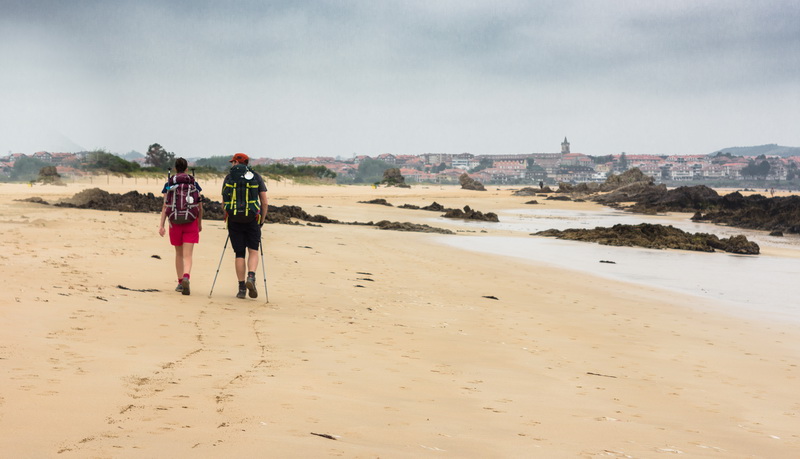
Why do thousands of people from all over the world pack a backpack and set off on a long journey on foot? Everyone will have their own answer and reason: someone like me likes to walk for a long time, feeling every moment of the journey, living a piece of life “here and now” without chasing the end.
Some people walk the Camino to solve their internal problems. And some people go in memory of their loved ones who are no longer in this world, dedicating their Camino de Santiago to them.
In any case, a walk of a couple of hundred kilometers is beneficial: you can communicate with yourself, which is not often possible in ordinary life, meet interesting people from all over the world, overcome your fears, and eventually lose weight, or at least tone up your body and clear your head of heavy thoughts.
Why I love to walk

Long distances or into the mountains, I have walked many trails in the Carpathians, Alps, and Himalayas. A long time ago I learned about the existence of the Santiago Way. I wanted to test myself to see if I could walk 20-30 kilometers a day for two to four weeks, sleeping in pilgrim hostels. I also thought it was a fantastically good idea to get to know a new country by walking through it.
It turned out that the Camino is not only and not so much about getting to know the culture, history, and religious monuments of the country where you are going. This way gives you a lot of interesting acquaintances with other pilgrims. And also the opportunity to observe others, and of course yourself, which gives you a lot to think about.
And the most important thing for me in such a vacation is to feel happy at any time. Even when I was tired, my legs hurt, my back was under the backpack, it turned out that it was on the Camino that I felt very happy.
A little history of Camino
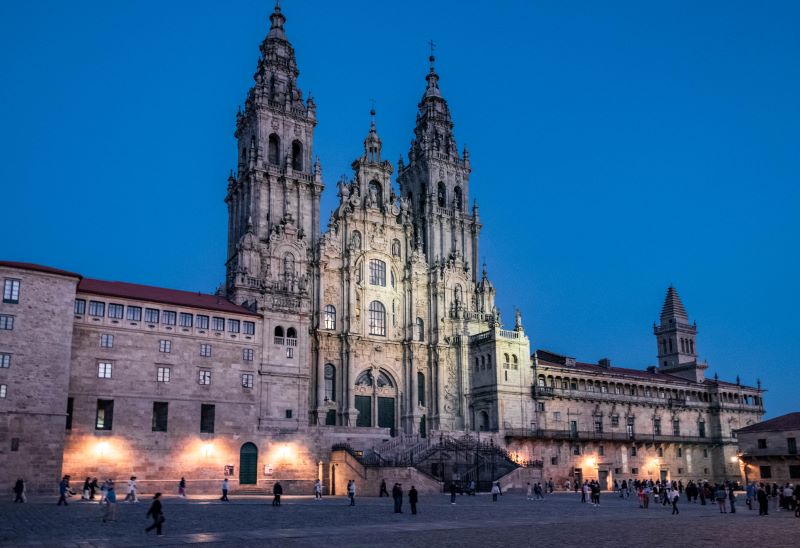
Spain is home to the third most important Catholic shrine after Jerusalem and Rome, the city of Santiago de Compostela. In the very center of the city is the Cathedral of St. James, where the relics of this saint are kept. St. James is the patron saint of Spain, its most important saint.
James was one of the apostles of Jesus and after his resurrection he went to Spain, to the Iberian Peninsula, to spread the word of God. After a few years of preaching, James returned to the lands of Judea, where he was killed – beheaded by order of King Agrippa I. James’ disciples put the body in a boat, which after a while sailed to the shores of Galicia, the northwestern part of Spain. It was here that he was buried, and for a long time the relics of the saint were forgotten until they were found by a hermit monk in the IX century.
The relics of the saint were transferred to the small town of Santiago de Compostela, named in his honor. Since then, thousands of pilgrims have walked the Camino de Santiago to cleanse themselves of their sins and pray to the saint. Today, the Santiago Way is a UNESCO World Heritage Site.
Recommend to read: Galicia – a guide to the green province of Spain
The main routes of the Camino

There are many routes on the Santiago Trail, some of them very popular:
- The French Way – Camino Frances (800 km) is the most popular and crowded Camino with a well-developed infrastructure. Camino Frances begins on the territory of France in the village of Saint-Jean-Pierre-de-Port, runs along the northern part of Spain through major cities such as Pamplona, Burgos, Leon and ends, like all other routes, in Santiago de Compostela.
- The northern route is the Camino del norte, which runs along the Bay of Biscay (800 km),
- The Portuguese route from Lisbon or Porto is the Camino portugués (250 km). There are two options – Historical and Coastal. This is the most popular route (from Porto) for beginners. Because it’s not difficult, there are no high mountains on the way and no big difference in altitude. The route takes 10-12 days, which is very convenient for those with limited vacation time.
On each of the pilgrims’ routes, a variety of landscapes awaits them – from the Pyrenees Mountains and the Galician hills with peacefully grazing cows to the plains of Burgos, where stubborn winds blow, preventing pilgrims from moving faster.

Santiago de Compostela
All Camino routes end in the city of Santiago de Compostela, namely in the Cathedral of St. James, where daily at 12:00 and 19:30 masses for pilgrims are held. Pilgrims and tourists gather in the huge cross-shaped hall to read and listen to prayers and the sounds of the organ. And in the end, sometimes (not always) the world’s largest censer, the Botafumeiro, is lit. It flies under the vaults of the cathedral, spreading clouds of fragrant smoke and almost reaching the ceiling as it swings. It’s an incredible sight, it brings tears to the eyes of even non-religious people.
This ritual appeared in the 11th century – a huge censer served as a disinfectant when pilgrims, having traveled hundreds of kilometers, gathered under the arches of the cathedral. Today, this stunning show is accompanied by the flashes of phone and camera flashes.
After the mass, you can go up to the altar, where the gilded sculpture of St. James is installed, and embrace him and ask for the remission of sins and the fulfillment of your most cherished desires. In the semi-basement crypt, the relics of the saint are kept in a silver chest, and pilgrims and believers come to bow their heads and knees to them.
Which Camino routes I have already completed
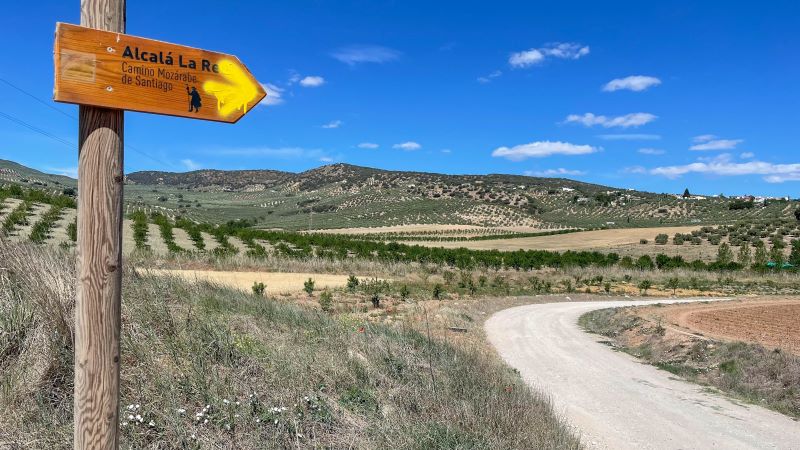
Once you try this kind of travel it’s hard to stop one day. Every year when I reach the final point, I immediately plan the next route.
All routes are different in terms of terrain and landscape – mountains and hills, the ocean, fields and towns await you along the way. These Caminos were also held in different countries – Spain, Portugal, France, and Ukraine. Some of them, such as the French and Portuguese routes, are very rich in pilgrimage shelters, albergues, and have good infrastructure for pilgrims. But on Ukrainskyi or Mozarabskyi, the situation with housing is different. For overnight stays, there are small hotels and guesthouses, or you can stay with local residents who host people.
All the routes were interesting, each in its own way, and it looks like I’m not going to stop in the coming years.
In seven years, I’ve gone through seven different routes:
- 400 km from Leon to Santiago de Compostela (part of the Camino Frances) + Cape Finisterre (Camino Fistierra).
- 800 km from San Sebastian along the northern coast to Santiago de Compostela (Camino del Norte).
- 250 km along the Atlantic coast from Porto to Santiago de Compostela (Camino Portugues Costal).
- 200 km from Vinnytsia to Kamianets-Podilskyi (Camino Podiliko – Ukrainian Way).
- 260 km from Saint-Jean-Pierre-de-Port to Burgas (the first part of the Camino Frances).
- 240 km from Porto to Santiago de Compostela (Internal Portuguese route).
- 150 km from Granada to Cordoba (Camino Mosarabe in Andalusia).
- 320 km from Oviedo to Santiago de Compostela – Camino Primitivo
- 75 km from San-Vinsente-de-la-Barquera to San-Toribio Monastery – Camino Lebaniego in Cantabria (Picos de Europa)
The Camino de Santiago of today
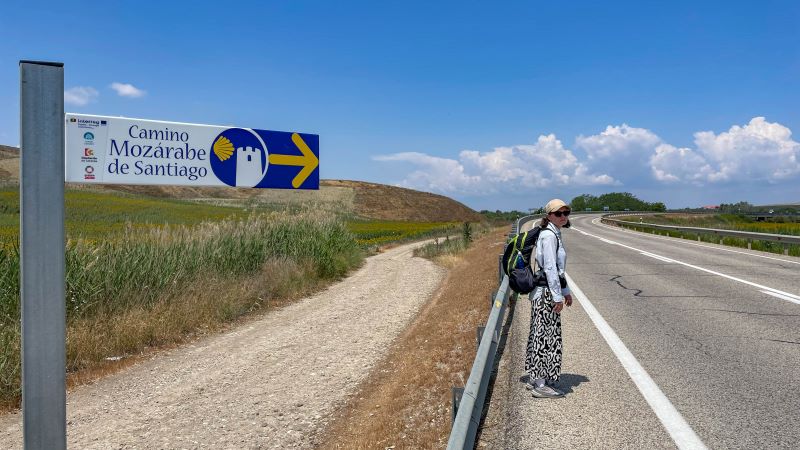
Today, the Camino de Santiago is hundreds of kilometers of religious and tourist hiking and biking trails that can be walked and cycled. Sometimes you can also see pilgrims with dogs, on donkeys, and on horses – the latter are more of a tourist attraction, but donkeys are a real attraction on the way.
All routes are marked with yellow arrows or Camino symbols – scallop shells that the pilgrims once wore on their cloaks as a sign of honor to St. James.
Nowadays, publishing houses publish guidebooks on different routes of the Camino. They have a lot of historical and contemporary information, detailed maps, places to stay, and recommendations.
Camino is the subject of feature films and documentaries, books, and popularization of the Santiago Way around the world. Not only Catholics come here, but every year more and more tourists come to the Camino and are happy to make their own way.
The sandals, sticks and cloaks of the ancient pilgrims have been replaced by trekking boots and trail sneakers, ultra-modern clothing, ergonomic backpacks and walking sticks. Pilgrims spend the night not only in shelters but also in comfortable hotels. The pilgrimage infrastructure is gradually turning into a tourist infrastructure – pilgrims into “tourigrims“.
When is the best time to go to Camino?
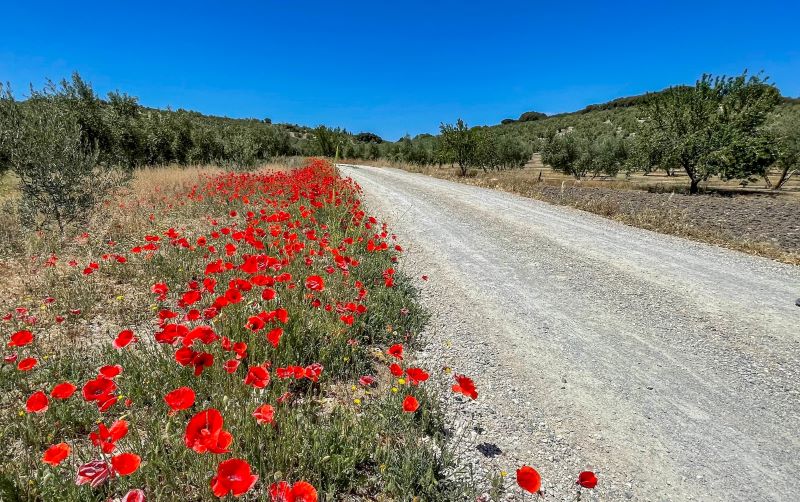
People go to Camino all year round, depending on the route they choose. For example, The Portuguese Way for example, is easier to walk in spring and even winter than in the summer months. Because the temperature in Portugal reaches 40 degrees in July and August, it is very difficult to stay outdoors all day in such a heat.
The French route is also year-round, but in the mountains there is a high probability of snowfall. Therefore, you need to look at the forecasts and choose parts of the route without mountains.
In any case, you can always find a place to spend the night on these routes at any time of the year.
The ideal time for Camino is May-June and September-October. During these months, the most comfortable weather is in the north and south of Spain, although short-term rains are possible.
July-August is the most crowded period in the northern Camino because it’s a time of vacation and good weather. But as for me, there are too many people here in the summer. And for me, this is a disadvantage: there is no way to be alone with myself, I have to book accommodation in advance because there are so many pilgrims.
What does it take to become a pilgrim?
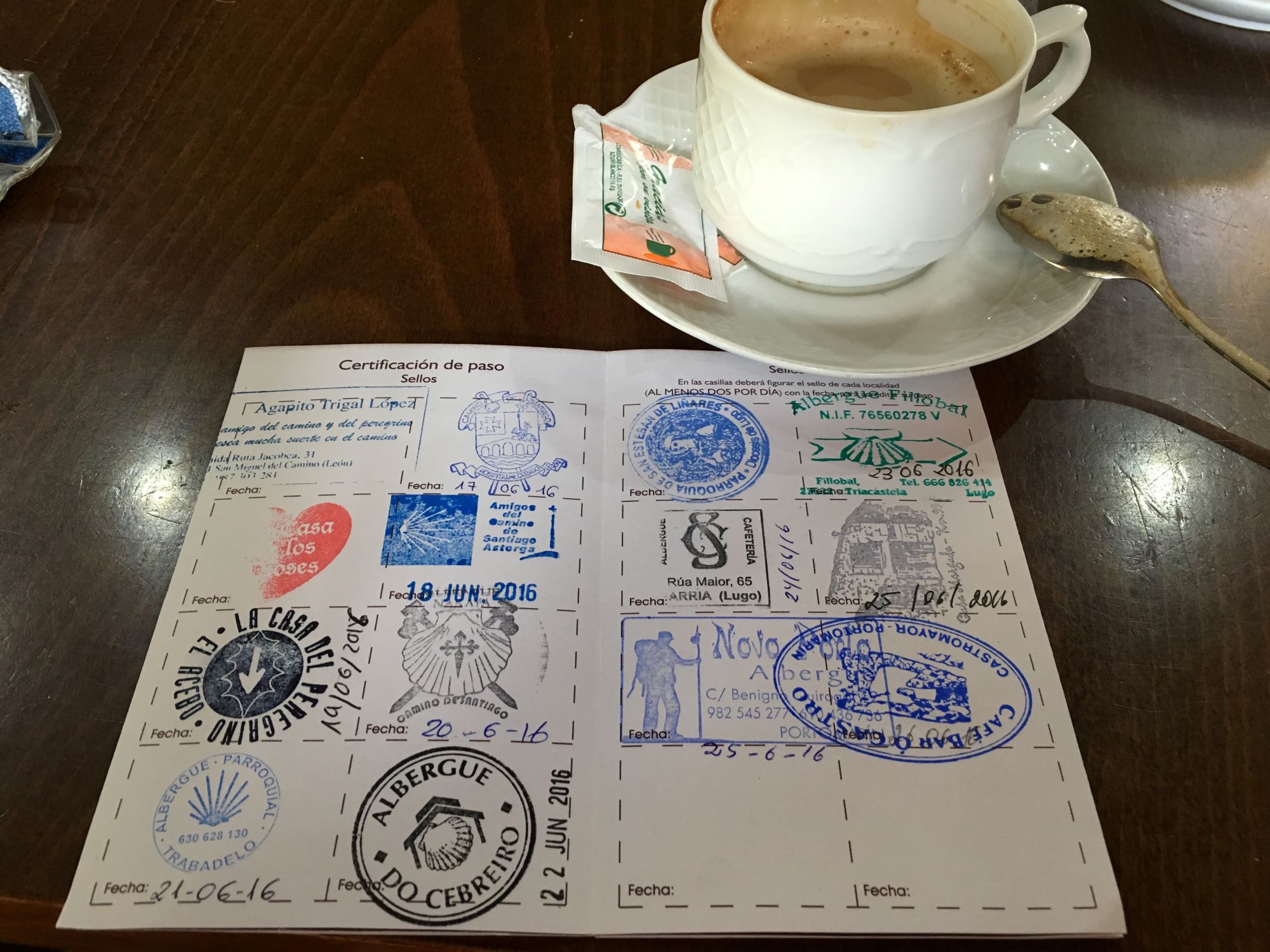
Before starting the journey, a pilgrim must buy a so-called pilgrim’s passport, a credential. This can be done in the large cathedral of the city where your Camino route begins. Or in a pilgrim hostel, an albergue.
When you come to spend the night, you need to put a stamp in the credenzial every day, which will serve as proof of the journey necessary to obtain a pilgrimage certificate – Compostela. There is a prerequisite for this: you need to walk at least 100 km on foot or ride 200 km by bicycle or horse.
But you will also need some important things: a backpack, shoes, things for a long walk, etc. Read more about them below.
Backpack for the Camino
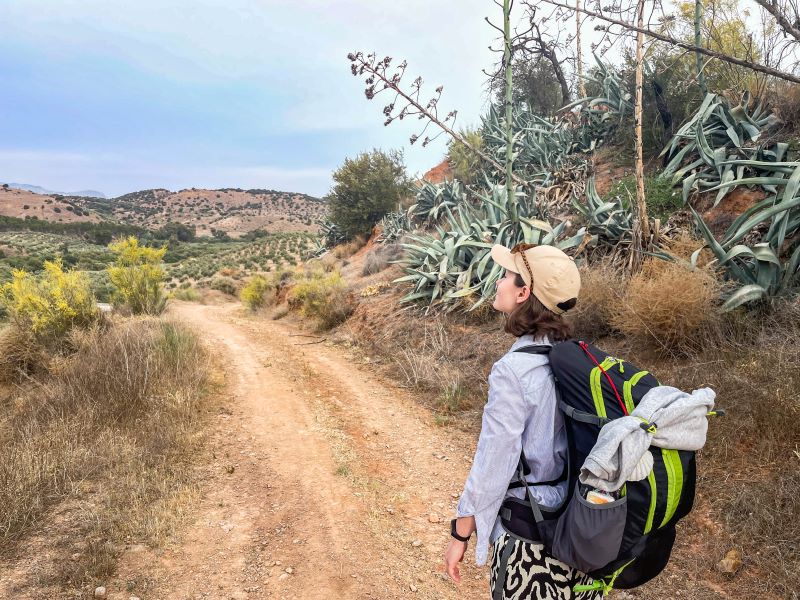
A backpack – for a Camino, a volume of 30-40 liters is enough to accommodate only the necessary things. This is one of the most important things – you will be carrying the backpack all day and for long kilometers of travel. Choose a comfortable one with a rigid back and adjustable straps. An ordinary city backpack is not suitable – your back will not withstand a long walk with such a backpack, and it will at least hurt.
Calculate the weight with the necessary things – ideally, it should not exceed 10% of the pilgrim’s weight. This ideal weight is not difficult to achieve – just don’t take unnecessary things with you.
What things are needed for a Camino
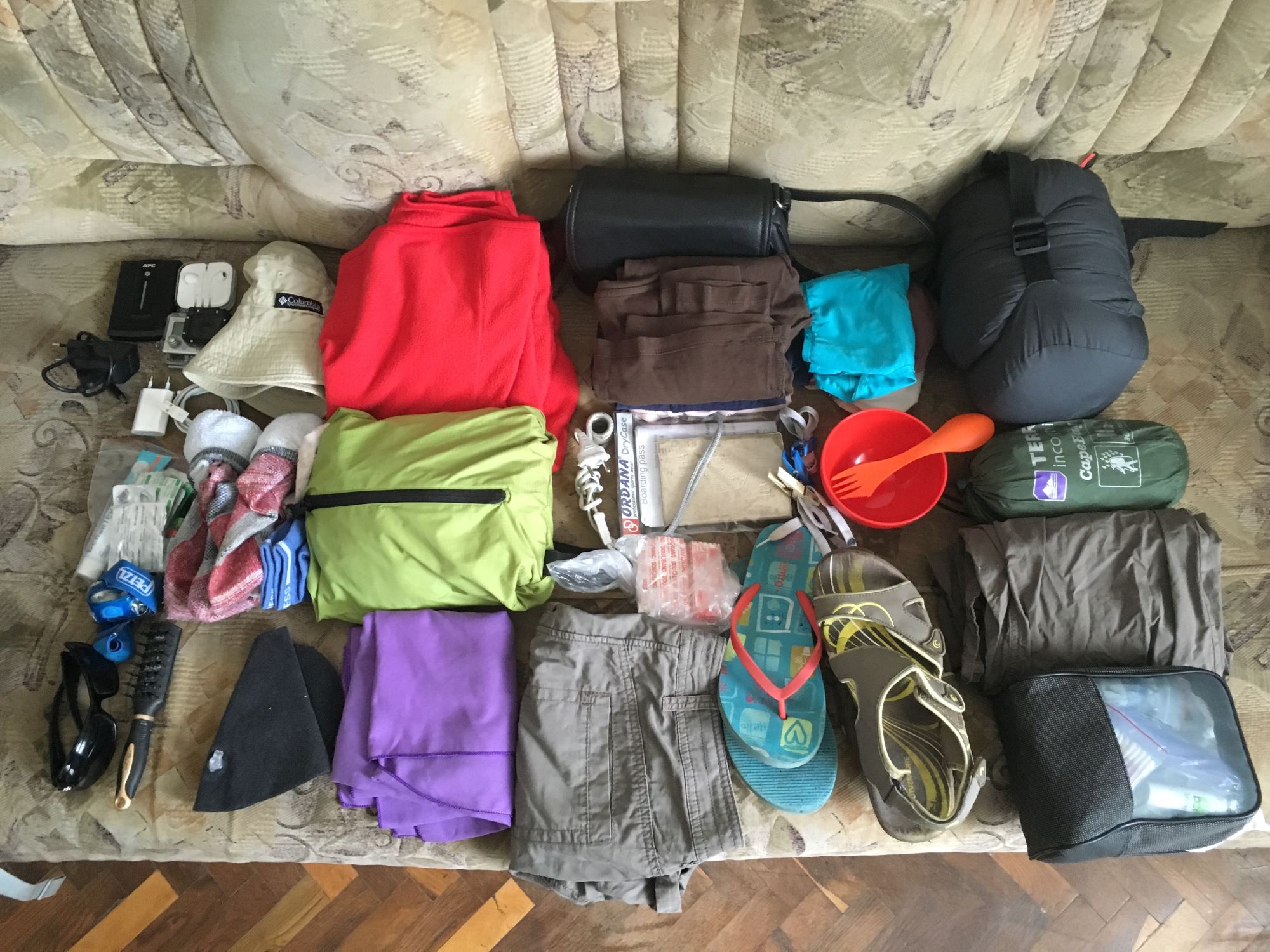
- On the road, you need to have 2-3 T-shirts, pants, lightweight sweatpants or shorts to change into after a shower.
- I advise you to take a fleece and a windbreaker, a light raincoat, and a travel towel.
- A sleeping bag is required – not all hostels have bedding.
- You need three pairs of socks – one for you, one to wear, one to dry, and one to spare.
- A couple of sets of underwear – one we wear, one we wash.
- And of course, hygiene, a first aid kit based on your own illnesses and lots of band-aids. You will need body and sunscreen.
- Many pilgrims use petroleum jelly to prevent blisters: they smear it on their feet every morning. I used a regular cream, and it works the same way.
- You need a panama hat and sunglasses.
- Some people take a set with them-a bowl, a mug, a spoon-but I use the utensils in hostels more often than not.
- You need to bring your documents, phone, and money.
This is the basis, and then everyone adds their own set of things if they want to carry them in a backpack. There is no need for unnecessary things – the lodgings provide hand laundry, often with washing machines and dryers (from 3 euros each) for extra money.
Shoes for the Camino
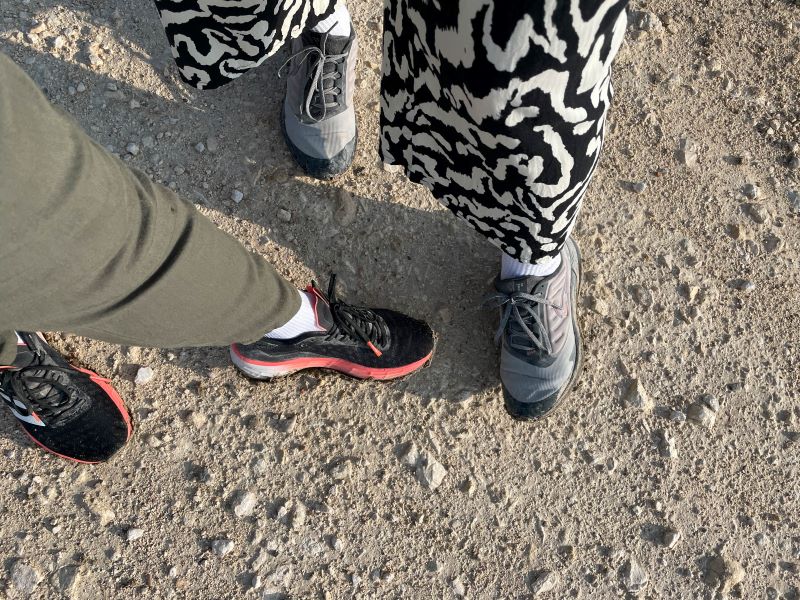
Footwear is one of the cornerstones and most important things in a hiking trip. The success of the entire event depends on what the pilgrim’s feet are wearing. The interesting thing is that there is no universal answer to the question: what to wear to the Camino?
If in a mountain hike everything is clear – you need boots with a high rise, a tread that does not slip on wet stones, protects your ankles, then in the Camino everything depends on the route, the weather and the person himself. Some people walk in trekking boots, others are comfortable in sneakers, while I walked the three Caminos in socks and sandals with thick soles.
The main principle is that shoes should be comfortable and worn out, with a wide toe so as not to squeeze the toes. This will help reduce the likelihood of calluses and reduce stress on the finger. Although calluses were rarely avoided. The number of steps taken, multiplied by the weight of the backpack, plus the terrain and weather will do their job – at least one callus will appear on the pilgrim’s feet.
One Spanish woman joked that every callus is a human sin that he is working off in this way. This year I had one callus – previously I had 6-8. I hope I have already worked off my sins, I really hope so!
Where to sleep and what to eat along the way?
In northern Spain and Portugal, there is excellent infrastructure for pilgrims. All routes are marked with yellow arrows or columns with shells – the Camino symbol. There are open shelters for pilgrims – special hostels called albergues. Along the way, cafes and restaurants offer a pilgrim’s menu. Therefore, the popular routes are quite easy to follow, but not all routes are well equipped. Read more.
Housing for pilgrims

Albergo is the simplest accommodation where you can stretch your tired body on bunk beds in shared rooms for men and women. You can take a hot shower, there is a kitchen and almighty Wi-Fi – what else do you need to be happy after traveling kilometers?
In 2023, such housing will cost from 10 euros per night in a municipal albergue, to 15-25 euros per night in a private one. In municipal albergues, everything is often ascetic, with rooms for 8-10 to 40 people to sleep in. But it’s clean – they clean it every day. You can sleep here only in your own sleeping bag. Private ones often provide bedding and towels, a more cozy home environment, and fewer people in the rooms.
There is also a third type of albergo – donativo, when a pilgrim pays the amount of money for an overnight stay at his own discretion. The owners of these albergues are often Camino fans – they once walked several routes and now meet the pilgrims every day and prepare dinners and breakfasts for them. The pilgrims have dinner here together at a large table and communicate with each other in a family atmosphere. There is a rule among pilgrims to pay at least 10 euros in such albergues, and 10-15 euros for dinner.
Some people spend the night in the cheapest albergues, where it is impossible to book a bed in advance, and therefore, getting up early in the morning, they have to hurry to get a place. Some people do not care about money, so they book private hostels or hotel rooms in advance through Booking.com.
Food in Camino

There are no problems with food either – in small villages and towns along the way, any cafe will offer you a pilgrim’s menu. This is a meal of the day, consisting of the first and second course, drinks – wine or water, dessert and coffee. Pilgrim’s menu costs 10-15 euros per serving.
The more frugal pilgrims cook on their own in the albergue kitchen, often sharing with fellow travelers. But I decided for myself that I shouldn’t deny myself everything. Spanish and Portuguese cuisine and wines are worth a visit to a cafe or local restaurant at least once every few days to try local dishes.
For example, in the Basque Country and Navarre, you should definitely try the local snacks – pinchos (from 2 euros per piece) – sandwiches with various fillings, from meat and cheeses to seafood. In the north of Spain the famous cider is produced in the north of Spain.
In Galicia inexpensive and delicious seafood: shells, fish, oysters and the famous pulpo – octopus in Galician style: boiled and fried in pieces in olive oil, served with paprika and hot pepper. In Galicia, they grow the famous Padron peppers (Pimientos Padron ), small green relatives of bell peppers that are fried with salt. They have a peculiar feature: for every dozen sweet peppers, there is bound to be one very hot one. This dish is often ordered for a company, and the one who gets the hot pepper pays for the whole company.
Additional infrastructure for pilgrims

Above, I have already written about how the marked routes are yellow arrows and shells-pointers that indicate where the pilgrim should go. However, many pilgrims also use guidebooks that show alternative routes – there are places where, for example, you can choose a more direct and faster route on the highway and asphalt. Or walk a little longer and through the mountains, but admire the scenery and breathe clean air.
There are also taxis for backpacks on popular routes such as Frances, Norte, or the Portuguese route. If they wish, pilgrims can send heavy backpacks (and even suitcases) by special delivery to the next place of overnight stay. And they walk with nothing but small backpacks with the most necessary things for the crossing. Such delivery costs from 6 euros.
You can also see discounts for visiting temples for pilgrims on the Camino. Entrance to some cathedrals, for example, in Burgos or Pamplona, costs 8-10 euros, and there is a discount for pilgrims. Let’s not forget that pilgrims can enter a cathedral or church during a service. But it is not always held in the cathedral (for example, the Burgos Cathedral has a separate chapel with a separate entrance).
The daily routine of the pilgrims
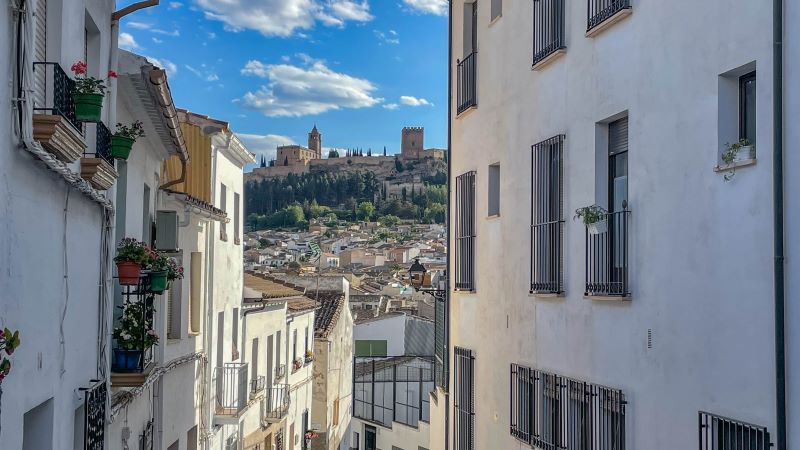
From the above, it may seem that Camino is rather tedious and boring. In fact, a pilgrim gets up early in the morning to leave the albergue and get on the road by eight in the morning. You can have breakfast at an albergo if you have memorized to buy food in a supermarket. Or you can do what I did, walk five to ten kilometers and stop for breakfast at any roadside cafe.
Morning
In Spain, a Spanish omelette called tartilla is traditionally served for breakfast: boiled potatoes are hidden in a thick layer of beaten eggs. But the exception was Andalusia, where for some reason I have never seen morning tartilla anywhere – here they offer bocadillos (sandwiches with cheese, jamon, tomatoes) or toast with jam, cheese or jamon for breakfast.
Cava is a traditional drink in Spain and Portugal. There is almost no such thing as a cappuccino here – a coffee con leche is coffee with milk, which will not be a revelation in coffee flavors. But you can drink. Solo coffee is a familiar espresso. Tea is rarely drunk in Spain, but if you want, you can ask for it – they will give you boiling water and a tea bag. Such a breakfast costs 3-5 euros plus or minus – it’s very satisfying, it lasts until lunch, and sometimes it lasted me until dinner.
Day
After breakfast, we hit the road again to cover an average of 20-30 kilometers a day. Some people break these stages into smaller ones, if the presence of albergos in intermediate villages allows it. This is possible on the French or Portuguese routes. But on such routes as Via la Plata (from Seville ) or Camino Mozarabe (from Malaga to Mérida), there are few albergues or guesthouses on 10-20 km. So you have to walk long distances every day.
Evening
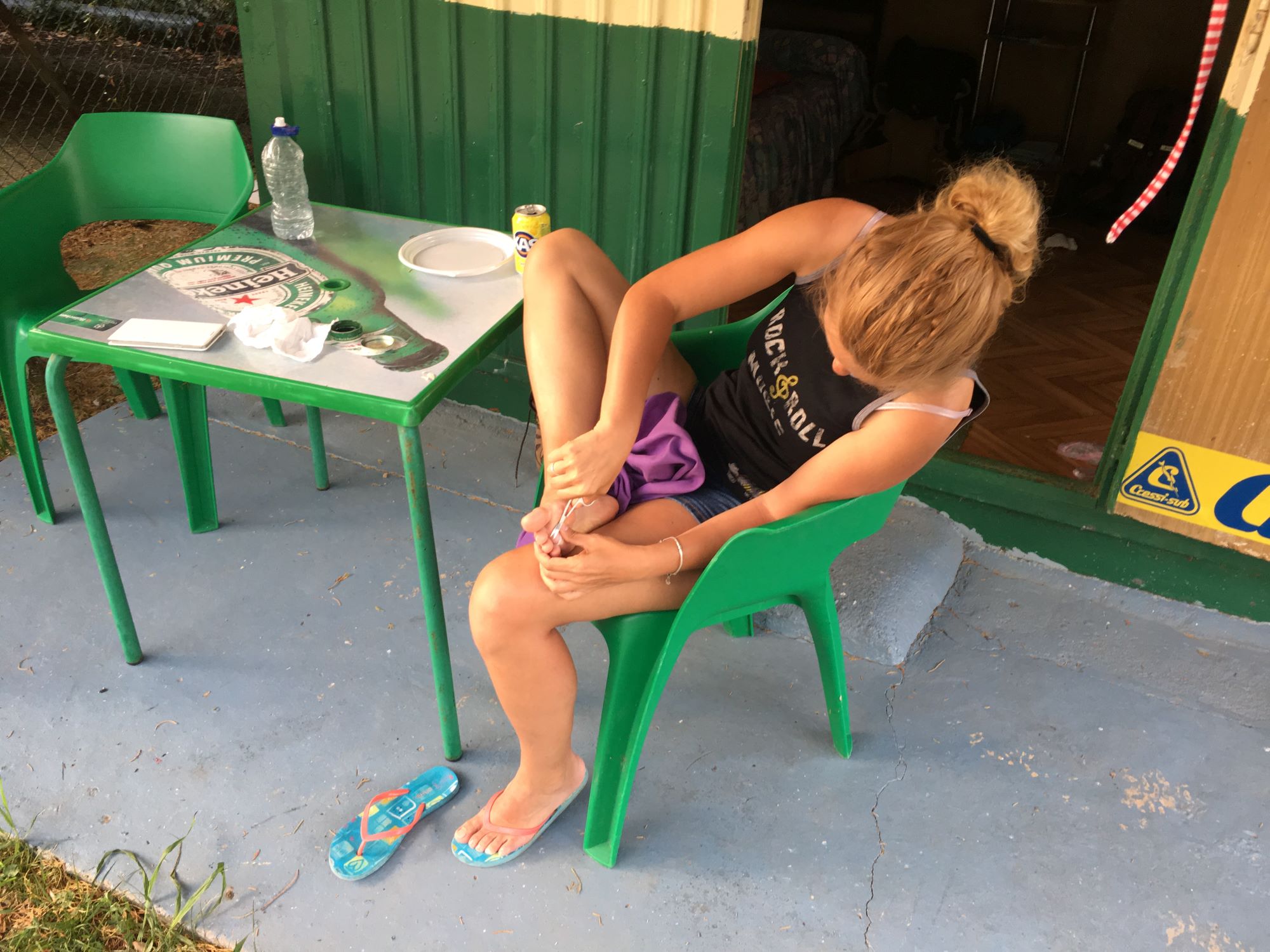
In the afternoon or evening, the pilgrim comes to the planned accommodation, takes a shower, examines his calluses, does laundry, and rests for a while after the hike. In the evening, he prepares dinner or goes to a cafe or restaurant, communicates with other pilgrims, explores the town where he is staying – in general, it is a cultural and gastronomic program.
And it’s the same every day. It has the only difference being that every day is not the same as the next. Your travel companions may change if you walk the Camino alone. Landscapes, cities, and nature are changing all around us. You will taste the cuisine of different regions of Spain and Portugal. All the days are so full of emotions that tomorrow you sometimes don’t remember what happened yesterday. It’s like in two days you live a week, a full and emotionally charged life of a pilgrim.
Safety on the Camino – is it possible to walk there alone?

Many beginners are afraid to go alone, but in general, such a trip is safe. Of course, provided that the pilgrim behaves in a civilized manner, the attitude toward the pilgrim depends on this. The locals treat the pilgrims with kindness – everywhere you can hear wishes for a good journey: Buen Camino!
Most pilgrims walk the Camino on their own – without guides and guides. But there are travel companies that organize Camino’s – groups go with guides. Everyone chooses what they prefer: walking alone or with fellow travelers. Some people need to communicate with a trusted person all day, while others are open to new acquaintances.
What for walking alone?
It is more interesting for me to go to the Camino alone or with my daughter, who is my best traveling companion. Together with my daughter, we have already walked three Caminos – two Portuguese routes and one Mozarabian route. On the way, we behave like two adults – each responsible for himself, and last time we paid for ourselves separately. She is an adult and independent person, and we solve all issues through discussion. We also have the same pace and speed, similar interests and hobbies.
A single Camino is the freedom to choose where and at what speed to go, where to make stops, what to eat and with whom to communicate. This is an opportunity to do only what you like. And be responsible only for yourself. I also like this, because it’s quite difficult to find good travel companions. And it’s easier to lose ugly ones if you haven’t agreed in advance on a joint Kkmino.
Although you have to try hard to stay on the road alone. There are dozens of pilgrims walking in parallel, and someone will start a conversation anyway. At the end of the journey, you’ll have friends from all over the world who will be hard to part with.
How much does such a trip cost?
Camino prices change every year. I passed my first Camino in 2016. Back then, I spent about 1 km = 1 euro on Frances, including the flight. For two years in a row, I went to Camino alone, buying plane tickets six months in advance. I came up with this figure based on inexpensive lodging, and I often cooked by myself or with other pilgrims. She rarely ate in cafes, went to bars with the pilgrims, and brought back small souvenirs as gifts.
After 2021, especially after the pandemic, all prices rose slightly. But in 2023, prices rose even further. The price of municipal albergues has risen – at least 8 euros instead of the previous 5 euros per night. Prices for food, train travel, and flights have also risen. I believe that now the price of a kilometer of very ascetic Camino is about 1.5 euros.
But it’s more expensive for me, because I’ve started eating out more often, instead of cooking on my own. I don’t buy plane tickets six months in advance anymore – it’s simply impossible because of the war, and I just can’t plan my life that far in advance. I also started walking on slightly undeveloped paths – the Camino Mozarabe is more expensive than the Camino Portuguesa – it costs about 2.5 euros per kilometer.
So, the average price per day on the road is about 20-30 euros, depending on the type of accommodation and food. And how they will get to the route is another story.
What you need to travel in Spain
- If I’m not staying at an albergue, I book hostels or pensions on Booking.com. I do it in the evening for the next day.
- I buy buses in Spain on the website of a Spanish carrier Alsa.
- Train tickets in Spain – on the website of the Spanish railway company Renfe.
Useful articles and links:
- Trekking to Everest Base Camp – how to prepare to hike in the Himalayas
- Rota Vicentina – walking route in Portugal along the coastline near the Atlantic ocean
- Via Francigena – Italian Camino, route details from Lucca to Rome
- Lycian Way – a hiking route through Turkey