

Spain is one of the most visited countries in Europe, and it’s easy to see why. The Iberian Peninsula offers endless kilometers of beaches, rich culture, delicious food, friendly people, and, of course, great weather.
I first visited Spain in 2013—we spent a week exploring Barcelona and the Costa Brava coast. Since then, I’ve returned to Spain many times and have seen more than half of this country. If I’m not walking across Spain (and I try to do this almost every year), I definitely rent a car to see as many interesting locations as possible.
Spain is quite a large country (at least by European standards), but it is very well connected by a modern network of fast and efficient highways. Thus, with a set of rental wheels, it is quite possible to cover a large part of the country. If you only have a week and want, for example, to explore a particular region, this can easily be done by car.
In this publication, I will provide all the necessary information for your own trip around Spain and even suggest a few short itineraries.
I want to tell you about driving and car rental in Spain from my own repeated experience.
Recommended reading: Andalusia by car – route along Costa del Sol
Requirements for car rental
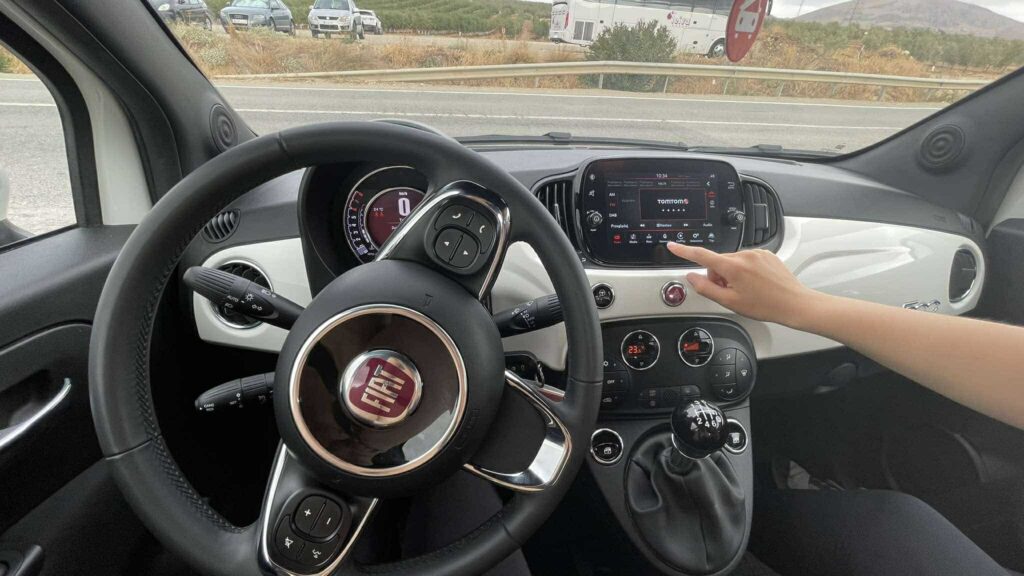
Spain is an EU country and is therefore quite strict about formalities and documents. To rent a car in Spain, you will need the following:
- EU driver’s license or international driver’s license (Ukrainians only need a plastic international standard license, preferably with a limited term, but not always do they ask about this).
- Most rental companies also require a deposit, which needs to be paid by credit card only. Note that all forms of debit cards (including prepaid credit cards) are usually not accepted. It’s also important—you need to have a card in your name (you can’t arrange rental and deposit by phone). The required deposit amount depends on the company. The deposit will be refunded to your credit card when the car is returned in good condition.
Personally, I usually travel with a special credit card that I use only for car rentals. This means that on another credit card, I have a full balance available for spending and emergencies. Having several credit cards itself does not negatively affect your credit score.
Important: before you plan to rent a car, make sure that your credit card is valid and has enough balance to cover the deposit amount.
Once you have received the car, keep your license with you, and rental documents—they are most often found in the glove compartment inside the car. If for some reason you encounter such a situation, you will need both documents.
Picking up and returning the car
Car rental agencies have offices all over Spain. Where you want to pick up and return the car depends on the regions you visit. But, as a rule, only big cities and tourist spots (airports, train stations) have car rental agencies.
Some major cities—Barcelona, or Bilbao in the north, or Madrid in the center of the country. In the south, Malaga is a major transport hub and serves all Andalusia and the coastal region.
If you plan to visit Andalusia (Seville, Granada, Marbella, etc.), you may want to fly into Malaga airport and pick up your car at the airport. Airport rentals are usually much cheaper than in other cities in the region, and the choice of rental cars is impressive.
Usually, this will be cheaper, especially if you pick up and return the car in the same place. So plan your trip as a full cycle. If you have to return the car to another city—you will need to pay extra for this (from 30 to 60 Euros depending on the city and distance).
When picking up the car, always carefully inspect it for scratches and dents. All of them should be recorded on the contract sheet provided. Take clear photos with your smartphone, which records the date, time and geolocation.
When returning the car, you must make sure it is clean, tidy, and has a full tank of fuel (provided Full-to-Full policy). Most airports have petrol stations located nearby, almost for this purpose. But I always look up in Google maps where there are cheaper refueling stations along the way, and fill up the tank “with a top-up“—so you definitely reach the rental car with a full tank (at least 20 km).
Driving standards in Spain
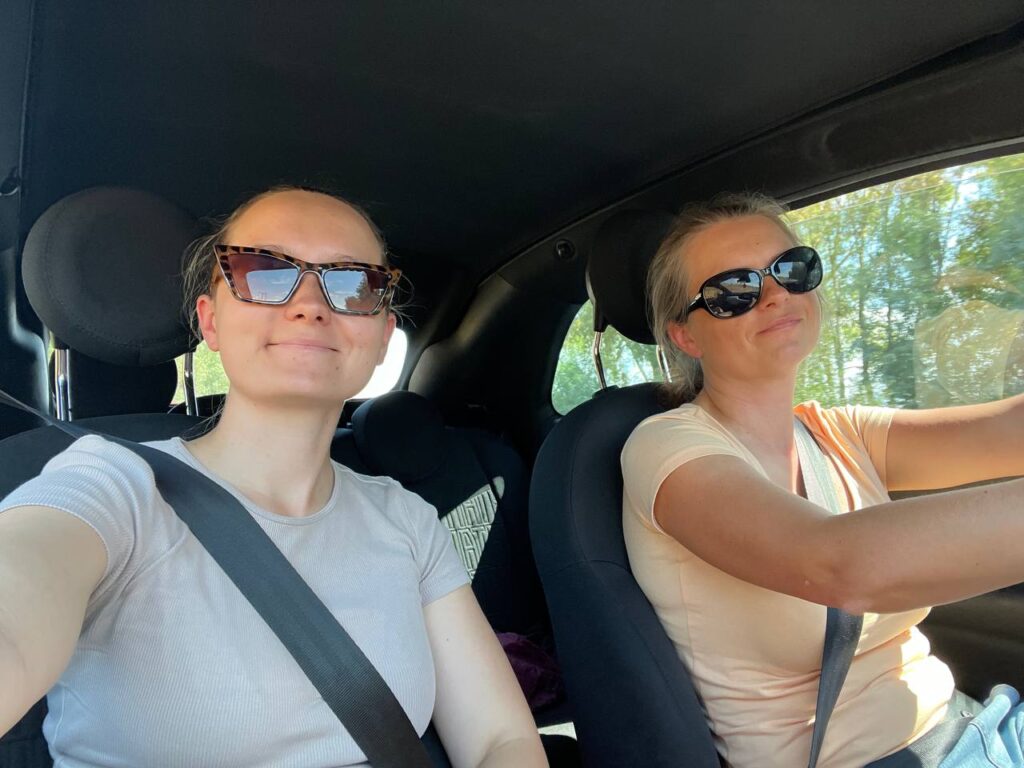
In Spain, as in the rest of continental Europe, driving is on the right side.
Rental companies generally provide most cars with a manual gearbox. There are fewer automatics, so if you want one, it’s better to book well in advance to make sure you get one.
Driving standards are decent, but slightly faster and freer than, for example, in the Czech Republic. Speeding on highways is very common and I have seen many serious overtakes in places without cameras. But where there are cameras—everyone drives exactly by the rules. Using Google maps—this navigator will warn you about their location.
Despite this, or perhaps because of it, there is relatively little traffic police around, and you are unlikely to be stopped while traveling.
Parking a car in Spain
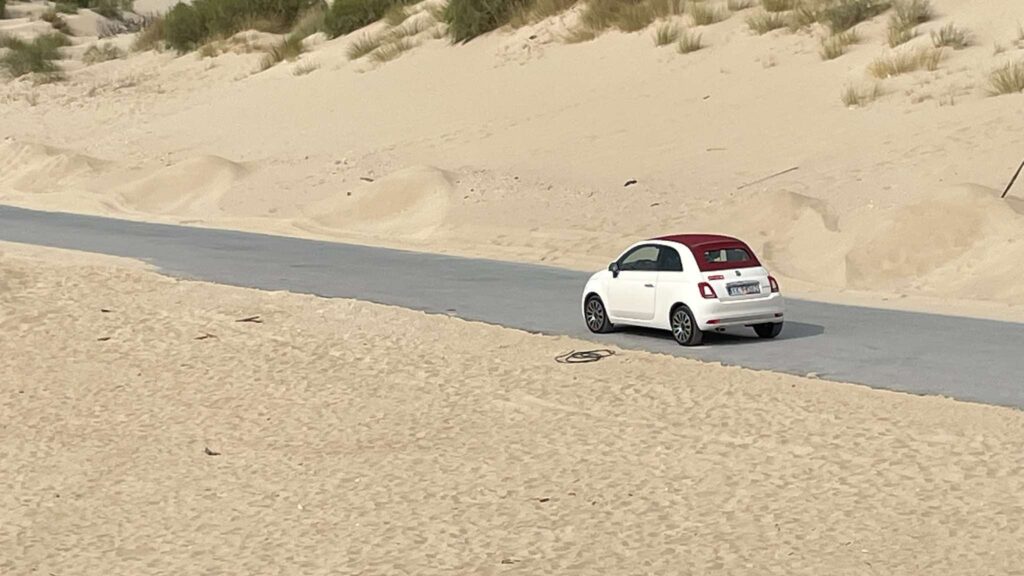
One disadvantage of traveling Spain by car is parking in cities, as this can become a serious challenge. Parking can be difficult and expensive in all major cities because of narrow streets in the old town parts.
If you stay in the old part of Granada or Cordoba, it is quite possible that there is no parking near your accommodation. In Cádiz it’s the same—we found parking for 10 euros per day, but it was outside the Old Town (15 minutes walk with backpacks to the hotel).
Before booking any accommodation, you should consider parking. Some hotels or apartments offer parking on their property. But more often than not, at best, they can direct you to the nearest parking lot. So, in my opinion, it’s better to take care of this yourself, finding parking in advance on Google maps after reading reviews in advance.
Important: many Spanish drivers don’t seem to care about dents or scratches on the car. In fact, it’s not uncommon for drivers to deliberately nudge the bumpers of vehicles parked in front of or behind them to slightly move them and make parking easier. If this happens to your rental car, you may expect to lose part of your deposit. The only reliable way to avoid this is to be very careful about where you park. Or pay for full insurance, which makes the rental cost higher.
Note that sometimes it is worth being a bit cheeky and parking right on the street—in that case, always look at the line markings. White—free parking, blue—paid, yellow—no parking allowed for vehicles except service vehicles or property owners. Always read the parking signs carefully.
However, we had relatively few problems with parking in smaller towns and villages. In Tarifa, we were able to leave it for free either on the street or at a free parking lot a block from the hotel. Many coastal resorts such as Marbella also have a lot of parking options; most residential complexes and condominiums have parking.
Tip: on the Costa del Sol as well as in other tourist places, a common phenomenon is Gorillas. These are men in striped vests who ask for money in free parking lots (in Ukraine, this is also common). Don’t pay them anything—the worst they may do is urinate on your wheels (we saw this ourselves). They are afraid to damage the car because there are plenty of cameras and the police work as they should.
Spanish highways
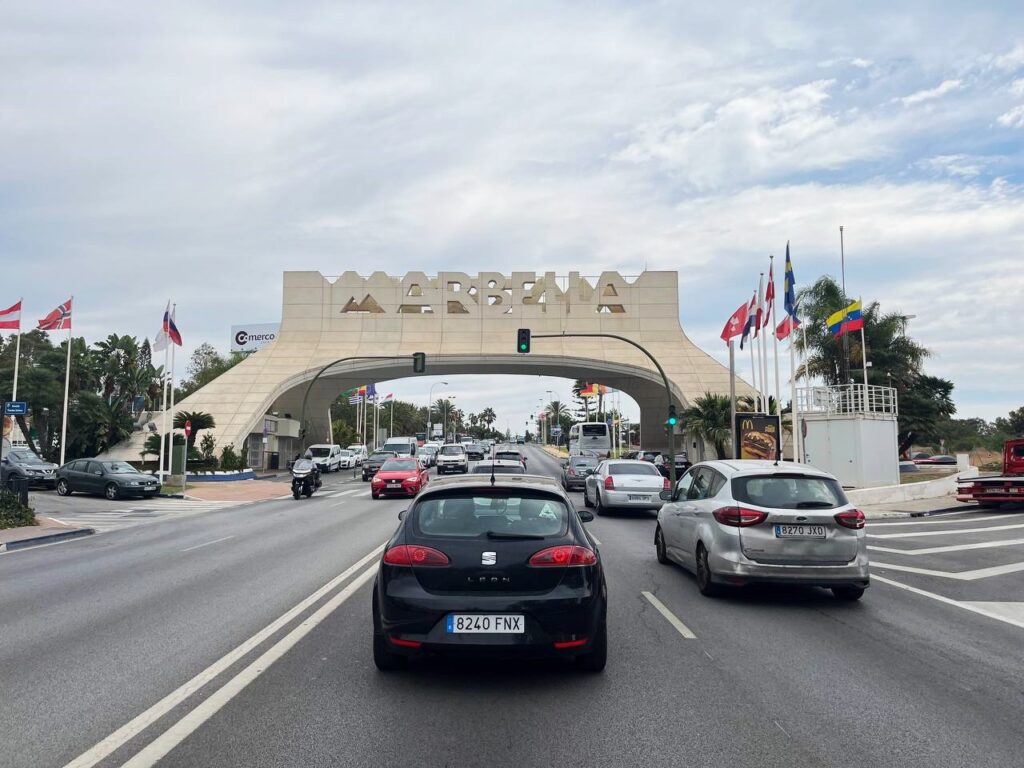
Spanish highways (expressways/roads/autobahns) are very impressive and unite the whole country. Most of the country is relatively flat or has slight gradual slopes, so getting around here is fast, easy, and pleasant.
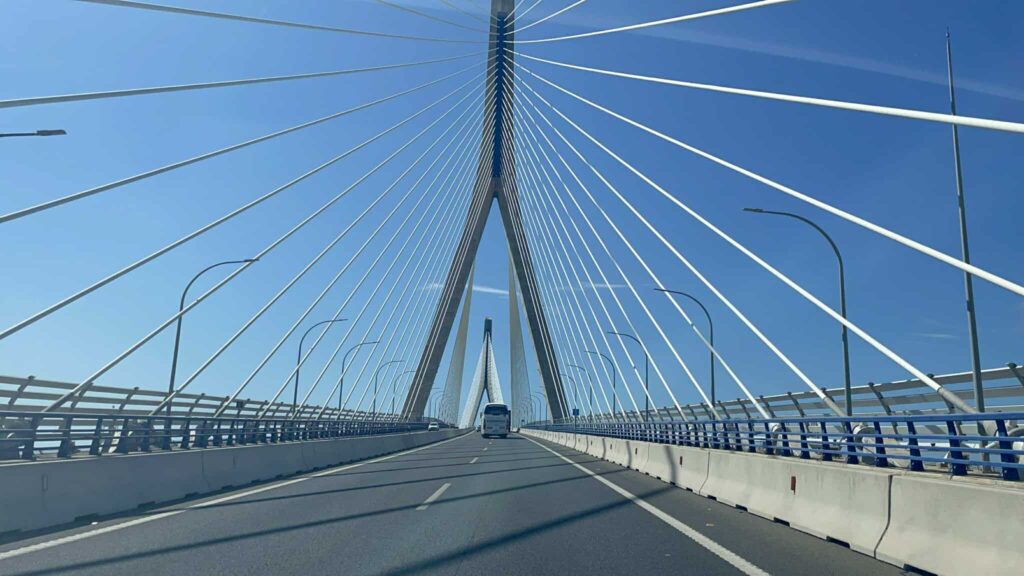
The speed limit on highways is 120 km/h. Most roads are free, although there are some toll roads. Usually, these are the ones that go through the mountains or include tunnels or cable-stayed bridges, which are expensive to maintain. Any satellite navigation or Google maps will offer you the option to avoid toll roads if you set the appropriate option.
Nevertheless, the road between Granada and Malaga costs 5 euros, since it sharply crosses a suspension bridge offering a view of breathtaking mountains.
Highways in Spain are usually much calmer than in many parts of Europe, and heavy traffic is rare. The exception is ring roads near major cities, for example around Malaga, especially in the morning and evening on weekdays. The scenery is also generally pleasant and often stunning. Driving the Spanish highways is, from many perspectives, a real pleasure.
Driving under the influence in Spain
Driving under the influence is prohibited in Spain—the limit is 0.5 per mille, the same as in Ukraine. Roughly, this means men can drink one glass of beer, and women—half. To be safe, don’t drink anything except a small mug of beer at a bar or 100 ml of white wine.
Advantages of renting a car in Spain
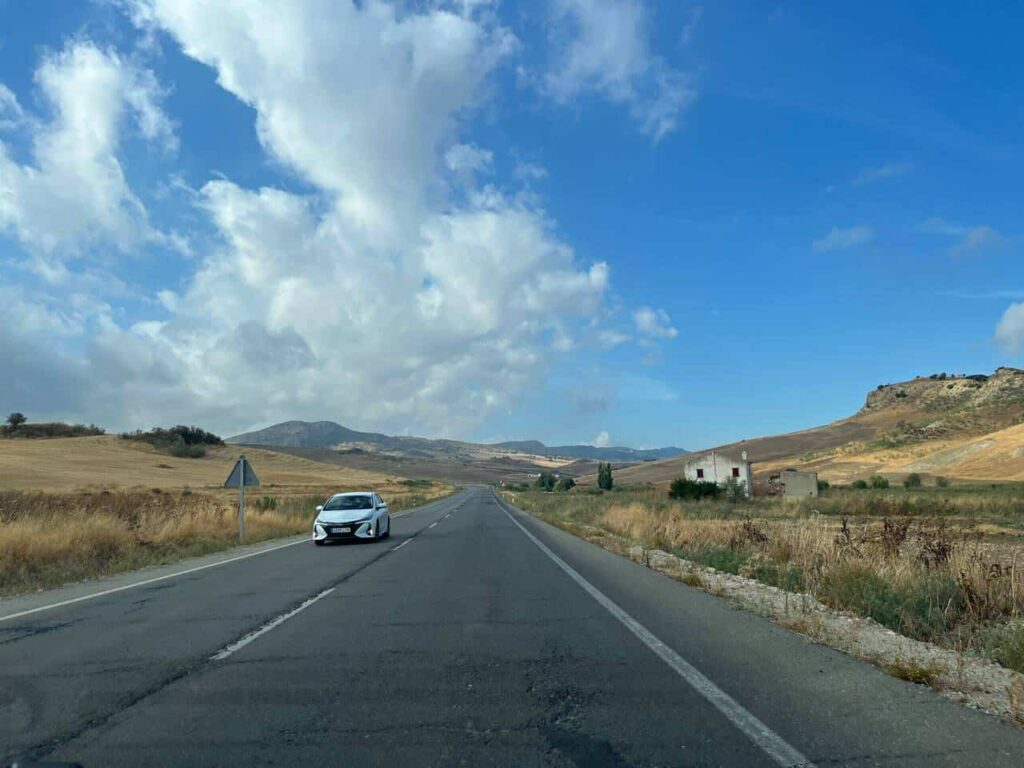
Of course, you can travel Spain without a rental car. As I noted above, I’ve seen a lot by walking across the country. But that’s a completely different story—Camino de Santiago, which isn’t for everyone. I recommend reading about it – Camino de Santiago—how to choose the best route.
The country also has a developed public transport system:
But renting a car in Spain has many advantages.
For me, the main advantage is the sense of freedom. You can get up in the morning, get in the car, and go anywhere. Along the way, change your plans and move much faster than you could on public transport. And also stop at many different places in a short 7–10 day itinerary.
It also allows you to visit many small towns and villages, which would be very difficult to reach without a car. A vivid example is Pueblos Blancos in Andalusia, which are very hard to reach without a car. And they are worth it. Believe me, the true magic of Spain is still hidden in its white villages and castles atop hilltops.
Recommended reading: Route through the White Villages of Andalusia, Spain
Moreover, having a car allowed us to make several stops on our route. For example, olive groves, as well as viewpoints overlooking Africa on the shore of the Strait of Gibraltar. None of this would have been possible if we had taken public transport.
Disadvantages of renting a car in Spain
Of course, there are disadvantages to renting a car in Spain. The reverse side of the irrepressible freedom it offers is the degree of responsibility it entails.
Driving through Spanish cities and highways means you are responsible for an expensive borrowed asset. You can’t just hop on a bus or train, relax, and enjoy the scenery. This means that if you pay for full coverage, it will reimburse you for damage or theft. When I was traveling in Spain, I bought full coverage for 8 euros per day, which is a small price for peace of mind. But this is an extra expense.
Finding and paying for parking can also be a serious problem in some areas. Then, getting lost can be fun for a while, but getting lost with no satellite navigation, or when Google leads you where you can’t go, is quite a quest.
The cost of car rental can also turn out to be higher than using public transport. This depends on several factors, which I’ll discuss a bit below.
The cost of renting a car in Spain
So, how much does it cost to rent a car in Spain? Spain is definitely one of the cheapest destinations in Western Europe for car rental.
The daily rental cost varies greatly depending on the type of vehicle, dates and pickup location. The price will also change depending on whether you need any “extras,” such as additional mileage (often limited to 100 km per day), extra insurance, or satellite navigation (don’t take it because in modern cars it comes built-in by default). Roadside assistance and a spare wheel are other common examples of extras.
To compare car rental prices in Spain, use the car rental search and comparison site— Economybooking. Or check Google to look at various providers’ websites and compile your own list (but this is inconvenient and time-consuming).
The average cost in low season (not summer) is 20–30 Euros per day for an A-class car without full insurance; at least that’s all I’ve paid so far. Less was only in winter. (15 euros per day).
In high season, as well as for a short rental (2–3 days)—the price can reach up to 60–70 euros a day. It is always cheaper (per day) to rent a car for a week or more.
Always carefully read and compare what is included in the “base price.” If you see a price that seems too good to be true, then it may very well not include insurance. Many agencies will try to sell them to you as expensive add-ons once they’ve attracted you with an initial “low” price. Whether or not to take out full insurance is your decision, it will depend on exactly where you are going, where you plan to park the car, what routes you are taking, and so on.
Cost of fuel and parking
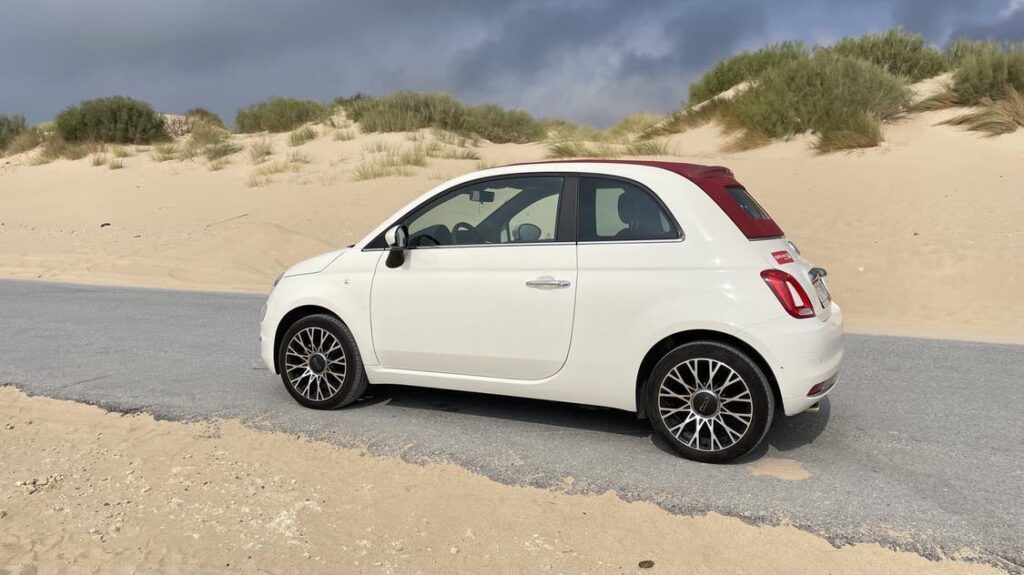
In addition to the rental cost, you need to factor in the cost of fuel and parking. The current petrol price is about 1.5 euros per liter. For 7 days rental in Andalusia of a small A-class car—Fiat 500 Hybrid—I paid about 60 Euros, covering around 1000 km—it’s a very economical car. To estimate your fuel costs, compile a rough itinerary, add the distances between destinations, then calculate: kilometers x 1.5 = fuel costs.
Parking is much harder to estimate. Note that the cost of expensive car parks is usually around 20 euros per 24 hours. You can usually find cheaper car parks and free/ street parking during your trip. Planning and booking online always brings savings.
Black cameras—new feature in Spain you should know about
From 2026, new occupancy cameras (“black cameras”) will begin operating on Spain’s roads—devices that check how many people are traveling in a car driving in VAO or Bus-VAO lanes. And yes, speed is not the main thing here.
Why is this necessary?
On the new A-2 section near Madrid, only cars with at least two people in the cabin, as well as buses and several categories of allowed vehicles, will be able to use the Bus-VAO lane.
If the system “sees” that you are alone—a fine is automatically issued.
How does a “black camera” work?
This is not just a camera. The system uses:
- Optical cameras,
- Infrared sensors,
- Thermal imagers,
- Artificial intelligence, which recognizes the silhouettes of people even in poor lighting or with tinted windows.
The camera takes several shots through the windshield, counts the number of people, and compares the data with the car’s number plate. All in a split second.
IMPORTANT: you can only enter and exit at specific areas. The Bus-VAO lane will be dynamic, without physical separation. But this does not mean entry is free. DGT has set up special “embarque y desembarque” zones—correct entry and exit points. Entering/exiting outside these zones is considered crossing a solid line, and cameras will also monitor this.
Where are these areas located?
Entering Madrid:
- Torrejón de Ardoz – 18 km +600
- Rejas – 13 km +600
- Canillejas – 7 km +700
- (exit – Avenida de América)
Exiting Madrid:
- Embarque:
- Arturo Soria / Josefa Valcárcel – 5 km +850
- Nudo Eisenhower – 11 km + 400
- Desembarque:
- Canillejas – 9 km +100
- Rejas – 15 km +200
It is only here that you can correctly enter or exit the lane—in other places the system will record a violation.
When will they start fining?
The first camera will be installed on the A-2 at the entrance and exit to Madrid. According to DGT, the system will be operational in the first quarter of 2026. If the experiment is successful, such cameras will appear in other large cities.
Fines: there are now two types
- Driving alone in an active VAO lane—a 200€ fine.
- Entry/exit outside the embarque zone (like crossing a solid line)—another 200€.
In total, a driver can receive up to 400 euros if both requirements are violated at the same time.
Dummies, inflatable passengers, and other tricks do not work—thermal imagers instantly distinguish a person from an object.
What if the windows are tinted?
The system operates via infrared and thermal cameras.
If the camera cannot accurately determine the number of people, the fine will be annulled—the images in any case are checked by a human operator.
Why all this?
DGT wants to reduce traffic and ensure that VAO lanes are actually used by those who share rides, not by those who are just trying to skip a traffic jam.
Recommended car rental routes in Spain
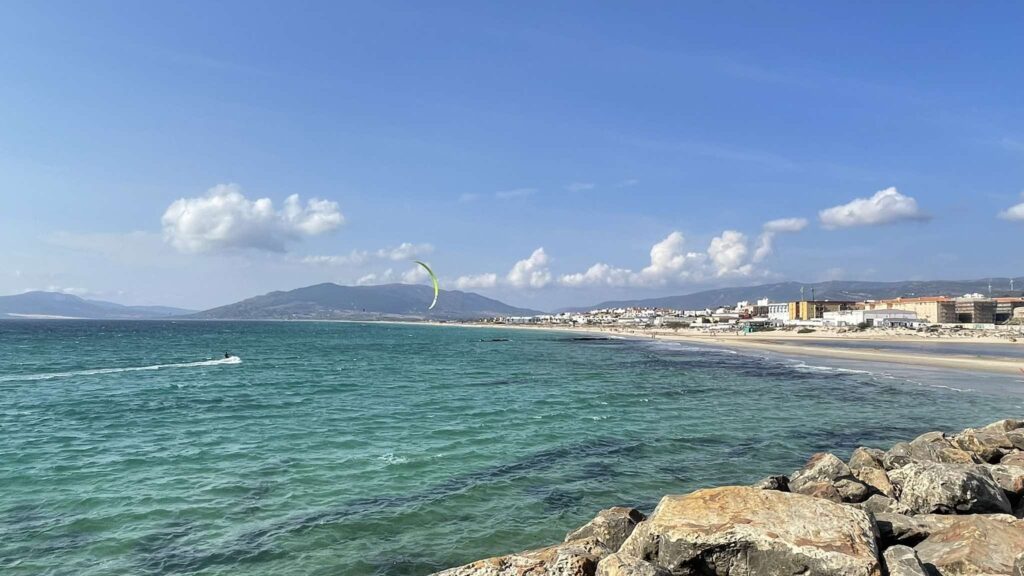
Here are some routes that I am happy to recommend for a road trip:
North and Basque region
The Basque region is on the Spanish-French border and is the strongest in spirit and most independent of all Spain’s semi-autonomous provinces. This trip starts in Pamplona, famous for its controversial “running of the bulls” festivities. Next is the paradise of San Sebastián, which is famous for surfing, festivals, food, and good vibes. Then, after visiting the city of Bilbao with its cool museums, we leave the Basque Country and head to La Rioja, with its wine and the city of Logroño with its wonderful bar streets and pinchos. And we finish in Burgos, which for some reason is missed by some tourists.
More details here: Northern Spain independently – route through Basque Country, Navarra, Castile and La Rioja
Andalusia
Andalusia is vibrant southern Spain, the homeland of flamenco, tapas, and sherry. It is also famous for being the region of 1,000 beautiful, sunlit white villages—Pueblos Blancos.
Begin your journey in Malaga, picking up your car at the city airport. Head to Granada, but stop in Ronda to admire the famous bridge over the El Tajo gorge.
In Granada, you can spend a couple of days exploring the Alhambra (book in advance!) and evenings enjoying free tapas in the numerous bars. The mountain views here are breathtaking, and there are many fantastic day trips by car.
More details: One week itinerary in Andalusia – what to see in southern Spain
After this, move on to Cordoba for a long day trip or an overnight stay for two full days in this city. Just visiting the Mezquita is worth it—this cathedral-mosque is unmatched!
Spend a few nights in Seville, visiting a flamenco show, Seville Cathedral, and the Royal Alcazar (book in advance).
Then return to the coast to relax on the beach, whether it’s Marbella, Tarifa, or Fuengirola—there is a beach for everyone here. Be sure to walk the Caminito del Rey, which is very beautiful and famous for its cliffs and gorge, where wooden paths are laid out.
Spend at least a day in Malaga itself before returning the car.
Useful articles and links:
- Canary Islands: which island to choose for your vacation?
- TOP 10 places to go for a day from Malaga
- Caminito del Rey – my experience, how to walk the King’s Path on your own
Travel medical insurance – HotlineFinance
Hotel booking and apartments – Booking.com
Hire a car – Economybooking