
Mardi Himal Trek is the perfect route for beginners and for those who don’t have much time for trekking in the Himalayas. I completed this route with my husband in March 2021. Here I share info about the difficulty, distance, and cost of independent hiking.
From the ridge of Mardi Himal, you get some of the best views of the 8000er Annapurna and the most beautiful mountain in Nepal—Machapuchare.
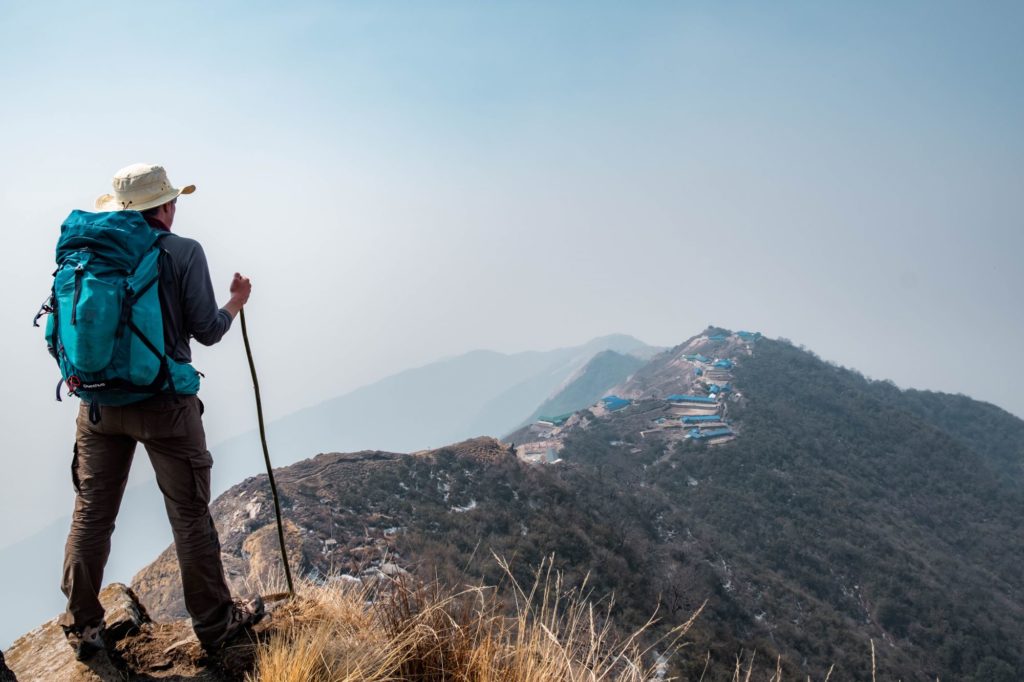
The most popular beginner routes in Nepal are to the Everest Base Camp (EBC) and Annapurna Base Camp (ABC).
We’ve already been to ABC and EBC, but in spring 2021 we only had two weeks to take a short route in the mountains and spend a little time in Kathmandu and Pokhara.
So I chose the simplest and most vibrant Mardi Himal trek in the Himalayas. On it, I was able to feel my “high mountain muscles” again and immerse myself in the atmosphere of Nepal. Because I missed it, because I love this country with all my heart.
Recommended reading: Trekking to Everest – how to organize a trek in the Himalayas
Features of the Mardi Himal trek

This route is relatively easy—maximum altitude is 4500 meters. All the ascents are fairly easy, classic Nepali trails and stone stairs. Only the descent from High Camp to Sidding is steep and tough on the knees.
Overall, if it’s your first time in the Himalayas and you haven’t hiked at altitude before—Mardi Himal trekking is perfect for you.
Mardi Himal is a ridge and a namesake peak in the Annapurna Massif. In fact, the Mardi Himal Range (ridge) is adjacent to Machapuchare. The summit of Mardi Himal (5587 m) is a neighbor to Machapuchare.
Mountaineers climb Mardi, while summiting Machapuchare is prohibited by law. Machapuchare is a sacred mountain for Hindus. According to legend, the home of the god Shiva is at its summit.
And anyone who has hiked in the Carpathians and has some experience climbing and descending mountains can make it up the Mardi Himal ridge. It’s even easier here because you don’t have to carry a tent and food—hot meals and accommodation are available all along the way.
How hard is it for a regular trekker to climb Mardi Himal?

But we’re not mountaineers, just regular trekkers. So we wanted to reach only the Mardi Himal Base Camp, located at 4500 meters. In fact, there’s no actual camp—it’s a spot where climbers set up tents for acclimatization before the summit.
In autumn, reaching Mardi base camp isn’t difficult. The trail is dry and safe.
In spring—you’re unlikely to reach Mardi Himal BC without crampons. We didn’t have any, so we made it as far as was safe, about 4200 meters. Beyond that, the steep snow ascent to base camp had deep snow and crust, you’d sink and risk slipping down. So, in spring, you need gear for BC.
There are overnight stays along the whole route—mountain lodges, where you can sleep in an unheated room. They’ll cook food, tea, and in the evenings you can spend time in a heated dining hall—there’s wifi everywhere, but it’s not very stable. The purchased Ncell SIM did not get mobile internet—there are not many towers in this part of the mountains.
You need a permit for the Mardi Himal trek—3000 rupees ($25). We did this in Kathmandu, but there is also a Tourist Office in Pokhara. In spring 2021, we didn’t meet a single checkpoint on the way—the Kathmandu Tourist Office said TIMS books weren’t needed, maybe because there was no one to check. We saved $20 each—great. But now you need to buy them.
How to get to Mardi Himal
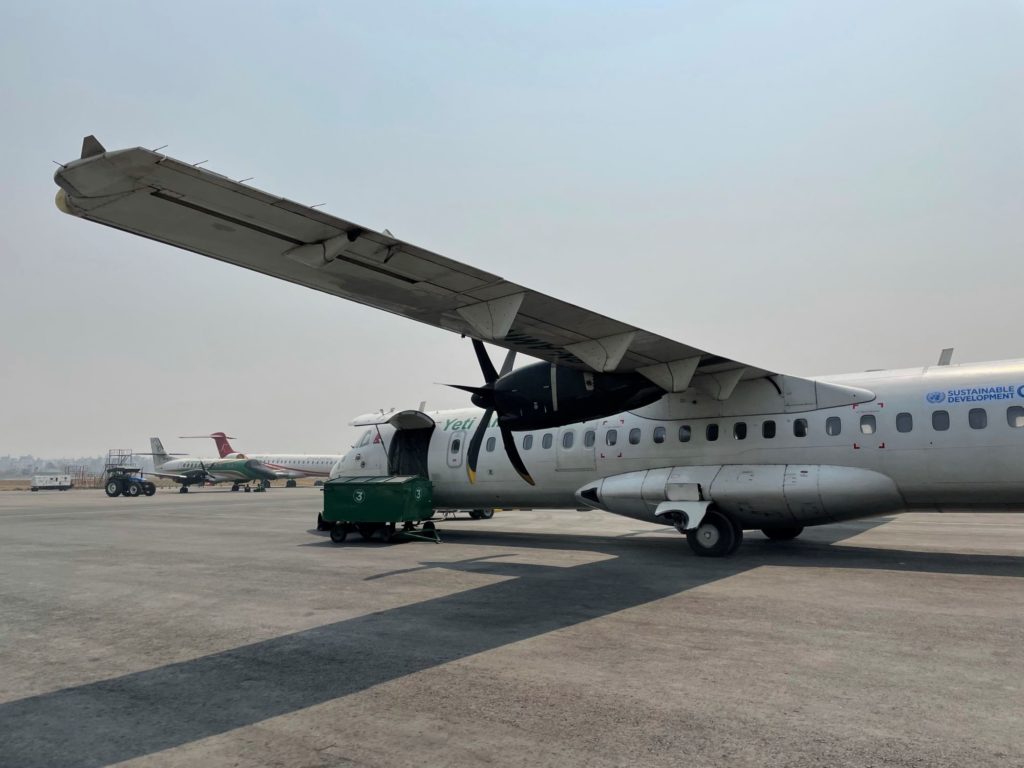
From Kathmandu, you have to get to Pokhara—the second-largest Nepali city, located at the foot of the Annapurna Massif. Buses run here (from $15)—8 hours on the road. Or you can fly in 30 minutes with a local airline (one-way ticket $84).
From Pokhara, we took a jeep to the trek start—$25. In the jeep with us were our porter and his friend—the owner of a lodge at High Camp. On the way back we also rented a jeep to Pokhara, which cost $50. More expensive because the road was twice as long and tougher—unpaved roads, crossing rivers by fording.
Note: If there are fires or haze/clouds in the mountains—flights are cancelled. This happened to us on our return from Pokhara to Kathmandu. We had to travel by land. We didn’t want to interact with many locals (in early April 2021 a third COVID-19 wave went from India into Nepal), so for $120 we rented a jeep for two. In the end, the road took the same 8 hours as by bus. But the driver took us straight to the clinic for our PCR test (needed for the flight home), then to our hotel in Boudha. It turned out cheaper than flying, but just as hard as the bus.
Route to Mardi Himal

Trekking in Nepal is something special: Numerous mountain trails are paved with stones, suspension bridges cross the gorges, and in mountain lodges you can sleep, take a shower and eat. You can also hire a porter—this makes trekking in the Himalayas much easier. Cost per day is $15 + a tip (we gave 20%).
Duration of the Mardi Himal trek route – 5–7 days, depending on participants’ physical preparation and desire to add extra stops. There are two options, differing only in the return route.
Uphill – the general route: Kande (or Phedi) – Australian Camp – Deurali – Forest Camp – Low Camp – High Camp – Mardi Himal Base Camp
Downhill – two different routes:
1. High Camp – Sidhing – then by jeep to Pokhara
2. High Camp – Low Camp – Forest Camp – Landruk – Gandruk – then bus or jeep to Pokhara
So—you can do the entire route in 5 or in 7 days.
This means for a Nepal trip, two weeks is enough—the two-week visa on arrival is the cheapest.
Day 1: Kande (1730) – Gauda Kharka (2200 m) – 8 km

In Pokhara we arranged a jeep transfer to the start of the trek. The owner of our hotel, where we stayed a night on Lake Side, drove us. We planned to return there after the trek, so we left excess baggage in the hotel’s storage.
Tip: Don’t carry all your stuff into the mountains – you can always arrange free storage at the hotel, especially if you plan to stay after the trek. Although our porter carried our things, we didn’t want to overload him with dresses and shoes needed only “in civilization.”
After an hour, the jeep brought us to the village of Kande—the starting point of the Mardi Himal trek.
There is an alternative start in Phedi. From here, the trail goes along a neighboring ridge (10 years ago we started the Annapurna Base Camp route in Phedi).
For beginners, I recommend starting the Mardi Himal trek from Kande. Why?
From Phedi, the stairs go sharply upwards—we were shocked by such a start. At Kande, it’s much easier and more pleasant. The route starts through the village, then through rhododendron forest, the ascent is gradual and easy.
After a few hours climbing, we reached Australian Camp. There are a few hotels here—you can stop for tea, use the toilet, then continue.
The next stop a couple of hours up is Deurali. Again—locals don’t live here (their houses are down in Tolka). Here, on a little plateau with a view of Annapurna, there are several lodges. We slept in one 10 years ago. This time in Deurali we had tea and went on—it was only noon, too early for a stop.

After that, the trail goes across the start of the Mardi ridge. Mostly through rhododendron jungle. It was a hot day, but still cool to walk since you’re in the forest shade almost all the time.
By 2 PM we reached the lodge Hotel Green View Restaurant, Lovely Hill (Gauda Kharka), built in 2020 and still without nearby competitors. The lodge is between Deurali and Forest Camp, with a great view of Annapurna South and Hiunchuli. 28.345118, 83.836318

In theory, we could’ve continued, we had the strength. But it’s better not to push hard on the ascent—you need gradual acclimatization to altitude. Plus, this lodge had hot water (200 NPR per bucket—less than $2), clean new rooms, a clean toilet in the yard, and an awesome swing with a sunset view of South Annapurna. And in the morning, beautiful pink light on the mountains for photography.
Room was 300 NPR ($2.50), meals—lunch and dinner about 2000 NPR ($17). Wifi cost 200 NPR per person ($4 for two).
Note: From Forest Camp you can hardly see Annapurna at all—so there are no sunsets or beautiful dawn light. But there are many lodges there; in peak trekking season, you’ll surely find free spaces.
Day 2: Gauda Kharka (2200 m) – Low Camp (2995 m) – 9 km

We got up at dawn, had breakfast, and started up. Today the ascent is 700 meters, but it’s just a gradual gain—took about 6 hours.
After a few hours we reached Forest Camp and stopped for tea. Saw a group of Ukrainian tourists. Greeted each other—turns out at 10 am people were just packing and setting out. That’s what group hikes are like—everyone takes ages and seven people wait for one.

We continued on through rhododendron forest with some great viewpoints, from which we got our first views of Machapuchare mountain. Despite the lockdown, Nepalis are building new lodges—the route is gaining popularity, especially with young Nepalis. To me it was surprising that Nepalis hike not only to make money off tourists.
A group of Nepalis arrives—five to eight people. They’re all in new gear. Happy, excited to be hiking the mountain trails. They don’t hire porters, and their backpacks are light. They don’t mind sleeping with lodge blankets that haven’t been washed for weeks. We have sleeping bags and only use the blankets if it gets freezing at night.
By 2 PM, we reached Low Camp, where you finally see Machapuchare. My favorite mountain, Fish Tail—so beautiful!

We spent the evening in the dining hall by the stove, working on our laptops. Oh yes—we carried them on our backs, because work never stops. Tolik had conference calls, I wrote texts. The lodge had a shower with hot water heated by a gas boiler, but the water alternated between scalding and freezing. I opted for wet wipes.
For dinner they made us momo (Nepali dumplings) with potatoes and salad. The total cost for lodging + lunch and dinner was 3000 rupees ($25) for two.
Day 3: Low Camp (2995 m) – High Camp (3550 m) – 5 km

The morning was cloudless, Machapuchare rose in the clear air. Today’s climb is almost 500 meters through blooming rhododendron forests giving way to alpine meadows. In autumn they’re green pastures with grazing yaks. In spring, it’s all covered in rust-colored grass along the trail.
This day’s route is not difficult at all. We stopped a couple of times for tea, and despite the climb to 3500 meters, we weren’t tired at all. By early afternoon we reached a lodge at High Camp, dropped our things, and went for a walk—enjoying views of Annapurna and Machapuchare, photographing yaks. We hiked another 100–150 meters up so we’d sleep a bit lower that night for comfort.

In the evening, a large group of Nepali trekkers arrived and filled the lodge. The dining hall was warm and noisy—tomorrow morning we’d go up before dawn with them toward Base Camp. Or at least to the viewpoint at 4000 meters.
Costs in High Camp are higher than in lower lodges. Lodging – 700 rupees per room ($6), food about 3000 rupees per day ($25). We spent two nights at High Camp—a total of about $70 for two.
Day 4: Mardi Himal Base Camp – 5 km round trip

We got up at 4 am to catch the sunrise at the Mardi Himal viewpoint. It’s almost 4000 meters high, about 2–2.5 hours from High Camp.
Our porter woke up too, wanting to go with us to show the way. We told him: “Go sleep, don’t worry.” All our things stayed in the lodge, and we’re adults—we didn’t need a guide, we knew the way. He was surprised but didn’t argue—we hired him to help with the big pack.
A guide isn’t really necessary on this route—there are arrows and signs everywhere. With a little effort, you can carry your own gear. But we purposefully hire a porter, so a person earns money and we only carry a light pack with our laptop, first aid kit, and valuables.
So, we left the lodge first, headlights on our foreheads, backpacks with snacks and water. For two hours we walked the ridge; ahead we saw other trekkers’ headlights, behind others followed. The trail is trodden, but in a few places with rocks we got confused—went right and met a sleeping herd of yaks. The yaks were startled—got up and moved off the path.
By 6 am we were in place—climbed to the viewpoint and tea huts Lower View Point (3800). At that moment the first rays of the sun appeared over Machapuchare.
Mardi Himal Base Camp

Dawn in the Himalayas is a phantasmagoria of light—missing it would be a sin. See it once and your heart will always remain in these mountains. You’ll keep coming back for more.
We rested, enjoying the sunrise, then continued toward Mardi Himal Base Camp. On the trail from the viewpoint to BC, snow appeared—covered with ice. It became steep and slippery. I climbed another 50–100 meters (to 3900) and realized I couldn’t go further—started getting breathless and losing balance on the rocks.
Tolik and I decided to split up: he went to Base Camp, I waited by the tea huts. I went back, ordered masala tea, sat down, and watched his little figure shrink to a dot as he headed toward Machapuchare. I watched him for about an hour, until he disappeared from view. Then after about 40 minutes the dot appeared again on the snowy slope, gradually getting closer to me.
Around me Nepali trekkers ran around—having snowball fights, making a snowman, taking photos with the Nepali flag. Nepalis only see snow in the mountains—a lot of them live all their lives in the lowlands near India and never see snow. It was fun watching grown guys and girls being as happy as kids.
Wakу up early – for sunrise

Tolik didn’t get to Base Camp for the reasons above—he crashed into the snow, slid on the crust. He reached the remains of a herders’ hut, snowed in in spring. It was probably the Upper View Point at about 4100–4200. Higher was too risky without crampons, so he came back.
I waited and at 11 am we started down to the lodge. On the way up we met a Ukrainian group. Again I was glad I don’t hike with organized groups—a lot depends on the leader, and people have different experience. You can dream a lifetime of seeing the sun rise over the Himalayas and end up sleeping through it because the group decided not to go for sunrise.
By midday we were back at the lodge and ordered breakfast. There was no point in going down today—we got up early and were a bit tired. We decided to spend another night at High Camp, watch the sunrise from the lodge in the morning, and then go down.
Day 5: High Camp (3550 m) – Sidhing (1700) – 8 km

In the morning, we packed up and set off down—it was time for civilization, a shower, and work needed normal internet. We had to get to Sidhing by evening to catch a jeep to Pokhara.
We had enough time to walk two more days in the mountains—go down to Landruk, stay overnight, then descend to the bridge and climb to Ghandruk. From there you go by cheap bus or jeep. But we’d already visited Landruk and Ghandruk 10 years ago, hiking to Annapurna Base Camp.
So we decided to spend the extra days walking around Pokhara, working with a lake view, drinking good coffee, and ordering proper food in restaurants. Yes, we’ve become picky: the food on the trek is bland, there’s no shower, the internet is bad or absent. And we’d already seen all the most beautiful things.
Way down

So we headed down—to Siding. 8 km in 8 hours.
How I hate going downhill—and I dislike descending for a long time ten times more. Halfway we decided to rest on a buffalo farm. They made us masala tea with real, not powdered, milk. The difference is huge. The farmers—a young man and his wife, a beautiful village girl. I asked for a photo with her—she was very shy but agreed.

On the way were rhododendron forests, which at the end of March this year were just starting to bloom—late spring. The Himalayas were covered in haze from forest fires, and from this day on we didn’t see snowy peaks again. After that, everything got overcast and planes even stopped flying. Unlucky for those who started after us—hiking in that smoke isn’t very pleasant.
Lower down, my toes started to hurt—the nails jamming into the boot. Then, on top of that, I stubbed my left big toe on a rock. I howled across the Himalayas as pain shot through. Walking got harder, my knees started to shake. Eventually we reached the top of the village—there were dogs, then people appeared.

It was the Holi festival—the Festival of Colors. Everyone was smeared and colorful. Village children were especially happy. I filmed them a bit and continued down to the bridge—where our jeep to Pokhara was waiting.
We took it back to civilization, and at the hotel said goodbye to our porter and his friend. We tipped both—the guys, after a hungry year without tourists, were very happy.
Brief summary of trekking to Mardi Himal
In five days, we climbed from 1700 m to 4000 m and descended back to 1700 m, covering about 35 km of mountain steps and trails.
Spent about $150 on food and lodging in the mountains, $75 on jeeps, $100 for porter and his friend.
Total: $325 for two for the five-day Mardi Himal trek in the Himalayas (an average of $30 per person per day).
The whole two-week trip to Nepal cost us $2500 for two. This includes a flight from Odesa to Kathmandu on Turkish Airlines ($700 per ticket), local flights and travel within the country, hotels, mountain insurance, restaurants, and extras along the way.
When is the best time to go to Nepal?
The best time to visit Nepal is spring and autumn: during this period, there’s little rain and it isn’t yet cold in the mountains.
Spring – from late March to early May. In April, the rhododendrons start to bloom—up to 3500 meters on Mardi, there are rhododendron jungles. When they bloom it’s a riot of color.
Autumn – from mid-September to the end of October. In September, above 3500 meters, the alpine zone is all covered in green grass. Plus, no spring haze—clear sky and no rainfall (as in summer).
Useful articles and links:
- Nepal Guide – how to prepare for an independent trip
- Pokhara – Nepali resort on Lake Phewa
- Wild camping in Europe – where you can and cannot camp
- Hiking route in Wadi Rum desert, Jordan
Timetables and bus tickets – InfoBus.ua
Green card and travel health insurance for trips abroad – online at HotlineFinance
Hotel & apartment booking – Booking.com