
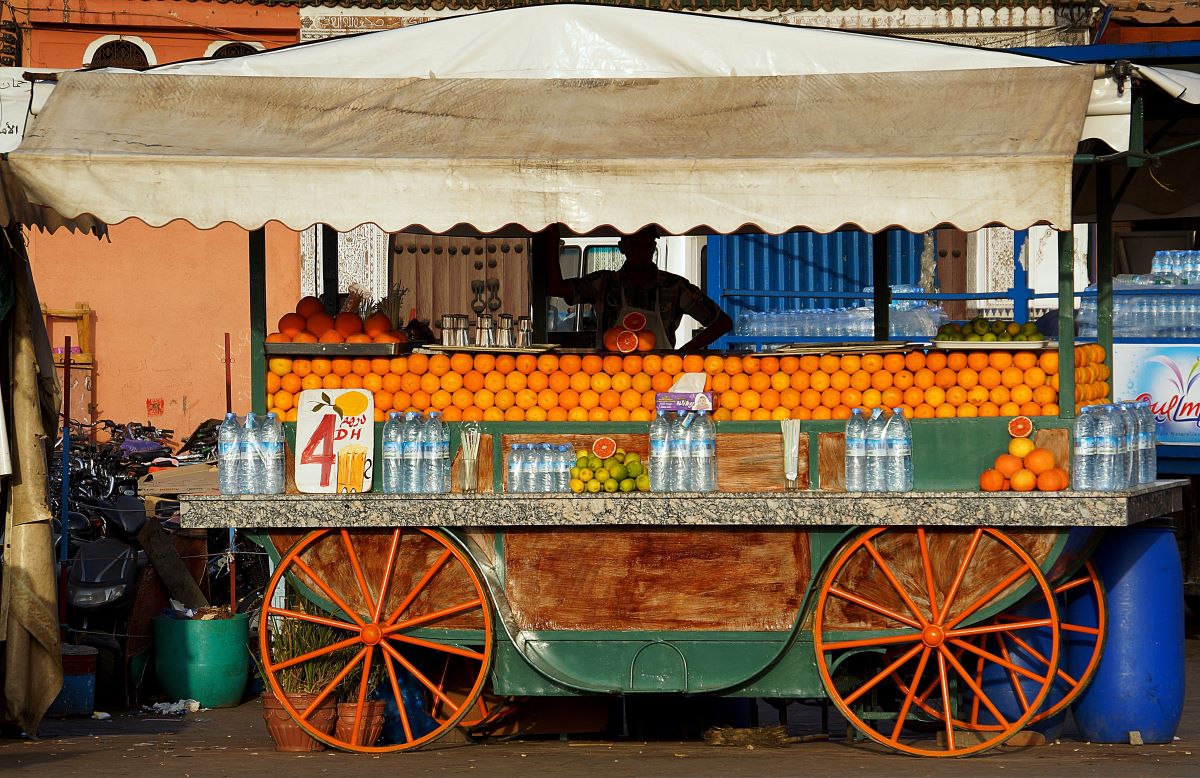
Bright spice pyramids, copper lanterns, carpets in all shades of red, blue doors, orange juice right in the middle of the street, mint tea in small glasses and pink-ocher walls that turn almost golden in the evening.
It is impossible to look at Marrakech calmly. To be honest, Marrakech scared me a little at first – like a hive in which the rhythm of life lives according to its own rules. We drove into the city by car and had a hard time moving around the city. We found parking outside the Medina in advance (and did it right), and then immersed ourselves in the world of colors, aromas and noisy merchants.
Only later did I realize that this city needs to be listened to, smelled, tasted and even tolerated a little. Especially when everyone around you wants to help you with something (for money). Or when a scooter speeds past you through the narrow streets of the Medina, a seller tries to sell a carpet, and a call to prayer sounds from the minaret.
This city does not try to please. It simply lives its own life — noisy, bright, a little chaotic, and beautiful in its own way.
Marrakech – a new destination for long weekends

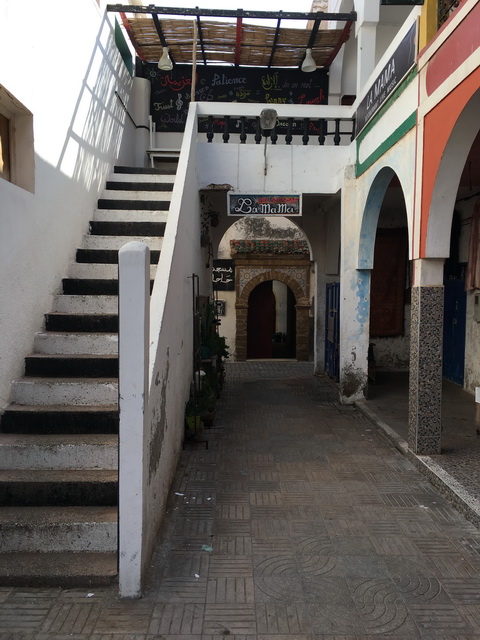
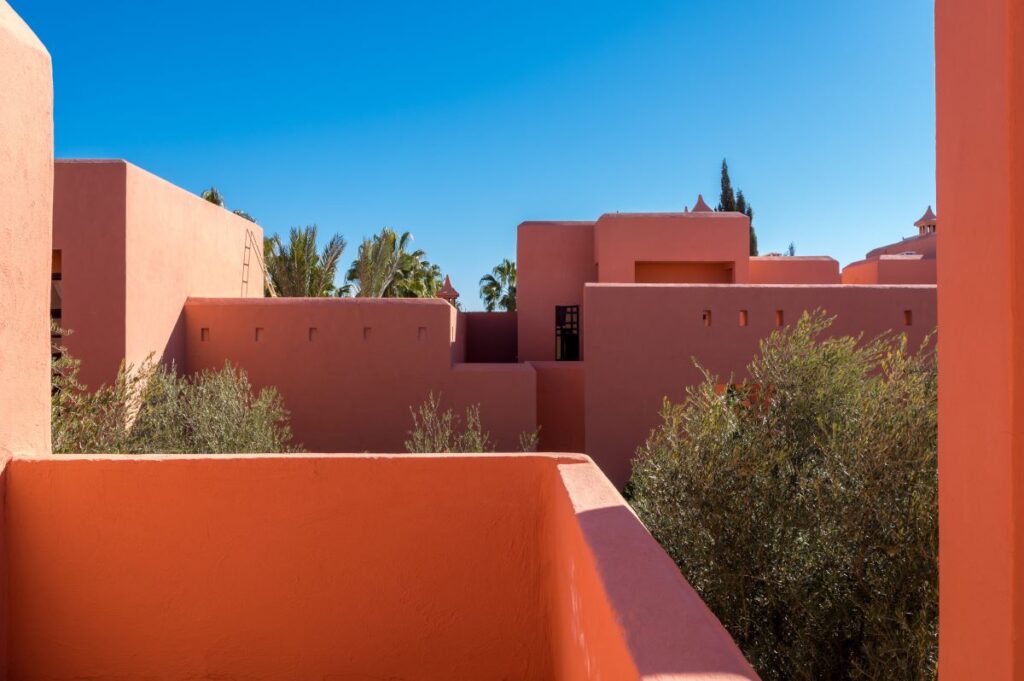
Marrakech is called the Red Capital of Morocco because of the color of its traditional walls and houses. And indeed, it seems as if the city was built from one huge lump of terracotta clay. But it’s worth stepping outside the door of an ordinary riad and a completely different world opens up before your eyes: a cool courtyard with a fountain, zellige mosaics, carved wood, orange trees and silence.
It is this contrast that makes Marrakech so special.
Plan to fly in for three or four days, stay in a beautiful riad, get lost in the medina, and then take a day trip to the Atlas Mountains or the Atlantic Ocean.
Red City and Jemaa el-Fnaa Square
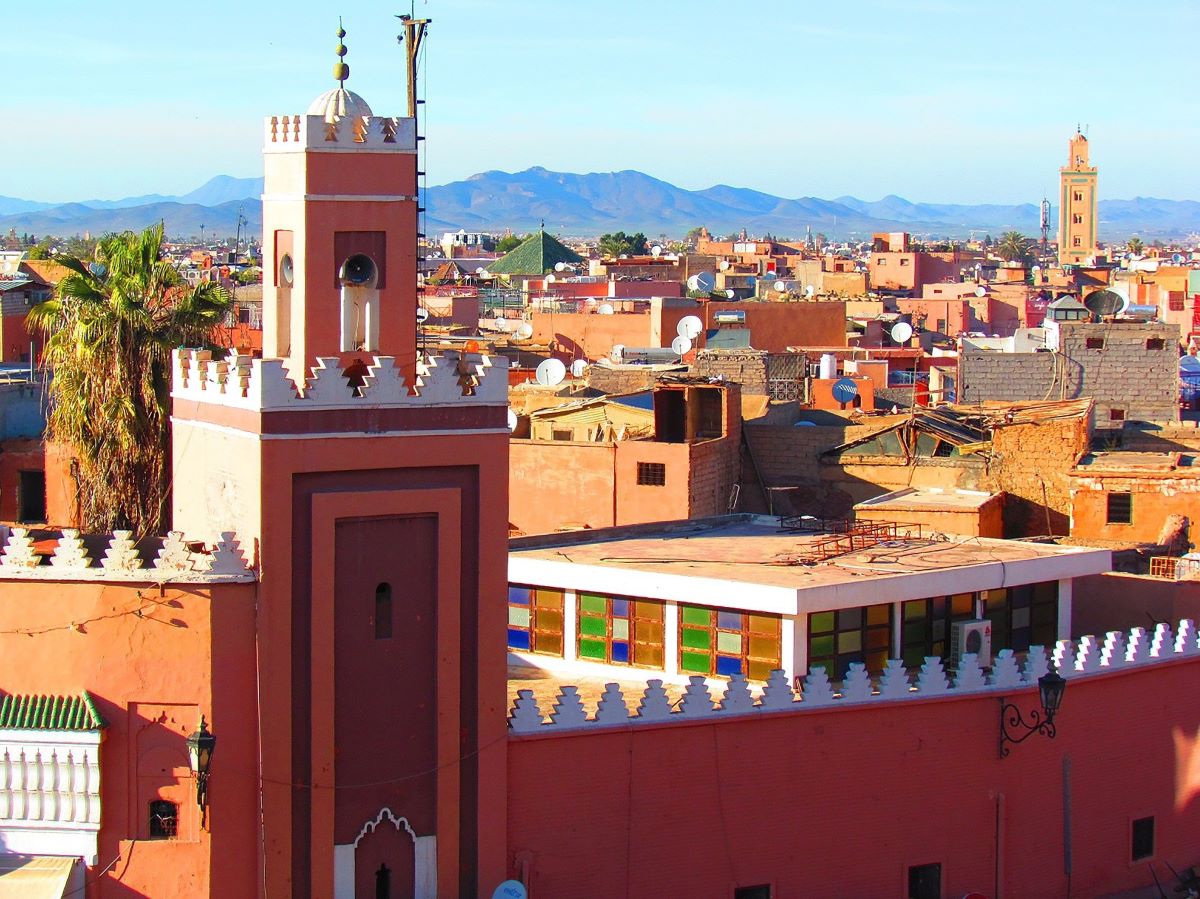
The first point of your acquaintance with Marrakech will almost certainly be the medina – the old city behind high mud walls.
It is listed as a UNESCO World Heritage Site, and its walls stretch for about 19 kilometers. Inside is a labyrinth of narrow streets, souks, craft workshops, palaces, mosques and riads.
And here it is better not to try to immediately understand where you are. Just walk.
Turn into one small street – there they sell ceramic plates. Turn into another – and in front of you are dozens of leather slippers. A few more steps – and you find yourself near a workshop, where a man sits right on the street and carves an ornament on a tree.
Jemaa el-Fnaa
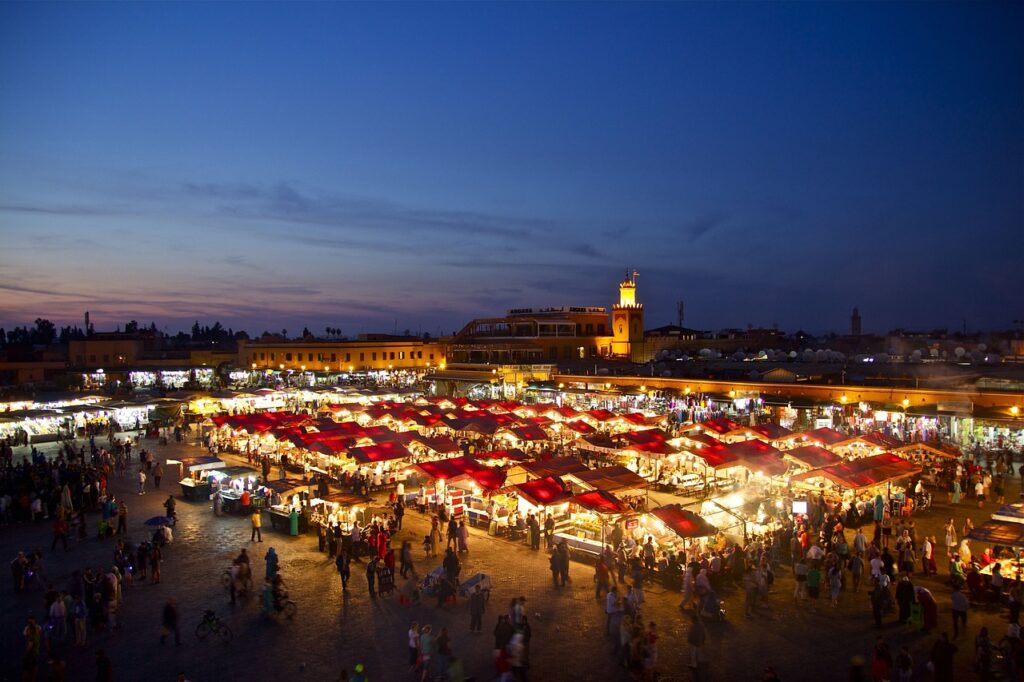
And then suddenly you come out onto Jemaa el-Fnaa.
During the day the square seems quite ordinary. But towards evening it changes literally before your eyes. There are vendors, musicians, street cooks, storytellers, orange juicers, huge plates of food.
It is no longer just a square, but a huge open-air theater.
UNESCO has included the cultural space of Jemaa el-Fnaa in the Intangible Cultural Heritage of Humanity – precisely for this incredible combination of oral tradition, music, performances and everyday life.
The best time to come here is before sunset. Go up to the terrace of one of the cafes around the square, order mint tea or orange juice and just watch as Marrakech prepares for the evening.
First the square turns golden in the sun. Then the lanterns are lit. It begins to smell of spices, grilled meat and smoke. There are more and more people around. And suddenly you realize: this is why Marrakech was worth seeing.
Suky is a place where it is easy to get lost, not only on the road
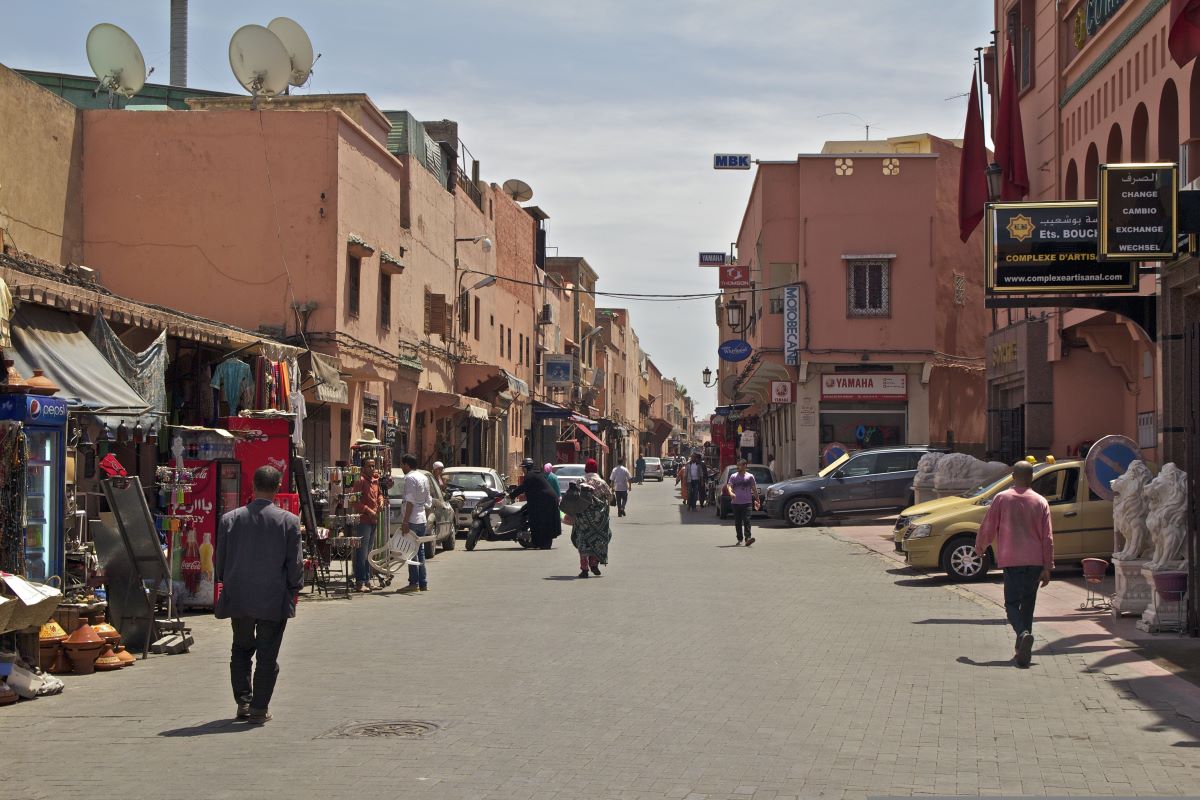
From Jemaa el-Fnaa, the soky begin – a huge shopping labyrinth of the medina.
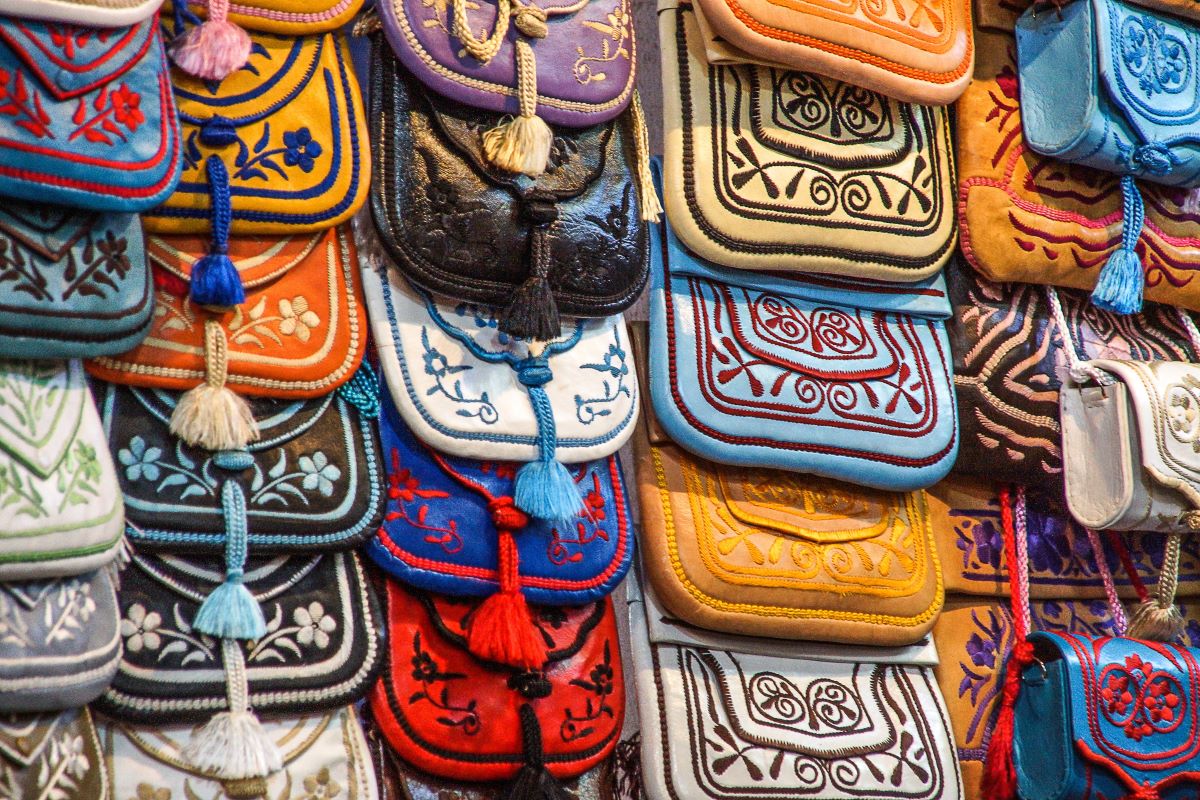
They sell literally everything you can imagine as a souvenir from Morocco: carpets, leather bags, grandmothers, lanterns, ceramics, spices, baskets, jewelry, fabrics, argan oil.
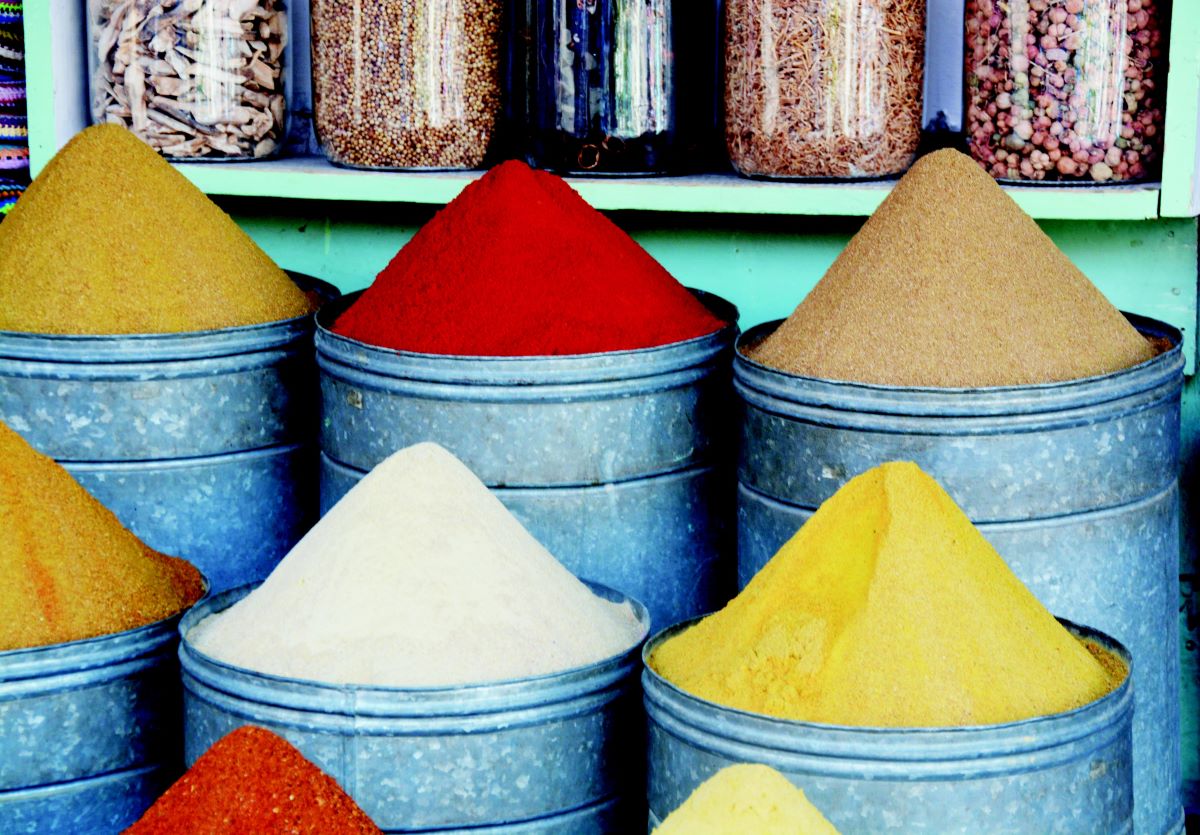
But the most interesting thing is not to buy, but to simply watch. How a master dyes leather. How a huge carpet is folded. How a plate is painted by hand. How a seller mixes spices on a small bench among dozens of jars.
And, of course, haggling. In Morocco, bargaining is part of the game. Just because a seller tells you the price right away doesn’t mean the item is worth that much. Smile, offer your price, and take your time.
And if you don’t want to buy, don’t show too much interest. Otherwise, you might find yourself in a carpet shop with a cup of mint tea in your hands before you know it.
Koutoubia Mosque – the symbol of Marrakech
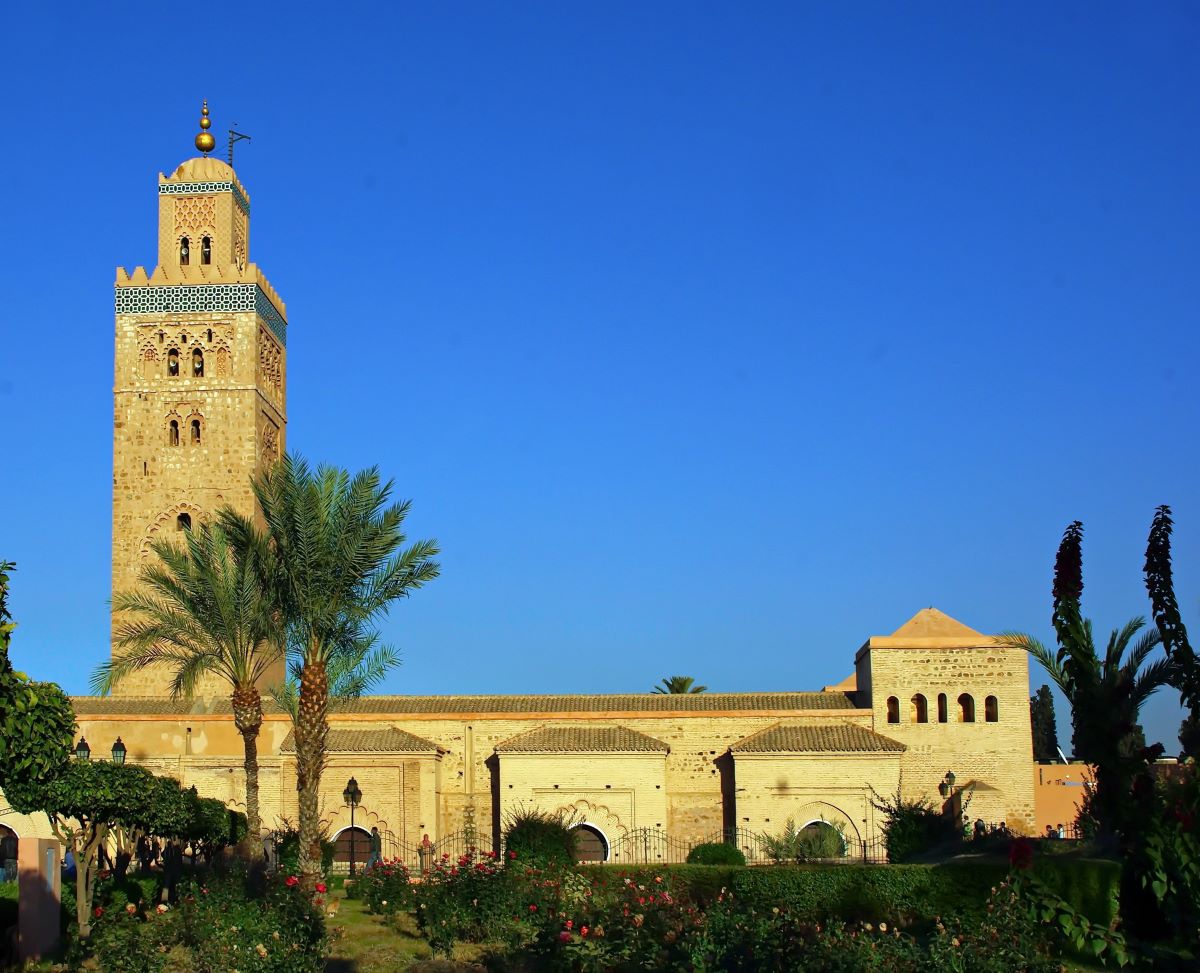
It’s easy to get lost in Marrakech. But there’s one landmark that always helps you figure out where you are. It’s the Koutoubia Mosque with its huge minaret.
It’s about 70 meters high and can be seen from different parts of the city. The mosque was built in the 12th century and is considered one of the best examples of Almohad architecture. Non-Muslims are not allowed inside the mosque, but that doesn’t mean you shouldn’t visit.
There’s a beautiful garden around it, and the minaret itself is especially impressive in the evening when it’s lit up. And another thing you can’t miss in Marrakech is the call to prayer. It rings out from the minarets several times a day and gives the city a special vibe. It’s especially beautiful early in the morning, when the medina is still almost empty.
Bahia Palace – fabulous Morocco at your doorstep
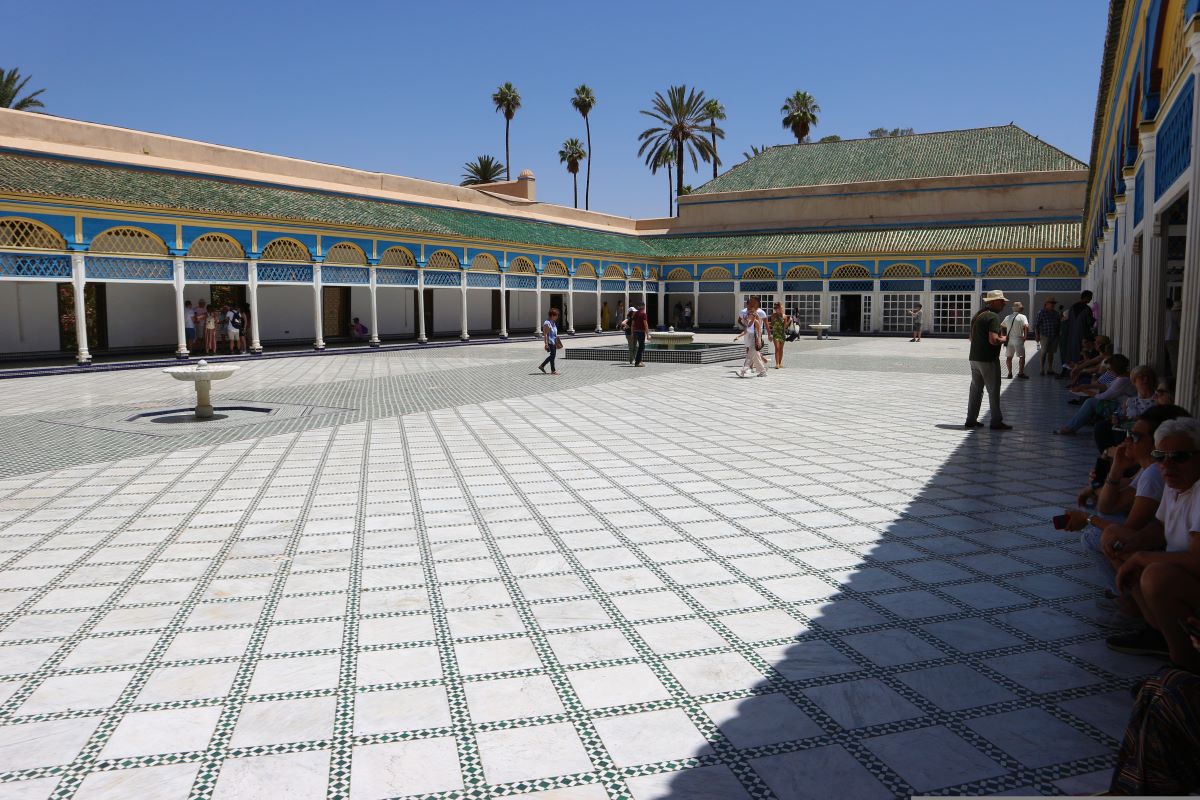
If you want to understand how wealthy Moroccan families lived, go to the Bahia Palace. From the outside, it doesn’t make the impression you might expect from a palace. But once you step through the door, a different world begins. You’ll see marble floors, carved wood, painted ceilings, mosaics, courtyards, fountains, orange trees.
The name Bahia translates as “brilliance” or “radiance,” and it’s hard to think of a more accurate word for this palace. Here, you don’t want to run from room to room, taking pictures of everything in a row, but just sit somewhere in the shade and examine the details.
In Marrakech, you generally need to learn to look up, down, and around. Because sometimes the most beautiful things here are not in front of you, but above your head — on the ceiling or doors.
The Ben Youssef Madrasa is one of the most beautiful buildings in Marrakech
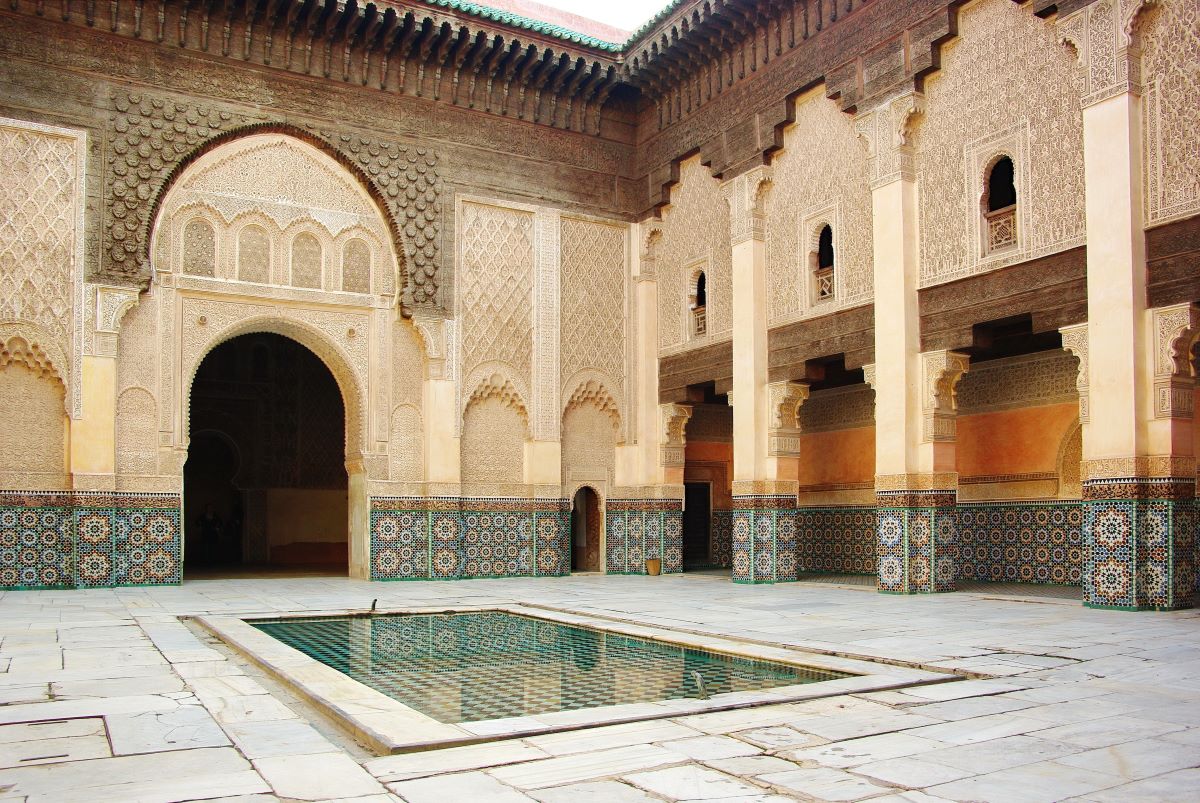
After the hustle and bustle of the souks, the Ben Youssef Madrasa seems almost unreal.
This former Islamic theological school was founded in the 16th century by the Saadian Sultan Abdallah al-Ghalib. The building had 130 student rooms arranged around a large courtyard. And that courtyard is the main reason to come here.
The green and white mosaics, carved cedar, Arabic calligraphy, stucco and water in the pool in the center create the same image of Morocco that we imagine when we think of the East. You can spend half an hour here, or you can linger for much longer. Especially if you come early, before the tour groups fill up.
Majorelle Garden – a bit of French Morocco
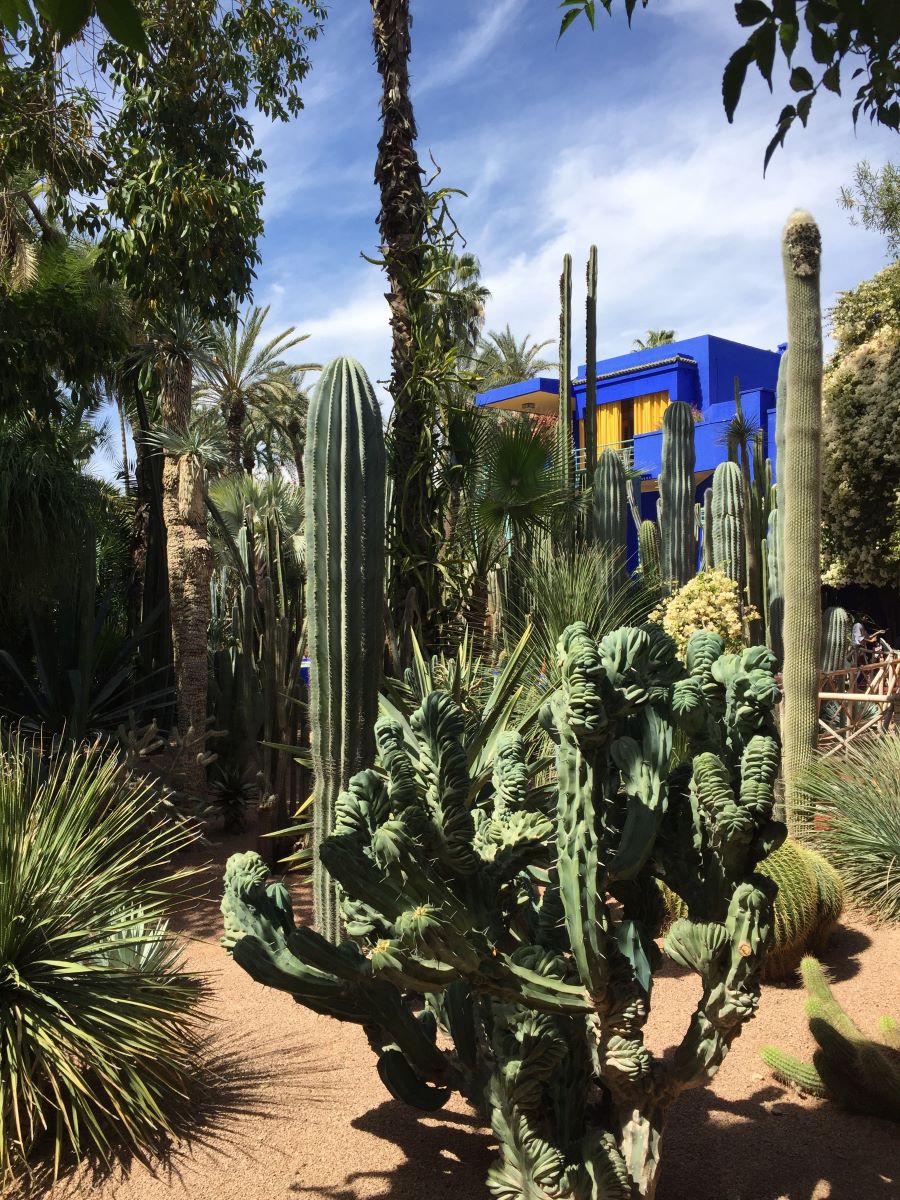
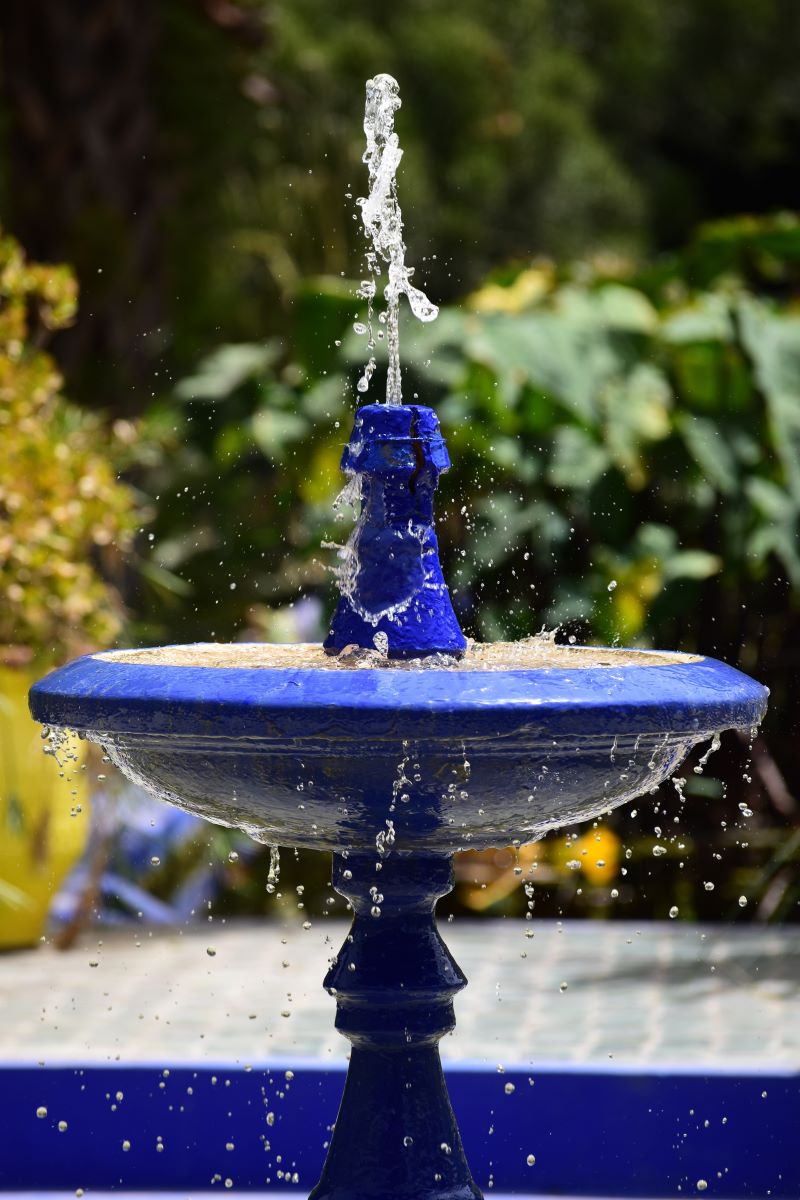
After the red walls, narrow streets and noise of the medina, it’s worth taking a break. The Majorelle Garden is perfect for this. It was created by the French artist Jacques Majorelle, and later the garden became associated with Yves Saint Laurent and Pierre Bergé.
Here, Marrakech suddenly turns blue. In the middle of dense greenery stands the famous building of a rich cobalt color, surrounded by cacti, bamboo, palm trees, ponds and exotic plants.
This is one of those cases when a photo on Instagram does not exaggerate the beauty of the place. But there is a nuance: the garden is very popular, so it is better to plan a visit in advance and not count on a lonely walk among the cacti.
La Mamounia – hotel from Arabian tales
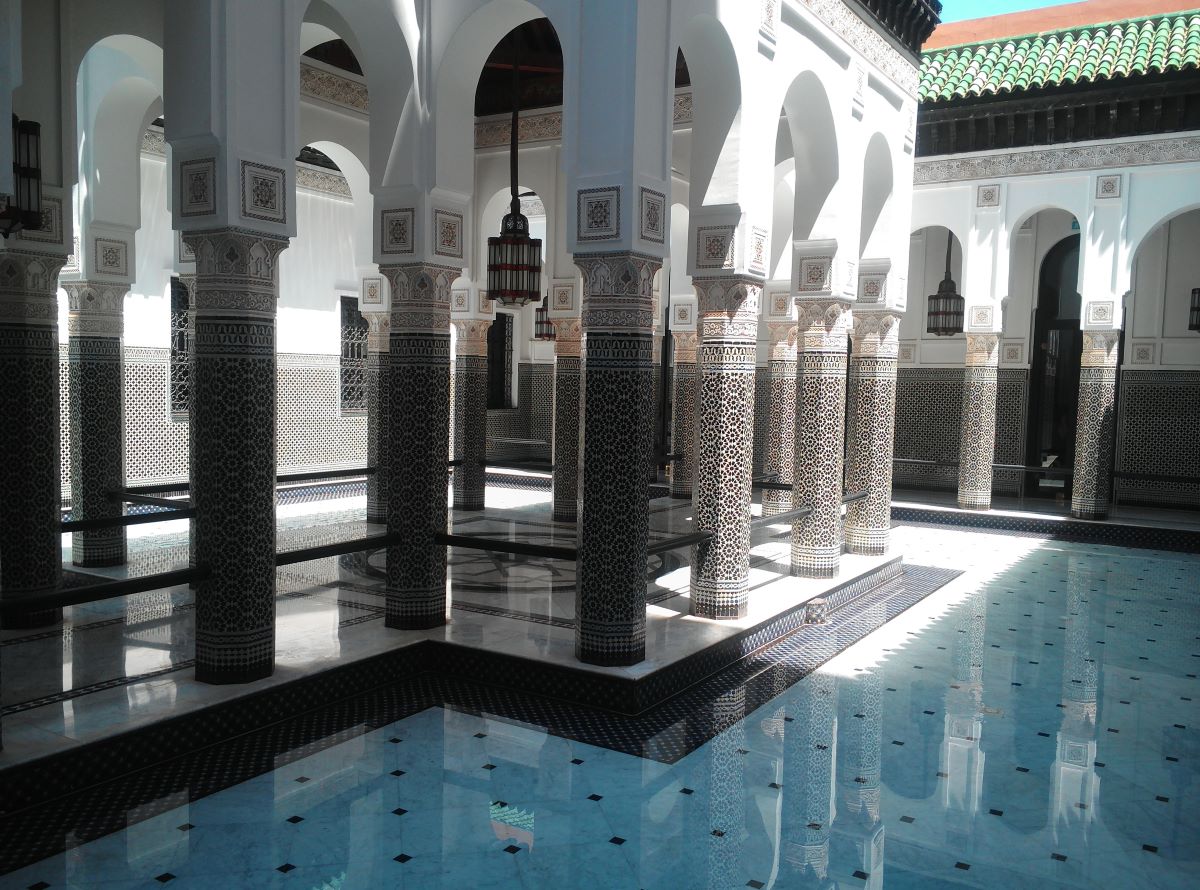
La Mamounia — is a legendary five-star palace hotel in Marrakech, considered one of the most luxurious in the world. It was built in 1923 on the site of 18th-century royal gardens that Prince Moulay Mamounia received as a wedding gift.
This hotel is a masterpiece of Moorish and Art Deco styles. Over the centuries, it has hosted royalty, world leaders (including Winston Churchill, after whom one of the bars is named), and film stars. The hotel’s gardens cover nearly 7 hectares and are a true oasis in the middle of the bustling city. The photo shows its famous indoor pool area and spa.
How to get to hotel
Well, firstly, here you can book a room that will include a visit to the SPA and the entire hotel area. Accommodation in this hotel costs a lot of money, so you can get here in other ways. There are some variants:
Book a table in a restaurant or bar: The hotel has several luxurious establishments, including the famous pastry shop Le Salon de Thé par Pierre Hermé or an Italian restaurant. Booking a table gives you access to the territory of the hotel-palace.
Or buy a day pass (Day Pass): The hotel offers special day packages for non-residents. There are usually two options:
- Pool Day Pass: gives access to outdoor pools and gardens (costs around 250 euros / 2500–2800 MAD depending on the season).
- Spa Pass: purchased together with a treatment (e.g. massage or traditional hammam at Mamounia SPA). Please check the current prices and availability directly on the official website, as the number of day passes is strictly limited.
Keep in mind: The hotel’s strict dress code is a critical point. Even with a reservation, you will not be allowed in if you are wearing shorts, sportswear, flip-flops or anything too revealing. Clothing should be smart casual or simply elegant.
Menara Gardens – tranquility with a view of the Atlas Mountains
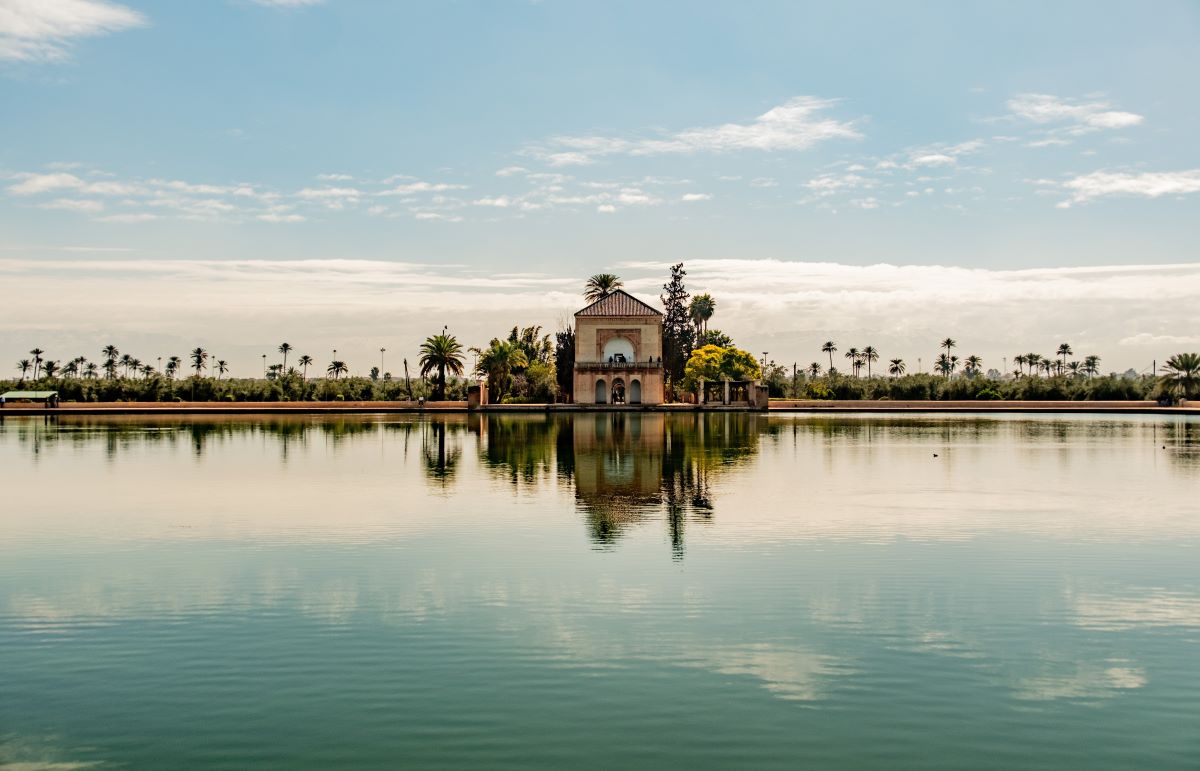
The Menara Gardens (Jardin de la Ménara) are located on the outskirts of Marrakech, about 3 kilometers from the city center, closer to the foothills of the Atlas Mountains.
The gardens were laid out in the 12th century during the Almohad dynasty. The modern pavilion with a characteristic green pyramid-shaped roof was built in 1866 during the reign of Sultan Abd al-Rahman.
The complex consists of a huge olive grove, fruit orchards and a large artificial reservoir (pool). Water comes to it thanks to an ancient system of underground canals (kyrizs) that transport meltwater from the Atlas Mountains.
This is a very photogenic place and therefore it is worth coming here at dawn, or before sunset. At this time there are no crowds of tourists, the water becomes mirror-like, and the walls of the pavilion acquire a charming golden-pink hue.
Note: To get the famous view of the Atlas Mountains against the backdrop of snow-capped mountain peaks, it is worth coming here in winter or early spring.
Entrance fee: Entrance to the park itself and the pool is free. A small fee (around 20-50 dirhams) is charged only for entry into the pavilion itself.
Opening hours: Usually open daily from 08:00 to 17:00 (or until 18:30 depending on the season).
El Badi Palace – ruins of former luxury
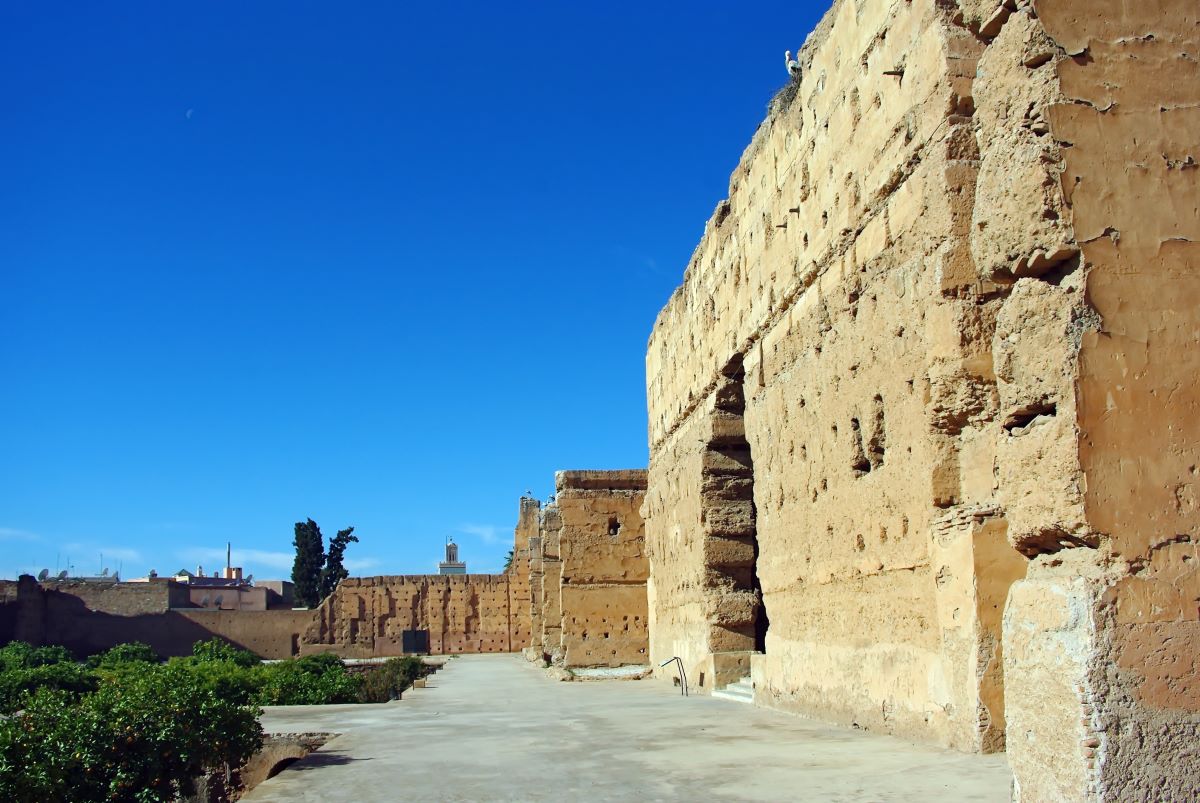
If Bahia shows Morocco in all its glory, then El Badi is Morocco that has lost its former grandeur.
Once it was the grand palace of the Saadian Sultan Ahmad al-Mansur. Today, all that remains are the huge walls, courtyards, underground rooms and storks that have built nests in the old towers.
And you know what’s interesting? It is the ruins that sometimes make a stronger impression than perfectly restored palaces.
You stand in the middle of a huge empty courtyard and try to imagine how marble once shone here, water flowed and courtiers passed by.
Marrakech leather factories – smell, colors and ancient craft
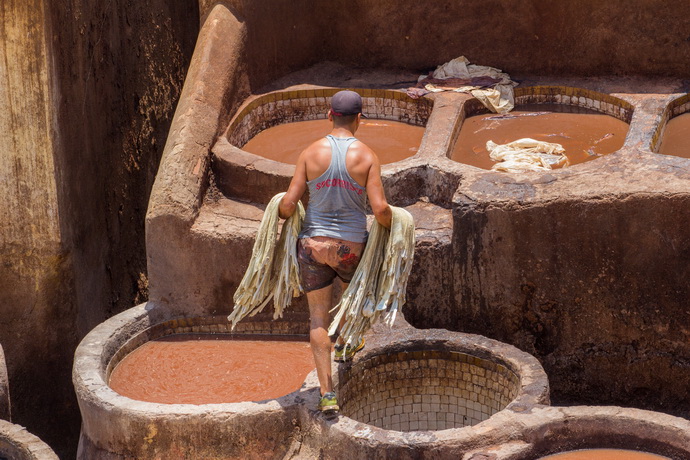

After carpets, spices and ceramics, be sure to pay attention to the leather factories of Marrakech. Here, for centuries, hides have been processed and made into what is then sold in the shops of the medina: bags, belts, wallets, jackets and other leather goods.
I will warn you right away: the smell here is specific. Very specific. The hides are first cleaned, soaked in natural ammonia – animal urine and pigeon droppings. And then dyed in large stone or cement vats. That is why from the observation decks you can see an incredible palette – yellow, red, brown, orange, green and other colors. And feel the whole spectrum of aromas…
It seems as if you are in front of a huge artist’s palette. But behind this beautiful picture is hard manual labor. Workers work in the open air, often barefoot entering large vats with solutions for treating leather.
In Marrakech, leather production is not as famous and large-scale as in Fes, but it is still interesting to see it with your own eyes. Especially if you do not plan to travel a long route through Morocco. And come to Marrakech for a few days. So, this is a good opportunity to look behind the scenes of traditional Moroccan crafts.
Tips for visits
Just be careful with local “guides”. Near the factories you may be actively invited to go inside or show you the best viewing point, and then ask for money (the same problem in Fes). It is better to immediately agree on a price if you agree to be accompanied.
And another little trick: do not refuse when you are offered a sprig of mint, perfume or just cover your nose with a scarf. Even if you are very curious, the smell of leather production may turn out to be stronger than all your romantic ideas about Morocco.
But it is precisely such places that are memorable. Because Marrakech is not a museum where everything is neatly displayed behind glass. Here, crafts are still carried out right on the street, next to tourists, scooters, shops and the old walls of the medina.
Sometimes it is worth breaking away from the beautiful facades and seeing how the things that you will later see in the markets are actually created.
What else to do in Marrakech
Don’t turn Marrakech into a sightseeing marathon. This city needs some time to live.
- Drink mint tea on the roof of a riad.
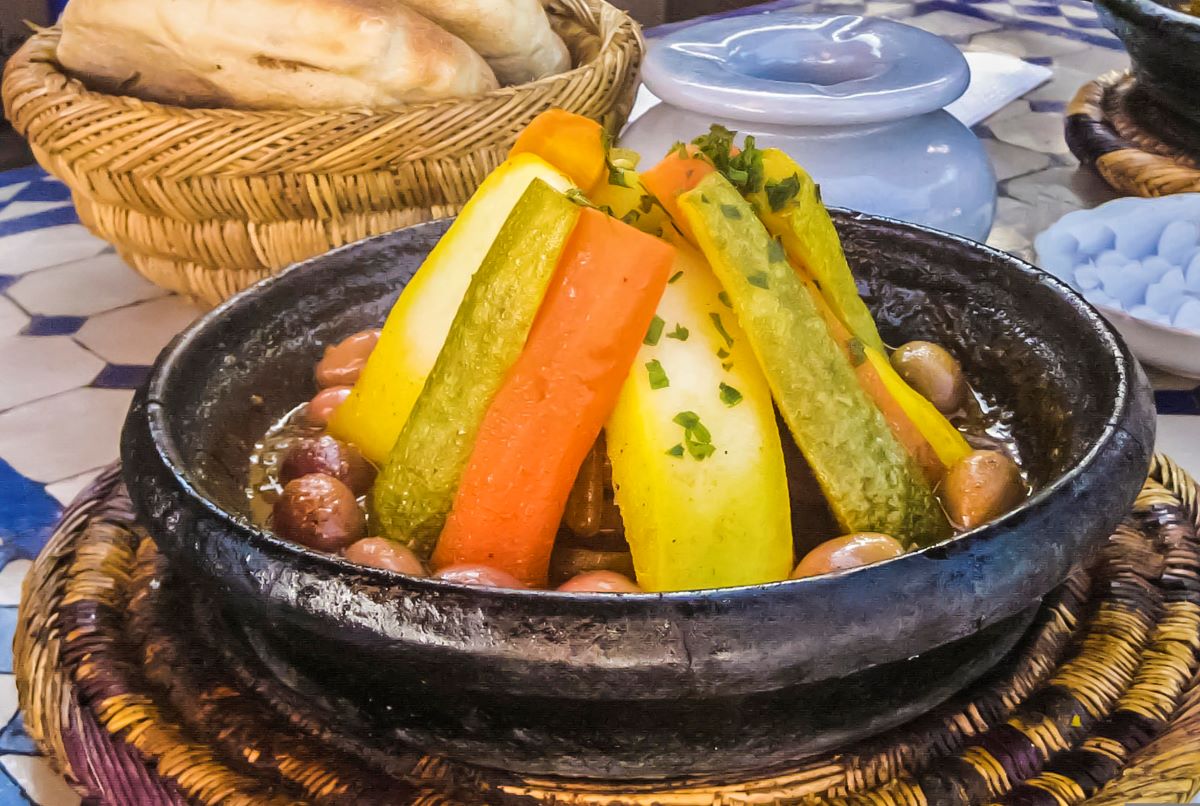
- Try tagine, a traditional dish cooked in a conical ceramic pot.
- Drink fresh orange juice in Jemaa el-Fnaa.
- Try pastilla, Moroccan msemen pancakes and sweet pastries.
- Visit a hammam.
- Sit on the terrace as the sun sets behind the red roofs of the medina.
- And in the evening, simply return to Jemaa el-Fnaa.
Because Marrakech after sunset is a completely different city.
Where to stay in Marrakech
The place of residence here greatly influences the impression of the city.
Medina – if you want to stay in real Marrakesh
For my first trip, I would choose a riad in the medina. That’s exactly what we did once, immersing ourselves in the narrow alleys and bustling markets of this city.
The medina is the historic center of the city and a UNESCO site, where the Jemaa el-Fnaa, the souks – shopping arcades and streets, the Koutoubia, Ben Youssef and most of the main attractions are concentrated.

A riad is a traditional Moroccan house with its facade turned inwards. From the street, you see plain blank walls and a small door, and behind them suddenly opens an inner courtyard with a fountain, plants, mosaics and a roof terrace.
The main disadvantage is that cars cannot drive on most of the narrow streets of the medina, so taxis will only take you to a certain point, and then it is important to walk. With a suitcase, it can be a bit of an adventure.
Riads in the Medina of Marrakech
- Quite riad – The riad is tastefully decorated and very quiet, very nice and clean. The owners are very kind and helpful, they serve a typical Moroccan breakfast
- Riad Challa Hotel & Spa – This Riad is conveniently located with easy access to all the main attractions. There is a really large swimming pool, which is a rarity in the centre of Marrakech. There is also daily cleaning, including a change of towels; good air conditioning and a fridge in the room. Excellent value for money.
- Riad Assia – We stayed here and it’s a great riad! It has good breakfasts and a good location in the Medina (everything is within walking distance), easy to get to by car, but it’s better to leave the car outside the perimeter in the parking lot (which we did). This is where you feel Marrakech. You leave the riad and a few minutes later you find yourself among the shopping streets.
Kasbah is a quieter alternative to the medina

If you want to live in the old city but away from the main tourist hubbub, check out the Kasbah.
Located south of the central medina, near the Saadian Tombs and El Badi Palace, this area also has beautiful riads, but the atmosphere is a bit more relaxed.
Riads and hotels in the Kasbah area
- Riad Sarasvati & SPA – Absolutely fantastic, friendly and helpful staff. The riad is just gorgeous and the room was incredible. The location is a bit off the beaten track and you have to walk through rows of shops to get there, but it is safe.
- Riad Sabah – Very quiet place in the Kasbah. Comfortable, clean, simple and welcoming. Great rooftop with views of Marrakech and the snow-capped Atlas in the background. Very good breakfast.
Geliz – for those who don’t like mazes
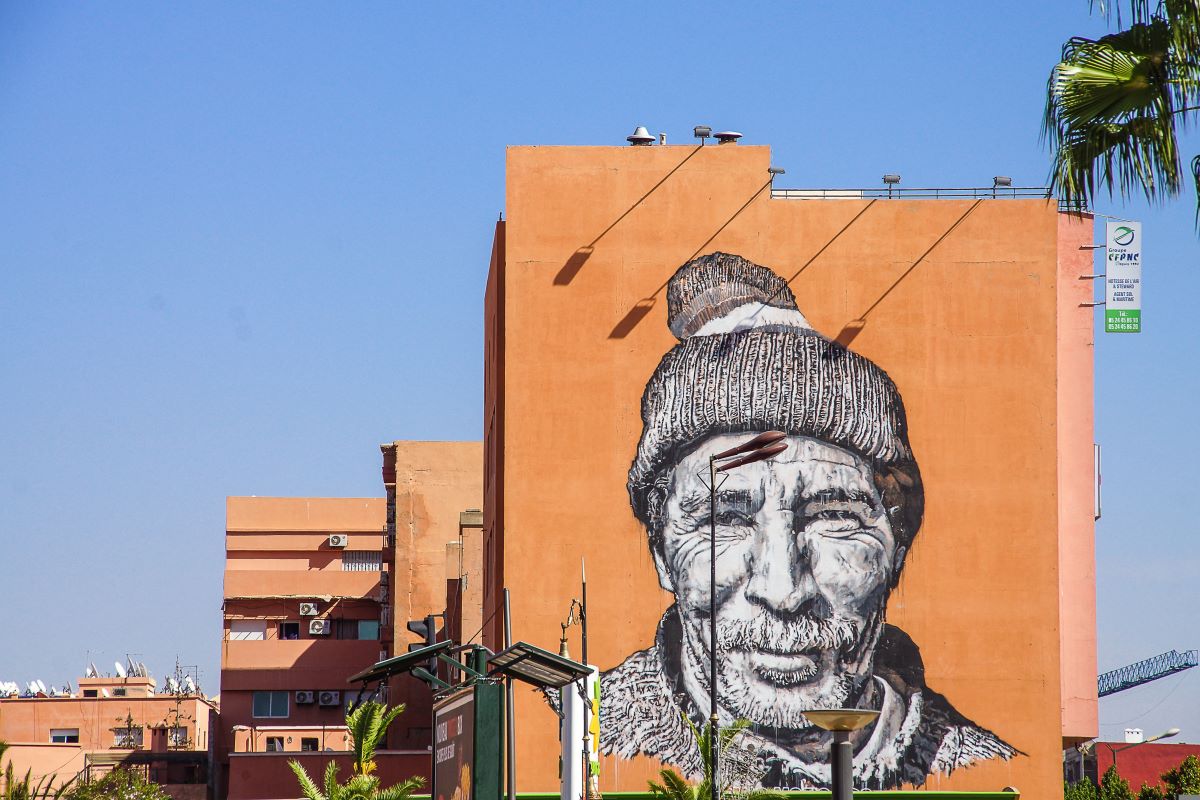
Gueliz is modern Marrakech. Wide streets, cafes, restaurants, shops, galleries, modern hotels. It is much easier to navigate here, taxis can pull up right to the hotel entrance.
Gueliz is especially convenient if you plan to travel a lot outside the city. It is also home to the Marrakech train station.
- Haven Marrakech -The hotel is a riad outside the Medina, in the “new city”, close to the train station (15 minutes walk) and without having to walk through the streets of the Medina with luggage. Amazing decor, easy access, a sense of security and tranquility in the house, pleasant and helpful staff who are not too intrusive.
- Le Gueliz Centeral cosy Suite – Everything is perfect, the hosts are friendly and helpful, very quick to respond to any questions. And the amenities are good, especially the balcony and living room, it’s a really great place. And the location is good, there is a shopping mall and supermarket nearby, as well as a train station, you can get anywhere.
Hivernage — comfort, swimming pool and good hotels
Hivernage is an area of large hotels, restaurants and nightlife. It is quieter than Gueliz, greener and much more focused on a comfortable stay. This is where a significant part of the expensive hotels in Marrakech are concentrated.
If after a whole day in the medina you want to return to a normal large hotel with a pool, air conditioning and a spacious room, this is a good option. But if you came for the atmosphere of Morocco, I would still choose a riad.
- Duplex Sabah Opera – Quartier Hivernage – Really nice and easy check-in, clean hotel, great location, close to Marrakech train station, next to Manara shopping center.
- Appartement neuf hivernage – A really nice apartment in an elite building with a great location – impeccably clean and well-maintained, with its own parking.
How to get to Marrakech from Europe
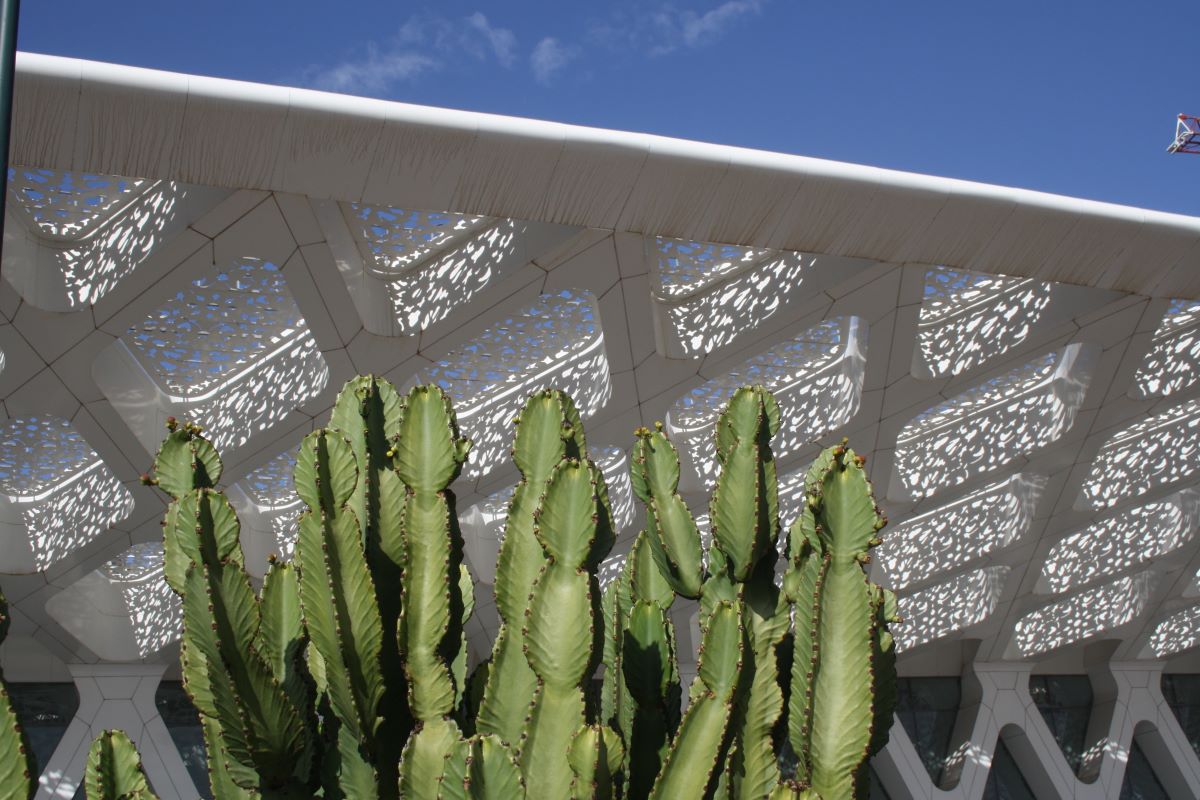
Thanks to low-cost airlines, Marrakech is one of the most convenient options for a short trip to Morocco.
It is also a very convenient city for a short trip from Europe. In 2026, low-cost flights to Morocco are becoming more and more popular: Ryanair has announced a record winter schedule with 156 routes to/from Morocco, and among the new destinations is Marrakech – Wroclaw. In total, Ryanair’s winter schedule covers 14 countries and 5.3 million low-cost seats.
From Marrakech airport to the city
Marrakech Menara Airport (RAK) is located quite close to the city center. There is an official taxi rank at the airport, as well as a shuttle bus between the airport and the city, which runs every 20 minutes. Taxi fares should be posted at the station.
If you are staying in the medina, do not be surprised if the taxi does not come directly to the door of the riad. Then you will have to walk through the narrow streets. That is why it is better to write to the riad before arrival and ask for the point where the taxi should arrive, or arrange a meeting.
What to see outside Marrakech
And here’s where the fun begins. Marrakech is a great base for exploring not only the city, but also the High Atlas, Berber villages, the desert and the Atlantic coast.
In a few days you can see completely different landscapes. In the morning you can sit in the red medina, and a few hours later you will be among the mountains.
Atlas Mountains
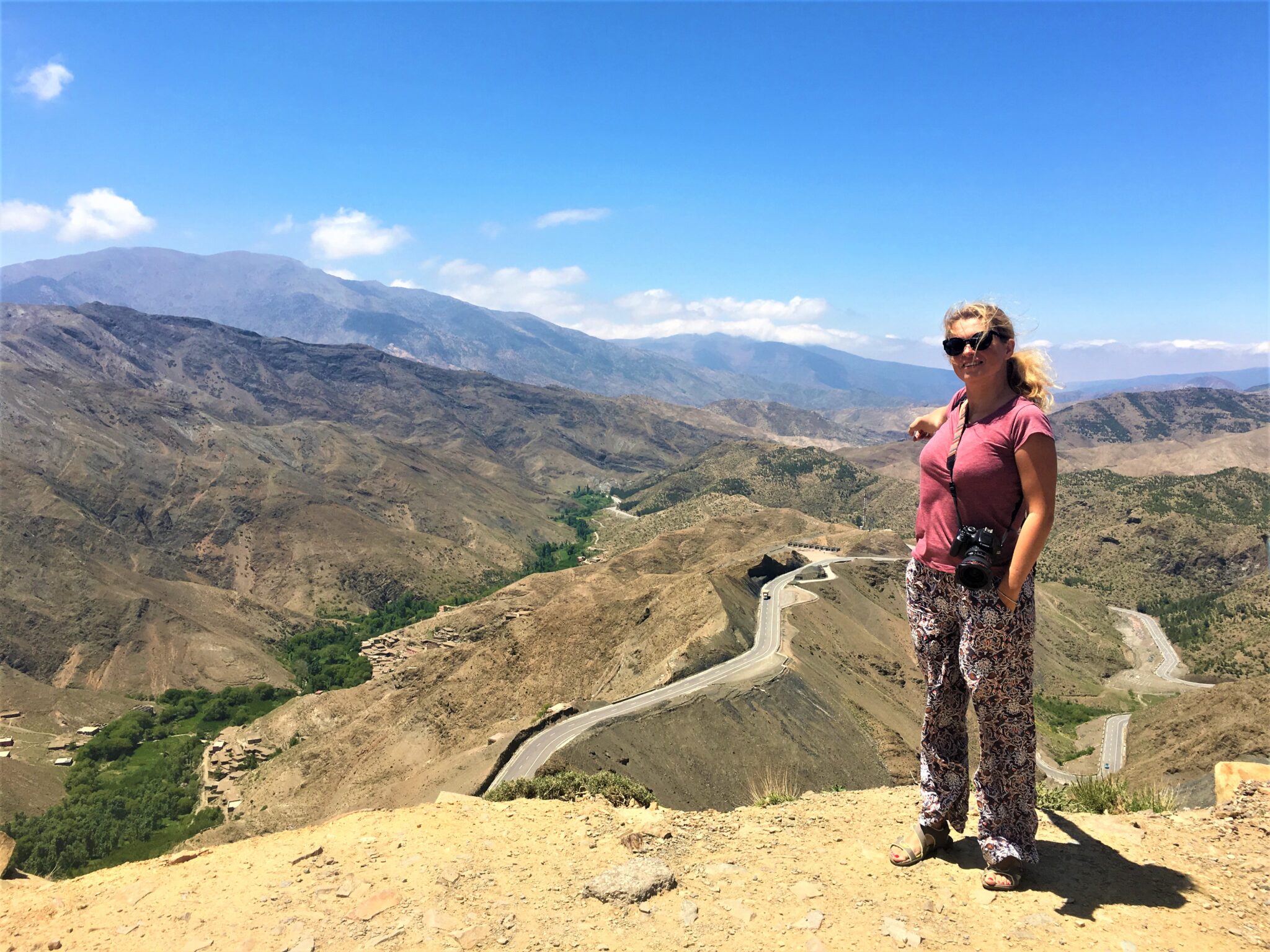
If you want to go for a walk and not just look at the mountains from the car window, go to the Imlil area.
The routes in the Toubkal National Park start here. This is where Jebel Toubkal is located, the highest mountain in Morocco and all of North Africa.
For a serious climb, you need time and a mountain guide, but for a normal trip, a day’s walk around Imlil and the Berber villages is quite enough. And this is exactly the case when you should take normal shoes with you, and not beautiful sneakers for photos.
Ouzoud Waterfalls
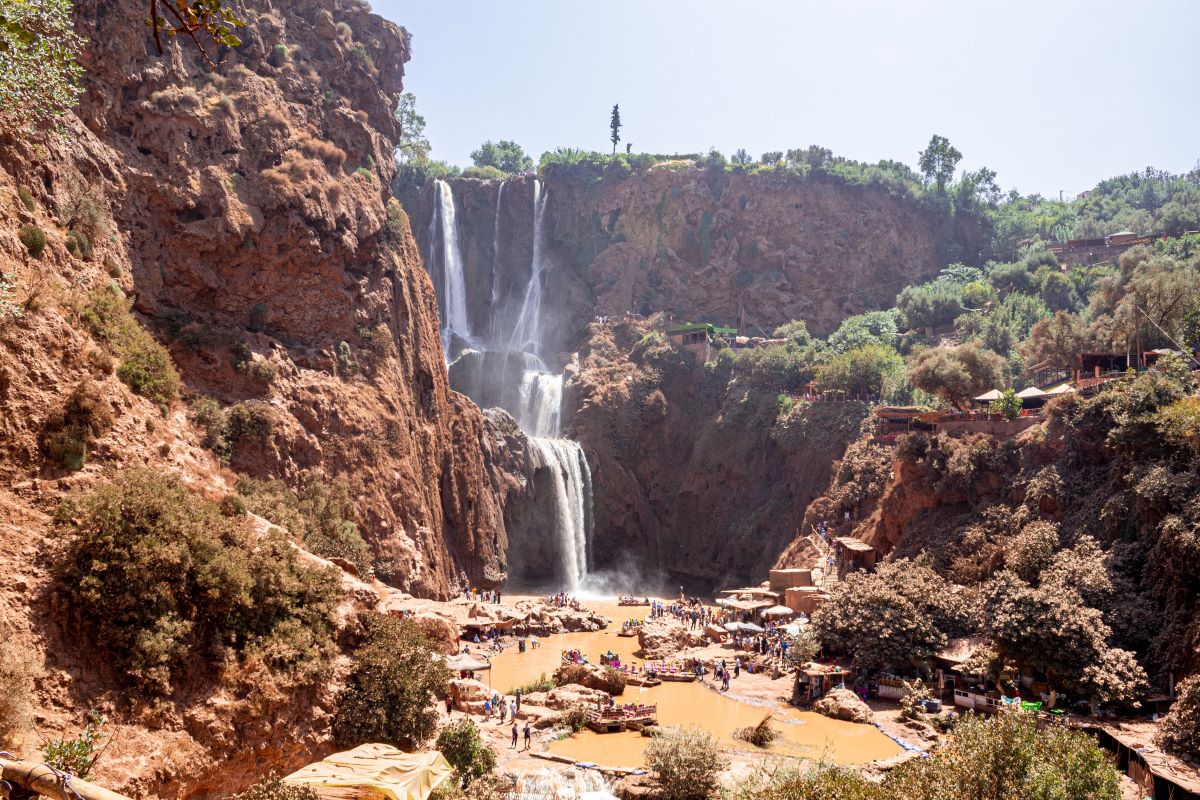
If you love nature, you should consider a trip to the Ouzoud waterfalls.
The water cascades down from red rocks, surrounded by lush greenery. Located in the Azilal region, it is one of the most famous natural attractions in Morocco. The waterfalls are located further from Marrakech, so it is a longer day trip.
If you are short on time, I would choose Ourika or the Atlas. If you have a week and want to see more than just the city, Ouzoud is well worth a day trip.
Ait-Ben-Haddu and the road through the Atlas
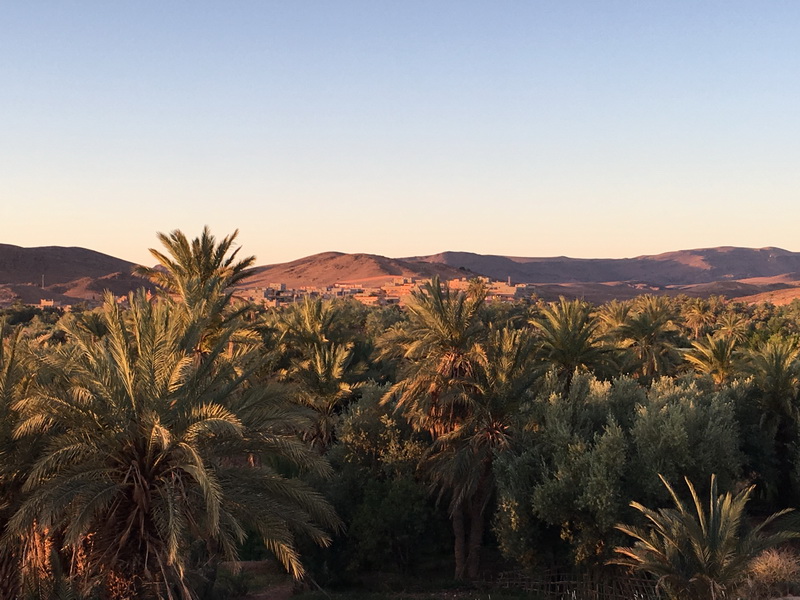
But Ait Ben Haddou is not just a tour. It is a place for which you want to drive through the mountains.
The road passes through the High Atlas, and then the landscape gradually changes: the greenery disappears, the mountains become dry, the earth acquires a terracotta color, and in the middle of the rocky valley suddenly appear clay fortresses.
Ksar Ait Ben Haddou is a fortified settlement with traditional mud houses, which is included in the UNESCO list. It is such ksars and kasbahs that create the image of southern Morocco that we saw in the movies.

The route can be continued to Ouarzazate, the Dades Valley and the Road of a Thousand Kasbahs. But I wouldn’t go here in one day from Marrakech. It’s better to make a 2-3 day trip.
Then you won’t be sitting in the car all day, and you will be able to see gorges, oases, kasbahs and desert landscapes.
The official tourist route of Morocco “The Road of the Kasbahs” starts from Marrakech and leads through Ouarzazate, Zagora and Tinerhir.
Agfai Desert – when you want the desert without a long road

The real Sahara is a long way from Marrakech. But there is a compromise – the Agfai Desert.
This is a rocky desert about the same distance from Marrakech. There are no huge golden dunes of Erg Chebbi, but there is a feeling of space, dry hills, camps, camels and incredible sunsets.
You can come for a few hours, ride a camel or quad bike, have dinner at the camp and return to the city. Or you can stay overnight.
Essaouira – from the red city to the blue ocean


And then there’s Essaouira. And this is probably my favorite idea for a continuation of Marrakech.
In the morning you’re still drinking mint tea among the red walls of the medina, and a few hours later the Atlantic is in front of you. Blue boats in the port, white houses of the medina with blue doors. The cries of seagulls, the smell of fresh fish and the wind that almost never forgets about your hair here.
The Medina of Essaouira is also on the UNESCO list. The city is famous for its fortress, port, craft workshops, beaches and a special relaxed atmosphere.
In my opinion, it is better to go here not just to “see the sights”, but to live at least one (two-three) days. Meet the sunset near the fortress and have dinner with fish. Walk along the narrow streets when the tourist groups have already left. And in the morning go out to the ocean again on a long beach.
How many days do you need for Marrakech?

I would allocate at least three full days for Marrakech itself. You can see the main sights in two days, but it will be a rush.
- The first day is the medina, Jemaa el-Fnaa, shopping streets, Koutoubia.
- The second is Bahia, Ben Youssef, Saadian tombs, El Badi and an evening in the medina.
- The third is the Majorelle Garden and time just for the city: hammam, riad, cafes, shopping, long walks without a route.
If you have 4-5 days, give one day to the Atlas.
If you have a week, you can add Essaouira or do a 2-3 day route through Ait Ben Haddou, Ouarzazate and the gorges.
And then Marrakech will stop being just a beautiful city for a few photos. It can become a gateway to a completely different Morocco.
Useful articles and links:
- 5 most scenic roads in Morocco that you should definitely add to your itinerary
- The perfect route through Morocco
- Beaches in October – where to relax at the end of the velvet season
Bus timetables and tickets– Omio.com
Rent a car– DiscoverCars
Medical insurance for travel – HotlineFinance
Hotels – Booking.com