

Paris in five days – what to visit and see. Transportation in Paris, main attractions, how to get to Paris airports, when is the best time to go to Paris.
In this guide, we will walk the narrow streets of Montmartre, taste oysters at Sunday markets, go on a picnic in the Luxembourg Gardens, visit the Louvre and climb the Eiffel Tower.
When is the best time to go to Paris
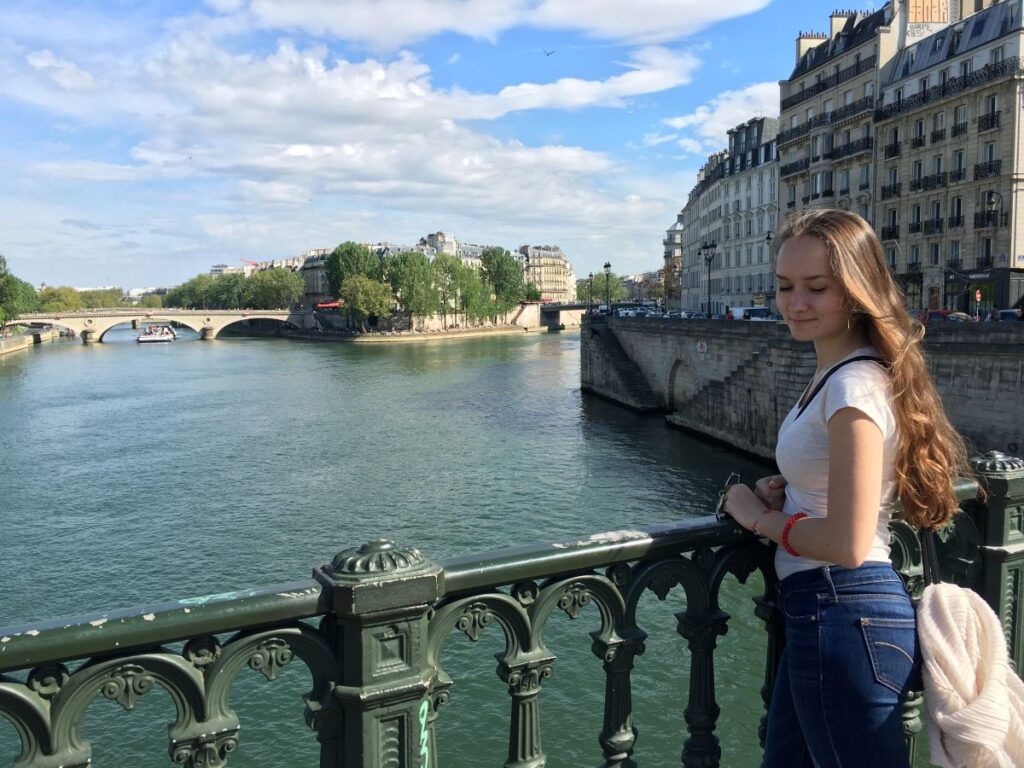
Paris is ideal for traveling in spring and fall. While in April and May the city blooms with greenery and flowering trees, September and October are the perfect time to walk in parks and romantically rustle through the autumn leaves. In summer, it can be quite hot and there are a lot of tourists. In winter, Paris is quite chilly, but it’s good to warm up in a cafe with a cup of coffee and visit all the best museums at the same time.
Transportation in Paris
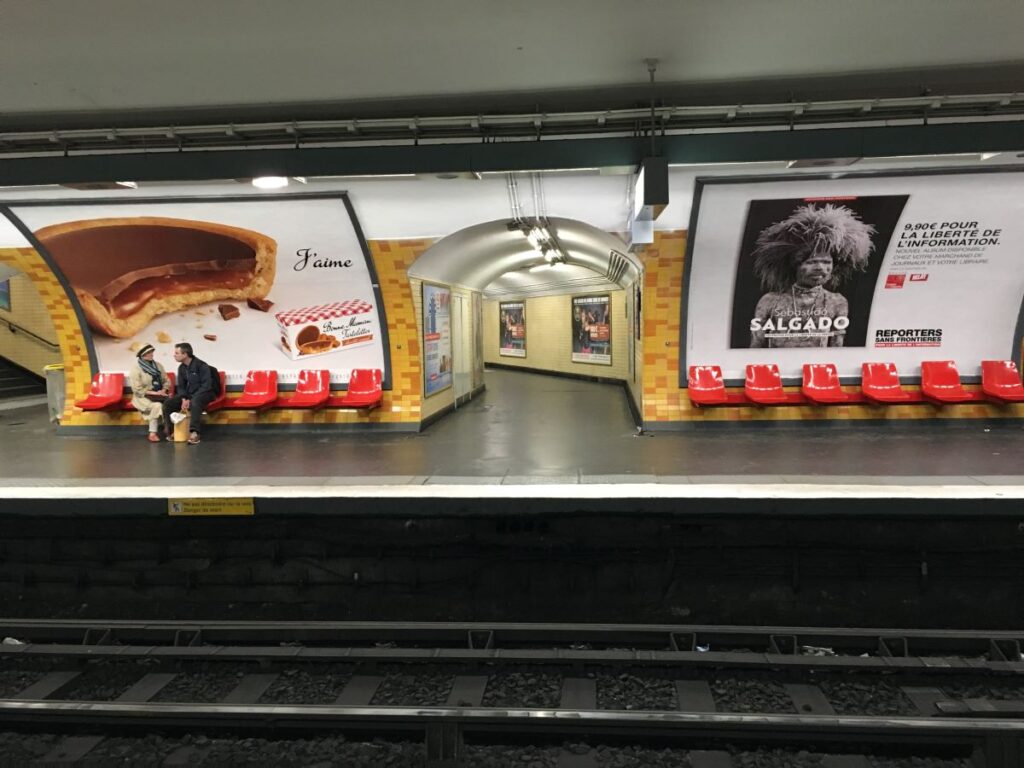
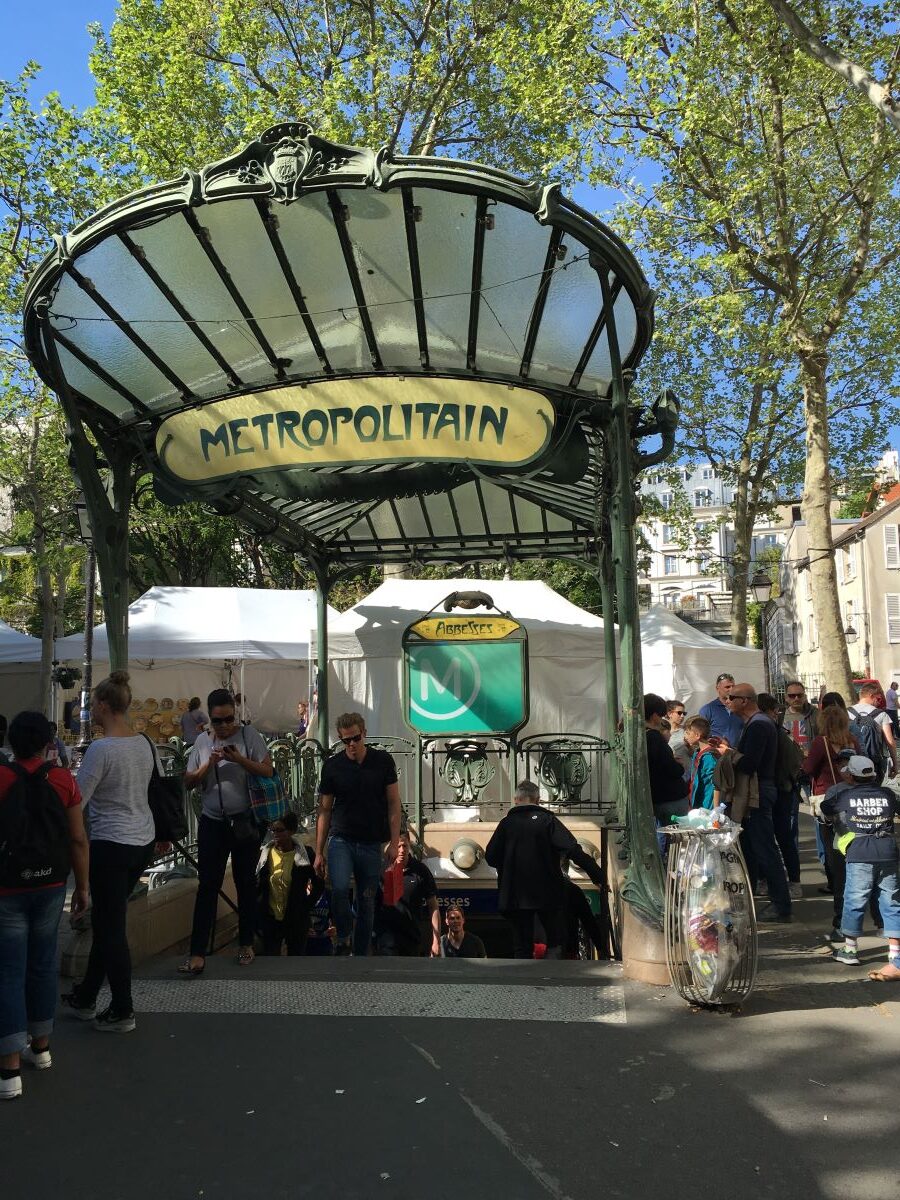
Public transportation in Paris is a rather complicated story. Before you use it, it is better to dive into its intricacies. Paris can be traveled by subway, RER, trams and buses.
The most popular mode of transportation is the Paris metro, which is connected to the RER trains. There are a total of 16 metro lines and 5 RER lines, which are useful, for example, for traveling to Disneyland, Versailles, and some remote areas of Paris.
The metro runs from 5:30 to 0:45 – on Friday and Saturday, the metro is extended until 1:45, RER from 5:30 to 24:00.
Paris also has more than 200 bus lines, most of which pass through the center. Just like in Ukraine, buses in Paris stop on demand. To stop the bus, wave your hand, and to get off the bus, press the red STOP button on the handrail.
At night, Noctilien night buses, marked with the letter N, run from the center of Paris to the main railway stations – the fare at night is the same as during the day.
Tip: You can use the Next Stop Paris app to plan a route by public transport.
Transportation fares in Paris

Public transportation in Paris is divided into 5 tariff zones. All of Paris is located in zones 1 and 2. The Paris Metro runs only within these zones.
Zone 3 is a suburb of Paris. RER suburban trains run there. Zone 4 includes Orly Airport and Versailles, and Zone 5 includes Charles de Gaulle Airport and Disneyland.
Tip: If you arrive in Paris by car, leave it in a parking lot far from the center and take public transportation. This way, you will save a lot of money on parking in the city center, which can reach €60 per day.
Ticket t+
A one-time trip on a T+ ticket costs €2.1 and takes 90 minutes depending on the type of transport: by bus, subway, tram, or suburban trains (RER – only in zones 1 and 2).
One ticket can combine either the metro and RER, or a bus and tram, but not both.
It is most profitable to take a carnet at once – 10 tickets for €16.9 (children under 4 years old are free). Tickets can be purchased at metro ticket offices or by installing the Navigo Easy app. These paper coupon tickets are being phased out with the introduction of the Navigo Easy app.
If you use paper tickets, you need to insert the ticket into the turnstile before taking the subway, and you need to compost it when transferring to ground transportation. Tickets from one carnet can be used by several people and can be bought at ticket offices or vending machines at all metro and RER stations.
Reusable tickets
For those who plan to ride public transport all day, it is more profitable to buy unlimited tickets for 1, 7, and 30 days – the price depends on the transport zone.
The cheapest one is Mobilis 1 day ticket for an unlimited number of trips within zones 1-2 (all of Paris) costs €8.45. Mobilis, which includes all 5 zones, is beneficial if you are planning a trip to the suburbs of Paris. For example, to Versailles or Disneyland, because it allows you to get to the sights and then travel around Paris. For example, a ticket to Disneyland and back will cost €20.1.
Young people under 26 years old can purchase a special Ticket Jeune. It is valid only on weekends or public holidays and can be used all day long without restrictions on public transportation. The price depends on the selected zones and starts from 4.1 euros for zones 1-3. It is not easy to find them in the machine: they can be selected by entering the menu under the inscription “Other Tickets” (in the English-language layout).
The Navigo monthly ticket is sold in the same way for all five zones. It costs 84.1 euros.
Recommend for reading: Olympics in France – how to avoid unnecessary payments
Paris Visit card
The Paris Visit card gives you unlimited movement in Paris for several days. It can be purchased for 1, 2, 3, or 5 days. You can also select the range: Paris and nearby suburbs (zones 1-3), or Paris and all suburbs + airports(zones 1-5). With this pass, you can also get discounts at museums and tourist attractions. A 1-day ticket for zones 1-3 will cost 13.55 euros, 28.50 euros for zones 1-5.
Tip: The current and detailed timetables for all Parisian transportation are available on the RATP website and app.
River tram Bateaux-Mouches

A first-time visitor to Paris wants to see everything at once: The Louvre, the Arc de Triomphe, Notre Dame Cathedral, the Eiffel Tower. If you try really hard, you can fit everything into one long day, although you still have to run everywhere and plan your route in advance.
To avoid running, you should use the Bateau river trams. They run along the Seine along the historic center and operate on a hop-on-hop-off basis. By purchasing a day ticket, you can ride along the Seine, getting off at any of the 8 stops: Notre Dame, the Louvre, the Orsay Museum, the Eiffel Tower, the City Hall, the Champs Elysees, the Saint-Germain-des-Prés neighborhood, and the Botanical Gardens. Boats depart every hour from 11:00 to 22:00 (depending on the season).
Schedule of river boats on the Bateaux website.
A day ticket costs €16, children under 3 years old are free, children under 11 years old are €7.5, and children under 4 years old are free. This method of transportation is convenient for those who want to see the center of Paris and its main attractions.
Where and what to eat in Paris

The perfect breakfast in Paris is a picnic in the Luxembourg Gardens. Today, it is one of the favorite places for Parisians to play chess, launch boats in the pond, and have picnics, taking out the delicious riches they bought at the market an hour ago. There are no lawns here, but there are hundreds of benches and chairs that make for a great outdoor breakfast.
Tip: Carry an empty plastic bottle with you – water is available in water fountains and in the drinking tap, so you can always fill it up and not suffer from thirst. You can also ask for plain water (carafe d’eau) in any Parisian cafe, and they will serve you a carafe of tap water instead of bottled water for €3-5.
Paris markets

Locals love to go to the street markets (marché) to buy food. The reverent attitude to food has given rise to the culture of French markets – there are more than 80 of them in Paris and its suburbs. You can buy absolutely everything at the market: hundreds of types of cheeses, vegetables and fruits, seafood, sausages and meat. Buy a crispy baguette, soft cheese, pate, ripe tomatoes, and strawberries for breakfast at the bakery, and on the way, stop by one of the wine shops and pick up a bottle of wine.
Here are some of them:
- d’Aligre (12th arrondissement, metro Ledru-Rollin) is one of the most popular and inexpensive near the center, open daily until 13:00, except for Mondays.
- Montorgueil (2nd arrondissement, metro Sentier, Les Halles) is one of the oldest with many cafes and grocery stores, open from Tuesday to Saturday from 10:00 to 18:00 pm and on Sunday mornings.
- Le Marche des Enfants Rouges (3rd arrondissement, Filles du Calvaire metro station) is the oldest, founded in the 17th century, located in the fashionable Marais quarter, open from Tuesday to Saturday from 8:30 to 19:30, Sunday from 8:30 to lunch.
In every market in Paris, you can buy oysters and taste them on the spot. It will cost 2-3 times cheaper than in restaurants. Even if you don’t know French, it’s enough to memorize this phrase: “Douze huitres ave sans overture, sil vous plait!” -12 oysters, please! (price from €2 per piece).
Tip:
Eating in cafes is quite expensive. During the day, you can take advantage of special offers, which are often written in chalk on black boards displayed next to the restaurant. You can see the inscriptions: Plat du jour or Menu du jour – dish of the day (from €15), or Formule – a set meal, usually including appetizers and entrees or a hot dish and dessert, or soup, main course and dessert. The cost of such a lunch in Paris starts at €15. Prices depend on the level of the restaurant and its location – the closer to the center, the more expensive it is. A cup of coffee costs an average of €3-4, a croissant from €1.5, pancakes from €2.5.
The Champs Elysees is home to the Laduree Confectionery House, one of the most famous creators of pasta. The history of Laduree as a world-famous confectionery began in 1862, when Louis-Hernest Laduree opened a bakery at 16, Rue Royale. It serves French gourmet cuisine, lunch is served daily from 12:00 to 15:30, on weekdays until 16:00.
Where to stay in Paris

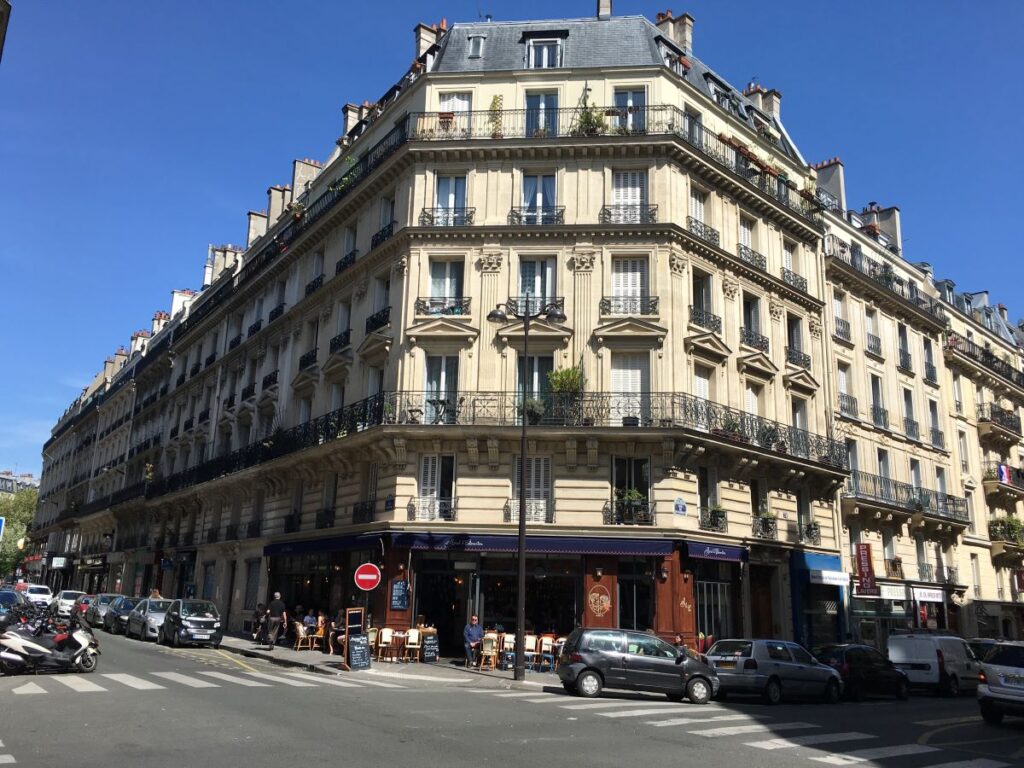
Paris is divided into twenty arrondissements. The choice of the district determines the impression of the whole trip.
Each Parisian district has its own atmosphere and lifestyle. And even the appearance within the district can be completely different – some streets will be pleasant and well-groomed, while others are not entirely safe for evening walks. Let’s figure out where it is better for tourists to stay.
It is optimal to live from the 1st to the 8th and 16th arrondissements, which is the tourist center of Paris. There are many good hotels and restaurants here.
The main attractions are located here:
- The 1st arrondissement is close to the Louvre, Palais Royal, and Parc des Tuileries. Booking – Paris 1-st arr≫
- The 2nd district is a little cheaper to get to, but also a nice place to stay, with the stock exchange and old passages. Book a hotel in the 2nd district on Booking.com≫
- The 3rd arrondissement is the Picasso Museum, part of the bohemian Marais neighborhood. Booking – Paris 3-d arr≫
- The 4th arrondissement is the historic center, the Pompidou Centerand Notre Dame. Booking – Paris 4th arr≫
- The 5th arr ondissement is the neighborhood of the Latin Quarter and the Pantheon. Booking – Paris 5th arr≫
- 6th arr ondissement – Luxembourg Gardens. Booking- Paris 6th arr≫
- 7th arr ondissement – Eiffel Tower. Booking – Paris 7th arr≫
- 8th arr ondissement – Champs Elysees. Booking – Paris 8th arr≫
- 16th arr ondissement – Passy. Find hotels in Center of Paris on Booking.com≫
Affordable prices in residential districts 12, 13, 14, 17. The 10th and 18th, and the outskirts of the 19th and 20th are considered to be conditionally unfavorable: it can be uneasy around the overly crowded and not entirely clean Northern and Eastern Railway Stations.
Despite the fact that the 10th arrondissement is adjacent to the colorful Moulin Rouge and Montmartre, housing here is one of the cheapest – from €25 per room, but there are few good hotels here, and it’s a bit of a steep hike to go out in the evening.
Book a hotel in Montmartre on Booking.com≫
Tip: Paris is generally a safe city in which people of all races and many nationalities get along well. The most that can happen is that thieves can steal a bag or take a wallet.
More information: Guide to the districts of Paris – where to book accommodation for tourists
The main attractions of Paris
Paris is huge, there are so many sights that a few days are unfortunately not enough. Often, budget tourists come here for a couple of days when Paris is included in a bus tour itinerary – a pointless trip that leaves them with only one surprise: we didn’t have time to see anything!
So, plan to spend at least 3-5 days in Paris to see at least its main famous sights.
Louvre

To get to the Louvre, you need to stand in a long line and spend at least one day at the museum (Palais Royal, Musee du Louvre, 75001 Paris). It is better to buy tickets online in advance.
How to get to the Louvre for free?
On Fridays after 6 p.m., young people under 26 with a passport are admitted to the Louvre free of charge.
From October to March, on the first Sunday of the month, admission to the Louvre is free, though you will have to stand in line for a long time.
There are two entrances through the glass pyramid, where there are always queues, and through the Carrousel du Louvre shopping center, where there are fewer queues. Opening hours: Mon, Thurs, Sat, Sun – from 9:00-18:00; Mon, Sun – from 9:00-21:45; Tuesday – day off.
Tip: check out the museum’s plan in advance and plan a route around it so you don’t have to wander the halls in search of Egyptian pharaohs and Gioconda.
Museum d’Orsay
Go in search of inspiration at the Musée d’Orsay to see Impressionist paintings (1 Rue de la Légion d’Honneur, 75007 Paris). The ticket costs €14, plus €5 for the audio guide, and you are guaranteed to be immersed in beauty: Manet and Pissarro, Monet and Seurat, Gauguin and Degas – they all lived, created and painted their Paris as they saw and felt it.
Opening hours: 9:30 to 18:00.
Tuileries Garden

After leaving the museum and crossing the bridge over the Seine, stretch your tired legs while sitting on the grass in the Tuileries Garden. Bring a baguette to feed your companions, they are always hungry here. The park’s charm lies in its typically French approach to gardening. There are perfectly manicured bushes, paths, and lots of flowers. Every summer, a fair is set up along the garden on Rivoli Street, and every winter, a Christmas fair and carnival are held in the northern part of the park
Then head towards the Grand Palais, which is adjacent to the Pont Alexandre III, a great observation deck overlooking the Seine and the Eiffel Tower. The bridge is decorated with sculptures of angels and nymphs, and golden Pegasuses soar on high stelae.
Le Marais quarter

A half-hour walk from the Champs Elysees, it is convenient to go to the Le Marais neighborhood, where cultural life is bustling, with many shops, galleries, nice restaurants and a few tourists. Rich Parisians live here, and the Jewish quarter is home to the Jewish community, famous actors, musicians, and sexual minorities, bohemians in general.
Be sure to include shopping in your plans, as the Le Marais is also a center of beauty and fashion. There are a lot of cute shops of famous brands, or second-hand stores, such as Coiffeur Vintage or Fripes Ketchup, which sell stylish vintage items.
Tip: Don’t forget to go up to the free observation deck of the Georges P ompidou Center – Le Centre Pompidou. It offers a magnificent view of the Parisian rooftops. By the way, hurry up, the center is closed for reconstruction in 2025 for five years!
Eiffel Tower

The Eiffel Tower is another must-see. Some people prefer to see it from the side, while others need to climb to the very top. The ticket price depends on the level, age of the visitor and the method of ascent.
- By stairs to the second floor – € 11.8 for adults, € 5.9 for young people from 12 to 24 years old, children from 4 to 11 years old – € 3.
- The elevator to the second floor costs €18.8, €9.4, and €4.7, respectively.
- The entrance fee to the top is €29.4, €14.7, and €7.4, respectively.
Opening hours: from 9:30, closing hours: elevator to the second floor until 00:00, elevator to the third floor at 23:00, stairs to the second floor at 00:45.
You can buy tickets as follows:
- You have to stand in line at the ticket office near the tower.
- On the site of the tower – Tower Eifel.
- Excursions to the Eiffel Tower – GetYourGuide.
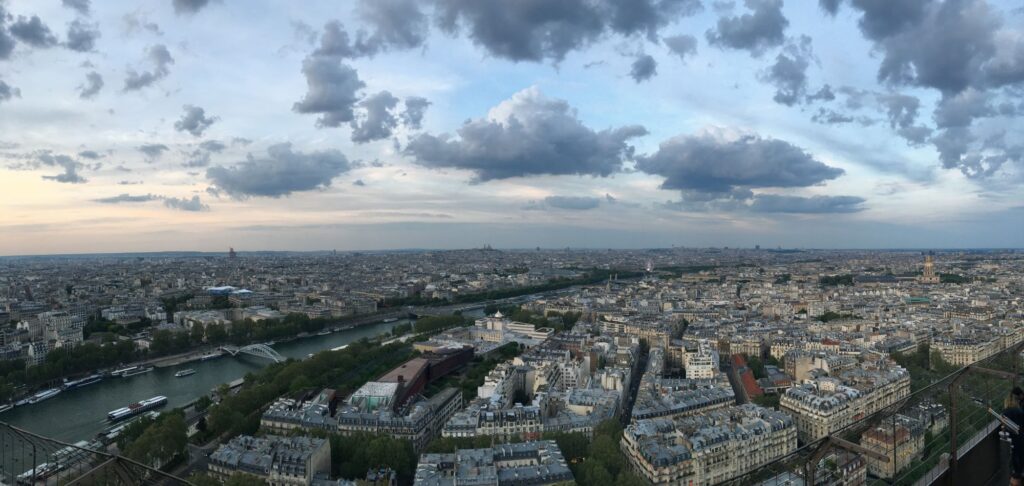
Tip: the best view of the Eiffel Tower is from the second level – there’s no point in overpaying. Because from the third level, details are lost, the picture is erased, there are a lot of people on the observation deck and not enough space. While those wishing to go to the third level are queuing for the elevator, visitors to the second level are quietly walking around and enjoying the view of Paris.
The Eiffel Tower is reached by subway trains No. 6 and No. 9, and buses No. 30, 42, 69, 72.
Notre Dame

Notre Dame is located on the island of Cité. It is not possible to visit it now because of a fire that occurred there several years ago. But in the winter of 2025, it is promised to reopen after a grand restoration is completed.
Tip: Children and teenagers under the age of 18 can visit Parisian attractions free of charge upon presentation of an ID. Every first Sunday of the month, admission to most museums in Paris is free.
Arc de Triomphe
Commissioned by Napoleon, but actually completed only in 1836, the Arc de Triomphe is the main one among other similar war memorials. Exercise your legs and climb the 284 steps to the top, which offers geometric views between the arch of La Defense and the Louvre.
Parisian catacombs
The Parisian Catacombs are a 300-kilometer network of tunnels that runs under most of the city and contains the bones of about six million people. Including many of those who died during the revolutionary terror. In these claustrophobic corridors, the remains of Marat, Robespierre, and their fellow revolutionaries are still preserved among other citizens. It is an amazing and deeply eerie sight. Take jackets with you – it’s cold in the Catacombs.
St. Maarten Canal

The St. Maarten Canal was built between 1805 and 1825 during the time of Napoleon. Initially, it was used to deliver drinking water and goods to the French capital. Since the late nineteenth century, factories and industrial warehouses have been located here.
Now everything has changed: many of these factories have become fashionable lofts that are in demand among the bohemian bourgeoisie. And tourists will be interested in the dozens of bars, restaurants, and shops along its waterfront. Its sturdy iron pedestrian bridges and picturesque locks are welcome places for picnics and weekend hikes. Especially on Sundays and public holidays, when car traffic is prohibited and roads are exclusively for pedestrians and cyclists.
Versailles
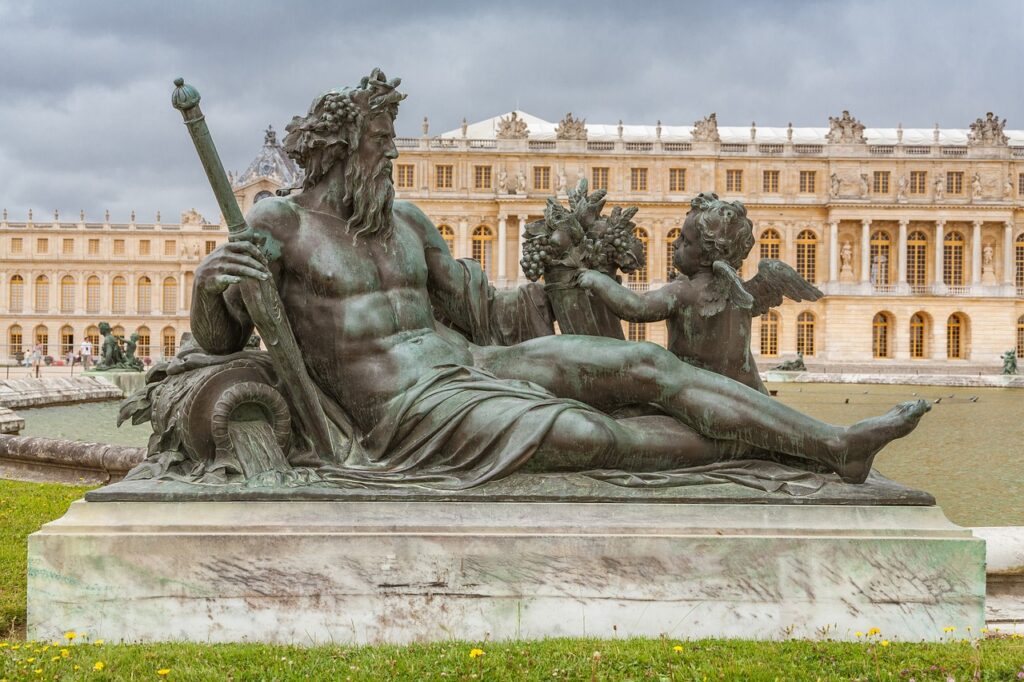
Once just a modest hunting lodge, Chateau de Versailles can now claim the title of the most luxurious palace and park complex in France. It has grown with each of its inhabitants and now has 2,300 rooms, which have been home to numerous members of the French royal family over the years.
Most of the luxurious decoration was commissioned by Louis XIV in 1678. The Sun King is practically synonymous with Versailles: thanks to him, you can see the amazing Hall of Mirrors, as well as elegant and spacious parks. During peak hours, Versailles can be very crowded, so book a ticket without waiting in line in advance and come early.
Tip: If you visit in the summer, there are wonderful musical fountain shows on selected days of the week.
Lafayette Gallery

Modern shopping centers around the world envy the incredible Galeries Lafayette in Paris. This majestically beautiful department store began its life with a modest goal – to be a small haberdashery in the city center. It then expanded to become one of the most exciting shopping destinations in the world.
The wrought-iron ceiling domes and lattice glass stained-glass windows are definitely worth your attention. Along with great brands to shop, Galeries Lafayette is also a mouthwatering destination for foodies and wine lovers. There are cafes and restaurants here.
Tip: Go up to the roof, which offers one of the most beautiful views of Paris – the Grand Palais and the Eiffel Tower.
Sacre Coeur Basilica

Work on this huge Romanesque-Byzantine building began in 1877. It was commissioned in response to the defeat in the Franco-Prussian War. Paid for from the public purse and completed almost half a century later, in 1914, the Basilica was consecrated in 1919. Over the course of its construction, a number of architects succeeded Paul Abadi, the winner of the original competition. The results are impressive, especially considering its prominent location atop Montmartre Hill and the interior is covered with luxurious mosaics.
Tip: Don’t miss the view of the city from the lawns near the Basilica – from here you can see the amazing sunsets over Paris. But be very careful with traders who try to sell you bracelets. Make sure they don’t put it on your wrist – because when it’s there, you have to pay for it!
I advise you to read it: One day in Montmartre
Moulin Rouge

The Moulin Rouge is probably the most famous nightclub on the planet, which first opened in 1889 and was interrupted for six years when the original building burned down in 1915. All sorts of show business stars, musicians, actors, and big names have passed through its doors. In addition to tourists, this cabaret venue also remains a favorite of Parisians, who love the club scene of The Machine and Bar à Bulles on the roof of the building.
Moulin Rouge is also the birthplace of one of the most famous dances of the twentieth century, the can-can. On the stage, 60 dancers perform in perfect synchronization for two hours in theFéerieshow. The costumes are bright, the legs go higher than one would imagine, and the performances and acts that are shown during the break are quite funny. Just add champagne and you’ll have the best French evening in Paris.
Flea market Marché aux Puces de St-Ouen
Marché aux Puces de St-Ouen is considered the largest flea market in the world. Opened in 1885, it began life as a humble place to sell junk on the edge of town. But in modern Paris, it has inevitably become a more upscale affair with a large number of boutiques and antique shops. Add to this the restaurants and takeout places, and you can spend the whole day here without poking your nose into vintage shops.
Keep in mind that there is only one ATM, so make sure you come with a full wallet or a willingness to stand in line.
La Coulée Verte walking trail
The old railroad tracks connecting the Bastille and Vincennes have now been restored as: a green, scenic five-kilometer-long La Coulée Verte trail with tall gardens, a Reya garden, and tree-lined bike paths. Start at the end of the Bastille and you can climb one of the stairs to Avenue Daumesnil for a stunning view of the city.
La Coulée Verte is so picturesque that it can take a whole day. If you’re going to do this, pack a picnic and stop at the Reya Garden, where the first soda fountain in Paris still exists (there are about ten of them now). You can then continue your walk to the Wensen Forest with its lakes and green, shady parks.
Parisian passengers
The sophisticated predecessors of the modern shopping center, in Paris in the eighteenth and nineteenth centuries, many glass-roofed shopping galleries were built around the Grands Boulevards. These closed passageways allowed people to bypass noisy streets by taking shortcuts. Galerie Vivienne is also the most famous, valued primarily for its ochre décor and mythological mosaics. We also like the tea room.
Disneyland Paris
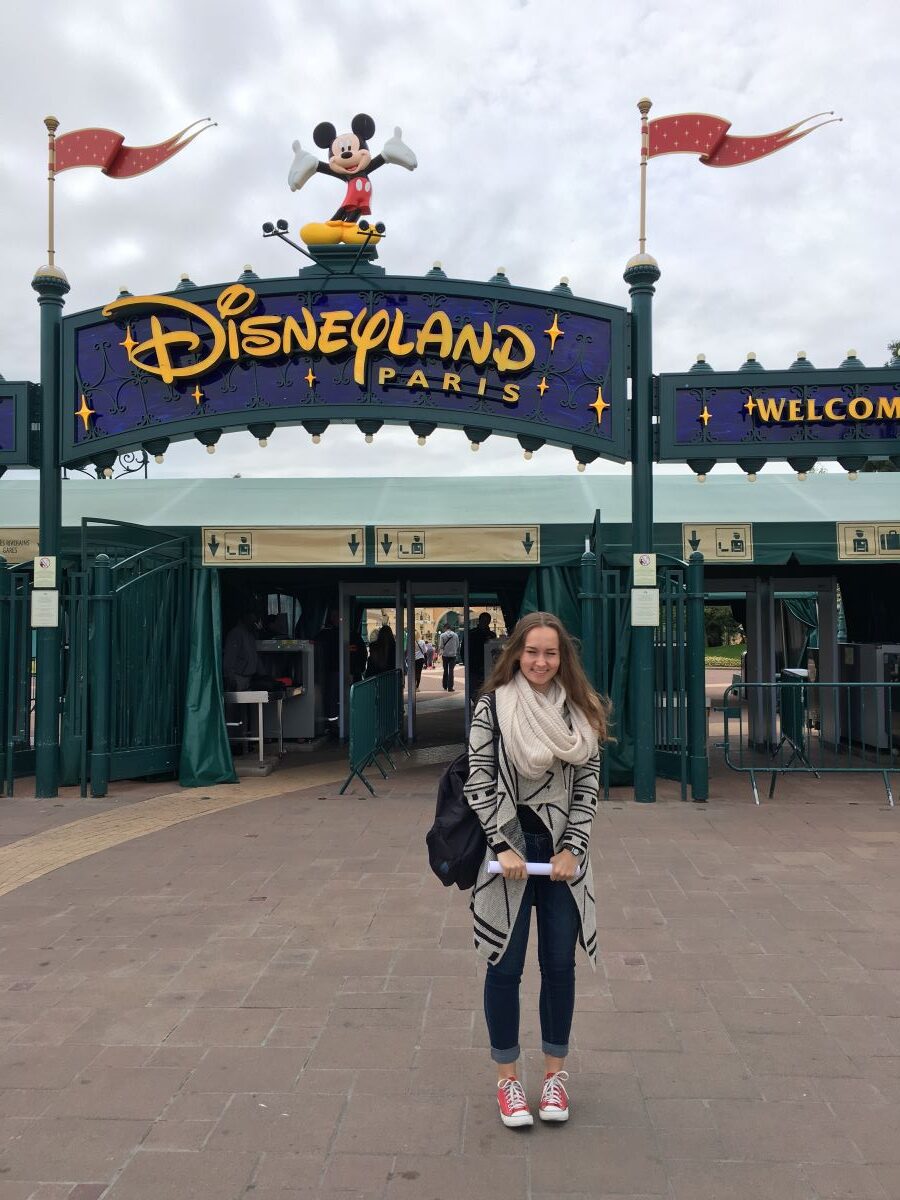
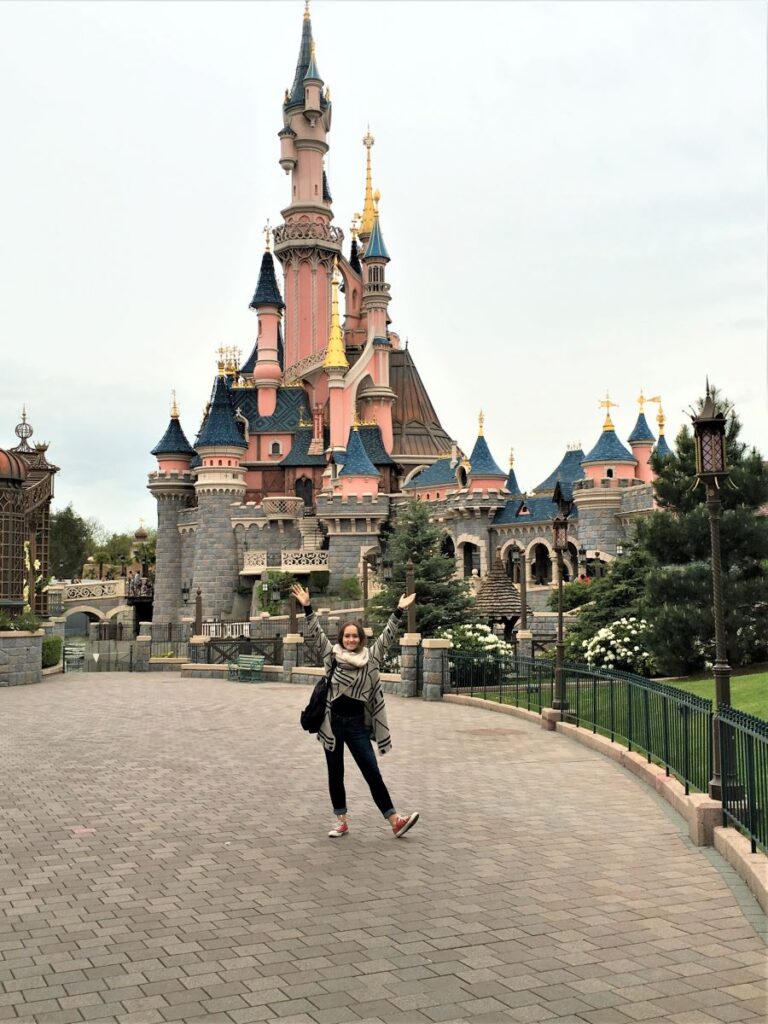
In fact, there are two parks worth exploring: one is Disneyland Park, which features a large pink castle; and the Walt Disney Studios Park, which is dedicated to Disney movies. There is also the Disney Entertainment Village, which has many places to eat, drink, and party.
The first European theme park may seem quite large. But remember that you can plan your visit if you study the park’s zones in advance: Fantasyland, Discoveryland, Small World, Pirates of the Caribbean, etc. We celebrated our daughter’s 18th birthday at Disneyland and all the adults were delighted with the crazy slides and carousels.
Disneyland in Paris – how to prepare for a visit, what you should know in advance
Getting to the city center from Paris airports

Paris has three airports. The main airport in Paris is Charles de Gaulle International Airport (CDG), Paris-Orly (ORY) is also an international airport, but it specializes more in domestic flights. Paris Beauvais (BVA) is the farthest airport from Paris.
Getting to Charles de Gaulle Airport
Paris-Charles de Gaulle International Airport is 25 kilometers from the center of Paris.
- The cheapest way to get to the airport is by city bus #350 for 2.15 euros, which takes 90 minutes.
- The fastest is the RER train on line B, which takes you to Gare du Nord. Boarding is carried out at the Roissypole station near terminals 2 and 3. Trains run every 10 minutes from 4:50 to 23:40. Ticket price is €11.8, children under 4 years old are free. Tickets are sold at vending machines and ticket offices (the latter only during the day). In the machine, select Ticket to Paris in the menu, payment only in cash.
- Alternatively, the Roissybus bus will take you to the Opera de Paris for 16.5 euros – 60-70 minutes on the way.
Getting to Paris-Orly Airport
Paris-Orly International Airport is 14 kilometers from the center of Paris.
- The cheapest way to get to Paris-Orly Airport is by tram #7 for €2.15. Travel time is up to 70 minutes from the city center. Operates between Villejuif-Louis Aragon and Orly Airport
- The fastest way is to take the OrlyBus express bus for 11.5 euros and 20-30 minutes on the way.
- Alternatively, Orlyval is an automatic tram between the RER B station and Orly Airport. It costs 11 euros and the travel time is 6 minutes.
Getting to Paris Beauvais Airport
Paris Beauvais-Tille International Airport (Aeroport de Beauvais-Tille, BVA) is 85 kilometers from the center of Paris.
- The cheapest and fastest way is a shuttle bus, whose schedule coincides with the flight schedule. The bus usually leaves half an hour after the plane lands. Bus fare: ticket purchased at a bus stop 34 Euros round trip; ticket purchased on the website aeroportparisbeauvais.com – 29.9 Euros round trip. Travel time: 1 hour and 15 minutes. Buses to the airport depart from the Porte Maillot station in Paris, which is located in close proximity to the RER train station of the same name – line C, and the metro line 1.
- An alternative way is to take a train from Beauvais station, which can be reached in 15 minutes by buses #6 and #4 for 1 euro. schedule on the website oise-mobilite.fr. The train is heading to the Gare du Nord station in Paris. The journey time is 1.5 hours, with a one-way ticket costing 15 Euros. Tickets on the are website of the French Railways.
Useful articles and links:
- 10 things to do in Paris to feel like a local
- Las D’Emosson – a lake on the dinosaur trail
- Where to go in February for romance
- The most beautiful villages in France – a route through Burgundy
Booking of hotels and apartments – Booking.com