First time in Lisbon – things to do, itineraries for four days around the city and beyond to Sintra and the Cabo da Roca massif.
If you are planning to visit Lisbon for the first time, here is a plan of what to see in this city in 4 days. Four days in Lisbon is enough to get to know this fascinating city. I have been to Portugal and Lisbon several times, and I hope that thanks to my itinerary to Lisbon you will enjoy it too.
How to get to Lisbon
Lisbon is home to Portugal’s main and largest international airport, with daily direct flights from Europe and the rest of the world (including North America). So look for flights from major European cities and you’ll almost certainly be able to fly directly to Lisbon.
There’s also the second largest and busiest airport in terms of flights, Porto. There are also many flights from Europe and North America. It’s very easy and quick (3-3.5 hours) to get from Porto to Lisbon by Portuguese Railways.
Lisbon’s main train stations are located in Santa Apolónia and Estação Oriente, and countless trains (both high-speed and regional) depart daily to the north and south of the country. You can also catch a suburban train to Sintra from Rossio station, which is located in the very center of Lisbon.
Local, intercity and intercity buses also depart throughout Portugal from the Sete Rios city station (near the Lisbon Zoo). Buses arrive and depart here to inland cities and international destinations.
How to get to the city from the airport
Lisbon’s international airport, Lisbon Humberto Delgado Airport (LIS), is located just 7 kilometers from the city center. The airport is easily accessible by both metro and bus.
The bus ride to the city center takes about 30 minutes, and the Aeroporto metro ride takes about 20 minutes (without traffic jams).
A taxi from the airport to the city is the fastest but most expensive option. Although by European standards, taxis (Uber) in Lisbon are very cheap. You can get from the city center to the airport for 12-15 Euros (depending on the time of day).
When is the best time to go to Lisbon?
In my opinion, the best time to visit Lisbon is in the fall – from September to the end of October, when it’s not as hot as in the summer and the days are mostly sunny. And despite the city’s reputation as a year-round tourist center, there are much fewer people during this period, and you can easily visit the main attractions without standing in lines for hours.
Visiting in the summer
Summer is the busiest season in Lisbon, with tourists everywhere and the hottest weather. When temperatures rise to 35º C, wear light clothing, a hat and be sure to bring plenty of water if you are walking the streets of Lisbon, especially between 11:00 and 16:00.
This is a great time to explore the green parks and even escape to the beaches in Estoril and Cascais. You can also cross the river to go to the beaches of Costa da Caparica. Enjoy the sunset on the beach or by the river, and experience Lisbon’s vibrant nightlife, whether in Bairro Alto, on Pink Street in Cais do Sodre, or in the Santos district.
I recommend you to read: Cascais – a beach resort near Lisbon
Lisbon in autumn
Autumn is very similar to spring, with pleasant temperatures ranging from 18º to 25º C. The tourist crowds that came in the summer have already returned home, and Lisboners have returned to work and study, freeing up seats at restaurant tables. With the first rains in November, roasted chestnut vendors appear in the city center, filling the air with a festive aroma, adding even more charm to your visit.
Visiting Lisbon in winter
The rains are getting more frequent, the cold starts to set in, the temperature drops to 13ºС or lower, so bring warm clothes (a jacket and a sweater). You will especially need something warm for overnight stays – there is no heating in hotels and apartments (at most a fan or air conditioning that does not warm up properly) – take pajamas!
If you are looking for a more cultural visit to the city’s museums, winter is the perfect time for this. Also, from late November to early January the city is filled with the Christmas spirit. From small markets, such as in the Alvalade district or Rossio Square, to Lisbon’s Wonderland, which occupies the Eduardo VII Park with an ice rink, a giant Christmas tree, plenty of Santa Claus and seasonal food and drinks.
I can recommend you to read: Winter in Portugal – go to Lisbon!
Lisbon in spring
Spring is a good time to visit the city. The temperature, around 18º to 23º C, is pleasant for walking in places that are not yet too crowded. Always bring a jacket as the nights are still quite cold and it can rain.
How convenient it is to move around the city

First, don’t even think about renting a car to get around Lisbon. In addition to the heavy traffic, parking spaces near the main tourist attractions are few and far between, and they are always expensive (underground parking near Rossio Square starts at 25 Euros per day).
Lisbon is best explored on foot, wearing worn-out sneakers, and by taking the trams and funiculars. This is the only way to truly immerse yourself in the city’s atmosphere. The city also has a metro system that will take you from one end of the city to the other. For more remote places like Belém or Cascais, you can take the city train from Cais do Sodré station, and there are also buses.
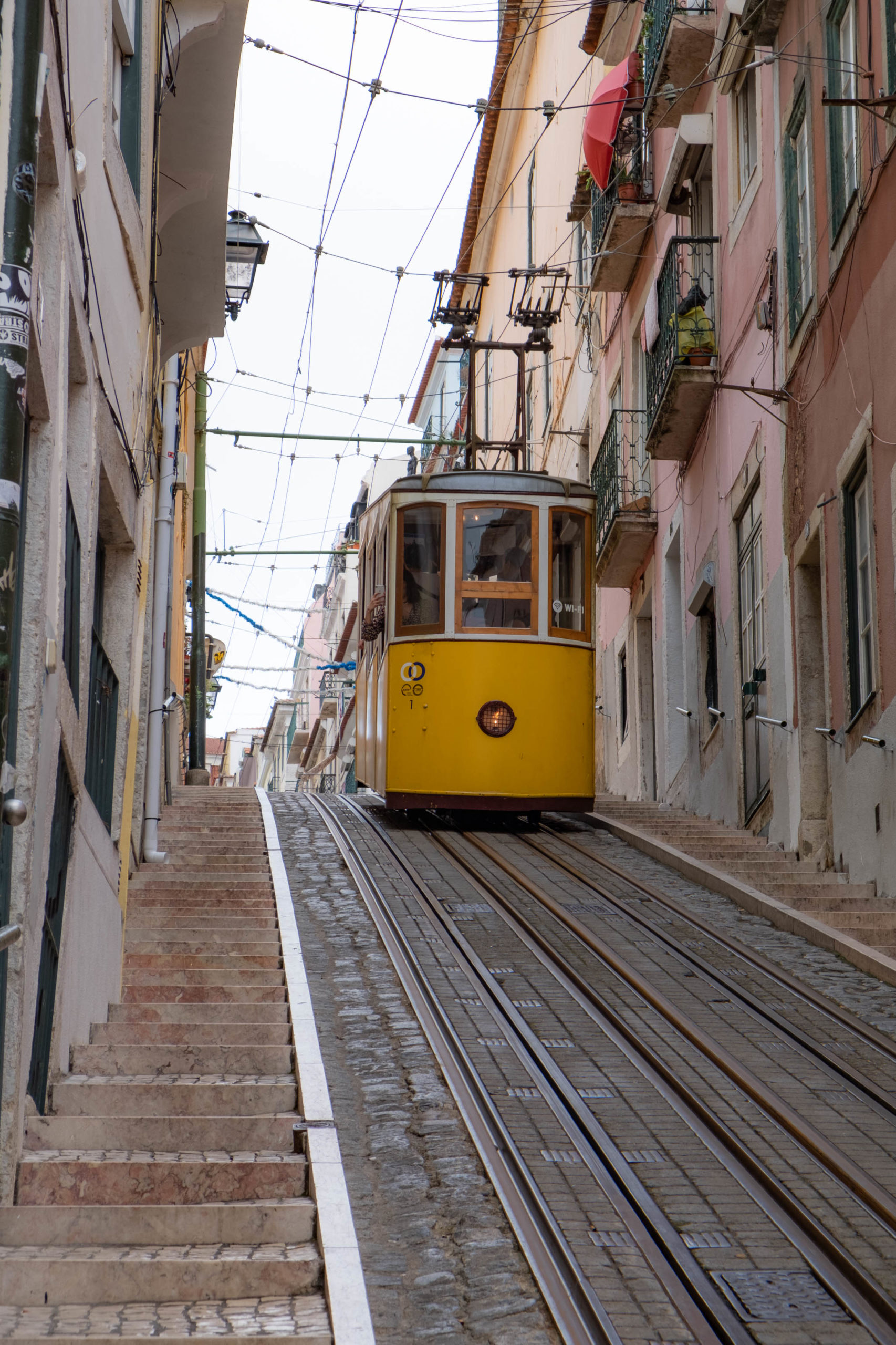
While in Lisbon, try riding a vintage tram. Tram number 28 is particularly interesting, as it runs through traditional neighborhoods such as Gracia, Alfama, Se, Bairro Alto, and Estrela. As it is one of the most popular trams among tourists, try to ride it in the morning to avoid the long lines.
If you don’t want to worry about buying tickets, choose Lisboa Card. This card allows you to visit a variety of museums and monuments and includes free travel on the metro, buses, trams, tourist lifts, funiculars to help you climb hills, and CP trains.
I can recommend you to read: The best neighborhoods for tourists stay in Lisbon
4 days in Lisbon
This 4-day Lisbon itinerary ensures you’ll see all the highlights of this fascinating European capital. You’ll see not only the popular places, but also some hidden gems, and even venture outside the city for a day.
Day One – Exploring the Center of Lisbon
Lisbon’s Baixa district is the heart of the city, designed and built after the devastating earthquake of 1755. On your first day in Lisbon, spend time exploring this elegant, grid-like neighborhood.
Walking from Commerce Square to Rossio Square
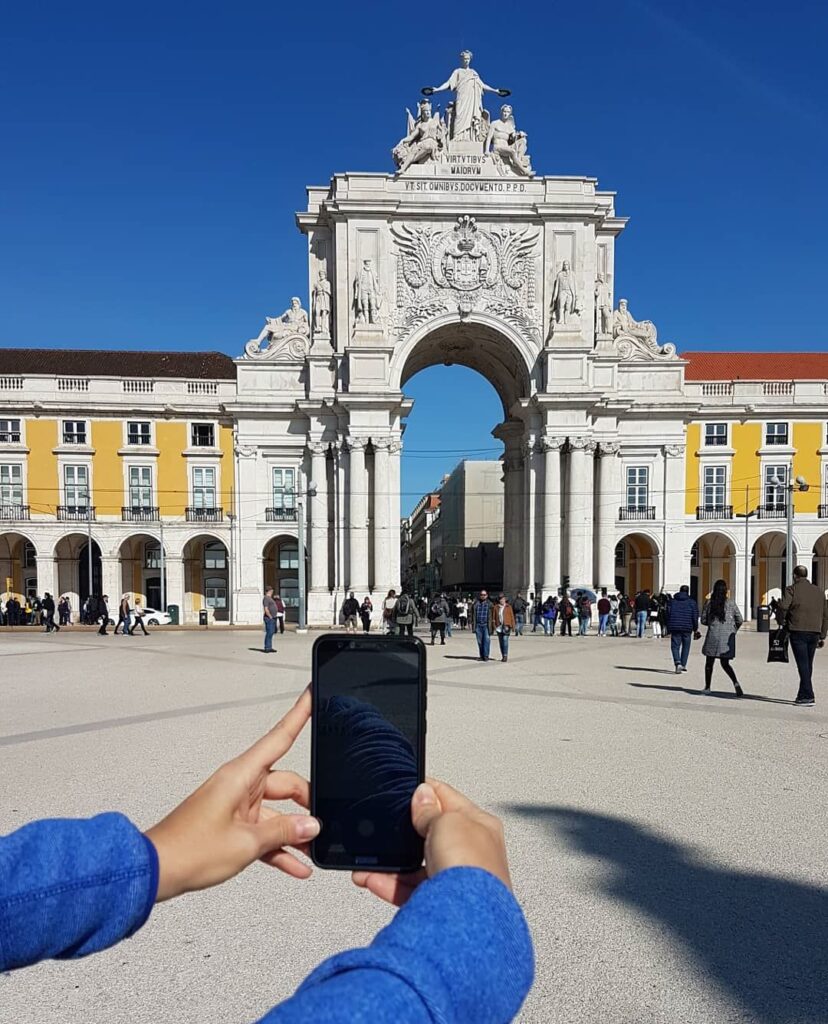
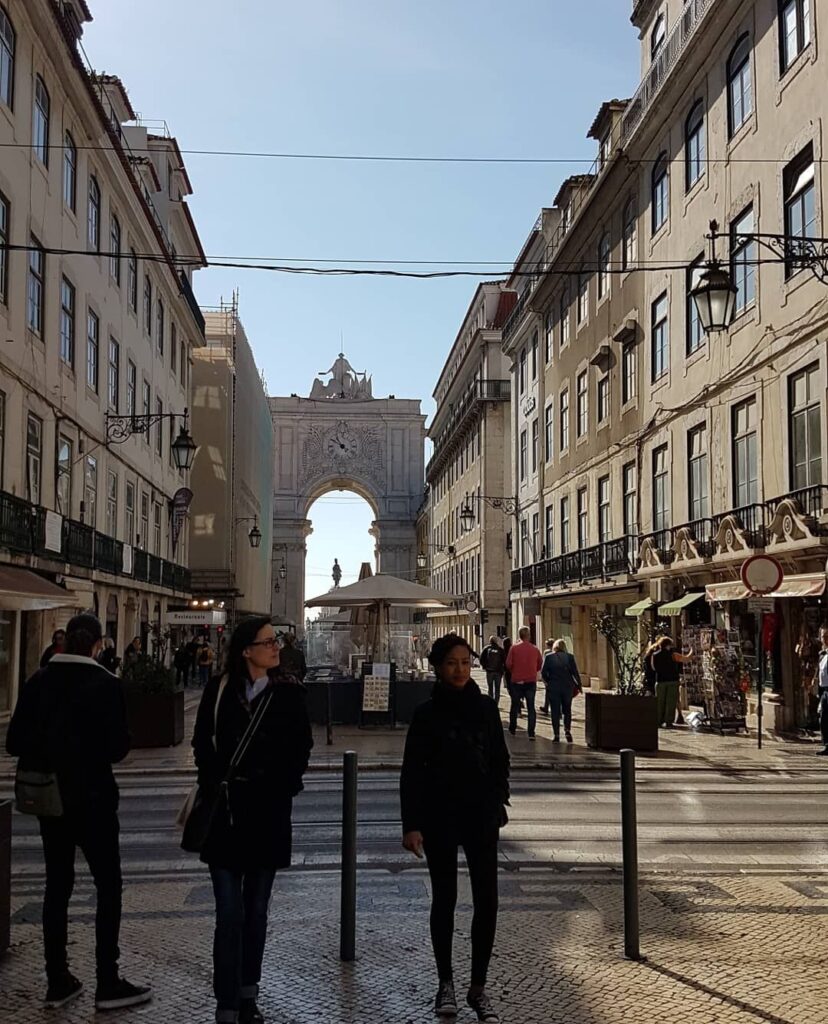
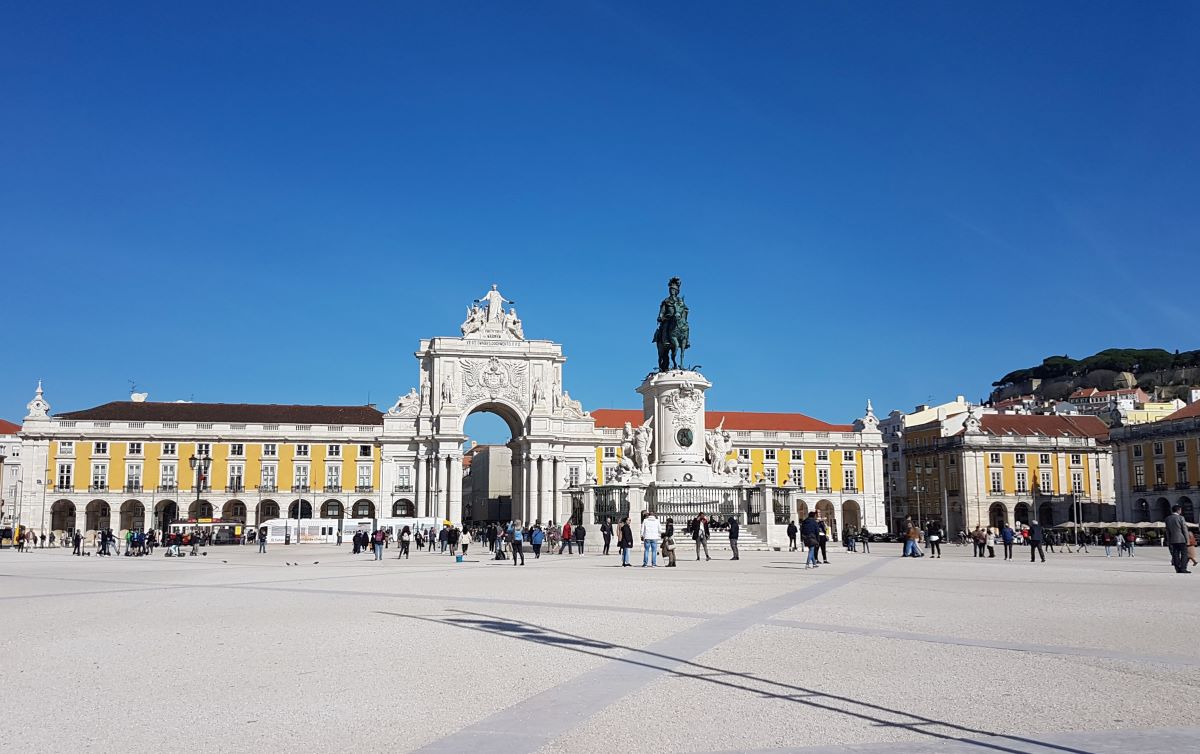
Praça do Comércio is a large square located on the banks of the Tagus River, in the heart of Baixa. It is still commonly known as Terreiro do Paço, or Palace Yard, since it was the site of the Royal Palace until the 1755 earthquake. During the reconstruction, the plan included a large square surrounded by symmetrical buildings housing government offices and customs offices. All of them showcased Lisbon’s economy – hence the new name, Praça do Comércio.
The Lisbon Story Center, located in Praça do Comércio, is an interactive museum that allows visitors to experience the main historical events of Lisbon through audiovisual means. In a compact 60-minute technological exhibition, the museum tells the story of Lisbon’s founding to the present day.

Rua Augusta, one of Lisbon’s main shopping streets, ends at Praça do Comercio. At the middle of the square is the Arque da Rua Augusta. It ss a triumphal arch-like structure that rises several stories above the square below. It is decorated with statues of Portuguese historical figures atop columns and an allegorical group at the top showing Glory rewarding Valor and Genius. Originally designed as a bell tower and built to commemorate the 1755 earthquake. The building was converted into an arch in the 19th century.
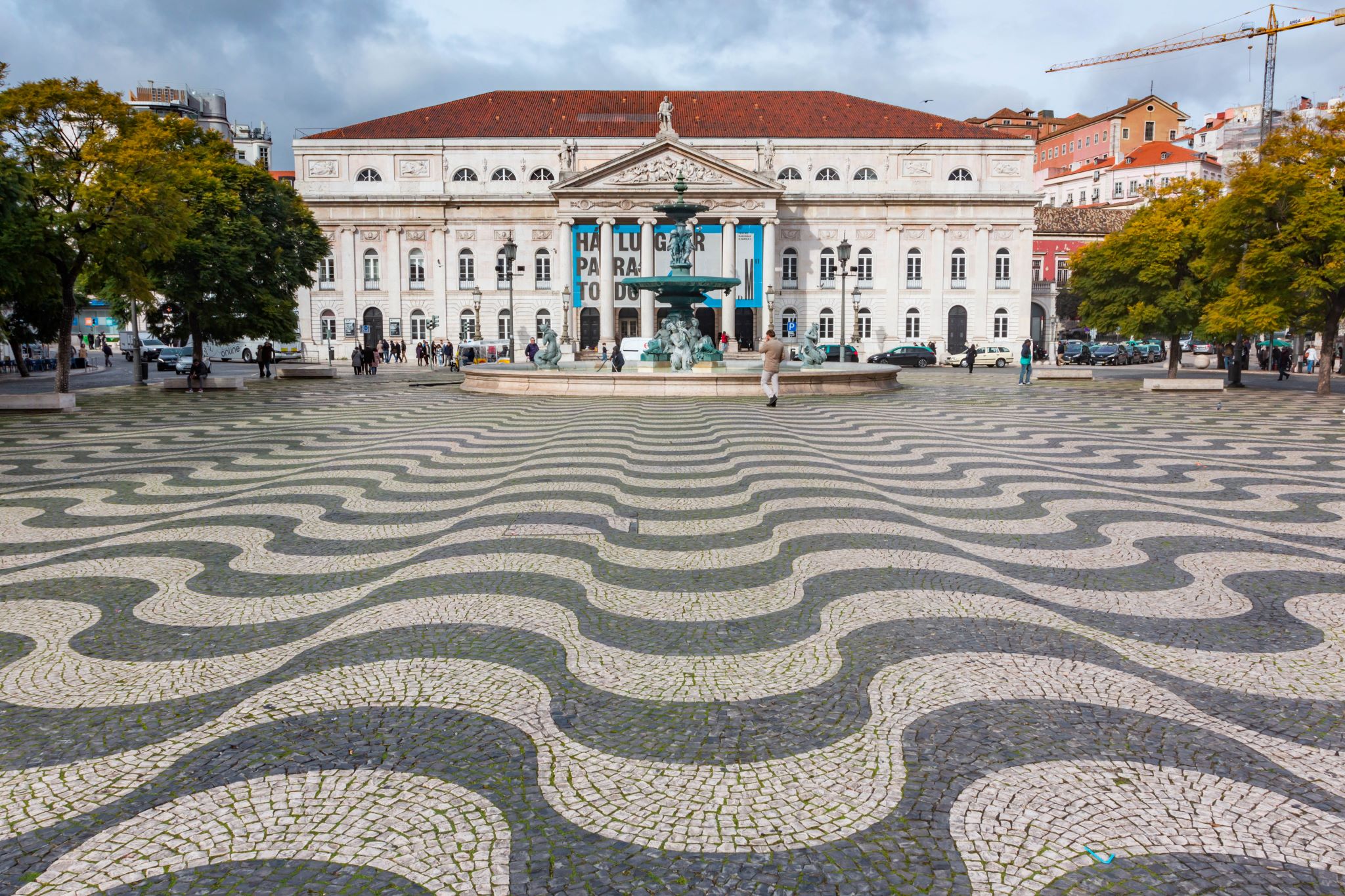
Rossio Square, also known as Pedro IV Square, has been one of Lisbon’s central squares since the Middle Ages. It’s located in the city center, Rossio Square, which is a popular meeting place for locals. It is surrounded by shops and cafes, as well as the famous train station and the D. Maria II National Theatre. The theatre building, inaugurated in 1846, owes its name to the Portuguese queen. She was a fan of the theatre, and is worth seeing even from the outside.
Observation decks, elevators and lifts – a view from above

The Santa Justa lift connects the lower Baixa district with the upper Largo do Carmo. It was built in the early 20th century, and it has a few other features designed to make it easier to get between the two districts. It is the only remaining vertical conventional lift. If you don’t want to pay for a lift ticket or stand in a huge queue, there is a free lift in the building next door that takes you to the top. Access to the lift and the observation deck next to it is free.
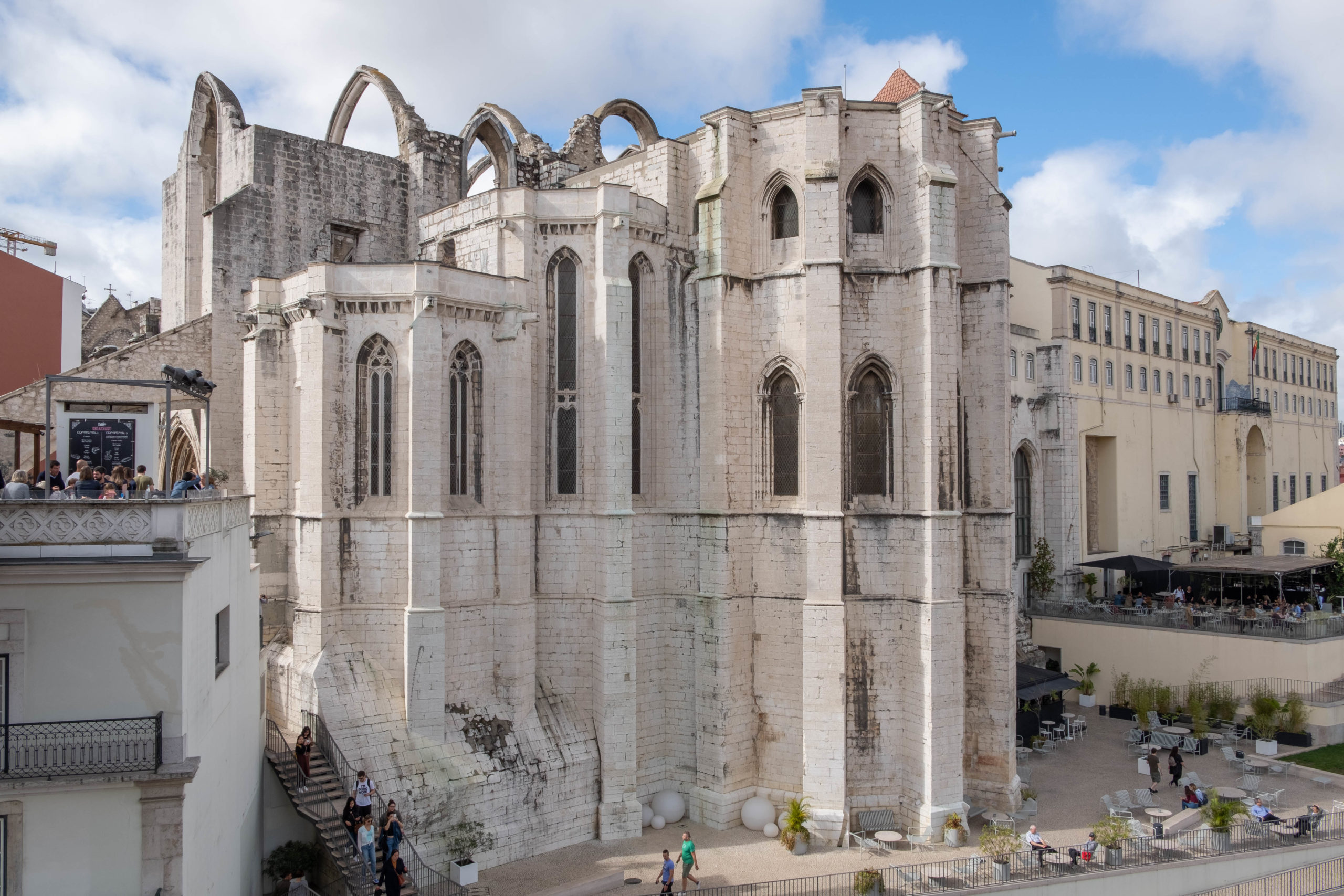
The ruins of the Igreja do Carmo church, which was destroyed in the 1755 earthquake and never regained its former glory. Today, the ruins house a small archaeological museum housed in the crypts. However, this charming stone church stands as a reminder of the earthquake even 250 years later.
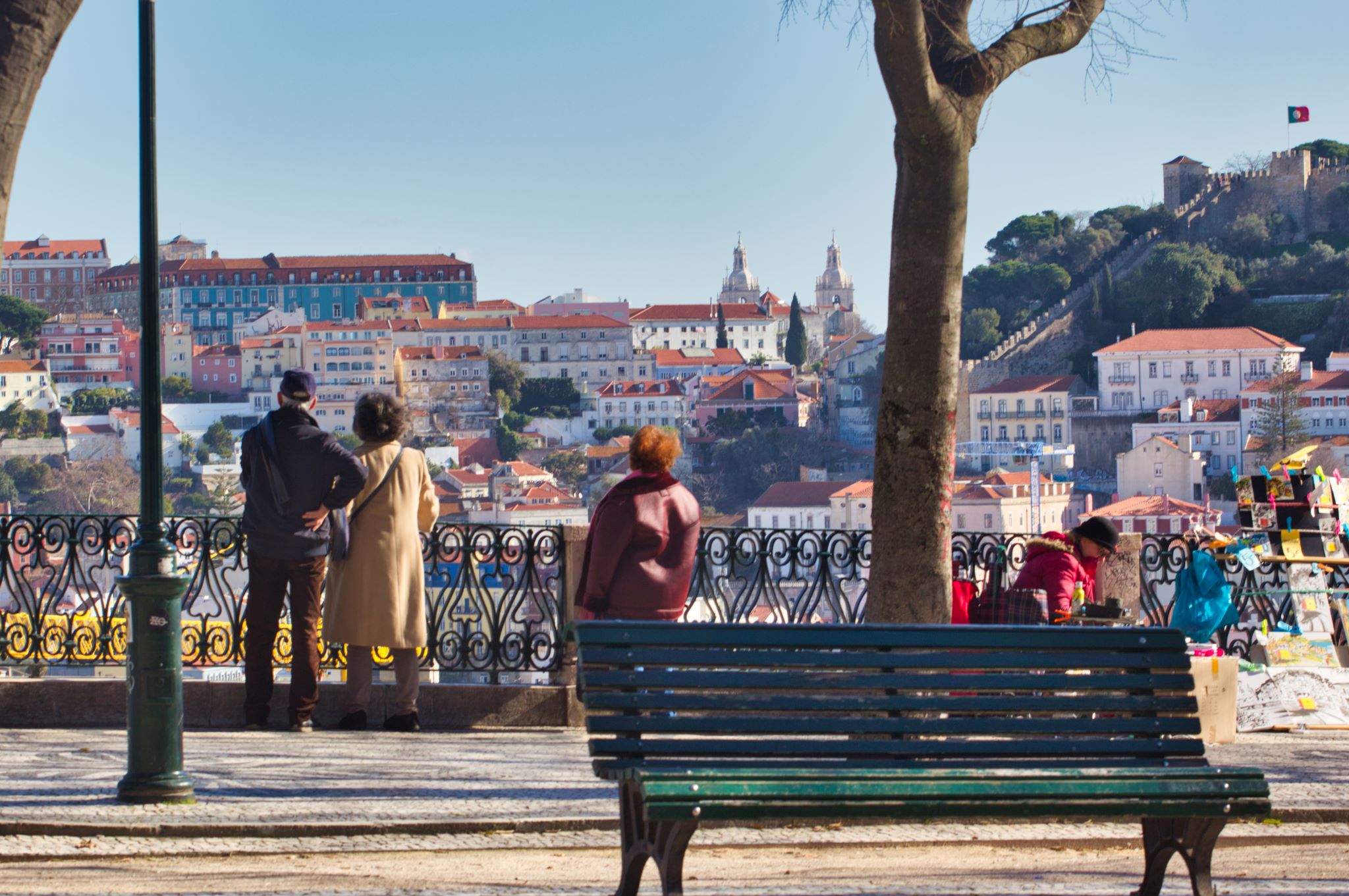
The Praça da Alegria observation deck is located west of the historic center, north of Bairro Alto, and offers panoramic views of Baixa. It is close to Avenida da Liberdade, where you can often see souvenir markets and street vendors, and there are also great places to relax in the shade. The Gloria and Bica elevators are two funiculars that transport people from the lower streets of Lisbon to the Bairro Alto district. Both opened in the late 19th century and are popular with locals and tourists.
Where to eat:

Time Out Market is a huge food court located in the Mercado da Ribeira. Home for some of Lisbon’s best chefs, the market features some of the city’s best restaurants, cultural events and even cooking workshops. It’s definitely worth a visit when in Lisbon and planning a lunch or dinner in this bustling culinary hive.
Day Two – Alfama and the History of Portugal
Take Tram 28 – not only is it one of the oldest in Lisbon, but it’s also one of the most popular and scenic routes in Lisbon. Winding through the Alfama, Baixa, Graça and Estrela districts, the tiny tram can travel up and down narrow, steep streets. You can buy a regular (day) ticket and ride the vintage tram, getting off at various stops.
Observation decks above Alfama

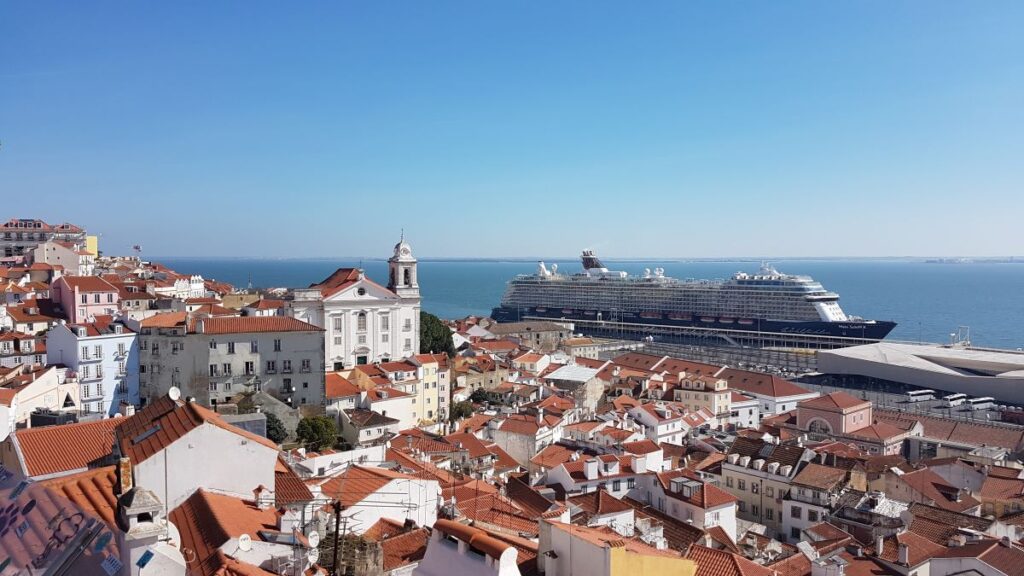
Ideally located on route of tram№ 28 from the cathedral to the castle, the Portas do Sol viewpoint is one of the best in Lisbon. It’s also one of the most popular, with views of the Tagus estuary and red-tiled roofs.
Just around the corner is the Mirador da Santa Luzia. It’s tucked away behind a tiny white church in a shady garden of blue-and-white tiles and a few deciduous trees. It offers the same views as the Graça viewpoint, but with far fewer tourists.
Alfama

Alfama is one of Lisbon’s oldest and most traditional neighborhoods. Narrow, winding streets rise from the banks of the Tagus through crumbling houses and brick walkways. In the evenings, fado music blares from tiny bars. It’s a great place to explore and a must-see on any four-day Lisbon itinerary.
Igreja de Santo António is a charming little Baroque church in Alfama, on the route of tram number 28. It’s named after Saint Anthony, the patron saint of Portugal, and is believed to be his birthplace. Fun fact: Saint Anthony is also the patron saint of lovers, making it one of Lisbon’s most romantic spots.
Museu do Fado is a museum dedicated to the traditional music of Portugal. Using audiovisual and interactive tools, the museum explores the evolution and passion of fado.
Cathedral and Moorish Castle

Castelo de São Jorge is a Moorish castle that towers over Lisbon from the top of the Alfama district. Built in the 12th century and expanded in the 13th and 14th centuries, most of the current castle was rebuilt in the 1920s after it was destroyed by the earthquake of 1755.
The Sé de Lisboa, commonly known as the Sé, is the cathedral of Lisbon. The 12th-century cathedral, largely Romanesque, remarkably withstood the 1755 earthquake that destroyed much of the city.
Where to eat

A tiny authentic café Lisbon Tu e Eu (R da Adiça 58) in Alfama, where I really like to have a snack while walking around this area. In a very small space, everyone eats close to each other – like in a Lisbon grandmother’s kitchen. It’s a very atmospheric and tasty place where you can have a cheap snack.
Day Three – Belem and Portuguese Art
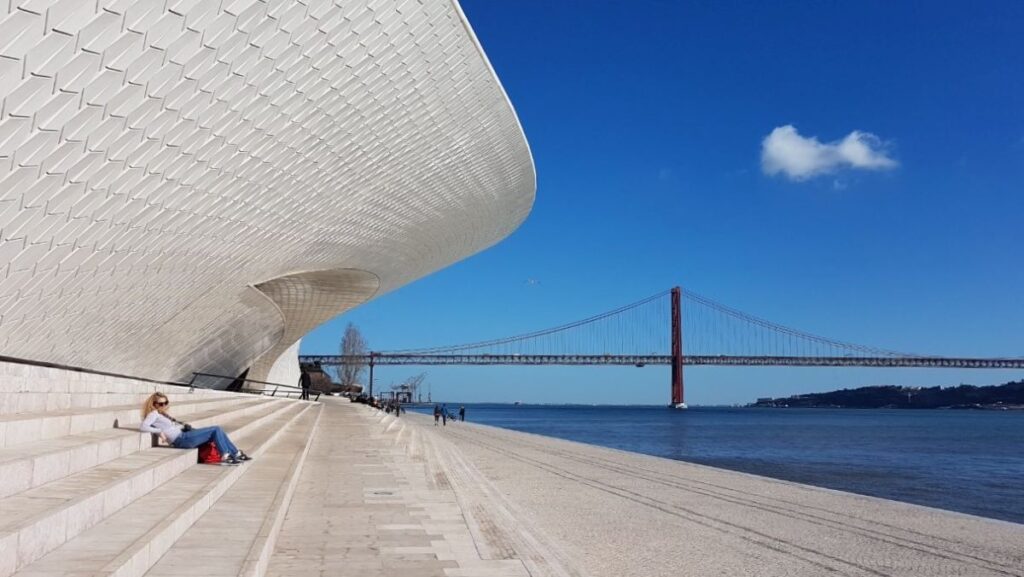
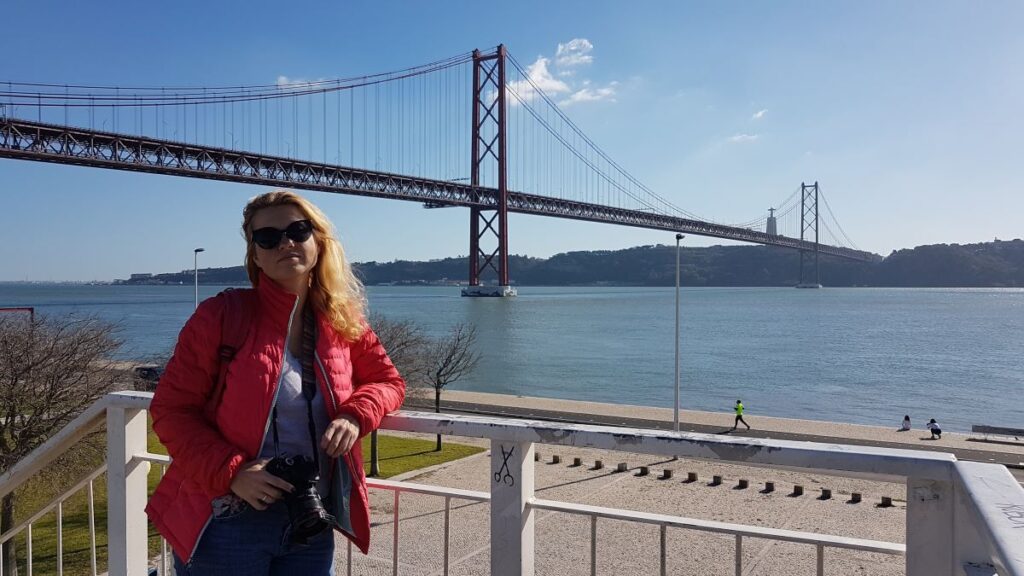
Dedicate a day to culture and art, which is presented not only in Lisbon’s museums. But also on its lively streets and creative spaces built in former factories and mills. For this, I recommend going to one of the most beautiful areas of the city – Belém. Located under the 25th of April Bridge (Ponte 25 de Abril), this area has absorbed some of the most impressive buildings in Lisbon. Such as the Jerónimos Monastery and Torre de Belém. You can get there by bus from the city center, in about 25 minutes.
Be sure to spend some time here, where modern fashionistas follow the same paths as the seafarers of yesteryear. Belem is a thriving neighborhood that is one of Lisbon’s top attractions.
Monastery and museums in Belem

The Jerónimos Monastery (Mosteiro dos Jerónimos) is one of the finest examples of late Gothic architecture, elaborately decorated with maritime elements, a nod to Portugal’s strong naval heritage. The complex covers a large block in the Belém district, and the most visited buildings are the cloisters and the church of Santa Maria.
The National Archaeological Museum, located next to the Jerónimos Monastery. The museum’s collection consists of artifacts from the Paleolithic to the Middle Ages, and includes Egyptian mummies, Roman bronzes, Roman mosaics, and classical Greek sculptures.
The Centro Cultural de Belém is one of the country’s leading cultural institutions. In the Museum of Modern Art, you’ll find works by Pablo Picasso, Salvador Dalí, Joan Miró, and Andy Warhol. It also hosts concerts and performances – check out the CCB program while you’re in town.
Torre de Belem and the Tagus River Embankment

You also won’t miss the UNESCO World Heritage Site, the Torre de Belém. This is a 16th-century fortified stone tower located by the Tagus River, a 15-minute walk from the monastery. The tower marks the place from where Portuguese navigators set off to discover other worlds during the Age of Discovery. The tower can be viewed from the inside, but the real beauty of this monument lies in its exterior details.
The Padrão dos Descobrimentos is a monument opposite the Jerónimos Monastery by the river, dedicated to the great Portuguese navigators who sent ships to China and India to explore in the 15th and 16th centuries. On the sides of the monument are statues of over 30 people, including Henry the Navigator, Vasco da Gama, and Ferdinand Magellan.
Cristo Rey and Caparica Beach

Cross the river to climb up to the Cristo Rei monument in Almada. Almada is a district (suburb) of Lisbon located on the opposite bank of the Tagus River. Perched on a high cliff overlooking the Tagus River, the Cristo Rei temple was built in the likeness of Christ the Redeemer in Rio de Janeiro, Brazil, and inaugurated in 1959.
This towering monument, 110 meters (approximately 360 feet) tall, including the pedestal, contains a large statue of Christ with his arms outstretched, facing Lisbon. It offers incredible panoramic views of the city, the 25 de Abril Bridge, and the surrounding landscape.
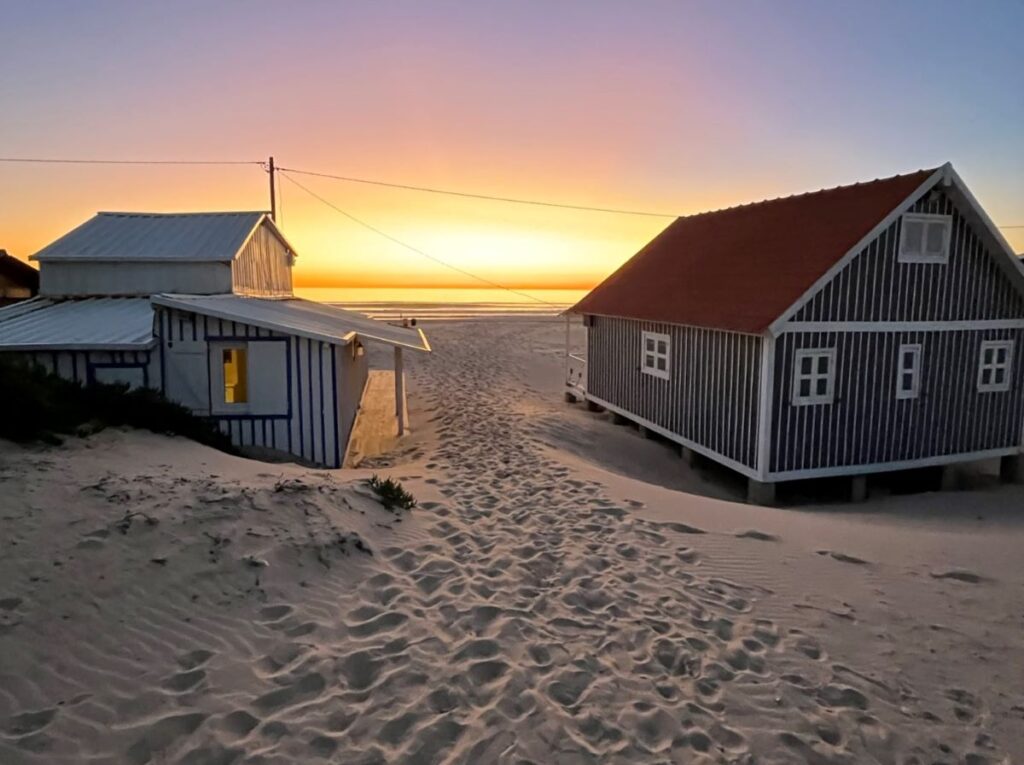
And on this side of the Tagus River are the best beaches where Lisboners go to relax. For example, Costa da Caparica beach. It begins where the mouth of the river ends, so there are almost no big waves here and you can swim without fear that the waves will drag you into the ocean. Locals come here for weekends and holidays. There are more people where the river and the ferry are closer, which can get here from the central part of Lisbon. The further south you go, the fewer people there are – it is easier to drive further away by car to avoid crowds of people.
By the way, you can get to Almada not only by the 25 April Bridge, but also by ferries that go to this area from different points of the city and tickets are not very expensive.
Where to eat:

It was in this area that the recipe for the famous pastry, Pastéis de Belem, or the original Pastel de Nata, was invented. It is an egg-custard layer cake sprinkled with cinnamon. Originally made by monks, the shop was opened in the mid-19th century by the owners of a sugar cane processing factory, who bought the recipe from the monks. The shop is still owned by the same family, and it is one of the best places to try these wonderful treats. (In fact, they are the same as any other pastel de nata in any café).

LX Factory is a former industrial complex in Alcântara that is now home to some of Lisbon’s hottest restaurants, bars, boutiques, and street art. Once a less-than-popular neighborhood near the 25 de Abril bridge, Alcântara is now a hub of creativity. Design and manufacturing companies, fashion and art shows, music events, and more share the space with trendy restaurants, bars, and shops. The complex is also where you’ll find one of Lisbon’s hottest nightclubs.
Day Four – Sintra and Cabo da Roca
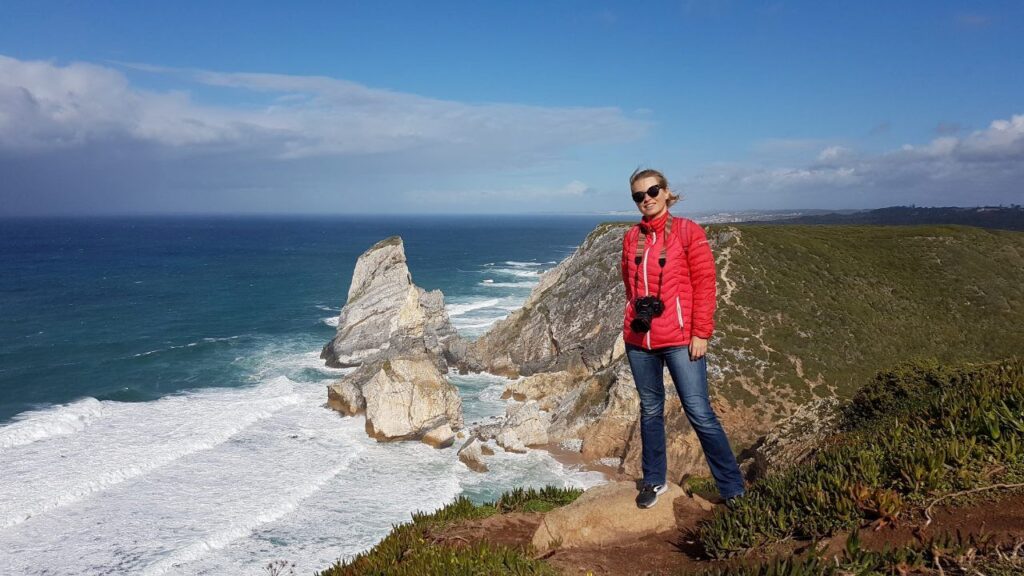
Lisbon has many wonderful neighboring towns, but one of the most popular is Sintra. Known for its many palaces, Sintra is located just 30 minutes (25 km) from Lisbon. With its picturesque colorful palaces and stunning scenery, it is worth at least a day trip.
I recommend you to read: 10 destinations for a day trip from Lisbon
Як дістатися Сінтри?

The best way to get to Sintra from Lisbon is by train. Trains run from Rossio station (in the heart of Lisbon) every 40 minutes to Sintra station, which is 1.5 km from the historic center and 5 km to Pena Palace.
Once you arrive in Sintra, it’s about 5 km to the Pena National Palace and the Moorish Castle. So, once you get off the train, the easiest and fastest option is to take bus 434 the rest of the way. The bus stops right outside the train station, tickets can be purchased from the driver, and it’s a hop-on hop-off bus that runs between Pena Palace, the Moorish Castle, and the city. Bus 434 has up to four departures per hour.
Once you’ve finished sightseeing in Sintra, you can return to Lisbon by taking the same train line that took you to Sintra.

Or, if you are traveling from Lisbon to Porto, or have made your own route through Portugal – it is convenient to rent a car so as not to be tied to the public transport schedule. We came to Sintra twice by car, the only thing is that you need to search for parking on Google Maps in advance, because parking near the palaces is a problem with an asterisk. There are practically no parking lots, and if there are – they are very small and there are not enough places.
But a car lets you see the incredibly beautiful beaches near Sintra. They are worth staying in Sintra for a few days.
What to see in Sintra?

Pena Palace is perhaps the most famous of Sintra’s palaces. With its striking towers and hilltop location, it stands in stark contrast to the dark forest surrounding it. Towering over the town, it’s one of the most popular places to visit. It’s very crowded no matter the time of year or day you visit. Although we were there in winter, there weren’t many people.
The Palacio Nacional de Sintra, or National Palace of Sintra, is located in the historic center of the town. Its white Gothic exterior is a stark contrast to the colorful facades of Pena Palace. But the interiors are no less elaborate, if different. It’s also the most used of the royal palaces, as it was a favorite of the royal family from the 15th to the 19th centuries.

Castelo de los Mouros is the name of the ruins of a Moorish castle located along the same mountain range as the Pena Palace. Left to ruin in the 12th century, the ruins were restored quite romantically in the 19th century and are intertwined with the surrounding forest. The views from the top are spectacular, and the castle grounds are much less crowded than the Pena Palace.
Quinta da Regaleira
Quinta da Regaleira – a very mystical palace and park near it, spread out on a huge hill. Known as the “Palace of Millions”, the aristocratic residence of the Regaleira estate was built by an eccentric millionaire. In the end, he created a very mystical place. The palace includes a park with a mysterious system of tunnels, which was turned into one of the most popular attractions in Sintra. Visit the inverted “tower of the masons”, which is a deep well, into which you need to go down stairs. Then you get into the tunnels that lead to a lake with romantic waterfalls and bridges.
I wrote a separate article about how to spend a few days in Sintra: Sintra – a great guide to the city and beaches
Cabo da Roca
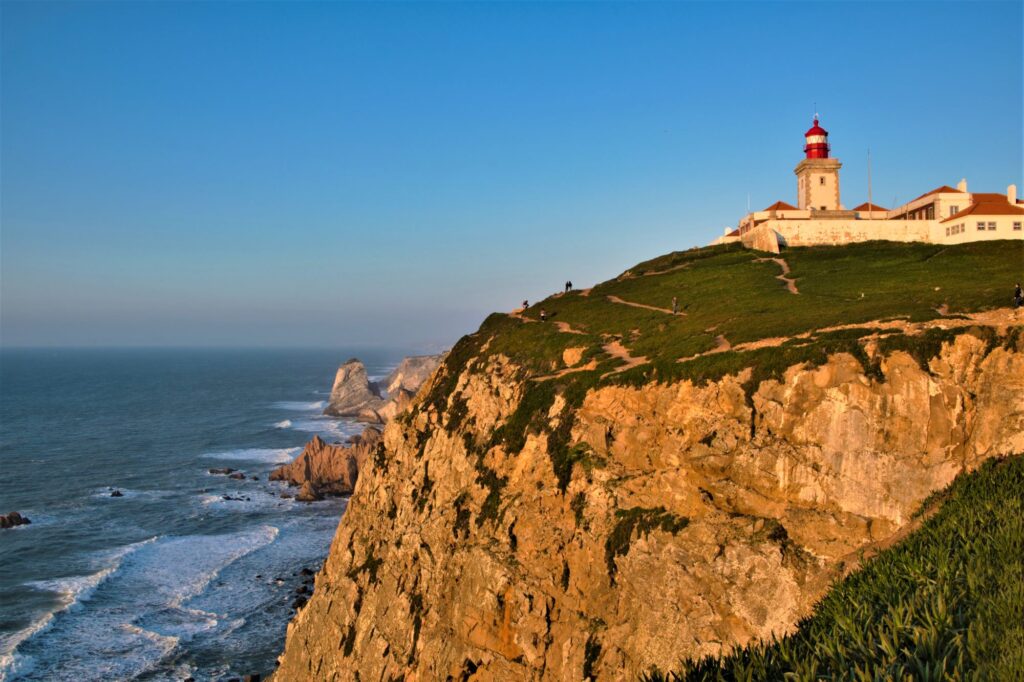
Near Sintra – in the Sintra-Cascais Park, the westernmost point of continental Europe. Cabo da Roca is a stunning cape jutting out into the sea. It is an area with a rugged coastline, breathtaking views and majestic cliffs rising over 100 meters above the Atlantic Ocean.
If you have been in Sintra all day and want to see the sunset over the ocean – Cabo da Roca is the perfect end to this vibrant day. What could be better?
However, if you just want to do a shorter hike, you can still turn it into a full day. Bus 403 , which takes you to Cabo da Roca , is the Sintra-Cascais line.
If you are planning multiple or long hikes, Cabo da Roca is a trip that will take you several days.
Useful articles and links:
- Alentejo Coast – where to find the most beautiful wild beaches in Portugal
- Porto in winter – what to do, see and taste in the very nice Portugal city
- Rota Vicentina – walking route in Portugal along the coastline near the Atlantic ocean
- Top 20 places for visit in Lisbon
- Three days in Vienna – where to go and what to see
Rent a car – DiscoverCars
Find train tickets in Europe conveniently on Trainline
Booking of hotels and apartments – Booking.com