
July and August are the best time to relax by the sea. But in southern Europe, there is intense heat. The question arises, where is it better to escape from the unbearable sun, but still have the opportunity not only to breathe cool air, but also swim and stay on the beach.
Due to the gradual rise in summer temperatures and the demand for cool vacations, a new term has emerged – Coolcation.
Coolcation (from the combination of the words cool and vacation) is a term that refers to a vacation spent in a more northern and cooler location due to global warming.
It is better to head to the European Atlantic coast and the North Sea.
- Firstly, it’s not as hot here, and the gentle sun warms without leaving burns on your skin.
- Secondly, the healing air, which is so necessary for small children.
- Thirdly, the French and Spanish Atlantic – it’s pure romance: the most beautiful landscapes, oysters and wine. And on the northern seas there is a unique cozy atmosphere all their own.
I recommend spending a calm and relaxing vacation on the northern coast of Belgium, France, Spain or Germany.
Belgium – Imperial Coast

The Belgian North Sea coast is only 70 km long, but it can become a paradise for everyone who is not afraid of cool water and dreams of escaping the hot sun.
The swimming season is short and lasts about two months – from June 15 to August 15. On a small stretch along the coast there are 13 resorts, each with its own character and unique atmosphere.
Things to do during your vacation
The Belgian coast offers sports and recreational opportunities for all tastes: you can rent a bike, ride a sailboat or go fishing. The wide beach is ideal for games and long walks. You can stroll for hours along the promenade, stopping in cafés to taste seafood and Belgian beer.
Ostend

Ostend is the main resort of the Belgian coast (translated as “Eastern edge”), connected by commuter train to Brussels. Ostend is the result of a grand project by King Leopold II, who decided to create one of the most stylish seaside resorts in Europe—and he succeeded.
Here lives history and the refined atmosphere of a seaside resort floats in the air. Choose one of the boulevard cafés serving Ostend oysters—they are very good with white wine. Visit the Ensor House-Museum or the real Mercator sailing ship.
Wide sandy beaches gently slope into the sea. Children have plenty of space to dig in the sand and play on various playgrounds. Adults can swim and sunbathe under the gentle northern sun, not fearing to get burned—the tan here is healthier than in southern Europe due to iodine and salts dissolved in the air. Lifeguard services operate, ensuring the safety of holidaymakers.
De Haan

Or go to De Haan – a coastal village with absolutely beautiful and unusual architecture. The entire promenade is built up with fairy-tale cottages with red roofs. Because of these doll-like houses, De Haan is often called the most beautiful village on the coast.
Knokke-Heist

Knokke-Heist means “to see and be seen.” It is the most exclusive seaside resort on the Belgian coast. 12 kilometers of white sand beaches are ideal for a peaceful holiday. For those who like to shop while on vacation, there are literally hundreds of luxury boutiques. For more sophisticated tastes, you can visit dozens of galleries. And of course, as throughout the coast, Knokke-Heist has many restaurants serving fresh seafood.
Oostduinkerke

The charming village of Oostduinkerke—only here and nowhere else in the world can you see how horse riders catch shrimp. This unique spectacle has been recognized as a UNESCO Intangible World Heritage.
Bruges

Very close to the coast is the most beautiful city in Belgium – Bruges. Bruges is the capital of Flanders and closely resembles the towns from Charles Perrault’s fairy tales. The city has preserved its medieval flair to the maximum: local architecture is dominated by sharp roofs and whimsically decorated facades. In Bruges, you should do everything real tourists do: ride in a carriage on the cobblestones, stroll through the boutiques and check out the local Belgian lace that has been traditionally handcrafted here, buy famous Belgian chocolate and try countless varieties of Belgian beer. Then head to the Grote Markt Square, where, sitting at a street café, you can admire the exquisite lace of medieval architecture and listen to the chimes echoing through the old airy city.
Where to stay on the Belgian coast
- Getaway Studios “The Providence” Oostende≫ – nice compact apartments in Ostend with everything you need for a vacation. Well-equipped kitchen and quality fridge. Good quality bed and sofa. Quiet surroundings, but the city center and beach are nearby at the same time.
- Boutique Hotel Azur≫ – family hotel in De Haan, located not far from the beach, has a nice bar and lounge but no sea view. Location is 1 minute from the dam and close to the center.
- Hotel Albert Plage≫ – hotel in Knokke-Heist with a great location, very close to the sea and city center, friendly staff, clean and cozy rooms.
Transport

Between the resorts of Knokke in the northeast and De Panne in the southwest, the entire coastline is covered by the De Kusttram (Coastal Tram). The longest tram line in the world connects all towns and resorts of the Belgian coast. The length is over 60 kilometers, with 67 stops on the route. Single ticket – €2.5, 10-trip card – €17, 50-trip card – €75.
French Atlantic

France was given two coasts at once: the Côte d’Azur with the gentle Mediterranean and a cooler Atlantic coast, with vast sandy beaches. The Atlantic coast of France is a haven for romantics who are ready to wander for hours along endless beaches and cliffs, climb dunes, admire tides, and sip dozens of fresh oysters with wine.
I recommend reading: Beach holidays on the Côte d’Azur
The height of the season on the French Atlantic is July and August, when the water near the shoreline warms up to 21–22 degrees, and in small lagoons with sandy beaches can be even warmer. Ocean lovers, big waves, long walks and active recreation must visit the fashionable Biarritz, see the stone arches of the cliffs at Étretat. And also visit the oyster paradise in Arcachon and the most popular abbey in the world – Mont-Saint-Michel.
Things to do on the coast
Deauville and Trouville


Try to compare two coastal towns – Deauville and Trouville. Deauville was built in the 19th century as a resort for Parisian nobility, who could easily reach the weekend at the coast by train from Paris. Just about two hours and here it is – the ocean, sun, and comfortable, respectable leisure.
Deauville and Trouville are two towns that flow into each other, separated by only a small strait. Stately half-timbered Deauville and cheerful carefree Trouville, whose mood can be seen in its doll houses, bright café signs, and many markets where you can eat oysters right at the counter, washed down with a glass of white wine. In Deauville, everything is more dignified and noble, the respectability is even reflected in the building facades.
Étretat

See the white arches of Étretat at sunset. Despite the fact that even in summer it sometimes rains, the most passionate romantics from all over the world still flock here. Étretat is very intimate and cozy in contrast to the powerful cliffs and waves crashing against their white “legs”.
The curved beach in Étretat is made of pebbles, and almost no one swims here. But along the promenade in the morning and evening locals and tourists gather—to walk, breathe the salty air. Étretat is especially beautiful in the evening when the sun colors the coastal arches of the cliffs pink, as in impressionist paintings.
Mont-Saint-Michel

Mont-Saint-Michel is a small rocky island-fortress on the northwest coast of France. The rock and sandy flats surrounding it are washed by three rivers—Sée, Sélune and Couesnon. Mont-Saint-Michel Abbey is a place where the amazing play of tides changes the status of this rock. High tide turns it into an island and an impregnable stronghold.
The castle at the top of the rock served many roles: Benedictine abbey, monastery, defensive fortress, and even a prison. Today it is the hallmark of Normandy, shrouded in numerous legends. Twice a day the tides change the water level around the island by 14 meters. The castle is surrounded by sandy shores, where during low tide romantics stroll along the sand. There is even a schedule of tides—when you can go to the shore and when not—the water comes in at a speed of 6 km per hour.
Arcachon

Arcachon is the oyster capital of the region, where they are bred in the basin waters. Here you can gorge on these marine delights and completely surrender to the charming process. And the prices are laughable—from €0.5 apiece. At the old port Pointe de l’Aiguillon, in the simple setting of the La Cabane de l’Aiguillon oyster farm, you can try all the local oyster varieties. From here oysters are transported all over France and to Paris. And from Paris you can get here in five hours by train with a transfer at Bordeaux.
Just five kilometers from Arcachon lies a unique natural monument—Dune du Pilat. You must climb it, as Dune du Pilat is colossal in size—up to 3 km long and up to 120 meters high. From the top, you get a stunning view of the ocean and the pine forests of Aquitaine that stretch for many kilometers around.
Biarritz

Biarritz is one of the most famous and fashionable resorts on France’s Atlantic coast. Here at the border of Spain and France, the culture and traditions of the French and the Basques—peoples who have inhabited these lands since ancient times—are organically intertwined.
Since the mid-19th century, Biarritz became one of the most popular spa resorts for royal dynasties and aristocrats. There is still a thalassotherapy institute with treatments from ocean water and mud. The wide sandy beaches of Biarritz, stretching between two rocky outcrops—from Cape Saint-Martin to the northern Plage de la Chambre d’Amour—are known worldwide. The beaches are only suitable for swimming during high tide; when the ocean retreats, holidaymakers walk on the exposed seabed, collecting shells and examining crabs that are not shy about basking on the stones.
Where to stay in Northern France
- La Maison de la Plage≫ – hotel in Trouville just a block across from the sea. Very authentic place, beautiful interior, ideal location, cleanliness and serenity.
- Studio Deauville proche CID≫ – small apartment for two, located in Deauville not far from the beach.
- Chambres d’Hôtes les Charmettes≫ – a wonderful old hotel in Étretat with rooms offering stunning views of the city and coast with the famous cliffs.
- Holiday Inn Express – Arcachon – La Teste, an IHG Hotel≫ – modern hotel in Arcachon at a democratic price. The location is great, since within a few minutes walk there are many restaurants. Besides, it’s only a 10-minute drive to the sea and Dune du Pilat.
- STUDIO BIARRITZ – Plage à 100 m – parking gratuit≫ – new modern apartment near the beach in Biarritz.
Transport
The best way to get there from Paris is by French railways—just a few hours and you’re on the north coast. You can also use buses—it’s easiest to find information about routes and schedules on Omio. If you plan to travel along the coast, a rental car is ideal.
Bay of Biscay – Spain

Northern Spain: Basque Country, A Coruña and Asturias are washed by the waters of the Bay of Biscay. This is an incredibly romantic coast that is nothing like southern Spain. Here, mighty cliffs alternate with beaches covered in amber-yellow sand, boats and yachts sway in cozy coves, and life proceeds at its own pace in large and small coastal towns.
The French prefer to holiday here, elderly Britons travel for months in camper vans, and of course Spaniards tired of the exhausting forty-degree heat. The weather here is very changeable, but in August and September there is minimal rain and a gentle sun shines.
Things to do on the coast

The beaches in northern Spain are more suitable for those who surf. But you can also swim in the summer here. You won’t see rows of sunbeds on the beaches—tides will treacherously wash away plastic umbrellas and loungers. In the evenings, you can observe the exposed details of the underwater life of the ocean floor, feeling the powerful force of nature.
For example, I enjoyed swimming and sunbathing at Arimune Hondartza beach in the town of Bakio (near Bilbao). There is also a nice beach in San Sebastian, protected from big waves by the bay. If a holiday in San Sebastian is too expensive—look at neighboring beaches, such as Markobe Hondartza in the town of Getaria, or the huge beach in Zarautz, which has more space, but also much bigger waves.
San Sebastián

This cozy and posh town is located not far from the French border. Here you will often hear French rather than Spanish, and official signs are duplicated in Basque. That is why the town officially has two names: Donostia – San Sebastián (literally from Basque Dono (Saint) + stia (ending from Sebastian)). The city embraces the La Concha bay, curving around a huge sandy beach.
The promenade is the heart of San Sebastián: at dawn, indefatigable athletes are running along it, during the day it’s filled with sunbathers, and in the evening, under the lights, happy tourists stroll or sit in restaurants. But there is also cheap and no less tasty food—try the local pintxos with seafood, fish, vegetables and amazing sauces, which will not leave you hungry and will surprise you with their combination of flavors.
San Juan de Gaztelugatxe
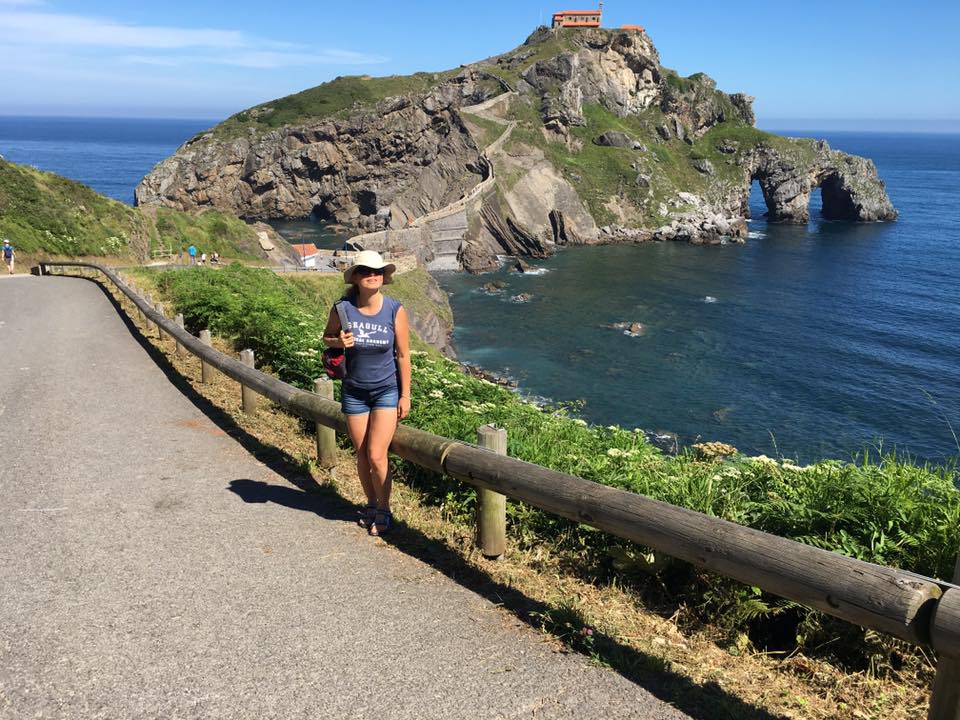
30 km from Bilbao there is an island called Gaztelugatxe, which was formed millions of years ago as a result of a volcanic eruption. The island is connected to the mainland by a long man-made bridge—this location has repeatedly appeared in the series “Game of Thrones”.
At the top of the island stands the chapel San Juan de Gaztelugatxe, built in the 10th century in honor of St. John the Baptist; steep stone stairs with 237 steps lead up to it. The observation deck offers wonderful views of the rocky coast and the ocean. Make a wish by striking the bell and it will surely come true, as long as it comes from the heart.
Cudillero

This small fishing village in the heart of Asturias is compactly arranged amphitheater-style on the slopes of coastal cliffs. Cudillero is a wonderful place and the restaurants here are incredibly expensive. But how can you resist the seafood, whose aroma is intoxicating.

Cudillero really is a former fishing village, whose houses hang over steep slopes, and instead of streets, endless stairs wind between them, running down to the central square. People come here for cozy views and simple, unpretentious, yet fantastically delicious fish cuisine offered in every café.
A bit higher than the village lies the Asturian Versailles – the Selgas-Fagalde palace and park complex. Visiting the park and the palace is ticketed and you need to book your tour time in advance.
Praia de As Catedrais


Praia de As Catedrais or the Beach of Cathedrals is one of the most beautiful beaches in the world according to the Travellers Choice Playas rating. On this beach, natural stone arches have formed in the rocks due to water and wind. Twice a day, for a few hours, the tide uncovers the bases of the stone arches, and after a while, they hide again under the high water.
The Beach of Cathedrals is located 18 kilometers from the small town of Ribadeo. It’s best to come to this beach at dawn before the crowds of tourists—so you can be the pioneer on pristine sand under the vaults of amazing stone arches.
Where to stay in Northern Spain
- Hotel SANSEbay≫ – hotel located in the center of San Sebastián, from where it is easy to walk to sights.
- Pension Del Mar≫ – pension in San Sebastián with a great location, 5–10 minutes walk from the beach and 3 minutes from various bars and restaurants.
Transport
- Along the northern coast of Spain—from Bilbao to Ferrol (from west to east) run trains of the Feve company.
- You can also travel by Alsa buses. For example, from Madrid you can reach any city in Spain, and also move between major coastal cities.
- Car rental in Spain is inexpensive—from €25 per day, this type of transportation will be the most convenient—you can visit any place on the coast and see the beauty of Biscay.
I recommend reading:
Northern Spain on your own – route through Basque Country, Navarre, Castile and La Rioja
My journey through the Picos de Europa National Park
Baltic and North Sea Beaches – Germany

A seaside holiday and Germany—seemingly incompatible things. But every summer, hundreds of kilometers of Baltic beaches and the North Sea coast turn into places of pilgrimage for tourists. Perhaps, a holiday on the German coast is not as well-known as in Poland, but consider it more a privilege than mass tourism.
I recommend reading: TOP-10 sea beaches in Poland for summer holidays
Impeccably clean water, all conditions for water sports, health resorts and sandy beaches surrounded by pines—you can only dream of this when forty-degree heat melts your brain and makes you seek an alternative to southern seaside resorts. In summer, the temperature on the Baltic coast stays around +23 °C on average, and the water warms up to +20 °C.
Things to do on the coast
Most German seaside resorts are located on islands and are divided between the North and Baltic seas. Some of them are also located on the mainland coast with kilometer-long beaches and gentle and soft water entry. Especially, holidays on the northern seas are suitable for children who do not tolerate sharp climate changes. Here, there is healthy sea air, gentle sun and an ecologically clean area free of industrial pollution.
Borkum Island

Borkum Island is part of the East Frisian Islands. It gained its status as a health resort back in 1830. The local sea air is highly saturated with salt ions, and the climate is especially favorable for allergy sufferers. The shallow water adjacent to the island is part of the Lower Saxon Wadden Sea National Park. In addition to sandy beaches, the island has routes for hiking and horseback riding.
Rügen

This is the largest island in Germany. As early as 200 years ago, next to its poor fishing villages, the first seaside resorts appeared here, where the German nobility from Berlin would come to rest. They preferred to relax by the sea in sun loungers of those times—wicker beach baskets Strandkörbe. The tradition remains unchanged today. The symbol of Rügen is considered the wooden pier in the resort town of Sellin, which juts 400 meters out into the sea.

The best beaches on Rügen Island are the multi-kilometer-long beaches in Binz and on the Schaabe spit. Rügen is pine-covered chalk cliffs, wide sandy beaches and villages where you can rent a cozy room in a small hotel in a style unchanged for centuries—a journey into the quiet life of the past.
Hiddensee

You can get to Hiddensee from Rügen by ferry. It’s one of the most romantic German islands, where internal combustion engine vehicles are forbidden. The island exudes a patriarchal atmosphere: everyone travels in horse-drawn carts, modern electric vehicles, or at the very least, bicycles, and the most steadfast go on foot.
Hiddensee is like a miniature continent—its landscapes and nature are so varied. The wide beaches are covered with the finest white sand, the sea is cool, and there are no restaurants or promenades. The cleanest nature opens up to travelers who have decided to escape civilization, at least for a week.
St. Peter-Ording

St. Peter-Ording has one of the longest sandy beaches on Germany’s west coast. St. Peter-Ording is also the only seaside resort in Germany with a bathing zone featuring hydrogen sulfide baths. On good weather days, crowds gather here so thick that there’s no room for a towel.
Rostock

Rostock is an old city on the Warnow River, which flows into the Baltic Sea. Not far from Rostock is the Baltic resort specializing in thalassotherapy—Warnemünde. Here is a 14-kilometer long sandy beach with a picturesque coastal bluff. Fishermen’s houses and moored sailing yachts line the beach in a relaxing landscape.
Where to stay on Germany’s beaches
- Inselhotel Rote Erde≫ – hotel located near the lighthouse on Borkum Island in the very center of the city. Nice rooms and breakfasts.
- Parkhotel Seeblick≫ – hotel in Rostock, located right across from the beach. You can hear the sound of the sea from your room, and that’s wonderful.
Transport
- Germany has a developed railway network. Trains even go to some islands, for example, local trains go to Rügen Island. I recommend reading about the single ticket for 49 Euros across Germany.
- There are also regular ferries to the islands; full information about tickets and the schedule can be found on the ferry company’s website.
Useful links for organizing your trip:
Car rental – I search for inexpensive options at DiscoverCars
Hotel booking and apartments—traditionally on Booking.com
Travel insurance with discounts—online at HotlineFinance
Excursions—book in advance at GetYourGuide
What else to read:
- Galicia – Guide to the Green Province of Spain
- Summer vacation on European lakes
- Black Sea Beaches in Romania