
Discover how to plan a trip to Morocco with essential tips on transport, accommodation, and must-see sights.
Tips for a road trip through the most beautiful country in Africa: where to live in Morocco, what types of accommodation are available in cities and in the desert, what and what sights are a must-see, travel itinerary.
Some information about Morocco
Morocco is a country located on the northwestern tip of Africa, bright and diverse in historical monuments and incredible nature. It combines Berber, Arab, African and European cultures.

Cities like Marrakech and Fes are living testimonies to a thousand years of history, where ancient medinas and bustling souks coexist harmoniously with modern urban landscapes, exquisite architecture, delicious cuisine and warm hospitality, giving travelers a truly diverse and exciting experience.
Outside the cities, Morocco’s nature is very diverse: from the Mediterranean coast and the Atlas Mountains to the majestic Sahara Desert. In a few days, you can visit the beach, go on a camel trek through the dunes, explore desert oases and walk through picturesque mountain valleys. A great idea for a trip that you will never forget!
Our trip took place from the south to the north of Morocco. Out of the ten days spent in the country, we visited eight cities and towns, where some of the most interesting sights and locations.
I’m talking about the cities and the nuances of our travel Morocco route. I also want to stop at those hotels (riads and kasbahs) that we liked for the level of service, atmosphere, and convenient location.
Best time to visit Morocco

Spring and fall are the best times to visit Morocco: mid-March to early June and September to October. During these seasons, you’ll find great weather, fewer crowds, and plenty of budget-friendly options.
Temperatures are comfortable but not too hot, making hiking and swimming enjoyable. Plus, with fewer tourists, you’ll have the opportunity to immerse yourself more deeply in Morocco’s rich culture.
Accommodation, car rentals, and tours are also generally more affordable during these times. Whether you’re planning to wander the markets of Marrakech, hike in the Atlas Mountains, or simply enjoy the coastal towns, spring and early fall are a great time to visit Morocco compared to other seasons.
Visit in the summer
You can forget about visiting the desert during this time. But if you’re interested in an ocean getaway, this is also the perfect time to visit the coast, like Agadir and Tetouan, which have some of the best beaches. But hotel prices in these cities skyrocket during this time – this is usually the season when there is a surge in tourist activity on the coast. Also, summer is a great time to hike the trails of the Atlas Mountains, especially if you start early each day.
Visiting in winter
It is a good time to see the big cities like Marrakech or Essaouira. It can be rainy and cool along the coast and in the mountainous areas, so you probably won’t be going to the beach or hiking through the mountains.
Winter also offers the opportunity to experience the unique charm of the Moroccan desert, as temperatures will be quite moderate even in the middle of the day. If you plan to spend a lot of time in the desert, winter is a really good time to visit. But bring warm clothes, even for sleeping – the desert at night is very cold in winter, and there is no heating in hotels and desert tents. And in winter in Morocco, you can ski in the High Atlas Mountains – a very unique skiing experience in North Africa.
How much time to spend in Morocco

Morocco is definitely not a small country, and many tourist destinations are not very close to each other. We planned a route from south to north to see as much as possible in 10 days. But there is still a feeling that we did not see everything and should have allocated more time.
7-10 days – minimum
If you want to hit most of the famous sites, spending at least a day in each, plan on a minimum of 7 days (10 is better). This will give you enough time to move between several different areas, explore imperial cities like Marrakech and Fes, check out Essaouira on the coast, and even visit the Sahara Desert.
If you have a full ten days, you can follow the plan mentioned above, just a little more leisurely, or add a quick trip to the stunning Atlas Mountains.
Although there is still so much to see, a week or a week and a half is a very enjoyable introduction to Morocco. You will have the opportunity to get to know our culture, visit some key historical sites, get lost in the bustling markets, and enjoy time in nature.
Hotels in Morocco – accommodation options
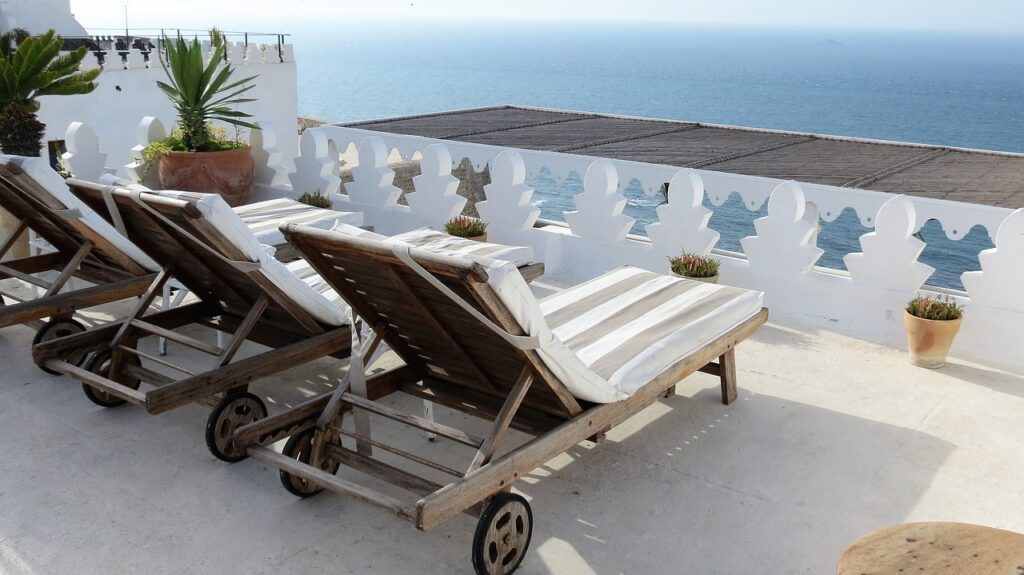
Morocco offers a variety of accommodation options to suit all tastes and budgets. Please note that availability and quality of accommodation can vary greatly, so it is a good idea to read reviews and book in advance, especially if you are planning a trip during the peak tourist season.
Prices for hotels, riads, hostels and campsites vary depending on the quality of accommodation and the city, whether it is a seaside resort like Agadir or the small town of Chefchaouen in the mountains. But you will always be able to find the right option that suits your budget.
- If you’re looking for a budget option, hostels, bed and breakfasts, and small hotels can cost you around 10 to 50 Euros per night.
- If you’re willing to spend a little more on comfort and amenities, mid-range hotels typically cost between 50 and 130 Euros per night.
- Luxury and upscale hotels can set you back between 130 and 400 or more per night.
Here are some of the types of accommodation you can find in Morocco, along with specific recommendations.
Large international hotels
These are well-known hotel chains that offer a wide range of amenities and services. They are usually found in major cities and popular tourist destinations. Morocco offers several 4-star and 5-star international hotels for travelers looking for luxury and comfort. For example:
- Radisson Residences Taghazout Bay – Club hotel in Agadir. Stunning views, four swimming pools, large territory. Located near Taghazout beach. The great room has everything that is new, shiny and clean.
- Four Seasons Hotel Rabat at Kasr Al Bahr – this stunning hotel with warm ambient lighting and the elegant arches that give the place an authentic, luxurious feel. The courtyard was my favorite spot, with its peaceful fountain and lush greenery creating such a serene atmosphere. The rooms are equally impressive, featuring gorgeous Moroccan-style furniture, soft lighting, and breathtaking views.
- Iberostar Waves Club Palmeraie Marrakech All Inclusive – Extremely friendly and helpful staff. Pools are magnificent. The free drink stations and bars at the pools were great. The gardens and cleanliness were wonderful. Tennis courts, petanque, and kids club.
Local hotel chains
Morocco also has its own local hotel chains, such as Kenzi Hotels and Atlas Hospitality, which cater to a variety of budgets. Some local chains can combine Moroccan hospitality with international standards.
- Kaan Casablanca – Awesome hotel in Casablanca, great facilities, and beautiful rooftop. Big clean rooms with nice bathrooms. Rooftop bar/club. Good breakfast.
- Kenzi Menara Palace & Resort – This hotel in Marrakesh is super clean and very lovely! The rooms are spacious, and the grounds are immaculate! Nice breakfast buffet as well.
- Kenzi Azghor – the great oasis hotel is located in the heart of Ouarzazate, has unique views from the panoramic terrace and an outdoor pool and a well-being centre with hot tub, hammam and massage treatments.
B&B – Guest houses

Bed and breakfasts and guesthouses are cozy and comfortable places to stay. They are commonly found in both cities and rural areas, creating a homely atmosphere. Many B&Bs and guesthouses serve a traditional Moroccan breakfast.
Apartments
Private rentals are available in Morocco through platforms like Booking.com. You can rent apartments, villas, and even entire riads (traditional Moroccan houses). These options offer the opportunity to experience Moroccan life like a local. You will have your own kitchen to cook your meals – those planning a long stay in Morocco can live in apartments, saving on restaurants.
- Appart Hôtel Oleandro – Great place to stay if you want to get a feel for old Casablanca/
- BlueBreak Aourir – lovely clean apartment near Agadir and very nice wild beacha, well equipped. Good air-conditioning and shady balcony, and own pool.
Hostels
Hostels are ideal for budget travelers and backpackers. Traditionally, hostels offer both dormitory beds and private rooms, making it easy to meet fellow travelers. Morocco also has hostels that are part of the worldwide organization Hostelling International (HI). They are usually available in large cities and tourist areas.
Essaouira Beach Hostel is a great choice for backpackers, as well as for those who want a super-cheap stay in Essaouira.
Auberges or Kasbah

Auberges are usually located in coastal and mountainous rural areas and in small towns. They are built in the traditional clay style (kasbah) and are often family-run by locals. It is a traditional house with a large territory and a garden, built from clay in the desert and mountains. High fence walls protect from dust and sand, behind which there is usually a beautiful garden, often a pool. The thick walls of the house keep it cool in summer and warm in winter.
Tip: Book accommodation with breakfasts included – in Morocco they are delicious and filling: tea (the coffee is bland, but tasty coffee is hard to find – the country is focused on tea), flatbreads and buns, scrambled eggs, yogurts, vegetables, fruits, jams, and traditional orange juice.
If you wish, you can arrange dinner – it makes sense to do so in the desert or in places with no restaurants nearby. In cities it’s better to go to cafes and restaurants and explore Moroccan cuisine – without this, you can’t truly immerse yourself in Morocco’s culture and flavors.
Riads

Riad — is a traditional Moroccan house with an inner courtyard. Many riads have been converted into boutique hotels or guesthouses, offering travelers the chance to experience Moroccan culture and architecture while enjoying comfortable and often luxurious rooms.
These historic residences are decorated with Moroccan tiles, exquisite plasterwork, and in the patio (the inner courtyard), there is a central fountain or pool.
Tip: If you’re traveling as a couple, it’s not worth saving on a private room – the accommodation in a nice riad is affordable, a double room starts at 45 Euro per night with breakfast.
Gîtes d’Étape
Gîtes d’étape – are simple countryside hotels and hostel-style accommodations serving mountain travelers and providing necessary amenities such as hot showers and meals. If you are planning hiking in the Atlas – look for this type of lodging so you don’t have to carry a tent with you.
Bivouacs in the desert
To have a unique experience and feel what it’s like to live in the desert, you can stay in traditional nomad tents. These tents come with mattresses, sheets, and blankets, and you can shower in nearby auberges. However, it can be cold at night – bring warm clothes even during the warmer months.
Desert camps in Merzouga:
- Large desert camp: Merzouga Sahara Luxury Camp – one of the best desert camps in Merzouga. A very comfortable camp in the middle of the desert with beautiful tents, where all amenities are provided. You can spend the night here in a tent or under the open sky.
- Pure luxury: Sahara Luxury Tented Camp for an unforgettable Sahara Desert experience.
Transport and Travel Around in Morocco

For travelers exploring Morocco, the right choice of transport largely depends on the route and personal preferences. If you are planning to see only the big cities – bus or train will be enough. If you wish to see Morocco’s natural beauty – it’s better to rent a car.
Fortunately, the country boasts a good transport system, providing comfortable and affordable options for easy movement. Here are all the possible options.
Car Rental

Car rental is an excellent choice if you want to see as much as possible and not waste time on bus schedules. By car you can see most of the beautiful places outside the big cities. This is the ideal option for discovering small towns, rural gems, mountain roads, the desert, and remote beaches.
Both automatic and manual transmission cars are available in Morocco, but automatics may be less common in smaller towns. If you are comfortable driving a manual transmission, you will have a wider selection and can save money – they are cheaper.
Major international companies such as Avis, Hertz, and Europcar operate widely.
To check prices and book, I recommend using these two car rental websites:
- DiscoverCars – offers budget deals from major international rental companies, as well as from many local agencies which often have much better prices. You can often find good deals.
Driving in Morocco

Morocco has its own set of driving norms. But some of them will be quite unusual for foreign visitors, so consider it a unique cultural experience)))
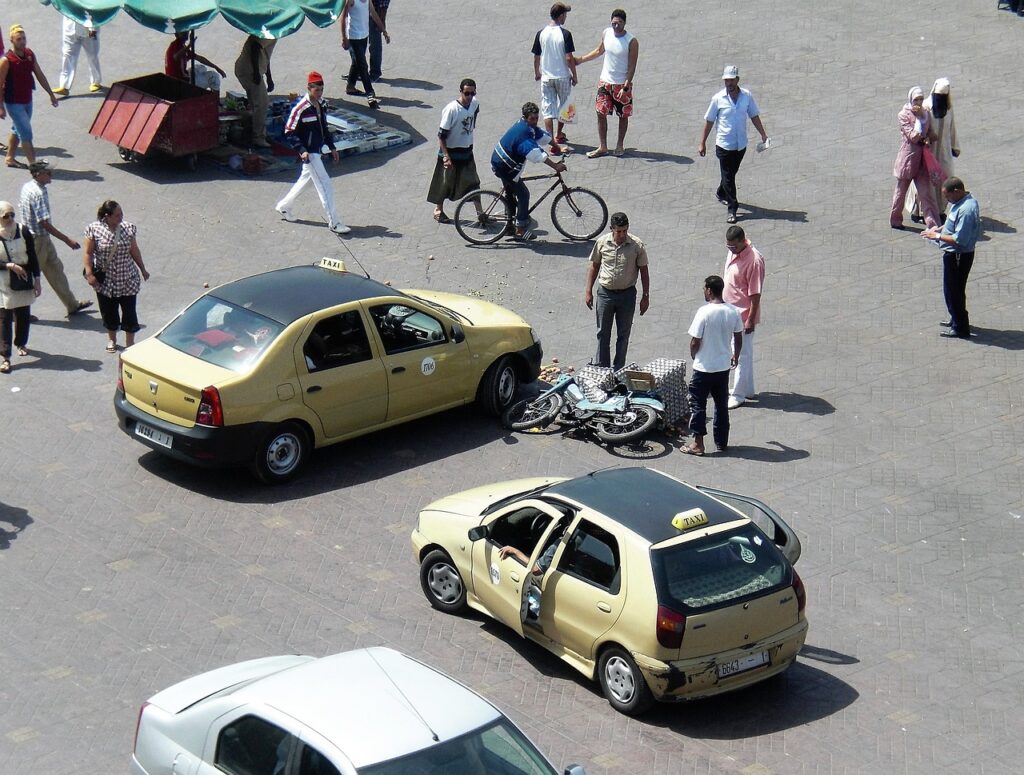
Although general driving rules are in place, they are often ignored. Driving culture in Morocco can be chaotic, pedestrians are almost never given way at crosswalks, especially in Marrakech and Casablanca. When we entered Marrakech and approached the Medina, it was honestly quite difficult to get around the city.
But outside the city on the highways, drivers behave normally, keep a distance, and warn about police “in the bushes.”
Tip: leave your car at paid parking lots outside the old city – the Medina. This way you’ll be sure that you won’t get stuck in traffic or damage the car.
Scooters are known for their reckless driving and often occupy the middle of the lane. Be careful and drive your car cautiously.
While cities such as Marrakech and Casablanca have especially chaotic traffic, Tangier, Rabat, Agadir, and Essaouira, are generally somewhat calmer.
Road Conditions

Main roads are generally in good condition, but rural roads can be narrow and poorly maintained.
For traveling between major cities, Morocco has a well-developed road infrastructure with toll highways in good condition. Fees are paid at toll booths, usually accepting both cash and cards. Note that it’s still advisable to carry cash, especially in remote areas where card acceptance may be limited.
Speed limits are typically 60 km/h in urban areas, 100 km/h outside, and 120 km/h on highways.
Parking
The parking system in Morocco is different from most European countries. But it is very similar to Ukrainian parking – in most cities, unofficial street attendants help with parking. They wear bright vests and charge a few dirhams for daily parking (regardless of duration) and watching your car. If you leave your car for an extended period, inform the attendant and agree on a rate.
Parallel parking is common in Morocco with limited spaces, so if don’t know how to park this way, or if the spot is on a busy street, the assistance of attendants is important.
Search for parking lots on Google Maps in advance to avoid circling around city centers. Usually, they are on separate lots (outside the Medina) and there are even underground ones in larger cities. Morocco also offers parking spaces, marked with blue “P” signs, with fixed or negotiable prices. Although short-stay parking is a bit more expensive than on-street parking, parking lots are generally safer and more convenient, though less visible and less common.
Payment for parking requires cash!
Public Transport in Morocco
Train
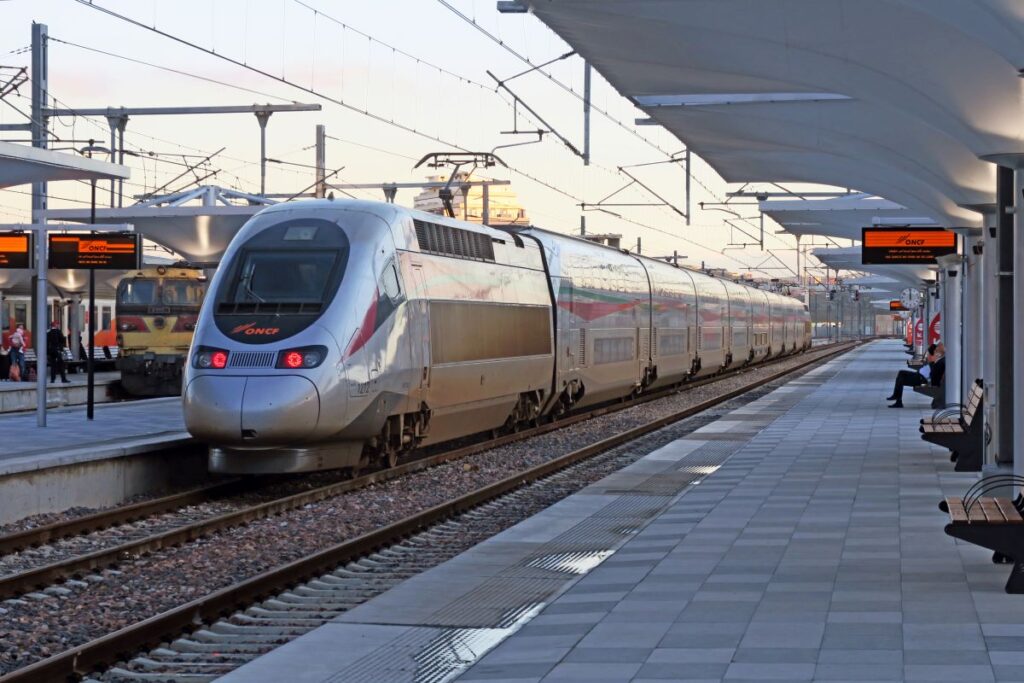
Morocco has a small but reliable railway network, effectively connecting such major cities as Marrakech, Tangier, Casablanca, Rabat, Meknes, and Fes. For additional convenience and comfort, there is a high-speed line that connects Tangier with Casablanca and Rabat.
Trains run several times a day on these core routes from early morning until late at night. Most Moroccan train stations are centrally located in the city.
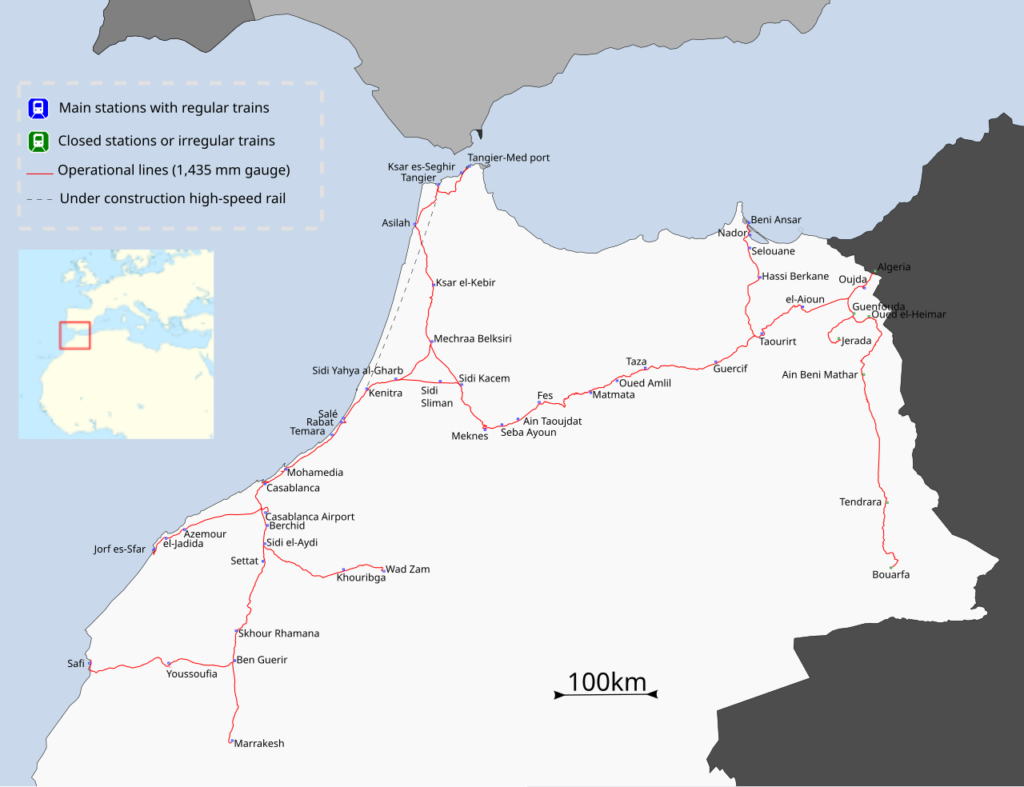
Although tickets can be purchased on the day of travel, it’s advisable to book them in advance at stations or online on the ONCF railway company website. This is especially important during peak periods and for longer journeys, as it guarantees availability and potentially lower prices (some trains sell out).
Ticket prices are affordable and depend on class and distance, and early booking often gives you more budget options. Trains have a luggage storage area, but it’s wise to keep all valuables at hand.
Bus Travel
Buses offer a convenient and extensive transport network in Morocco, connecting cities across the country. They cater to different travel needs, including local city routes, intercity connections between major urban centers, and overnight options for long journeys that typically last 5 hours or more.
Large Moroccan cities like Casablanca, Marrakech, Fes, and Tangier are key bus hubs. Tickets can be purchased at these cities’ central bus stations or shortly before departure. For many (but not all) routes, online booking is available on websites like www.markoub.ma.
Bus stations in Morocco are usually strategically located within or near city centers, providing easy access for travelers. In some urban centers, stations can seem bustling and disorganized, resembling a bazaar. Here, drivers call out destinations, and passengers buy tickets directly from the driver or his assistant.
It’s important to note that, although buses are convenient, they don’t always offer luxurious comfort. Travelers seeking greater comfort may opt for “first-class” options provided by operators such as CTM and Supratours, which offer improved amenities and services.
Although bus travel in Morocco is generally safe, I advise exercising caution and protecting your luggage and personal belongings.
Travel between major cities can be quite affordable, with fares from 50 dirhams up to 250 or more depending on distance and when you book.
Shared ride taxis
While Uber is not available in Morocco, major cities offer ridesharing options such as Careem, InDrive, and Heetch.
On the other hand, you can hail taxis on the street, and their colors differ by city: red in Casablanca, blue in Rabat, beige in Marrakech, and pink in Kelaat M’Gouna, a small town known for its roses.
To make sure you are in an official taxi, look for the official sign on the roof. All authorized taxis are equipped with meters, ensuring standardized fares. While they are generally safe, it is wise to remember the taxi number.
For all rides, payment will be in cash, and you should have smaller denomination dirhams as taxi rides are cheap, and some drivers may have difficulty giving change on larger bills (100 or 200 dirhams).
In cities, short taxi rides usually cost 5-20 dirhams and rarely exceed 40 or 50 dirhams even in the largest cities. Keep this in mind if you are quoted a higher price – negotiate!
Intercity trips in grand taxis
There is also such a thing as a grand taxi for intercity trips. These are shared taxis that run between cities, usually on fixed routes. They do not have meters, and are usually large white sedans.
Grand taxis leave only when they are completely full of passengers. To use them, find them at designated stands or ask at your hotel or locals. The fare is negotiated with the driver before the trip, and you’ll need to be ready to share the cost proportionally with the other passengers.
Payment is made before or after the trip directly to the driver or designated cashier. Although grand taxis offer an economical way to get around, they generally lack the comfort of other forms of transport. So this kind of travel requires flexibility and patience).
Prices in Morocco
In Morocco, you’ll find a variety of prices for different budgets. It’s important to have an idea of the average costs for different expenses during your trip: from affordable accommodation and budget meals to higher-end options.
Food
Morocco can be a paradise for food lovers. If you’re on a tight budget, you can enjoy tasty street food and local restaurant dishes for just 10–50 dirhams per meal.
Dining at mid-range restaurants is also quite reasonable, ranging from 100 to 300 dirhams per person for multiple courses.
If you are aiming for fine dining, be ready to pay more, as high-quality meals cost around 350 dirhams or more per person.
Alcohol
Morocco is mostly a Muslim country, which means that alcohol availability is limited. If you do find some, expect to pay about 50 to 100 dirhams for a beer or glass of wine in a restaurant.
Imported alcohol is generally more expensive than in its country of origin when bought from liquor stores and supermarkets. However, there are some exceptions – such as certain local beers and Moroccan wines like Moghrabi, which may be more reasonably priced.
Admission tickets to museums, landmarks, monuments
Entrance fees to museums and historical sites vary, but on average you might pay 10 to 100 dirhams for most attractions. Some larger sites may have higher fees.
Excursions
If you are interested in tours, prices can vary. For a private half-day tour, you can pay from 300 to 800 dirhams, while full-day tours can cost over 1000 dirhams.
Group tours are usually more budget-friendly, often starting at around 150 dirhams for a half-day tour.
Remember, these are average costs, and prices for accommodation and tours may vary depending on the season, location, and your personal preferences.
Cash and Bank Cards

Using Credit Cards
Morocco is a cash-based country. While travelers can often use credit and debit cards, especially Visa and MasterCard, in big cities, hotels, restaurants, and stores, cash remains essential for transactions at local markets, small vendors, public transport, and in rural areas.
It’s recommended to have cash in a variety of denominations, as well as small bills.
How to get Moroccan dirhams? ATMs are available in cities, as well as currency exchange points in banks and post offices, and currency exchange options at airports (least favorable rates).
Tipping
In restaurants, standard tips range from 10% to 15% of the total bill, especially if the service charge is not included.
In hotels, it is customary to tip hotel staff such as porters, maids, and concierges, and small daily tips are appreciated.
For guides and drivers, it’s customary to tip about 20 to 50 dirhams per person at the end of the service, and rounding up taxi fares is common.
It is important to tip in cash, as it is more convenient for the staff and ensures they receive the full tip, especially in cases where card payment may not be possible.
Safety in Morocco

Morocco is a country known as quite safe. And booming tourism has led to stricter security measures. Although violent crimes against tourists do occasionally happen (the well-known case of a girl killed in the mountains who was traveling alone), they are extremely rare. Therefore, solo travelers, especially at night, should be cautious.
Taxi scams are the most common problem. So it’s better to agree on fares in advance, insist on using the meter, and record the taxi number and send it to someone you trust. Do not hesitate to speak up and seek help from locals if issues arise.
In the old medinas of Fes and Marrakech, where you may be approached most often by unsolicited guides, be especially cautious. If you’re wary of walking around such cities alone – it’s better to hire local guides or join group tours for easier navigation and peace of mind.
Unfortunately, female travelers should be prepared for unwanted attention. Conservative clothing can help minimize unwanted attention.
Avoid drinking alcohol in public places, as this is prohibited. Also, remember that homosexual relationships are illegal throughout Morocco with legal consequences.
Although hashish is widespread and somewhat tolerated in Morocco, and is often offered to young tourists (especially in Chefchaouen), it’s best to refrain from buying any drugs to avoid serious trouble.
What You Need to Know If Traveling During Ramadan

When we traveled around Morocco, we arrived right during Ramadan. Here’s what you need to know if you plan to visit Morocco during the month of Ramadan, an important event in the Moroccan calendar. During this time, Muslims fast from sunrise to sunset. Thus, opening hours, for example for restaurants, are shifted, and everyday life slows down.
Many businesses and shops may be closed or operate only intermittently throughout the day, particularly food establishments. Locals often have less energy due to fasting, which may affect the availability of certain activities and services before sunset (when people break the fast), as well as the overall atmosphere.
Importantly, at the end of Ramadan, during Eid al-Fitr, many businesses may close for about a week. During this time, transportation may be overloaded as people travel home from where they work.
Restaurants During Ramadan


Do not eat or drink in front of people who are fasting during the day. Respect local customs, though many things are forgiven to foreign tourists. Tourists are allowed to consume alcohol, but availability is limited to a few restaurants and bars, and liquor stores remain closed throughout the month.
This experience may not appeal to those who are very attached to dining in restaurants. But we had breakfasts in hotels, bought food in supermarkets for the day, and in the evenings waited for restaurants to open and sometimes had very nice experiences joining locals for communal dinners after a long fasting day. I find this very interesting.
From various nightly feasts to lively streets and bustling mosques, this experience can enrich your journey. The renowned hospitality of Moroccans often extends to inviting visitors to break the fast, to taste dishes rarely eaten during the rest of the year.
So be open to invitations and enjoy this special aspect of Moroccan and Islamic culture!
What else you need to know about Morocco

Morocco uses 220V European sockets.
Although Morocco is a Muslim country, it is relatively liberal. Thus, foreigners are under less pressure to strictly follow local dress codes and cultural norms. Nevertheless, women are advised to cover shoulders, cleavage, and thighs, avoiding tight or revealing clothing in order to respect the culture and minimize unwanted attention.
Wearing a headscarf is not required. When visiting mosques, both men and women should cover arms and legs, and women should have a scarf to cover their heads.
Considering Morocco’s varied climate, it makes sense to take layered clothing, as evenings in the mountains and desert can be chilly even in summer. In contrast, there can be sunny days suitable for sunbathing even in winter.
Be careful with fake guides in tourist areas. Politely refuse their offers if you’re not interested in their services. Avoid eye contact and walk quickly to discourage them. Use a firm “No” or the word “La shukran” (Arabic for “No, thank you”) to ward off persistent people.
What to see in Morocco in 7-10 days
Agadir – Morocco’s best beaches
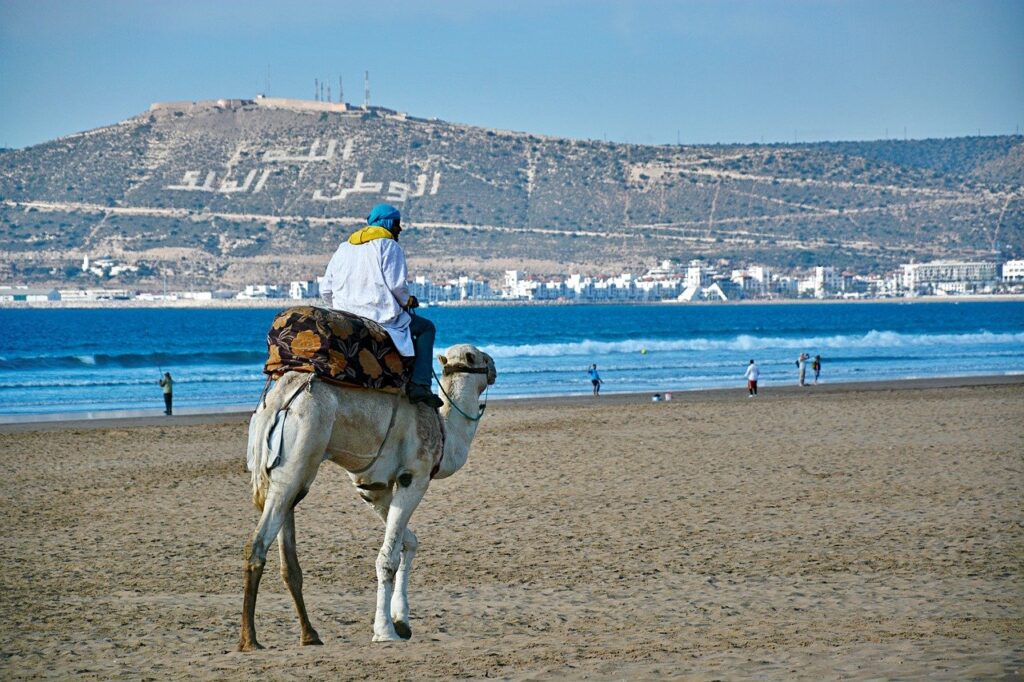
Agadir, known for its sun-soaked beaches, is a coastal resort for travelers seeking relaxation and a seaside atmosphere. The city offers wide beaches, making it ideal for beach lovers.
Nearby Berber surfer towns such as Tamraght and Taghazout add the opportunity to experience not just hotels and modern restaurants, but also delve into the laid-back vibe of Moroccan life.
The lively nightlife of Agadir and panoramic views from the hilltop Kasbah Agadir Ufella make it attractive as a destination for relaxation and leisure.
Where to stay in Agadir:
- The View Agadir – Excellent hotel in the high end segment. You can be sure, that this hotel meets the highest hotel standards, adhering to the etiquette. The breakfast buffet has a lot of variety for each taste, the personnel and concierge service are friendly and well trained and the location is perfect, close to the beach and to other restaurants and city attractions.
- Familyhouse – The apartment has everything you could possibly want and it is good placed to access the beach, the Souk and the Medina. There are a great range of restaurants surrounding the apartment offering super value.
- Chic & Cozy Retreat in Agadir – The place is clean and equipped with everything needed for a comfortable stay. The location is perfect, with everything within walking distance, making it easy to get around.
Legzira – the red arches of the Atlantic

We flew into Agadir to pick up a car rental and head to the small town of Sidi Ifni. The surfer town is located 9 km from the famous ocean arch on Legzira beach. A fantastically beautiful place, despite one of the arches collapsing several years ago due to the forces of nature. The other arch remains and can still be visited.


Sidi Ifni – a spot for surfers, hippies, and elderly family couples from Europe. The area where Sidi Ifni is located is a former Spanish colony, which is why locals speak Spanish and there are many Spaniards in the hotels.
Where to stay in Sidi Ifni:

- Suerte-Loca – we stayed in this colorful hotel, which opened in Sidi Ifni in 1936. It was the first hotel to open in this town. Some might not like this rather ascetic place, but we chose it for its atmosphere and history. In the evenings, the hotel bar hosts cool live music concerts. The hotel balcony offers a wonderful view of the beach, and on the first floor, the owners run a fantastic restaurant, where they cook and serve guests themselves.
- Auberge Sable D’Or – Great location, window overlooking the ocean and its sound that lulls you to sleep.
Essaouira – ocean and cats in blue gates

Essaouira – the largest fishing port, a fortress city woven with narrow lanes, white walls, and blue doors. In the 70s, hippies flocked to Essaouira, turning it from a bastion into a world of relaxed living against the backdrop of ocean sunsets. Its UNESCO-listed medina, characterized by blue-and-white buildings and winding streets, exudes an old-world charm.

Come here for the atmosphere: sit on a rooftop riad sipping mint tea, climb the bastion walls, stroll the sprawling beach at low tide, visit the fish market to view the catch and blue boats, eat seafood, and dance the night away at rock bars.
The name Essaouira translates from Arabic as “beautiful view,” and it truly is beautiful in its colonial desolation. I would like to live in this city for at least a week, to enjoy the ocean, the cries of seagulls, and the carefree atmosphere of Essaouira.

Tip: For those arriving in Essaouira by car – you can leave your car in the parking lot near the Medina entrance. The cost is 2 Euro per day.
Be prepared that after parking your car will be splattered with seagull droppings – this is capitalized on by local attendants. Without asking, they start washing your car with dirty rags and pouring water from a bottle. Shoo them away, their work is useless and they demand money even if you refuse – claiming they are poor and you are rich tourists.
For reference – a proper exterior and interior car wash at a regular place costs 3 Euro. So, don’t agree to this help.
Where to stay in Essaouira:

- We stayed at the cozy Dar Ness riad – located in the center of Essaouira, absolutely gorgeous hotel with a wonderful rooftop terrace. The location is near great restaurants, the beach, and street markets where you can shop for jewelry, etc. All of the staff were incredibly helpful and friendly, especially Mustafa, who made us breakfast on the terrace. Very nice people and a comfortable stay overall.
- Suite Azur Hotel – is a luxurious hotel with a magnificent rooftop terrace pool and beautiful views of the Medina.
- Atlas Essaouira & Spa – is a magnificent beach hotel by the sea, with a swimming pool and a stunning breakfast, located on the first line by Essaouira beach.
More details: 8 things to do in Essaouira, Morocco
Marrakech – palaces, markets, tasty, colorful, and loud
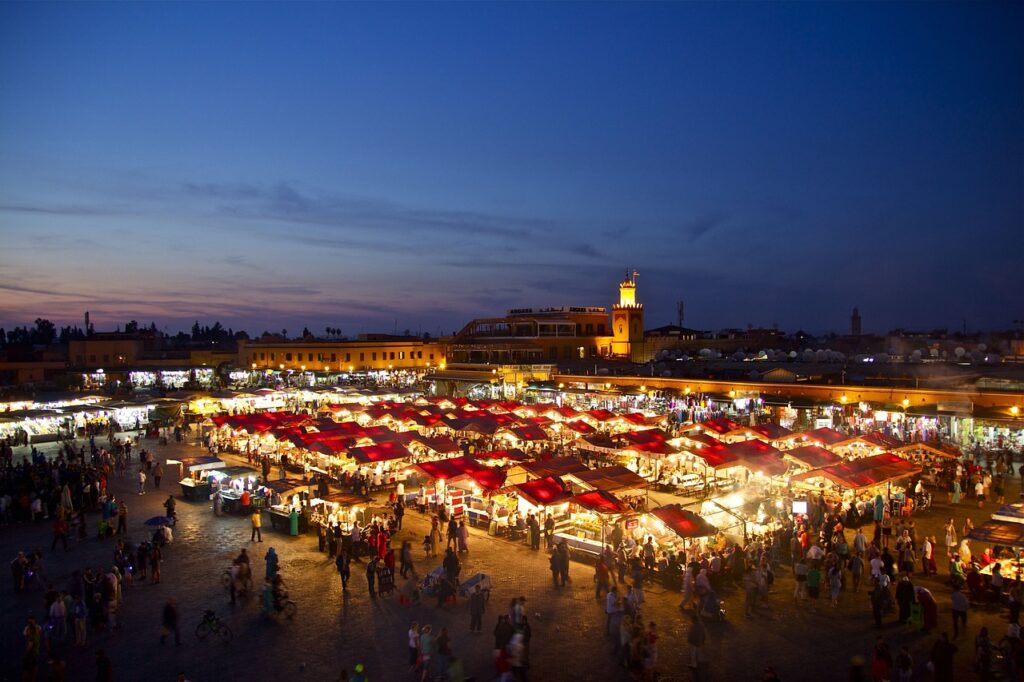
Marrakech – known as “the Red City,” is literally bustling with lively bazaars, historic landmarks such as the Bahia Palace and Saadian Tombs, and vibrant squares like Jemaa el-Fnaa. Marrakech has many museums, palaces, and leather workshops similar to those in Fes.
Its rich history spans nearly a thousand years, densely packed with medieval palaces, mosques, gardens, and bustling markets. Surrounded by red earthen walls and buildings constructed from red sandstone, it’s clear why it earned its nickname.
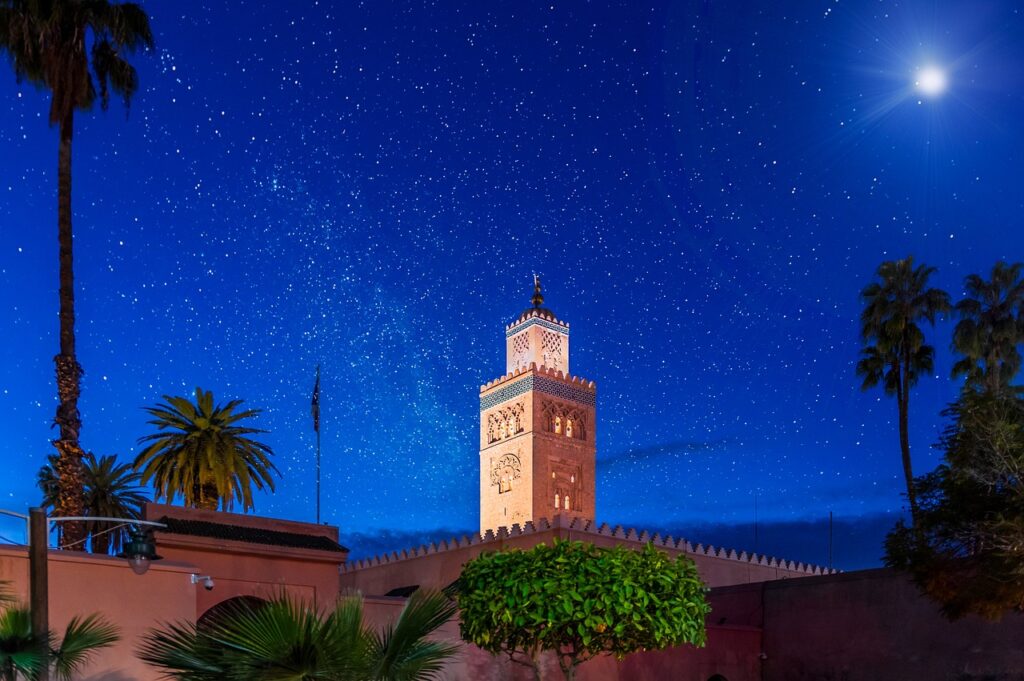
Although Marrakech is an integral part of any trip to Morocco, you may not like it at first sight. You need to be prepared for Marrakech – I don’t recommend it right after Essaouira, which is impossible not to love for its great atmosphere. It’s better to explore it later so it’s easier to get used to the Moroccan culture before immersing yourself in its bustling chaos.
Marrakech is known even among locals for its insistent but playful hawkers and scammers. The lively old medina and the iconic Jemaa el-Fnaa square aren’t ideal for relaxing, but rather resemble a tourist circus where people are trying to scam you.
Tips for Visiting Marrakech:

- For the optimal experience, visit the Ensemble Artisinale, a quiet crafts market where you can shop without the need to bargain.
- Schedule a visit to Bahia Palace and Majorelle Gardens, preferably early in the morning, when there are no crowds.
- Be attentive while visiting Jemaa el-Fnaa square – there are many people trying to profit from tourists. And not always in honest ways.
- Try staying in a riad. It’s a great experience – to live in an old building with its own garden, built in the labyrinths of the old Medina.
Marrakech – a city of colors, spices and red walls: what to see and where to go for one day
Where to stay in Marrakech:
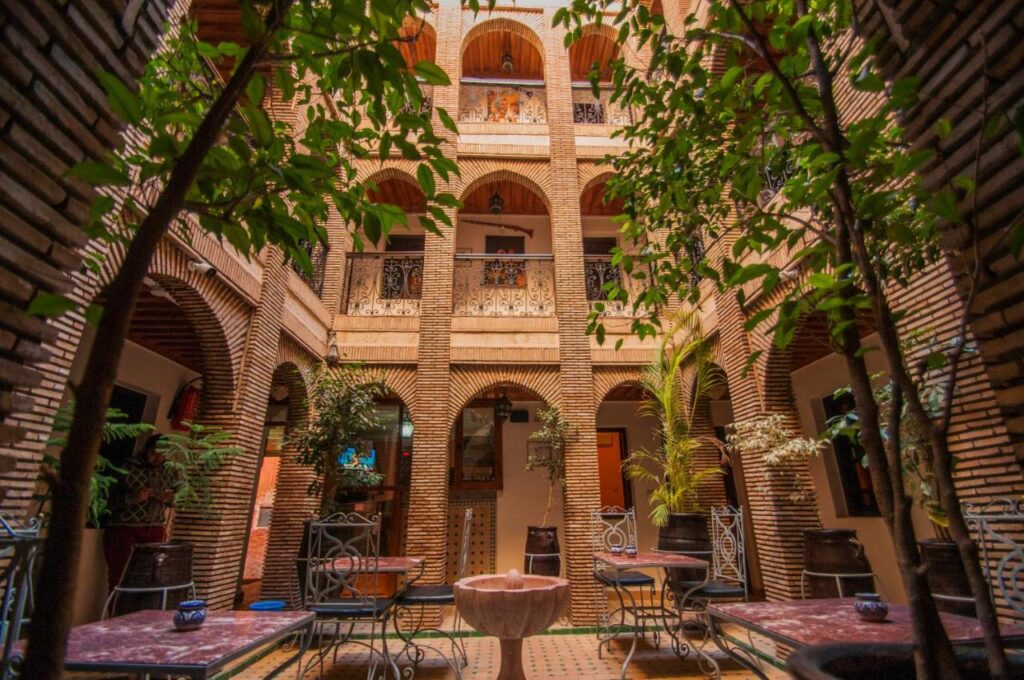
- I highly recommend Riad Assia – a very cool riad! Has good breakfasts and the best location in the Medina (everything is walkable), easy to reach by car, but it’s better to leave the car outside the perimeter in parking.
- Riad Mounir – The rooms were clean and the location of the riad allowed us to walk to all the sites which was really helpful. The breakfast in the mornings is made fresh.
- Marrakech Riads, NL Collection – Perfect location, quiet in the Medina, close to walking areas and shops. Traditional tasty breakfast on the roof terrace.
Aït Benhaddou and Ouarzazate – mountains and fortresses of Morocco


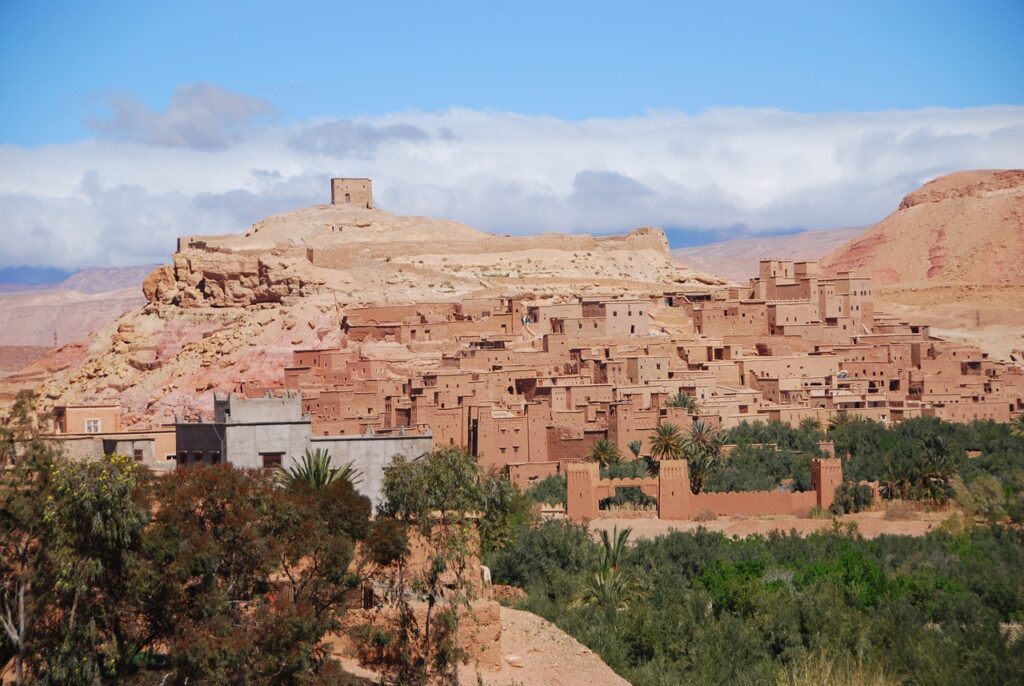
The fortress or Ksar Aït Benhaddou is located beyond the High Atlas. Driving there from Marrakech takes at least 10 hours, but although the mountain road is tough – it is worth it.
Breathtaking views, gorges, and peaks of the Atlas, which we studied in geography class at school – are what make the journey from point A to B an interesting process in itself.

Stop at view points, where fossils and colorful quartz crystals are often sold. Look all around and don’t rush to cross the mountains as quickly as possible.
Although you have to spend the whole day on the road, you’ll be left with wonderful memories of changing high-mountain zones and landscapes. However, for those who get carsick on serpentine roads, it will be quite difficult – bring motion sickness bags.
For fans of trekking in the High Atlas, there is the iconic summit, the trek to Toubkal (4167 m) – my next goal for another trip to Morocco.
Ksar Aït Benhaddou


This fortress is located beyond the pass among lifeless red mountains and valleys. Built from red clay, it still preserves the walls and towers of a fortified city built in the 11th century in a valley on the left bank of the Ouarzazate River.
Now traders of carpets and shawls sit within the fortress walls, for 20 dirhams you can see how locals lived in small houses. Or you can peer into the crumbling huts of Aït Benhaddou on your own.
Hotels in Aït Benhaddou

We stayed on the outskirts of Ouarzazate – a fairly large city by Moroccan standards, located 15 km from the fortress. We liked the hotel Riad Chay & Boutique – a small kasbah built by two young Moroccans who recently graduated from university and have seen the world and learned the tourist business.
Highly recommend this hotel, despite it not being in the city center – you can only get here by car or arrange transfer with the owners. This is a place where you’ll feel fully immersed in Moroccan style – what it’s like to live in an oasis in Morocco.

The house and garden behind high walls are on the edge of a palm oasis. Thos place is a very quiet and atmospheric. These guys are amazingly hospitable, speak excellent English, cook well. And answer all questions, and even taught me how to wrap a Tuareg turban — tagelmust. They prepared us a delicious candlelight dinner and the breakfast was beyond praise.
What to see in Ouarzazate:
Ouarzazate – the Hollywood branch in Morocco, Atlas film studio, where sets from films shot in the country remain. It’s a fun activity for fans, but many people enjoy it. You can also check out the local historic center – Kasbah Taourirt, which is divided into a museum and a residential part (i.e., a free part).
Near Ouarzazate, by the village of Kelaat M’Gouna, lies the “Valley of Roses.” In April-early May they hold rose festivals here, and you can witness the rose plantations in fragrant bloom.
Where to stay in Aït Benhaddou and Ouarzazate:
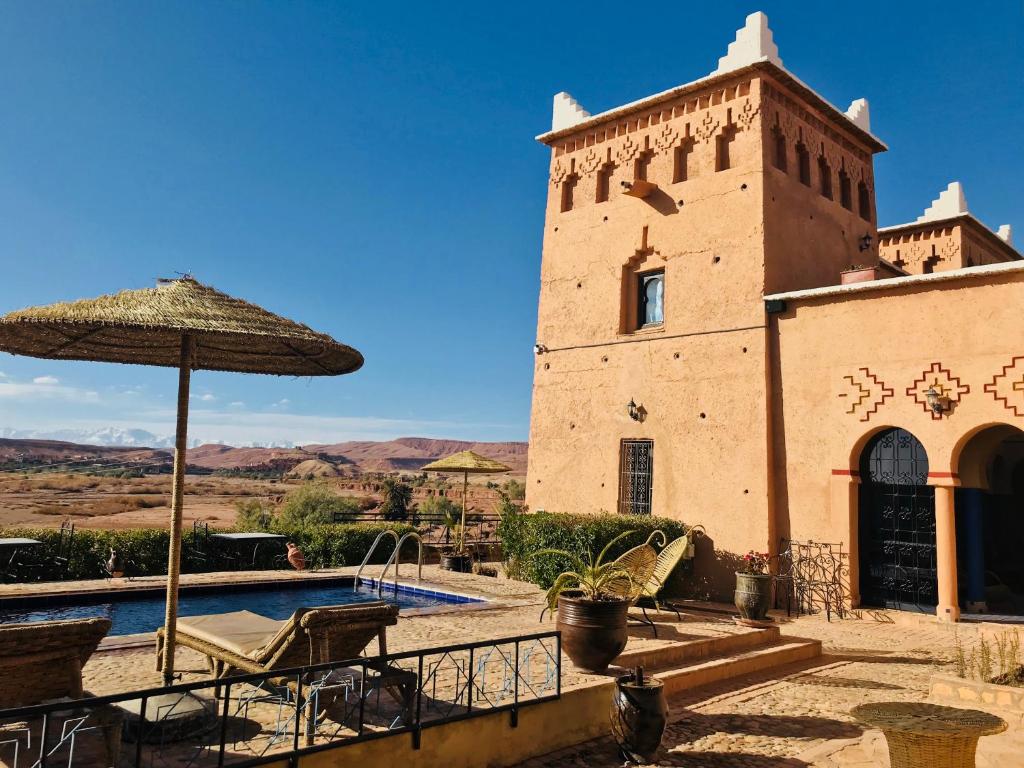
- Palm View Palace≫ – Lovely place and perfect for an overnight stopover in Ouarzazate on the way to Merzouga.
- Kasbah Rayane Ait Ben Haddou≫ – Location is fantastic, close to Ait Benhaddou and Ourzazet but quite secluded in a very quit area. The staff are wonderful and their food is even better. Very clean and well-kept.
- Maison d’hôtes Dar Farhana≫ – This is a hidden gem in Ouarzarzate. A traditional, beautiful Riad a short walk from the centre of town. The staff is very friendly and went out of their way to make our stay comfortable and enjoyable. The Riad is beautifully decorated and we enjoyed traditional Moroccan breakfast which was excellent.
Merzouga – the largest dunes in Morocco

The desert is a must visit in Morocco. The main thing is to choose one of the two ergs in the Sahara. An erg is an area covered by sand dunes located in Morocco.
- The first – Erg Chebbi is adjacent to the village of Merzouga, located near the Er-Rissani oasis. Erg Chebbi near Merzouga is smaller (22 x 5 km), but the dunes reach up to 150 meters high.
- The second – Erg Chigaga, is 50 km west of M’Hamid El Ghizlane. Erg Chigaga is larger (40 x 15 km), but the dunes are much lower – up to 60 meters high.


I chose Merzouga for the wow effect of dune height, though it’s more popular among tourists.
Highly recommended: Merzouga – how to organize adventures in the Sahara Desert
In the desert, you can ride camels and quad bikes, watch the sunrise and sunset, spend the night in a tent in the middle of the desert. In general, entertainment for every taste and budget.
Where to stay in Merzuga: Overnight in the Sahara Desert
One of the most desired experiences in Morocco is to spend a night in the Sahara Desert. The cost of an overnight stay in the desert can vary depending on the type of tour and level of comfort. Here are some approximate price ranges:
- Best Overnight Camp Merzouga – Basic camp: a basic camp in the desert with shared tents and simple facilities can cost from 300 to 800 dirhams per person.
- Merzouga Nights Erg Chebbi – Standard camp: a standard camp with more comfortable accommodation and food can range from 800 to 1500 dirhams per person.
- Yakout Merzouga Luxury Camp – Luxury camp: Luxury desert camps with private tents, gourmet meals, and additional amenities can start from 2000 dirhams per person and increase significantly depending on the level of luxury.
Note that these are approximate prices, and it’s important to book such tours through a reputable tour operator to ensure a safe and enjoyable experience. Prices may also vary depending on the season and the specific tour you choose.
Bonus – stop on the way at the Dades Gorge and Valley

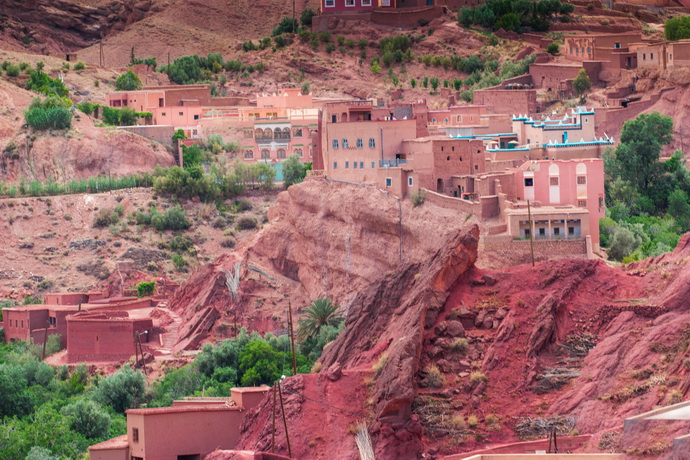
Located in the Atlas Mountains, the Dades valley offers a picturesque drive through dramatic gorges – Dades and Todra – with their high cliffs and winding roads.
Travelers can visit traditional Berber villages and gain a deeper understanding of Berber culture. The valley’s unique landscapes, lush oases, and panoramic views make it a great choice for nature lovers and travelers seeking adventure off the beaten path.
More details: Merzouga, Morocco – how to plan adventures in the Sahara Desert
Fes – scents and colors of leather workshops

The road from Merzouga to Fes winds through oases and gorges of the Middle Atlas. And through high valleys dotted with thousands of sheep and the pine forests of the Ifrane National Park. Ifrane looks nothing like Morocco, more like Italian towns at the foot of the Alps.

Highly recommended: 5 most picturesque roads in Morocco that you should definitely add to your itinerary
The journey, 450 km long, takes almost the entire day, but it is an amazing road that leaves only the best memories: desert, palms, mountains, gorges, reservoirs, mountain pastures and meadows, green forests inhabited by Moroccan macaques, and tiled roofs and European streets in Ifrane.
It’s all worth the day spent and the car rental that allows you to stop anywhere you want. By bus – that’s a different story.

So, Fes – a city of labyrinthine streets, mosques, and artisans’ workshops. What is there to see? Of course, walk the entire Fes Medina on foot – it’s an incredible feeling, as if you fall into the past, spinning through narrow alleys where even GPS doesn’t pick up signal.
Chouara Tannery
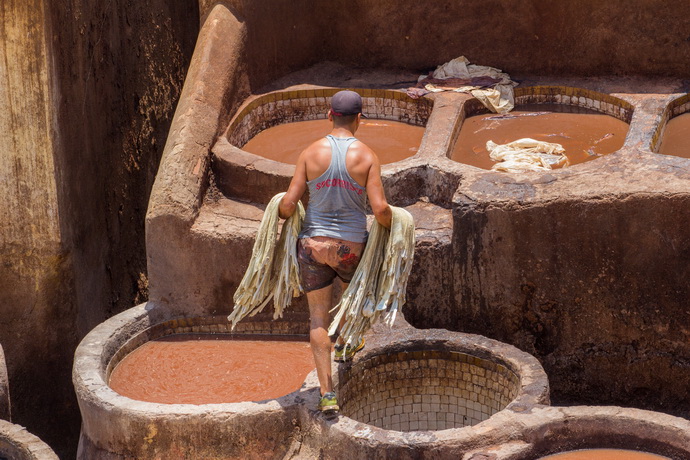
The main attraction in Fes is the Chouara Tannery. Despite our best attempts to see the leather-making and dyeing for free, we couldn’t get past the local attendants who demand payment.
To see the leather production and the dye vats in all their glory, you have to enter one of the shops, from the upper floor of which there’s a view of the colorful dye vats. You’re handed a sprig of mint to help with the smells and up you go to the aromas and bright vats. Mint offsets the odors, as animal urine is used in tanning. Honestly – even without mint it’s tolerable, but it’s not for the faint-hearted.


You can also, for an additional fee, visit inside the tannery, although the doors to the premises are wide open… As for the prices in shops with a tannery view: it depends on what you compare with. I used to buy Moroccan bags and backpacks in Spain.
Where to stay in Fes:
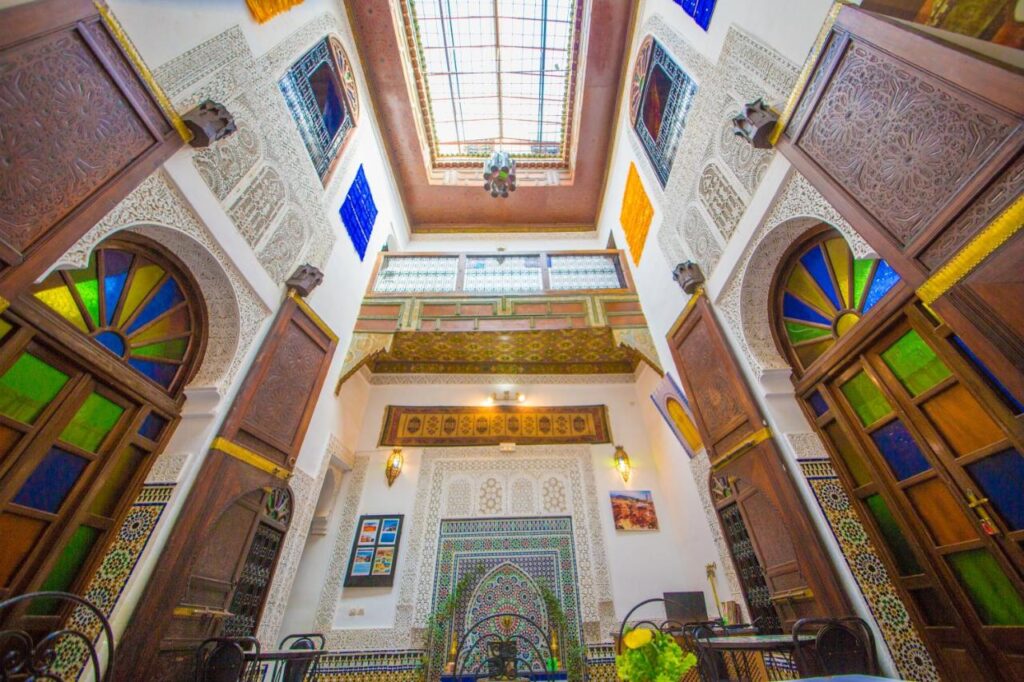
- If you choose a riad in the Old Medina – I recommend Dar Lalamoune – inexpensive, tasty breakfasts, near the parking outside the Old City walls.
- Riad Soultana≫ – Riad, which is conveniently located near the Blue Gate. Staff were attentive and responsive, and the twin deluxe room (with king bed setup) is very big and comfortable. Breakfast on the roof was great and the view is very nice.
- Riad Noha≫ – Great value for money. The location is in the midle of Medina, but easy to access from the Blue Gate parking. Great breakfast.
Chefchaouen – the blue city among green mountains

Perhaps, Chefchaouen is my favorite place in Morocco, a place I want to return to. It is much calmer and more welcoming to visitors here than in Marrakech or Fes. Although the town has become touristy, there is a quiet atmosphere.


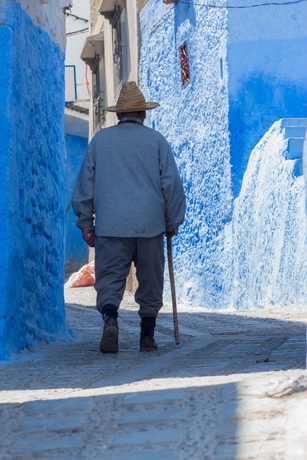
We spent two days in Chefchaouen and did not want to leave it. We walked through all the alleys and stairways, peeking into every open nook. In Chefchaouen you should just stroll and photograph, sit in cafes and listen to the muezzins’ calls, drink orange juice and browse the souvenir shops. Here the prices are lower, sellers are not pushy and willingly give discounts.

I recommend visiting this unusual cafe if you go to Chef in the warm season – May-June or September. At the edge of the Medina there’s a bridge with a river below. During the heat, local vendors place plastic chairs and tables right in the water under this bridge.
They sell orange juice here at the same price as everywhere – 1 Euro. But the pleasure is a hundred times greater when you sit with bare feet in cold water under the scorching Moroccan sun.


At sunset, everyone goes to the viewpoint on the opposite hill near the Bouzâafar mosque. And after dark, people gather in the square near the ethnographic museum – to listen to street musicians, drink beer in the aroma of marijuana under the stars over blue Chefchaouen.
Where to stay in Chefchaouen:


We stayed in an absolutely charming hotel Hotel Molino Garden – blue outside and blue inside. Excellent breakfasts and affordable prices. There was a small waterfall nearby with a cafe built by entrepreneurial locals where you can have orange juice or beer.
More details: Chefchaouen – 10 things to do in Morocco’s blue city
Volubilis – ruins of a Roman city
On the way from Fes to Chefchaouen, stop at ancient Roman Volubilis – ruins of a city with columns and temple remains. Two hours is enough to explore and delve into the past.
Located near Moulay Idriss Zerhoun, the birthplace of Morocco’s first dynasty and an important spiritual center, this archaeological site boasts exceptionally well-preserved mosaics and structures vividly illustrating everyday ancient life.
A walk among these ruins allows you to vividly imagine the grandeur of this once thriving Roman city, making it a must-visit for history buffs and anyone fascinated by the ancient world.
Akchour Reserve and God’s Bridge
Not far from Chefchaouen there is the Akchour reserve – it’s worth visiting for half a day, taking a walk up the gorge to the God’s Bridge, or to the Akchour waterfall.


Protected areas where there are not many tourists (entry is paid). The trek up the gorge to God’s Bridge involves some scrambling over boulders and partially along the riverbed – take food, water, and spare shoes. The nature there is fantastically beautiful!
Useful articles and links:
- 5 most picturesque roads in Morocco you definitely should add to your route
- The perfect route through Morocco
- Beaches in October – where to relax at the end of the velvet season
Route schedule and tickets for buses – Omio.com
Tourist medical insurance for traveling – HotlineFinance
Booking hotels and apartments – Booking.com