
Tourist taxes in Europe: which countries are introducing or increasing fees.
Last year the number of travelers almost returned to pre-pandemic levels. But some popular destinations are already concerned that the same problems of overtourism have returned.
As a result, some introduced a “tourist tax,” while others plan to introduce it this year. Many places already have tourist taxes, and if you’ve traveled abroad, you’ve probably paid them before. You may not have noticed, as sometimes the price for a hotel or apartment already includes all taxes.
Norway
Norway has debated the tourist tax for several years—this summer the government finally approved it. Anyone visiting the country, including cruise passengers, will have to pay a “visitor’s contribution” equal to 3% of their accommodation costs.
This will be at the discretion of local authorities. So, you might not have to pay, depending on your destination. Those staying in tents or caravans won’t pay the fee. The tax will start being collected in summer 2026.
Environmental tax in Tenerife
Along with beaches and winter sun, the Canary island of Tenerife is a popular hiking spot—millions of travelers hike around Mount Teide each year. But from January 2026, there’ll be a new “environmental tax” on walks along the most popular national park trails. The proceeds, which will go toward preserving the park’s biodiversity, will range from 10 euros for guided hikes to 25 euros for independent walks.
Accommodation tax in Edinburgh
Edinburgh will become the first city in the UK to introduce a permanent tourist accommodation tax. The funds will go toward cultural events and local infrastructure. Tourists will pay 5% of the room price before VAT for the first five nights of stay; the fee disappears after that. Collection begins on July 24, 2026.
Greece
Visitors to Greece pay a €8/day tax. Some properties don’t charge for kids, others offer discounts to appear more attractive.
Greece also has a climate resilience tax collected at check-in and applied to all hotels, villas, Airbnbs, and other accommodations. It ranges from €1.50 for basic lodging to €10/night for luxury hotels.
If you visit during the off-season, it’s nicer—from April to October the tourist tax drops to €2/day, and the environmental tax to €0.50–4/day.
This year cruise passengers also pay extra taxes, though the amount depends on where you go.
Visiting Santorini or Mykonos on a cruise will cost €20, other places—just €5.
Iceland
From January 1, 2024, the Icelandic government brought back the pre-COVID accommodation tax and extended it to cruise passengers.
If your booking service hasn’t already, be prepared to add €3.98 to your rate for a bed or room, or €1.99/night for campsites. For cruises, the fee is much higher—€6.63 per passenger.
The aim is to tackle overtourism. But let’s be honest: if tourists can find the money for a trip to Iceland, an extra €2–7 won’t stop them.
Paris, France
Paris introduced new tourist taxes in 2025. Visitors pay both regional and tourist taxes, which vary by accommodation type. Total combined fees range from €1.95 for campsites to €15.60/person/night for the most luxurious lodging.
Amsterdam, Netherlands
Amsterdam continues to charge a tourist tax and raised it from 7% to 12.5% of accommodation costs. So a hotel costing €175/night is taxed €21.80 per night.
Zaanse Schans, Netherlands
Like Venice, the tiny Dutch town of Zaanse Schans will introduce an entrance fee next year. With just 100 residents and several scenic windmills, it saw over 2.4 million visitors last year. Locals hope the relatively high charge of €17.50 per person will dissuade some rowdy tourists. The fee will be collected starting spring 2026.
Vilnius and Palanga, Lithuania
You may not have noticed, but since January, tourist taxes have increased in two Lithuanian cities. Instead of €1, they now charge €2/night—and it will stay this way all year.
This tax is collected in hotels, hostels, apartments, and accommodation booked on aggregators. Usually, it’s included in the price (check for your next booking).
The money goes to making Lithuanian cities more attractive—some will fund tourism projects.
Venice, Italy
From 2024, Venice charges a daily fee for visitors. The pilot will run on weekends next spring and summer, despite several delays to testing. The inevitable tourist tax is meant to help residents by supporting maintenance, cleaning, and reducing housing costs.
Between April 18 and July 27, day visitors arriving Friday through Sunday or on holidays must pay €5, and if booking with less than 4 days’ notice, it can rise to €10.
Rome, Florence, and Milan, Italy
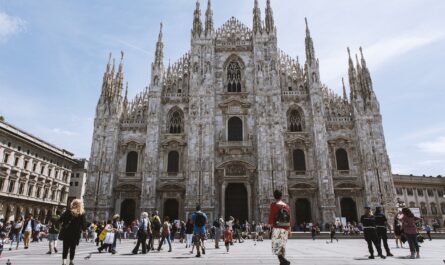
Italian municipalities set their own tourist tax rates, so what you pay depends on where you stay and visit. In Rome, for example, it’s €3–7 depending on accommodation. In Milan, it’s €2–5, and in Florence €1–5.
Big changes are expected in the Italian capital: now there will be an entrance fee for several previously free sites, including the Trevi Fountain. Getting up close to the fountain will now cost €2, though it’s still free to see from a distance. Locals will pay nothing. Charges start February 1, 2026.
Valencia, Spain
The Spanish city of Valencia also announced plans to introduce a tourist tax for travelers staying in accommodations such as hotels, apartments, campsites, and hostels, which will take effect in early 2024.
The fee, which will range from €0.50 to €2 per night depending on the type of accommodation and length of stay, will be directed to developing sustainable tourism in the city, as well as used to make housing more affordable for Valencia residents.
Barcelona, Spain
In the autonomous community of Catalonia in Spain, authorities decided to double the tourist tax. Now its maximum rate will be €15 per night. The new rules take effect this year.
Catalonia, on Spain’s northeast coast, is one of the country’s top tourist destinations. According to Spain’s National Statistics Institute (INE), in 2024 nearly 20 million tourists visited, although the population is only 8 million.
The tourist tax was introduced here in 2022 and its rate depends on the type of accommodation. Currently, for example, five-star hotels charge tourists €7.50 per night, four-star—€5.70, and rentals—€6.25 per night. These rates will now double.
At least 25% of tourist tax revenues will go toward improving housing conditions for low-income populations. Regional authorities hope this will help make housing more accessible for those who need it.
Madrid, Spain
The Spanish capital is also considering introducing a new tourist tax in 2024 to fight overtourism. Although this measure is not yet confirmed, the city is one of the hardest-hit by large tourist numbers each year, and its adoption would be beneficial for locals.
Balearic and Canary Islands
The Balearic Islands charge an eco-tax in high season, ranging from €4/person/night for luxury hotels, to €1 for hostels and campgrounds.
In Spain’s first municipal tourist tax, the town council of Mogán on Gran Canaria from this year applies a modest tax for visitors. The new rules apply to all accommodations at the same rate—€0.15/person/night.
Portugal
The situation with tourist taxes in Portugal is complicated—306 municipalities set their own rules. Currently, at least 26 charge a tax, mostly in resort areas like Algarve and Lisbon.
For example, in Setúbal—not far from Lisbon—a €2/person/night tax was introduced last year, valid until 2025. Lisbon charges €2 per night, same as Madeira and Faro. Since January 2025, the Azores, which didn’t charge before, began collecting a €2/person/night tax.
In the popular Portuguese town of Olhão, the fee is €2 for visitors staying overnight April through October. Those visiting November through March pay only half—€1 per night.
Exemptions include children under 16 and anyone paying a maximum of €10 during their stay. This means those staying longer than seven nights during the resort season don’t pay extra nights’ tax.
The funds will be used to support cleanliness and safety in the city Algarve and to reduce the impact of tourism there.
Faro, Portugal
Similar to Olhão, the tourist tax set by Faro authorities costs about €1.50 per person and is levied during the summer season—March to October. The maximum number of nights you pay is seven. Children under 12 are exempt.
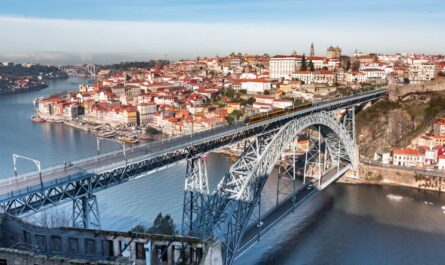
In general, Porto, Vila Nova de Gaia, Braga, Póvoa de Varzim, Coimbra, Lisbon, Sintra, Cascais, Mafra, Óbidos, Faro, Vila Real de Santo António, and Santa Cruz charge entry taxes for visitors. Rates are generally lower than in Lisbon.
Madeira, Portugal
In the second half of 2024, Madeira will introduce a tourist tax. Both foreigners and Portuguese will pay (almost) no exceptions.
The exact date isn’t set yet—since not all municipalities have officially ratified the decision. But authorities are confident in the tax, and it will likely be launched.
When it happens, travelers will pay €2/night. Exempt: children under 13 and adults with health problems (how this will be checked is not clear).
Part of the tax goes to property owners. The rest to the municipality, which can decide how to spend the funds—but projects must be sustainable, eco-friendly, and tourism-related.
Figueira da Foz, Portugal
This Portuguese city will introduce a municipal tourist tax, depending on the number of nights spent and the season of the visit.
Stays from October to March cost €1.50/night, those from April to September cost €2/night.
Children under 16, people with disabilities, students, and those staying due to special circumstances (like natural disasters) are exempt.
United Kingdom
From 2024 the UK will roll out the Electronic Travel Authorization (ETA), requiring visitors from the US, Australia, Canada, and Europe to apply for travel permission to British territories.
Travel to the UK without an arrival or visitor’s clearance may result in fines.
European countries already applying tourist taxes
| Country | Where is the tax applied? | How is the price calculated? | Price |
| Austria | Vienna, Salzburg | Depends on destination, nights, season. | €3.2 |
| Belgium | Major cities, e.g. Brussels, Bruges, Antwerp | Nights, destination, room price, hotel rating. | €7.50 |
| Bulgaria | All hotels | Direction, rating of destinations and hotels. | €1.50 |
| Croatia | All destinations | Mainly season-dependent. | €1.33 |
| Czech Republic | Prague | Destination, per person, per night. | less than €1 |
| France | Whole country | Destination, number of nights, hotel rating | Up to €4 |
| Lithuania | Vilnius & Palanga | Lodging tax | €2 |
| Germany | Major cities | Destination, hotel rating | 5% of hotel bill |
| Greece | All destinations | Hotel stars, number of rooms | €8 from 2025 |
| Hungary | Budapest | Destination and nights. | 4% of room price |
| Italy | Popular destinations | Destination, nights, room type. | From €3–7/night |
| Iceland | Whole island | Lodging tax | €4–7 |
| Netherlands | Whole country | Destination, hotel rating. | 7% of room price |
| Portugal | 13 municipalities, Madeira island | Destination, nights | €2 |
| Slovenia | Whole country | Destination, hotel rating | €3 |
| Spain | Popular destinations | Destination, visitor age, nights, hotel rating, season. | €4 |
| Switzerland | Whole country | Location, per day, per person. | €2.20 |
Useful articles and links:
- The US will charge non-residents an additional $100 for visiting the most popular national parks
- Tickets to the Louvre will become more expensive
Travel Medical insurance – online at HotlineFinance
Hotel and apartment bookings – Booking.com