
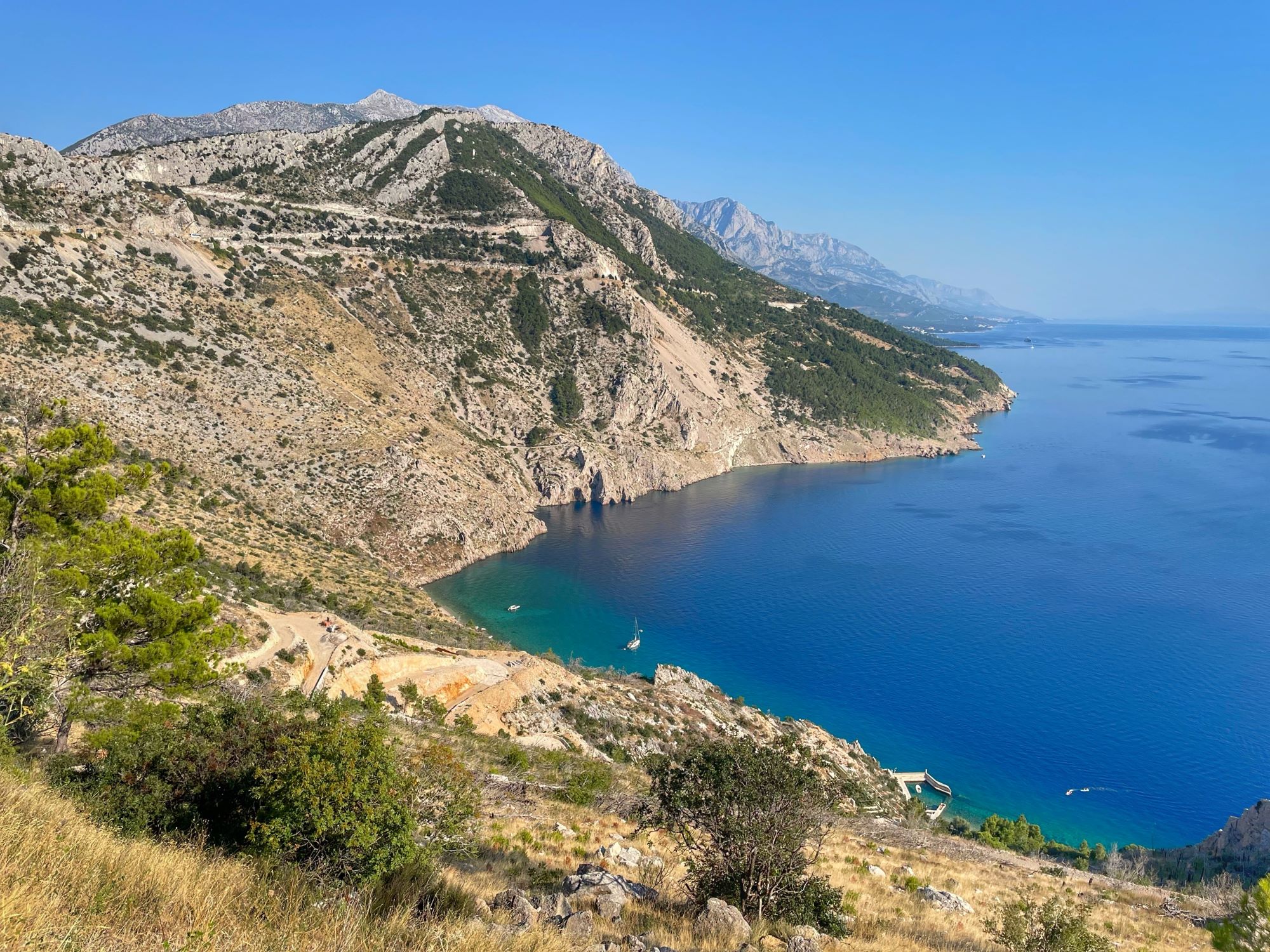
What to see on the Dalmatian coast, Croatia: cities, islands, and attractions of Northern, Central, and Southern Dalmatia, the best ways to travel, how many days are needed for a trip, and where to stay in Dalmatia.
Dalmatia, the southernmost region of Croatia and a coastal paradise, is famous worldwide for its beautiful cities, spread along the entire coastline. There are also wonderful islands located nearby.
The lesser-known but no less interesting inland towns and locations of this region are surrounded by olive groves and vineyards. Anyone wishing to delve deeper into nature will find pristine lakes, waterfalls, and impressive mountains close to the Dalmatian coast.
If you are looking for a place that truly has a bit of everything. Namely – beaches, cities, history, gastronomy, boat rides, hiking, and stunning nature – Dalmatia is just for you.
So, if you are planning a trip here, this extensive text is here to help you prepare for a journey to this part of Croatia.
The best time to visit Dalmatia

The climate in Dalmatia is quite diverse, and depending on whether you are on the coast, on the islands, or inland, you will experience very different weather even during the high season. Overall, Dalmatia has a Mediterranean climate, characterized by dry and hot summers and cool and wet winters.
So, what does this mean in terms of visiting? Well, if you want to get to the beach, which is the main reason for most people who come here, you should plan your visit for late spring, summer, or early autumn.
Summer
Summer is undoubtedly the busiest time of the year, but it is also the time when you are guaranteed long sunny days with warm temperatures. However, if you are less focused on the beach and want to avoid the crowds, you should plan to avoid summer and visit Dalmatia in the shoulder seasons.
Spring and autumn
Late spring (end of May and beginning of June) and early autumn (September) are usually warm enough to spend a few beach days here. But the water temperature in June can be cool. However, the air temperature is very pleasant and comfortable for exploring cities and inland areas of Dalmatia. Meanwhile, September is simply the perfect month for swimming in the sea and simultaneously visiting different cities, natural attractions, and wineries.
Winter
As for winter, this is definitely not the ideal time to stay here. Most hotels and restaurants are closed and mothballed until summer. But if swimming doesn’t matter to you, you’ll get extremely low prices, mostly sunny days, and relatively warm weather. And also fewer people compared to other times of the year. But for this, you need to choose larger cities or resorts where you will definitely find housing and other infrastructure: Dubrovnik, Split, Sibenik, etc.
Depending on what you’re looking for and where you’re coming from to Croatia – a winter trip can also be interesting.
More information: When is the best time to go on holiday to Croatia
How much time do you need for a trip along the Dalmatian coast
Dalmatia is a narrow but long region, and you could easily spend an entire month here, driving along the coast and visiting the islands. Also, venturing inland to visit wineries, national parks. There is plenty to see and do here.
7 days – minimum
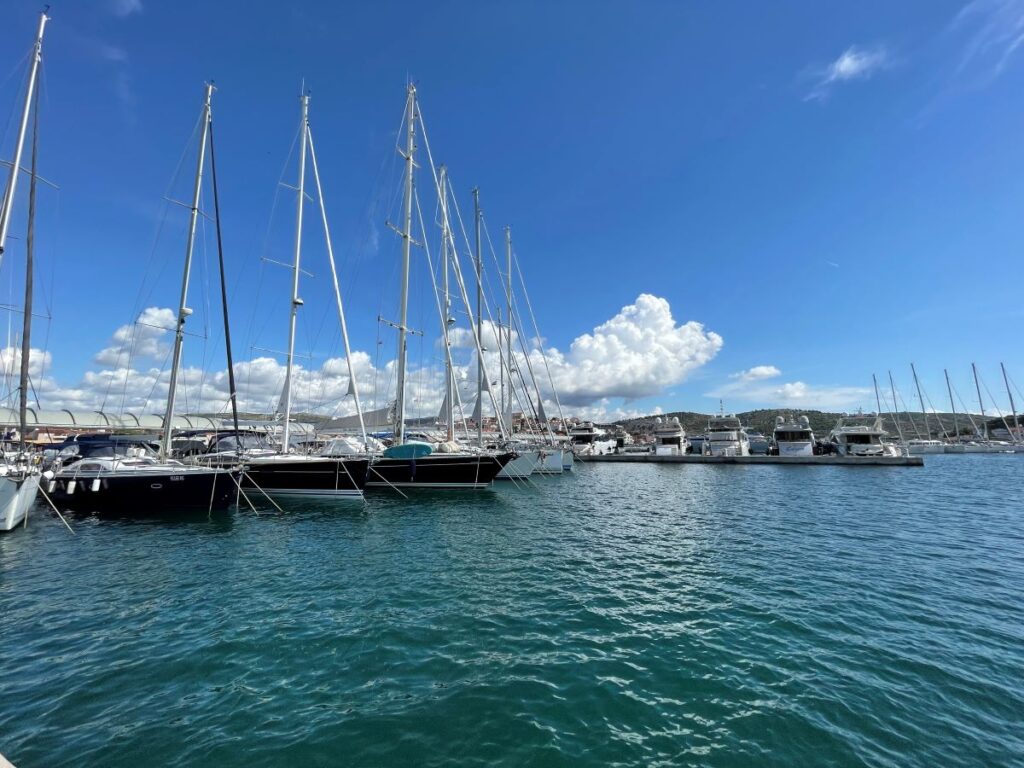
For the visit to be worthwhile and to see at least something, plan to spend at least seven days here. For this, it is better to choose a part of Dalmatia, because you will not be able to see everything at once in this period. I would suggest choosing either the Zadar (or Split) area or the Makarska Riviera. And explore all the interesting places and relax by the sea there as much as possible.
Dalmatia has a huge long coastline, so don’t neglect the pleasure of swimming in the sea, relaxing on the beach, and enjoying the atmosphere of a beach holiday. If you choose a rushed trip, moving every day from one town to another, packing your suitcases every morning – this style will simply ruin your holiday. It’s better to pick one base, slow down, and enjoy your days in the chosen region.
10 days – for a more comprehensive experience
For those with limited time and money, ten days is an ideal “smart” amount of time to stay in Dalmatia. In a week and a half, you can visit most of the main coastal cities, explore the region’s national parks, and head inland.
In addition, you will have enough time in each place you visit to taste the food, enjoy active outdoor recreation, and relax on the beaches. If you wish, you can even take boat or ferry rides to the islands and just have fun.
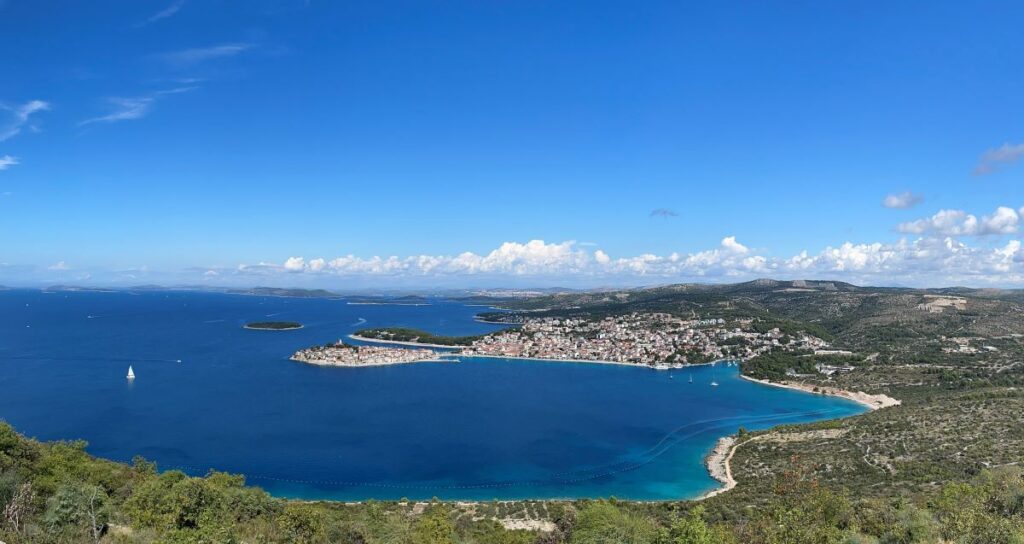
We traveled through Dalmatia for 10 days, and it was a very relaxed trip by car. This amount of time allows the holiday to be unhurried, with stops at interesting towns along the route at any time. In 10 days, we managed to see many places from Zadar to Dubrovnik, changed our accommodations twice: 5 days in Baška Voda on the Makarska Riviera, 5 days in Primošten – Central Dalmatia. At the same time, we visited Zadar – Northern Dalmatia and Dubrovnik – Southern Dalmatia.
See: Self-drive Croatia road trip itinerary – what to see in 10 relaxing days
How to get to the Dalmatian coast
Dalmatia is the southernmost Croatian region, stretching along the coast of the Adriatic Sea.
Airports – flying to Dalmatia

Dalmatia is well connected by air to other European cities. There are three main airports here: Zadar, Split, Dubrovnik. There is also an additional airport Bol (on the island of Brač), but almost nothing flies there except charters. These destinations are mostly served by low-cost carriers.
Getting to Dalmatia by bus

All coastal cities are connected by buses. Dalmatia has good bus connections with the following cities:
- Zagreb – 3-6 hours,
- Rijeka – 3-8 hours,
- Pula – 5-10 hours,
- neighboring Bosnia and Herzegovina (especially Sarajevo and Mostar).
There are 10 to 20 daily departures from Zagreb to each major city of Dalmatia and 3-5 trips from Istria and Rijeka daily. Check schedules and tickets on the Omio website.
There are also several intercity bus routes, most often Flixbus, which connects Dalmatia with many other continental European countries.
By train
Dalmatia is also connected to Zagreb by rail via Ogulin and Gospić. In Dalmatia, the railway runs through inland areas, first through Knin, and then to Split. On the coast, only Zadar and Split among the major city centers have railway stations, so do not expect to travel by train once you reach the region.
Traveling by ferry
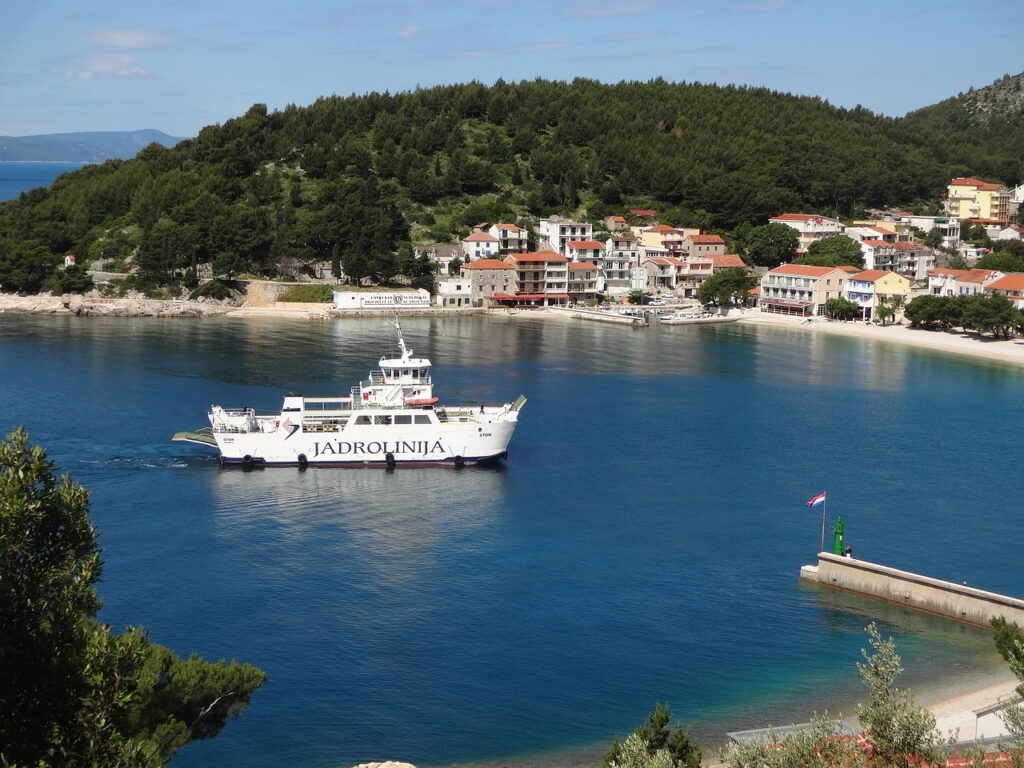
The Dalmatian islands are connected to each other and to the coastal cities of the region by ferries (both car and passenger) and catamarans.
During the high summer season, you will often have frequent daily departures between popular islands and to/from coastal cities, and somewhat less frequent transit options to lesser-visited islands.
In the off-season, ferry connections are significantly reduced, so you will need to plan very carefully if you are trying to visit the islands outside the peak periods.
See full ferry schedule information and destinations on the Jadrolinja ferry company website.
Where to base yourself and book accommodation
Due to its elongated and long size, the best way to explore Dalmatia is by dividing it into sections, staying in several different locations along the way. In the north, center, and south of the region, there are their own central cities/towns from which you can quickly and easily reach nearby towns, rural inland areas and mountains, as well as neighboring islands.
Zadar – in Northern Dalmatia
To explore Northern Dalmatia, it is worth considering cities such as Zadar and Sibenik. From here, you can easily get inland – to the towns of Knin and Drniš, as well as to the national parks Krka and Kornati. If you want to see all of the above, plan to stay in Zadar for about 3-4 days. During this time, you will be able to visit the important places nearby.
Makarska Riviera – in Central Dalmatia
For Central Dalmatia, stay at one of the resorts of the Makarska Riviera for 4-5 days. From here, you can travel to neighboring cities, such as Omiš and Makarska. You can also head inland to visit the town of Imotski, and even reach Dubrovnik. Split is also the central ferry port for all major islands in this part of Croatia (Brač, Hvar, Korčula, Vis, Lastovo).
Dubrovnik – in Southern Dalmatia
In Southern Dalmatia, the wonderful (but very touristy) city of Dubrovnik is located in its center. In 3-4 days, you can thoroughly explore Dubrovnik and still have enough time to visit the national park on the island of Mljet, the Pelješac peninsula, and several other nearby places.
Transport and the best ways to get around the Dalmatian coast
As a major tourist region, Dalmatia has rather good transportation options. All coastal cities are linked by well-maintained local roads and highways. Therefore, moving between cities along the coast is pleasant, easy, and fast.
Traveling by car
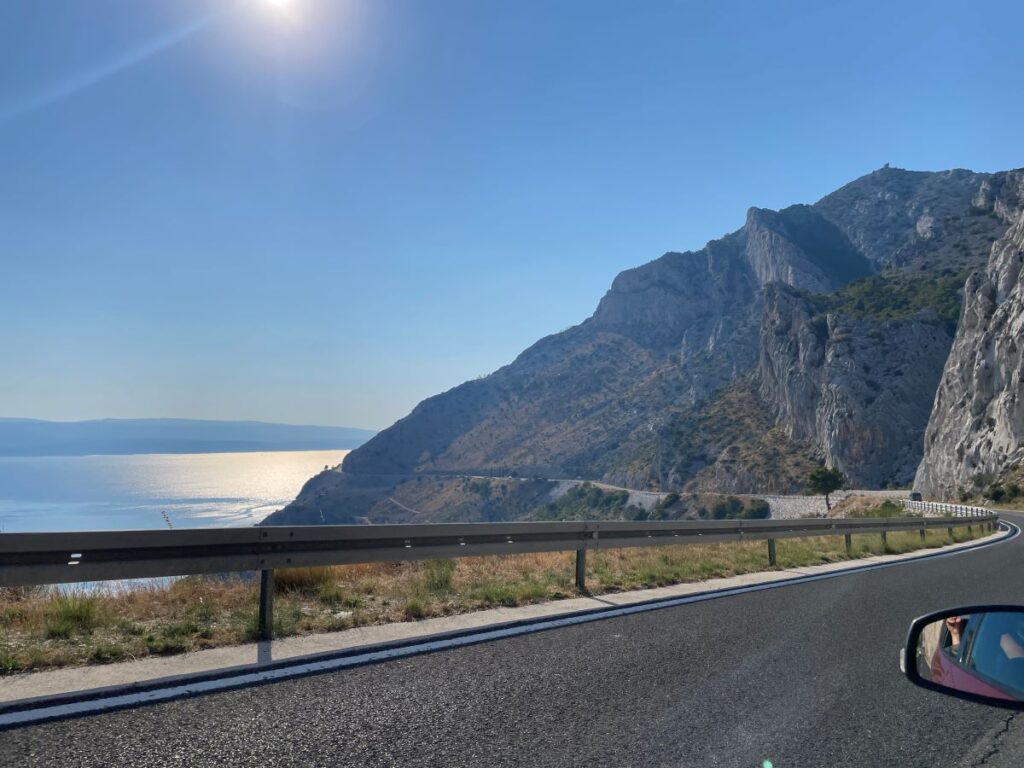
Despite the rather comprehensive public bus network across the region, traveling by car will undoubtedly be more comfortable. Especially if you want to explore rural areas, wineries, remote beaches, or simply have the ability to move at your own pace.
You can come here with your own car – just as we did during our trip through Dalmatia. All information about the nuances of traveling by car can be found in a separate article: Road trip in Croatia – itinerary, roads, and transportation costs.
Or rent a car at the airport, or from city rental offices.
Dalmatia’s roads are good, well marked, and easy to drive on. The E65 highway runs through all of Dalmatia – from Rijeka to Kula Norinska. In the mountains and along rocky sections of the coast, you need to be cautious while driving, but the roads are built to standard. Throughout the region, you will find parking spots (paid more often in cities, free near remote beaches), gas stations, and everything you may need for a proper road trip.
Traveling around Dalmatia by bus
If you don’t want to rent a car, you can travel by public transport.
The local and regional bus network across Dalmatia is well organized. There are daily departures throughout the year. The main routes start from Posedarje in the north and go south to Dubrovnik, connecting almost all cities and towns along the coast. If you are going to visit only the coastal cities, traveling by bus is the most convenient (and inexpensive) option.
However, buses to the inland (mountainous) areas run much less often. Especially on the Knin–Vrlika–Sinj–Imotski route. If you plan to visit inland Dalmatia, the bus will not be a very reliable option.
The largest bus companies are:
- Promet Makarska,
- Autotransport Šibenik,
- Croatia Bus,
- Arriva Rijeka,
- Brioni Pula,
- Čazmatrans,
- Flixbus.
All buses offer the ability to purchase tickets in advance online, at bus stations, and even when boarding the bus, especially in small towns.
Inland areas are connected to main centers by regional suburban bus links. These are:
- Liburnija in Zadar,
- Autotransport in Sibenik,
- Promet in Split,
- Libertas in Dubrovnik.
Traveling by ferry between the islands
The islands are connected by ferries and catamarans. The main ports of Dalmatia are Zadar, Sibenik, Split, and Dubrovnik. And from Zadar, Split, and Dubrovnik in summer, there are also ferry connections to Italy (Bari and Ancona).
Some islands are so small that they can only be reached by catamarans. This is because some islands have no cars, as they have only one small settlement.
Most lines are operated by the state company Jadrolinija. But there are also several smaller private carriers. All tickets can be purchased online or at departure ports.
What to see and do while traveling around Dalmatia

Dalmatia is Croatia’s most visited region, both for locals and foreign tourists. The islands of this region are incredibly beautiful, and the ancient coastal cities are fascinating places to explore – here you can discover the long history of Croatia.
- Visit the ancient cities of Zadar, Sibenik, Split, and Dubrovnik.
- Enjoy the splendid Dalmatian islands.
- Discover hidden beaches, coves, fjords, and bays.
- Enjoy the charming small towns in the Dalmatian Zagora (rural area):Knin, Drniš, and Sinj.
- Learn about Croatian history by visiting the Diocletian’s Palace in Split and the smallest cathedral in the world in Nin.
- Try local products: prosciutto, fish, cheese, and octopus cooked in wine (hobotnica).
- Swim around the Kornati National Park and visit the national parks of Mljet and Krka.
The best places to visit on the Dalmatian coast
Northern Dalmatia
Northern Dalmatia is a coastal region of Dalmatia that stretches from the city of Zadar in the northwest to the city of Sibenik in the southeast. This subregion is famous for its picturesque coastline dotted with charming historic towns. It is also characterized by a quieter atmosphere compared to southern areas.
Zadar, with its ancient Roman heritage and wonderful waterfront, is the gateway to Northern Dalmatia. The amazing national park Kornati, consisting of a labyrinth of over 100 islands and islets, is perfect for swimming and exploration. Sibenik, with the UNESCO-listed Cathedral of St. James, is a wonderful place to visit. There’s also the Krka National Park, famous for its cascading waterfalls and hiking trails.
Zadar

Located on the coast in the northwestern part of Dalmatia, Zadar is an ancient city full of historical and cultural attractions. This is the oldest continuously inhabited city in Croatia. People have lived here for 3,000 consecutive years, and the city has a turbulent and dynamic history.
Today, Zadar is one of the country’s most popular tourist destinations – it has the main low-cost airport, served by Ryanair, with the cheapest tickets to Croatia.
Besides this, the city is known for having the most beautiful sunsets in Croatia. It also boasts culture, history, nature, beaches, and nearby sights. It is like an open-air museum where you will find pieces of rich history everywhere.
In the city, stroll along the Kalelarga street, the city’s main thoroughfare, until you reach the Roman Forum, which dates from the 1st century BC. Very close by, you will see the 9th-century Church of St. Donatus, 27 meters high – the postcard image of Zadar. Don’t forget to also visit the Cathedral of St. Anastasia, whose wonderful bell tower rises high above the city.
The Duke’s Palace, Zadar City Museum, the Treasury of St. Francis, and the Museum of Ancient Glass are all other places worth a quick look. And if you’re traveling with children, be sure to visit Zadar’s branch of the famous Museum of Illusions.
For something absolutely unique, head to the waterfront to see the sea organ, the first of its kind in the world!
More information: Zadar – a city and airport worth starting your Croatian journey
Pašman Island
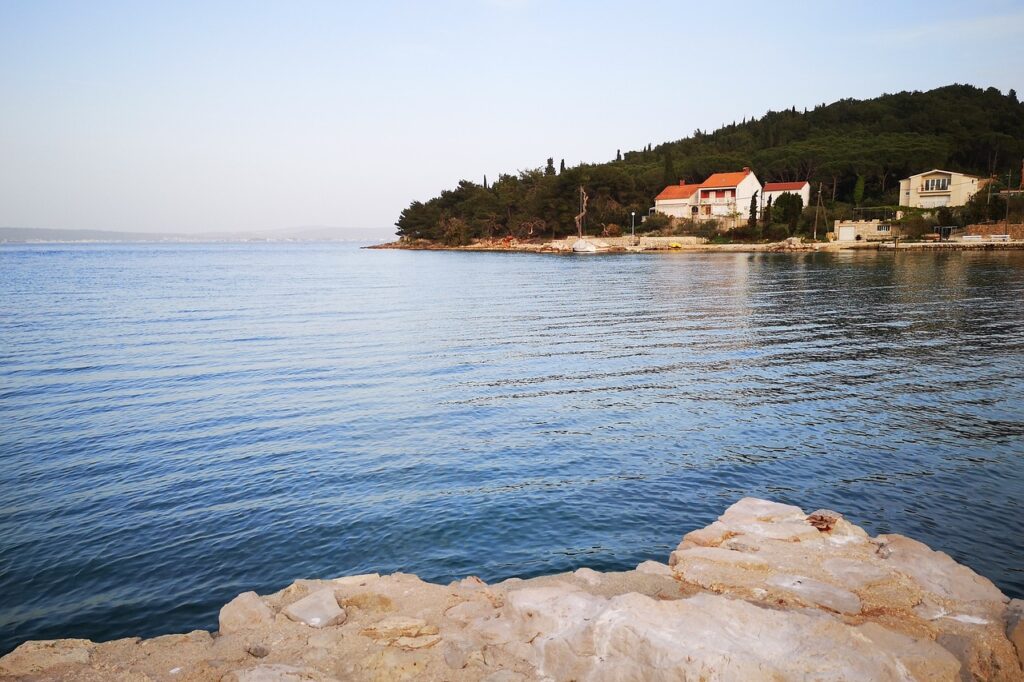
Pašman is a green island off the coast of Zadar and Biograd na Moru, an ideal place to relax a bit in a tranquil natural environment. The sea around the island has very strong currents, making it very clean and pure, which also makes it an ideal habitat for shellfish and seafood. With an abundance of marine life nearby, Pašman offers a wide variety of delicious seafood.
Tourists often stay in several towns on the island (Pašman, Dobropoljana, Ždrelac, Tkon, Neviđane, Kraj, and Mrljane). Here you can book small “bed and breakfast”-type hotels that offer wonderful rooms by the sea. And the restaurants can boast great gastronomy.
To enjoy fantastic views, climb to the top of the Veliki Bokol slope, which is a stunning lookout point to admire the island and its surroundings. From here you can see Galešnjak Island – the heart-shaped islet located next to Pašman.
Šibenik

Šibenik is the oldest native Croatian city on the Adriatic. It is first mentioned in 1066 in a donation charter of King Petar Krešimir IV. Until the plague epidemic in the mid-17th century, it was the largest city on the entire eastern Adriatic coast.
Among Croatian cities, it stands out for its unique location – in a picturesque and spacious mouth of the Krka River. The beautiful coastal city is connected to the sea by a narrow winding channel of St. Anthony. The entrance to the channel is guarded by the Renaissance fortress of St. Nicholas, a symbol of Šibenik’s centuries-old defiance, and one of only three such forts in the entire Mediterranean.
Šibenik is the only city in Croatia that has two UNESCO World Heritage-listed monuments. The fortress is the first, while the other is the Cathedral of St. James (15-16th century), which is the only church in Europe built entirely of stone, without any binder or wooden structural elements.
The cathedral is located on the city’s main square, together with the Renaissance period town hall. It is surrounded by churches and the Duke’s Palace, which today houses the District Museum.
Šibenik, Croatia – where to relax on the beaches and what to see in the city
Primošten

Primošten is one of the most well-known resorts in Dalmatia and one of the most picturesque small towns on the Adriatic. It is located between the cities of Šibenik and Trogir, about 30 kilometers from both.
The old part of the city is situated on a small hilly island, which was connected to the mainland by a bridge in the Middle Ages. Later, the bridge was replaced by a causeway – thus Primošten became a peninsula.
The town has carefully preserved its Mediterranean atmosphere, and you can still find all the signs of a medieval Dalmatian fishing village. Narrow streets and old stone houses in the historic center look very cute. Be sure to climb to the 15th-century Church of St. George, which, at the top of the hill, offers a stunning panoramic view of the open sea and distant islands.
You will also find here beautiful long beaches with fine pebbles. The biggest of these being Raduca beach. Its smaller counterpart Mala Raduča was declared one of the 10 most beautiful beaches in Croatia.
Regarding accommodation in the city, Primošten residents very often rent apartments, providing all the necessary amenities for relaxing stays.
More information: Primošten – review of beach holidays in Croatia
Useful links for traveling to Croatia:
Car rental – I look for affordable options at DiscoverCars
Hotel booking and apartments – traditionally at Booking.com
Travel insurance with discounts – online on the HotlineFinance portal
What else to read:
- Review of holidays in Croatia – Baška Voda on the Makarska Riviera
- Brela – the most beautiful beaches of the Makarska Riviera
- Zadar, Croatia – where to stay for a seaside holiday


