Provence is a bright and sunny world from the paintings of the Impressionists, living in ancient chateaux surrounded by vineyards and hills. Provence is a scattering of old villages surrounded by fragrant lavender fields, fleeing in fluffy rows into the steep mountains.
The air here is intoxicating and drunk in big gulps, the blue gentle sea splashes, and the cuisine and wine are the result of love and labor for this beautiful land.
How to get to Provence – the most convenient airport

We started from Nice (Nice Côte d’Azur Airport) — this is a large international airport on the southern coast of France. It is well connected to most European cities.
Airlines flying to Nice
- Ryanair (from Warsaw, Krakow, Vienna)
- Wizz Air (from cities in Poland and Hungary)
- Sky Up and FlyOne (from Chisinau and Bucharest)
- easyJet (from London, Milan, Zurich)
- Air France (via Paris from many major European cities)
- Lufthansa (via Munich or Frankfurt)
- Turkish Airlines (from Istanbul)
More details on how to get there and where to stay in Nice: Nice – the best areas to stay
Car rental — must have
To see the most in Provence, you really need a car. We took a car right at Nice airport and it solved all our logistics issues. We found the cheapest car through Rentalcars.com. At that time, it was a car at the rental office ALAMO.
Of course, there are buses here, but for traveling between the fields of Provence, buses will not help you. If it is not possible to see everything by car, you can buy an excursion that includes several locations. But then you should choose those excursions that go to the fields in the morning or in the evening – this is the best time to photograph the lavender flowers.
Roads of Provence

Traveling through Provence by car is a special aesthetic pleasure. The roads twist like ribbons, rising to the tops of hills, and in the valleys grow the main Provençal treasures – vegetables and fruits, grapes and olives.
In the summer, these ripe treasures are sold right by the road. From wooden boxes, the thick sides of Cavaillon melons protrude, the skins of fleshy tomatoes burst, in the cool cellars of wineries bottles of wine are lined up in a row, and from cheese shops comes the pungent aroma of cheeses.

Amidst the slender rows of vineyards, apple orchards, and lavender fields, sand-colored Provençal chateaux covered with ivy are hidden.
The roads of Provence are lined with mighty plane trees – in a beautiful palisade, they create shaded, dappled tunnels. In the summer, there is a special interplay of light and shadow, the sun shining through the plane canopies seems to send bunnies from a hundred mirrors.
Our itinerary in Provence
When I first came to Provence, I thought it was just another picturesque part of France. But this region with bright sun, golden vineyards, tiny stone towns, and endless lavender fields exceeded all expectations. …
Our route was: Nice → Les Baux-de-Provence → Gordes → Château la Canorgue → Valensole → Moustiers-Sainte-Marie → Verdon Gorge → Castellane → Nice.
Les Baux-de-Provence
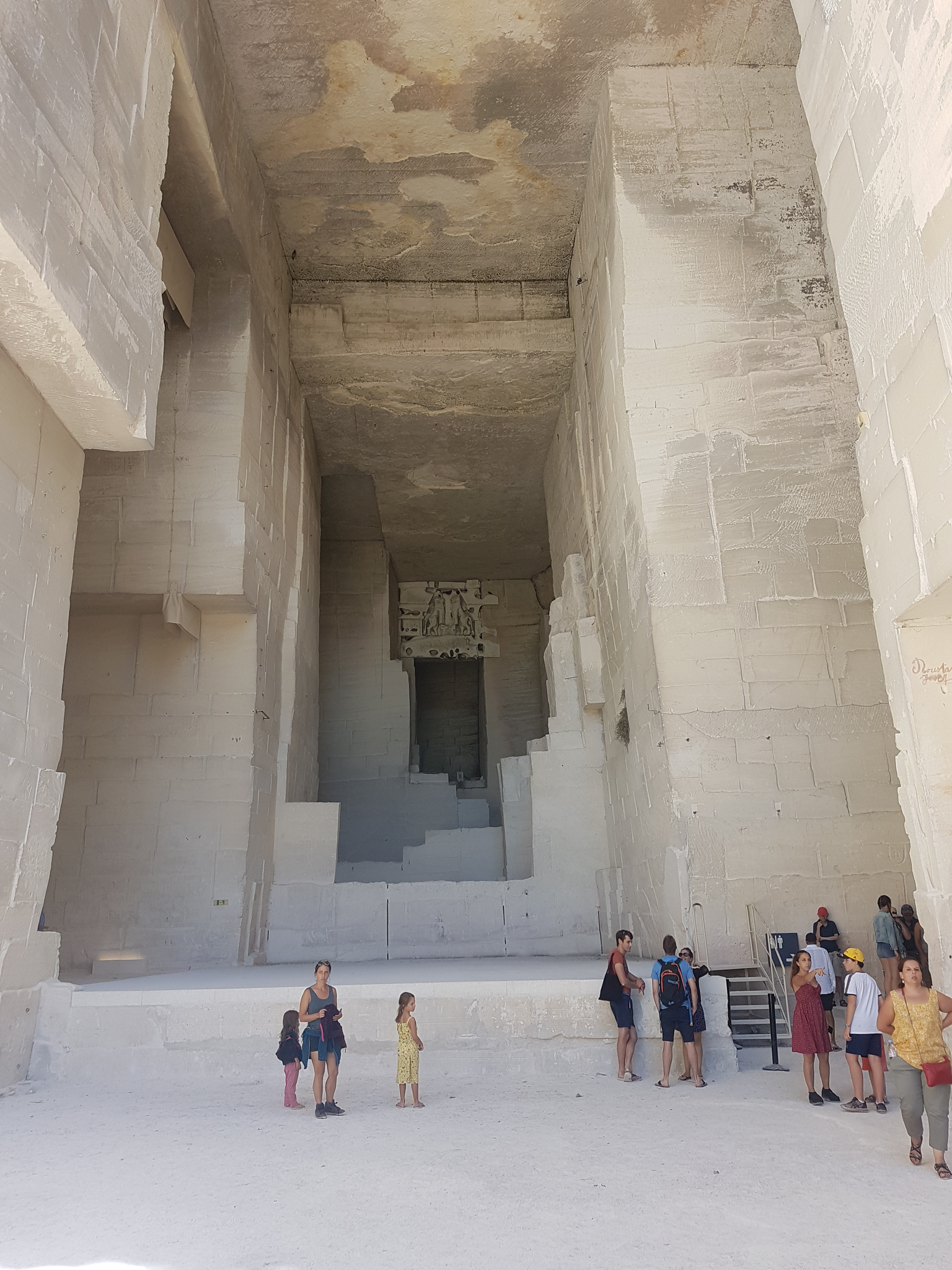
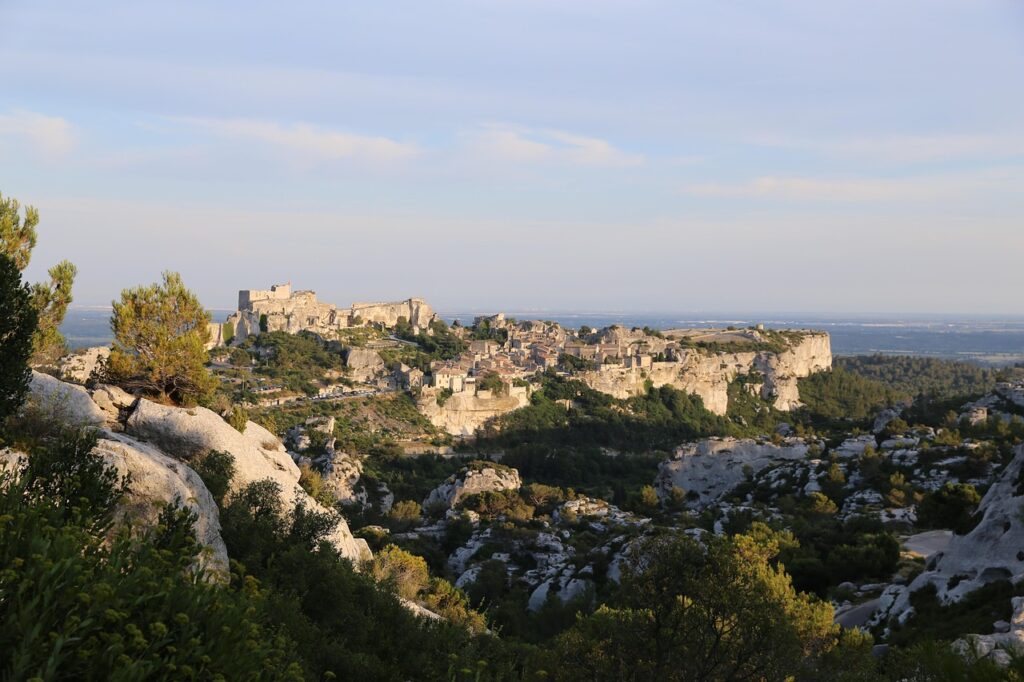
Les Baux-de-Provence (Les Baux-de-Provence) is a picturesque village located on a rocky plateau in the Alpilles massif (Alpilles) and is one of the most beautiful villages in southern France.
This was the farthest point of our route, where we drove on the A8 highway for about 2 hours from Nice (a toll motorway). We got here in 2 hours and it cost 24 euros (payment at the toll gates).
What to see in Les Baux-de-Provence and around:
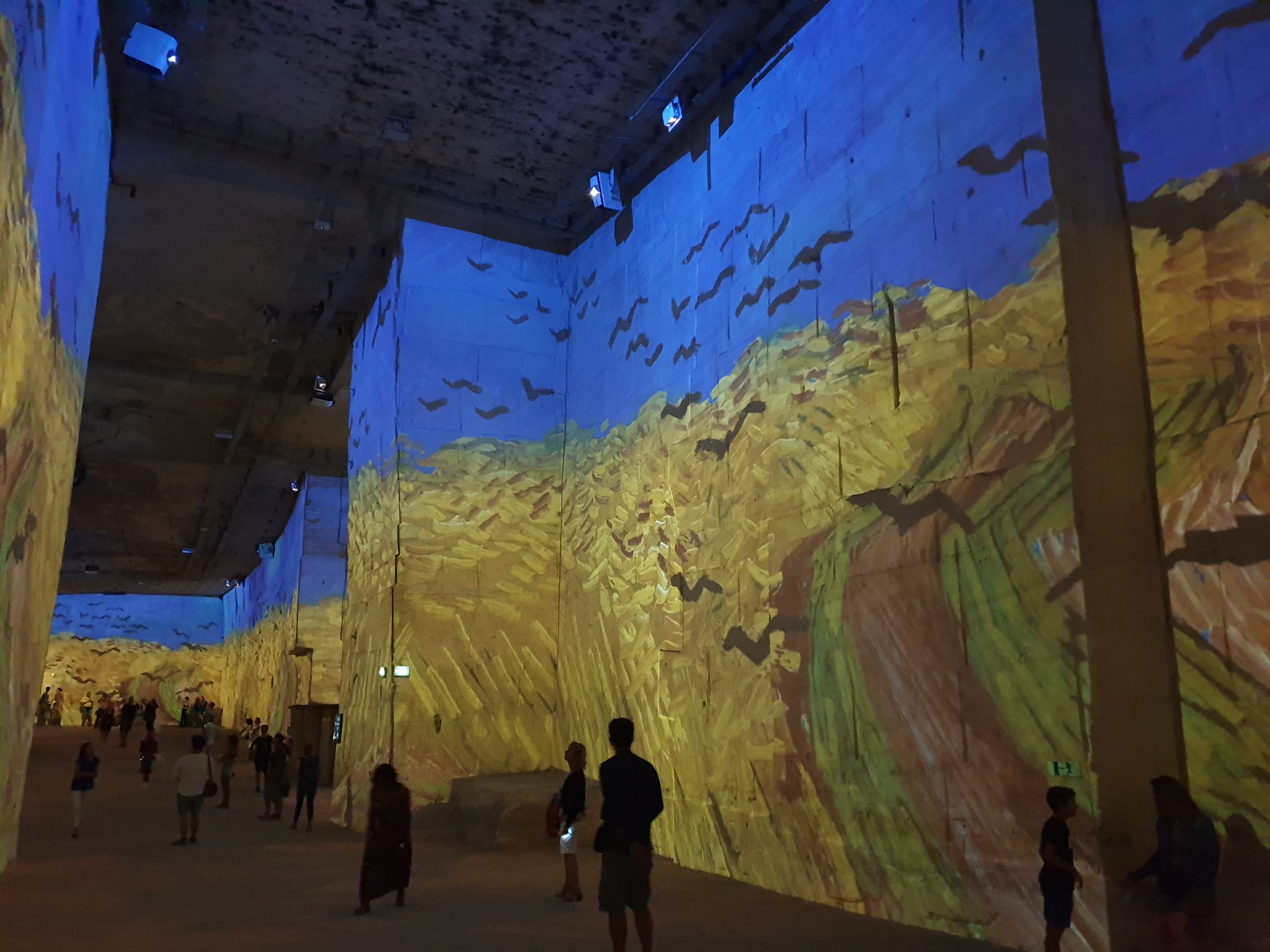
- The goal of visiting this town is the quarries Carrières de Lumières. In the caves, where stone was once mined, art comes alive on the walls: an incredible combination of music and painting that I will never forget. Entrance costs 16 €, but the beauty you will see inside is worth it. Tickets and details on the site http://www.carrieres-lumieres.com.
- Climb the rock to see the ruins of Château des Baux.
- If you have time, go to the cave rock Le Rocher des Deux Trous – a very beautiful place near Les Baux, from where there are amazing panoramas of the Alpilles mountain massif.
- Nearby is the town of Arles – here you can see a very well-preserved Roman amphitheater.
- Plan a visit (best in advance) to one of the olive farms, which offer olive oil tastings.
Where to stay in Les Baux-de-Provence
- Les Baux-Beaux – a small studio for little money, if your travel budget is limited.
- Domaine du Mas Foucray – a very private and beautiful place for a holiday, located not far from the town. There is a pool for hot days and children. Private patio. The garden offers wonderful views of the valley.
- Benvengudo – This is a wonderful hotel located in the town of Les Baux-de-Provence. The staff are very friendly and professional. The rooms are very elegant, and the beds are extremely comfortable. The hotel offers breakfast with a huge variety of buffet dishes. You can also order dinner – very tasty.
Gordes — the magical gem of Provence

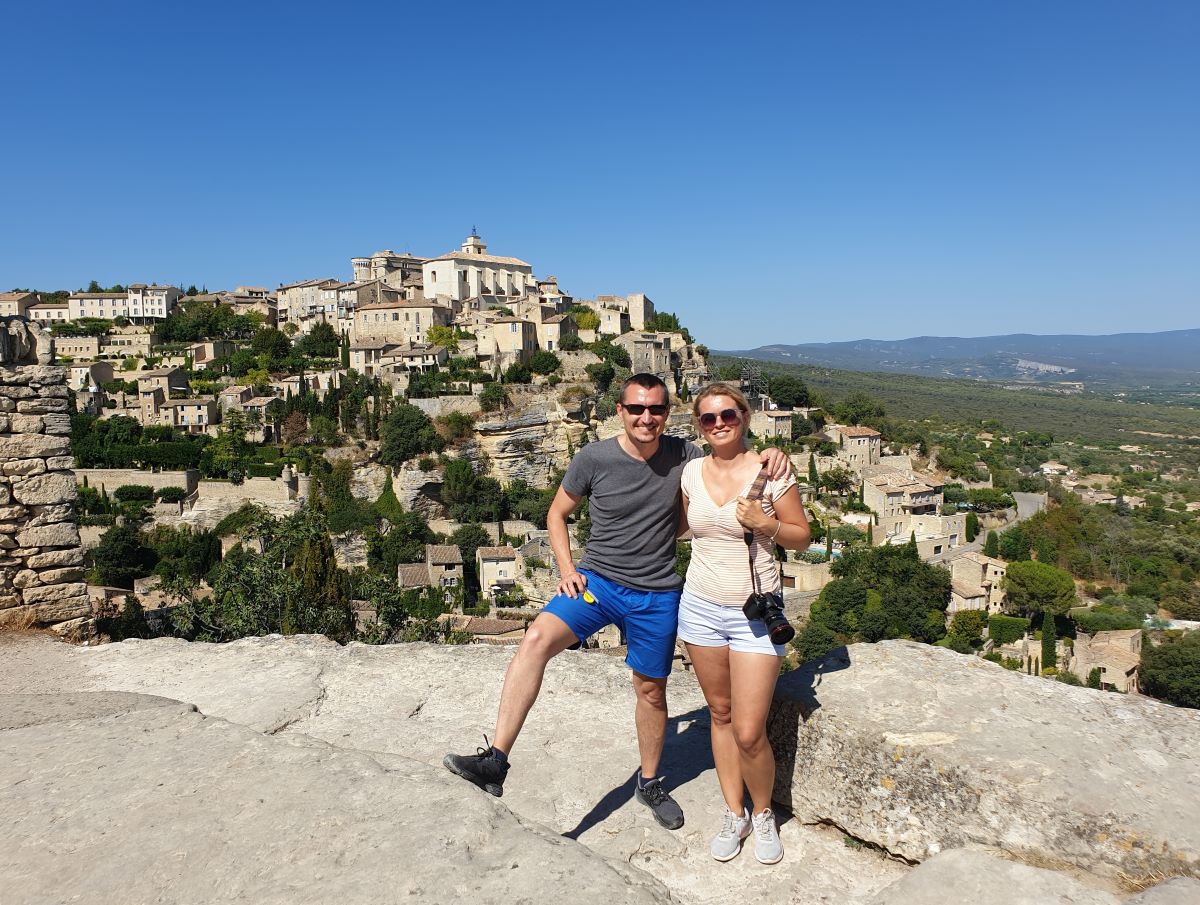
Gordes is an ancient hilltop town with fairytale views of the valley. Here I first saw how the olive and vineyard fields meet the horizon.

Many great movies were filmed in Provence. One of my favorites is “Good year“, based on the novel by Peter Mayle. The places where this film was made became the basis for our road trip through Provence. I love this film and dreamed of seeing the locations where it was shot.
So we went to the small town of Gordes, located on a hill, where the scenes were filmed in the restaurant belonging to the film’s main character (Marion Cotillard). Around are Provençal valleys planted with vineyards and olives.
What to see in the town of Gordes

- The city is small but extremely beautiful. In the Château de Gordes castle located in the center, there are exhibitions of artists who lived here or are connected to its history.
- Special attention should also be paid to the recently restored church of Saint Firmin, richly decorated with 18th-century woodwork and wall paintings.
- Plan a visit to the Saint Firmin cellars, which attest to Gordes’ underground history and the craft activities that took place here in the Middle Ages (vats, oil presses, cellars, etc.). Visiting hours and tickets are on the official website.
- While walking the narrow cobblestone streets, you can admire the light stone buildings.
- Order Provençal dishes at the café by the fountain Le Renaissance.
- Plan to visit several viewing platforms with beautiful views over the Cavaillon plain and Luberon.
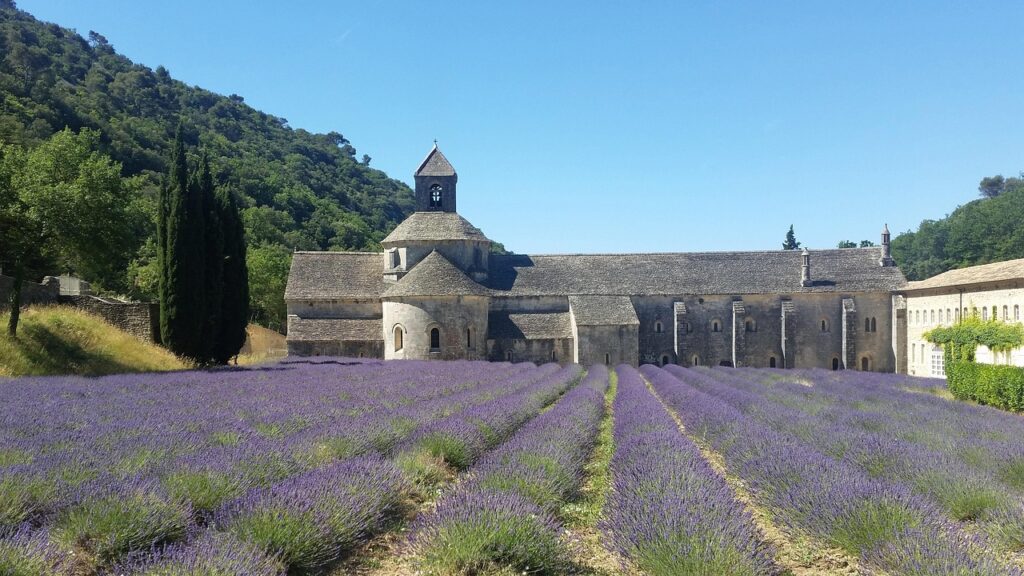
Also, not far from Gordes is another iconic place for lovers of lavender fields – the 12th-century Senanque Abbey. And next to it is a lavender field with a view of the abbey. Google maps coordinates.
Where to stay in Gordes:
- Mas des Romarins, The Originals Relais – the hotel offers a wonderful view of the city of Gordes on the hillside. There is a pool and a large terrace where you can sit and enjoy the views of Gordes. The owners offer a great breakfast and very tasty snacks if you don’t want to go for dinner.
- La Borie en Provence – Absolutely stunning hotel and its surroundings. The small details are thought through and very well designed/styled. Great location and not far from the center of Gordes, with parking right by the hotel. They offer breakfast with fresh pastries straight from the bakery. Heated pool, and sunbeds and seating outdoors with beautiful views.
- Hôtel Carcarille Restaurant Le C – Very good location, clean pool, very comfortable bed, close to the beautiful Gordes.
Chateau la Canorgue from the film “Good year”

On the way to the Valensole Valley, we stopped at that very chateau, where “Good year” was filmed. This is a private property – Chateau la Canorgue (Google maps), where tourists are not allowed inside. But there is a winery on the estate, and you can come here with no problem – to taste the local wine, buy a couple of bottles, chat with the sellers and, if you’re lucky, with the chateau’s owners.
It was a wonderful discovery of this beautiful estate, with a very warm welcome and lots of information about the wines they offer.

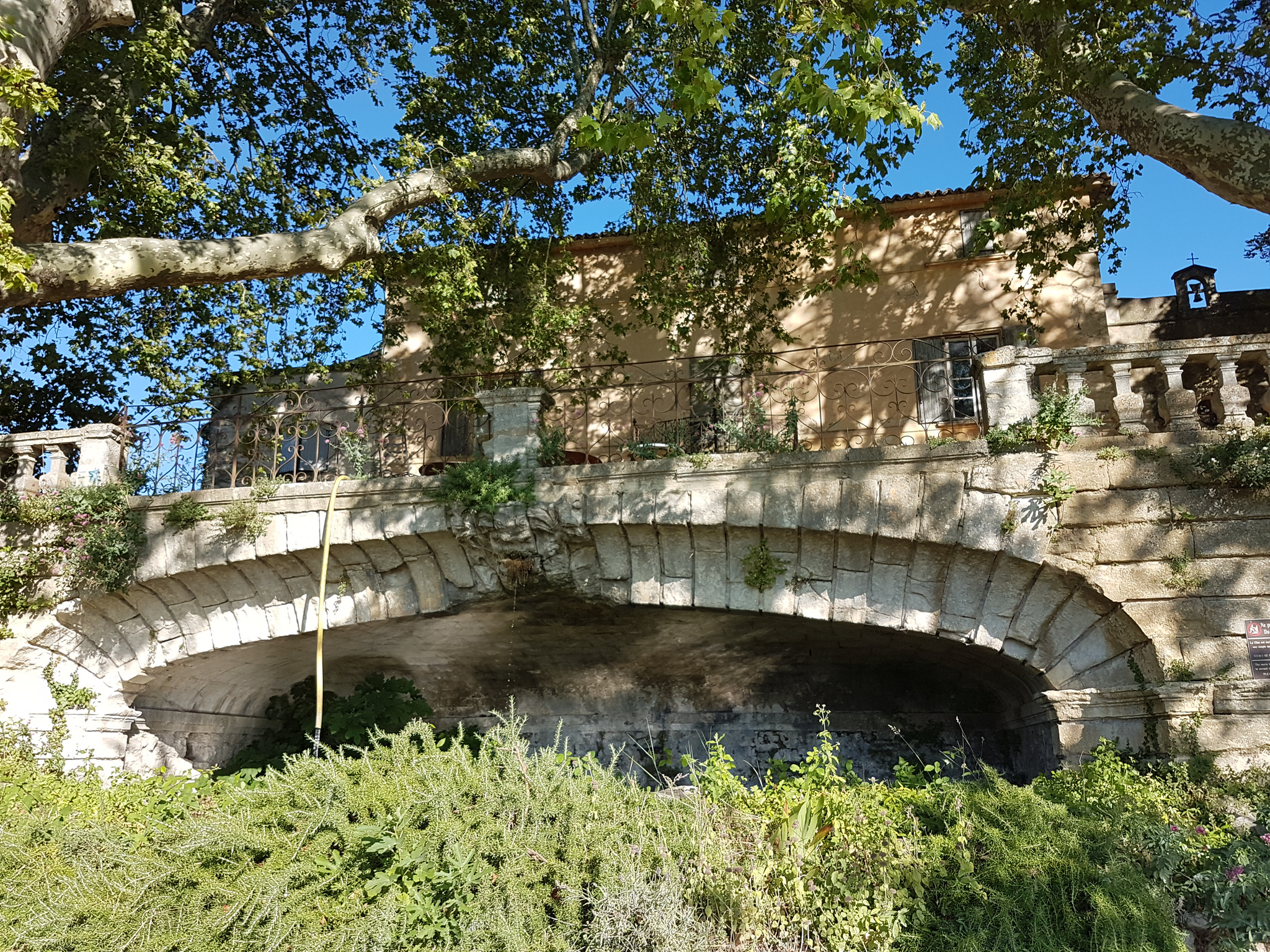
We gladly tasted 4-5 kinds of wine, including the very Coin Perdu (20 euros per bottle). It turned out to be very strong and tannic. A wine for a cold winter, not for a hot summer. As a result, we chose three types of wine (from 8 to 12 euros per bottle), took a few photos and set off further.
Lavender fields of Valensole
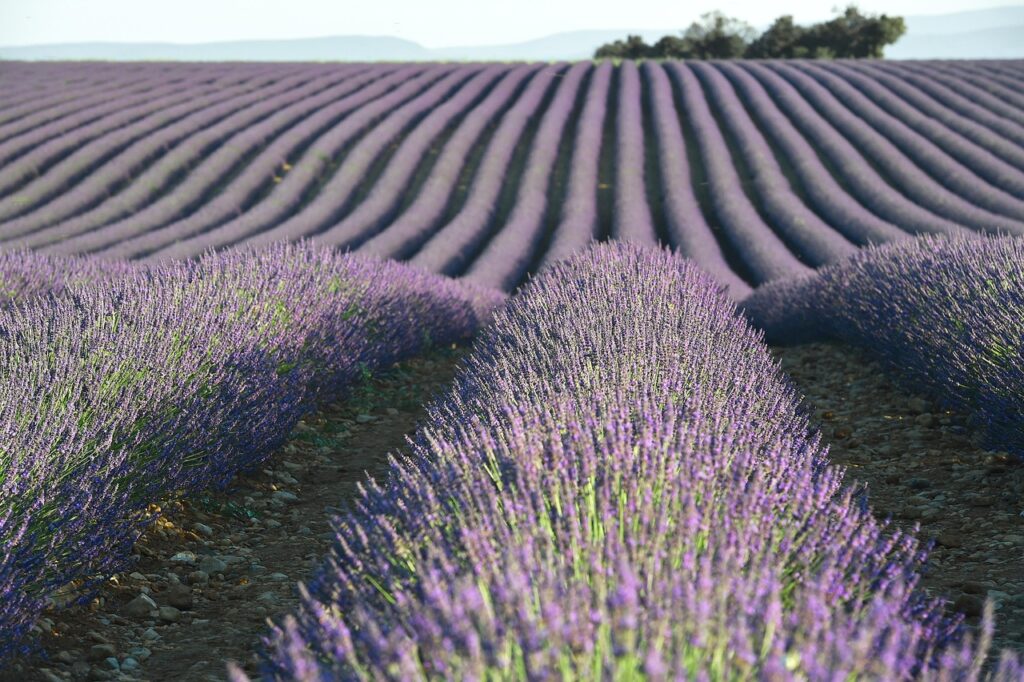
If you are lucky enough to visit southern France in the middle of summer, be sure to visit the lavender fields. In July on the Valensole plateau tidy rows of lavender are in full bloom and fragrance. At the end of July, it is cut so that from a ton of flowers, a few dozens of liters of aromatic lavender oil are produced.
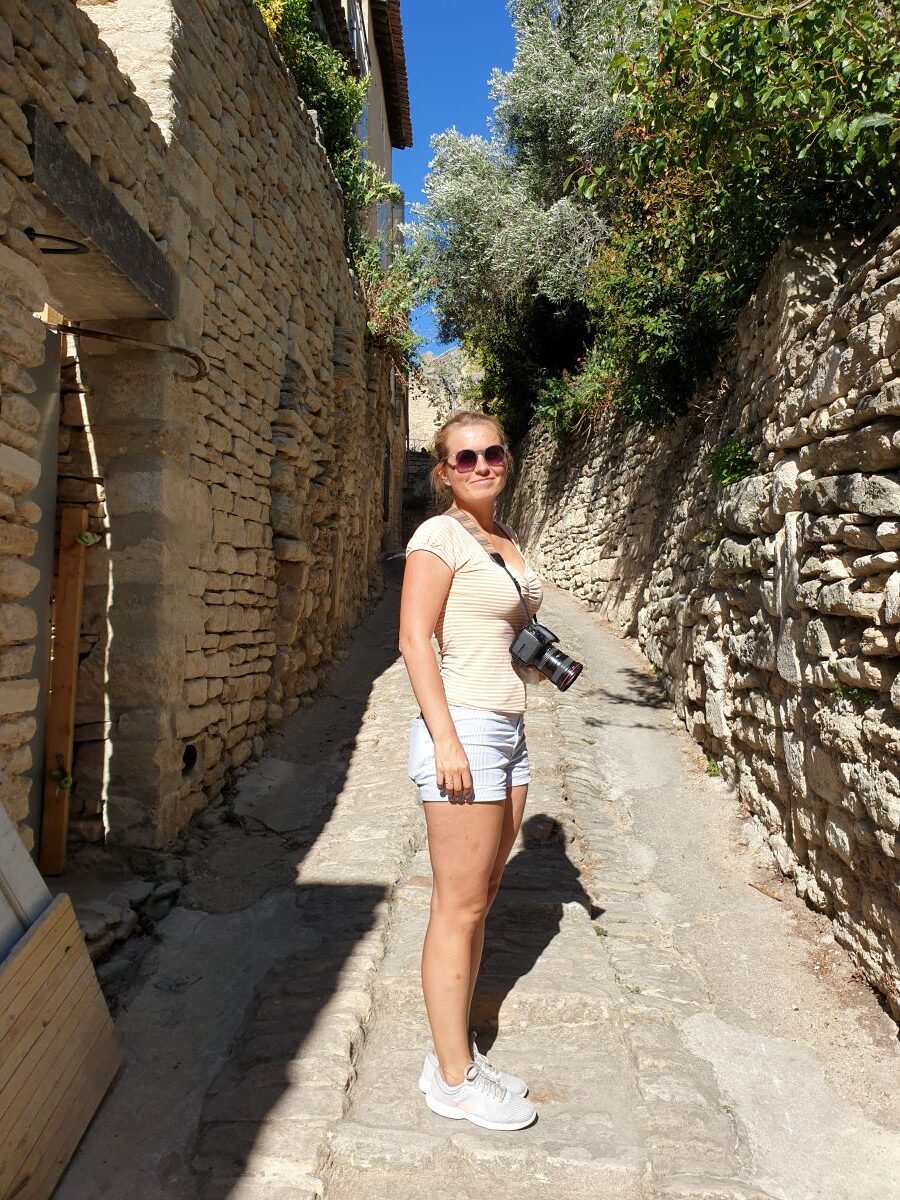
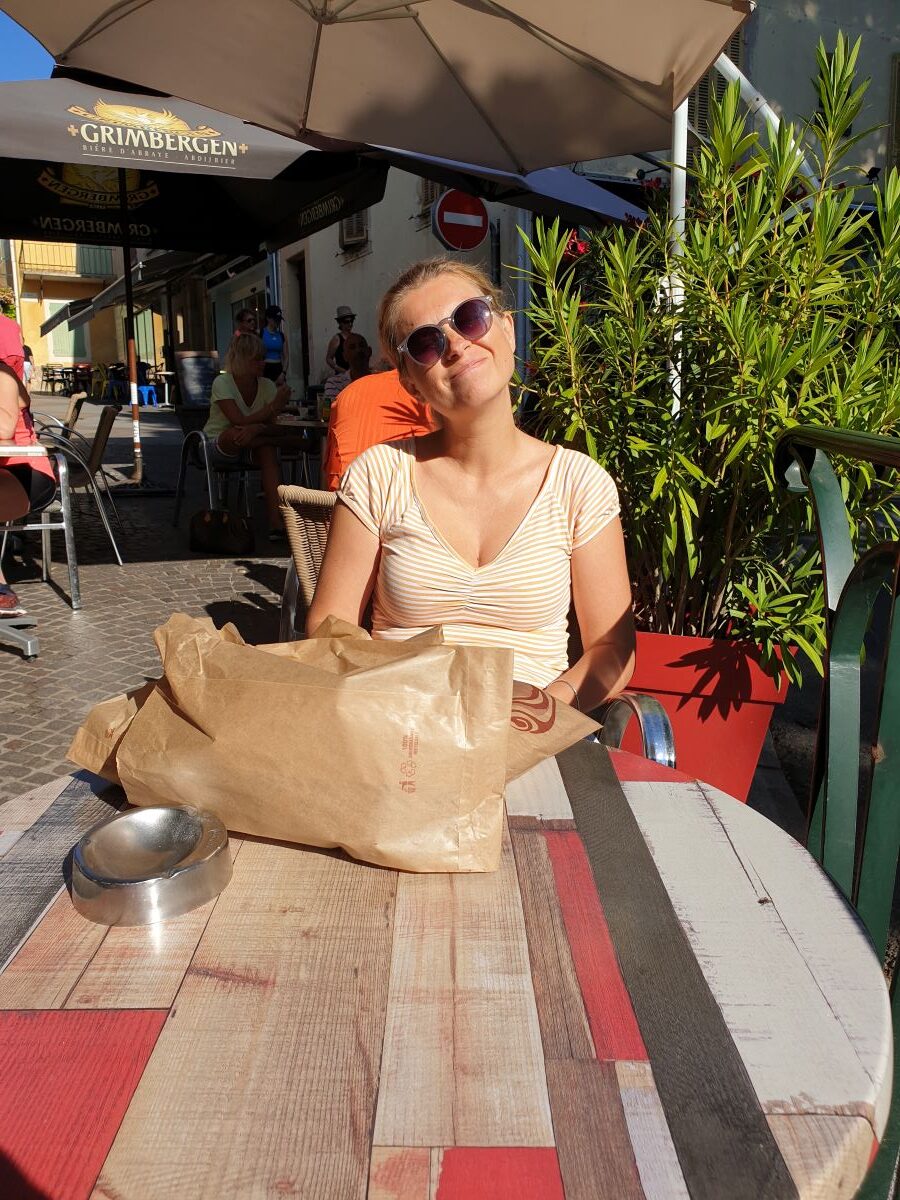
The famous town of Valensole is a must-visit spot on such a journey. Wander the maze of charming streets, chat with local residents and photograph wrought-iron balconies, painted shutters, and old doorways.
Lavender fields exist in different areas of Provence, but in Valensole they are concentrated on a relatively small territory. To see them, you can take a circular route by car (33 kilometers):

- Valensole D56 — east on Puimoisson — D953 north to the “Poteau de Telle” junction — D8 back west to Valensole.
- Along the D8 road between Valensole and D953 (4 km north of Puimoisson) are the lavender fields. GPS: 43.896292 N, 6.128771 E.
- Along D6 between Valensole and Riez, there are beautiful lavender fields at the entrance to Petit Arlane (Centre Naturiste).
Lavender oil is the basis of many perfume compositions, and the perfume capital of France is nearby. The small town of Grasse settled in the foothills of the Alps, and since the 18th century has become world-famous for its perfumes made from local flowers and plants, whose abundance and yield are favored by a unique microclimate.
Where to stay near Valensole
- B&B La Grande Dame – this accommodation is located among lavender fields. The owners can rent out bicycles so that you can easily explore the lavender fields nearby. The hotel has a beautiful yard with a pool, large, clean, and nicely decorated apartments, a great breakfast and a very pleasant and hospitable hostess.
- Maison de village au pays des lavandes à Valensole – Nice apartment for two or a small family. Located on a cozy small street, within walking distance from free parking.
Moustiers-Sainte-Marie – gateway to the Verdon Gorge

After spending the night in the town of Valensole, we headed towards the Verdon Gorge. The small village Moustiers-Sainte-Marie became a kind of gateway to the reserve and the Verdon Gorge.
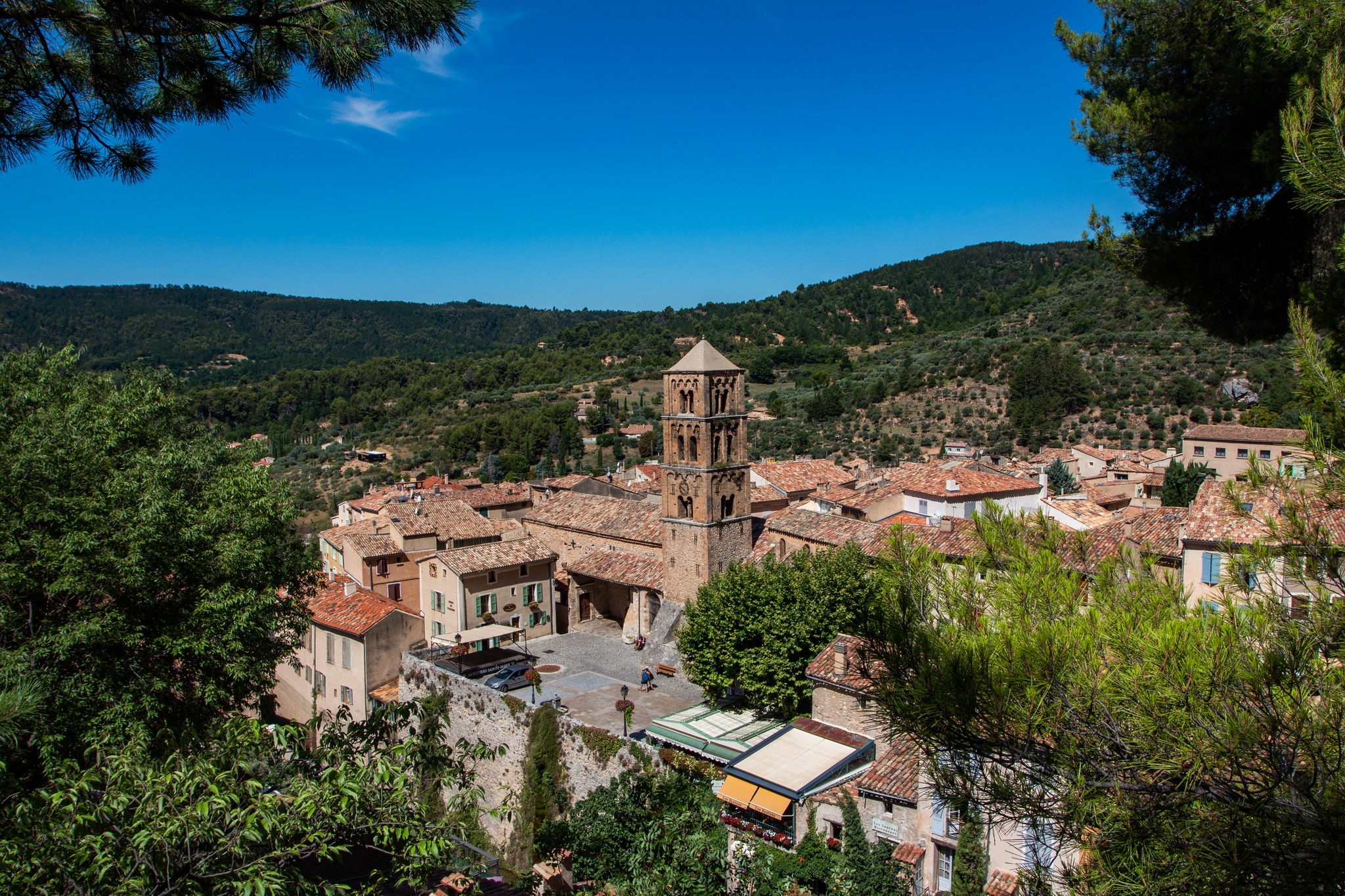
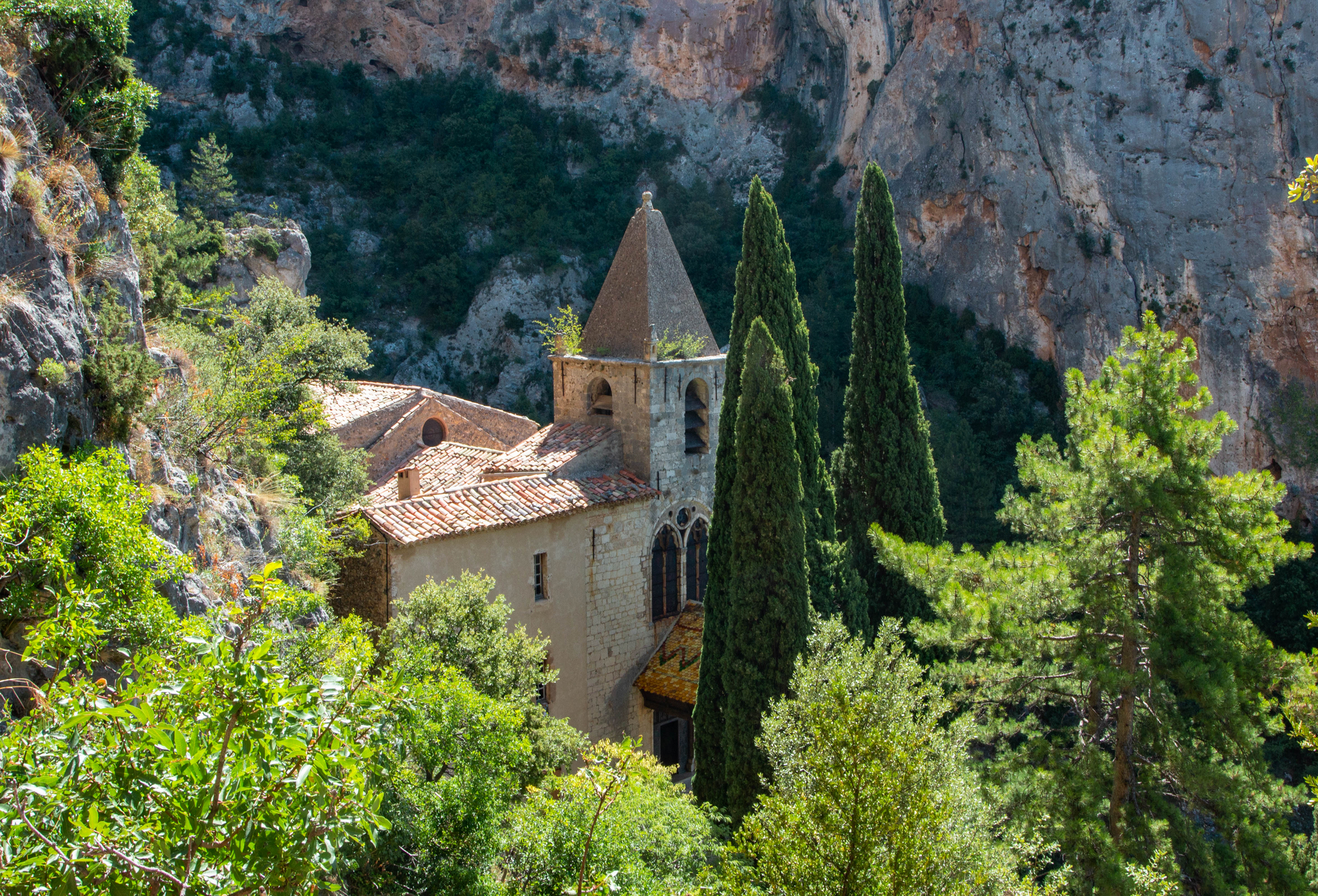
In this amazing place, monks settled in the 5th century AD – on a rock, accessed by steep stairs, a monastery and the Notre-Dame de Beauvoir chapel were built. Above them shines a golden star, suspended on a chain stretched between two rocks. According to legend, the star was brought from the crusade by Sir Bozon de Blacas – as a sign of gratitude to God for being freed from Saracen captivity.
Verdon Gorge

Next, numerous hairpin bends of the Route des Crêtes and the blue ribbon of river awaited us, winding along the Verdon Gorge (Gorges du Verdon).
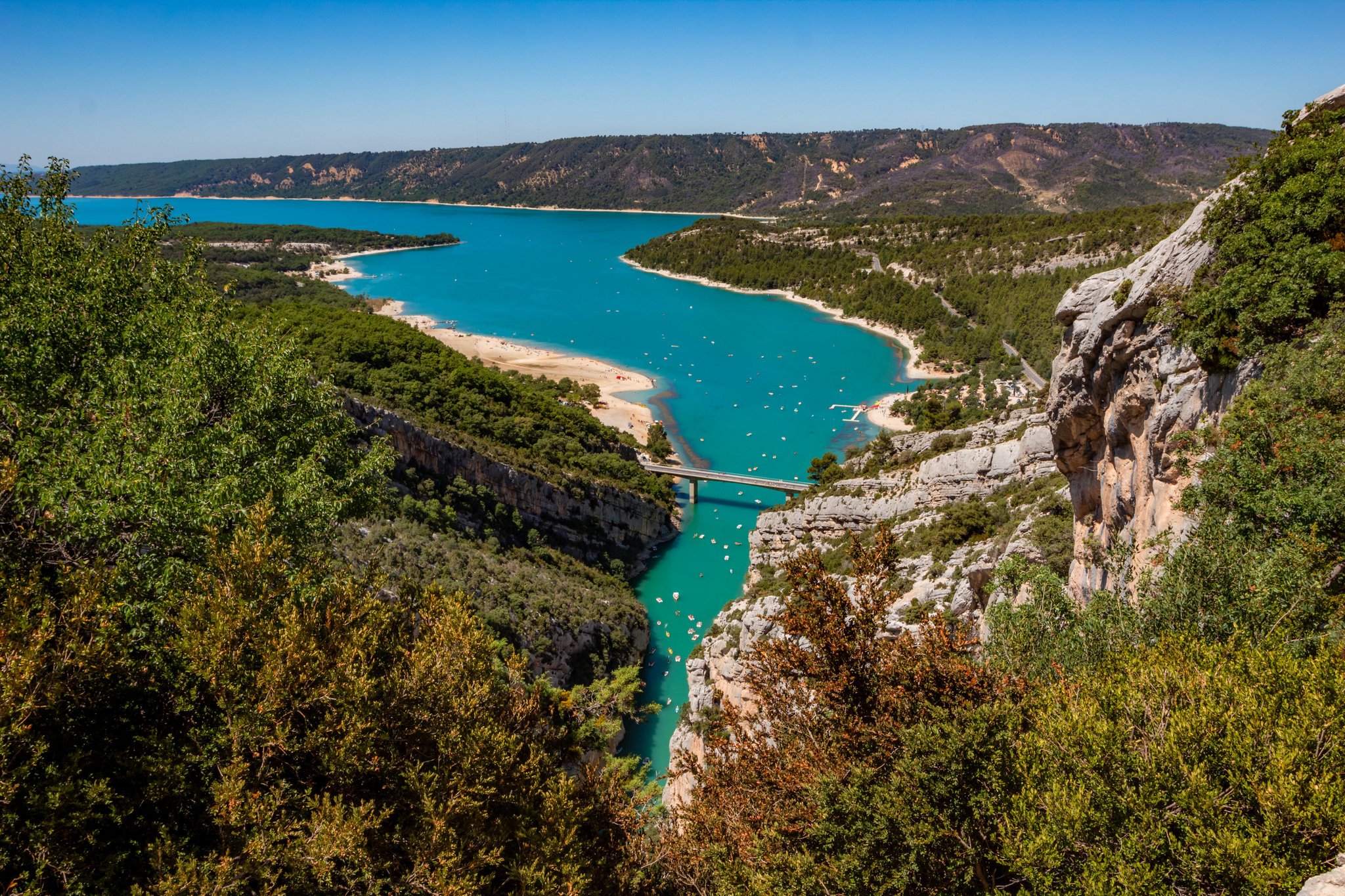
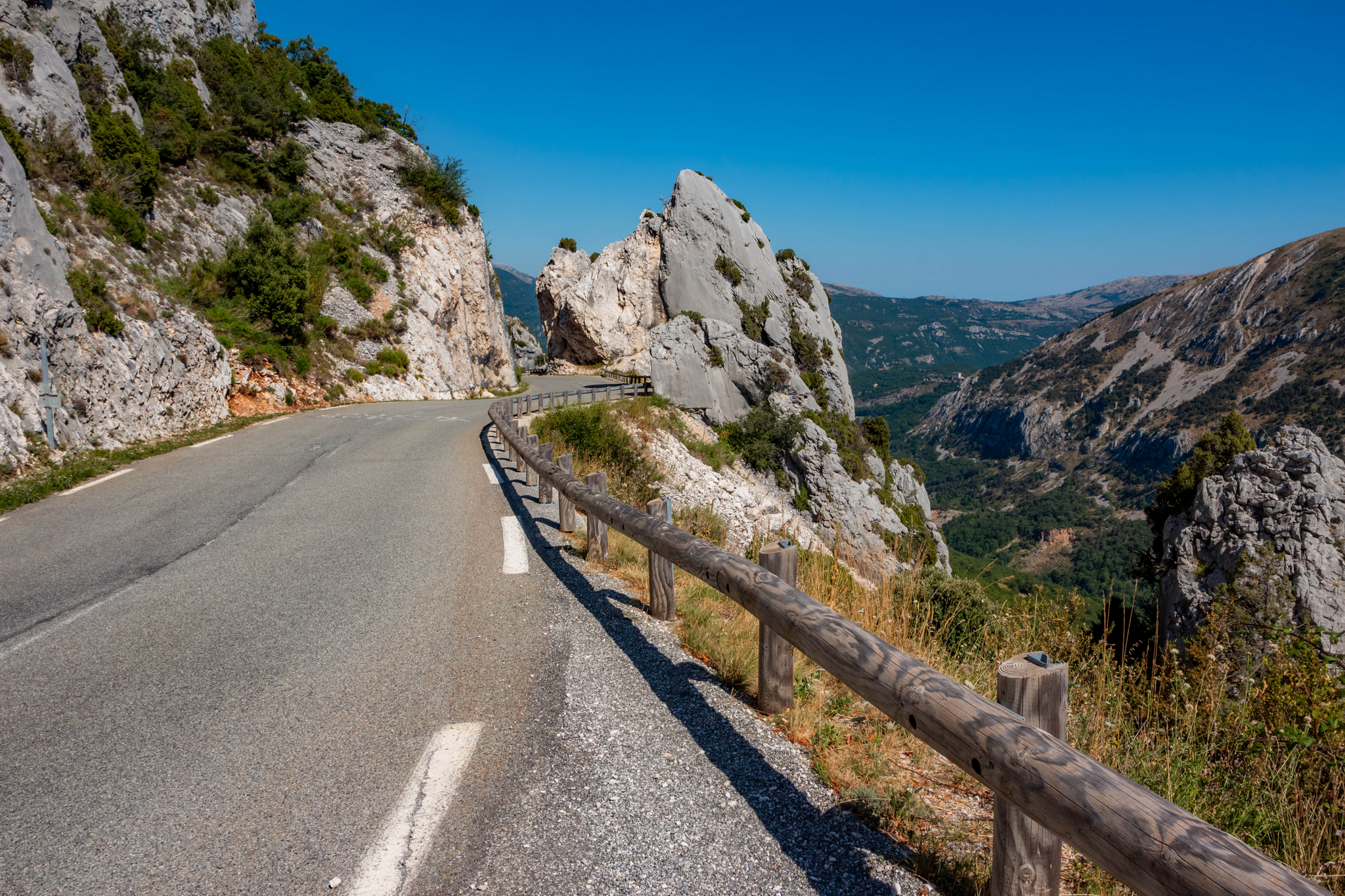
From it open up the most breathtaking views of the 800-meter cliffs and the Verdon River, which, like a turquoise ribbon, descends from the mountains into the huge Lac de Sainte-Croix reservoir. The water in it is a fantastically-blue color – as if an artist had spilled a can of paint and it spread over the boundless spaces.
What you can do in Verdon canyon:
- drive the Route des Crêtes
- rent a kayak on Lake Sainte-Croix
- stop at viewpoints, enjoying the views
D952 – the road from the coast to the Verdon canyon, optionally you can make a detour by D23 (Route des Crêtes), where the most scenic views of the gorge are located. The Verdon canyon is between the towns of Moustiers-Sainte-Marie and Castellane.
Village of Castellane

Before returning to Nice, we stopped at the village of Castellane. To have lunch and buy some delicious souvenirs to take home. The village, located among rocks and alpine hills, is famous for its huge rock on top of which stands a small chapel Notre-Dame du Roc Chapel.
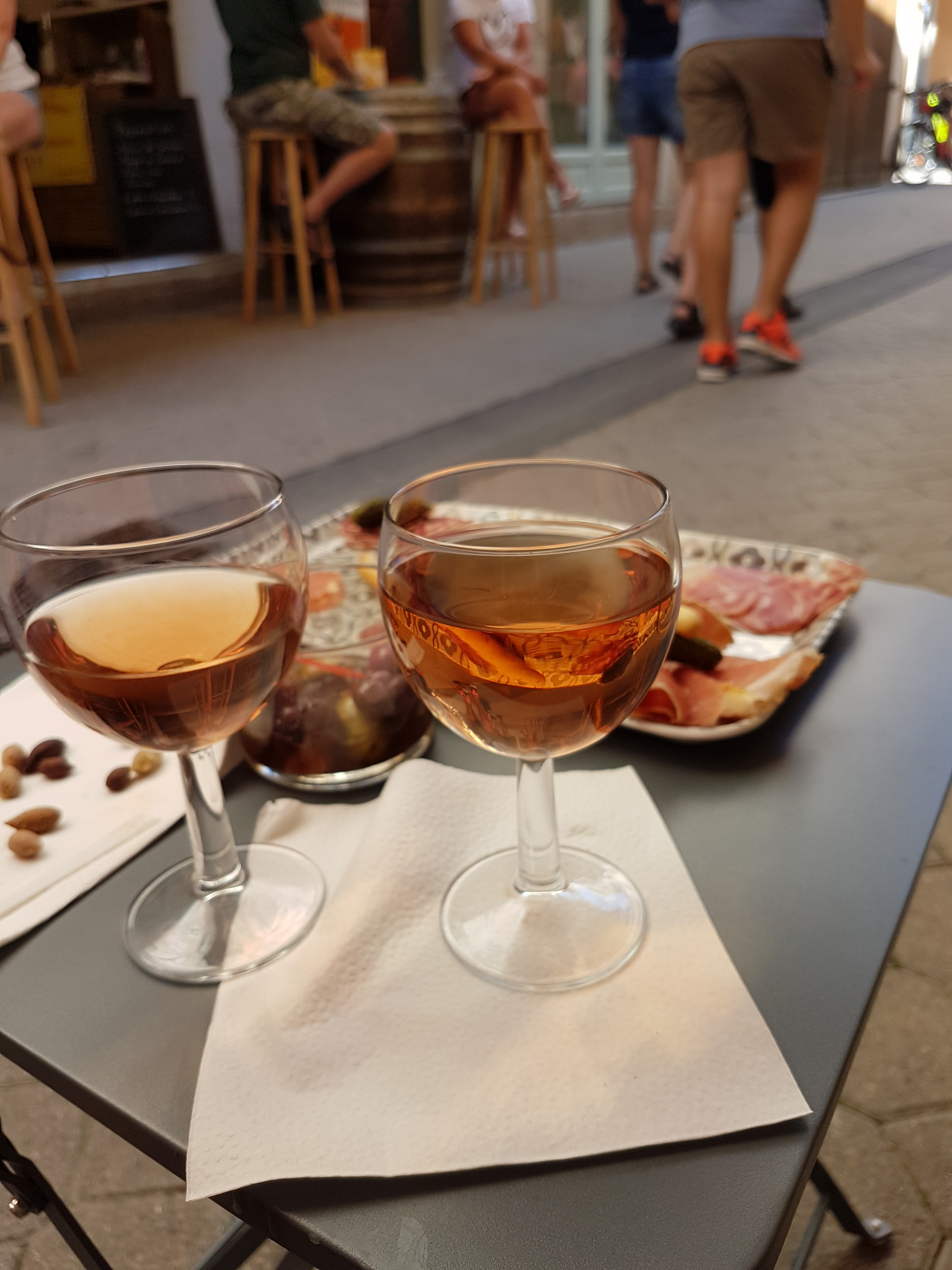
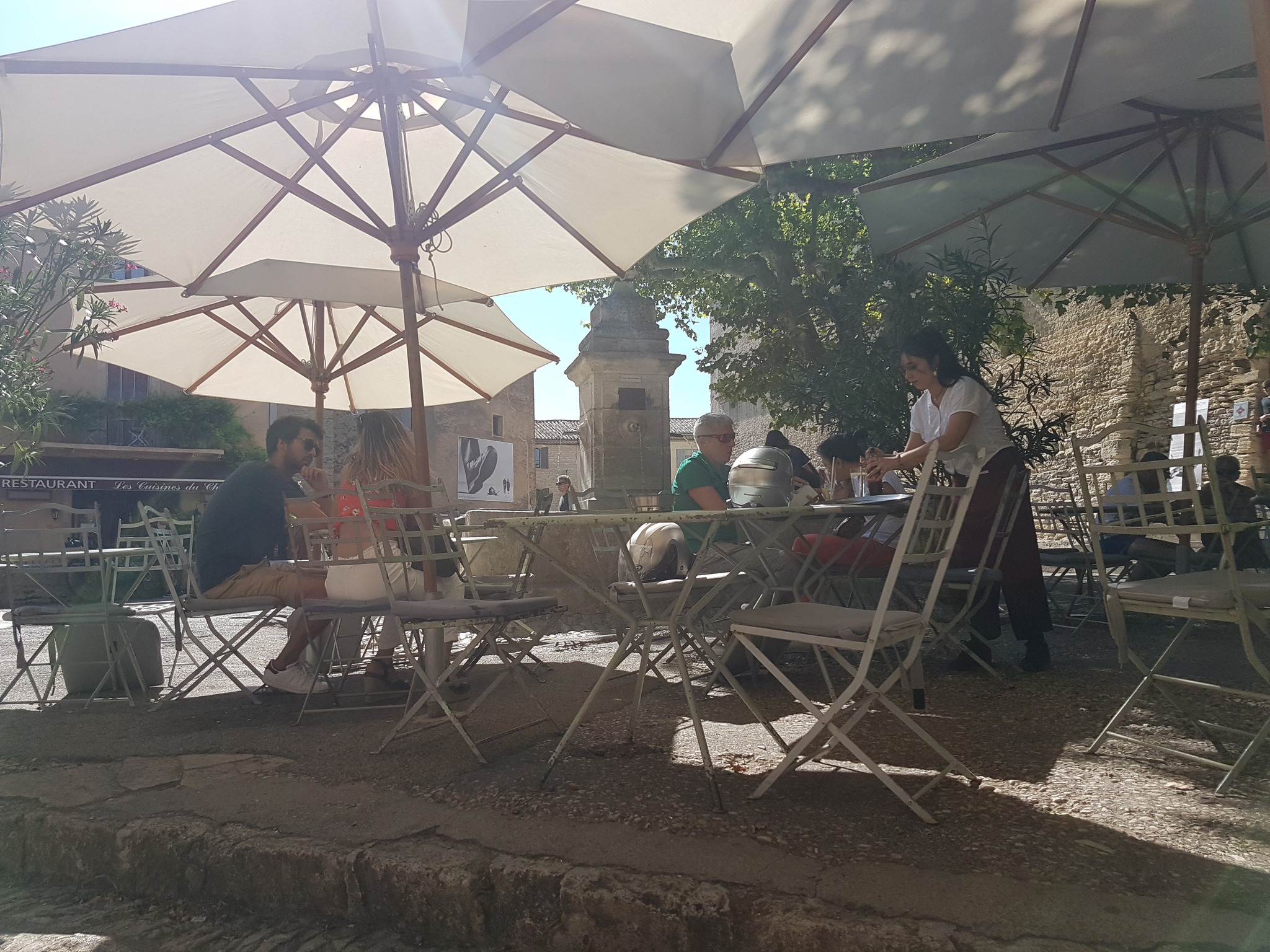
You can climb to the Notre-Dame du Roc chapel by a path leading from the town. The walk takes about an hour. It is better to do this climb in the morning or evening. We were here at midday and due to the intense heat, decided to stop on one of the streets for a snack. We calmly sat by a bar, tasted local delicacies and just watched people walking by. All in all, we rested from the road and enjoyed the town.
My life hacks for a Provence road trip

- Book accommodation in advance, especially during lavender season.
- Rent a car – without it you won’t see everything there is in this itinerary.
- Go out to the fields at dawn or a few hours before sunset.
- Plan no more than 2–3 locations per day to fully enjoy them.
- Bring cash for small farms to buy ripe vegetables and fruits on the way.
A few days in Provence were part of our big journey along the Côte d’Azur and Monaco. So this trip was very rich in various impressions of nature, architecture, and cultural events. I recommend mixing different emotions, so that the trip will be remembered, and not blend into a huge kaleidoscope of monotonous photographs.
Useful links for travelers:
Car rental – we booked a car at Nice airport through Rentalcars.com
Hotels – I traditionally book through Booking.com
Insurance can be purchased online at Hotline.Finance
Read also:
- Beach vacation on the Côte d’Azur
- Autumn trip to Burgundy — taste the flavor of France
- The most beautiful villages in France – Burgundy itinerary
- Monaco guide – how not to go broke and spend an interesting time