
From Prague for a day trip – interesting castles, nature and mountains, mineral spas, which are located 2 hours away from the Czech capital.
Where can I go from Prague for a day trip? In fact, there are many such locations. The Czech Republic is generally a small country, so you can get to interesting locations in 1-2 hours. This way, you can leave early in the morning and return in the evening.
Czech paradise

Bohemian Paradise is a nature reserve in the north of the Czech Republic with a bizarre landscape formed by sandstone cliffs. The Prachovské rocks, the rock town of Hrubá Skála, the Bethlehem rocks, and the Vranovská ridge are all unique natural formations filled with stone giants and labyrinths formed by wind, water, and precipitation. For millions of years, nature has been carving magnificent stone statues, creating a fantastic spectacle that makes you feel like the world is subject to time.
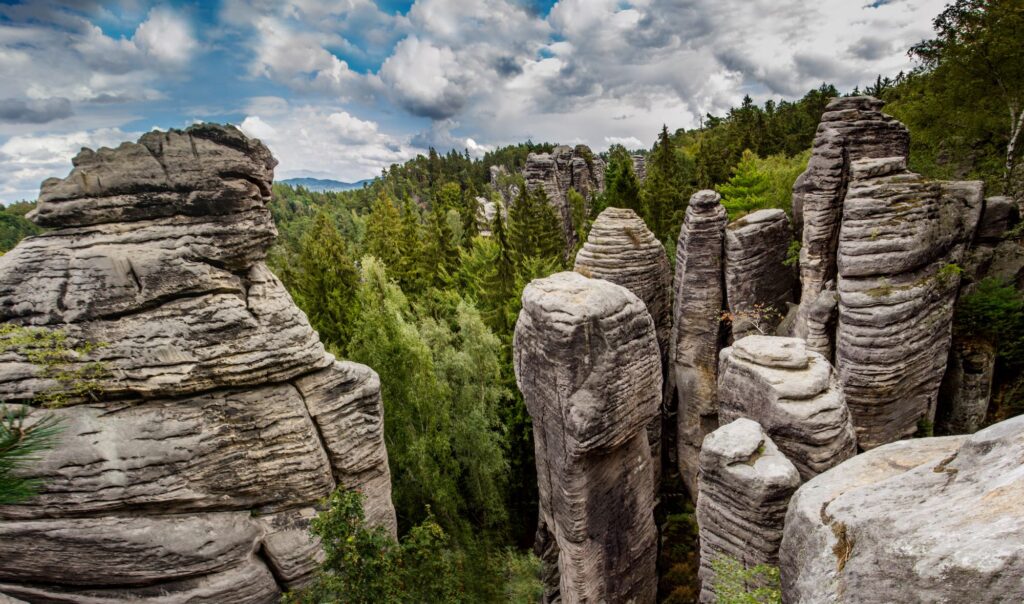
This reserve is an ideal place for active recreation. Many simple and slightly more difficult routes are laid out and marked here. Stairs and railings, bridges and benches were made for descents and ascents, and there are benches for resting on the observation decks, which offer stunning views.
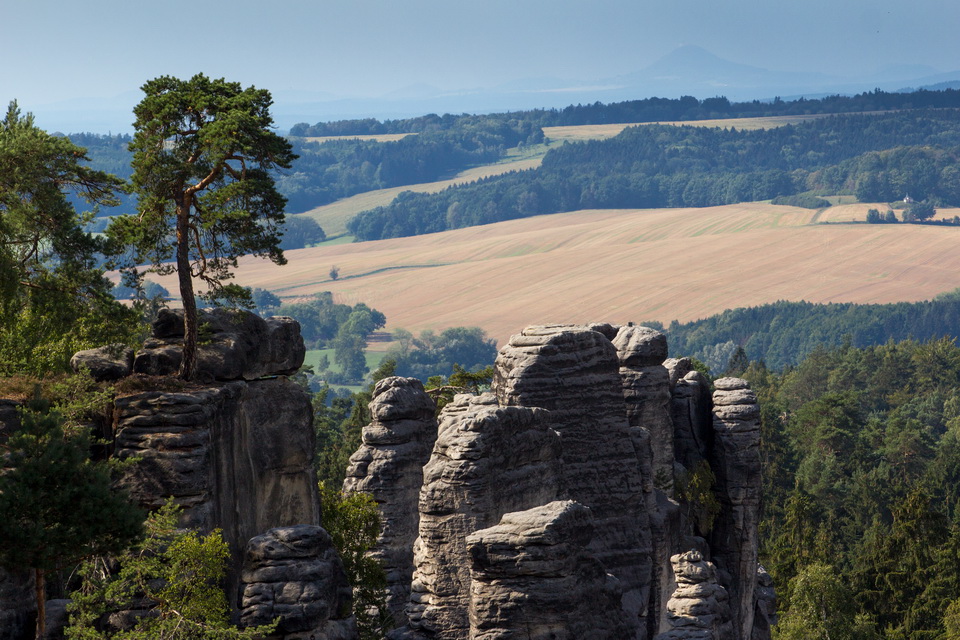
In addition to walking through endless rock labyrinths and climbing to the tops of cliffs, there are several castles and fortress ruins in Bohemian Paradise. The most famous of them is the Trosky Castle, a symbol of the Czech Paradise. These are the ruins of a fortress that partially survived the devastating Thirty Years’ War of the 17th century. Despite their dilapidated state, the silhouettes of the two towers – two tall cliffs like fangs rising on a formidable rock – are visible from all the hills and hills.
How to get to Czech Paradise:
It takes 1.2 hours by car from Prague on the E65 highway.
By Busline from the Black Bridge metro station – travel time: about 1.2 hours
By train: daily from the main railway station in Prague to the city of There are trains to Tournai every hour, with a travel time of 2 hours.
Cesky Krumlov
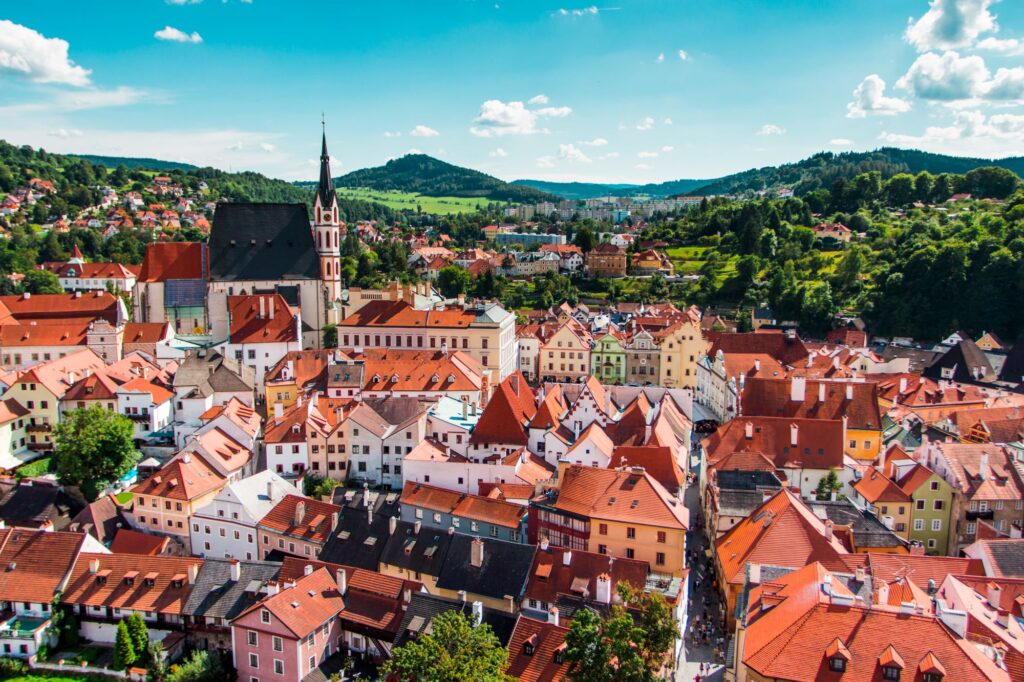
The doll town, like an illustration for fairy tale books about princesses, is located in the south of the Czech Republic near the border with Austria. The city is surrounded by the Vltava River – yes, this is the same Vltava that flows in Prague. But here it is winding and narrow, and in the small town of Krumlov it makes three sharp turns that divide the town into three meanders, or peninsulas.

On one of these meanders stands Krumlov Castle, the second largest in the Czech Republic, after Prague Castle. It is incredibly beautiful, with a huge park, fountains, an old theater, and galleries on thick and high painted walls. At the entrance to the castle, you will be greeted by a live bear in the moat – a tradition that is 400 years old. And by climbing the Castle Tower, you can see Cesky Krumlov and the surrounding area, and all the peninsulas that the Vltava River has made here.

The second peninsula is home to the Old Town, with its narrow streets, restaurants, coffee shops, and clothing and souvenir shops. The entire historic city center is a UNESCO World Heritage Site. The small medieval town is very well preserved. And now you can see what life was like in Central Europe several centuries ago. From Renaissance and Baroque building facades to less noticeable details, such as the location of streets in relation to the castle, everything is more or less original.
More details – Český Krumlov – what to see in the most beautiful city of the Czech Republic
How to get to Cesky Krumlov:
By car from Prague, 180 km on the A4 highway – about 2 hours on the way.
By trains of the Czech Railways www.cd.cz – run every two hours, with a travel time of 2 hours.
By bus Flixbus – buses run daily every hour, with a travel time of 3 hours.
Hlyboka nad Vltavou

There are more than 2000 castles in the Czech Republic. Hlyboka Castle is one of the most beautiful, a real fairy-tale castle with a white facade. In addition to the castle, you will be able to see its picturesque gardens and greenhouse, art gallery, tea room, chapel, and even the interior.

Originally built in the Gothic style in the 13th century, Hlyboka Castle has undergone many reconstructions over the years. This was reflected in its appearance. Its final appearance appeared under the last owners of the castle, the Schwarzenbergs, who were inspired by the view of Windsor Castle while attending the coronation of Queen Victoria of England.

The castle is located on top of a hill overlooking the Vltava River and the green countryside of the South Bohemian region. The exterior of the castle is stunning with numerous towers surrounded by giant rose gardens, courtyards, terraces and pristine gardens.
Getting to Hluboka nad Vltavou:
By car from Prague – on the E35 highway, the journey will take 1.5 hours.By bus – the best way to travel Flixbus or RegioJet – daily once an hour there are buses to Ceske Budejovice, the journey takes 1 hour, 45 minutes, then by taxi 12 km.
By train from Prague to České Budějovice – www.cd.cz – runs every two hours, travel time 2 hours
Karlovy Vary

Once in the fall we came to Karlovy Vary for one day to walk the beautiful streets of the city, drink warm mineral water from the hot springs and see many beautiful colonnades built nearby.

Karlovy Vary is best known for its hot springs scattered throughout the city. The strongest and most popular hot spring (Vridlo) is located in the Hot Colonnade. The 12-meter-high fountain produces mineral water at a temperature of 73 degrees. Because of this high temperature, it is distributed to five different taps to cool it down a bit before people can drink it.

The first thing to do in Karlovy Vary is to buy one of the typical Karlovy Vary mugs in one of the souvenir shops. After that, use it to taste the water from the hot springs. The water has a very strong iron flavor, but this flavor has unique healing properties.
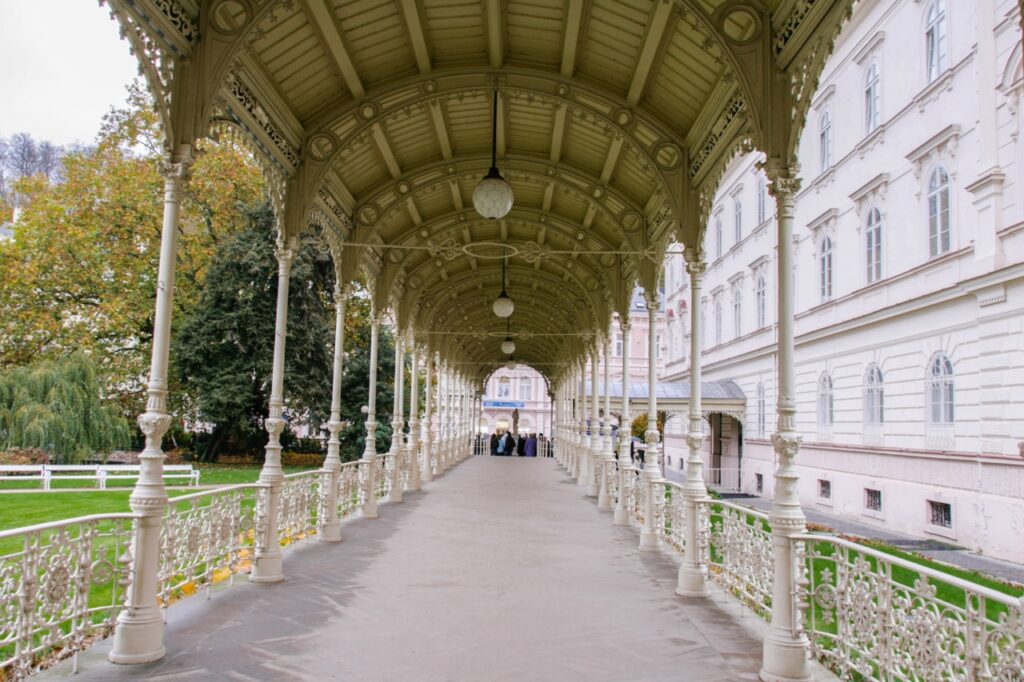
The Mill Colonnade is an impressive structure that is one of the must-see places in Karlovy Vary. The stone columns (124 of them) have been standing here for over 100 years. It was created as a shelter for those who came to enjoy the hot springs in bad weather.

Tip: There are four other colonnades in Karlovy Vary worth visiting. These are the Market, Castle, Geyser, and Park colonnades.
Everyone can see Karlovy Vary from above. For those who are not afraid and like to walk on hills. One of them has an interesting building – Goethe’s observation tower. The pseudo-Gothic “castle” was built in the late 1800s and is the oldest observation deck in the city. Climb 165 steps to reach the top. Here you will be rewarded with incredible panoramic views of the hills, forests and beautiful pastoral views of Karlovy Vary.

If you don’t want to walk, an alternative is the Diana Lookout Tower, which is reached by a funicular. The views of the Karlovy Vary hills and the city along the Ohře River are also very beautiful from here. A round-trip ticket for the cable car costs 150 CZK, other information is available on the website https://dianakv.cz/.
How to get from Prague to Karlovy Vary:
By car on the E48 highway, travel time is 1 hour 45 minutes
By bus – the best way to travel Flixbus or RegioJet – buses run once an hour daily, travel time 1 hour, 45 minutes
By train www.cd.cz – runs every two hours, with a journey time of 3 hours (quite a long time, as the train goes in a circle through the town of Usti nad Labem).
Kutna Gora

Kutna Hora is the site of the first silver fever in Europe. Legend has it that a monk had a prophetic dream about silver bullion here. Soon, a mining village appeared in Kutná Hora, which in the 13th century became the second richest city in the Czech Kingdom after Prague. After the depletion of ore deposits in the 16th century, the city fell into decline. But you can go on an excursion to the former mines.

The most famous attraction of Kutna Góra, located in the suburb of Sedlec, can be reached on foot from the train station (about 1 km away). Here in Sedlec, there is a very interesting object that is on the UNESCO World Heritage List. This is the so-called Bone Church, a church where everything inside is decorated with human bones.

Initially, it was a church at the cemetery, which, like the cathedral, belonged to a Cistercian monastery. At the same time, the abbot of the monastery brought the holy land from Jerusalem. And he scattered it generously over the cemetery, turning it into a branch of the Promised Land. After that, it became expensive and indescribably prestigious to get a grave there. And after the plague hit Europe, about forty thousand people were buried in the cemetery.

There was not enough space in the cemetery, and the bones were moved to a separate building, the Ossuary. In the eighteenth century, the new owners hired a wood carver, Frantisek Rint, to put things in order. He made jewelry out of bones: bone vases, a bone chandelier, a huge bone coat of arms, and garlands of skulls. Some people find it ominous, others, on the contrary, find it interesting and life-affirming. There is an entrance fee to Kostnytsia and a separate fee for photos.
How to get from Prague to Kutná Hora:
By car on the T12 highway, travel time is 1 hour 25 minutes
By train www.cd.cz – runs every half an hour, travel time 1 hour
Hřensko – Czech Switzerland

The Czech Switzerland National Park, which is called Saxon Switzerland on the German side. All together, these are the Elbe Sandstone Mountains, which for some reason are compared to Switzerland. But this part of the Czech Republic is so beautiful that it needs no comparison. The sandy cliffs are covered with forests, and in good weather they offer views of the valleys. Over millions of years, the rocks have turned into towers and stone bridges that resemble troll lairs.
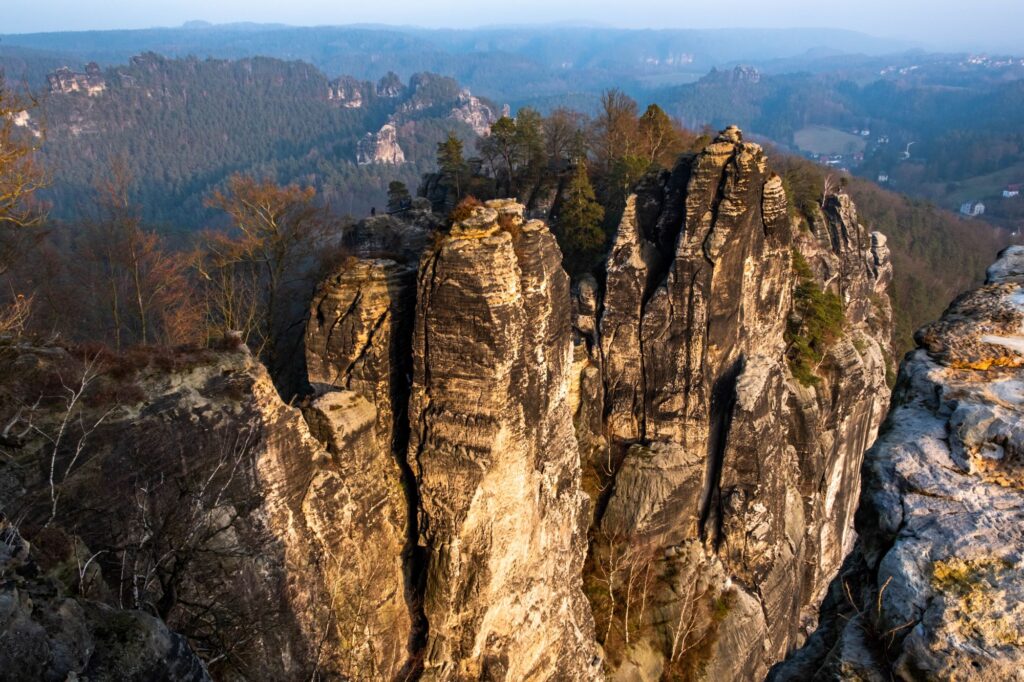
The main places to see are the Pravčická Brána, the largest sandstone arch in Europe (16 meters high). Next to it is the Falcon’s Nest castle (actually a restaurant that does not work in winter).
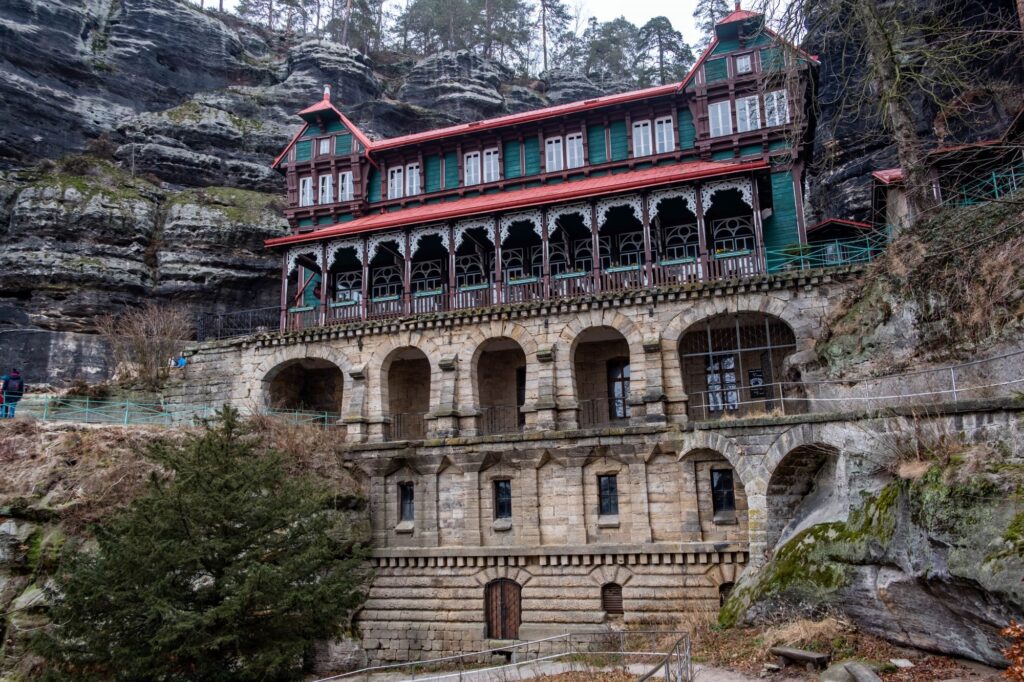
The second popular destination is the village of Grzensko. The hiking route through the gorges of Bohemian Switzerland starts from here. You can hike through the gorges of the region or take a water route by boat. There are two routes through Edmond Canyon and Wild Canyon. Visits are paid and not available all year round, prices and conditions on the site of Hřensko.
How to get from Prague to Hřensko:
By car on the E55 highway, travel time 1 hour 45 minutes
By train to Usti nad Labem – www.cd.cz – runs every half hour, travel time 2 hours, then by bus to Hřensko.
Poděbrady

This small spa town in Poděbrady is located 60 km east of Prague. The history of the old settlement “along the frod” – in Czech, “pode brody” – gave the town its name. In the 15th century, a castle was founded here, a large defensive fortress that was given its true grandeur by King Irji of Podebrady. His monument stands in the very center of the town.

Why is Poděbrady a resort? Because there are mineral springs here that are very healing – it treats heart and vascular diseases, attracting thousands of visitors from all over the world to Poděbrady. People come to Poděbrady for a relaxing vacation: walking along the paths of the Lazeny Park. The park has several colonnades with mineral water springs. Everyone can drink it – it’s free

The Labe River (Elbe) flows through the city, along which there are bicycle trails that are great for a weekend ride. So, you can rent a bike in Poděbrady if you don’t have your own two-wheeled friend. There are also boats on the Labe that take tourists up the river to Nimbrook and back. There’s also a lake in Poděbrady, where you can go boating, swimming, and sunbathing on the grass beach in summer.
How to get from Prague to Poděbrad:
By car on the D11 highway, 45 minutes on the way
By train to Poděbrady www.cd.cz – trains run every half hour, with a 1-hour journey time.
Useful articles and links:
- What to see in Prague, if not for the first time
- First time in Prague – what to see in Prague in two to three days
- Thermal spas in the Czech Republic – where to relax with your family
Booking of hotels and apartments – Booking.com
Car rental – I am looking for inexpensive options on Rentalcars.com