
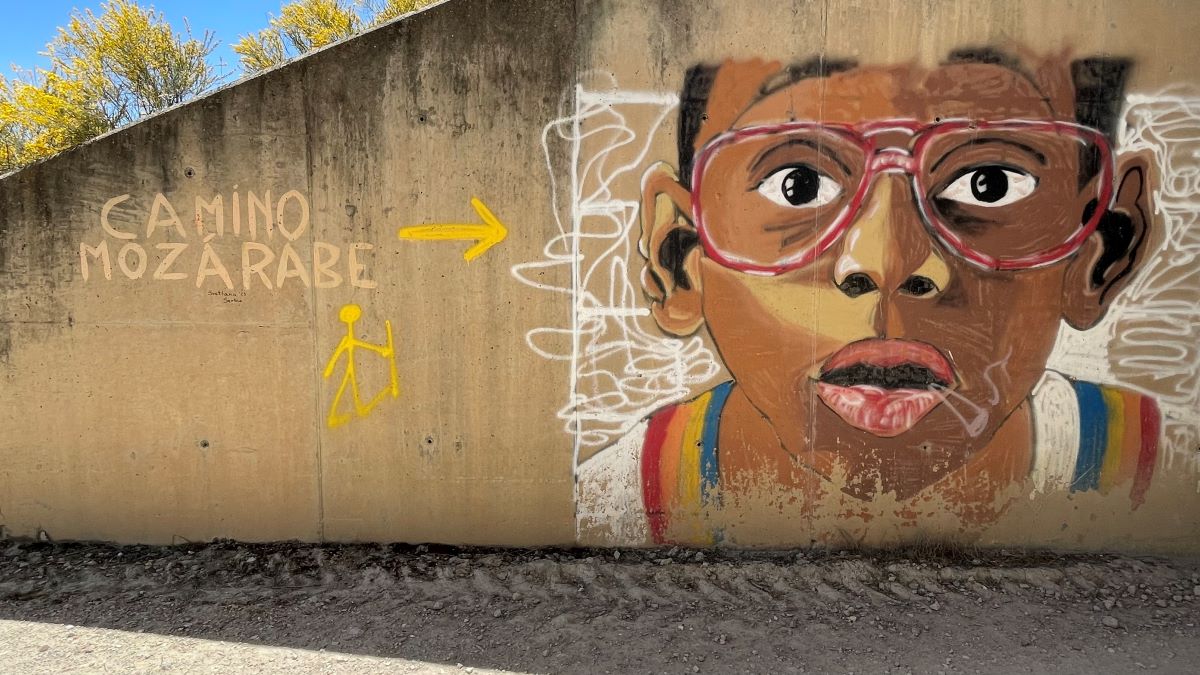
Camino Mozarabe is not the most popular route in Spain. But I really wanted to visit the South and combine the beauty of Granada, Córdoba, Ronda, and Seville with a hiking trip.
Why do I need this – to walk on foot? Previously, I just liked to “grind the earth with my feet”. Now – it’s my way of preserving my psyche and health. After a hard winter, I needed to be somewhere warm, see beauty, and walk in the nature of Andalusia.
Sometimes I really want to walk the popular Camino routes – Frances or Portuguese from Porto. But there are times when, on the contrary, you need to walk without extra communication with strangers. Only with my daughter, who is on the same wavelength as me.
I got all of this on the Camino Mozarabe.
General Information about Camino Mozarabe
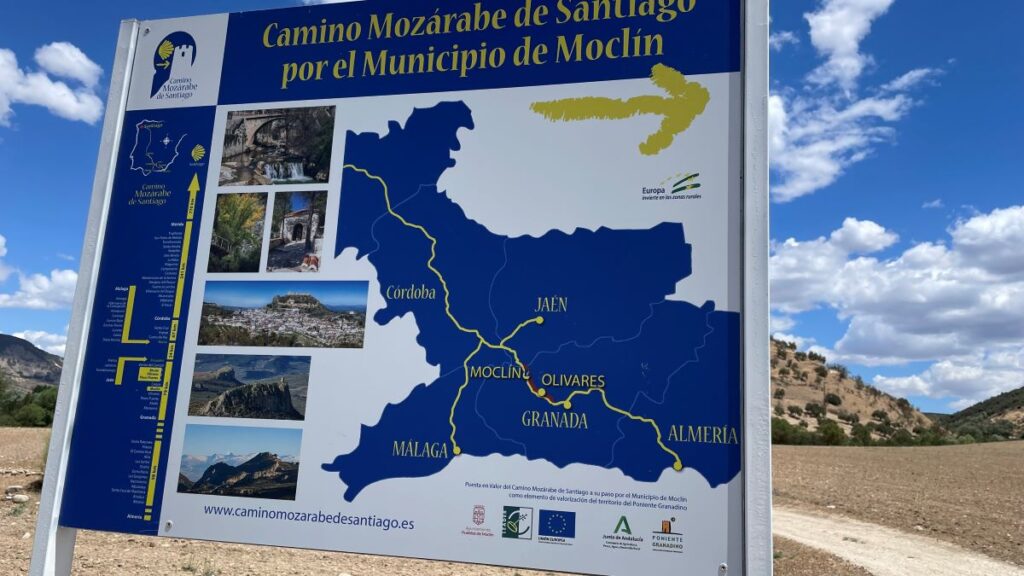
This Camino starts in the south of Spain – in Andalusia. You can start either from Almería or Málaga. The trails merge before Córdoba in the town of Baena, and then there’s a shared path to the city of Mérida. In total – it’s almost 500 km, but if you have a strong desire, you can continue along the Vía de la Plata route and reach Santiago de Compostela (about 1500 km).
Camino Mozarabe — these routes were restored by several Andalusian pilgrims’ associations with the involvement of regional and local institutions.
Caliphate Route – from Granada to Córdoba
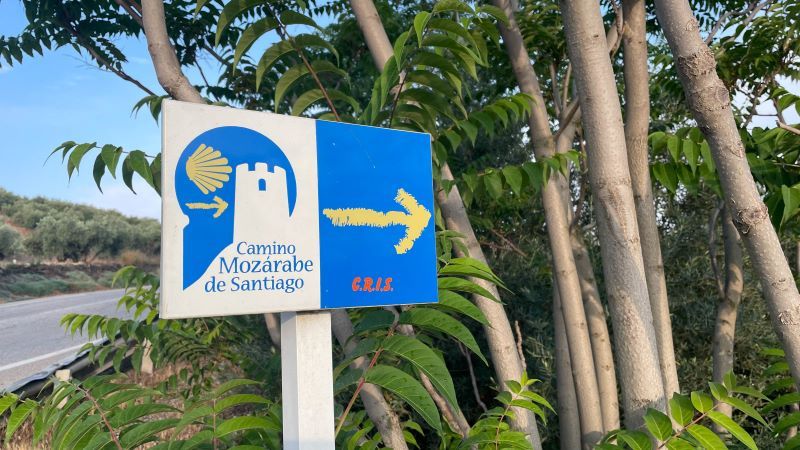
In many sections, the Camino Mozárabe follows the same path as the Caliphate Route, where we often encounter markers with towers – the symbol of this part of Andalusia. This route from Córdoba to Granada is for pedestrians and cyclists, aiming to popularize the Muslim historical and cultural heritage of cities that tourists usually just pass by.
We didn’t have many days, but the desire to hike in Andalusia was there. So, we chose a small and not too difficult segment of this route – from Granada to Córdoba.
Route Landscape
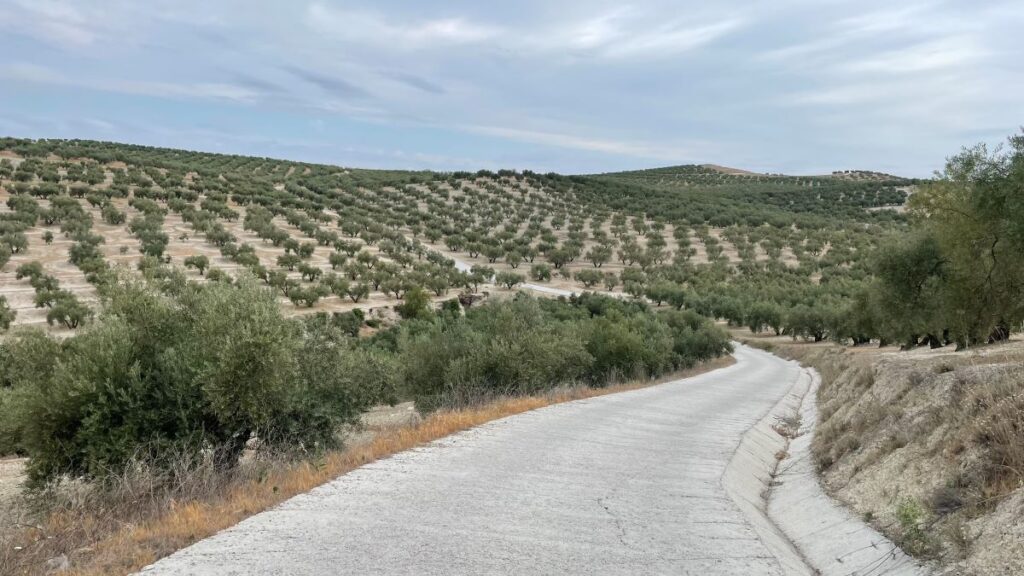
In reality, more than 80% of the route between Granada and Córdoba crosses olive groves. These are hills and slopes planted with olive plantations – you walk through them all the time. Vast expanses of olive groves, almost endless, covering everything your eyes can see. It feels like they never end: tens of thousands, hundreds of thousands, or maybe millions of olive trees all around.
Despite the delicate beauty, the monotony of the landscape over many days becomes a bit boring. And along the way, when we saw a town in the distance, it was a joyful feeling that finally we saw a place where we could rest and have something cool to drink. After a week, we got a bit tired of seeing olives – I think it’s very beautiful, but as they say, too much!
The length of the route is approximately 150 km of gentle hills of Andalusia, except for the steep climb to the village of Moclín (400 meters elevation gain over a distance of 5 km).
Between Granada and Córdoba, most of the route goes along dirt roads (compacted or loose stone) and to a lesser extent along asphalt and secondary roads. There is also a short section of the national highway N-432 (Granada – Córdoba – Badajoz), which carries a certain amount of traffic. You don’t have to walk much of it, but it’s very unpleasant, and there’s no alternative road. This national road has a wide shoulder, but here you must be very careful, especially when crossing it.
Distance Between Towns
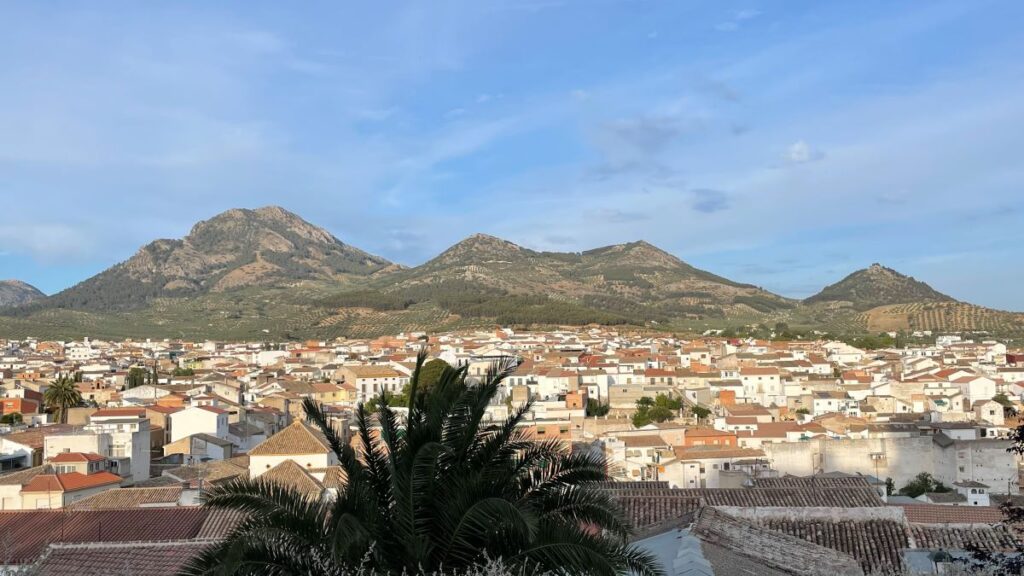
Another characteristic feature of the Mozarabic Way (between Granada and Córdoba) is the considerable distance between towns, with intermediate sections where there may not be a single café or a place to rest. You need to provide yourself with water and food, as there’s nowhere to get water, and there are almost no streams there.
There is very little shade – it’s pleasant to walk in the morning, but after 11 o’clock it’s hot. Not every stage has places to stop – that is, intermediate villages are not everywhere. Several times we walked 25 km without a single village. We carried water and food ourselves. There are no water sources here as on more popular routes.
In some stages, you sometimes have to walk along the highway. Unpleasant. There are also stages where it is impossible to travel by bus because they do not coincide with the highway. You walk through fields all day. Not even a taxi would come if you get unwell. So you need to understand this and count only on your own strength.
Markings
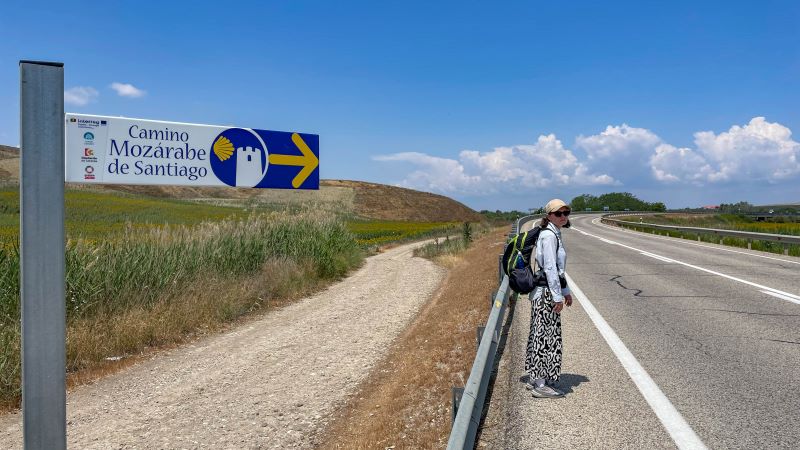
The route is marked: there are yellow arrows and posts. But because few people walk it, locals look at pilgrims with curiosity. Although bartenders here are traditionally more aware – they have no problem giving stamps, show you where to go if you lose track of an arrow in town.
Accommodation
Albergues are available here, but not everywhere. Prices in them start from 20 Euro per bed, sometimes donativo. A double room in a guesthouse – 45-50 Euro, so there was no point for us to stay in albergues.
Each stage is about 20-25 km between small towns, where you can find overnight accommodation, food, a pharmacy, a store, etc. Interestingly, each of these towns has its own fortress or castle. But along the way, you can spot the remains of watchtowers on the hills, which are also indicated on the Camino Mozarabe signs.
Cafés and Food
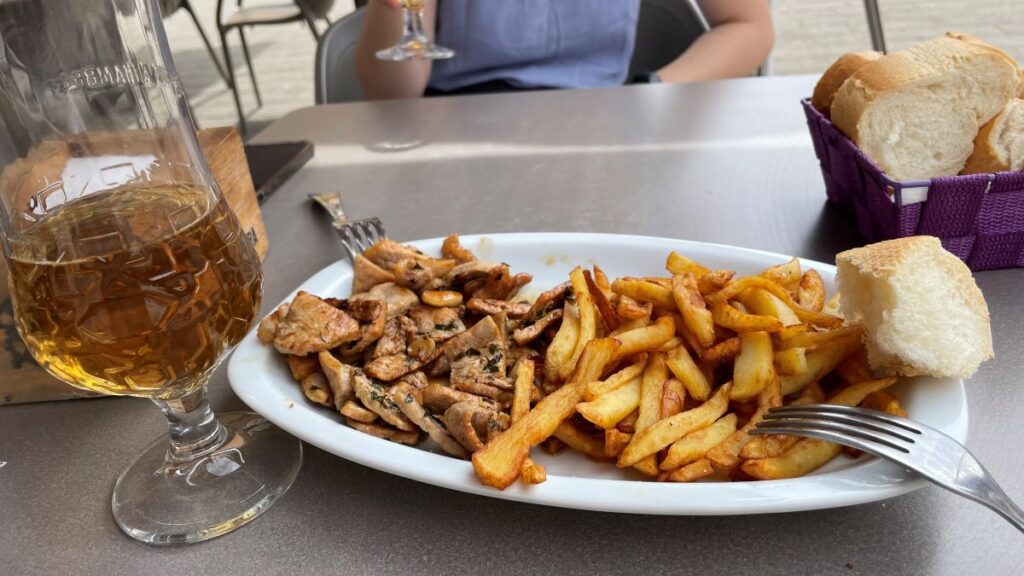
In stores, you can buy jamón, cheese, bread, vegetables, and fruit – this is for snacking on the way. And if you stay overnight in apartments with a kitchen – you can cook hot meals. But such accommodation is more expensive than albergues and pensions. That’s why we looked for cafes that offer the Menu del dia, which costs 10-11 euros there.
We ordered this set lunch every day, because there was nowhere to cook. But it’s a great reason to try various dishes of Andalusia – Salmorejo soup, oxtail, flamenquín, fish or seafood – these are also often included in the dish of the day. Unlike the northern Caminos, local bars do not serve tortilla for breakfast. So with coffee, they may offer toast or a bocadillo with cheese, tomatoes, and jamón.
Where to get the Credencial and whether stamps are placed there
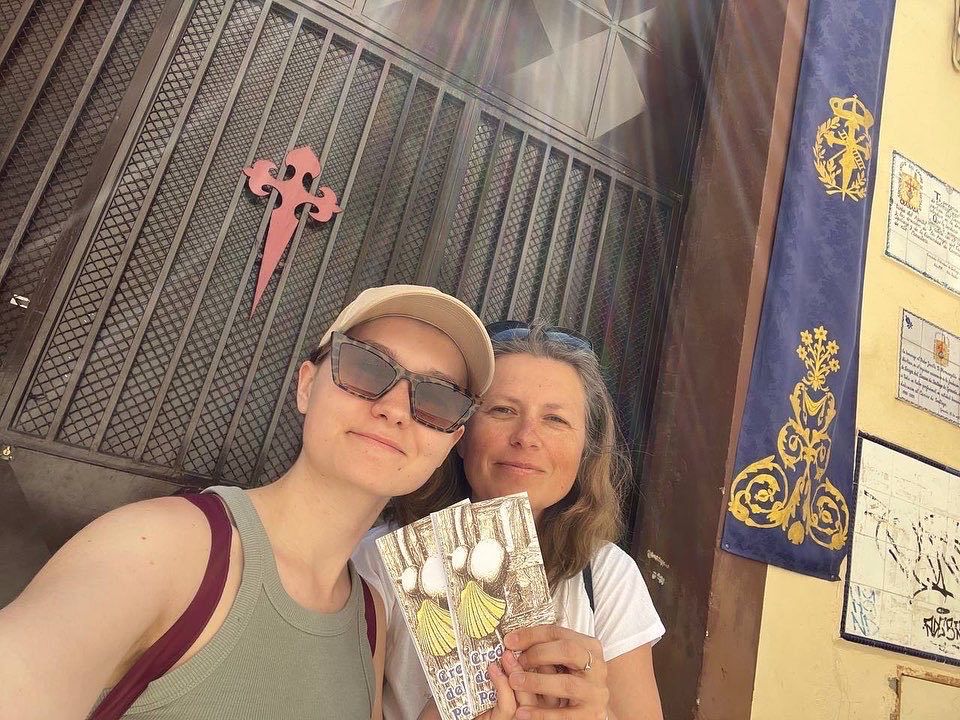
We got the credencial at Monasterio Comendadoras de Santiago, but you can also buy it at Granada Cathedral. The price is 2 Euro.
Stamps along the route we got in bars and pensions – there were never any extra questions. The last stamps we got were at Córdoba Cathedral – the Mezquita. But we weren’t planning to get the Compostela – we did everything simply for the memory.
What to take on the Camino Mozarabe
We absolutely didn’t need a sleeping bag – we stayed in guesthouses with bedding and towels. But if you plan to stay in albergues – you will need one. It’s better to take a light sleeping bag liner – it will be enough in the heat.
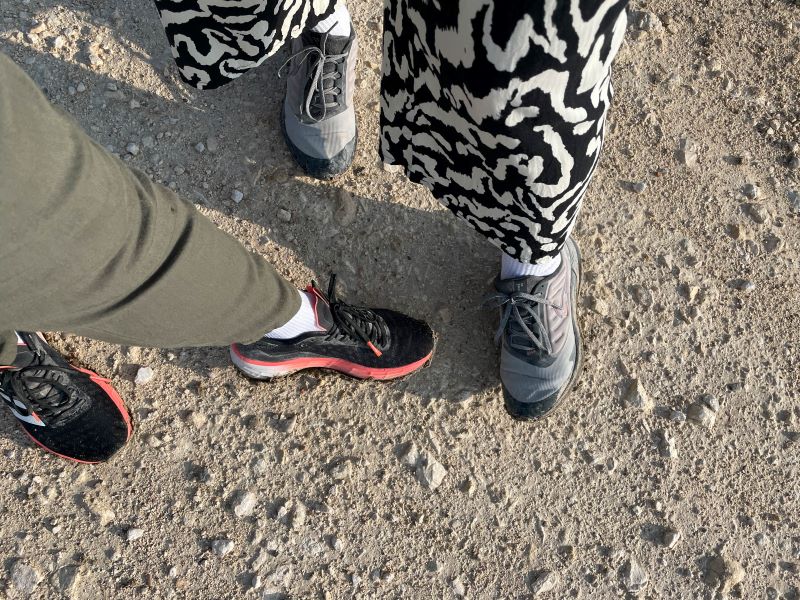
On the stretch between Granada and Córdoba – trekking boots are not needed. Sneakers are enough. But if you plan to walk other parts of this Camino – you’ll have to climb mountains, where you need shoes that support the ankle. Trekking poles will also be needed in mountainous sections.
Absolutely necessary – a panama hat, or sunhat, or cap, sunscreen and sunglasses. Here the sun can burn your head even in spring and your skin will burn even under clouds.
Other items – as for the classic Camino, you can read about it here: Camino de Santiago – how to prepare for the pilgrims’ way?
Season – When is the best time to walk the Camino Mozarabe
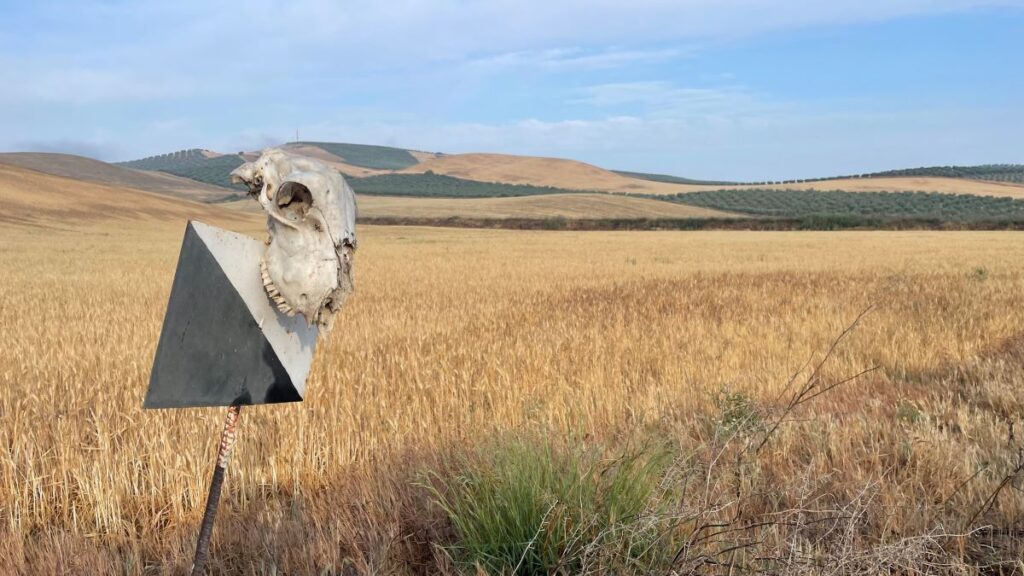
This is the south, so you need to avoid the summer months to walk this path – it’s really dangerous, as in summer temperatures often reach 40 degrees official temperature (in the shade). Along the long trails through olive groves the sun blazes and there is almost no shade. Even a walk in spring with air temperatures of +27–28 degrees in full sun is very exhausting. And with heat waves of ten–twelve degrees more, it’s dangerous for your health.
The best time to go is spring – March–April. We took the risk and went at the beginning of May – it could already be uncomfortable, but we were lucky with the weather, it was quite comfortable at +25 degrees, although even then it was hot.
In autumn – October will be a rather comfortable month for the Camino Mozarabe. In November and December, rain is possible.
Dry heat is a powerful and quiet dehydrator, so even at moderate temperatures we must take enough water with us, drink often, even if we do not feel thirsty, and avoid alcoholic drinks, at least during the walking stage. Of course, a hat or cap is mandatory on this route.
Why Mozarabe?
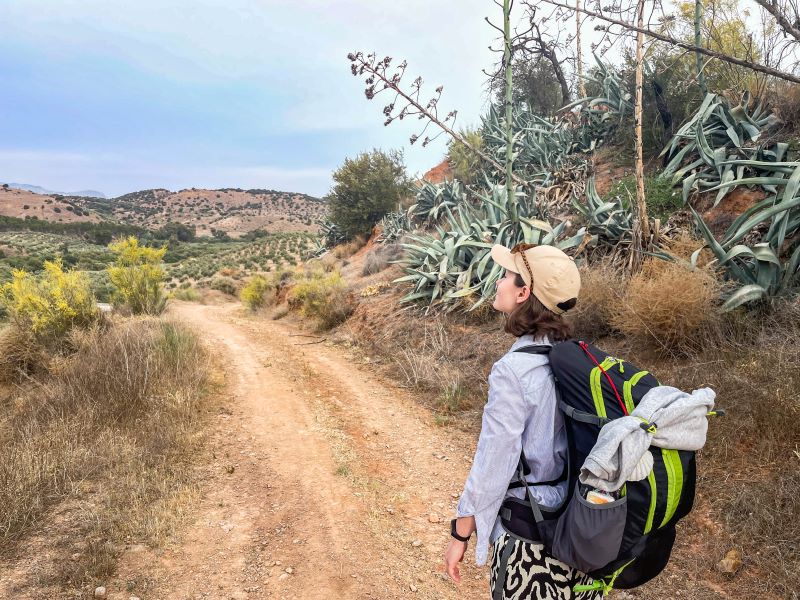
I really wanted to do this route in February 2023, but due to the loss of a loved one, I had to stay home. And in May it finally worked out and it was much better even though it was a bit hot. It was great that I walked this route not alone, but together with my daughter – it was much more interesting and not as boring as if I traveled alone among the olive hills of Andalusia.
So – together with my daughter, we did part of the Mozarabic route from Granada to Córdoba – from May 14 to 21. I really wanted to somehow combine the Way with historical and cultural impressions, and I had never been to southern Spain before.
This Camino is very different from all the previous routes I have walked (Frances, Norte, two Portuguese ones). It was a bit of a test – stages of 20–27 km each, without intermediate villages, cafés, or water. Not even benches to sit and rest. And as for shade, I won’t even mention it. Only endless fields of olive trees. That’s at best; at worst – right along the highway.
If you want to be alone – walk the Mozarabe )))
Actually, we did see pilgrims – three Germans walked parallel to us and, at the end, we met another Frenchman and a Spaniard. No one else.
But I planned our route in such a way that the endless olive fields were balanced by our emotions from visiting Ronda, Granada, Córdoba and Seville, which wouldn’t have been as spectacular without the Camino. It’s truly a great combination – a walking Camino and cultural sites at the beginning and end of the walking journey.
Route Stages
Depending on the weather and physical ability (which was our case), the number of stages can be reduced or increased.
Day 0: Granada
We arrived in Granada by train from Ronda, where we rested after a difficult flight with an overnight layover in Milan–Bergamo. We walked from the train station to the city center – we had booked a hostel in the Old Town.
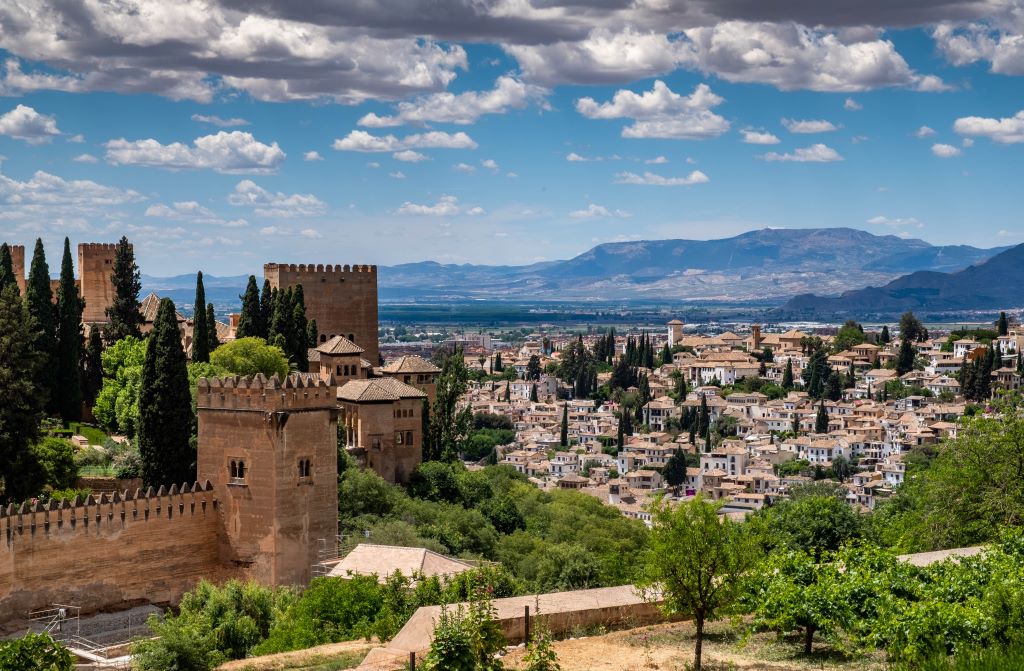
The plan was simple: see Granada in a day, get our credenciales, and most importantly – visit the Alhambra, for which I bought tickets two weeks before the trip. This is one of the most popular attractions in Europe, so getting a ticket at the ticket office in May is just unreal.
We found the credenciales in the Monasterio Comendadoras de Santiago, from there we walked to the Alhambra, where we spent about 5 hours wandering the beautiful gardens and the Nasrid Palace. It’s a very popular place, but the unrivaled beauty of Moorish architecture is worth it – buy tickets in advance and see it all with your own eyes.
Then we walked around the city, bought shrimp at the supermarket, some wine, and cooked it all in the hostel – there was a cool kitchen and patio with a pool. This dinner was a big mistake – in the morning, Ksusha would wake up with indigestion from those shrimp and have to walk with a fever.
The evening in Granada ended at the viewpoint near St. Nicholas Church with a view of the Alhambra at night.
Day 1: Granada – Atarfe – Pinos Puente – Moclín
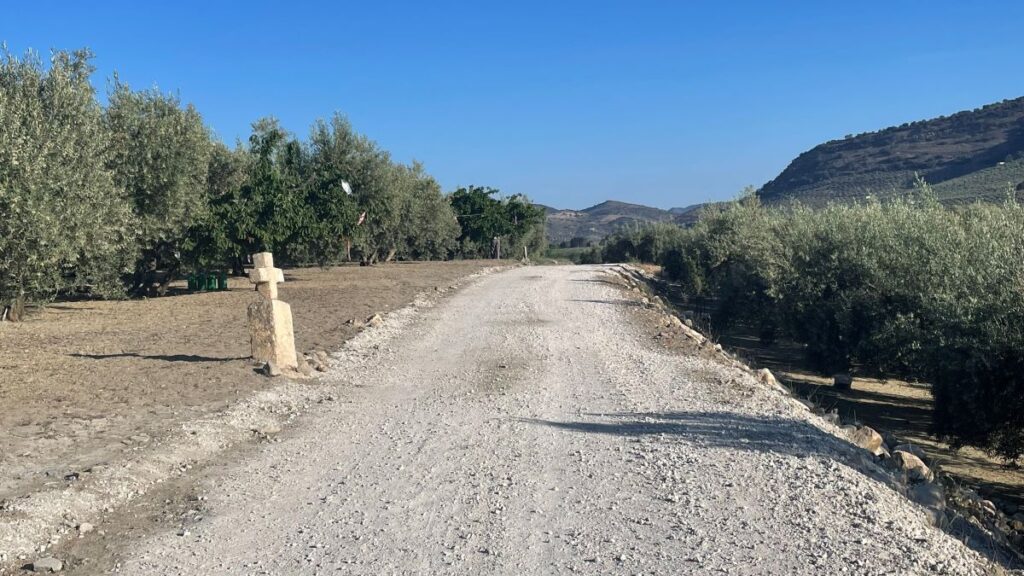
It so happened that on the first morning, my daughter woke up with stomach problems. She even got a fever, and we realized she wouldn’t be able to cover the planned 30 km on the first day.
We decided to skip the walk from Granada to Pinos Puente – we would have had to walk the suburbs of a big city and then along the highway anyway – nothing critical missed. But even after walking 10 km along the highway, Ksusha felt worse and there was no question of her being able to hike up to Moclín (5 km gaining 400m elevation). We found a taxi and got to our accommodation, where she spent the evening with a fever.
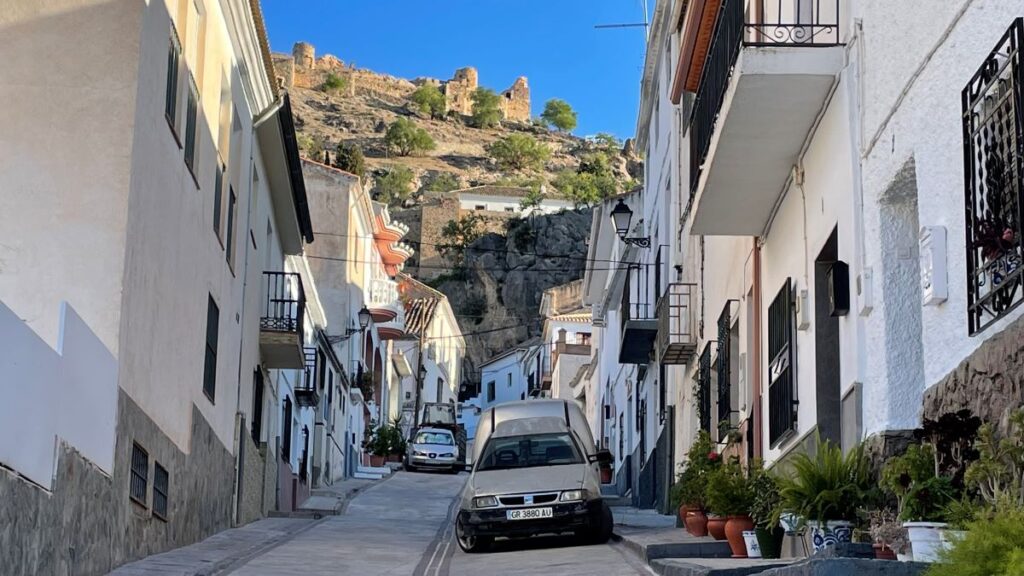
We stayed in wonderful and inexpensive apartments at Casa la Cabra – the owners treated us very well, brought medicine, a thermometer, and water.
Tip: In this stage, most of the route goes along the highway – so I recommend taking the bus. There’s no point walking and breathing car exhaust. I also don’t recommend stopping in the intermediate town Pinos Puente. There’s nothing to see, not even decent accommodation. And the atmosphere isn’t great – large stinky factories don’t add coziness to the town.
Day 2: Moclín – Alcalá la Real
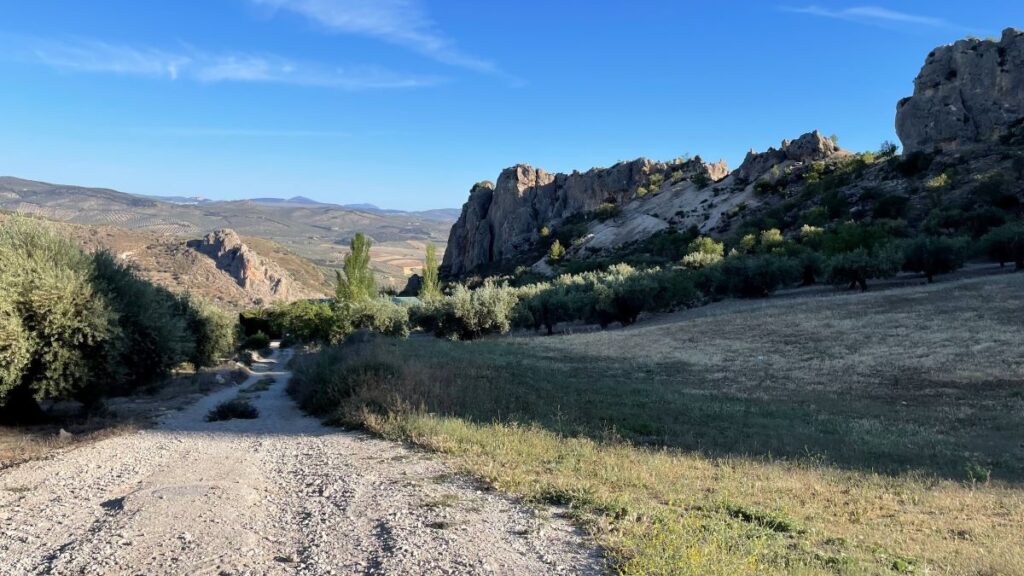
In the morning, my daughter felt much better, and we tried to walk the first part from Moclín to Alcalá la Real. It was very cool and pleasant to walk, but at first, we had coffee and tea in a bar, and then walked into the olive groves.
If you walk before 11 am, it is very easy and pleasant, especially if you go through olive groves and not along the highway. Walking along a busy road is very unpleasant and dangerous. On this stage, there is a 2 km stretch like this.
But then the heat started, and we crawled uphill – it was a bit hard. But in the middle of the road, we found a village where we could rest with cold orange juice and a tasty bocadillo. By the way, a very nice bar Cafe Bar El Hogar – tasty, inexpensive, and just what you need for a meal halfway.
Here we had to decide – to continue on foot or take the bus, depending on Ksusha’s health. We decided to walk further – in total, we covered 27 km that day, I got a bit sunburned and in the evening felt like a red tomato.
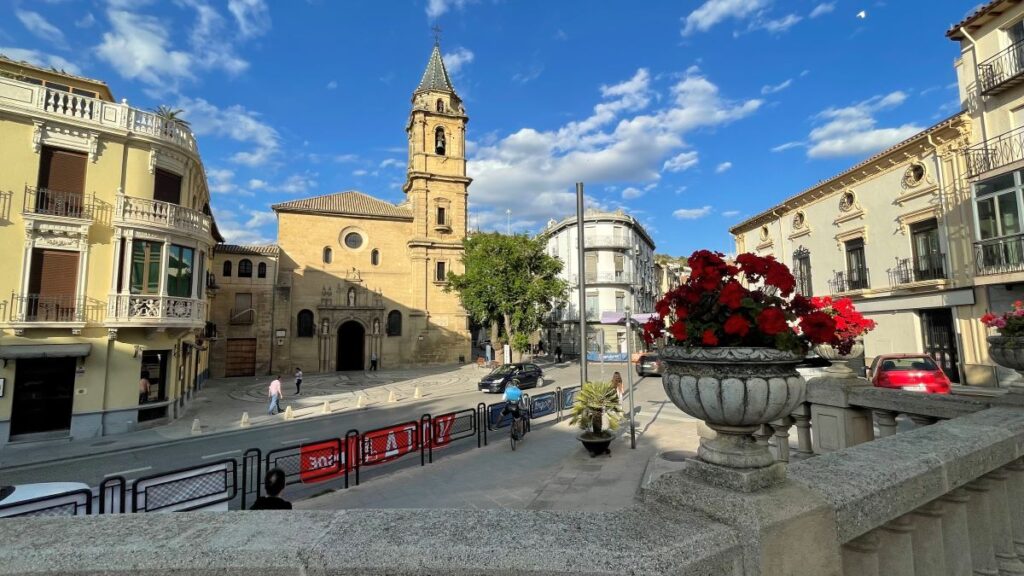
We stayed again in the Hostal Rio de Oro, which had private rooms with their own shower. In the café, we ate delicious chicken with tomato salad, had a glass of wine, and before going to bed took a walk around town. There was a lot to see here – a huge fortress on a hill, old houses in the center, and a beautiful old bar where we had wine at sunset.
Day 3: Alcalá la Real – Alcaudete
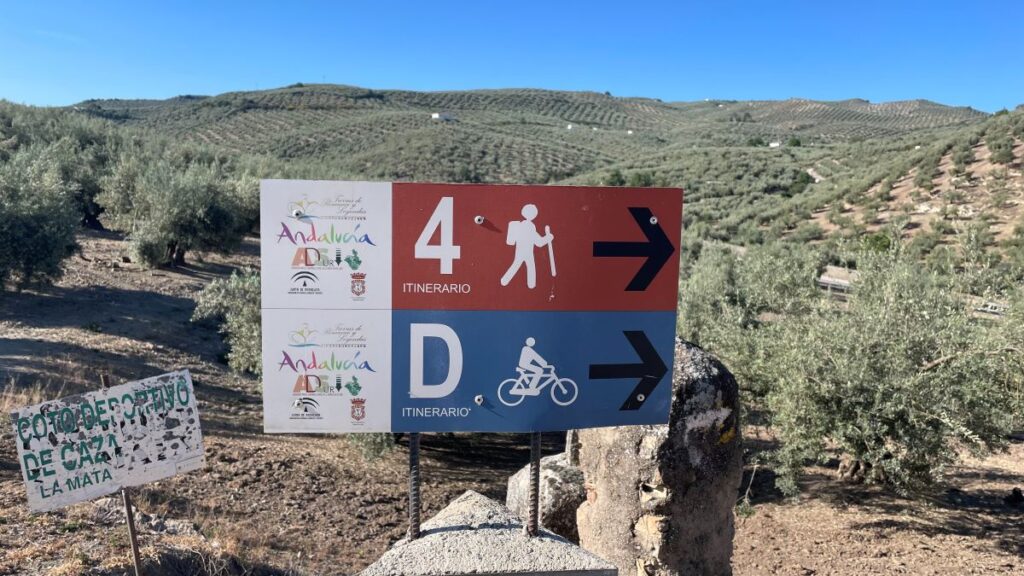
Today we had about 25 km again, and again there was a small village in the middle of the stage with three bars (only one was open, the one by the road). In the morning, we ordered coffee with a croissant in the bar next to the hostel, which opened at 7 am. We left at 8, and in the cool it was a very nice walk along picturesque rural roads.
Somehow we left the city and found ourselves in cherry groves. Of course, I couldn’t resist picking some ripe cherries. Some were not very ripe but were tasty. After an hour, they made me want to walk a little faster to reach the bar and its toilet sooner. Good thing it was along the way – in the next few days, we wouldn’t be so lucky.
Alcaudete
In the bar, apart from coffee and beer, there was no juice, so a cold Fanta revived us, and we walked out into the heat, wearing long-sleeved shirts. That day, we kept getting lost and going the wrong way. Because of that, we had to walk 2 km along the highway – we turned at the wrong place and walked as fast as we could. Then, endless olive groves began, with not an inch of shade. It’s hard because there is nowhere to hide – at all. Fortunately, we had the energy to walk quickly – around 2 pm, we reached our pension in Alcaudete, where we managed to order a menu of the day for 11 euros.
By the way, most places offer lunch until 3–4 pm. Later, if you don’t make it in time, you’ll have to wait until 8 pm. That’s Spanish reality – siesta, late-night dinners, and all that. You need to know this in advance so as not to go hungry.
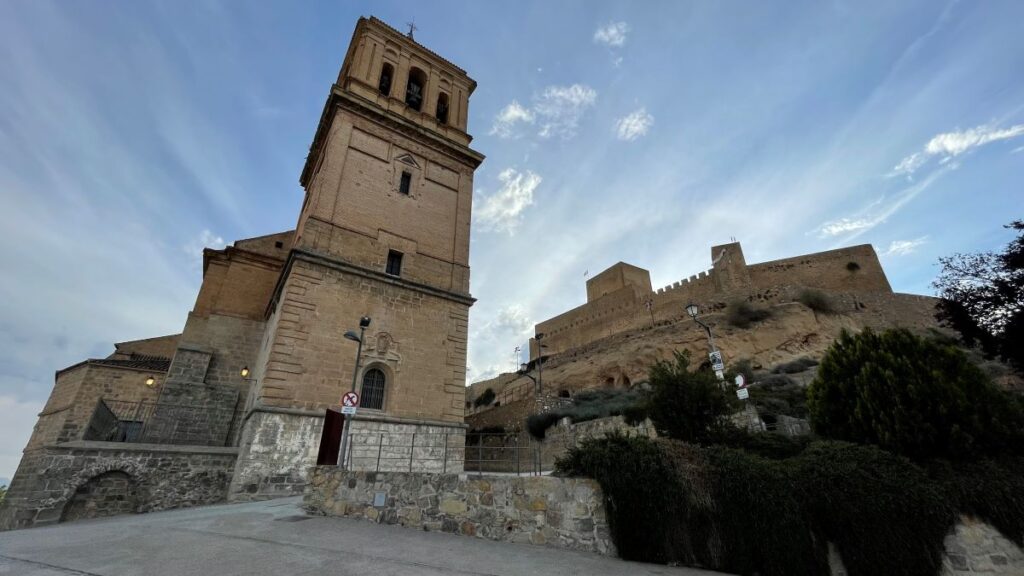
The Hidalgo pension where we stayed was not in the historic part of the town. But we rested a bit, took a shower, and after seven we went to see the old part of Alcaudete. We also found a fortress here, built by the Romans, then rebuilt by the Moors, and later all of this went to the Spanish crown (the story of almost all fortresses, castles, and palaces in Andalusia).
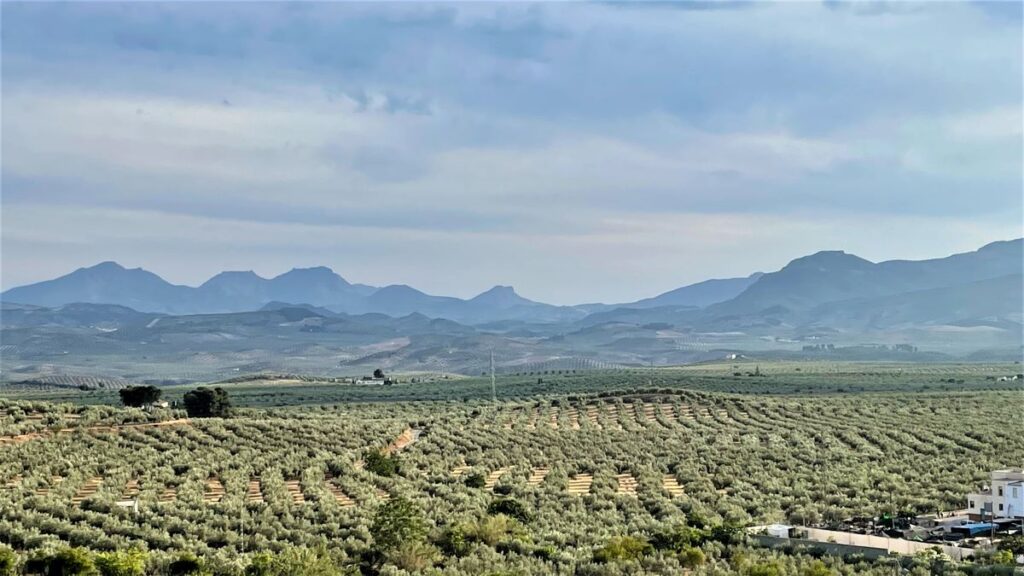
Near the fortress stands a huge cathedral, and from its viewpoint there’s a stunning view of the valley below. It’s a classic view of Andalusian olive groves – the scale is impressive, and no wonder, because 80% of the world’s olive oil is produced here. And we walk through all of this, but it was a conscious choice (well, almost conscious))).
Day 4: Alcaudete – Laguna del Salobral – Baena
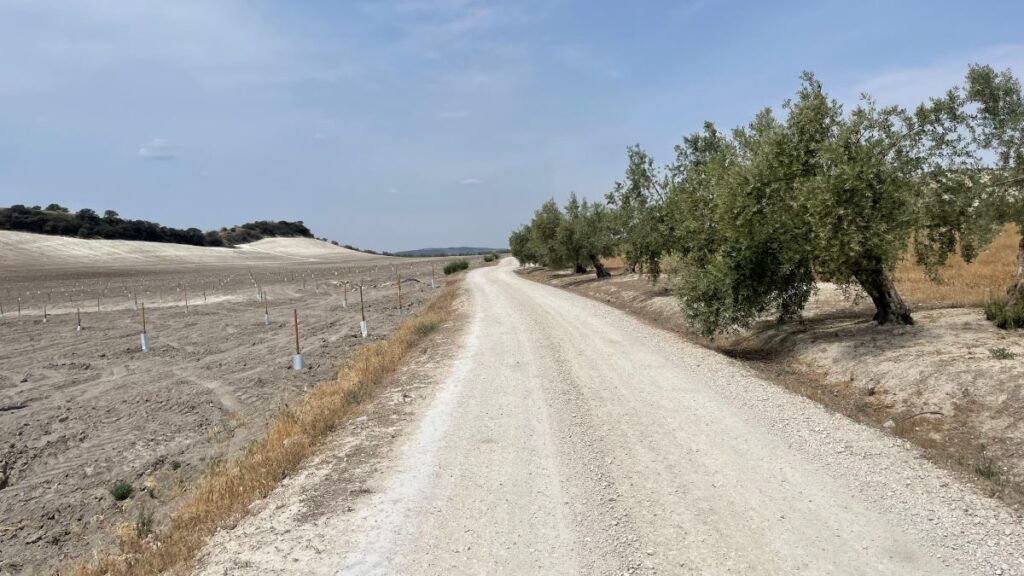
Morning, we head into the groves again, down into the valley. The guidebook predicts a stage with no villages in between – you need to get water and snacks and carry it all with you. But on the way we’ll see a lake – Laguna del Salobral, a nature reserve where various birds live, and flamingos fly in winter. That’s interesting – there will be a place to rest with a good view. Haha.
Laguna del Salobral
Half of the way goes to the lagoon – mostly through olives, a bit on the road. But when we reached the lagoon – this is what we saw!
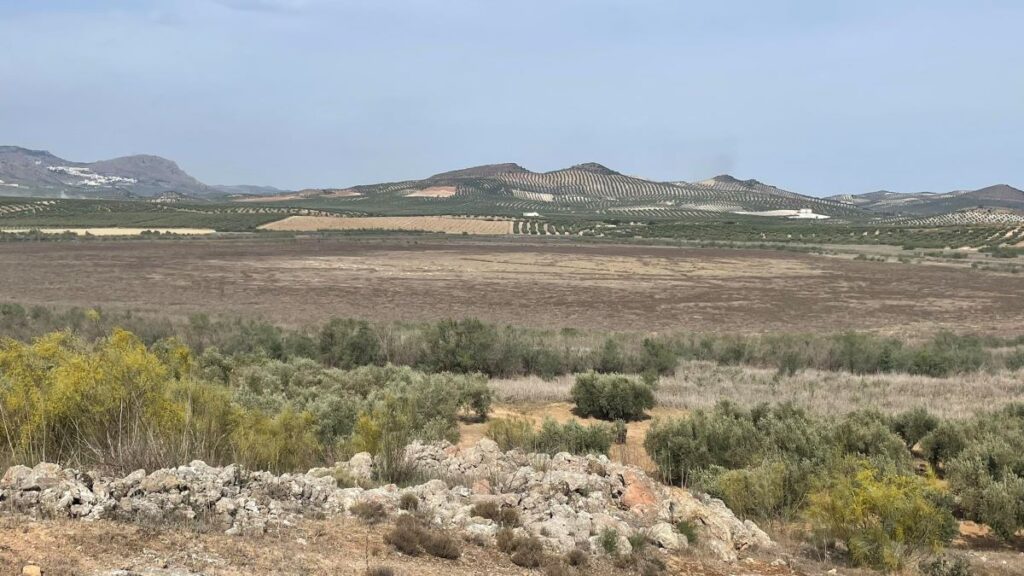
There was no lagoon with water here in May – the water was gone, leaving bushes and a grassy bottom. The birds were flying, but not many of them, and there were no trees to sit and rest under, nor were there any benches at all. A strange reserve, although there was a pedestrian path, and a few people were walking along it. Well, not much fun in the low season for birds and water.
We snacked on jamón and peaches under the olive trees and moved on. On the opposite side of the valley, mountains could be seen, and on them, a wonderful white town – Zuheros, one of the most beautiful white towns in Andalusia. I had a mad idea to make a detour there, but we were too tired from the heat, and that idea was quickly replaced by the thought of getting to Baena as soon as possible.
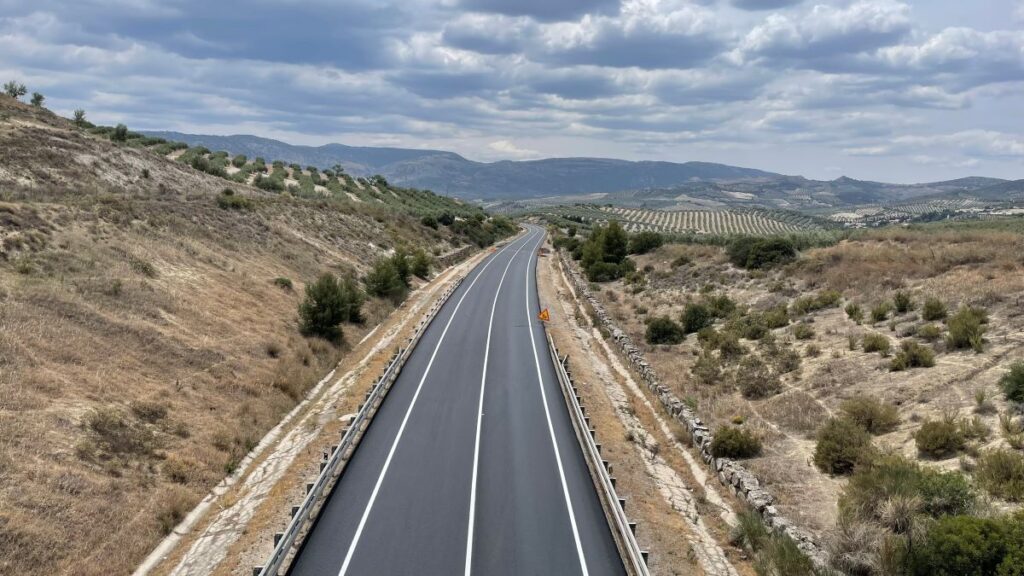
Before entering the city, you have to pass by a factory processing olives. Prepare for the unpleasant smell from it, which spreads everywhere. What does it smell like? Kind of like an overripe watermelon in a dumpster. Not exactly enjoyable to walk and breathe this in.
Baena
Here, we were awaited by Hostal Los Claveles – for 45 Euros we got a wonderful room with a shower, which had access to a balcony! It was the first time in my life to shower and step right out onto a balcony – just beautiful!
In Baena, we had a chance to stay in an albergue, but we didn’t bring sleeping bags this time, and those who had left reviews noted there’s no bedding there. The price for a guesthouse was the same + a shower with a balcony, so we lost nothing.
We ate at the nice café Cafeteria Cerveceria Tapas MAGALUF – try the traditional Andalusian dish here – flamenquín. It’s a pork cutlet, rolled into a tube, with cheese, jamón, and nuts inside. Hearty, but tasty.
Day 6: Baena – Castro del Río
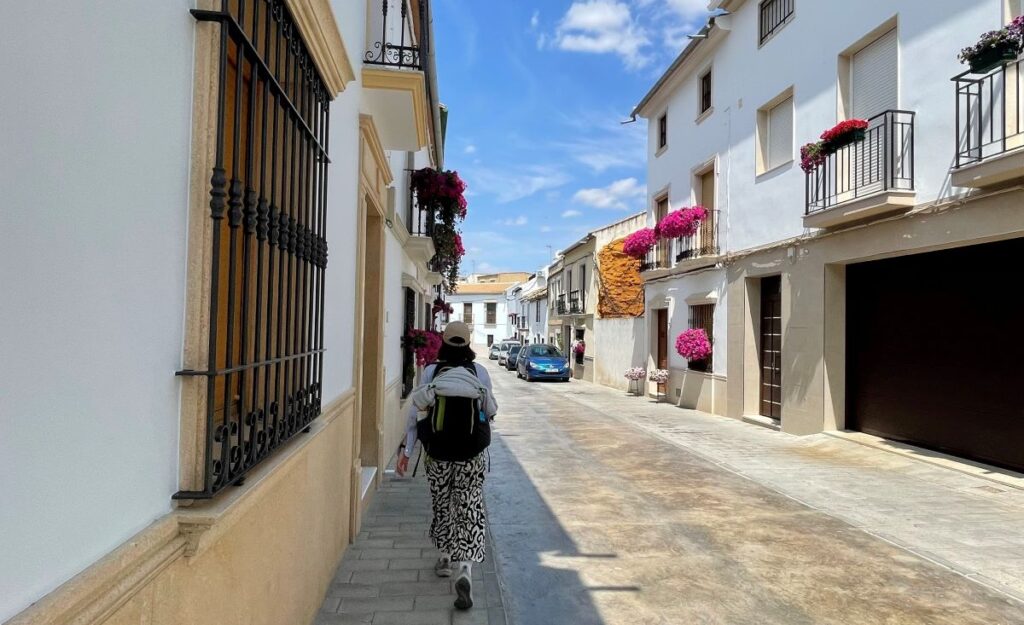
In the morning, we left Baena, but before leaving the city, we had the traditional coffee at a bar open at 7 am. The men at the bar stared at us as if we had come from the moon. Pilgrims don’t come here often )))
At first, the way from the city goes along the road, and then it leads to a dirt track through olive groves. The forecast predicted rain today, but the farm workers, for some reason, all went to turn on the drip irrigation. Yes, throughout all these endless plantations there are flexible plastic pipes carrying water. Every now and then the trees are watered, because Andalusia is very hot and the trees could die.
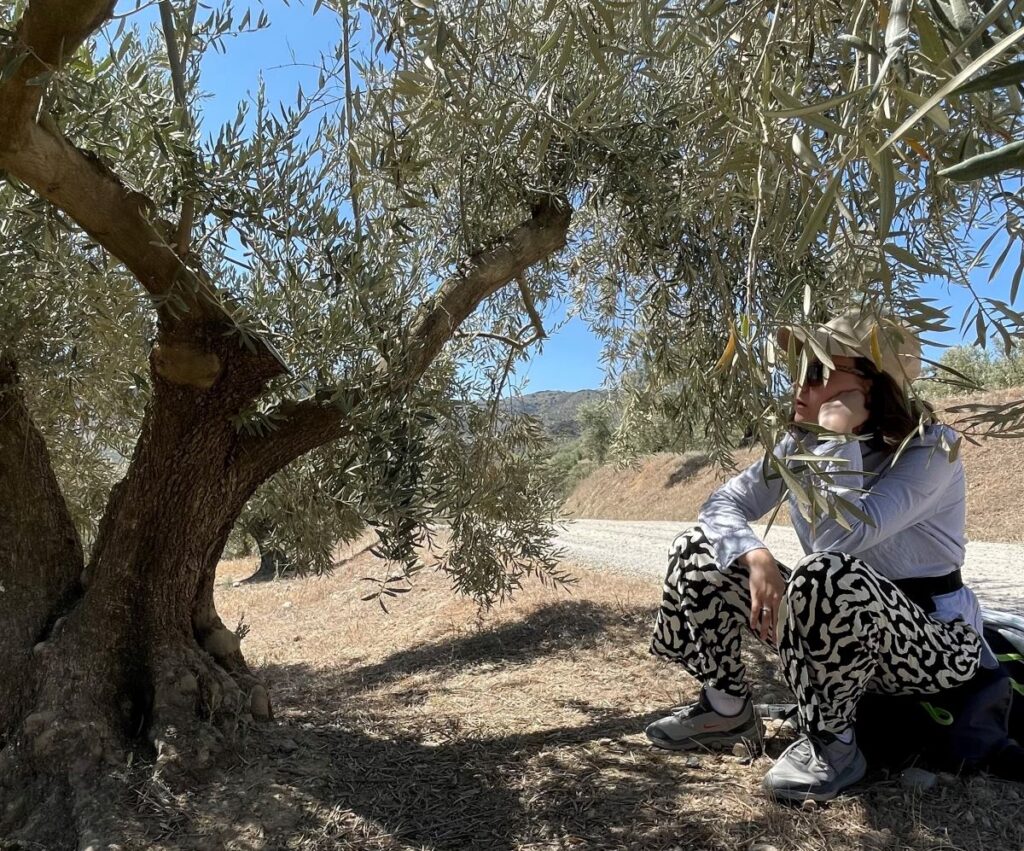
We walked about 22 km that day, with not a single village on the way. As usual, after 11am the heat came, but up ahead we saw clouds coming our way. When we reached the town, the sun was still shining. We checked into Casa Rural La Villa and ordered the set lunch with delicious salmorejo soup, fried fish, and watermelon for dessert.
When we went out for a walk around town – a downpour started, which we had to wait out in the patio of one of the houses. It was very pleasant to watch the rain, which had not been there for more than three months (according to locals), washing the dust from the stone streets of Castro del Río.
Day 7: Castro del Río – Espejo – Santa Cruz
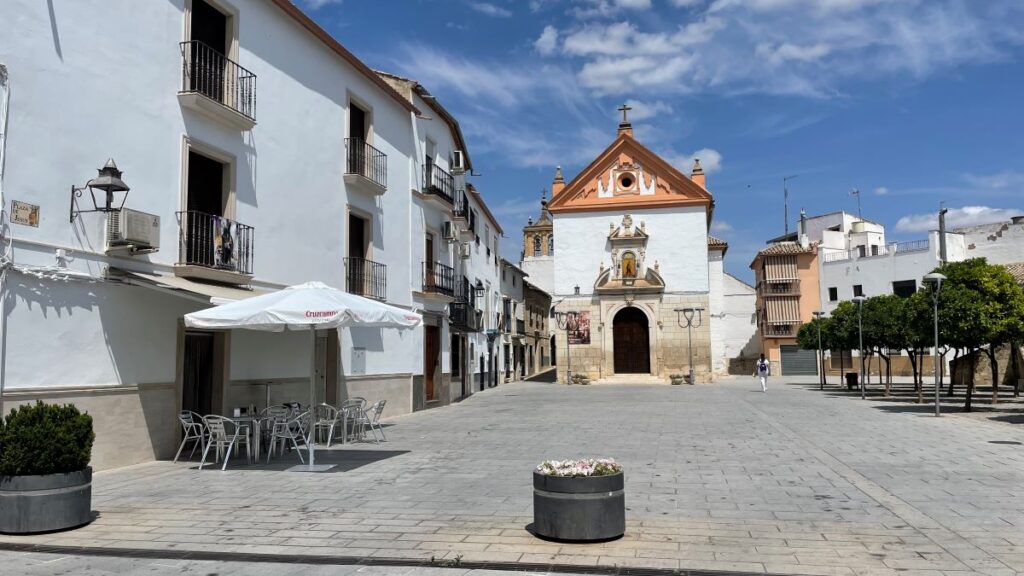
Today is a nice stage, with a small town Espejo waiting for us in the middle. That means you can take a break, have a coffee, and order something tasty for breakfast. We woke up early because workers under our pension were laying new paving stones. They even lived in our pension and talked loudly all evening in the corridor.
But after you’ve walked about 25 km in a day, you don’t care who’s talking behind the wall anymore. We cheerfully walked towards Espejo, but the road took us through the fields where it rained yesterday. We had to walk through mud, trying not to leave our shoes in it.
Espejo
When we returned to the dirt road, the sun came up to dry the mud on our shoes a little. After two hours we reached the turn for Espejo, which stood on a high hill, and from afar you could see its beautiful traditional fortress.
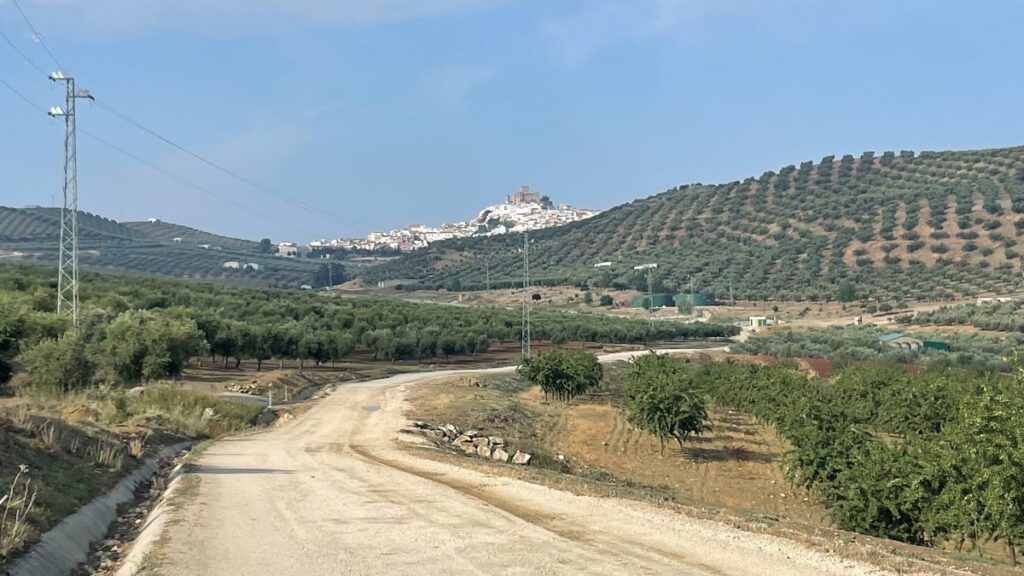
We puffed a little on the climb – and then we were in the town center, where the only bar opens at 11. We ordered coffee and bocadillo with tomatoes, cheese, and jamón. It was pleasantly sunny but not too hot – after the downpour, the temperature dropped to +22 degrees. Very pleasant to walk, there was a breeze, and it wasn’t hot at all.
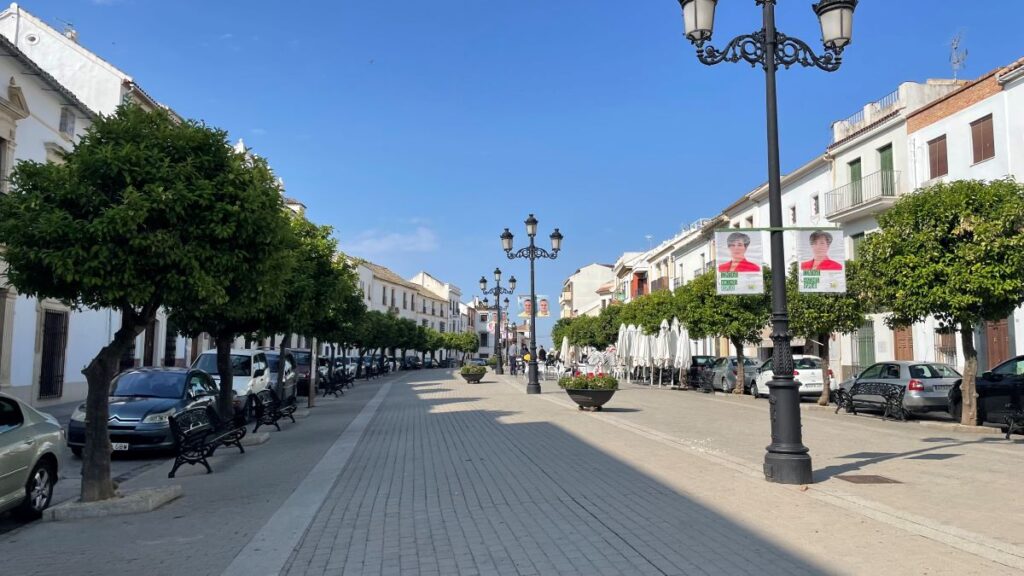
We walked through the town, took in the sights from the fortress and its viewpoints. Then we walked further, downhill. A very beautiful town, especially looking at it from the direction of Córdoba. A horse-drawn carriage passed us, I turned around to photograph it. It felt like I’d been transported 200 years back – such wonderful landscapes: horses, olives, and a fortress on a hill. A very beautiful place.

Then we walked through sunflower fields, and before entering Santa Cruz, arrows led us onto the highway. Here we walked for about 2 km – unpleasant and dangerous – be very careful here!
We stayed in the only Hostal Casa Jose in town – with its own restaurant. We ordered the set lunch, ate cutlets, salad, and ice cream for dessert. The village was so small there was nowhere to go. We lazed all evening at the hotel and went to bed early, as tomorrow would be a hard day for us.
Day 8: Córdoba
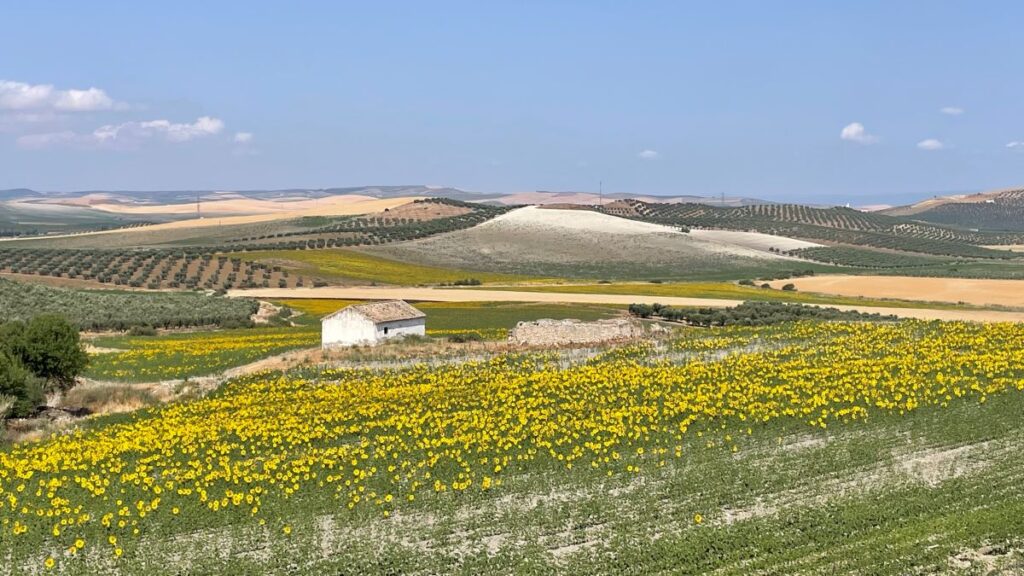
But in the morning, we woke up a bit late – we overslept. And the very thought that we faced 25 km of hills and fields, where there are not even olives anymore, made us consider – maybe forget it? Maybe we should take the bus to Córdoba and enjoy this wonderful city?
That’s exactly what we did, and not only us – our fellow German pilgrims also decided, why suffer if ahead lies Córdoba and the Mezquita, where we planned to finish this little Camino.
The bus for 2.5 Euros took us to the edge of the city, from where we walked to the Roman Bridge, with a stunning view of Old Córdoba.
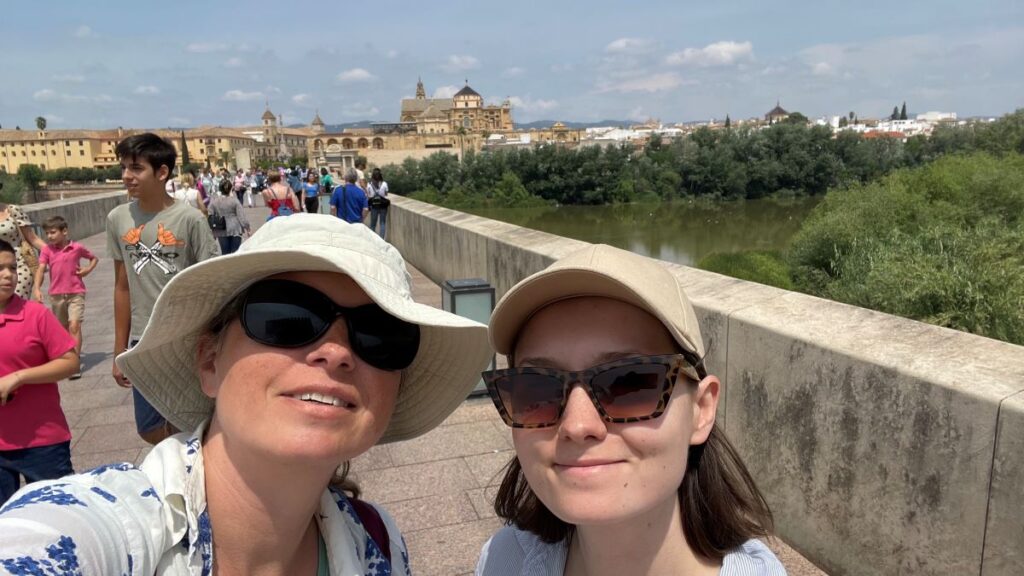
We dropped our things at the hotel until check-in time and went to the Mezquita – to get the last stamps in our credencials. It’s very strange to finish the Camino not in Santiago de Compostela, and even stranger – in a former mosque that, in the 15th century, was converted into the Córdoba Cathedral.
I recommend reading – Two Days in Córdoba – What to Do and What to See
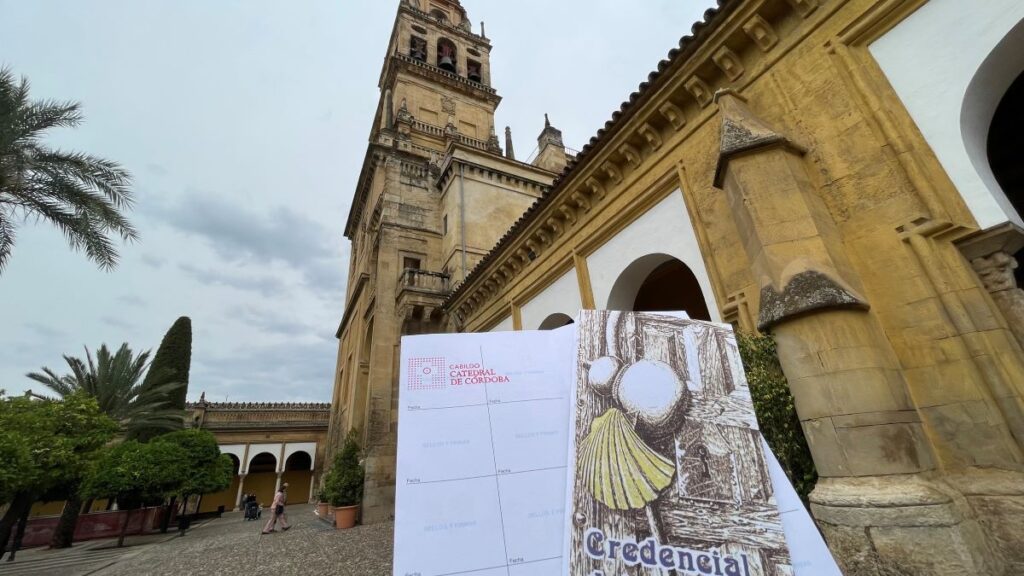
We finished the Camino at mass in the Mezquita – a former huge mosque, which after the Reconquista became Córdoba Cathedral. Very odd feelings from such an ending, but I love variety – the Camino does not always end in Santiago.
But I hope to come back there again someday.
My conclusions about the Camino Mozarabe
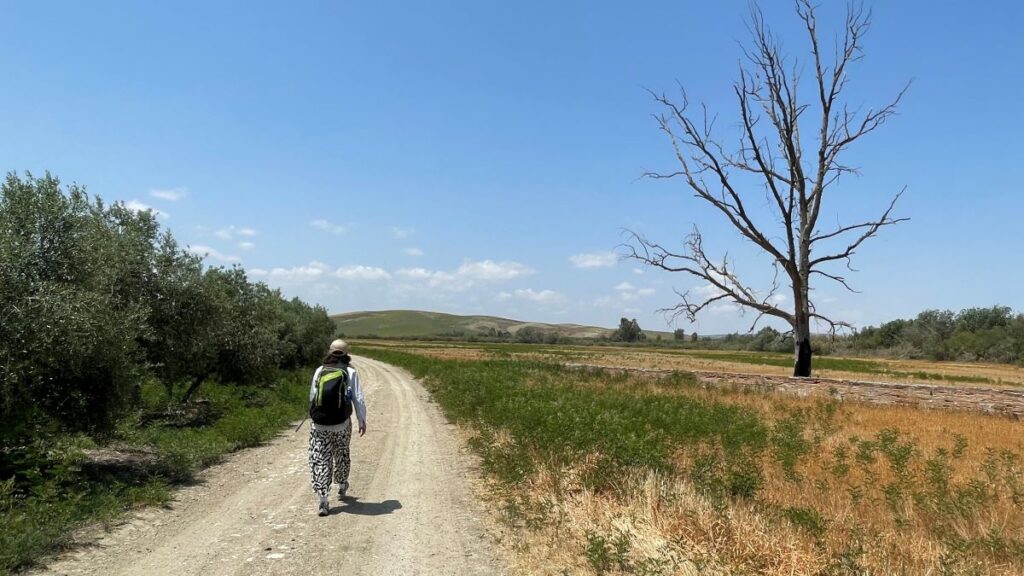
There are Caminos in Spain with excellent infrastructure, lots of albergues, cafes, restaurants, and no problems with water sources. And there are other – “wild” ones. So, if you are not ready for the challenges of being alone, or carrying water and food with you, not seeing other pilgrims – you shouldn’t go on the “wild” caminos.
“Wild” caminos are fundamentally different from the popular ones in many ways – the lack of water and food in many sections, sometimes the arrows disappear for tens of kilometers, there are problems with accommodation. And what is absolutely certain – you are unlikely to meet companions here.
But, if you are looking for variety, want to combine cultural and historical exploration of this country with walks between villages and towns, confident in your strength (physical and mental) – you should try a little bit of the wild Camino Mozarabe. At least this section – from Granada to Córdoba, which is the easiest on this route.
All the organizational difficulties of this Camino are more than compensated for by the bright pictures of the surrounding landscapes and the very rich cultural and historical component.
If you are no longer a beginner in hiking – highly recommended!
What you need for a trip to Spain
- Don’t save on medical insurance – it’s convenient to buy online on the HotlineFinance portal. Health care in Spain isn’t cheap, but for a small amount you can get insurance covering 30,000 Euros.
- If I don’t stay in albergues, I book hostels or pensions through Booking.com. I do it in the evening for the next day.
- I buy bus tickets in Spain on the website of the Spanish carrier Alsa.
- Train tickets in Spain – on the website of the Spanish railway company Renfe.
Useful articles and links:
- Free Barcelona
- Free Madrid
- Camino de Santiago – how to prepare for the pilgrims’ way?
- Hotels in Barcelona – which neighborhood is best to stay in
- Toledo – a city for a day trip from Madrid


