
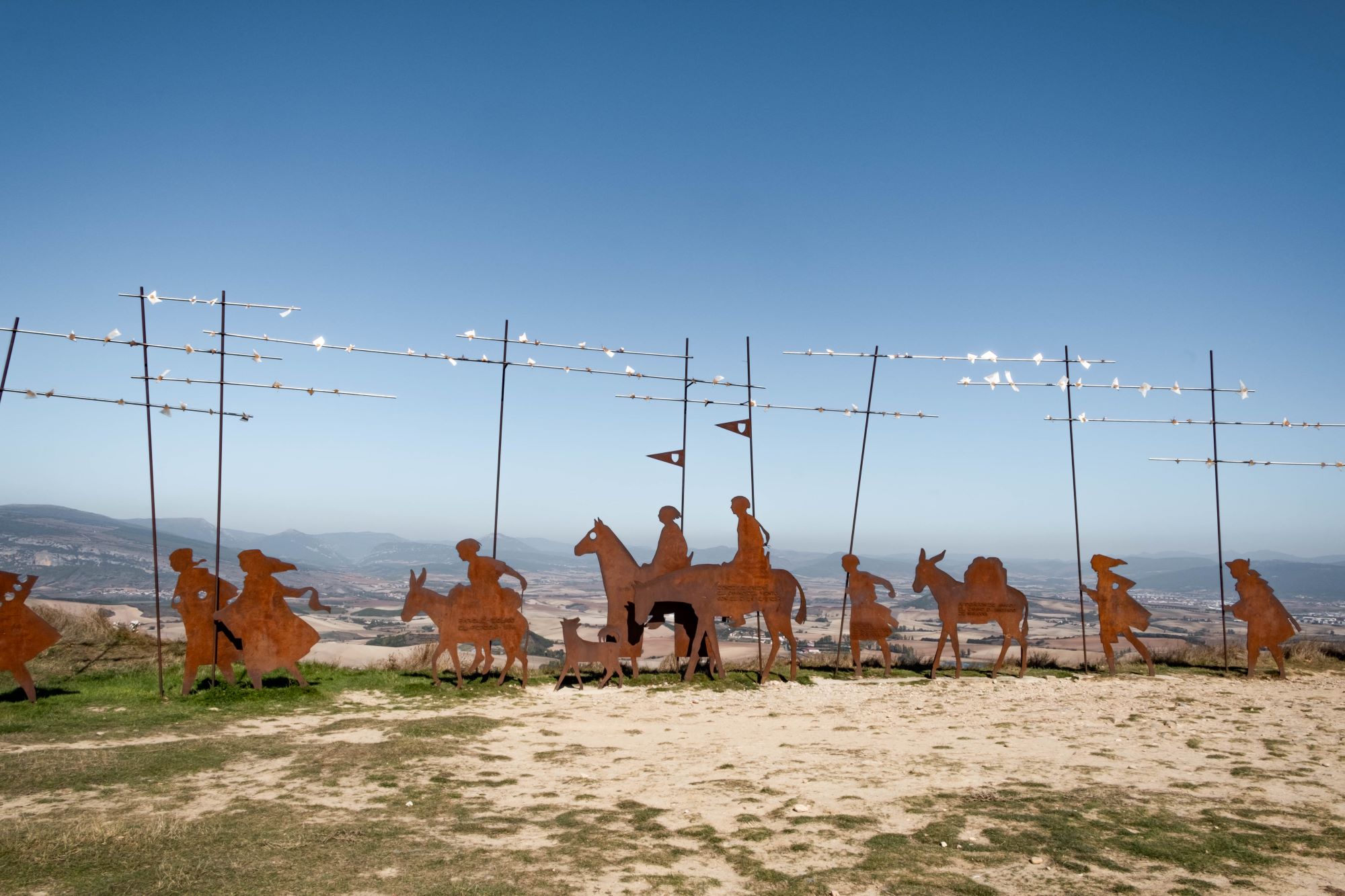
Over 400,000 travelers journey every year along the yellow arrows of the Camino de Santiago.
Historic pilgrimage routes lead to the city of Santiago de Compostela in Spain, home to one of the holiest sites in the Christian world: the tomb believed to hold the remains of Saint Apostle James (called Santiago in Spanish) in a magnificent cathedral.
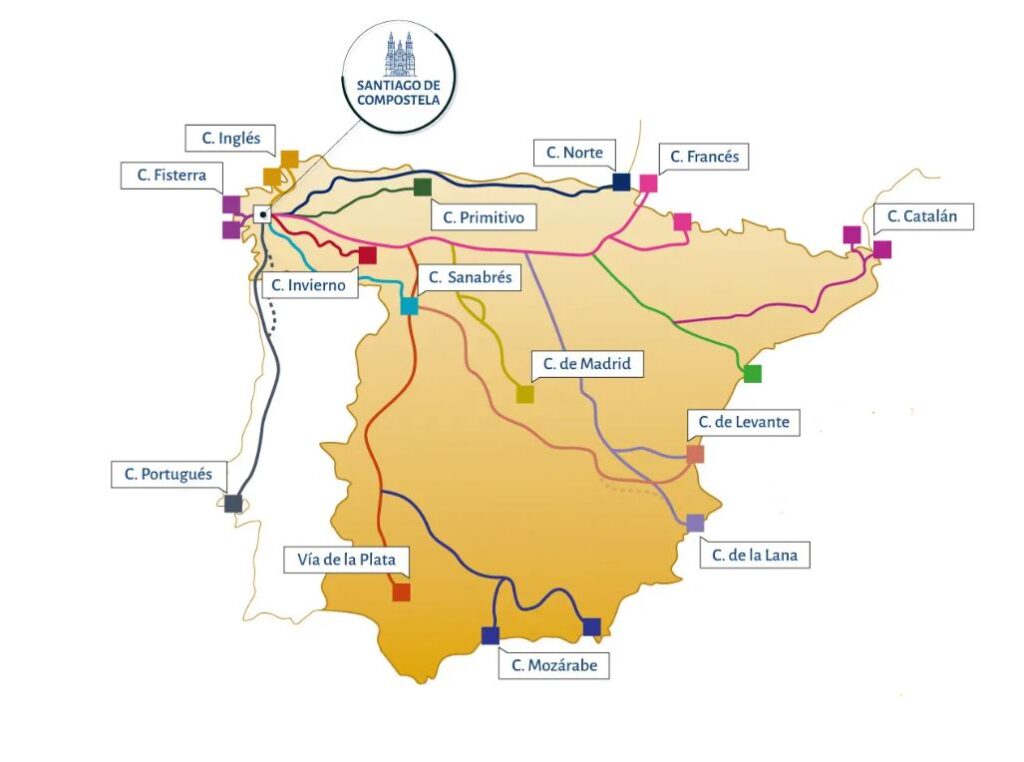
Since the late 1990s, the number of walking routes has increased tenfold, and many walkers will seek less-visited alternatives to the classic Camino Francés. There are long and short, difficult and easy options to suit any pilgrim’s requirements.
Tip: popular routes are likely to be more crowded, so plan your itinerary in advance using my tips and a few guidebooks for those routes I’ve already walked.
Camino Francés
The classic: long, varied and exceptionally popular route
830 km
Difficulty ***
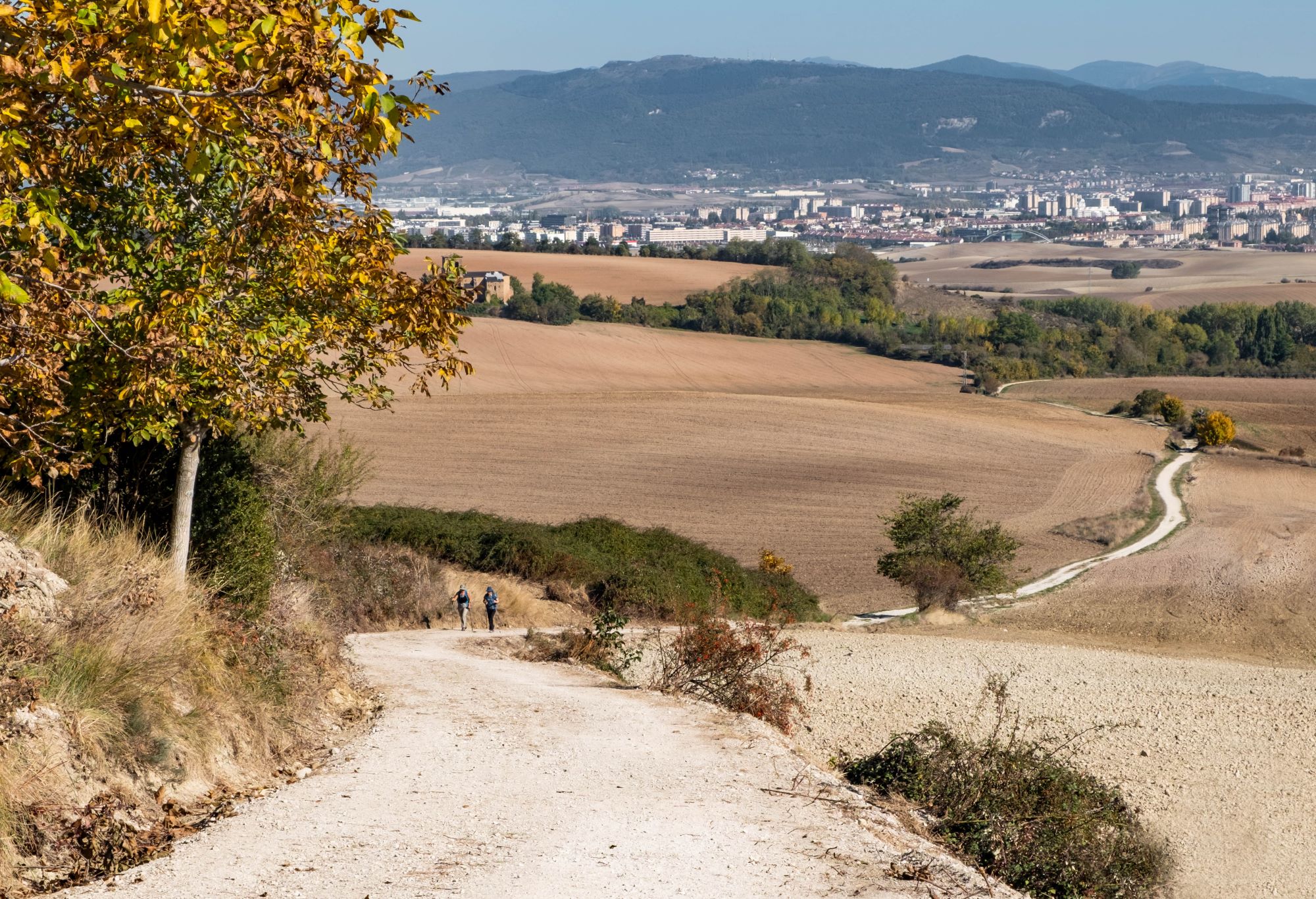
Camino Francés (the French Way) is the route that still sees more people walk it than all other Caminos combined. It starts in Saint-Jean-Pied-de-Port on the French side of the Pyrenees and covers approximately 770 km (about four weeks on foot) across northern Spain en route to Santiago de Compostela.
For many people, this Camino de Santiago is a tough challenge that requires both mental and physical endurance. It passes through the vineyards of La Rioja, the sparsely populated farmlands of the Meseta ( the central plateau of Spain) and hills over 1300 m in the rural green Galicia (the northwestern region of Spain, whose capital is Santiago de Compostela).
You cross isolated stone villages and major cities such as Pamplona, Burgos, Logroño and Leon. They are full of the history of the route, from ancient stone bridges to huge medieval cathedrals. The road can be extremely hot in summer and frosty in winter. Some sections are rural tracks and paths along fields and forests, others go along busy paved roads.
Where to start
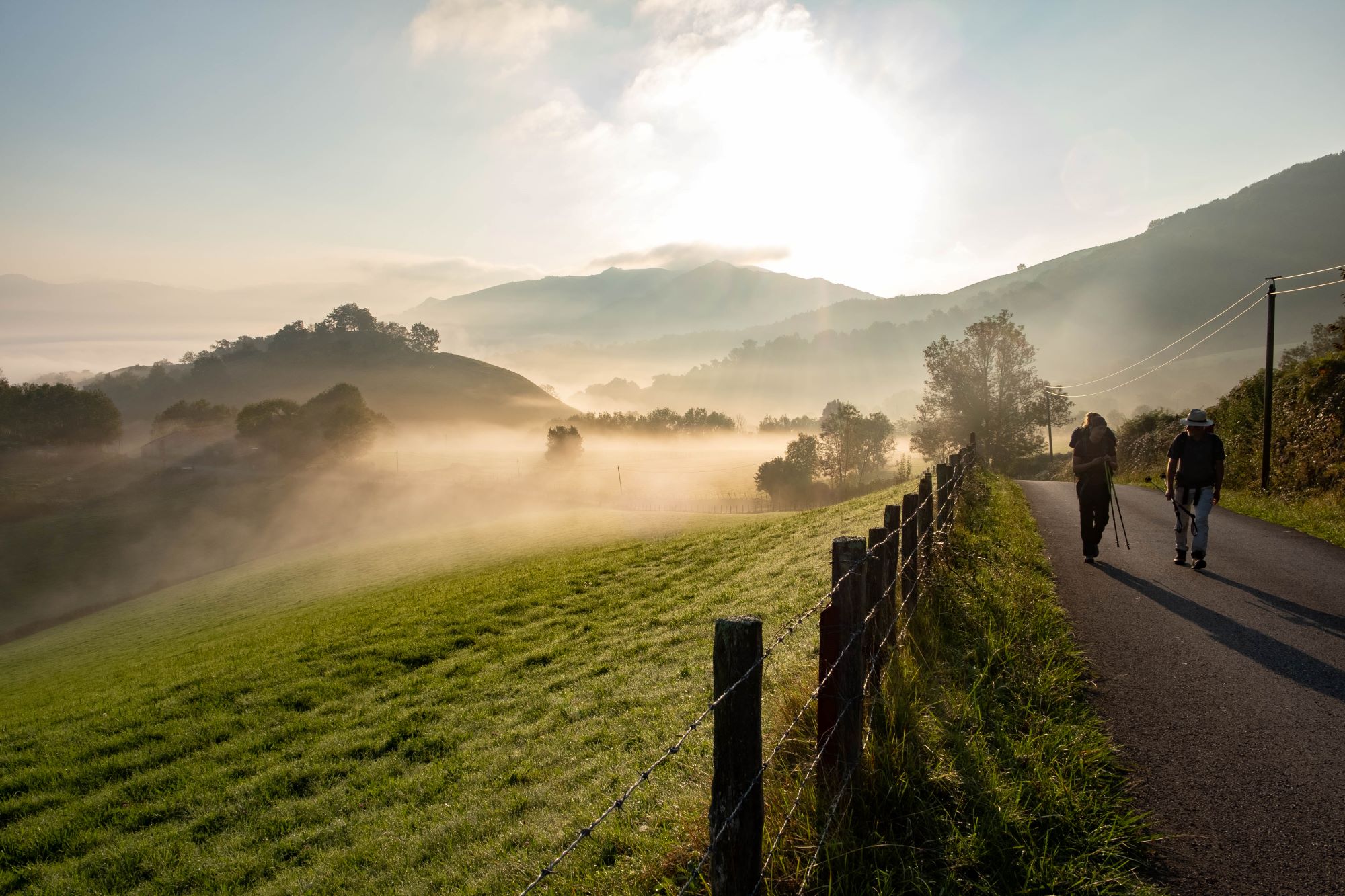
But only one in five people walks the entire distance from Saint-Jean-Pied-de-Port, so most of this route is less crowded than you might think. In fact, nearly half of Camino Francés travelers start from Sarria, only 114 km before Santiago. This modest Galician town happens to be the last starting point that meets the minimum 100 km requirement for receiving the official certificate – the Compostela.
If you can’t walk the whole Camino Francés at once, I recommend splitting it into sections. That’s what I did with the French Way – first walked from Leon to Santiago, then five years later its first segment from the French town of Saint-Jean-Pied-de-Port to Burgos (or, if you can, to Leon).
The difficulty of this route lies in several mountain crossings: at the beginning you have to cross the Pyrenees in one day, then from Ponferrada to O Cebreiro there is also a steep ascent.
Camino Portugués (from Porto)
Beginner’s route – almost no mountains, ocean views
280 km
Difficulty *
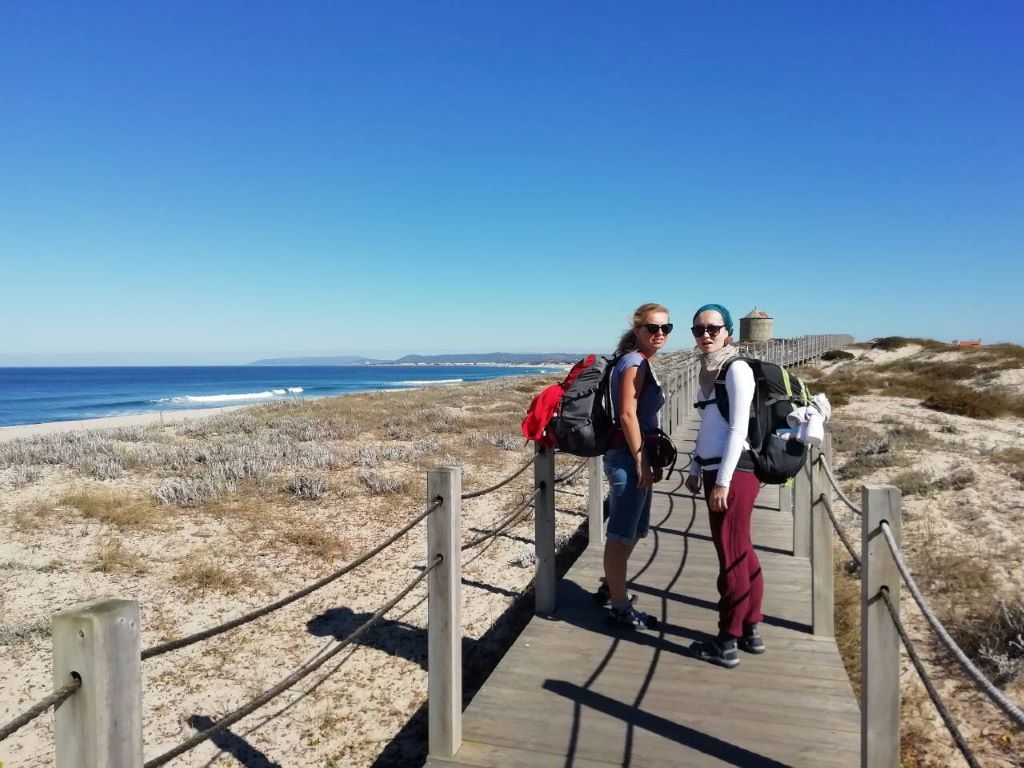
The Portuguese route, the second busiest of the Camino de Santiago, stretches over 600 km from Lisbon in Portugal to Santiago (about 3 and a half weeks). But the most popular starting points are the beautiful city of Porto in northern Portugal (240 km from Santiago, roughly 10 days). And Tui, where the route enters Spain (115 km).
The short version (Porto or Tui) is entirely within the physical abilities of any person. The route has a small number of hills, though much of the walking is on hard surfaces—roads, sidewalks, cobblestones. The latter can be quite tough on your feet.
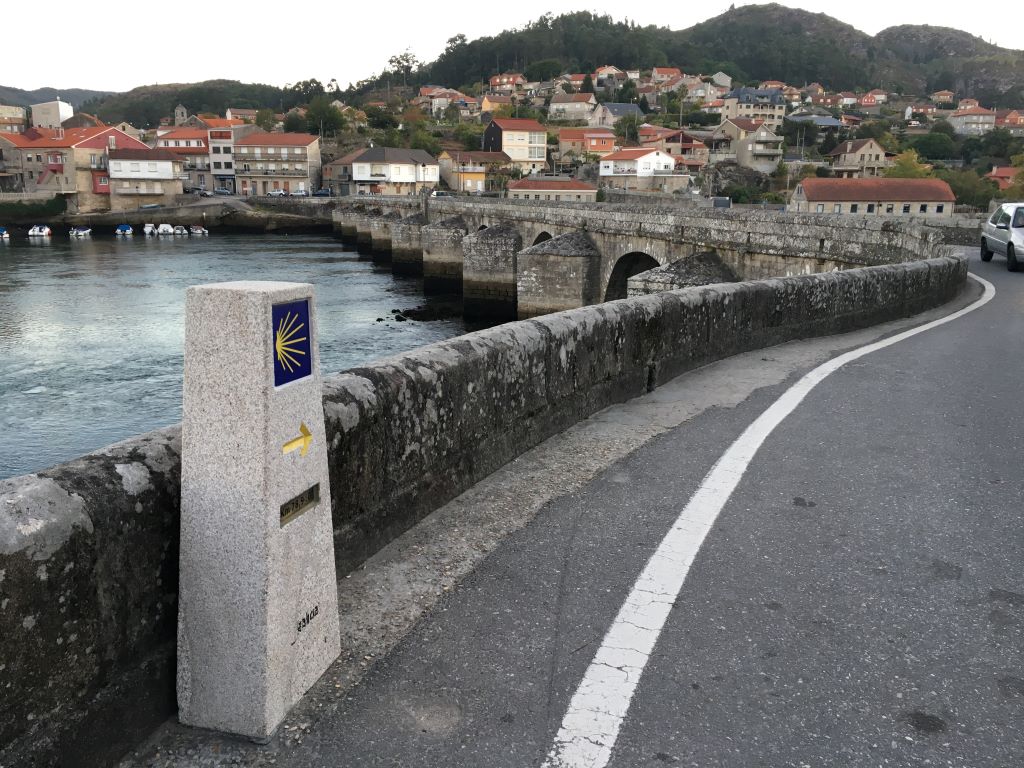
The landscape becomes greener as you move north, and you can walk this route year-round. Although it’s better to avoid the July and August heat in the south. A popular option starting from Porto is the Camino Portugués de la Costa (Portuguese Coastal Route), which runs near the Atlantic Ocean. Most Ukrainians choose this route (some even walk only it every year—they are addicted to ocean views as well as delicious seafood and wine). For a first Camino, it’s really ideal—easy, fast, and with good infrastructure.
Recommended reading: Camino Portugues – Portuguese route from Porto along the ocean
Camino del Norte
Four weeks along Spain’s northern coast through mountains and beautiful cities
850 km
Difficulty ***
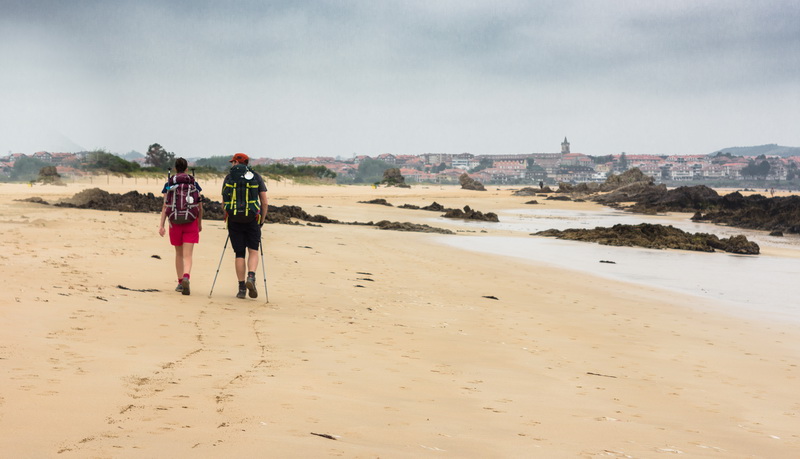
The Northern Way, which about 20,000 people travel a year, runs parallel to northern Spain’s coastline for more than 600 km from Irún on the French border to Ribadeo, then another 200 km inland through Galicia to Santiago de Compostela. Many pilgrims on the Norte are looking for a less-visited alternative to the Camino Francés. It’s similar in length, but in the Middle Ages far fewer pilgrims used it, as is still true today.
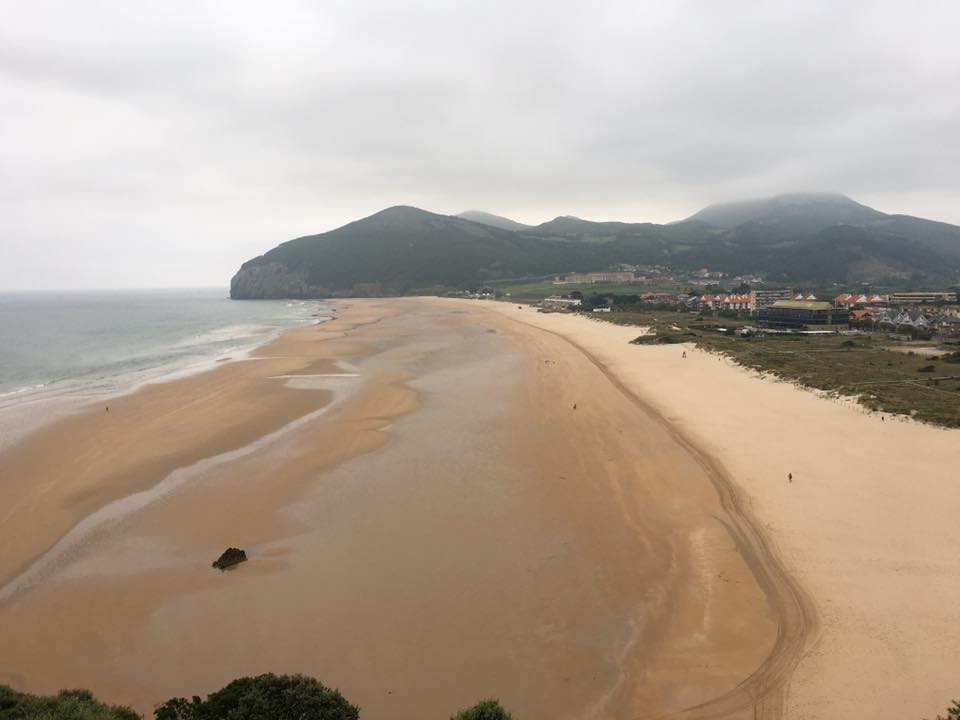
Although some sections run along beautiful beaches and deep cliffs, most of the route is inland. On some days, you won’t see the ocean at all, and instead of sand you’ll have to walk a lot on asphalt. You pass through large cities— San Sebastián, Bilbao, Santander, Gijón. Also lovely coastal towns such as Comillas, Ribadesella, and Luarca.
The route is considered difficult, due to the mountainous sections of the Basque Country. There are several long sections—over 30 km a day. But long beaches and incredibly beautiful cliffs on this route will give you some of the most stunning landscapes you can find on the Camino de Santiago.
Recommended reading: My Camino del Norte – journey along Northern Spain by the ocean
Camino Primitivo
Two weeks through the green mountains of Asturias and the hills of Galicia
320 km
Difficulty ****
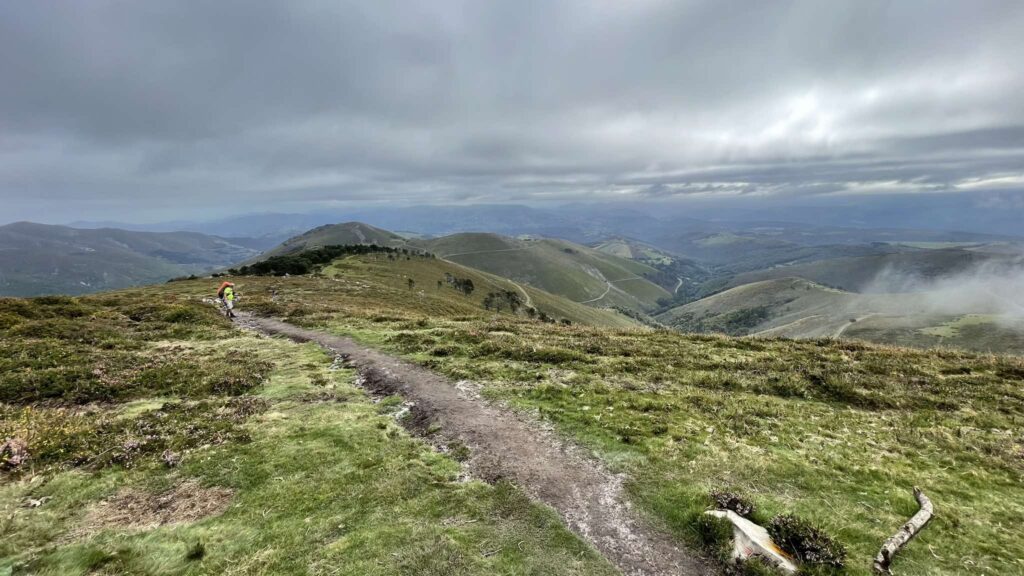
Camino Primitivo (the Original Way), about 320 km long, follows in the footsteps of the first recorded pilgrimage to the tomb of Saint James, made by King Alfonso II of Asturias from Oviedo in the 820s.
It is considered one of the most challenging routes due to the hilly terrain for the first eight or nine days. That’s why it’s impossible in winter because of snow in the mountains. But the ascents and descents only enhance the beauty of the scenery, and the route is achievable for any prepared walker. The number of pilgrims on this route is relatively small, but its popularity is growing each year.
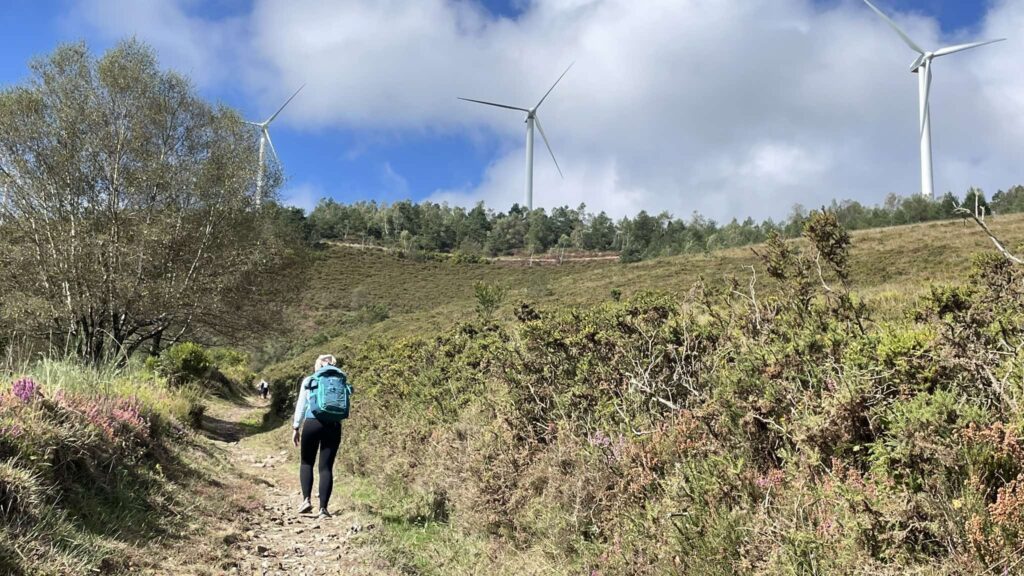
Once you leave the hills, you reach the city of Lugo, surrounded by a 2.2 km excellently preserved Roman wall. In the town of Melide, the Primitivo joins the Camino Francés for the last 55 km to Santiago. Here the number of pilgrims increases drastically and you will immediately notice how the route atmosphere changes.
I walked this route in 2024, with very lucky weather in September—almost no rain. So I recommend this time of year—compared to spring and early summer it is much drier here. Most people who walked the Primitivo in spring complained about very wet weather and muddy paths, because most of this route is away from paved roads.
Recommended reading: My Camino Primitivo – on foot from Oviedo to Santiago de Compostela
Camino Finisterre – Muxía
From Santiago to the “end of the earth”
120 km
Difficulty *
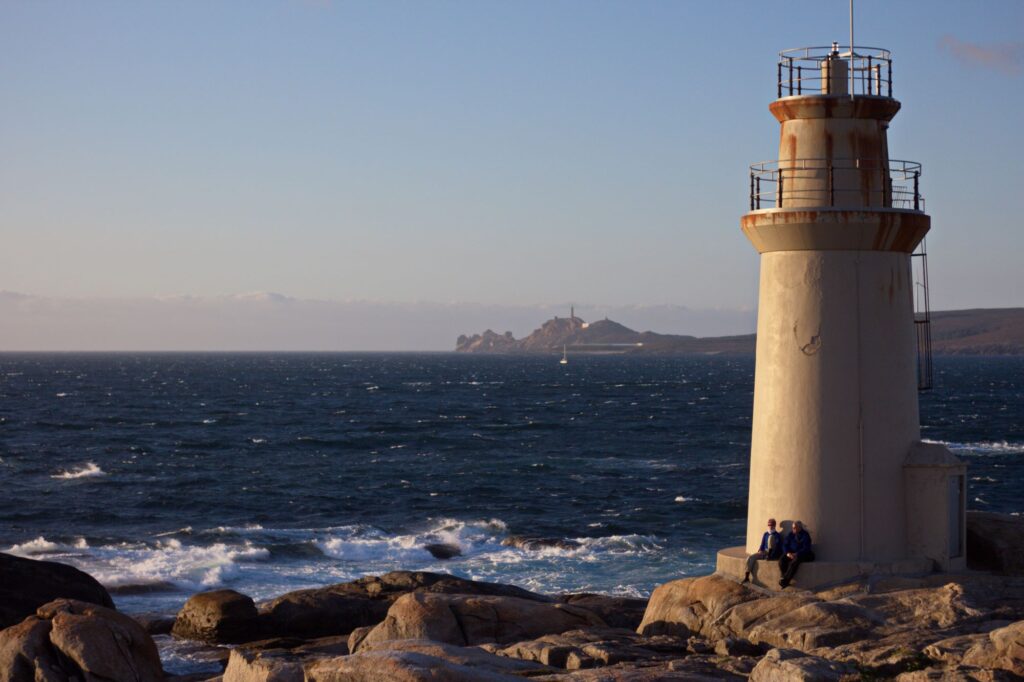
This route does not lead to Santiago but instead goes from it to the small fishing ports of Fisterra (Finisterre) and Muxía on the dramatic coast of Costa da Morte in Galicia. Traditionally, most pilgrims don’t want to stop when they reach Santiago. Three to four extra days to Fisterra or Muxía (four to five days for both places) could be the perfect conclusion for your Camino.
The name Fisterra/Finisterre means “End of the Earth”: surrounded by cliffs and crowned by the Cabo Fisterra lighthouse (Finisterre Cape), it truly feels like the end of the earth. In Muxía, a dramatically beautiful 18th century church stands on a rocky seashore. It marks the place where, according to legend, the Virgin Mary appeared in a stone boat.

It is about 86 km from Santiago de Compostela to Fisterra or Muxía. The distance from Muxía to Finisterre is 30 km. The route runs mostly through flat countryside; only before reaching Cee (a resort town before Finisterre) will you encounter hills to cross.
This is a very quiet and deserted route as most pilgrims travel to Fisterra or Muxía by bus. So, give yourself a chance to reach the End of the Earth, enjoying the views and the last kilometers of your hiking adventure—possibly the best of your life.
Recommended reading about a short and quiet version of the Camino:
My Camino Mozárabe – St James’s Way through Andalusia
Camino Inglés – English Way
Short, relatively easy route within Galicia
120 km
Difficulty *

The “English Way” is about 115 km (five days) to Santiago from Ferrol. It runs in the north of Galicia. Its name comes from medieval pilgrims from Britain, Ireland, and other northern places who sailed to ports like Ferrol and then traveled by land to Santiago.
This route is for those who have very limited time. Because of this, the popularity of the Inglés has sharply increased over the last decade. Around 15,000 pilgrims walk it each year. It includes segments along scenic coastal bays as well as sections through green rural landscapes and through medieval towns of Pontedeume and Betanzos. An alternative starting point is the lovely city of A Coruña, which is only two to three days’ walk from Santiago. If you wish, you can combine Ferrol with A Coruña.
Camino Routes Comparison
| Frances | Portugal Costal | Portugal from Lisbon | Norte | Primitivo | Ingles | La Plata | Finistierre | |
| km | 790 | 280 | 616 | 825 | 321 | 120 | 1000 | 115 |
| Difficulty | ++ | + | ++ | +++ | ++++ | + | +++ | + |
| Mountains | + | + | + | |||||
| Diversity | + | + | + | + | ||||
| Cultural points | + | + | + | + | ||||
| Infrastructure | + | + | + | |||||
| Ocean views | + | + | + |
When choosing the most comfortable route for you, you need to consider many nuances. Such as distance in km and how much time you can spend walking. Or the level of difficulty—if there are mountains and hills, or vice versa, maybe it’s 150 km of monotonous plain Meseta (from Burgos to Leon in Castilla-León). Or maybe you need to see the ocean all the time like on the Portuguese from Porto or the Norte. Or on the contrary—to walk inland through ancient villages and towns and enjoy the cultural and historic gems of Spain.
That’s why I suggest comparing the most popular Camino de Santiago routes by these criteria—I hope this will help you when choosing your next route.
Which Caminos have the best infrastructure

Camino Francés and Camino Portugués de la Costa are the most developed in terms of good infrastructure for pilgrims. On these routes, there is a great variety of albergues—hostels for pilgrims, many cafés along the way where you can eat and have coffee. You don’t have to walk 20-30 km per day—you can do less if you want to stretch out the journey, or if you don’t have the strength or health for long distances.
There is less choice of albergues on the Camino del Norte and Primitivo. There are also often stretches of 15-20 km with no lodging or cafés.
On the La Plata route, the distances between lodging options are very long—30 km is very common, and there is nothing around but hills with olive trees and fields. This is a very secluded version of the Camino, you have to be prepared for long distances and few people around.
The Longest and Shortest Caminos

The longest routes with developed infrastructure are Norte and Francés (both almost 800 km). A less developed, but still quite popular route among pilgrims who have already done all the others is Via de la Plata (Silver Way) – 1000 km.
To do any of these routes in one go, you’ll need a leave of at least one month (more for La Plata). Not everyone has that much time for hiking. So people often split them into parts and go gradually.
But there are benefits to such long routes
I can also share this from my own experience of walking the entire Camino del Norte. When you walk for four weeks in one go, you experience the following transformations:
The first week: your body hurts, it’s only starting to adjust to a level of exertion you don’t have in everyday life. Your back gets used to the backpack, your legs to walking 20-25 km every day, and your mind in the first days asks—why am I doing this, why am I torturing myself?
The second week: the body starts to adapt, the first blisters heal, you have Camino friends with whom it’s fun to spend time, to walk together if your pace matches. You stop thinking about the finish line—the path is about here and now, and happiness is in every step.
The third week: you hardly feel the backpack anymore. If at first it was hard to even lift it, now you forget it’s on your back. The journey becomes pure pleasure and it feels like you’re flying (provided you have no health issues and good weather). You start to be silent and watch more than chat—everything has already been discussed, now you can just be quiet together.
The fourth week: in the last 200-250 km you feel sad more often, realizing the end is near. If during the first week you’re dreaming of finishing, by the end you sometimes wish it would never end. And when you arrive in Santiago, many pilgrims cry—it’s a kind of catharsis from the fact that it’s over: sadness and happiness at the same time.
Mountain Camino Routes

- Camino Primitivo—this route is considered the most mountainous, because most of it has to be walked through mountains and hills. It is believed that the Primitivo is the toughest among the most well-known routes. I wouldn’t say so myself, because the Norte is no less difficult.
- On the Camino Francés there are also mountains: at the very beginning, you need to cross the Pyrenees from the town of Saint-Jean-Pied-de-Port to the Spanish monastery Roncesvalles. There is also a mountainous region before Ponferrada, and after it you need to climb up to 1000 meters to O Cebreiro—a rather steep ascent there too.
- On the Camino del Norte at the beginning in the Basque Country before Bilbao, there are also mountains. They aren’t high, but some sections are quite demanding. In general, this route is not easy, even along the coast. Because there are a lot of ascents and descents.
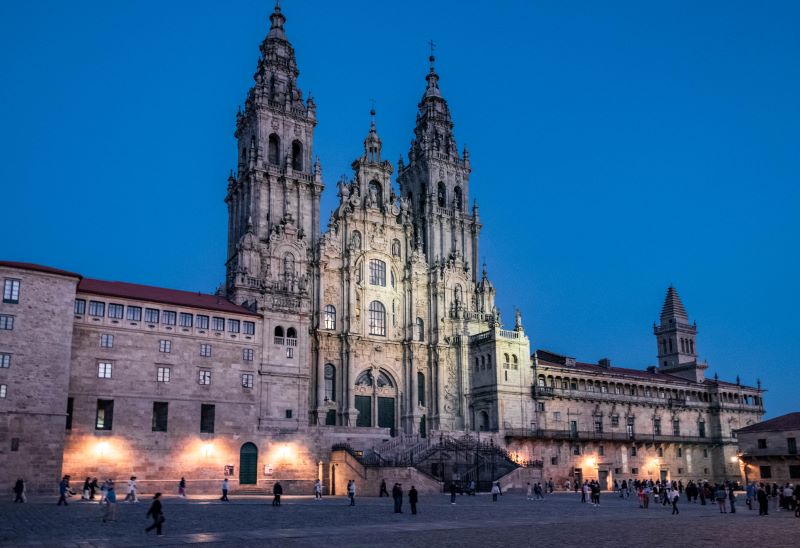
I won’t draw conclusions about which route to choose first, second, third, and so on.
Or how to walk them—at once or split into sections—that’s your decision.
Because it all depends on your preparation—maybe you’ve spent half your life in the mountains and aren’t afraid of tough hikes. Or you’ve never done long-distance walking and fear new challenges.
Read the route descriptions carefully, use my experience (I write Camino route diaries I’ve walked).
The main thing is to start and try to walk your own Camino de Santiago. What it will be like—that depends on you.
What you might need for traveling in Spain
- Don’t forget on medical insurance – it’s convenient to purchase it online at HotlineFinance.
- If I don’t stay in albergues, I book hostels or guesthouses through Booking.com. I do this in the evening for the next day.
- I buy bus tickets in Spain on the website of the Spanish carrier Alsa.
- Train tickets in Spain—on the website of the Spanish railway company Renfe.
Useful articles and links:
- Via Francigena – my experience walking from Lucca to Rome
- Rota Vicentina – on foot along the ocean
- Camino de Santiago – how to prepare for a pilgrimage?


