Andalusia route – a trip along the Costa del Sol: Cadiz, Tarifa, Marbella, Estepona, Nerja, Malaga.
In September 2024, we explored the Andalusian coast by car. We drove along most of the beaches from Malaga to Cadiz, stopping at wonderful little white villages, hiking in an incredible canyon, relaxing on the beaches and taking interesting excursions to Andalusian cities.
I’ll tell you how to organize such a vacation, what was our route, the features of traveling by car in the south of Spain and my recommendations for cities where it is better to stop for a vacation.
Recommend you to read: TOP 5 places for a beach holiday on the Costa del Sol, Spain
Our route around Andalusia by car
My advise: to see as much as possible, explore Andalusia and the south of Spain by car.
Starting from the magnificent Costa del Sol, in 7 days we managed to see charming and historic cities from Malaga to Cadiz and Gibraltar, passing through Tarifa, Nerja, Ronda and other cities and small white villages. You will discover the rich culture and history of this region, enjoying breathtaking landscapes along the way.
Thanks to the rented car, we managed to see the following cities and towns in Andalusia:
Málaga – White Villages (Pueblo Blancos) – Cadiz – Tarifa – Gibraltar – Estepona – Marbella – Fuengirola – Nerja – Caminito del Rey – Belmádena – Malaga.
Read about our best route through Andalusia:
The 7-day route in Andalusia – what to see in the south of Spain
Driving and parking features in Andalusia
Why do I specify that we traveled by car this time – because it is quite difficult to get to many places and towns without a car. Buses in Spain run well between large cities, between small villages – this is already a question with an asterisk. There are also Renfe trains, but they are not through – look again about buses.
A car gives you the opportunity to go anywhere according to your own schedule. And in terms of price, this may be relevant to buses and trains, if you collect everything we saw by car. But in a week on public transport to see everything that we managed to do – it is unrealistic.
Therefore, I advise you to rent a car – we did it at Malaga airport. And returned it before boarding the plane home. It is very convenient, besides, driving in Andalusia is very comfortable.
Driving and parking in Andalusia
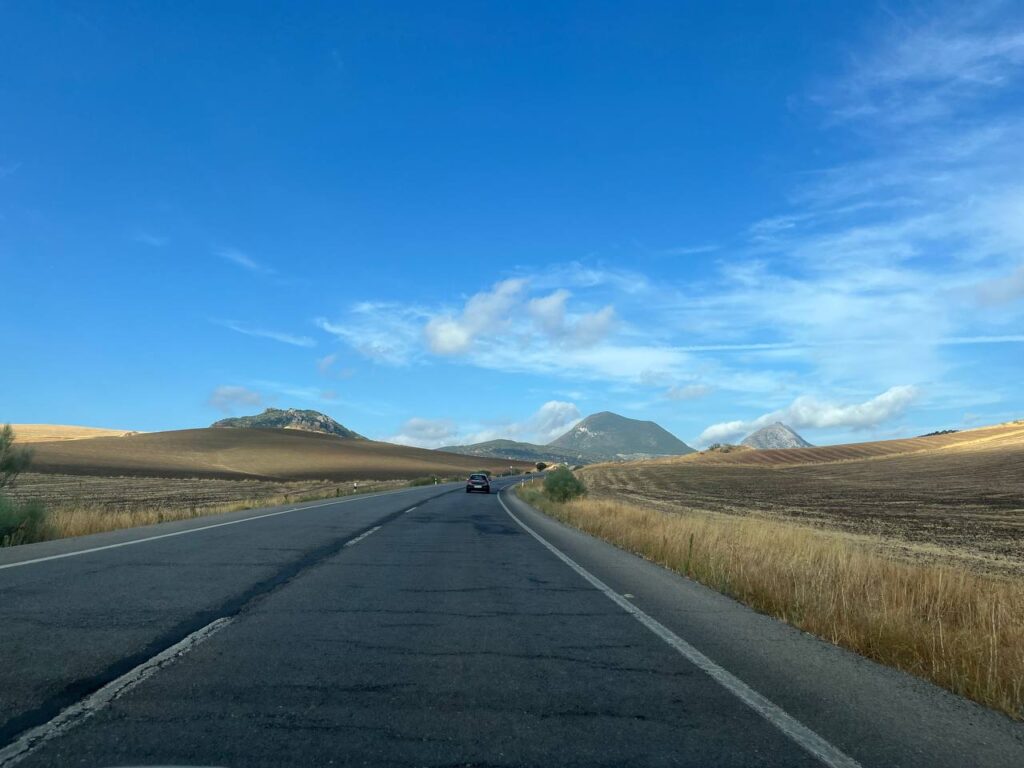
Driving in Andalusia is generally easy, the roads and motorways are well marked, and the drivers are not aggressive. However, be aware that rural roads can be narrow and winding, especially in the mountains.
Parking is fairly easy, provided you can find free parking – this is difficult, as locals tend to park their cars there. Street parking is colour coded: blue – paid parking, you have to pay for how long you leave your car and put a ticket under the window, white dashed lines – free parking (anyone can park here, unless there are additional signs), and yellow stripes – parking for special vehicles – private cars are not allowed to park here.
Parking can be difficult in cities such as Seville and Granada, or the old town of Cadiz – narrow streets and limited parking spaces are the norm. It is better to find a paid parking lot near your accommodation in advance and leave your car there. I believe that 10-12 Euros per day is cheaper than paying for a tow truck and a parking ticket or for scratched bumpers of a rental car.
Tip: Set a “tick” in Google Maps to avoid toll highways. You definitely don’t need them for such a trip, because you can see more picturesque places from the free roads. And they are of quite normal quality.
Where to book a car

We flew into Malaga and got a car right near the airport from a company we had chosen in advance on Rentalcars.com. I chose the car at the lowest price, but the deposit, which is frozen on the credit card when you pick up the car, was important.
In September, it is still high beach season in Malaga, so deposits from 1000 euros and above. I was not satisfied with this amount and the price of full insurance +20 euros per day was also not satisfied. Therefore, I carefully read the conditions and reviews of each rental company on the portal Rentalcars.com and chose the best (really) – Odkryj-Auto. They have a low deposit of up to 300 Euros per week, and quite affordable prices – renting a small class A car cost 103 Euros for 7 days. This is a Fiat 500 Hibrid, which was quite enough for the two of us without large suitcases.
Day 1: Malaga – Cadiz
Our journey began at Malaga airport. Upon arrival, we got a car and immediately drove towards the city of Cadiz. But not along the highway that leads along the Costa del Sol, but through the mountainous terrain. Because we planned a circular route and initially wanted to see several Pueblo Blancos – white villages located away from the coast.
Antequera
Along the A7075 highway, we first reached the town of Antequera – Ancient Anticaria, as the Romans called it.
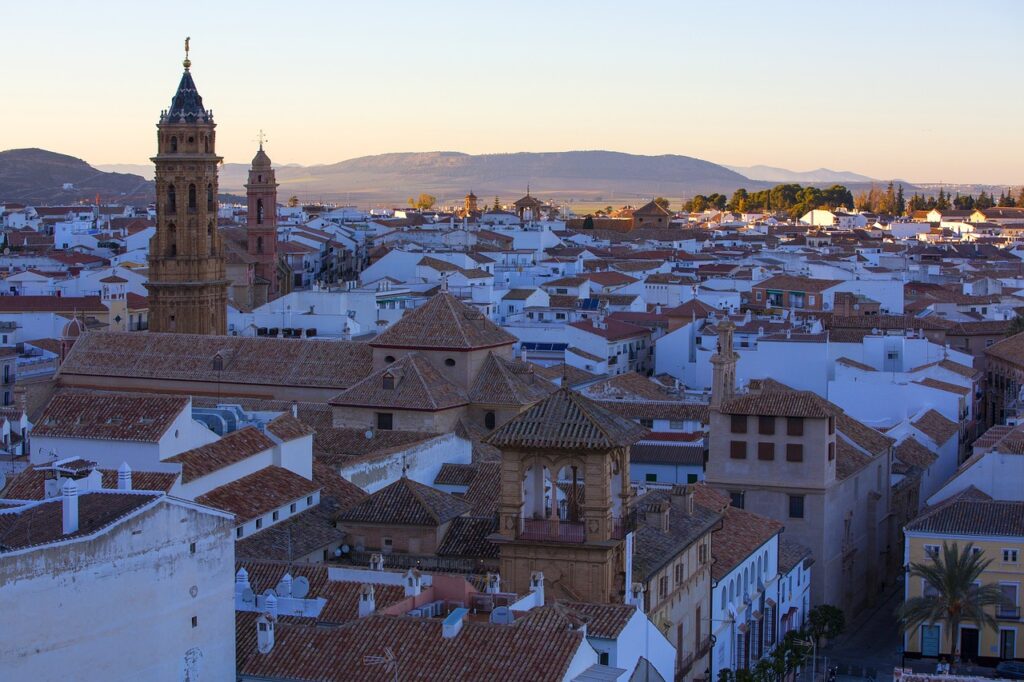
In Antequera you can walk to the old town, see the Alcazaba fortress, enjoying incredible views. But the most famous place in the city is undoubtedly the dolmens, recognized as a UNESCO World Heritage Site. Also located nearby is the El Torcal Natural Park, which the route passes by and there is the opportunity to stop for an hour or two.
Olvera
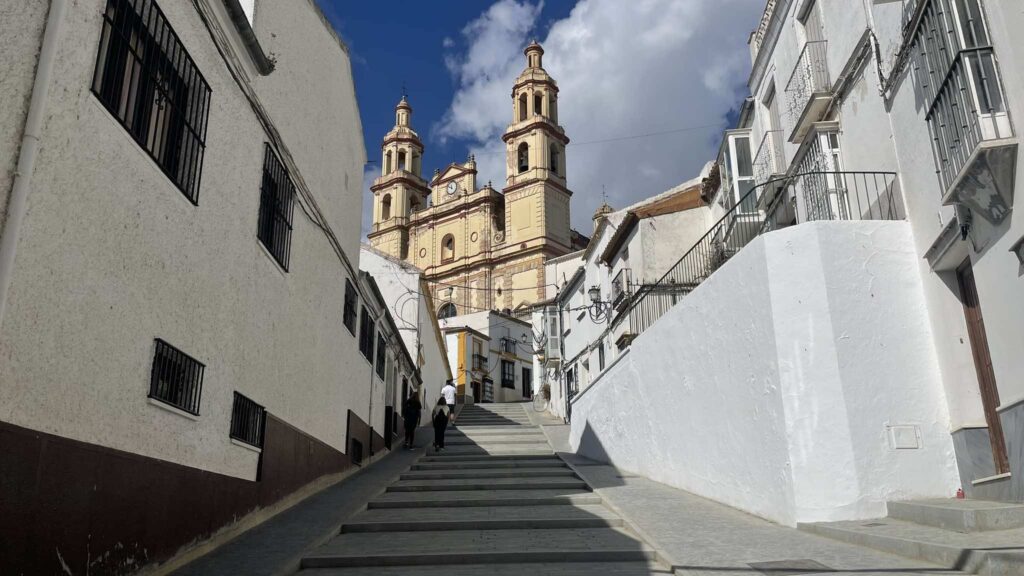
After drinking morning coffee and walking around the city, we drove further along the A384 highway to the next white town – Olvera. It turned out to be very cute and charming due to the combination of a strict Moorish fortress and a huge cathedral near it. The city is small, we walked around it in 1.5 hours together with the fortress (entrance costs 6 Euros), climbed to the nearby observation deck and even visited the local Saturday market, which is held in the old town.
Arcos de la Frontera
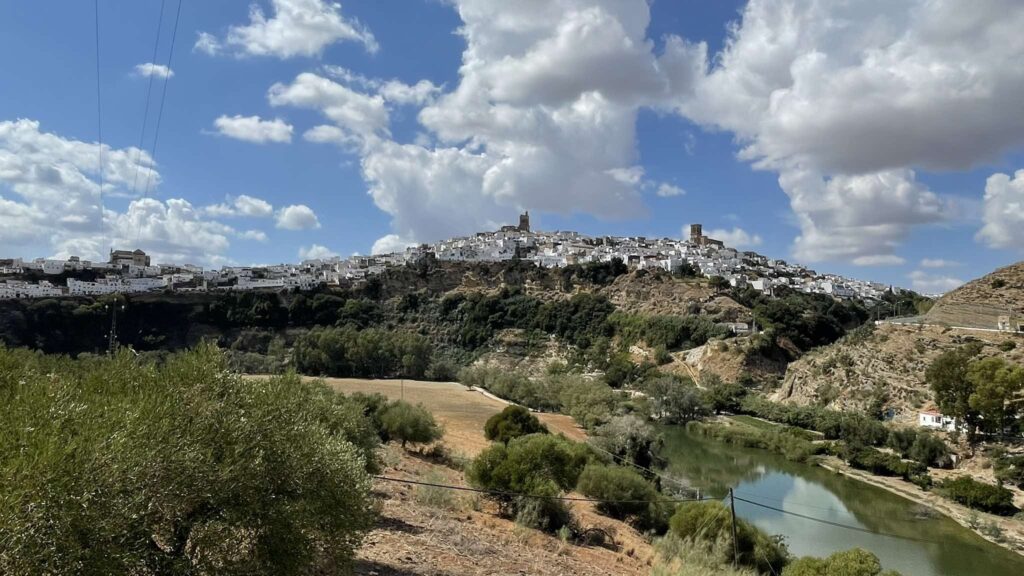
Next, we headed to another famous Pueblo Blancos – Arcos de la Frontera – the largest municipality in the Sierra de Cádiz mountains, declared a National Historic-Artistic Site due to its immense beauty, monumental importance and archaeological wealth. You can even stay here for a day to see the palaces and the Catholic cathedral along with the huge fortress.

You can also go from Olvera to Ronda (it’s very close) – it’s a wonderful white city, which we already visited a year ago and it’s amazingly beautiful! There’s another white village near Ronda that’s definitely worth seeing – Setenil de las Bodegas, Spain – the most beautiful white village in Andalusia.
But we were already a little tired of the white villages and after walking around the town, we drove on – the incredibly beautiful Cadiz was waiting for us.
Cadiz
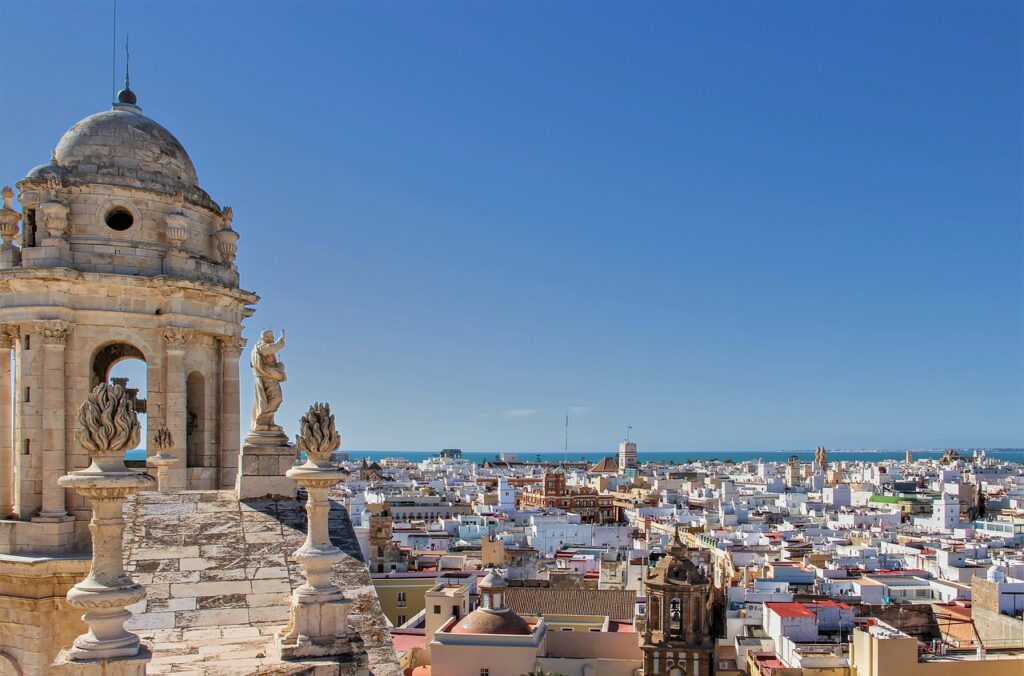
Cadiz is a city that looks like an island in the middle of the Atlantic Ocean. Here we decided to stay overnight and walk around this wonderful city.
Cadiz is the oldest city in Western Europe. In addition to the impressive beaches, it is the city where the most famous Spanish carnivals are held. I will say right away – bet on Cadiz at least two no’s – it is unsurpassed and worth your attention. If you have already been to the hyped Barcelona many times, but still like large port cities – I advise you to go to Cadiz, it will definitely surprise you and make you fall in love with it!
What to see in Cadiz:

- Tavira Tower: This majestic tower stands in the city center and was built in the 18th century. If you climb to the top, you will have an amazing view of the coast. The ticket price is 6 Euros.
- The Cathedral of Cadiz is a majestic point of attraction in the city, you will definitely see it when walking around the city.
- Central Market: A stop not to be missed for any food lover.
- Plaza de San Juan de Dios: The main square is truly beautiful with numerous palm trees and statues and a large central fountain.
- La Caleta Beach: The most popular beach in Cadiz with 300 meters of golden sand.
Where we left the car in Cadiz:
I checked several large parking lots in advance, which are located near the old town in Cadiz. I chose a parking lot for daily parking – Parking muelle pesquero near the cruise port and train station. Cost 10 Euros per day, payment by card in the machine the next day before leaving the parking lot.
Where to stay in Cadiz:
- Pensión Cádiz≫ – We stayed overnight at this clean and very centrally located guesthouse. It looks like a Moroccan riad, with balconies in the patio. Very clean and inexpensive.
- Plaza de la Luz Cádiz≫ – The hotel is located almost in the center of the old town, which is very convenient. Beautiful, clean room, everything you need in the room is there. Spacious double bed, very comfortable. Low price.
- Hotel de Francia y París≫ – A wonderful hotel in the heart of the old town. The rooms are modernly renovated and overlook the beautiful San Francisco square with orange trees and great restaurants.
Day 2: Cadiz – Tarifa
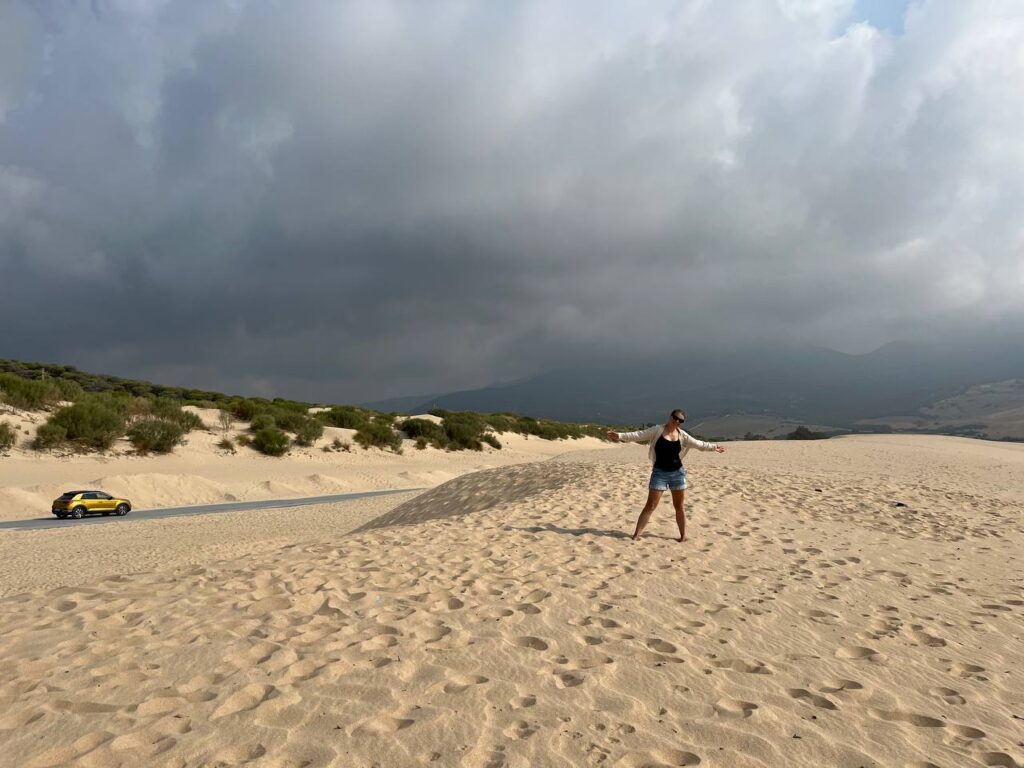
In the morning we had a wonderful breakfast at Plaza de la Catedral in the Casa Hidalgo cafe. We walked a little along the beaches and were about to drive on – to the next destination – Tarifa. But on the way I marked a few places that we decided to see, because they are really worth a stop.
We set off along the CA-33 highway, which runs along the ocean, then turned onto the free N-340.
Faro de Cabo Roche
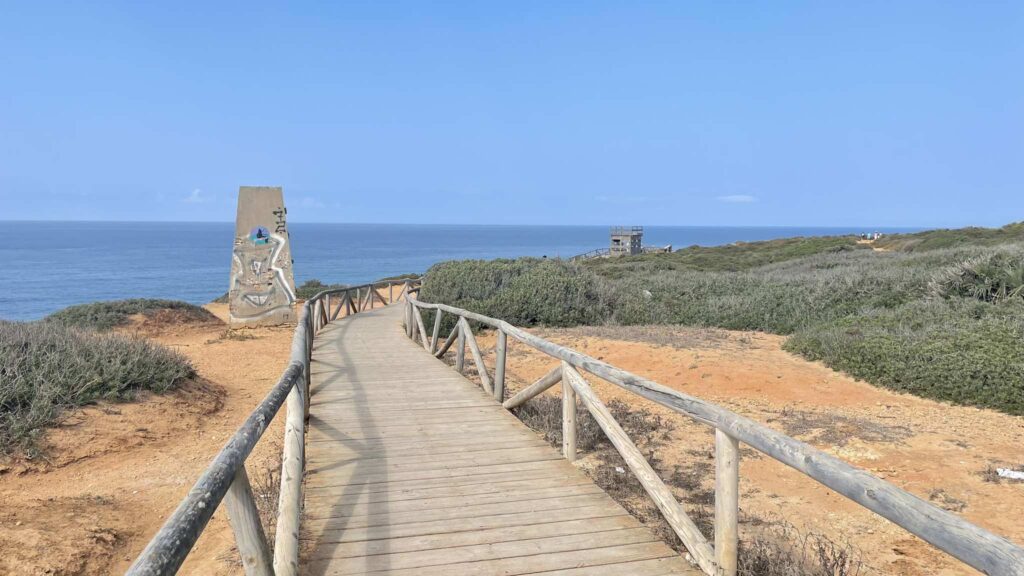
On the way, I recommend stopping by the Faro de Cabo Roche lighthouse – from here you can enjoy a very beautiful view of the ocean and the neighboring towns of La Fontanilla and the cliffs. There is free parking near the lighthouse (small parking under the lighthouse and a much larger one 2 minutes walk from it). From the lighthouse, there are cycling and hiking trails along the cliffs – you can take a short hiking route if you wish.
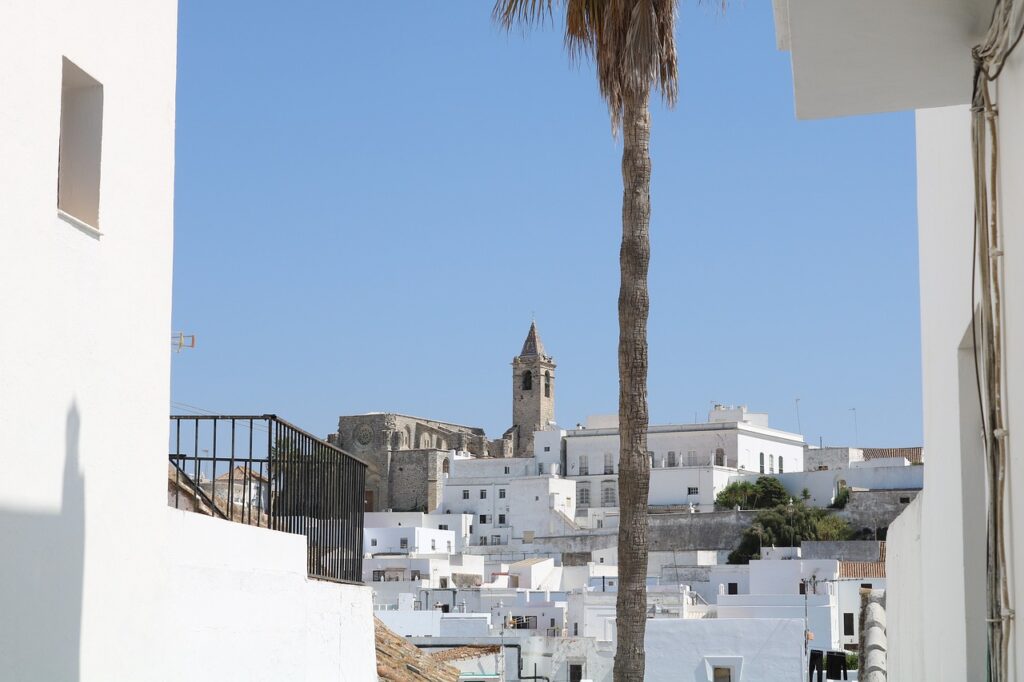
Then we stopped at another white village – Vejer de la Frontera. Yes, we didn’t have enough of them on the last trip and in this one we continued exploring these ancient towns with magnificent panoramas on the slope of the gorge above the Barbate River. The city built at an altitude of 200 meters above sea level was a rather successful idea: this position allowed Vejer to survive many attacks. We stopped here to be inspired by the beauty and walk through the labyrinths of perfectly white streets.
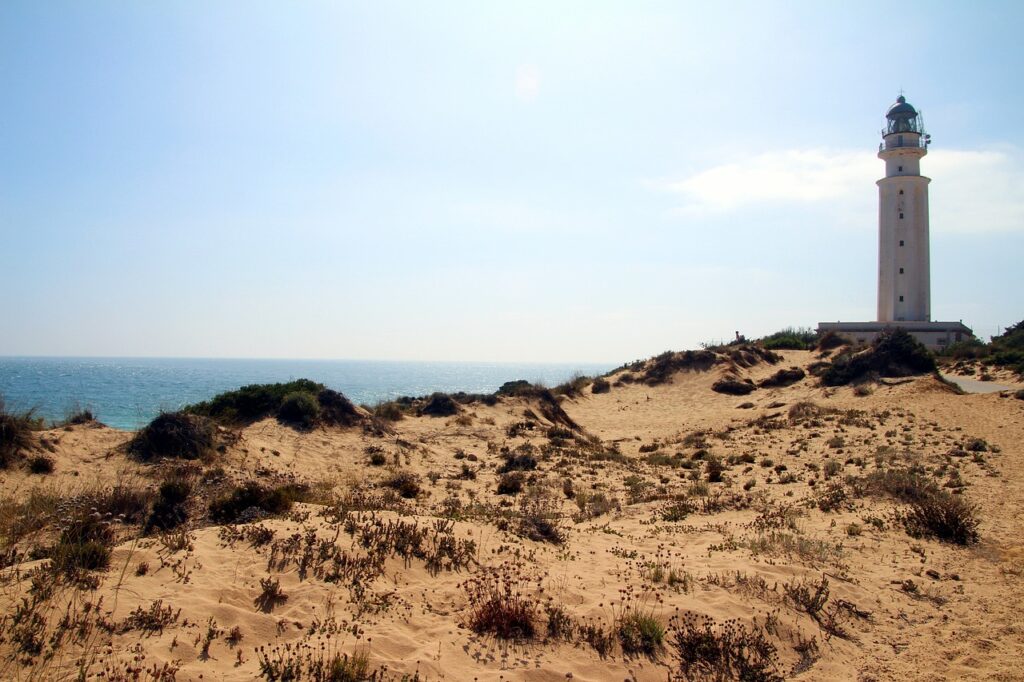
And then you can stop by the lighthouse on Cape Trafalgar – Trafalgar Lighthouse, it is also beautiful and I love lighthouses for their romance.
Punta Paloma
And then another natural wonder awaited us – the huge dune of Punta Paloma, which towers above the ocean and the beach of the same name. These places should be written about separately, because Punta Paloma is a huge beach with a bunch of campsites, where kite surfers hang out almost all year round, flying on the waves.
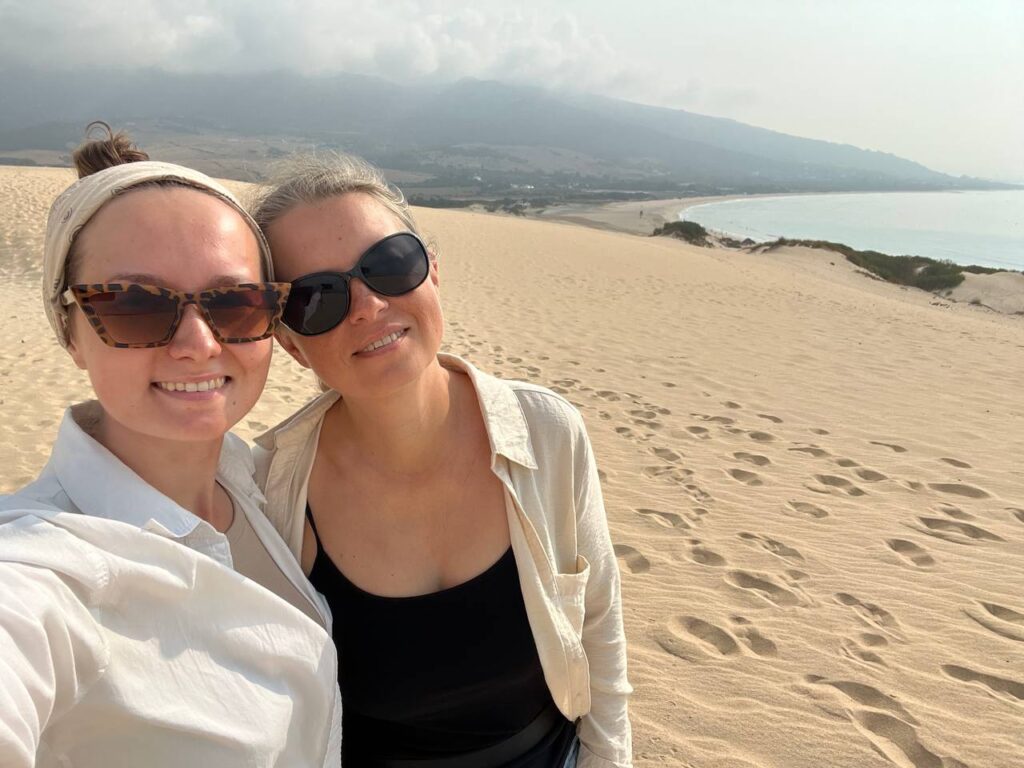
This place has constant winds, thanks to which it has turned into a kite-surfing paradise with a special atmosphere of crazy freedom. And the dune was formed precisely because of these winds, which fly from the side of Africa and bring sand here all the way from the Sahara. Be sure to put a dot on the map and look at the giant dune – it is incredible and the views from it too! Free parking near the dune is located here.
Tarifa
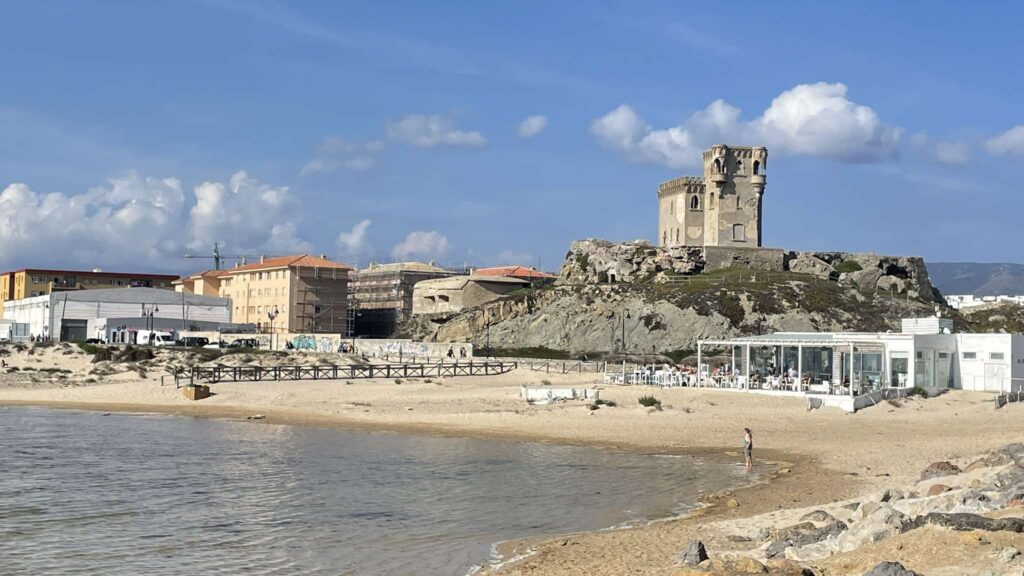
Tarifa is a city located on the famous Costa de la Luz and is a famous seaside resort. Tarifa is the southernmost city in Europe and is located on a cape that abuts the Strait of Gibraltar. It is here that the Mediterranean Sea meets the Atlantic Ocean right in front of its shores. And it is here that the narrowest part of the strait is – only 14.5 km.
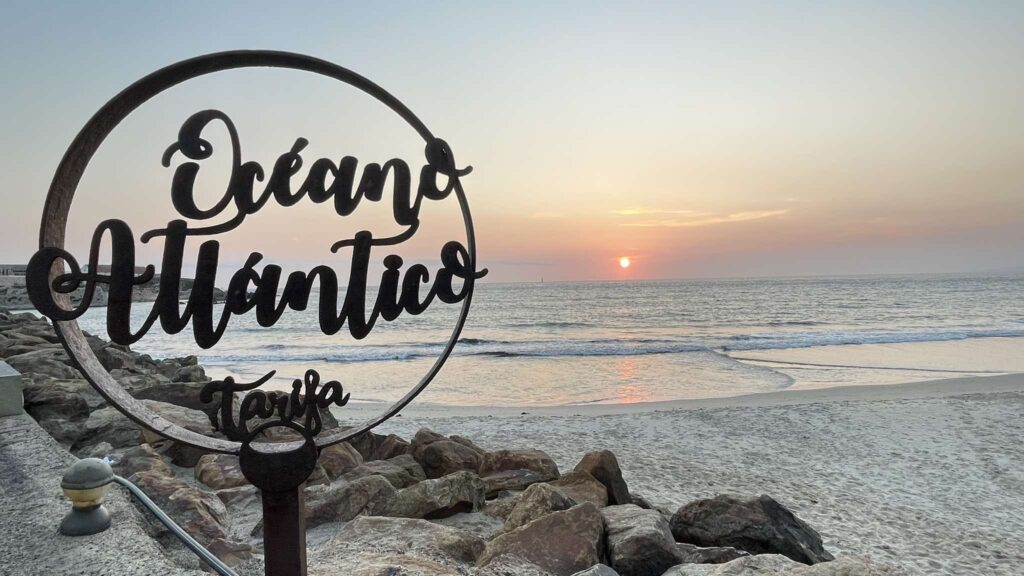
We stopped in Tarifa for the night and again I regretted that I had only spent one day in this city. It is incredibly beautiful and romantic, and I liked it much more than the resort towns of the Costa del Sol. There is a certain spirit of freedom here, without pomp and extravagance. Here you can relax sitting by the ocean, or learn to fly over the waves on a kite. There are very cool gastro-pubs and restaurants, be sure to try a sandwich with red tuna or any dish with Atun Rojo.
What to see in Tarifa:
- Puerta Jerez: this is the only ancient gate of the city that has survived for centuries.
- Los Lances Beach: one of the most beautiful beaches in the region thanks to its white sand and beautiful and untouched natural landscape.
- Punta Paloma: if you like windsurfing or kitesurfing, you should definitely go there!
- San Mateo Church: the main church of Tarifa was built on the foundation of an ancient mosque, which is very common in Andalusia.
- For one day in Morocco: from Tarifa there are ferries every hour to Morocco – to Tangier. An hour on the way, 50 Euros and you are already in Africa. That is if you have a Moroccan visa – it is needed by Ukrainians.
Parking in Tarifa:
We stayed near the Old Town of Tarifa so it was easy to find street parking. There was a large free parking lot two blocks from our hotel (coordinate here). In this parking lot there may be a so-called Garilla – a man in a vest who may try to take money from you – don’t pay them, because the parking is free.
Where to stay in Tarifa:
- Hostal Tarifa≫ – It’s actually a very nice hotel (I don’t understand why it’s called that, because there are no dorm rooms here). Very clean, good beds, cleaning like in good 4-star hotels. I really liked the hotel (there’s an elevator, by the way), and a block away there’s a large free parking lot where we left the car (the parking lot is indicated above).
- Hotel-Apart CORTIJO LAS PIÑAS≫ – Excellent location of the aparthotel. Incredible views, a large selection of apartments, very authentic decoration, you can feel the spirit of history and the family that runs this place.
- Eole Tarifa Rooms≫ – Clean, tidy, cozy. Authentic apartments with all amenities. There is a beautiful courtyard where birds sing. Great location in the heart of historic Tarifa.
Day 3: Tarifa – Estepona
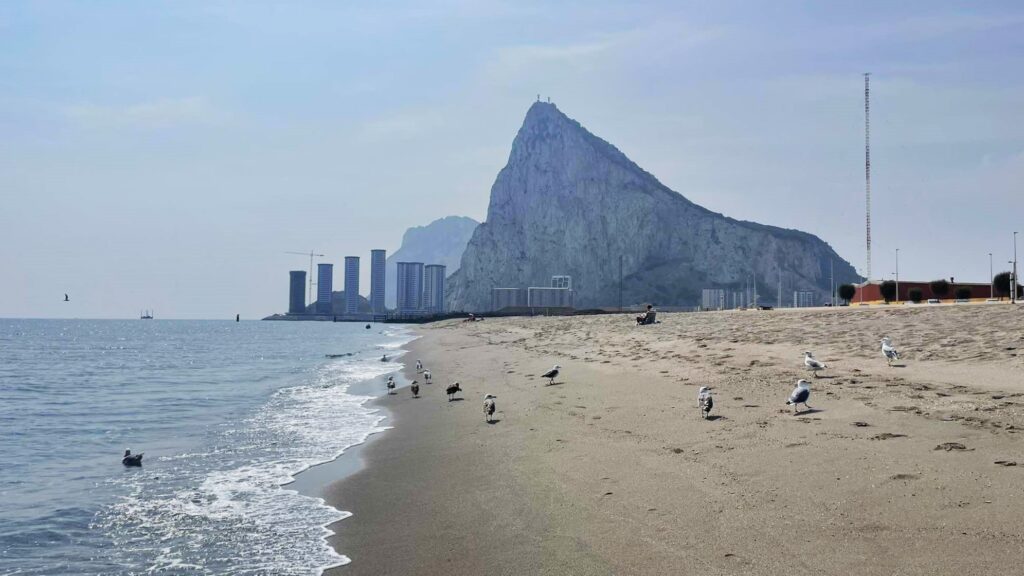
We stopped for a couple of hours in Gibraltar and then went on to Estepona. I do not advise staying overnight in the town of La Línea de la Concepción (on the border with Gibraltar). It is very depressing here and it feels like the town lives only off trade and services to Gibraltar. The same story with the neighboring port of Algeciras.
Estepona
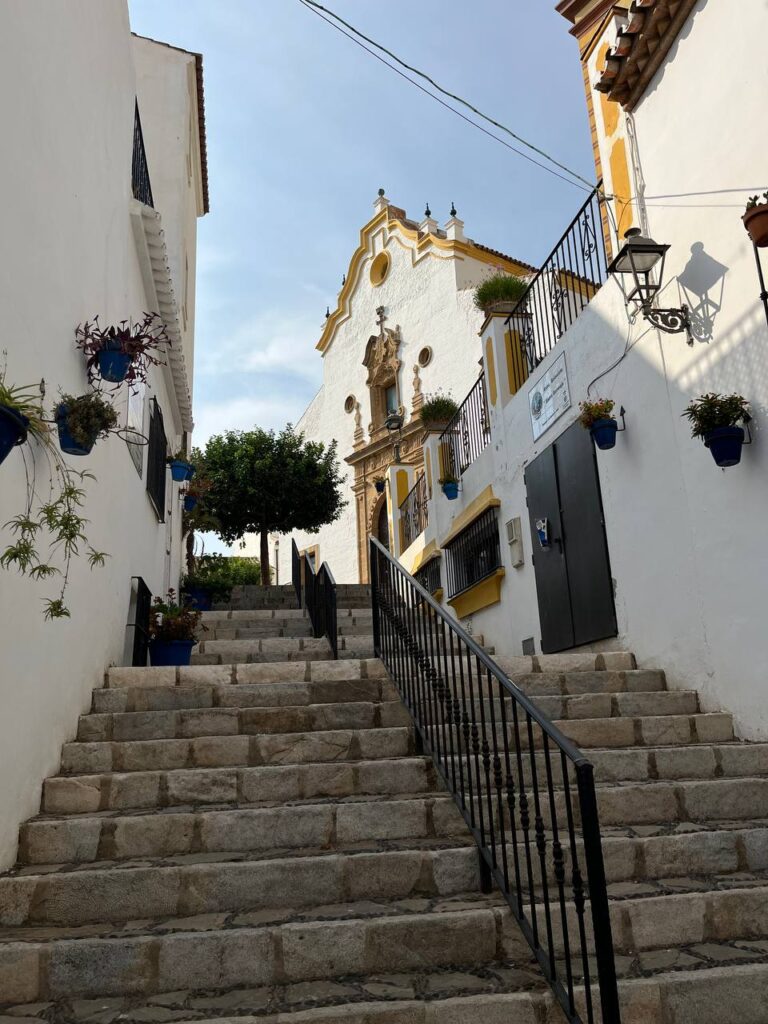

Estepona – a tourist town on the famous Costa del Sol, the city is very cozy, although not as hyped as neighboring Marbella.
What to see in Estepona:
- The historic center of Estepona – with a typical Andalusian style – white houses on narrow streets, with lush blooming flowers everywhere. Narrow streets leading to squares such as Blas Infante, the Clock (16th century tower).
- Street murals in Estepona – in this city on the Costa del Sol you will find the largest vertical mural in Spain, covering an area of 1000 square meters and six facades in the city.
- Botanical Orchid Park – there are over 1300 different species of orchids, and the vertical gardens and waterfalls make this space a unique place in Estepona.
- Beaches of Estepona – one of the best beaches in Estepona is the municipal beach of La Rada. Located in the city center. Here you will find restaurants, showers, toilets, volleyball nets, umbrellas and games for children.
Parking in Estepona:
I was lucky to find a free parking space on the street. The paid parking near the historic center costs 1.3 Euro per hour. If you are planning to go to the beach, I recommend looking for a supermarket nearby, where you can also park your car for free for a couple of hours. We did it on parking of Carrefour – you can generally leave your car there for the whole day.
Where to stay in Estepona:
- Senator Banus≫ – This is a beautiful and very stylish hotel. The rooms are large and spacious, with everything you need. The balcony is great to sit on and sunbathe. The breakfast is exceptional – a wide selection of dishes and fruits. The hotel has its own outdoor pool.
- Apartamentos Turísticos Casa de La Borrega≫ – The apartment is cozy and in a great building. It has very comfortable beds, strong water pressure in the shower. The location is perfect – just 1 minute walk from Plaza de las Flores and all the streets with restaurants.
Day 4: Estepona – Marbella – Fuengirola
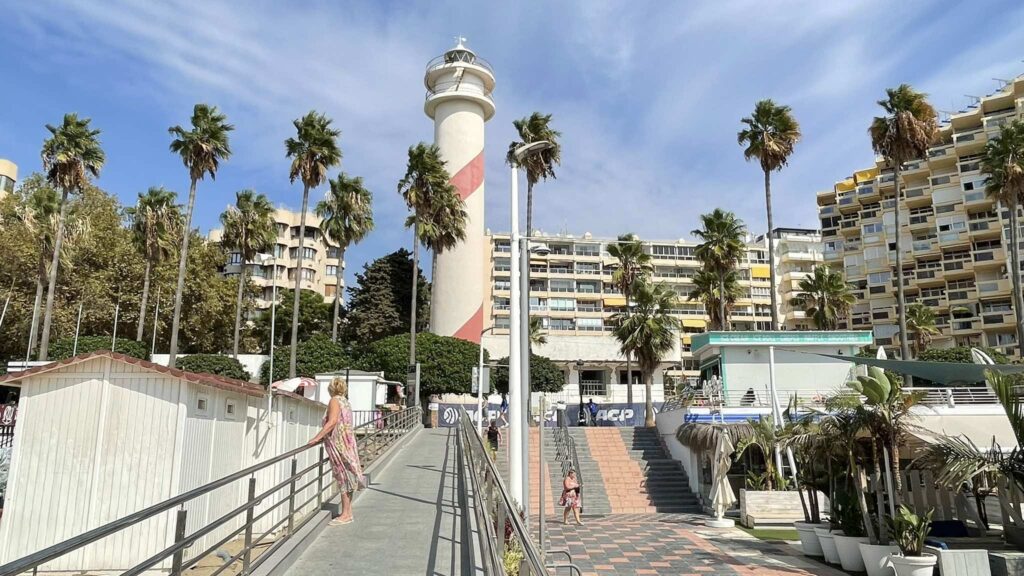
The Costa del Sol (also known as the Costa del Golf) is the most expensive coast in southern Spain, attracting not only tourists but also celebrities from all over the world. From the glitz and glamour of Marbella to the quieter beaches further south, the Costa del Sol is the place to be for sun seekers. Although it is also one of the most touristy parts of Spain, with a lot of developed hotel infrastructure, so expect big crowds at most times of the year and higher accommodation prices.
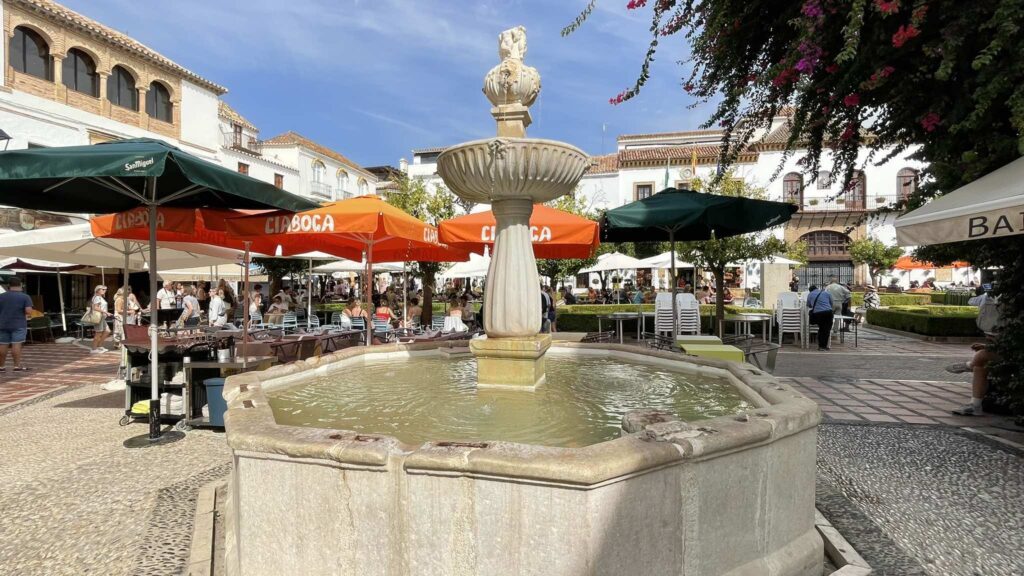
A good rule of thumb is that the further you go from Malaga, the less crowded and more authentic things become.
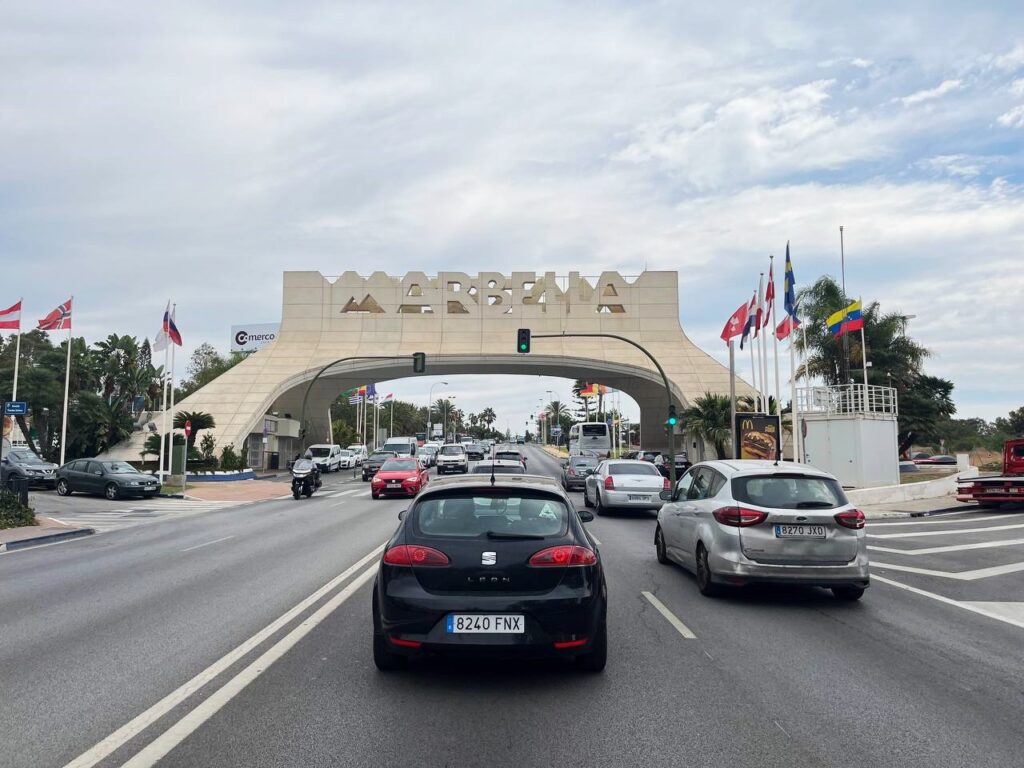
Marbella is an exception, as it is associated with glamour, with billionaire yachts anchored in the water. But if that’s not for you, head to Estepona on the southern Costa to discover a beautiful old town with a nice historic core and a more authentic atmosphere.
We decided to dedicate the day to Marbella, which is known for its beautiful historic center and beaches, and went to Fuengirola for the night, because from there we planned to go further into the mountains in the morning and it was more convenient for us.
Marbella
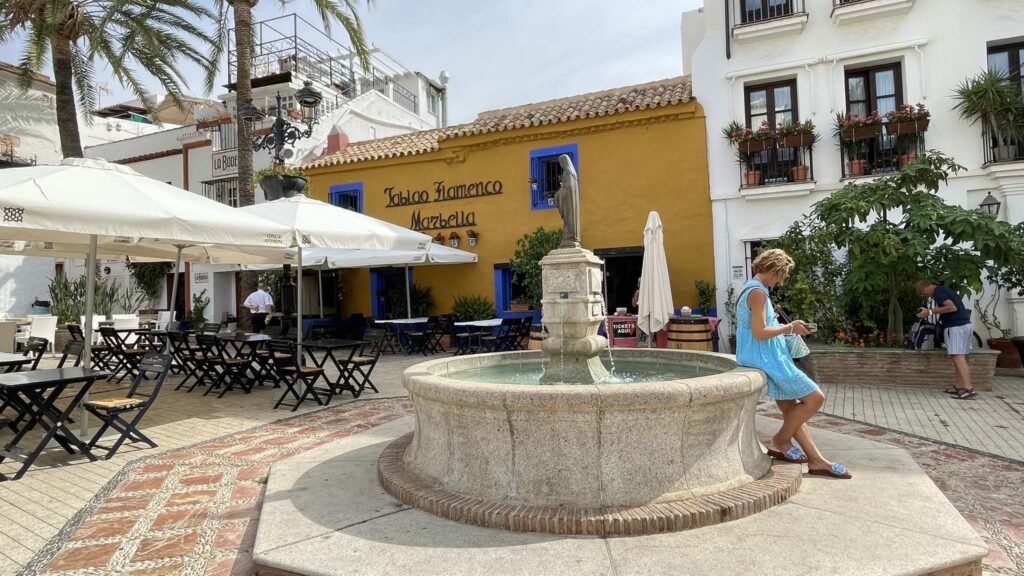
Marbella has one of the most beautiful historic towns in the entire province of Malaga. About a hundred years ago, Marbella was a small fishing village. But in the 50s of the last century, the Spanish nobility drew attention to the town. Famous wealthy Spanish aristocrats began to build houses here. Now Marbella and vacationing here is about expensive, but if you move a little away from the promenade, you can find quite normal prices for apartments.
What to see in Marbella:
- The walls of Marbella Castle: which date back to the 11th-30th centuries and allow you to see the most important traces of the passage of civilization through the city of Marbella.
- Pantaleon Street: – it is such a narrow street that you can touch its sides just by spreading your hands.
- Plaza de los Naranjos in Marbella: Here you can see the Marbella Town Hall, the Santiago Chapel and the Casa del Corregidor.
- Avenida del Mar Marbella: located between the center and the promenade and is a kind of street museum where you can see sculptures by the artist Salvador Dali.
- Alameda Park is the ideal place to relax and enjoy nature and the coolness of the huge trees inside.
- Marbella has one of the best promenades in the province of Malaga. Here you can walk, sit in restaurants and also ride bicycles.
- Marbella’s Golden Mile – here is a chic selection of Marbella’s best restaurants, exclusive boutiques and shops such as Gucci, Dior, Cartier, etc.
Where to stay in Marbella
- Casa Postigos≫ – very comfortable rooms, nice design, extremely clean, everything new. Located in the old town and at a great price. Coffee and tea making facilities, charming white house, close to the bus station.
- Senator Marbella≫ – The rooms are very clean and spacious, the beds are comfortable. There is a nice rooftop bar with great views. The hotel is in a good location, about a 5 minute walk to the seafront promenade and about 15 minutes to the old town.
Day 5: Fuengirola – Caminito del Rey
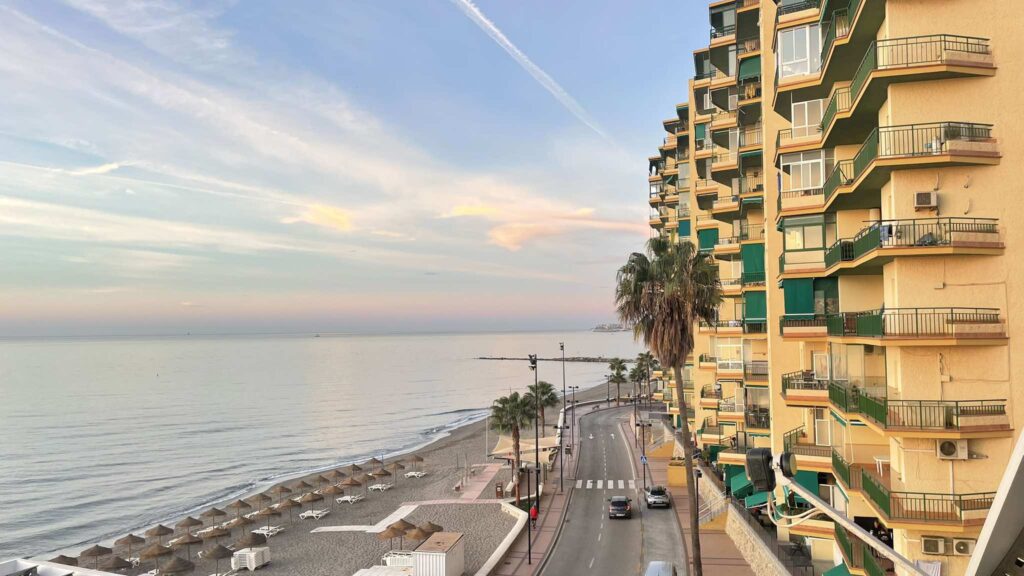
We stayed for a few days in a coastal town called Fuengirola. I will write about it separately, because if you are planning to spend a few days on the Costa del Sol, it is a really good option. It is also very convenient to travel around Malaga to see places like Ronda, or the small Smurf village of Juscar, or to go with the kids to the Bioparc Fuengirola.
We were relaxing on the beach, and also planned hiking on the world-famous trail in the canyon – Caminito Del Rey.
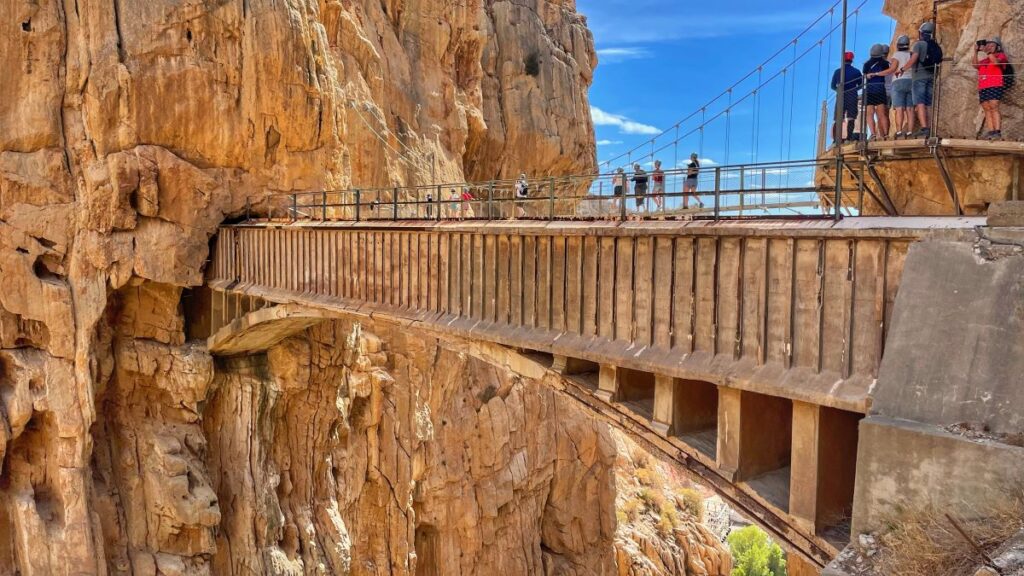
Its name means “Royal Path”, which is about 7 km long. Approximately 3 km of this path consists of wooden paths, and they are laid along a steep rocky gorge called Gaitanes. For more information and planning and our experience of such a trip I will write letter.
Where to stay in Fuengirola
- Holiday wanda≫ – A wonderful apartment on the seashore, where we stayed for three days of rest. The owner, Wanda, is incredibly attentive to guests and details, creating comfort and coziness for her guests. Clean is not the right word: perfect cleanliness! Very comfortable bed. We felt like we were at a guest house and a hotel at the same time. Wanda gave us a parking remote, so there was always a place to park the car. There is an elevator in the house.
- Terrace Costa Hotel≫ – Great boutique hotel close to the train station, shops and restaurants. Very easy self check in. Room has a fully functioning kitchen (microwave, water heater etc). You can have good breakfast on the rooftop, 5 minutes from the beach, lots of restaurants around.
Day 6: Nerja
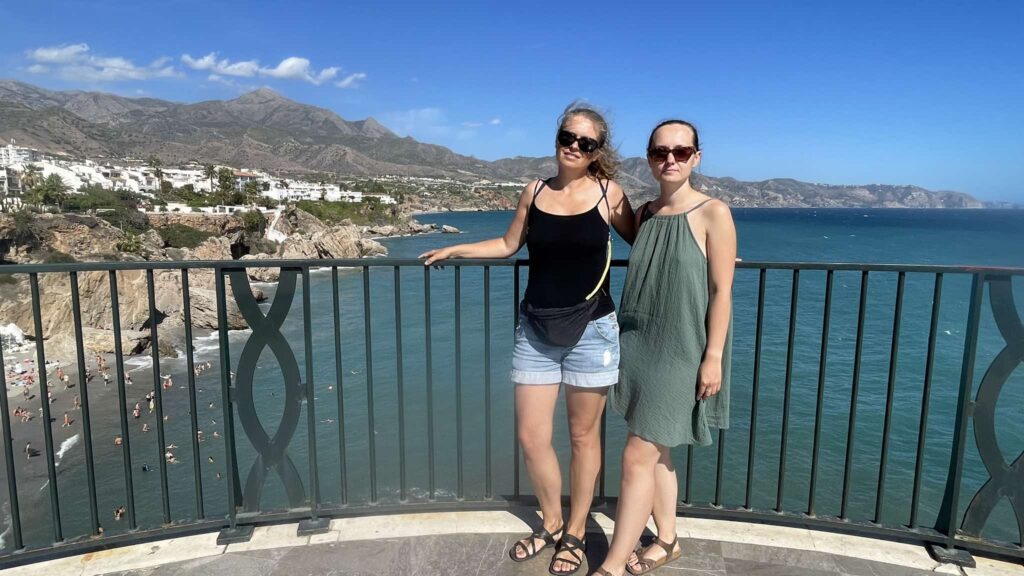
The coastal town of Nerja, located about 50km east of Malaga. It has managed to preserve the natural beauty of its coves by keeping the development low. You’ll appreciate both the beach and the mountainous landscape beyond. This old fishing village is now a popular tourist destination. But thanks to its location at the very end of the Costa del Sol, it hasn’t been as unspoilt as some of the other big resorts.
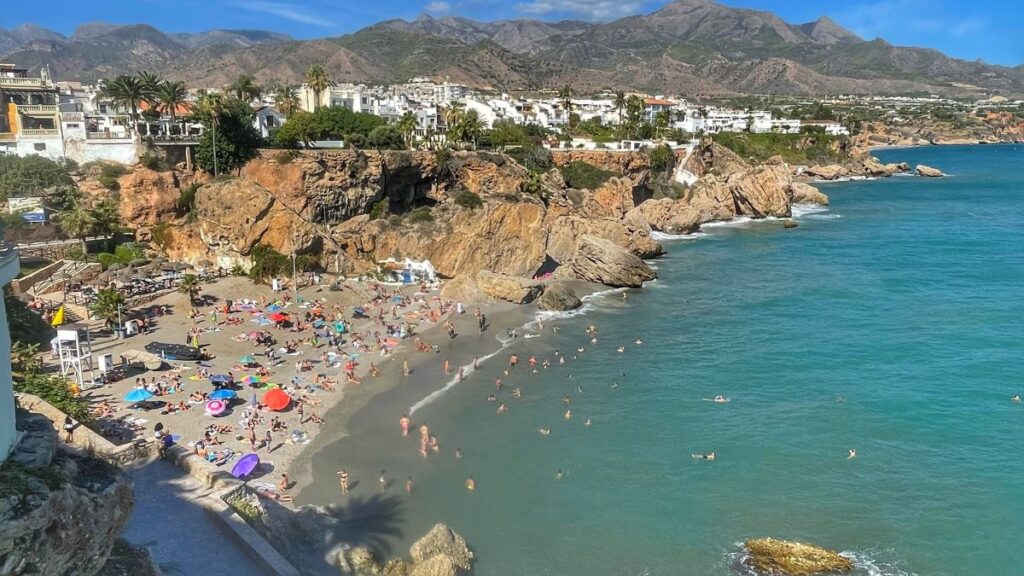
Nerja is another place we managed to see while on holiday on the Costa del Sol. We went there for the wonderful beaches – in my opinion, they are the best on the entire coast. And there are also very beautiful views from the cliffs of Nerja. We spent the whole day on the beaches – swimming and sunbathing, and then walked around the city, along the promenade and of course did not miss the Caves of Nerja.
What to see in Nerja:
- From the famous Balcony of Europe you can enjoy wonderful views.
- Cueva de Nerja: The Nerja Caves, which will definitely impress you – I was stunned by the scale of the underground cathedrals of stony and stalactites. The Nerja Caves are declared a Monument of Cultural Interest and the fourth most visited natural monument in Spain.
- Nerja and its beaches: beaches in small coves with crystal clear water surrounded by wildlife. Here you can enjoy a peaceful atmosphere. Some beaches, such as Cala Barranco de Maro or La Caleta de Maro, are difficult to access. But because of this there are fewer people here.
Parking in Nerja
If you are looking for free parking, it is easier to find a free space on the slopes above the promenade. But the closer to it, the less chance of parking for free. Although, we easily found free parking near the Balcony of Europe – here.
Where to stay in Nerja:
- Hostal Tres Soles≫ – Extremely clean hostel near the historic part of Nerja (free parking under the hostel where we parked our car). Perfect for a short stay, well equipped kitchen to just make breakfast and tea or coffee, nothing more.
- La Puerta de Nerja BOUTIQUE ≫ – Great hotel – very clean, great location, great staff and very welcoming. Rooms are smaller as everywhere in Spain.Bbut have everything you need including air conditioning, wifi, clean toilets, TV, balcony etc. There is also a jacuzzi on the roof.
Day 7: Malaga
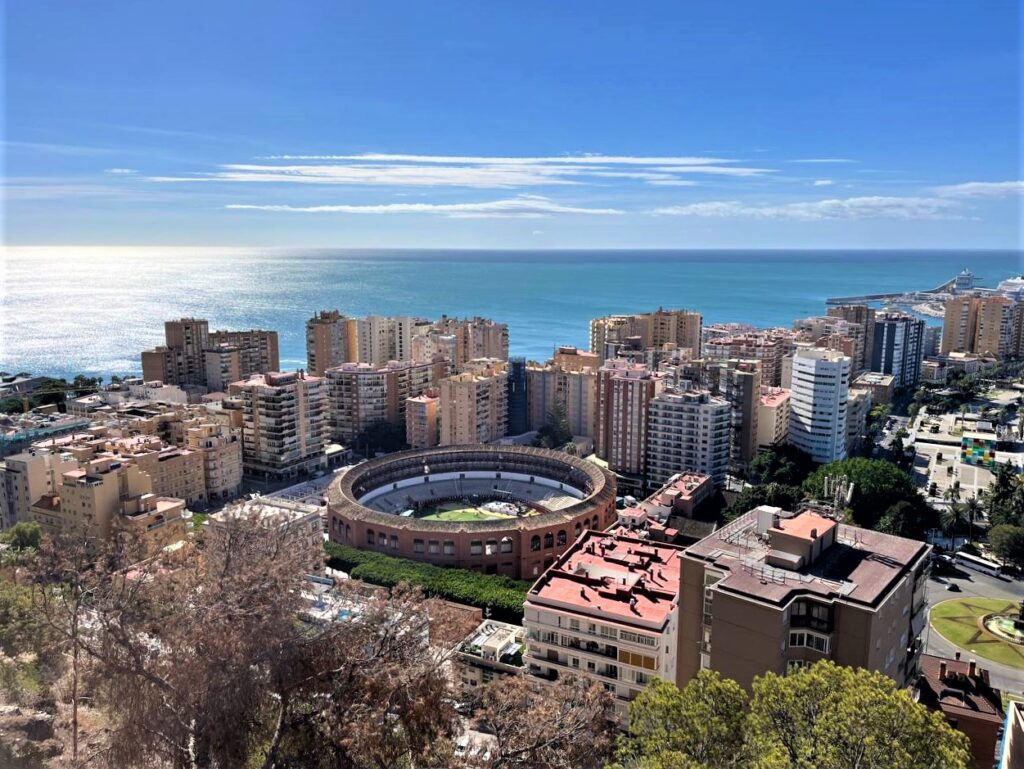
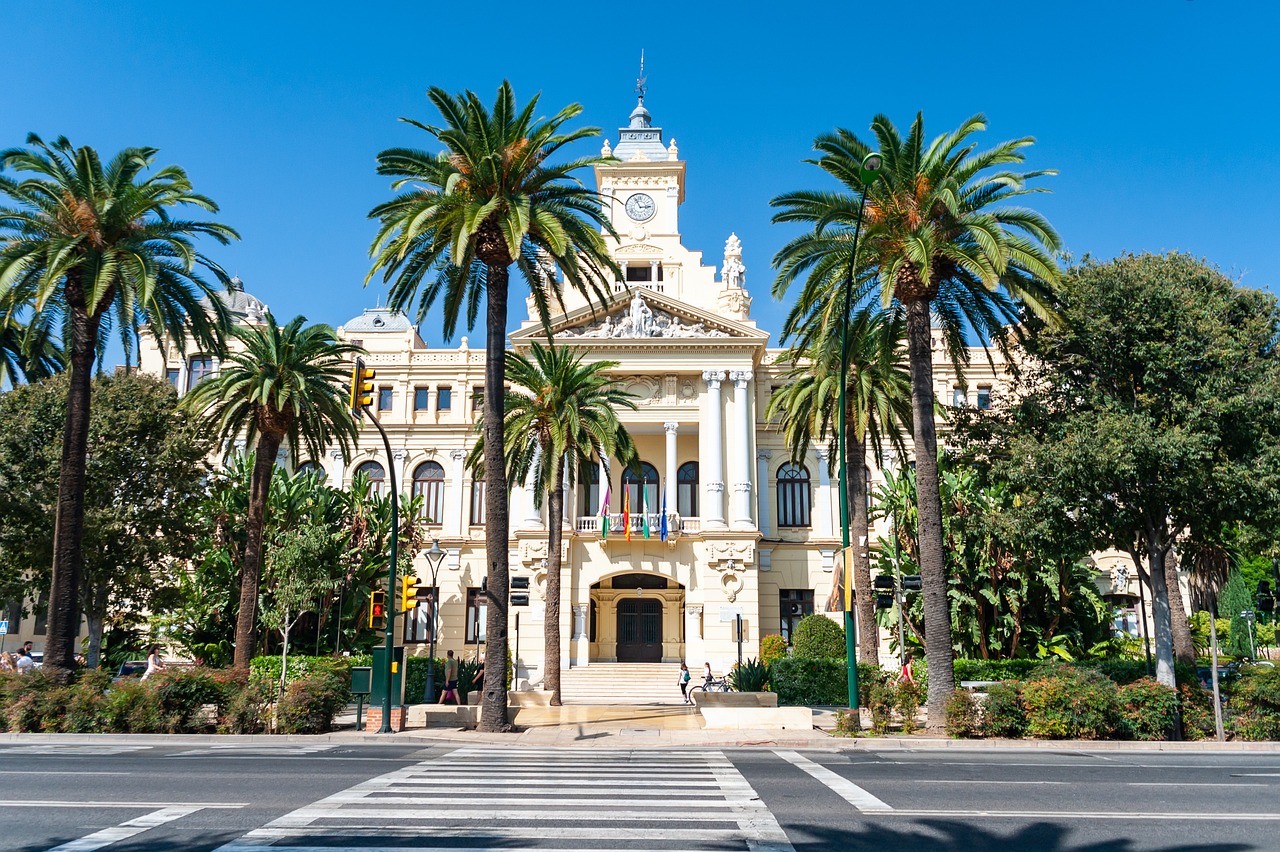
A lively seaside resort on the Costa del Sol, it is also a modern city with an impressive cultural heritage. It is also famous for being the birthplace of Pablo Picasso.
While many people think of Malaga as a resort city with high-rise hotels and nightclubs, it is important to note that the main historic centre of the city actually has a number of interesting architecture and interesting museums that are worth exploring.

Malaga is also a great city for foodies: markets offering fresh produce and snacks, informative food tours and plenty of tapas bars where you can relax, have a drink and a bite to eat.
And of course, it is here that a convenient airport is located, to which low-cost airlines fly from different parts of Europe. We have already seen this twice when we got here from Prague and Bucharest for absolutely reasonable money even in high season. Tickets cost 80 Euros one way in September – I consider this a great price for the logistics to Andalusia.
What to see in Malaga:

- Alcazaba: A perfect blend of Arabic, Roman and Renaissance architecture. This ancient Muslim fortress was built in 1507 next to a beautifully preserved Roman Amphitheatre.
- Picasso Museum: You can’t visit Malaga without stopping at this museum, which celebrates the work and life of this famous Spanish artist.
- Nuestra Señora de la Encarnacion Cathedral: Construction work began in 1528, but it took centuries and the church is still not finished!
- The harbor: This is the heart of the city’s nightlife, and a great place to relax during the day, thanks to recent renovations that have made it elegant and modern.
Where to stay in Malaga:
- Apartamentos Debambú≫ – Great place to stay, the apartment is very bright, clean and spacious. Perfect location in the center of the old town.
- H-A Hotel Trebol≫ – Great location, walking distance to tourist attractions and plenty of bars and restaurants. Short walk to metro station for easy airport transfers. Friendly, attentive staff and simple self-service breakfast. Lift and roof terrace.
- Malagueta Beach Studio≫ – Comfortable and clean apartment, located close to the beach and restaurants, and it’s not noisy at night, which is a big plus.
- Living4Malaga Centro Histórico y Playa≫ – Central location, just a short walk to the city center. Hard Rock Cafe and other restaurants are very accessible within a short walk from the pier.
Useful articles and links:
- Top 7 cities worth visiting in Spain
- Barcelona neighborhoods – where to stay for tourists
- Barcelona – what to do in three days
- 10 European destinations where it’s warm in winter
Travel medical insurance with discounts can be purchased from HotlineFinance
Hotel and apartment bookings – Booking.com