
The Camino de Santiago is world-famous, attracting over half a million pilgrims each year with the goal of reaching Santiago de Compostela and its cathedral. This journey tests both body and mind and generates countless stories thanks to the shared experience with other pilgrims.
Most pilgrims consider the city of Santiago de Compostela their final destination, but in fact, there is another route that few dare to take.
Camino Finisterre is an extension of the Camino de Santiago, leading pilgrims from Santiago de Compostela to a place once considered the “end of the world” named Finisterre. The route to Finisterre/Muxía is the only Camino that starts exactly in Santiago de Compostela.

There are two final points on this route: Finisterre and Muxía. You can choose one of them or walk to both (there is a connecting trail along the ocean between them). The first 60 km from Santiago are the same, and at stage 3 they split into two different routes—one towards Finisterre, the other towards Muxía.
Most people walk this route after completing one of the longer Camino routes. I first walked it to Finisterre after completing the Camino Francés. And the following year, I got to Finisterre by bus and walked the connector to Muxía—after completing Camino del Norte.
Finisterre – “end of the world” in Spain

The name of the cape comes from the Latin Finis terrae, which means “end of the earth”. Why was it considered the end of the world?
To understand this, you need to look back a few centuries, to the time when Celtic peoples inhabited the Iberian Peninsula. They based their beliefs on solar cycles. So for the Celts the sun’s daily journey westward symbolized the transition of souls to the afterlife. For them, this was a farewell to loved ones, a place to honor them and even commemorate their memory.
This tradition over the years also became connected with the veneration of the Apostle James, as legend has it that many of his disciples searched for his remains near this place, in Duyo.
The route from Santiago to Fisterra is about 90 km, which is an additional section that most pilgrims do not walk—they more often take a bus to the “end of the world.” This happens because pilgrims either lack extra time or arrive at the cathedral exhausted. But still, a certain percentage choose to walk Camino Finisterre to put the finishing touch on a unique experience.
The best thing about this route is that it shows another side of Galicia—quieter, with fewer tourists. Its final destination is a lighthouse crowning Fisterra, offering breathtaking panoramic views that were once considered the end of the world.
From the Middle Ages to its modern revival
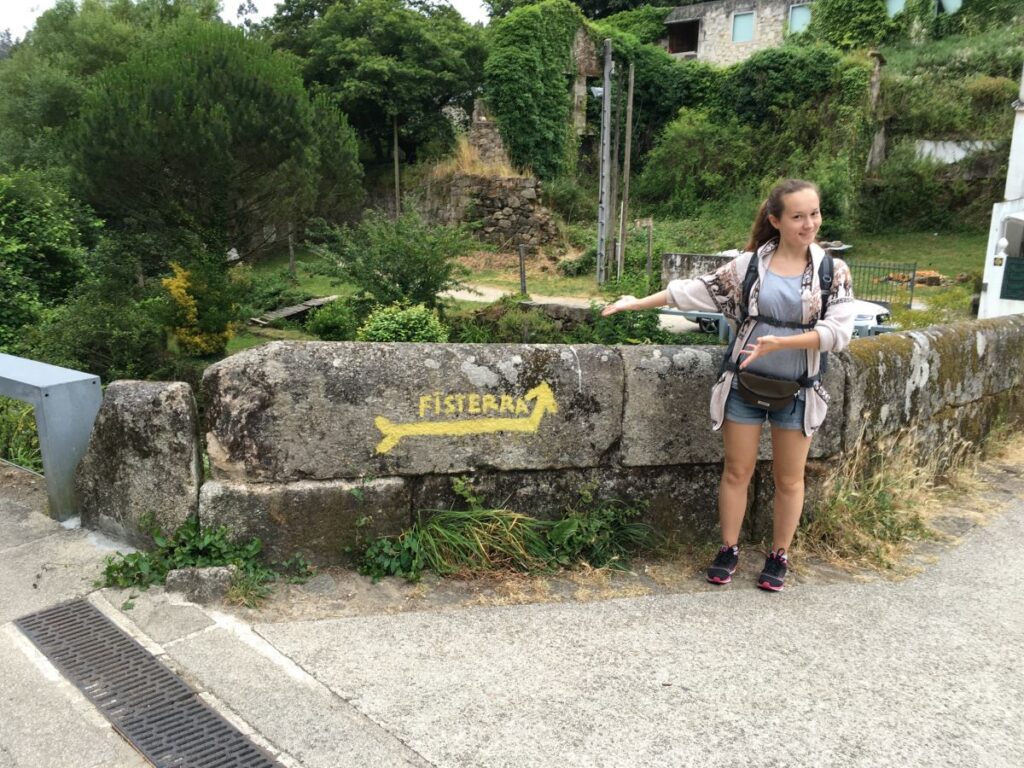
Since the 12th century there have been stories about travelers who walked in this region, describing this pilgrimage to the edge of the world. Its popularity is returning somewhat in our time, although most pilgrims arrive at Cape Fisterra by bus. Pilgrims discover something more than the Camino de Santiago. The stroll to Costa da Morte is yet another wonderful route that ends with stunning sunsets.
Camino Finisterre can be the perfect conclusion to a walking journey—a worthy epilogue to the spiritual and physical experience.
Technical information about Camino Finisterre

- Distance – from Santiago to Finisterre – 89 km, from Santiago to Finisterre to Muxía – 118 km
- Required number of days – 4-6 days
- Starting point – Santiago de Compostela
- Finish point – Finisterre or Muxía
- Route marking – yellow shells and arrows
- Accommodation – public and private albergues, hostels, hotels
- Ideal time to walk: spring and autumn
- Summer: plenty of sun and heat in open areas. Winter: likely fog and strong winds on the coast.
- Recommended gear: broken-in sneakers, lightweight raincoat, thermal layer – windbreaker, thermal T-shirt, fleece, sun protection – hat, cream, sunglasses. Also, 1.5-2 liters of water, energy food, trekking poles if you use them, a headlamp if you start early, a credencial for stamps (in Finisterre and Muxía you can get a certificate of completion).
- Who is this route for: For those who want to walk to the “end of the world” on a quieter route after finishing a long Camino, such as Camino Francés or Camino del Norte. Or this route can be done totally separately—Camino Finisterre is a good option if you have 5-7 days and want to see the ocean at the end.
Can you get a certificate of completion for Camino Finisterre?
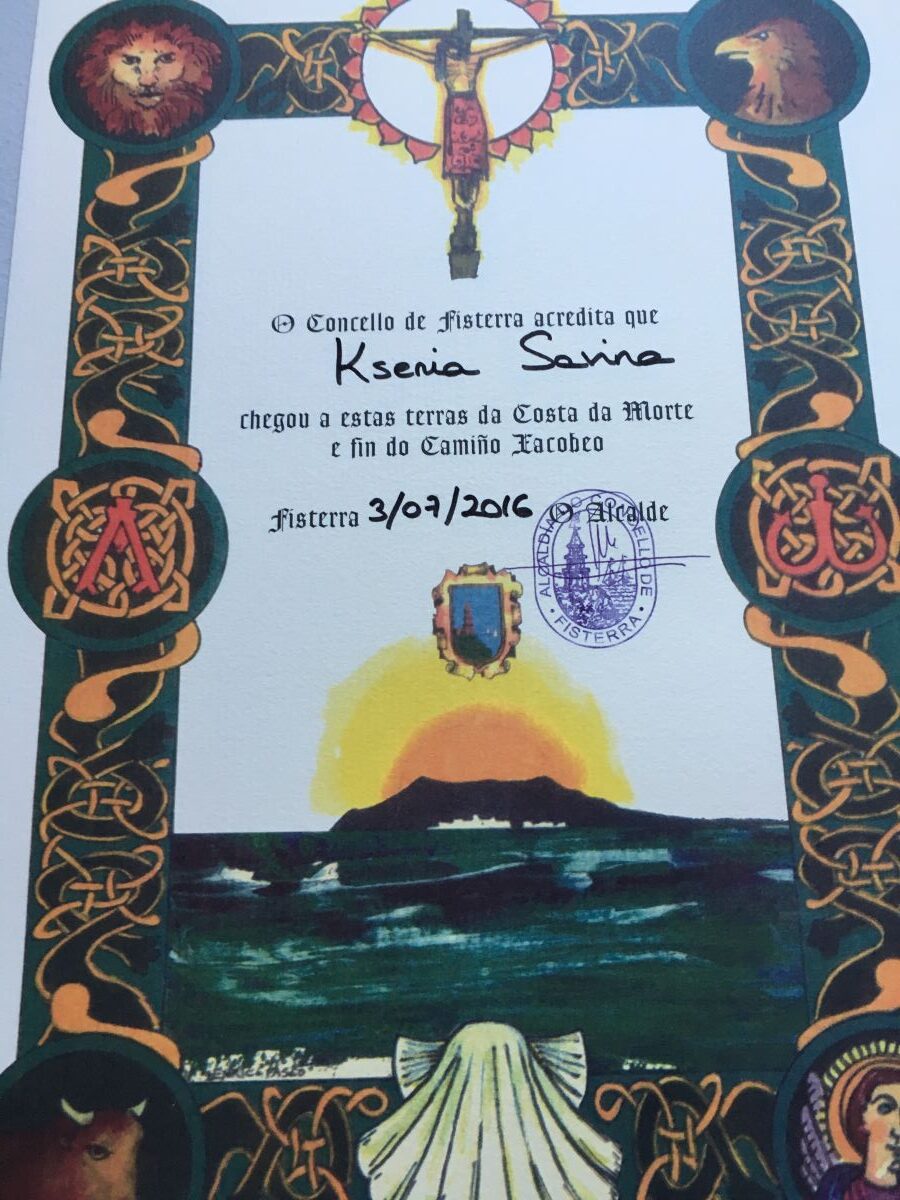
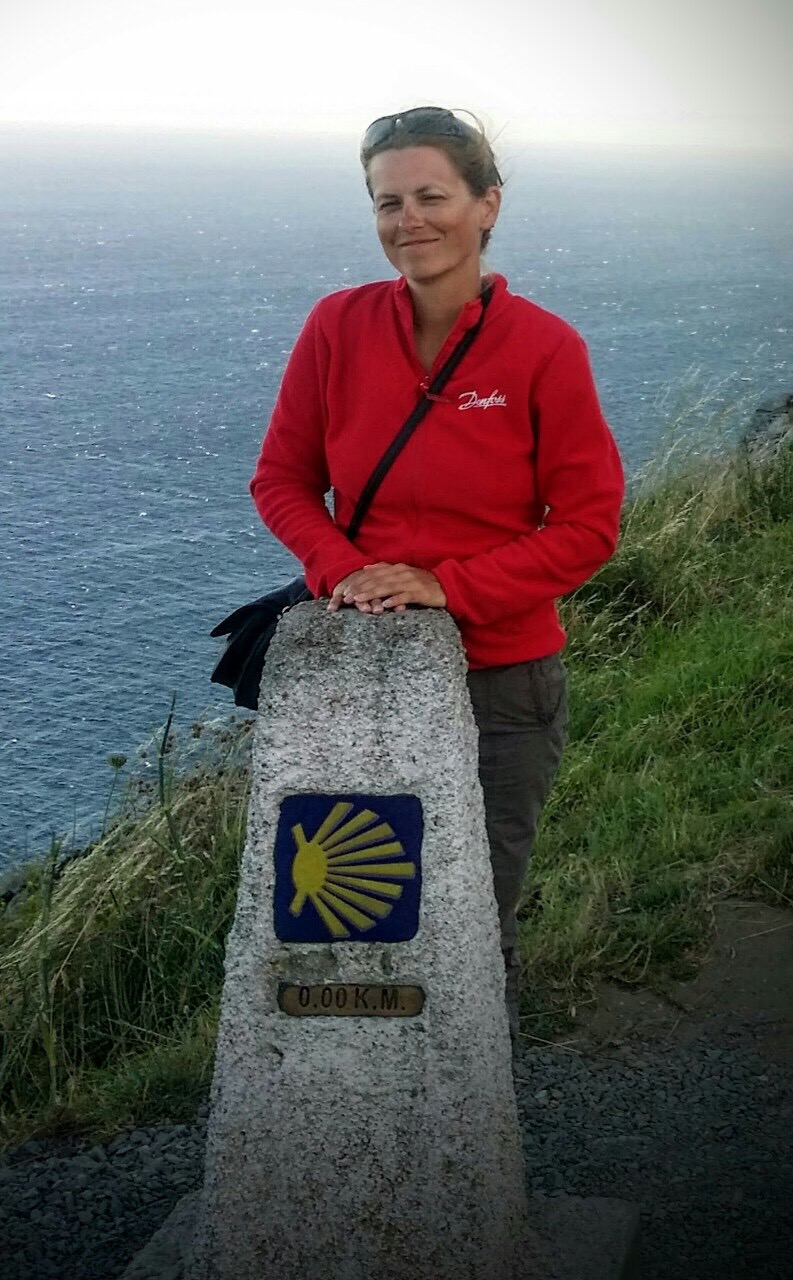
Yes, for completing Camino Finisterre you can get two similar certificates: Fisterrana and Muxiana. The Fisterrana certificate is issued at the tourist information center in Finisterre. The Muxiana certificate can be obtained at the municipal albergue in Muxía.
Of course, here too you have to prove you walked the route—show stamps in your credencial that you collect along the way.
Muxía – an alternative end to the route
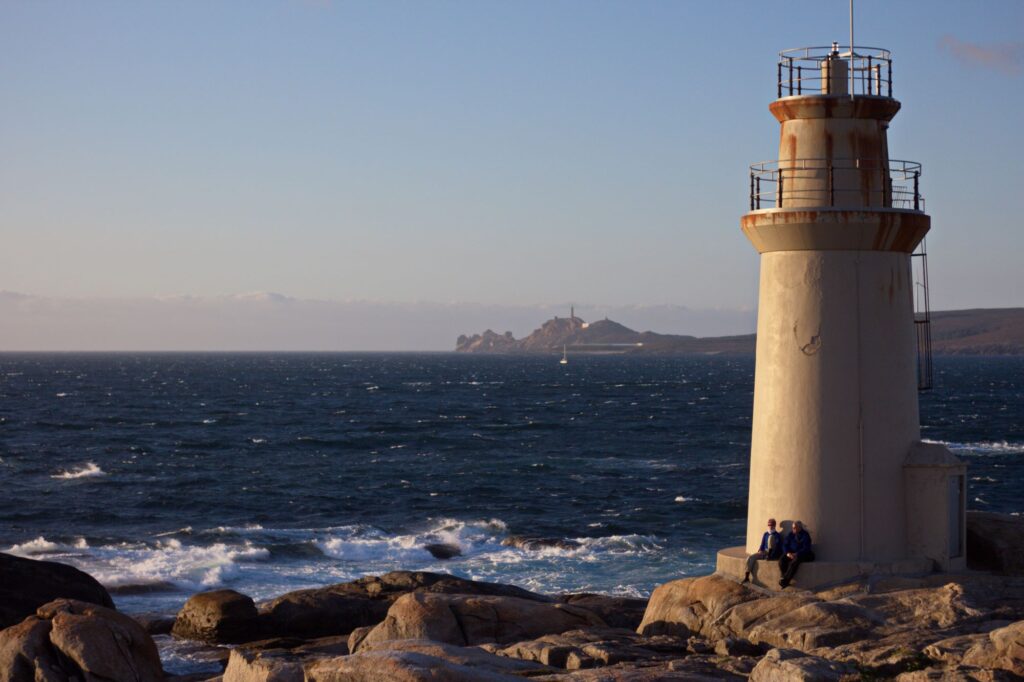
The question arises, where is it better to finish the Camino—Finisterre or Muxía? It’s rather hard to compare the places and say which one is better. But they are quite different, though both are marked as the “zero kilometer.”
Cape Finisterre—it is a pilgrim tradition to see the sunset there, thus putting a final full stop to the Camino. Then they return to the town of Finisterre to celebrate in one of the numerous restaurants. Here, in season, it is quite noisy, because besides pilgrims, it is also a very touristy place.
Muxía is quieter compared to Finisterre, though people also come here to see the sunset by the ocean. But the atmosphere in Muxía is completely different—a quiet town with few bus connections, dramatic natural surroundings and beaches all around. All this adds a touch of nostalgia and makes it memorable, as a beautiful ending with a note of longing for the Camino.
If you have enough time, I would recommend visiting both. I didn’t manage to do it the first time, so first I came to Finisterre, and the next year I came there by bus and walked to Muxía—the stretch is quite long (33 km), but if you have the time, you can split it over two days.
If you have to choose, go to Cape Finisterre—not because it’s more beautiful, but because it was historically the end of the Camino. I personally liked Muxía more and have returned there by bus. I think next time I’ll do the same and not just once.
How to get from Finisterre to Santiago?
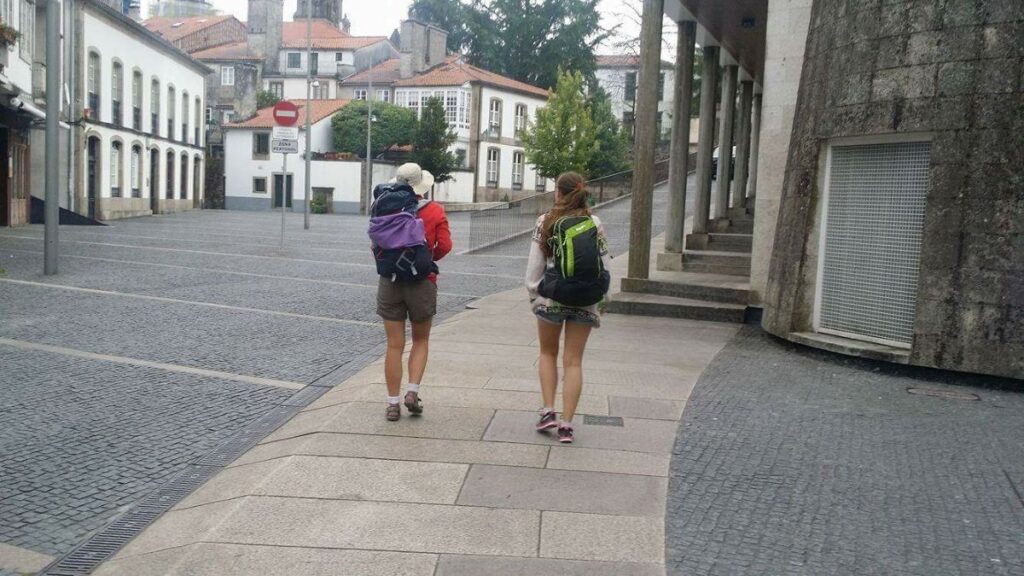
From both towns (Muxía and Finisterre) there are direct buses to Santiago. From Muxía, buses run infrequently—2-3 times a day. You can also travel from there to Finisterre.
From Finisterre several buses run daily, the trip lasts from 2 to 3 hours (depending on route and stops). The bus leaves from the stop around the corner from the municipal albergue. The price is 8 euros per person.
On the Monbus website you can check the current departure time, prices, and buy tickets.
Note: In the search field “Departure place” enter “Fisterra”—the Galician name for the town.
Itinerary diary Santiago – Finisterre
Day 1: Santiago – Negreira (≈20–21 km)
Camino Finisterre is the only Camino route that starts in Santiago de Compostela. Most pilgrims walk it as an extension after finishing one of the other routes. As I already mentioned, we reached Finisterre after completing the French Camino.
I recommend continuing to Finisterre if you have time, especially after finishing one of the inland Camino routes, such as the Camino Francés, Camino Primitivo, or the Central Portuguese route.
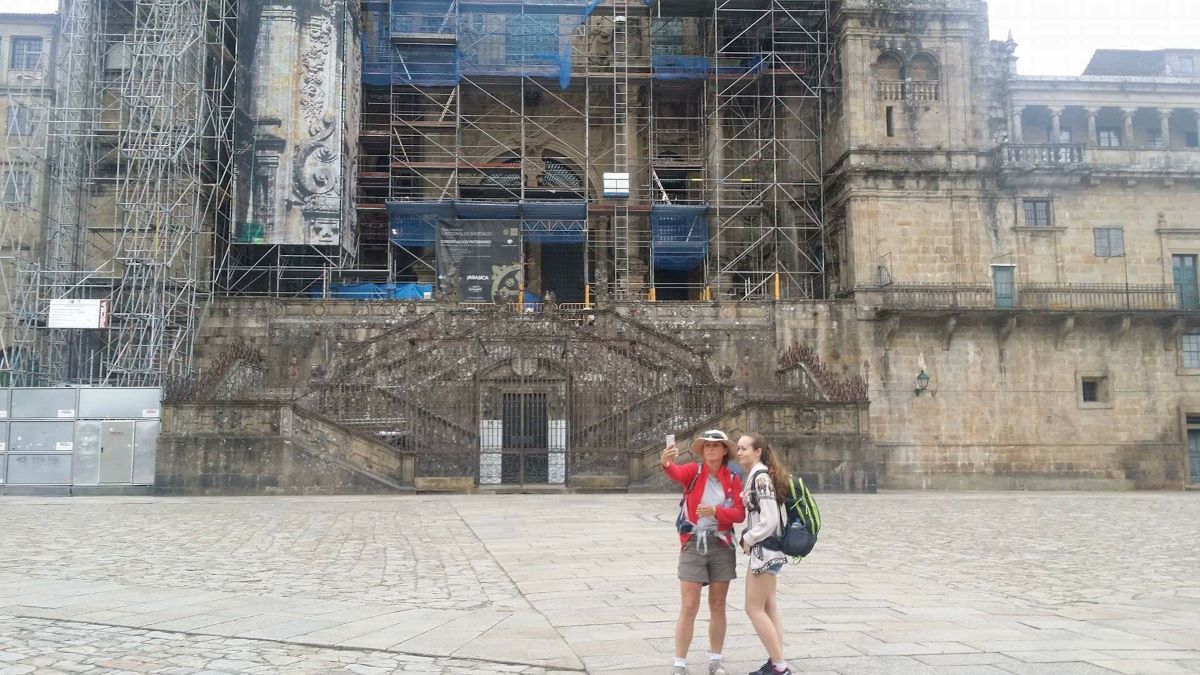
The Camino Finisterre route starts exactly where all the other Caminos end—at Praza do Obradoiro square in front of the Cathedral of Saint James.
From Obradoiro Square, walk along Rua das Hortas, which passes by the Reyes Catolicos hotel. You’ll see slightly faded yellow arrows painted on the asphalt—follow them. Cross Rua do Pombal (a busy road) and walk along Rua da Poza de Bar. About 1 km from the cathedral, in the Cabaleria de San Lorenzo park, you’ll see the first distance marker. From there, the route is well marked with similar posts with shells.
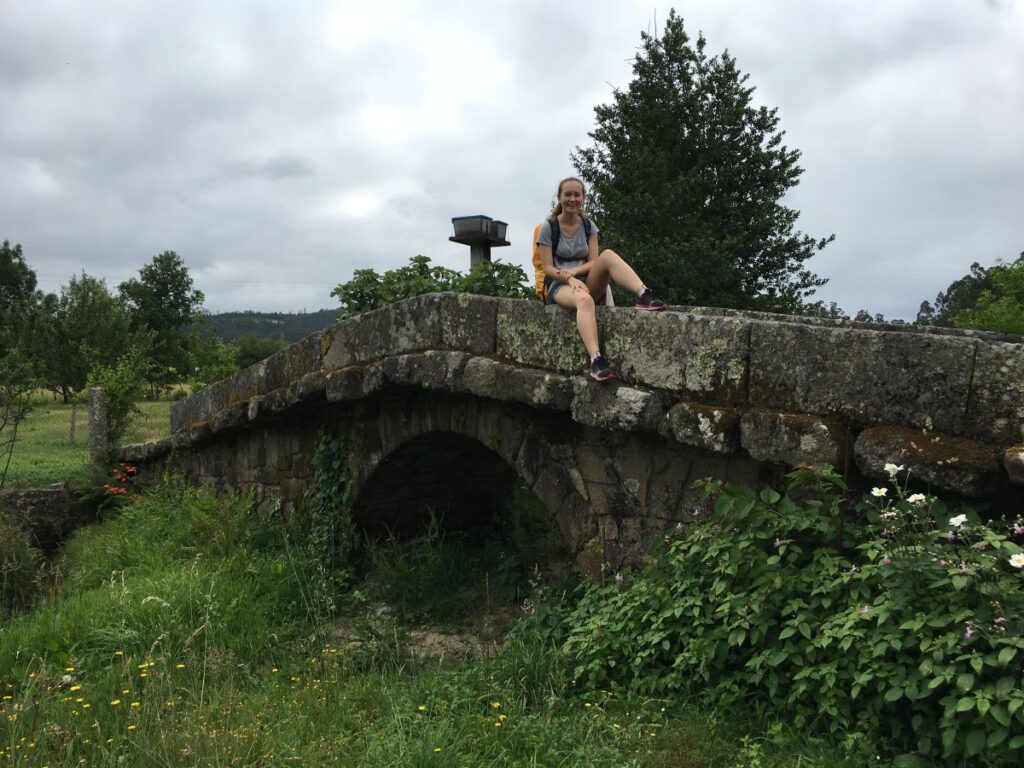
This is a relatively easy and short stage, so I don’t advise splitting it in half, it was pleasant to walk through old Galician villages. That way, you’ll walk 21 km in one day, with only one fairly gentle but long climb to Aguapesada / Alto do Mar de Ovellas with an elevation gain of 220 meters.
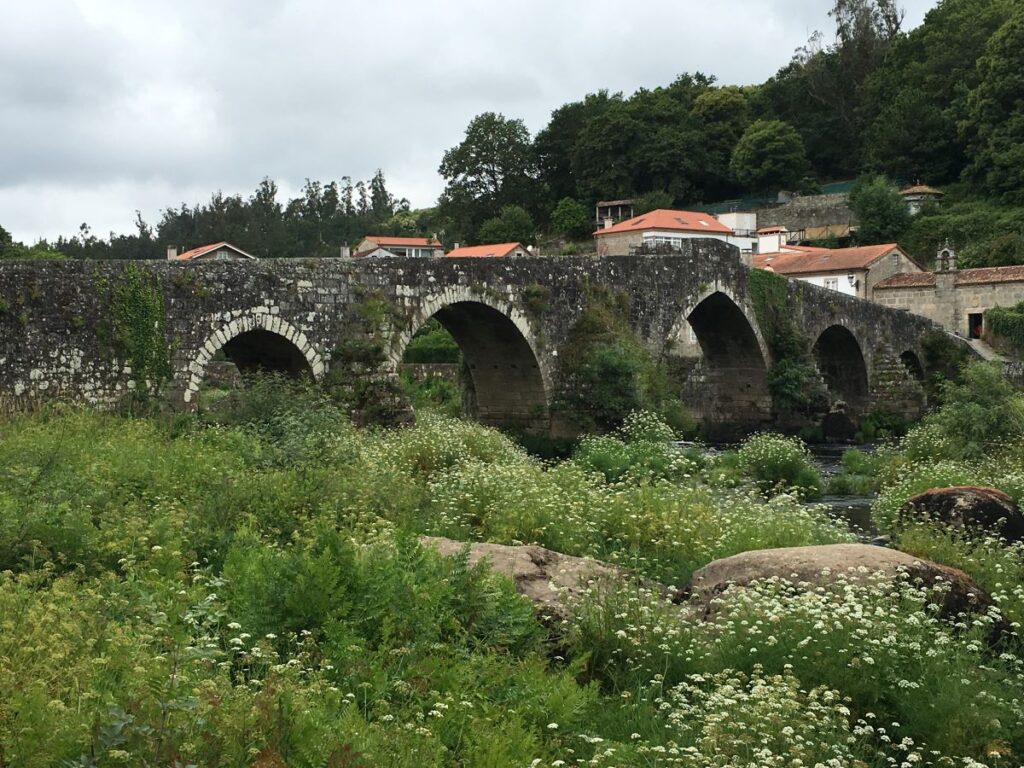
Along the way, you’ll see several interesting spots, such as a Medieval bridge over the Roxos river and the Baroque Trasmonte church.
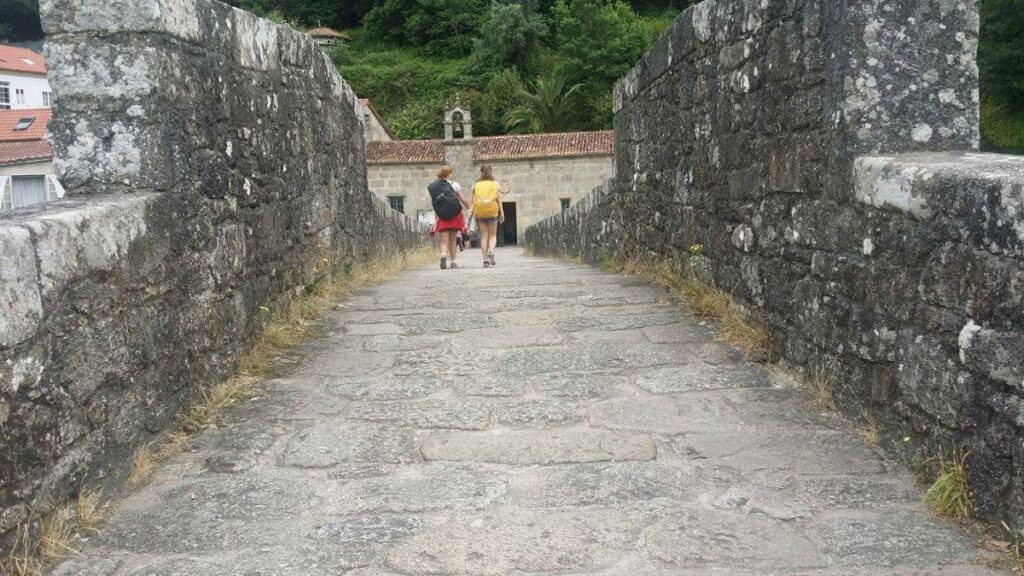
The lovely town of Ponte Maceira—here there is a very picturesque small waterfall, an ancient medieval bridge, the Carmen chapel, all surrounded by scenic green hills—a great place to stop for coffee or lunch.
Negreira
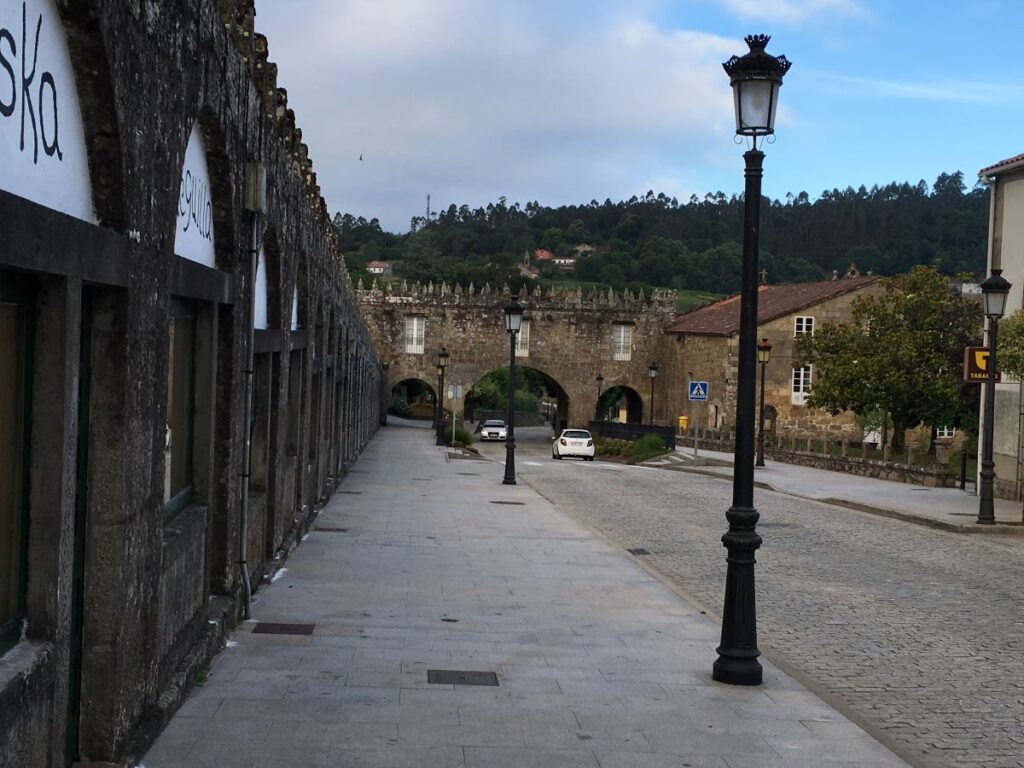
Pazo de Cotón is a medieval fort that can be seen in Negreira (on the way out of the town, heading toward the municipal albergue). There’s also a very interesting monument dedicated to numerous gastarbeiters—Galicians left for work in other countries due to poverty. It’s a very sad monument, especially now, when millions of Ukrainians are forced to leave their native towns and homes.
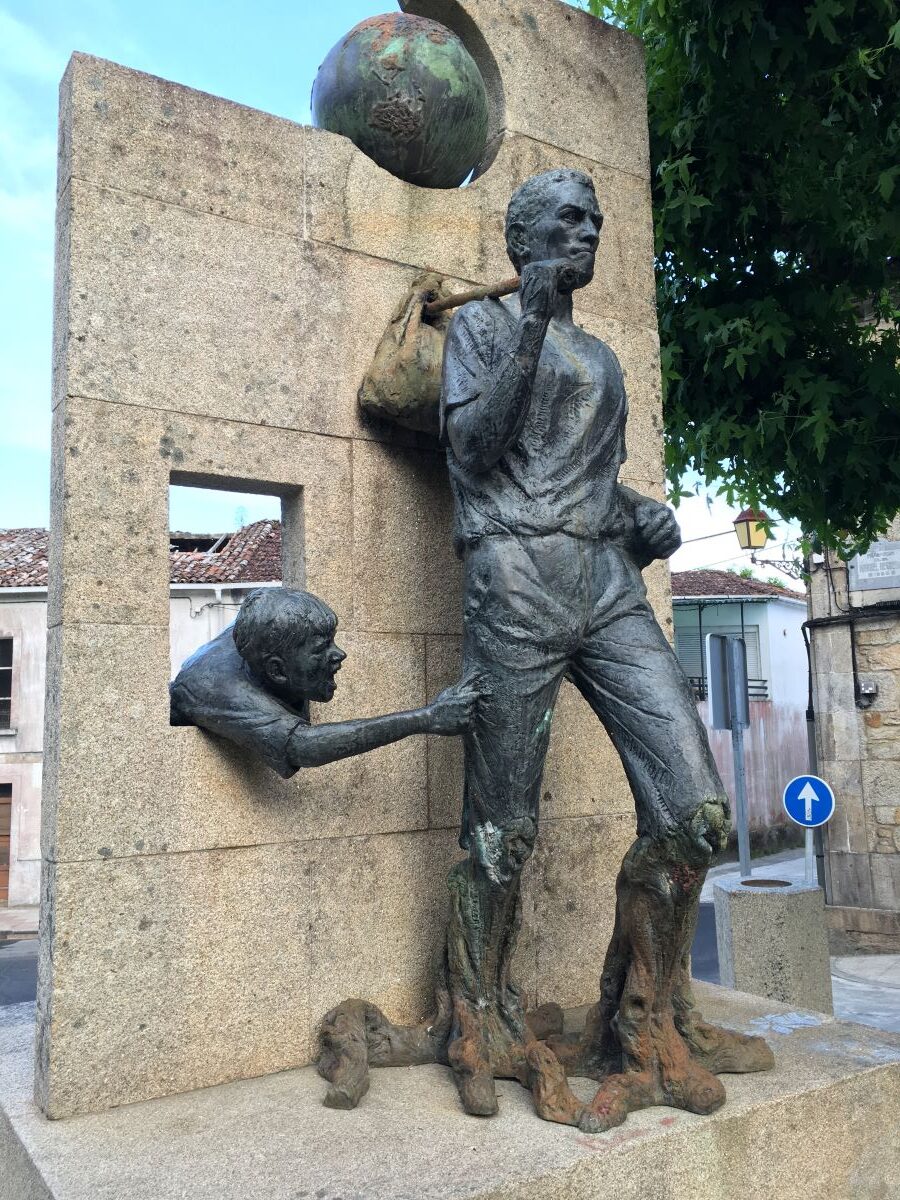
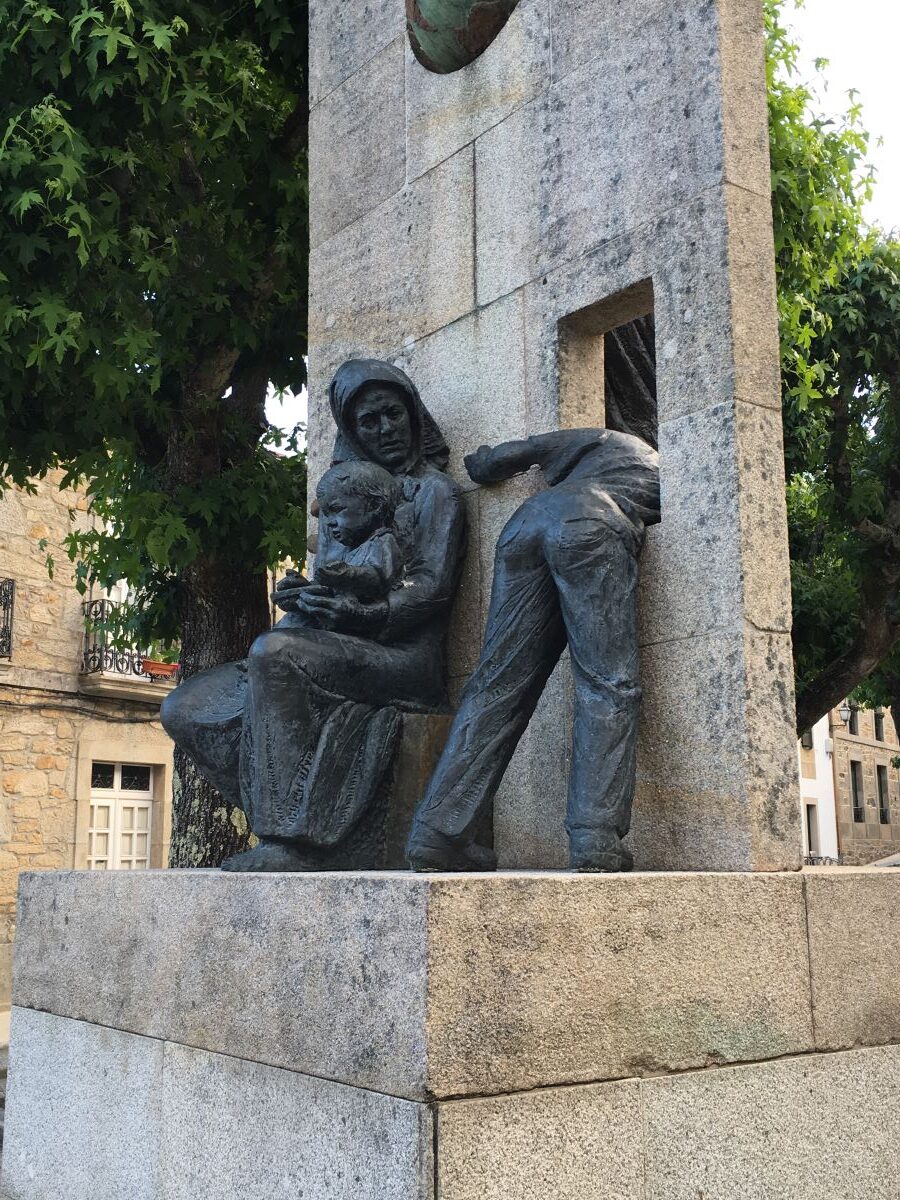
This is quite a large town with all necessary infrastructure. The bus to Finisterre also stops here. If you need to get cash, buy medicine, or stock up on groceries, this is definitely the place to do it. Because there will be no supermarkets or shops all the way until Cee (if you’re going to Finisterre) or until Dumbría (if you’re going to Muxía).
Where to stay in Negreira
It was in Negreira that we stayed overnight—at the municipal albergue, which I didn’t really like that much at the time. It felt kind of uncomfortable, but there were no places in the private ones.
- Albergue Bergando – a budget-friendly alternative to the municipal albergue, located in a farmhouse. There are private rooms available for a small extra payment, a kitchen for cooking. There is no restaurant on site. The accommodation is located at quite a long walking distance from the city and there is nothing nearby,
- Albergue Rectoral San Mamede da Pena EXCLUSIVE FOR PILGRIMS – Excellent albergue—spacious, impeccable, and calm. Comfortable beds, great food, and truly wonderful staff. The location is already past Negreira—you’ll have to walk about 3 km more.
- PENSION ORUEIRO VILASERIO – Nice restaurant/bar on the premises. Ideal city location. Very quiet. Clean, comfortable rooms with a large bathroom.
Day 2: Negreira – Olveiroa (≈30–33 km)
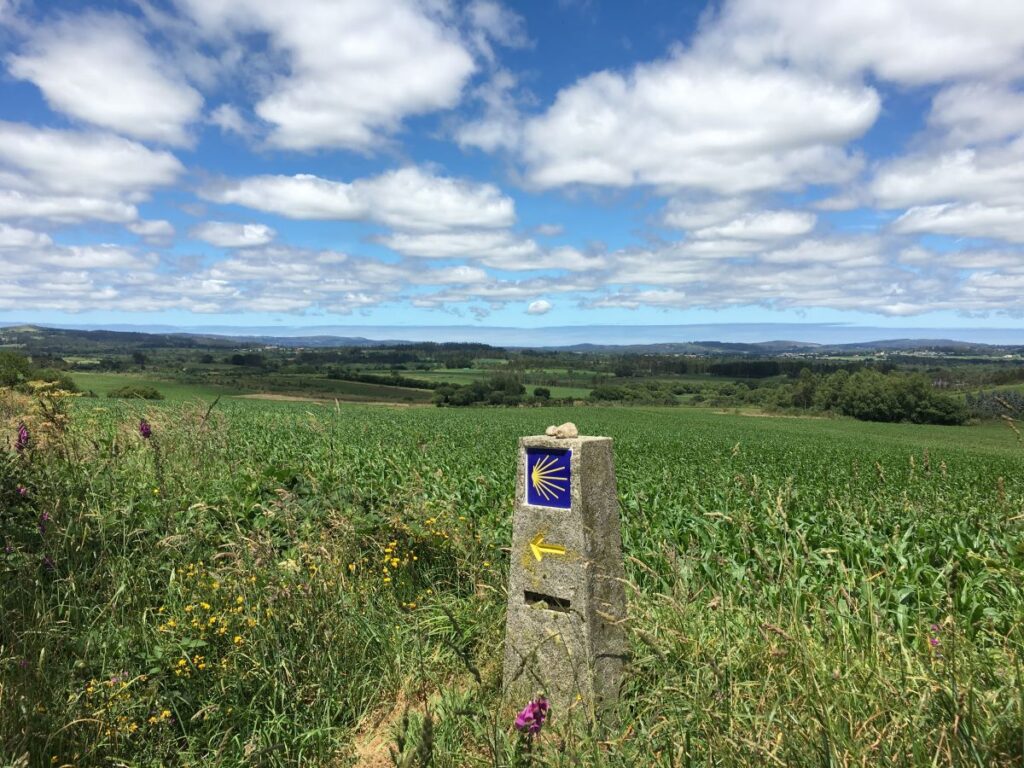
Today is the main stage: long, mostly through rural and quiet areas. The trail leads among oak groves, pine forests, and eucalyptus, dotted with Galician granaries hórreo and roadside crosses. The path has a gradual ascent and a very pilgrim atmosphere.
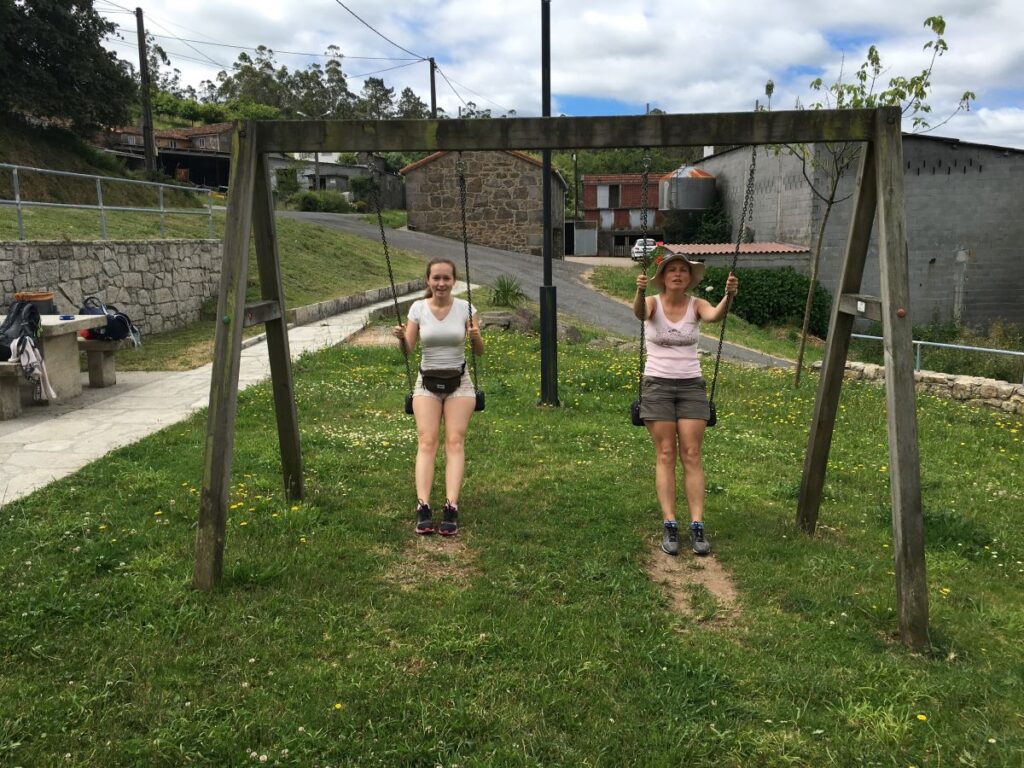
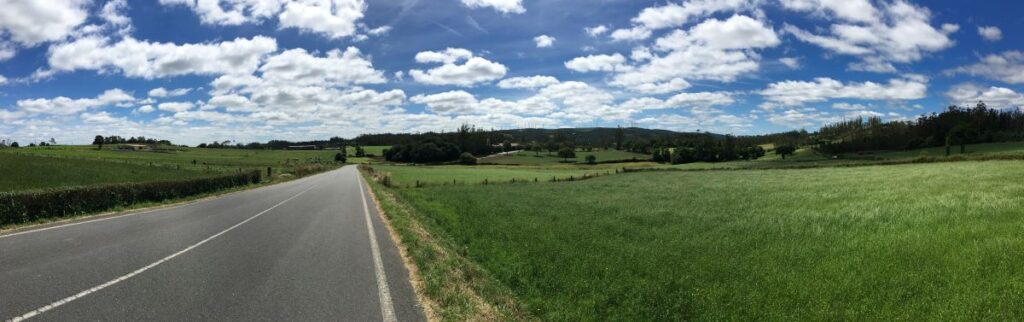
Pleasant walk through the forest after leaving Negreira. After a couple of hours it turns into a rural landscape with lots of small villages, pastures, the famous Galician stone granaries and hundreds of cows. The route has ups and downs. A long but gradual climb, 150 m elevation gain, starting from the municipal albergue.
There are no stores on the way, but there are a few bars/albergues, where you can stop for coffee, breakfast or lunch.
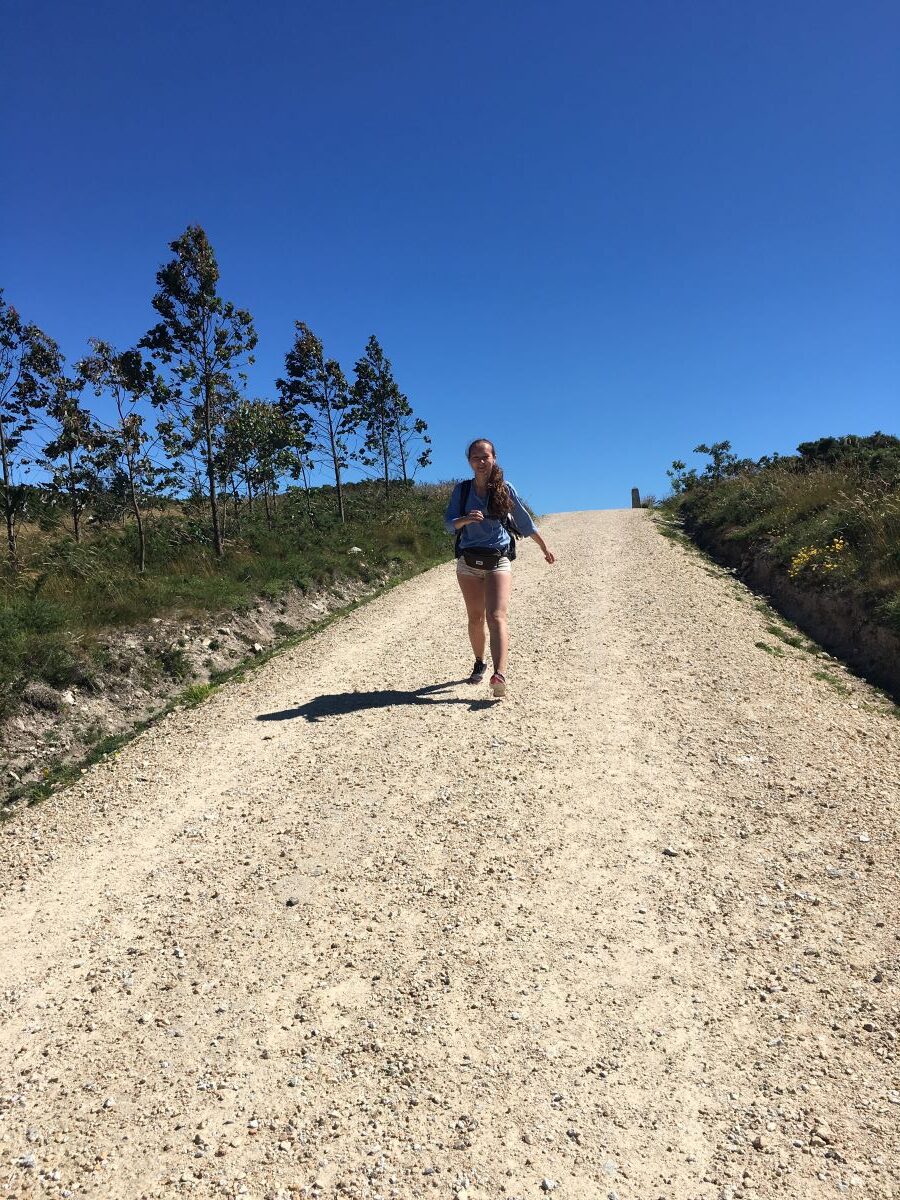
We walked in crazy heat—the temperature was above +30 degrees and my daughter simply got burnt in short shorts. Yes, it can be hot in Galicia—especially in summer.
Can you split this stretch into two parts? Yes, you can—in Santa Mariña (As Maroñas) there are two private albergues where you can spend the night, if such a long distance is too much for one day.
Where to stay in Olveiroa
Olveiroa is a small village with a few bars and albergues.
- Municipal Albergue – simple, but cheap and clean. Next to it is a bar offering a pilgrims’ menu.
- Albergue Ponte Olveira – very clean and inexpensive private albergue, located 1.5 km before Olveiroa, has its own bar where you can order food and drinks.
- Albergue Casa Manola – albergue in Olveiroa, clean, private and shared rooms available, good price for private albergue, there is a bar nearby where you check in and they offer a pilgrims’ menu.
Day 3: Olveiroa – Cee / Fisterra (35 km) + Lighthouse (3 km)
Today we needed to decide whether to go first to Muxía and then to Finisterre, or vice versa. The walk from Olveiroa to the cape in Muxía is a bit shorter—32 km compared to 35 km to the cape in Finisterre. It would seem better to go to Muxía first and finish at Finisterre, since there are more buses from Finisterre to Santiago.
We didn’t have extra time, so we chose 35 km to Finisterre and left Muxía for the next year. 5 km from Olveiroa, near the village of Hospital, you’ll see a fork (Fisterra to the left, Muxía to the right). We turned left toward Finisterre. If you’re not planning to continue on to Muxía, the next day you can walk from there to Finisterre on foot.
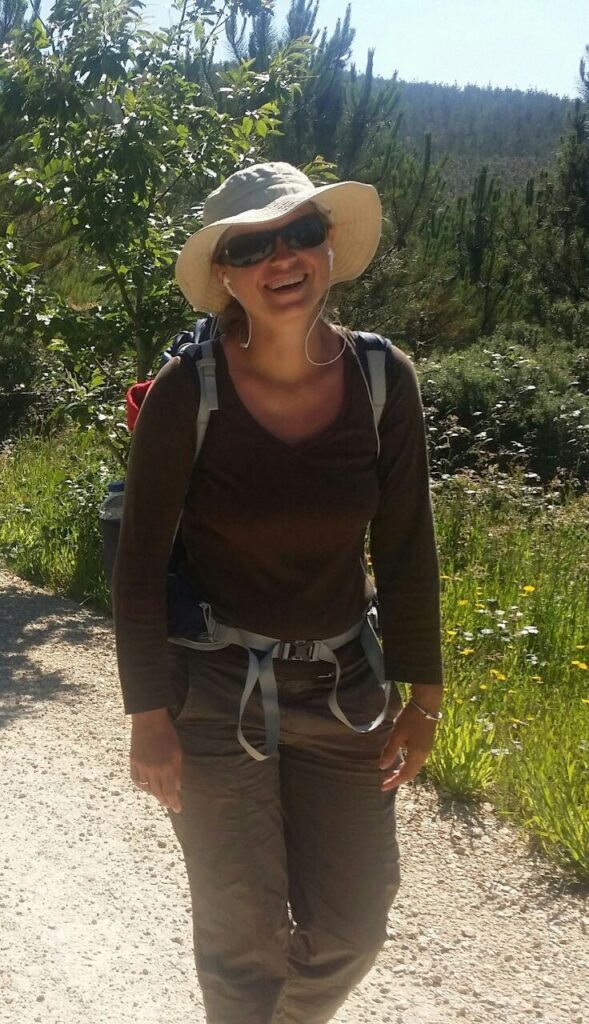
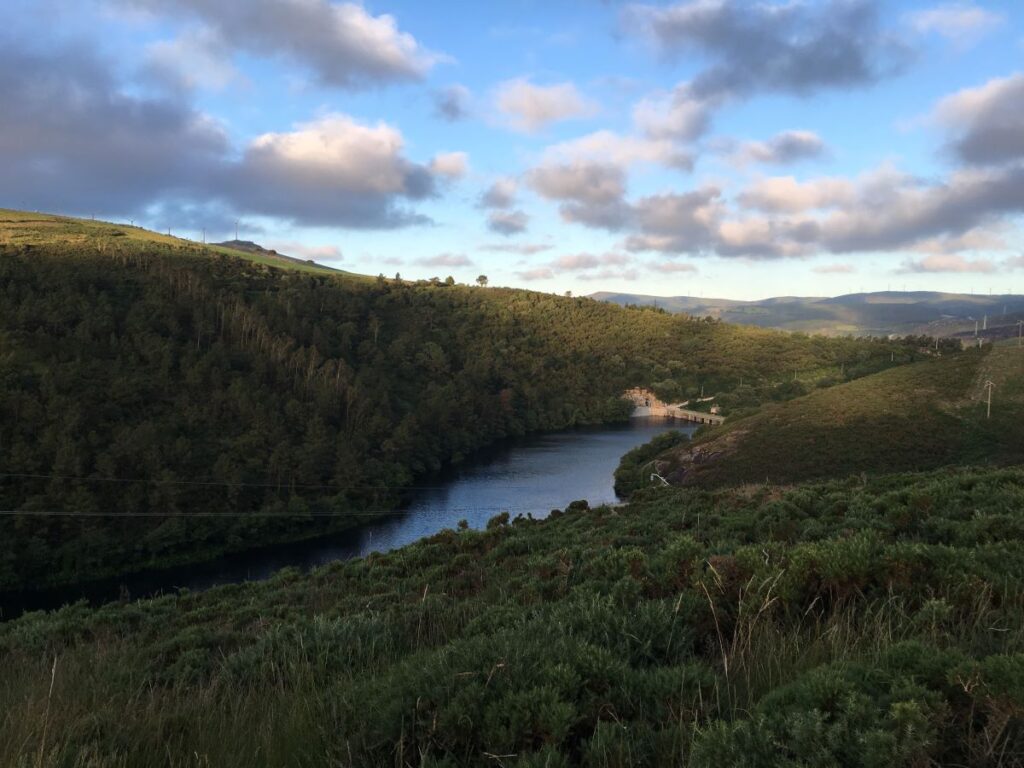
Heading to Fisterra, you’ll see the first hills with views of the Atlantic, then a steep descent to Cee/Corcubión. Expect a beautiful, if long, emotional day with scenic views, sandy beaches, and ocean bays.
Note: The next place after the bar in Hospital where you can get food or coffee is in Cee, 15 km away. If you don’t want to go the full 35 km to the cape at Finisterre, you can stay overnight after 21 km in Cee or Corcubión. The next morning you can continue to Finisterre, another 14 km.
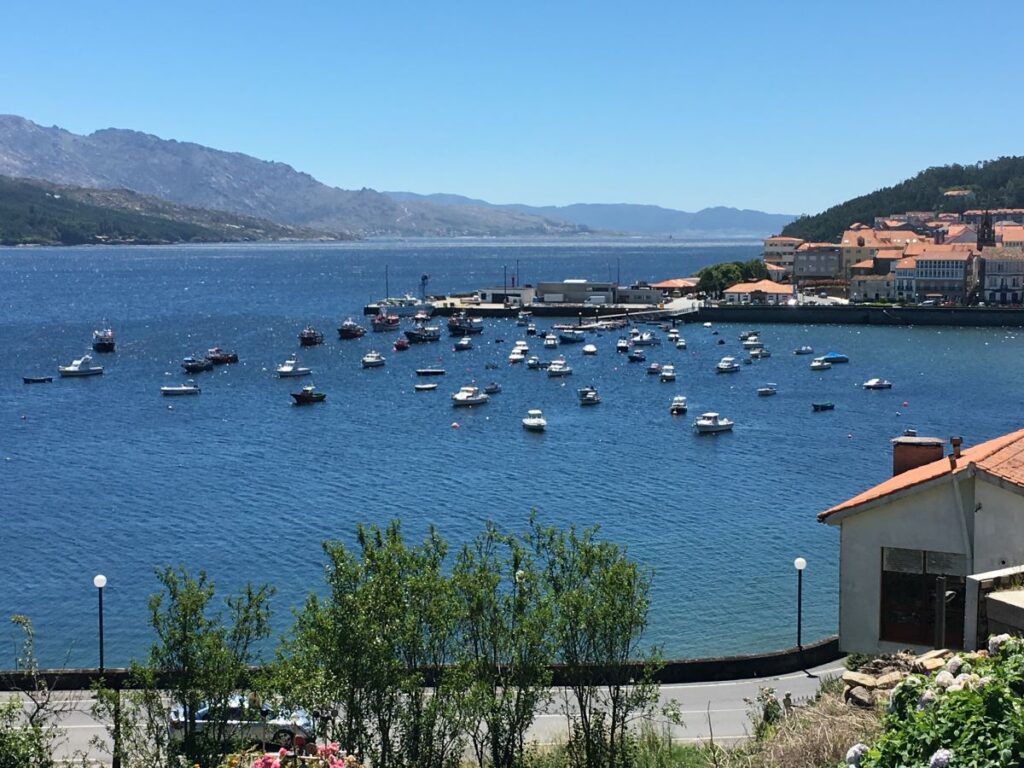
Along the way there will be two charming coastal towns—Cee and Corcubión.
Cee—largest town in this area, with plenty of restaurants, bars, bakeries, etc. On the way, there is a beautiful A Xunqueira church.
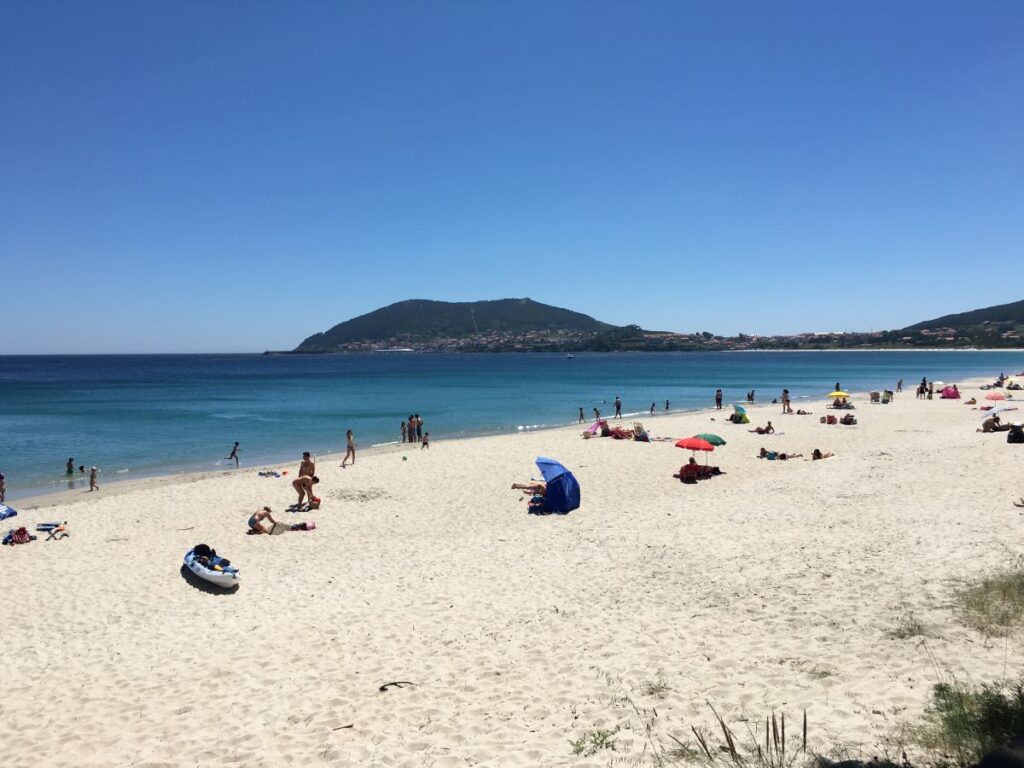
Corcubión—a small town near Cee with a lovely beach, cobbled streets, and the San Marcos Church. Also on the way is Talon Bay—a small and beautiful beach, then a long beach and dunes Playa Langosteira, where we dipped our feet and walked on to Finisterre.
Cape Finisterre
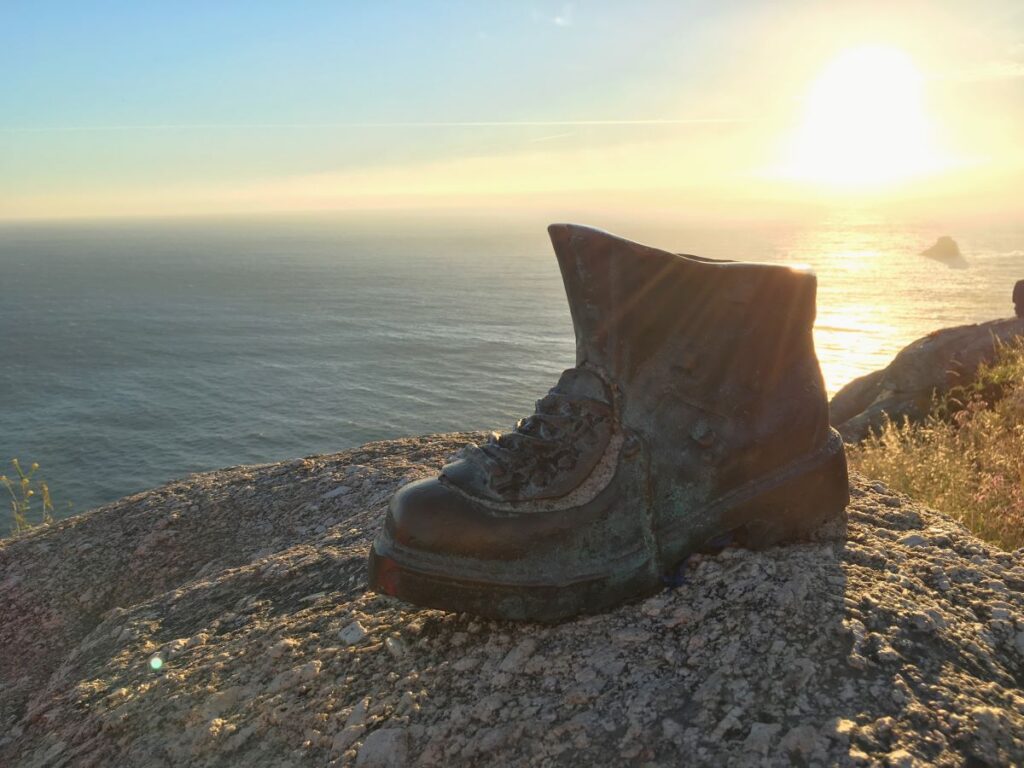
Finisterre is a rather touristy town with many restaurants, bars, hotels, albergues, and shops. We came to the municipal albergue in Finisterre and there got our Fisterrana. Some of us took one room, other pilgrims were in the next. We recovered from a long and very hot journey and closer to sunset went to the cape—to see the sunset. Pilgrims who have finished the way by the ocean have this tradition.
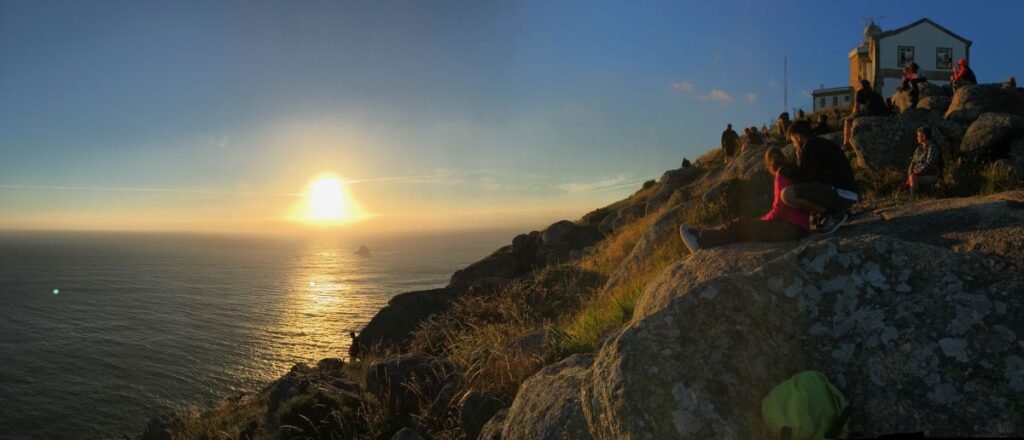
Cape Finisterre is about 3 km from the town. To the cape and back, you’ll need to walk these kilometers. You can check in, rest, have lunch, leave your backpack at the hotel, and walk to Finisterre. Sunset is the best time to visit.
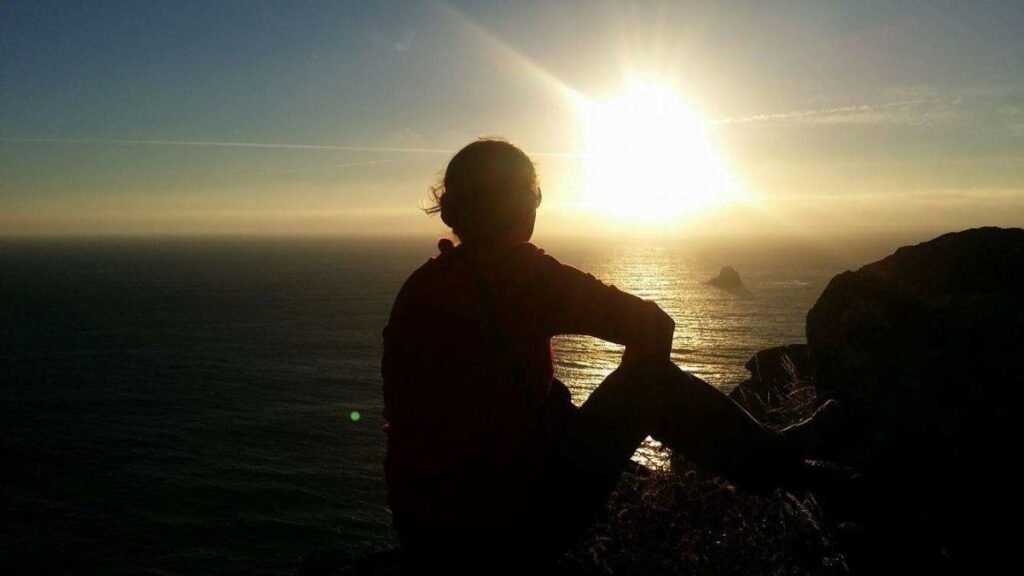
There is also a tradition to burn old things at the cape, but I think it is dangerous and not eco-friendly. Because of these burnings, every year there are fires at the cape. That’s why the local authorities have banned it and imposed heavy fines (and rightly so); burning clothing and lighting fires causes harm to the environment. If you want to leave something at the cape in memory of your Camino—bring a symbolic stone or leave a little note by the cross on the rock.
Where to stay in Finisterre
- Municipal albergue—located next to the bus stop for buses to Santiago. Very basic, with a cramped shower and little space between beds. I stayed there once and never again. There are many better and not very expensive albergues nearby. Also, if you are walking with friends—share a room in an apartment or hotel, it will cost about the same.
- Albergue-Pensión Cabo da Vila – Right on the Camino, close to the center and the bus stop. Easy to return to the Camino in the morning. Kitchen available with breakfast options in the morning. 8 beds in the room with a bathroom right in the room.
- O Encontro – Good place to stay with all basic amenities. The room was clean with a bathroom. Good location, room was on the second floor. About 5 minutes’ walk to the grocery store and the beach. The host doesn’t speak English, but is very friendly.
Day 4: Finisterre – Muxía (≈30 km)

This stretch, connecting Finisterre with Muxía, I walked the following year—after hiking the Camino del Norte. And it is incredibly beautiful!
The route has signs in both directions—traditional arrows and shells on stones. This part of the Camino runs through a lovely laurel forest, past amazing beaches, across green hills, and so on. On one of these wild beaches—Lourido Beach—I swam in the ocean, and it was an incredible feeling of freedom!

To reach the route from Finisterre, first leave the town (the same way you arrived) towards Playa Langosteira. At the junction, turn left (don’t go down to the beach) and follow the street until you see the Asador restaurant on the left; in front of the restaurant, there is a sign “Muxía.” After that, the route is marked all the way to Muxía.
The only place on the way where you can get food (a cafe) is the small town of Lires, 15 km from Muxía and 14 km from Finisterre. In Lires there are several hotels and guesthouses—if you have time and don’t want to walk 30 km in one day, you can stay here overnight.
Muxía

A lovely little town, where you feel the peace and quiet after Finisterre. Also, it’s a great spot for seafood lovers. Two restaurants serve local seafood, including the famous pulpo (octopus). And the prices here are extremely low—we got a seafood set for 45 euros, which filled us up till the next day!

The cape in Muxía with the sanctuary O Barco is just outside the town, a 10-minute walk. People come here for sunset, too, and the atmosphere is, to me, even more dramatic because of the big waves right beneath your feet (in Finisterre they’re somewhere far below, but here they crash directly against the rocks).
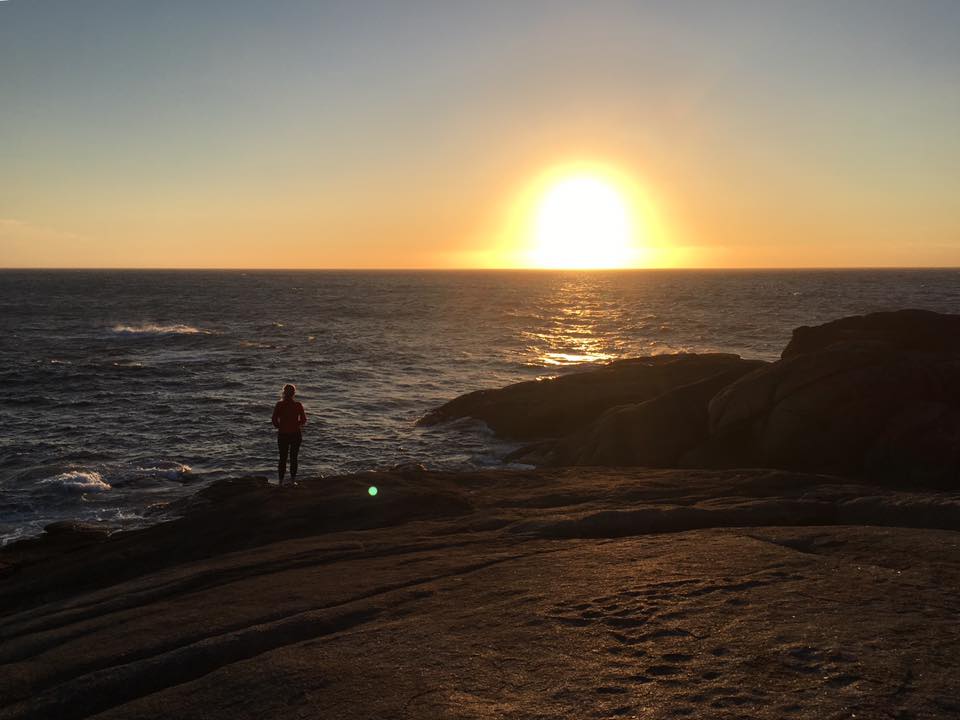
I grew to love Muxía very much, I’ve been here twice and will return again. The place is wild but very beautiful! I wish you to see it too—in any weather it fascinates!
Buen Camino and happy trails!

What you’ll need for Camino de Santiago
- Don’t skimp on medical insurance — it’s easy to buy online at the HotlineFinance portal. Medical treatment in Spain is costly, but for a small sum you can get insurance coverage of 30,000 euros.
- If I’m not staying in an albergue, I book hostels or guesthouses through Booking.com. I do this in the evening for the next day.
- I buy bus tickets within Spain on the Spanish carrier’s website Alsa.
- Train tickets for Spain – at the Spanish railway company’s website Renfe.
Useful articles and links:
- My Camino Francés – a walk in segments over several years
- My Camino Lebaniego – the route in the Picos de Europa
- My Camino del Norte – the route through Northern Spain along the ocean
- My Camino Primitivo – on foot from Oviedo to Santiago de Compostela
- My Camino Mozarabe – the Way of Saint James in Andalusia