The Central Portuguese Route Camino, which leads from Porto to Santiago de Compostela. It is not as popular as the one that runs along the coast, but I liked it more.
This Camino also starts at the Porto Cathedral – See, located in Porto’s historic center, and ends at the Cathedral of St. James in Santiago de Compostela, Spain. But this is an inland (non-coastal) route that takes pilgrims through several historic towns and combines forest and rural landscapes of Portugal and Spain.
According to the Pilgrims’ Reception Office, in 2025, 22.5% of all pilgrims who arrived in Santiago de Compostela walked the central Portuguese Camino route. Thus, it is one of the most popular routes of the Camino de Santiago and will appeal to those who love pastoral landscapes, delicious cuisine of Portugal and Galicia, [who do not have much time for a walking trip – this route can be completed in 8-10 days. And for those for whom it is important to complete a short but beautiful journey specifically in Santiago de Compostela.
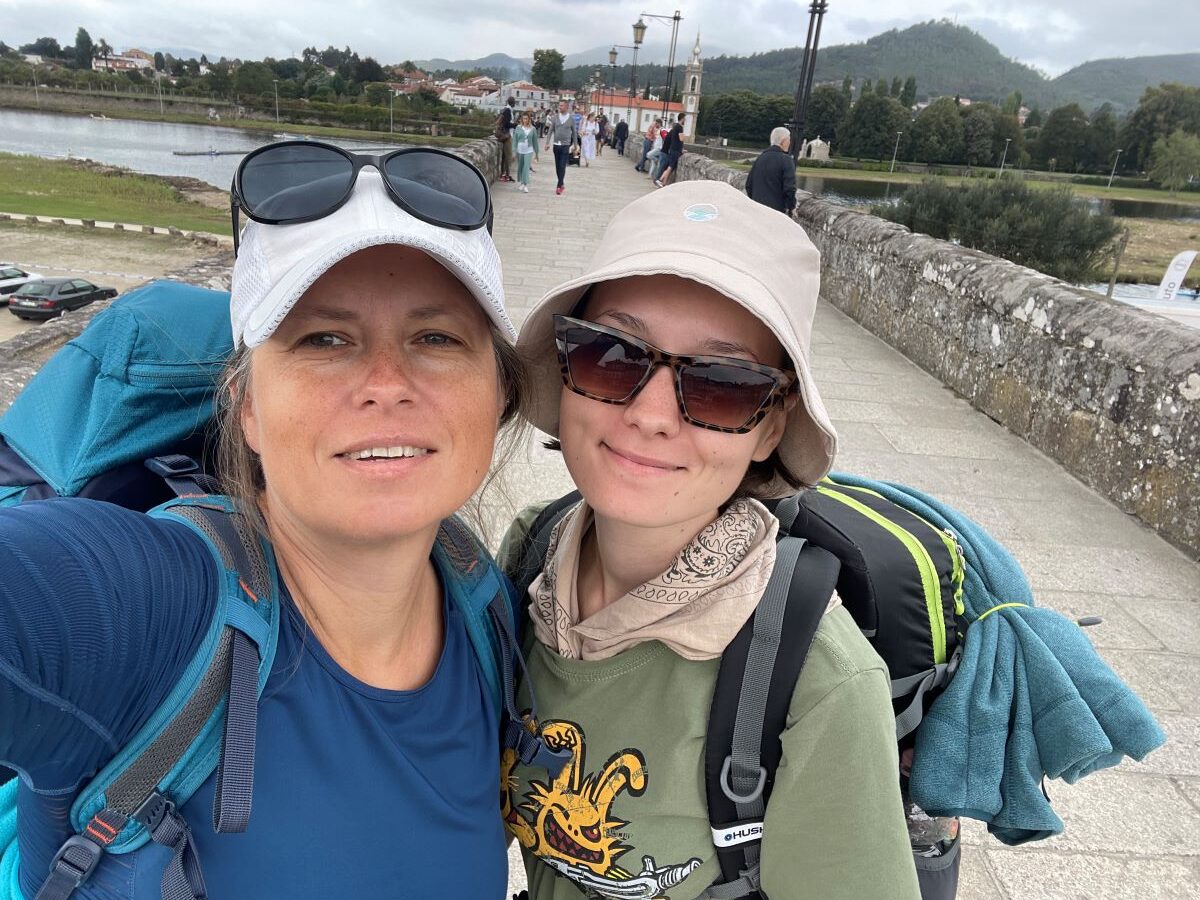
I walked this route together with my daughter in the fall of 2022. The journey took 10 days and I really enjoyed it. Unlike the coastal route, where there are many tourists and a slightly different atmosphere, here there are fewer pilgrims, it feels more authentic and less popular. If you are looking for more solitude, or have already walked along the coast – the Central Way can be a good alternative.
I share my experience and give tips for those who are planning to walk it.
Overview of the Portuguese Central Camino Route
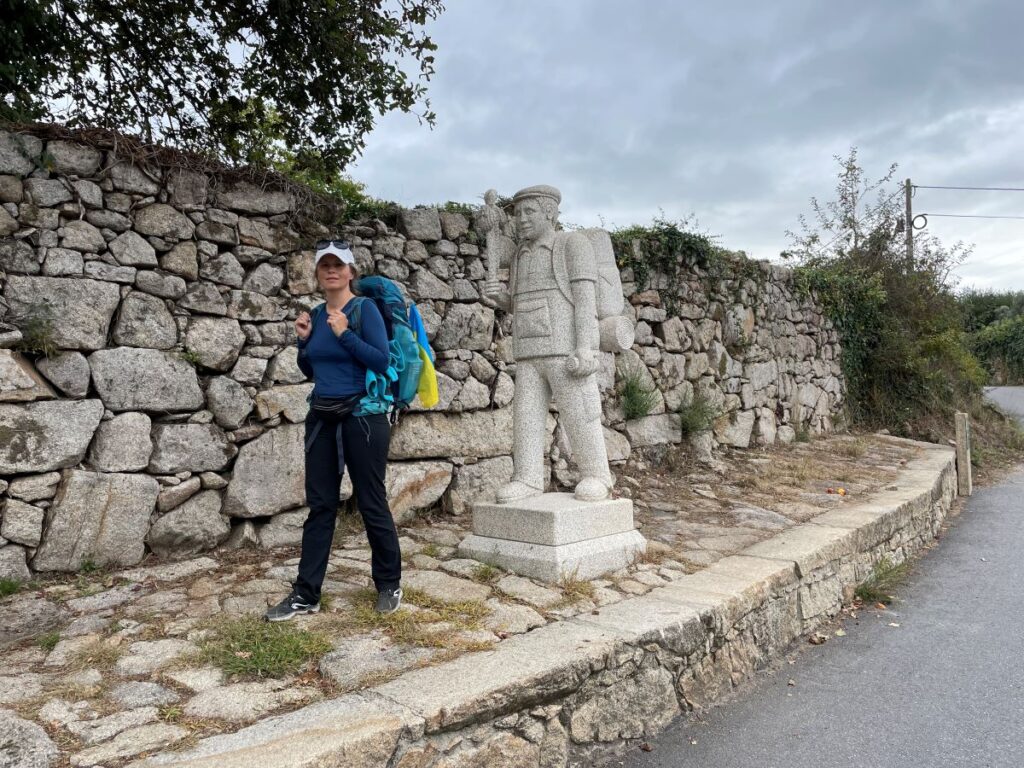
- Distance – 243.5 km
- Number of days – 8-12 days
- Starting point – Cathedral – Seе, Porto, Portugal
- Finish point – Santiago de Compostela Cathedral, Spain
- Difficulty level – medium
- Total ascent – 4045 m (over 10 days), total descent – 3820 m (over 10 days)
- Walking surface – asphalt, cobblestones, footpaths/gravel roads
- Average cost – 30 euros per person per day when staying in albergues, from 50 euros when staying in hotels.
Where does the Central Portuguese route start?
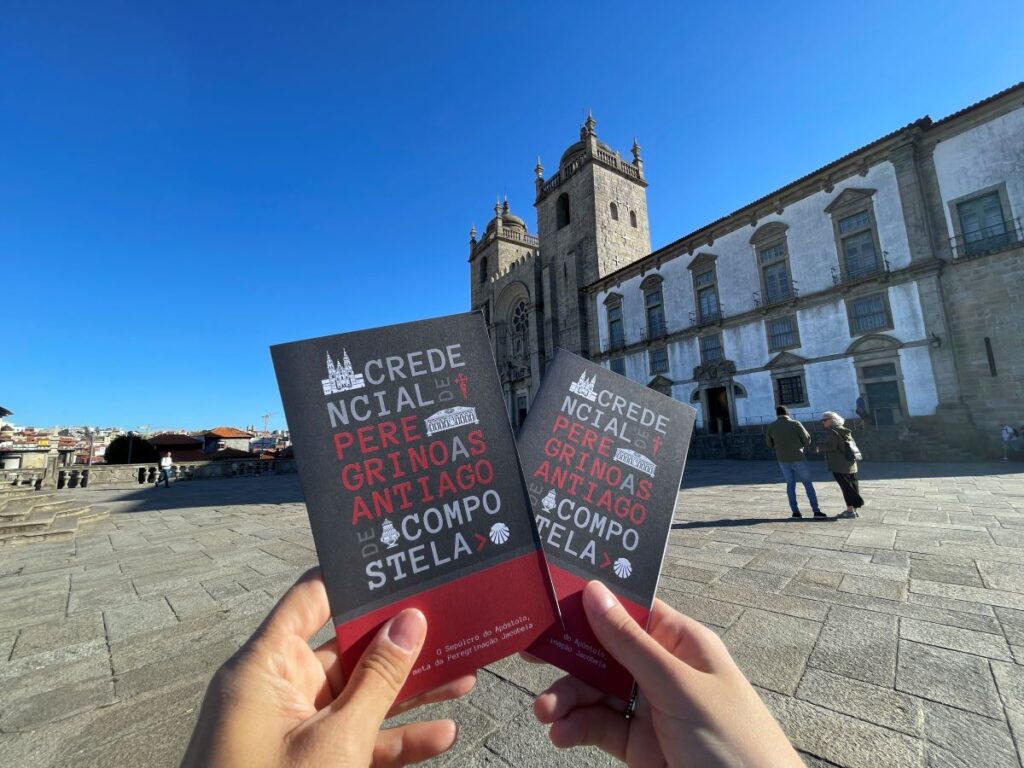
The Central Portuguese Camino route starts near the Seе Cathedral in Porto. The full Portuguese Camino begins in Lisbon, but there is only one route from Lisbon to Porto. From Porto, the Camino splits into three routes: Central, Coastal, and Litoral paths.
It is in the cathedral where you can buy a credencial – a pilgrim’s passport, which will allow you to stay in municipal or monastic albergues. Upon arrival in Santiago de Compostela, you will receive a Camino certificate – the Compostela.
In addition, the credencial can be purchased in Porto – at the municipal albergue Albergue de Peregrinos de Porto.
Which route to choose when leaving Porto?
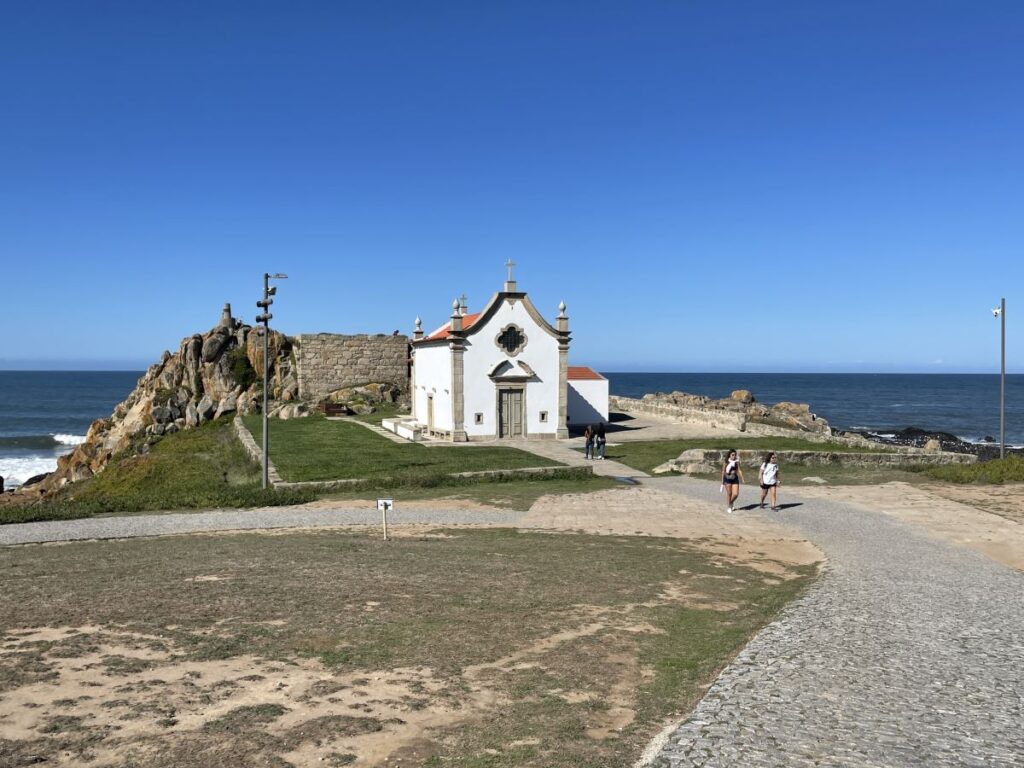
There are three Portuguese Camino routes from Porto: Central, Coastal route, and a branch from it – the Spiritual route. I have walked two – Coastal and Central. I started both along the coast.
If the Coastal somehow fits the standards – walking by the shore, the central one starts from the cathedral and goes inland. But we wanted to be near the ocean for a bit, so the first day was somewhat by the waves and on the wooden paths of the coastal route. We walked the first 7 km by the Coastal route and then, using Google Maps, switched to the Central one.
You can skip this and follow the arrows strictly. Or, you can take the metro to the Matosinhos area, cross the bridge, walk along the ocean, and switch to the Central route in the town of Vila do Conde.
Or, as some pilgrims do, start right from the Porto airport after arrival. The airport is not far from the route – you can easily transition to it. And a credencial can be purchased at the first municipal albergue you find. There are many options – if you know how to use Google Maps, it won’t be difficult for you.
Options for switching from the Coastal to the Central routes
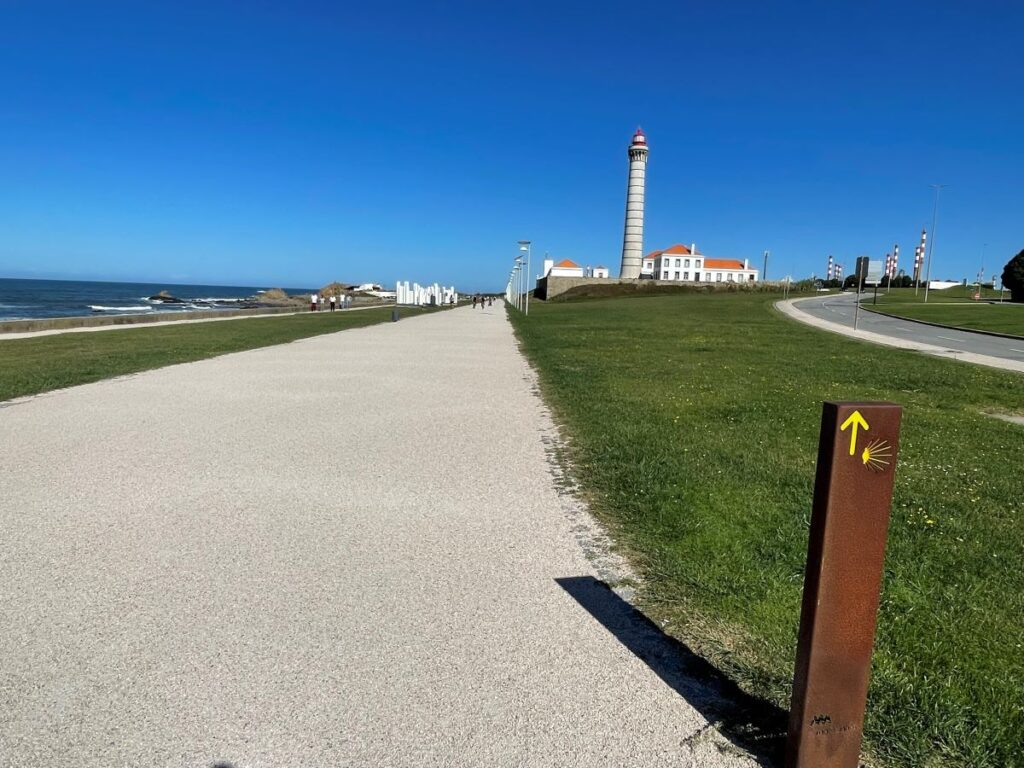
We started the first day with a walk along the ocean coast. Because it was quite pleasant, and also, my companion missed this part last time because she arrived at the airport after lunch and joined in the town of Vila do Conde.
So, if you want to walk a little through ocean dunes on wooden paths, see ocean waves, and then dive into the Central Portuguese after Porto, you can spend your first day from Porto to Vila do Conde. And turn inland the next day. By the way, there is appropriate marking there – many pilgrims do this.
Another way to combine the coast with the inland route is to walk along the coast all the way to the Spanish border, namely the town of Caminha. And from there, turn inland – there is a marked variant, leading to Valença along the river Minho.
We actually walked past the airport and headed inland without any signs, just to reach the first night’s accommodation near the town of Vilarinho at a monastic albergue. Honestly, it wasn’t difficult – we just followed Google Maps through villages as we wanted.
Is it easy to find the way and not get lost on the route?
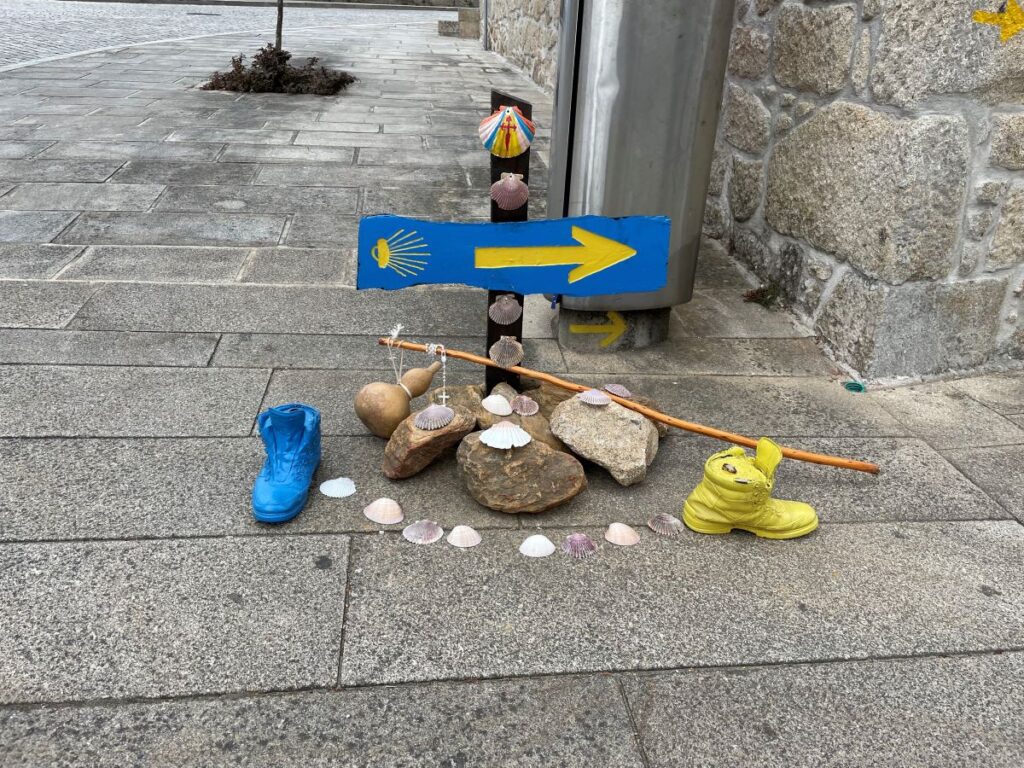
Yes, the Central way is well-marked from start to finish – shells and yellow arrows are everywhere. You do not need a GPS, map or guidebook to find your way. Many pilgrims use apps with the route – if you feel more comfortable, of course use them! I simply follow the arrows, and if I go wrong a bit – I open Google Maps. If there is no signal – I ask locals – a sort of old-fashioned way, but I like it a lot on the Camino.
The Portuguese Camino is marked with yellow arrows and scallop shells painted on walls, ground, rocks, etc. Sometimes in towns, it is marked with metal shells embedded in the pavement.
How difficult is the Central route?
The Central way has several somewhat challenging stages with long and steep ascents and descents. I would highlight two stages: from Ponte de Lima to Rubiães and the less difficult one – from Tui to Redondela. Both stages have steep ascents followed by descents. The last day, from Padrón to Santiago, especially the last part, has small climbs.
There are a few relatively long days exceeding 30 km in the standard route. But you can easily divide these days into two. There are places to stay overnight between them, so you don’t need to get too tired. On one day we did that, although I regret a bit because I missed staying for the night in the very beautiful town of Ponte de Lima.
How much does this route cost per day on average?
The Camino budget depends on several factors – where to sleep and where to eat every day. It ranges from 25 to 50+ euros per person per day. Factors include type of accommodation, cooking by yourself or eating out, using baggage transfer services, etc.
So, staying in municipal albergues, or sharing a private room with another pilgrim, cooking meals yourself instead of eating at restaurants – starting from 25 euros a day. Private room and eating at restaurants – expect to spend from 50 euros per day.
What are the views like on the Central route?
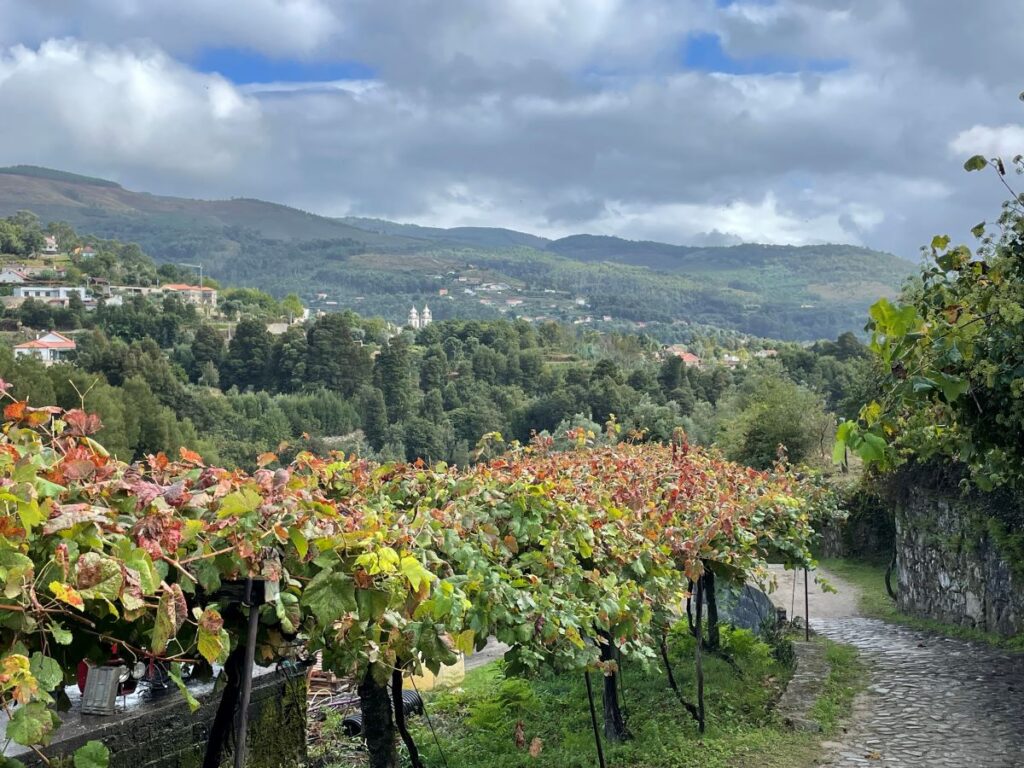
The scenery along the Central Portuguese route combines forests, fields, and small towns. From time to time you walk alongside the road with cars, but usually not for long.
Do you have to walk a lot on cobblestones?
Yes, in the forested half of the Central Portuguese Camino from Porto to Valença there are many sections where you have to walk on cobblestones. On the Spanish part of the route from Tui to Santiago de Compostela – these are mostly dirt roads or asphalt. Almost no cobblestones.
For example, the Portuguese part (Porto – Valença) of the Camino route is 122 km, of which 42.5 km are cobblestone. This is quite uncomfortable for your feet, but if you have thick soles on your sneakers, you hardly feel any discomfort.
Do you have to do a lot of road walking?
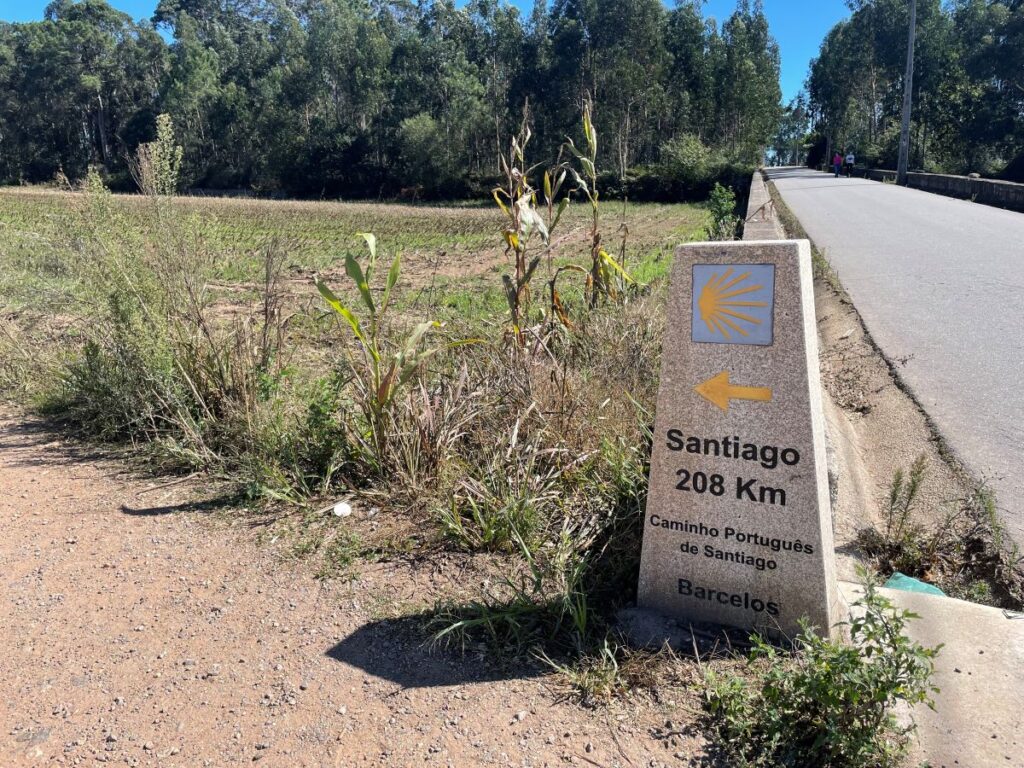
There are short sections here and there where you walk along the road, but usually it’s 100-300 m, then the route turns somewhere into fields or vineyards. In the first half of the Central route from Porto there are some road sections, but there are alternative routes which are marked on the trail (usually extra kilometers, but they are worth it).
I recommend using the alternative routes, as they take you away from the road. The distance is usually a bit longer, but it’s much safer and more pleasant than being by the highway.
Luggage delivery service on the central route
If you are unable to carry your own backpack, you can use a transfer company. Several companies offer baggage delivery services on the Central route. Here are three main companies: Pilbeo , TuiTrans and Correos (only part from Tui to Santiago). Average price is 7 euros per backpack per stage.
How it works:
It’s very easy: carriers pick up your luggage at your accommodation in the morning and leave it at the next place after lunch. You can walk with a small backpack, carrying only necessary and valuable items. The rest of your things will be transported daily by car. You do not need to wait for them to pick up your luggage, you simply leave it at the reception desk in the morning. And before that, fill in a special form provided by the albergue or hotel where you will stay.
I have not yet sent my backpack. But I had to send things for other pilgrims who forgot something and asked me to do it when they overtook us on the way.
What interesting towns are on the Central Portuguese Camino?
For me, the main attraction of the route was its historic towns: Barcelos, Ponte de Lima, Valença, Tui, and Pontevedra. And, of course, Porto and Santiago de Compostela – the start and end points of the Portuguese Camino.
Where to stay in Porto
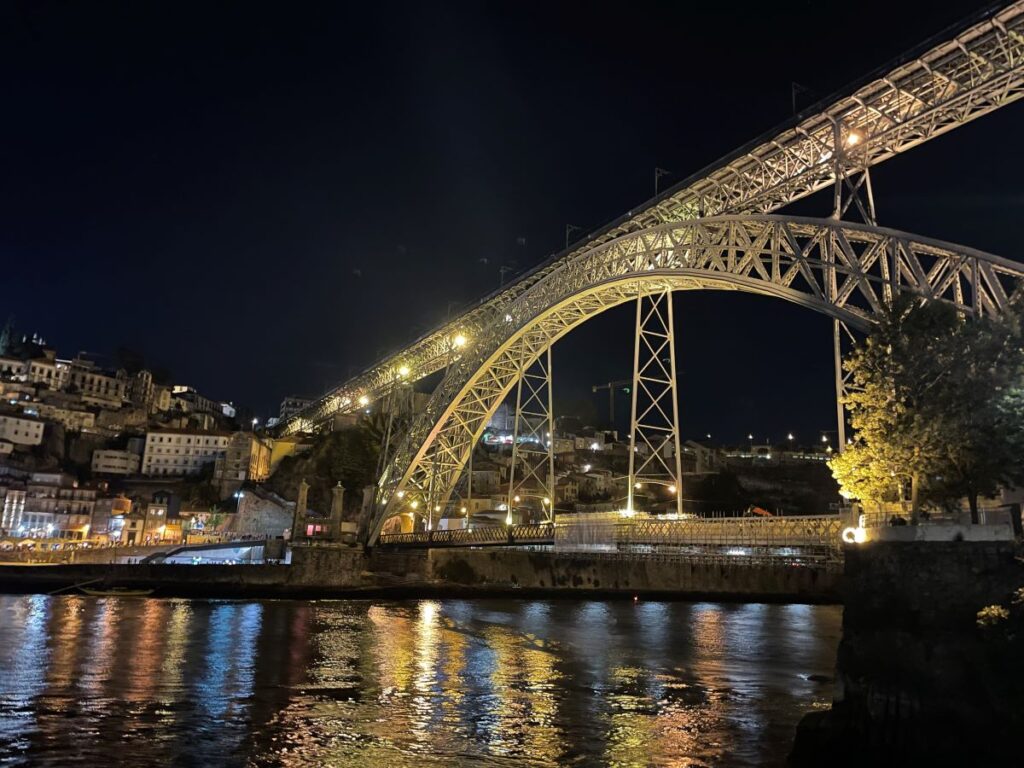
- Albergue de Peregrinos de Porto – here or at the Cathedral you can buy the Pilgrim Passport (Credential). Costs 2 euros. You can book a bed by writing to the hostel’s email. Note that check-in is strictly until 20:00 – after that the hostel closes.
- Best Guest Porto Hostel≫ – Convenient location in the Ribeira district, friendly staff, breakfast. Quite cozy, with comfortable details around the bed.
- Nice Way Porto Hostel≫ – a nice hostel in the building that houses the famous Porto McDonald’s with wonderful art-nouveau decor. Clean rooms, nice living room, breakfast option. We stayed here before starting our Central Portuguese Camino.
Walking stages of the Camino Portuguese Central Route
Day 1. Porto – Vilarinho
Distance – 27 km, difficulty – *
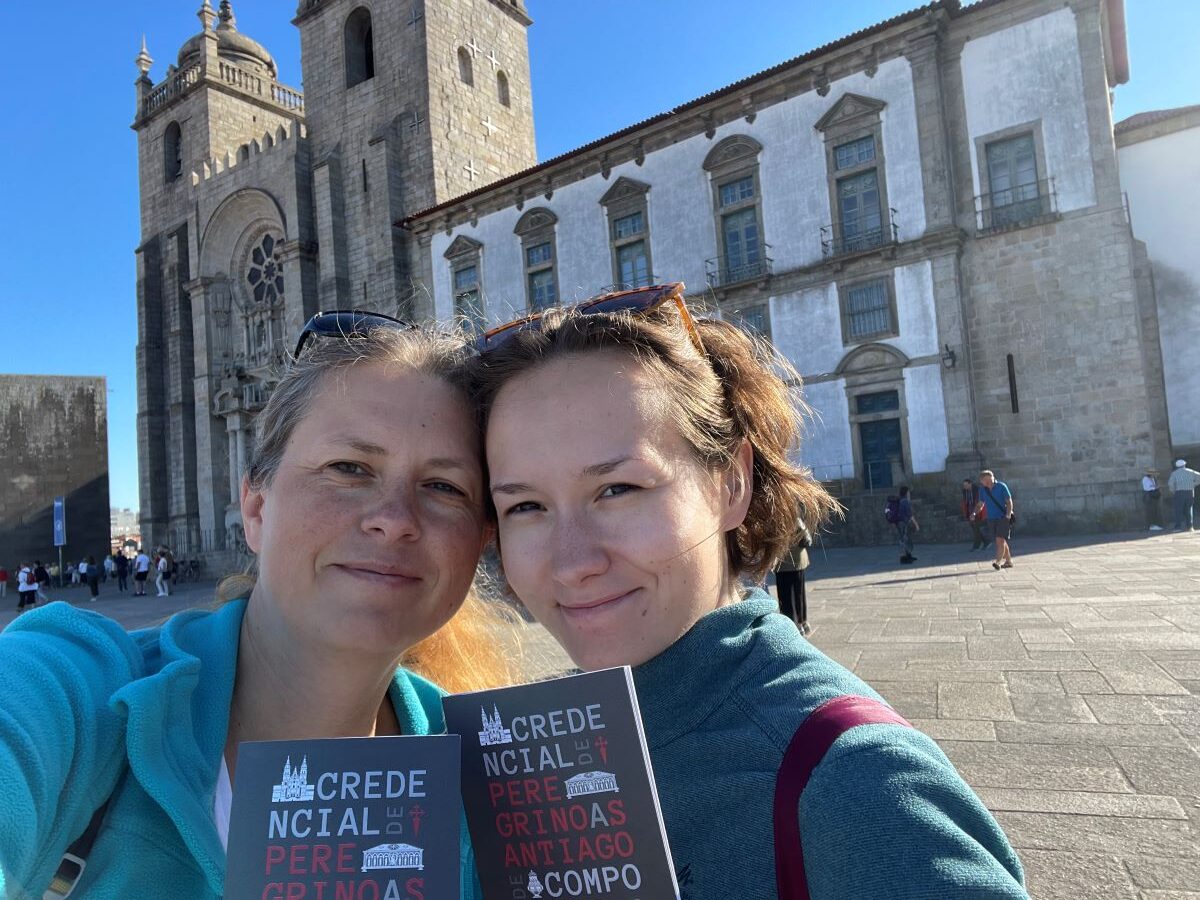
This is an easy walking day with varied scenery. You will see Porto’s historic center, its residential districts and riverfront (if you start this day along the Douro River and ocean), small forests and little towns.
The first 7 km from the Se Cathedral, the Central and Coastal routes share the same path. At 7 km, they split. The Coastal road (along the river) follows another path from the Cathedral. The route is well marked. In the city, the first 2 km from the cathedral are a bit confusing due to too many other signs, cars, and people. If along the waterfront – everything is absolutely clear.
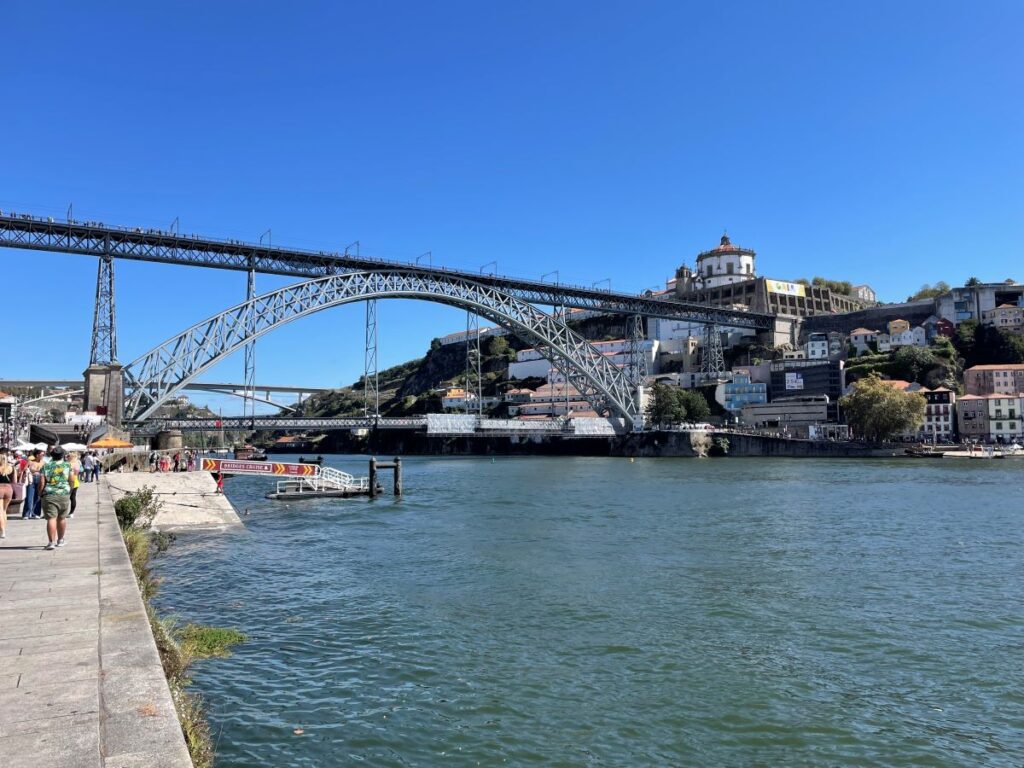
A walk through Porto’s historic part, which leads either to the riverfront or through quiet neighborhoods and residential areas of Porto. The choice is yours.
Generally, if you have little time (or as in my case – it was already my second Portuguese way and I didn’t want to walk through the city) – you can take the metro or bus and get to the Matosinhos district. There cross the bridge near the harbor and then walk along the ocean (we did that on the first day).
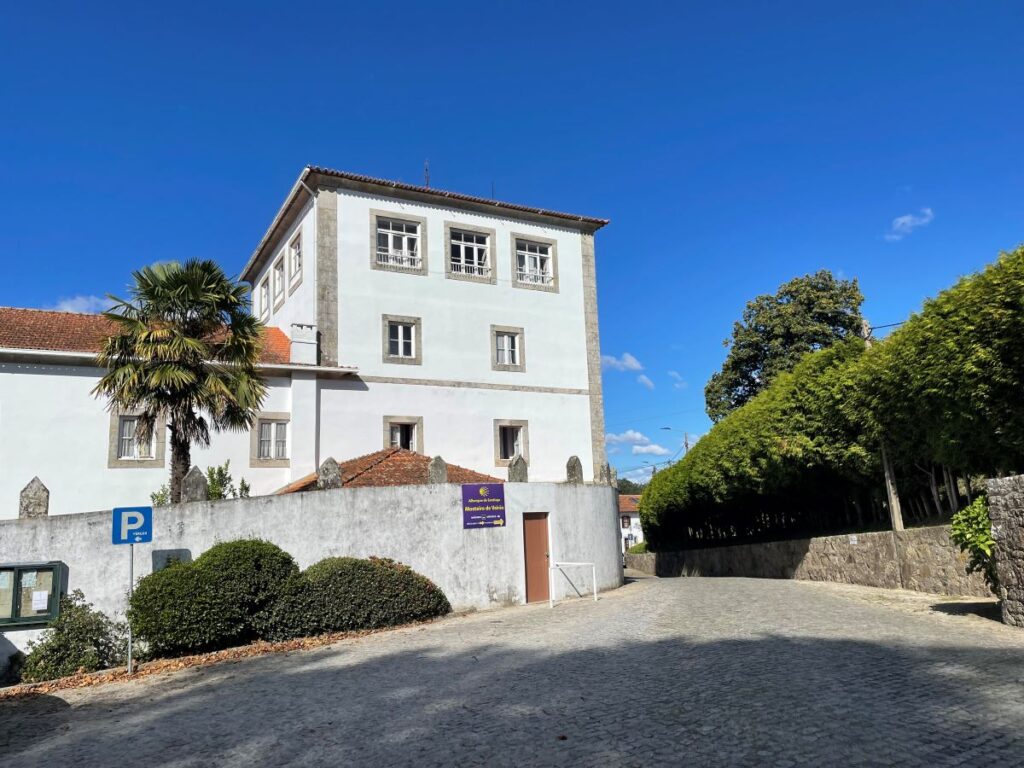
After 7 km from the start, you will see the split for the Coastal and Central routes (to the left side of the street) at Padrão da Légua at the intersection of R. Nova do Seixo and R. Fonte Velha.
We walked along the shore to Praia de Angeiras beach, then turned inland from the ocean. It was unbearably hot and we had already seen all this when we hiked the Coastal route a few years ago. We wandered a bit, using Google Maps, and eventually came to the arrows in the village of Vilar – a small town with a cafe and a shop.
Then we reached Gião, a small town with a restaurant. Here you can stamp your pilgrim passport at a stand with a stamp on the left side of the street. A little further you can see a small supermarket to buy some groceries. Near the “Doce Giao” cafe, the route splits. I recommend taking the alternative route, which turns right and goes through a quiet area. The left route continues along a narrow road – a dangerous option for walking.
Where to stay overnight
- 700 m from the Camino route there is a nice guesthouse Casa Mindela . You can stay there instead of heading to Vilarinho.
- A Casa da estrela – Albergue de Peregrinos – a great hostel with a caring hostess, located on the way, but before the final point of this stage.
- We stayed at the Vairão monastery – Albergue de peregrinos do Mosteiro de Vairão. Very clean, we got ground-floor beds, there is a kitchen to cook dinner. I liked it very much. Located 2 km before the final point of this stage Vilarinho (Vilarinho).
Day 2. Vilarinho – Barcelos
Distance – 27 km, difficulty **
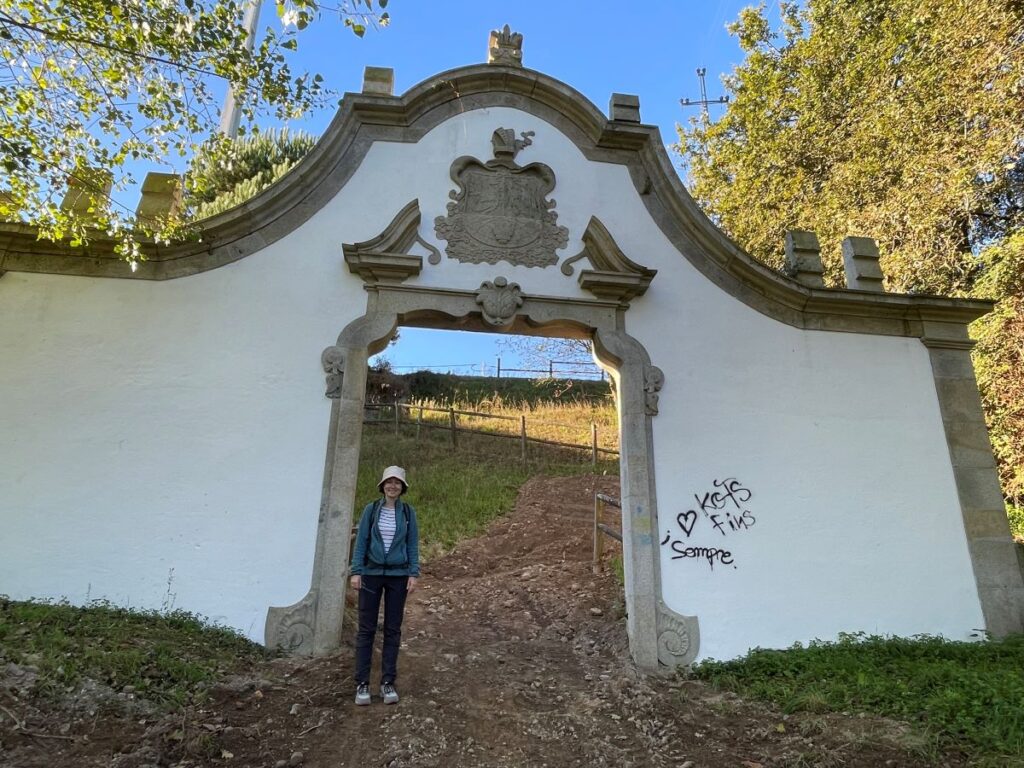
This is a very long walking stage, which starts between villages and picturesque fields. You can, if you wish, split it into two stages. We decided to walk the whole route and even added a small loop with a steep climb up.
Tip: But you can split the stage into two if you want and have a more relaxed two days rather than overexerting yourself and possibly getting blisters after a very long day.
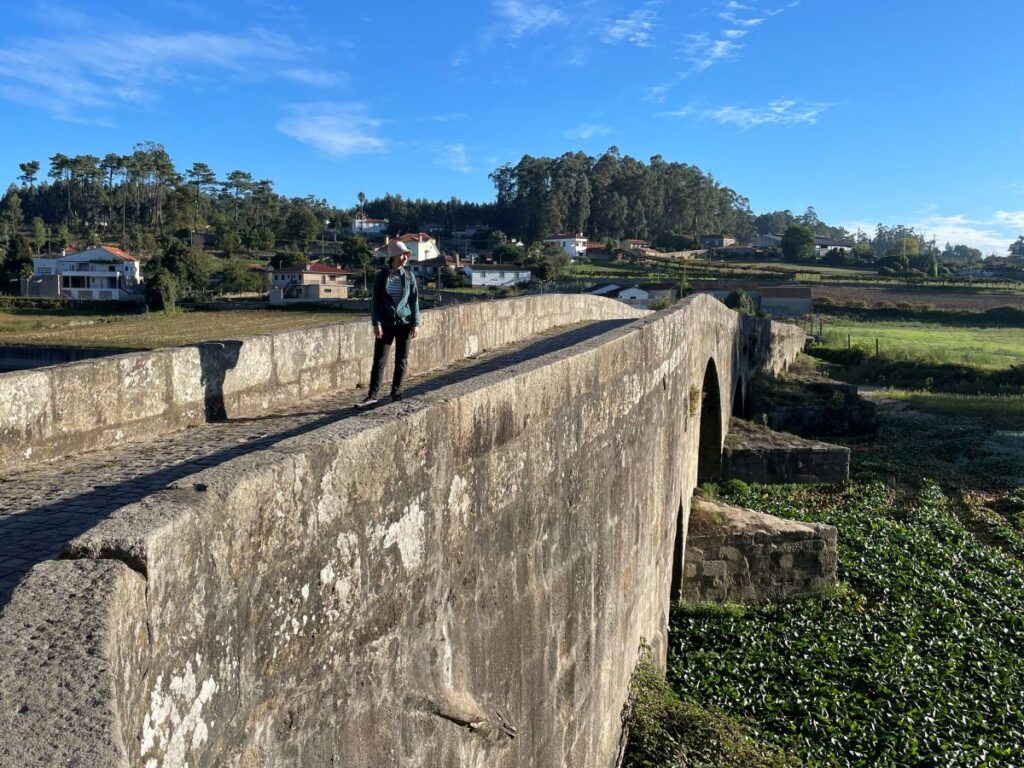
This is a pleasant day walking through small towns in the first half and a beautiful forest in the second half. If you want to stop for lunch or coffee, do it in San Pedro de Rates, as the next stop will be only after 19.5 km. Before reaching Barcelos, we decided to climb a hill to see the ocean once more.
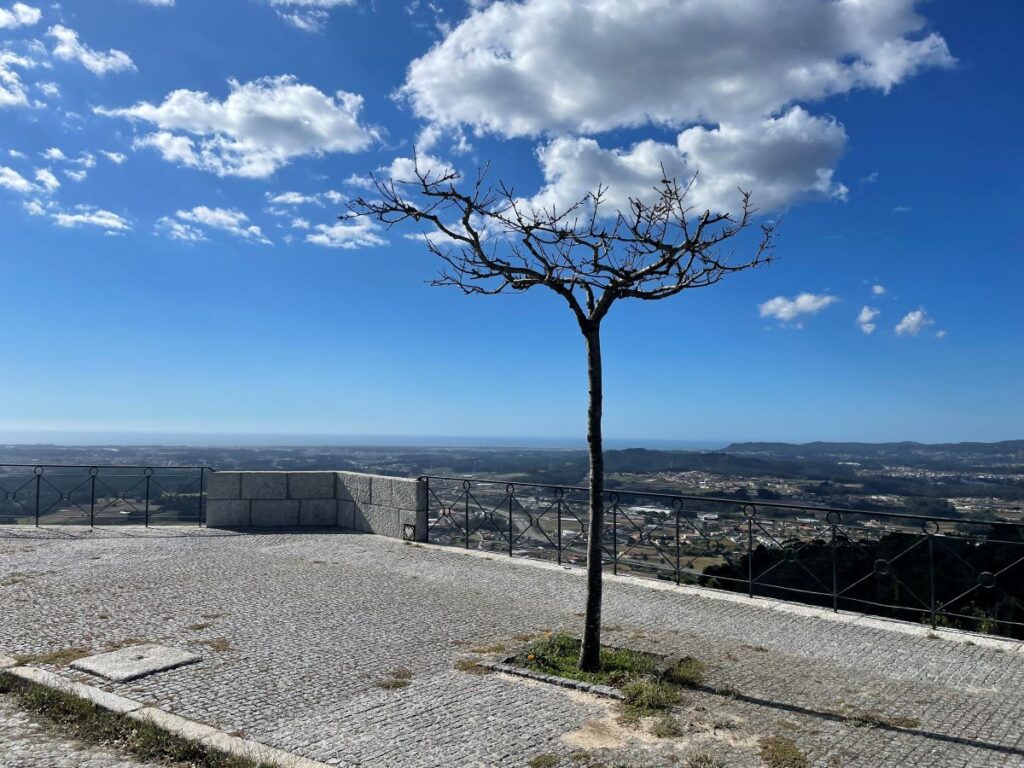
After Pedra Furada there is a fork in the road, if you go to the left, you can climb a large hill and see the church Santuário de Nossa Senhora da Franqueira. It is located on a wonderful viewpoint, with stunning 360-degree views and you can see the ocean again (next time we saw it was already in Fisterra and Muxía after Santiago).
The penultimate part of the way goes along the road on cobblestone pavements. A bit hard on the feet, so have shoes with thick soles.
Barcelos
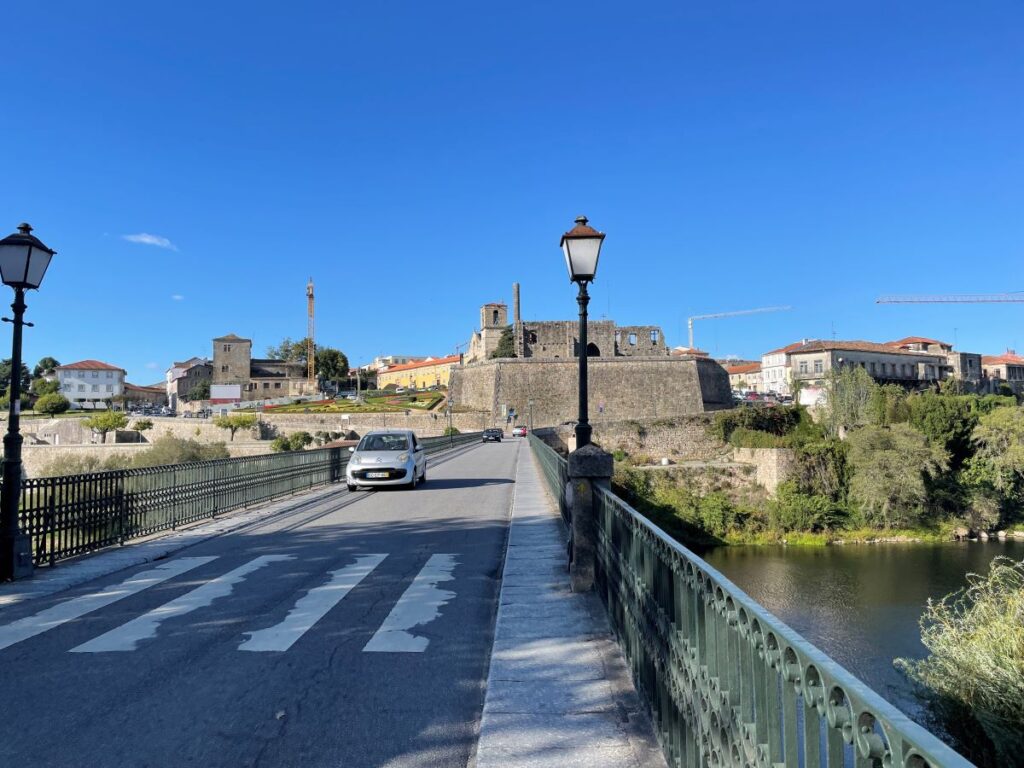
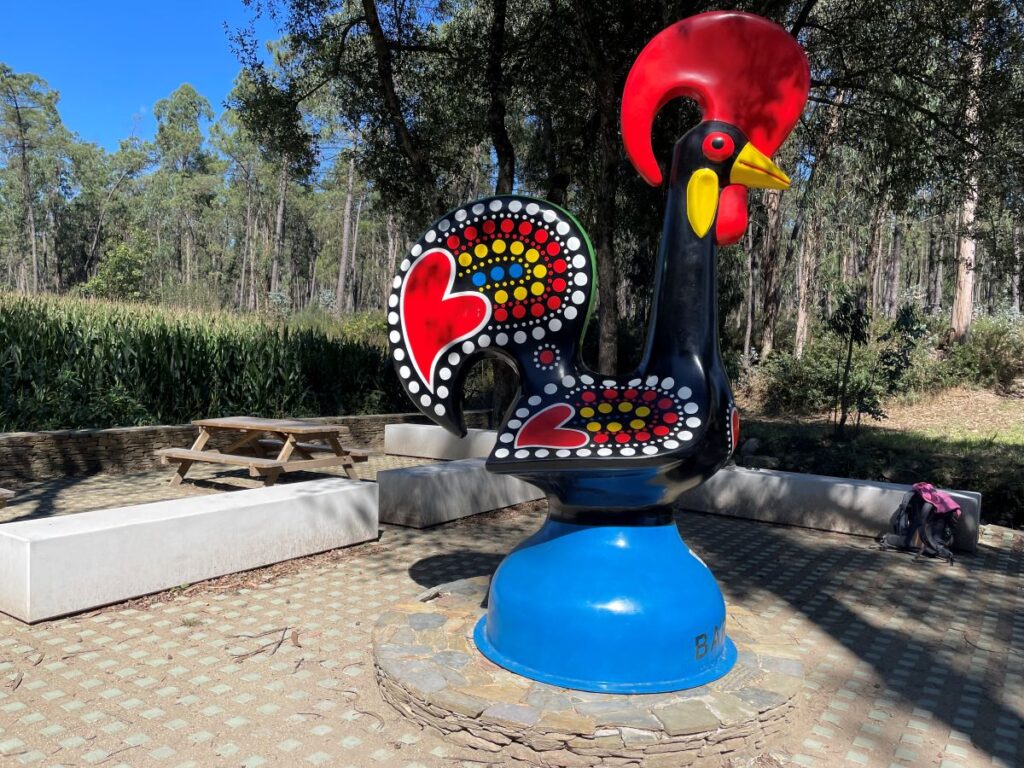
the city famous for its rooster and the capital of crafts in Portugal. Don’t miss seeing: the medieval bridge, Paço dos Condes de Barcelos and Torre da Porta Nova in the old town. Buy a keychain or another rooster souvenir – one of the symbols of the Portuguese nation.
I strongly recommend dinner in the restaurant Gandra – Prato do dia – we ordered pork chops with salad and wine. Inexpensive and quick.
Where to stay in Barcelos
- We stayed in a small and very modest donativo albergue – Albergue Cidade de Barcelos. Nothing special, clean, we had enough places, then some Polish girls checked in after us and it was full. A bit off the Old Town center.
- In Barcelos Hostel & Guest House – a private and more comfortable hostel, which also has private rooms.
Day 3. Barcelos – Vitorino dos Piães
Distance – 22 km, difficulty *
This is a very long walking stage, and honestly we initially planned to reach Ponte de Lima. But it was a very hot day, and since we didn’t book anything in advance, after halfway we decided not to walk the full 34 km. We decided to reach Vitorino dos Piães and stay at a private albergue, which we booked by calling on the way.
So this stage, if you wish, can be split into two stages. Or do as we did, walk 2/3 of the way and combine the other 1/3 with the next stage the following day.
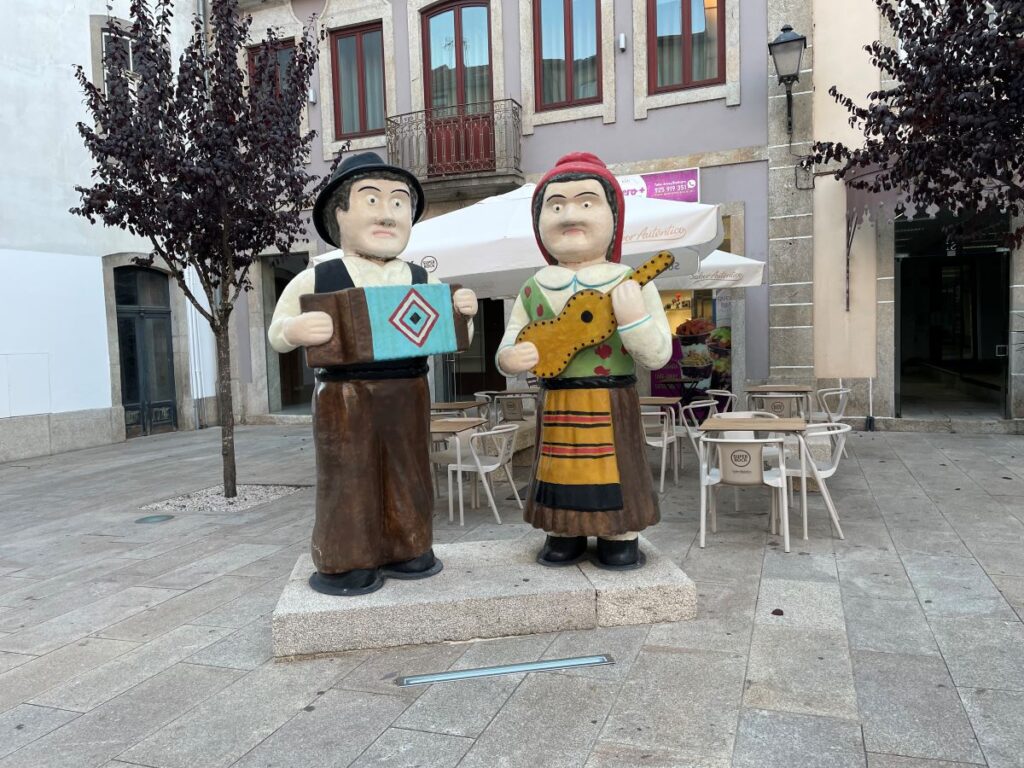
The entire day the route winds through small villages between fields and woods. Here and there you will see installed statues of the Portuguese rooster.
Unpleasant experience: And this day was a little unpleasant – my daughter and I, and as it turned out, other women, saw a local exhibitionist on a narrow path. He frightened my daughter, but I chased him away with loud shouts. Some ladies from the USA, who were ahead of us by half an hour, were also in shock. I reassured them that such sick people mostly do not touch women, they just show off. But there was no police on our route and no one to report this “gentleman” to. Unfortunately.
Vitorino dos Piães
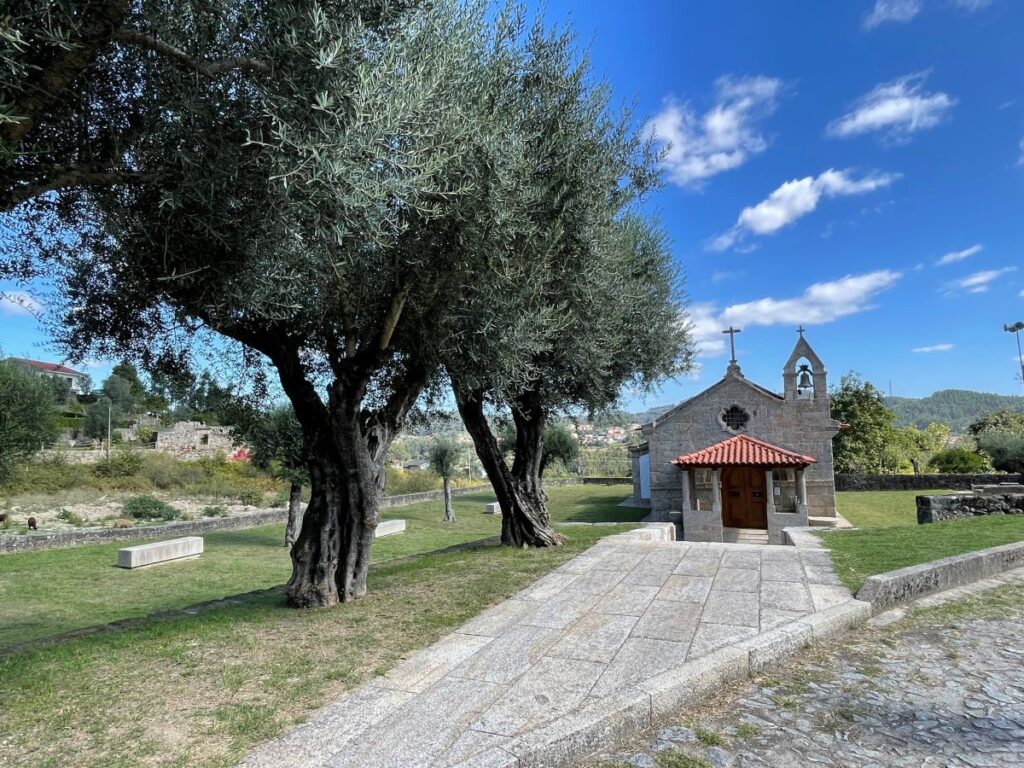
You can split the long stage into two and spend the night in Vitorino dos Piães, and the next day continue the journey to Ponte de Lima. The second day will be short, but that means you will have more time to explore the beautiful town of Ponte de Lima. Be sure to explore the historic part of the city, its Roman/medieval bridge, and the wonderful park (Parque do Arnado) on the other side of the river.
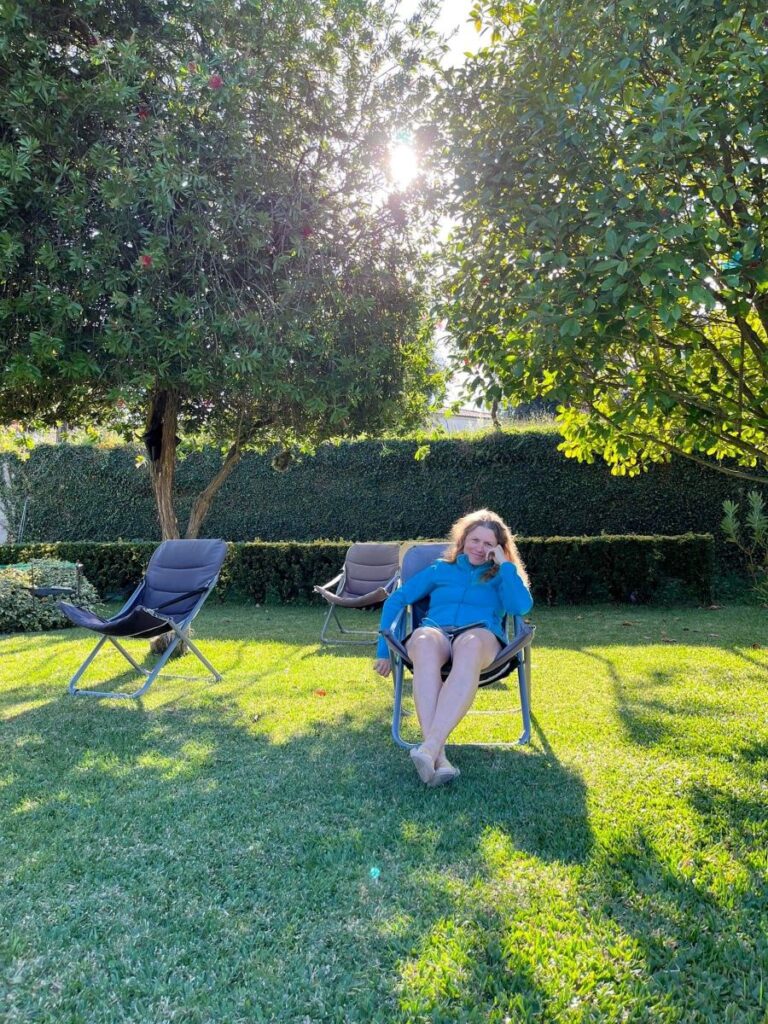
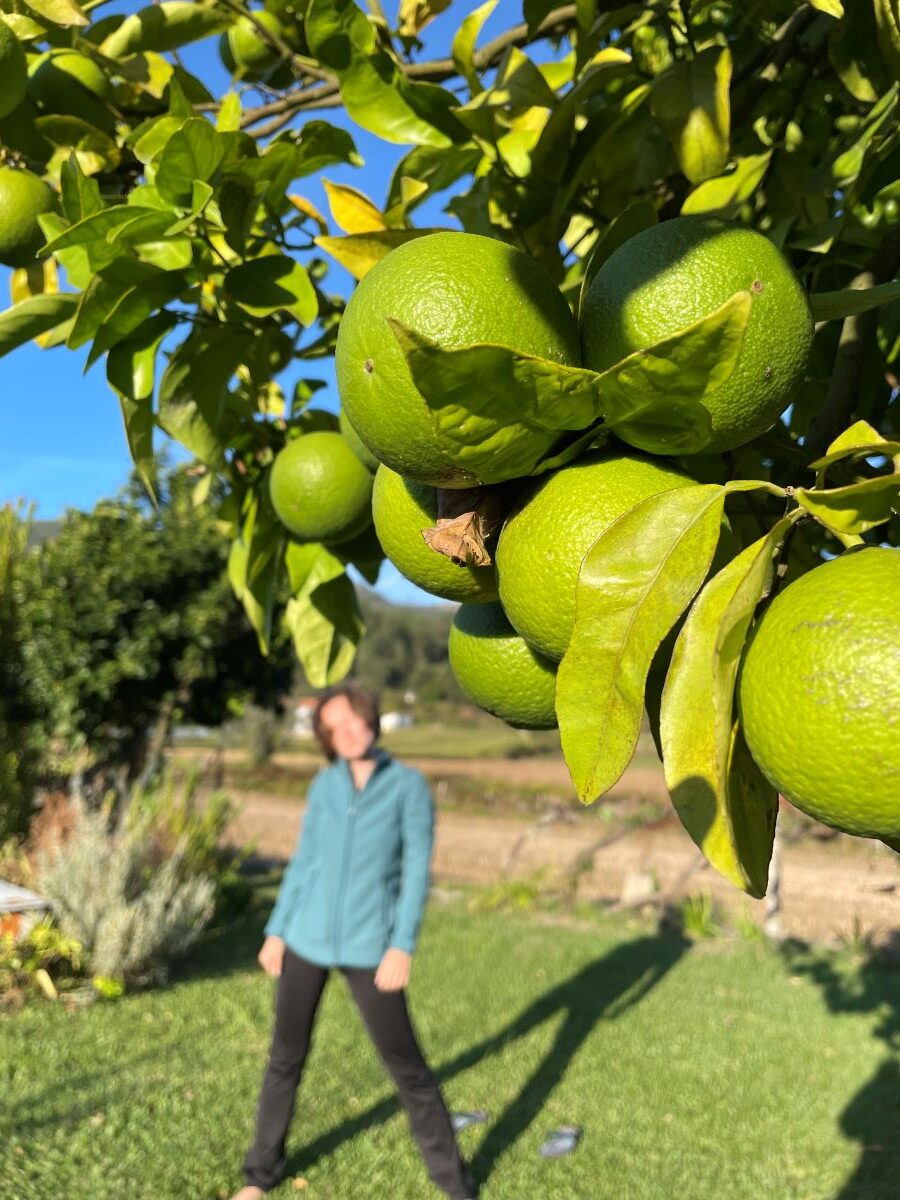
We stayed overnight in Vitorino dos Piães – there’s nothing to do here. But we spent the entire evening in the wonderful garden of the albergue, enjoying the coolness after a hot walking day. If you have the energy to reach Ponte de Lima, I recommend it. The town is great, many restaurants – we visited it the next day, stopping for an hour for lunch.
Where to stay in Vitorino dos Piães
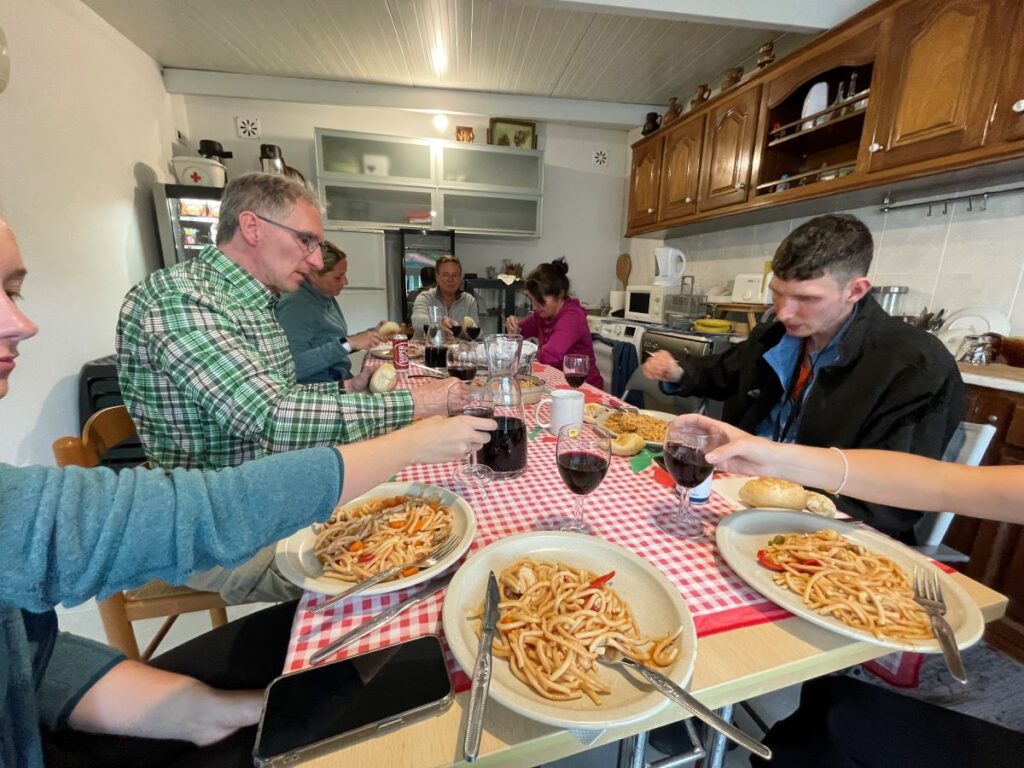
- As I mentioned above, we stayed at Casa Sagres – this is one of the best hostels I have ever stayed in. Very friendly owners, cooked us dinner and breakfast. There is a large beautiful garden with a Jacuzzi, where you can relax after a long exhausting day.
- Casa Rural O Estábulo de Valinhas – next door is another private hotel with hostel elements, with both shared and private rooms. They offer dinner and their own wine.
- HI Ponte de Lima – Pousada de Juventude – a hostel in Ponte de Lima with a very good price-quality ratio, comfortable and clean.
Day 4. Vitorino dos Piães – Rubiães
Distance – 29 km, difficulty ***
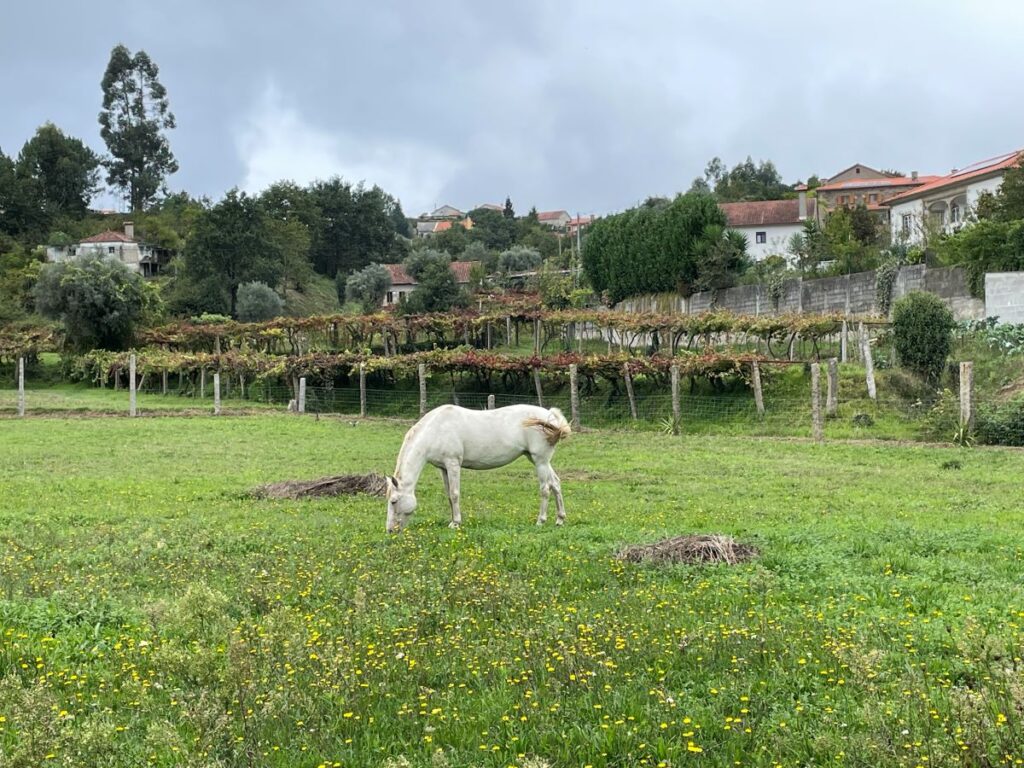
This stage can be considered the most difficult on the Central route. You have to cross low mountains, although most of this crossing is on asphalt, but almost all the way from Ponte de Lima you’ll be going up. You have to climb to the top of A Portela Grande, the steepest slope on the Portuguese way.
Do you need poles for this? For me – no. But most pilgrims use them – it’s up to you, because I don’t take poles on such hills.
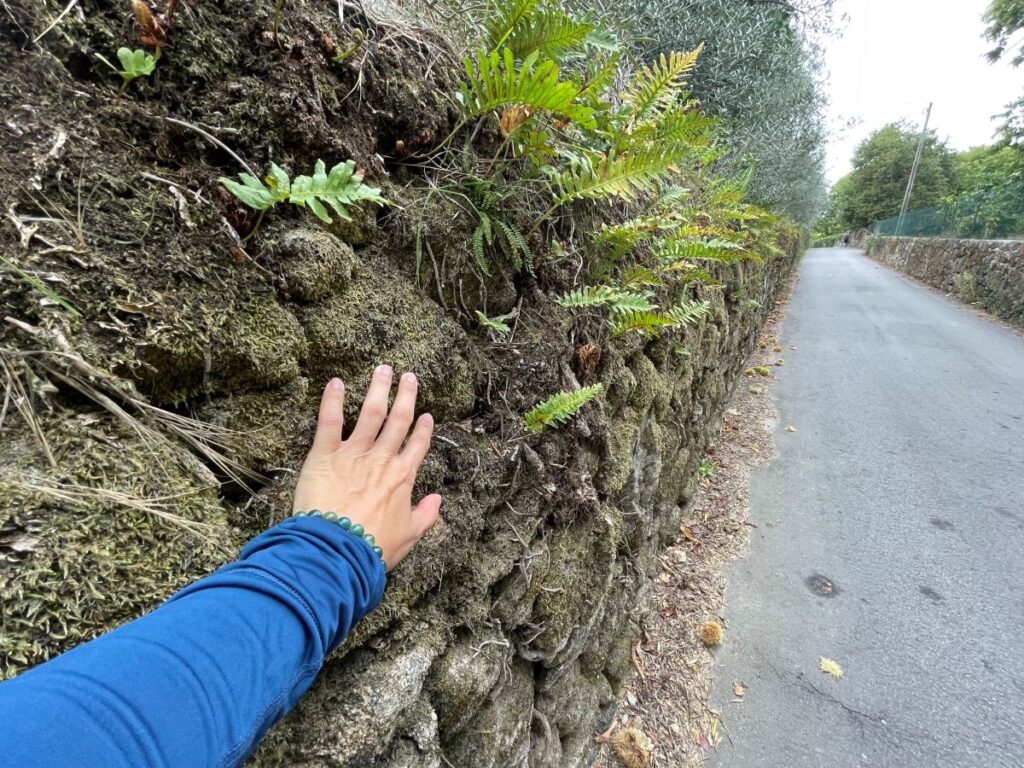
If you start in Ponte de Lima, the day will be a bit exhausting, but not long. We started our journey 12 km from Ponte, so we got really tired. We didn’t split this day in half because rain and heavy showers were forecast for the evening. So we had to cross the pass and spend the night already behind it, so that the next morning we wouldn’t have to hike in the mountains in heavy rain.
Although we did get a little wet by a small shower – it was short, so it didn’t cause big problems.
Ponte de Lima
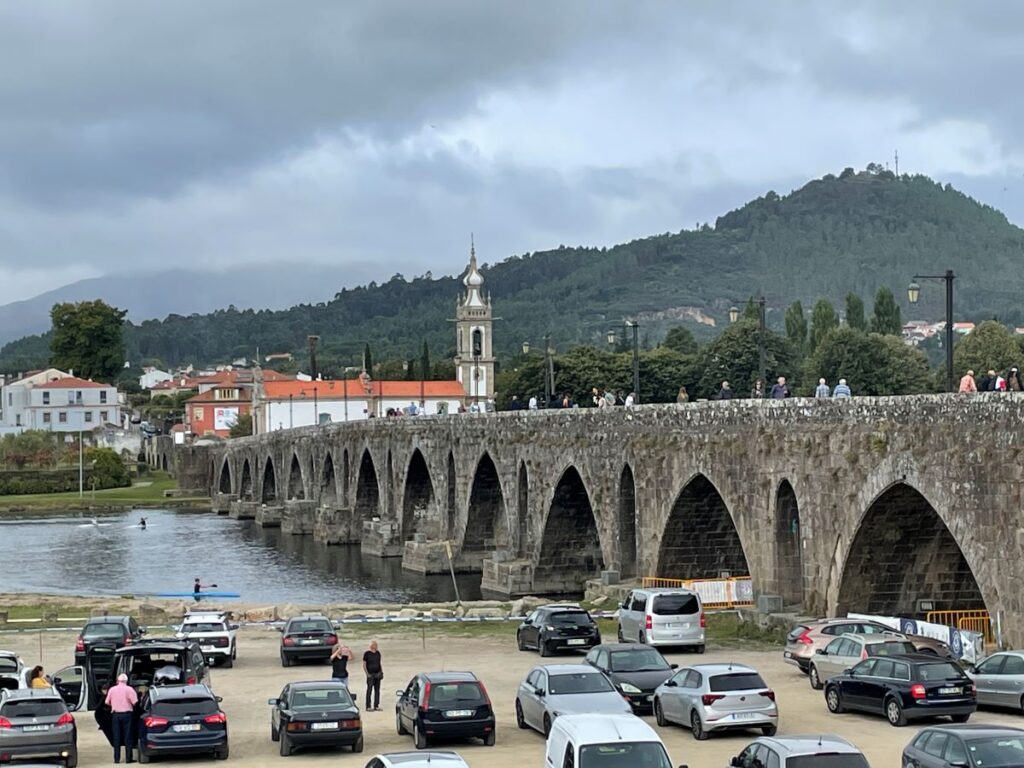
After three hours we reached wonderful Ponte de Lima, known as the oldest town in Portugal by the Lima river (Límia in Galician). Ponte de Lima is a beautiful town with interesting medieval monumental architecture.
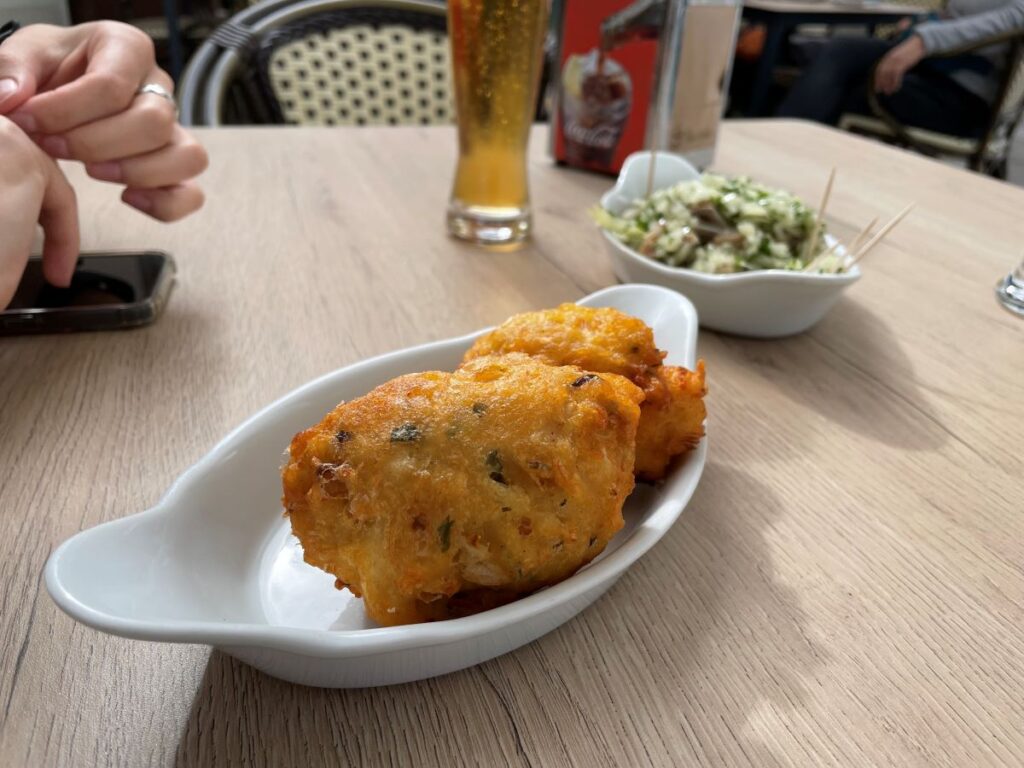
Also try the special local cuisine, especially lamprey dishes – river parasites, from which they prepare appetizers in a thousand ways. Also, sarrabulho rice and rojões pork. I recommend the restaurant Encanada, located on the Lima river embankment.
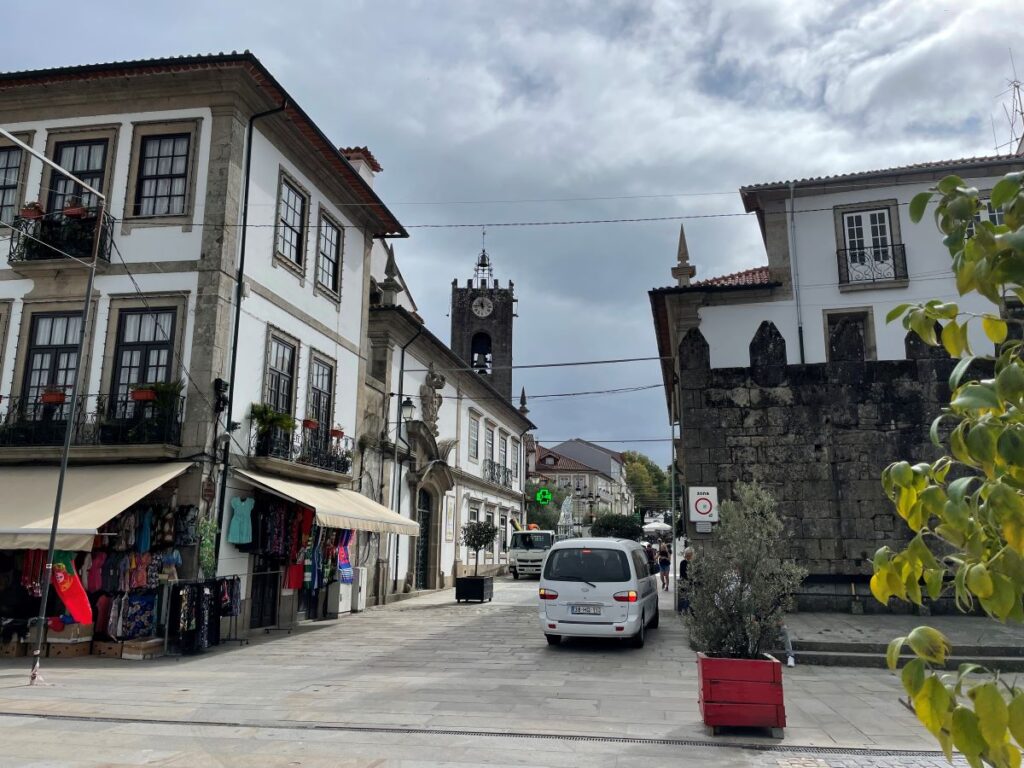
After eating delicious pig ears and codfish pastéis, we headed towards the bridge – the very ponte over the Lima river – and crossed to the other side. Then begins a gradual ascent through woods under huge motorway viaducts. Then through the villages of Labruja and Codeçal.
Then up a mountain trail, where poles may be useful – the climb is quite long and steep. You gain over 300 m in 5 km. The hardest section is between 10 km and 13 km from Ponte de Lima. A steep descent starts at the 13 km mark. But it’s not as long or as steep as the ascent. You descend about 190 m over 5 km.
By the way, you will see Cruz dos Franceses – a stone cross 12.5 km from Ponte de Lima. It marks the place where local inhabitants set up an ambush for Napoleon’s soldiers during the 1809 invasion.
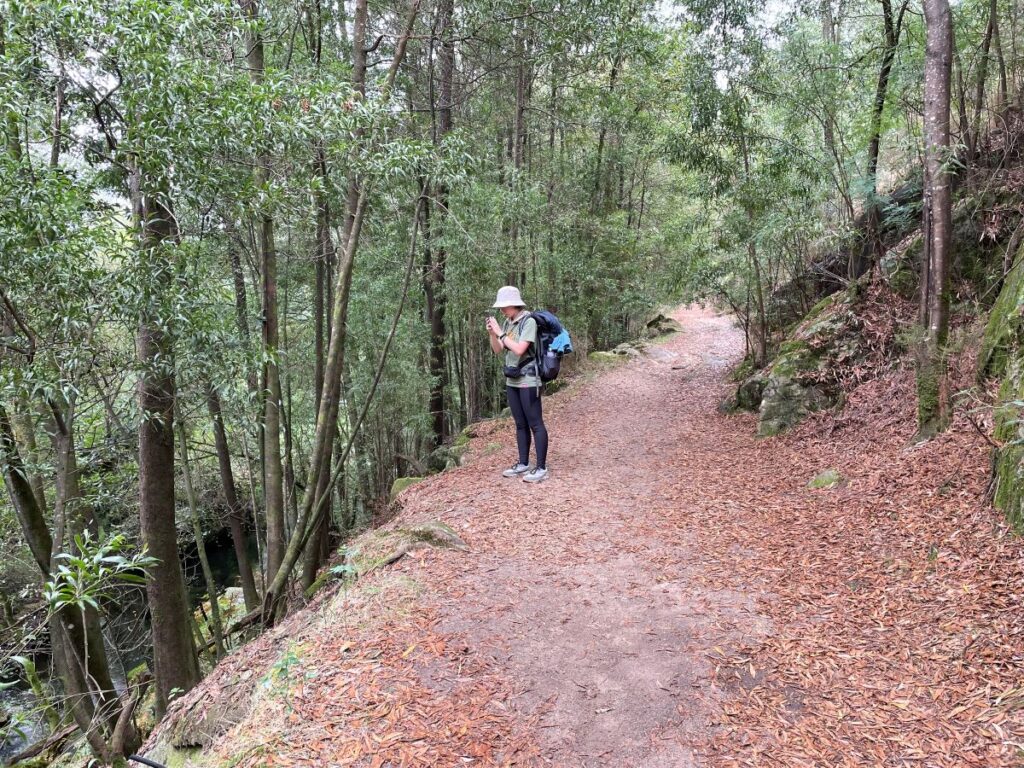
In the second half of the day there are no places to stop for food or drinks, so be sure to take enough water with you for the climb. We ascended in strong wind and a light rain. It was hot and wet at the same time. But we covered the segment in four hours and headed down toward Rubiães.
Tip: If you are traveling by bike, you may have to carry it in rocky sections. Or, if you want, you can go on road M-552, then N-201. This detour can also be used by people with limited mobility.
Where to stay in Rubiães
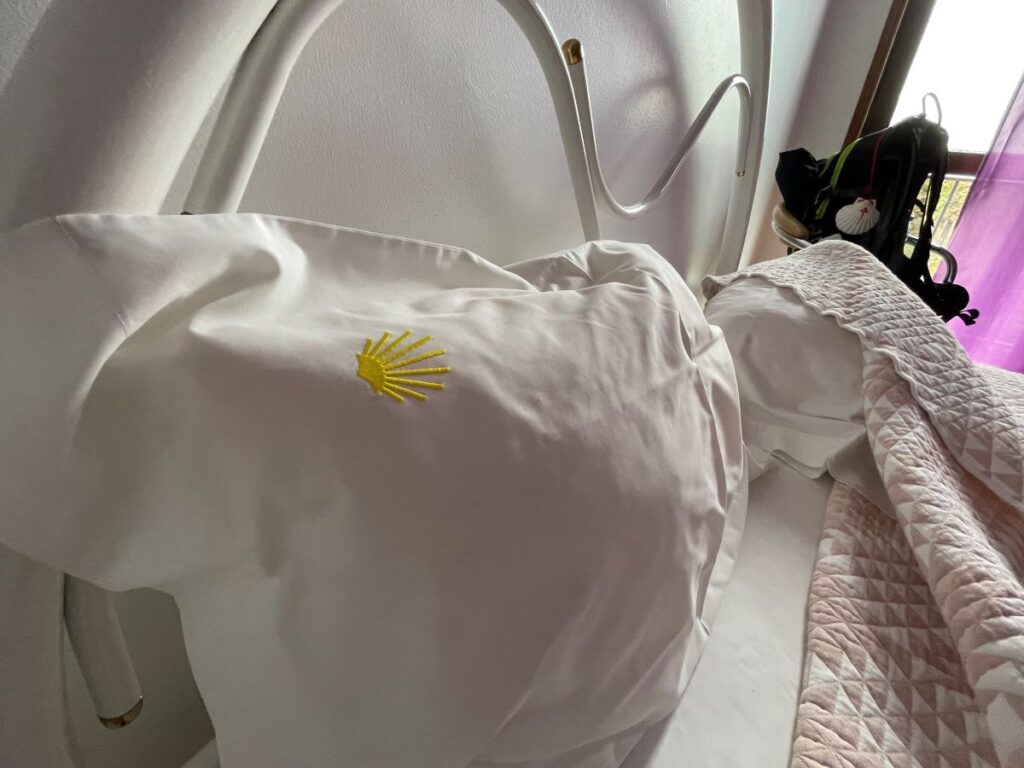
- We booked a double room with bathroom at Residencial Repouso do Peregrino. Everything was very clean. For dinner, if you wish, you can be picked up by van and taken to a neighboring restaurant (Bom Retiro), which has a great menu at reasonable prices. Afterwards you will be driven back to your accommodation. The room cost 35 euros.
- Albergue de peregrinos de Rubiães – a municipal low-cost albergue with simple facilities, bed price 10 euros.
Day 5. Rubiães – Tui (Spain)
Distance – 19 km, difficulty *
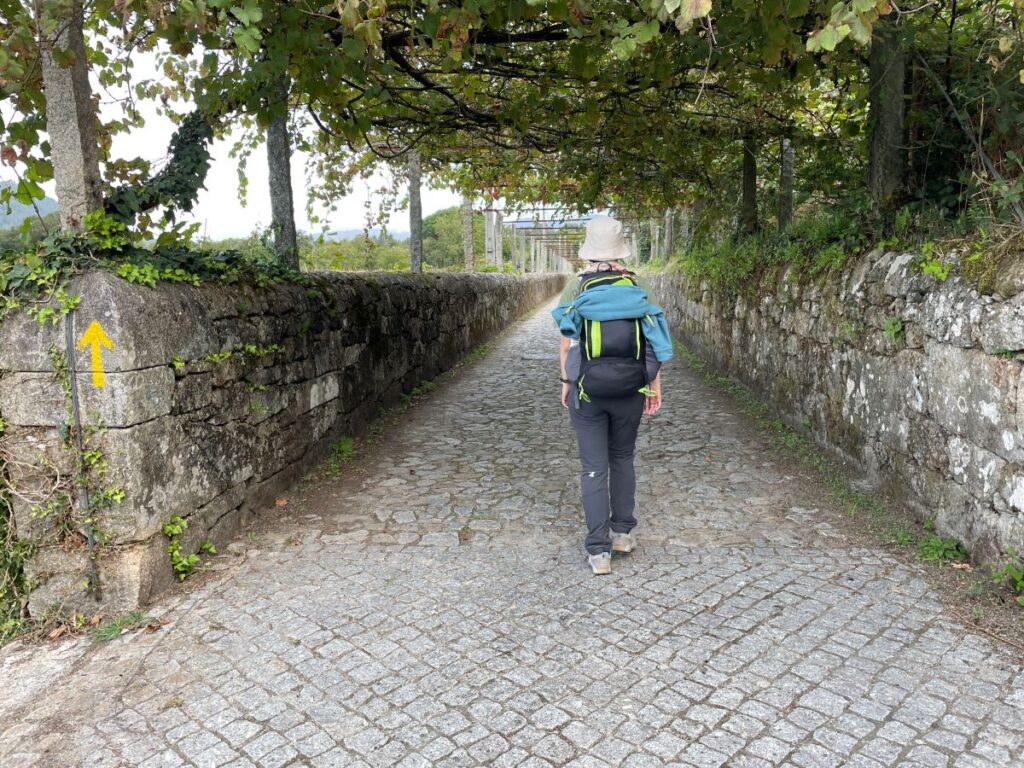
I really liked this stage of the Central route. Despite the relatively short distance, it is very diverse. We managed to walk through forest and fields, visit two medieval fortresses, and in fact on this day you cross from Portugal into Spain.
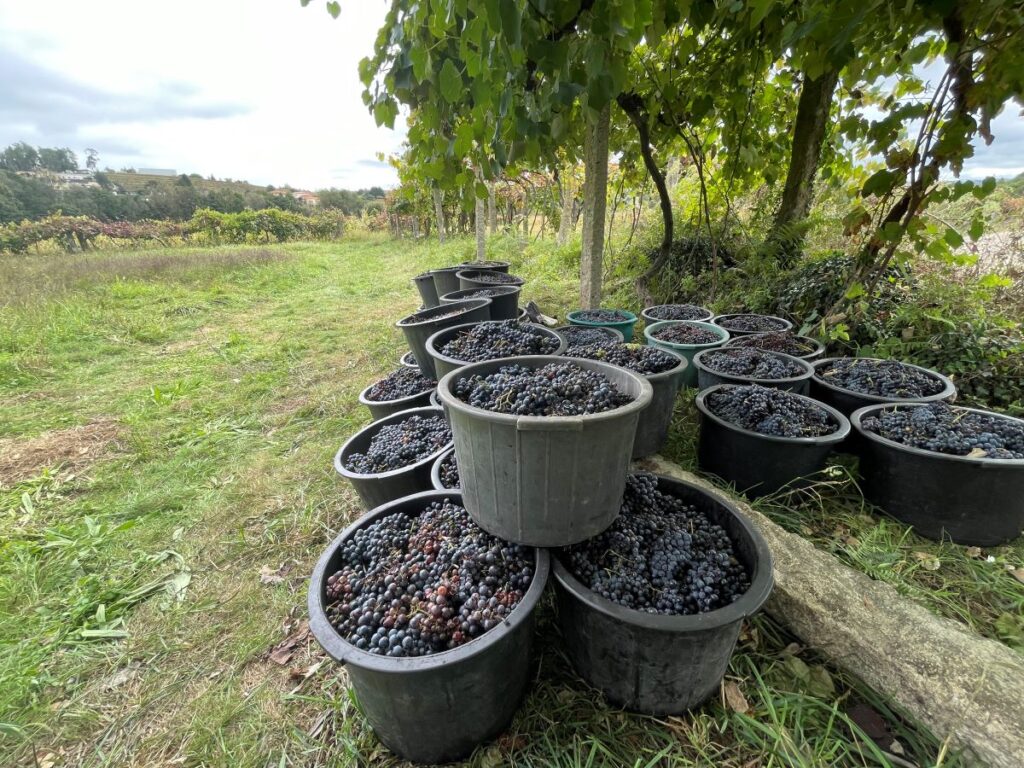
This part of the path runs between small towns and through vineyards that form bizarre tunnels. We walked at the end of September during the grape harvest – we saw baskets full of grapes, and the scent was wonderful! In general there were many cafes along the way to stop for breakfast or lunch. It’s an easy and pleasant part of the Central route.
Another notable feature regarding the walking surface of the Portuguese Camino is that as soon as you cross the route into Spain, there is no more cobblestone (maybe in some towns, but not like in Portugal). Remember the time difference: Spain is 1 hour ahead of Portugal!
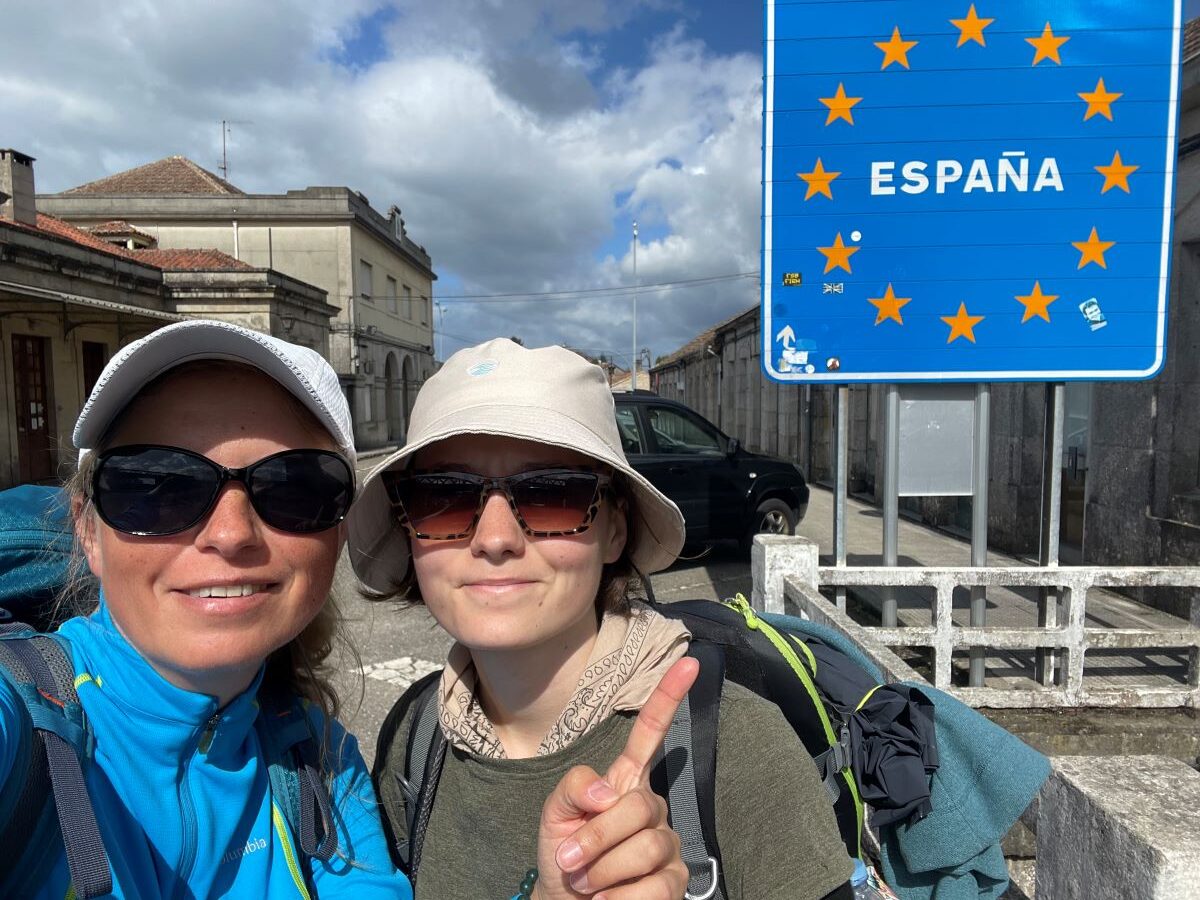
Note: If you start walking the Central route in Porto, be ready to see many more pilgrims when you reach Tui. From here to Santiago many people only walk the last 100 km, which is a required minimum to receive the Compostela certificate.
Valença and Tui
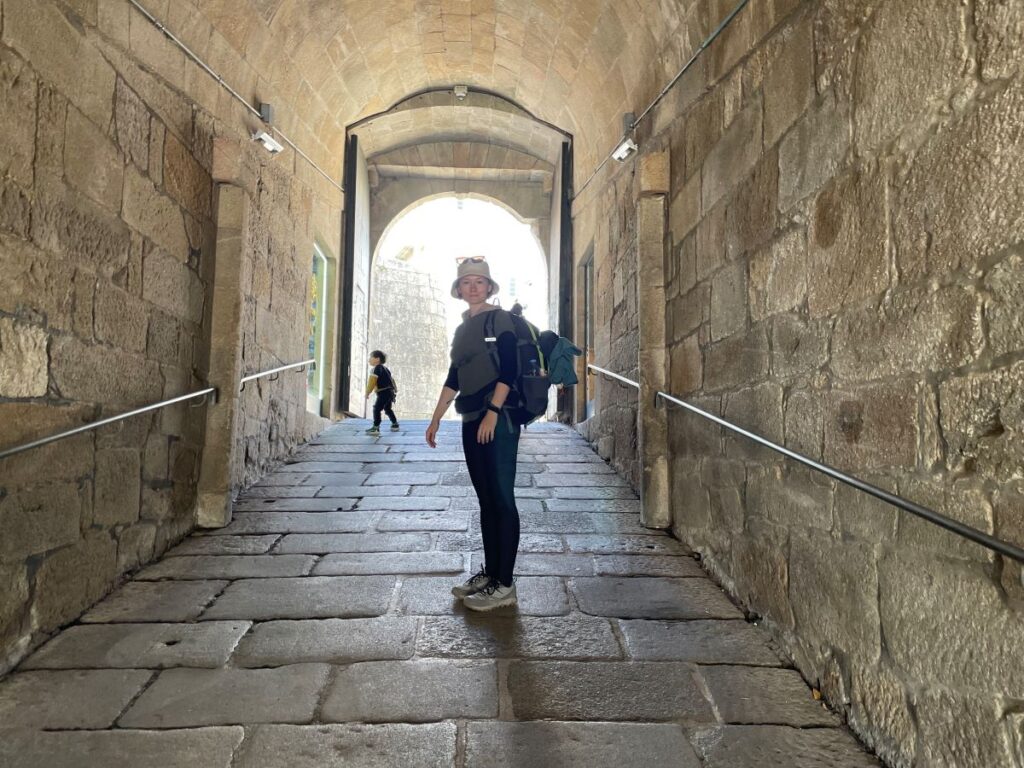
Today’s stage is rather short, so you have the opportunity to stay overnight in the beautiful town of Valença do Minho. Or cross the bridge over the river Minho and enter Galicia to spend the night in Tui.
If you stay in Valença, be sure to visit its fortress on the Minho river and the churches of Santa María dos Anjos and Santo Esteve. The Valença fortress is located on the top of a hill and offers breathtaking views of the city and its surroundings.
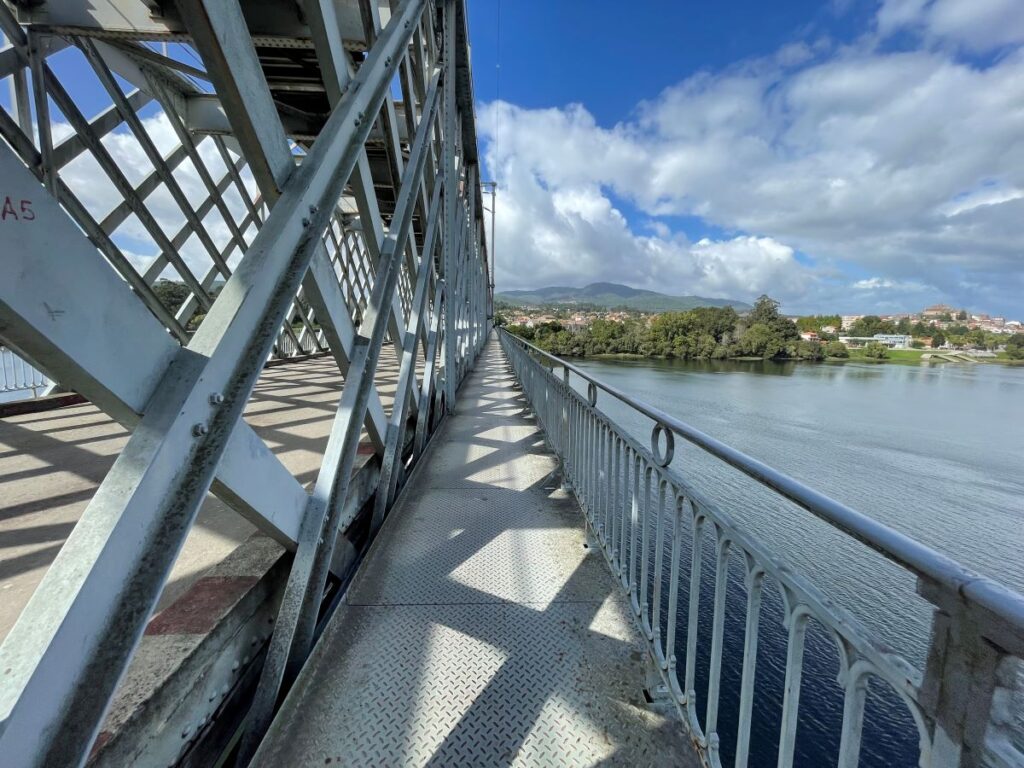
In Valença you can also try Portuguese cuisine, which you will soon have to swap for Galician. Recommended dishes include Bacalhau de São Teotónio – fried and baked with onion codfish, Cabrito à Sanfins – roasted kid with potatoes, Ahno no forno – baked lamb.
Another attraction of the day is the metal international bridge over the Minho river, from which you can see beautiful views of both banks and the fortresses.
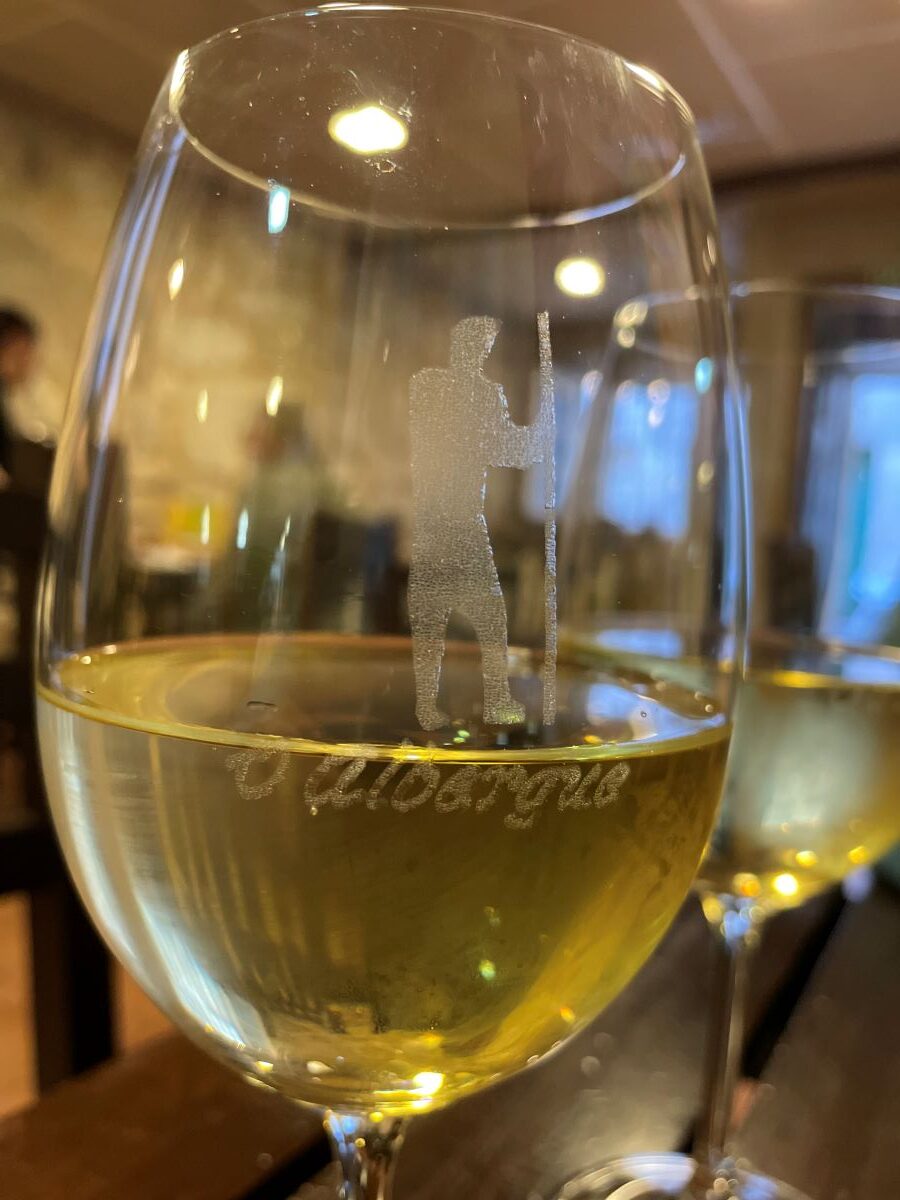
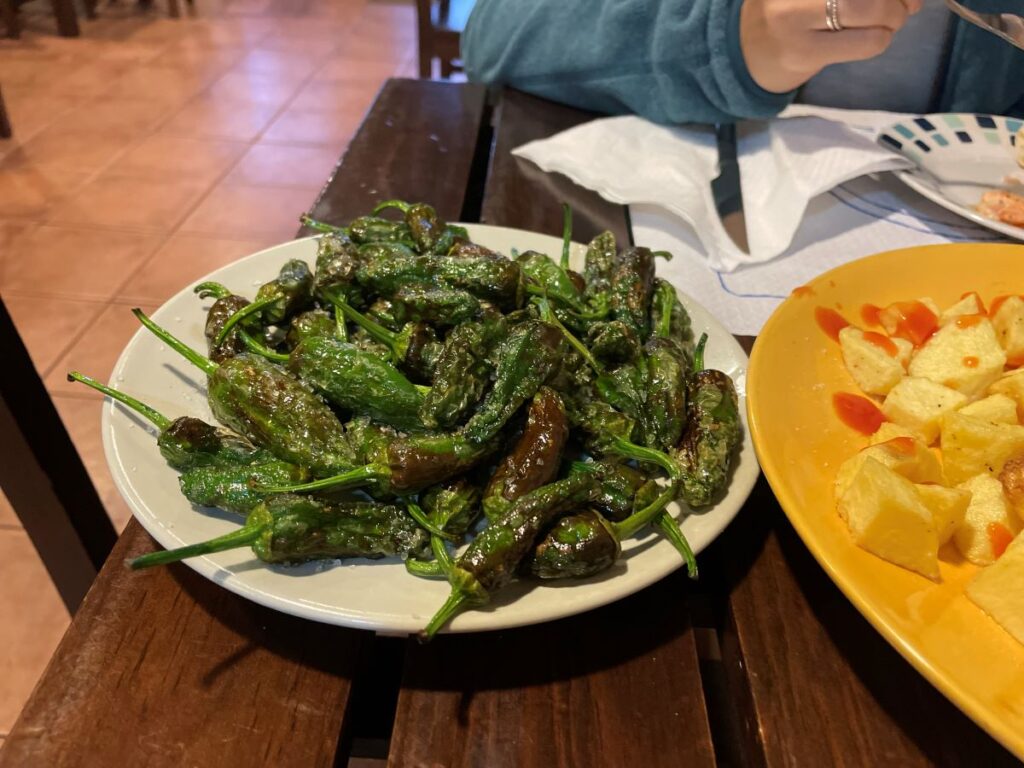
The Tui fortress is a Spanish fortress on the opposite bank of the river. And the city with a wonderfully beautiful old part delighted me! It’s worth spending any amount of time in Tui to explore its great cultural heritage and also to try some delicious southern Galician and Minho cuisine delicacies. If you plan to have dinner outside the albergue, I recommend Taperia O Albergue. It’s inexpensive, delicious, and fast. To celebrate our arrival in Spain, we ordered Padron peppers, potatoes – patatas bravas, and pulpo – Galician-style octopus.
Where to stay – Valença or Tui
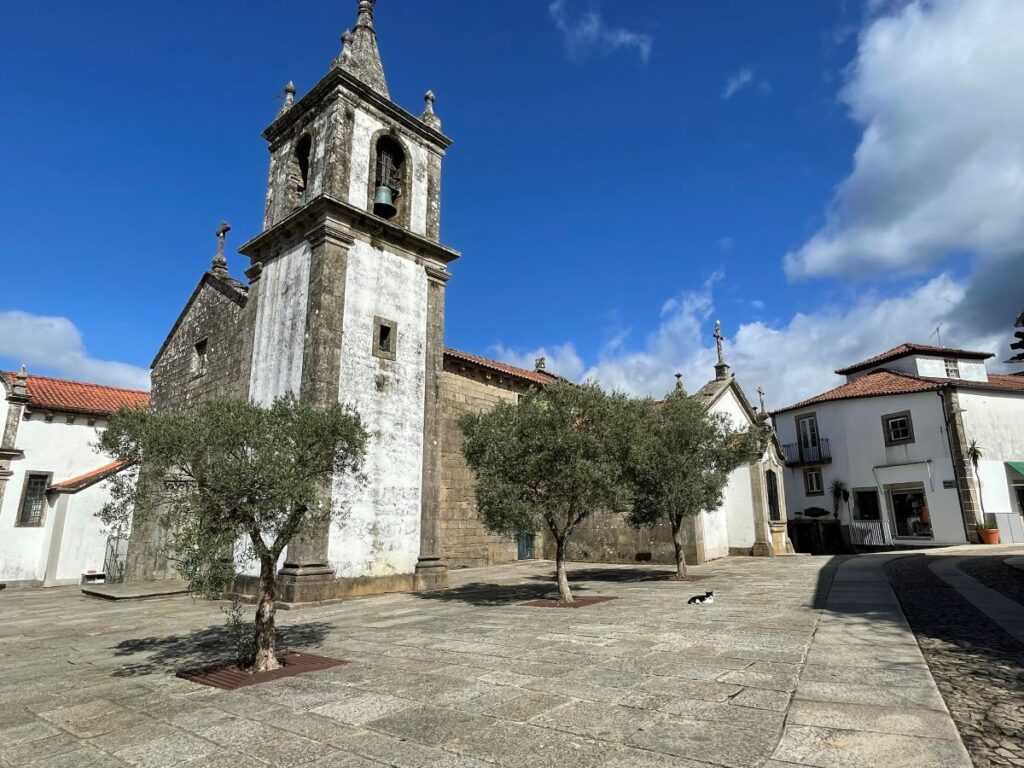
- Albergue de peregrinos de Tui – the old municipal albergue near the cathedral, which can be cold at night due to the river. Large rooms with many beds.
- Albergue Villa San Clemente – from this albergue in Tui you get a beautiful view of the Camino trail and there are various sleeping options – dorms and private rooms at a good price.
- Albergue Buen Camino Tui – modern, clean and incredibly comfortable albergue with breakfasts, perfect stop on the Camino.
- Albergue de peregrinos São Teotónio – municipal albergue in Valença with a kitchen, living room, and dining area. But located not in the center of Valença.
- Hostel Bulwark – great location in Valença, comfortable rooms with bunk beds, lockers for luggage, self-service breakfast and fast Wi-Fi.
Day 6. Tui – Redondela
Distance – 32 km, difficulty **
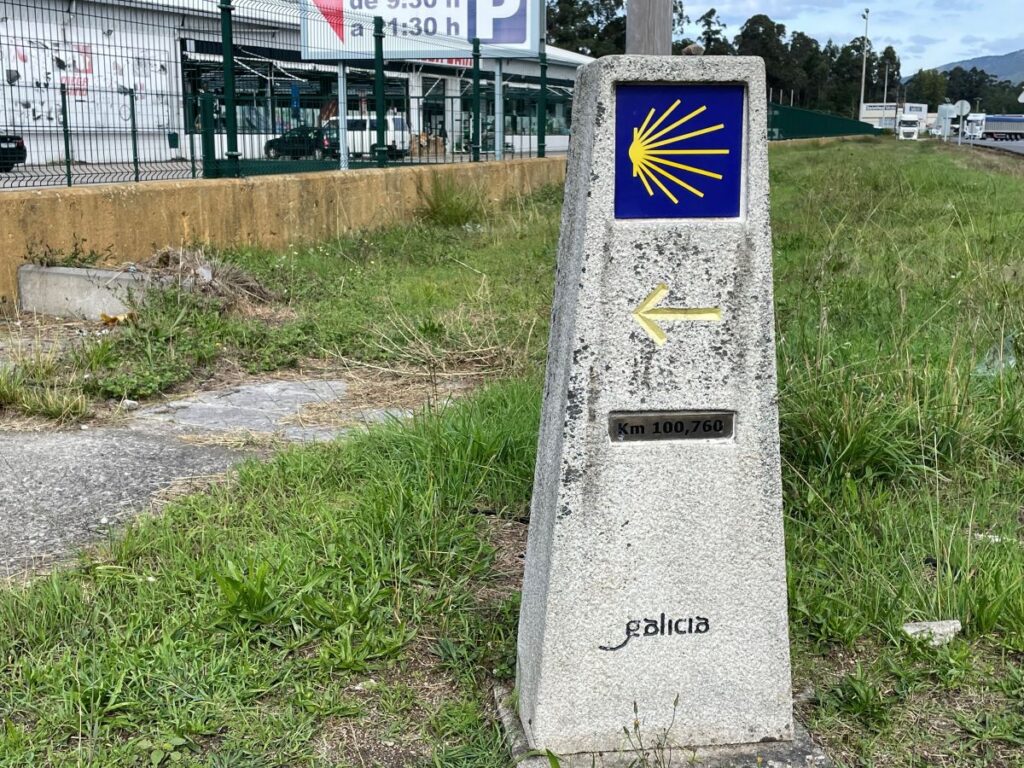
Another long and somewhat challenging day on the Central Portuguese Camino due to its length. If you have enough time you can split it into two stages: from Tui to O Porriño – 15.5 km and from O Porriño to Redondela – 16 km.
Important to remember: In order to receive the Compostela certificate after completing the Camino, you need to collect at least 2 stamps per day during the last 100 km. So after Tui you need to get an extra stamp somewhere on the way as well as in the albergue. For example, at a bar or by a church if there is a stamp. Usually, you do not have to order anything to get the stamp.
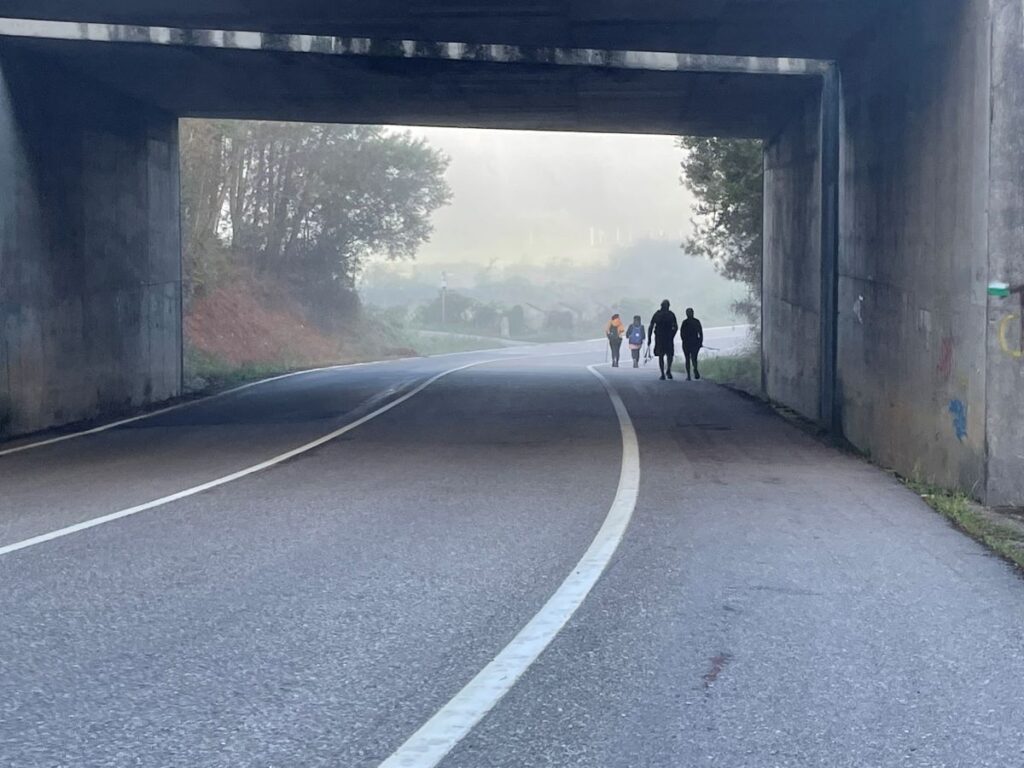
In the morning we started out in the middle of fog, which literally chilled us overnight in the cold municipal albergue. But as soon as the sun rose, everything around – the eucalyptus forest and the road – became a little mystical. We met a musician playing the bagpipes (probably there every morning), but the music was perfect for the moment.
Galicia Part
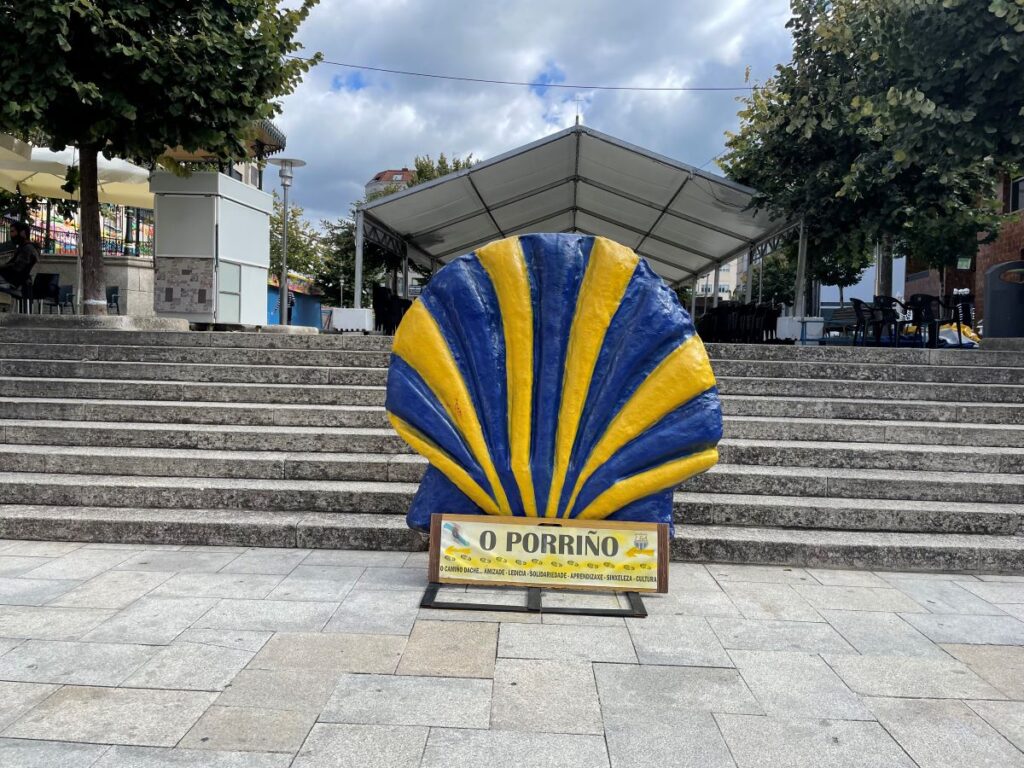
And here we are in Galicia, walking to Santiago, with a flat, well-marked route ahead. But note that now you will not be walking alone, here and there meeting pilgrims. Forget solitude – these are the last 100 km. We were constantly overtaken by groups of pilgrims. Especially difficult is walking alongside students, of whom there were a lot at the beginning of October. They are noisy and do not try to give way when you overtake them. Honestly it got a bit hard to walk.
Starting from Tui, the route runs parallel to the Minho River. Then it enters forests and vineyards, though a significant part still follows along roads. So caution is needed, as well as increased visibility. The day’s route goes through urbanized terrain with too much asphalt. If you wish you can avoid the less pleasant part that passes through the O Porriño industrial zone.
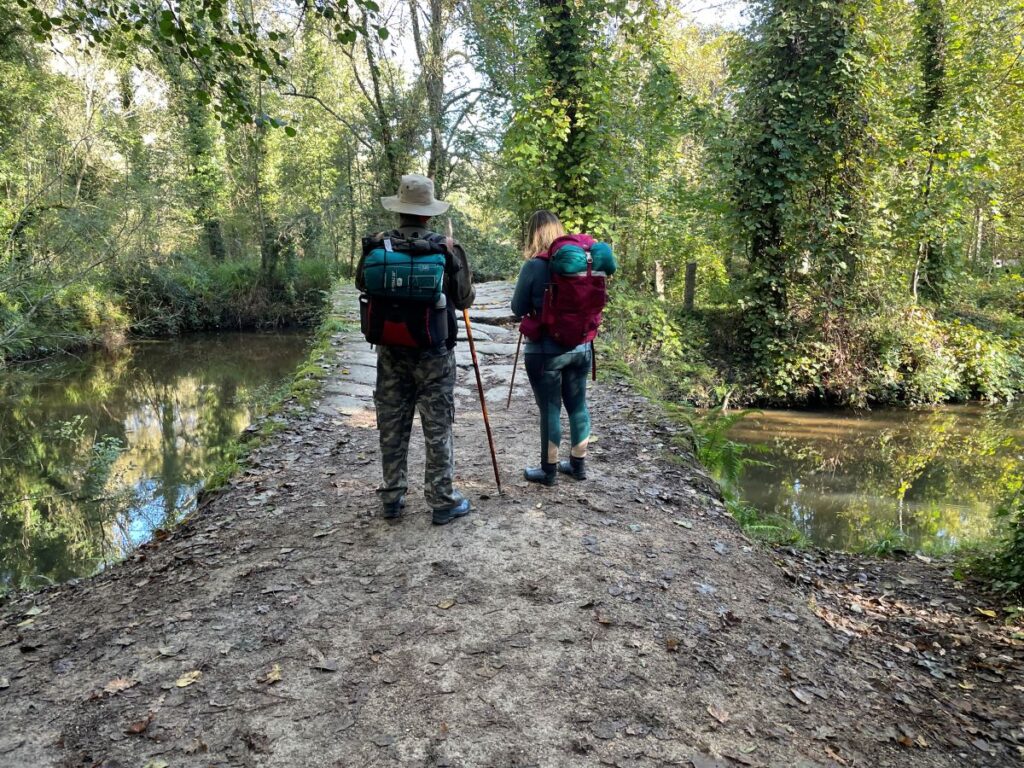
Fortunately, in 2013 an alternative route was created through the As Gándaras natural area and along the Louro river, bypassing the massive industrial zone of O Porriño. It’s a great path along the river in the woods, and we had a great walk on a hot day, avoiding the fatigue that would have occurred if we had gone on the urban asphalt.
The only significant climb today is the ascent to the Chapel of Santiaguiño, where we gained about 150 meters of elevation over 3.1 kilometers from the hostel in Mos.
Redondela
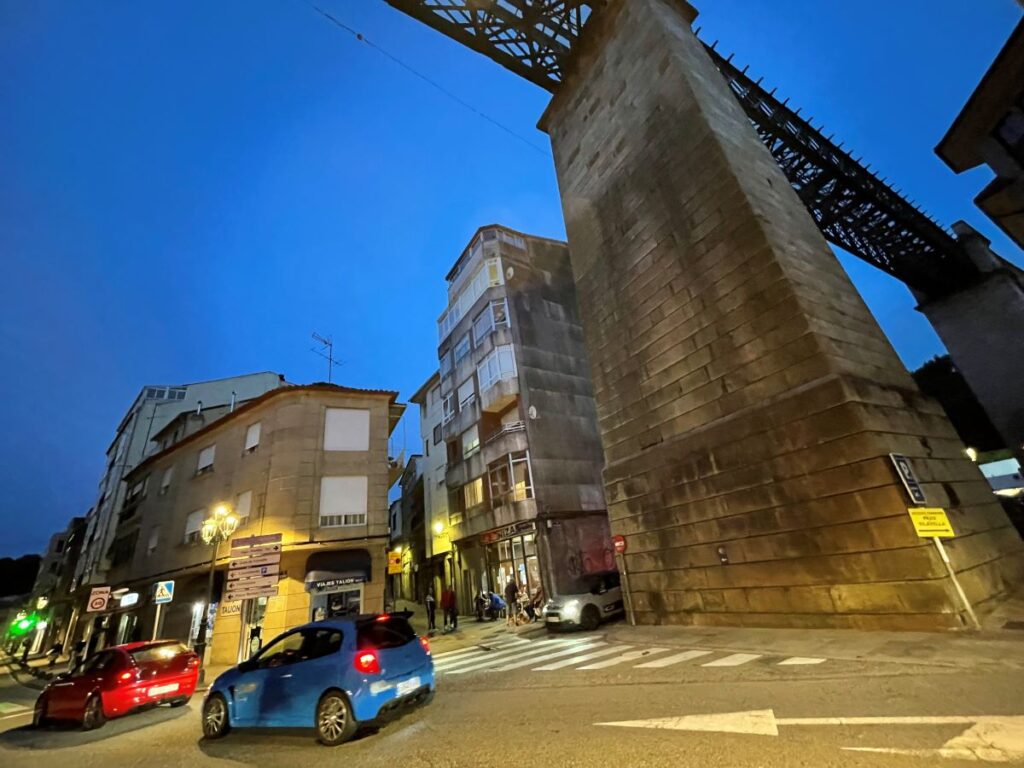
Redondela – a renowned town, annually hosting the Festa da coca festival. The highlight of the festival is the Corpus Christi procession on an impressive floral carpet, but what truly makes it unique is the presence of the Coca, a mythical dragon that once terrorized the town, until it was defeated.
The striking articulated figure of the Coca parades through the streets accompanied by penlas – girls dressed in white who dance around it. It’s a captivating spectacle that carries viewers into the world of Galician folklore. In May there’s also a chocolate festival here.
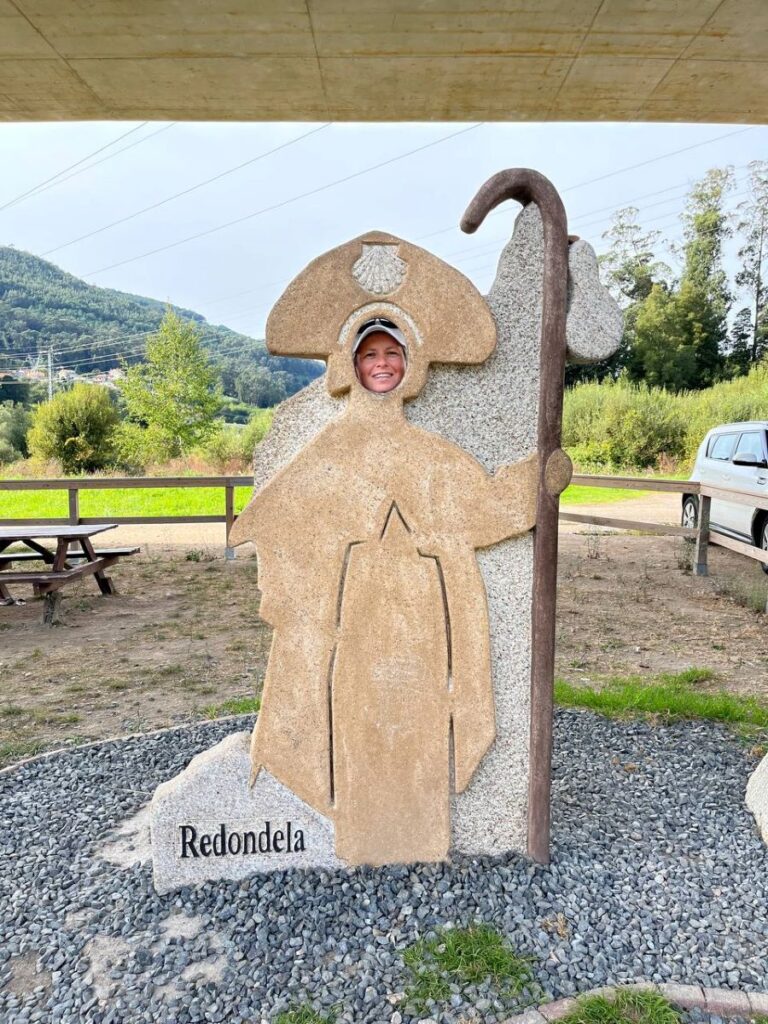
On the way you will see Redondela’s heritage gems such as the castle of Soutomaior and the Roman bridge Pontesampaio.
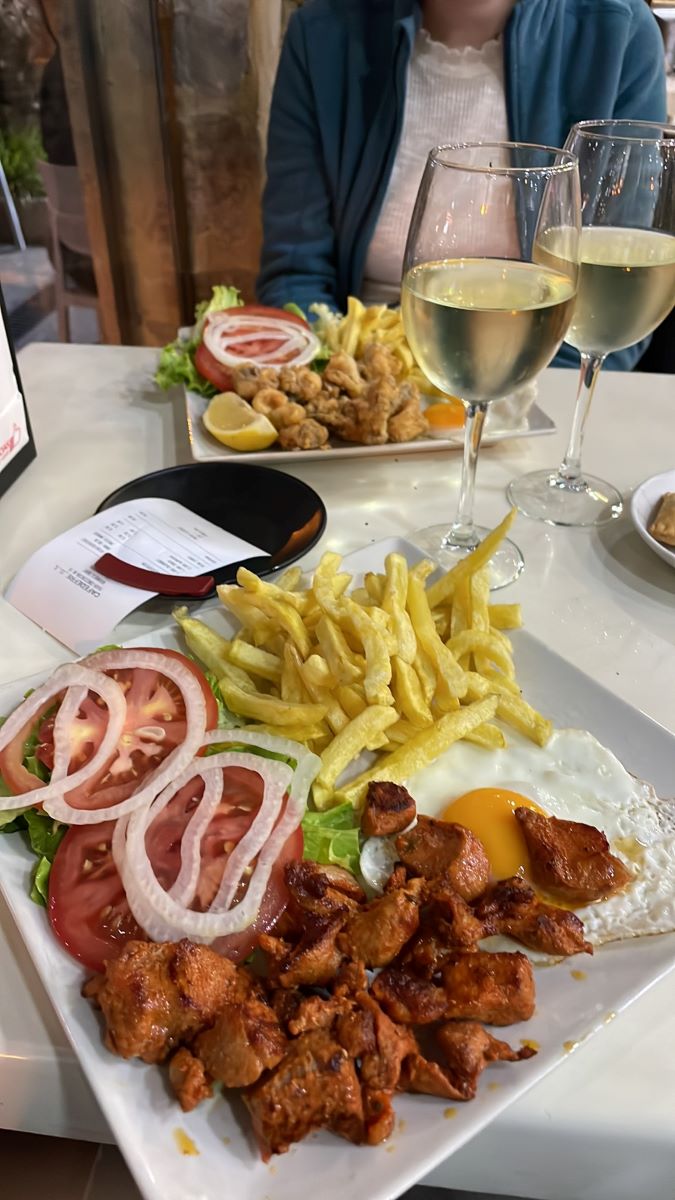
For dinner, I recommend the inexpensive spot Cafetaría Farola, where we had dinner for two for 25 euros.
Where to stay in Redondela
- We stayed in the albergue A Conserveira – it is located on the route, close to the city center. We liked the curtained beds, which were almost like a separate room. There are washing machines and dryers, lots of space in the rooms.
- Albergue Parroquial Santiago Apostol de Redondela – a neighboring hostel, a bit older and simpler, with no privacy – all beds are next to each other. But it’s clean, has a kitchen and a place to eat. The albergue is private but looks like a classic Galician municipal.
- A Casa da Herba – another nice private albergue in the center of Redondela. Bed linen and towels, very clean, washing machine and dryer available.
Day 7. Redondela – Pontevedra
Distance – 20 km, difficulty *
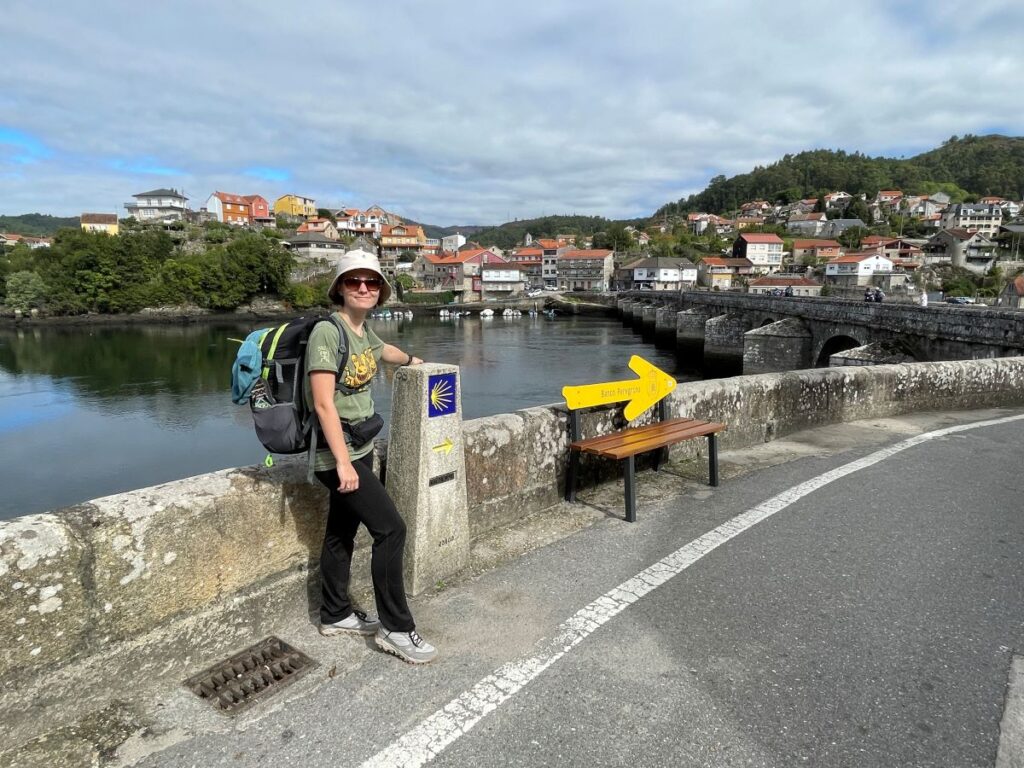
Redondela is the town where two Portuguese routes meet: the Coastal and the Central. I have already written about the further journey when describing my experience on the Coastal route. So you can read more about it there, or continue reading here. The experience is a bit different because this time we saw more and stayed in slightly different places.
Next, you pass through the not very interesting at first glance town of Arcade. But it has its own landmark – a beautiful medieval Ponte Sampaio bridge across the Verdugo River, which connects Arcade with the neighboring village of Pontesampaio.
Last time, we spent the night in Arcade, not far from the bridge there is a very nice restaurant – Marisquería Arcade with seafood, I highly recommend it.
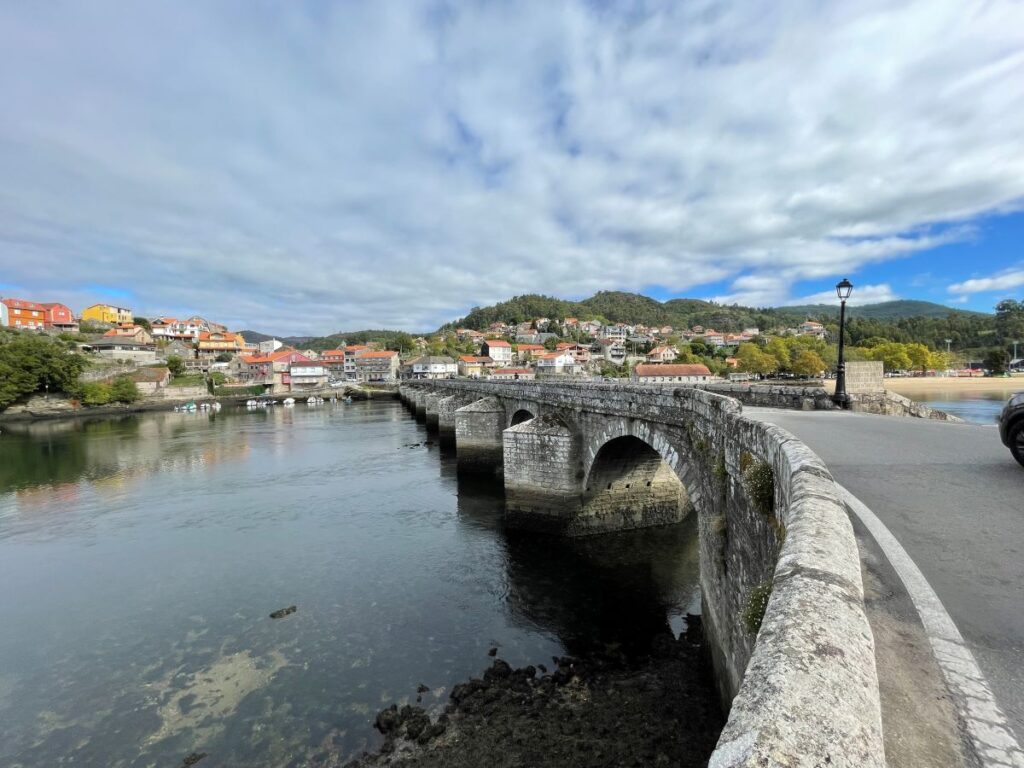
Built on Roman foundations, the first known mention of the bridge dates back to the year 977. Nearby stood the fortress of San Payo de Lodo, which was captured and destroyed by the Moors in 997. After that, travelers wishing to cross had to pay a toll until Archbishop Diego Gelmírez of Santiago de Compostela put an end to this practice. Now, of course, everyone crosses for free (and drives as well))).
However, it was in 1809 that the bridge earned its place in history. Here, Spanish and French troops clashed in the Battle of Ponte Sampaio during the Peninsular Wars. Nearly 20,000 men participated, with about 3,000 soldiers killed or wounded. The French were forced to retreat, leaving Galicia completely. Historians consider this to have been a key turning point in the war, which ultimately led to Napoleon’s defeat.
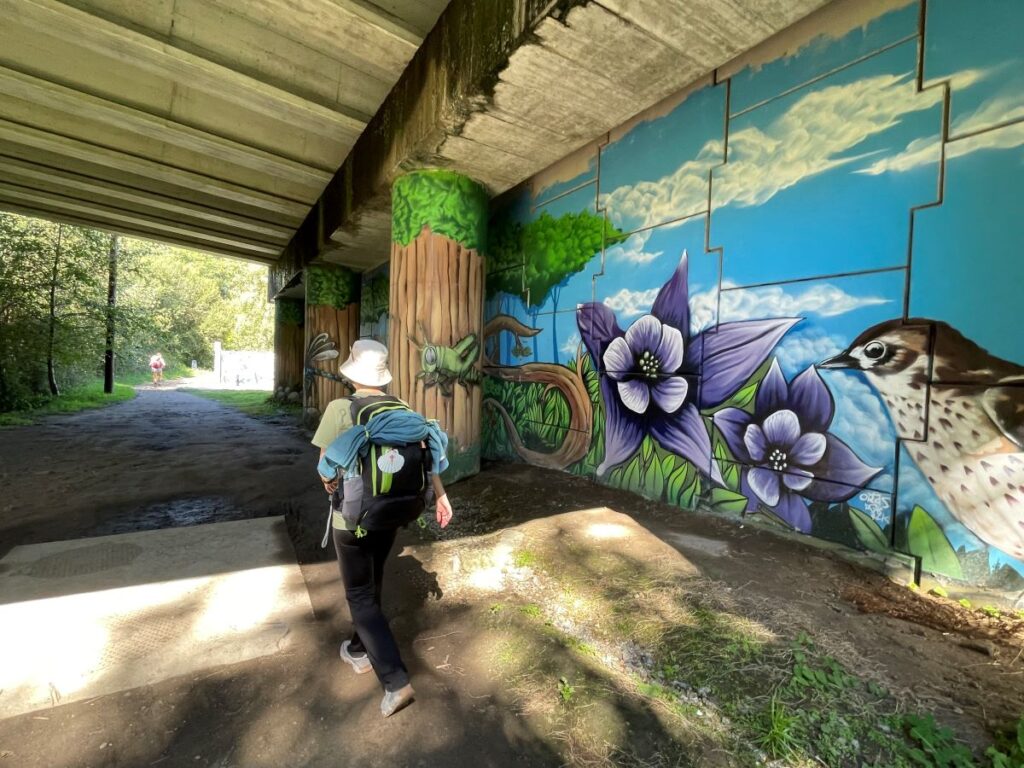
A short stage with mild slopes, which runs along the beautiful Vigo Bay. It was a pleasant day of walking with stunning forest views and many places to stop for coffee and rest. This included several spontaneous kiosks with drinks and food in the middle of the forest, where you could buy snacks, coffee, cold drinks, leave a donation, and get a stamp.
About 3 km before Pontevedra, there is a fork with official and alternative options. Most people choose the additional route as it goes through the forest rather than along the “official” route by the road. We also chose this and did not regret it – very beautiful, peaceful, although there were a lot of people walking.
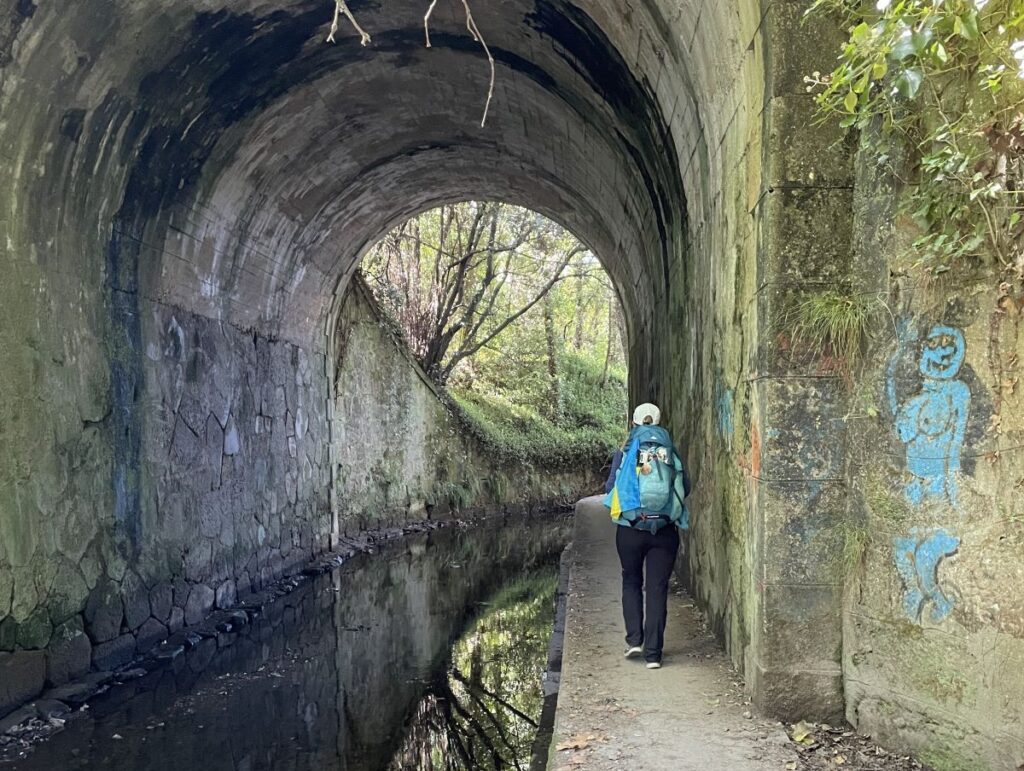
And the entrance to Pontevedra is really cool – through an arched bridge, but not over the bridge, under it. This place is recognized by all pilgrims who have walked both routes – I am sure of it.
Pontevedra
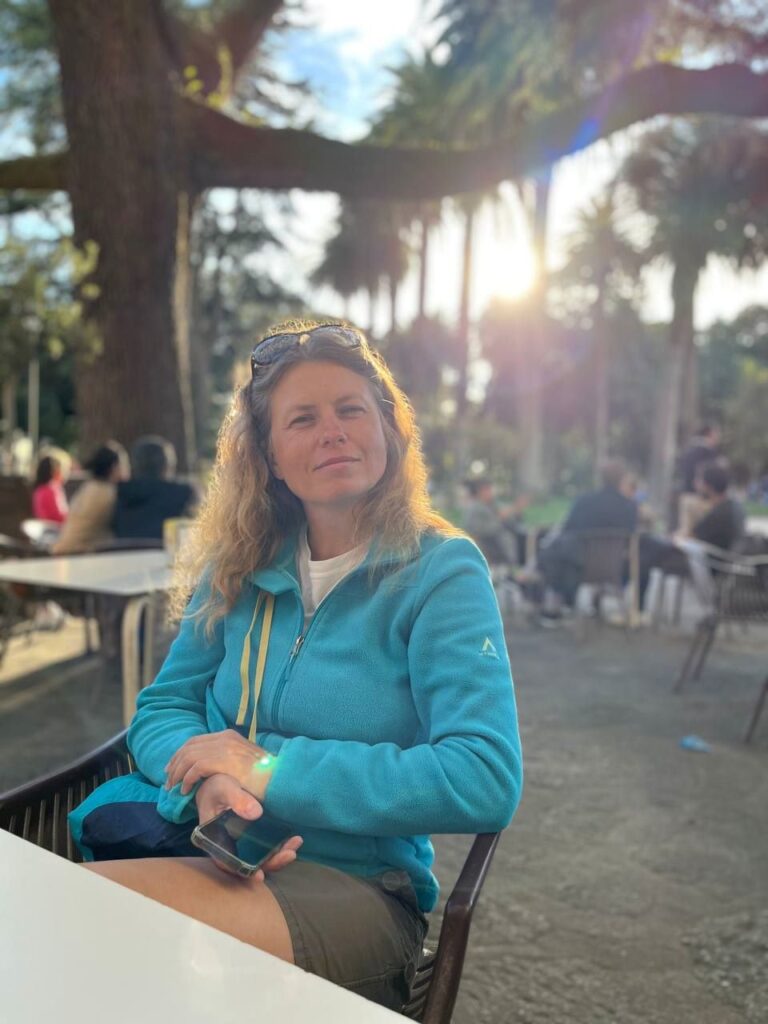
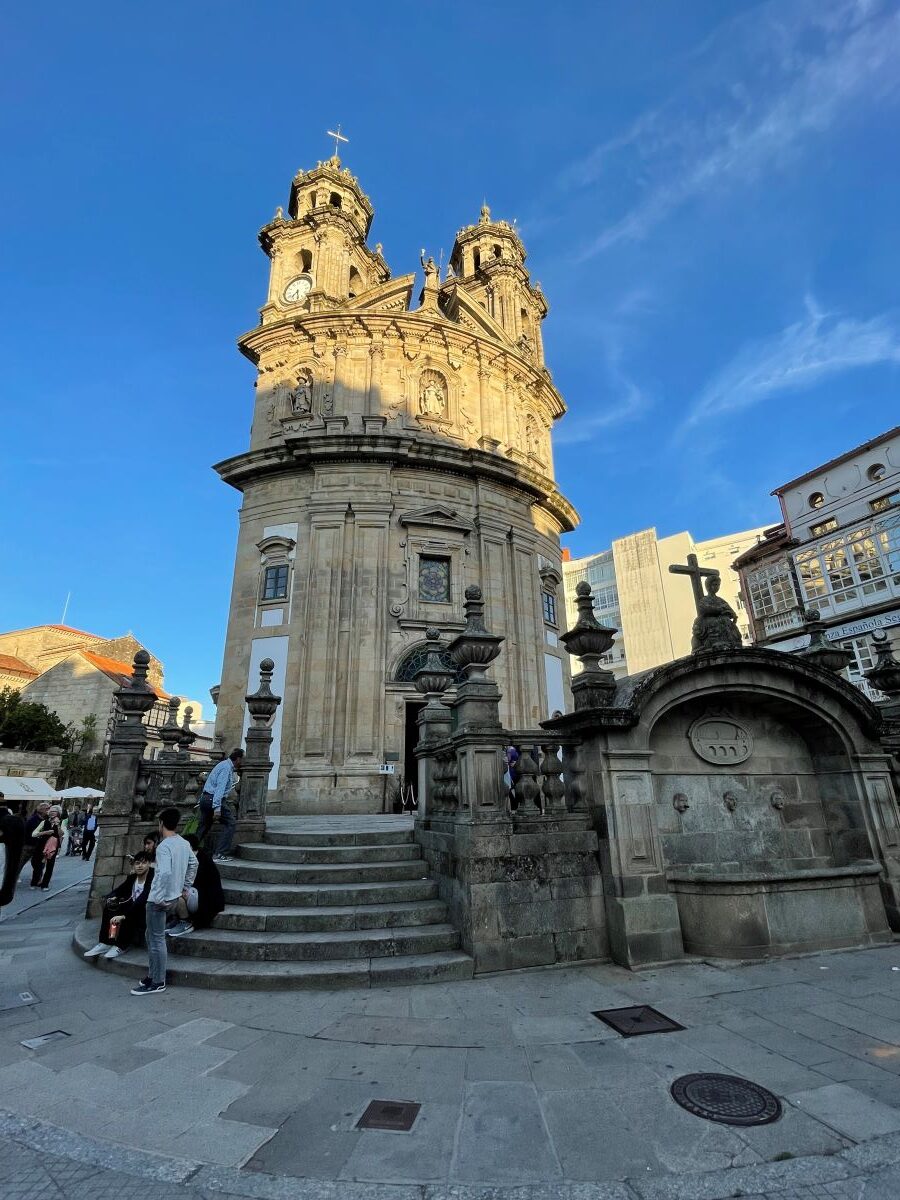
Last time we passed by Pontevedra, but this time we decided to finish the stage here. First – we wanted to see this city better. Second – to attend a mass in the church of La iglesia de la Virgen Peregrina, which has a unique scallop shell shape in honor of the Camino. This church is dedicated to the Virgin Pilgrim, is a symbol of the city, and is dedicated specifically to pilgrims.
Pontevedra is a very beautiful city, boasting a rich historical heritage and a lively old town perfect for grabbing a bite or a drink. The main products of the city are seafood and fish, especially oysters, mussels, clams, and scallops. For dessert, pastry delights filled with almonds.
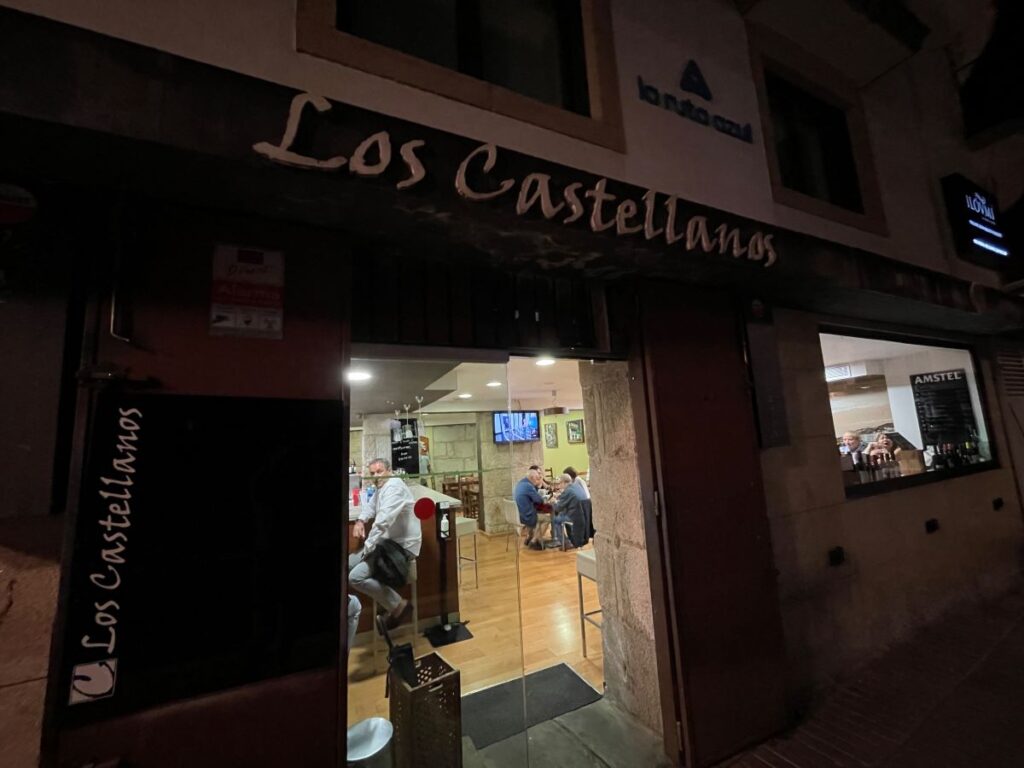
I recommend the restaurant Los Castellanos, where we again ordered Galician-style octopus and several snacks. It was delicious, although a little more expensive than in previous places where we had dinner.
Where to stay in Pontevedra
- Albergue GBC Pontevedra – we stayed in this modern albergue – comfortable beds, large rooms, a good kitchen. Located not far from the entrance to the city.
- Hostel Charino – hostel right in the center, very convenient. Very modern and stylish design, thoughtful and comfortable. Terrace, kitchen, washing and drying machines, hair dryer. Towels provided. Breakfast served in the morning.
Day 8. Pontevedra – Caldas de Reis
Distance – 21 km, difficulty *
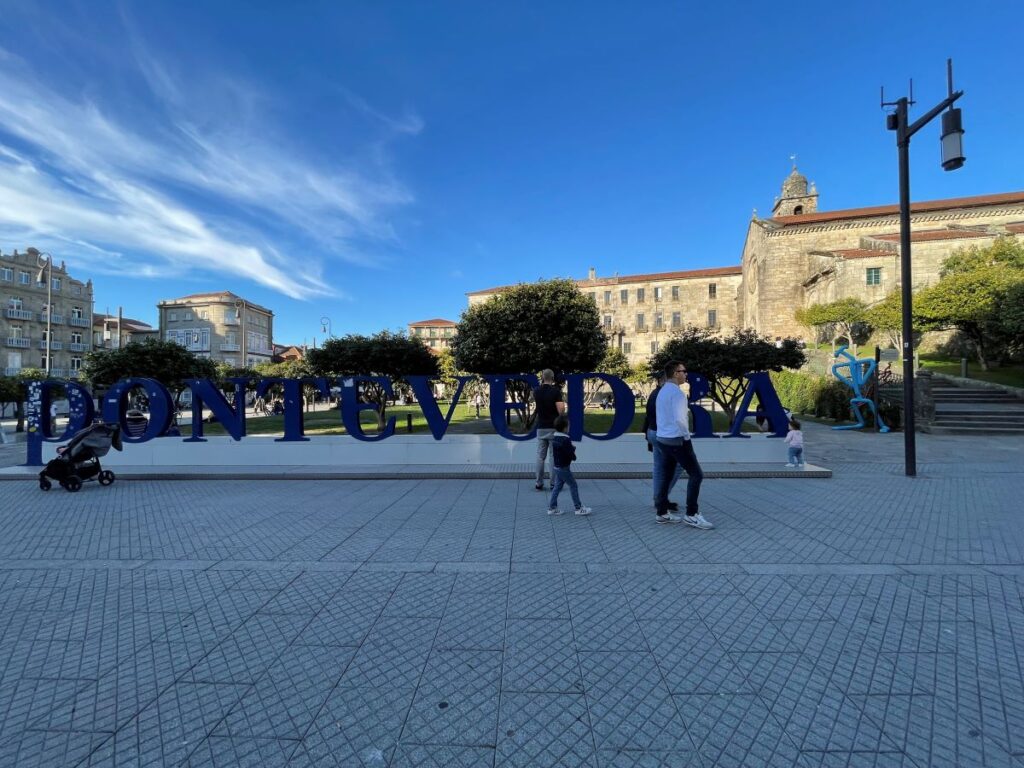
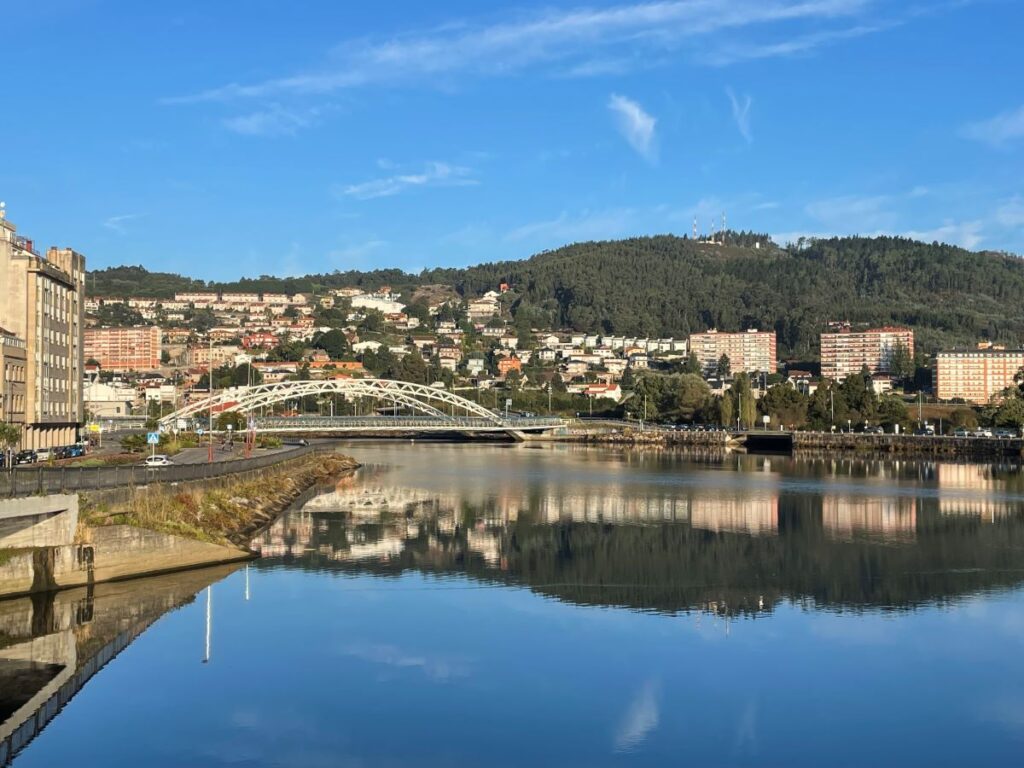
We left Pontevedra in the morning – beautiful city, it’s a pity we couldn’t stay for two days again, because it’s worth it. At first, the route winds through the city, then crosses a wide bridge over the Lérez River. It’s really beautiful here!
In the first half, there are no places to stop for food or coffee, so it’s better to have breakfast in Pontevedra before starting the walk. In the second half, after 9 km, there are cafes and bars.
By the way, right after Pontevedra (after 3 km) the route branches to the additional one – Variante Espiritual (Spiritual Variant), which turns to the left. The main Portuguese Camino route remains on the right. The junction is well marked.
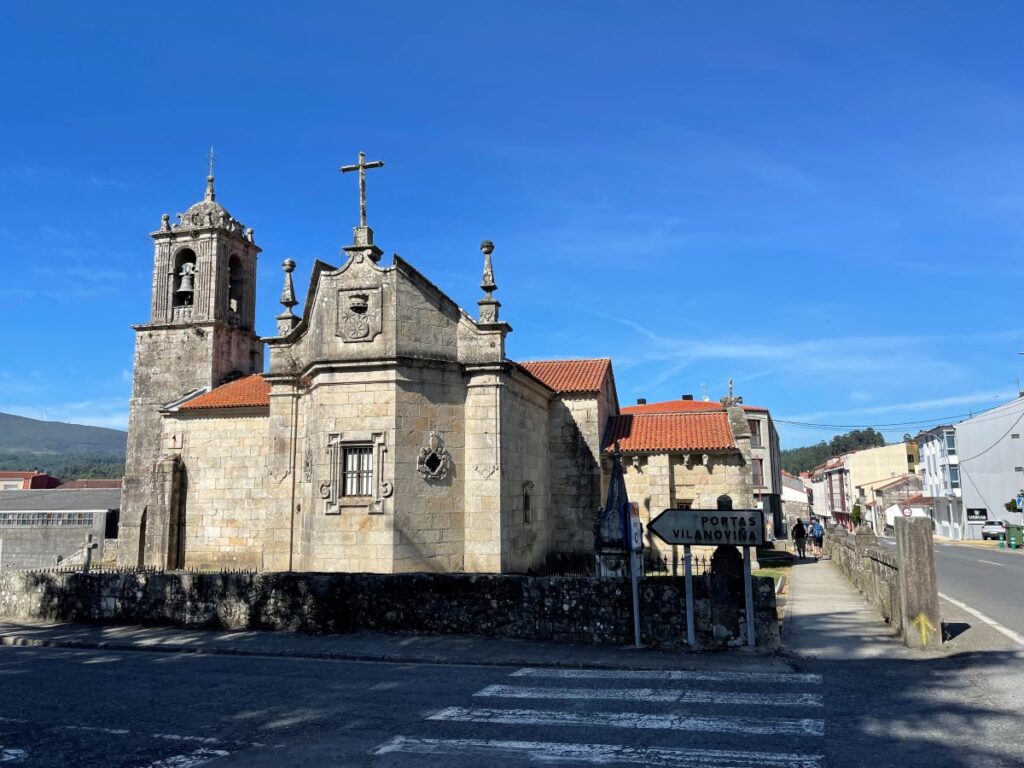
This section of the path runs along trails and villages characteristic of the beautiful Galician countryside. The stage crosses several points along the national highway (N-550, which connects Pontevedra and Santiago de Compostela), and then zigzags through fields and villages all the way to Caldas, a town with a thousand-year history, known, as its name suggests, for its numerous hot springs.

But along the way we decided to make a little detour – to visit the tourist attraction – Fervenzas do Barosa waterfalls. To do this, we just went about half a kilometer off the route – it’s quite an interesting place and worth seeing.
Caldas de Reis
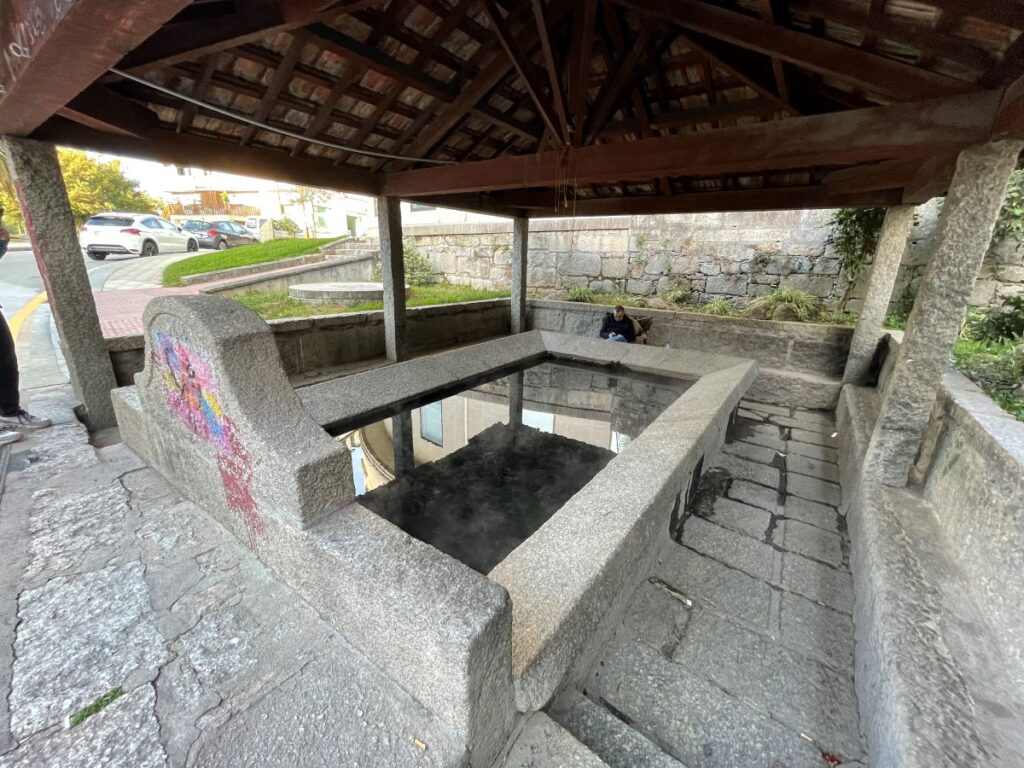
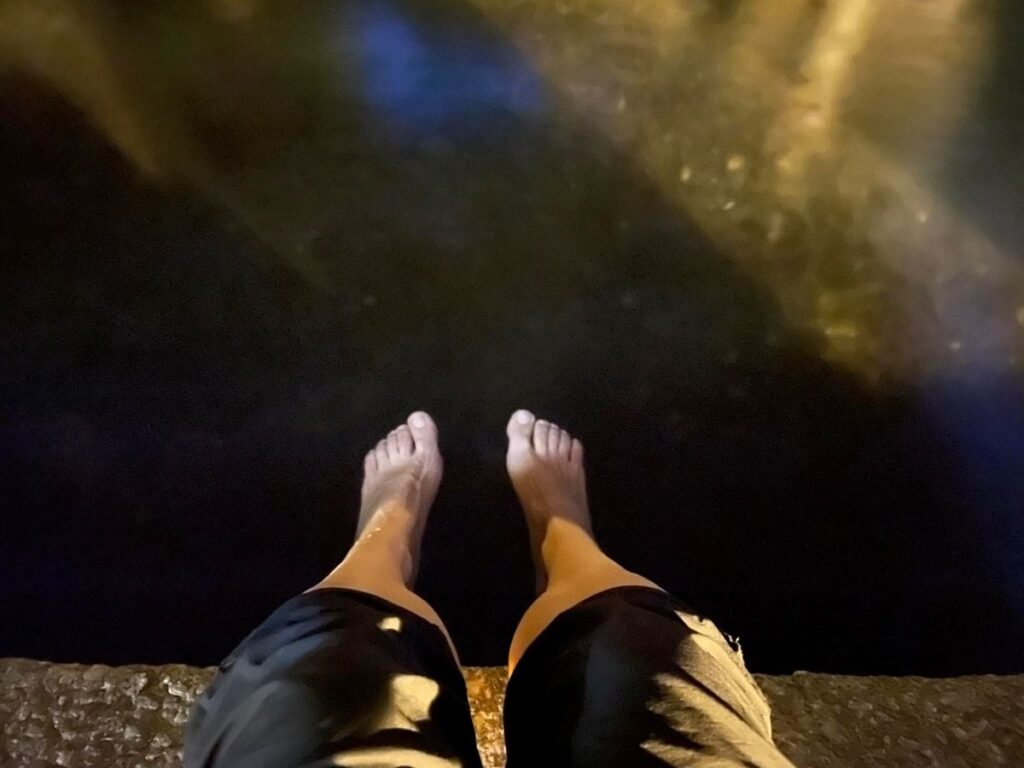
Caldas de Reis is a small town, much smaller than Pontevedra. There are many hotels, albergues, and restaurants, as well as several supermarkets. And here there are also a few hotels with thermal pools. If you can’t afford them, you can visit the free hot spring located in the city center and sit with your feet in the hot water at the spring, located at Rua Don Carlos García Bayón, 36.
If you haven’t tried it yet, take the chance to order empanada: with lamprey, corn, sardines, or meat. I recommend in Caldas de Reis a very nice little restaurant – Meson Bermaña (Rua Porto do Río, 6). I recommend this tasty place – here the seafood is very cheap and delicious.
Where to stay in Caldas de Reis
- Аlbergue a queimada – albergue not far from the city center, beds for 16 Euros
- Albergue As Pozas Termais – One of the best albergues on the way, especially convenient stairs to the upper beds. The beds themselves are also very comfortable, fresh bedding, conveniently located right in the center.
- Pensión Atenea & Via Romana – Grupo Arcanos – the guesthouse has 2-3-4 bed rooms with separate beds, if you are traveling with a group – very convenient for an overnight stay.
Day 9. Caldas de Reis – Padrón
Distance – 19 km, difficulty *

Today, we are once again walking through the woods and small villages of Galicia. There are more and more people, but there are many cafes along the way where everyone disperses during breakfast stops or for a cup of coffee. After Caldas, we enter a forest trail that’s pleasant to walk on.
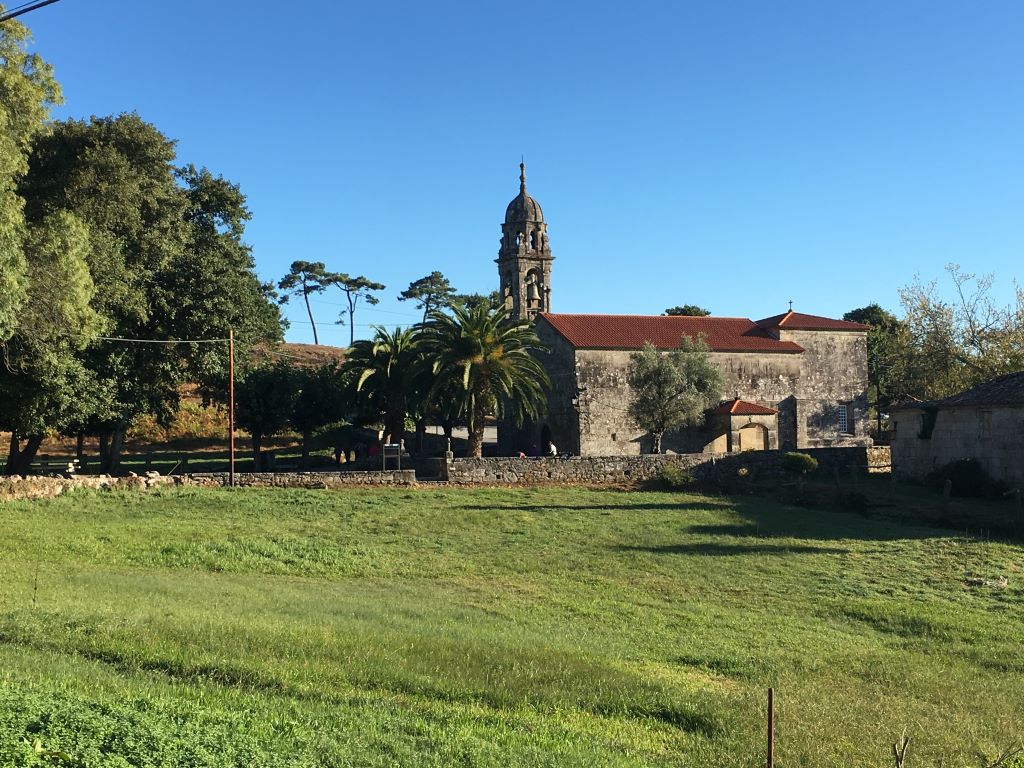
When you reach the town of Carracedo, you’ll see the beautiful church, Igrexa Santa Marina de Carracedo. The church is very pretty, with huge palm trees and several interesting wooden sculptures on the grounds. I saw it a second time and remembered how we rested there last time.
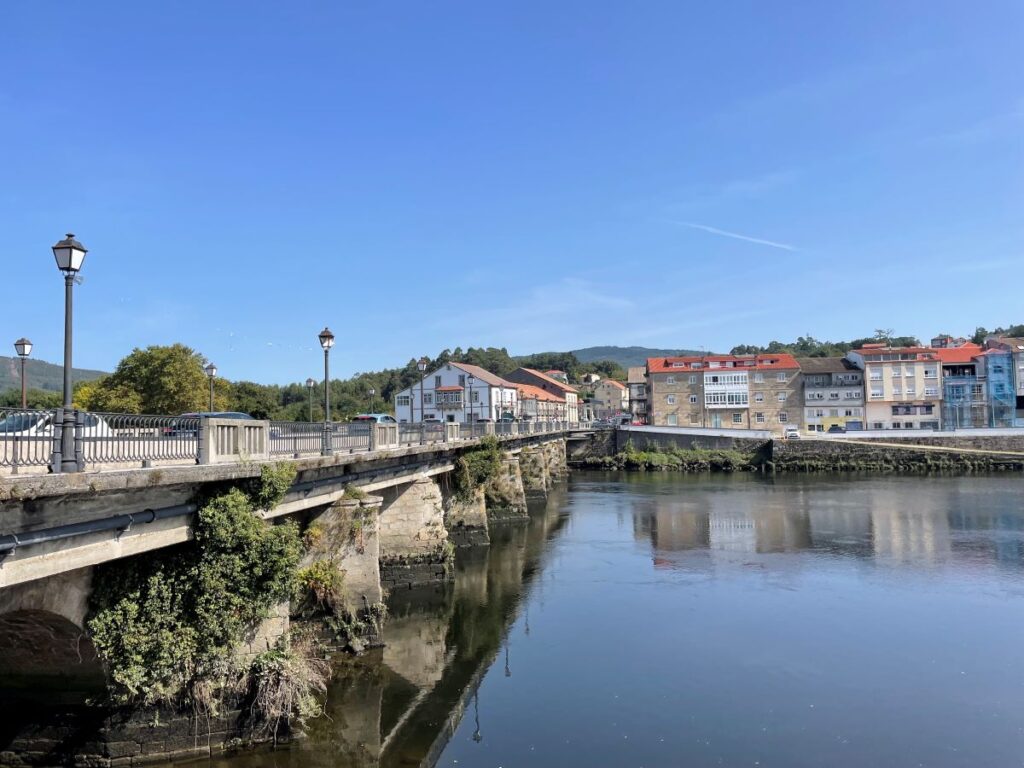
On this stage we left the province of Pontevedra and went to Padrón, where the present parish of Iria Flavia is located. An ancient Roman city with the same name once stood here and had an important port. According to legend, it was in Iria Flavia that the apostle James first preached in the Iberian Peninsula. And it was there that his legendary stone boat carrying Saint James’ relics from Jerusalem arrived.
Option for stopping at Herbón Monastery (extra 3 km)
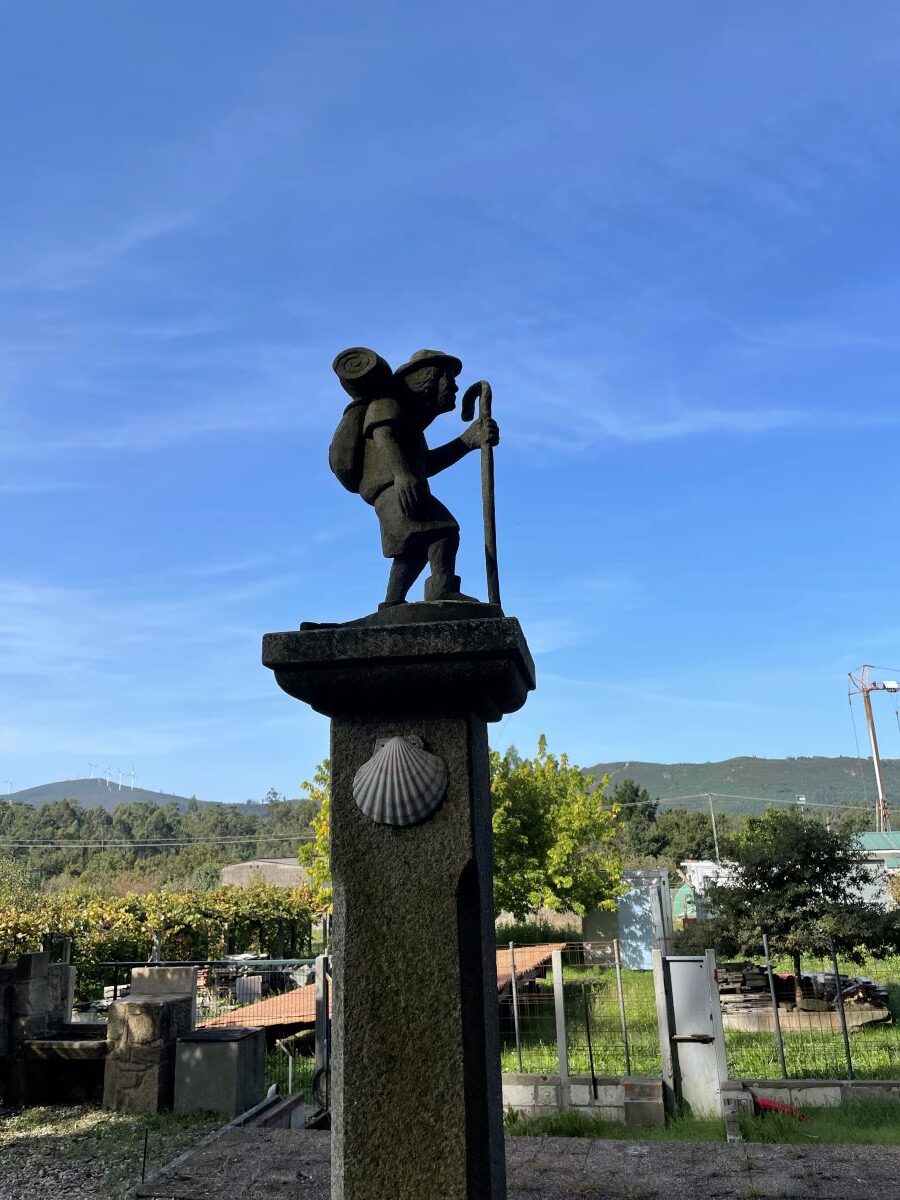
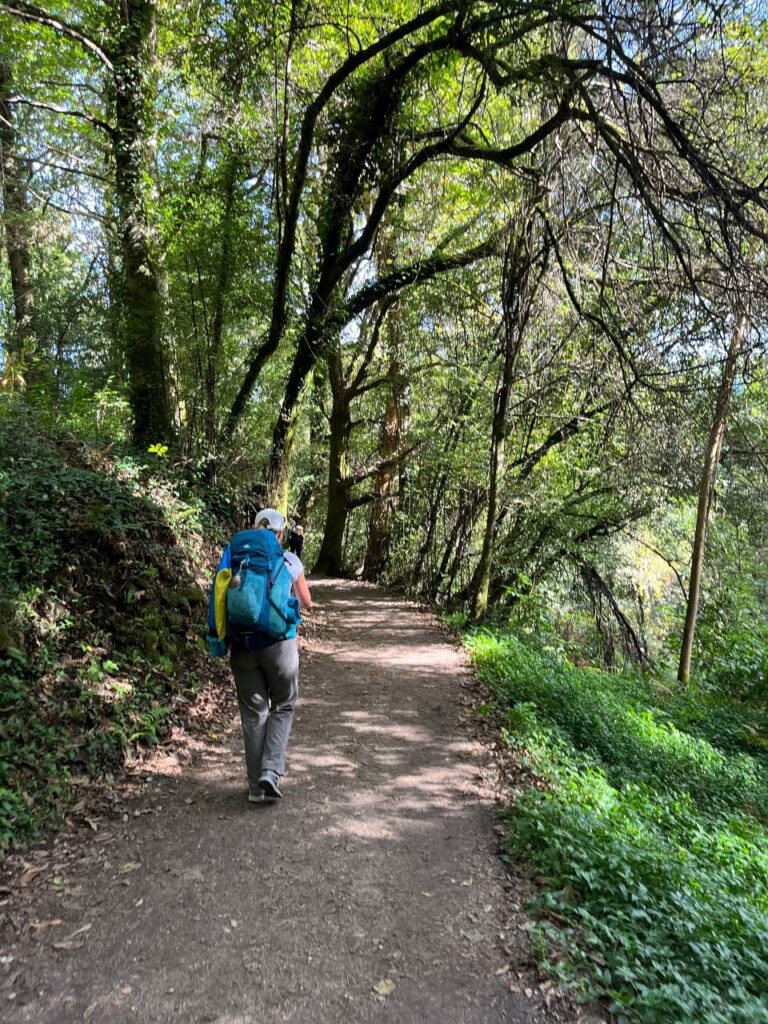
Just before you reach the Roman bridge over the Ulla River, you’ll face a choice: follow the main trail or take a 3-kilometer detour to visit the Monastery of Santo Antonio de Herbón. Though this adds a bit of distance, it’s a great chance to feel a piece of Camino history and even spend the night in a traditional pilgrim albergue.
I have stayed in such monasteries on other routes – Frances and Norte, so we went straight to Padrón. But if it’s your first time – I recommend visiting the monastery albergue.
The monastery, founded in 1396 by Franciscan monks, was a spiritual center for more than six centuries. It served as a residence for monks, a missionary training school, and most famously, as the birthplace of the Padrón pepper. In the 17th century, monks returning from America brought this pepper to the monastery gardens. The rest, as they say, is history, but perhaps this famous snack-tapas should have been called Herbón peppers and not Padrón!
Padrón
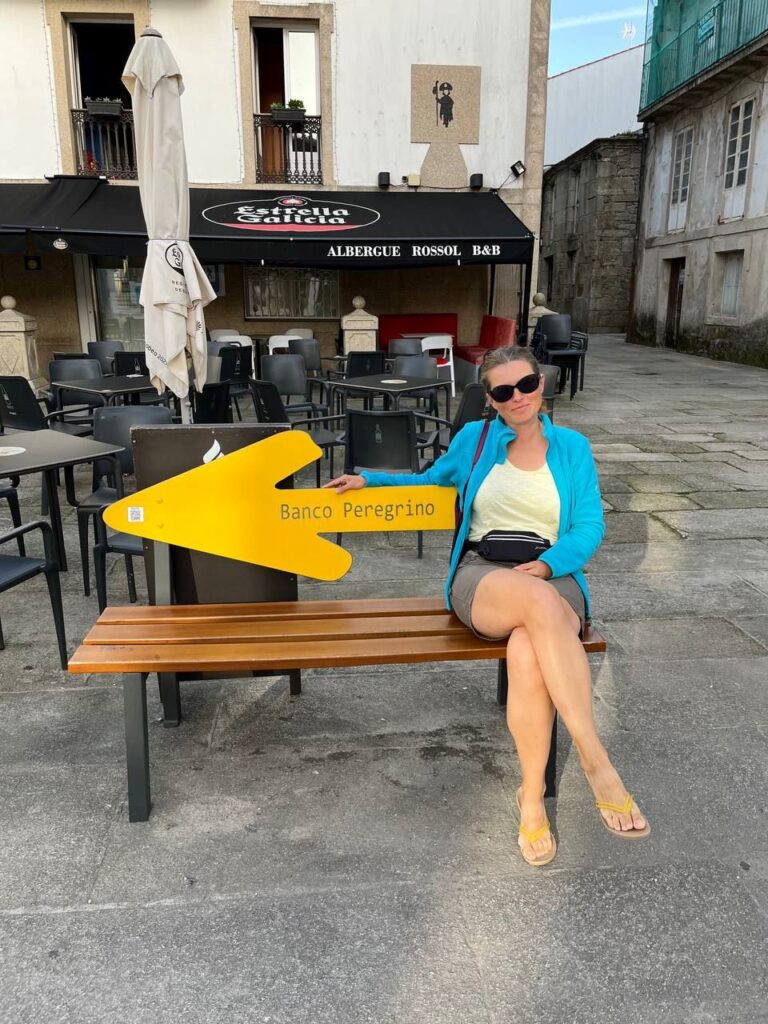
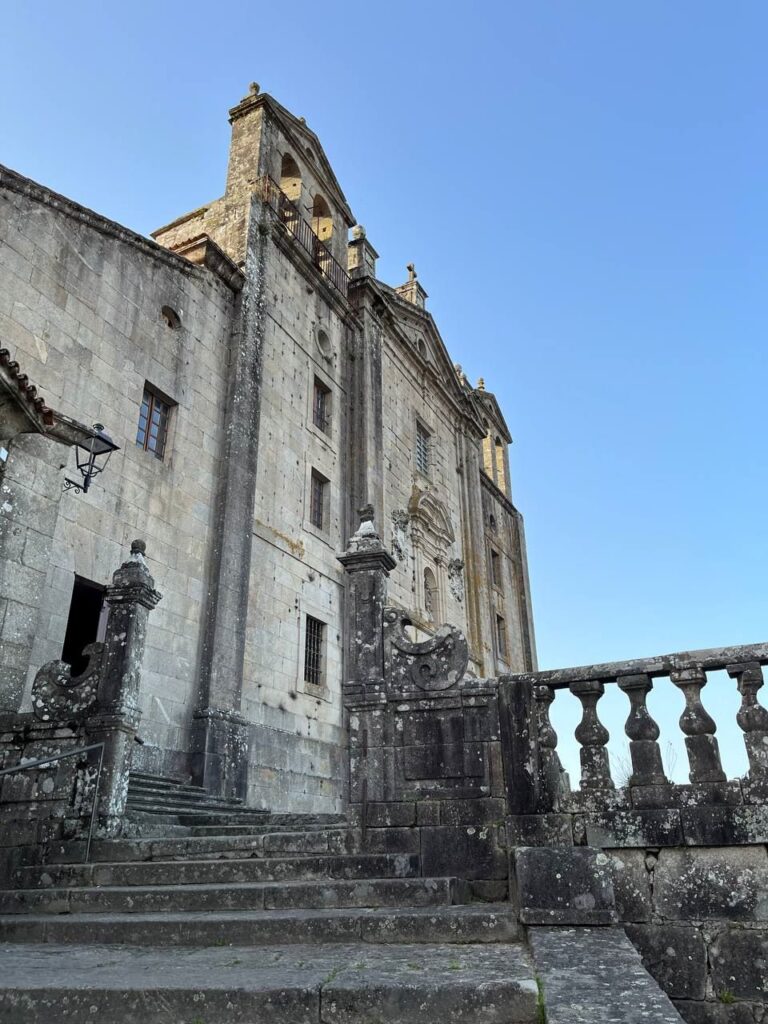
I have already written about Padrón and its most interesting places, but I’ll repeat a little. Of all the places along the Camino de Santiago, Padrón is probably the most important and the only town directly linked to the ministry of Saint James in the Iberian Peninsula. Historically, Padrón was known as Iria Flavia, a Celtic settlement located at the confluence of the Sar and Ulla rivers.
Religious tradition says that Saint James the Greater (Santiago el Mayor), son of Zebedee and one of Jesus’s closest disciples, lived and preached here during his missionary journey to the Iberian Peninsula.
It is said that after his martyrdom in Jerusalem in 44 AD, his disciples brought his body back to Iria Flavia. They moored their boat to a large stone, the Pedrón, which is now under the altar of the church of Santiago de Padrón. The city’s very name comes from the Pedrón.
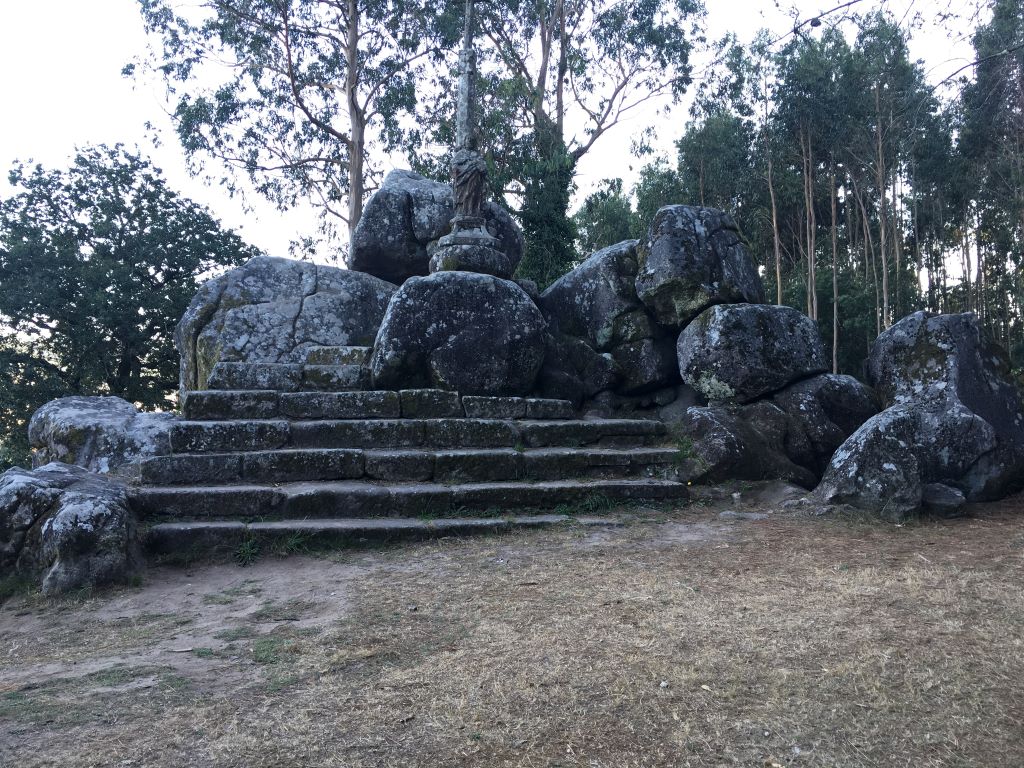
Although there is little documentary evidence of his presence, the area’s ancient history, handed down through the centuries, connects him to Iria Flavia and says that he lived and preached both in the city and from nearby Mount Medoñas. James’s mission had limited success among the local Celtic population, but his efforts became the foundation of the region’s Christian history.
On the hill above the city there is a park where, according to legend, a monk found the saint. Be sure to climb the ancient stairs to the Santiaguiño Do Monte slope. The atmosphere here is wonderful at sunset.
Regardless of faith or religiosity, it’s impossible to walk these lands without feeling the weight of history and the traces left here. For me at least, all these legends and the old stones make a great impression. That’s why Padrón is my favorite city on the Portuguese route.


And also, in Padron you absolutely have to try their famous pepper, Pimiento de Padrón (or Herbón). There’s a story that when a group of friends orders Padrón peppers as a snack, whoever gets the spicy pepper ends up paying for dinner. My daughter and I played this game every time, since we ordered Pimiento de Padrón nearly every evening.
Where to stay in Padrón (Herbón)
- Albergue San Antonio de Herbón Pilgrim offers a very traditional Camino experience. If you have time and energy, the detour is worth it, especially if you stay overnight. The albergue reflects the true spirit of Camino hospitality, including a communal dinner and breakfast. If you’re lucky, you might even get to visit the monastery.
- Albergue de peregrinos de Padrón – municipal albergue near the cathedral in an old building, bed 10 Euro.
- Albergue & Rooms Murgadán – very clean private albergue in the center of Padron where we stayed – bed 16 Euro.
Day 10. Padrón – Santiago de Compostela
Distance – 25 km, difficulty **
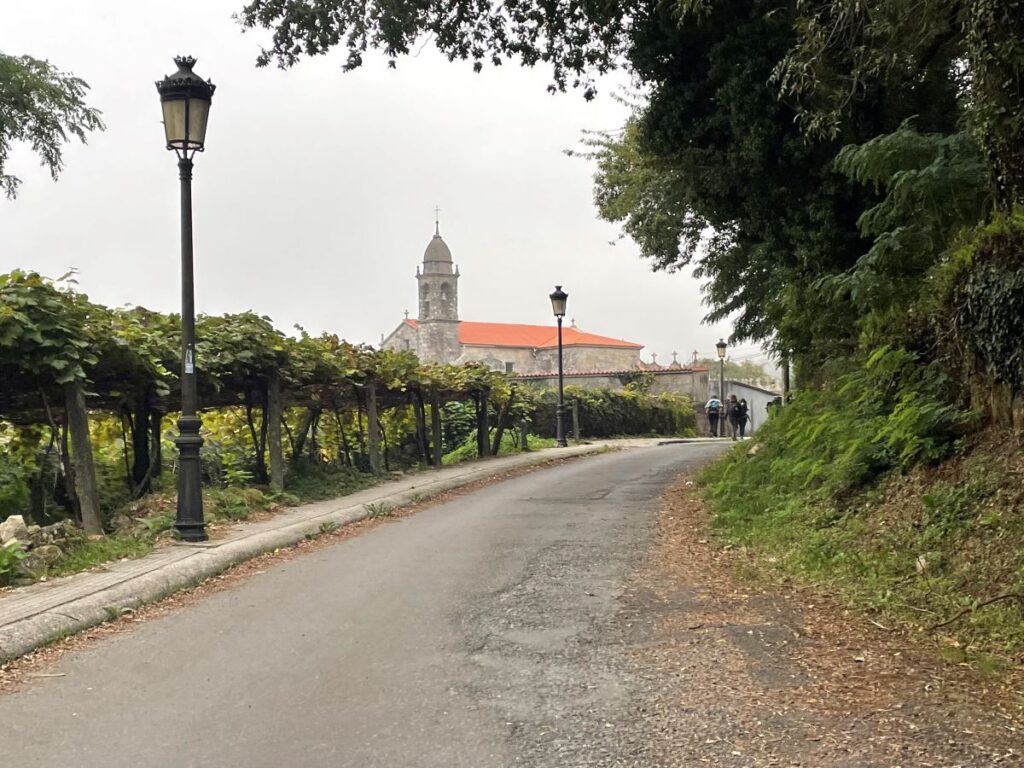
This day is the last and fairly difficult, due to the longer distance and steep climbs towards the end. If you’re walking during high season, be prepared to see a lot of people. We walked at the beginning of October, but there were still many people – because it’s the last day of the Camino Portugues. Everyone is here: those who started in Lisbon and Porto, those who took the Coastal and Central routes. Those who did the whole route, or just the last 100 km. And all these pilgrims gather at one point – Santiago de Compostela on this very day – the day you (and they) finish the journey.
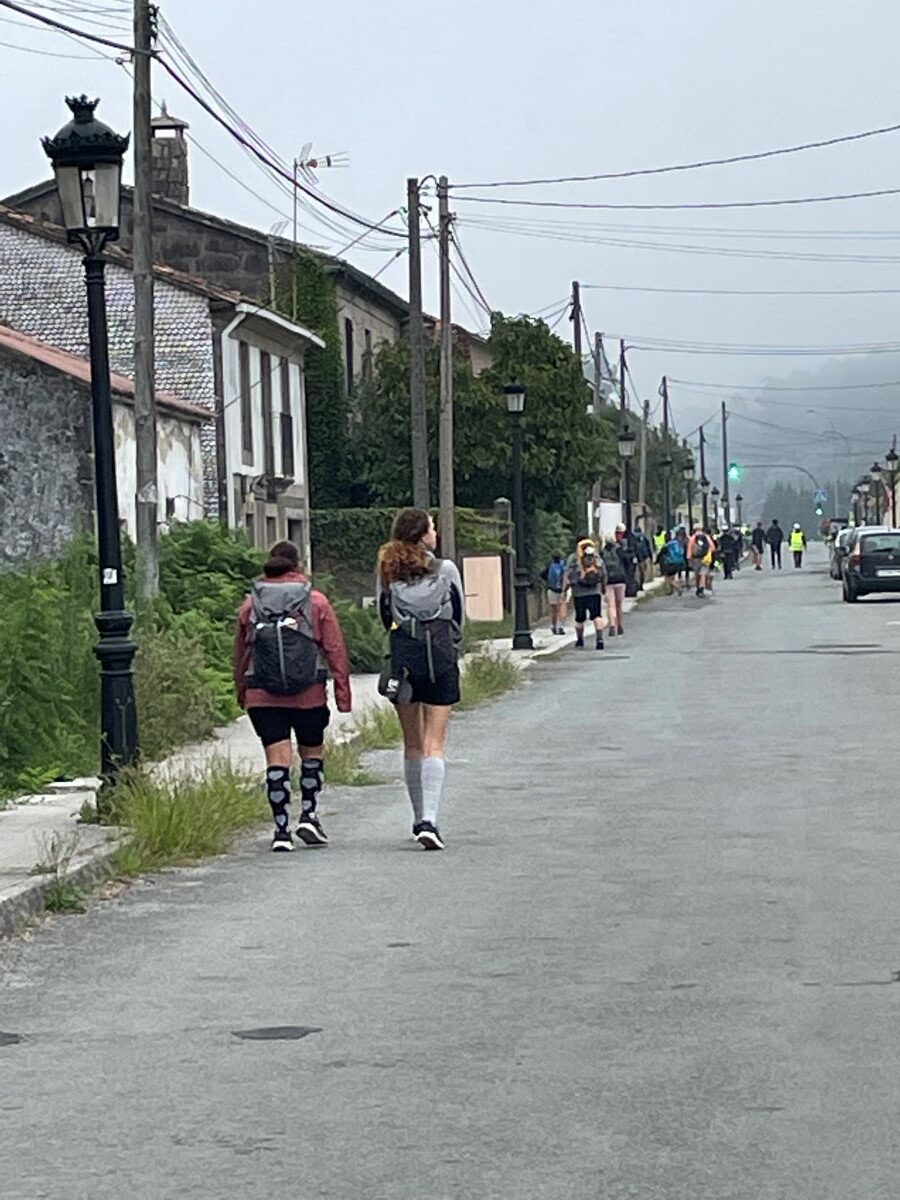
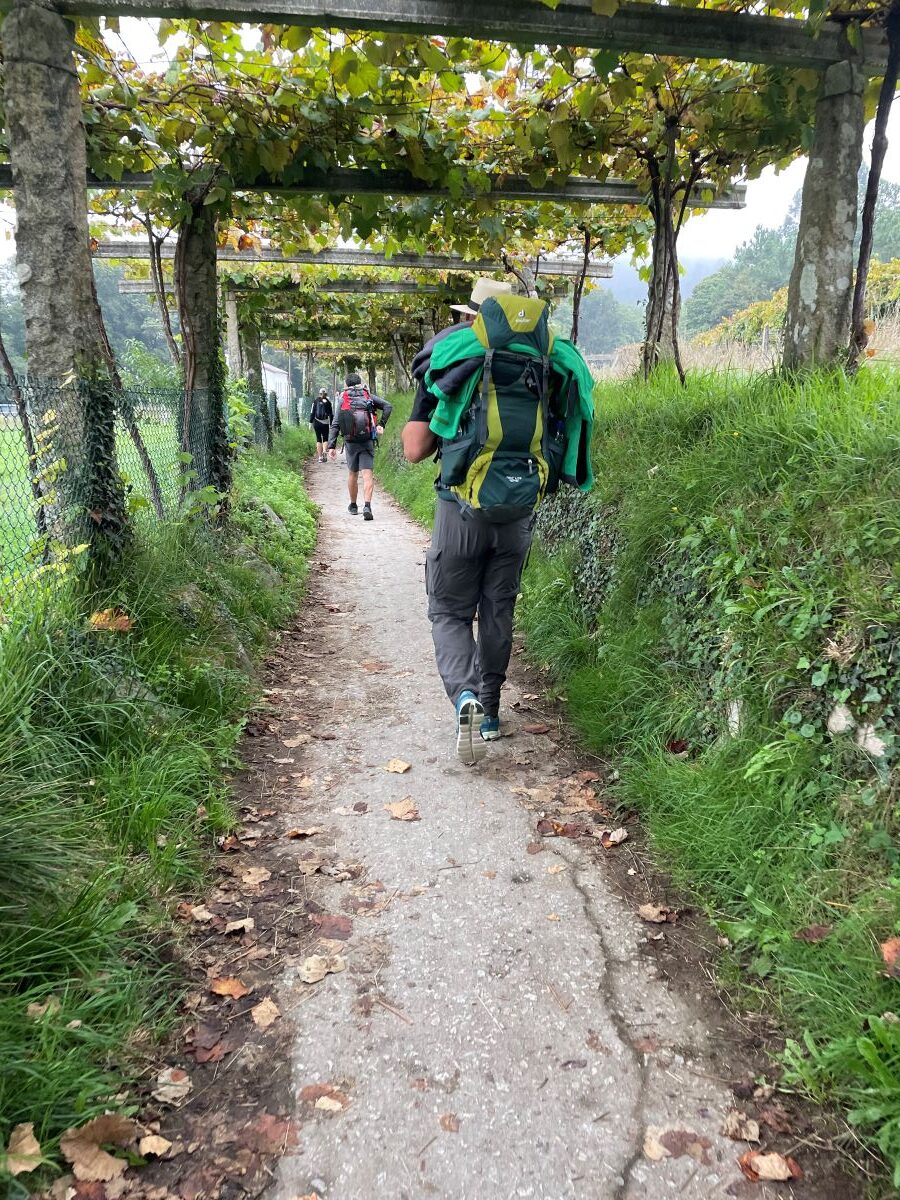
The landscapes on the last day are very diverse: from parts of the route along a busy road to passing through quiet forest and countryside. As I walked, I remembered all these places, but Ksyusha, for some reason, hardly remembered anything from last time. I honestly envied her.
Santiago de Compostela
No matter how you approach today, it is a day unlike any other. The walk to the cathedral will be a day filled with mixed emotions, excitement, contemplation, and perhaps even a bit of weariness. But one thing is certain: by the end of this stage you will have arrived in Santiago de Compostela.
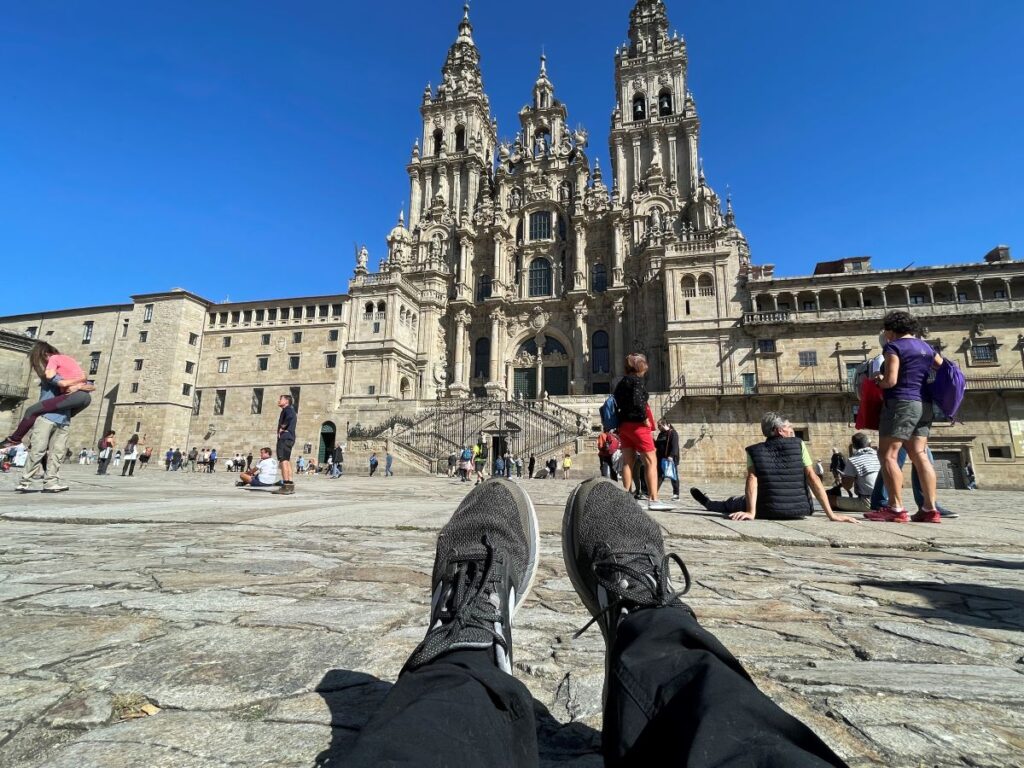
The last few hundred meters, as you walk through the old part of the city, are incredible! Dozens of pilgrims enter the city at the same time as you and, like small streams, all the people become one river arriving at Plaza do Obradoiro in front of the cathedral. It’s a celebration for each person who has reached the Cathedral of Saint James – tears of happiness for being able to complete this wonderful journey.
And there will be many more ahead. Because the end of one Camino is the beginning of a new journey, which you start thinking about as soon as you finish the previous one.
I wish you beautiful journeys and easy feet! Buen Camino!
What to see and where to stay in Santiago de Compostela – read in a separate post:
Santiago de Compostela, Spain – mini-guide to the capital of Galicia
What you’ll need for the Camino de Santiago
- Don’t skimp on medical insurance – it’s convenient to buy online at the portal HotlineFinance. Treatment in Spain is not cheap, but for a small amount you can get insurance with €30,000 coverage.
- If I don’t stay at an albergue, I book hostels or pensions in Booking.com. I do this in the evening for the next day.
- I buy buses in Spain on the website of the Spanish carrier Alsa.
- Train tickets in Spain – on the website of the Spanish railway company Renfe.
Useful articles and links:
- My Camino Lebaniego – the journey in Picos de Europa
- Camino de Santiago – how to prepare for the pilgrimage?
- Camino Portugues – the coastal route from Porto to Santiago-de-Compostela