
How we traveled around Croatia by car in September 2021. Features of an independent car trip to Croatia from Ukraine via Romania, Hungary and Slovenia.
I must say that I really enjoyed my trip to Croatia. It has incredibly beautiful nature, good wine and food, excellent roads, beaches – just a fairy tale come true.
But, as with every trip abroad, Croatia has its own peculiarities, which are best known in advance and prepared for in advance.
Croatia – road trip for 10 days
When I first sat down to plan our itinerary for Croatia, I had to scratch my head – how do you fit the un-fitting into a 10-day trip? Answer – don’t be tempted to cram as many destinations as possible into one trip. It’s a waste of time because you won’t have time to see everything at once.
Just ask yourself: what do I want from this trip, what will I use to get around, who will I go with? The route will be planned based on your answers. Here are the general answers to questions about vacationing and planning an itinerary in this country.
Croatia is not a very large country by European standards, but it is impossible to see it in one trip. You need to divide the south and north – Dalmatia and the Istrian peninsula – and decide whether you plan to travel to the islands.
Since it was our first trip to Croatia, we decided not to waste time on the islands and leave them for the next time. We chose South and Central Dalmatia for our vacation and exploration.
The plan was to relax on the coast with beautiful beaches, see natural sights, visit several cities, taste wine at wineries, and try various seafood. We managed to fulfill our plan at a normal speed without much fuss.
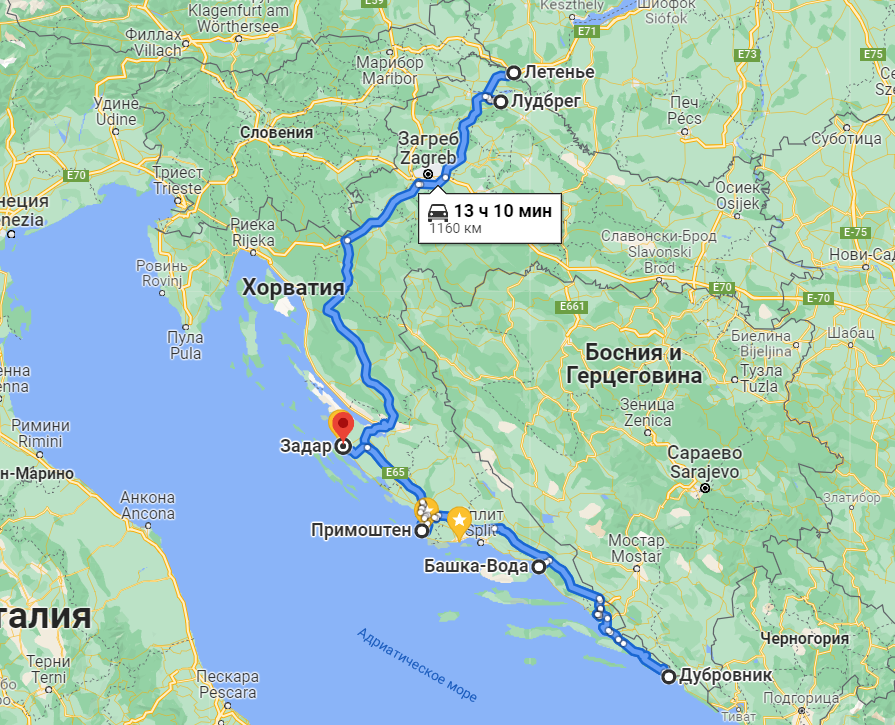
I divided the trip into two parts:
- The first five days in Baska Voda were spent in a beautiful, rather quiet resort on the Makarska Riviera.
- The second five days in Primošten were spent in Central Dalmatia, in the Šibenik district.
Baska Voda has very beautiful beaches, a long promenade for walks – we reached its beginning (or end) on the outskirts of the village – the resort Brela. We walked along it in the opposite direction, toward Makarska. There are great beaches everywhere, many bays.
Plus, we visited Dubrovnik and Ston, climbed the mountains to the Blue and Red Lakes, visited the winery in Imotski, and visited the wonderful city of Omis and the canyon of the Cetina River.
Living in the Prymoshten we visited Shibenik and Trogir and visited the Krka National Park National Park, saw the Roski Slap waterfall, drove all over the place, and finally stopped in Zadar.
More information: Road trip in Croatia – what to do in 10 days
Accommodation in Croatia

There are hotels and apartments here, just like in other countries. But it seems to me that if in Turkey most tourists prefer to stay in hotels. In Croatia, most people choose apartments. Why?
Because Turkish hotels are designed for all-inclusive – you don’t have to think about food during your vacation. Then what about Croatian hotels, where everything is according to European standards – breakfast is included in the price at best, and if there is dinner, you have to pay extra for it.
I don’t see any point in staying in a hotel. Why eat at a hotel when there are so many great cafes and restaurants in Croatia? Enjoy seafood and meat in good restaurants. And the value for money in hotels is not the best.
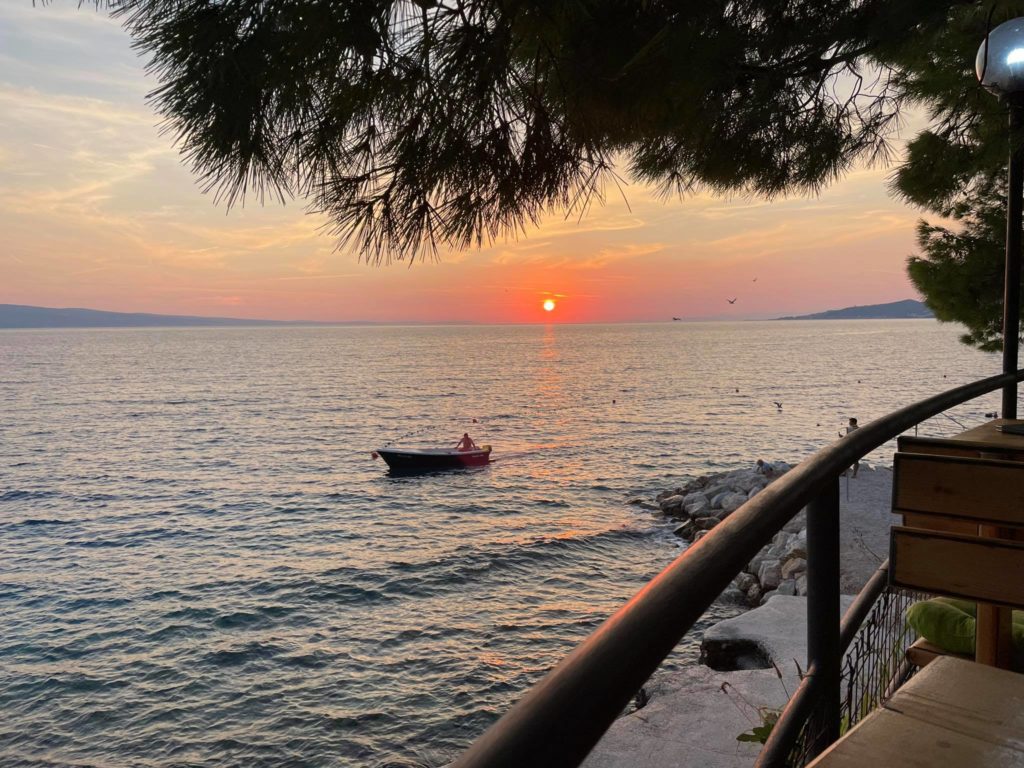
Apartments are the best option for accommodation on the coast and inland of Croatia. First, it is cheaper and more spacious than a small hotel room. Secondly, most often there is a garden or balcony with a view. Thirdly, you are not tied to restaurants – you have your own kitchen, washing machine, and often a barbecue to cook meat and fish over a fire.
You get breakfast on the balcony with fresh pastries and coffee, the opportunity to prepare lunch from fresh, delicious products. And in the evening, you can go to a restaurant, drink a glass of wine, eat octopus overlooking the Croatian sunset – perfect in my opinion. And all this is possible only in an apartment.
Recommendation: Overview – hotels and apartments in Baska Voda
National currency
Croatia joined the European Union in 2013, and the euro was introduced as the national currency only on January 1, 2023. The Croatian kuna is no longer in use, but if you have balances of the old currency, you can exchange them for euros at any bank in Croatia until the end of 2023.
How to get to Croatia
You can fly to Croatia by plane.
- Zadar – Ryanair flies from Krakow, Vienna, and Prague.
- Dubrovnik – Ryanair from Vienna.
- Split – Wizzair from many cities in Poland and Vienna.
How to travel around the country
Bus
Buses in Croatia – in summer there are many options for bus routes from Split and Dubrovnik. Find tickets for Omio. Or buy bus tickets on a cash desk at the bus stations of Croatian cities.
Rent a car
To see the maximum amount of beauty in Croatia, you need a car. Honestly, I can’t imagine traveling by bus there. Or you can go to Croatia by your own car – we did just that, planning a trip through Romania and Hungary.
Or to rent a car in the airport of Split, Zadar, Dubrovnik or Zagreb. Moreover, it’s easy to rent a car – we do this in countries where we can’t get there by our own car. Just go to the aggregator DiscoverCars and choose the right car at the airport of arrival. But don’t forget to read reviews of rental companies and compare prices, checking what is included in the cost of renting a car (insurance, fuel, ferry permits, etc.).
At the same time, I cannot say that traveling by our own car was cheaper than if we had rented a car and bought a flight. In addition, there is fatigue on the way there and back.
I traveled in 2021 with my husband, we constantly take turns behind the wheel, and we have a very comfortable car – and yet we need to plan a little more time for the trip so that we don’t arrive on vacation like a squeezed lemon. This means additional costs for overnight stays in hotels, fuel, food, and many other things that I will discuss in the calculations below – what is more profitable than renting or owning a car?
Roads in Croatia

The roads in Croatia are excellent! There are both toll highways and free roads that lead through towns and villages. If we compare the system of roads and highways, Croatia is very similar to Italy. There are quite expensive toll roads, on which you drive at 130 km per hour, or you spend a long time on free roads – you save money, you pay with your time. We used both of them.
Highway in Croatia
For a quick trip from point A to point B, Croatian highways are ideal. You don’t have to drive around rivers and mountains, you don’t waste time driving through cities, you don’t wind through serpentine roads.
To immerse yourself in the flavor and culture of Croatia, you need to drive on free roads.
Toll roads in Croatia are owned by various private companies, so there is no single tariff per kilometer. They cost the same as in Italy – not cheap, but it’s worth paying for traveling through kilometers of tunnels and overpasses in the mountains.
For example: the section from Zagreb to Zadar on the A1 highway costs about 16 euros, the section on the way from Dubrovnik from Karamatići (Ploče) to Zagvozd (turn to Makarska) costs 3.5 euros. The fare from the border to Baska Voda is 31 euros.
On average, we spent about 45 euros on the entire trip (including a wrong turn on the way to Zadar) – on toll roads in Croatia. To plan your toll expenses, use the following calculator and a map of toll roads. On the same site, you can see all the cameras installed on toll roads.
The organization of toll roads is similar to that in Italy: you drive up to the barrier at the entrance to the highway, press a button, and get a ticket. At the exit, give the ticket to the cashier and pay for the fare.
Tip: Pay for toll highways with a bank card – they are accepted everywhere at payment points.
Free roads in Croatia
We also did a lot of driving on free roads, and I especially liked the narrow roads around the Krka National Park and through the villages and the coast near Primošten. Sometimes they are so narrow that it was quite difficult to drive away.
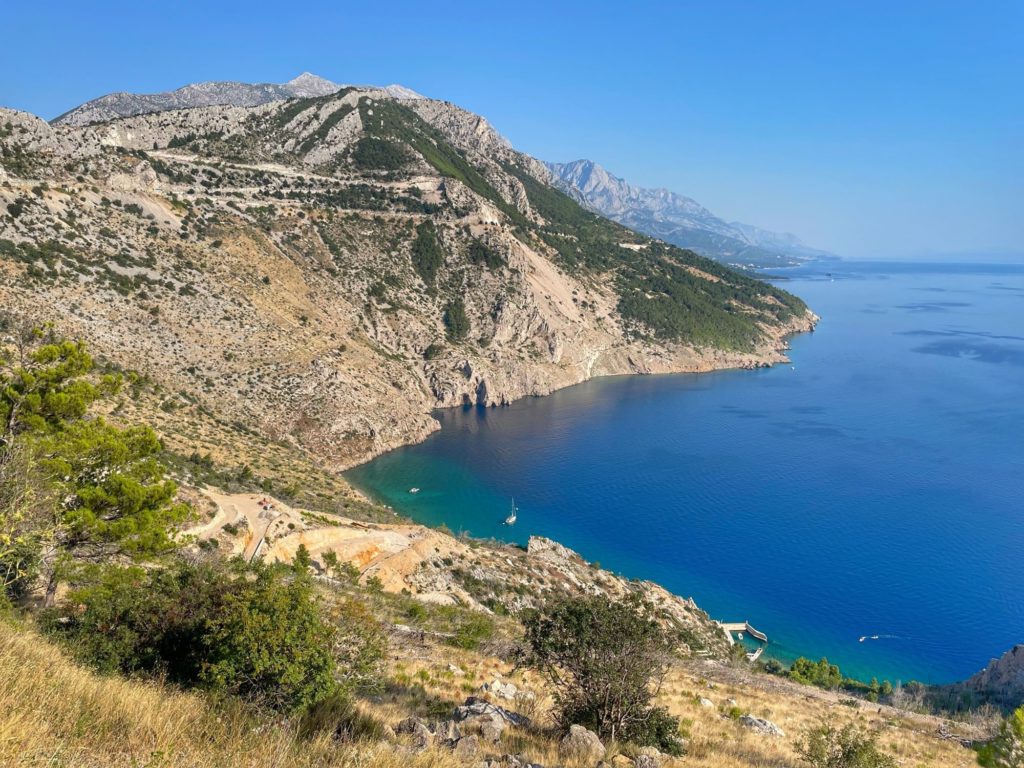
One of the most beautiful free roads in Croatia is the D8 highway, or the Adriatic Highway. It starts at the border with Slovenia, runs along the entire Adriatic coast of Croatia and continues to Montenegro from Herceg Novi to Ulcinj. The track is amazingly beautiful, I want to stop at every turn and take pictures of the views. We drove along the Adriatic Highway from Dubrovnik to Zadar – all of Southern and Central Dalmatia.
Also check the schedule of the national ferry operator Jadrolinija if you are going to travel around the islands.
Remember: if you are driving in Croatia from November to April, headlights must be on both day and night.
Parking price in Croatia

There are both paid and free parking lots .
There is a lot of free parking near the beaches along the Adriatic Highway. But during the day, during the bathing season, they are usually full.
You can park your car for free near a fairly large supermarket, but that doesn’t mean it’s free for the whole day. Usually there is a sign that says “parking for no more than half an hour”. We did this if we had to stop to withdraw money from an ATM, buy fruit at the market, etc. д.
We mostly used paid parking lots – prices ranged from 0.5 euros to 6.5 euros. The cheapest outdoor parking was on the waterfront in Zadar – 0.5 euros per hour. The most expensive is 6.5 euros – right in front of the entrance to the Old Town of Dubrovnik.
The average price for parking is 1.5 euros per hour in an open parking lot, and 2.5 euros for covered or underground parking. We used the underground one when we moved from Baska Voda to Primoshten with all our belongings – I don’t like surprises in the form of broken glass. And in Dubrovnik, there was no choice but to park the car or leave it high on the highway and walk down a couple of kilometers.
Tip: When choosing an apartment or hotel, look for one with free parking so you don’t have to pay for hours in a paid parking lot.
Gas stations in Croatia and fuel
Traditionally, in Croatia, as in other European countries, the cost of fuel at gas stations located on major highways is more expensive than in cities and on secondary roads. Therefore, we fill the tank to the maximum where the price is lower.
Gas stations have both paid and free toilets – keep this in mind. The standard toilet fee is 0.5 euros and cash is required. If you stop at gas stations with food courts and McDonald’s on the highway, you can solve this issue for free.
Restaurant prices and tips
How much do you tip when you visit restaurants or cafes? I’m more likely to be 10% if it’s a European institution.
In Croatia, the tipping culture is more relaxed than in other countries. If you leave a percentage, it’s fine, if not, no one will follow you around asking if you didn’t like something, as they might in the United States. That said, it is customary to leave at least 10% in restaurants and for beauty and spa treatments.
In bars and cafes, you can simply give the amount without pennies and a higher side. Tour guides appreciate a few euros at the end of the tour and taxi drivers don’t expect tips, but again, if you want to round up the fare to the next euro, it’s appreciated. If you’re filling up your car and notice a few students cleaning your windshield, consider giving them a couple of euros since they only work for tips.
Prices in restaurants are not very cheap.
- The average check with meat or seafood for three of us was 50-70 euros.
- Coffee costs 1.5-2 euros.
- Wine – a liter of white wine in a restaurant costs 11-13 euros, good Croatian wine in a shop starts at 5 euros.
- Fruits and vegetables in the markets (peaches, figs, dates, tomatoes) – from 1.5-3 euros per kg
- Tastings at the winery – from 10 euros per bottle, tasting – from 7 euros per person.
- Fish at fish markets – dorado from 7 euros per kg, including cleaning, small shrimp from 4 euros, tiger shrimp from 15 euros.
By the way, tap water in Croatia is absolutely safe and suitable for drinking.
What you will need on the beach in Croatia
Buy swimming shoes. Most of Croatia’s beaches are pebbly or rocky, and it is difficult to reach the water barefoot. Just pick up a pair of neoprene or plastic swimming slippers that they sell in Decathlon (very cheap). This will also protect your feet from sea urchins that hide under stones and pebbles.
Be prepared for nudity on the beach. Nudist beaches are popular in Croatia, and sometimes you won’t know you’re on one until people start taking off their clothes. Most of them are labeled FKK – the German phrase “Frei-Körper-Kultur” meaning free body culture – which is not surprising, as Germans are among the largest tourists in Croatia. Away from the beaches of FKK, topless swimming is quite common.
Is it safe to travel in Croatia?
Croatia is a safe country with a low level of violent crime. The most common problem for tourists is pickpocketing, but even this is much less than in other European countries.
Women traveling alone can also feel safe here. Although it’s a good idea to ask your accommodation provider if there are any neighborhoods nearby that you should avoid. When using a taxi, all travelers should ensure that they use a licensed vehicle from an official taxi rank, ordered through international apps such as Uber, or ordered from your hotel.
What is the best contact for emergencies?
Dial 112 for general emergencies, 192 for police, and 194 for ambulance.
Croats are quite friendly people, but they can be quite reserved and sometimes look rude. There is nothing personal about it, as you will realize when you get to know them better as you discover their warm and friendly country.
Useful links for travelers:
Car rental – inexpensive options can always be found on the aggregator DiscoverCars
Apartments – I traditionally book through Booking
Also read:
- Road trip in Portugal – route from Lisbon to Porto
- Algarve – the best beaches in Portugal
- Hotels in Cappadocia – with the best views of hot air balloons
- Where to stay in Prague – the best neighborhoods for tourists