
Trekking to Everest Base Camp without groups – how to organize it: choose a route, how to prepare and avoid altitude sickness, documents and insurance for hiking.
- How to plan a trek to Everest?
- How to complete the route with friends without groups?
- How to prepare, where to find porters, and how many days to put in your plan?
- What do you need on the track and what you can buy in Nepal?
- What kind of risks are possible on the track and how can you avoid repeating other people’s mistakes?
All information from my personal experience. I organized three treks in the Himalayas myself, for me and my fellow travelers.

I have been to Nepal three times: in 2011, 2012, and 2021. A lot has changed now, but basically, nothing has changed on the route to Everest Base Camp since my first time in 2011. Now there are more fashionable cafes with good coffee. Locals started now to hike to the mountains – not to earn money, but like foreigners – for pleasure. And the prices for everything became proportionally higher.
But otherwise, the Himalayas are the same beautiful. Trekking is possible both in a group and independently (but you must go with a certified guide). Are you going? Then read the instructions and get ready for spring trekking to Everest.
How to get to Nepal
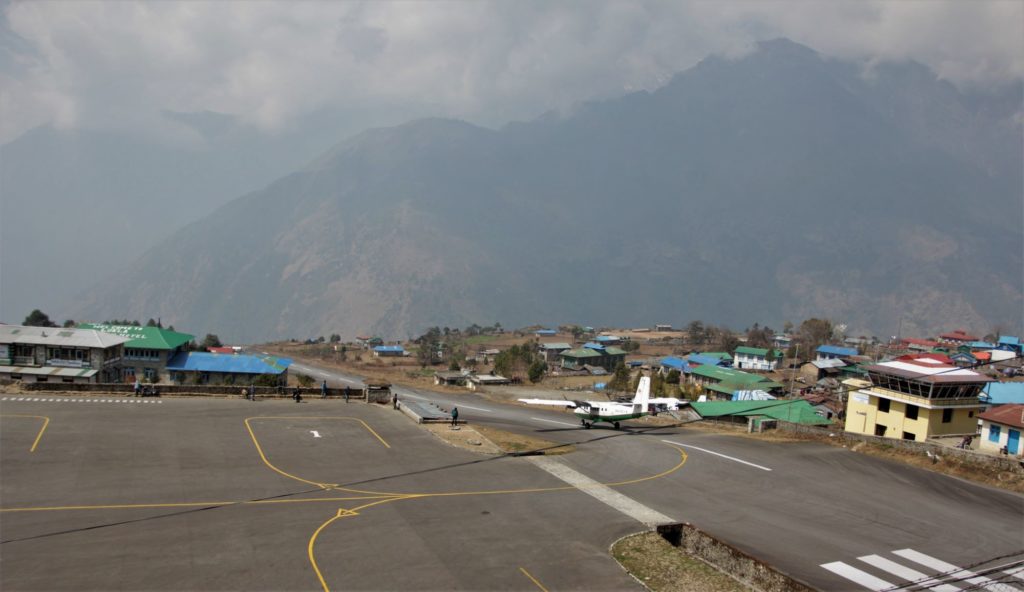
Turkish Airlines and Flydubai are now flying to Nepal. The tickets prices on a flight from Europe starts from $ 700. It the same we bought tickets for this price 10 years ago. I am not sure that promotions will appear shortly – the flow of tourists is only increasing.
The main international gateway to Nepal is Tribhuvan International Airport (KTM) in Kathmandu.
Tribhuvan International Airport, located in the capital city of Kathmandu, is the busiest airport in Nepal with the most connections. It serves as the main entry point for international travelers and countless flights from all over the world arrive in Kathmandu every day.
If you plan to fly from Europe, the United States, Australia, or other distant countries, you will likely have a layover in Delhi, Bangkok, Doha, Dubai, or Istanbul, all of which have regular direct flights to Kathmandu.
Visa to Nepal
There are three types of Nepal tourist visas:
- 15 days of stay in Nepal — $30,
- 30 days — $50,
- 90 days — $125.
Children under 10 years old, except for US citizens, get a visa for free.
What documents are required to enter Nepal:
- international foreign passport, valid for more than 6 months from the date of departure from Nepal and with at least one free page;
- two paper photos 3×4 cm;
- a fill paper application form;
- insurance covering the costs of Covid-19 treatment for the entire period of stay in Nepal;
- cash or card for visa payment;
- printed return tickets from Nepal;
- reservation of accommodation in Nepal (available on Booking.com).
And another convenience – when filling out the form online, you can add a digital photo instead of taking a paper one and keep it with you.
Seasons for trekking in Nepal

There are two high seasons: spring – from March to May and fall – from late September to November. At this time, there are no monsoon rains and cold winters in the mountains. The rest of the time, they hardly ever go to the mountains.
We went to Nepal twice in March. All the trees are in bloom, the rivers are not yet high water, but they are clean. But there is one not very good thing – by 12 o’clock the sky is covered with haze and clouds. If you travel in the fall, there are much clear the sky and the air and the colors are more saturated. And the fruit ripens, which is also important.
Permits for tracking
Each trekking route is regulated by the National Tourism Agency of Nepal. Therefore, you need to buy a permit for visit the national parks. Also you need a tracker’s certificate – TIMS. Different regions have different prices on permits and sertificates.
Permit for Everest Base Camp – costs $20.
TIMS – $20.
Also, as of February 1, 2023, the rules regarding self-tracking have changed. Now you must hire a certified guide – it’s an obligation. You should also contact the Nepal Tourism Board for hiring the guide.
The cost of paying such a guide is from $25 to $35 per day. In my opinion, this is nonsense and can kill independent trekking. Because at checkpoints now not only documents are checked, but also the presence of a guide.
But tourists try to get out of this situation and gather on forums in small groups to share payment for a guide. They are hiking on their own, but meeting together at checkpoints and sleep in the same places at the night.
Unfortunately, the situation is like this. But it is beneficial to the Nepalese authorities – the guide is paid through an official institution. I don’t know how much it will receive as a salary, so we still need to plan tips for that guide who satisfied and does not turn independent tourists over to the police.
At the checkpoints in the mountains, mountain guards will check these all tracking documents. Then they stamp them, and wright your information to the attendance log. This is necessary so that if tourists get lost, God forbid, the logs can be used to restore the date of the last passage through the checkpoint.
What route to take to Everest for the first time?

There are three routes from Lukla to Everest Base Camp:
- The “basic” route is from Lukla to Phagding, through Namche Bazaar, Tengboche Monastery, Dingboche, Lobuche, Gorak Shep, and Everest Base Camp.
- The route through Gokyo Ri – from Namche Bazar the path leads to Dole and Machermo to the Gokyo Lakes, then through the Cho La Pass (5387m) to Everest Base Camp and the summit of Kala Pattar (5545m).
- The Two Passes route – from Namche Bazar through Renjo La Pass (5465 m), past the Gokyo Lakes, and through Cho La Pass to Everest Base Camp.
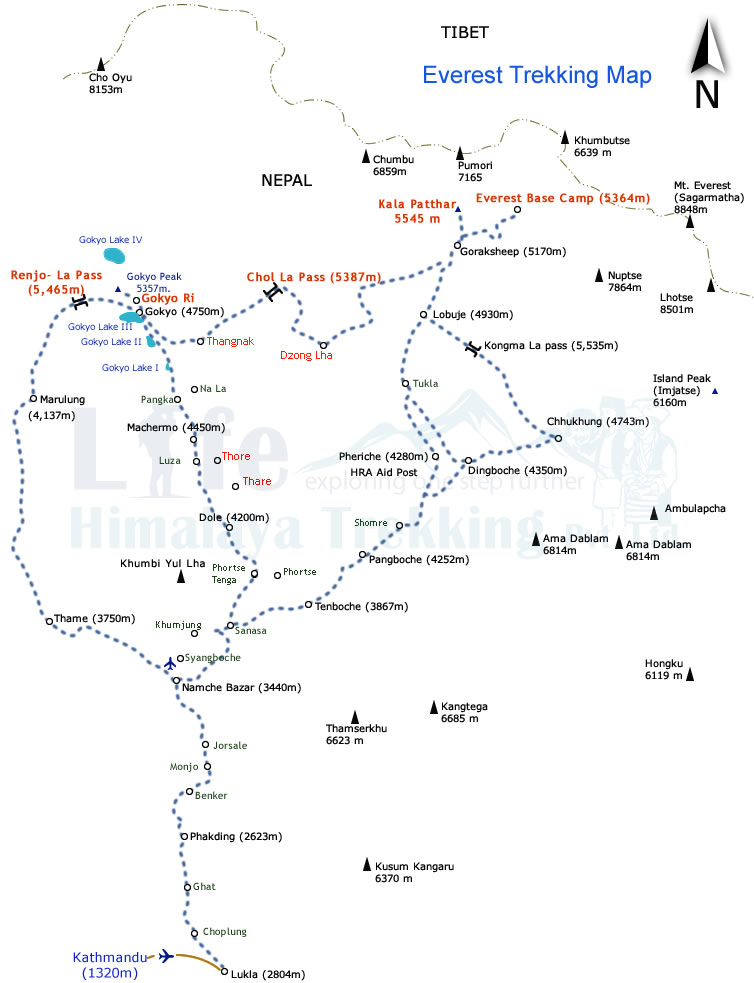
The basic route is the easiest. It has no passes, and the maximum altitude is 5500 meters at Everest Base Camp. For the first time in the Himalayas, it’s perfect.
This route takes 10-12 days with acclimatization stops in Namche Bazar and Dingboche (one additional day in each village). A leisurely pace will allow you to enjoy the mountains without catching a cold.
How and where to hire porters

The easiest way is to contact a one of the Nepalese travel agency – they will be happy to find you an experienced guide (if you need one) and a porter to help you carry your luggage. Nepalese porters are a normal profession. Don’t treat it like slavery, just know that in 10 days of trekking you can pay for a Nepalese family’s grocery basket.
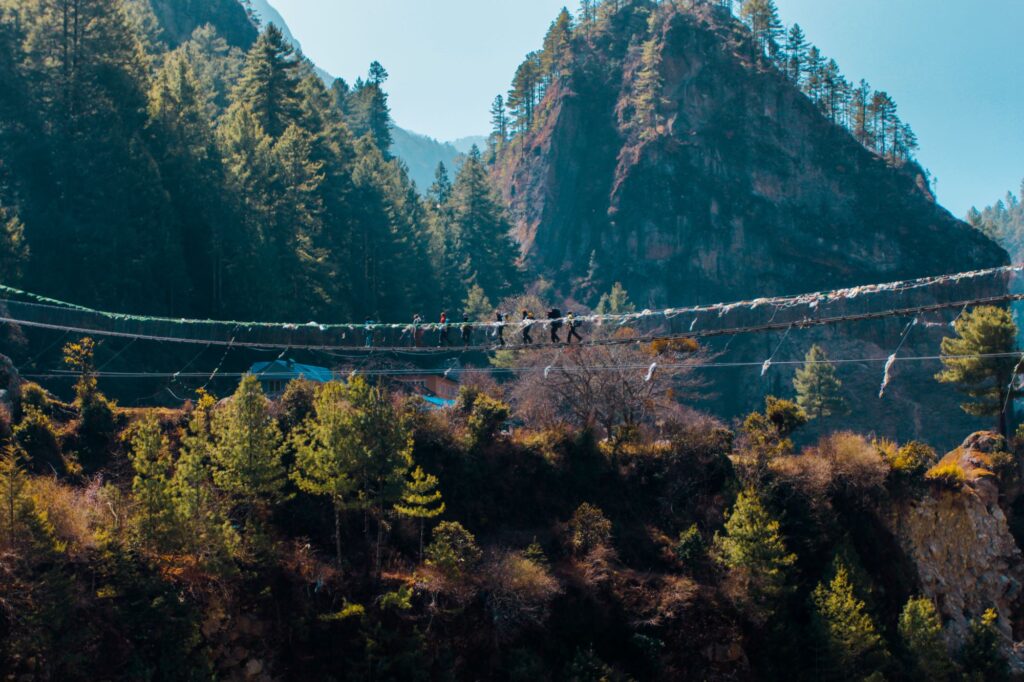
We hired porters ourselves – upon arriving in Lukla, we went to the nearest lodge (hotel), met with the owner and asked for two porters. An hour later, the guys were ready to go with us. You can contact an agency in Kathmandu in advance and hire reliable people through them. I’m not going to recommend agents yet – my contacts are hopelessly outdated, and I’m developing new ones.
The cost of a porter, depending on qualifications and altitude, ranges from $15 to $35 per day. This amount includes everything – you don’t pay for his food and accommodation. The porters make their own arrangements with the owners of the lodges for food and accommodation.
How do you avoid mountain sickness?

Mountain sickness has many different manifestations. But the main dangers are as follows: in the highlands, brain and lung edema, gastrointestinal problems, overwork and weakness, dehydration, and mental changes can occur.
The concept of highlands varies from country to country and mountain range to mountain range – scientists explain this by the proximity to large water masses (seas and oceans). The Himalayas are inland mountains and therefore the altitudes where altitude sickness can occur start at 4500-5000 meters.

Acclimatization
Therefore, on the route to Everest, you need to follow the rules of acclimatization: daily altitude gain of no more than 500 m, climb higher during the day, sleep at an altitude slightly lower, make acclimatization trips to higher areas, and descend lower in the evening for the night. Make acclimatization stops after 3000m and every 1000m thereafter. After 3000m per day, do not gain more than 500m of altitude. Then you will be happy.

To prevent swelling throughout the track, it is recommended to take Diacarb (Diamox), which is sold both in our pharmacies and in the shops on the track and in the KTM. It is a diuretic, accelerates metabolic processes, and prevents edema. You need to drink constantly to avoid dehydration. This leads to the next problem – the leaching of salts from the body. To do this, take vitamins before and during the track.
For the gastrointestinal tract, it is better to take Linex, activated charcoal, plus remember basic sanitary measures – hand washing, wet wipes, drinking bottled or boiled water.
Changes on altitude
Some people experience mild mental changes at altitude, and some people experience glitches at higher altitudes. We belted out the songs and caught the euphoria of the descent – the moment when you are happy and laughing out loud. Apparently, the body reacted to oxygen saturation.

There is also a risk of hypothermia, so you need clothing and sleeping bags appropriate for the altitude and temperature. And the likelihood of exacerbation of infections lurking in the body – it is better to have antibiotics with you to stop the inflammatory process immediately.
The main rule to follow is to move slowly all the time. Moreover, the beauty around is so beautiful that it is worth stopping and admiring the mountains more often. In fact, it’s not so scary, the main thing is to be attentive to yourself before the trip, during the track, listen to your body and not to show off and race through the mountains.
Physical preparation for trekking in the Himalayas

Even if you are an athlete, you need to be physically prepared for high mountain trekking.
First, prepare your cardiovascular system for extreme altitudes. A couple of months before the track, we ran, did daily exercises, and I actively attended yoga and breathing exercises. It helped a lot to train the motor and veins with capillaries for long climbs. Avoid using elevators and escalators.
Second, take a critical approach to your health. It is advisable not to have heart problems – this can play a bad joke at the top. Although in Nepal, pensioners also go. Take a supply of necessary medications with you and know exactly how, when and when to take them. You won’t have a doctor with you, and it’s unlikely that anyone will help you at all.
What you need for trekking in Nepal
Here is my list of things:
- High-ankle hiking boots are not sneakers. The sole is Vibram so that it does not slip on snow and stones.
- Two backpacks – a 60-70 liter hiking backpack for the main things that the porter will carry, and a small one up to 30 liters for personal items that you will carry.
- Trekking socks It is unlikely that you will be able to wash them on the road, and things may not dry out, so you need to take at least 4-5 pairs. Additionally, one pair of warm socks – they will keep you warm while sleeping.
- Windstopper jacket, in which you will walk at altitudes above 3500 meters.
- Down jacket – every evening it’s cold and you want to keep warm in a warm jacket. The windbreaker should fit over your down jacket, so you’ll be even warmer.
- Lightweight trekking pants for up to 4000 m, insulated fleece trekking pants for higher altitudes.
- Thermal underwear that you will sleep in every night.
- A sleeping bag for a comfortable temperature of -10 degrees. We bought an excellent fake North Face in Kathmandu, and they have been serving us for 10 years.
- Trekking poles – buy in Kathmandu. They relieve the knees when going up and down.
- First aid kit: your own medicines, antipyretics, multivitamins (preferably effervescent ones – they are absorbed faster).
- T-shirts and long sleeves – 2-3 pieces each.
- The hat, panama hat, and gloves are warm and thin.
- Sunglasses and sunscreen of at least 50 SPF. I returned from trekking to Everest with a burned face. Apply the cream every hour – ultraviolet radiation is very dangerous at altitude.
- The gadgets of communication are phones with a local SIM card. Almost the entire route has a modem connection.
- Additional batteries and Nepalese adapters. And in the mountains, you may need an adapter for 12-volt solar panel outlets. There are often no sockets in the rooms, so we used wires to connect to the light bulbs. You will need a tee to connect to one outlet.
- Trekking sandals so that in the evening your feet can rest from your boots.
- Rubber flip-flops – to go to the shower.
- Fleece or similar jacket
- A hygiene kit – a travel towel, a soap and water towel, and more hygiene napkins (for hands and to “wash” at altitude).
- Photography equipment and other gadgets you personally need.
- Thermos, torch, tea, snacks on the track – protein bars, nuts, dried fruit.
- A water bottle – I always use a regular plastic one so that I don’t have to carry extra weight.
- Belt bag for money and documents.
- Headlamp with a fresh battery.
- Mug, bowl, spoon – optional.
What to put in your personal backpack:
gadgets, chargers (at pit stops you can recharge in a cafe where you will stop for a snack and tea), sunscreen, a map. First-aid kit – keep it only with you, do not put it in the backpack carried by the porter.
Also, your backpack should fit clothes: in the morning you leave very dressed – like a cabbage. But when the sun rises, it gets warmer and you have to undress. Therefore, you need to fit a jacket, a down jacket, and possibly thermal pants in a small backpack that you carry alone. Or to constantly catch up with the porter and add things to his packed backpack.
Everything else goes into a large porter’s backpack. Things that you don’t need on the track at all, but need in Kathmandu, it is better to leave at the hotel where you will return after trekking.
How about the accommodation and food on the track?

Overnight stays in lodges. It’s a local inns that have rooms with beds, mattresses, and blankets. Sleeping in your own sleeping bag means you have to disassemble and assemble your backpacks every night.
The lodge owners prepare the food – provided you eat in the same lodge as you live in, you get a room for some ridiculously cheap money. If you prefer your own food, it will be 3-5 times more expensive.
The food is not very varied, but good. The menu always includes rice with bean soup – Dal Bat, potatoes, soups, Tibetan bread, scrambled eggs, salads, and Chinese noodles with vegetables. Sometimes they cook mo-mo, Nepalese dumplings with vegetables or meat.
Food and water prices are more expensive the higher they are. So we took a burner with us, bought gas in Kathmandu, and brewed our tea on the road. Although you can stop at cafes along the way and drink masala tea or ginger tea.
Trekking equipment – you can buy everything in advance or come to Kathmandu and in Tamele (tourist center) to buy Chinese or Nepalese things, trekking poles, flasks, gas for the burner, sleeping bags much cheaper than branded items in stores. The main thing is to buy boots in advance and wear them out before the hike. The rest can be purchased on site.
Insurance

Whether you’re trekking to Everest on your own or with a group, be sure to buy insurance that includes a hike in the mountains and the possibility of helicopter evacuation. This is no joke – if it gets bad, the nearest hospitals are in Kathmandu. A helicopter evacuation from a height to a level favorable for the body can cost from $5000 to $7000.
The cost of insurance is not insignificant – from 100 euros and above. Previously, it was possible to take out insurance with an international company Nomads but since 2018 it has not been working with Ukrainian citizens. I’m currently considering the ERV option – there are positive reviews on evacuation.
Calculate your travel budget
The budget consists of many items, but there are basic expenses:
- Round-trip airfare to Nepal – about $700
- Domestic transfers and flights – about $300 including taxi to Kathmandu and flight from Kathmandu to Lukla and back.
- Food and lodging during the hike cost $20-30 per day. You can have more – it depends on your appetites and requirements for overnight accommodation.
- Porters cost $15-35 per day. If you want to hire a guide, be prepared to pay more. It will monitor your health, book your accommodation in advance, deal with porters, and can even become your babysitter at the track. To each his own.
- Accommodation and meals in Kathmandu – from $30 and up. Hotels in Kathmandu are for every budget, and food in restaurants is also inexpensive. You can live for $5 a day in a room with simple amenities or for $100 in a Hyatt hotel. It all depends on your needs.
- Visa – the cost of a visa depends on the length of stay in the country: 15 days – $30, 30 days – $50, 90 days – $120.
- A letter of invitation from the Nepalese tourism office – $75. This is how much intermediaries charge for issuing an Invitation. The letter allows you to get a visa upon arrival in Kathmandu.
- The insurance is about $100, which includes sports in high altitude conditions, helicopter evacuation, and COVID-19 coverage for all days.
- PCR tests for the return flight cost $17-35 (depending on whether you take them in a public or private clinic).
The last trip to Everest, which lasted 25 days, cost $1700 per person, including flights, all expenses, domestic flights and even gifts. I wonder what the budget will be next time?
Useful links:
Booking hotels through Booking
Mardi Himal trek – the best route for beginners in the Himalayas