
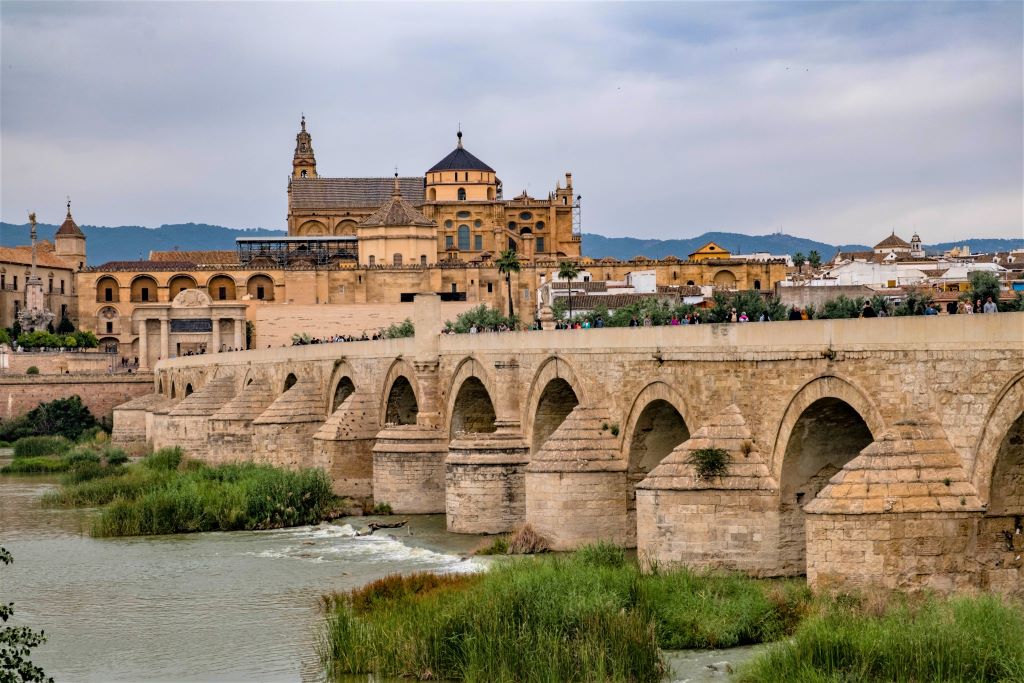
Cordoba, or Córdoba, is a historic city in Andalusia that I dreamed of seeing for various reasons.
- First of all, I wanted to see incredibly beautiful patios (courtyards) decorated with colorful flowers.
- Secondly, to look at Cordoba from the side of the Guadalquivir River, which flows in the south of Spain. And the branded view from the side of the Roman Bridge that was used in the Game of Thrones series (the series is great).
- And thirdly, Cordoba is home to the Mezquita, once the second largest mosque in the world, which in the 15th century became the Cathedral of Cordoba.
Tip: if you are traveling to Andalusia, I advise you to see all its iconic cities.
You can read about it here – The best travel route in Andalusia.
Seville and Granada are very beautiful too. But Cordoba should definitely be on your travel list.
Don’t make the mistake that tourists who stop by Cordoba for a few hours. Because it’s worth spending at least 2 days here.
I tell you what to do here and when it is best to come to Cordoba.
The best time to go to Cordoba

Andalusia is the most southern region of Spain. It is very hot here in summer. If you are planning a seaside vacation, you will love the summer by the sea cost of Andalusia.
But there is no sea inside the region. In July and August, the temperatures are very extremely hot. The thermometer can show +45℃. Therefore, do not plan to go to Cordoba (as well as the capital of Andalusia – Seville) in the summer. You just can’t stand the heat and spend most of your time in an air-conditioned hotel.
The best time to go to Cordoba is in spring or fall – in April-May (until mid-May will be good), or late September-October.
In April, you can see how Andalusia celebrates Easter.
In May you can visit the festivals: the Nuestra Senora de la Salud Fair and the Fiesta de los Patios, a famous patio festival.
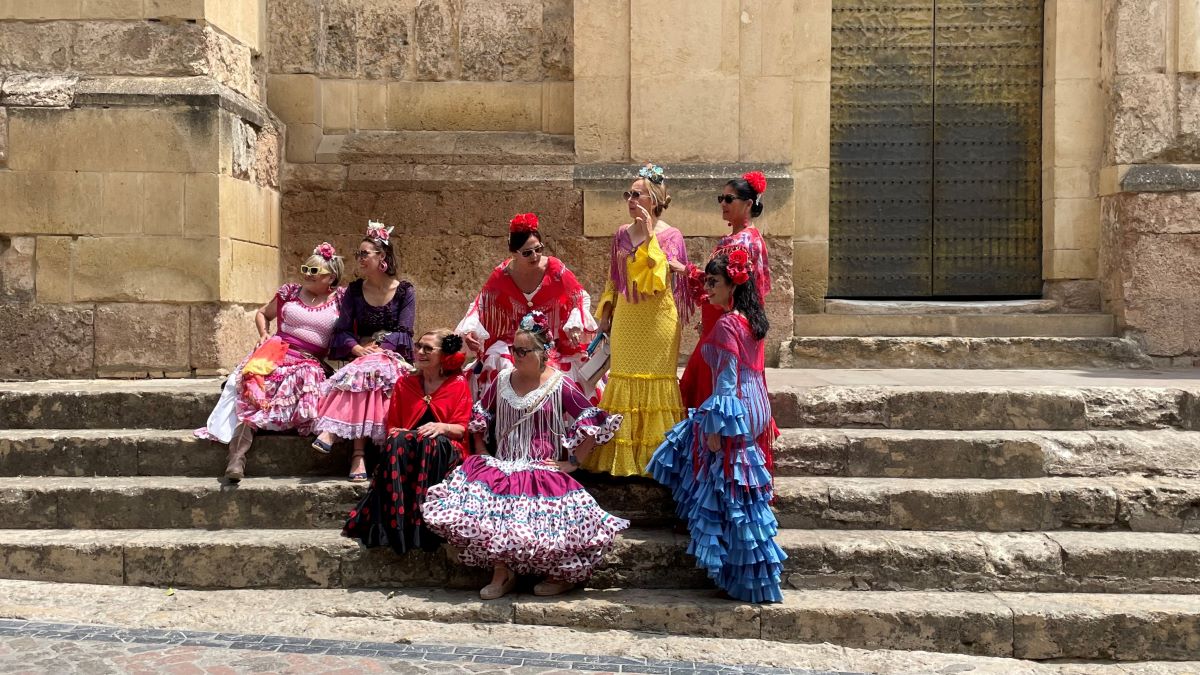
We were lucky enough to visit Cordoba at the end of May. And we saw the largest fair in Cordoba, the Nuestra Señora de la Salud. During the fair, women wear traditional flamenco dresses, sevillas style of music plays, and everyone sings and drinks wine with joy. Very atmospheric!
In winter it is warm – up to +15℃, but it rains often. If you like to walk with an umbrella and not to be in crowds of tourists, this is the perfect time for you to visit of Cordoba.
What to see for two days in Cordoba
Mezquita – a cathedral-mosque
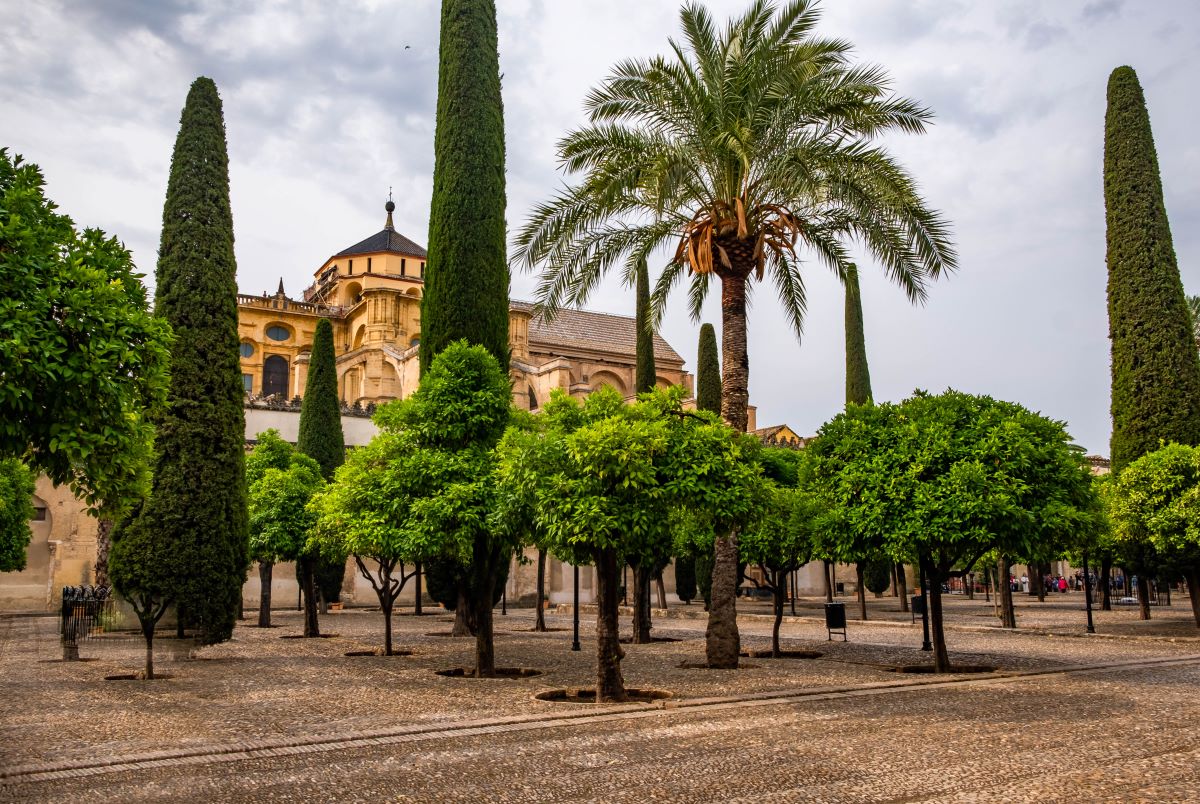
The huge Mezquita towers over the city. I dreamed of visiting it because it is an incredible temple that was once the second-largest mosque in the world.
Before that, Mezquita was originally a Roman temple and then became a Visigothic church. The Moors, who came to these lands and ruled the Iberian Peninsula for 800 years, rebuilt the church into a mosque. After the Reconquista (the expulsion of the Moors from the Iberian Peninsula by the Spanish kings), Mezquita was rebuilt into a Catholic church.

For many centuries Muslims, Christians, and Jews once lived together in Cordoba. After Muslims came to the territory of present-day Spain, half of the church was bought by Muslims for their Friday prayers. Later, Muslims bought the rest of the plot and built a mosque there.
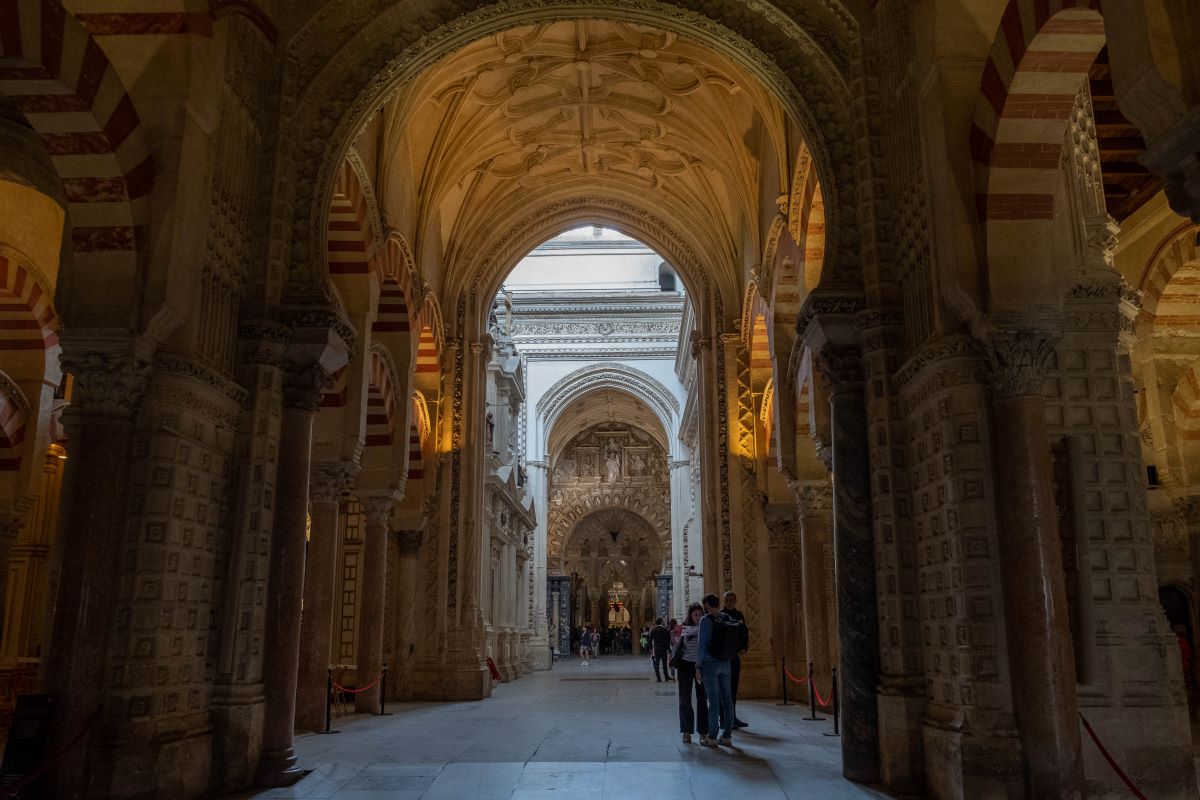
Over the next few decades, the original mosque was completed and decorated to make it a grand structure. In Muslim times, the Great Mosque was the heart of the city.
Cordoba was captured by Christians during the Reconquista, and in the early sixteenth century construction began on a cathedral in the center of the mosque, culminating in the cathedral mosque you see today.
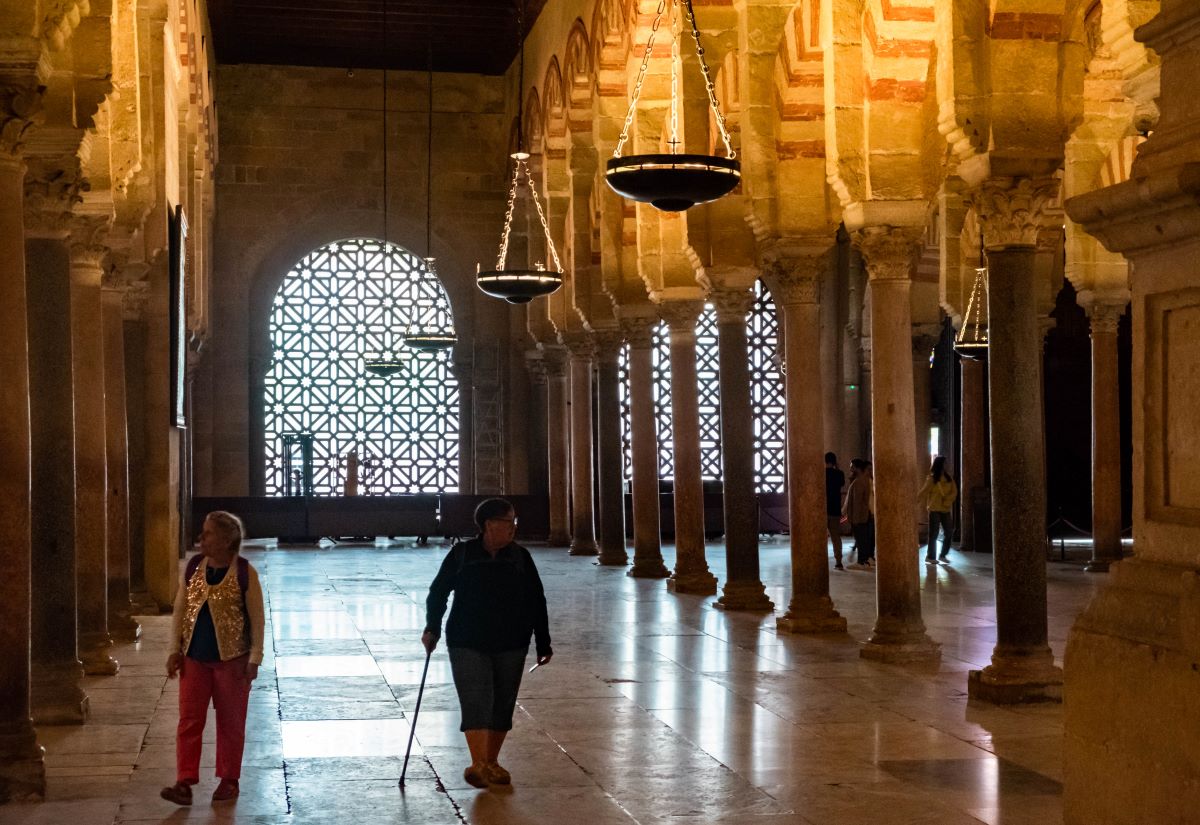
When you see this incredible building, for some reason you can’t believe your eyes at first.
It is a mosque with an altar, a crucifix, and Arabic knitting on the walls. You can’t see such a combination through the eyes, maybe only Hagia Sophia in Istanbul can be as impressive. But not now – all the frescoes are covered with draperies, and the cathedral has become a mosque.
The interior of Mezquita is simply stunning:
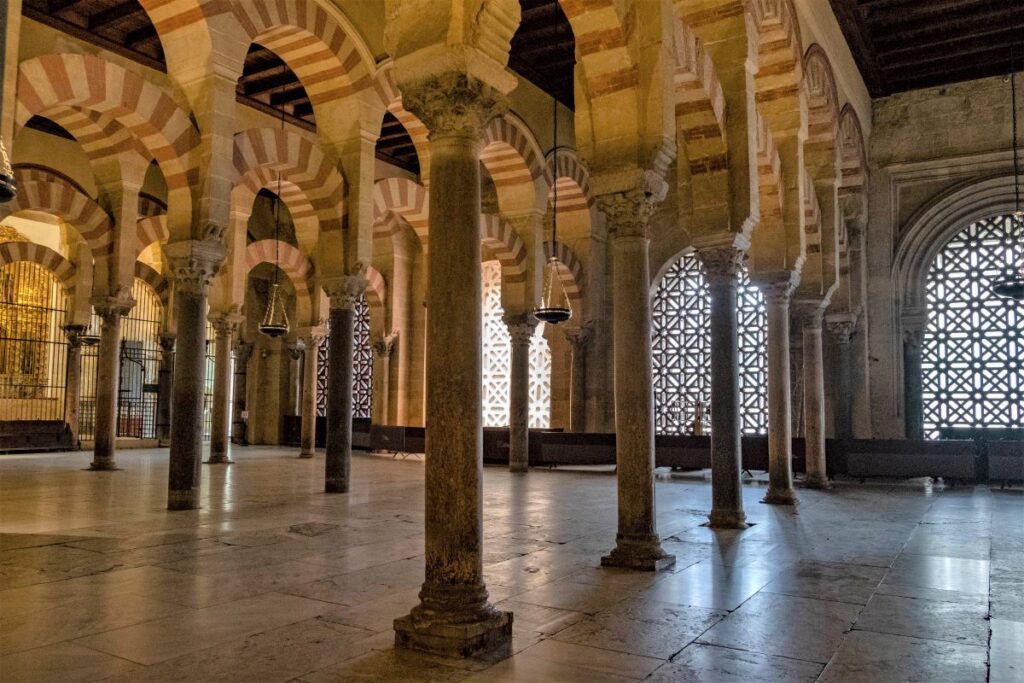
The main prayer hall has row upon row of double horseshoe arches atop the columns. The bright alternations of red and white stripes at the top of the arches amazed me – I ran around with my camera and couldn’t stop taking photos.
Stone, marble, and wood were used in the construction of the mosque in Cordoba. Lots of gold, silver and copper decorate the interior. Beautiful mosaics and tiles complement the picture.

The mihrab, a niche in the wall of a mosque that shows Muslims where they should look during prayer, is impressive. It is surrounded by special arches that delimit the place where the Caliph of Cordoba prayed.
The cathedral has a Capilla Real with a ribbed dome, richly decorated in the Mudejar style. At the end of the 15th century, a Gothic-style nave was created, and in the 16th century, the Capilla was built. The Mayor is the main chapel where Catholic mass is held on Sundays.
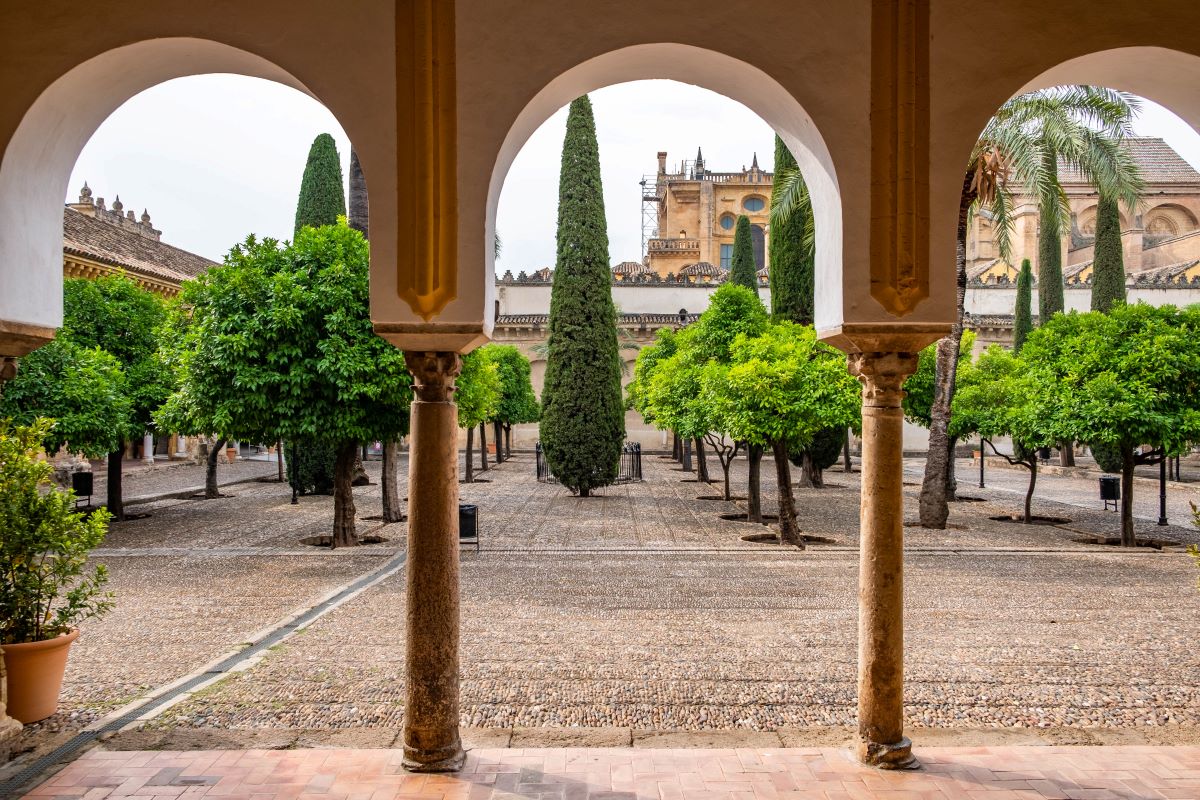
Mezquita is now the Cathedral of Cordoba. Behind its real walled courtyard, there is a wonderful courtyard with orange trees – Patio de los Naranjos, which is free to enter.
How much time to take visit to Mezquita?
You have to expect to spend about two hours to explore Mezquita inside and out. You will have enough time if you buy a ticket to the cathedral in advance.
The entrance to Mezquita costs 13 euros. When you buy a ticket online on the cathedral’s website you need to choose the time of your visit. You can also buy a ticket at the ticket office. But it’s not a given that you’ll get on a tour right away. There are long lines, and the number of people allowed into the cathedral is limited.
If you decide to go to mass, don’t expect to be allowed to walk around anywhere. There is only a limited path to the main chapel, where there are chairs for the faithful to sit on. That is, you will see the cathedral from the inside, but in a very limited way, although it will still impress you – I promise!
Mezquita bell tower

After walking around the cathedral, go up to its tower. The ticket costs 3 euros, the doors open every half hour. From the top you can see a magnificent view of the white city. And you can appreciate how huge Mezquita is.
The minaret of the Great Mosque was converted into the cathedral’s bell tower. The first minaret on this site was built in the middle of the 10th century. It was partially destroyed and partially absorbed by the Renaissance bell tower you see today.
The modern tower, which began construction in the late 16th century and was completed in the early 17th century, is 54 meters high. It is the tallest building in Cordoba, with about 200 steps leading to the top. The effort is worth it to see the breathtaking view of the Mezquita rooftop and the old town.
Keep in mind that tower has spiral staircases are quite steep. There are also no places to rest on the way to the balcony on the 5th floor.
Walk the streets of the Jewish Quarter of Cordoba
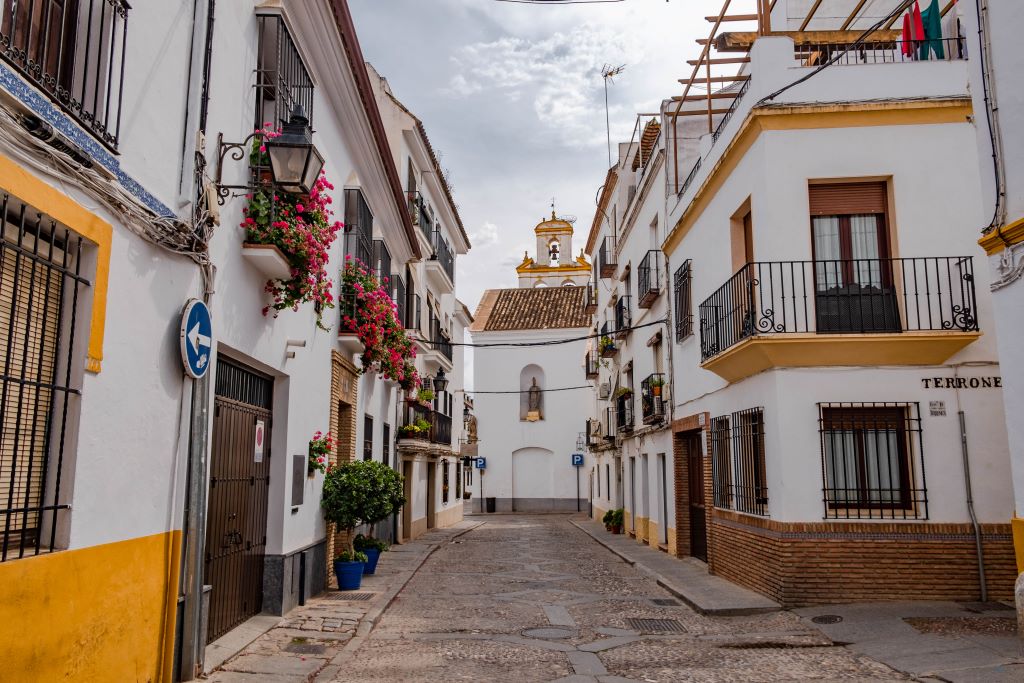
The Jewish Quarter or Juderia is a network of streets and mazes of alleys in the old center of Cordoba. I advise you to stay here in hotel. That’s help you to be in the epicenter of tourist events and see the beauty all the time you are in the city.
Jews lived in harmony with Muslims and Christians in Cordoba for centuries (until they were persecuted by the Inquisition and Queen Isabella). The Jewish community in Cordoba flourished under Muslim rulers, reaching a pinnacle of prosperity when Cordoba became a star city in Western Europe.
But after the expulsion from Spain, Sephardic Jews dispersed around the world-some ended up in Africa, some in the Middle East, and some of them even organized their own pirate fleet. I’m very interested in reading about the times when different cultures could live together on the Iberian Peninsula, and I think they are the most interesting, even though the “golden age” of Spain was already after Columbus’ voyages.

What to see while walking the Jewish Quarter in Cordoba
- Walking through the old town, admire the statue of Maimonides, a famous Jewish philosopher who lived in Cordoba for many years until he fled to Egypt. You will find it in Teveriades Square, now known as Maimonides Square.
- Visit the Casa de Sefarad to learn more about its life and the fate of Jews during the Inquisition.
- Browse the artisanal shops in El Zoco market. It is located between the synagogue and the Taurino Museum. You’ll find a beautiful Cordoba patio surrounded by a building with two floors of small shops selling ceramics, jewelry, and other handmade souvenirs.
- The alleys are so beautiful that you’ll want to stop every few steps to take more photos – it’s just impossible to stop. In addition, since the buildings are located close to each other, there is a lot of shade, which makes walking around the city pleasant even in the heat of the day.
- There are many small shops selling souvenirs and many cafes if you want to stop for a meal or a cold drink or coffee.
- If you get lost far enough, you will reach the gate – Puerta de Almodóvar, where you can still see part of the old city walls.
Although Juderia contains monuments of historical significance, its charm lies in its winding alleys (you’ll definitely get lost!), cute houses and shops, and colorful flower pots that adorn the white walls of the Old Town. It’s really beautiful here: the houses have cool whitewashed walls with accents of warm yellow. Flowerpots of bright colors adorn many walls, and in season they bloom with geraniums and petunias.
Go to the Synagogue

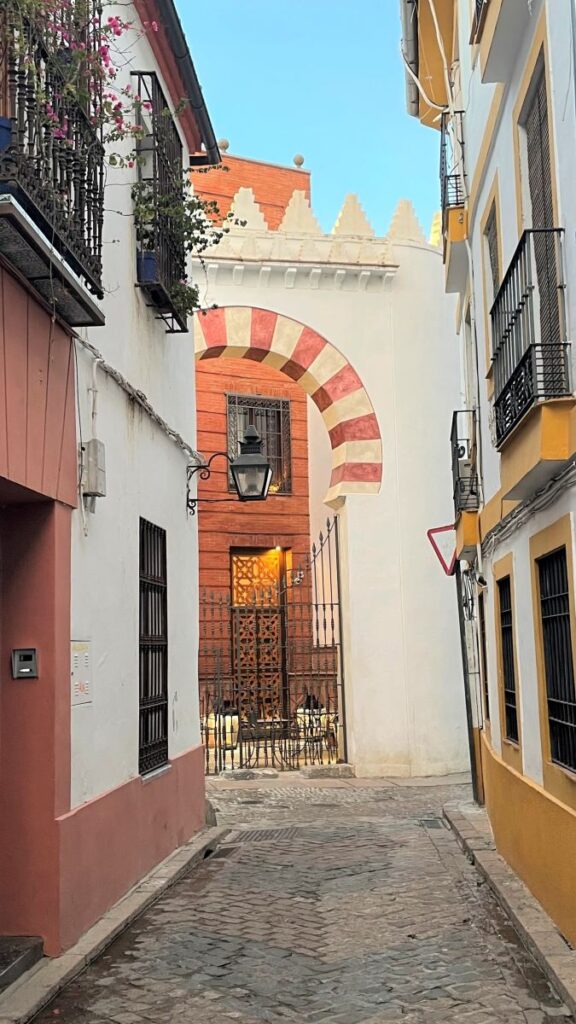
While in the Jewish Quarter, be sure to stop by the Cordoba Synagogue. The synagogue founded in the early 14th century, is one of only three medieval synagogues left in Spain today. Two others in Toledo.
The building is tiny, and historians speculate that it was probably a private synagogue of a wealthy man. Built in the Mudéjar style, like many other structures in Andalusia, the synagogue has a prayer hall and a women’s section on the upper level. Now it is not a functioning place of worship, but it is open to the public as a historical monument.
Take a photo in the Calleja de las Flores
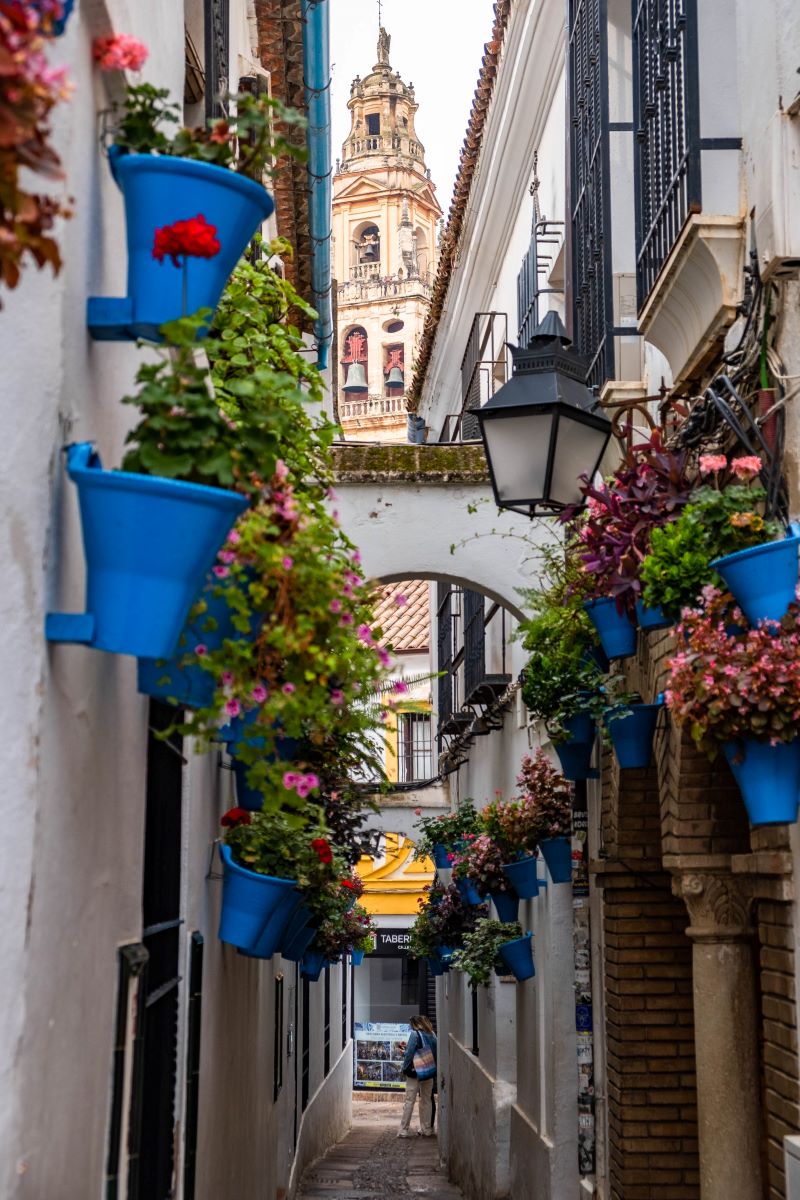
Also in Juderia, do not miss the opportunity to take a photo on Calleja de las Flores . This is a famous little street with flower pots and views of the Mezquita Tower.
The alley is located very close to Mezquita. Walk to the very end of the alley, where you will find a small square. Turn around here and look back the way you came to see the famous view of the Mezquita Bell Tower, perfectly positioned between the street walls.
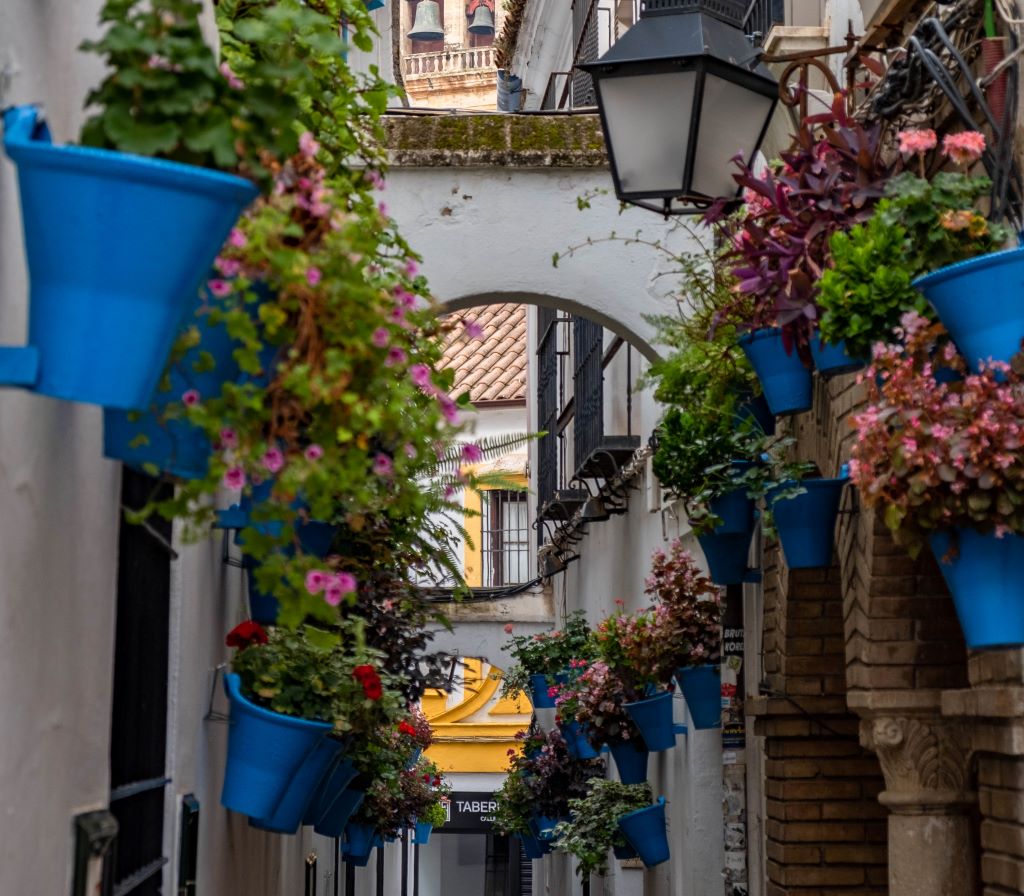
It is especially beautiful when the flowers that gave the street its name are in full bloom. We saw this in May 2023.
The little street is extremely popular with Instragammers, so you’ll probably find it crowded throughout the day. So if you want to visit and take your own photos in relative peace, come in the morning.
Tour of Cordoba patios
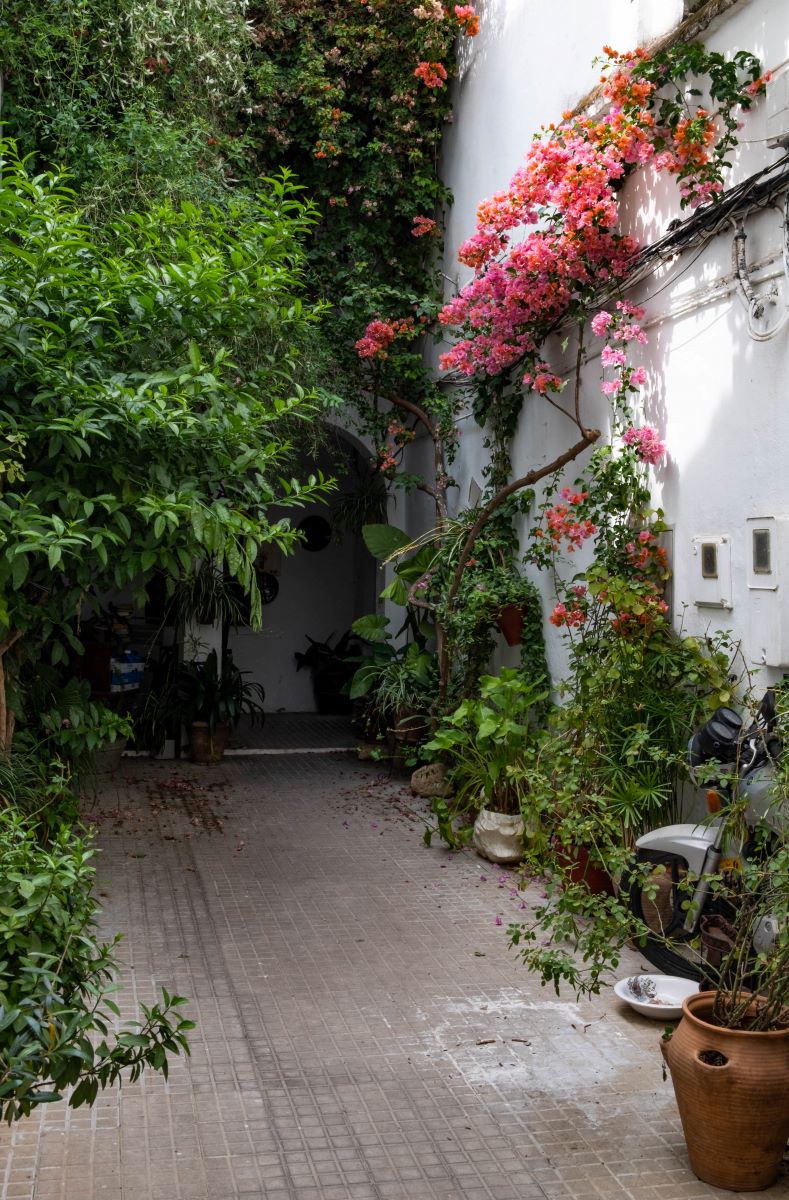
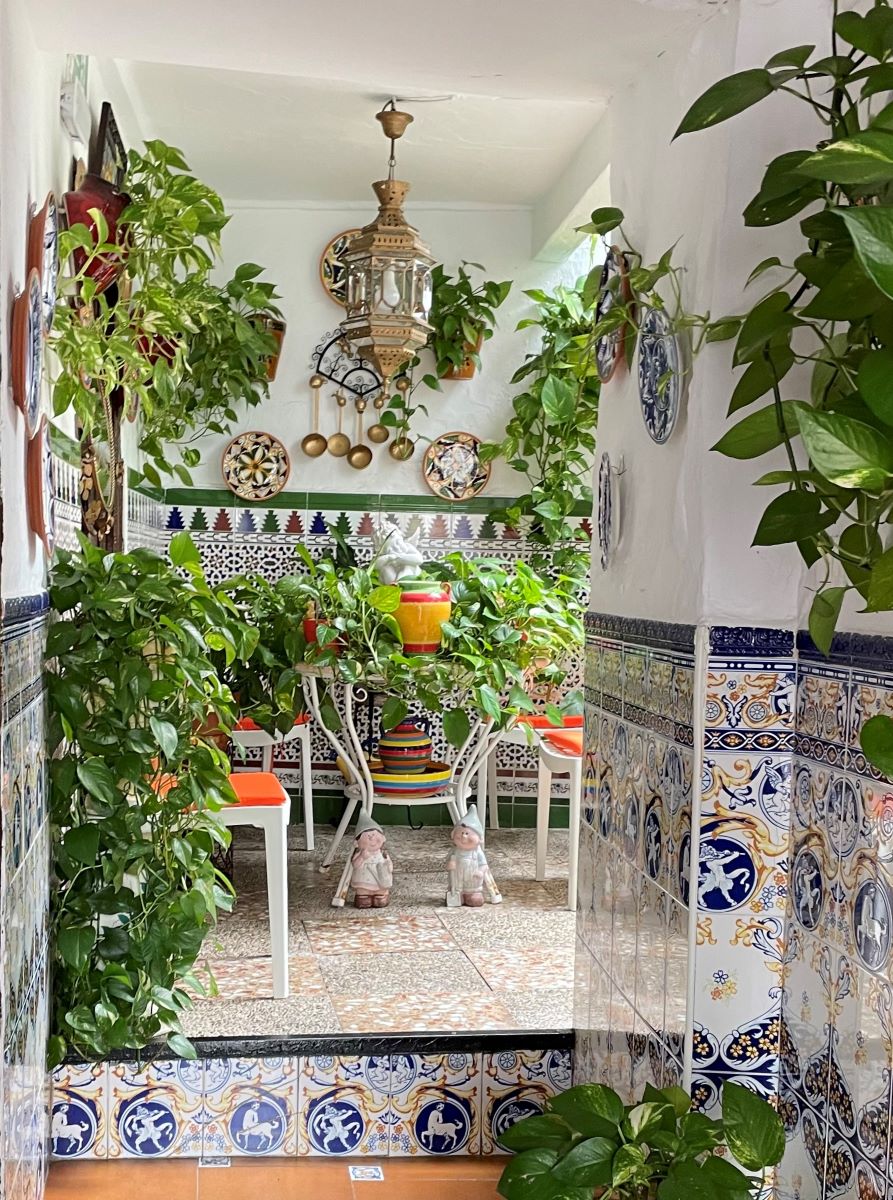
All the buildings in Cordoba’s Old Town are designed to have their own courtyards inside – patios. This was done to make it easier to endure the heat. You can always see a small fountain or pond in the patio. It is also filled with green plants and flowers. Coolness and shade are the atmosphere in Cordoba (and other Andalusian) courtyards.
But there are special patios decorated with hundreds of flower pots. They are very beautiful, and special tours are organized around these beautiful patios. You can buy a Patio Tour any day – a tour of the most beautiful courtyards in Cordoba(20.5 euros). But if you don’t want to spend money, you can simply walk around the city, looking through open gates to see patios that are not included in the official tour.
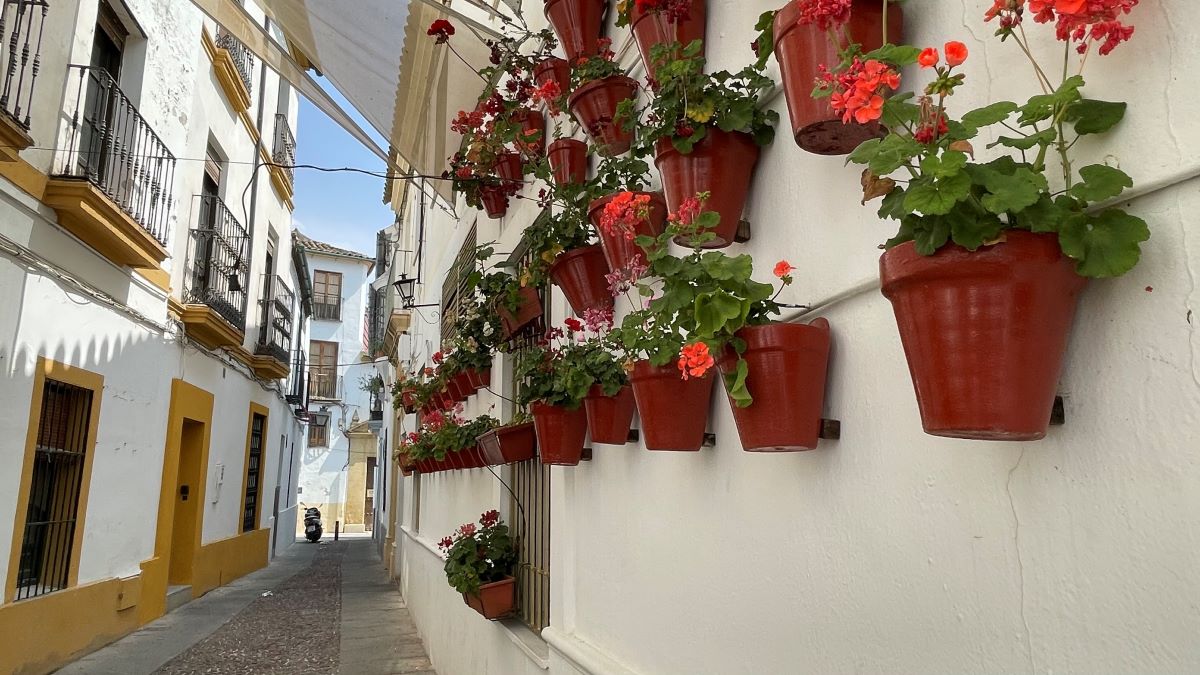
If you want to see all the patios for free, come to Cordoba in mid-May. Between May 14 and May 20, Cordoba hosts the Fiesta de los Patios, a famous patio festival, every year. This is another UNESCO World Heritage Site in Cordoba, which is included in the list of intangible cultural heritage of humanity.
During the week, Cordoba’s courtyards are open to the public. It’s a pleasure to visit Cordoba during this period, to see incredible exhibitions, some of which are housed in a tiny space.
Alcazar de los Reyes Christianos
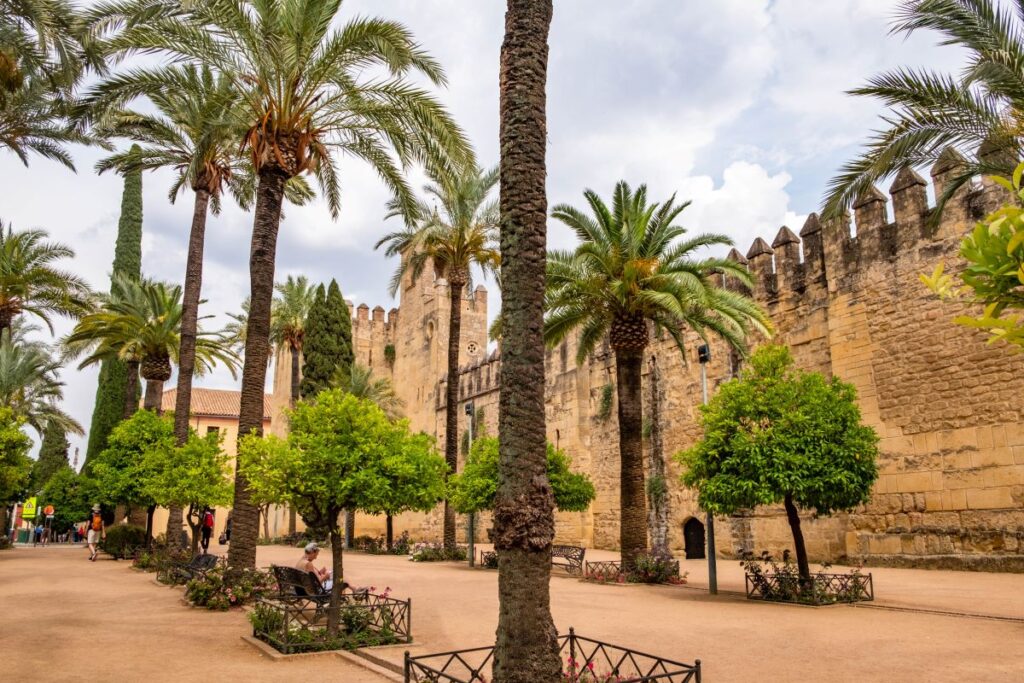
The Alcazar de los Reyes Christianos is a palace-fortress built on the remains of a Moorish building. It was here that Christopher Columbus had his first audience with Ferdinand and Isabella, the rulers of Spain, before his historic journey that led to the discovery of the New World. It is also the former headquarters of the infamous Spanish Inquisition.
The best thing about the Alcazar complex is the Moorish courtyards, as well as gardens and terraces. The fountains, ponds and pools that adorn the gardens are incredibly beautiful, as well as the formal design of the beds among the hedges.
If you have the opportunity, visit the light and sound show in the Alcazar Gardens at night – it’s magical. The performance lasts about 45 minutes. You can buy tickets for the show and a tour of the Alcazar on the official website .
Walk across the Roman Bridge in Cordoba
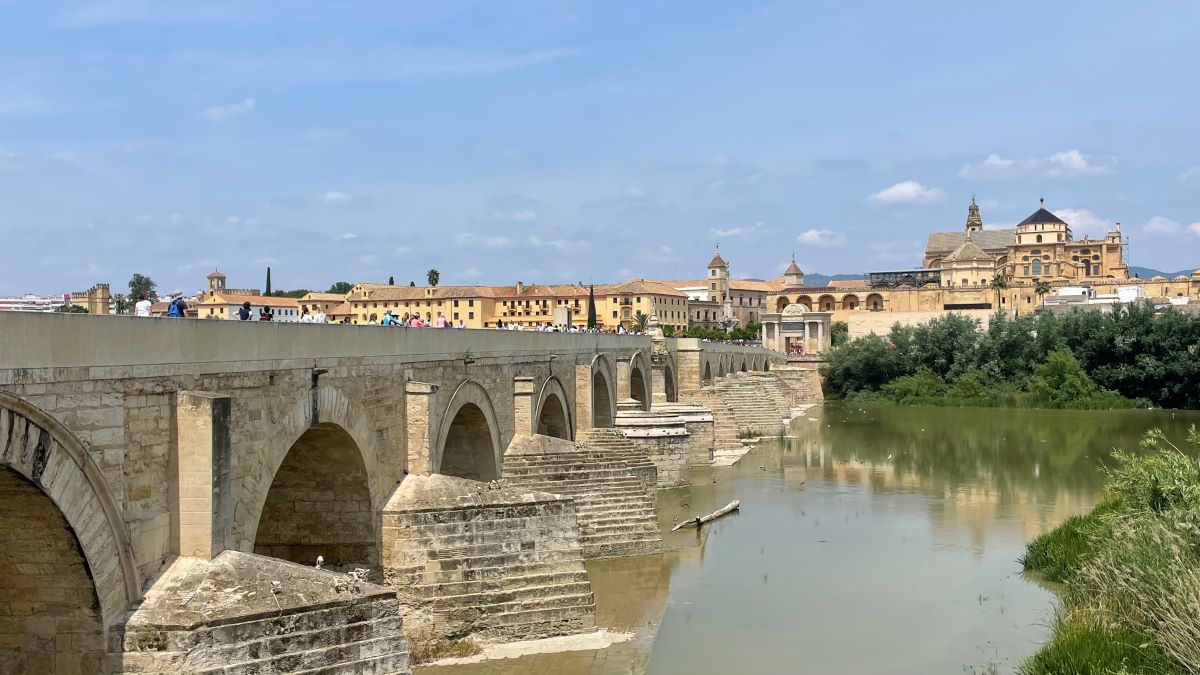
The green Guadalquivir River flows through the city, with modern and ancient pedestrian bridges spanning it. The Roman Bridge is Cordoba’s calling card when viewed from the opposite side of the Old Town.
If you’re a Game of Thrones fan, you’ll be pleased to know that the Roman Bridge in Cordoba is the real bridge behind the Long Bridge of Volantis! Of course, it has been greatly improved with the help of computer graphics.
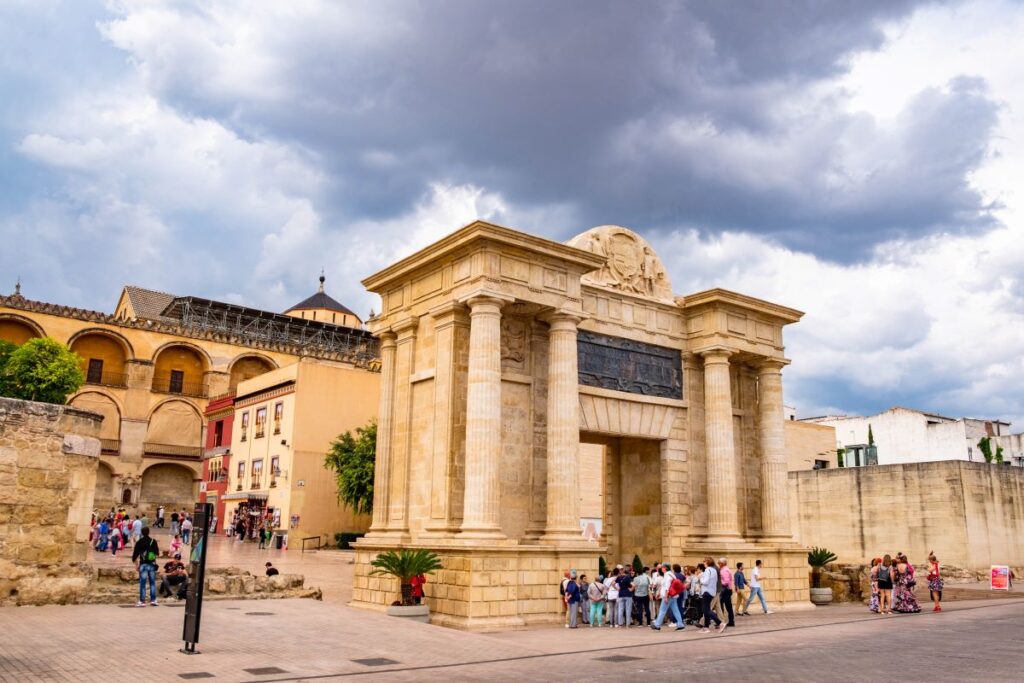
You can walk across the bridge that spans the Guadalquivir River from both ends. If you walk from north to south, you will start from the Puerta del Puente near the Mezquita complex and end at the Calagorra Tower.

The bridge has been reconstructed many times, so not much of the original Roman bridge remains. Do not miss the huge water wheel on the north bank of the river and the statue of St. Raphael somewhere in the middle of the bridge.
At the southern end of the Roman Bridge you will find the Calagorra Tower. The tower was originally built during the rule of the Moors to protect the Roman Bridge from attack. At that time, it consisted of an arched gate between two towers.
Find the Roman temple in Cordoba
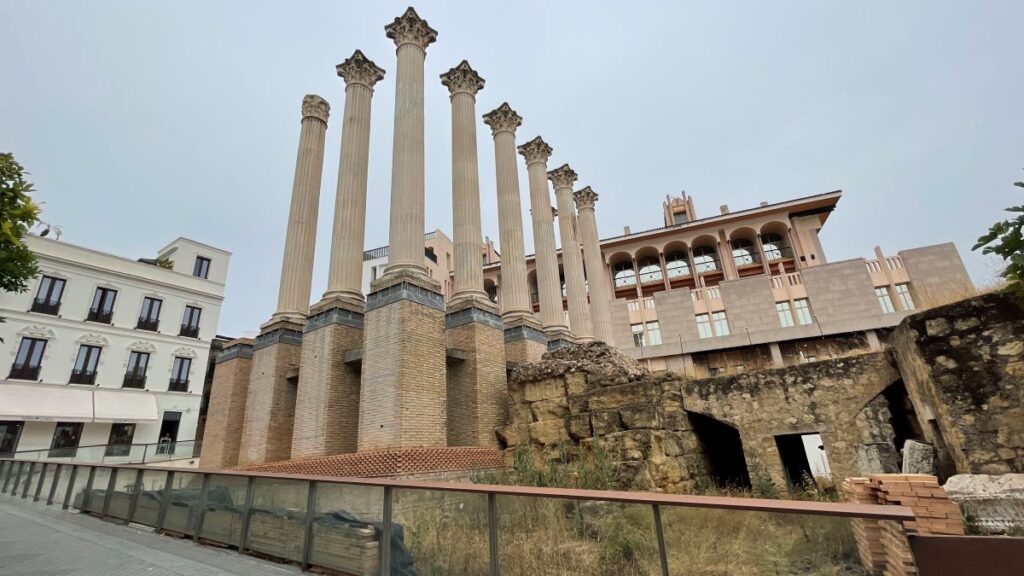
The Roman temple in Cordoba, recently opened during the expansion of the city hall in the 1950s, can be seen in the open air as you walk around the city.
The temple is located about a 10-minute walk from Mezquita, near the Plaza de las Tendillas. You will definitely not miss it – besides, it is part of the rich historical heritage of Cordoba.
Flamenco show in Cordoba
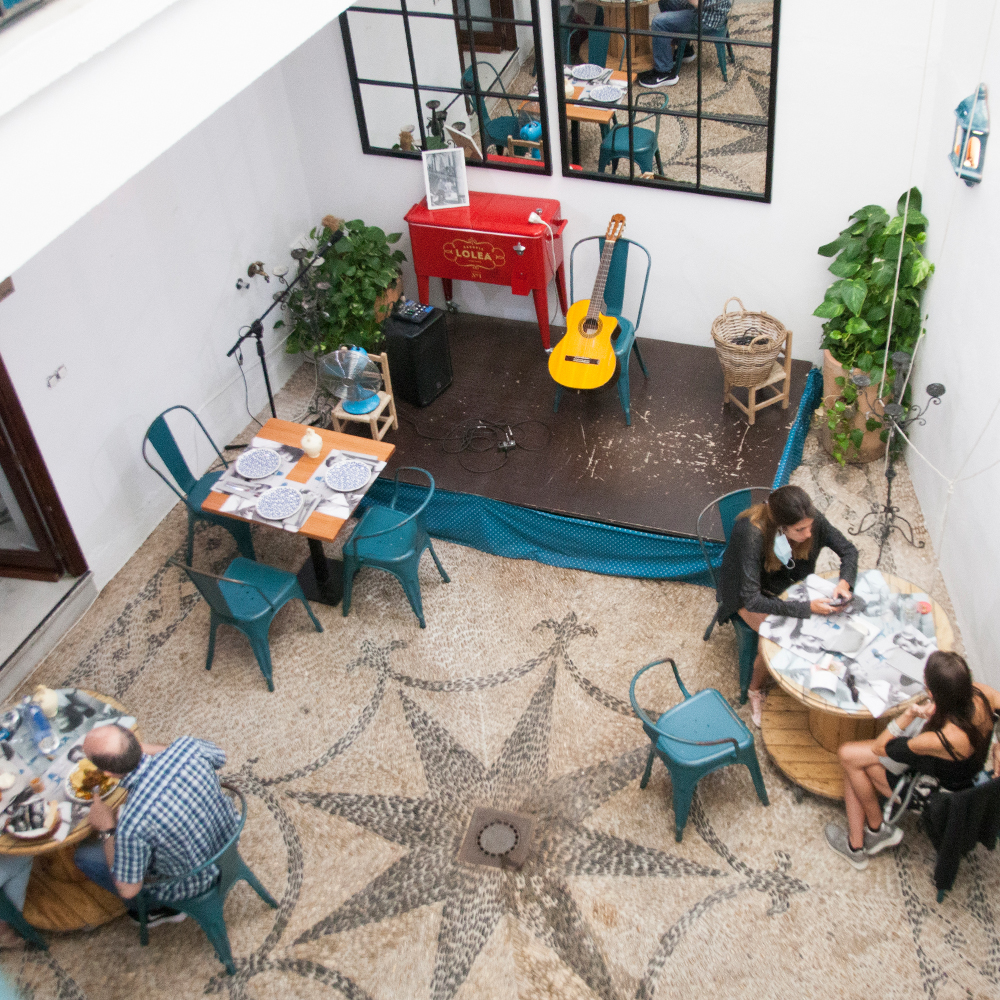
I really wanted to see the Flamenco show, which is a national dance that is associated with the history of Andalusia. The roots of Flamenco lie in its Moorish past – it is a hot mix of African music and gypsies who came to Spain from Africa.
We decided to watch a Flamenco show in a small restaurant Doble de Cepa with 5-7 tables in front of which there is a small stage for musicians and a dancer. The show is incredibly bright and I really liked it. But you have to book a table on the restaurant’s website in advance to get to the show. Cost – the amount you will spend on food and drinks (the restaurant is a bit more expensive than the neighboring ones, but the show is worth it and the Andalusian food is delicious).
What I recommend to order or try in Cordoba:
- Rabo de toro oxtail stew is a very tasty and tender meat that goes well with a glass of red wine.
- Try Salmorejo, a cold Andalusian gazpacho soup made with tomatoes, bread, garlic, and olive oil produced right here in Andalusia.
- Or Berenjenas con miel – fried eggplant sticks drizzled with honey – a very unusual taste for a vegetable, but really delicious.
- Flamenquín is a fried pork roll with cheese or jamon inside.
- Pastela de Cordoba is a local puff pastry filled with pumpkin.
Relax in the Arabian baths
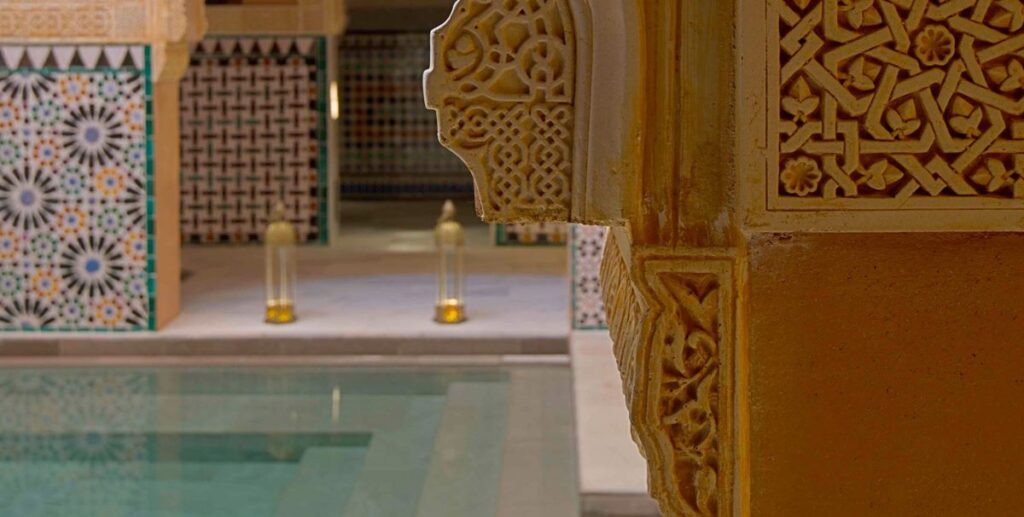
Relax in the warm waters of the hammam Al Andalus and Arabian baths, which will allow you to relax after long walks in Corboba.
Arabian baths in Cordoba with arches in the shape of sugar cane, frescoes on the walls and cutouts in the roof that let in light. In Moorish times, the city had many baths to satisfy its many inhabitants. The decoration of the bathtubs varied from simple, for ordinary people, to elaborate, for the caliph and his family.
Baths were a place of socializing where people would drink tea with others, relax or hold meetings, and consisted of a series of rooms, so you could move from a cold room to a warm room to a hot room.
Where to stay in Cordoba
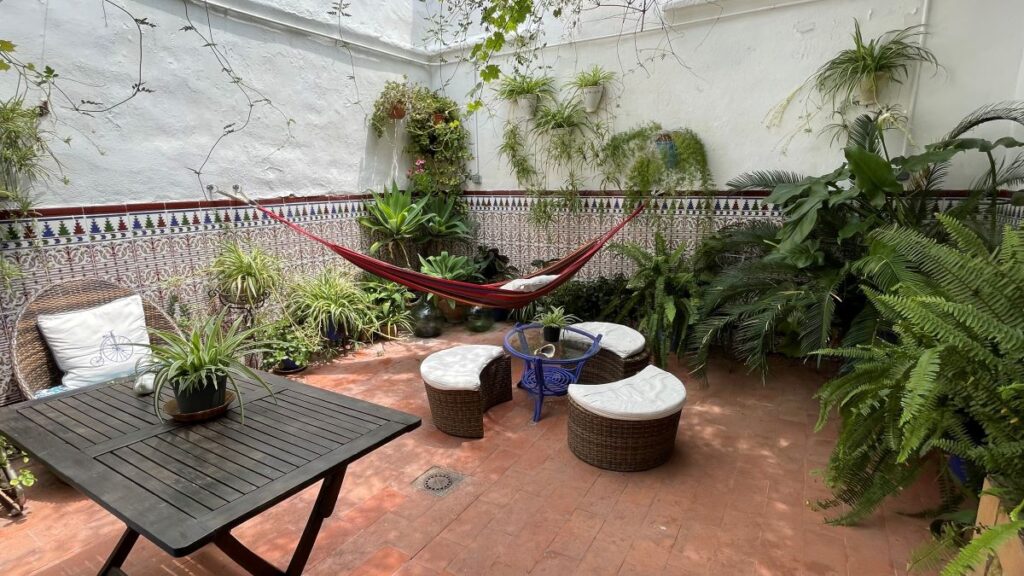
Of course, you have to stay in Old Cordoba/ Here the white walls are decorated with blue flower pots. There is a very wide range of good hotels, some even with swimming pools and private baths. Don’t spend money on a hotel outside the Old City. Here you can plunge into the atmosphere of Moorish times, walking day and night near the walls of Mezquita.
The hotels in Cordoba’s Old Town also have incredibly beautiful patios, which is a great place to sit in the evening with a glass of Spanish wine.
- Casa Turística San Agustín≫ is a nice hotel in the Old Town of Cordoba, with a great breakfast spot on the roof overlooking the city.
- Hotel Conde de Cárdenas≫ is a hotel with an incredibly beautiful patio, room rates are low and the quality is excellent.
- H10 Palacio Colomera≫, a hotel in the Old Town with a private pool and patio, is a good choice in summer.
Getting to Cordoba
To get to Cordoba, you need to fly to Malaga or Seville – low-cost airlines and other airlines fly here. Or fly with cheap tickets to Madrid and from there you can get by car or train to Malaga or Seville (depending on where you start your trip). Then – by train or bus to Cordoba.
- I buy bus tickets in Spain on the website of the Spanish carrier Alsa.
- Train tickets in Spain – on the website of the Spanish railway company Renfe.
Useful articles and links:
- Slovenia in winter – mountains, lakes, caves and ski resorts
- Via Francigena – Italian Camino, route details from Lucca to Rome
- Ronda, Spain – 10 things to do in the white city on a cliff
Find train tickets in Europe conveniently on Trainline
Booking of hotels and apartments – Booking.com


this article is very useful, thank you for making a good article