Madeira is a place where nature takes center stage. If you are looking for architectural gems or historical landmarks – this is not the place for you. You should come to Madeira for hiking, incredible views from viewpoints, beautiful and often accessible waterfalls, and the ocean expanse. All of this is plentiful here for several trips.
But Madeira is not only about breathtaking landscapes. When planning a trip to this island, prepare for a full-fledged journey that consists of many different moments. It’s not only drives between viewpoints, but also time to watch the ocean waves, sipping the local liqueur poncha with residents in a mountain village tavern or riding wicker sledges down the steep streets of Monte.
Ten years ago, it was considered that Madeira was a place only for retirees or those who like a quiet holiday. In fact, that’s not true at all. Of course, it’s peaceful here if you don’t want to go up the mountains or drive around the island. But if you are seeking adventure, long impressive hikes, trips along wild ocean coasts, colorful streets or thrilling canyoning – Madeira will definitely suit you.
If this is your first trip to Madeira – then I recommend exactly this selection of places you must see to fall in love with this island forever!
Recommended to read: Madeira – 7 Day Itinerary
1. Hiking to Pico do Arieiro
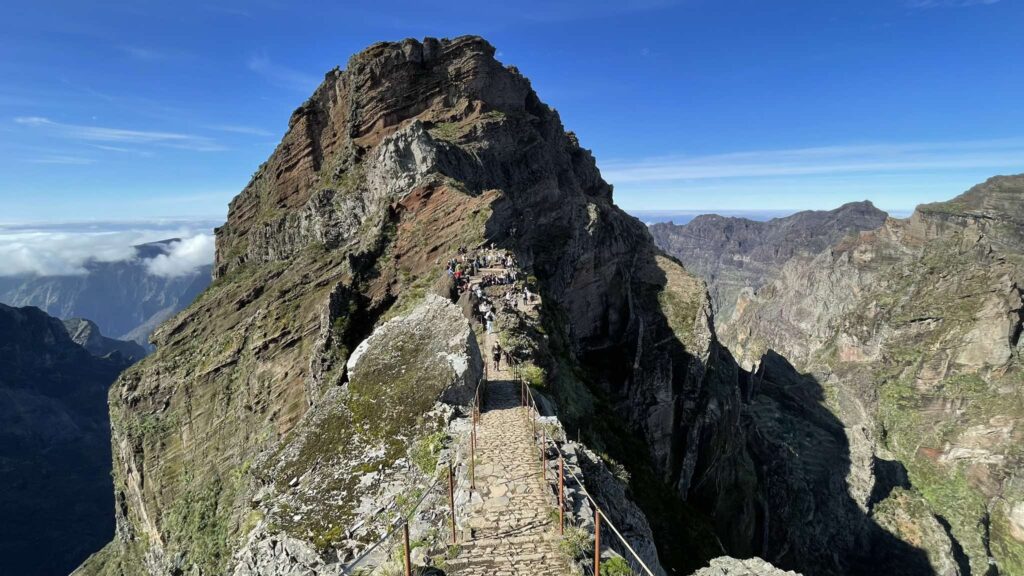
I really love hiking (this is easy to understand if you read about my hikes under the tag Walking). So my list started with a place I really wanted to see during my trip to Madeira. The plan was to walk the most beautiful trail in Madeira – the hike from Pico do Arieiro to Pico Ruivo. It is considered the most exciting trail on Madeira. This is a high-altitude journey in the very heart of the island, through impressive ridges, jagged rock formations and breathtaking landscapes that captivate you the entire way.
But in 2024, a huge fire occurred in the mountains and this trail suffered greatly. It was closed, and for the entire year 2025 tourists did not walk it – myself included.
So as an alternative, I advise you first to go to Pico do Arieiro and walk the first 1.5 km of the PR1 route that are open there.
And after that, move to the starting point of PR1.2 route, which leads to the highest peak of the island – Pico Ruivo.
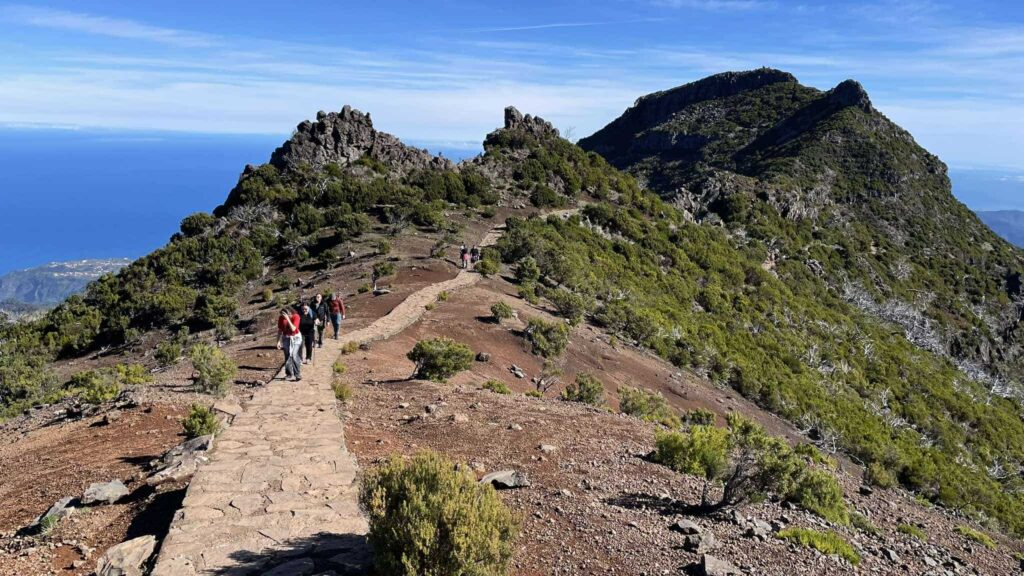
To find out if the PR1 route from Pico do Arieiro to Pico Ruivo is open, check the official Madeira website – it always has up-to-date information about open trails.
The full route offers an exciting challenge – it’s about 10 km one way, which consists of steep ascents, descents, and elevation changes. Along the trail, you will encounter rare alpine flora and fauna. This is the perfect adventure for determined hikers, photographers, and nature lovers who want to see the island from its most dramatic viewpoint. Reaching the summit of Pico Ruivo is truly unforgettable and absolutely worth the effort!
How to get to the PR1 trail:
- By car – from Funchal it is about 1 hour, from other towns the route still leads through Funchal. So plan this visit for when you are on the southern coast. Parking near the start of the route is very small and very expensive – 4 euros per hour, 20 euros per day. There is a cheaper parking lot, located below the trail – 5 euros per day. Also – there are very few places in these lots, especially if the weather is nice and many people want to visit Pico do Arieiro. Then everyone parks along the road (this is free, but the police may arrive, and if your car blocks others, you can be fined – we parked so as not to bother anyone).
- Some people got to Pico do Arieiro partially by bus this way: took the bus to the Paso do Poiso pass, and from there lots of cars go up, so they quickly got a ride to Pico do Areiro.
Recommended to read: Hiking in Madeira – the best routes
2. Explore the Old Town of Funchal
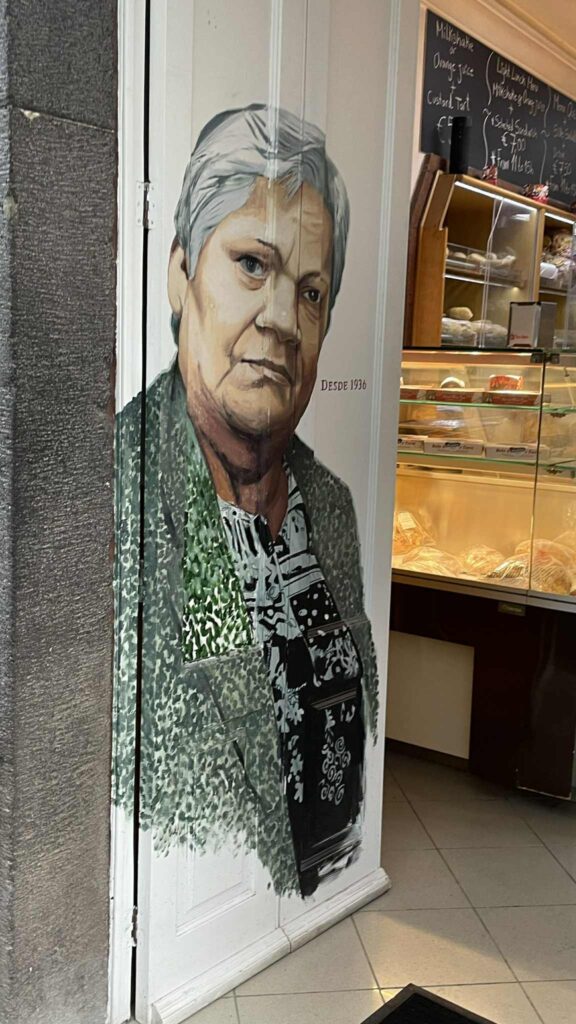
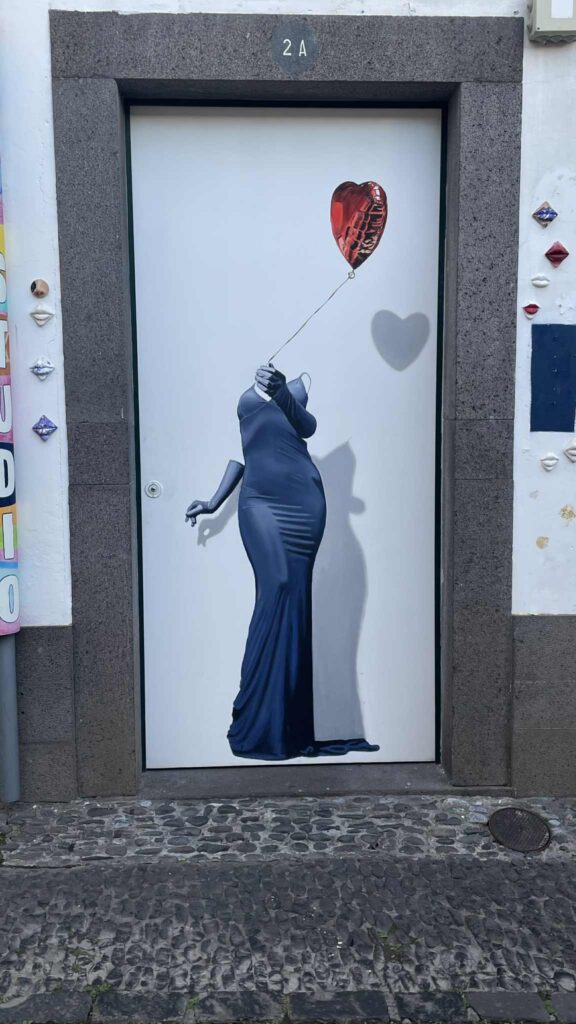

Next on the list is, of course, the Old Town of Funchal (Zona Velha), which you definitely won’t miss on your trip to Madeira. This historic district is the heart of Funchal, with cobbled streets, lively squares, and centuries-old buildings. Walking through Zona Velha you will see the authentic look of the island in the past, while also buzzing with modern energy.
On Rua de Santa Maria you will find beautifully painted doors and plenty of cafes and restaurants lining the sidewalks. It’s a wonderful blend of street art, galleries, and local life around every corner.
Honestly, this is the perfect place for plan-free walks. You can pop into a traditional bar for a glass of poncha liqueur, browse local craft shops or taste fresh seafood at one of the many open-air restaurants.
In the evenings, the atmosphere comes alive with music and the aroma of grilled espetada (beef skewer) in the air. Whether you are a history buff, gourmet or street photography lover, Zona Velha embodies the spirit of authentic yet touristy Madeira.
Plan at least two days for Funchal, or plan this city as a base for your island travel. We stayed here the first three and last two nights to explore all the south and center of the island – it’s very convenient!
Recommended to read: Where to stay in Madeira – places and travel styles, tips from experience
3. Take the cable car up to Monte Gardens
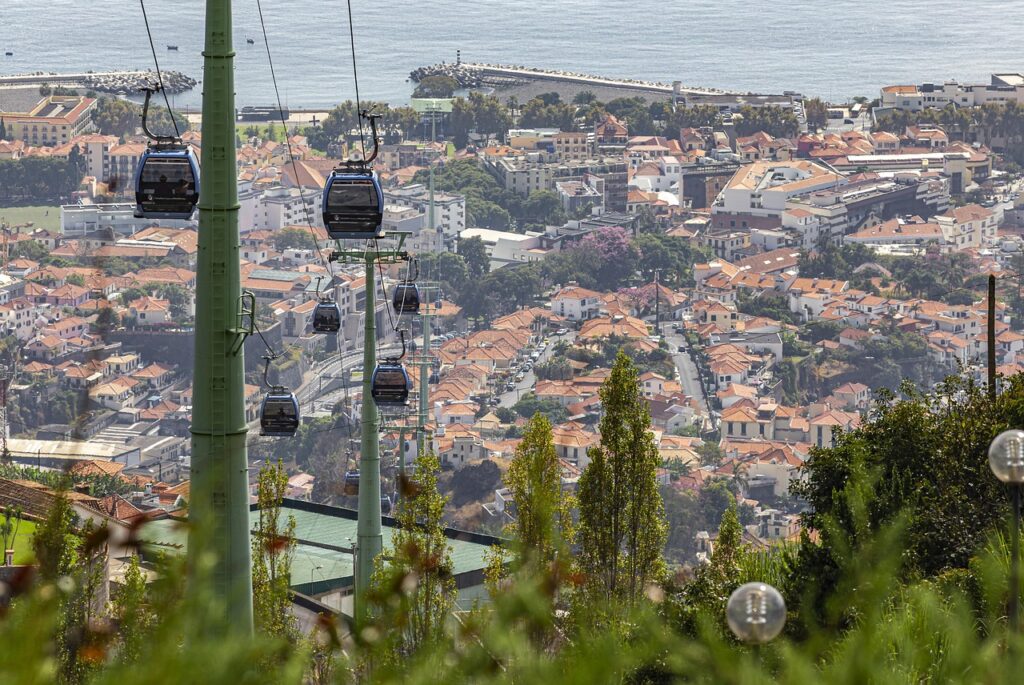
The cable car ride to Monte is one of the prettiest and most enjoyable experiences in Madeira. The trip starts in Funchal and smoothly rises above terraced gardens, colorful rooftops, and lush hillsides, offering stunning views of the city and the fresh Atlantic below.
The ride takes about 15 minutes and is a wonderful way to appreciate the natural beauty of Madeira from a bird’s eye view. Once you reach Monte – head to the Monte Palace Tropical Garden. Then visit the historic churches or just wander the quiet Monte streets.
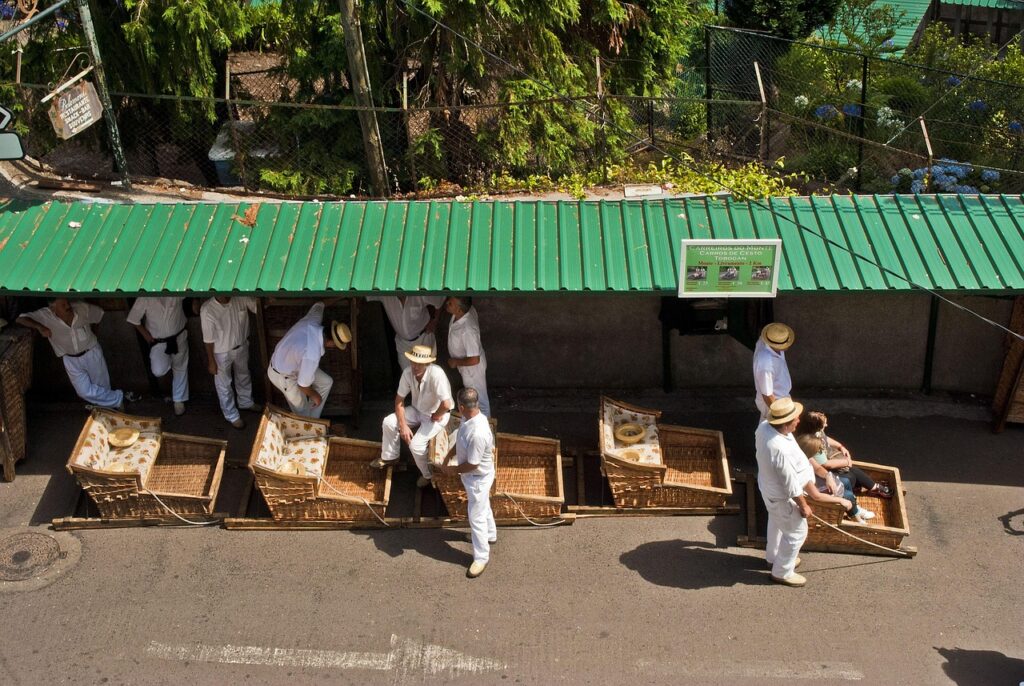
For fun, many visitors take the famous toboggan (carros de cesto) – sledges made of grapevine driven by colorfully dressed drivers in hats – “carreiros”.
Where to ride the toboggan: The boarding for the carros de cesto is next to the church Nossa Senhora do Monte, location on Google maps. You pay for the attraction there (cash only). The toboggan ride costs on average 25 euros (per person), 30 euros (two persons), 50 euros (three persons).
4. Swim in the ocean at Seixal volcanic beach

Swimming at the black sand beach of Seixal is possible even in winter (in the photo we are swimming on January 25 – water is +19 degrees). Unlike the golden sand you can find on the beaches in southern Madeira, this beach is covered with black volcanic sand. Very cool experience – this was my first swim at a northern beach with black volcanic sand.
The waves at this beach are small thanks to the large pier which protects bathers. And the natural scenery and stone pools nearby offer even safer places for sea recreation. There are changing rooms and free toilets at the beach, as well as a convenient descent – suitable for small kids in strollers.

There are fewer people here than on some of Madeira’s more famous beaches, so you have plenty of space to relax and enjoy the island’s pristine beauty.
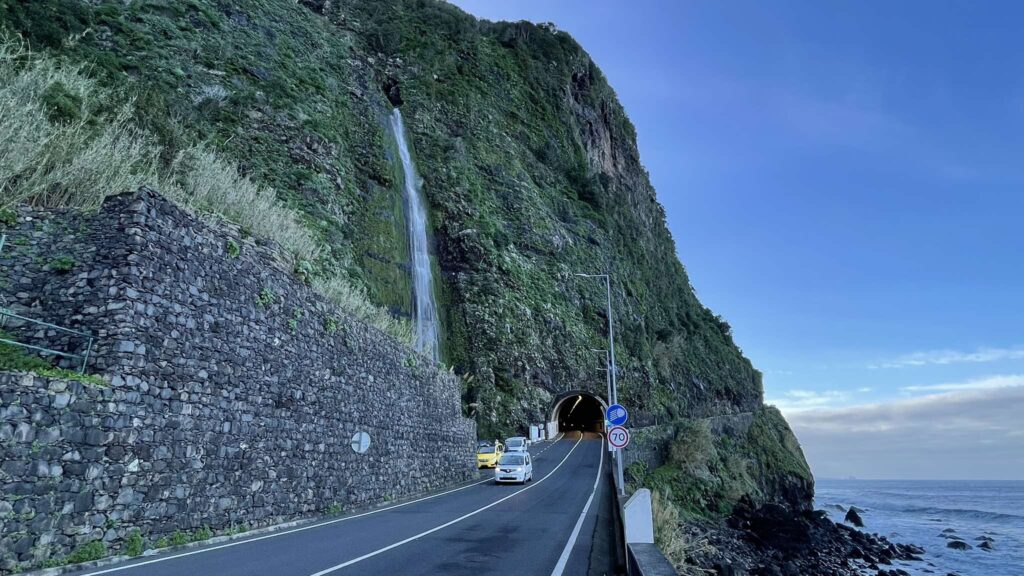
Besides, the town of Seixal is worth stopping for at least lunch. It has a wonderful laid-back atmosphere and stunning surroundings. Imagine lush green cliffs rising sharply above the shore. On the way to town you can see insanely beautiful waterfalls, for example Cascata Água d’Alto. There is a small parking lot near the waterfall – you can stop and admire this sight.
5. Explore Ponta de São Lourenço
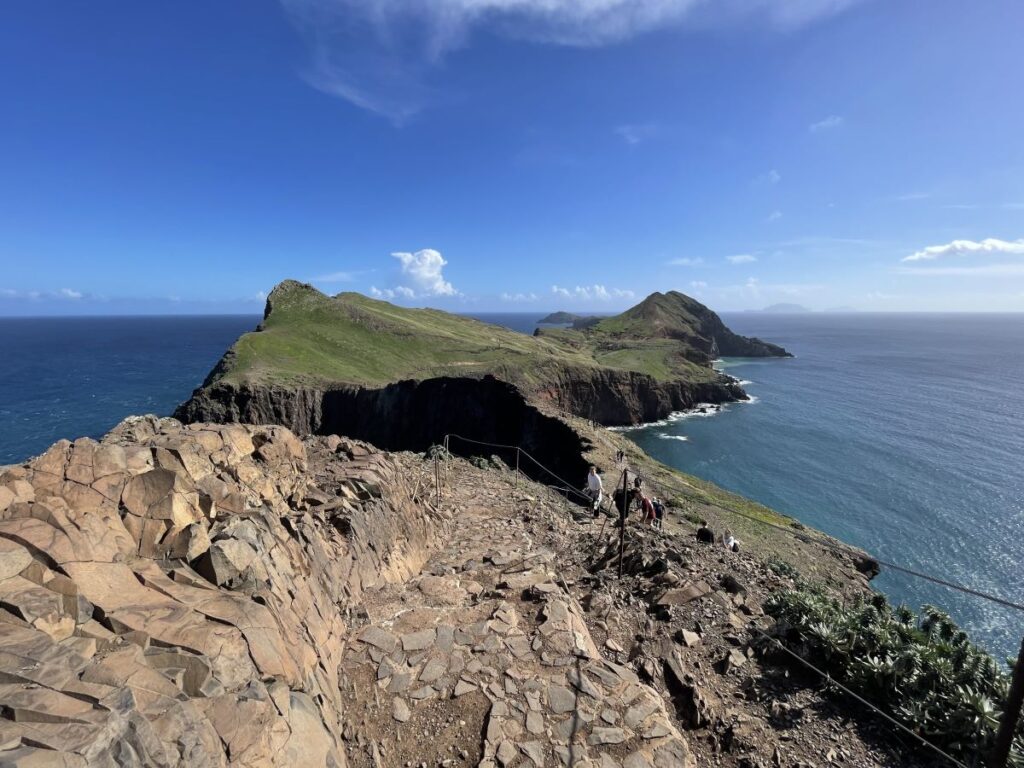
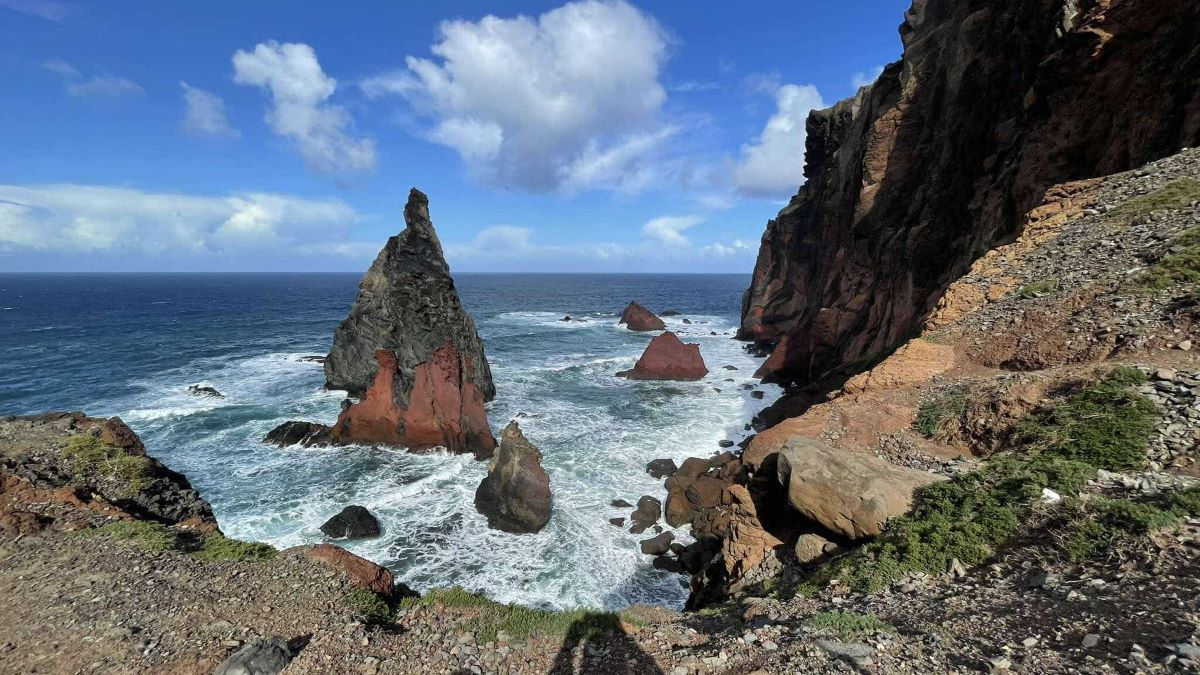
Walking the Ponta de São Lourenço peninsula trail (PR8 Route) offers a striking contrast to the lush interior vegetation of Madeira. Ponta de São Lourenço is a windy, rocky peninsula where the land juts out with long cliffs into the Atlantic Ocean.
Walking the trail from easy to moderate difficulty between Casa do Sardinha and Ponta do Furado, you will pass steep volcanic rock formations. And you’ll see the rare resilient plants that grow in this dry microclimate. If you come to Madeira in winter – you’ll see the peninsula in an emerald carpet – just as we did. At other times of year, the color of the rocks and trails is brick red, since São Lourenço is the southernmost on the island and considered the driest (but it can rain here as well, of course).
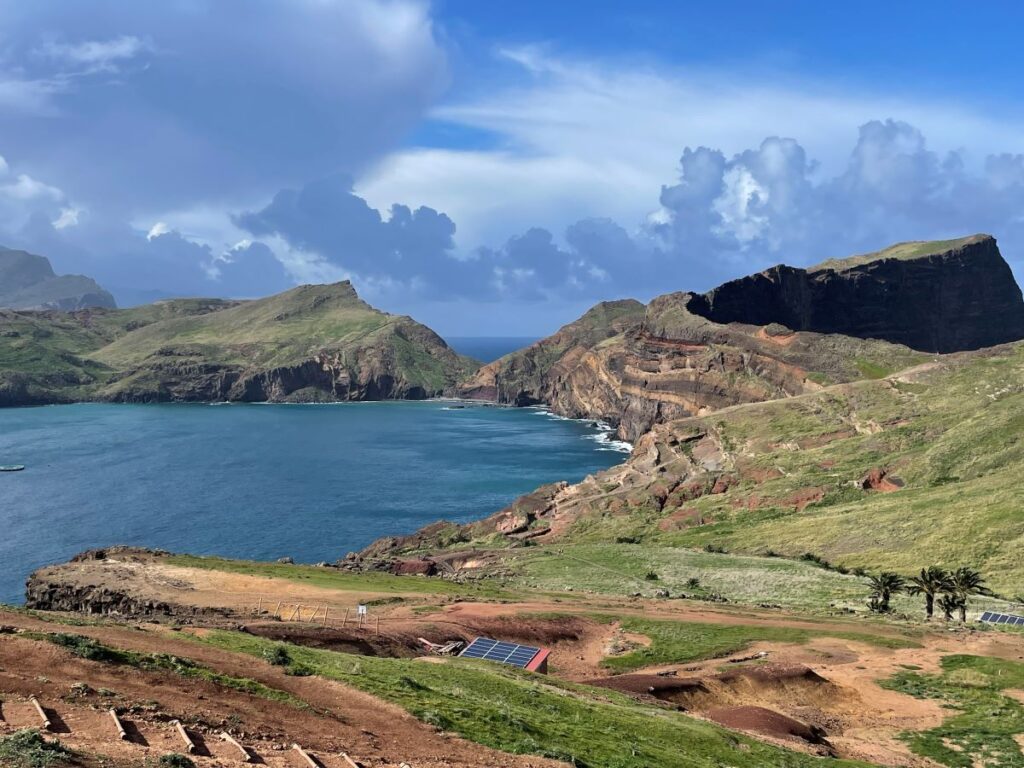
There are several viewpoints where you can stop to take photos or just enjoy the scenery.
At the end of the trail, you’ll see a lighthouse from afar, but the trail to it is closed. So, the PR8 Route is a wonderful blend of wildlife watching and breathtaking coastal views, perfect for those who want to see a wilder side of Madeira.
How to get there:
- By car to the trailhead – there is free parking (32°44’35.8″N 16°42’05.6″W), which is often not enough, so people park along the road and that’s normal (same on the whole island).
- You can get to the start of the route by bus SAM №113. But you need the one that goes all the way to the Baia D’Abra final stop.
6. Swim in the natural lava pools of Porto Moniz
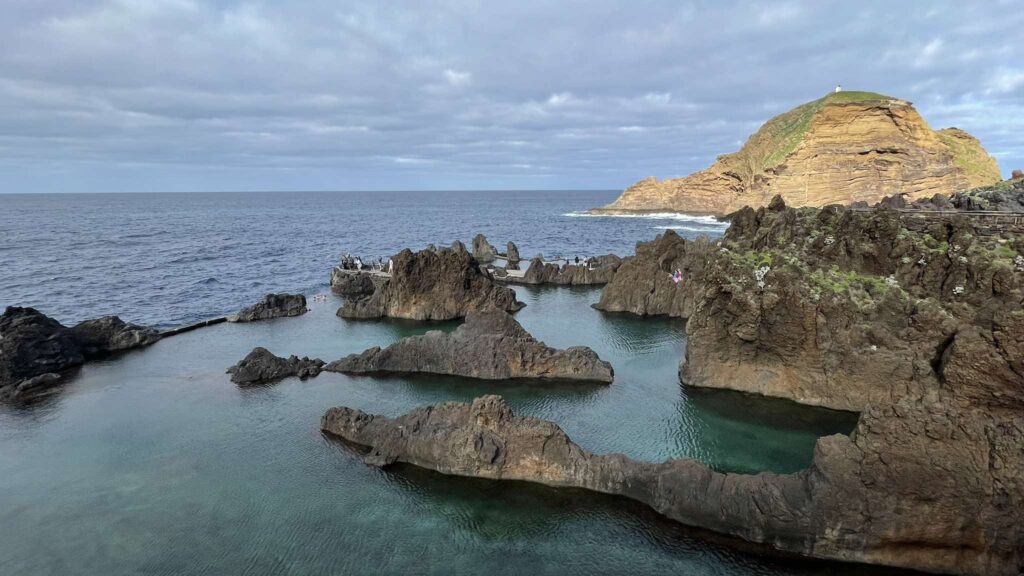
One of the most unique things you can do in Madeira is swim in the natural lava pools of Porto Moniz. These crystal clear pools were formed by volcanic lava gathering on the coast. They fill naturally with fresh Atlantic seawater, creating a safe and scenic place to swim right on the ocean’s edge.
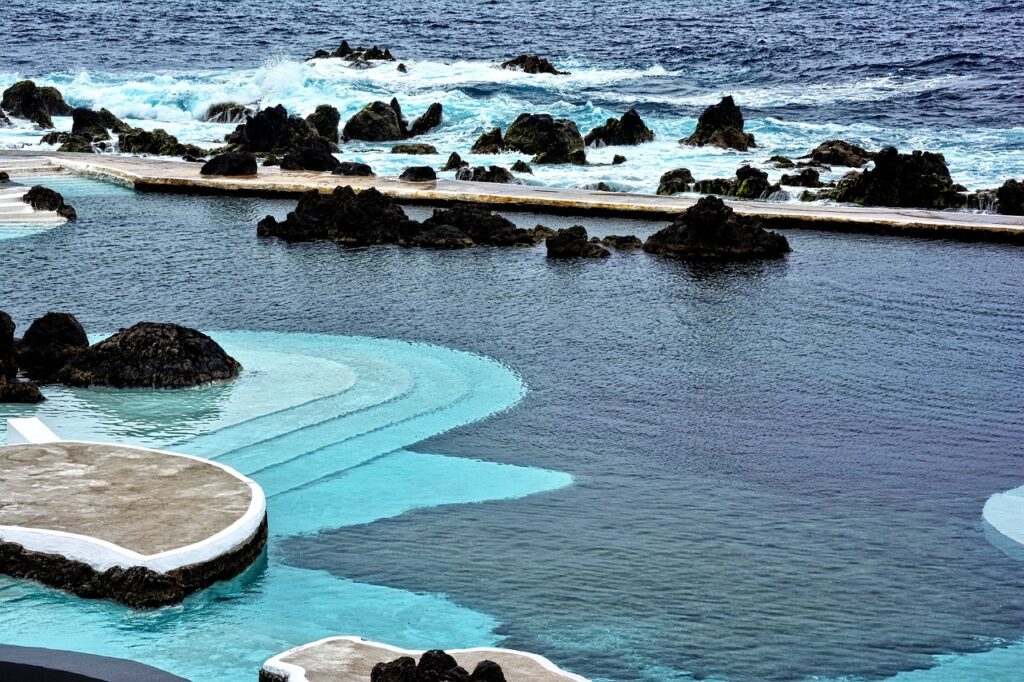
There are free and paid lava pools, but the fee for paid ones is very reasonable – 3 Euros. They are located near each other – so you can choose whether to swim for free or with comfort. The paid pools are well maintained, have walkways, changing rooms, and lifeguards during peak hours. This is good for families with children and older people.
The free, more natural pools are better for those looking for a quieter and fresher experience. But keep in mind that the entrance to the water can be very slippery – take rubber slippers and be careful. This is such an epic place for a refreshing swim or for great photos, even if you are not a water lover.
How to reach the lava pools:
Bus №80 but of course it’s best by car – there are both paid and free parking lots near the lava pools.
7. Enjoy the views from Cabo Girão bridge

During your trip to Madeira, you should definitely visit the Cabo Girão viewpoint. This is a glass-floored viewpoint located 580 meters above sea level on one of the highest sea cliffs in Europe. It’s not for the faint-hearted, but your reward is a stunning panoramic view of the Atlantic Ocean, the Funchal coast, and terraces with banana plantations.
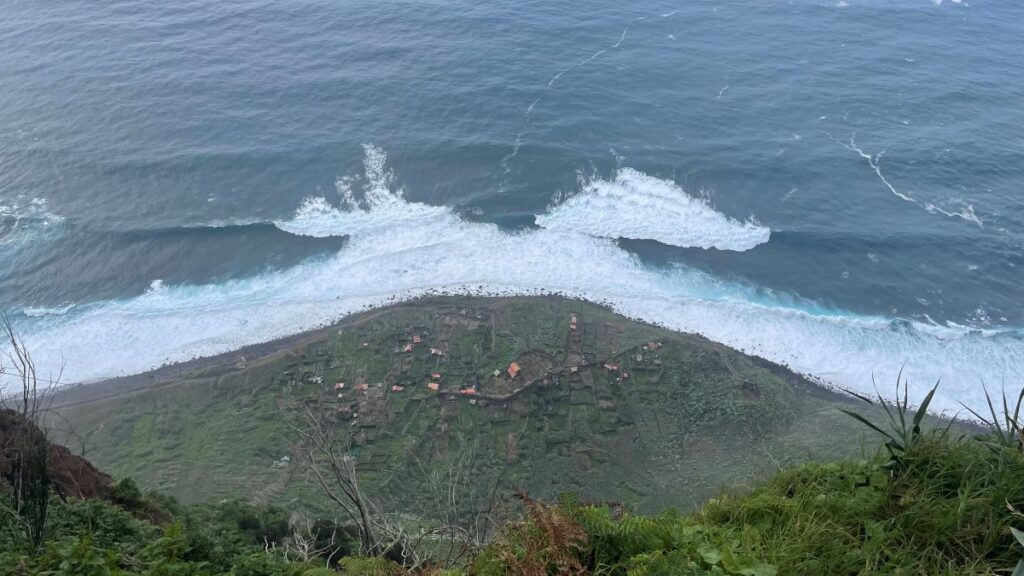
Dizzying views of the ocean and the gardens below are guaranteed. And if you wish to go down to the small secluded village by the ocean, use the funicular, which is located in a slightly different place – this is the Teleferico do Rancho, built for farmers who can only reach their plantations below in this way. But anyone can use it – the price is 10 Euros round trip (cash only). We did not go down because at the end of January there was maintenance. So check in advance for the schedule and work days.
How to get to Cabo Girão
- Buses of the Rodoeste company go to the Cabo Girão viewpoint – schedule here.
- By car – free parking is located here (32°39’26.6″N 17°00’18.6″W).
8. Plan a walk along Madeira’s levadas
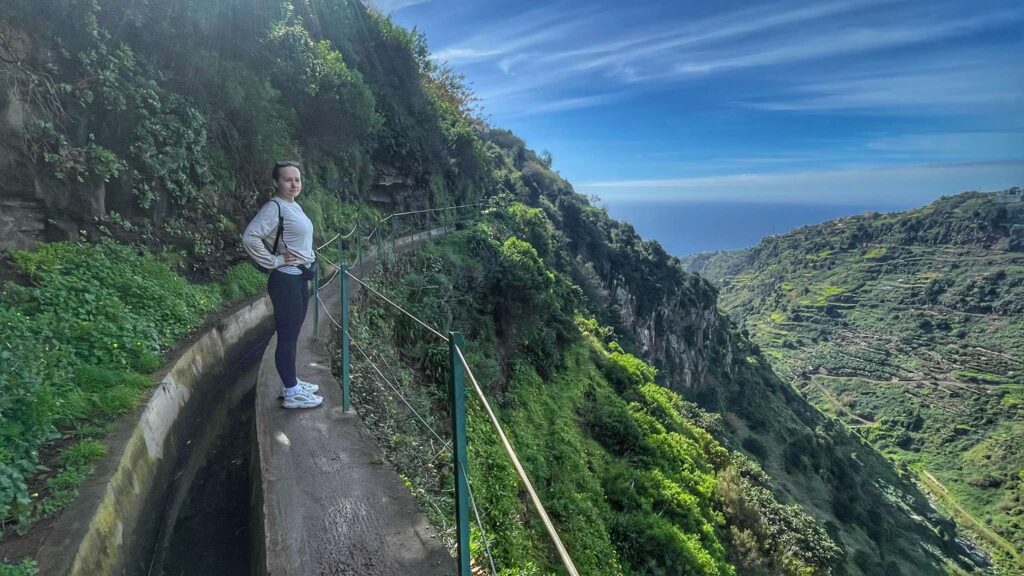
No trip to Madeira is complete without a walk along the levadas – the trails laid beside the island’s historic irrigation channels. Trails like Levada das 25 Fontes or Levada do Moinho – Levada Nova meander through laurel forests, past waterfalls, mossy rocks and deep ravines.
The levadas were built to transport water across the island. And now – these are wonderful hiking routes that allow visitors to peacefully explore Madeira’s natural sites.
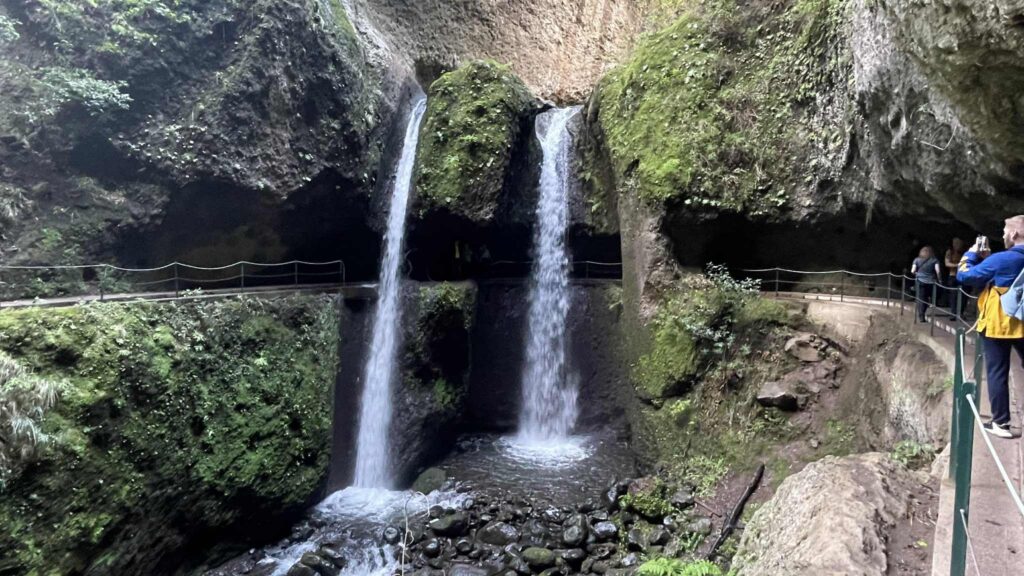
This stunning waterfall in the photo is part of the Levada do Moinho – Levada Nova hiking trail. It’s a 5 km walk one way and the same distance back. Behind the waterfall there is a tunnel where you can take amazing photos and get a unique experience.
We parked the car HERE, near the church, and then continued on foot. This is a very easy hike – mostly flat and with beautiful valley views. Location: Google maps
Levada walks are a wonderful feeling of cool forest air, vibrant greenery and the sound of water. It’s an experience combining adventure and tranquility. Just don’t forget to wear good non-slip sneakers and bring a flashlight for the tunnels.
9. Walk under the streams of Angels’ Waterfall
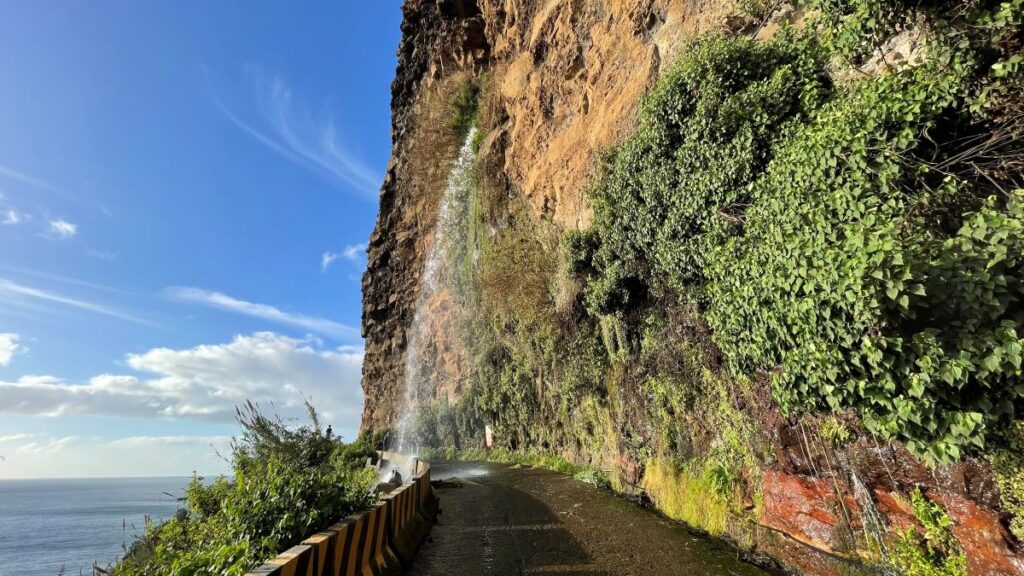
One of the most interesting sights in Madeira is Angels’ Waterfall (Cascata dos Anjos), which plunges from the cliff straight onto a (now closed) section of the ER101 road. But you can park near the waterfall and walk 100 meters to it.
Add this waterfall to your visit to Cabo Girão, which is en route from Funchal. Coordinates for the waterfall and parking (32°41’20.4″N 17°06’51.6″W).
10. Visit the most mystical laurel forest Fanal

Fanal Forest is one of the unique places in Madeira. It is part of the local forest Laurissilva / Laurissilva Forest (which translates to “Laurel Forest”). In 1999, this forest was declared a UNESCO World Heritage Site. Laurissilva is also preserved in Cape Verde, the Azores, and Canary Islands. It’s a park area with very old and whimsical laurel trees, which look truly spooky and mystical on foggy and rainy days.
Just walk around the area and find the strangest trees for that special photo. This is a rather unique adventure, but you should really catch a cloudy or rainy day for that mystical fog. On a clear day it’s not the same!
Location: Google maps
How to reach Fanal Forest:
- You can come here by rental car – free parking here.
- Or buy a ready-made tour to Fanal, which will also include other locations in the north of the island.
Tips for Getting Around Madeira
Madeira is a small island, but getting around still requires some planning to make the most of your travel time. There are several different (some convenient, some not) ways to explore this wonderful island, depending on where you stay on Madeira .
Car rental on Madeira:
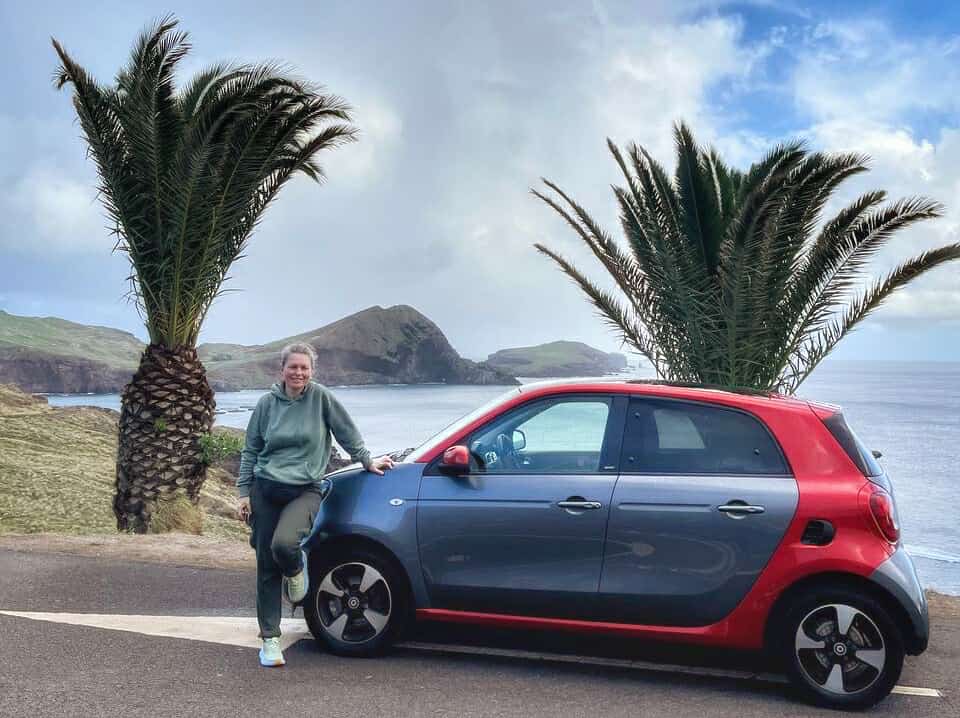
The best way to get around Madeira is by car. Most tourists who visit the island rent a car, and I recommend doing the same (if you have a driving license – a Ukrainian plastic card is enough). Renting a car is a convenient option for travelers anywhere, but in Madeira it’s different: it’s more than a choice, it’s practically a requirement.
The roads in Madeira are generally in good condition, though some mountain routes can be narrow and winding. A car lets you easily visit remote villages, Levada trails, and see impressive views from remote viewpoints.
As always, I searched for a suitable car in advance on the aggregator Rentalcars.com – there’s a large choice of rental companies, you can read reviews and compare conditions and prices.
Taxi
Taxis are available, especially in Funchal, and are a convenient way to get from the airport or around town. Though not always cheap, they are ideal for short trips or if you want a door-to-door service without the hassle of driving on mountain roads.
Public transport
If you don’t drive, there is a public bus system on the island connecting Funchal with most towns and villages. Bus prices are affordable (– 2.5 euros per ride) – a great option for budget travelers. Just keep in mind that some routes can be slower because of winding roads and stops. And sometimes it’s hard to find a stop – which can even be quite a quest.
- Crimson buses Eacl – suitable for travel to the eastern suburbs of Funchal.
- Green buses SAM will help you get to and from the airport, and also serve the east and northeast directions.
- Yellow buses Horarios do Funchal – good for getting around the main city Funchal, and also for routes to the center and northeast of the island.
- Red buses Rodoeste – serve the center, west, north and northwest of the island.
Cable cars

To enjoy scenic views, or to reach remote corners and beaches of Madeira, I recommend using the cable cars. For example, the well-known cable car from Funchal to Monte. Or to see Achadas da Cruz – a piece of land on the ocean’s edge, reminiscent of the Lost World. It’s impossible to drive there – only the cable car for 5 euros round trip.
Excursions and Transfers
Guided walking tours:
- Many companies offer guided walking tours that include transport to and from the trailhead. This can be a convenient option if you want to explore without worrying about logistics.
- Examples include Madeira Explorers, WalkMe Madeira, and Madeira Island Tours .
Tips for Planning a Trip to Madeira

Research & Maps:
Use apps like Maps.me or AllTrails for detailed maps of trails and offline navigation. Get a paper map of local hikes at the tourist office or a bookshop in Funchal. For driving, I recommend installing the Waze app – it works better on the island than Google Maps.
Weather and gear:
Madeira’s weather can be unpredictable. Before planning to visit any area, it’s best to check the website IPMA-Madeira. Dress in layers and bring waterproof gear. Wear hiking/trail sneakers with a non-slip sole and take enough water and snacks with you.
Accommodation:
Book accommodation in advance; I use the traditional Booking.com – Madeira. If you plan to stay on the island for at least a week and travel by car – I recommend planning nights in several parts of the island. But if you plan to use public transport – then Funchal is a good base with good bus connections to many routes.
Recommended to read: Where to stay in Madeira – places and travel style, tips from experience
Emergency service numbers :
Save the local emergency numbers on your phone. The European emergency number 112 is also available in Madeira.
Useful articles and links:
- Beaches in October – where to relax at the end of the velvet season
- Let’s go to Madeira – island guide
- Alentejo Coast – where to find Portugal’s most beautiful wild beaches
- Rota Vicentina – walking along the ocean
Car rental – affordable options are always on the aggregator Rentalcars.com
Green Card and travel health insurance for trips abroad – online at HotlineFinance
Hotel and apartment booking – Booking.com