Sicily – weekly travel itinerary, transportation, beaches and iconic cities. What to do in Sicily in spring, what to see, taste, and bring home.
The island of Sicily is a popular tourist destination. In summer, it’s crowded with tourists, very hot and expensive. And spring (and fall, too) is the perfect season for a week-long vacation, when the beaches are deserted, hotels are half the price, and the food in restaurants is as delicious as in summer.
I offer extensive guided tours of Italian Sicily, where you can enjoy seafood and sweets with local wine, sunbathe on the island’s best beaches, wander among ancient Greek temples and Roman amphitheaters. You will learn what to do in the largest cities – Catania and Palermo– and how to climb Mount Etna, the highest volcano in Europe.
Season – when is the best time to go to Sicily

The tourist season in Sicily lasts all year round, and it all depends on what your plans are for the southern Italian island. In summer, Sicily is filled with beachgoers, and spring is the perfect time to see the island’s most striking sights without suffering from the sweltering heat. March and April are warm here, during the day the air temperature reaches 20-25 ° C, the sea water is from +15 to +18 ° C, but few locals are already soaking up the sun on the beaches, so there is enough space for everyone.
Accommodation – where to stay on Sicily

The main towns and attractions are located around the perimeter of the island along the coastline, but you can settle both in close proximity to the beaches and inland. What are the options?
First of all, these are hotels (double rooms from €45 per night).
Secondly, a huge selection of mini-hotels B&B (bed and breakfast) – from €35 for a double room with breakfast.
Thirdly, Italy is an agrarian country, and so is Sicily, and there is a special kind of living here – agriturismo: a private farm in the countryside with a large house where the owners and guests live. Agriturismos have their own restaurant, and swimming pool, and often have a large area with vineyards, fields, and olive plantations.
Transportation – how to travel on Sicily

When tourists look at a map of Sicily, they underestimate the scale of the island. In addition to being the largest on the Mediterranean, it has a wide variety of attractions scattered around its perimeter. To fit at least half of it into a weekly itinerary, you need to try and choose the right type of transportation.
Buses on Sicily
For those who do not drive, buses will come to the rescue. Buses in Sicily run according to the schedule, which is available at every stop. Stops are marked with the inscription“Fermata“. Buses run from 6:00 am to 10:00 pm with a break of 10-15 minutes (depending on the day of the week – less frequently on weekends).
Tickets for city buses for 100 minutes of travel cost from €2 – one ticket can be used several times in different types of transport if you make transfers at the specified time. Tickets are sold at tobacco and newspaper kiosks, at the bar counter, and at ticket vending machines. Be sure to compost the ticket inside the bus – otherwise, it is invalid.
There are three bus companies in Sicily: SAIS, Interbus, AST – they travel between the major cities of Catania, Palermo, Enna, Ragusa, Syracuse, Messina and the surrounding villages. Etna Trasporti is located on the outskirts of Catania and around Etna.
Trains on Sicily
Trenitalia trains run through Sicily – www.trenitalia.com. Unlike on the mainland, where trains run very frequently and to different regions, trains in Sicily are not the most successful mode of transportation.
First of all, it seems that the oldest and slowest trains have been brought here, and they are not very comfortable.
Secondly, the route network is not as developed and is tied to large cities, and you will have to travel with many long transfers. For example, to get from Catania to Agrigento, you will have to drive 4-6 hours, while by car it will take a maximum of an hour and a half. Or the train from Palermo to Catania, because there are mountains inside the island, goes around the island with a change of train in Messina – very inconvenient and long, about 5.5 hours on the way.
Also, trains in Sicily often do not adhere to the schedule. Sometimes the train may simply not arrive at the right time, although it will be indicated in the schedule. If you do decide to travel by train, don’t forget to validate your ticket at the yellow validator on the platform before boarding.
In general, it is unlikely that you will be able to get to remote areas by bus or train, so when planning to travel by public transport, do not overload your route with too many attractions. For example, you can plan a visit to the two largest cities: Catania and Palermo, and the attractions that are located in their vicinity.
Rent a car on Sicily

The ideal option is to travel around Sicily in a rented car. The rental had cost from € 12 per day + full insurance against damage to the body, glass, mirrors, + passenger and driver insurance – from € 13 per day.
It is advisable not to save on full insurance: Sicilian drivers do not always follow the rules, plus narrow streets and little parking space – someone is bound to hit your car. In general, a rented car in the low season (spring and autumn) will cost 25 euros per day of use.

The cheapest way to rent is upon arrival at one of the airports: Catania, Palermo, Trapani – there are many different rental companies here, both international – Hertz, Sixt, and local – Italy Car Rent, Sicily by Car, where the rental price is 20-25% lower.
I was traditionally looking for the cheapest car on Rentalcars.com – In fact, I chose the Sicilian company Sicily by Car, because I could rent a nice Fiat for 12 euros.
Parking lots in Sicily: in cities, paid parking starts at €2 per hour or free of charge if you look for a place. For example, at supermarkets (most often there is a limit – no more than 2 hours free). When booking a hotel, choose accommodation with its own free parking.
I recommend to read – Our week-long itinerary on Sicily by car :
Catania – Ragusa – Agrigento and the Valley of the Temples – Marsala – Palermo – Cefalu – Taormina – Etna – Catania. In addition to these cities, it’s time to visit several beaches, go to the mountains, and visit various attractions in Sicily.
What to do in Sicily

Sicily is an explosive mix of Roman, Greek and North African (Arab) culture. Therefore, the island is very different from mainland Italy:
- Sicilians speak both Italian and the local dialect,
- Sicilian cuisine is bright with its own flavors,
- Historical monuments, architecture, and lifestyle – it’s the classic South with a touch of disorder, which should be treated with a little more humor,
- A lot of dirt in cities and along roads is a very unpleasant surprise, but it is also part of the “culture” of Sicily.
The locals are emotional southerners living on a volcano: they gesticulate violently. They talk loudly, and do not follow traffic rules. However, they are always friendly to guests, even though they often do not speak English.
Sicilian cuisine and its features

Sicilian cuisine is perhaps one of the most important reasons to visit the island. If Italy has a cult of food, then Sicily has a cult of food-the Sicilians talk about what they will cook and eat for breakfast, lunch, and dinner. And the food here is so delicious that it’s impossible to refuse. It’s not necessary – it’s better to get the most out of the trip, and then take yourself into the hedgehog’s mittens. Food here is cheaper than in mainland Italy – a meal for two in a restaurant will cost up to €30 with wine, main course, and appetizers.
So, what should you try on Sicily?

- First, seafood in all its forms: sardines stuffed with nuts and raisins, pasta with clams and cuttlefish ink, baked crabs and scallops, octopus and squid. Be sure to try Skoppularikki, a roast with squid and cuttlefish, and Stummi abbuttunati, stuffed mackerel.
- Secondly, main dishes, such as Sicilian pizza spinach, are rather white soft bread with tomato sauce, olive oil, oregano, fried onions, anchovies, and caciocavallo or pecorino cheese. In the center of the island there are huge pastures for sheep – order baked lamb with caponata – a cold roast of eggplant, olives, celery, onions and garlic.
- Thirdly, Sicilian street food: arancini – rice balls with a filling, Palermo cakes made from chickpea flour panelle, and cazzili – pies with potatoes and spices, especially popular in Palermo and Catania.
- And of course, sweets – the famous cannoli waffle tubes with ricotta cream, chocolate and fruit jams. Granita is finely crushed ice with sugar or chocolate.
- Drinks are traditional coffee (remember that latte is not a drink name, but milk in Italian). They drink cappuccino before lunch. Drinking coffee at the bar is cheaper than at a table – the price tag will include a percentage for service.
- What a wine – Sicily is famous for its exceptionally delicious varieties: Nero d’Avola, Frappato, Nerello Mascalese – red, and Grillo, Catarratto, Carricante – white.
Don’t forget that from 12:00 to 16:00, the traditional siesta reigns on the island – everything is closed: shops, cafes and even banks, and there are few people on the streets.
Beaches and sea of Sicily

Sicily is washed by three seas at once: the Tyrrhenian Sea to the north, the Mediterranean Sea to the south, and the Ionian Sea to the west. Due to the large size of the island and the presence of a volcano, there are sandy, volcanic, rocky beaches and picturesque lagoons hidden from prying eyes. It would take two weeks to explore everything. I would like to note the most popular and unusual places for seaside recreation.
White sand beaches

The white sandy beaches are located on the northwestern tip of the island, at the junction of the Mediterranean and Tyrrhenian Seas. The beach season starts earlier here – in April, the water warms up to 18℃ and the swimming season can be opened.
- San Vito Lo Copo is located in a bay that protects the beach from the waves on the outskirts of Palermo: blue water, white sand, gentle entrance, boats and a mountain hanging over the northwestern part of the beach – it looks very romantic, there are few people in spring.
- Mondello is another sandy beach near Palermo: the two capes of Monte Piligrimo and Monte Gallo form a quiet bay with a wide sandy spit. Here, calm warm sea, clean white sand, hotels and villas, cafes and restaurants located along the entire spit frame Mondello Beach.
- Cefalu is a beach in a small town of the same name 20 km from Palermo, also famous for its clear water, gentle entrance and white sand.
- Marina di Ragusa is a beach in the south of the island with golden sand, well-maintained and at the same time free of charge, umbrellas and sunbeds for a fee.
Black sand beaches

In the north of the island, there are many deserted beaches covered with black volcanic sand and pebbles, which were formed due to the active work of the Etna volcano.
- Li Cuti Beach on the outskirts of Catania will surprise you with its huge size, emptiness and combination of clear water and black beach.
- Achi Castella is a beach covered with large black pebbles and boulders, the main decoration of which is eight rocks located in the sea waters near the shore. This place is great for diving and snorkeling, equipment for which can be rented right on the beach. There are many hotels, cafes, and restaurants in the area.
The most beautiful beaches on Sicily

- Giardini Naxos is a huge white sandy beach in the town of Taormina, especially good for vacationers with children – a gentle entrance and all the infrastructure.
- Isola Bella is a mixed sand and pebble, which consists of two parts separated by a small island. It is considered one of the most beautiful beaches in Sicily. A free and well-maintained beach with many restaurants along it, offering great views of the bay.
- The Scala dei Turci is a white cliff near Agrigento, which looks like a staircase and the sandy beach at its foot is among the ten most beautiful beaches in the world. This unusual lime structure of nature was named after the Turkish Staircase.
Sights – what to see on Sicily
Etna

Etna is perhaps the island’s main attraction and the largest active volcano in Europe. Eruptions occur regularly – the last one was in February. But because there are more than forty craters on Etna, eruptions occur frequently, but without any problems for the nearby towns.
Although throughout history, Etna has caused many problems for the people of Sicily. For example, the city of Catania has been destroyed twice in its history and rebuilt completely from scratch.
You can visit Etna as part of an organized tour – the cost starts from 100 €. Or you can do it yourself as follows:
- By car – book a car in advance to get around the island – you won’t regret it, especially when you have the opportunity to see something away from public transportation. You can get to the parking lot by car, which is located at the foot of the volcano. Then either on foot or by cable car (more on that below).
- By bus – you can get to the foot of the volcano (the cable car parking lot) by AST city bus, which departs from the main bus station (Piazza Papa Giovanni XXIII) once a day at 8:15 am and back from Etna at 16:30. The journey takes 2 hours and costs €3.4 for a one-way ticket (€6.60 round trip). Details on the company’s website.
- Then take the funicular to an altitude of 2500 meters. Rates only for the CANAL ROAD from the departure station at an altitude of 1923 to the Bar at an altitude of 2500: adults (from 11 years old) 30,00 € per person | discount for children: up to 4 years old FREE – from 5 to 10 years old: 23,00 euros. Details on the funicular’s website.
Catania

The city is located at the foot of the Etna Mountains, with narrow streets and bustling squares. Spend at least one day there to immerse yourself in the atmosphere of authentic Sicily: laundry on ropes, boys chasing a ball through the streets, the port, markets and cafes.

Be sure to go to the fish market near the Cathedral – A’ Piscaria Mercato del Pesce. If you don’t buy fish or other sea creatures there, you can admire the variety of marine products and the process of trading on the market. Prices are low, everything is absolutely fresh.
The Roman Theater and the Odeon are a 7-10 minute walk from the Cathedral Square. (Entrance fee is 5 €).
Hotels in Catania:
Valley of the Temples

is located 5 km from the town of Agrigento – is a complex of ten ancient temples and ruins dating back to the 5th-6th centuries BC, which have partially survived to this day. Entrance fee is 10 € (free admission on the first Sunday of every month). Open daily from 8:30 to 19:00. On the territory of more than 4 square kilometers there are the remains of the temples of the V century, Hera or Juno Lacinia (450 BC), the temple of Hercules (510 BC), the temple of Jupiter (480-479 BC), as well as the ruins of the temple of the Dioscuri, the temple of Aesculapius, the temple of Ephesus or Vulcan and the necropolis of early Christians.
Hotels in Agrigento:
Palermo

The capital of the province and the main city of Sicily. The city is full of contrasts, with everything from gold leafed churches to slums inhabited by immigrants from North Africa. In Palermo, you can feel the eclecticism of the island’s history and culture: there are Arab mosques, Catholic churches, and palaces of former Sicilian kings.
The center of Palermo is home to the most beautiful Cathedral, the Norman Palace (entrance fee 12€) and the famous Capuchin Catacombs, which house more than eight thousand mummies (ticket 3€). The decoration of the church of San Giuseppe Dei Teatini is very beautiful, especially the ceilings, which are made of majolica, a type of tile with a pattern of painted glaze.
To feel the multiculturalism of this city, you should visit La Vucciria market , one of the oldest markets in Italy, dating back to the 7th century. е. You can come here in the morning on any day except Sunday – the freshest products are brought in in the morning: fruits and vegetables, fish and shellfish, spices and olives. Immerse yourself in the real noisy, bright and flavorful south of Italy.
Hotels in Palermo:
Marsala

It is a small town in the neighborhood of Trapani, located in the west of Sicily. It is known for Marsala wine and salt production. Be sure to schedule a winery tour and wine tasting (from 35 € per person). In the evening, visit the salt lakes and mills located in the neighborhood. The sunset turns the salt fields and piles of salt pink – a beautiful sight and a branded image of western Sicily.
Hotels in Trapani:
Terms of Sicily

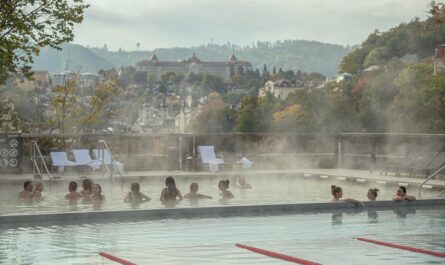
Sicilian thermae are a direct result of the island’s volcanic activity. Thermal spas are scattered throughout the island, and there is a huge selection of spa hotels where you can order wellness treatments. For those who just want to swim in the hot springs, there are several options.
For example, the free Terme Segestane, located near the city of Trapani – Castellammare del Golfo. It is believed that here nymphs washed Hercules with thermal waters to restore his strength. And the hero Aeneas, who fought in the Trojan War, left his companions here so that they could refresh themselves at the healing spring.
Or go to the spa center (Contrada Ponte Bagni, 1, 91014 Castellammare del Golfo TP), which is open from morning to evening all days except Thursday and the first half of Monday. There are several swimming pools where the water reaches a temperature of 46-48 ° C (entrance fee is 10 € for adults, 5 € for children. www.termesegestane.com
Taormina

It is the most expensive and touristy town in Sicily. There are many fashionable villas and ancient palases. Olso are very beautiful beaches and prices 20-30% higher than on the rest of the island.
In ancient times, the city was called Tavromenion, and since 215 it has been ruled by the Greeks, Romans, Byzantines, Arabs, and Normans in turn. The city has preserved many artifacts and ancient architectural masterpieces.
It is worth visiting the ancient theater, which offers a magnificent view of the sea and the volcano. The Corvaja Palace, located in Piazza Vittorio Emmanuele. It used to be an ancient forum and is now a tourist center where you can get a free map of the city and its surroundings.
Hotels in Tarmina:
What to bring as a gift from Sicily

- Lava souvenirs: traditional trinkets and magnets, dishes and figurines made of lava. Lava bottles with wine sealed in them. The taste of this wine is not very good. For this purpose, buy a couple of bottles of wine whose taste you like.
- Sicilian cheeses: pecorino, caciocavallo, ragusano, maiorkino, will remind us of the flavors of Sicily for some time to come.
- Olive oil is a flavorful green oil as a gift for yourself and your friends.
- Marsala salt – you can buy it for €3-5 per small bag. Or collect it in a bag if you visit the salt lakes.
- Sweets: marzipan cakes – cassatine. Take care to transport them in your carry-on luggage undamaged. Or torroncini – sweets with nougat and pistachios. Modican chocolate, made using a unique technology introduced by the Spanish in the 16th century.
- Sun-dried tomatoes in olive oil and spices. A jar will not take up much space, but will be a delicious addition to bruschetta or salad.
- Spices – buy a mixture of spicy Sicilian herbs at the Palermo market. Or saffron for pasta and risotto, or cinnamon sticks for desserts and drinks.
Remember that most stores in Sicily are open from 08:00-09:00 am to 13:00 and from 15:00 to 19:00-19:30. Some stores are closed on Sunday and Monday mornings.
Getting to Sicily
There are almost no direct flights to Sicily. But there are many options to get there with one stopover.
Useful articles and links:
- Carnivals in Europe – unknown, but very bright and interesting
- 6 destinations for a beach vacation in Europe in April
- Venice – a small trip for three days
- Tropea – complete guide about the rest on the best beaches of Calabria, Italy
Find train tickets in Europe conveniently on Trainline
Booking of hotels and apartments – Booking.com