
7-day route in Andalusia in an independent trip to the South of Spain. The most interesting cities are Ronda, Granada, Cordoba, and Seville.
In May 2023, another of my dreams came true – I had a trip to Andalusia, the southernmost part of Spain.
This trip combined historical cities, palaces, and cathedrals, and visited fairs and festivals. Also, we walked the 7 days of the Camino Mosarabe from Granada to Cordoba. It was a real immersion in Andalusia – both tourist, hiking, and cultural and gastronomic. We saw the tourist pictures and the ordinary life of this region.
It is impossible to put everything in one story. So this article contains general information about the route.
Travel route in Andalusia
We arrived in Malaga, but did not stay in this seaside city because in May the sea water on the Costa del Sol is still very cold. So almost immediately from the airport, we set off to explore the most beautiful cities that are not connected to the sea.

The next weekly route has been released:
Málaga – Ronda – Setenil de las Bodegas – Granada – Cordoba – Seville
What you need to know about Andalusia
There are a few things you need to know about Andalusia before you go on a trip there:
- It’s siesta time. In the summer, all shops and restaurants close for siesta (usually between 4pm and 8pm). Most establishments are also closed on Sundays. Restaurants are open during the day until 16:00, then close for siesta and open in the evening after 20:00.
- On Mondays, local bars or restaurants may be closed all day. It’s a fun weekend getaway for the owners after work.
- Holidays. Spain is a country with some of the largest public holidays in the world. This means that there is always a fiesta, a celebration, somewhere. So check in advance whether shops, restaurants, or roads are closed, whether buses are running that day, or whether they have a different schedule. Or on these days in a certain city, housing prices may rise sharply because of a holiday or festival that is held there every year.
- Always have cash on you, especially in small villages where cards are sometimes not accepted. In large cities, small shops may also limit card payments to a certain amount (up to 5-10 euros).
- Take extra layers of clothing if you are traveling to the mountains, as it can get cooler in the evenings.
- On Sunday, all markets and most grocery stores are closed. This applies not only to Andalusia but to the whole of Spain.
The best time to visit Andalusia

Summer in Andalusia
Andalusia is the southernmost province of Spain, so it is very hot in summer. In August, temperatures in Andalusia can exceed +40°C. No wonder the region is nicknamed “la sartén de Europa,” or the European frying pan.
But this does not prevent tourists from coming here in the summer – the vacation season and the sea still attract people to this part of Spain. The sea on the Costa del Sol, Costa de la Luz and Costa de Almeria warms up to a comfortable +23-25 C in different months: in June you can already swim on the Costa de Almeria, on the beaches of the Costa del Sol and Costa de la Luz – closer to July.
Be sure to plan your sightseeing early in the morning or in the evening to avoid the sun. Remember that the hottest time of the day is usually around 16:00. Be sure to wear a hat and glasses, use sunscreen, and drink plenty of water.
The best time in Andalusia
Visiting the towns and villages of Andalusia, which are located inland – not by the sea – is best planned for spring and fall. The ideal time is April-May and mid-September-October. There is no heat, everything blooms in spring – trees, olives and flowers. In the fall, you can combine a cultural and beach vacation – the water in the sea begins to cool down only in October.
Winters in Andalusia are warm compared to our winters. It can be up to +15C during the day, but it can rain in November, December and January. As for me, it’s also a good time to walk around Andalusian cities under an umbrella – few people, tasty and beautiful in contrast to the clouds in the sky. But it should be remembered that houses and hotels do not have heating – at best, there will be an electric heater. So bring pajamas and warm socks for sleeping.
How you can travel in Andalusia – car, buses and train

There are several transportation options that will suit your needs when traveling in Andalusia. These include rented cars, trains, and buses. It all depends on who you are traveling with, how you are traveling, and how many places and sights you plan to see in one week.
Rent a car – you can rent a car, for example, at the airport of arrival and return it there, or in another city if there is a representative office of a rental company (this option will be about 50 euros more expensive). Renting a car is great for travelers who want to see as much as possible in one trip. That is, to immerse yourself not only in cities, but also to see natural locations that are difficult to reach by public transport. You can rent a car on this site – Rentalcars.com . This is a cool analog of Booking, not for housing, but for finding a car anywhere in the world. I use it – it’s very convenient.
Buses – there are different options, because there is a national carrier in Spain Alsa. Andalusia also has its own local bus companies. For example, Interbass or Avanza .
Trains Renfe – trains run between major cities in Spain, and there are also local trains that can be used to get to interesting places for 2-3 euros. But the railroad network is not as developed as the bus network. Unlike trains, buses go to almost every village, but on weekends they usually do not go to small villages.
Please note that not all tickets can be purchased online in advance, and tickets for suburban local trains can often be purchased only at the ticket office.
Ronda – the city of three bridges

Ronda is a beautiful small city in Andalusia with impressive historical monuments and stunning views. Ronda is located high on a rocky plateau, in the middle of the city is the dramatic El Tahoe Gorge, through which the Puente Nuevo Bridge was built. Rhonda is on the list “Pueblos Blancos” – the so-called white villages of Andalusia, from which I recommend starting your trip to this part of Spain.
We started our journey from Ronda, which is 80 kilometers from Malaga, where we arrived by plane. I planned two days and two nights in Ronda because the city is really beautiful and interesting. And also because there is an additional place near Rhonda that is worth visiting. This is another “white village” that can be seen during this time – Setenil de las Bodegas.
What to do in Ronda

- Spend a few days enjoying walks in the old part of the city and panoramic views at sunset.
- Visit the Puente Nueva Bridge, which divides the city into two parts. On one side is the Moorish old town, and on the other is the 15th-century “new” city of El Mercadillo. This bridge can be walked across on foot, or even better, viewed from various observation decks.
- One of the best ways to see Puente Nuevo is to go down and look up to really get a sense of the scale of this impressive piece of engineering.
- But this is not the only bridge in the city. Two others are also worth checking out – Puente Viejo (Old Bridge) and the smaller San Miguel Bridge (also known as the Arabian Bridge). Walk through each of them to see the gorge and the city’s historic buildings from a different perspective.
- Visit Plaza del Toros, one of the oldest bullfighting arenas in Spain, located in Ronda. It was built in 1785 and can accommodate 5000 spectators. The arena is unusual in that all seats are covered by two-story arched galleries.
- Explore the historic Arabian Baths, which are among the best preserved in Spain. They were built during the Moorish period of the 12th century and were used by Muslims to purify themselves before visiting the mosque. The design is similar to a Roman bathhouse with separate hot, warm, and cool rooms where people would gather and socialize.
- Enjoy panoramic views or watch the sunset in the gardens of Alameda del Tahoe. located on a cliffside.
- Or take an easy trekking route to the Mirador La Hoya Del Tajo viewpoint, which, in my opinion, offers the best view of the Puente Nueva bridge.
I recommend reading – Ronda, Spain – 10 things to do in the white city on a cliff
Small towns near Ronda – Setenil de las Bodegas
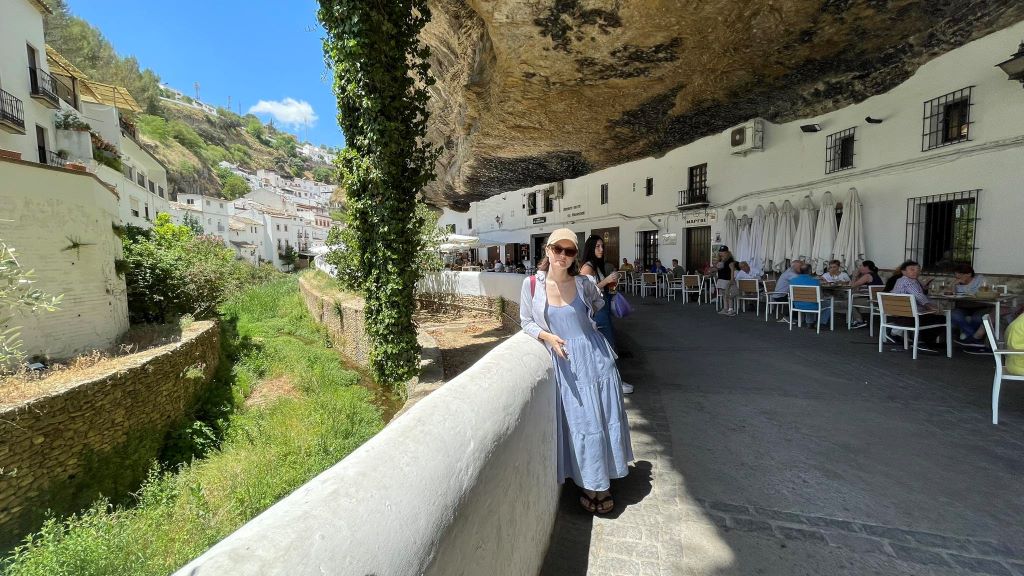
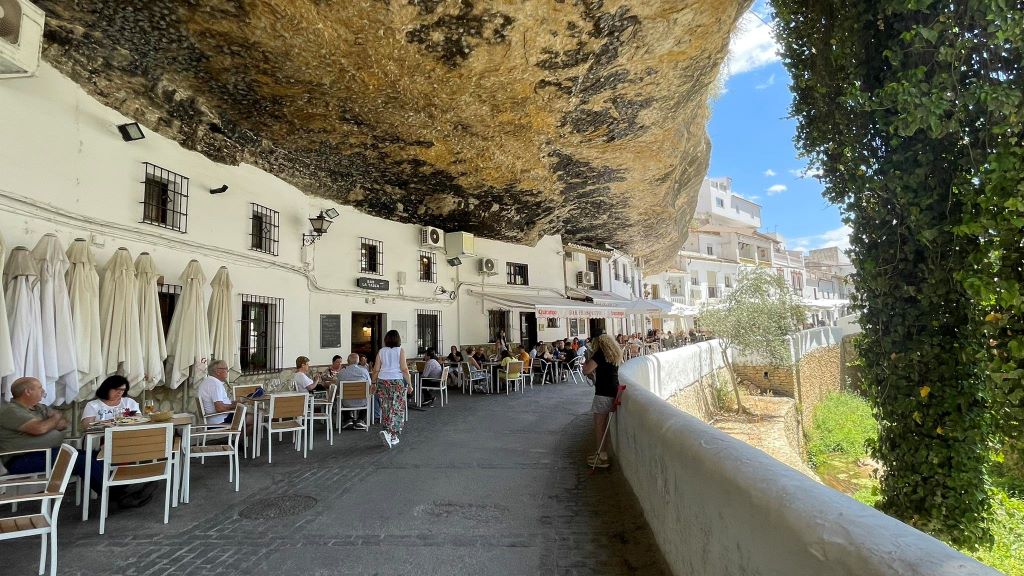
On the second day of visiting Ronda, I advise you to go to the neighboring town of Setenil de las Bodegas. This is another village included in the list of the most beautiful white villages in Andalusia. It is unusual because it is located in a deep canyon, the walls of which have become the walls and roofs of residents’ homes and restaurants.
The city is built on a rock, and its houses are made in caves. The views of the town are fantastic: you walk around the city, and suddenly around the corner you can see a rock hanging over several cafes. In general, it’s very strange how cars drive along the narrow, curvy serpentine streets there-sometimes they pass by cafe tables.

The city is famous for its meat delicacies, especially the beef tail baked in a chop. It’s extremely tasty. And for meat eaters, there is a shop with different kinds of jamon legs hanging everywhere.
And here (and in Ronda, too), tomatoes of unrealistic sizes are sooooo delicious – we had one weighed and it weighed a little over a kilogram! They are placed in piles on bar counters or in separate display cases so that restaurant visitors can order the signature Andalusian salad Tomate aliñado.
More information: Setenil de las Bodegas, Spain – the most beautiful white village in Andalusia
Where to stay in Ronda
We lived in the center of the Old Town, two blocks from the Puente Nueva Bridge. There were a lot of taverns and tapas bars on the street, which didn’t bother me, on the contrary, I didn’t have to come back for a long time at night after a delicious dinner.
- Catalonia Ronda≫ – is a beautiful hotel in the city center with a rooftop pool. The view from the pool to the bullring and fantastic views around Ronda.
- Ronda Hotel Polo≫ – is a nice hotel with affordable prices in the city center.
- Apartamentos Avanel≫ – apartments in Ronda’s old town with a private pool – are a good option in summer.
Granada – Moorish architecture and the impressive Alhambra
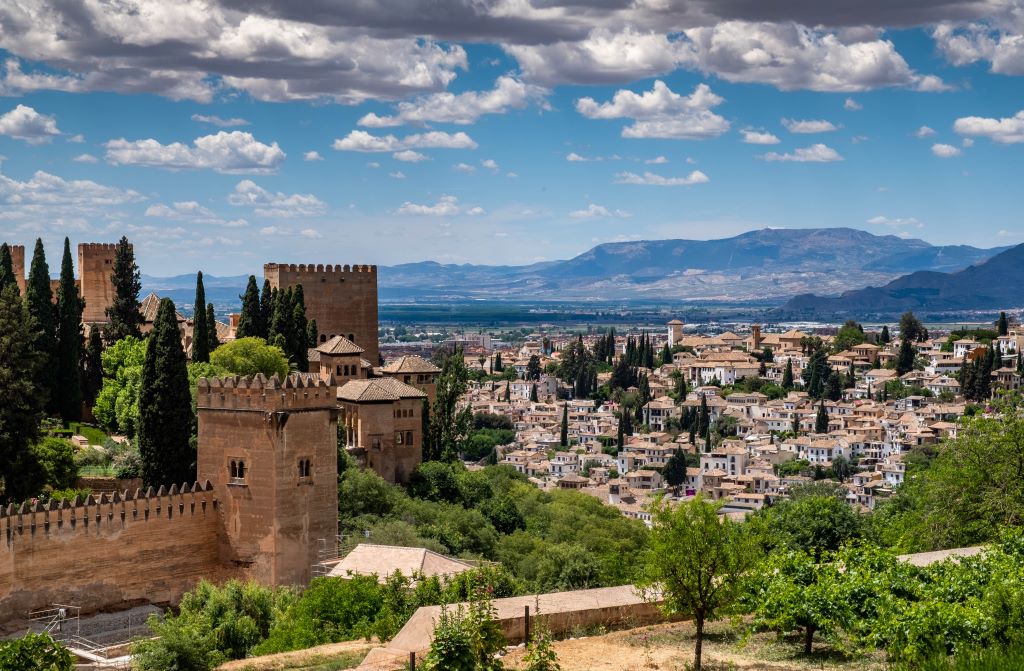
At first, you get off the train and don’t understand where this ancient city is that you saw in the pictures. Modern Granada has the same buildings as other cities. But when you get to the Albaicín neighborhood, you start to see narrow streets and endless stairs, walking up and down, carrying a heavy backpack.
Here it is – Granada, where the square near the Cathedral of St. Nicholas offers a stunning view of the Alhambra, the eighth wonder of the world, which is a must-see. If not, why did you come here in the first place?
What to do in Granada?

The most important attraction of Granada is Alhambra. An ancient Moors‘ residence located on a hill against the backdrop of the Sierra Nevada mountains. It can be seen from any open point in the city.
The Alhambra is a huge complex with palaces, a fortress, a church, and gardens of incredible beauty. This is such a popular attraction that you need to buy tickets in advance (I bought them a month before my visit). A full ticket to visit all parts of the Alhambra costs 18 euros, including a visit to the Nasrid Palace. In the latter, you have to make an appointment for a certain time, because a limited number of people enter the palace at the same time.
Get lost in the ancient Muslim neighborhood of Albaicín, located on a hill opposite the Alhambra. This neighborhood is a myriad of narrow streets and stairs.
There are also a lot of playgrounds (miradors) because the neighborhood is located on a hill. In Albaysin, you feel like you’re in the East-at least I felt like I was in the Moroccan Medina somewhere in Marrakech-immersed in tapas bars, hookah tea rooms, and Arabic shops.

There are a lot of viewpoints in Granada, but there are some very good ones:
Mirador San Nicolás is the most popular venue, especially in the evening. It offers a beautiful view of the Alhambra, and musicians and dancers gather here to put on shows for money. A less touristy viewpoint is Mirador de San Miguel Alto, which is quite a difficult path, but worth it.
Visit the Cathedral of Granada, a grand building that was built on the site of a Muslim mosque to commemorate the end of the Reconquista, the expulsion of the Moors from the Iberian Peninsula.
Where to stay in Granada
I advise you to stay in one of the hotels in the city center, but not in the Old Town of Albacore, where there are many stairs and you can only get there by taxi or small minibuses. The lower city center is easier to reach by public transport and on foot. And all the sights are very close, 5-10 minutes on foot.
- La Casa de la Trinidad≫ – is a nice hotel in the city center with excellent breakfasts.
- Sercotel Palacio de los Gamboa≫ – is a hotel with its own cozy Moorish-style patio and affordable prices.
- Pepa Home≫ – is a beautiful apartment hotel with self-catering rooms located in the city center.
More details: Things to do and see in Granada, Spain
Cordoba – patios, flamenco and a cathedral mosque
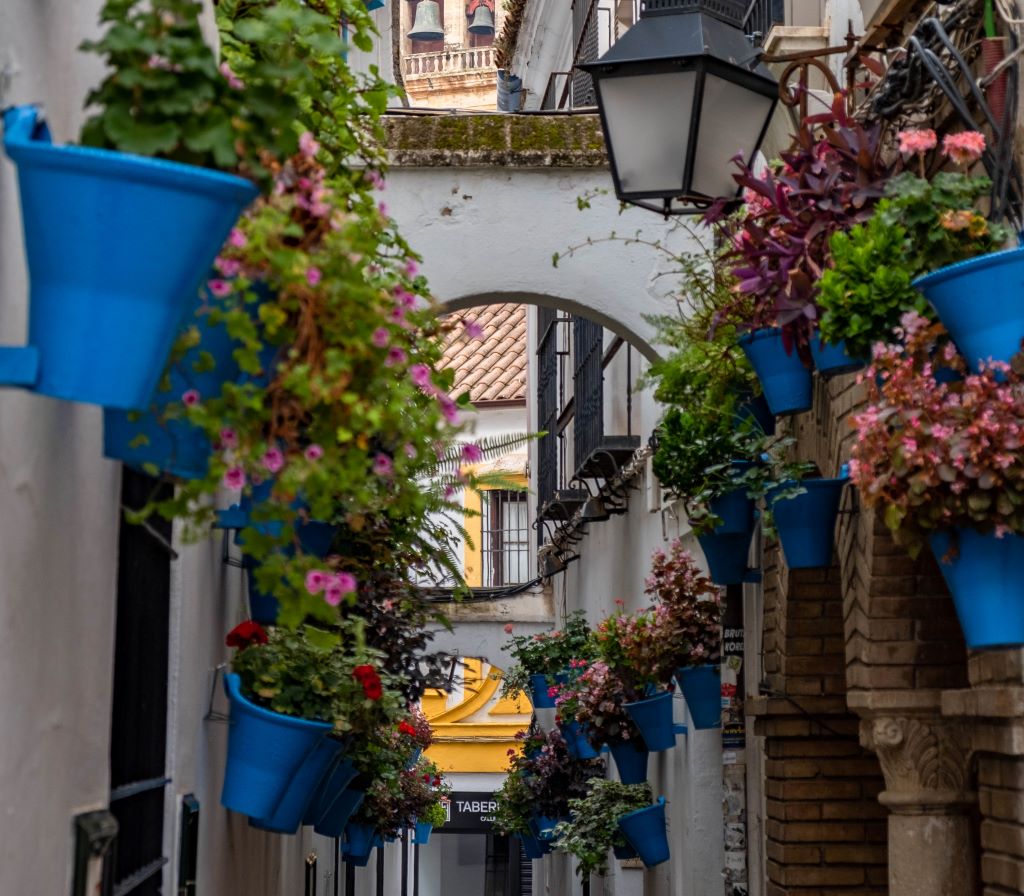
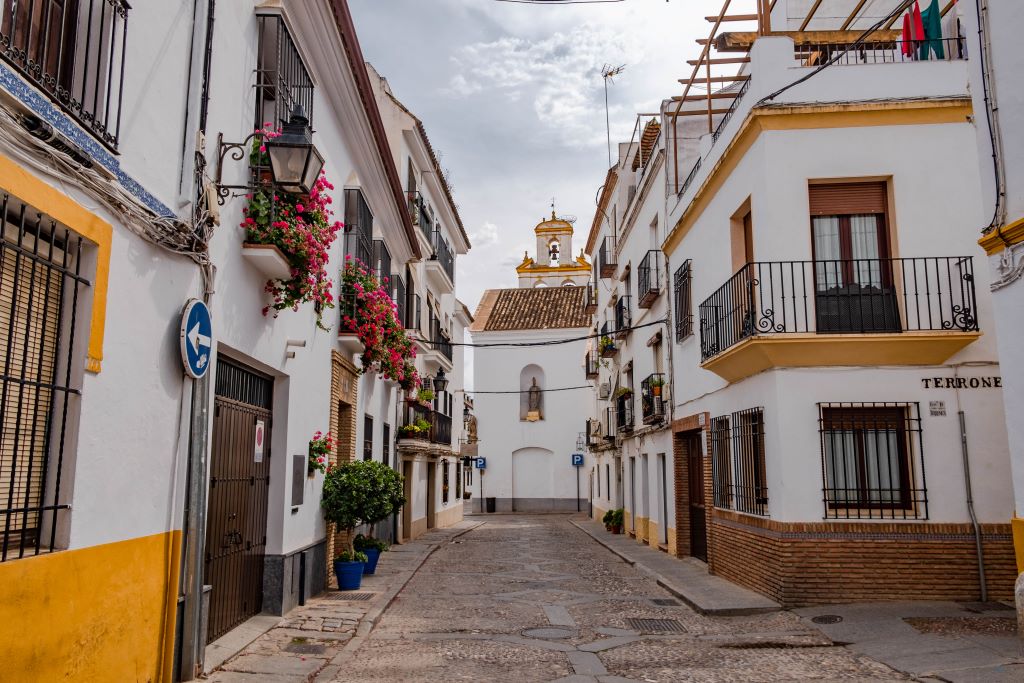
Cordoba – the white walls of the old city with pots of bright flowers hanging on them. Narrow curved streets and alleys and the giant walls of Mezquita. Each building has a cozy patio filled with greenery and flowers – you want to go through every open gate to look at this beauty and understand what the art of living in the Andalusian way is.
This city is quiet on weekdays and buzzing with tourists on weekends and holidays. It was on days like these that we came to Cordoba to plunge into the maelstrom of the largest Cordoba fair, the Nuestra Señora de la Salud Fair, which takes place in late May. During the fair, women wear traditional flamenco dresses, sevillas style music plays, and everyone sings and drinks wine with joy.
What to see in Cordoba
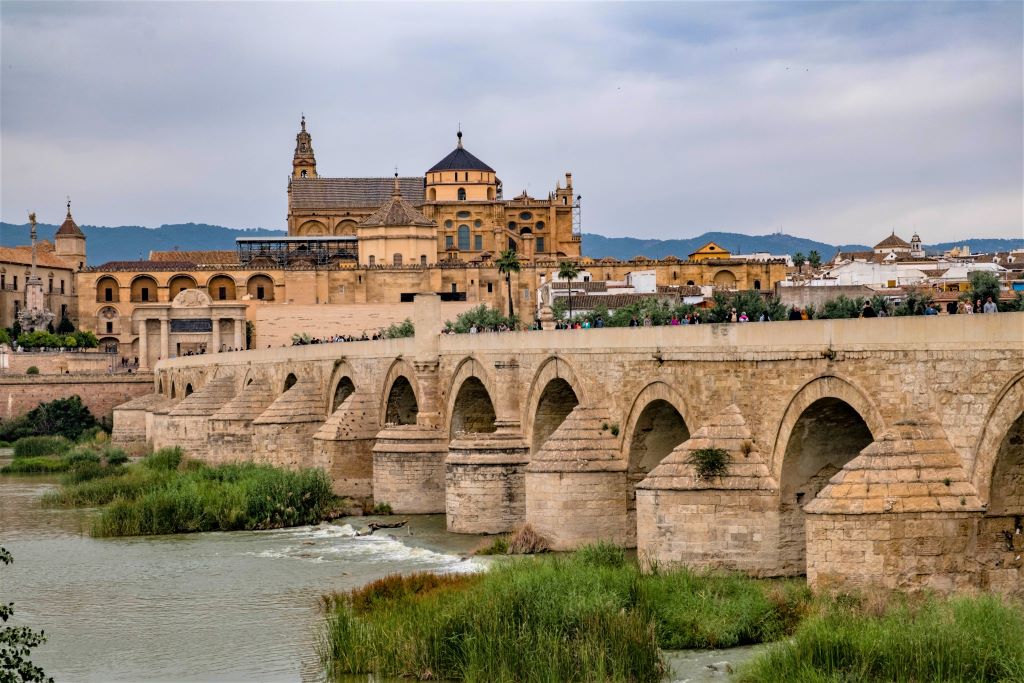
- The green Guadalquivir River flows through the city, with modern and ancient pedestrian bridges spanning it. The Roman Bridge is Cordoba’s calling card when viewed from the opposite side of the Old Town.
- The huge Mezquita rises above the city, once the world’s second-largest mosque, and after the Reconquista (expulsion of the Moors from the Iberian Peninsula), it is now the Cathedral of Cordoba. Entrance to Mesquite costs 13 euros, and when buying a ticket online, you need to choose the time of your visit.
- After walking around the cathedral, go up to its tower: a ticket costs 3 euros, the doors open every half hour. From it you can see a magnificent view of the white city, and you can appreciate how huge Mesquite is.
- Buy Patio tour – a tour of the most beautiful courtyards of Cordoba(20.5 euros). But if you don’t want to spend money, you can simply walk around the city, looking through open gates to see patios that are not included in the official tour.
- Watch a Flamenco show – we did it in a small restaurant Doble de Cepa – You need to book a table on the website in advance to get to the show. Cost – the amount you will spend on food and drinks (the restaurant is a bit more expensive than the neighboring ones, but the show is worth it and the Andalusian food is delicious).
- If you want to, buy a ticket and visit the Alcazar – the gardens here are no less beautiful than the Alhambra in Granada.
Where to live in Cordoba
Of course, you have to stay in Old Cordoba. There the white walls are decorated with blue flower pots. There is a very wide range of good hotels, some even with swimming pools and private baths. Don’t spend money on a hotel outside the Old City – here you can plunge into the atmosphere of Moorish times, walking day and night near the walls of Mesquite.
- Casa Turística San Agustín≫ is a nice hotel in the Old Town of Cordoba, with a great breakfast spot on the roof overlooking the city.
- Hotel Conde de Cárdenas≫ is a hotel with an incredibly beautiful patio, room rates are low and the quality is excellent.
- H10 Palacio Colomera≫, a hotel in the Old Town with a private pool and patio, is a good choice in summer.
Advise to read: What to do and see in Cordoba in two days
Seville is the royal capital of Andalusia
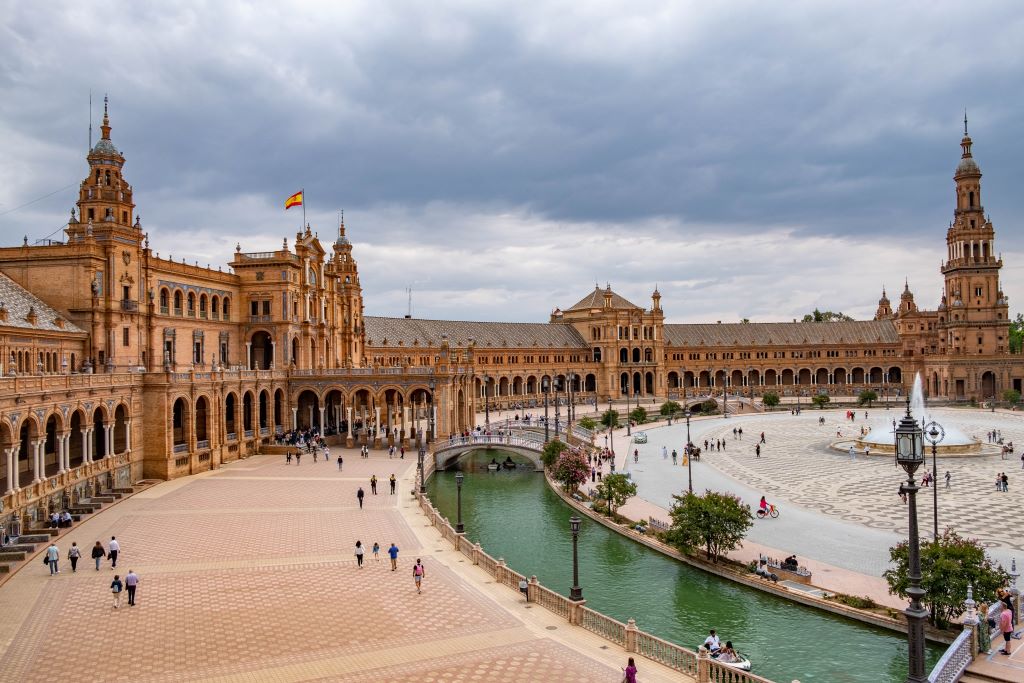
Seville is the capital of Andalusia, both a royal city and a very green and pleasant city for walking. Seville was the last point of our trip, and it was from here that we flew home.
It is the fourth largest city in Spain and the largest city in Andalusia, through which, like Cordoba, the legendary Guadalquivir River flows.
Here, the river is much wider and navigable even for ships. If you wish, you can take a ride on a tourist boat. The river divides the city into old and new parts. The ancient part of Seville is located on the left bank, which is where you are likely to spend most of your time wandering the streets, parks, and squares of the city.
Must-see in Seville
Go to the Seville Alcazar to see the royal gardens in Seville. This incredible architectural gem will take you back to the 14th century. As the oldest residential palace in Europe, this building was home to queens and kings. In addition, a unique combination of Christian and Arab architecture called Mudehar has been preserved here. Due to its beauty, style, and age, this building was included in the UNESCO World Heritage List.
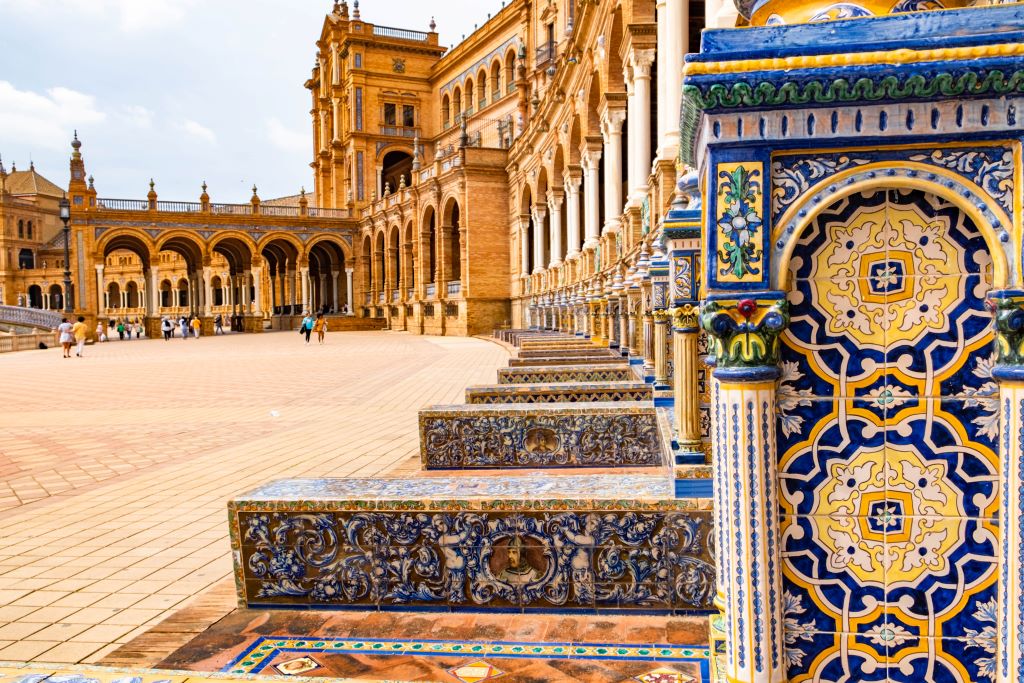
Spain’s square is one of the most incredible semicircular shapes you’ll see anywhere. It is also one of the largest in Europe. The square was built in the 1920s, and every corner tells the story of Spain, from the tiled walls to the beautiful arches.

Seeing the Setas de Sevilla (Seville mushrooms) is a must-see place because it is unrealistically beautiful when modern architecture is combined with historical architecture. It is also called the Umbrella because it is a strange mushroom-shaped building that combines an unusual observation deck, an archaeological museum, and a cafe. By the way, this thing is made of wood – impressive!
It is traditional (we are in Spain, and this country is very religious) to go to see the Cathedral of Seville – Catedral de Santa María de la Sede. We entered the front part of the cathedral for free, but for a full visit, you have to pay 16 euros. Or buy a free online tour on the cathedral’s website.
Walk around the old town and the Santa Cruz district – there is a very large selection of tapas bars, restaurants and cafes. You can also buy a ticket to a flamenco show here (it costs 25 euros – by the way, that’s how much the show in Cordoba cost us, but it included food and wine).
I advise you to read it: How to spend a perfect weekend in Seville – what to see in two days
Where to stay in Seville
The best hotels and hostels are located in the Old Town, in the center of Seville. It is also more convenient to get to the airport from here – from 4:30 am to night, the Especial Aeropuerto (EA) bus runs every 30 minutes.
- Apartamentos Reyes Catolicos 14≫ is a self-catering apartment in the center of Seville for those who prefer to prepare their own breakfasts and dinners.
- CASA17 Santacruz Suites≫ is a great hotel with nice rooms and a nice price for the center of Old Seville.
- Hotel Alabardero≫ is a hotel in a historic building with a beautiful patio, you can book without a prepayment if your plans change.
What you will need to travel to Andalusia
- First, it’s a car that will help you drive this entire route, and maybe more, across Spain in a week. Rent a car right after your arrival and travel the beautiful roads of this country. By the way, expressways are tolled, with the same payment system as in Italy. That is, before entering the toll road, you take a ticket in front of the barrier, and at the exit, you pay for the kilometers you have traveled. I recommend looking for a car on Rentalcars.com – here you can find budget and more comfortable car options.
- Book your accommodation in advance – prices in high season in Spain, as in other countries, rise. Booking.com allows you to find discounted options, as well as book accommodation with the possibility of free cancellation.
- In order to get to Andalusia, I advise you to look for flights. The closest airports are Malaga or Seville. Or fly with cheap tickets to Madrid and from there you can get by car or train to Malaga or Seville (depending on where you start your trip).
- I buy bus tickets in Spain on the website of the Spanish carrier Alsa.
- Train tickets in Spain – on the website of the Spanish railway company Renfe.
Useful articles and links:
- The best road trip in Morocco
- 5 most picturesque routes in Morocco that you should definitely add to your itinerary
- Road trip in Jordan – route, main sights and costs of the trip