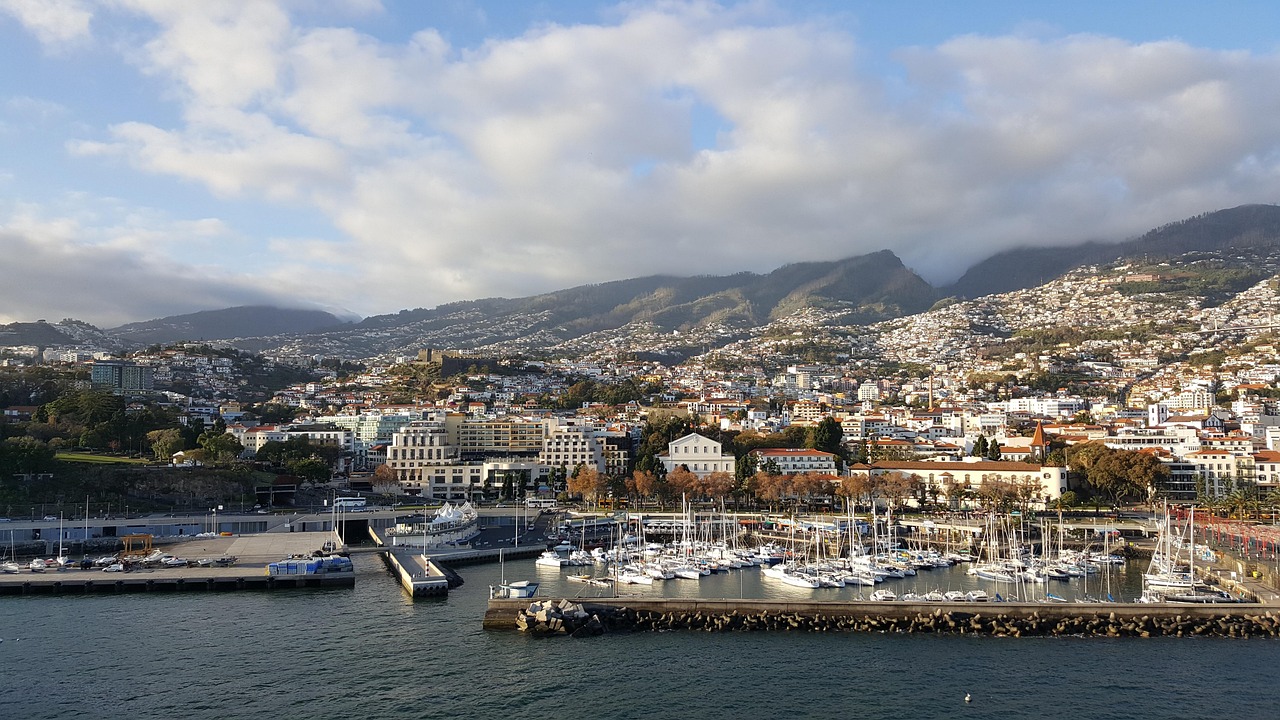
Funchal – the capital of the archipelago, located on the southern part of the main island, between the ocean and the mountains, is the largest city on Madeira. It is warm here all year round, making it a great place for active vacation lovers. Geographically, this city is exceptionally diverse, especially if you don’t limit yourself to just this city, but also explore the neighboring regions.
It is important to note that if you come here expecting a bustling European city, be prepared for disappointment. Because Funchal is not like the big mainland cities of Portugal – Porto or Lisbon. The architecture here is much simpler, and it’s not a reason to go to Madeira. For example, I met an unhappy Ukrainian woman in Funchal who had not figured out in advance what exactly to expect in Funchal.
So, I will tell you about Funchal, why you should go here, what to see in the city and what convenient routes there are directly from Funchal if you decide to stay here for your entire time in Madeira.
Where Funchal is located on Madeira
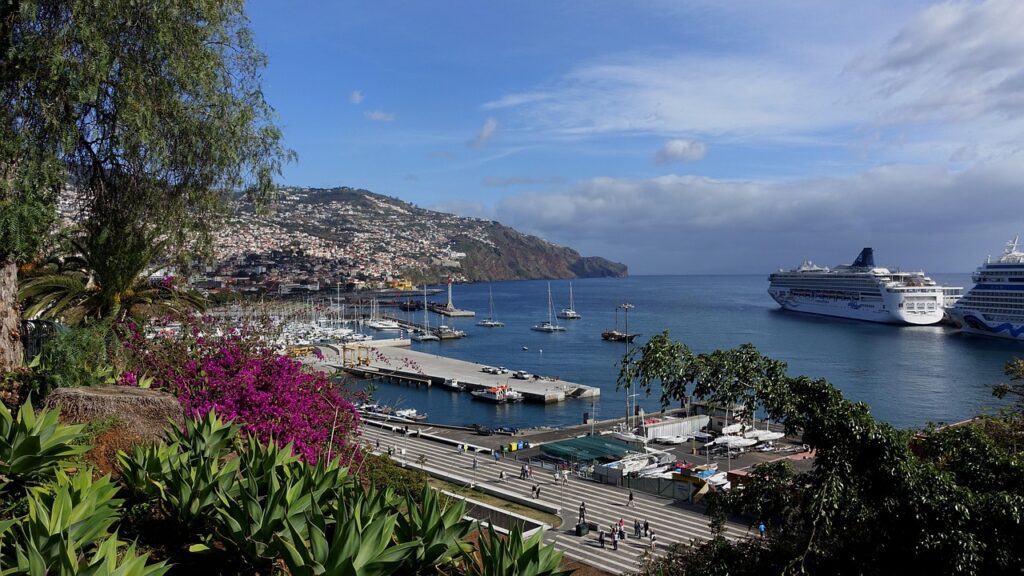
Funchal is almost the southernmost city on the island of Madeira, located right on the ocean shore. It is adjacent to several smaller mountain towns, including the beautiful municipalities of Canico, Monte, São Gonçalo, and Câmara de Lobos. Although these municipalities are technically not Funchal, they are very close to the city and are usually included in every tourist route in Funchal.
The city is one of the sunniest on the island, and Funchal has a year-round warm climate. The surrounding nature is an interesting combination of ocean and mountains, European and African flora. The south of the island is especially notable for its incredible number of banana trees, which grow here—on mountain terraces among the homes of local residents. Even in the city, there are banana “gardens”, between which there are streets and walking paths.
Also, Funchal is one of the few places where you can get to the mountains in less than an hour, hike in the mountains, and then come down to the beach and swim in the ocean.
How to get to Funchal
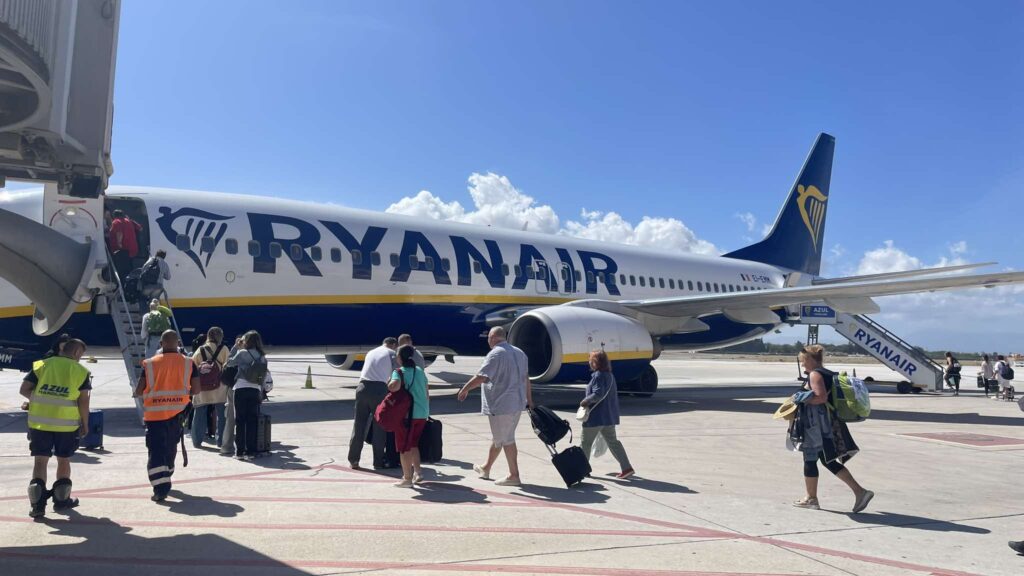
The easiest way to get to Funchal (and Madeira in general) is by plane. There are more than a dozen daily direct flights from Lisbon, as well as several daily flights from Porto. One-way tickets can cost as little as 30 euros if booked in advance or if you fly in low season.
There are also direct flights, for example from low-cost carriers Wizz Air and EasyJet from various European cities: Warsaw, Budapest, Rome, and others (I flew from Rome for 35 euros one way). From Canada, there is one direct weekly flight from Toronto. If you are coming from elsewhere, you will usually need to make a connection in Lisbon.
Upon arrival at the airport named after Cristiano Ronaldo, don’t be surprised that the young Portuguese man became a legend of the island during his life. He was born here, and every local boy will proudly wear a shirt with his name, playing football on local fields. So, the airport is named after the most famous resident of Madeira in the world.
Note: Another way to get to Funchal is by cruise ship. The port of Funchal is included in routes along the Canary Islands and Madeira. But a one-day visit won’t allow you to fully enjoy Madeira and the city itself; this is another way to travel that I won’t write about here.
How to get to Funchal from Cristiano Ronaldo Airport

If you are not going to rent a car at the airport after arriving, use public transport. There is a shuttle bus Aerobus, which leaves from the arrivals area towards Praia Formosa, stopping at several hotels along the way. You can view the schedule of the shuttle bus on the company’s website. A ticket costs – 6.4 Euro for adults, 3.2 Euro for children.
Taxi is the only alternative to the shuttle.
We booked a car in advance on Rentalcars.com and picked it up at the airport—so we didn’t need to take the bus and immediately set off to explore the island.
Keep in mind: Funchal Airport is one of the most difficult in the world for airplane landings. Only super-experienced pilots fly here. Plus, there are strict rules for landing permits during storms and strong winds. If the wind is too strong, planes are often redirected to nearby airports in the Canary Islands.
Because of bad weather, instead of Funchal, we ended up in South Tenerife. Wizz Air provided a hotel, transfer, and dinner for all passengers. And the next morning, when the weather improved, we flew from Tenerife to Madeira. Effectively, we lost one day, but that’s better than if the plane flew back to Rome.
Transport in Funchal and Getting Around Madeira

To get around the city of Funchal, all you need is your feet, and from time to time, trips by public transport. The city is quite compact, and most things to see and do are located in the city center. Most hotels are also located here or stretch along the beach.
For slightly longer distances, it is always easy to take a taxi or order a ride with Uber/Bolt.
To get around Madeira and explore beyond the city, you definitely need a car. Public transport (buses) exists, but it won’t get you everywhere on the island. And most travelers don’t have enough time to sit waiting for (rare) buses and figure out how they connect, especially in small towns and villages.
So plan to rent a car to explore outside the city.
If you plan to rent a car, I always recommend checking prices on Rentalcars.com. This is a rental website that includes offers from all major international rental companies, as well as many smaller local agencies, which often have much better rates. You’ll be able to find good deals here.
When is the best time to visit Funchal
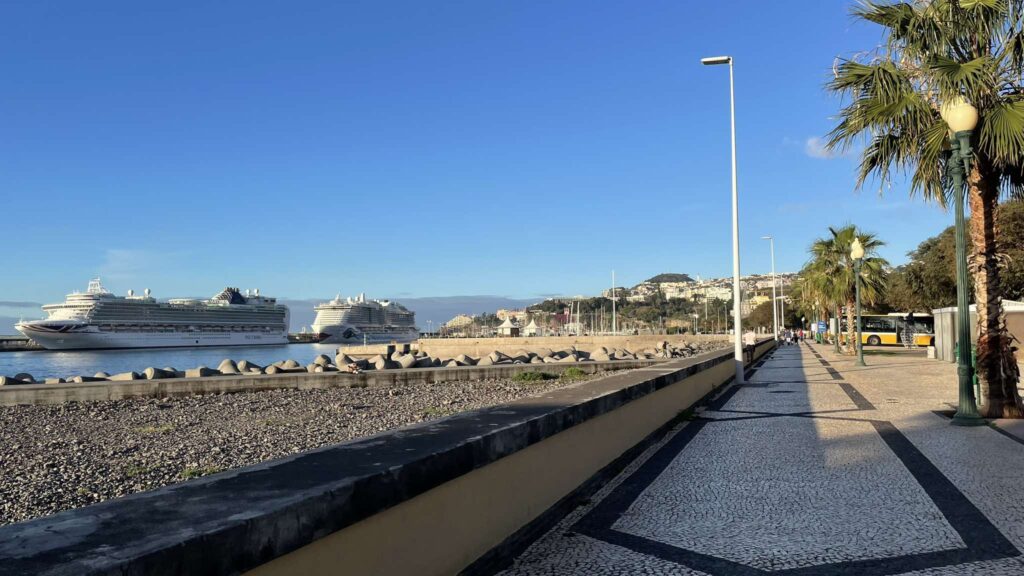
No matter the season, Funchal usually has a warm climate. The average temperature in January and February (the coldest months) is about 16 ºC, and in August and September (the warmest months) it rises to 26 ºC.
The climate is truly ideal: mild and pleasant weather all year round and minimal extreme conditions. At the same time, in Funchal you can experience all four seasons in a single day: in the morning on the beach under the blazing sun, and in the evening put on a hat and jacket when you go up to the mountains (or vice versa).
The generally optimal time for a visit is considered to be between April and September. Except for June—at this time thick clouds hang over the island. Later in the summer, the days are warmer and drier. This is also the best season for those who want to watch whales and dolphins (although they are present all year round).
By autumn, rain becomes more likely, though not usually enough to ruin your trip.
If you love flowers, four weeks after Easter a wonderful flower festival begins in Madeira, during which Funchal and the entire island are decorated in beautiful colors.
From October to March the weather can vary, but it is still a good time to visit.
In winter there can be heavy rains, but they are usually short-lived. However, the weather in Madeira is definitely better than in most European countries. It is considered not the time for a beach vacation—although we did swim in the ocean (the air temperature during the day was +20, water +19℃).
We were in Madeira in the 20s of January—it rained once in Funchal. And since the weather on Madeira is changeable and very dependent on the ocean, you still need to take a raincoat and not worry about rains. Just go when you can and enjoy. It’s better to focus on other factors, such as high and low season, whale watching season, Christmas, and so on.
A special time is December, during which Funchal is usually “filled” with people who came to celebrate Christmas and New Year on the island. This is the most expensive time of year to travel to Funchal. But it is still worth it, because the people of Madeira celebrate Christmas and New Year with unmatched fireworks and festive events.
So, whenever you decide to visit Funchal—it will always be beautiful!
Where to stay in Funchal
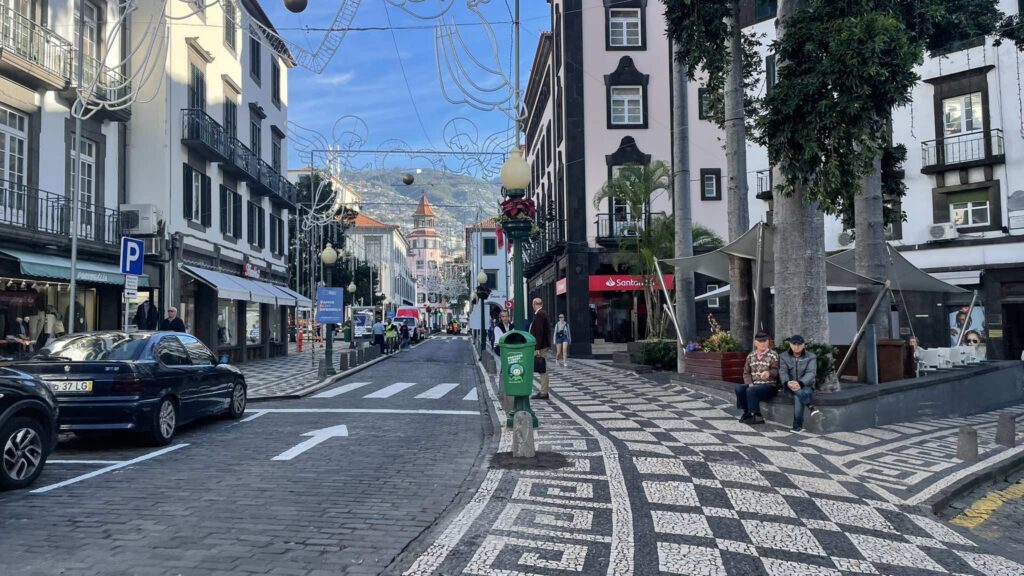
As I mentioned above, you can choose to base yourself in Funchal itself, or in the towns that adjoin it. It depends on what type of vacation you choose: beach, active—traveling the island by car and hikes in the mountains and to the northern side of the island. Or you simply fly in for a few days in Funchal, for example for the holidays—Christmas and New Year. Or you decided to add an island vibe to your mainland Portugal explorations. Besides, the location and surroundings of the hotel matter—are you traveling by rented car or by public transport?
You can book a hotel anywhere in Funchal and still be close to all the main attractions. Essentially, you just need to decide how much you want to spend per night and what amenities you need.
And with Funchal as your base, you can reach almost any point on the main island in less than 1-2 hours (if you are traveling by car).
Hotels in the center of Funchal close to public transport stops

- Social Lodge – Happiness≫ – Accommodation in a very convenient location, nearby there is a shopping center with everything you need. The bus stop, which you can take from the airport or back, is right across the street. The room is clean, beds are comfortable.
- Caracas Escape by LovelyStay≫ – Good value, new clean apartment, supermarket “Continente” nearby. Wi-Fi is fast enough. Ideal location with close access to the promenade, ocean, beach, supermarket, and bus stop. The apartment is well equipped with appliances.
Hotels in Funchal with parking
- Sea Shell≫ – Apartment in Funchal in a great location with a nice view of the ocean from the balcony. A few good restaurants and a shopping center are within a few minutes walk. Good value. Free parking available.
- Theos Apartment by LovelyStay≫ – Great location. Transportation stops nearby, shopping center across the street. The accommodation has a large living room and a small bedroom with a comfortable bed. The kitchen has everything you need. The bathroom has a bidet and all toiletries. Balcony overlooking the ocean. There is private parking beneath the building.
- Travellers Pearl by Storytellers – Aparthotel in the historic center of Funchal, where we stayed for several nights. Convenient self-check-in and access by code. I chose this accommodation for the private parking and the possibility of preparing breakfast or dinner—there is a kitchen and necessary utensils, as well as a washing machine. Parking in the center of Funchal is a very important option for travelers with a rented car.
Hotels near the beaches of Funchal
- LUX OCEAN VIEW Apartment Varino 05≫ – Very well equipped modern apartments. Pleasant and attentive hosts. Stunning view of the ocean and sunset. Good location—stores, cafes, promenade, ocean are nearby.
- Golden Residence Hotel≫ – Neat, clean hotel. Delicious breakfasts, tasty dinners at the restaurant. Friendly staff, great location. There are two private pools and it’s close to natural ones. Great view of the ocean.
- Serene Seaside Praia Formosa≫ – Apartment located right on Formosa beach with stunning ocean views. The apartment has everything needed for short or long stays. Several restaurants nearby.
What to see and do in Funchal
Funchal combines the relaxed atmosphere you’ll find in any other Portuguese city with ocean and mountain views. It differs slightly in that it is still an island. The culture is undoubtedly Portuguese, but the weather and geography are somewhat different. In Portugal, Funchal is considered the least European of all its cities.
Walks along the main streets and squares of Funchal
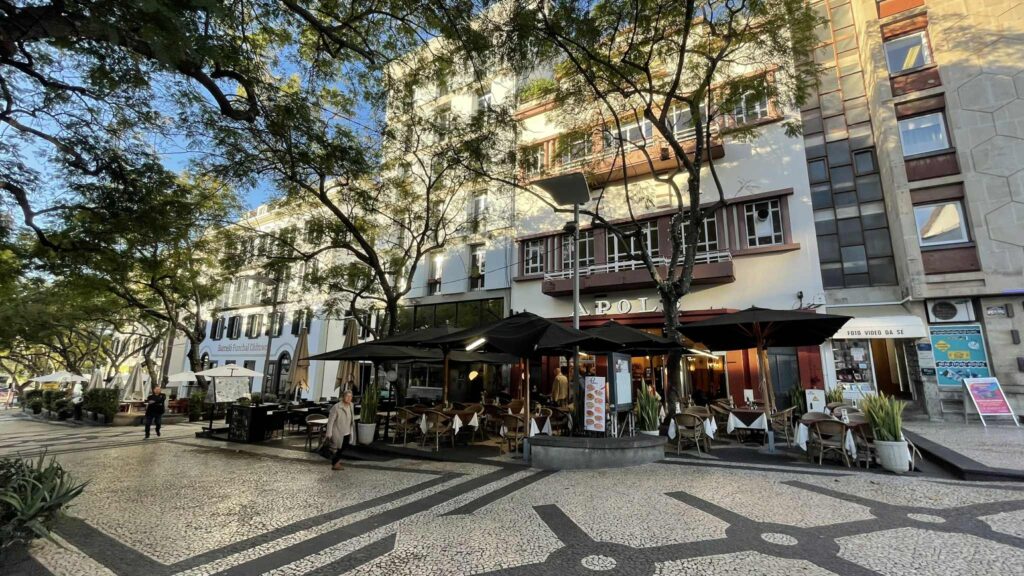
Like most Portuguese cities, Funchal is characterized by several recognizable main squares. You will almost certainly come across them on a walk, even if you don’t plan to, but still, you should pay attention to the following places:
- Avenida do Mar: Probably the most famous street in Funchal, located right by the ocean and always busy with both locals and tourists. There are many cafes on the avenue, as well as a beautiful garden and direct access to Almirante Reis beach and to Funchal Marina. At the end of the street, you can find Principality of Pontinha, which is a (self-proclaimed) country! This micronation, located on a small hill, was first sold to the Portuguese nation in 1903 and became “independent” in 2007. Today Fort São José in the Principality of Pontinha is regularly visited by curious tourists.
- Avenida Arriaga: If you leave the ocean and go deeper into the city, you may come across this street, where local pensioners love to spend their days. The main attraction is the Funchal Cathedral—one of the oldest and most important religious buildings in Madeira.
Rua de Santa Maria
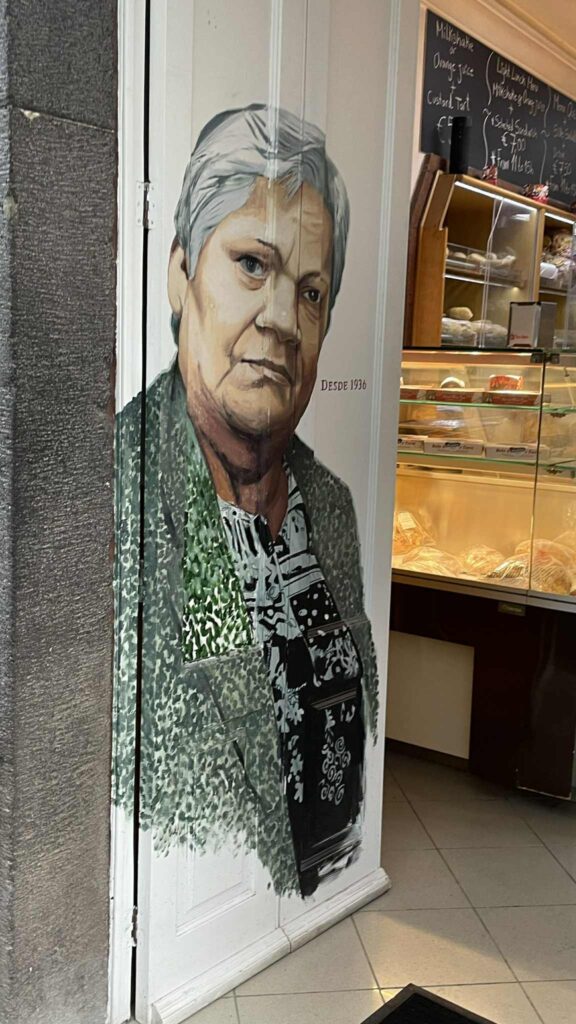
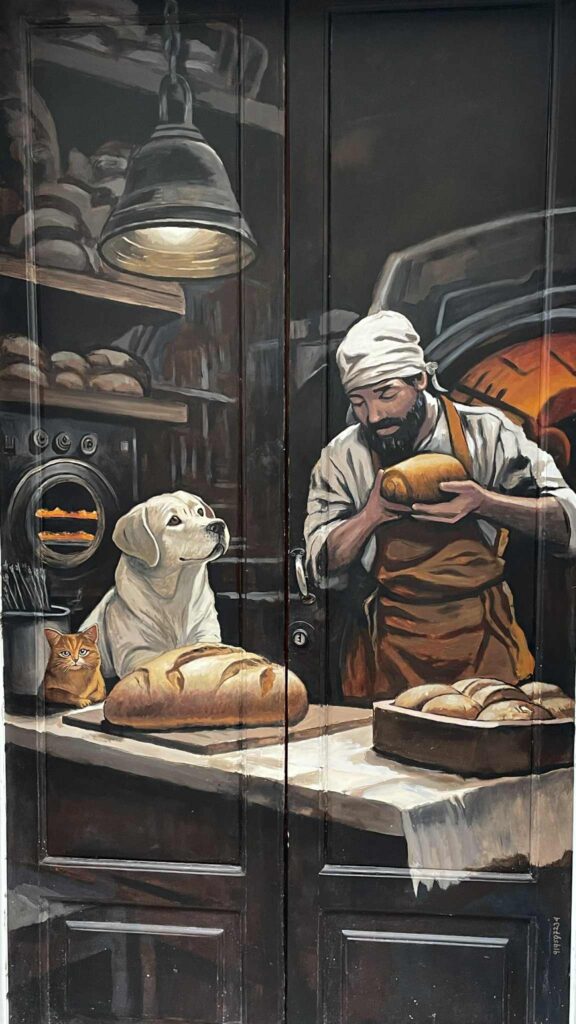
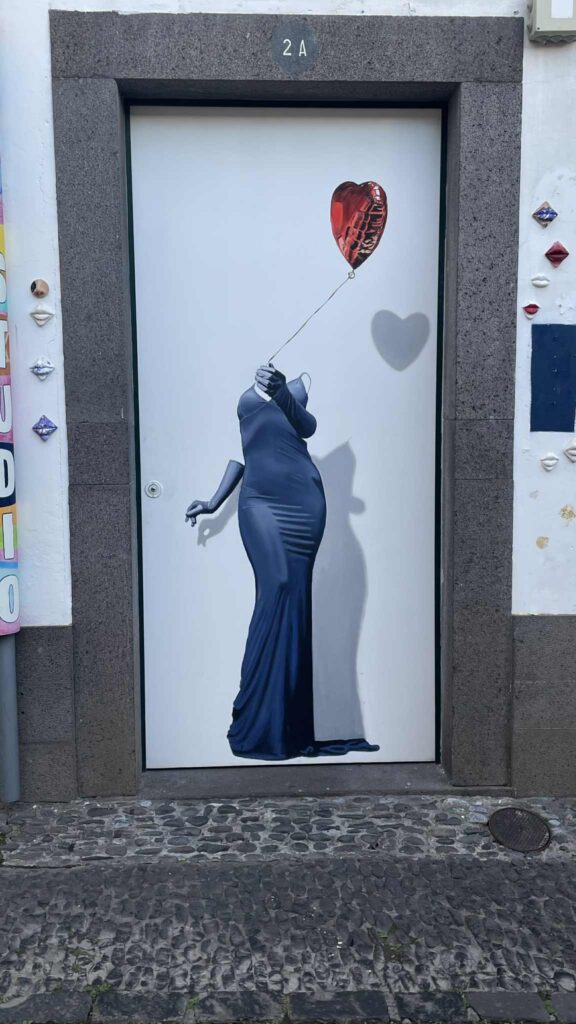
I want to separately mention Rua de Santa Maria, located in the old town center. Everyone who likes graffiti and street cafes will enjoy it. Almost all the doors and walls are painted—an artistic expression by local artists who have turned the timeworn buildings into a pleasant bohemian atmosphere.
Restaurants and cafes are open along the street—there are many nice places here. You will definitely want to sit at a table in one of the numerous restaurants, for a cup of aromatic coffee or something stronger, depending on whether it’s breakfast time or dinner hour. So don’t refuse yourself this!
Walking along these streets, you will also inevitably end up in some of the main city squares.
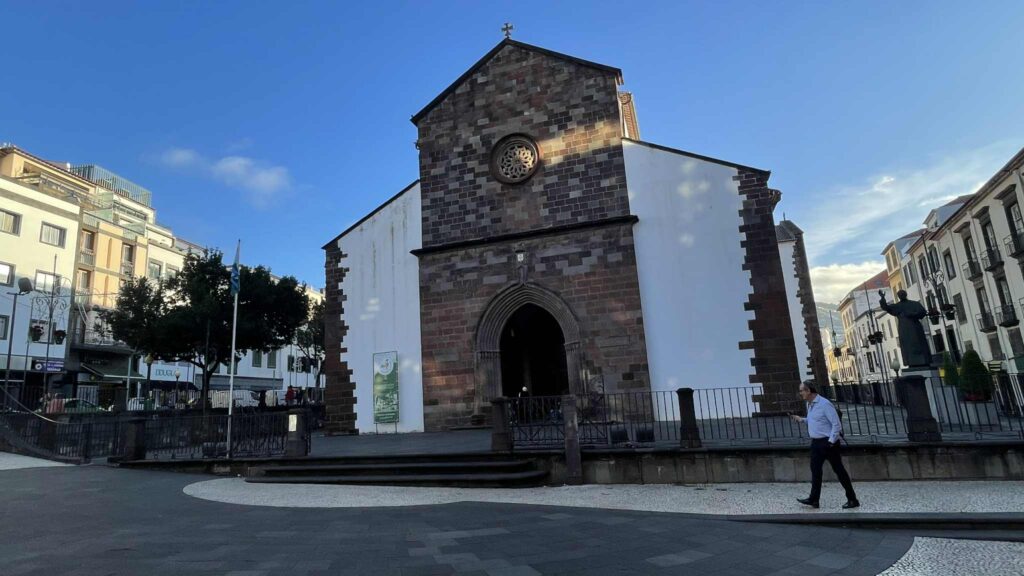
- I recommend visiting Praça do Povo, which was once one of the main fishing places in Funchal.
- Praça CR7—a sunny spot near Avenida do Mar, named after footballer Cristiano Ronaldo, the most famous citizen of Madeira.
Mercado dos Lavradores Market
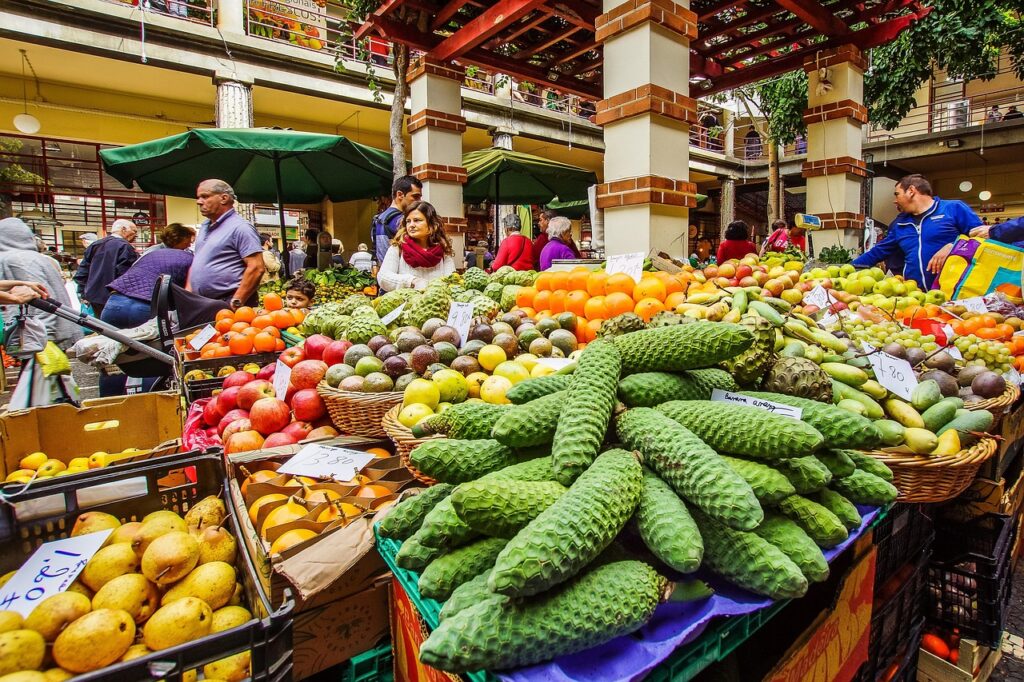
If you love the hustle and bustle of market rows, I recommend visiting the local Mercado dos Lavradores. Every Saturday, traders from all over the island offer almost everything that grows on the mountain terraces, is made in local workshops, and caught in the waters off Madeira.
There are giant shrimp and chunks of deep red tuna, and there are exotic fruits that you have never even seen before in your life. Traditionally, the main fruit of the island is passion fruit—from its juice and rum, they make the warming drink Poncha, which you can also try at the market or at a bar on Santa Maria street.
Tip: I recommend the market as an excursion or to try something exotic. If you want to buy regular fruits—papaya, local bananas, strawberries, passion fruit, which are also grown on the island—it’s better to choose shops on adjacent streets (a little away from the center)—everything is twice as cheap there.
Ride the cable car above the city
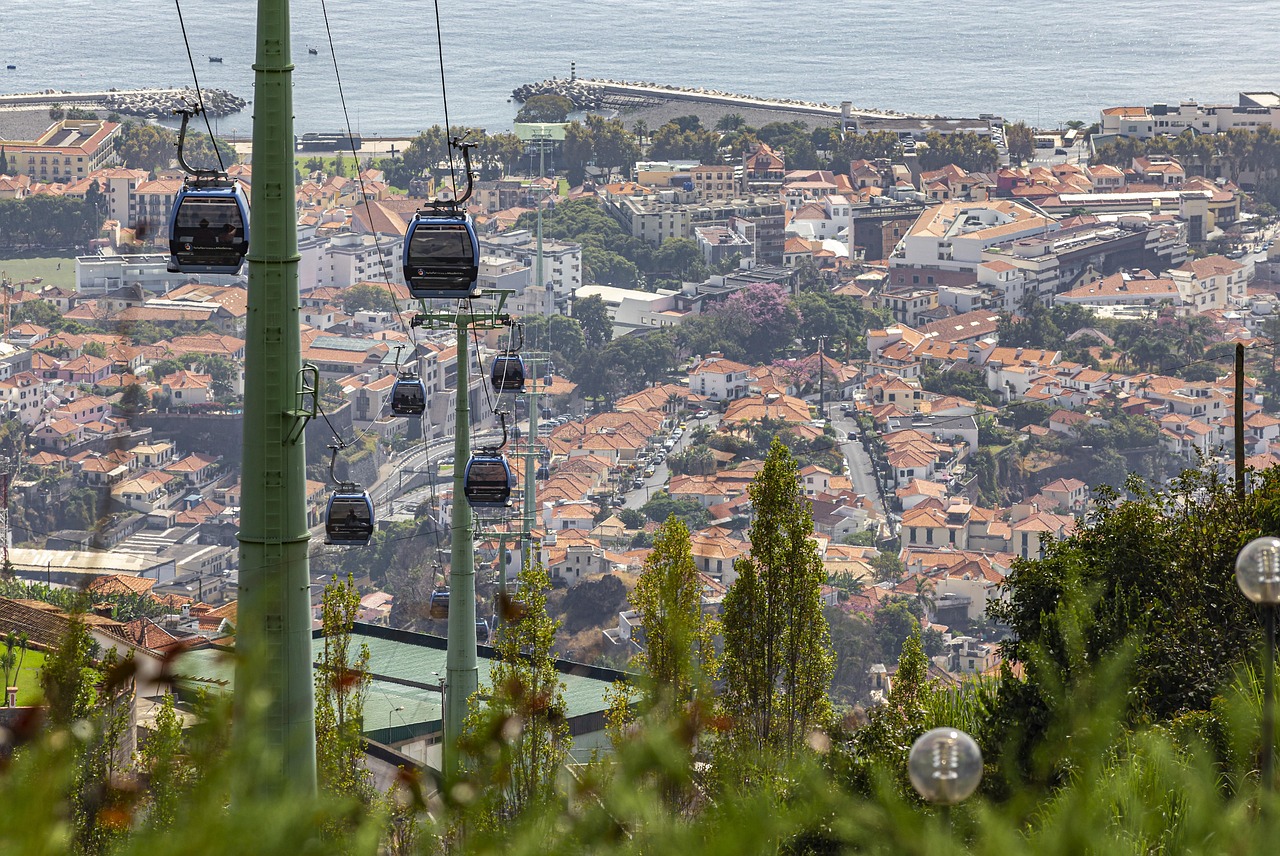
The Funchal cable car (Teleférico do Funchal) is not so much entertainment as a necessary part of the city’s public transport. Because going up to Monte Hill by cable car is much faster and calmer than shaking and getting bored on a bus. So, not only tourists use it, but also locals.
The ride itself allows you to enjoy pleasant views of Funchal from a bird’s eye perspective. But what makes this experience worthwhile is the destination: the suburb of Funchal—Monte. Monte is a small town where you can find two of the most beautiful gardens in Madeira, and also where the famous wooden sled rides start.
Cable car ticket prices:
Adult – 9 euros one way, 13.5 euros round trip.
For children (7 – 14 years old) – 4.5 euros one way, 7.2 euros round trip.
You can book tickets in advance and learn more on the official website of the cable car. Buying tickets online saves you 10%.
Riding the basket sledges
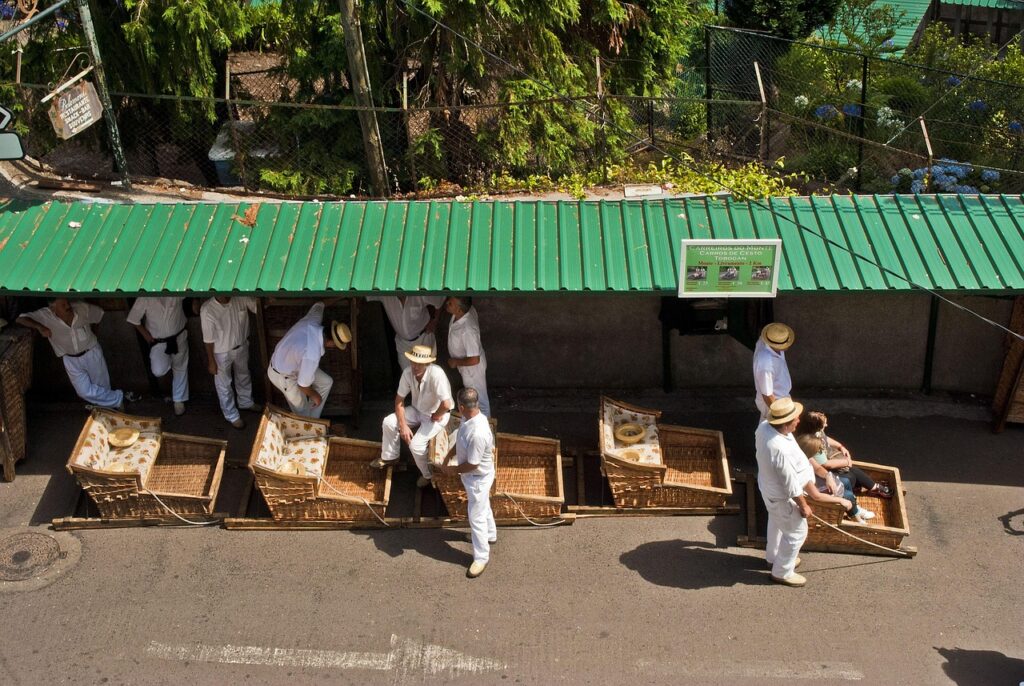
Riding the carros de cesto (basket sledges) is another highlight of Funchal, you won’t find such entertainment anywhere else in the world. These sleds are made from grapevine and placed on wooden runners. They are pushed by two men—called “carreiros”—who control the speed of the sleds with ropes. The carreiros dress in traditional clothing and straw hats—accelerate and brake the sleds while controlling this amazing mode of transport.
Most tourists go up to Monte by cable car and come down (not all the way—about 10 minutes—then on foot or by bus to the Funchal waterfront) with the sledges. I recommend you do the same, as this is an integral part of the cable car experience and one of those things every visitor to Madeira should try at least once.
The boarding for carros de cesto takes place near the church Nossa Senhora do Monte, location on Google maps. Payment is made on the spot (cash only). Riding the sledges costs on average 25 euros (for one person), 30 euros (two people), 50 euros (three people).
Tip: take care of cash in advance—the ATM near the starting point of the carros charges an extra 5 euros commission for cash withdrawal.
And don’t take this attraction too seriously—it’s purely entertainment for a substantial amount. Whether it’s worth it—that’s for you to decide.
Monte Tropical Garden and Madeira Botanical Garden
The Botanical Garden and Monte Gardens perfectly demonstrate the floral diversity of Madeira. A walk through them is accompanied by aesthetic elements of park architecture. The huge garden on the site of a former estate stretches up the mountain, accessible by cable car going up from the Funchal waterfront.
Everywhere you will find amazing plants collected from all over the world, small towns, fountains, colonnades, and original sculptures. You can also descend to the city center along one of the levadas, for example, Levada da Serra do Faial. The whole route is accompanied by the best panoramas from lookout points over Funchal and the ocean expanses.
Monte Garden
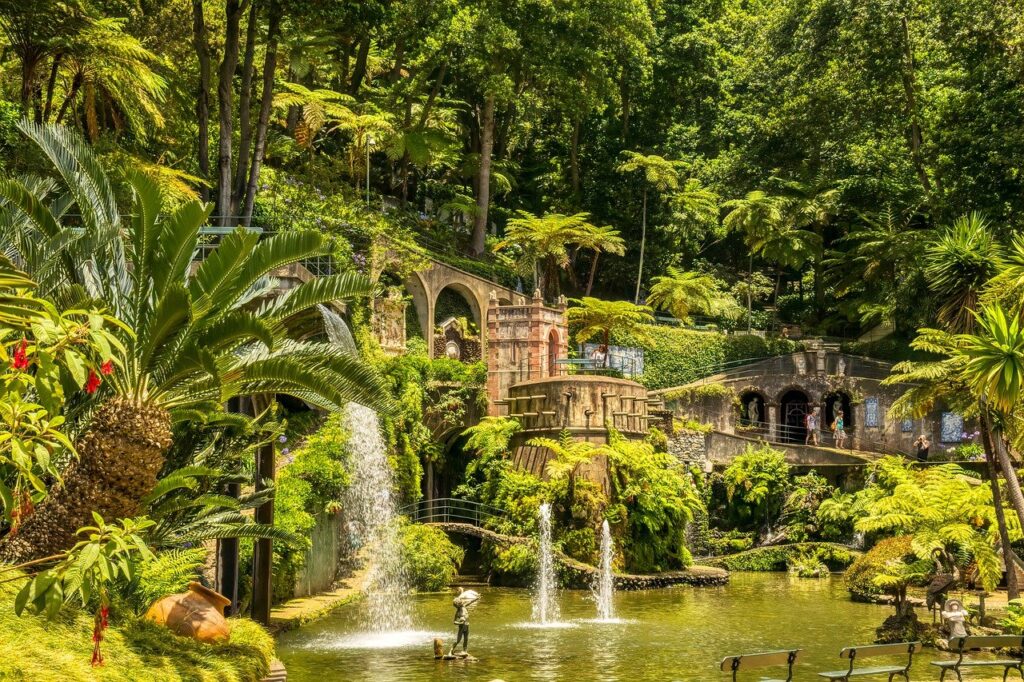
The garden covers an area of 15,000 square meters and is designed in the style of a Buddhist Zen garden with many temple-like buildings and wooden bridges in Asian style. It is filled with a truly fascinating (and beautiful!) collection of exotic plants and even some animals, including a pond with carp and black swans.
Visitors can also see over 1,000 Zimbabwean sculptures, an exhibition of over 700 minerals, and a huge collection of traditional Portuguese tiles, azulejo.
Admission to Monte Tropical Garden is 15 euros for adults, and for children under 15 it’s free (tickets on the official site).
Madeira Botanical Garden
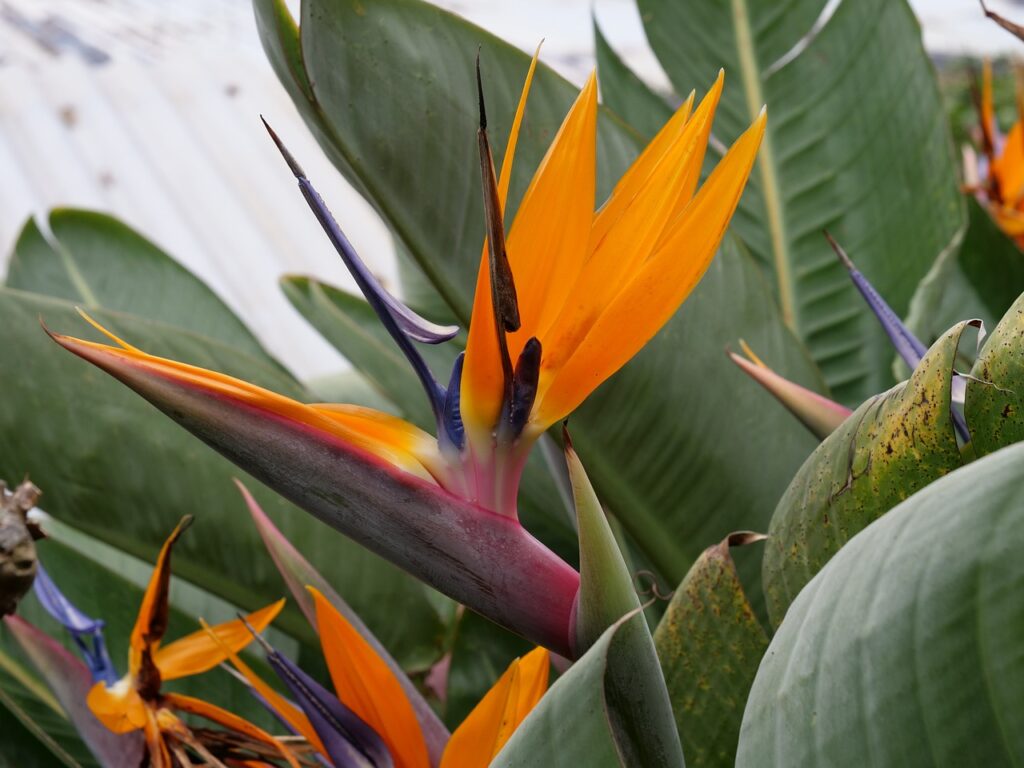
On the other hand, the Madeira Botanical Garden is located nearby and just as huge, both in size and in diversity. If you love unusual plants, you’ll enjoy this garden.
Most people like the perfect flower arrangements in the middle of the garden, as well as the section with exotic cacti. The garden also has a nice cafe. Inside the Madeira Botanical Garden, you will also find a typical house in the Santana style, painted in bright colors with a triangular thatched roof.
The Santana houses are a Madeira classic, but most people end up overpaying to see them in the Madeira theme park, which is not as interesting as it seems and is a real tourist trap.
A ticket costs 10 euros for adults and 4 euros for children over 6 (free for children under 6). You can buy at the entrance or on the botanical garden website.
Funchal Beaches
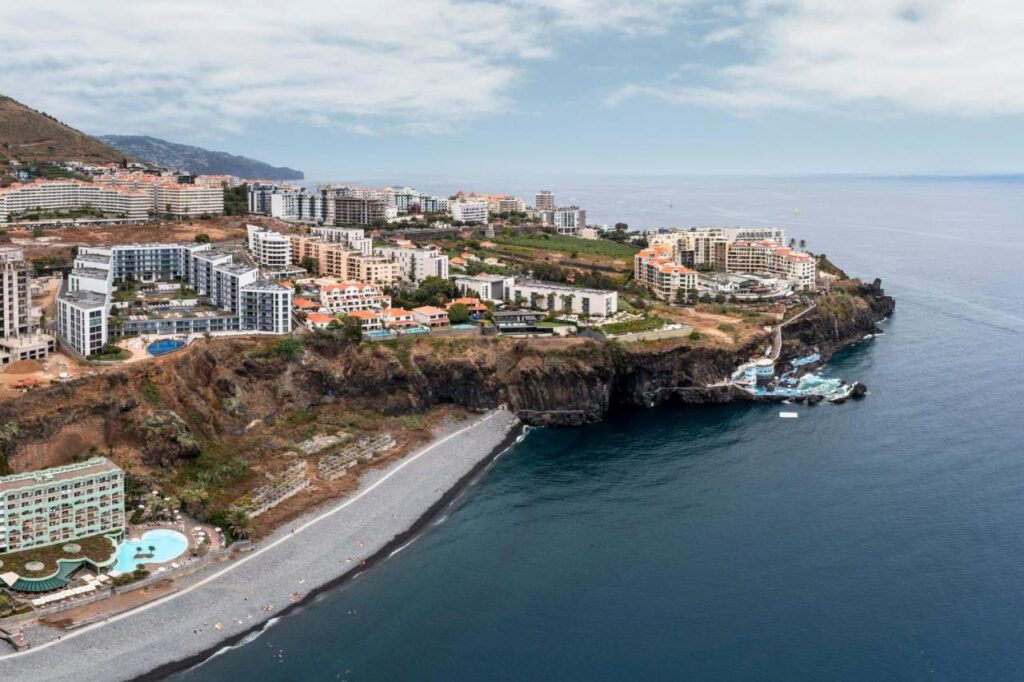
Most tourists come to Madeira for exciting active recreation. Frankly, beaches are not the reason to come to this island. But if you are already here—why not swim in the sea? It’s a great combination with hikes in the mountains and active trips around the island.
- The best place to swim in Funchal is not a beach but the Lido swimming complex with a wonderful pool and an artificial dock for diving straight into the ocean. This place is well-suited for families with young children and those afraid of swimming in the ocean. The entrance ticket costs 5.9 euros. Location on Google Maps.
- For a similar fee, you can also visit the Barreirinha swimming complex, which is not as family-friendly but usually quieter. Location on Google maps.
- Doca do Cavacas beach complex, located east of Formosa beach in Funchal, is also one of the most beautiful natural swimming pools on the island. The price is reasonable—5.9 Euro. There is everything you need: shower, bar, chairs, and umbrellas. Perfect if you want to discover these amazing pools without crossing the whole island, or if you decided to spend some time in the capital. Location on Google maps.
- You can swim for free in Funchal at the pebble beach of Formosa, about 10 minutes from the city center. Location on Google maps.
Food and dishes you should try
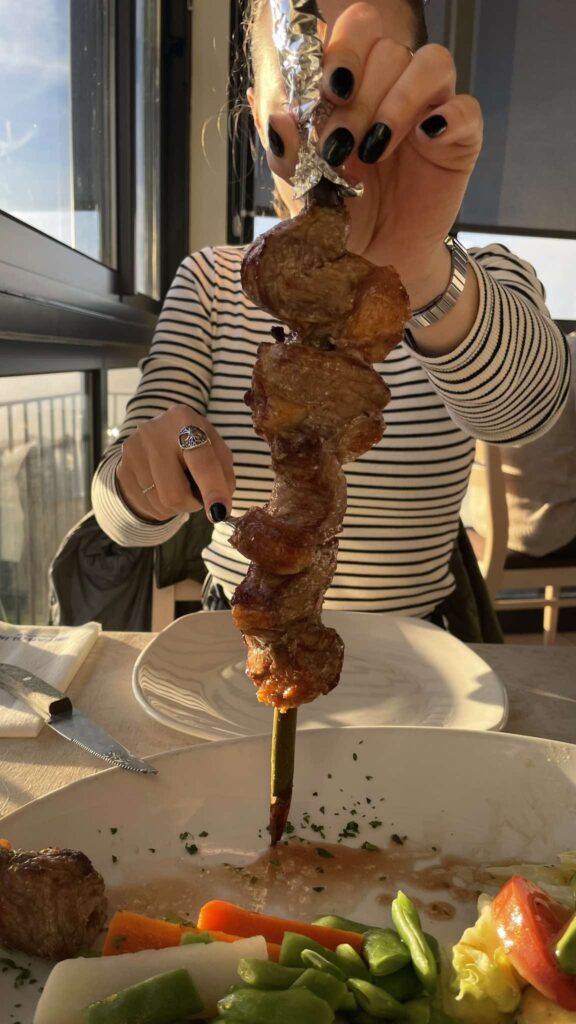
These and other regional delicacies can be found in many restaurants in Funchal, but some are better than others.
Bolo do Caco
This is a round sweet potato bread that is usually cooked on traditional stone slabs. Bolo do caco is usually served with garlic butter, is a Madeira classic, and Funchal locals eat it for breakfast, lunch, and as a side dish. Try it in any restaurant, or buy it for 30-40 euro cents in any bakery (without garlic, though).
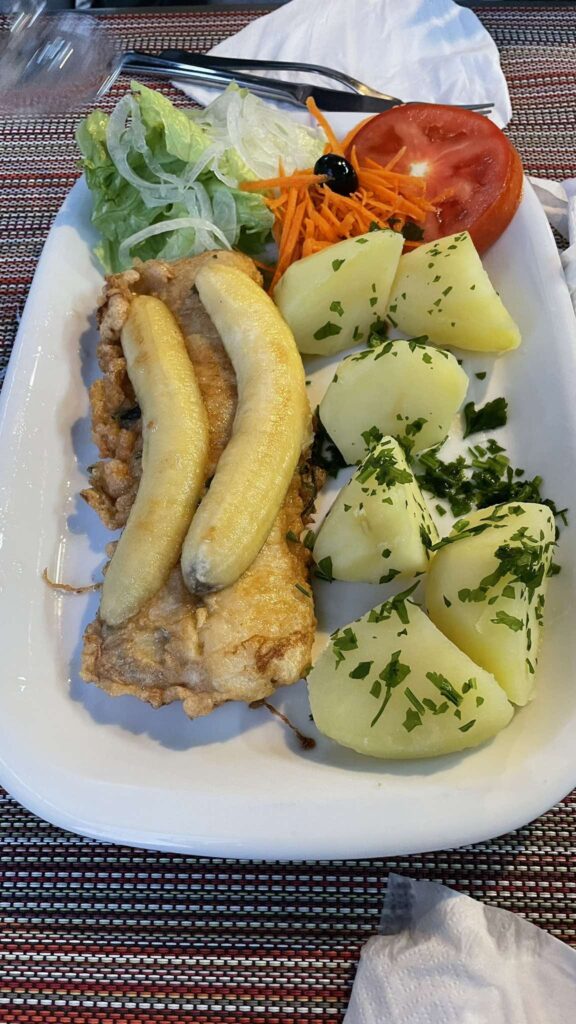
Peixe-espada com banana (Scabbard fish with banana)
This light dish, which translates as “scabbard fish with banana”, is a local delicacy combining freshly caught swordfish with fried banana. It’s a rather unusual flavor combination—I wasn’t too sure about it. But what is very clear is the origin of such a dish. Bananas are grown on the island, and fish are caught in the ocean—why not combine the two? Still, I recommend you try it—you won’t taste anything like this anywhere else in the world!
Espetada
Espetada is marinated beef (basically a kebab) on a skewer, which has a tender flavor and is an integral part of Madeira’s traditions. It is served hanging on an iron structure, which gives it a unique appeal.
Place tip: We ate Espetada at Ponta do Pargo cape at O Farolim restaurant – I recommend this place, delicious food and beautiful views.
Lapas (limpets)
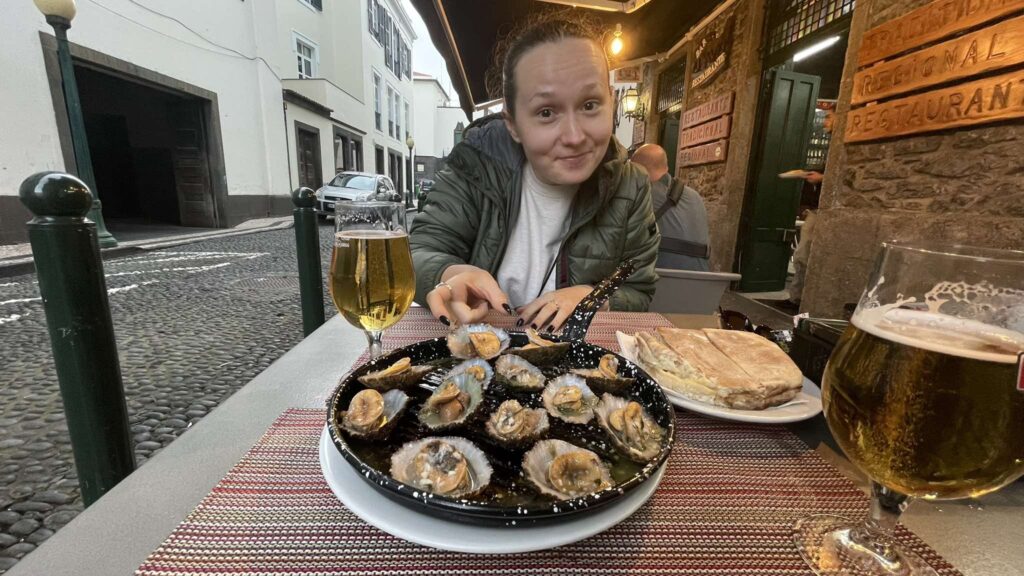
Limpets (in Portuguese they are called lapas) are shells that are very common in Madeira, and locals have been eating them with salty butter sauce for generations. Lapas are the perfect snack, especially if served with bolo do caco, so tasty that you can order them both during the day and in the evening.
Place tip: We ate Lapas with bolo do caco in a small bar in Funchal—Bar “O Avô”—I recommend this place (affordable and delicious)
Poncha and Nikita
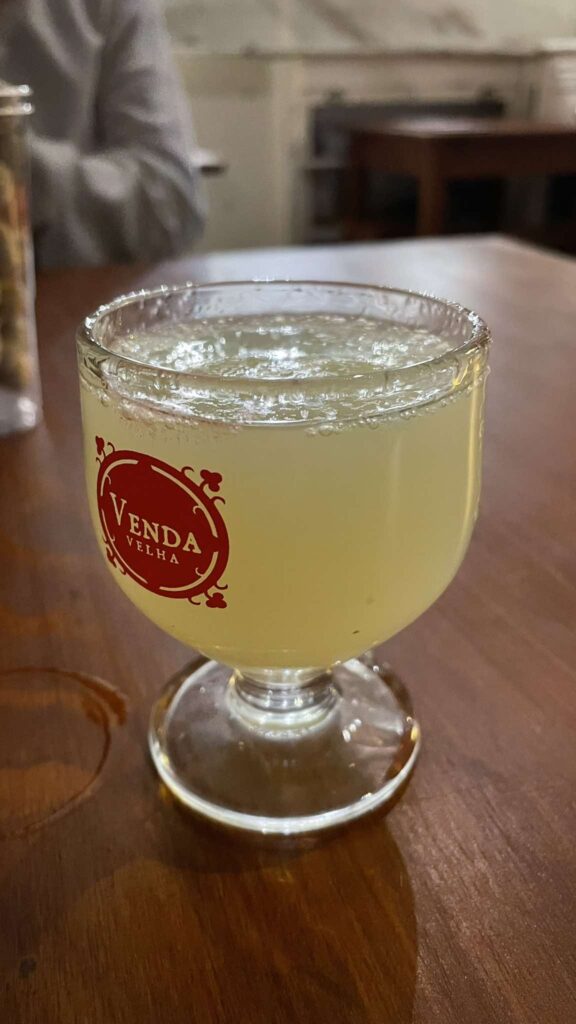
Poncha is the number one alcoholic drink in Madeira, made from aguardente de cana—a drink similar to rum—and fruit juice. Traditionally the fruit in Poncha was lemon, but nowadays you can find Poncha in any fruit flavor. Poncha is so sweet you don’t feel the alcohol, so please drink it carefully.
Named after an Elton John song, Nikita is a cocktail drink served exclusively in Madeira, made from beer, pilsner/white wine and—believe it or not—coconut ice cream. It is just as incredibly sweet as it sounds, and like Poncha, has been getting people tipsy in Madeira for decades—more than they might want!
Tip: To taste delicious Poncha in Funchal, visit the pub Venda Velha.
What to do outside Funchal

If you have chosen Funchal as your base for moving around the island of Madeira—by renting a car you can see all the main points and sights of the island. Also, hike in the mountains, swim at sandy beaches outside the city and on the opposite side of the island.
I wrote separately about our travel experience and what you can do in a week in Madeira—here are the coordinates of the waterfalls, viewpoints, and mountain hikes we managed to visit. I recommend reading before planning such an itinerary—Madeira—7-day route.
What to see in Madeira in 7 days:
- Walk along the levadas—in 7 days we managed to do two routes and honestly, it was not enough for me. It’s a very interesting and beautiful hiking experience along the canals—you won’t see this anywhere else but Madeira. So plan to walk at least 3–4 of the most beautiful levadas. You need to set aside half a day for each—you can combine with other viewpoints and places on the way.
- See Porto Moniz and São Vicente and their surroundings (Fanal forest, Ribeira da Janela Rock, Seixal).
- See Nun’s Valley (Curral das Freiras) and the surroundings, or go up to Pico do Arieiro.
- Relax on the beach or in natural pools.
- Walk the PR8 route—along São Lourenço headland
- See the town of Santana and surroundings—hike to Pico do Ruivo.
- Be sure to walk (if open) the PR1 route, which was closed in winter 2025 due to wildfires—so check it separately.
- To simply drive around the island, visit various viewpoints, visit the town of Câmara de Lobos, where Winston Churchill lived, and see the Cascata dos Anjos waterfall.
Useful articles and links:
- Hiking in Madeira – the best trails
- Heading to Madeira – island guide
- Alentejo Coast—where to find Portugal’s most beautiful wild beaches
- Where to stay in Madeira—places and vacation styles, tips from personal experience
Car rental – affordable options are always on the aggregator Rentalcars.com
Green card and travel medical insurance for trips abroad—online on the portal HotlineFinance
Hotel bookings and apartments— Booking.com