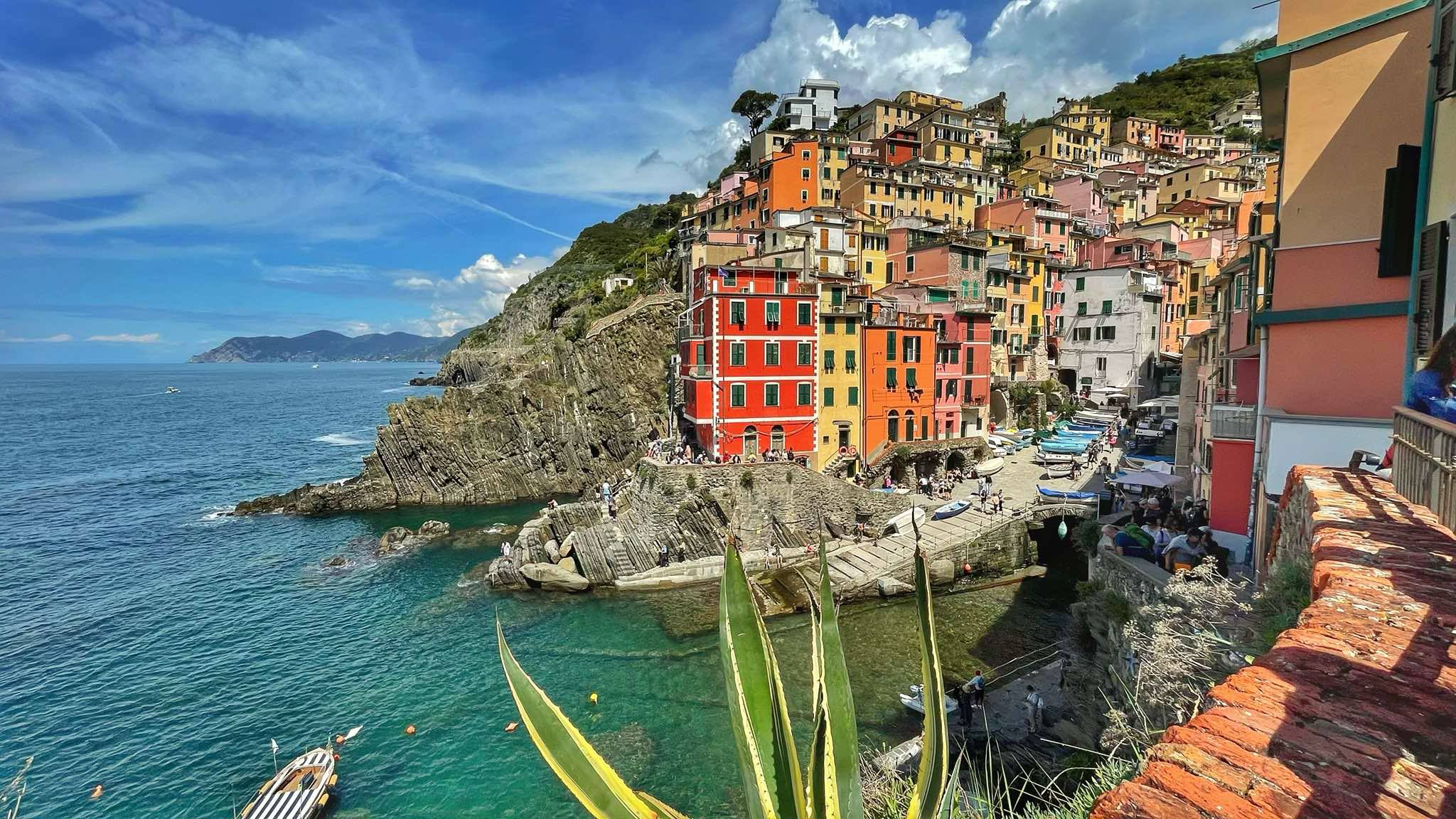
The famous fishing villages of Cinque Terre are a well-known gem of the Ligurian coast. A cluster of charming little seaside towns, filled with pastel-hued houses perched on cliffs, this is one of the most visited places in Italy. And even despite its crazy popularity, it is simply a gorgeously beautiful place.
But until the end of the 19th century, Cinque Terre was almost completely unvisited due to its difficult-to-reach location, sandwiched between the sea and the mountains. What is now a global tourist hub was, until recently, “just” a few small and isolated fishing villages.
But everything changed in 1874 (!!!), when a railway tunnel was built through the mountains, finally connecting the five villages to the rest of Italy. And thanks to this development, this stunning place and UNESCO World Heritage Site was opened to the world, and millions of tourists come here every year.
I have long dreamed of seeing Cinque Terre and I was not disappointed. Because I prepared for this visit in advance. I will tell you about the preparation for such a trip below.
Where is Cinque Terre located
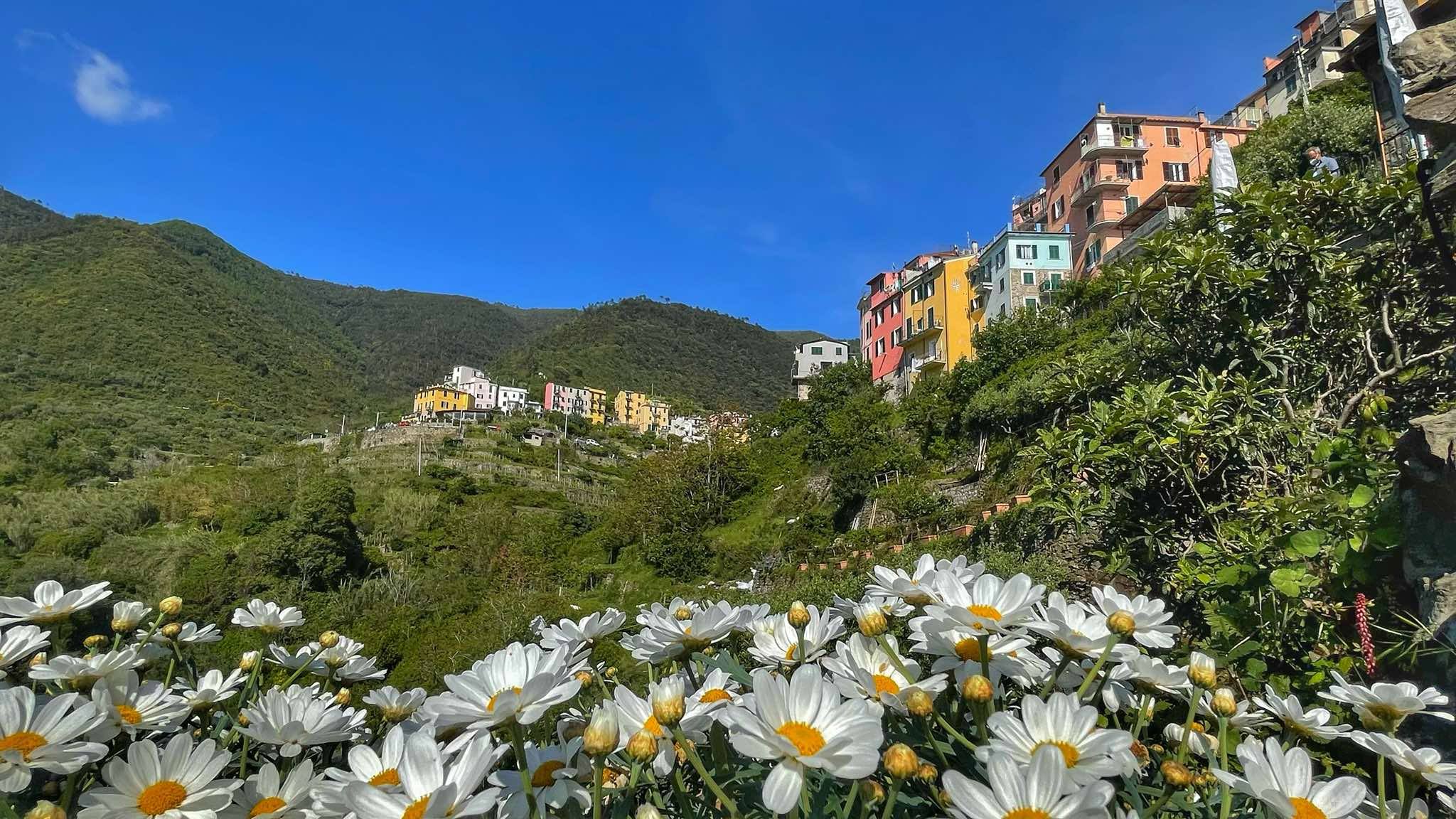
Cinque Terre – Translated as “Five Lands”, is an area on the southern Ligurian coast that includes five villages (from north to south): Monterosso, Vernazza, Corniglia, Manarola and Riomaggiore.
The towns and the area between and around them are a national park, which has been declared as such since 1999. The rugged and rocky coastline with its culture is the defining feature of the area, which is filled with stunning beaches, coves and picturesque views. With cliffs rising vertically above the sea, each of the five villages is built on or near the base of steep slopes.
The towns were typical coastal fishing villages until relatively recently, when the explosion of tourism turned them into a major tourist destination, and the focus accordingly shifted to tourism-related activities.
Why tourists go to Cinque Terre
The Cinque Terre are famous for their outstanding beauty and timeless appeal. And while other places in Liguria, home to the Italian Riviera, share similar characteristics, this cluster of villages boasts the most impressive mix of beautiful yet rugged landscapes, great access to outdoor activities, and pretty villages one after another. It’s definitely a tourist destination, but you won’t find anything like it anywhere else in the country.
The unique layout of the Cinque Terre, sandwiched between cliffs and the sea, means it also offers access to two things that don’t usually go together: beach holidays and hiking along mountain trails. And while the beaches are quite beautiful (mostly pebble and rocky) and the water is a gorgeous shade of blue, hiking is definitely a must-do activity, as the wonderful trails along the terraced cliffs offer incredible views and connect the villages to each other.
For centuries, the villages were only accessible by foot or boat, so for those without a boat, walking between towns was a must. Today we do it for fun, but it also gives a good glimpse into what life was like here before the tourism boom.
Of course, there are plenty of “fun” things to do too, like boating along the coast, wandering the streets of small villages, dining on fresh local seafood, and sampling wines and other local produce from the surrounding hills.
Best time to visit Cinque Terre

The best time to visit Cinque Terre depends largely on what you expect from your trip.
- Spring (April-June): This is probably the best time to visit. The weather is mild, flowers are in bloom, and there are no large crowds of tourists. It’s the perfect time to hike and explore the villages in comfort.
- Summer (July-August): While summer offers warm weather and a lively atmosphere, it also brings large crowds and higher prices. If you don’t mind the hustle and bustle, this is when the beaches are at their best.
- Autumn (September-October): Another great time to visit, with pleasant weather and fewer tourists. The grape harvest season adds to the unique experience.
- Winter (November-March): The winter months are the least crowded, and while some businesses may be closed, it’s a great time for a quieter getaway. However, be prepared for unpredictable weather and fewer restaurants open. November is the wettest month, with regular landslides and thunderstorms, often resulting in trail closures.
Local events and festivals
The Cinque Terre hosts several festivals throughout the year that offer a glimpse into local traditions and culture. Some of the notable events include:
- Festa della Madonna Bianca (July): Religious festival in Monterosso with processions and fireworks.
- Sagra del Pesce (May): Fish festival in Vernazza where you can taste local seafood.
- Luminara di Santa Croce (September): Festival in Riomaggiore with illuminated lanterns and street performances.
Coinciding your trip to Cinque Terre with these events can give you a unique experience. But you should understand that there will be many more tourists. If you are trying to avoid crowds, it is better to choose other days.
Where to stay overnight
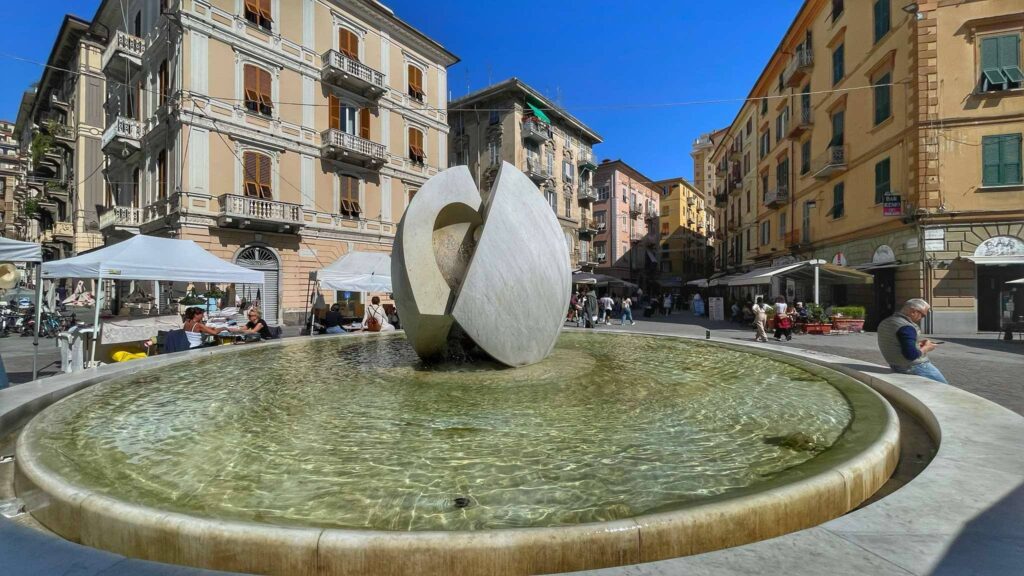
Of course, the first thing that comes to mind is to stay in one of the picturesque villages of the Cinque Terre. Many tourists do just that – book hotels or apartments wherever they like. But there are alternative and more logistically convenient options:
La Spezia, which is not actually part of the Cinque Terre, is the most obvious option, as trains arrive there from all over Italy. And it is a real city with many accommodation options, restaurants, etc. It also provides quick and easy access to the villages, so you can stay there and easily get to the towns before most other visitors arrive.
It is especially convenient to stay here during the low season, when almost all the tourist establishments of the Cinque Terre close in late autumn and do not open until spring, so the villages will be mostly ghost towns.
Within the national park, I think Monterosso is another good choice as it has an easily accessible train station. It is also the largest of the Cinque Terre towns, with the most restaurants and some nice sandy beaches.
Hotels in La Spezia:
I recommend staying in the center of La Spezia to have quick access to the train station and ferries to the Cinque Terre villages, especially if you are traveling without a car.
B&B Cernaia 42≫ – we stayed in this small but very cozy room. In fact, it is a room with its shower, a wonderful balcony and a view of the city from it. The owners take very good care of the guests: there is a coffee maker, kettle, refrigerator, dishes, and snacks for guests. The price is very affordable. The only thing is that the apartment is located in a building without an elevator on the 3rd floor and there are stairs leading to it.
La Siesta 5 terre≫ – Great location, close to the main street and Cinque Terre train station. Spotlessly clean, delicious water, tea, coffee and a nice balcony where it’s nice to drink it in the morning.
How to get to and move around Cinque Terre
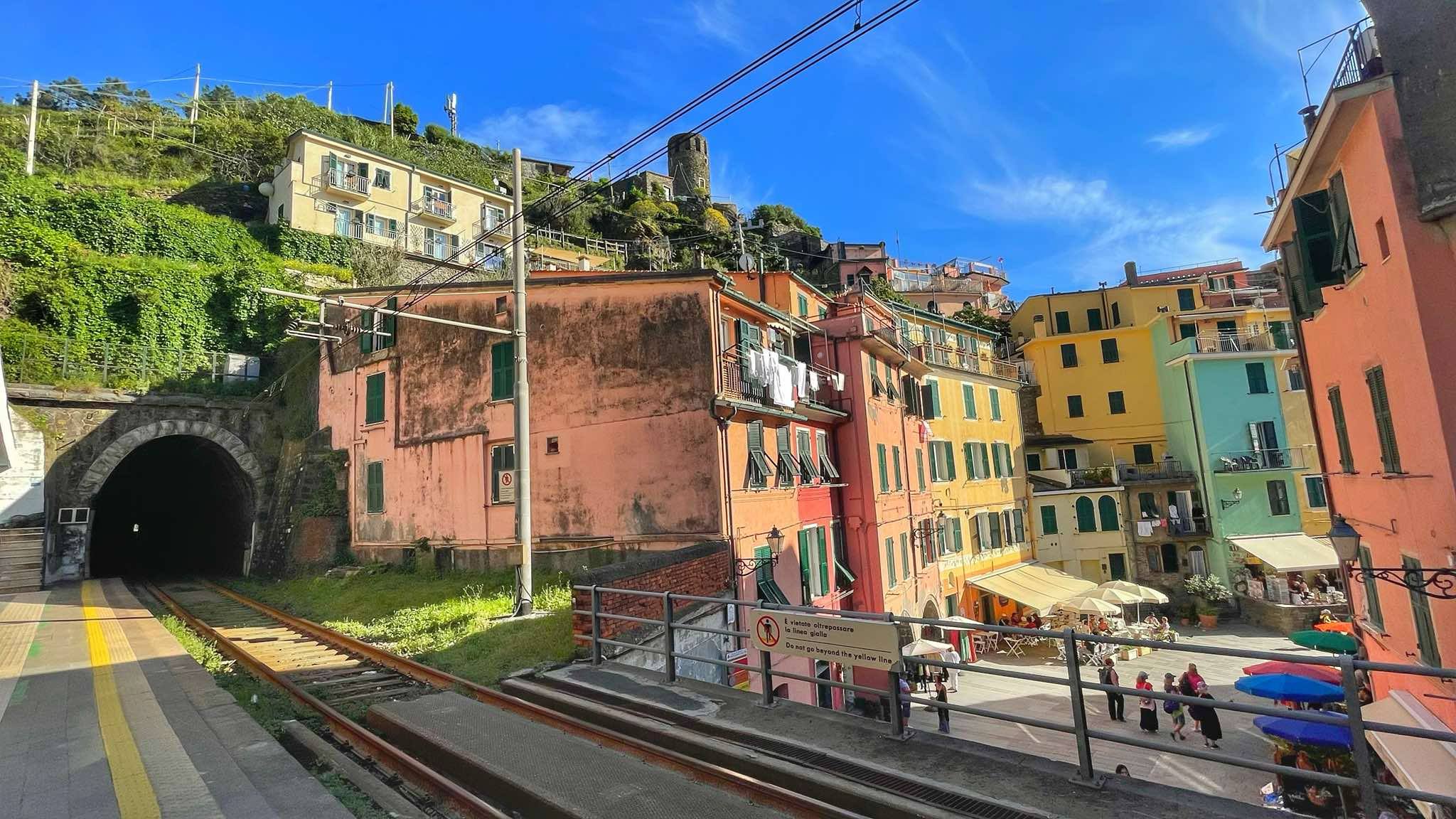
The Cinque Terre are located in northwestern Italy, on the southern coast of the Liguria region, between the big cities of Genoa and La Spezia, which is quite close to the border with Tuscany.
Getting to the Cinque Terre is relatively easy, but planning ahead will make your trip more comfortable.
- Train: The most convenient way to reach the Cinque Terre is by train. The region is well connected by the Italian rail network, and trains run frequently between major cities such as Milan, Florence, and Rome. The Cinque Terre Express connects the five villages.
- Car: While traveling by car offers some flexibility, parking is limited and often expensive. If you choose to drive, park in La Spezia and take a train to the Cinque Terre region. Either in the southern part of the national park, in Levanto in the north, or in the new part of the town of Monterosso, which is the only village with parking available to non-residents.
- Plane: The nearest major airport is in Pisa, about an hour and a half away by train. Other airports such as Rome and Milan are also suitable options.
If you are coming from the south, you will need to change to a local train in La Spezia. If you are coming from the north, you will change in Levanto. During high season, trains run to the villages several times an hour from both cities. There are regular trains to the villages from both La Spezia and Levanto, so getting to the park from either is quick and easy, and there is no reason to have a car while you are here.
Local trains
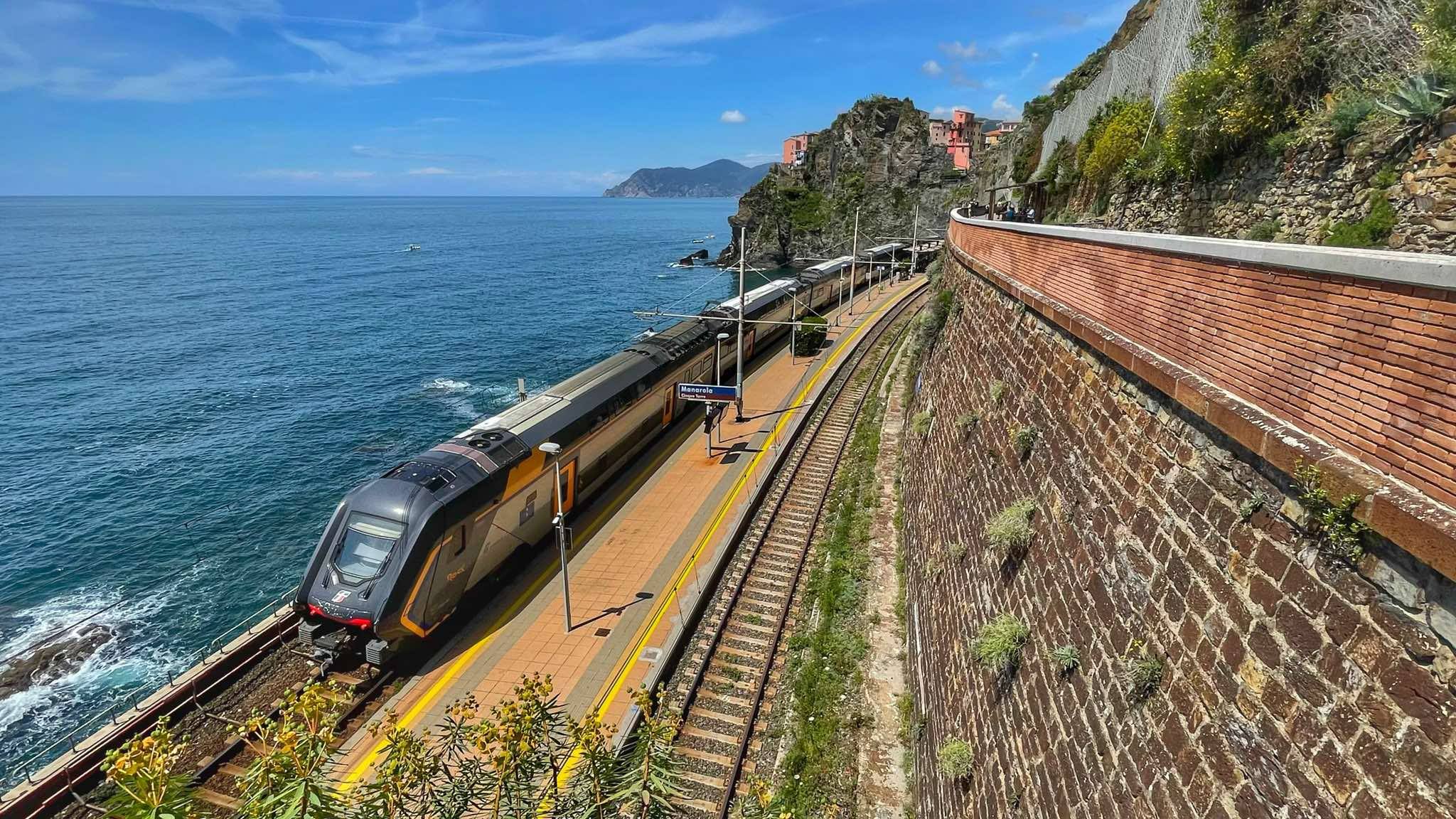
Traveling around the Cinque Terre towns by train is the easiest and most efficient way to get around. The train runs a fixed route between Levanto and La Spezia, stopping at each of the five villages. With the exception of Corniglia, all stations are located in the city center, so you can just hop on and start exploring.
Overall, I would recommend purchasing the Cinque Terre Treno card, which gives you unlimited train rides until midnight on the day of purchase, as well as access to paid hiking trails. You can purchase the card at the train station in Levanto or La Spezia, or directly from the national park’s online ticket office.
Trains run from early morning until late at night, usually with 1-2 departures per hour, and even more frequently during the busier times of the year.
Public ferry
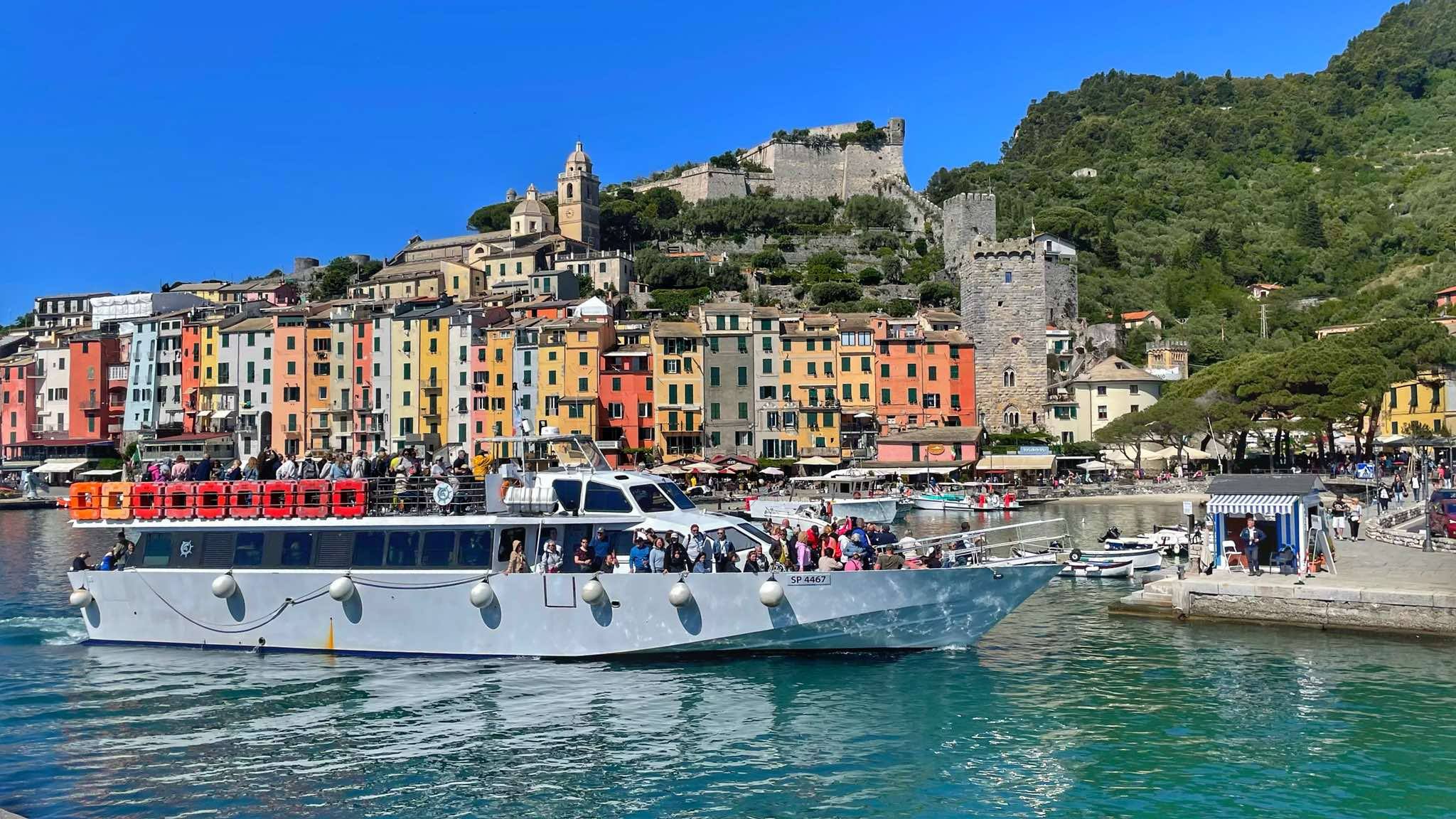
From April to October, you can also travel between the villages by public ferry, provided the seas are calm on the day of your visit (boats do not run if the seas are too rough). Ferries run from 9:00 to 18:00 and stop at all the seaside towns.
Hiking trails
Of course, one of the most popular and scenic ways to travel between the towns is the Blue Trail (Italian: sentiero azzuroo). It is an 11 km long route (one way) that connects all 5 villages.
Overview of Cinque Terre
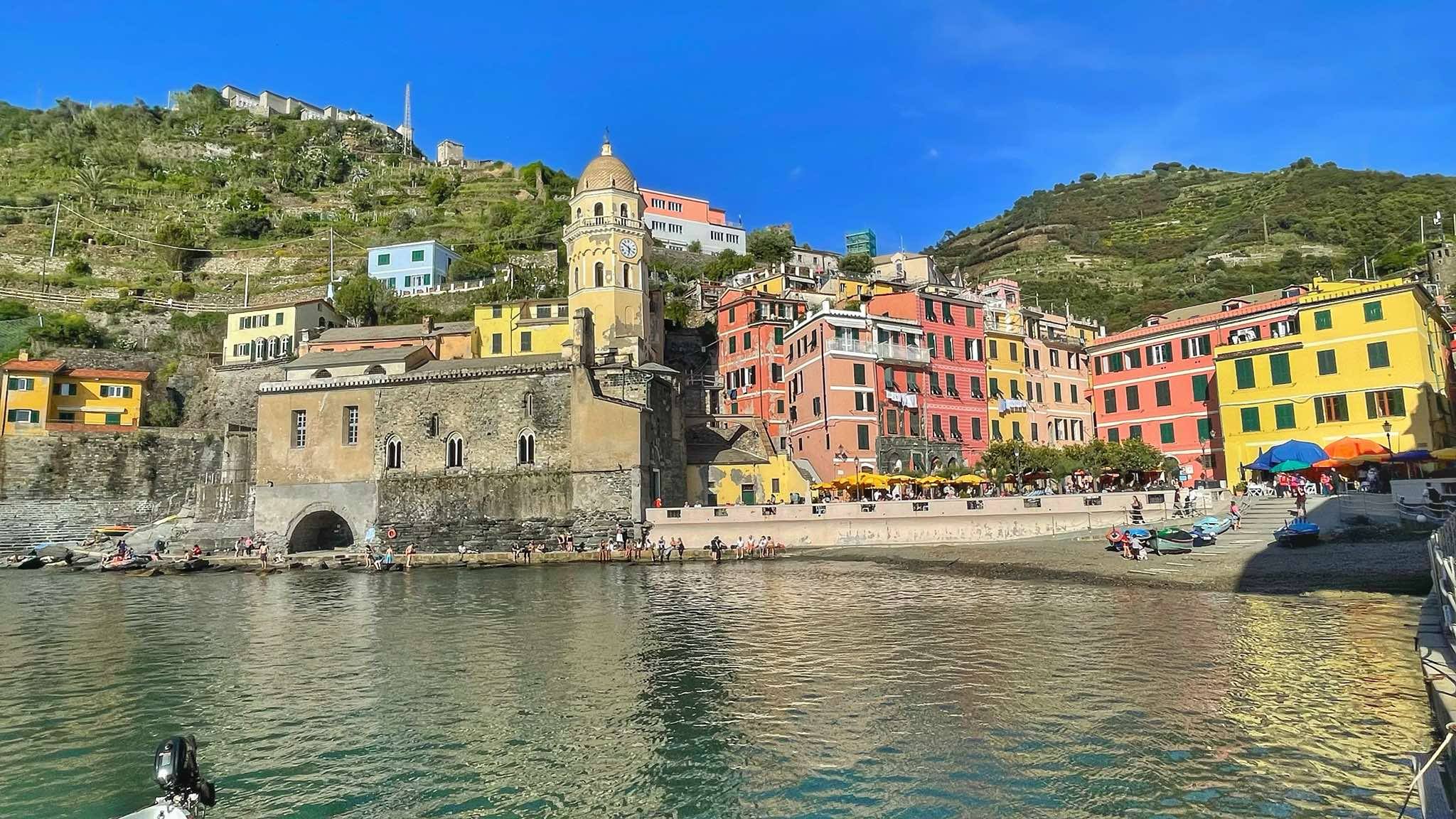
The five villages of Cinque Terre are connected by a series of scenic trails that offer breathtaking views of the Ligurian Sea and the surrounding landscape. The terrain is rugged and steep, which adds to the charm but also poses challenges for travelers.
- Monterosso al Mare: The largest village with a long sandy beach and more developed infrastructure.
- Vernazza: Known for its picturesque harbor and medieval architecture.
- Corniglia: Located on a cliff with panoramic views of the sea and vineyards.
- Manarola: Famous for its colorful houses and stunning coastal views.
- Riomaggiore: Characterized by narrow streets and a spectacular coastline.
Understanding the geographical location is essential for planning your visit and navigating between villages.
Monterosso
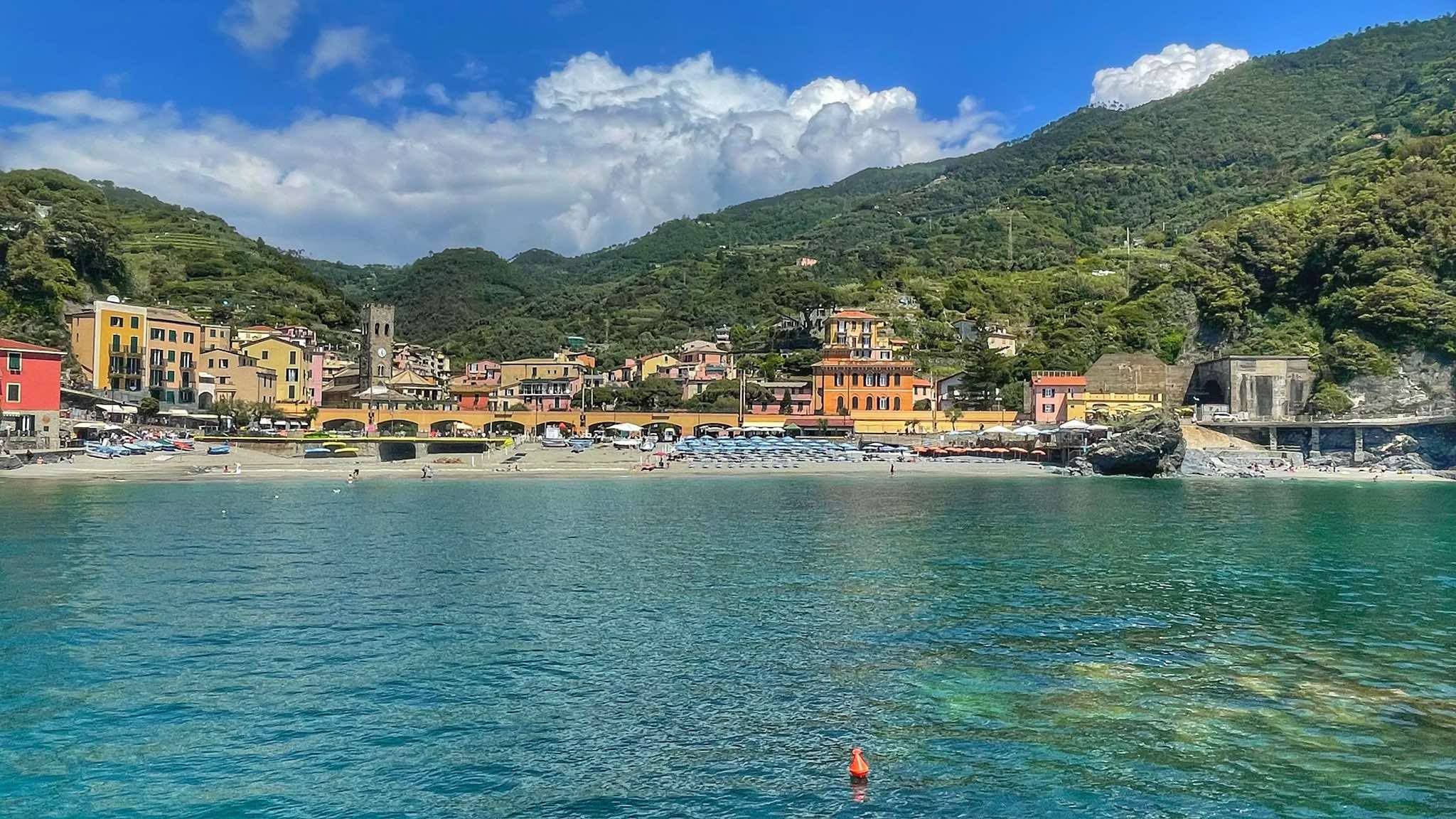
The largest of the towns, Monterosso, is divided into two halves – the old and the new. In typical Ligurian style, the old town has tight, narrow streets. While the new town is much more developed, with a seafront, sandy beach and many larger hotels. It is the flattest of the villages, which has allowed it to develop more than the others.
Vernazza
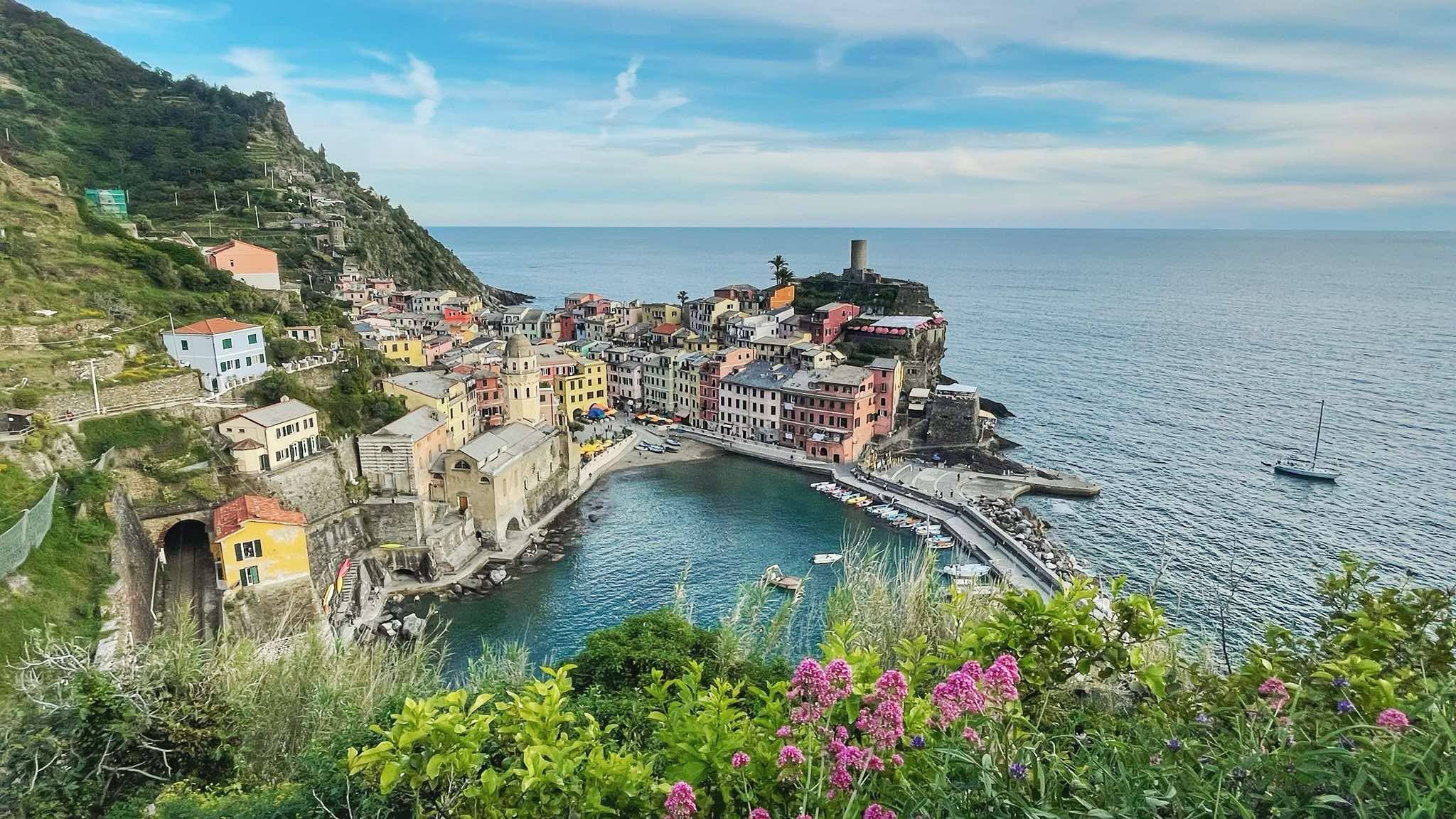
Vernazza is often said to be the most beautiful of villages, and with its winding streets, charming little square and picturesque harbor, it’s hard to argue with that claim. The town even has a few landmarks, including the Renaissance church of Santa Margherita, which sits right on the water, and the ruins of the Doria Castle. Only the tower remains standing, looking out over the sea.
Corniglia
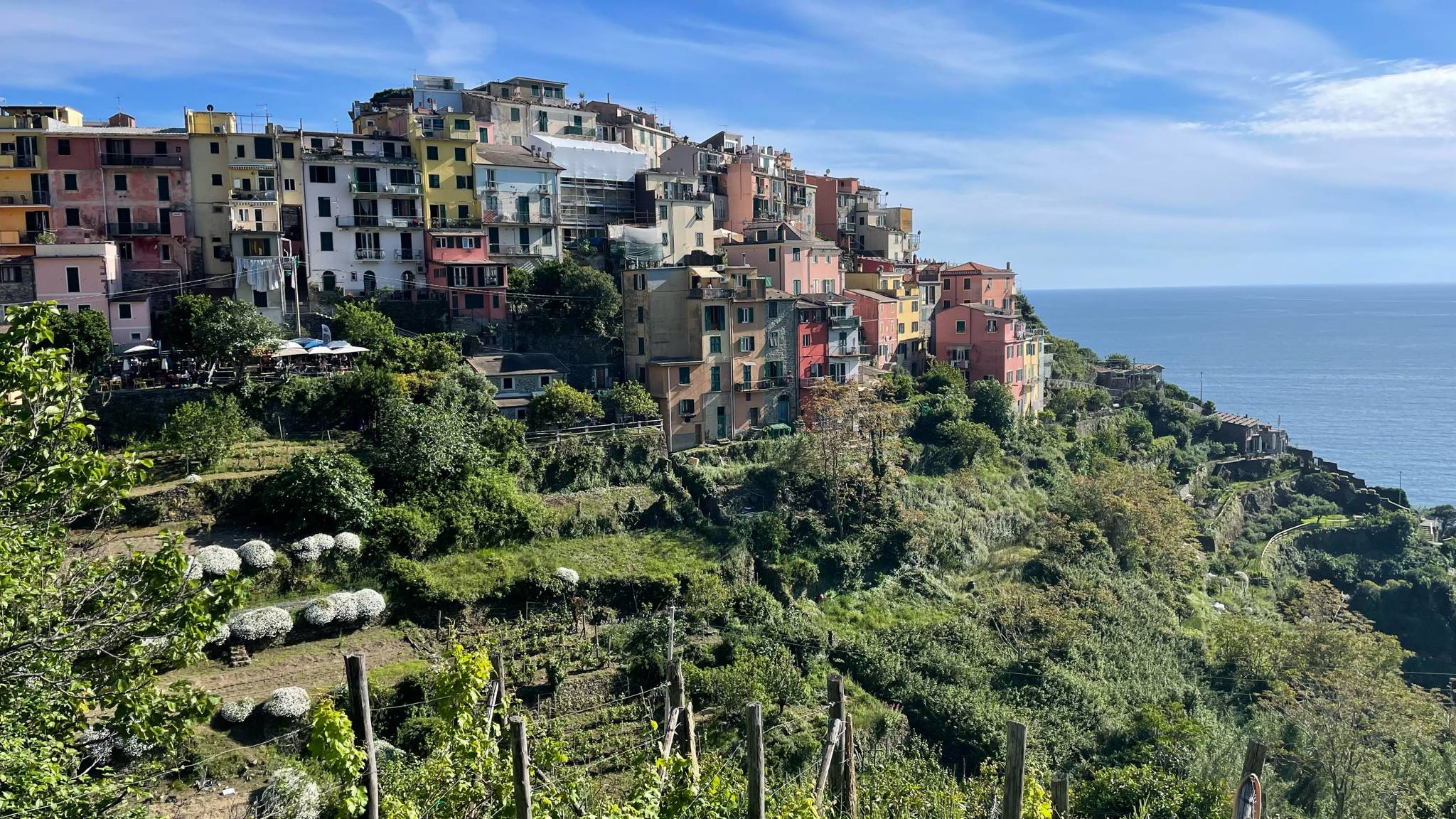
The only village not directly on the sea, Corniglia, can be reached by climbing about 400 steps up a steep staircase. The reward for the effort is, of course, the incredible views. But also a slightly less touristy atmosphere, as not everyone wants to climb. The only road through the town is lined with bars, cafes and restaurants, many of which have terraces with wonderful views.
Manarola
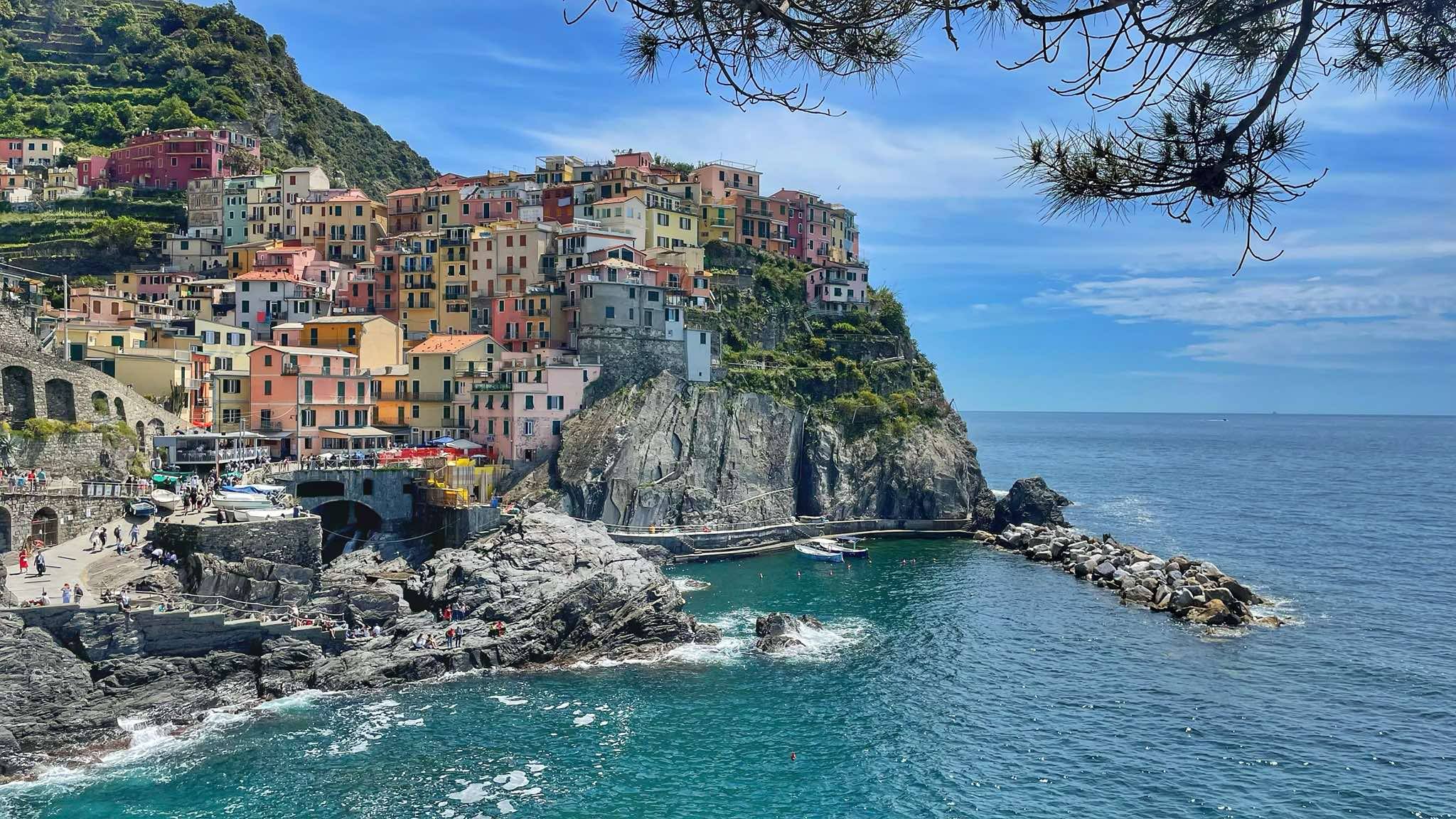
Manarola, with only about 300 inhabitants, is a tiny little town that is almost unbelievably picturesque. Built on multi-level terraces with colorful houses rising up a rocky promontory that juts out into the sea. Here you will have extraordinary views from almost anywhere in the town. The town is also surrounded by vineyards on the hills, and small walking paths will take you between them, enjoying the coastal views.
Riomaggiore
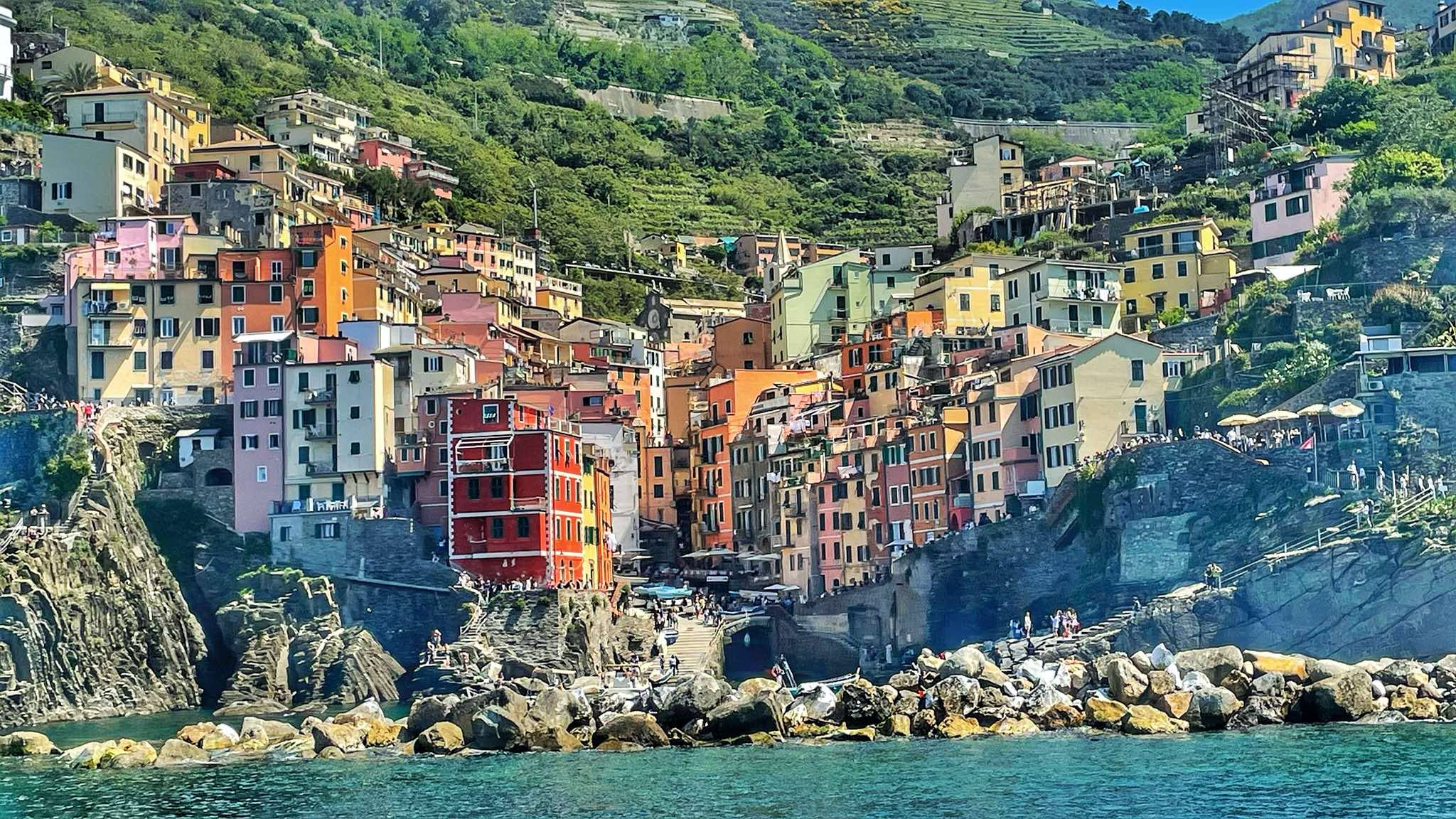
The southernmost town of the Cinque Terre -is Riomaggiore, is built on a ravine, spilling out along it to a tiny harbor and a rocky beach (which often has quite rough surf). Its main street, Via Colombo, is lined with restaurants and always lively.
What to do in Cinque Terre
Walk the trails
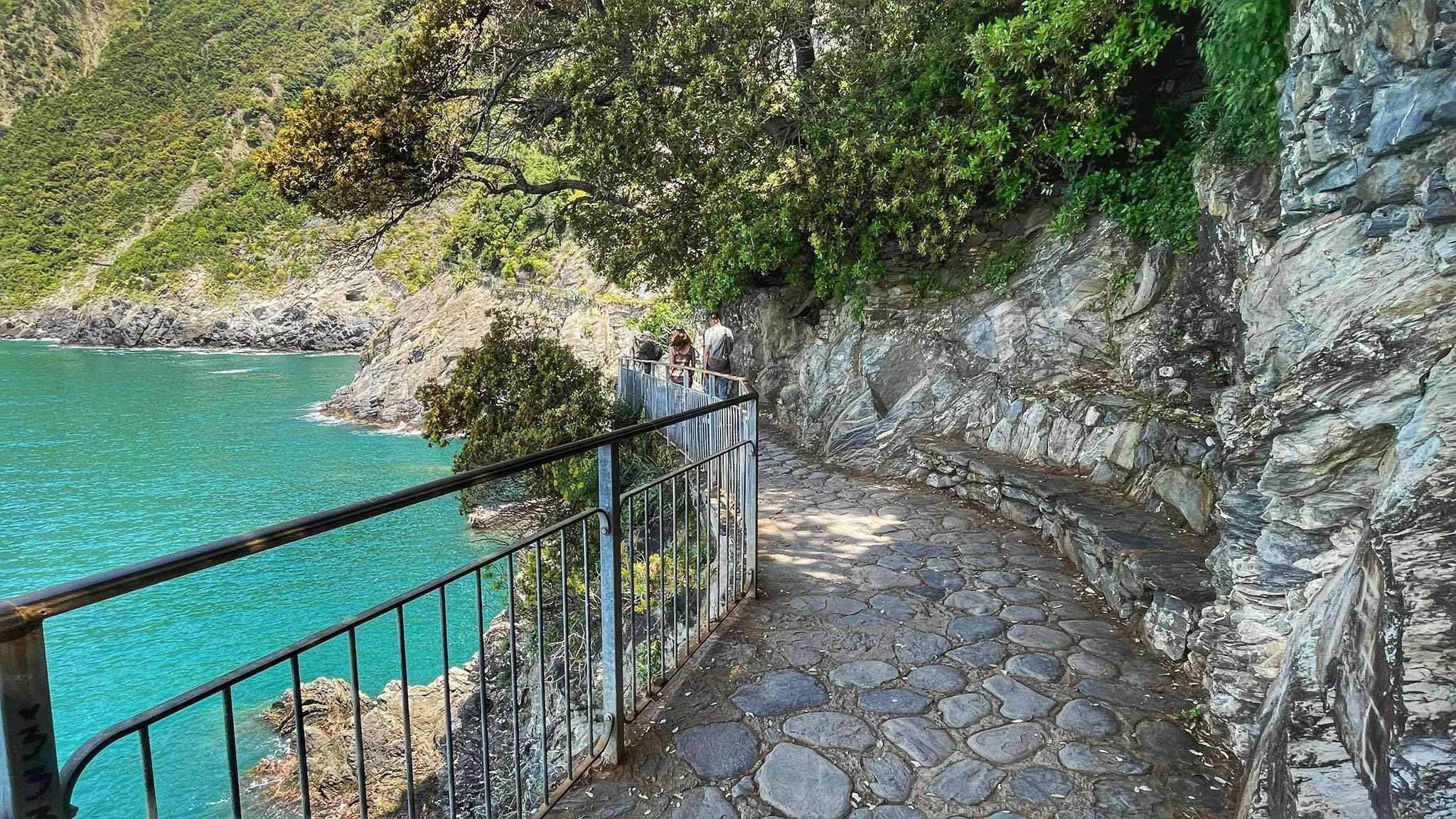
As I mentioned above, for centuries the only way to get between the villages was by walking along the coast and along the footpaths on the hillsides, and today hiking these trails is one of the main reasons why visitors come to the Cinque Terre.
The Blue Trail (or “Sentiero Azzurro” in Italian) is the main one, and for 11km it connects all 5 villages that stretch between Monterosso and Riomaggiore. The path is relatively easy, but has many hilly sections. It takes around 5 hours if you charge directly, but you should expect to have to add at least a couple of hours if you also plan to see the sights in the towns.

Part of the Blue Trail, the Via del’Amore (Love Trail), which costs €10 each, connects Riomaggiore station and Manarola station. This trail was closed for many years due to a landslide. However, in 2025, it was finally reopened after renovations.
The Blue Trail is by far the most famous hike, but there are actually many other trails in the national park, most of which run through the hills above the towns.
The 32-kilometer Red Trail (Sentiero Rosso) is the next most popular, running from Portovenere to Levanto, two towns located at opposite ends of 5 villages.
The route runs through the countryside above the villages and is therefore known as the “high trail” (Alta Via), and offers incredible views as you hike. It will take around 11 hours to complete in one go, assuming you are reasonably fit, but it also has side trails that lead into the village, so you don’t have to do the entire hike.
There are many other trails to explore, and they can all be found directly in the trails section of the national park website.
Visit the vineyards
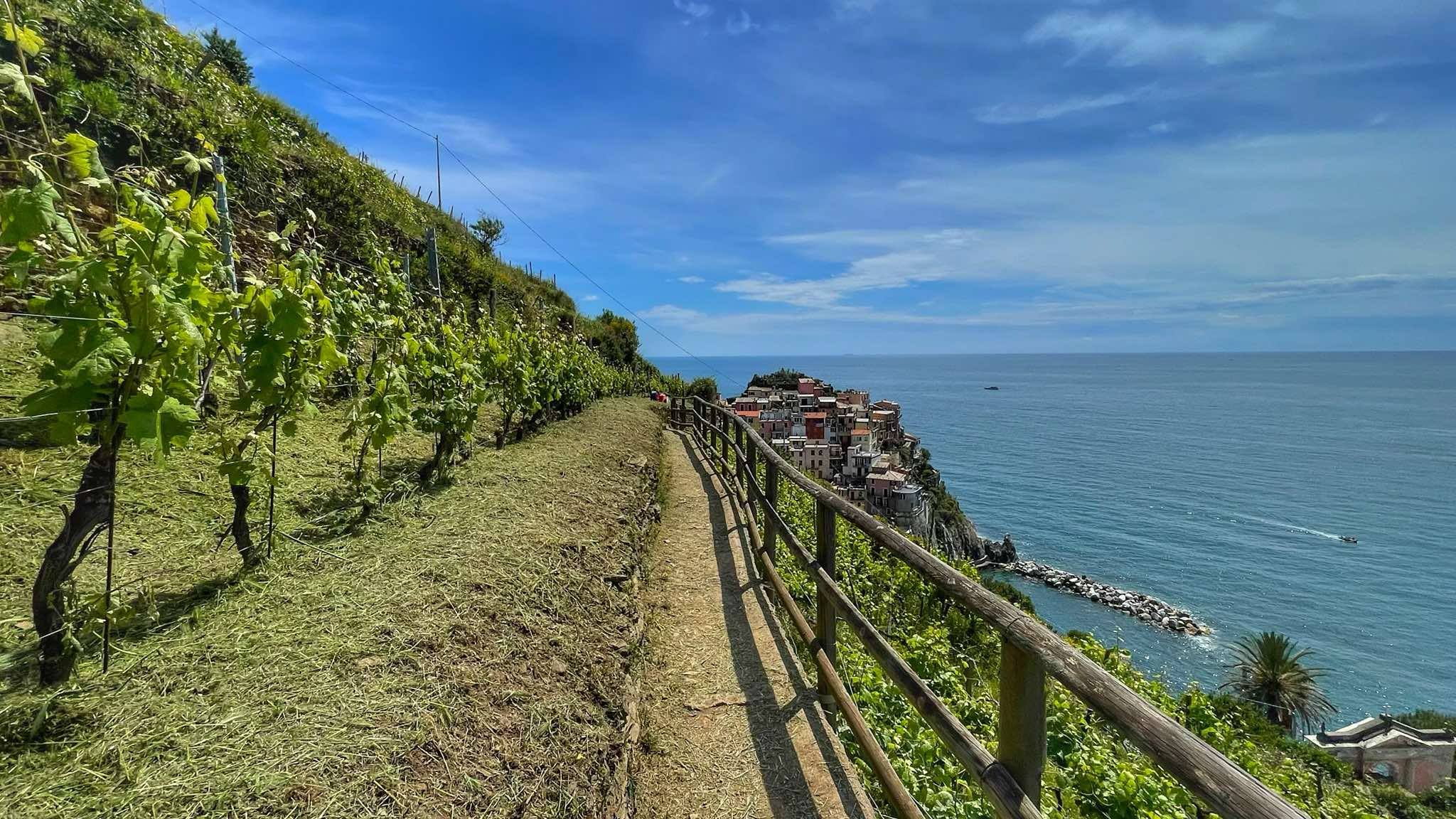
The hills behind and between the villages of Cinque Terre are densely covered with vines with terraced vineyards that produce excellent wine. There are few places in the world where you can visit vineyards whose “fields” sit on rocky cliffs looking straight out to sea, so it’s quite a unique experience.
There are two main local wines to try: Cinque Terre DOC – a dry white wine, and Sciacchetrà DOC – a sweet fortified dessert wine.
The path through the villages will take you past many vineyards, especially the stretch between Corniglia and Manarola. Just be aware that the industry has declined in recent decades. So you may want to look for some and call ahead to make sure they are open and offering tastings.
You can also enjoy tastings in shops and wine bars in many towns.
Take a boat trip
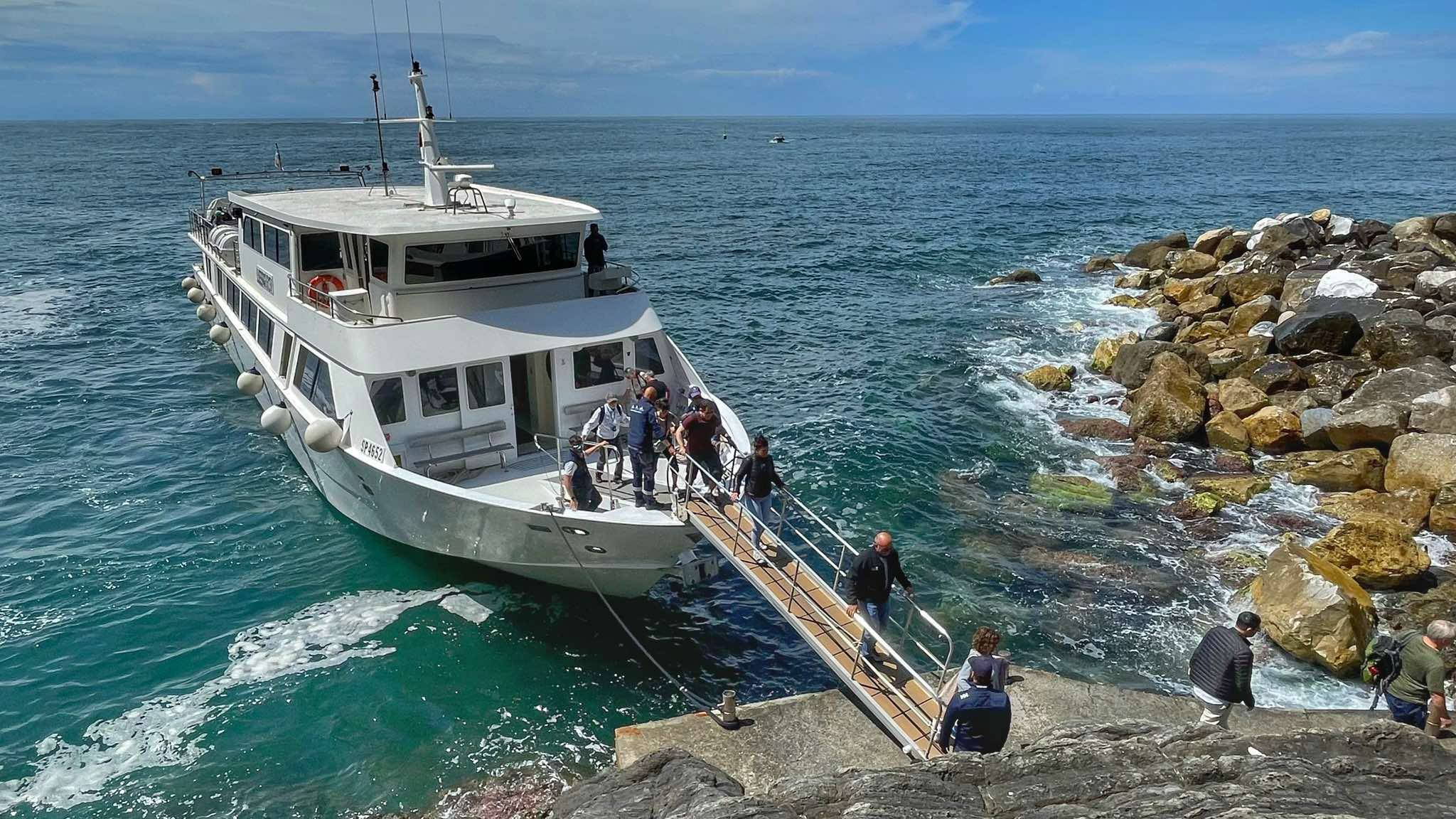
During the warmer months, public ferries run between the towns. Convenient in terms of transportation, taking one is also a great and affordable way to see the villages from the coast. The views from the sea are incredibly beautiful – I recommend seeing it for yourself. Ferries do not run if the sea is rough, so be prepared for alternative activities in stormy weather.
If you are coming here from Portofino, a popular nearby town, boat trips are also an option.
And if you want something more luxurious than a public ferry, there are private yachts and boats that will take you on private or small group boat trips of varying lengths. But while a public ferry ride costs from 30 euros, the excursion will be more expensive. For example, a boat with a sunset departure costs 48 euros.
There are also several shops in various towns that rent kayaks and paddle boards if you’re looking for something more active.
Swim and relax on the beaches
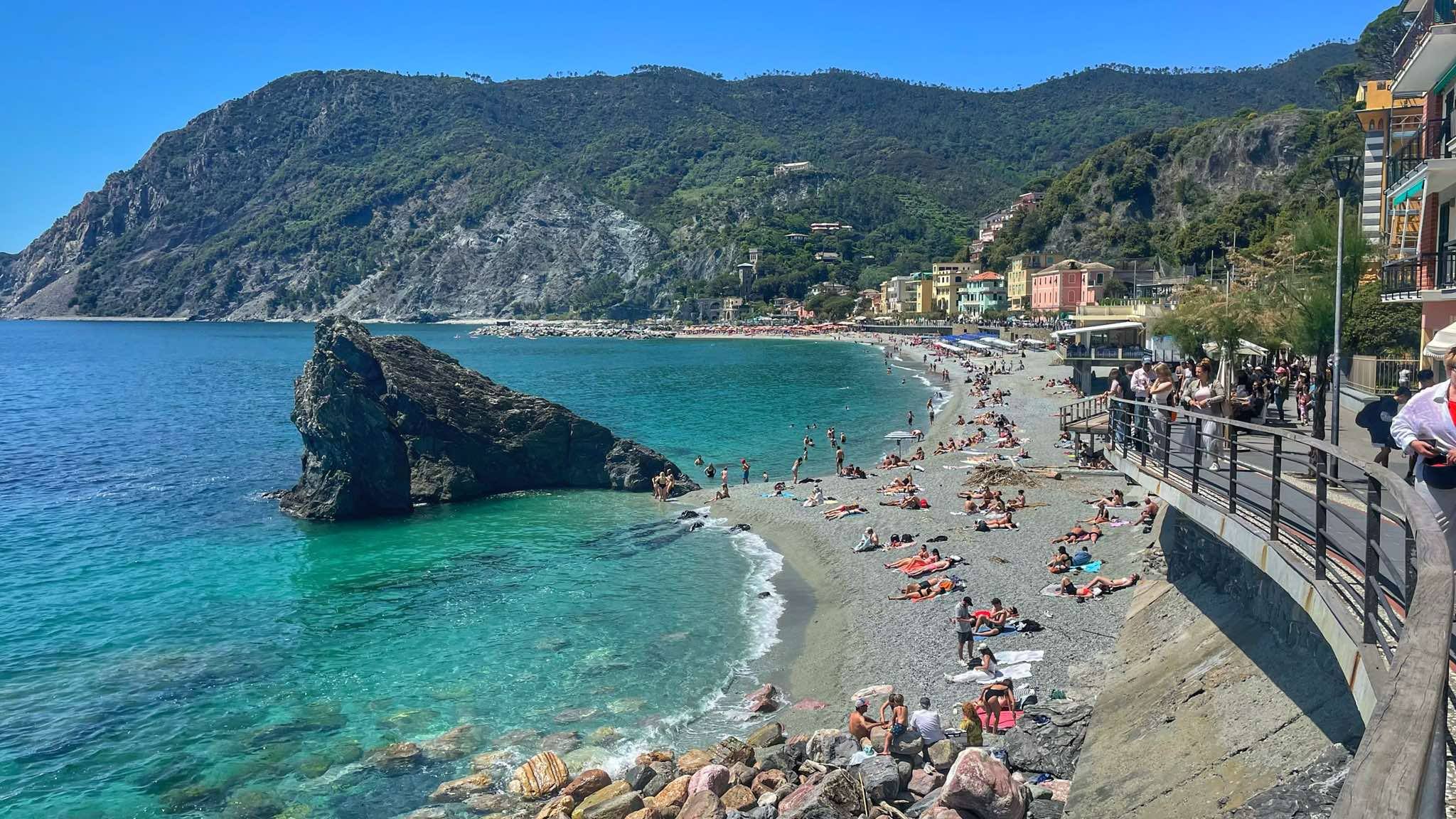
Although the beaches of the Cinque Terre are not particularly impressive, the water is beautiful, and on a hot day, especially if you have been traveling between cities, a dip in the Ligurian Sea is simply wonderful. Here are a few places to swim:
- Monterosso has the only real sandy beach, part of which is private, with sunbeds for rent. The public part is, of course, free. It is conveniently located right next to the train station – you can come here from any village where you are staying.
- In the harbor of Vernazza there is a small sandy beach with mostly calm water, because it is closed from the waves by a breakwater. It is good for swimming with children.
- Manarola and Riomaggiore do not have beaches, but each of them has low rocky areas from which you can jump into the sea.
Budget and expenses
- Accommodation: Expect to pay more during peak season. Average prices range from €80 to €200 per night (for two), depending on the type and location.
- Food: Meals in mid-range restaurants cost between €15 and €30 per person.
- Activities: Train tickets and entrance tickets to attractions are usually affordable. A hiking trail ticket and unlimited train travel for 1 day costs €27. A ticket for the Path of Love is €10. A one-way ferry ticket from La Spezia to Monterosso is €30, unlimited ferry travel (per day) is €41.
Money saving tips
- Travel Tickets: Consider purchasing the Cinque Terre Card for unlimited train travel and access to the trails. A 24-hour train+trail ticket costs €27. Single train journeys (75 minutes) start at €5.
- Local Markets and Shops: Shop for affordable snacks and souvenirs at local markets and supermarkets.
Currency and payment methods
- Валюта – євро (€). Кредитні та дебетові картки широко приймаються, але для невеликих закладів варто мати при собі готівку.
What to take with you on a walk in the Cinque Terre
Proper packing can make your trip more comfortable:
- Clothing: Bring light, breathable clothing for the warmer months and layers for the cooler evenings. If you are visiting in the winter, bring a warm jacket and raincoat.
- Footwear: Comfortable walking shoes and sturdy hiking boots are a must (so no sandals or flip-flops on the trails).
- Sun protection: Sunglasses, sunscreen, and a hat are essential, especially for summer trips.
- Snacks: If you are planning on a long hike, bring water and snacks to enjoy a snack with a beautiful view. There are plenty of benches and picnic areas along the trails.
- Swimwear: If you are planning on enjoying the beaches, bring a swimsuit and beach essentials.
- Camera: Cinque Terre is a photographer’s paradise, so bring a good camera or a smartphone with plenty of memory.
How to avoid tourist traps in Cinque Terre
While Cinque Terre is undoubtedly beautiful, it’s important to be aware of potential pitfalls:
- Overpriced restaurants: Areas with high tourist traffic are often overpriced. Look for local restaurants off the main streets for more authentic and affordable food.
- Crowded attractions: Some popular attractions can be crowded. Visiting early in the morning or late in the evening can help you avoid the crowds.
- Interacting with locals: Ask homeowners about local restaurants, when markets are open, how and where to try local food, etc. Italians are generally friendly and welcoming. Simple Italian phrases can go a long way in making a positive impression.
Useful Articles and Links:
- Rome – What to See in Three Days in the Italian Capital
- Summer vacation on European lakes
- Beaches of Tropea – cheap vacation in Italy
- Verona – what to do in the most romantic city in Italy
Travel medical insurance with discounts can be purchased from HotlineFinance
Hotel and apartment bookings – Booking.com
Rent a car – Rentalcars
Trains tickets – Trainline