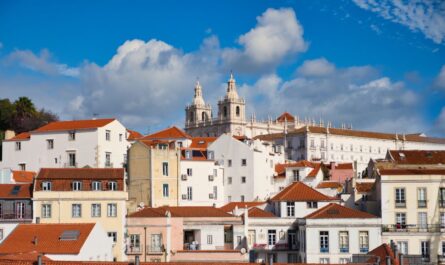
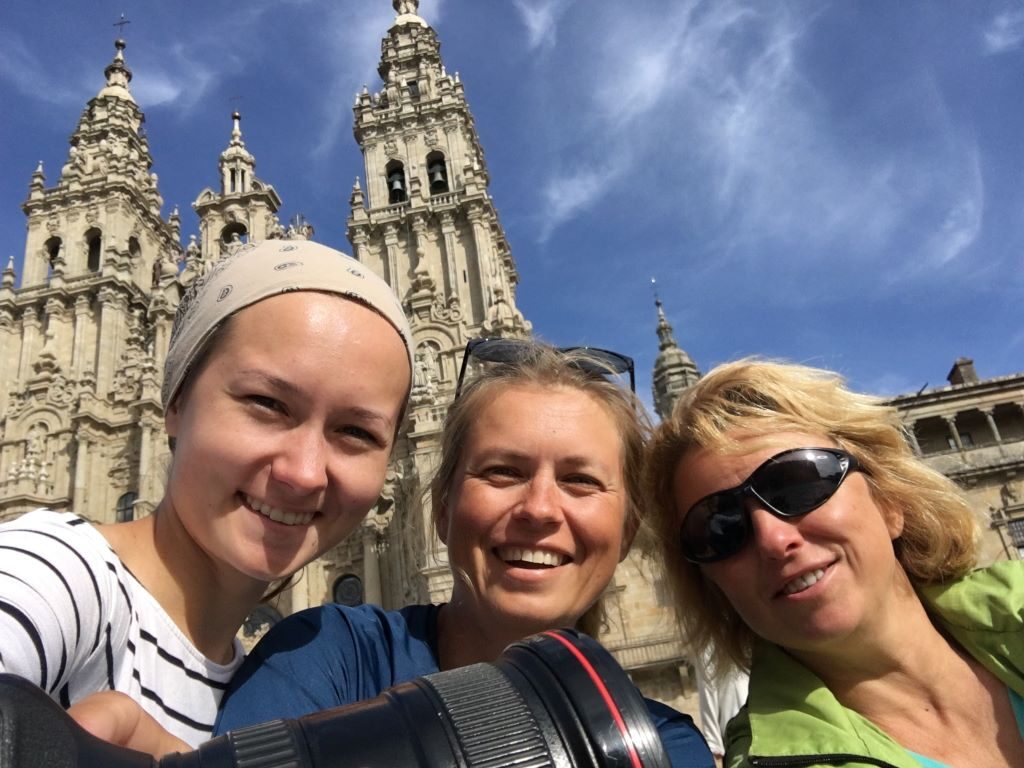
The Portuguese coastal route of the Camino was my third pilgrimage to Santiago de Compostela after 800 km on the Camino del Norte and 400 km of the last piece on the Camino Frances.
Whereas on previous routes I walked alone, this time I walked from start to finish with the same travel companions-my sister and daughter, who was already 20 years old at the time. It was a new experience for me after the first two Kamnoos, which I went through alone. Well, almost new, because it’s almost impossible to be alone at the Camino – you meet a lot of people there, and some of them remain friends for life.
The Camino Portugues da Costa route is a coastal route of the Camino Portuguese, leading from Porto to Santiago de Compostela. It is the most popular part of the Camino Portuguese, from Lisbon to Santiago. Unlike the original Central Route, which runs along trails and small roads deep into the Portuguese mainland, the Camino Portugues along the coast leads along picturesque paths near the Atlantic Ocean.
My Portuguese Camino – Central Route from Porto to Santiago de Compostela
General information about Camino Portugues da Costa
Height gain/loss: minimal during the first week, about 200 m up per day
Stages: 10 (can be longer)
The number of kilometers: 270
Difficulty: easy
As for the route itself, we decided to start in Porto for several reasons.
- First, the Portuguese coastal route from Porto to Santiago de Compostela is approximately 270 kilometers and takes about 10 days. Whereas to go all the way from Lisbon , you need to count on 600 kilometers and almost a month.
- Secondly, we didn’t have extra time – vacations and holidays limited our options.
- Thirdly, I was the only one of our three with experience of long routes. The other participants, a daughter and a sister, were walking such distances for the first time.
Based on our itinerary, the first 5 days including Porto are spent in Portugal before crossing the border with Spain in the town of Caminha (ferry or boat across the Minho River). Then the trail leads through Spain, at first also near the ocean, after Vigo the path goes through the hills of Galicia and after Pontevedra it joins the Historic Route.
Portugal’s Camino coastal route: the best time to go
This route is used in any season – even in winter. Because albergues and hostels are open all year round. But the best time for such a trip is spring and fall.
In the spring, it is best to go in early May – there may be more rain in March and April. In May, it is warm, with less precipitation. But it can also be hot, especially at the end of May.
The closer it is to the middle of summer, the hotter it will be. But the less rain you can expect on this Camino. But for me it’s too hot to walk when the temperature is above +30 degrees. It’s even dangerous.
In the fall, I recommend going in late September, early October. I went from Porto to Santiago de Compostela twice at this time. The weather is perfect – dry, warm, but not hot. The temperature is 20-25 degrees during the day and about 12 degrees at night.
Stages and routes
The route we took was as follows (although on Gronze everything is a little different):
Porto – Vila-do-Conde – Esposende – Viana-dj-Castelo – Caminha (A-Guarda) – Baiona – Vigo – Rodondela – Pontevedra – Caldas-de-Reis – Padron – Sanriago-de-Compostela
Our hike began at the Sé Cathedral in Porto and ended at the Cathedral of Santiago de Compostela. It took us 11 days of trekking, averaging about 25-30 km a day.
We always chose the coastal option whenever possible, but it’s not always possible because of rivers and bridges, uneven paths along the ocean, and it’s hard to find straight lines on the coast in general.
Cities I liked on the route:
Porto, Viana de Castelo, A Guarda Bayona Pontevedra, Caldas de Reis and Padron. And of course, Santiago de Compostela is the“cherry on top”.
Just like on other Caminos, in order to be able to stay overnight in municipal albergos and receive a Compostela certificate at the end of the route, you need to obtain a credential, or pilgrim‘s passport, before starting the route. It is sold in the Cathedral of Porto-Ce. It costs 2 euros.
Porto

No doubt about it, Porto – is a beautiful city. You should definitely plan an extra day at least to enjoy it before the Portuguese Camino coastal route. Especially if you have to travel there for a long time, which is not so easy to do from Ukraine now.
The cathedral where the route starts is very beautiful. But don’t miss the Ponte Luiz I (Luiz 1 Bridge) overlooking the Rio Douro River. Climb the many observation decks, visit the San Bento train station and the Livraria bookstore.
But we enjoyed just wandering through the different winding streets and stopping to eat sardines or just have a coffee in the nice little squares. A very nice place to spend a few days, that’s for sure.
I advise you to read it: Walking Porto – three best routes to see the city
Day 1. Porto – Vila do Conde
25 km
Matosinhos, Cabo do Mundo, Agudela, Lavra, Vila do Conde
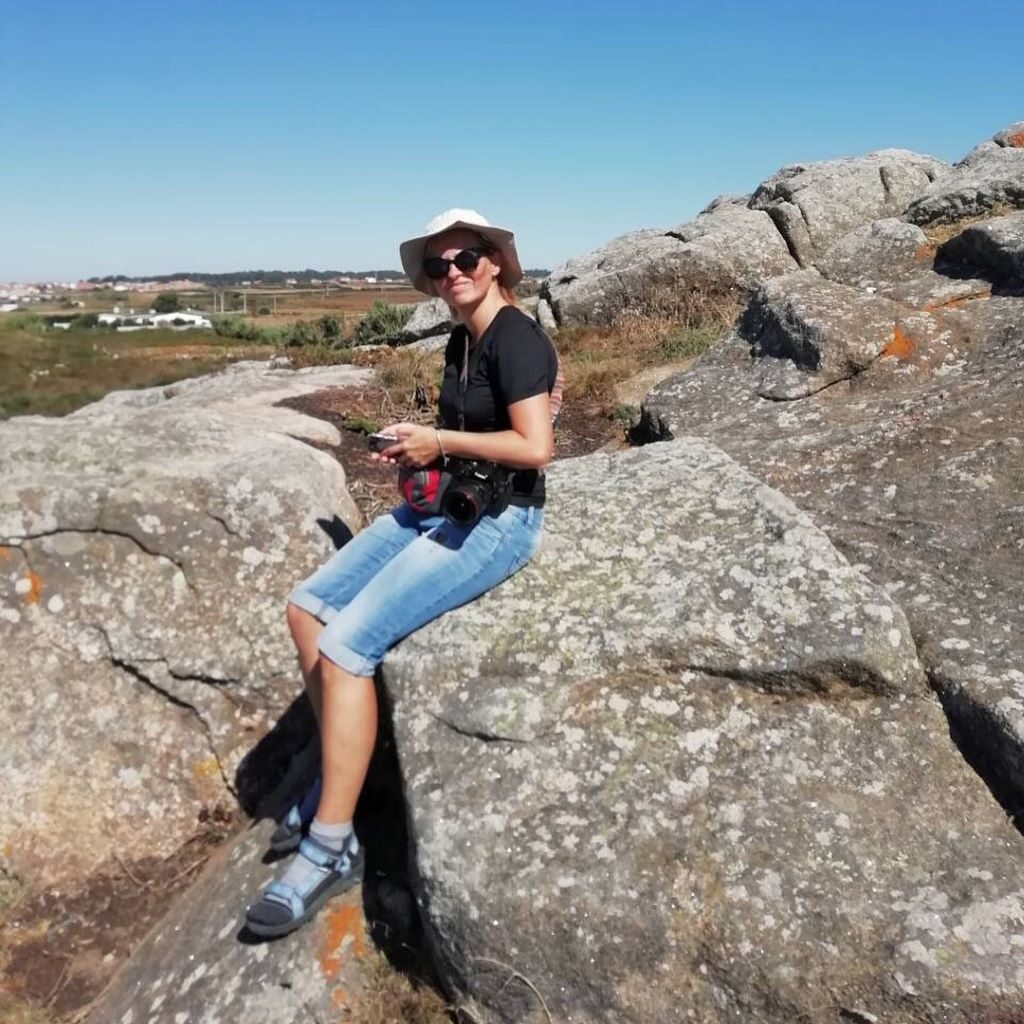
We didn’t start in the city center from the Sé Cathedral, but from the suburbs, Motuzinhos. Why? Because the day before the start of the Camino, we walked in the opposite direction from Matusinhos to the center of Porto (14 km) on foot, just walking around the city.
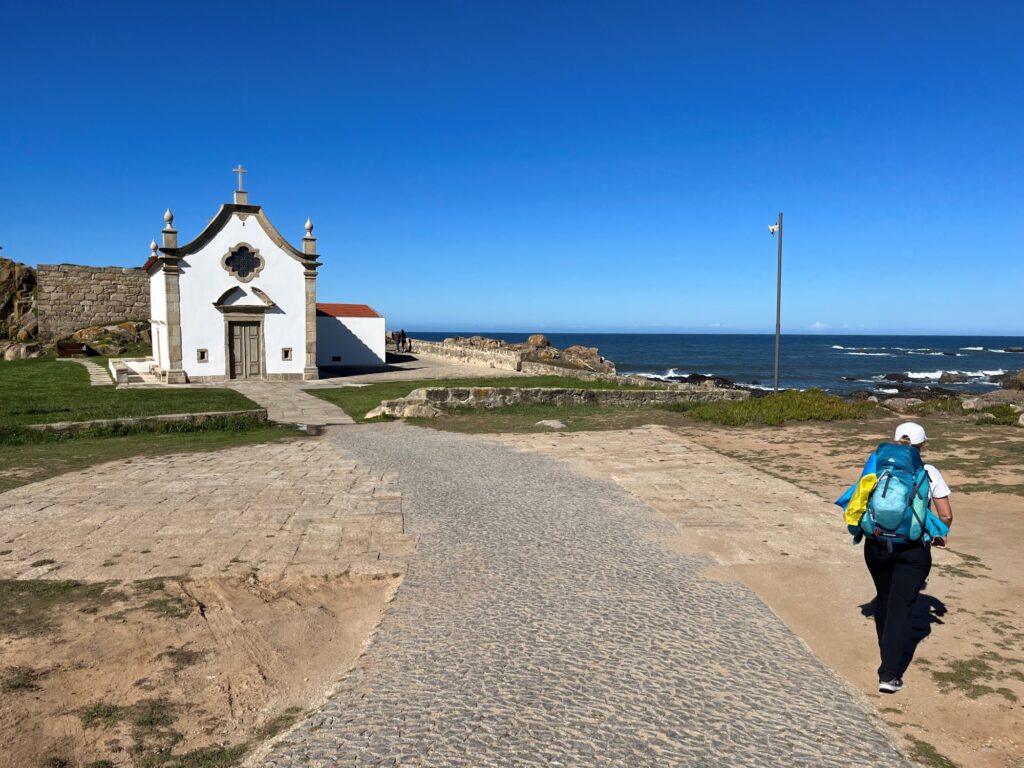
So in the morning we took the subway to the Matosinhos station, on the outskirts of Porto, and then crossed the bridge and walked along the ocean.
25 km is a bit ambitious for the first day, so if you feel like you want to take the coastal route but shorten it a bit, you can reach the Lavra that day and spend the night there in an albergue.
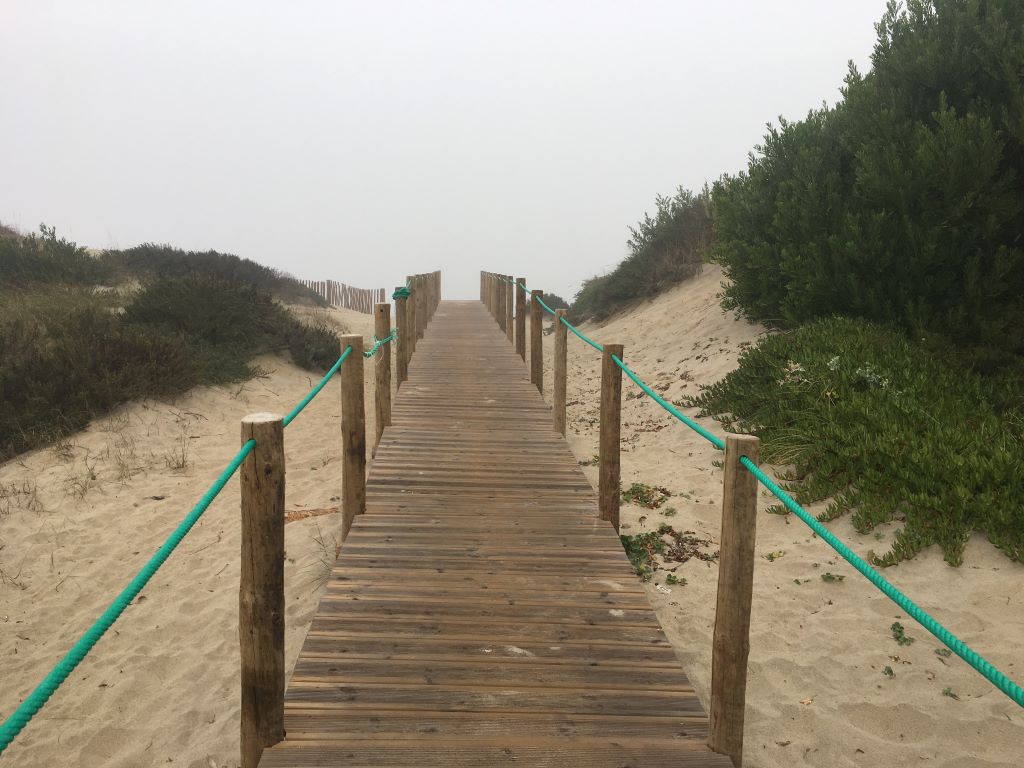
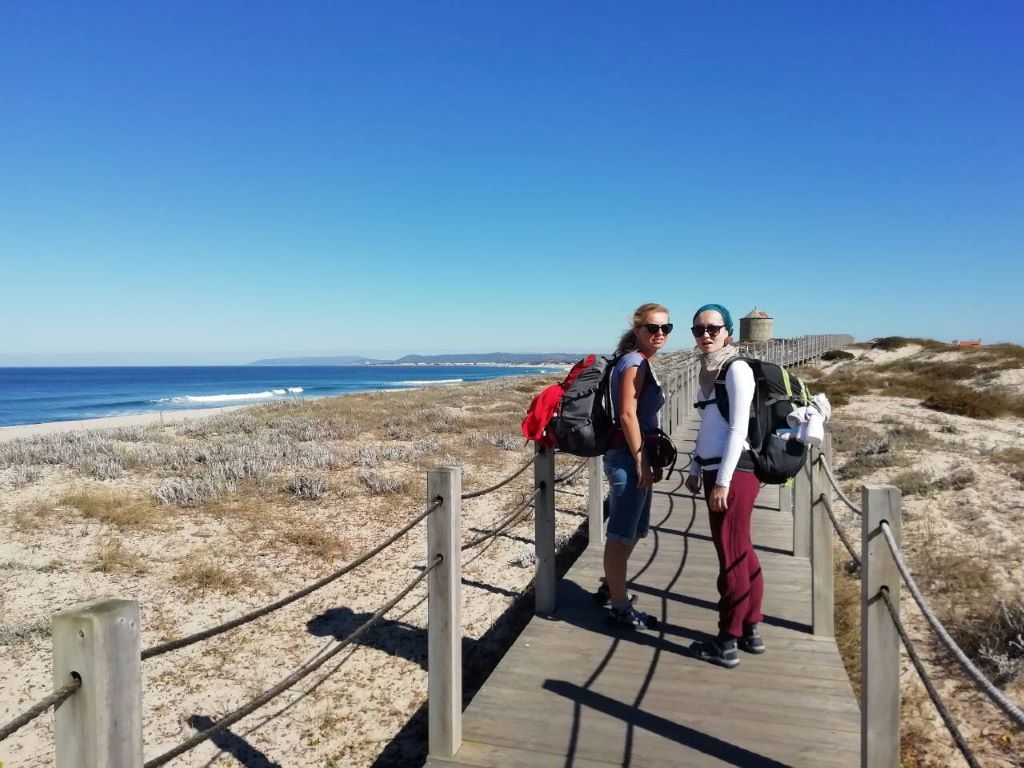
All day we walked along wooden paths or just asphalt along the ocean. We passed only one unpleasant place – some kind of chemical plant that smelled very bad. We stopped several times at beach cafes to drink coffee or juice – everything was open, and you can also find toilets there.
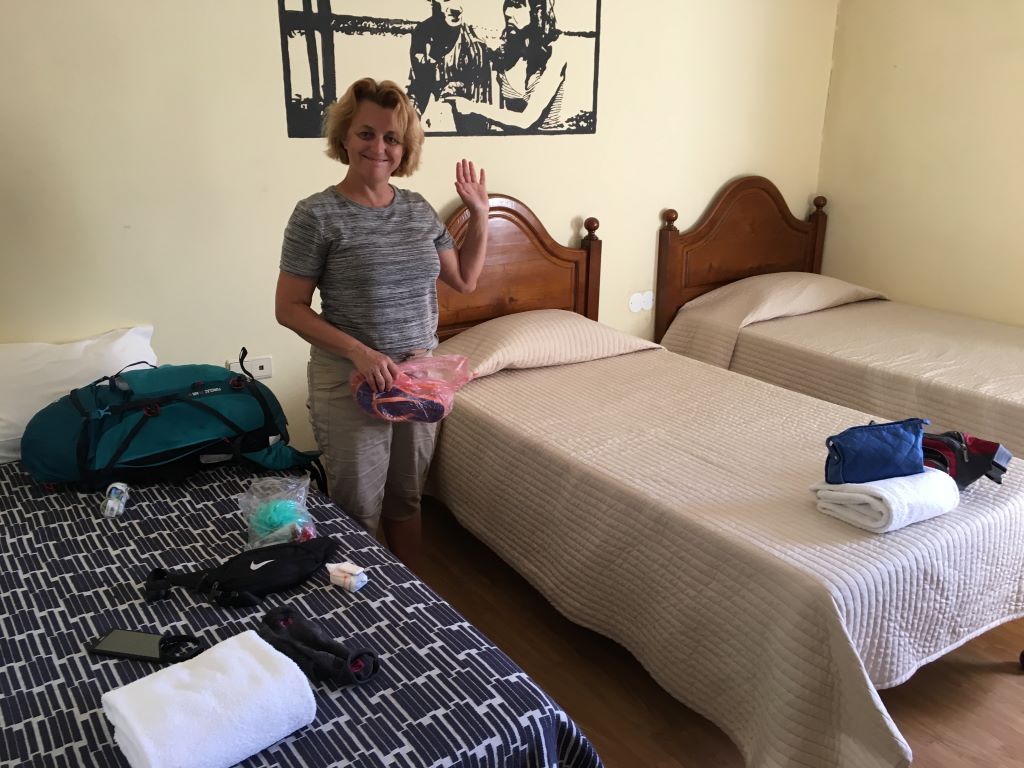
It was a very hot day – of course, our faces were burned)) But we reached Vila do Conde, where we checked into a private hostel, where we had a very cheap room for three.
Albergo and hostels in Vila do Conde:
- Albergue de peregrinos Santa Clara – pilgrims’ albergue – bed in the dormitory 10 Euro
- HI Vila do Conde – Pousada de Juventude – hostel – bed in a 6-bed room from 18 Euros
Day 2. Vila do Conde – Espogende
22 km
Cities: Vila do Conde, Pavoa de Vorzim, Espógende
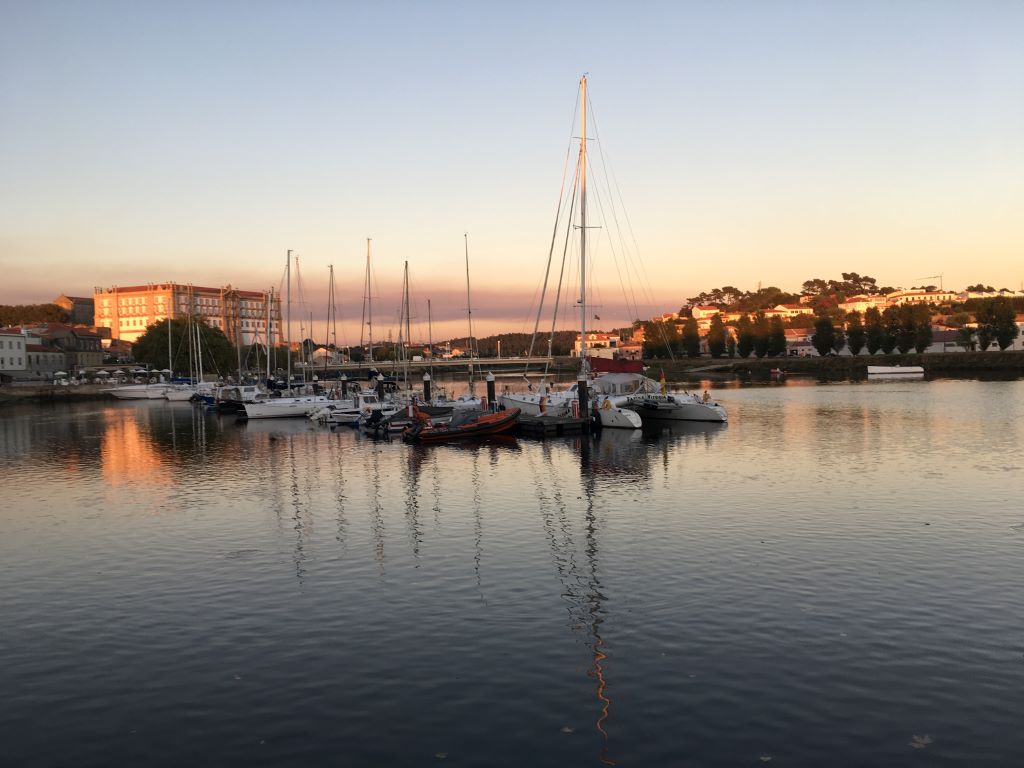
That morning we enjoyed very beautiful scenery, starting with the beaches that run from Vila do Conde to Pavoa de Vorzim, a modern tourist town with a huge beach. And then we saw the old windmills that stood along the wooden path, which was beautiful.
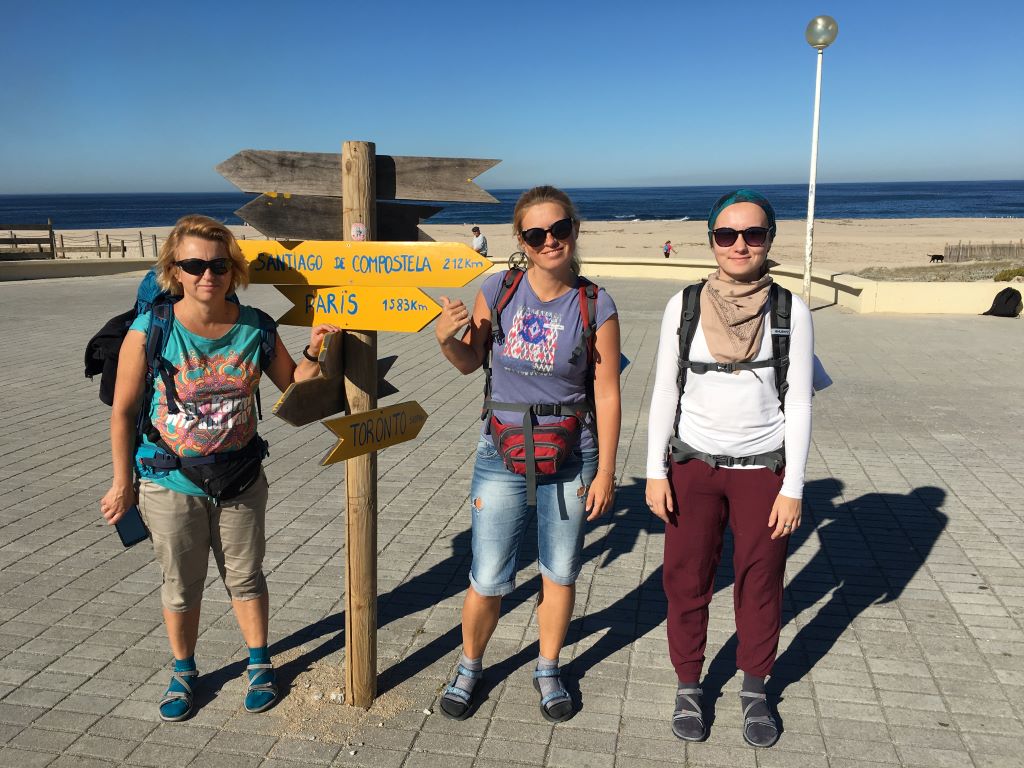
The route then turns to less exciting country roads leading along fields and sometimes along a track that goes quite far from the beach. But we spent almost the whole day walking along the embankments.
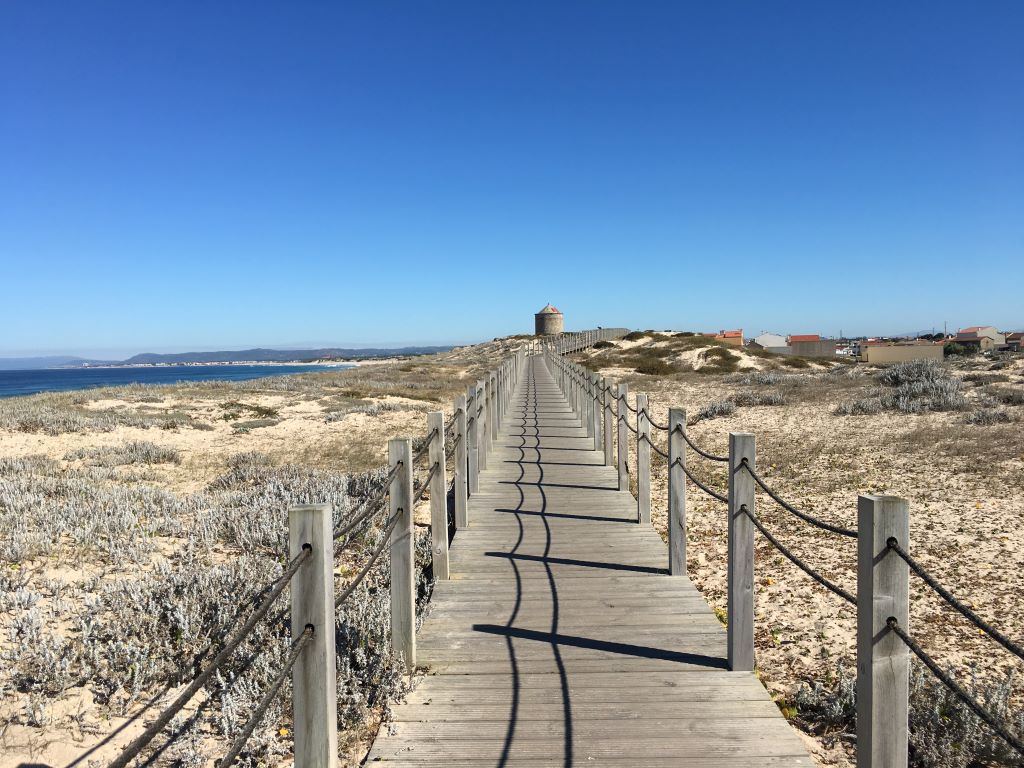
The walk to Puglia, with its very impressive beach, large malecon and several restaurants to choose from, takes about 2.5-3 hours.
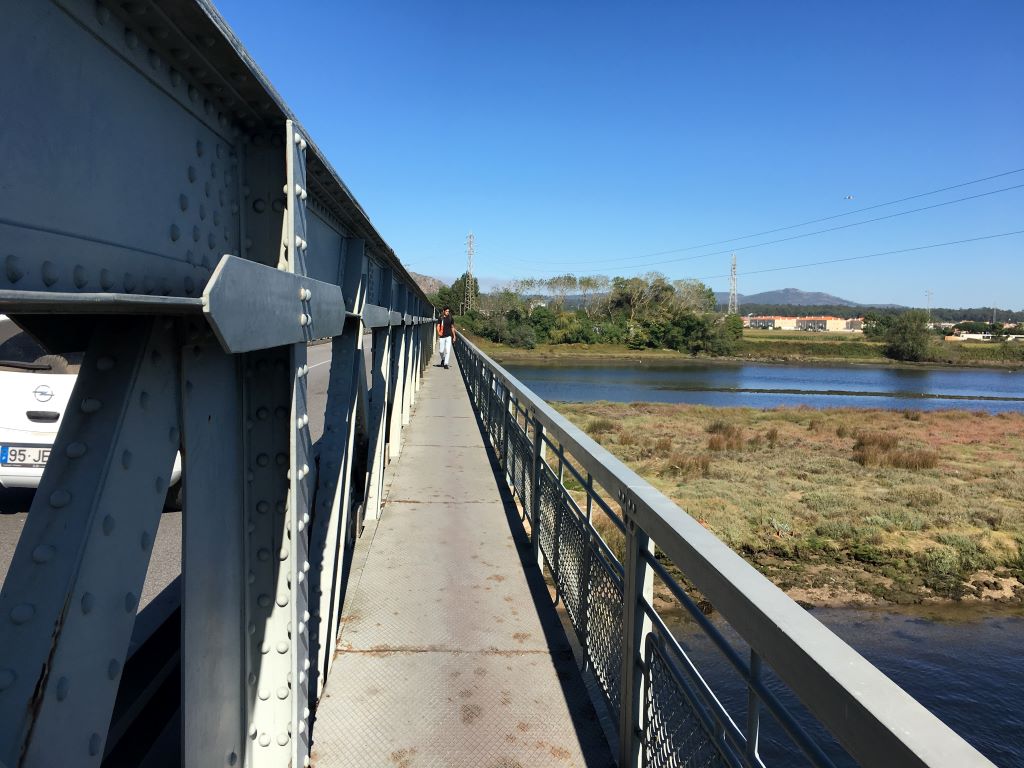
To get to Esposende, we had to cross the Rio Cavado River on a rather long bridge. Espogende is a nice city that is very popular among windsurfers and kitesurfers. There is also a 15th-century fortress with magnificent views.
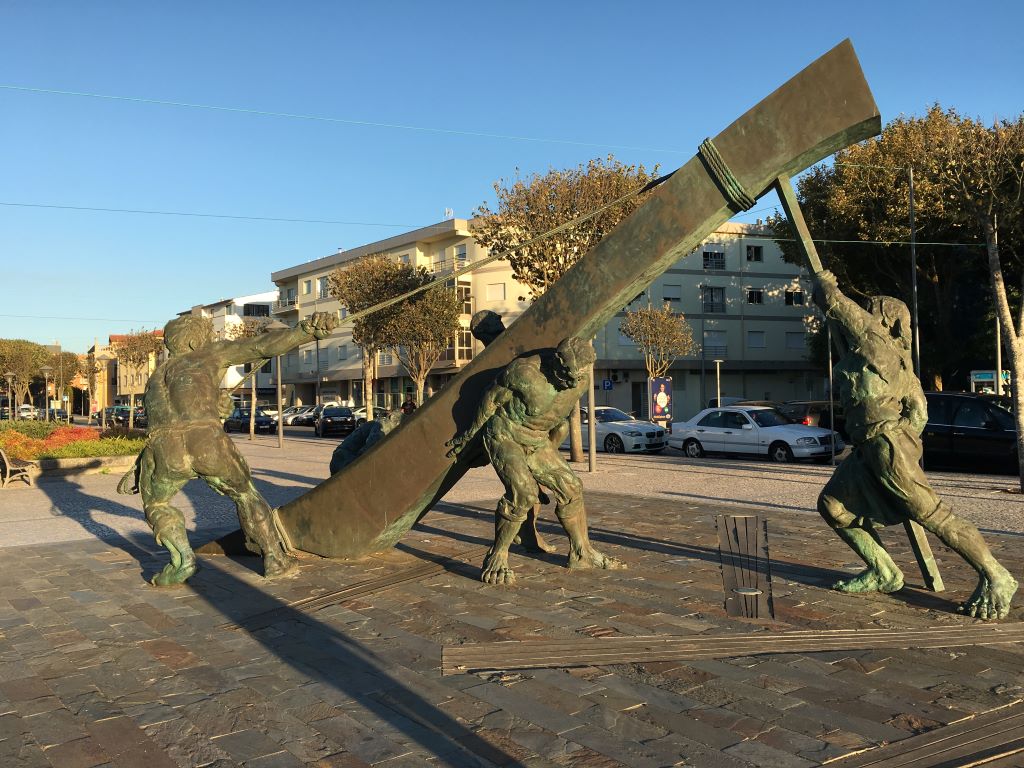
Once again, we stayed in a private albergue with clean beds, linens, and towels. It was beginning to seem like we were carrying our own sleeping bags in our backpacks for the second day in vain. But they came in handy a little later.
Albergo and hostels in Espogende:
- Hostel Eleven – is a nice and clean hostel, we stayed there for the night – a bed in an 8-bed room – 16 euros.
- Albergue de São Miguel de Marinhas – a little further from Espogende there is an albergue – 10 Euro bed in a dormitory
Day 3. Espogende to Viana de Costelo
22 km
Cities: Marinhas, Castelo do Neiva, Chafe, Darke
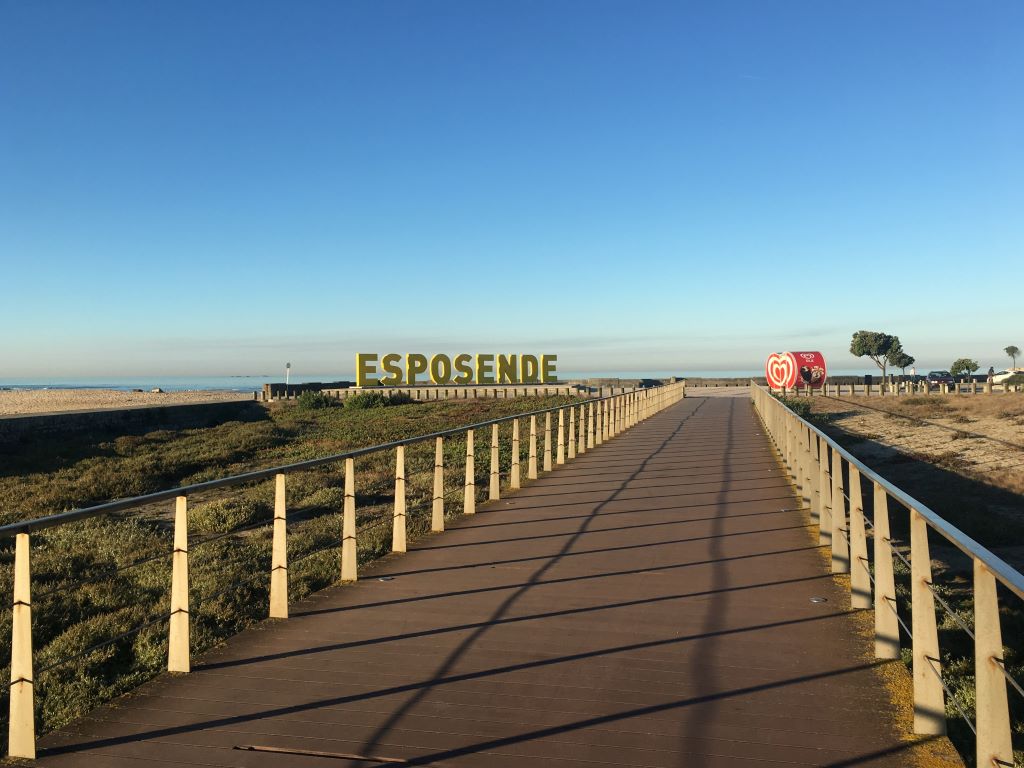
This section is memorable because there is more diversity here, which came about because we had to move away from the ocean to get to the bridge over the river. We could walk safely on the village roads, but the first problem appeared – Ksenia pulled a ligament and her leg hurt a lot. She was limping, so we walked very slowly and looked for easier and shorter routes.
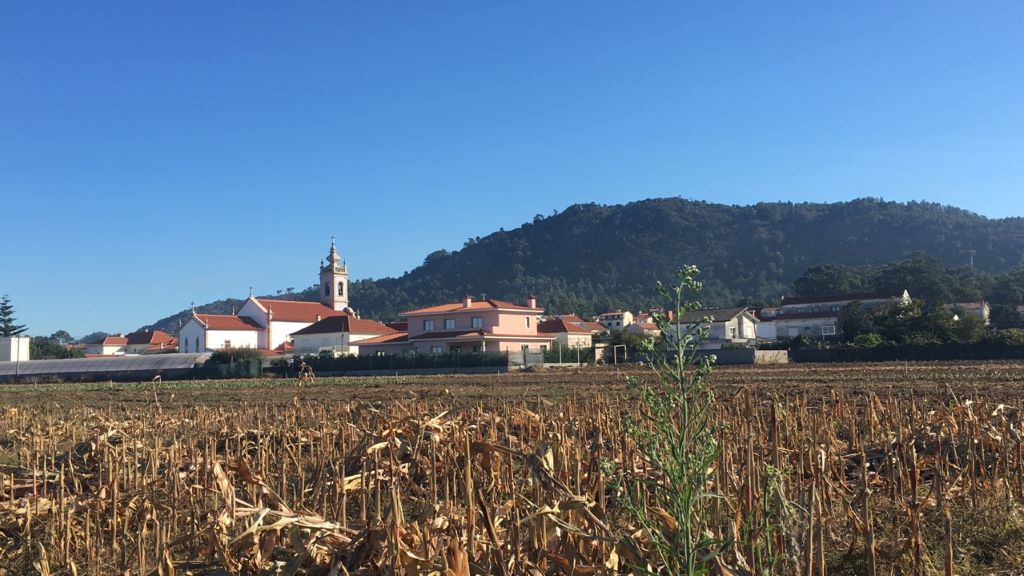
We walked to the Rio Nueva River to the place where the Ponte Rio Nueva bridge was just being built in 2018 on the Ecovia Litoral Norte hiking trail. Now is the alternative way that longer then official but very nice with views at the ocean.
Instead of a bridge, there was a construction site, although it was already marked on the map. We rested for a while near the Capela de Santa Tecla chapel and a small mill and walked to the next stone pedestrian bridge, Ponte do Sebastião, in the village of Outiero.
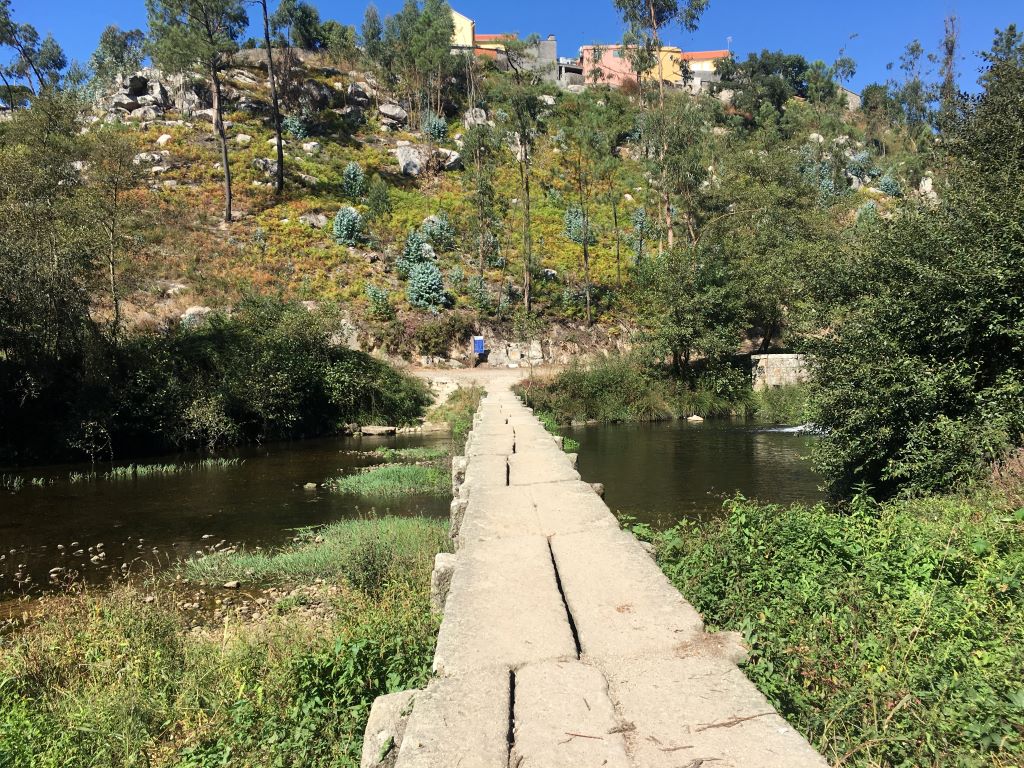
After the bridge, we were supposed to go to the right into the forest, but Ksenia’s leg was already red and swollen. So we had to go left to the nearest village, Moldes, and then to Castelo Nueva, where we put her on a bus and walked to Viana-do-Castelo.
Viana-do-Castelo
Here we decided to move into the church albergue. Honestly, we didn’t like it there, because 25 people slept in a small room, and two showers behind curtains, where both men and women washed, were clearly not enough for all the tired pilgrims. The toilets were also not divided into women’s and men’s. That’s why it was not a good idea to settle there, it was not a very pleasant place. Now this albergue has been rebuilt a bit – the rooms are no longer so huge, there are no beds on two floors. But the pilgrims still complain about the poor conditions, and the price has doubled.
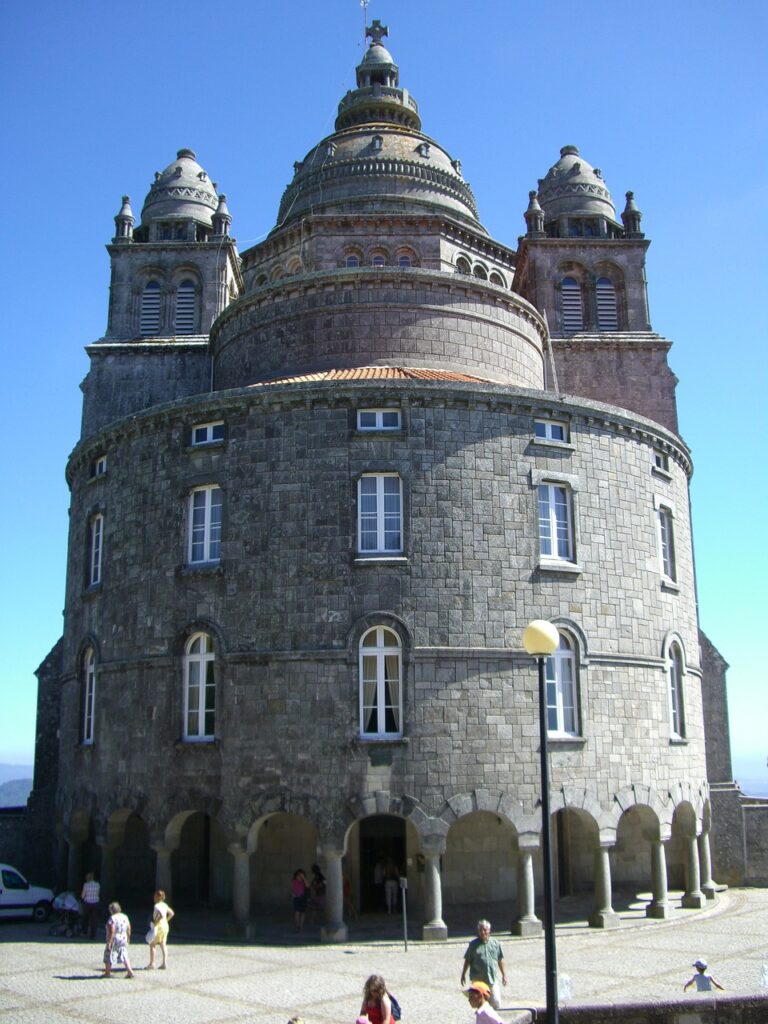
But we were still impressed by the historic Viana do Castelo (especially the views from the huge bridge over the city). I also advise you to take the cable car to the Monte de Santa Luzia, where the Church of St. Lucia stands. From here you can see a beautiful view of the city and the ocean.
Albergo and hostels in Viana-do-Castelo:
- Albergue de peregrinos São João da Cruz dos Caminhos is an albergue at the church, we once stayed there because of the low price, turning a blind eye to the shortcomings – now a bed in the dormitory costs 12 euros.
- Albergue de Santa Luzia – the best quality albergue – the price in an 8-bed dormitory is 16 euros.
Day 4. From Viana–do–Castelo to A-Guarda
28 km
Cities: Areosa, Carreco, Afife, Guelph, Ancora, Moledo, Caminha, A-Guarda

We walked this big chunk in one day and have no regrets, as this stretch of coast was one of the most beautiful on the entire Portuguese Camino Coastal Route. This part of the trail was mostly wide footpaths with good views of the ocean, passing sand dunes, a few ruins and white seaside towns.
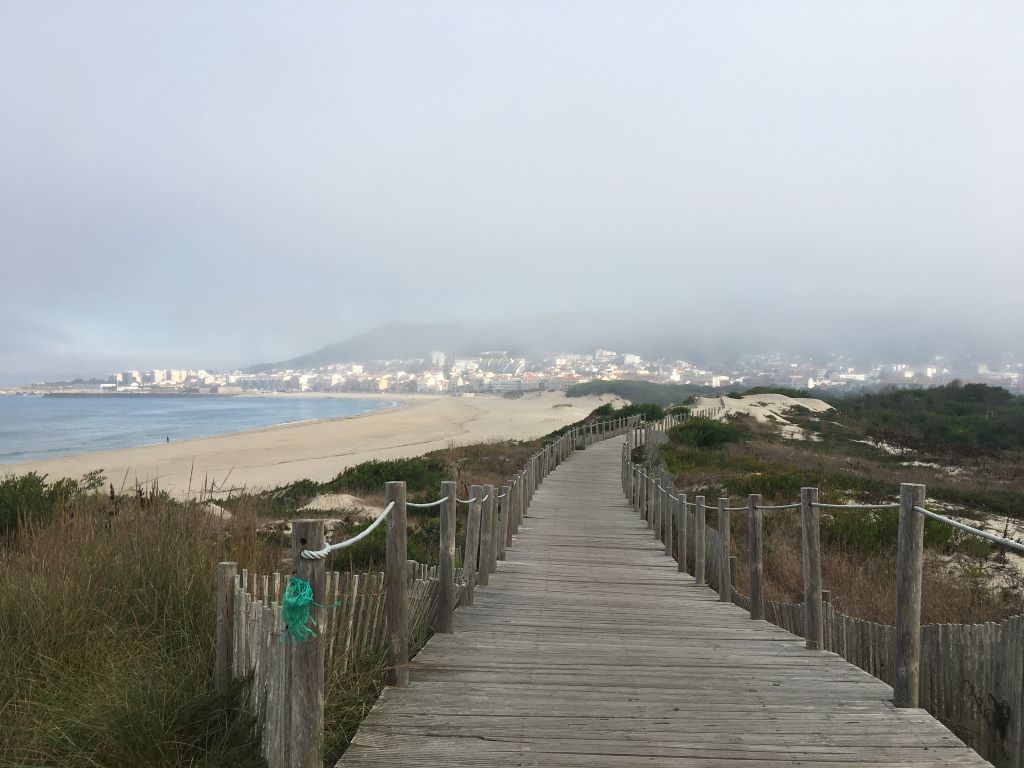
Ancora is a nice city, so it’s worth walking through the historic center, where there are several bars in the main square and an impressive church.
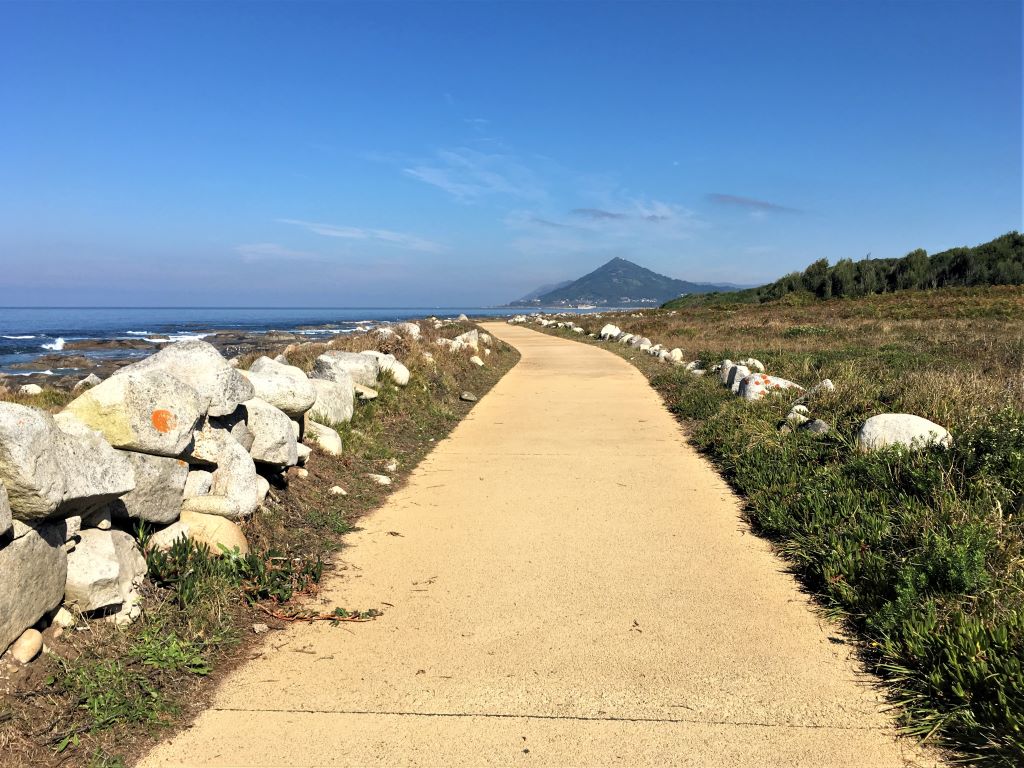
Caminha is our next stop – here we took a ferry to cross the Minho River, which is the natural border between Portugal and Spain.
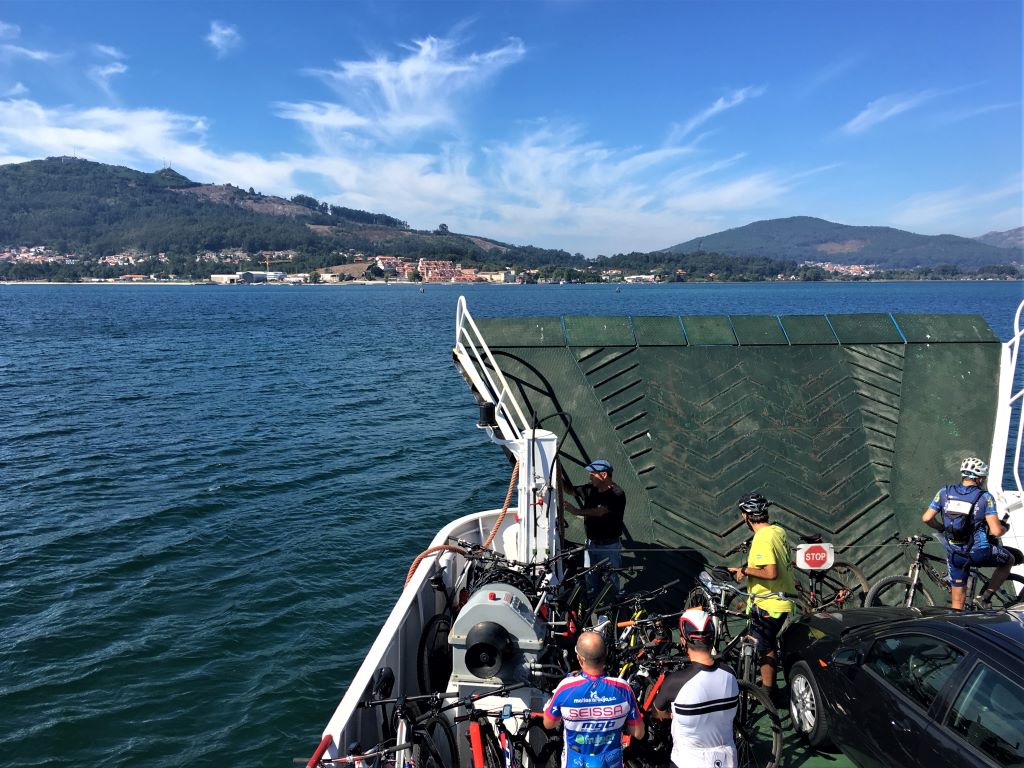
We’re in Spain in half an hour, and we need to remember to set our mechanical clocks back an hour. Because Portugal has a different time than Spain.
A-Guarda
Then we went over the hill behind which is the town of A-Guarda. And on this hill, you can see the remains of Celtic settlements that were the first inhabitants of northern Portugal and Spanish Galicia. Unfortunately, because of my daughter’s leg pain, we did not climb this interesting location, but went along the path and then the road to A-Guarda.
Recommend to read: Galicia – a guide to the green province of Spain
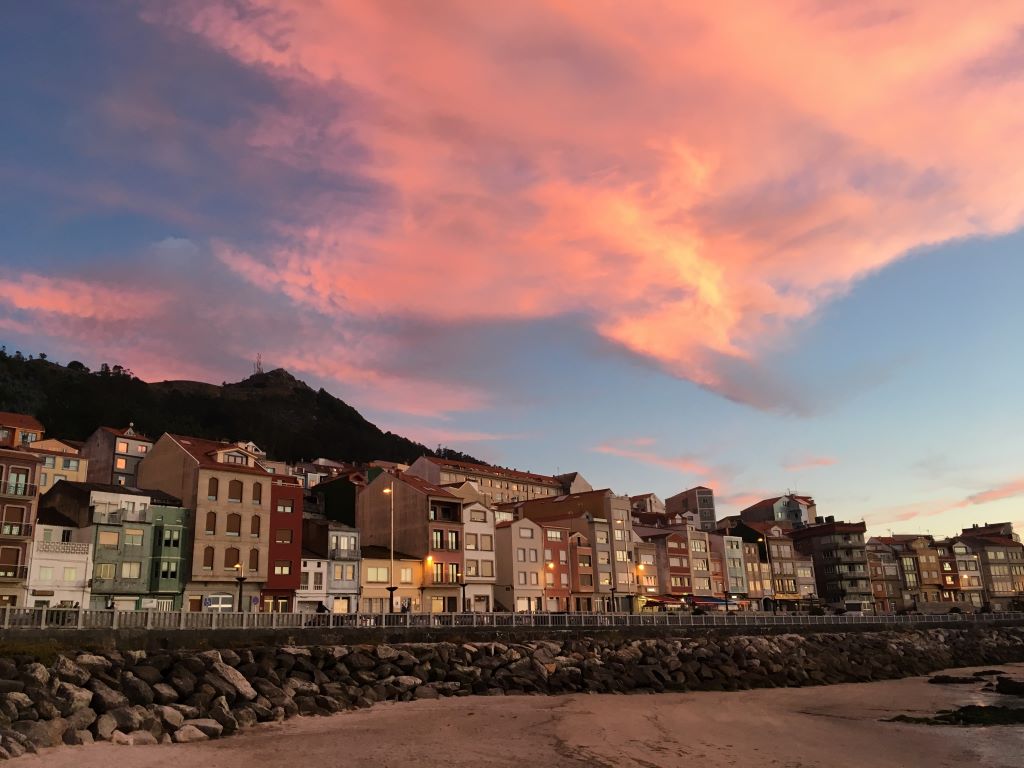
It took about an hour to get to this area and another half hour to get to the municipal albergue, which is located near the waterfront.

After taking a shower and resting a bit, we went to find a restaurant to celebrate our arrival in Spain. And we immediately found what we needed – Porto Guardes (Calle O Porto, 1), a classic tavern with seafood, pulpo (Galician octopus), padron peppers, and a good atmosphere when there are no vacant seats in the evening.
Albergo and hostels in A-Guarda:
- Albergue de peregrinos de A Guarda – municipal albergue, bed in the dormitory 10 euros.
- Albergue O Peirao – a nice private hostel with beds in a 6-bed room – 17 euros.
Day 5. From A-Guarda to Baiona
28 km
Cities: A-Guarda, Portoselos, Villadesuzo, Baiona
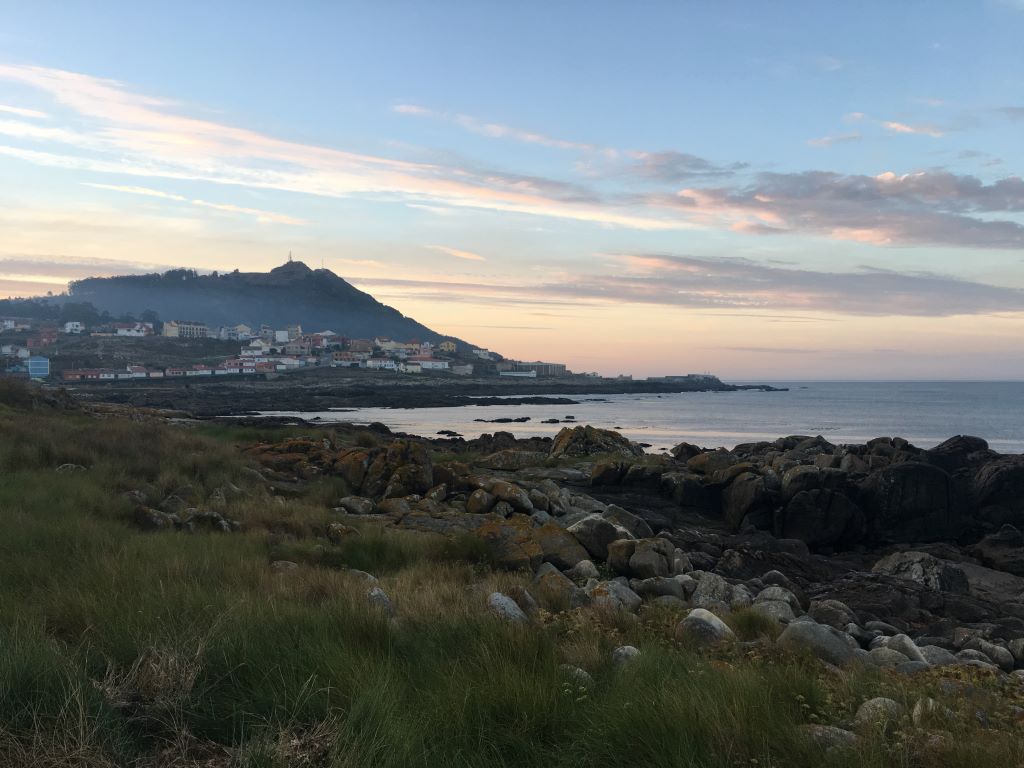
From A-Guarda, it takes about 2 hours on small roads and trails to get to Portoselo, where there is a small restaurant with amazing views and a good breakfast of tortillas with cheese and coffee. But by the time we got there, it was raining a little bit – it came and went so fast that we didn’t have time to put on our raincoats.
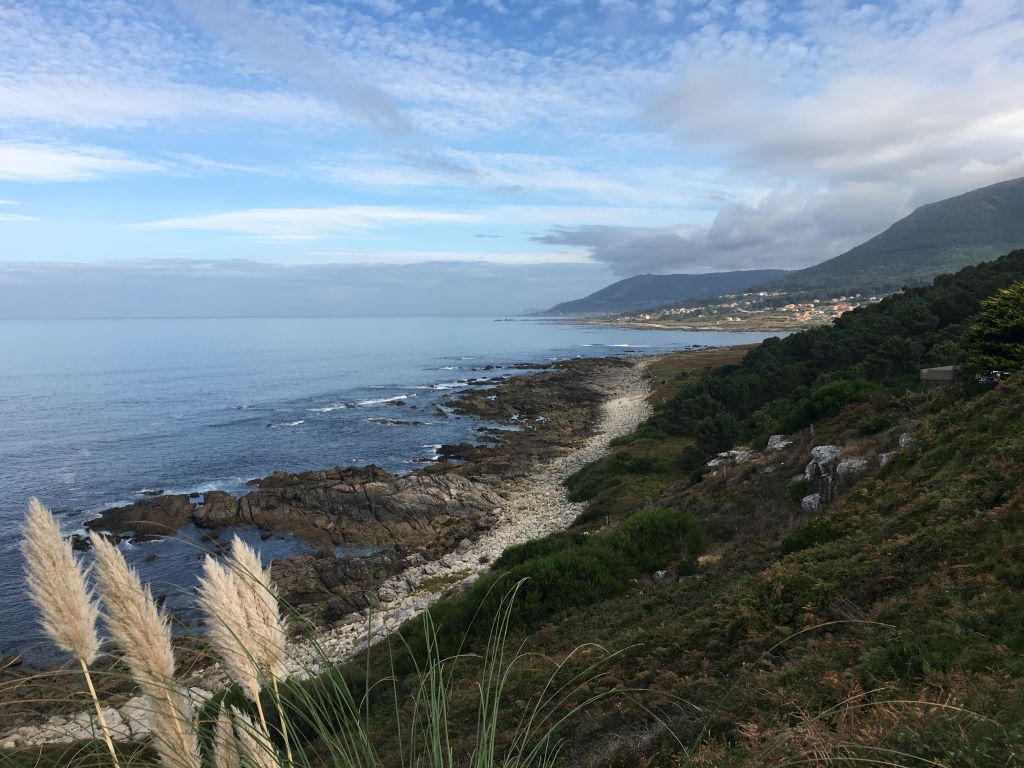
From here, however, the walk became less pleasant. We were waiting for small gravel roads with beautiful views, which turned into a hike along a pedestrian lane right along the highway. The lane was conveniently painted bright yellow, but it was unpleasant and tense to walk on it, as traffic was constantly moving past us.
Several times, the official route goes off the road through smaller villages, which are the best places to walk. But they add distances, so you can choose just the highway if you want to make up time (not recommended).
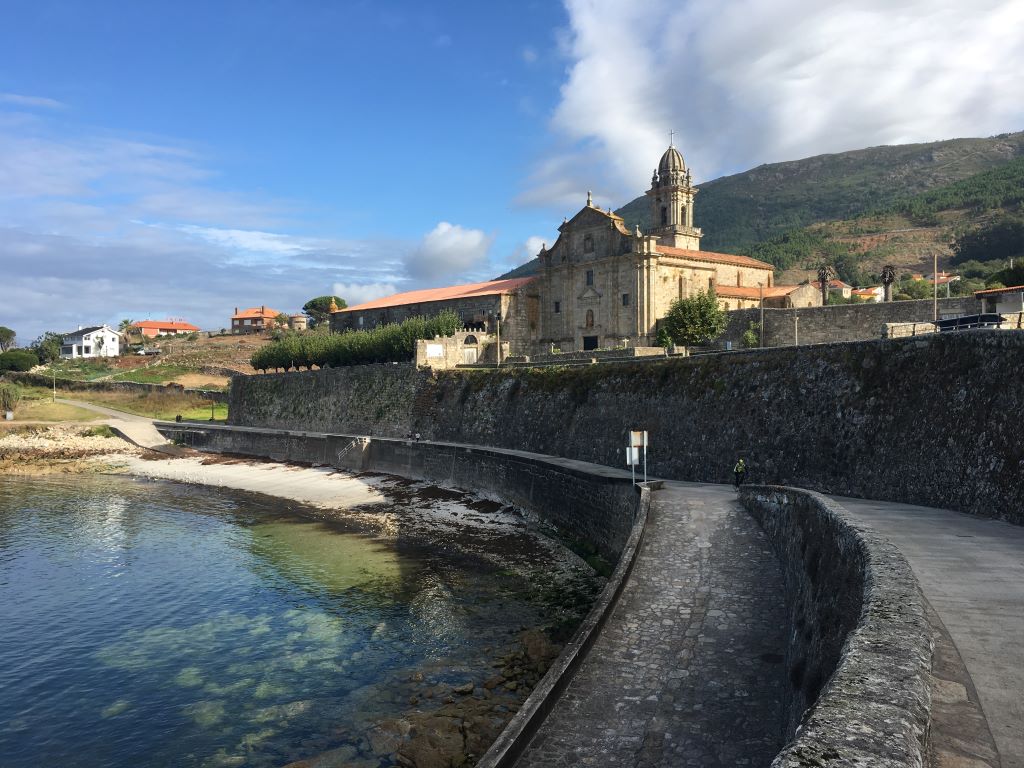
Then we came to the village of Oia – it’s beautiful here, especially the big church by the bay.
Baiona
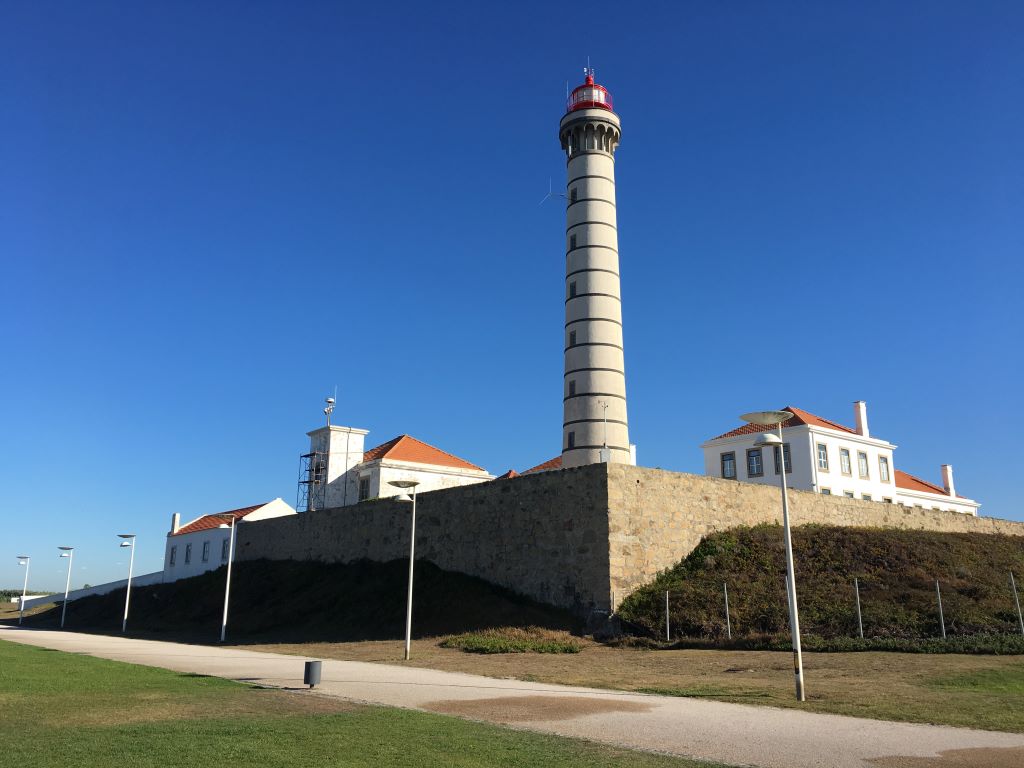
And then we moved along the ocean with beautiful views of it, saw a lighthouse on a promontory near Baiona, and somehow reached it. Even Ksenia came with a sore leg. But it had to go right past the ocean because it would not have been able to handle the section with the hill climb.
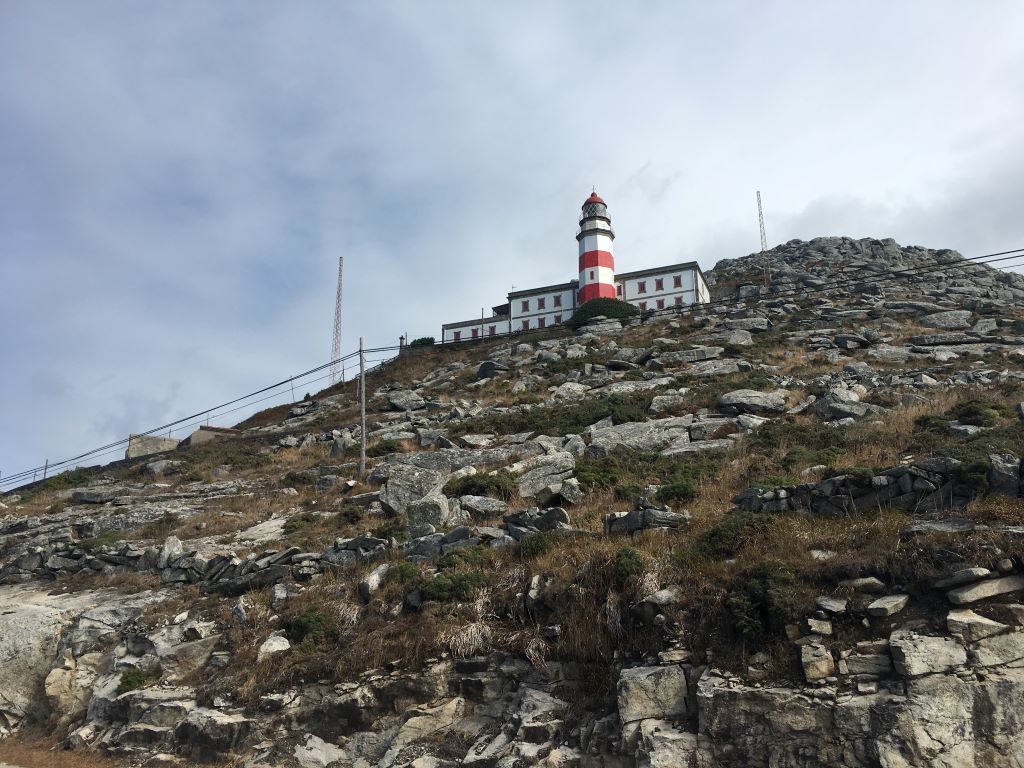
In Bayonne, we had a very nice private albergue waiting for us, where we could do our laundry in the washing machine. Then we had a walk through the old town and along the Bayonne marina to the old fortress.
Albergo and hostels in Baiona:
- Hostel Albergue Baionamar – a very nice hostel in the center of Baiona, we stayed in a 4-bed room – 16 euros.
Day 6. From Bayonne to Vigo
27 km
Cities: Ramallos, Nigran, Canido
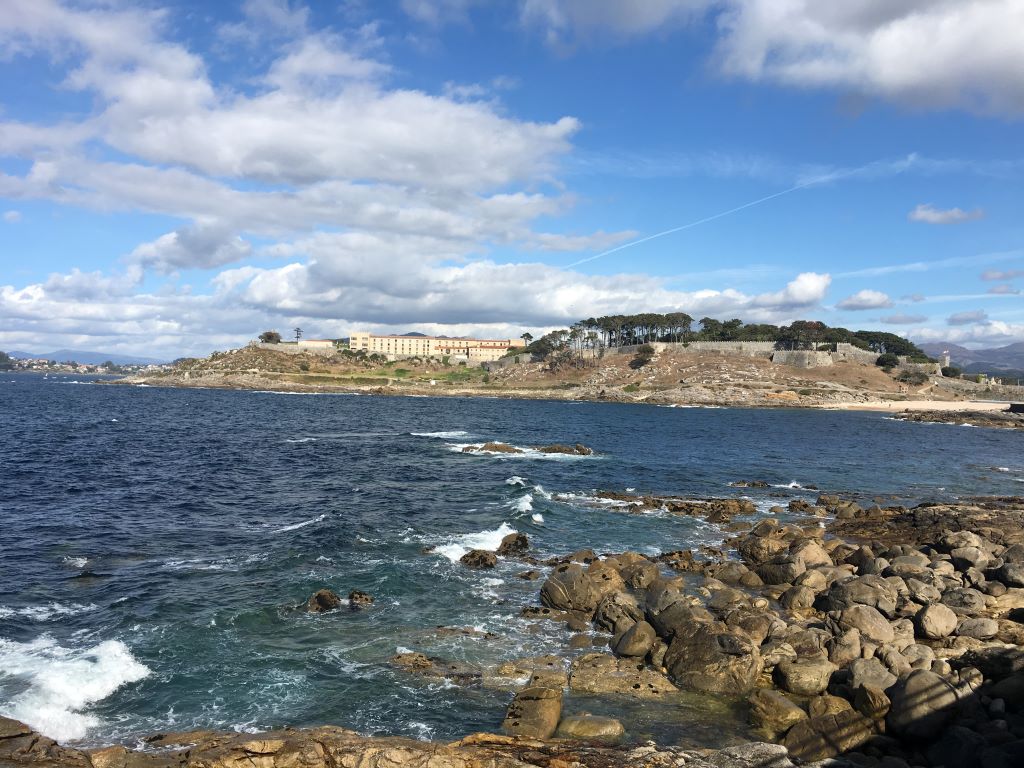
Since we kept to the coastline, this day was a little longer than expected. In the morning we walked along an urban but pleasant path past beaches and quaint seaside neighborhoods.
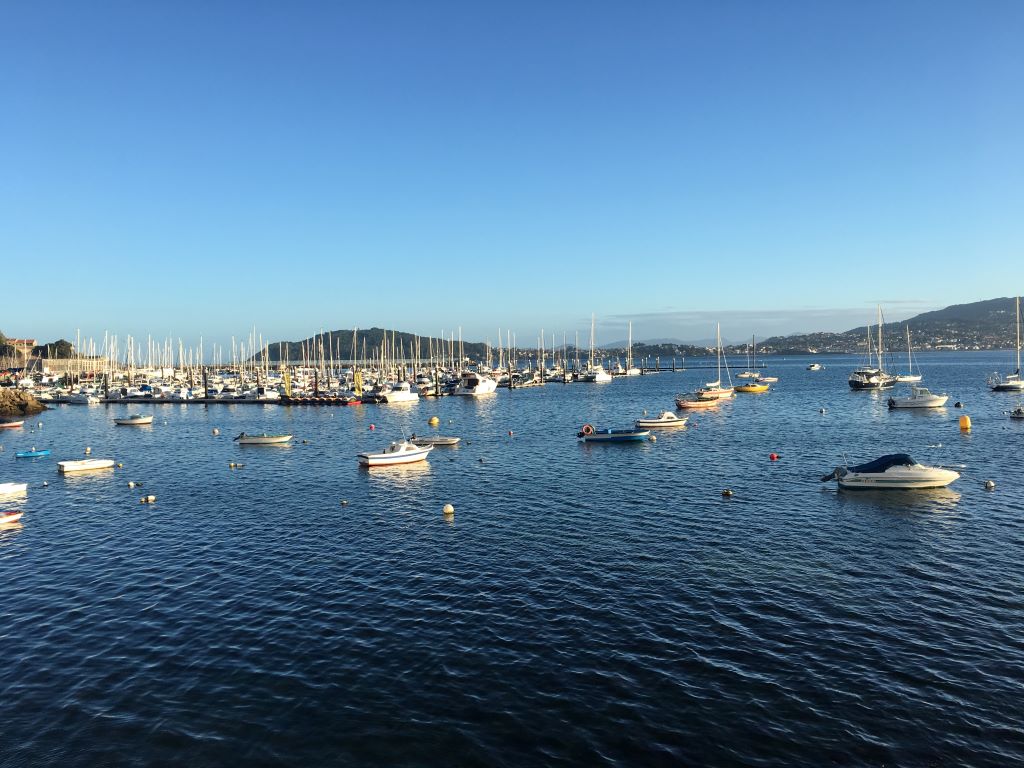
We stopped for lunch at Kanido. The first hour out of Canido is along the coastal malecon, but after that you enter the city’s Vigo neighborhood and spend the last hour walking through the dreary port areas, only occasionally interspersed with office buildings.
But the historic center of Vigo is wonderful, and many people choose it for their vacation. There is a castle, many churches and squares, and a beautiful river. And good restaurants – here you can try oysters grown in the ocean nearby.
We spent the night in a room for three in a guesthouse because the price was the same as for three beds in a hostel.
Albergo and hostels in Vigo:
- Albergue de peregrinos de Vigo – municipal albergue – bed in a dormitory – 8 Euros
- R4Hostel – private hostel with nice clean rooms and beds – 23 Euro per bed
Day 7. From Vigo to Arcade
20 km
Cities: Sampaio, Chapela, Redondela
There are more hills in this area than usual, although most of them are still within the city limits. It took about an hour to get through the city and out of Vigo. It’s not a long walk, but if you want to take public transportation to skip the uninteresting part of the city, I would suggest doing it here (bus, train, etc.).
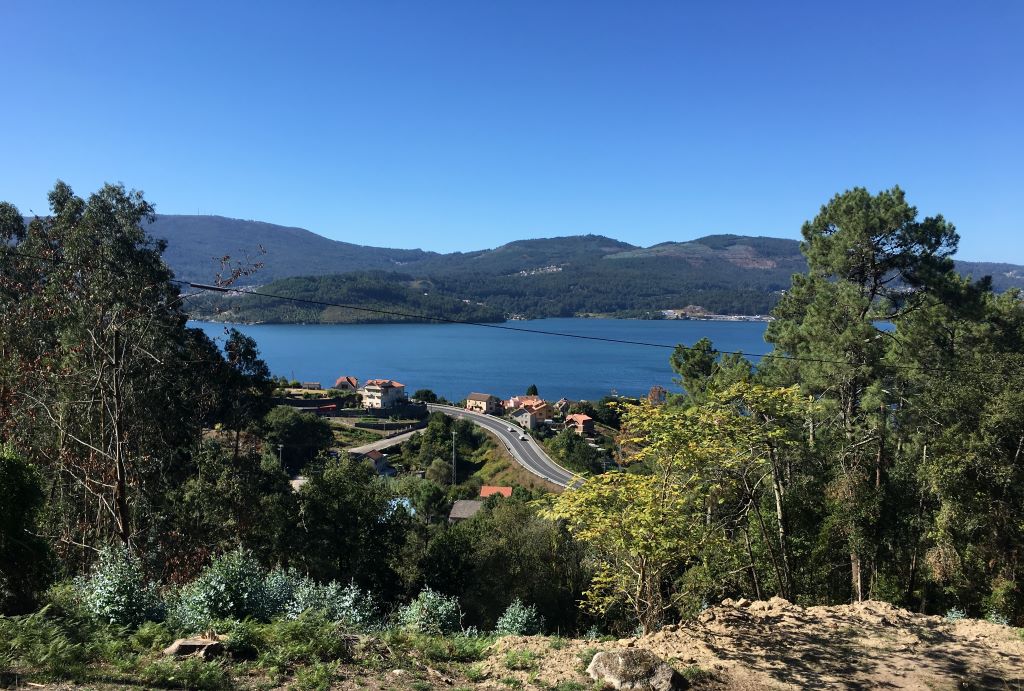
After this section, the path becomes a little better, following a dirt road through the trees high above the coast. You can occasionally see beautiful views from the hills (especially on Miradoiro da Madroa).
The end point of the official stage, Redondela, is where the Portuguese coastal route of the Camino joins the central route. You will definitely notice this, as this place is teeming with groups of pilgrims wearing identical T-shirts, with guides and small backpacks.
The trail became much busier, with perhaps 2-3 times as many pilgrims jostling for space on narrow roads, dirt forest paths, and small hills. Technically, this trail was still the route of the Portuguese Camino Coast, but now it was much more like the last hundred kilometers of the Camino Frances.
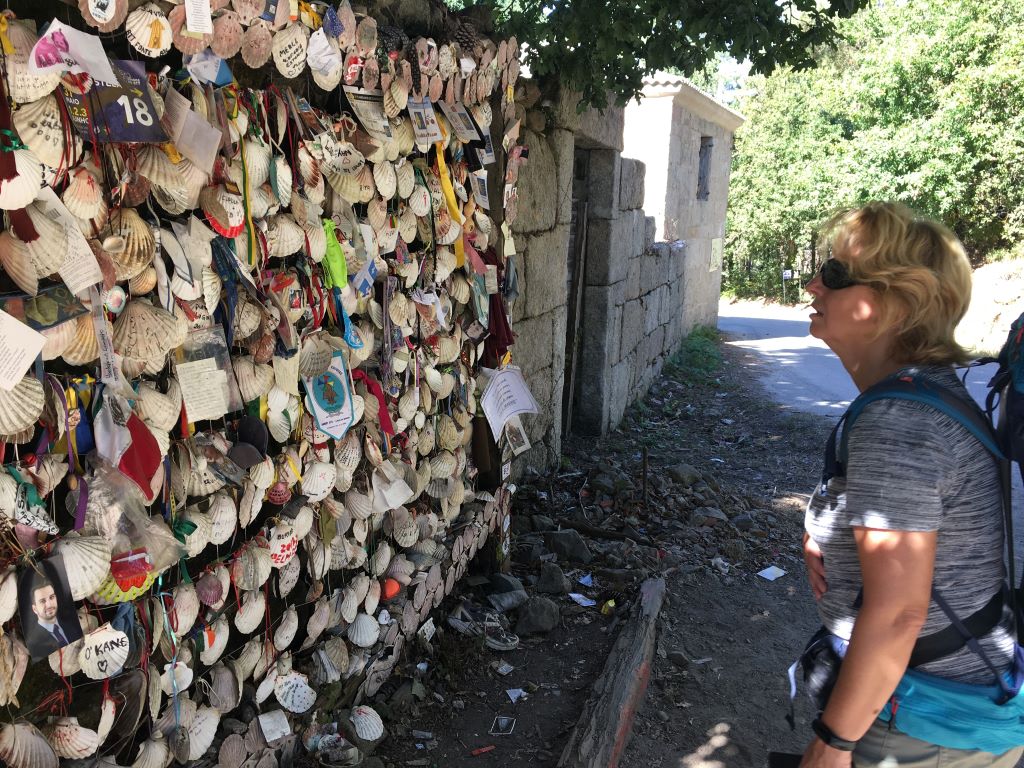
We walked past Rodondela, where most of these pilgrims stopped to be alone for a while. So we went on to a small town called Arkada.
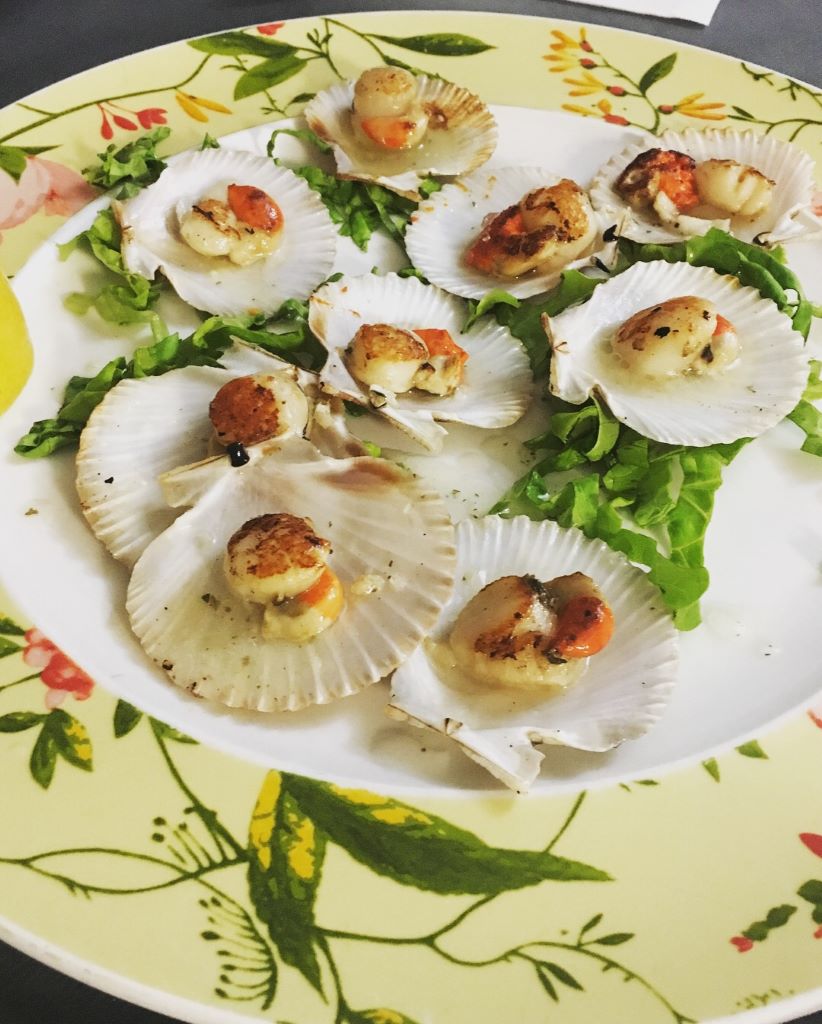
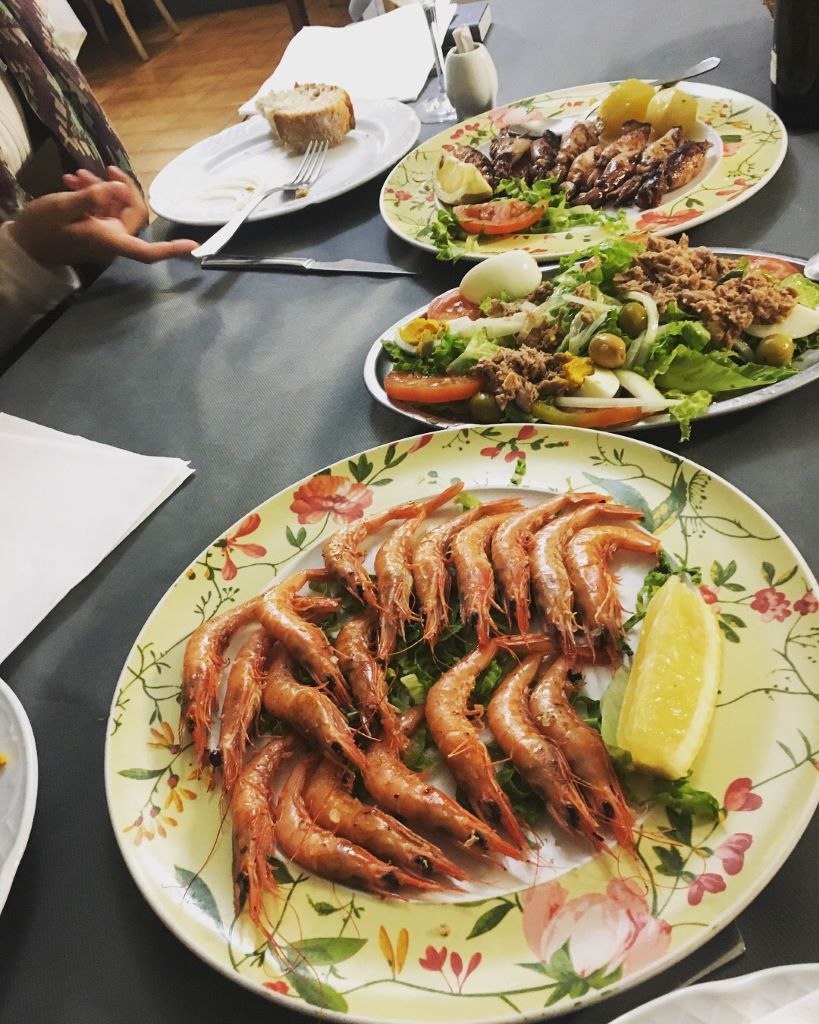
Here we were waiting for a place in a private hostel, and not far from it, a very nice seafood tavern called Marisquería Arcade, where we had a great time eating scallops, shells, and shrimp for some ridiculously cheap money.
Albergo and hostels in the Arcade:
- Albergue O Lar de Pepa – bed in a dormitory 10 Euro
- Albergue Lameiriñas – bed in the dormitory 12 Euros
- Hostel Albergue O Mesón – private clean hostel with beds for 13 Euros.
Day 8: From Arcade to Caldas de Reyes
32 km
Cities: Pontevedra, San Amaro, Valbonne, A Seca, O Cruzeiro, Caldas de Reis

In the morning, we got up and walked across the beautiful old bridge in Arcade, which leads across the Verdaghe River. Then the trail goes up between ancient stone choreros, which are Galician barns where grain and corn were stored. These buildings are constructed in such a way that rats and mice cannot enter them because of the stone circles that are attached to the top of the columns.
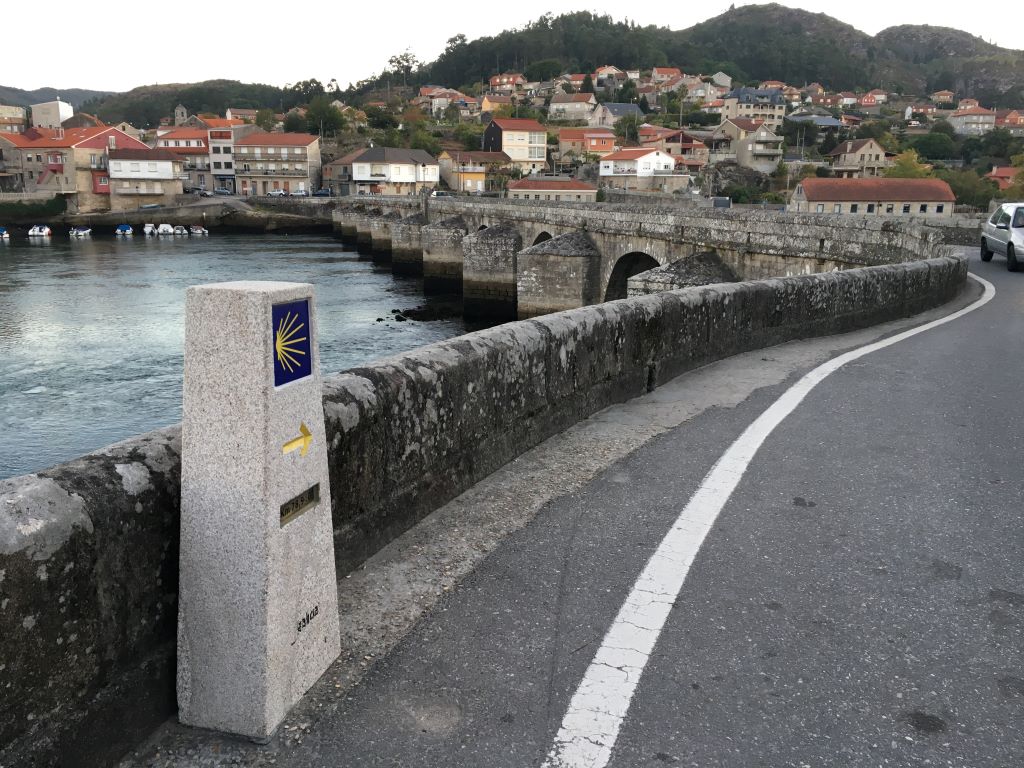
Then we walked through a pleasant forest along a tiny stream. Although it was a bit of a winding path, which could probably be shortened by sticking to the main roads, I don’t recommend it – it’s not interesting and hot to walk on the tracks.
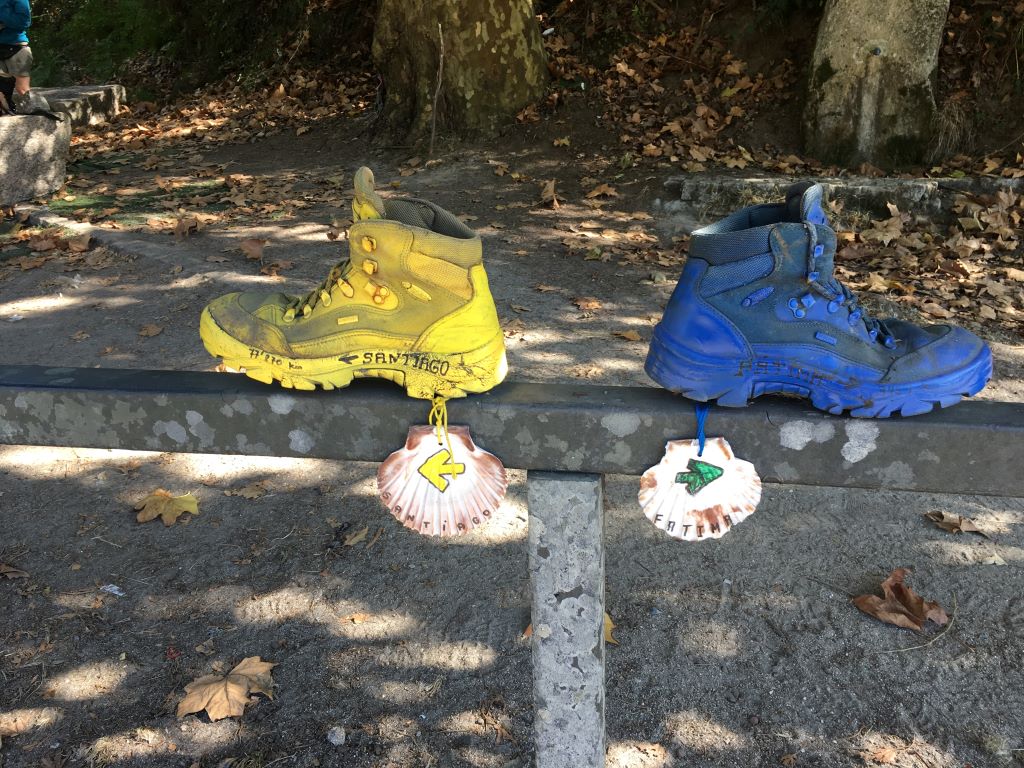
The landscape of the route was quite beautiful, but not particularly noticeable – mostly small rural roads, occasional villages and a few nice trails next to vineyards. The weather was good all the time, and Ksenia’s leg started to hurt much less, so we had fun walking and taking pictures near various installations and pilgrimage markers.
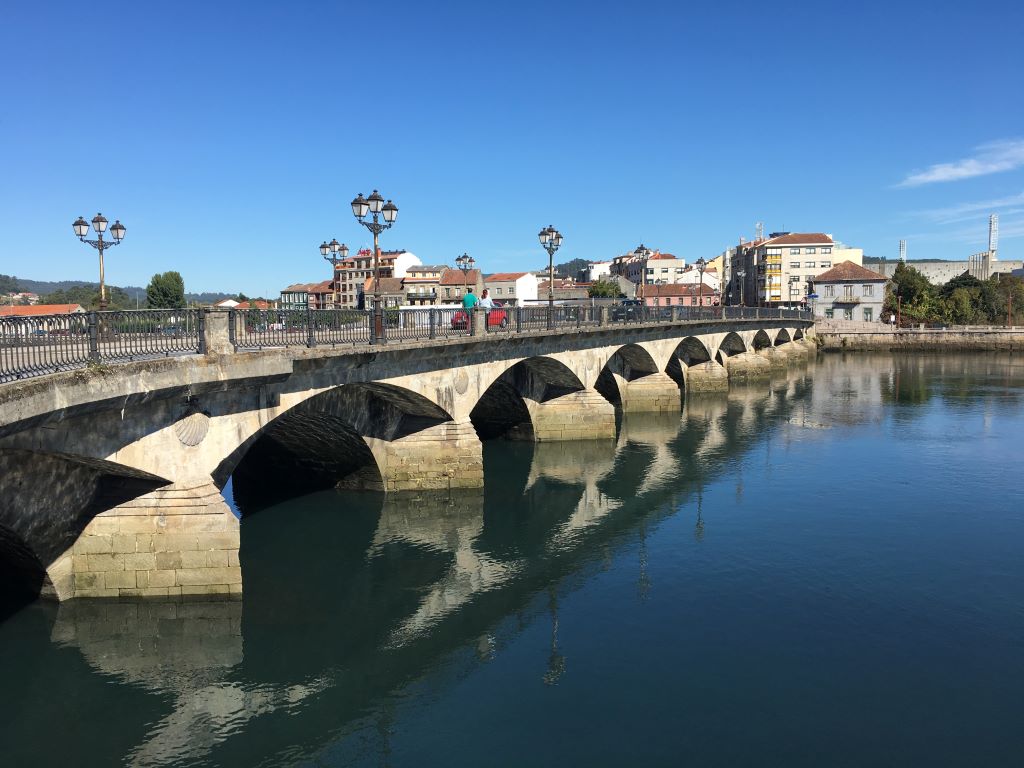
The last three kilometers to Pontevedra were very beautiful – we walked by a small river in the shade of trees. And before entering the city, we walked through a beautiful tunnel past this river.
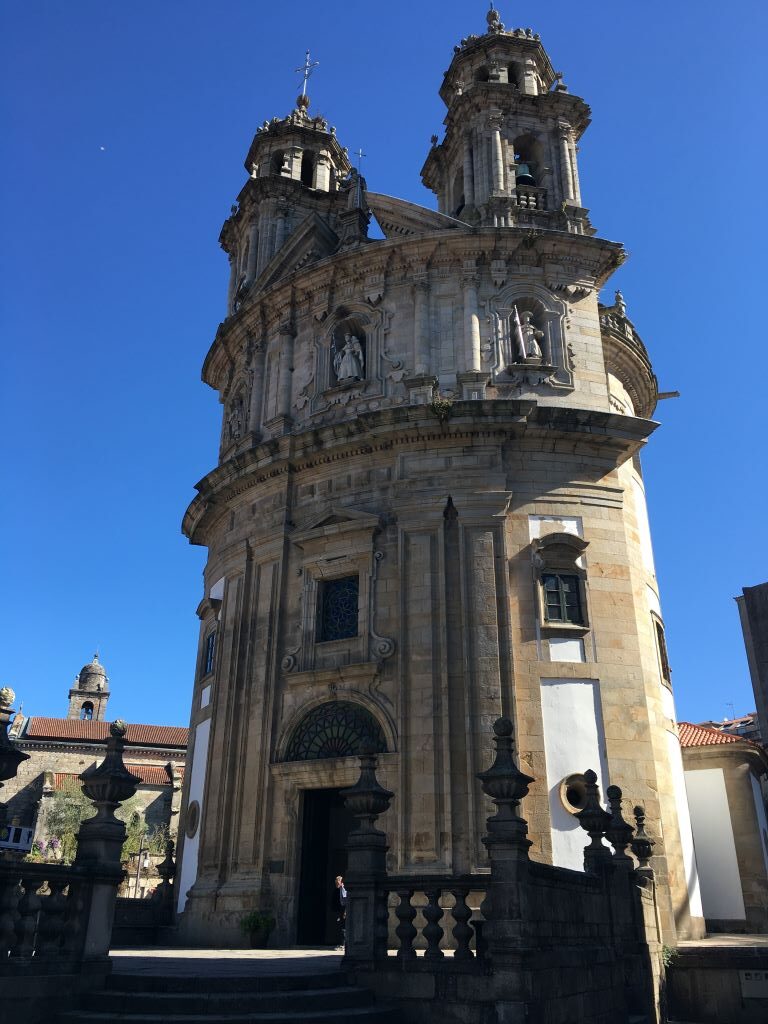
Pontevedra
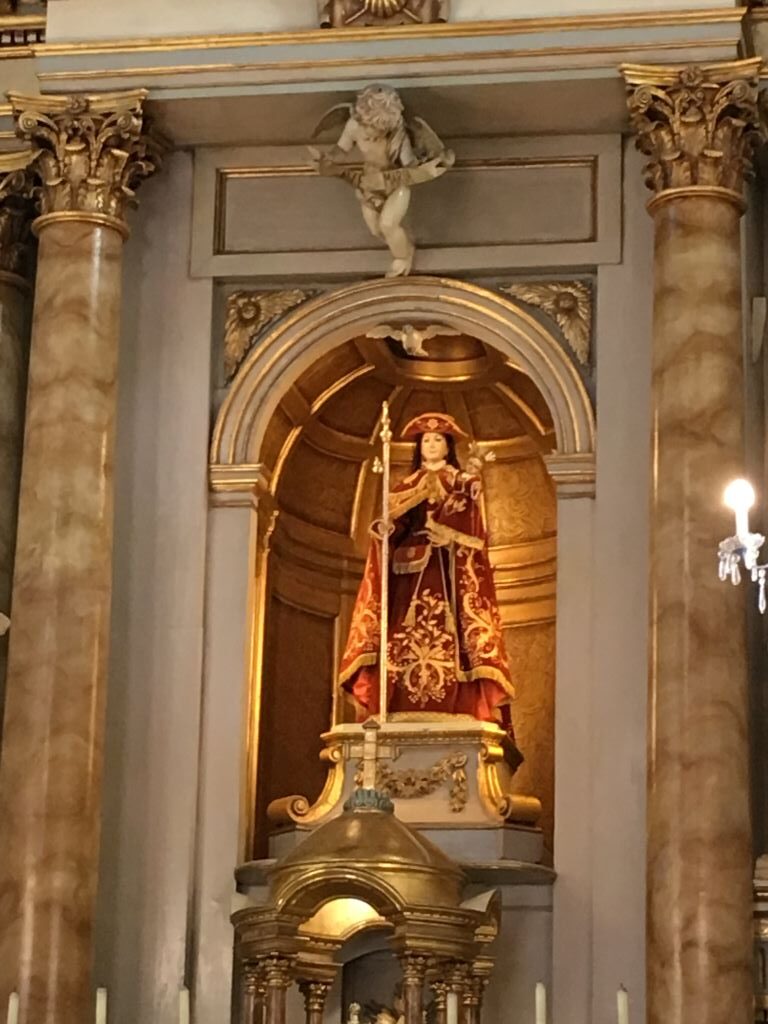
We entered Pontevedra and walked through the city, stopping at the Igrexa da Virxe Peregrina church. This is a very interesting and iconic Church of Our Lady Pilgrim – a chapel in the shape of a comb, where you can see a statue of the Virgin Mary in pilgrim’s clothing. Be sure to visit this church, and if you stay overnight in Pontevedra, go to mass here. I did just that when I walked the historic route from Porto to Santiago de Compostela in 2022.

In the evening we came to Caldas de Reyes. This pleasant town got its name from the hot springs we tested. You can sit with your feet dangling in the hot water in the spring located at 36 Rua Don Carlos García Bayón. There is also a very good restaurant in Caldas de Reis – Meson Bermaña (Rua Porto do Río, 6). I recommend this delicious place – the seafood is very cheap and tasty.
Albergo and hostels in Caldas de Reyes:
- Albergue a queimada – albergo near the city center, beds for 14 euros
- Albergue O Cruceiro – Albergo by the river, almost in the center, beds for 17 Euros
Day 9: from Caldas de Reyes to Padron
20 km
Cities: A Lavandeira, Carracedo, O Pino, Pontecesures, Padron
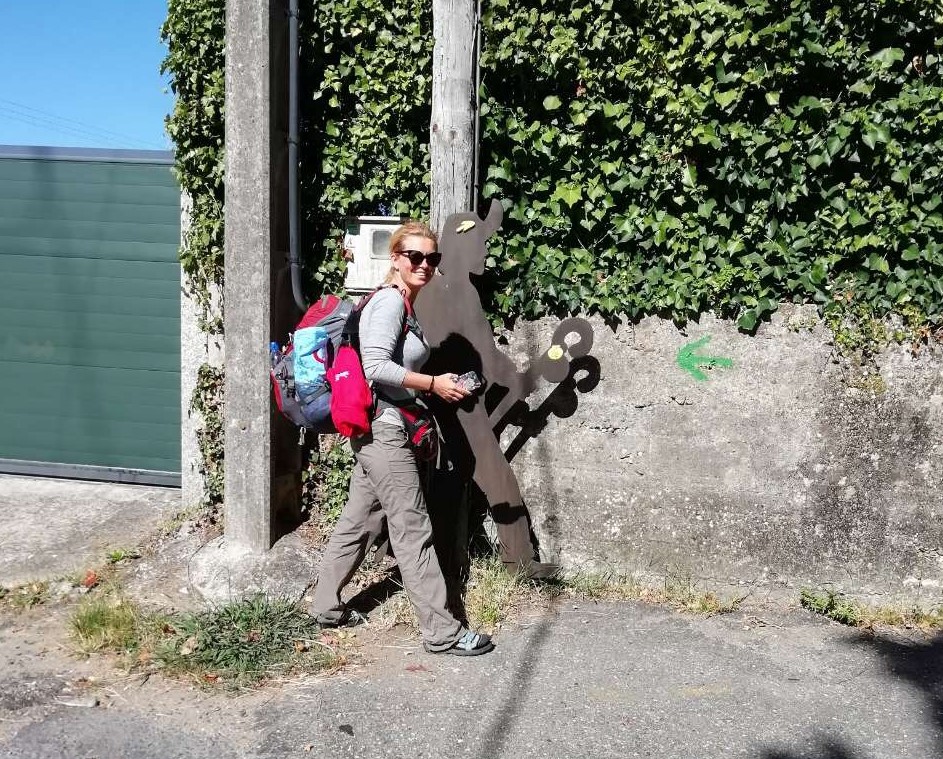
Today we set off earlier than usual, at 8 a.m., to avoid the crowds. And it was definitely a good idea – there were a lot of people on the route. It was nice to walk because it was cool, and it made no sense to run to Padron – we booked a private hostel where we would definitely get a seat.
The landscape was very similar to the previous day (small roads, forest trails, random towns). And we made a traditional stop at a cafe, where we ate tortillas and drank coffee. Although before leaving the city we had already managed to have coffee with delicious croissants from the bakery.
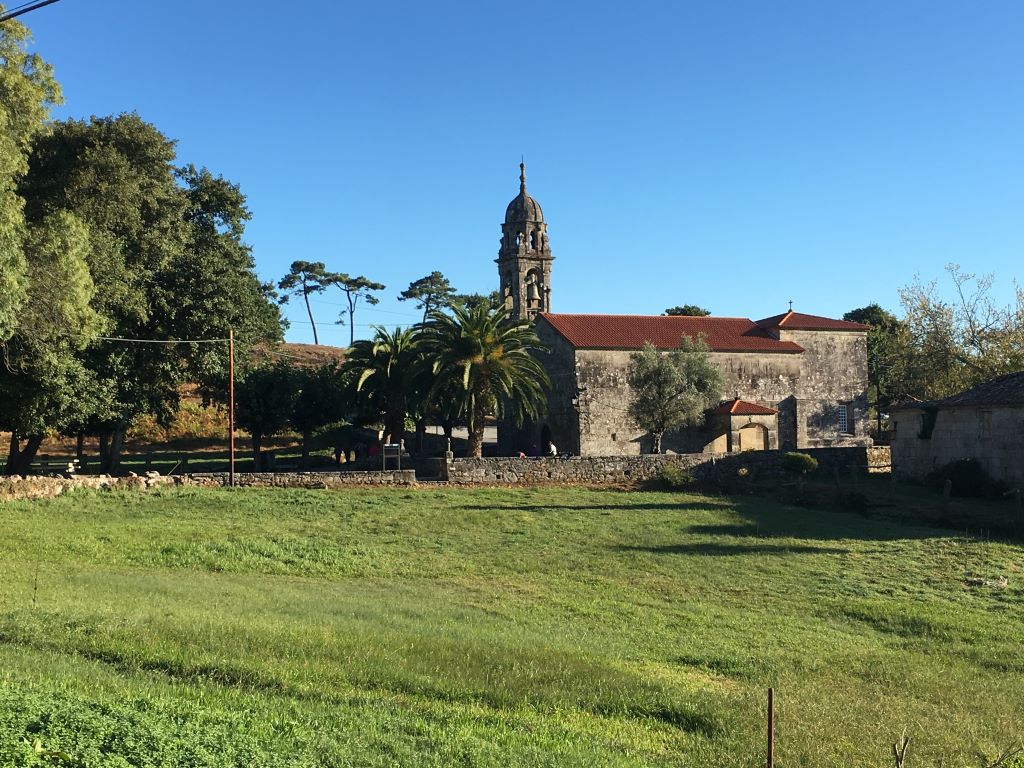
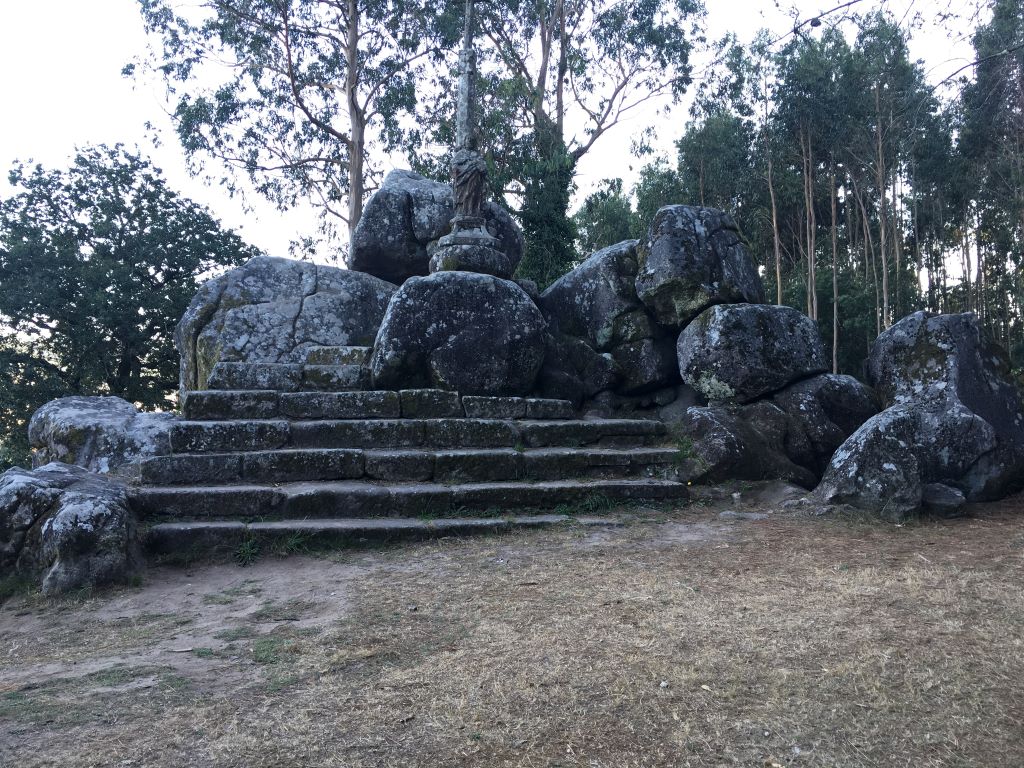
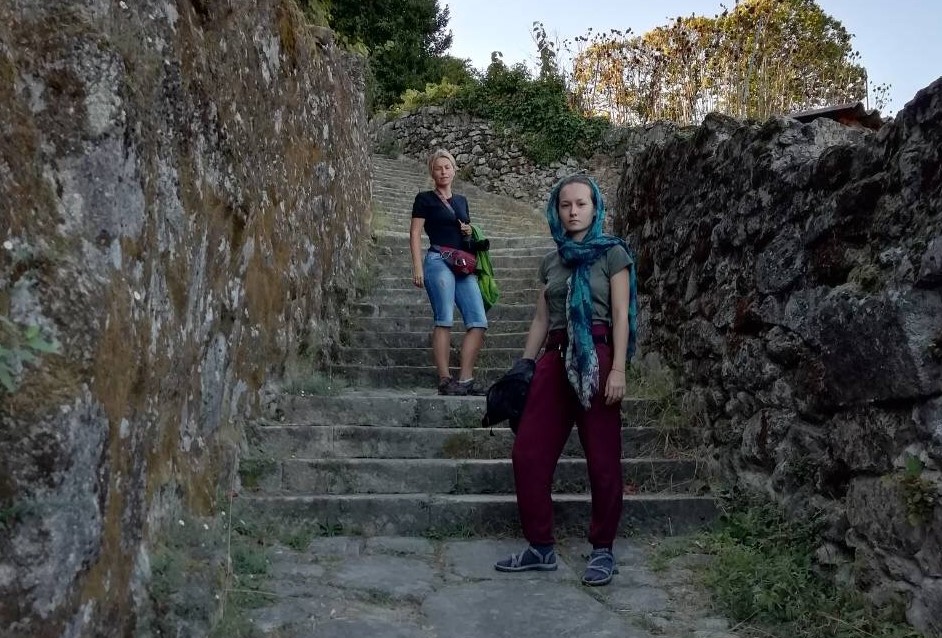
Moving on, we came to Padron, which is a fairly large place with a great history associated with St. James. It was here that a boat with his relics was found, which are now in the Cathedral of Santiago de Compostela. But on a hill above the city there is a park where, according to legend, a monk found a saint. Be sure to climb the ancient stairs to the slope of Santiaguiño Do Monte. It has a very nice atmosphere at sunset.
If you wish, you can stay not in Padron, but in the Herbon Monastery, which welcomes pilgrims, offering hospitality and the opportunity to plunge into the past.
Padronia certificate
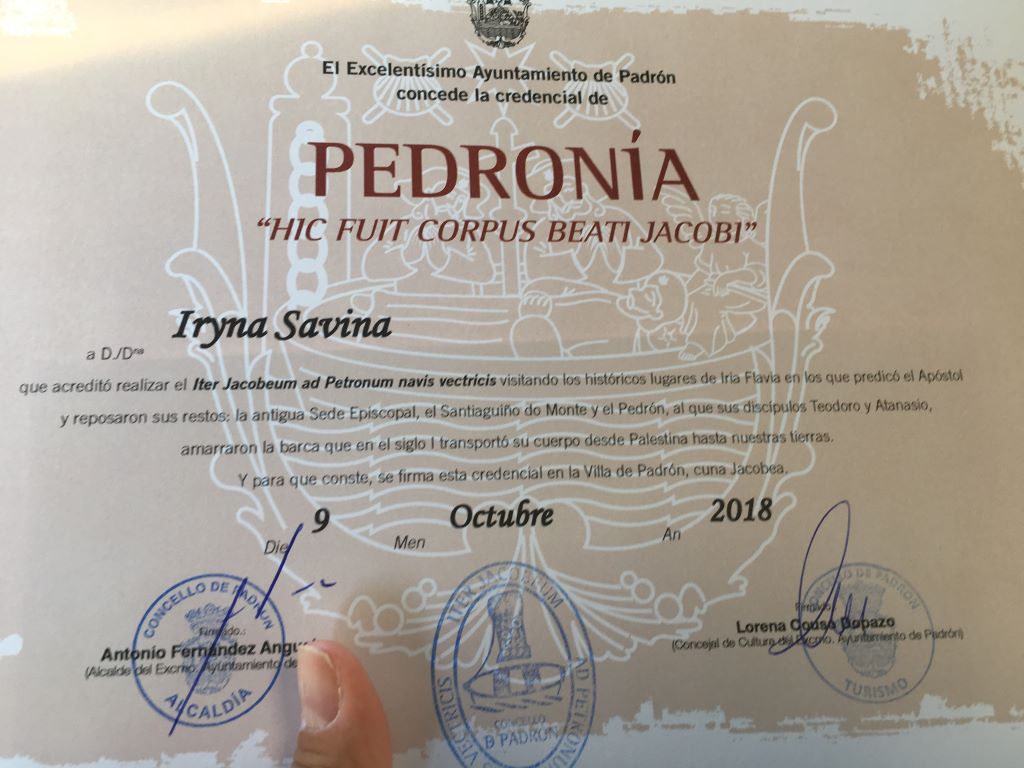
In Padron, you can also get Padronia, an analog of the Compostela in Santiago, that is, a certificate of completion of the Camino to Padrona. Padroniana is issued at the tourist office located at the entrance to the Old Town near the monument to a woman selling Padron peppers – Escultura A Pementeira.
And, of course, you should try Padron peppers in one of Padron’s restaurants. The green pods, five to ten centimeters in size, are fried with olive oil and sprinkled with coarse rock salt. They all look the same, but for every ten sweet peppers, there are one or two unbearably bitter ones. They are very tasty, but with a surprise – at least one will be spicy. Whoever gets it pays for dinner)))
Albergo and hostels in Padron:
- Albergue de peregrinos de Padrón is a municipal albergue near the cathedral in an old building, bed 8 euros.
- Albergue & Rooms Murgadán – very clean private albergue in the center of Padrón, where we stayed – bed 16 Euros.
Day 10: from Padron to Santiago de Compostela
24 km
Cities: O Areal, Raises, O Milladoiro, A Rocha Vella

The last day was a good finish. We went out early, but there were already many people walking along the path. We walked, winding through small towns and intermittent forests on small, quiet roads. But the silence was broken by groups of schoolchildren walking along the Camino with cheerful music. All the pilgrims looked more cheerful, probably because of the excitement of the last day.
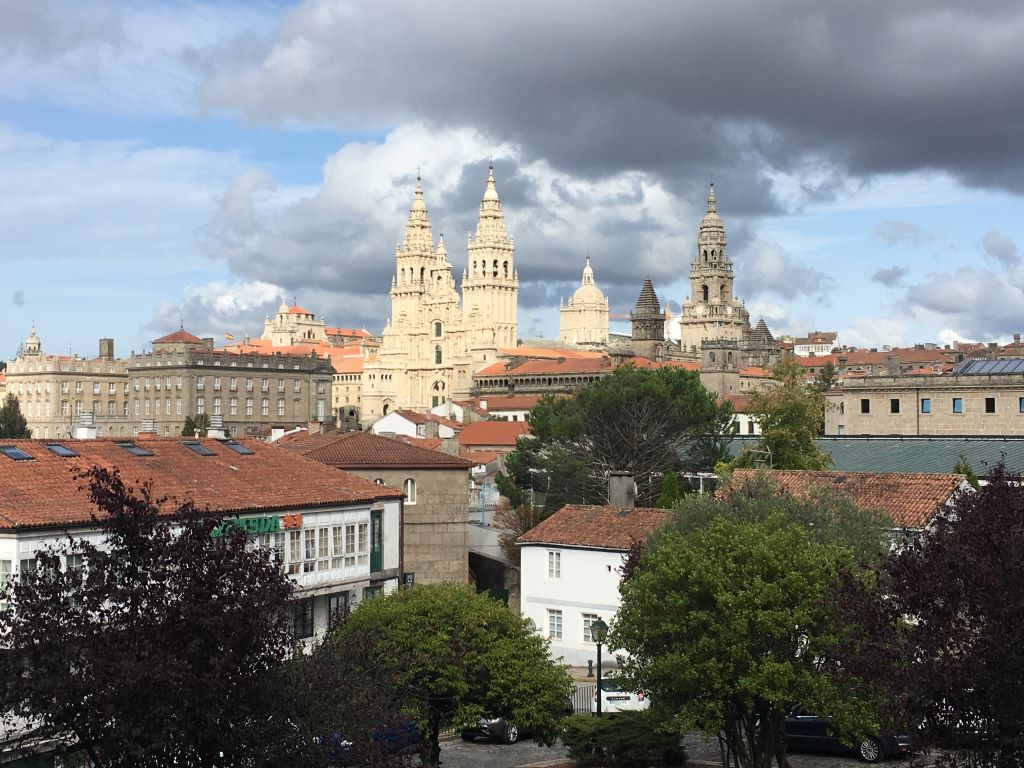
In fact, we walked through villages and vineyards only for the first ¾ of the hike. And we spent the last hour making our way through the busy city streets of modern Santiago. This part of the city is very different from the old medieval city around the Cathedral of Santiago de Compostela, where pilgrims (and ordinary tourists) spend most of their time.
Finish
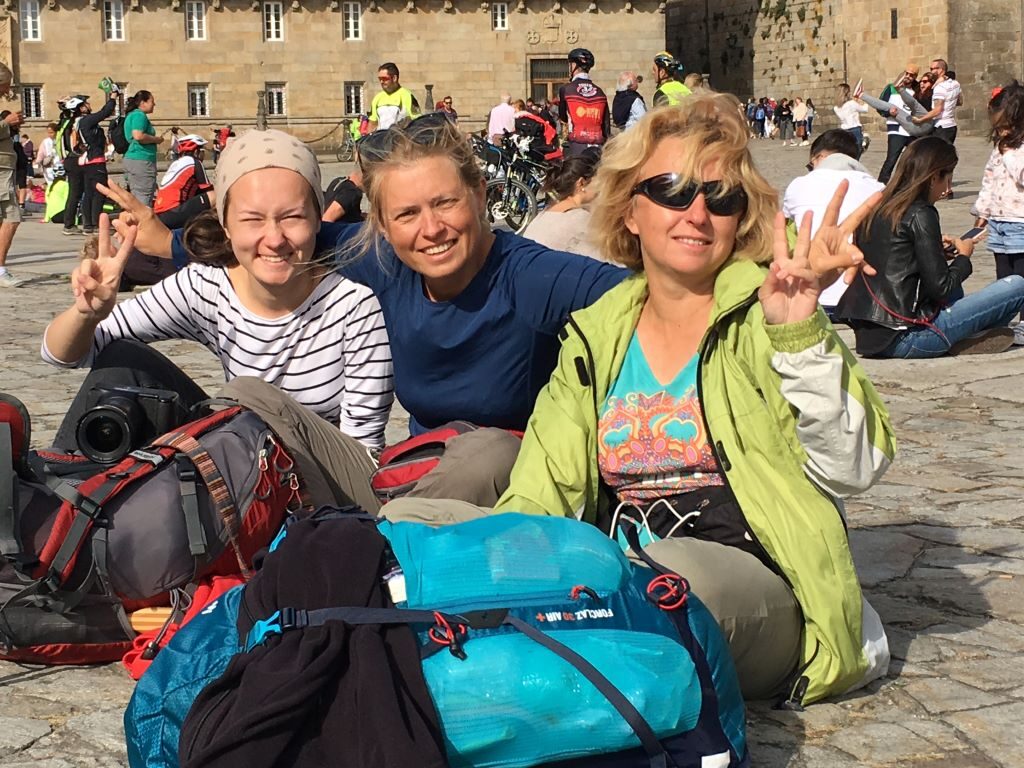
Finally, we reached the cathedral! With joy and tears of happiness fell on the pavement in the square in front of the cathedral. We, like the other pilgrims who had completed the Camino, finally met here, lying on the pavement, taking pictures and beaming as if we had lost control of our facial muscles, the atmosphere was very festive indeed.
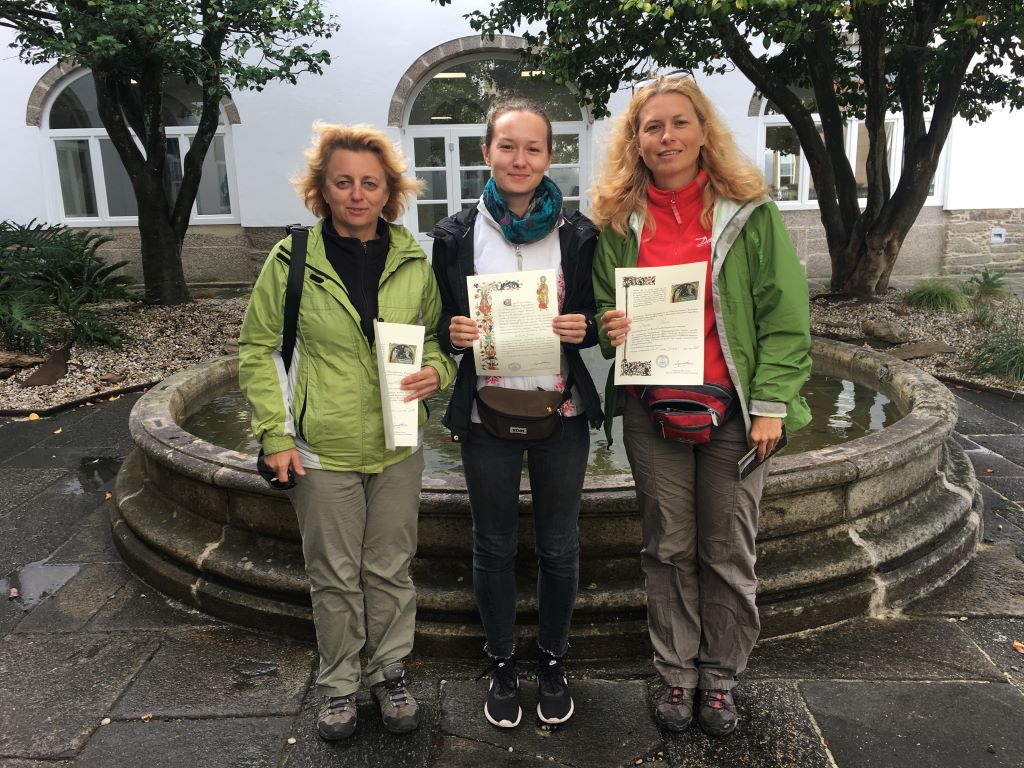
And then we went to the Camino office to stand in line for a while and get our Compostelas. Compostela is a certificate of completion the Camino. This time I asked for a tourist certificate, because all along the way I felt a bit like a guide for my girls ))). And they received certificates with the marking “spiritual“. Because it was a real spiritual path for my daughter and sister. It was the first time they walked the Camino so long and far.
At seven in the evening, we went to mass in the cathedral. And we were lucky to see the show of the Botafumeiro. It is the world’s largest censer flying under the roof of the cathedral. After the mass, we went up to the statue of St. James. Each of us hugged the saint and asked for the most important thing in our lives. For some reason, I was so impressed by those hugs that I cried afterward and could not stop for a long time. This is the catharsis that ended my journey along the Portuguese Camino along the ocean coast…
And after that, there were other ways – you can read about it in a separate article.
General impressions of the route
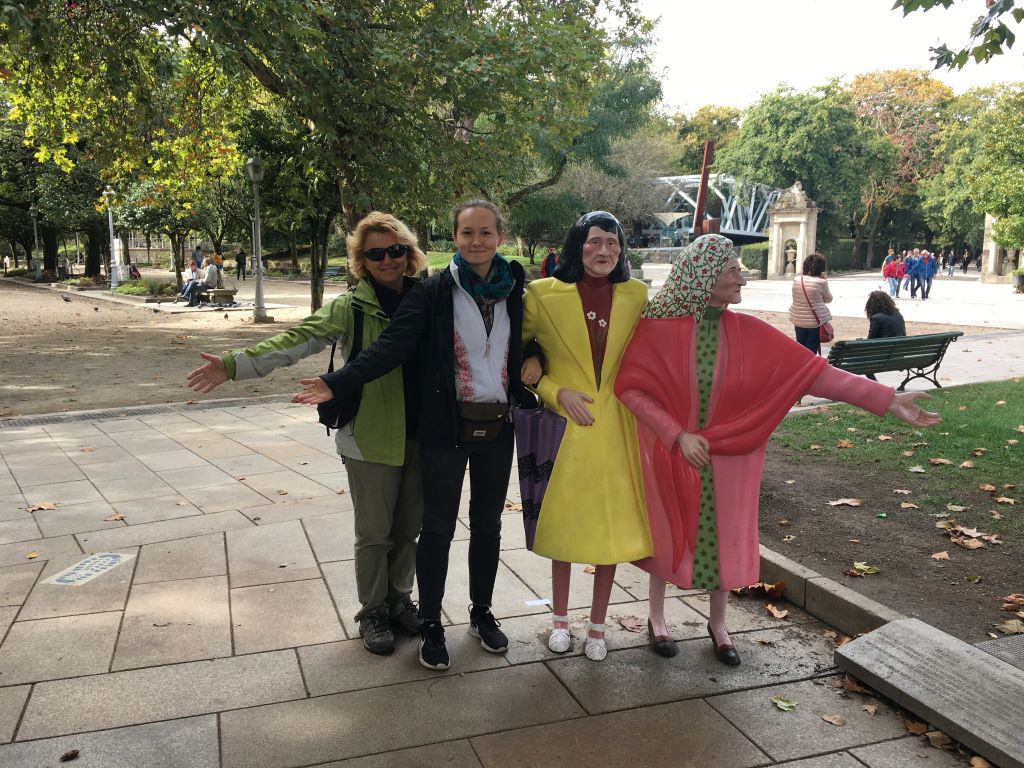
The Portuguese coastal route is beautiful – the ocean, sand dunes, wooden paths laid across them, villages and cities. But for me, it was a bit boring because for the first four days you had to walk almost constantly along the Atlantic coast and there was very little shade.
The coast is very beautiful and good, but the heat and sand quickly get boring. It was because there were more forests and hills that I liked the Central Historical Route, which I walked later in 2022.
For those who are walking the Camino for the first time, the Portuguese route is the best option for the first Camino. It’s also very flat, and you’ll spend most of your time walking along maleconas, promenades and small roads. It makes for fast and easy walking, but the hard surfaces – Portuguese cobblestones in towns and on roads – can hurt your feet.
The coastal version of the Camino does not always go near the ocean; at the end, it still connects to the central route in Redondela. This means that there have been many more people on the route in the last few days.
On the coastal route, every 5-10 kilometers you can find a nice beach town to relax. But it’s almost impossible to swim in the ocean – it’s very cold in this part of Portugal and Spain. But it also means a lot of options for grabbing a bite to eat, drinking coffee or juice, and sitting on comfortable benches overlooking the beautiful ocean.
Accommodation on the Portuguese coastal route Camino

The route passes through a large number of towns and villages, so there is no shortage of accommodation or food options. There are also no problems with ATMs here, although they are almost unnecessary – cards are accepted everywhere, except for municipal albergos in monasteries, which, according to ancient rules, accept only cash.
Traditional pilgrims stay in municipal “albergues”, such as the Camino hostel, which provides shared rooms at very reasonable prices(from 8-10 euros per bed in a room for 10-20 people).
I advise you to read: What is the Camino de Santiago, how to prepare, what is the infrastructure and routes
However, there are also many private albergues that offer a number of shared spaces and private rooms, as well as regular hotels for an extra level of comfort. The type of accommodation you choose depends on your personal preferences and what you value more – budget accommodation and the atmosphere of socializing with other pilgrims, or privacy and comfort.
We stayed 50-50 – partly in municipal albergues, partly in private ones. It all depended on which albergues had free seats. The three of us walked together and there were not always enough places for everyone, so without hesitation we went to spend the night in a private hostel, the price of which differed by 5-7 euros per person.
How much does it cost to hike the Portuguese Camino coastal route?
30 euros per person per day if you stay in albergues and hostels, order the Pilgrim’s menu and have breakfast in a cafe with tatty coffee. If you book a private room for two, it can be a little more expensive – up to 40 euros per person per day.
We chose albergues and hostels, but sometimes we stayed in cheap hotels. But we always spent a little more on food – the delicious seafood was so appealing, and it’s not very expensive in Portugal and Galicia.
What you need for the Camino de Santiago
- Do not save on health insurance.
- If I’m not staying at an albergue, I book hostels or pensions through Booking.com. I do it in the evening the next day.
- I buy buses in Spain on the website of a Spanish carrier Alsa.
- Train tickets in Spain – on the website of the Spanish railway company Renfe.
Useful articles and links:
- The best hiking routes in Portugal
- Nazare – the biggest waves and beaches in Portugal
- Sintra – a great guide to the city and beaches
- Beaches near Lisbon – where to relax, walk and play sports
- Camino de Santiago – how to prepare for the pilgrimage?
- ТОP 10 – what to do in Porto, Portugal