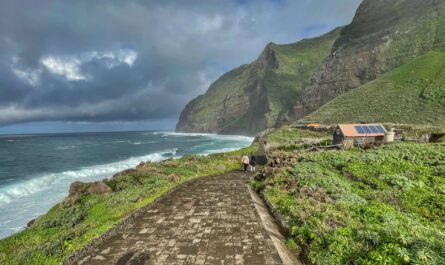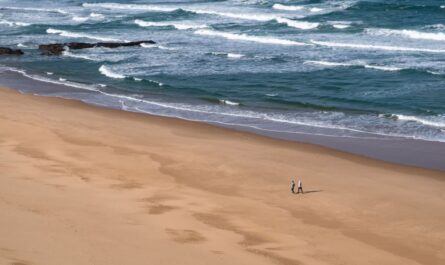
Camino Lebaniego – why did I choose this particular route for my walk in 2025? Not the longest, so you can walk for a long time and think about nothing. On the contrary – only 4 days, it’s even impossible to tune in for the journey (I do like to walk for longer).
But the travel plan to Spain was not limited only to Camino. The walking route was a gentle start to a long, almost month-long journey through Spain, where I hiked in the Picos de Europa mountains, visited high mountain lakes, walked along the ocean, and saw places I once passed by while on the Camino del Norte.
Back then, in the distant 2017, I walked through Cantabria and Asturias under heavy downpours and couldn’t enjoy these wonderful sites and stunning nature. And to repeat the same path is as impossible as stepping into the same water twice. So, I created my dream journey, part of which was to walk a new route of the Camino – Camino Lebaniego. And after it, to see the ocean, the towns of Llanes, Ribadesella, Comillas and San Vicente de la Barquera, to go hiking in the Picos de Europa.
And it turned out to be one of the best independent hiking adventures in recent years! This time I walked alone and enjoyed the carefreeness and the opportunity to do only what I wanted. Because a solo trip is a great happiness to be yourself together with yourself.
A bit of the history of Camino Lebaniego
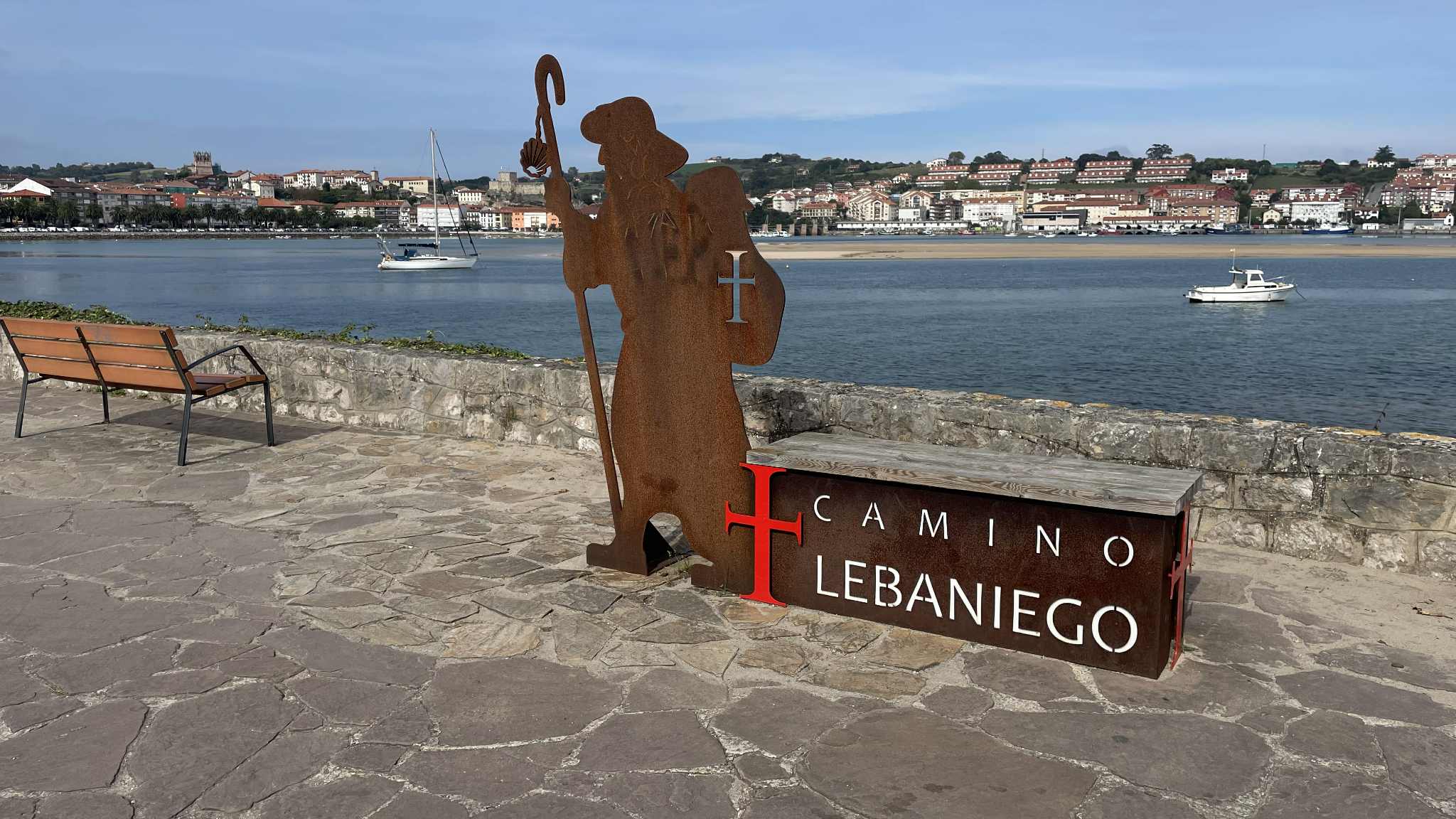
Camino Lebaniego, a pilgrimage route with more than 500 years of history, begins in San Vicente de la Barquera and ends at the monastery of Santo Toribio de Liébana. It covers several places steeped in legends, traditions, and cultural heritage, which define its unique identity.
This journey starts at the Church of Our Lady of the Angels in San Vicente de la Barquera, located on the highest part of Puebla Vieja, from where you have a breathtaking view that combines sea and mountains. The church, built between the 13th and 14th centuries and characterized by the principles of mountain Gothic, houses the tomb of inquisitor Antonio del Corro, which is considered one of the most beautiful funerary sculptures in the country.
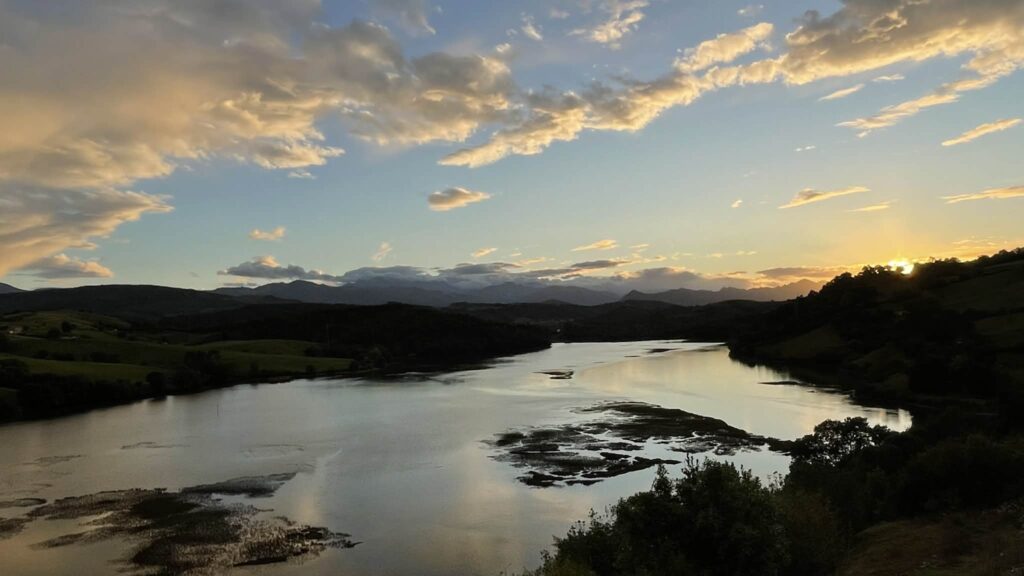
The route goes through the Cantabrian mountains and ends at the Santo Toribio monastery, where one of the largest pieces of the cross on which Jesus was crucified is kept – Lignum Crucis. This relic, together with the remains of the saint who brought it to the Iberian Peninsula, Toribio of Astorga, is the core of the pilgrimage to this holy place, which has its own Jubilee Year, a privilege it shares since medieval times with Rome, Jerusalem, and Santiago de Compostela.
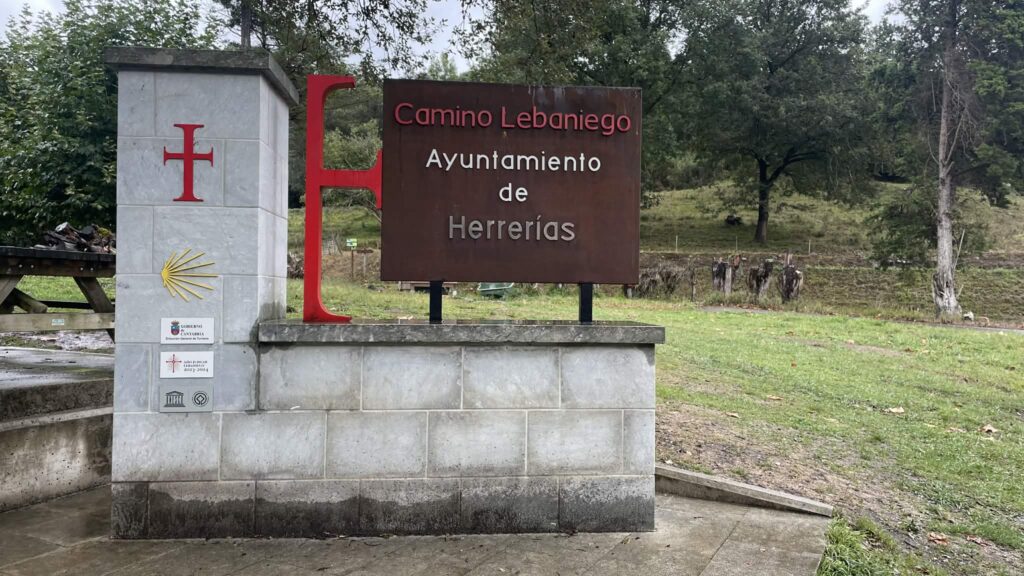
The last Jubilee Year on Lebaniego took place in 2023, and due to this major event, the tourism authorities of Cantabria did a lot of promotion for this route. Signs were also updated, very beautiful credencials were made, which are issued for free at the San Vicente tourist office. You will see advertising for this route all over Cantabria, almost at every bus stop. And that’s really cool!
Facts about the Camino Lebaniego route
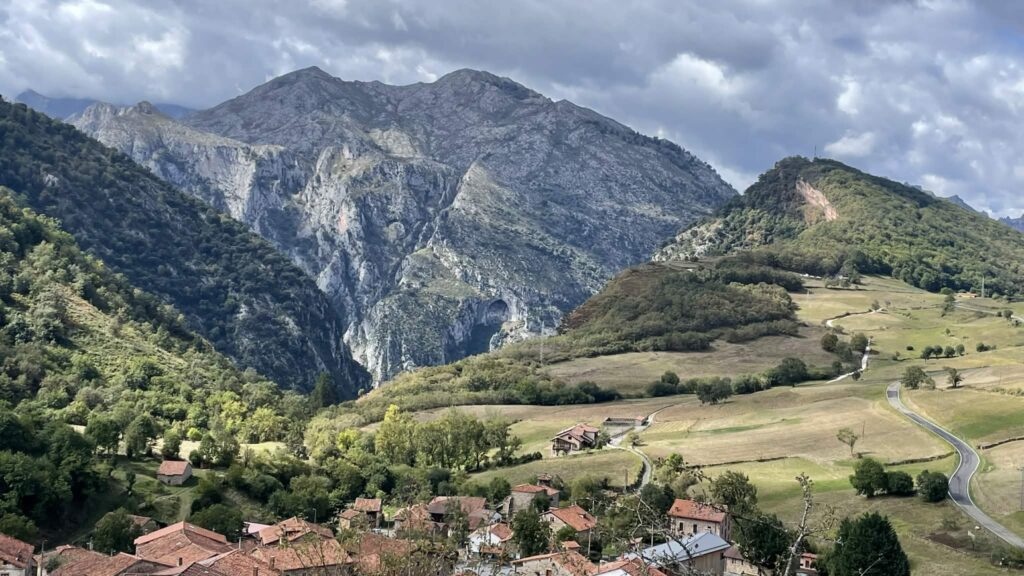
- Total distance – 72 km – from San Vicente de la Barquera (it may be longer if you start from Santander) – considered one of the shortest ways.
- Number of days – 3-4 (I did it in 4 days).
- Starting point – San Vicente de la Barquera, Cantabria, Spain.
- Finishing point – Monastery of Santo Toribio de Liébana, Cantabria, Spain.
- Average daily cost – 30 – 50 euros per person per day (there are almost no municipal albergues, so almost no places where you can cook by yourself).
- Average distance – 15-28 km per day.
- Difficulty – quite tough: the first day is easy because most of the route follows the river, some ups and downs, easy slopes. The other days are in the mountains – the further you go, the harder it gets. There are passes with ascents of 300-400 meters and descents of 500 meters.
- Accommodation – Municipal and mainly private albergues, hostels (there are also hotels, which of course cost more). The choice of municipal albergues is small – two albergues, but the price is low in only one (8 euros). There are few albergues, you need to book in advance – firstly, to get a place, and secondly, so the owners can prepare for a certain number of pilgrims.
- Note, some albergues do not work in winter because there is snow in the mountains.
- Route markings – on the first day, 8 km of yellow shells and red crosses, because Lebaniego coincides with a stretch of the Norte, after that only red crosses – the symbol of Camino Lebaniego.
- Surface – asphalt, dirt trails, mountain stony paths.
- Certificate upon completion of the Camino – called Lieban, it is issued at the Santo Toribio monastery at the end of the route.
What is the length of Camino Lebaniego?
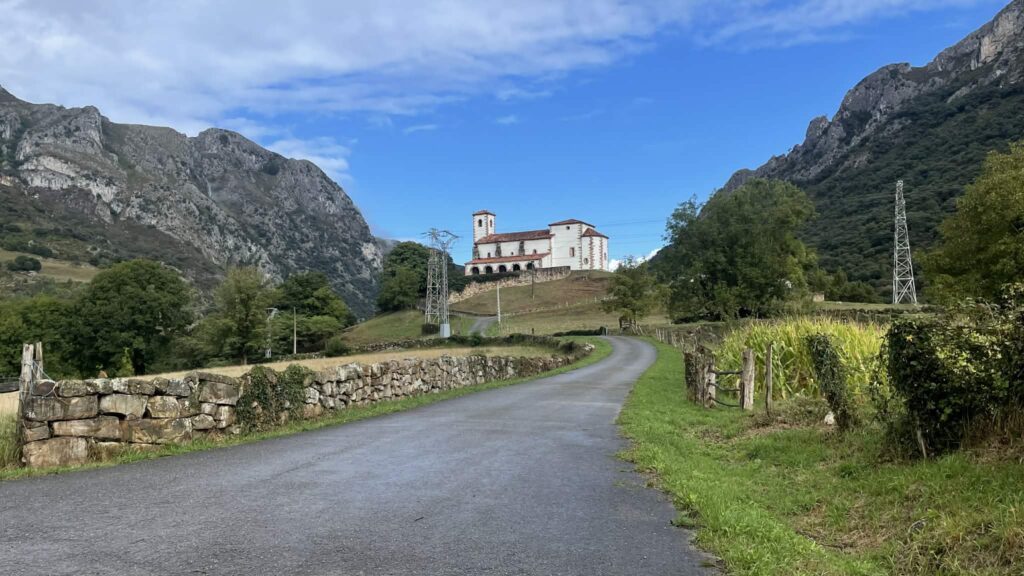
The Camino Lebaniego has a length of 72 kilometers, from San Vicente de la Barquera to the Santo Toribio monastery in the stunning Liébana valley. You can cover this route in 3 days, but it’s better to split the stages into 4 days, that way it’s more relaxed and easier to walk through the mountains, enjoying the beautiful views.
The monastery has quite an interesting history. It was founded before the start of the sixth century AD. Initially, the monastery was named after Martin of Tours (San Martín de Tours) – a bishop, one of the most venerated saints in France. It was renamed in the twelfth century – in honor of Saint Toribio of Astorga (Santo Toribio de Astorga). He was an archdeacon and later a bishop, known for his journey to Jerusalem back in the fifth century. From there, Saint Toribio, having received permission from the Pope of that time, brought to Spain a part of the True Cross, which was kept at the Church of the Holy Sepulchre. Since the eighth century, this relic together with the remains of Saint Toribio has been kept in the Cantabrian monastery of Santo Toribio de Liébana.
The route is well marked, with many red arrows – red to distinguish the route from the Camino de Santiago. For an independent hike along the way, there are some hotels and dining establishments located in the villages along the way. Don’t expect shops in every village, sometimes there are not even bars to eat on the way or have a cup of coffee. You need to plan everything in advance: take water and snacks, agree on dinner and breakfast in hostels. There are not many dining options.
Stages of the Camino Lebaniego route
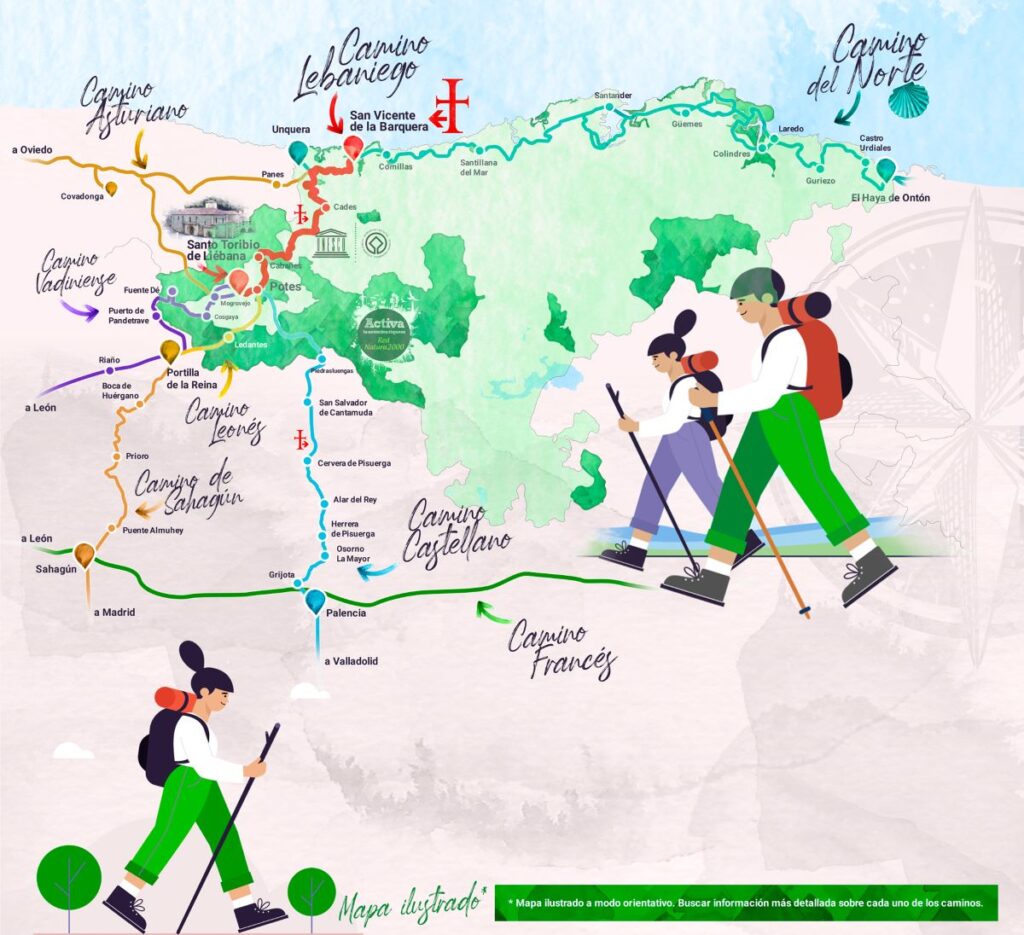
The Camino-Lebaniego route is officially divided into three stages:
- 1. San Vicente de la Barquera – Cades – 28.5 km;
- 2. Cades – Cabañes – 30.53 km;
- 3. Cabañes – Santo Toribio de Liébana monastery – 13.7 km.
But I recommend splitting the second day into two parts:
- 1. San Vicente de la Barquera – Cades – 28.5 km;
- 2. Cades – Cicera – 15.7 km
- 3. Cicera – Cabañes – 11.7 km;
- 4. Cabañes – Santo Toribio de Liébana monastery – 16.7 km.
How many people walk the Camino Lebaniego?
The Camino Lebaniego is definitely one of the least popular walking routes, but it is gaining popularity. Every year more and more pilgrims walk it, as more people discover this hidden gem.
In summer, ordinary tourists may also partially walk this route, so hostels may be crowded because of this (booking is mandatory!). Even if you don’t meet other pilgrims, expect a large number of day-trippers and holidaymakers visiting this area. The busiest season is in summer and school holidays.
However, when I walked Lebaniego in September 2025, there were enough people in the hostels and albergues – rooms with 10-14 beds were almost full.
Tips for starting Camino Lebaniego
This Camino route can be started in several places in the province of Cantabria. Many pilgrims start Lebaniego in the city of Santander, which is the capital of Cantabria. So their journey takes about 8-10 days.
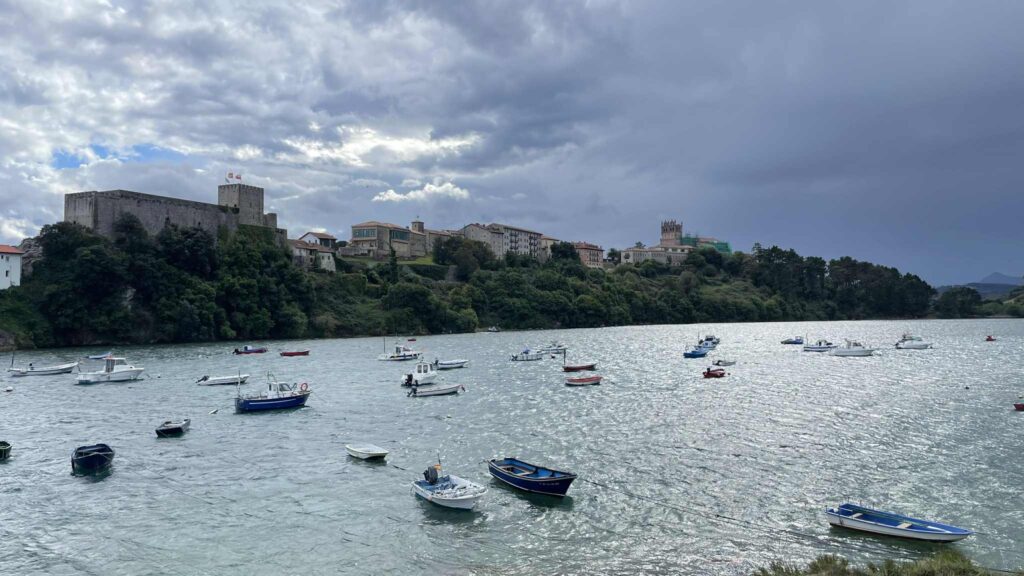
Or, like me – in the town of San Vicente de la Barquera, where the route turns inland from the coast. I had a plan to continue hiking in the Picos de Europa, so I chose this start for the sake of a mountain trek.
Although Lebaniego is short, as soon as you reach the Santo Toribio de Liébana monastery, you can also continue on to Santiago de Compostela via the Camino Vadiniense, which ends just before the province of León, and from there join the Camino Francés.
Pilgrims I walked alongside on Lebaniego told me that after two weeks on the Norte, they decided to pause their Northern Camino. But for some logical conclusion, they decided to go the last days on the Lebaniego to get a certificate – Liebana, thus recording their passage of such a long stretch with an official document.
I think it’s a good idea if you can’t walk the whole Norte at once.
Where to get your credential for the Camino Lebaniego?
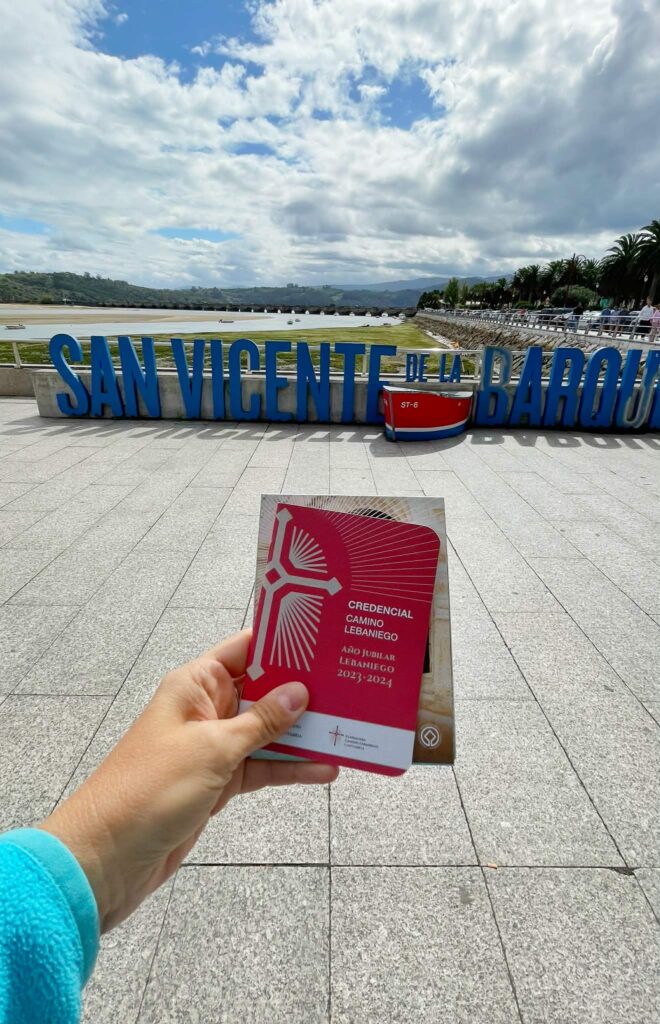
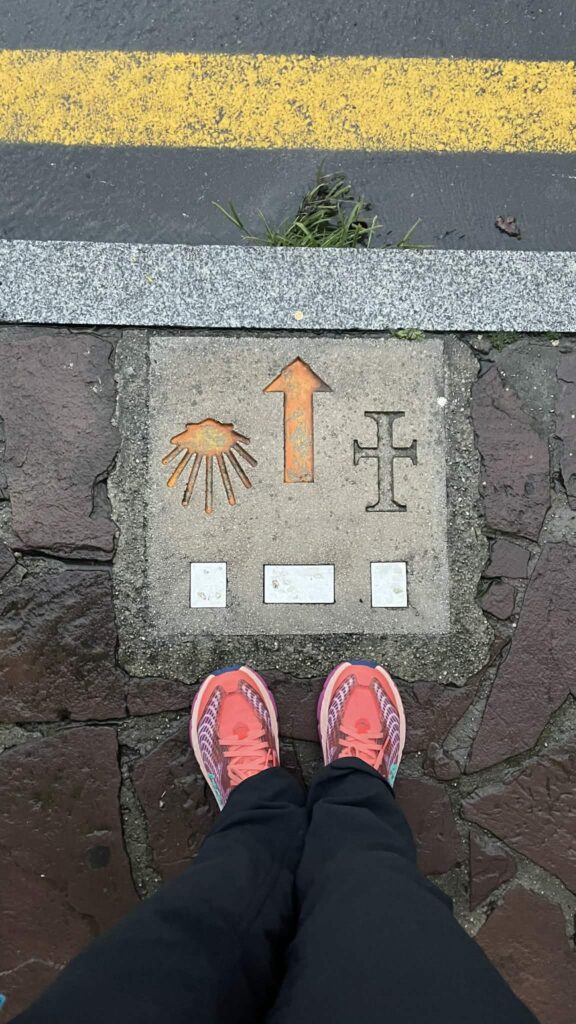
If you start this route in San Vicente de la Barquera, there are two places to get the credential:
- Santa María de los Ángeles Church – this is the church that towers on the hill in the old part of the city, located here.
- San Vicente de la Barquera Tourist Office – it is located down by the promenade near all the restaurants, located here.
I got this wonderful, unique credential for free at the tourist office.
If you start your route from Santander, you can get (or buy—I’m not sure) the credential at Santander Cathedral (location), specifically in the cathedral shop.
Day 0: San Vicente de la Barquera
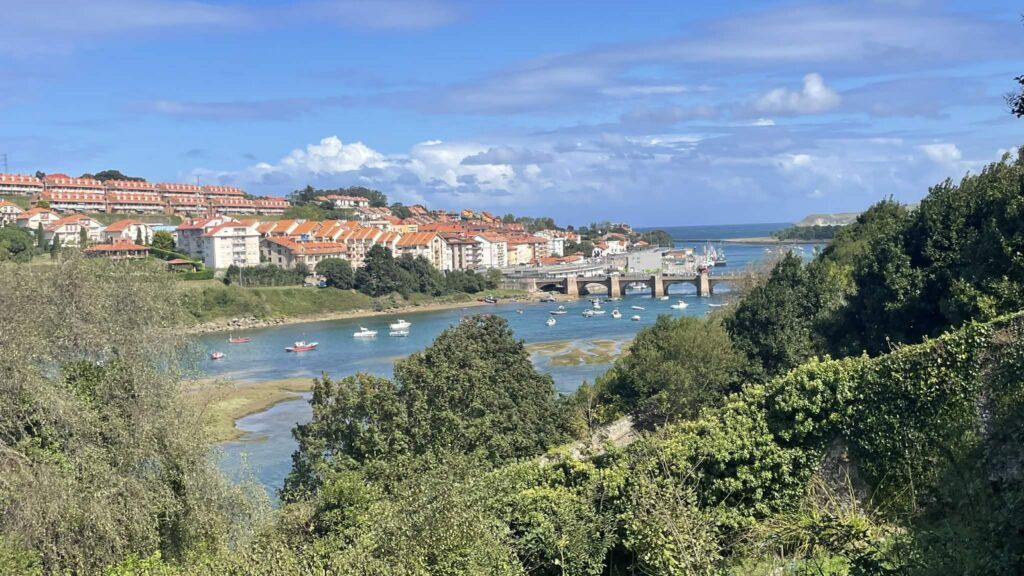
My Camino Lebaniego started in San Vicente de la Barquera, a beautiful coastal town in Cantabria, in northern Spain. This is a popular tourist spot thanks to its stunning beaches, beautiful landscapes, and historical monuments. The Camino del Norte route also passes through here.
If you are walking the Camino Norte, San Vicente is located midway between Comillas and Colombres. The Lebaniego and the Norte share the same route for part of the first day. This lovely little town is worth a visit and is a wonderful place to start your Camino Lebaniego.
On this day, I arrived in this wonderful oceanfront town by bus. It was a silly idea not to spend the night here in a hostel, but to arrive in the morning from Santander and start the Camino right away. Fortunately, I rejected that and arrived in San Vicente in advance.
That was the right decision—I got to spend the day by the ocean, walked around the town, and looked at it more closely than when I walked the Camino del Norte. And, in the hostel, I met future companions who were walking just like me—the Camino Lebaniego (they turned from Norte into the mountains).
San Vicente de la Barquera
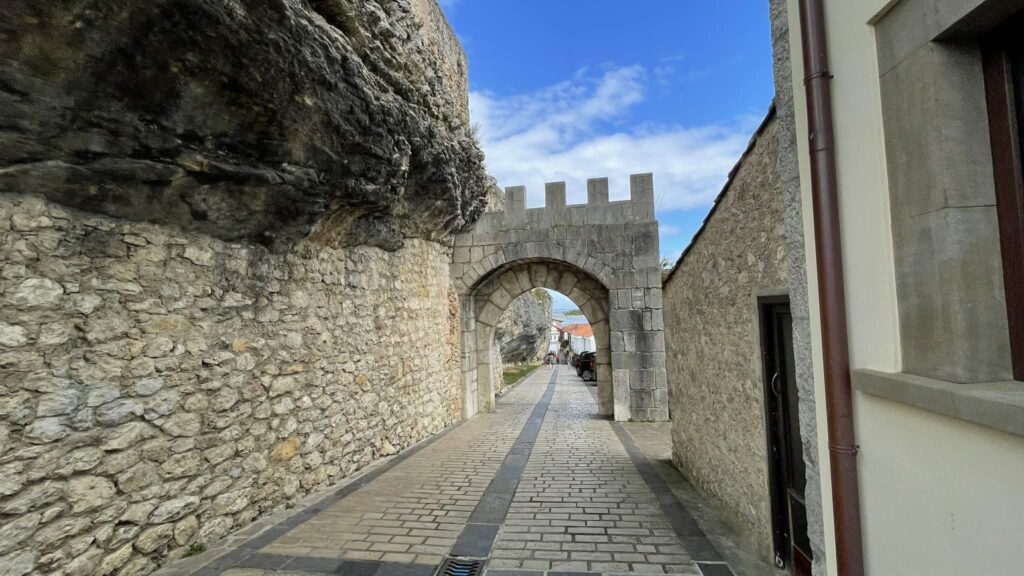
Once a small fishing village, San Vicente de la Barquera is now considered one of the most picturesque places along the Cantabrian coast. It has stunning beaches, a beautiful old quarter with an ancient castle, all with the backdrop of the often-snowy Picos de Europa. Thanks to its coastal location and fishing history, San Vicente de la Barquera is also home to several excellent seafood restaurants.
I recommend trying (inexpensively) seafood at the local restaurant Restaurante El Bodegón—I enjoyed a serving of zamburiñas (scallops) with salad and a glass of white wine. The bill: 25 euros.
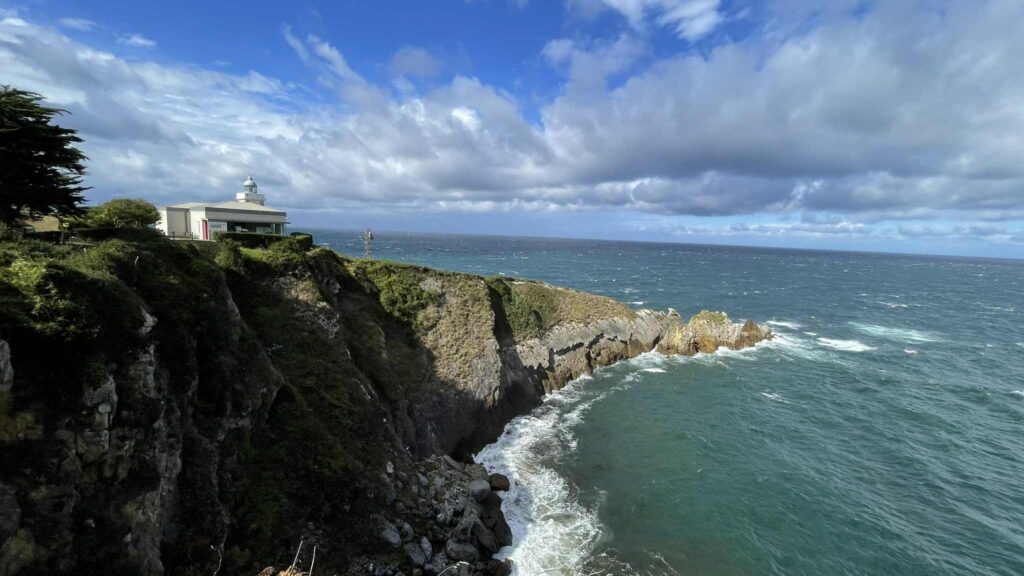
Nearby is the tourist office, where I got the credential (for free). Then I walked to the ocean—there was a powerful storm that day, the ocean was roaring. Afterwards, I walked out to the lighthouse, and then around the town.
The town was declared a site of cultural interest in 1987, partly thanks to the 13th-century Santa María de los Ángeles Church and the 13th-century Castillo del Rey castle with crenellated tower, which houses a small museum. Next to the church, you can find the remains of the Hospital de la Concepción, dating back to the 1500s and once a refuge for pilgrims on the Camino de Santiago. It’s worth visiting these sites and climbing them to enjoy the views of the town and harbor.
The La Maza Bridge is also part of the town’s identity, dating back to the 16th century.
Santa María de los Ángeles
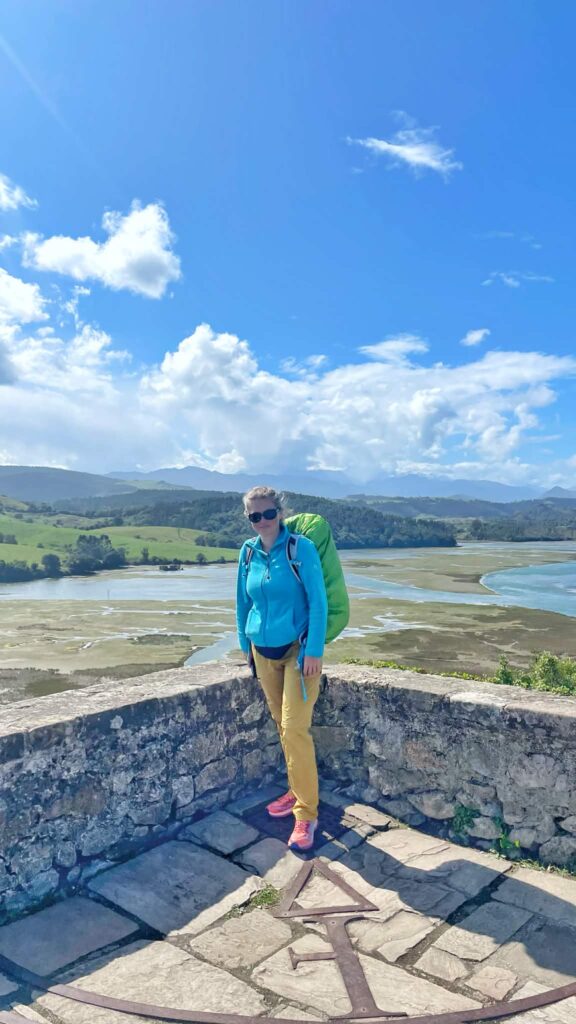
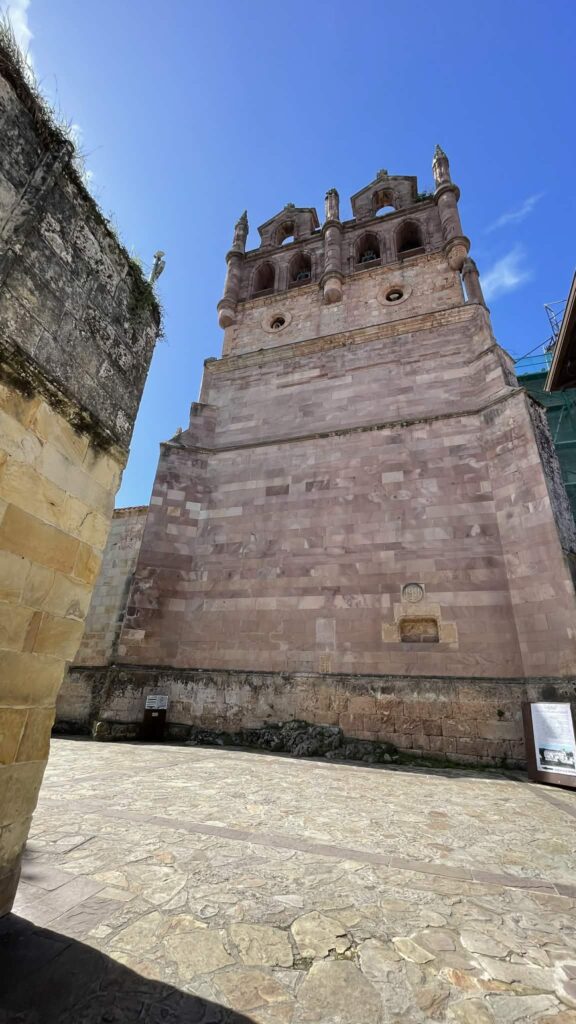
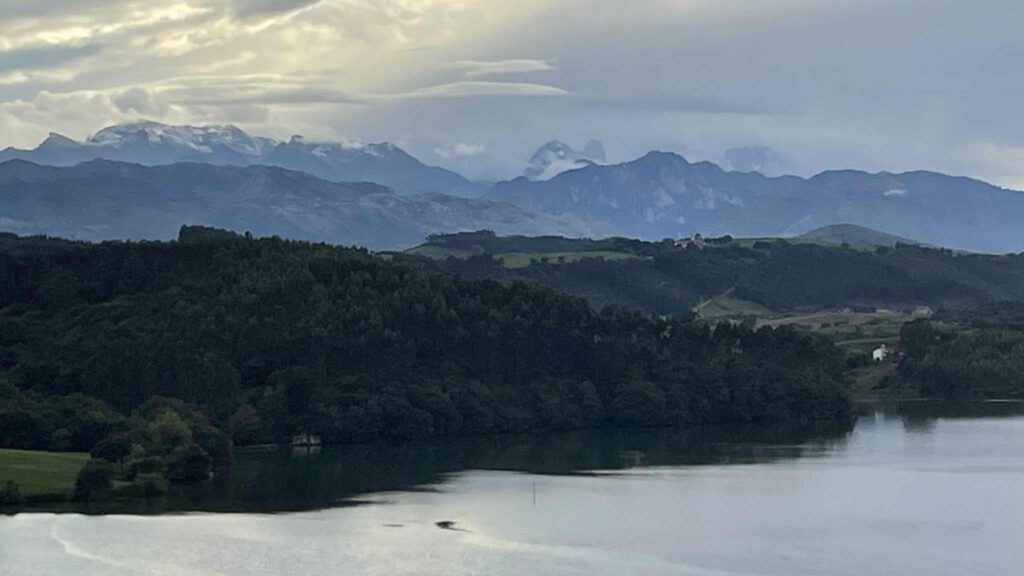
After settling into the hostel, I walked to Santa María de los Ángeles church, which houses one of the best works of Spanish Renaissance funerary art. It’s just a few meters from the albergue. I didn’t get inside the church, but I looked at the peaks of the Picos de Europa from the spot called “kilometer zero”—a viewpoint behind the church with a wonderful view of the Picos.
In the evening there was a gathering of pilgrims—most (99%) continued on the Norte, but three the next day also turned onto the Lebaniego.
Where to stay:
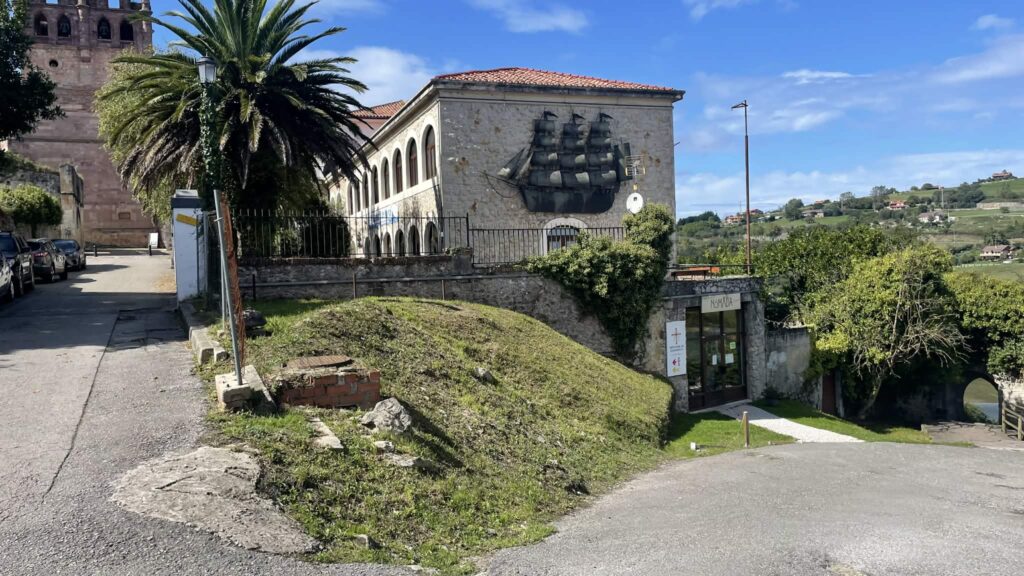
San Vicente de la Barquera is a popular tourist destination that offers a wide selection of accommodation for any budget. The city has the albergue Nómada Hostel – Surf & pilgrim House—a private, very clean albergue with a decent breakfast included. But it’s a bit pricey for pilgrims, although unfortunately, there is no alternative in this spot. The albergue provides blankets and linen—a sleeping bag is not needed.
I once stayed here while walking the Norte—back then, it was a municipal albergue with much worse conditions. What remains is that the beds are packed very close together—it feels like they tried to put in as many as possible.
Alternative options:
Hotel Luzon—inexpensive rooms in the city center with a view of the estuary. The hotel is grand and looks freshly renovated. Comfortable rooms, but with no additional services such as air conditioning, fan, or hairdryer. They no longer serve breakfasts, but there are cafes within a few minutes’ walk where you can buy food and drinks.
Hotel Faro de San Vicente—an inexpensive hotel conveniently located for exploring the city (by the bridge leading to the modern part of the city).
Day 1: San Vicente de la Barquera – Cades (Puente El Arrudo)
Distance: 28.5 kilometers
Total elevation gain: 603 m
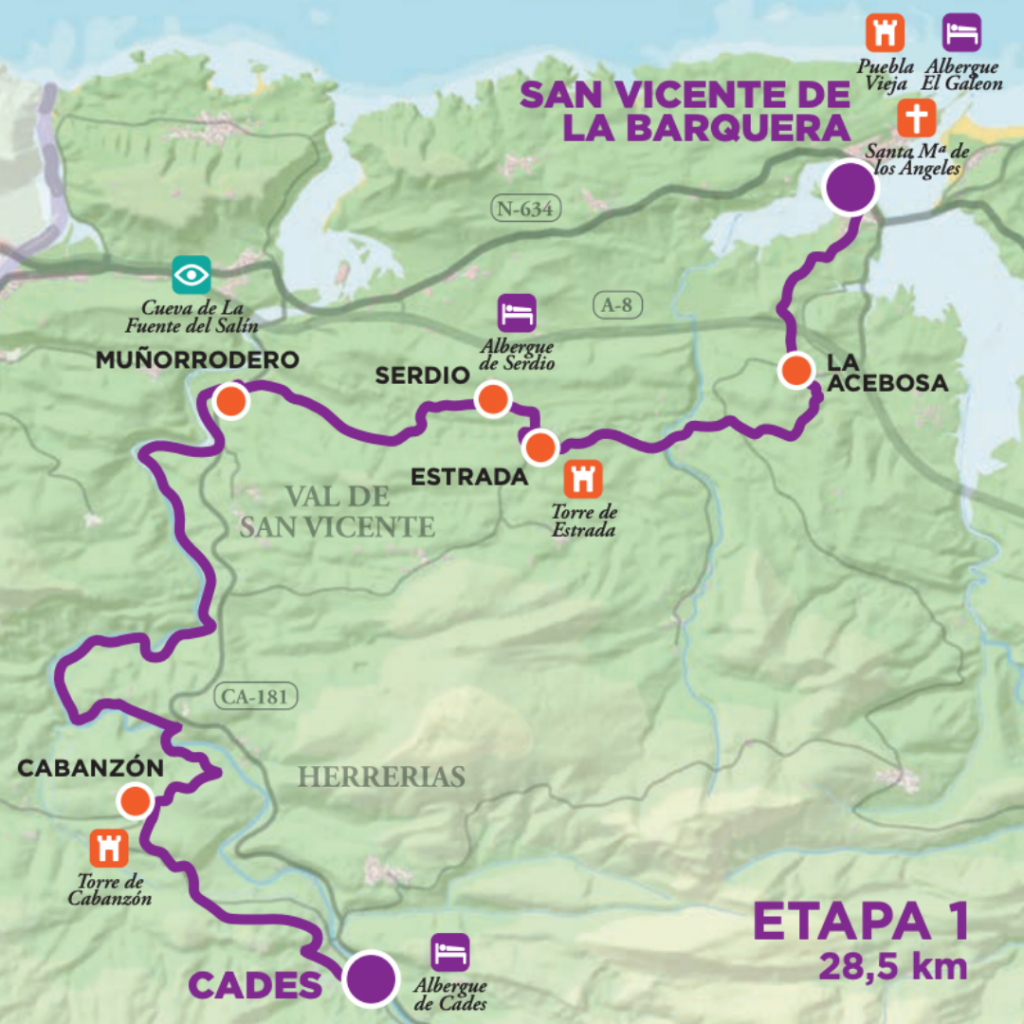
After spending the night in San Vicente de la Barquera at the Nómada hostel, I got my stamp at the Nuestra Señora de los Ángeles church and started the Camino Lebaniego from the first stage: San Vicente de la Barquera – Puente El Arrudo. This section is 28.5 km long.
The views at the beginning of the trail are impressive: you can see the main summit of Naranjo de Bulnes in the Picos de Europa mountains. I managed to see all this yesterday, but in the morning it started to rain, and it would rain all day.
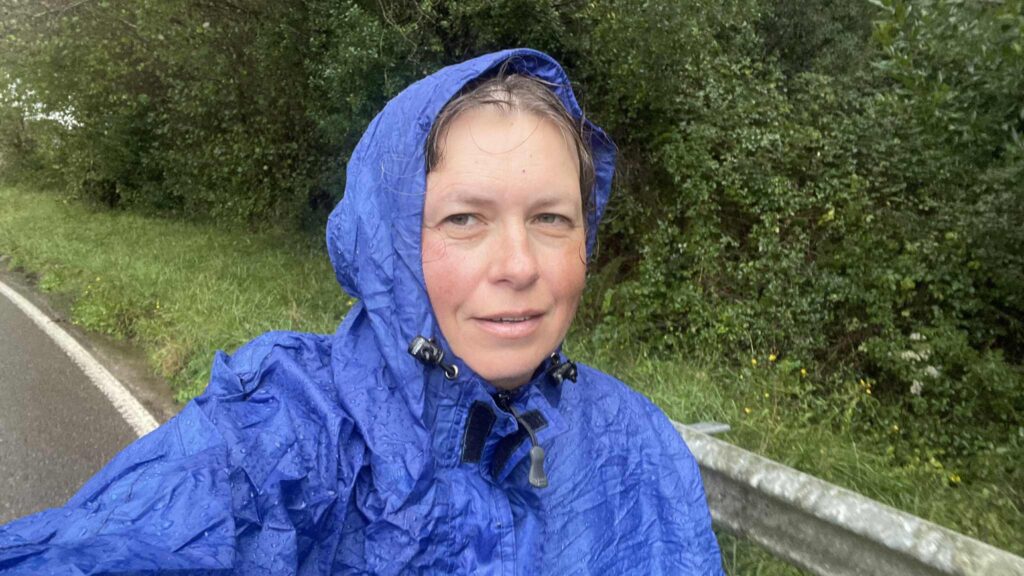
The ascent begins when you leave the town and head inland. Today’s climb isn’t that tough—it’s a gentle introduction to the route, and the views in every direction are simply magical!
Wearing my poncho raincoat, I headed toward the next village, La Acebosa. Then the official route to the village of Serdio—there’s a bar and café here, which were closed. There’s an alternative route—shorter and flatter, but it runs on asphalt along the road—I don’t like breathing exhaust fumes and I’m not in a hurry, my feet are already wet anyway.
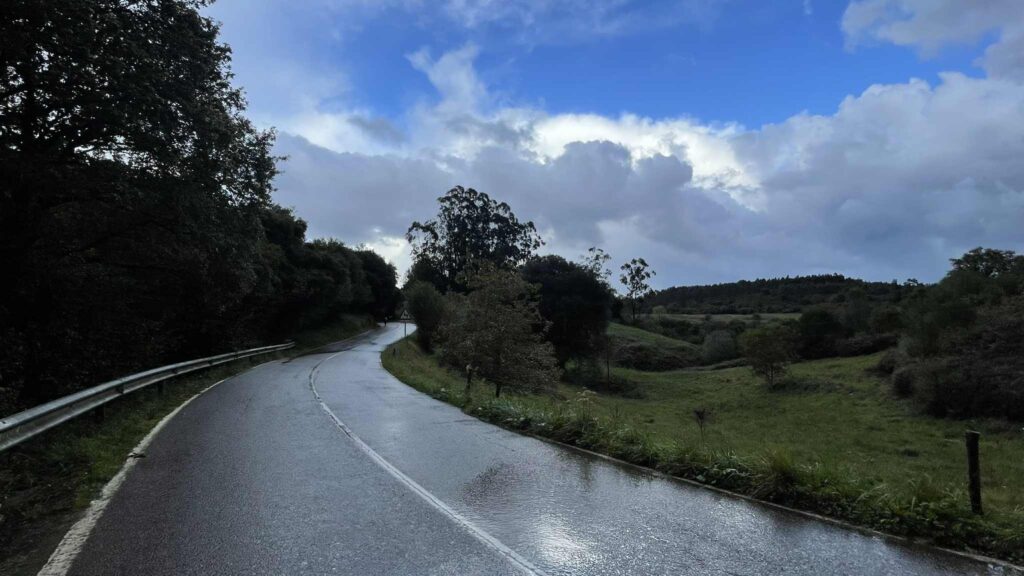
After 9 km in the rain, and not seeing a single open bar, in three hours I reached the village of Muñorrodero. Here the Lebaniego and Norte ways split. If, like me, you were walking with Norte pilgrims, it’s time to say goodbye to them!
To this point, I walked following both red and yellow arrows. This is the only section on the first stage where you could get confused, so… follow the red arrows and pass through the village of Muñorrodero.
Trail along the Nansa River – 1 section
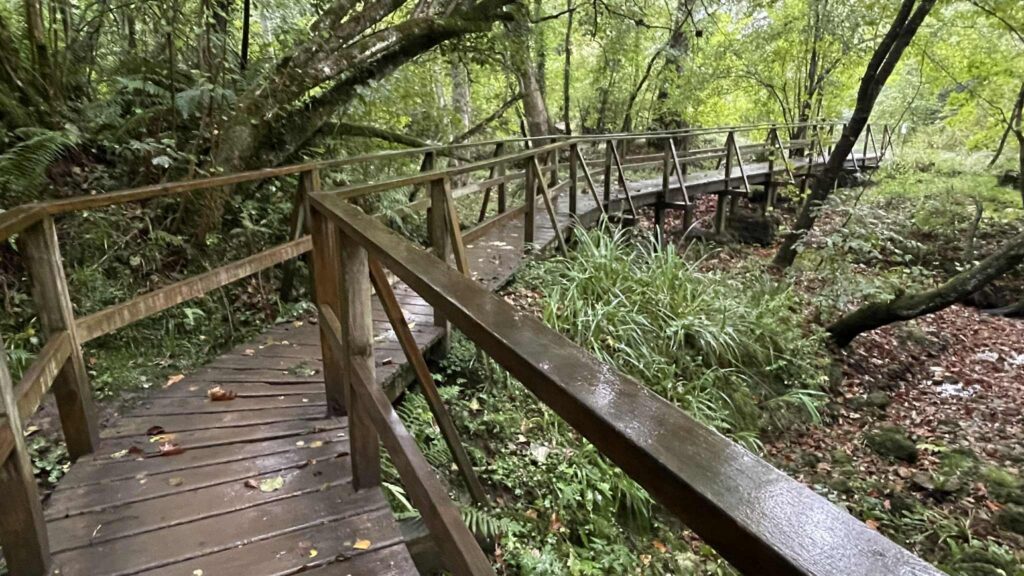
At this time, there are no bars along the official route from Muñorrodero to Puente El Arrudo, so it’s important to take some food with you to snack along the Nansa river trail, which you will pass through this town.
If you keep going, you’ll come to a road/trail, which to the left brings you to the village of Camijanes (currently there is no bar), and to the right – to a small bridge over the river, which leads to the Solares de los Cerezos fountain (tourist complex) directly ahead, where you can fill your water.
Trail along the Nansa River
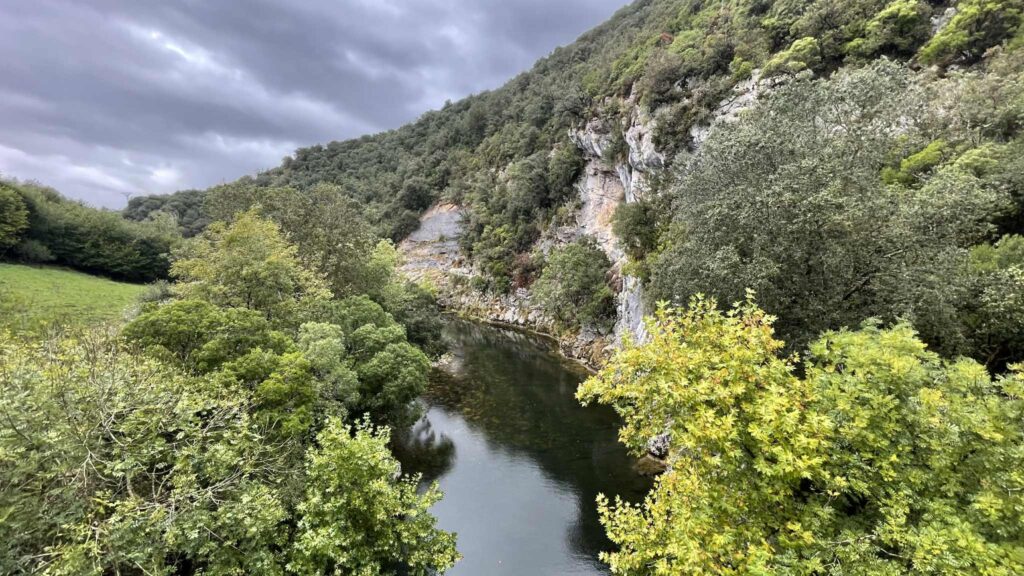
You have the option to continue on the official road, which leads to the village of Cabanzón, or choose the route that runs along the banks of the Nansa River. I decided to walk along the river rather than on the asphalt—it’s more interesting in my opinion, although in the rain it was slippery and very muddy in some places. I made it through!
Further on, my Lebaniego route runs along the Nansa river trail. This section is 20 km long and passes through shady riverside forest with wooden walkways. The river trail is longer than the original Camino, but it takes you away from the busy main road and is a much better option. And it’s really very scenic, even in the rain it’s beautiful here.
Trail along the Nansa River – 2 section
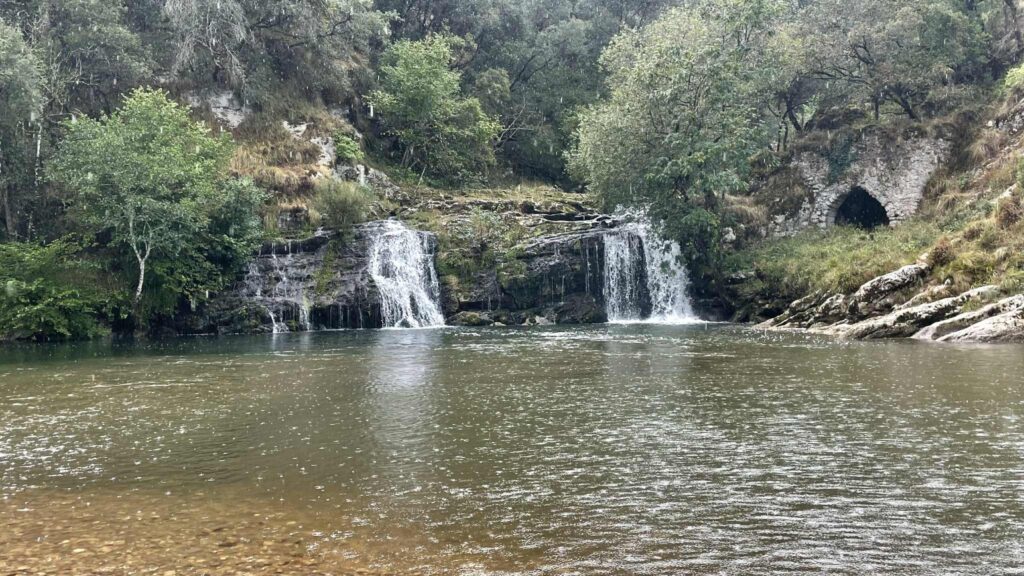
The second section of the river trail is only available in summer, when the water level in the river is low. However, in September 2025 I managed to walk it calmly (I did trudge some mud, but that’s not a problem). I had to wade across the river to get to the other bank. My sneakers were already completely soaked, so there was no difference between walking wet from rain or from the river.
This is a very beautiful trail, but you’ll likely encounter mud due to frequent autumn rains (that’s how it was). If you follow this unofficial trail, it’s a bit longer, but offers stunning views. On this segment, which leads to Puente El Arrudo, there’s no infrastructure except frequent route markings—it’s impossible to get lost.
Near the power station is a good place to swim in the river—unfortunately, I was walking in the rain, so I had no desire to swim. )))
Cades
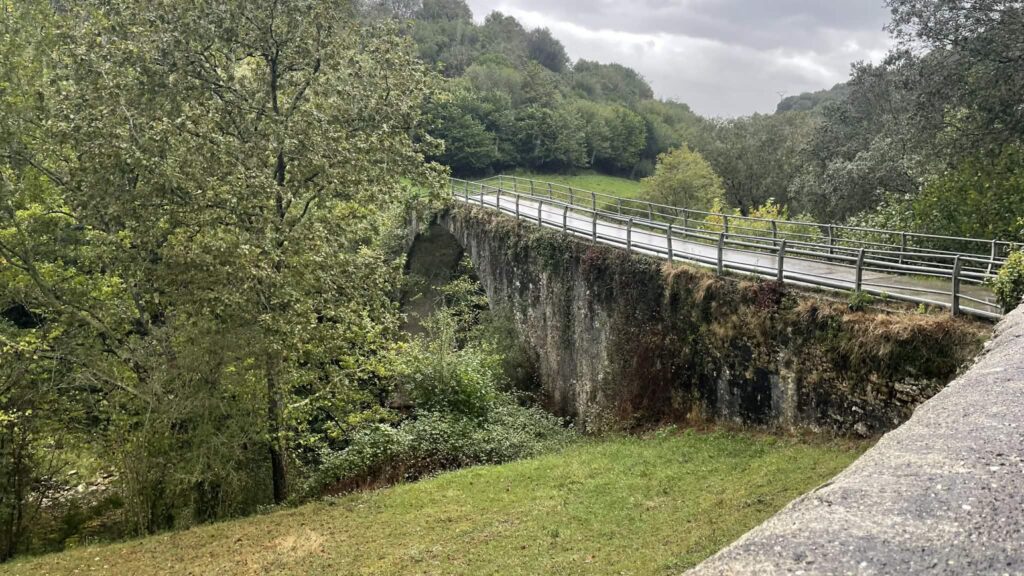
The day ends in Cades, and just before Cades at Puente El Arrudo there is both an albergue and a hotel.
Cades is a very small settlement, more like a village. The main local attraction is the old metallurgy workshop on the banks of the Nansa River. This business, designed for iron extraction, appeared in Cades in the eighteenth century, but later fell into decline.
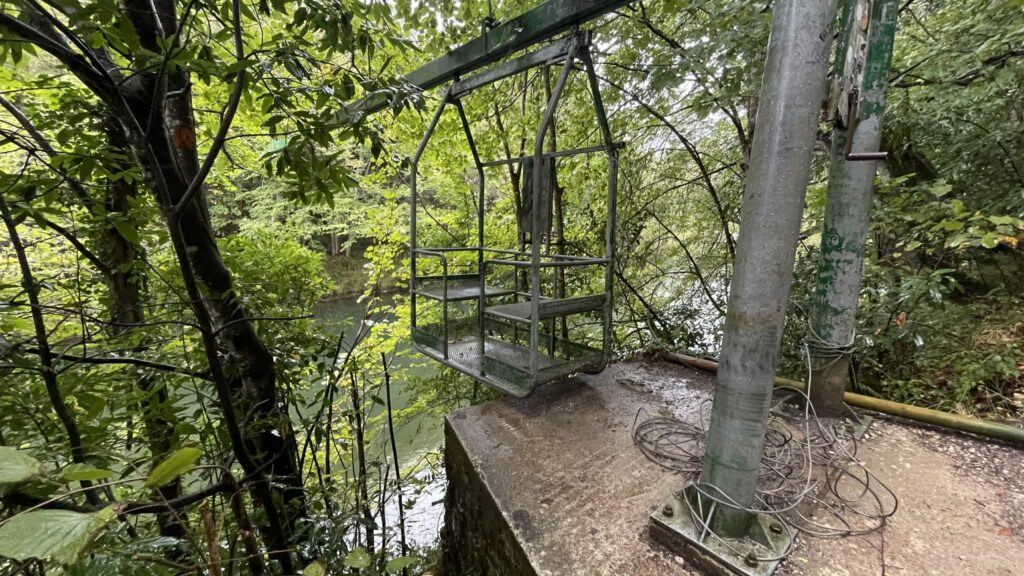
The workshop was revived in 2000, and today it is a site of cultural heritage. Next to the workshop stands the house of Asturian researcher Miguel Rubín de Celis, renowned for his expeditions to South America, with a granary. In addition, Cades has a small church. The area is incredibly picturesque.
The workshop offers guided tours (booking required) and explains how water was collected at an altitude of 1,000 meters above sea level, transported by channel and thus moved. In addition to the iron foundry, there are two flour mills.
Where to stay:
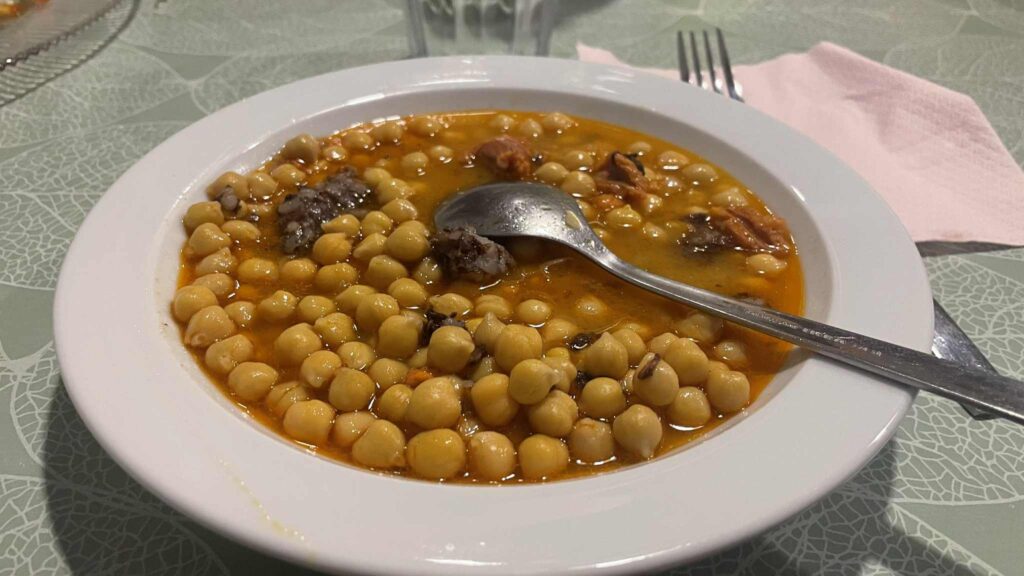
Albergue el Cárabo Hostel in Puente El Arrudo, run by Erika. Currently, almost all hostels on the way require advance booking. It’s very clean, they prepare dinner, breakfast (included), and a snack for the road. There is no restaurant, but they offer drinks, snacks, and a tasty dinner with salad, stewed chickpeas, and dessert. There are also blankets and laundry—no sleeping bag needed.
Hotel Casona del Nansa – nice, clean rooms, not far from the Lebaniego route in Puente El Arrudo.
Day 2: Cades–Cicera
Distance: 15.7 kilometers
Total elevation gain: 683 m
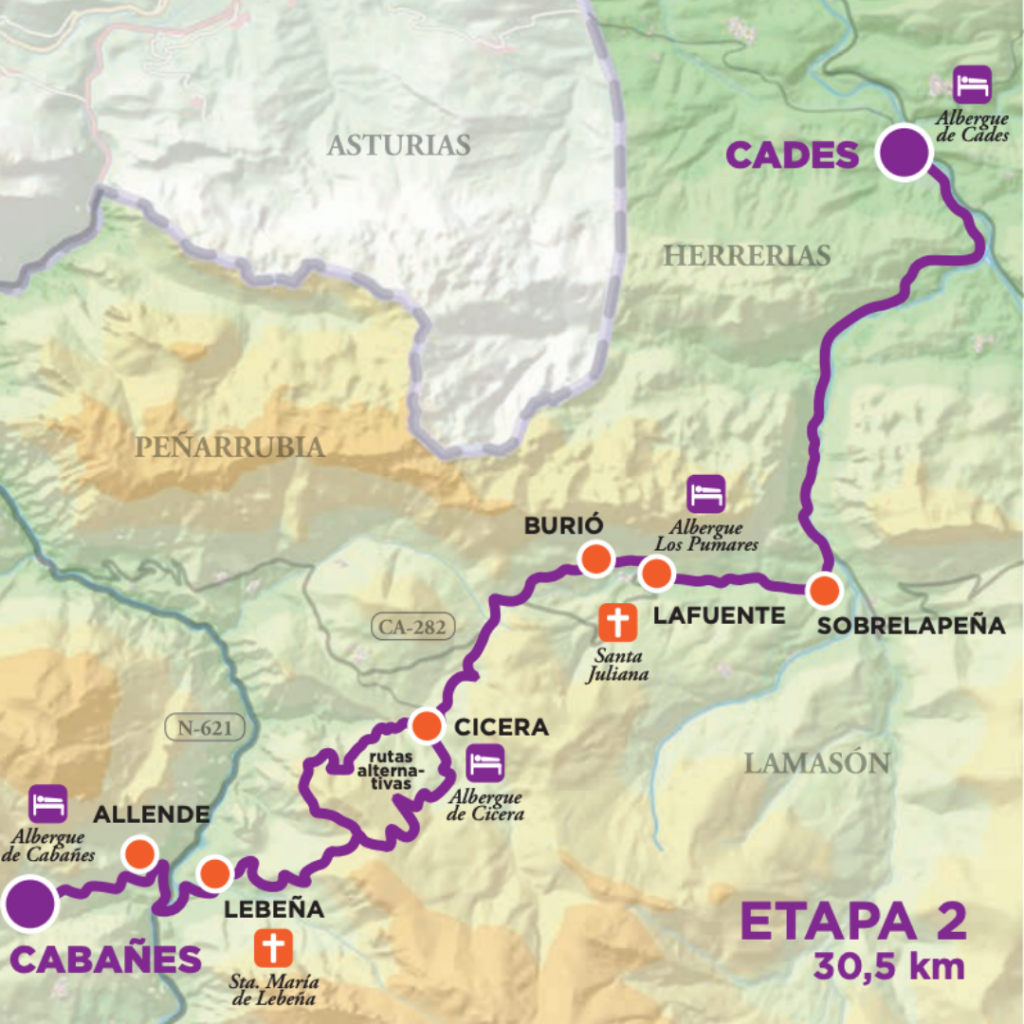
The second day of Camino Lebaniego is shorter but steeper than the previous day. It runs from Cades to Cicera. The official guide has this day going all the way to Cabañes. But I think that’s too much and Cicera is a great place for a stop. Plus you’ll have a bit of time to explore its surroundings if you arrive early in the village.
It’s true part of the day goes on asphalt, but it’s such a nice walk that I really enjoyed it. Especially after yesterday’s downpour—my sneakers were still wet, and walking in them through mud again would’ve been unpleasant.
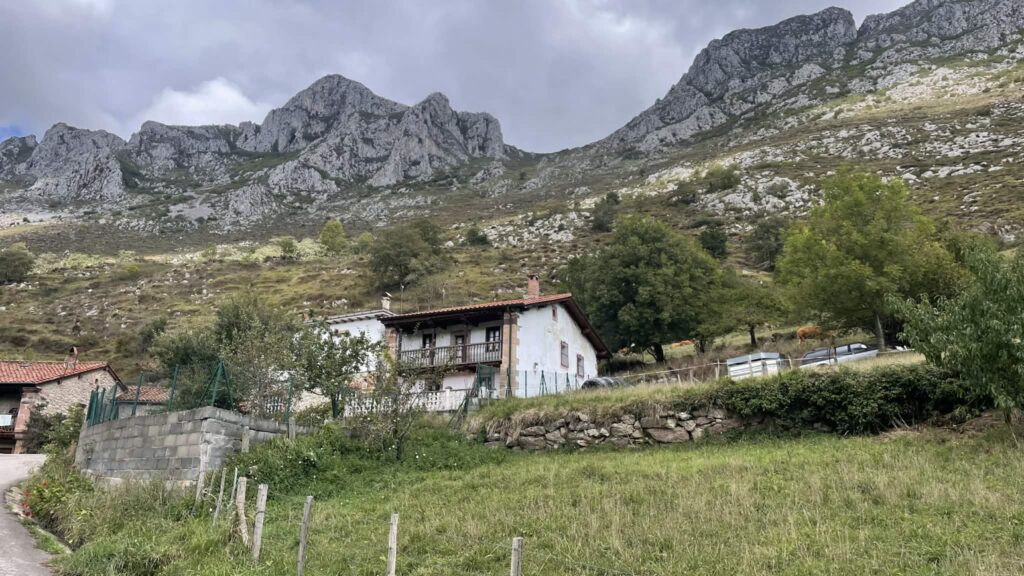
I actually did 18 km because I took a detour for hot coffee in a village. So, I went off route to Quintanilla for a bite, before continuing on. It’s a short detour from the route, and the scenery is worth the extra kilometer. You can also spend the night in Posada Rural Peñasagra if you want to arrange a shorter day.
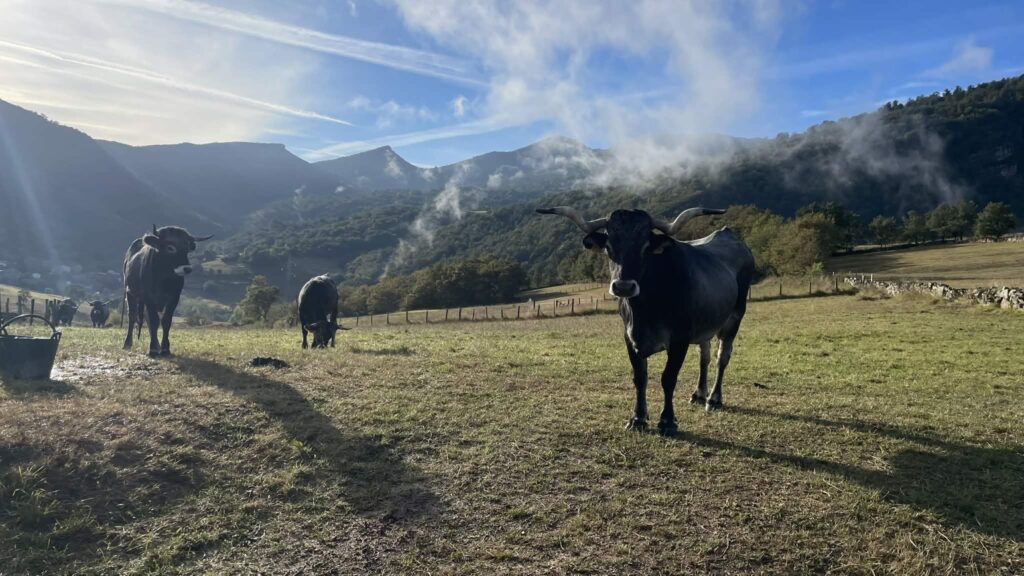
Today’s road is very quiet and well signposted for pilgrims, but it is a road so you’ll need to watch out for any traffic. I walked near the edge of the road, there were a lot of motorcyclists that day, as if there was some kind of festival. Shortly before Lafuente, you will find one of Cantabria’s Romanesque pearls—the Church of Santa Juliana dating from the late 12th century.
I met Gregorio in the bar, who had spent the night at the previous albergue. We got a bit lost in Lafuente, so watch for the arrows as you enter the village.
Cicera
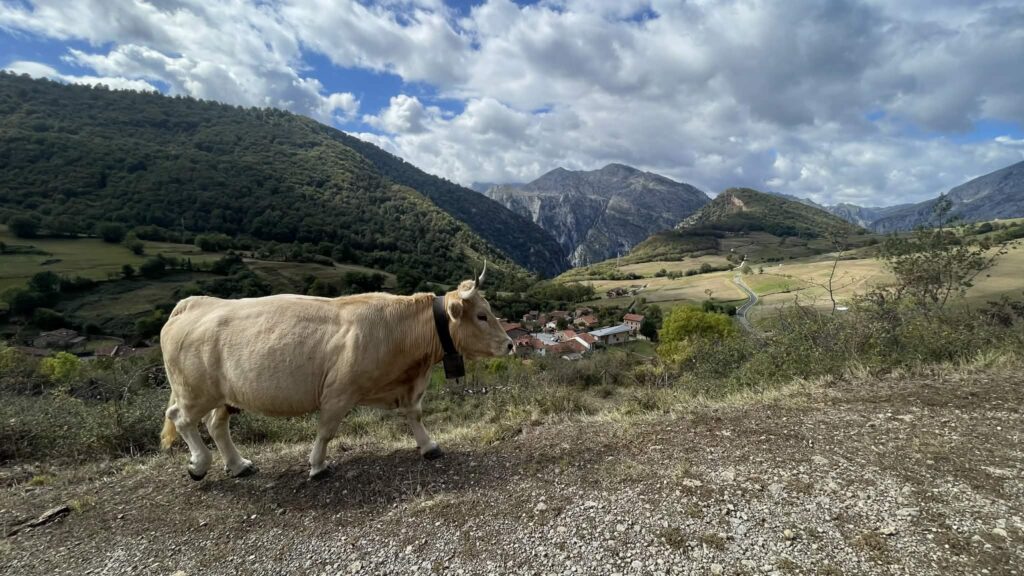
The charming village of Cicera is located in the heart of a valley, and if you arrive here early, you can also hike to the Santa Catalina viewpoint. This is about 3 km round trip from the village, but you’ll be rewarded with stunning views from the top.
I did it the next morning as clouds rolled in during the second half of the day, so there was no point going to the viewpoint then.
Where to stay:
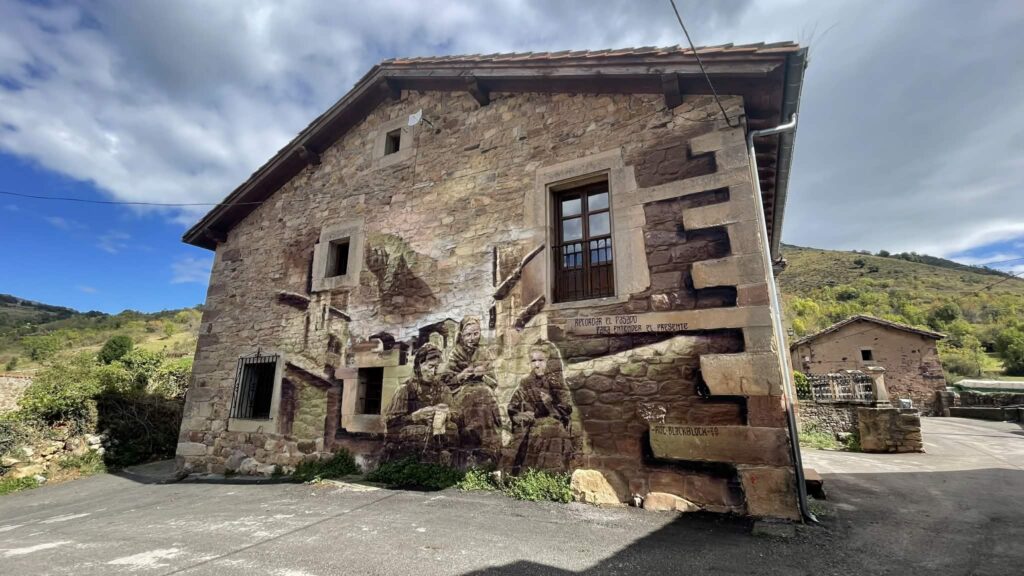
You can stay here at the rural guesthouse Posada la escuela – Bed&Breakfast. On the ground floor there is a bar-restaurant, where you can order a menu del día or dinner. Menu prices – 18 euros for two courses of your choice and a drink with dessert. Note, the food is very tasty and portions are generous! Likewise, you can order breakfast, which they’ll prepare for you in the evening to take away (the bar opens at 11 am).
Or the municipal albergue Cicera (+34 942 730 964), which operates year-round—a very cheap (8 euros) and clean albergue with a kitchen, crockery for cooking. Unfortunately, there is no shop in the village, so I ate at the bar (I don’t regret it). I liked the albergue—there are blankets, but only disposable bedding, so at a minimum you’ll need a sleeping bag liner.
There is also a pilgrims’ Albergue de peregrinos Los Pumares: +34 651 624 128 in Lafuente.
Day 3: Cicera – Cabañes
Distance: 12 kilometers
Total elevation gain: 861 m
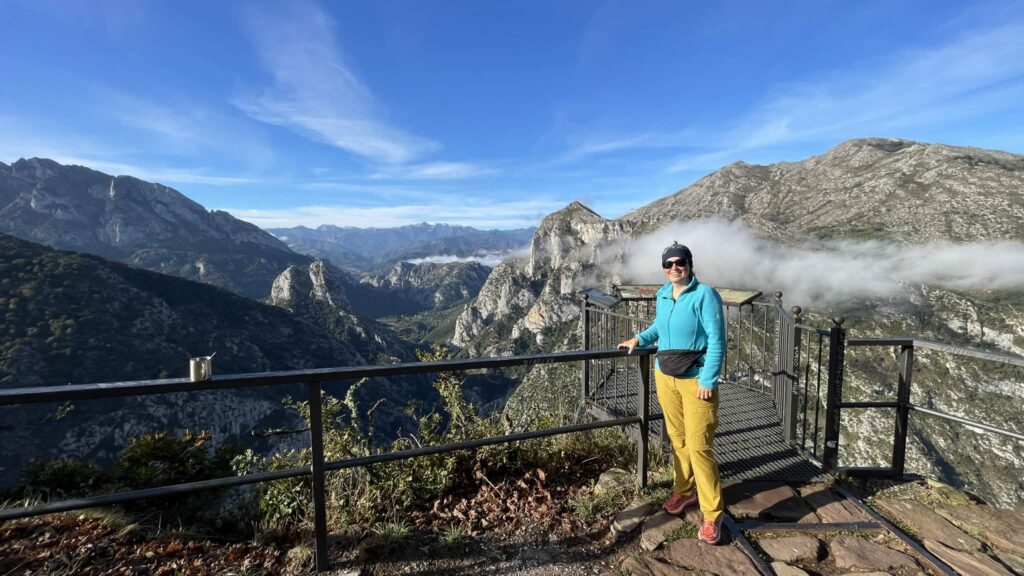
Today’s walk is simply amazing. There are plenty of elevation changes here, too, but the trails are beautiful and good. I planned to spend the night in Cabañes—here there are pilgrim albergues with gorgeous views. If I walked this route again, I would break up the stages in the same way and just enjoy hiking in the mountains.
Santa Catalina viewpoint
First I went to the Santa Catalina viewpoint which I described above. The sun was shining in the morning—this was the perfect time to see the mountains with a beautiful view. I left the village, walked a few hundred meters, and a car pulled up; the driver asked where I was going—I answered that I was heading to the viewpoint. He offered me a ride to the junction, so I rode with him for a kilometer and thanked him for the lift and for saving me the walk along the road.
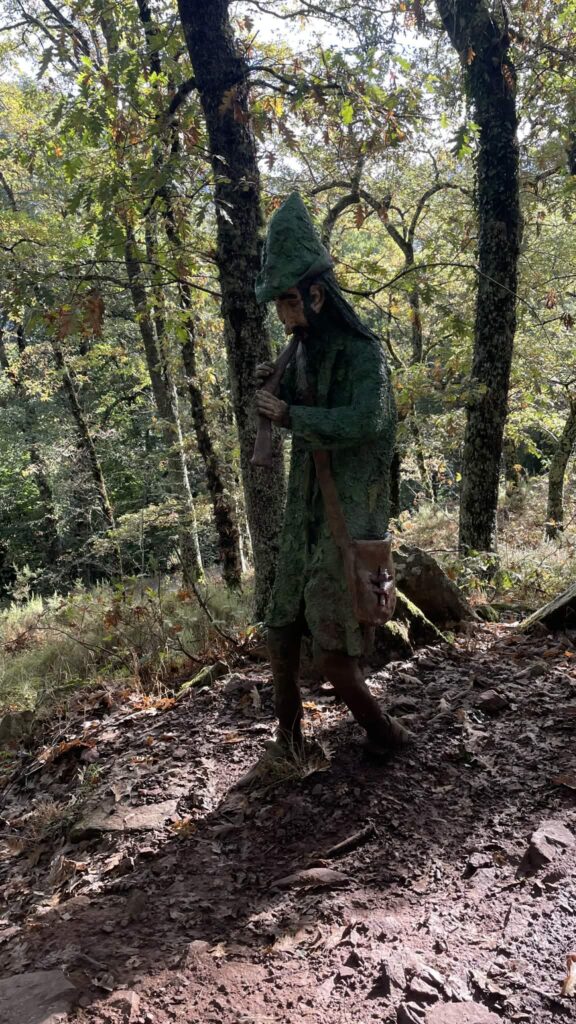
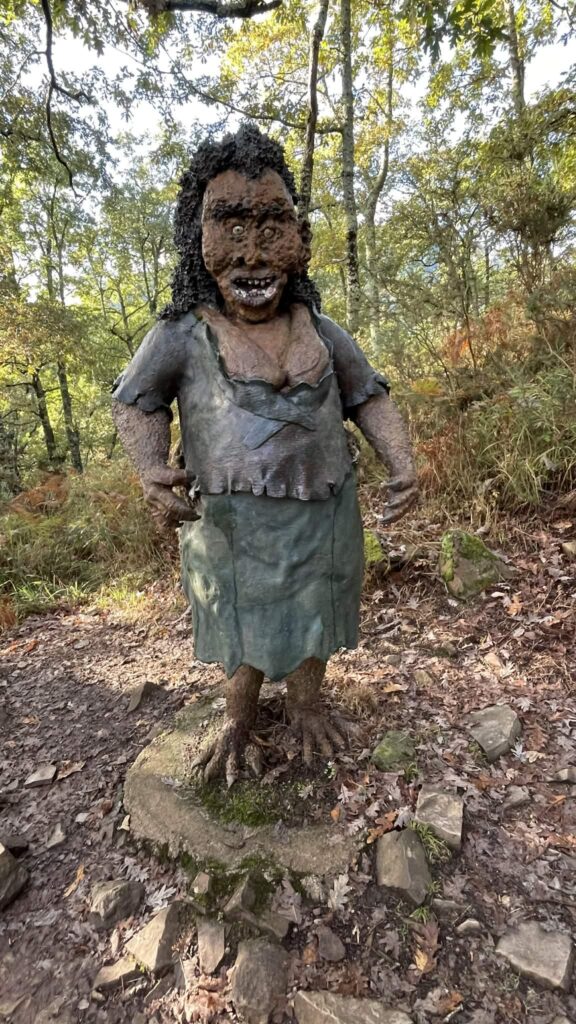
Next, the trail to the viewpoint went up a dirt road, passing a truck with tasty sandwiches and coffee. I decided to get a coffee on the way back, and went up. Along the way you’ll see various monster sculptures—these are characters from Cantabrian legends and tales. If it hadn’t been a sunny, bright day, seeing these monsters might have really scared me (sorry!).
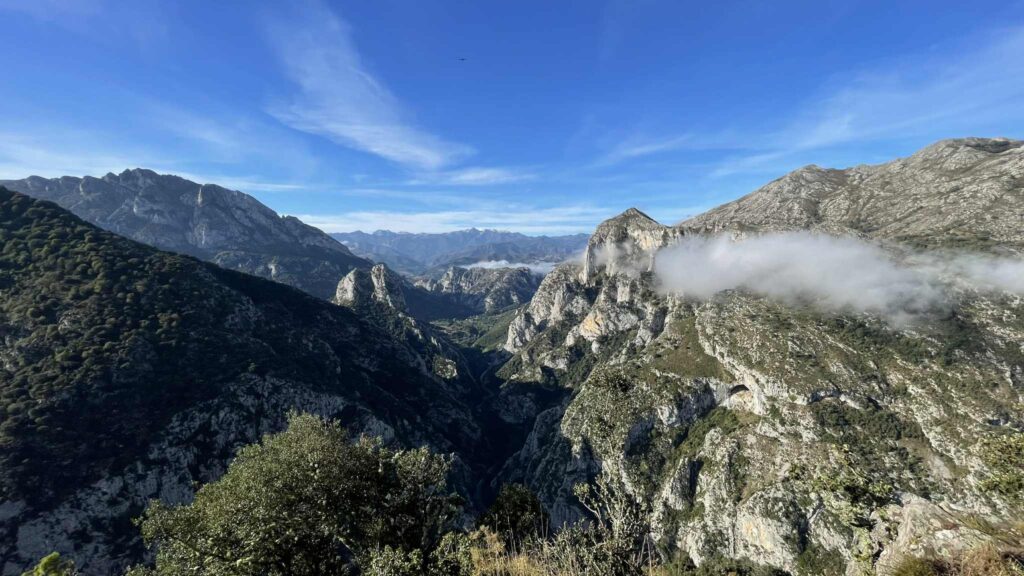
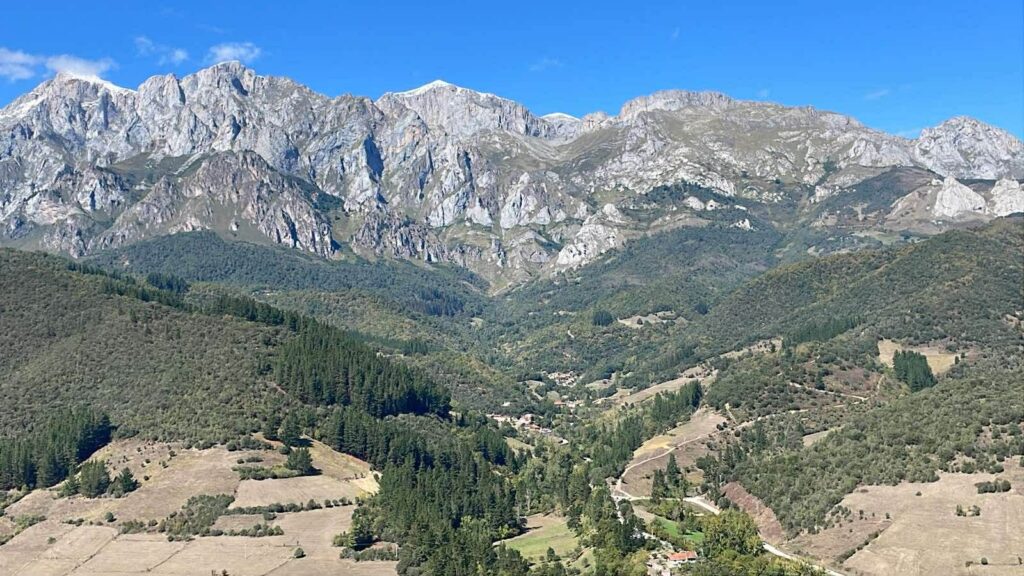
But at the top I saw this! It was truly stunning – what a beautiful panorama of the Picos de Europa and Liébana Valley opens up from the Santa Catalina viewpoint! Don’t be lazy and climb up there. Or if it’s too difficult, take a taxi from Cicera, as there is an asphalt road up and a camper parking area at the top. It’s super beautiful (as long as there are no clouds)!
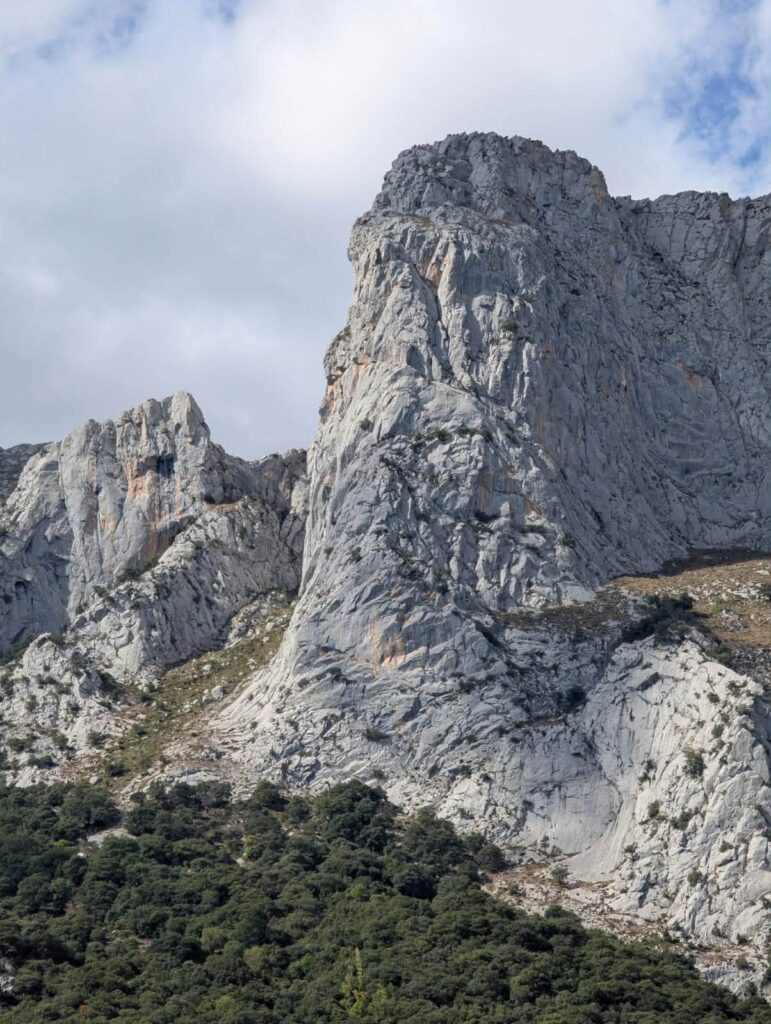
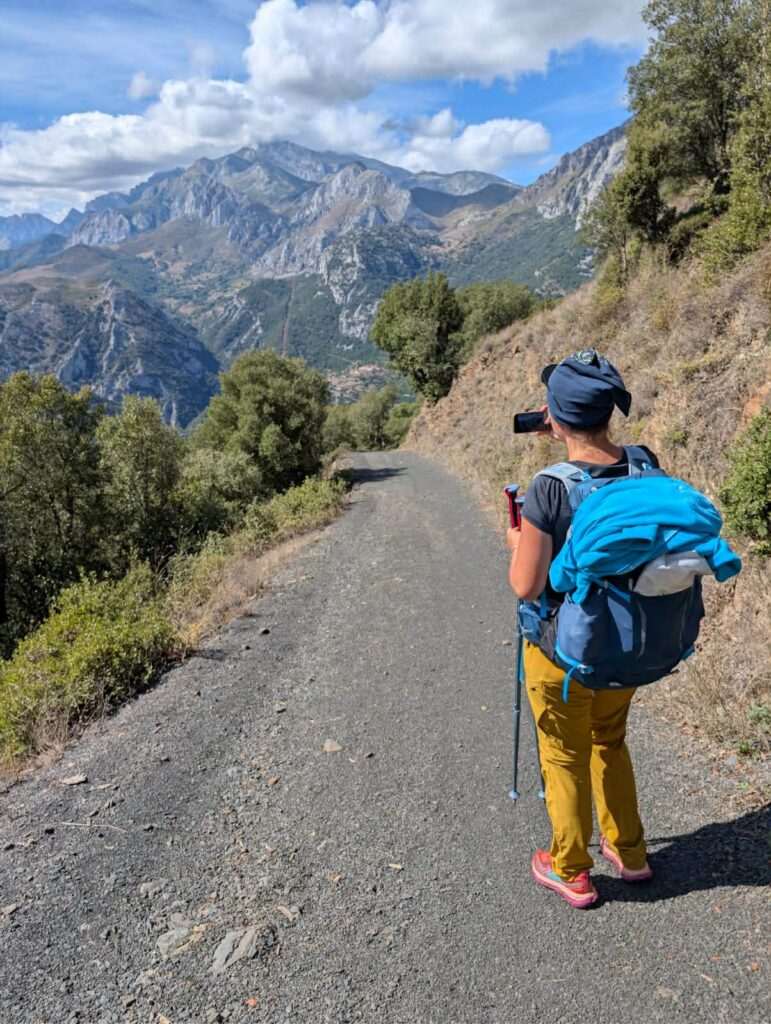
When I came down to the van with coffee and bocadillos, I had coffee there and met my hiking companions from the previous two nights in the albergue – Arno and Mikaela. I waited while they went up to the viewpoint, sipping my coffee. Then together we returned to the Lebaniego route – it’s 1 km back to Cicera and then on along the red arrows.
The way to Cabañes
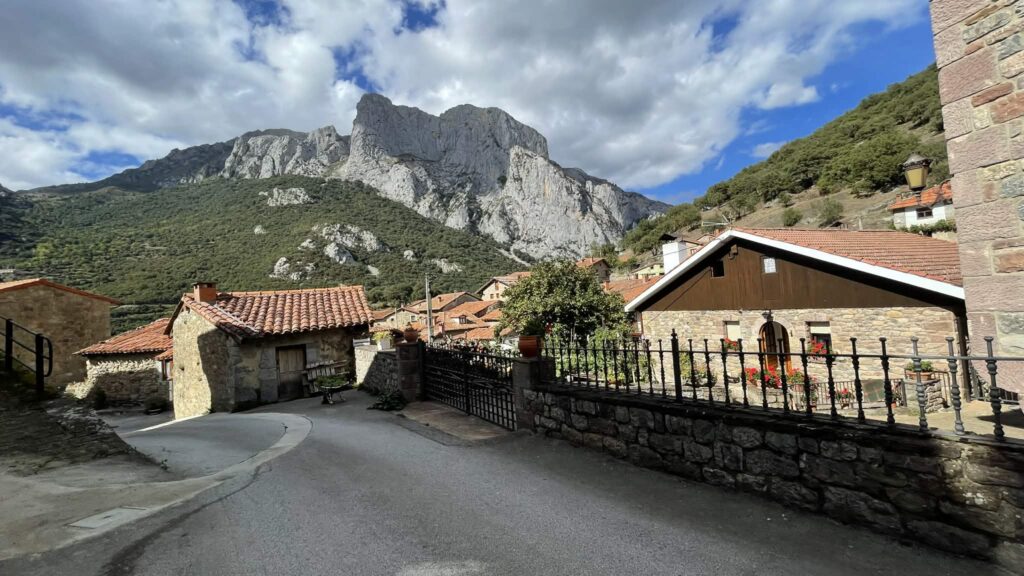
Today’s section of the Camino Lebaniego is the toughest, but the views make up for the fatigue – there are many elevation changes here, but the paths are good. Climbing up and then descending down, the three of us entered the beautiful Liébana Valley, walking through forests, admiring breathtaking rocky formations, and of course, watching the amazing griffon vultures soaring overhead for most of the day.
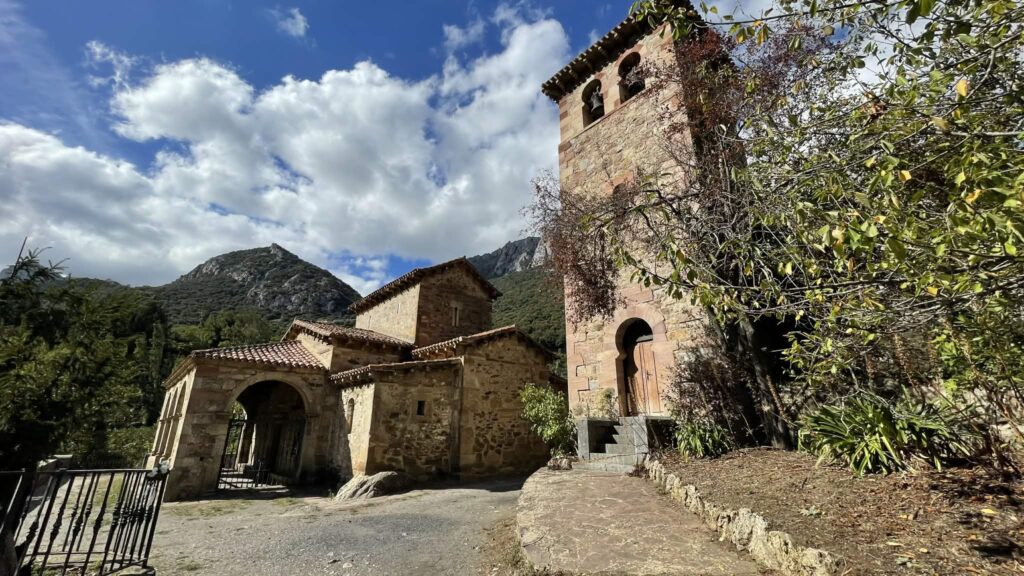
Descending to the village of Lebeña, we had breakfast with bocadillos bought from the van (very tasty, with local cheese and ham – I highly recommend buying them for 6 euros each). Then we saw one of the landmarks worth visiting – the Mozarabic church of Santa María de Lebeña, built in 925. If you’re lucky, you can look inside the church, although it was closed during my walk.
After crossing the highway and the Deva River, a new climb to Cabañes awaited us. The first option – take the official trail, a steep climb, which is rewarded with views from the village, truly a gift. The second option – take the trail along the Rubajo River, marked by a left pointer. This trail allows you to reach both Cabañes and directly Pendes. Halfway there is a fork which lets you choose the branch to Cabañes.
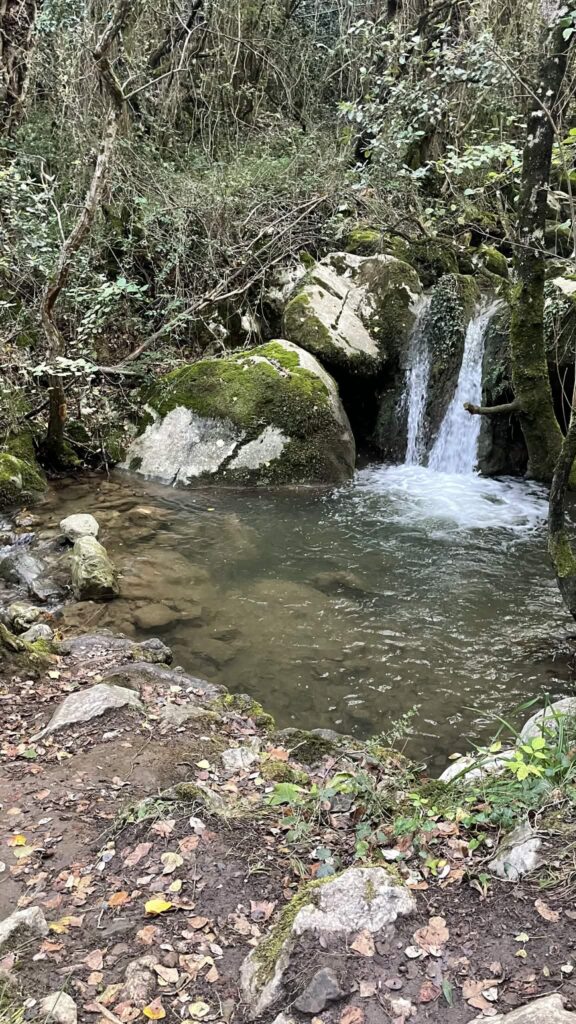
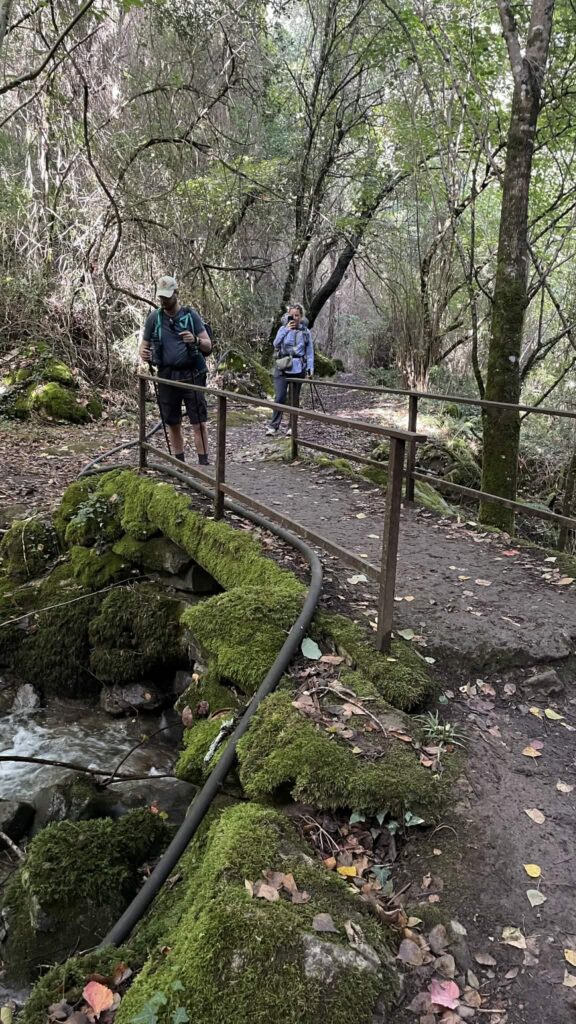
We and my companions somehow ended up by the river below. And we didn’t regret it – it was very cool and cozy here on a hot day. And we walked on a hot September day.
The last climb was, of course, quite tough, but knowing that I was about to see the albergue gave me strength. Around six in the evening, I reached the hostel with the most beautiful view of the Liébana Valley.
Cabañes
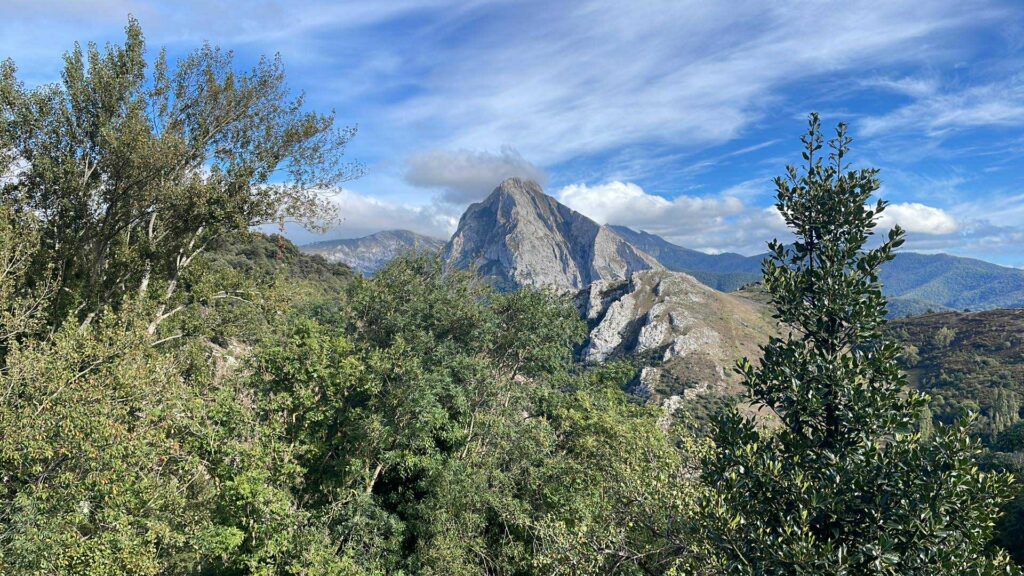
The last stop on the Camino Lebaniego route before reaching the monastery is Cabañes. It’s also a small village, but one that is located at an altitude of 549 meters above sea level, in close proximity to the Picos de Europa mountain range, a pride of northern Spain.
There is a church here dedicated to John the Baptist, and places to stay overnight. But the most interesting thing in Cabañes is, of course, the amazing views of the Picos de Europa. The walk from Cabañes to the monastery of Santo Toribio de Liébana takes about three hours on average.
Where to stay:
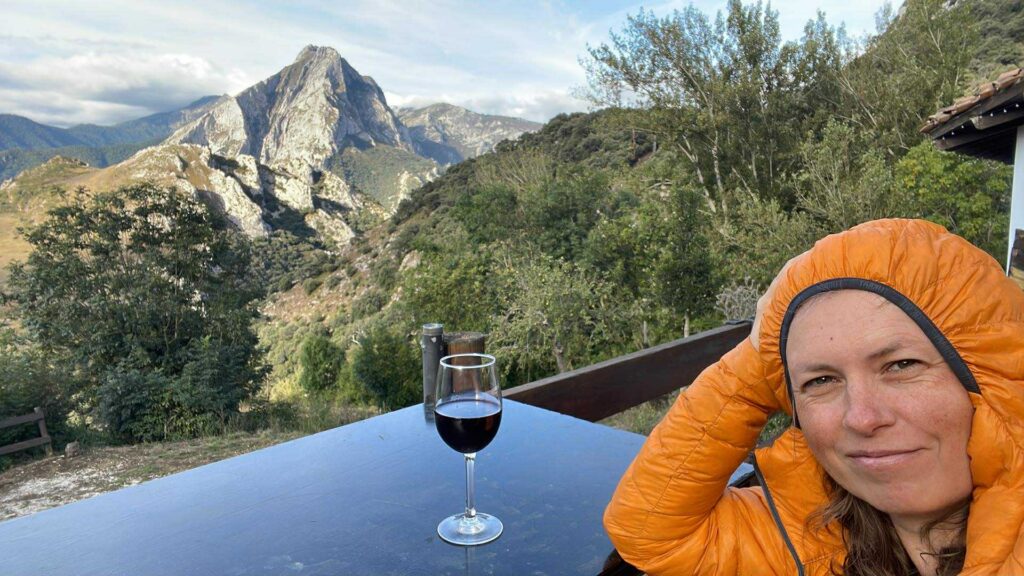
There are two albergues in Cabañes: a municipal and a private option. Both are great, and there is also a nice little rural hotel.
Municipal albergue Cabañes – cost 15 euros, the hospitalero also prepares dinner and breakfast, booking by phone +34 623 116 584.
Albergue de Cabañes – a hostel for pilgrims and hikers looking for clean beds, good food, and wonderful views from the terrace. Just an incredibly beautiful place. I booked a bed, but was given a separate room. Delicious communal dinner, getting to know the owner Dario, who treated everyone to wine, a wonderful atmosphere, breakfast in the morning, and there’s even a pool in the yard if you’re traveling in warm weather – just great for such reasonable money (22 euros + food).
Posada Cabañes – the owner is the same as in Hostel Cabañes—Dario. The hotel is located about 200 meters from Camino Lebaniego. Posada is an ideal place for couples planning to walk the Camino Lebaniego in 3, 4 days or more.
Day 4: Cabañes – Santo Toribio de Liébana Monastery
Distance: 17 kilometers
Total elevation gain: 510 m
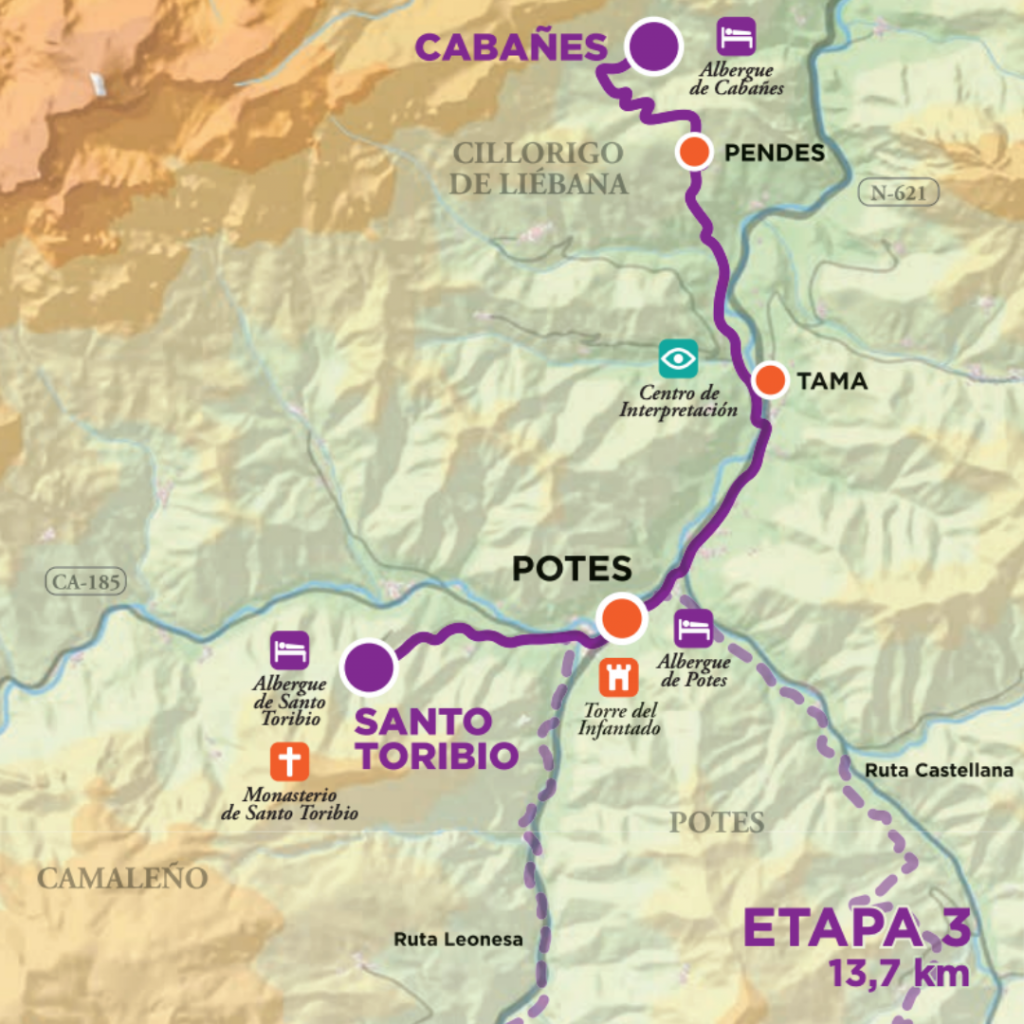
Today is the last day of Camino Lebaniego, which ends at the monastery of Santo Toribio de Liébana. Ideally, it’s best to get to the mass, which takes place every day at 12:00. For this, you need to get up earlier, but I had a communal breakfast with other pilgrims. Then Dario, the albergue owner, took a short interview for his Instagram – he communicates and asks foreign pilgrims how to make the Camino Lebaniego better so that as many people as possible walk it each year. I honestly answered – do nothing – this is the perfect route for mountain solitude lovers who want to meet the same loners out there )).
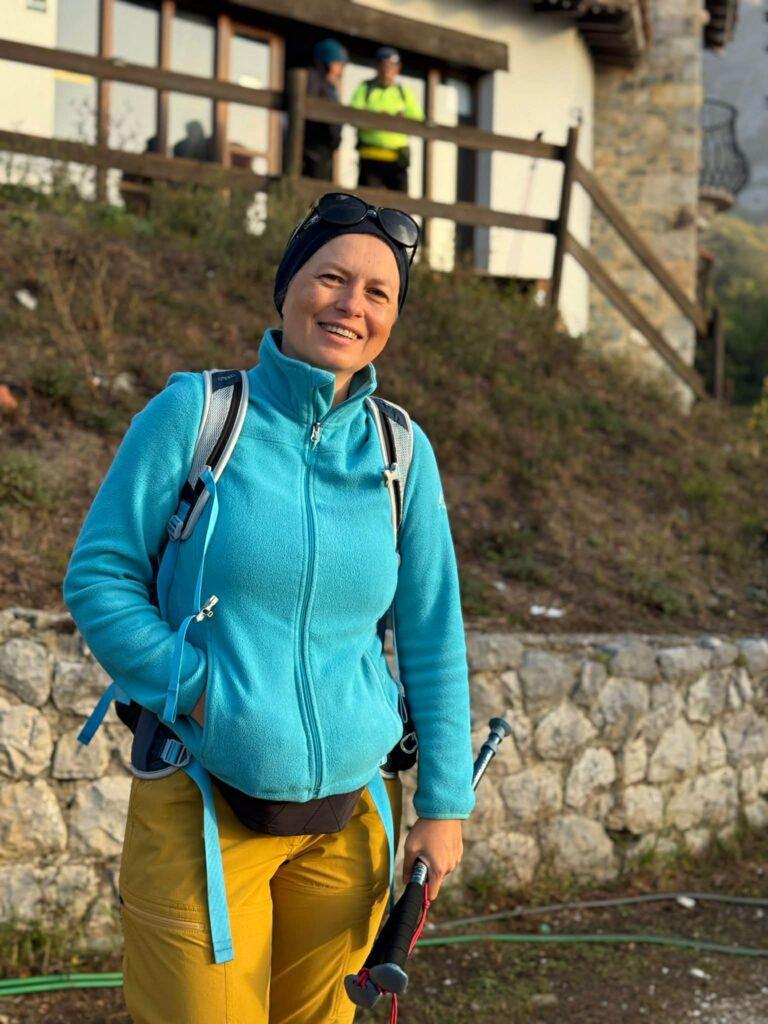
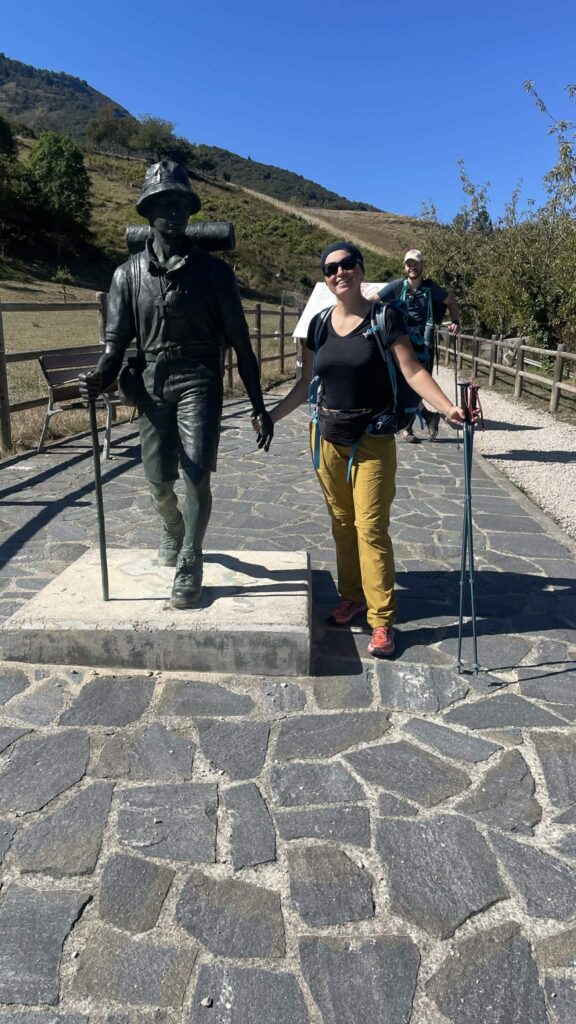
After breakfast, I hit the trail, which was covered in morning fog. My companions Arno and Mikaela stayed at the municipal albergue, I caught up with them about 15 minutes after the start. We walked through the fog like little hedgehogs looking for a pony.
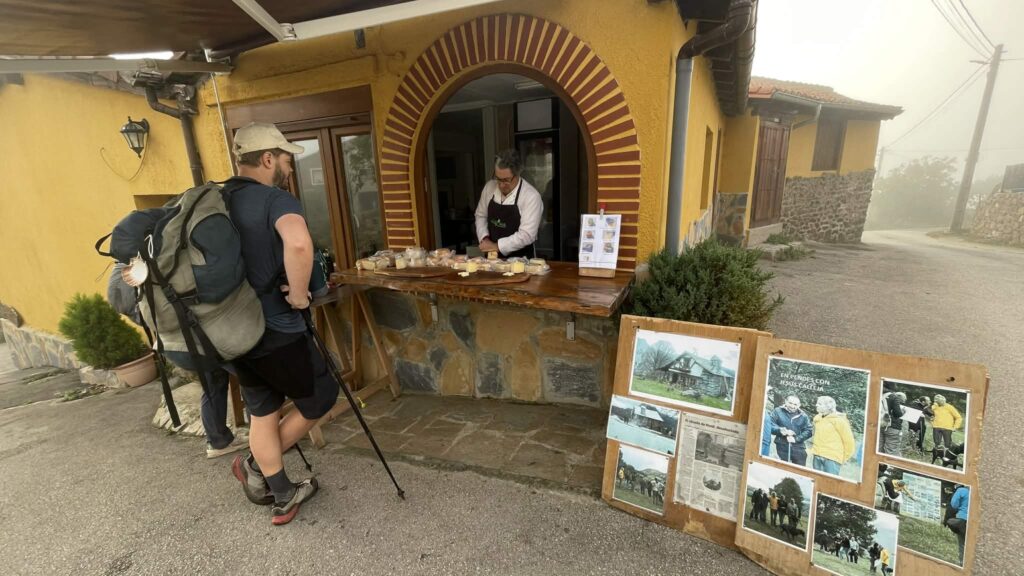
At the entrance to the village of Pendes we saw a small cheese shop and the owner of the cheese dairy at the counter. He treated us to a tasting of local cheeses (delicious), we bought a piece of smoked goat cheese (which we later forgot to eat in the cafe). Don’t miss this place – the cheese shop is open daily.
The road was a gradual descent all the way – it took us two hours to reach the town of Potes.
Potes – gateway to the Picos de Europa
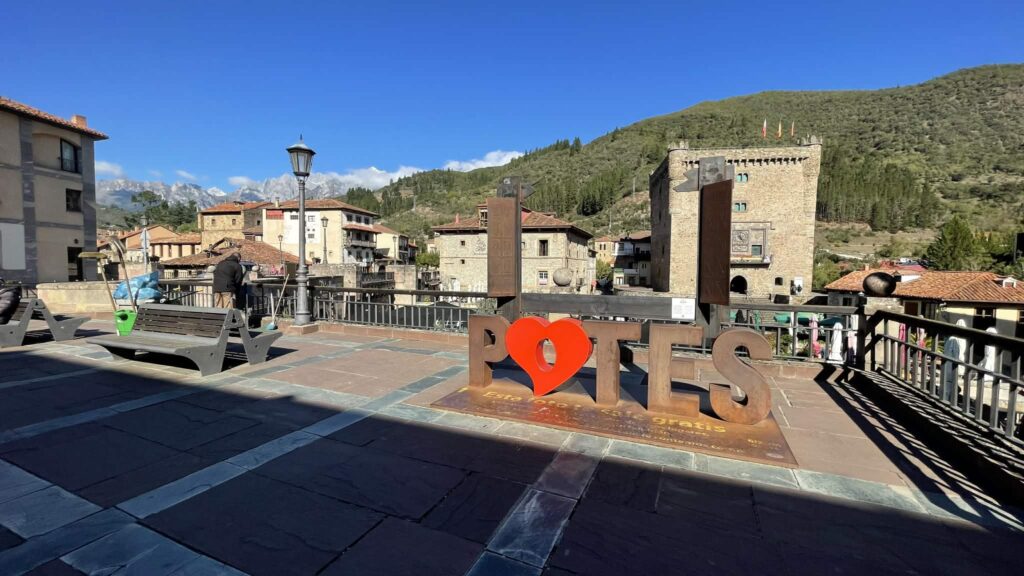
Potes is a popular town in its own right, and if you decide to stay the night here after finishing the Camino, I recommend booking accommodation here in advance, especially in summer months.
Potes has many accommodation options; here are our favorites. We recommend staying at least one night to explore the area, and if you’re lucky, it might even be market day.
In Potes we strolled around the town a bit – it’s very charming and touristy, but I would’ve stayed here overnight if I hadn’t had further plans after the Camino. Many nice restaurants and cafes, great views of the Picos de Europa, and several preserved historical landmarks in the town.
Where to stay:
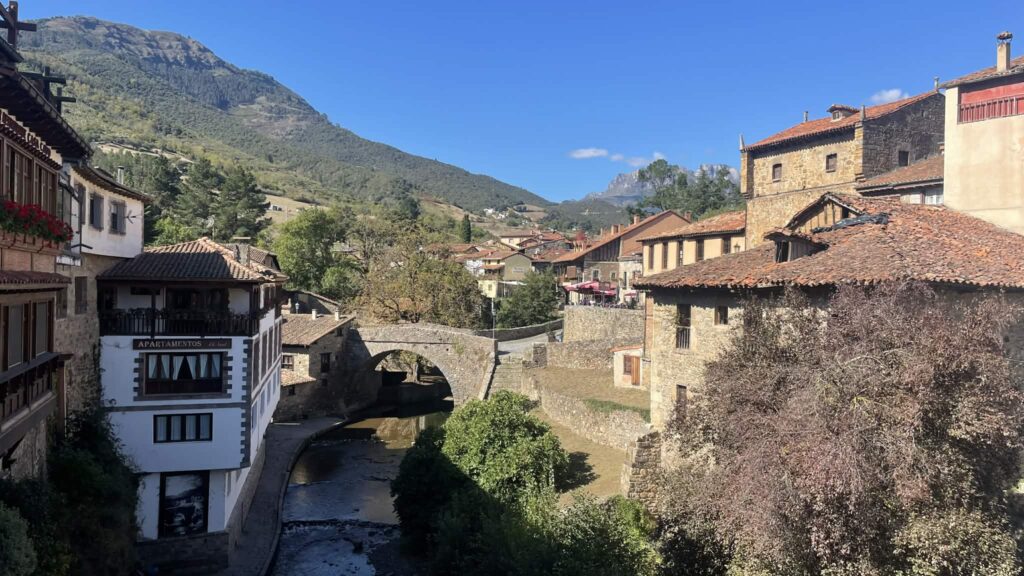
There is also a pilgrims’ albergue in the town, which was closed during my trip (that’s why I stayed overnight in Cabañes). If it’s open – you can stay here. The Potes hostel is run by Centro de Estudios Lebaniegos, you can contact the pilgrims’ office to request the key. The hostel is located in a great place from where you can see the impressive Torre del Infantado tower, the most symbolic building in Potes and one of the most notable in Cantabria, which creates a wonderful panorama with the Picos de Europa in the background.
- Albergue de peregrinos de Potes: Phone +34 942 738 126
Hostería La Antigua – clean rooms with good beds, there are rooms with windows facing the mountains, and the price is very reasonable for a tourist town.
Maile Apartamentos – modern clean apartments with mountain views. Ideal location, three supermarkets and many restaurants nearby, laundry/dryer in the building (5 euros for washing / 2 euros for drying – coins only).
Santo Toribio Monastery
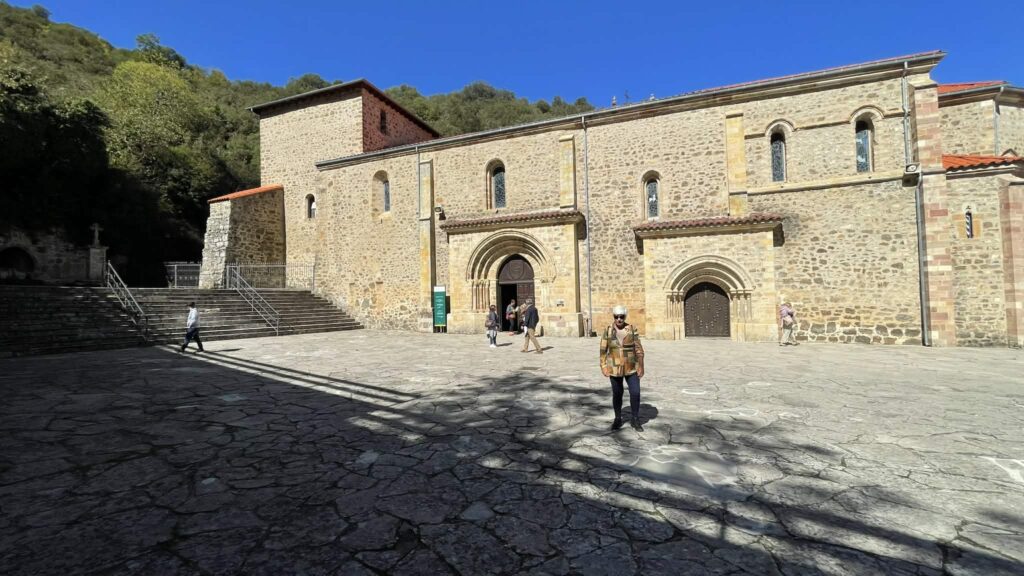
From Potes we headed to the Santo Toribio Monastery to see the Holy Cross (Lignum Crucis). The monastery dates from the 13th century (restored in the 18th century) in classic Gothic and Baroque style.
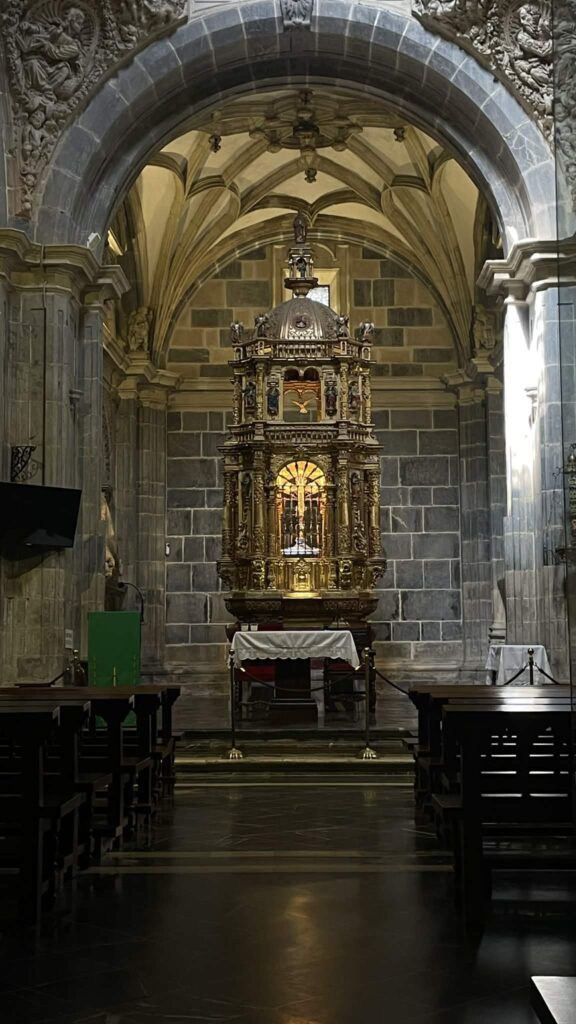
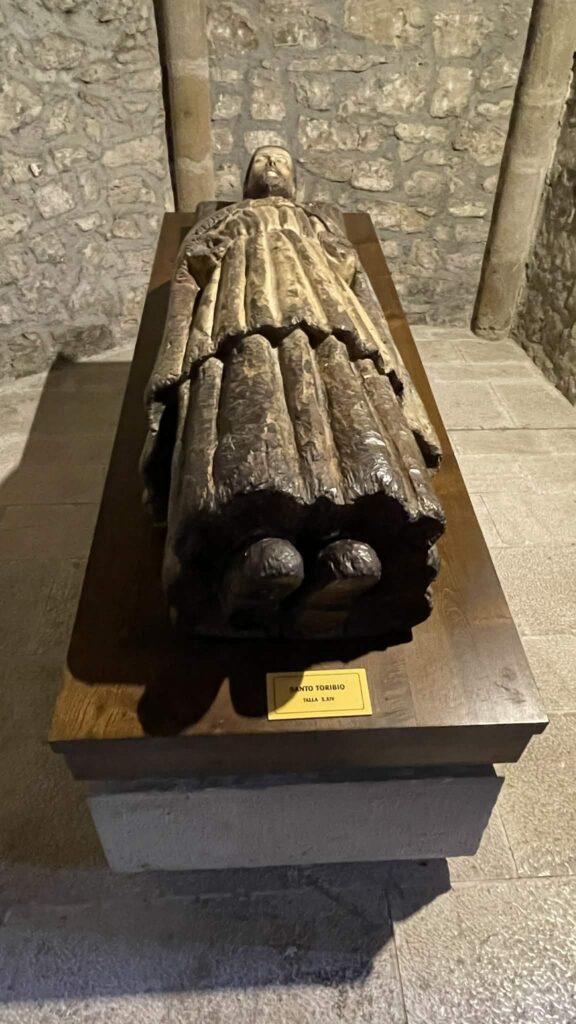
Here you will find the Gate of Forgiveness (Puerta del Perdón) from the 15th century, which opens every year on April 16. That is, whenever April 16 falls on a Sunday, the anniversary of the birth of the monk Santo Toribio, a historical figure known for bringing the Holy Cross (Lignum Crucis) to Liébana. This relic is considered the largest remaining piece of the True Cross.
The monastery holds mass daily at 12:00 and issues the Lebaniega certificate confirming completion of the Camino Lebaniego.
The Santo Toribio Monastery also has a pilgrims’ hostel (it was closed during my stay). This is the starting point of the Vadiniense route, which leads to Mansilla de las Mulas, from where you can connect to the French Way to Santiago de Compostela.
Conclusions about my Camino Lebaniego
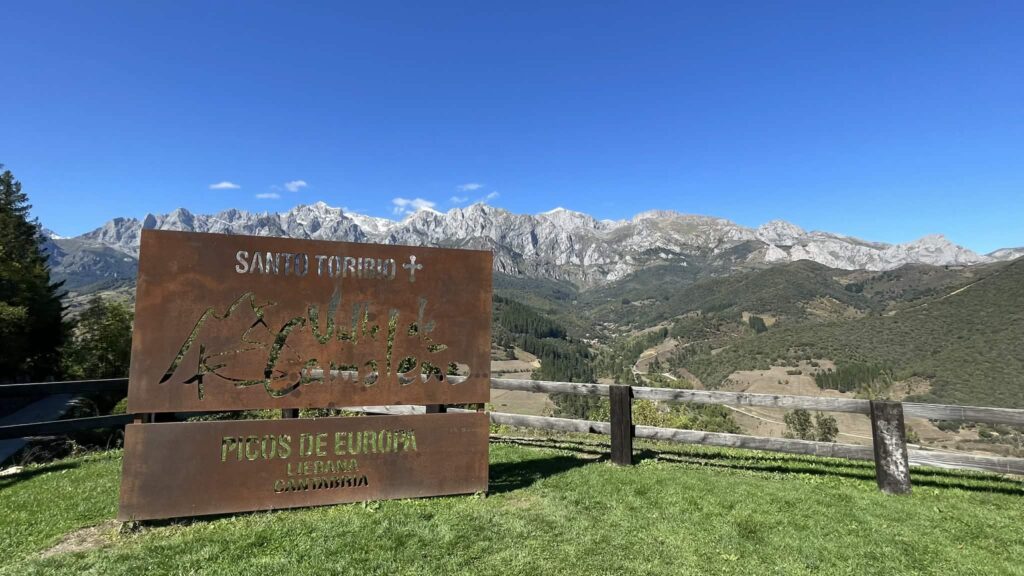
I really enjoyed this Camino route, although for me, 4 days is actually very little. I like longer routes—to really feel the way, I need to walk for at least two weeks.
It seems to me this route can be an ideal conclusion after a two-week first section of the Camino del Norte. You’ll get a certificate, if it’s important to you. And whichever way you look at it, there is a certain logical ending. The finale. And next year or another time you can continue the Norte from San Vicente de la Barquera.
But Lebaniego was a nice start to another hiking journey across northern Spain, and I was able to fully enjoy the mountains of Cantabria and Asturias, the ocean and the coastal towns, to see the mountains and the ocean horizon – I will write about this separately, maybe my journey will inspire you as well.
Who will enjoy Camino Lebaniego?
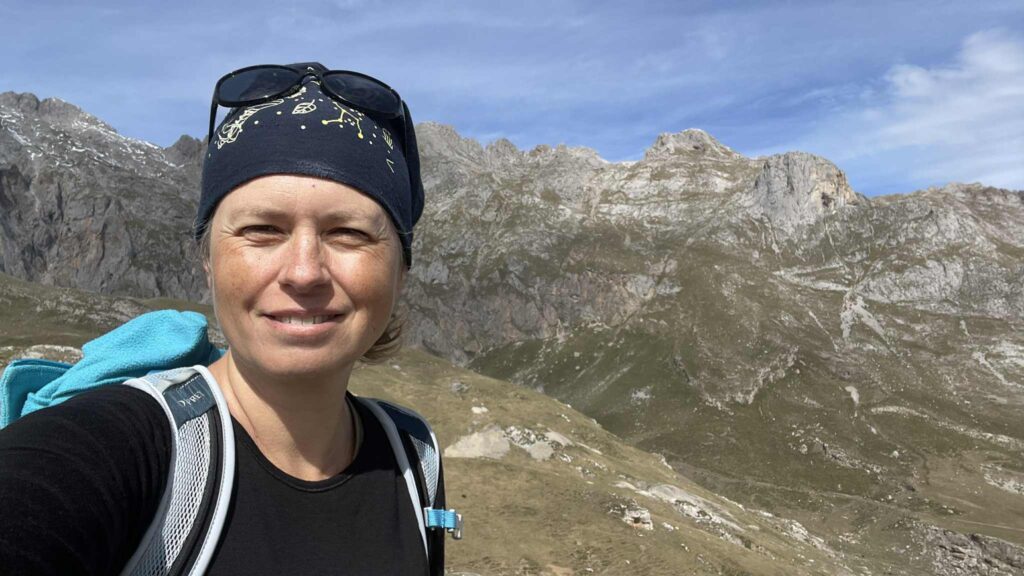
If you are looking for the Camino experience that will take you through stunning natural landscapes, and you are ready to walk independently, then Camino Lebaniego should be on your wish list.
Yes, this walk is not for the faint-hearted, there are some serious climbs here, but the trail is well marked and maintained. In return for your effort, you’ll get breathtaking views, touch incredible history, taste delicious food, and will definitely feel a physical challenge.
Camino Lebaniego is a hidden gem waiting to be discovered by adventurous souls who want to explore the beauty and diversity of this wonderful region of Spain.
What you’ll need for traveling in Spain
- Don’t skimp on health insurance – it’s convenient to buy it online on the HotlineFinance portal. Medical care in Spain is expensive, but for a small amount you can get insurance with 30,000 Euro coverage.
- If I don’t stay in albergues, I book hostels or guesthouses via Booking.com. I do this in the evening for the next day.
- I buy bus tickets in Spain on the website of the Spanish carrier Alsa.
- Train tickets in Spain – on the website of the Spanish railway company Renfe.
Useful articles and links:
- Via Francigena – my experience of walking from Lucca to Rome
- Rota Vicentina – hiking along the ocean
- Camino de Santiago – how to prepare for the pilgrims’ way?
- My Camino Portugues – the Portuguese route from Porto along the ocean