
Budapest in three days – what to see and do in winter: walks, baths, ruin bars, boat trip, viewpoints.
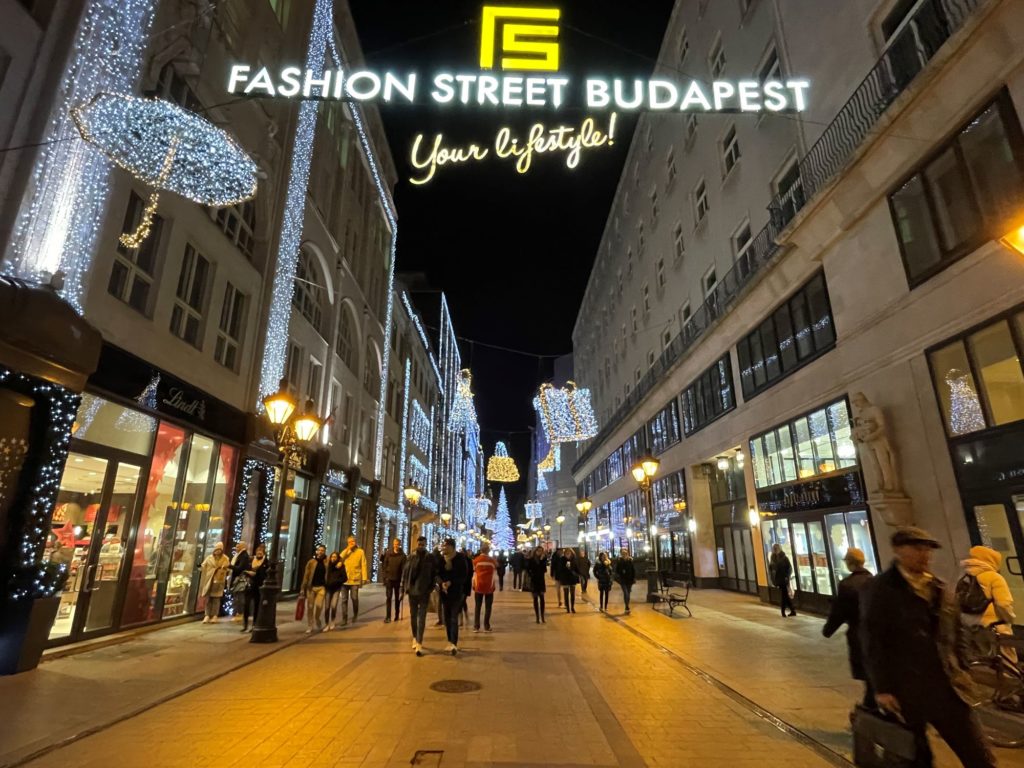
I was in Budapest in mid-November, but the Christmas tree on Fashion Street is already decorated, the fountain in Vörösmarty Square has been packed away for the winter and fair stalls are being set up. And the frosty sun is bright outside. Pretty much practically winter, which is where we found ourselves in the last days of fall.
Recommend you to read: Where to stay in Budapest – the best areas for tourists
Transited Hungary five times – first time to Budapest
What did I know about Hungary before I went to Budapest?
– Hungarians are descendants of the Huns
– they make Ikarus buses here.
– A Hungarian dude named Rubik invented the colored cube.
– the main folk dance, the Czardasz
– the main meal is goulash and paprikash.
– the main wine is Tokay.
– There are thermal springs all over the country, where tourists and locals pamper themselves.
I’ve been to Hungary five times – passing through. Of course I know a bit more about Hungary than what I wrote above. And about the Austro-Hungarian Empire and its historical vicissitudes, and about the variety of wines, and also about the fact that the favorite operettas “Silva” and “Circus Princess” were written by Hungarian composer Imre Kalman. But somehow I never got to Hungary, specifically Budapest (not counting its county line, which we race on at least once a year).
Corrected. Went (been to Budapest 5 times in a year). I tell you what I saw there, what I liked and what I want to repeat.
How to get to Budapest

In the fall and winter, flying to Budapest can cost pennies if you buy your ticket at least a month in advance. Wizzair and Ryanair fly – and they compete with each other on prices and so there are often cheap tickets available.
I bought Ryanair from Odessa to Budapest for 28 Euros round trip with small hand luggage. And you don’t need a big suitcase for three days there.
For those who are afraid of flying – Ukrzaliznytsia has re-launched the train from Mukacheve to Budapest. This pleasure costs more than a flight, but perhaps someone will find this option more convenient.

There is a 100E bus from the airport to the city – the fare is 2200 HUF (3.5 Euros). It’s best to walk around the city, but there are buses, streetcars and one of the oldest subways in Europe. The cost of a single ticket is 350 HUF (1 Euro). Keep in mind that a single-use ticket is only valid for one mode of transportation. That is, if you get on a streetcar, go two stops and need to make a change – you need to buy a new ticket!
If you need a long ride from one part of the city to another, you can buy a day ticket and ride all modes of transportation – for 2,500 HUF (6.7 Euros). Other fares and ticket types on the website of the Budapest transportation company. Tickets are sold at the airport, at bus stops in vending machines, it is obligatory to validate in the validator.
Budapest sights and walks

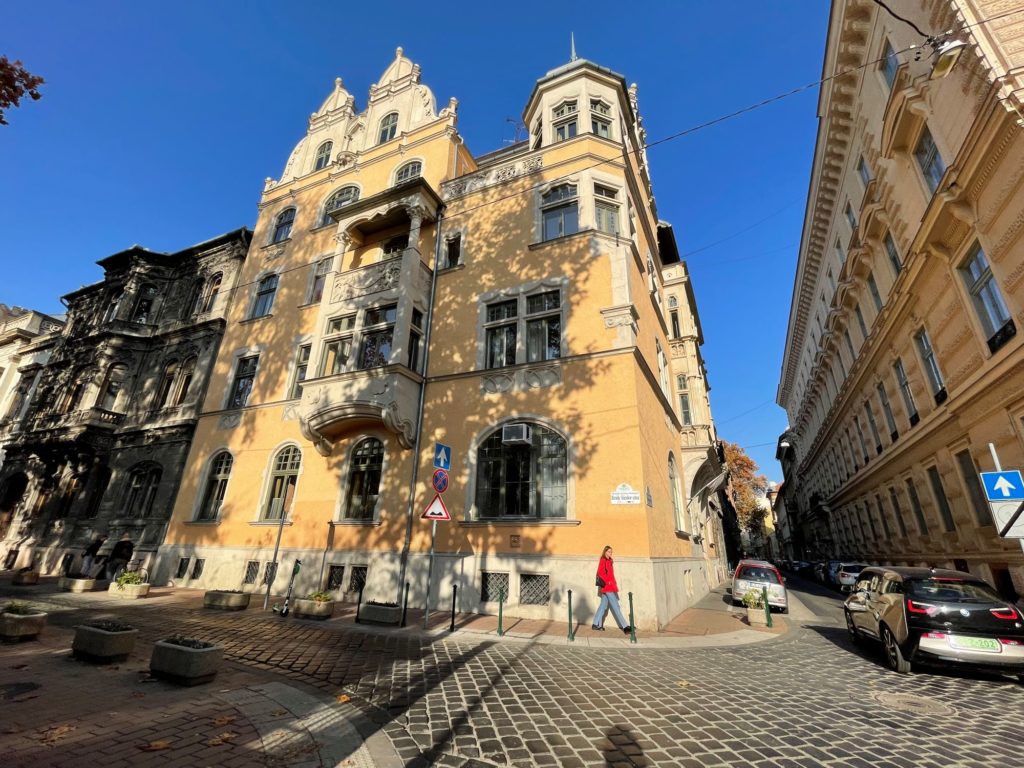
So what to do in Budapest in the fall and winter? Walk around the city and marvel at the eclecticism of styles, from Austro-Hungarian Art Nouveau to Socialist Realism. The city is divided into two parts, Buda and Pest. Buda is up in the hills, quiet and unhurried – it’s just a pleasure to stroll through the parks and winding streets along the beautiful mansions. Pest is flat and built up with buildings from different eras.
Viewpoints of Buda and Pest
To see how Pest stretches from the Danube to the east, it’s best to go to Buda. There are many observation platforms from which you can see the Danube, bridges and Pest, which is located on the flat part of Budapest.
Gellert Hill
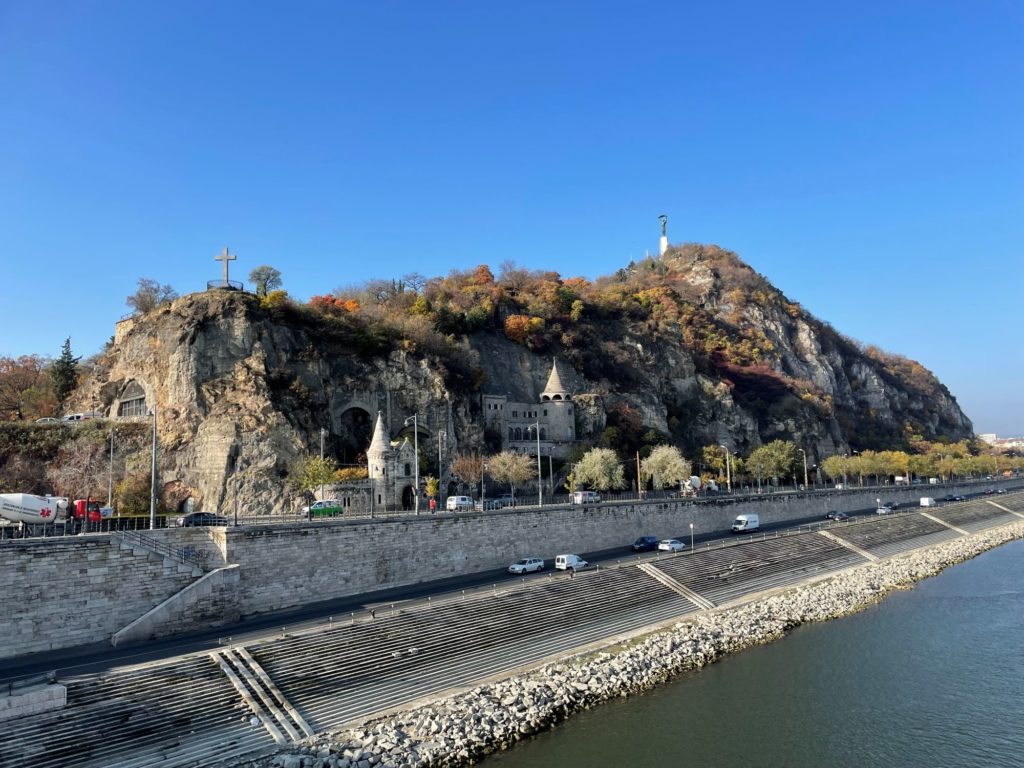
Gellert Hill is next to the “green bridge”, the Freedom Bridge, which is a pleasant walk across the Danube. The Statue of Liberty stands on a hill, and paths lead to it through the park, with many observation decks overlooking the Green Bridge, the Elizabeth Bridge, the Pest and the Danube. Everything is free – just your strength and willingness to walk up a bit.

There are several lookouts on Gellert Hill:
- The cross is the lowest observation deck
- The Liberty Monument is the topmost observation deck
- Citadel – lined in a semicircle above the Citadel fortress
- Buda Monument meets Pest
- The statue of St. Gellert
Buda Hill and Castle

In fact, it is the neighboring hill that houses Buda Castle, the former royal residence.
The beautiful building is a UNESCO World Heritage Site and houses the Hungarian National Gallery, the Castle Museum and the Széchenyi National Library. For lovers of cultural vacations – the best!
The observation deck near the palace can be reached by cable car if desired. Leading to the Royal Palace is the Széchenyi Chain Bridge, which was under renovation in November 2021. So we took the boat for 550 forints, which replaces the bridge as a ferry for pedestrians.
Fisherman’s Bastion
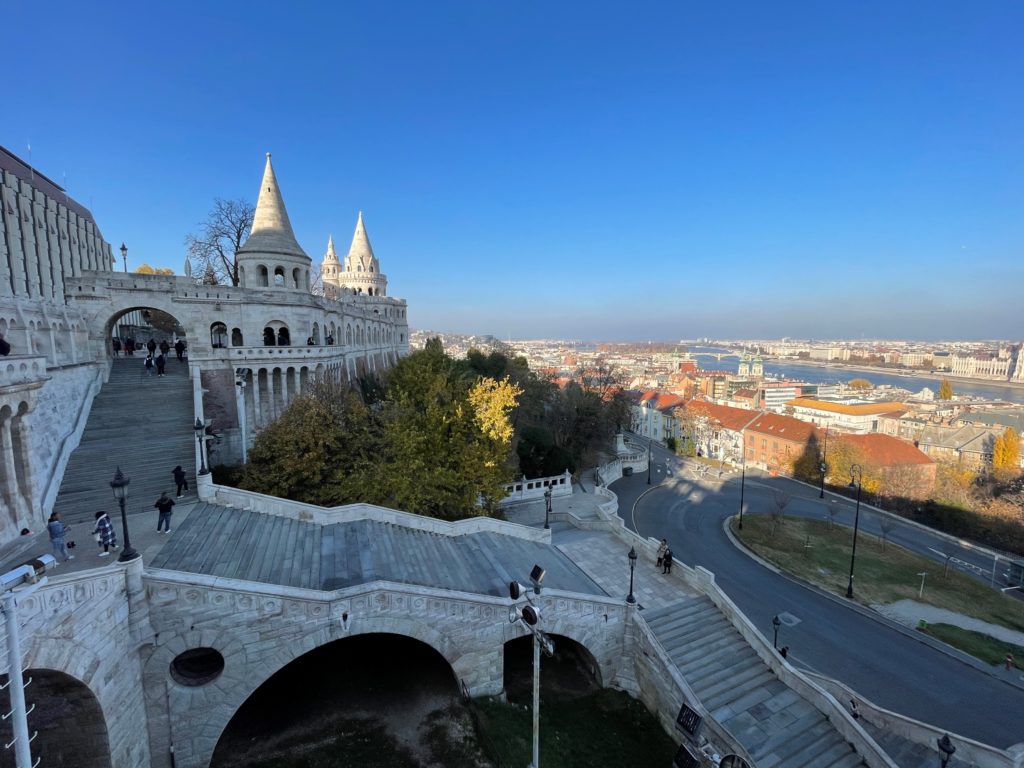
Very beautiful place and with free entrance to the territory. What is Fisherman’s Bastion? This architectural structure was built between 1895 and 1902 to commemorate the millennium of the Hungarian state. The Bastion is a Neo-Gothic style viewing terrace located on the high bank of the Danube in Buda, on Castle Hill.

Why come here? It offers the best view of the Parliament and the bridges on the Danube. Climb up one of the ornate towers and take a look at the ships. Go around St. Matyas Church, bypass St. Trinity Square, and stop by one of Budapest’s most famous pastry shops, Ruszwurm, which is 200 years old. A little farther away is the promenade Arpad Tóth – from here you can see Buda from the hill, its houses and parks as if in the palm of your hand.
St. Stephen’s Basilica
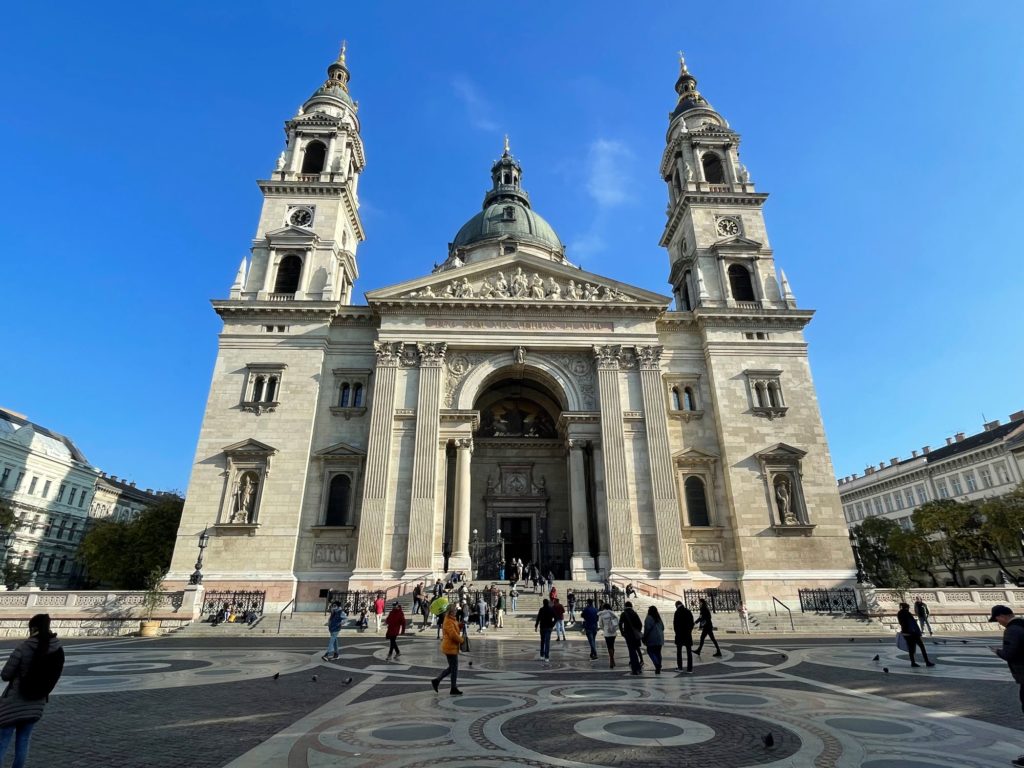
This viewpoint is already on the Pest side, the largest cathedral in Budapest, with a capacity of up to 8,500 people. It has a great view of Budapest from its observation tower, too. The cost of a ticket to the observation deck is 1500 HUF (cash only!!!).
At the same time, see the cathedral inside – the relics of the right hand of St. Stephen, the patron saint of the church and the first king of Hungary, are kept here in a gilded chest. If you are indifferent to the holy relics, just stroll around the cathedral marveling at the monumental architecture of the neoclassical era. The main beauty of the basilica can be seen with your head held up high. It is a 96-meter high dome decorated with decorative religious bas-reliefs on the inside.
Entrance to the cathedral is kind of free, but for donation (like how much you give, but not less than 200 HUF – this is strictly monitored by the guard and strongly recommends to throw a penny in the box for donations).
Prices for tours and tickets on the basilica’s website.
Jewish Quarter
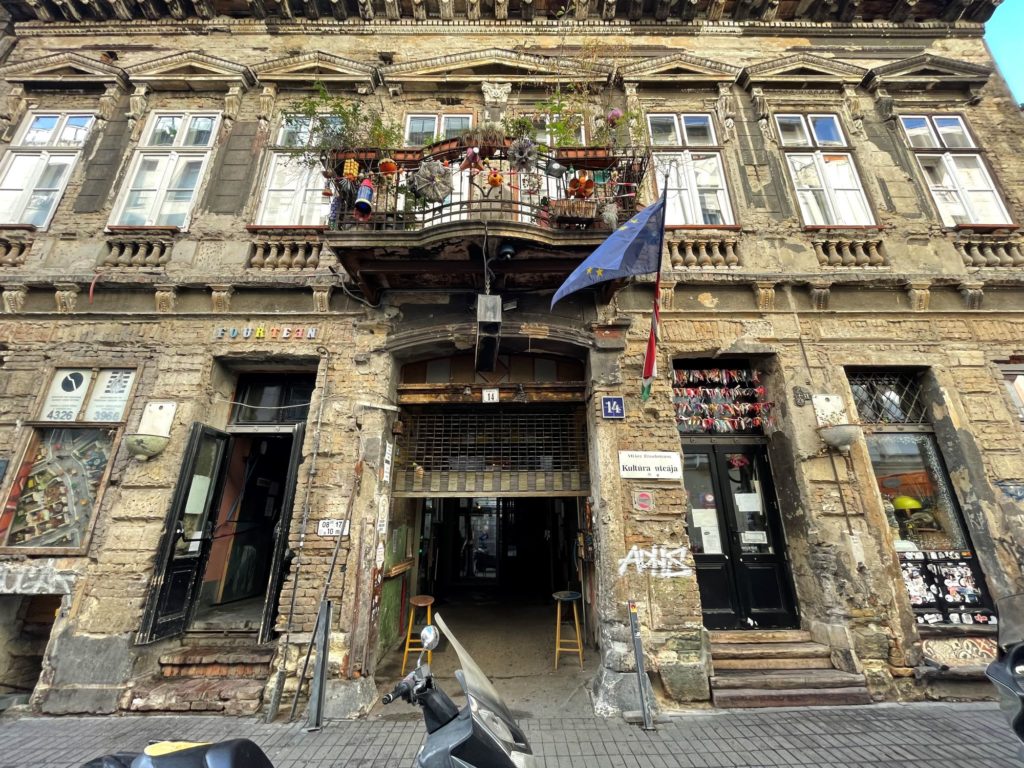
We continue our walk around the city and go to the busiest quarter of Budapest – the Jewish Quarter (Erzsebetvaros). Tens of thousands of Jews lived in the Jewish Quarter and beyond before World War II. In 1944 there was a Jewish ghetto here, where about 70,000 people were kept.
There is a heartbreaking monument created by Jan Togay and Gyula Power on the banks of the Danube, commemorating the murder of 3,500 civilians, including 800 Jews in Budapest during World War II. You should remember this and come to such places not only for the sake of a tourist photo.

There are a number of Jewish synagogues beautifully preserved here, decorated in the Moorish style – very beautiful, especially when lit up at night. The largest is the Tobacco Synagogue, open to tourists, tickets and schedule on the synagogue website. . And around the corner is another synagogue on Rumbach Street, and another three blocks away. Kazinczy Street Synagogue. .
And the Jewish Quarter has also become an epicenter of restaurants and bars, trendy cafes and ruin pubs. The place is buzzing in the evening, especially on Friday and Saturday nights, and in the morning, the narrow sidewalks are kerched from urine and whatever over-drunk bar and nightclub goers give off. But despite this downside, there are a lot of cool establishments here that I’d like to highlight separately.
The ruin bars of Budapest
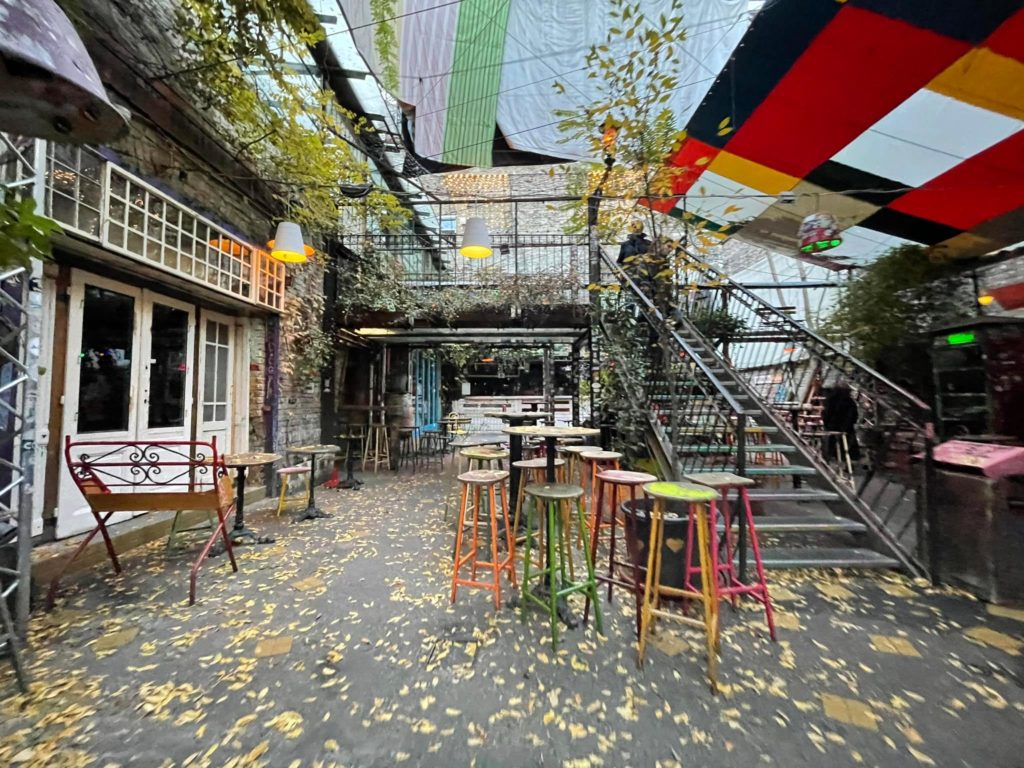
Take a huge dilapidated building with an open courtyard and a labyrinth of rooms, decorate it with eclectic furniture, colorful artwork and junk from communist Hungary, some old bathtubs, floor lamps and other stuff from the dump – you get Budapest’s most famous (and most atmospheric) “ruin bar” Szimpla Kert (Kazinczy u. 14).

It opened in 2004 and started the fashion for ruin bars. After that came others, such as Instant-Fogas (Akácfa u. 51), a youthful ruin bar and eight-bar club that hosts Fogas Ház parties.

Ruin bars offer snacks, but you don’t come here for the food. And for atmosphere and booze, there are beers, tinctures, cocktails and wine. Also music, often live concerts, and of course hanging out. If you decide to try something local and original – order Unicum – it is a traditional Hungarian herbal liqueur, the taste of which you will never forget )))))
Restaurants, cafes and street food in Budapest
Oh, Budapest was a real eye-opener for me in terms of gastronomy. I was a little apprehensive about the greasy Hungarian cuisine – I don’t like that kind of thing and it’s not good for my health. But there are so many restaurants and cafes in the Jewish Quarter with cuisines from different countries and peoples that you don’t have to eat goulash every day. all you have to do is try it and call it a day.
But there are hummus places, burger places, pizzerias, Mediterranean and oriental restaurants. In short – if you want, you can even find borscht and cheesecakes, but we can eat that at home.
I’ll recommend places where it was delicious and inexpensive (although everywhere in Budapest has democratic prices).
Coffee and breakfast
à table! (Madách Imre út 1) – the breakfasts here are amazing! is a chain of French coffee shops, many of them in Budapest. We had breakfast here at 8am on Saturday morning when everything was still closed. The location is close to the 100E bus stop to the airport. It’s very convenient to have a breakfast of goose foie gras, croissants with ham or just a cup of coffee before heading to the airport. And it’s delicious!
You can just have a coffee and croissant at any bakery or strudel shop. We bought strudel and takeaway coffee at Strudel Home caffe vergnanno 1882 (Wesselényi u. 33), but despite great reviews – nothing special.
Street food and markets in Budapest

If you want to grab a bite to eat, before coming to Szimpla Kert, check out the neighboring soup bar Bors Gastro Bar – they pour soups directly into glasses. And 24-hour snacks in the neighboring courtyard Street Food Karavan with a bunch of food trucks selling everything from goulash, to avocado sandwiches and traditional pastries – kürtöşkalac.
Oh, there’s a lot of it and it’s different. First of all, it’s Turkish kebab, shawarma and dener – delicious, cheap and filling. A portion of shavukha is 900 HUF(2.5 Euros). By the way, it’s delicious – we bought it to compare it with our shawarma )))) And also Greek Gyros – the same price and it is everywhere.
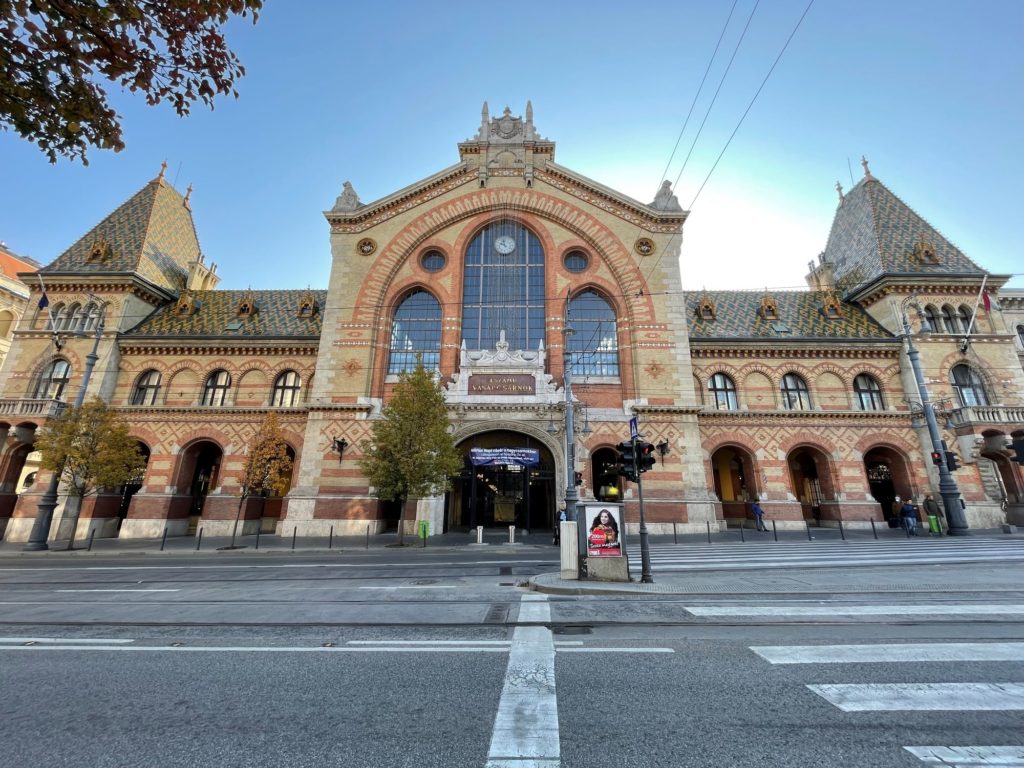
Another place where you can grab a quick bite of goulash and langos is the Big Covered Market (Vámház krt. 1-3), located by the Freedom Bridge on the Pest side. It’s a restored neo-Gothic-style arcade where you can eat and also buy souvenirs, local produce and handicrafts. The place is touristy, but the building is beautiful.

Speaking of kürtöškaláč – aka Czech trdlník, aka Romanian Cozonacul secuiesc, a traditional cylindrical-shaped pastry cooked usually over an open fire. All the campers love it by a scary amount (except me). Price for an empty one without stuffing from 1000 HUF to 1800 HUF (2.75-5 Euros).
Langosz is a traditional Hungarian appetizer, a deep-fried disc-shaped pancake usually covered with cream cheese and garlic, bolognese sauce or herbs and salt. Best to buy it from street vendors, they say it’s good for hangovers (I don’t know, haven’t drank that much). The price depends on the stuffing – from 1,000 HUF to 1,500 HUF (2.75-4 Euros).
Where to have lunch and dinner in cafes and restaurants in Budapest

Drum Café (Dob utca, 2) – Hungarian cuisine at ultra-democratic prices. Huge portions of goulash (500ml pot), paprikash and Hungarian fried pancake with filling – langash. And a hundred and fifty dishes from a thick menu where each dish is accompanied by a picture. We went twice to try some Hungarian dishes – tasty, gourmet, the bill for two with wine or beer – 15 Euros. But alas, it’s not my thing at all – I still prefer Mediterranean.

Mazel Tov (Akácfa u. 47) is an awesome hummus bar located in an old abandoned building, but unlike ruin bars, everything here is decorated in a nice shabi shick style with warm lamp lights and potted vines. Delicious hummus, falafel and other Jewish appetizers. Decent wine list – here I was finally introduced to dry Hungarian wines.

Dobrumba (Dob u. 5) is a cool restaurant with Middle Eastern, Jewish, Mediterranean and Caucasian cuisine. I ordered the Moroccan tagine with couscous and cream soup. It’s tasty but the portions aren’t too big – keep that in mind, although it’s just fine for me.
Il Mulino Italian Bistro (Klauzál tér 13) is a tiny pizzeria that bakes divine pizza. That’s what I had in Naples. Very friendly staff, adequate prices, caprese salad with delicious mozzarella. Dipped into Italy for a while.

Lisboa Pastry & Bakery (Holló u. 12) – real pastries like in Lisbon! And a great speshaliti coffee. Plus the coffee shop is located in Gozsdu Udvar Passage, home to many stylish hipster bars.
Thermal baths in Budapest

Oooh, it’s a special high worth setting aside at least half a day for. Before I got to Budapest, I had no experience with public bathing. Unless in Nepal – we went to a river near which baths were set up, into which hot springs flowed. But it’s nothing compared to the baths in Budapest.
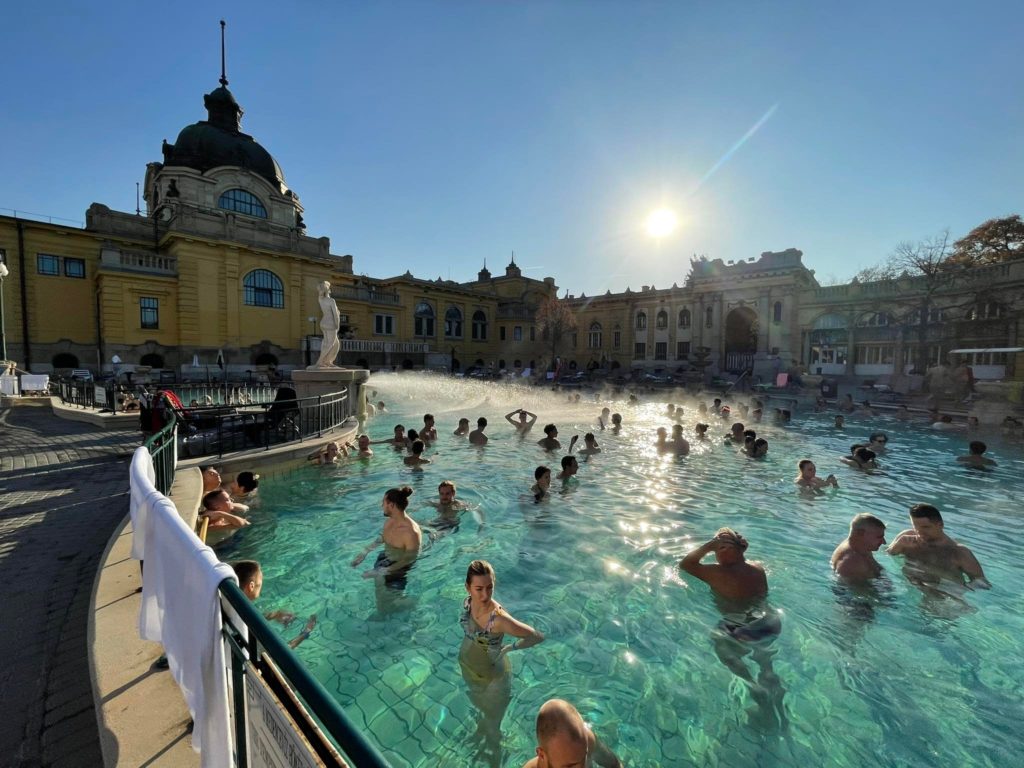
For the first time (and I hope there will be a second time), we chose the most famous and popular baths – Szechenyi. Europe’s largest baths, which are more than a hundred years old. They are huge, 15 indoor thermal pools and three outdoor, saunas and steam rooms, cold pools after sauna, hot from 28 to 38 degrees. Huge spaces, halls and lots of people both outside and inside. But you quickly get used to it and begin to navigate this hefty bathing complex.
Tickets are sold all day regardless of how much time you spend there.
Weekdays – 9400 HUF (25 Євро), weekends – 11900 HUF (31 Євро). This price includes a stay in the bathing areas and a locking bracelet used to open and close the changing stall.
Prices on the website of Szechenyi

What do you need to take with you to Széchenyi?

- rubber flip-flops
- sports towel + a large towel from the apartments (it was good that there were two – one gets wet quickly, although it can be dried on the radiator near the indoor pools). Robes can be rented, but they cost more than visiting the baths (take your own if possible), two towels were enough for us.
- swimsuit (closed and bikini) / swimwear (shorts or swim trunks)
- shower soap
- phone – you can take pictures everywhere, but I wouldn’t leave my phone unattended, take a picture and take it to a locker-enclosed stall.

We left Szechenyi for the last day – we arrived on Friday by noon. We left after 3:00 – I can’t stand not doing anything for that long. To say I loved it is an understatement! Very cool! You sit in the warm pools (it’s cooler outside than in the building), the water is steaming, people around with happy faces. There are practically no children – after all, it is not a water park, you can not frolic and dive here, the rules of behavior are strictly monitored by lifeguards. As for me, a person who doesn’t like water parks – it’s perfect.

You sit down in the hot mineral water and swoon. Or you go to the neighboring pool, a little cooler, and there the whirlpool rolls people around – a cool merry-go-round with elements of Jacuzzi. Or you find a free underwater geyser, sit on it and get rid of cellulite. If you’re not afraid of getting your head wet, put your shoulders under the jets of hot water coming from the fountains. And if you want to watch the grandpas play chess, just sit next to them on the steps and learn chess gambits from the local grandmasters. Anyway, Szechenyi is an awesome topic!
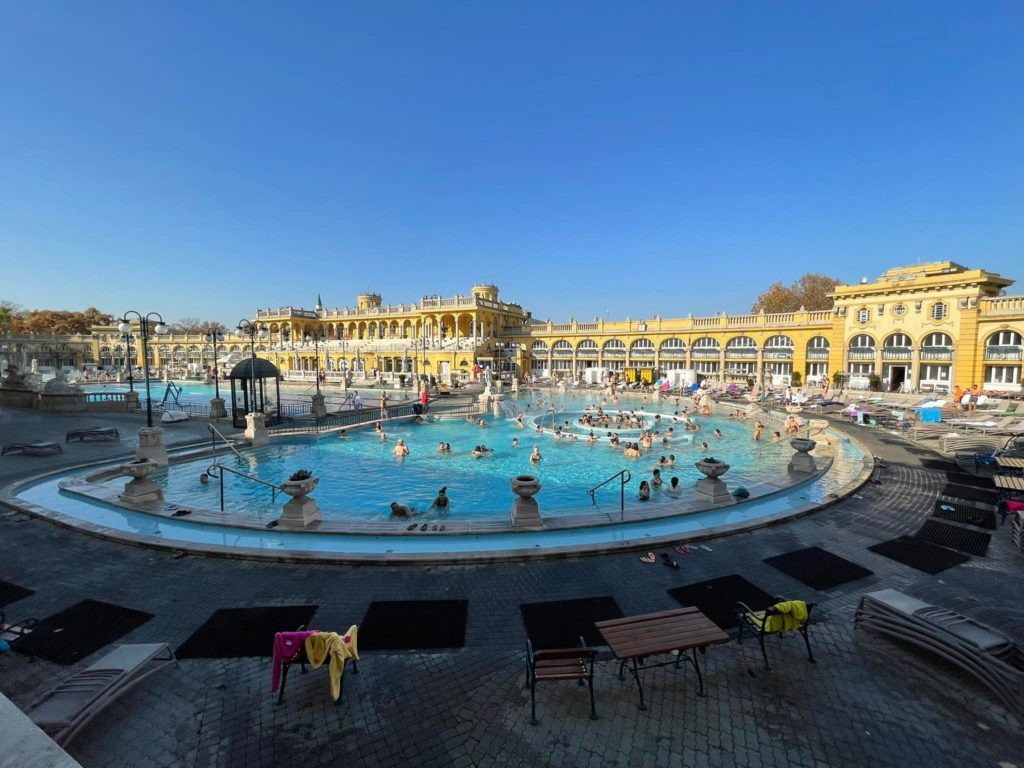
But they’re not alone – there are more than 20 baths in town, which I’ll explore next time.
Water excursions in Budapest in winter

Budapest sits on the Danube and the waterfront is one of the city’s jewels with a cool wow effect. The promenade on the Pest side has many beautiful buildings and old hotels, and from it you can see the bridges over the Danube.
It’s also home to the Hungarian Parliament, a huge, beautiful Gothic-style building unlike any other in the world. It is accessible on a 45-minute tour to see the halls and some of the 691 rooms, richly decorated with statues and paintings. Tour guides will talk about the politics and history of Budapest, with tales and anecdotes from times past.

If you want to see Budapest from the water, there are several options. In summer, you can use the boats that are part of the public transportation network. For the same 350 HUF (1 Euro) – a ticket for all modes of transportation, you can ride along the Danube on one of the routes.
Or sail to Margit Island, a 2.5-kilometer island with a quiet parkland on the Danube, connected to Buda and Pest by bridges at both ends. It’s fun in the summer: secluded and mostly free. You can walk by the waterfall in the Japanese garden, there is a musical fountain near Margit Bridge that comes to life four times a day, as well as a small zoo and several cafes. In the winter, I don’t think there’s much to do there.
There are no ships on the Danube in winter (at least in 2021). There is a ferry boat from Pest to Buda that temporarily replaces the Chain Bridge crossing (being repaired) for 550 HUF (1.6 Euros). Such a ride lasts 10 minutes at most, but is also full of charm.
Evening excursion on the Danube by boat
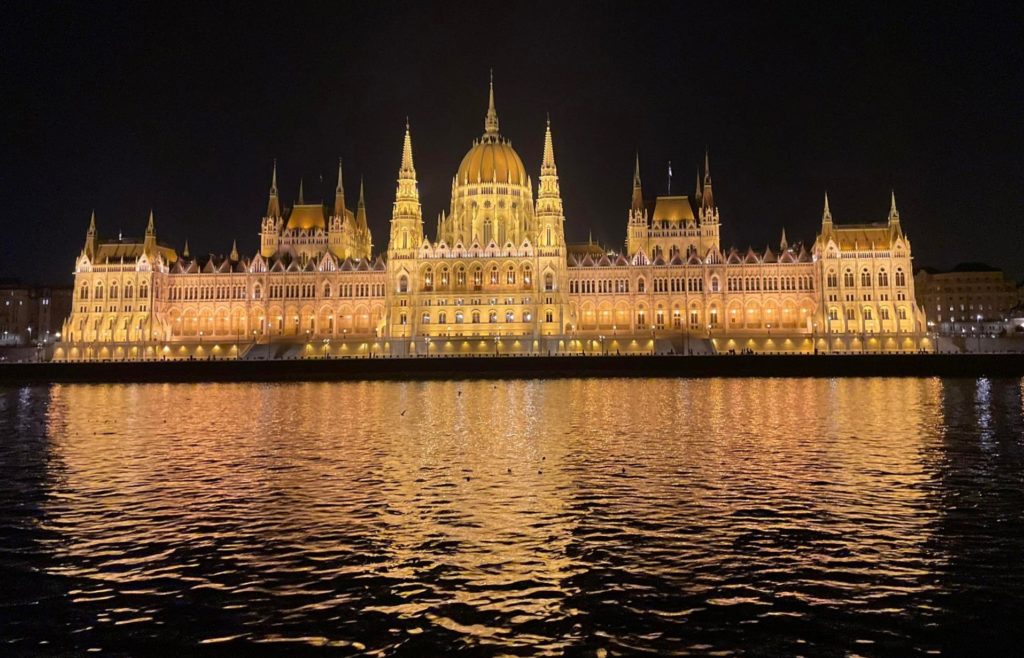
If you want to see the night illumination of buildings over the Danube, including the magnificent Parliament, it is worth buying an evening boat trip. I’m skeptical of such excursions, but I really enjoyed it. Perhaps in summer you’ll have more fun strolling along the waterfront and admiring the evening illumination. But in winter, the boat ride is much nicer – the chilly wind and air on the Danube makes it hard to take a long walk.

An evening boat tour costs from 9500 HUF to 12000 HUF (25-32 Євро). The price depends on the company that sells the tour, the time (1-2 hours), and the filling (with drinks or dinner). We bought a two-hour tour for 20 Euros, which included two drinks: welcome champagne and a second drink of your choice (wine, champagne, beer, cocktail, or juice).

Look, I really liked it! Firstly, inside the ship is warm, secondly, there is live music, thirdly, you can always go out on the open deck and breathe fresh air and take pictures of the beauty around.

It’s all very unobtrusive, although the musicians start to do individual music sets in the second hour. sitting at a table with the passengers. You can always tentatively get up and go on deck, quietly avoiding the attempt to shake you down. Otherwise, all is rank and noble.
Where to stay in Budapest
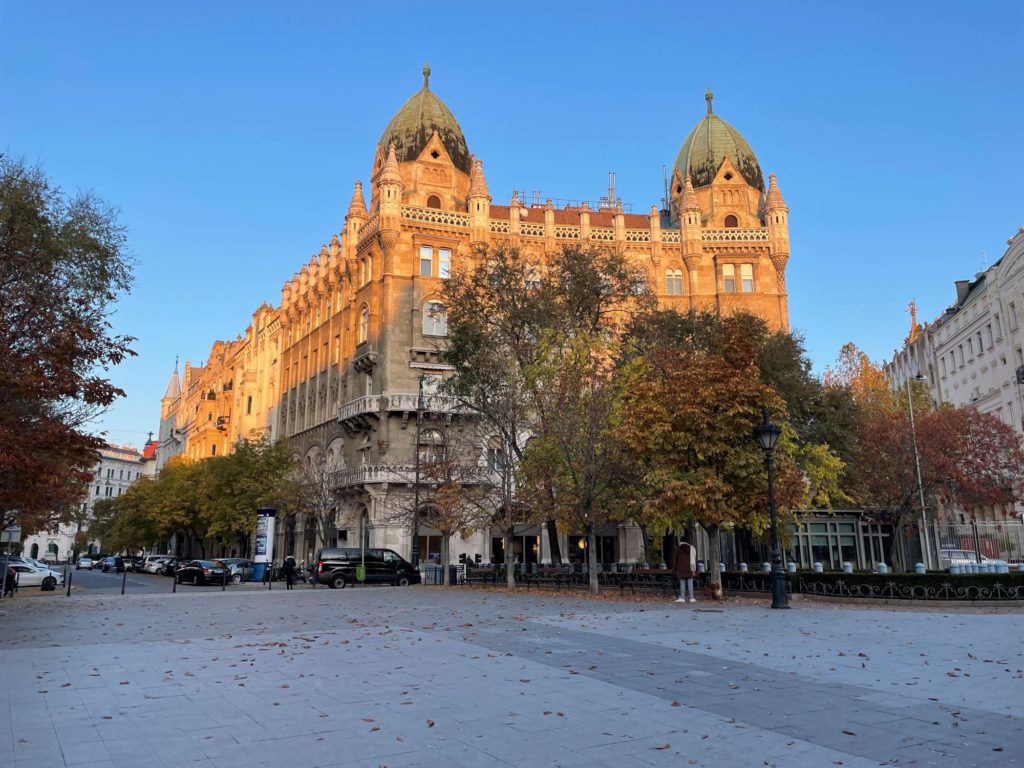
Of course in the center of Pest, to get out of the hotel and apartments, and you don’t have to go anywhere and walk a long way. Prices for hotels and apartments are very budget, but it pays to choose the neighborhood carefully.
We lived in the Jewish Quarter, but not in the epicenter of the bars and restaurants, but a bit off to the side – we rented an apartment near the expensive and ancient Hotel New York and almost next door to the Corinthia Budapest. There’s no noise from nightlife, no drunken revelers. But there is a pleasant Erzsébet Boulevard, with lots of cafes and restaurants.

More – Where to stay in Budapest – best neighborhoods for tourists
For those who want to live in the epicenter of nightlife, just choose accommodation in the Jewish Quarter, but closer to the city center.
Find apartments in Erzsebetvaros district
Closer to the center and the seafront there are large chain hotels: Marriott, InterContinental, Kempinski Corvinus and Hilton, well, the prices will be corresponding. On the other hand, here in the center you can find excellent apartments, the price of which will be much nicer than star hotels.
Find apartments in Budapest Center
If you like quiet and want to walk out on the promenade every morning with a view of Parliament, then you should consider hotels and apartments in Buda. There are a lot of cool options here, some with views of the Danube.
Find apartments in Buda
Useful links for travelers:
- Vines for three days
- Winter Wroclaw in two days – what to see in the city of gnomes
- San Francisco from a bird’s eye view
- Rome in winter – what to see in three days
Bus schedule and bus tickets are available at InfoBus.ua
Booking of hotels and apartments – Booking.com
Rent a car – inexpensive options can always be found on the aggregator Rentalcars.com