Barcelona in three days – what to see on your own: museums, Sagrada Familia, Gaudi’s architecture, transportation around the city and from the airport, where to stay and what to eat in Barcelona. From the personal experience of several independent trips to Barcelona.
Barcelona is the capital of Catalonia, a beautiful city with many attractions, museums, parks, and free entertainment. Gaudi’s architecture, festivals, and delicious cuisine attract thousands of tourists like a magnet. Add Mediterranean beaches to the list, and you get the perfect seaside vacation, well seasoned with a cultural component.
When is the best time to go to Barcelona

Barcelona is an ideal city for a vacation at any time of the year. Even in winter, it is pleasant to walk around the city, enjoying the warm sun.
In the summer, Barcelona is hot, and many tourists choose beach resorts near the city, while others come to Barcelona to visit museums. But it’s not very pleasant to walk the streets in the daytime – stone buildings heat up and it’s better to be protected by air conditioning.
In spring, Barcelona is great – the trees are blooming, and the jacaranda is especially beautiful. It’s a pleasure to walk around the city, but the water in the sea may still be too cold for swimming. Although sunbathing on the beach is definitely possible.
In the fall, it is especially good here because the heat subsides and the sea does not have time to cool down. Therefore, you can swim throughout September and October. At the same time, it’s nice to walk the streets and parks of the city without hiding from the summer heat.
Where to stay in Barcelona
There are no high and low seasons here. That’s why prices for hotels and hostels are always standard, and it’s hard to call them low. Relatively inexpensive accommodation for young people is provided by hostels, starting from 30 € per day for a bed in a shared room for 8-10 people.
Double rooms in hotels from €60 per night for two people. But you can find apartments for this amount.
The easiest way to find accommodation through a trusted service Booking – Barcelona.
The best areas for tourists to stay are in the center of Barcelona – these are Gracia, Eixample, El Born. Quite a lot of housing in the old part of the city – the Gótic Quarter. But there are many bars here, and the narrow streets amplify the noise of the crowd, which likes to move from place to place throughout the night – generally for amateurs.

I recommend the Poblenou district as an alternative to the center. It is a very pleasant neighborhood with many cafes, small shops, near the sea and a little away from the bustling center. Choose Hotel Paxton Barcelona is an excellent four-star hotel with good rooms and service. I recommend it! I caught a luxury price (80 Euros) just a week before checking in.
More details: how to choose a hotel and neighborhood in Barcelona
Transportation in Barcelona

Public transportation in the Catalan capital is well-thought-out and diverse. You don’t need to know Spanish to understand where to go and what to use to get there. Many signs, maps, and plaques help you understand the transportation system and get around the city inexpensively.
Tickets and passes in Barcelona
Fares change every calendar year – the current ones are valid until 12/31/2024. A one-way ticket costs €2.4. It is valid for 120 minutes and allows any number of transfers within the specified time. Single tickets for public transport in Barcelona can be purchased at ticket machines at metro and bus stops, as well as in the T-mobilitat app(Android, iOS).
If you plan to stay in Barcelona for several days, buy a T-Casual combined ticket. It can be used everywhere: both in the subway and on ground transportation – buses and FCG trains. The T-Casual ticket is valid for 10 trips. The price of such a ticket differs depending on the number of zones: travel in zone 1 – 11.35 euros, zone 2 – 22.4 euros, zone 3 – 30.5 euros, zone 4 – 39.2 euros, zone 5 – 45.05 euros, zone 6 – 47.9 euros.
T-Casual does not have an expiration date, but it will cease to be valid a month after the fare changes in January of the following year. A 10-trip T-Casual pass can be purchased at any metro station or at the entrance to a railway station. RENFE platform, as well as at Barcelona’s El Prat airport.
Please note: the T-Casual (Zone 1) ticket is valid only in the center of Barcelona in Zone 1 on the metro, FCG trains and TMB buses, trams and RENFE trains. If you need to travel outside Zone 1, you need to buy a T-Casual ticket for another zone.
Another option for a tourist travel card is the Hola Barcelona Travel Card. They are designed for 2,3,4,5 days and an unlimited number of trips on any type of public transport in Barcelona. You can buy it online on the website of the transport company TMB. Prices:
2 days – 15.75 €
3 days – 22.95 €
4 days – 29.97 €
5 days – 36.92 €
Barcelona Metro
The metro is perhaps the most convenient mode of transportation, with stations on almost every corner. Metro opening hours:
- From Monday to Thursday, it is open from 5:00 to midnight.
- On Fridays and evenings before holidays – until 2 am.
- From Saturday to Sunday – 24 hours without a break.
- On Sunday, it’s open until midnight.
City buses
Buses run in the same way as the metro, but there are night buses marked with the letter N, they run every 20 minutes from 22:00-23:00 to 5:00-6:00 depending on the route. Tickets are sold at vending machines at metro stations and bus stops. You can pay in cash, by card, or buy a ticket in the TMB app.
The funicular to Montjuïc Mountain is also part of the fare system for regular public transportation tickets. A single trip costs 2.2 €. Open daily from 7.30 to 22.00, weekends from 9.00 to 22.00 – until October 31.
From November – daily from 7:30 to 20:00, weekends – from 9:00 to 20:00.
Tip: I don’t recommend traveling without tickets – controllers periodically organize raids – the fine for fare evasion is €100.
Tourist buses Barcelona Bus Turístic
For those who are not confident in public transportation, there are Barcelona Bus Turístic double-decker tourist buses. The tourist bus has two routes in the city center – blue and red, both starting from Catalonia Square.
- Blue: MACBA Museum of Contemporary Art, Gracia Boulevard, Sagrada Familia, Parc Güell, the foot of Mount Tibidabo, Pedralbes Monastery, Camp Nou football stadium.
- Red: Ciutadella Park, Gracia Boulevard, Diagonal Avenue, Estacion de Sants Station, Plaza de España, Montjuïc Mountain, and Barceloneta.
- Green: the additional green route allows you to ride along the city’s beach line.
The routes have common stops where you can get off at any time, walk the streets, and catch the next bus: Port Olimpico, Francesco Massiah Square, Catalonia Square, and others. A ticket purchased for 1-2 days is reusable and valid for all three routes.
Route through the masterpieces of Antonio Gaudi

Barcelona is closely associated with the name of the architect Antoni Gaudi. Many people come here to see his masterpieces with their own eyes. The route in Gaudi’s footsteps has become a classic, but without seeing his masterpieces, you will hardly be able to feel the great architect’s creativity, to experience both surprise and delight, confusion and amazement.
- First, take a walk along Passeig de Gracia, where Casa Milà and Casa Batlló are close to each other.
- Turn to the Sagrada Familia.
- After leaving the temple, take the subway and go to Guel Park to breathe fresh air, marvel at the garden architecture, and take pictures of gingerbread houses.
Please note that by purchasing tickets online, you save about 10% and book a convenient time for your visit.
Sagrada Familia

Sagrada Familia – the Church of the Holy Family is the main symbol of Barcelona. Its outlines can be seen from the hills surrounding the city (address: Carrer de Mallorca, 401, 08013,). The temple has been under construction for over 100 years, and every year more and more finished elements of the façade and interior decoration appear. It is promised that by the summer of 2026, the construction will finally be completed and it will be possible to see everything the author once conceived.
Tickets: Standard – 26 €, children under 11 years old – free
Open: from 9:00 to 19:00.
Online tickets to the cathedral, to the observation decks on the tower, and Fast track – entrance without a queue:
Tip: come to the cathedral before the opening – soft music plays in the empty cathedral, rays of light pour from the stained glass windows, and all the richness of the architecture will belong only to you.
Casa Milà

Casa Milà (La Ptdrera ) was built in 1910 for the extravagant and wealthy Mila family (Provença, 261-265, 08008). For its non-standard shape and somewhat cumbersome facade, the Mila House was nicknamed La Pedrera, or “the quarry”. Gaudi’s imagination created and realized a living space flooded with natural light without a single straight line.
You can take a tour of the roof of Casa Milà. Open: Mon-Sun from 9:00 to 18:30 and from 19:00 to 21:00.
Adult tickets cost 25 €, tickets can be purchased in advance online:
Casa Batllo

Casa Batllo is a combination of mosaics and smooth shapes, bright colors and waves. The Ballew House looks like the belly of a huge dragon, with no corners inside, and the bright and rich colors of the building’s interior and exterior resemble the sparks of a raging animal and the architect’s fantasies.

The building is located two blocks from Casa Milà – Passeig de Gràcia, 43, Passeig de Gràcia metro station, lines L3, L2 and L4. Open daily from 9:00 to 18:30. Adult tickets are €35, children under 12 are free.
Güell Park

Parc Güell is another work of Antoni Gaudi, which was completed in 1914 (Calle Olot, 08024). The idea of building and creating the park belonged to the Catalan philanthropist and industrialist Eusebi Guell, who wanted to create an English-style garden city. Most of the space is occupied by plants, mosaic terraces, grottoes and gingerbread houses.
The Gaudi House Museum is also located here, with a collection of whimsical furniture created by the master. Open: from 9:30 to 19:30,
Standard tickets cost €10, children from 6 years old and pensioners €7.
You can buy tickets at the box office or online to avoid standing in line at the entrance:
What to see – parks, museums, Barcelona’s oceanarium

The observation deck on the TV tower is included in the list of Barcelona card entertainment – don’t miss the chance to ride in a glass elevator, see the city from a height of 560 meters, while drinking coffee in a panoramic restaurant. The cost of the subscription: 72 hours – 46 €, 96 hours – 56 €, 120 hours – 61 €.
You can buy a subscription at www.barcelonacard.org
Tip: the subscription price includes free use of public transportation and discounts for restaurants and nightclubs. Buying a pass to visit one or two museums is pointless.
The Barcelona Oceanarium is one of the largest in Europe. Children and adults will be interested in walking through an 80-meter glass tunnel with huge sharks swimming above the vault, looking into the surprised eyes of the moonfish, and watching cheerful penguins. It is open daily from 10:00 to 20:00, the cost for adults is €21, children from 5 to 10 years old – €16, from 2 to 5 years old – €8, under 2 years old – free.
Mount Montjuïc rises above the port of Barcelona. You can get there by cable car, starting from the station on the 86-meter-high St. Sebastian’s Tower in the Barceloneta district. The cable car offers a magnificent view of the port, and you can see Barcelona in the palm of your hand. A round-trip adult ticket on the Telefèric de Montjuïc costs €13.5, children from 4 to 12 years old – €9.7, children under 4 years old are free. It is open from 10:00 to 17:00.
Mount Tibidabo, which rises above Barcelona, can be reached by an old funicular. The mountain has a wonderful observation deck, an amusement park and the most beautiful Gothic Church of the Sacred Heart, with a huge statue of Christ.
A ticket to the amusement park costs 60 €.
A ticket for the Tibidabo cable car costs €12. Or take the Tibibus bus, which starts from Plaza Kennedy and takes you to the cable car station.
Tickets on the website Tibidabo.

Museums
If you set a goal to visit all the museums in Barcelona in a few days, you can’t do without a Barcelona card. It can be used to get to all major museums, including: Museum of Contemporary Art of Barcelona, Museum of National Art of Catalonia, and Frederic Marché.
The football museum at the Camp Nou stadium is considered the most visited in Catalonia. Football fans from all over the world come here to see the legendary and largest European stadium Camp Nou, Messi’s “golden balls” and Champions League cups. Open: from 09:30 to 19:30, entrance fee: €26 for adults, €20 for children and pensioners. Tickets on the museum’s website.
An unusual excursion among chocolate statues with marzipan filling in a small but tasty Chocolate Museum. You can taste the chocolate bar given instead of an entrance ticket during the tour, which leaves a pleasant aftertaste. Open: Monday through Saturday from 10:00 to 19:00, on Sundays and holidays from 10:00 to 15:00. Tickets are €6, children under 6 years old are free. More information on the museum’s website.
Free entertainment in Barcelona

There is a lot of free entertainment in Barcelona. Here you can walk on foot, watching the image of the city change from block to block. Walking through the cobwebs of the narrow streets of Barcelona’s Gothic Quarter is a pleasure and does not oblige you to anything. Although there are many good cafes and restaurants here. Street musicians also play and sing here, entertaining themselves, their friends, and passersby. A favorite tourist street is La Rambla, a concentration of souvenir shops and stores.
Tip: there are a lot of pickpockets in Barcelona, especially on La Rambla. Watch your belongings and bags – many people have suffered from the skill of local thieves.
Barcelona has installed the Blue Flag on its beaches, a sign of cleanliness and safety. White sand and clear water are a nice bonus after long walks in the city. Entrance to the beach, use of showers and changing rooms is free of charge.

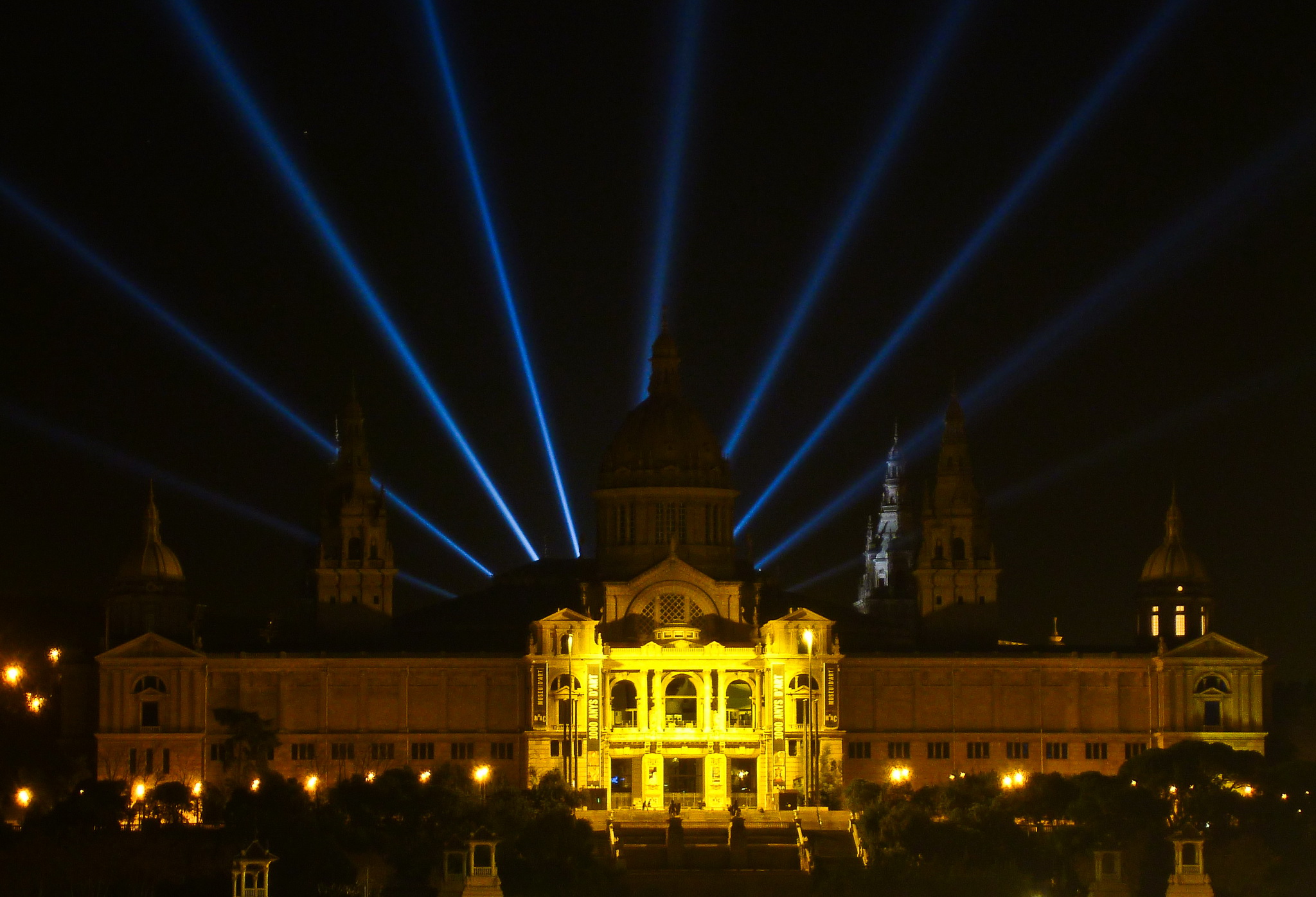
Bullfighting has been banned in Barcelona since 2011, and the Arena building where the performances took place has been rebuilt into a shopping center. There is a free observation deck on the top floor of Arenas de Barcelona. You can go upstairs for €1 by elevator, or for free by escalators. The observation deck offers a magnificent view of Spain Square and the magical fountains of Montjuïc, where you can watch a light and music show every evening.

Barcelona is a green city. Many parks will give you an hour of relaxation for a daytime siesta. Ciutedal Park has fountains, statues, and a pond with boats on its small territory. In bad weather, you can go to the pavilion with a winter garden and take a walk among the tropical plants.
More information: Free Barcelona
Where to eat in Barcelona

Markets
Catalan cuisine is a gift of the sea and mountains, with simple and delicious dishes of meat and seafood, vegetables and cheeses. Boqueria Market is the oldest market in Barcelona and a popular tourist destination. They sell all sorts of things here: jerky (jamon), cheeses, fruits and vegetables, sweets and dried fruits, fish and seafood. You can have an inexpensive snack here: for example, buy an assorted fruit platter for €4-5, or a glass of fresh juice for €2-3.

Restaurants
Seafood in Barcelona is fresh and it’s a sin not to try it. We recommend a chain of cafes scattered throughout the city that specialize in seafood – La Pradeta. Everything here is always fresh and the price tag is absolutely adequate. There are queues at lunchtime, so it’s better to come in advance.
The former fishing quarter of Barceloneta is known for good fish restaurants and Catalan cuisine. Good seafood in a restaurant”
Can Ros 1911
“restaurant (Carrer del Almirall Aixada, 7). Seafood has been served here for several decades: suquet stew, skillfully prepared by the chefs, and arroz a la marimera, rice with seafood – try these dishes, they are delicious.
The menu of the day costs only 18 euros.
Tip: You can eat deliciously and inexpensively in Barcelona if you know a few tricks to help you save money.
- First, almost all restaurants offer a “menu del dia” on weekdays from 12-16 pm, a set lunch consisting of three courses and a drink for a price of 15 €.
- Secondly, when ordering paella, remember that they will bring a large portion in a decent-sized pan – enough for at least two people (price from 16 €).
- Thirdly, cafes and restaurants off the tourist streets offer a hearty menu at reasonable prices. And breakfast is convenient in small bakeries. A fresh croissant or sandwich plus a cup of coffee will cost no more than €3.5.

Tapas bars
They are very popular in Barcelona – you can grab a quick bite to eat or hang out for a few hours with a glass of wine. Tapas are Spanish snacks for wine or beer. The name comes from “tapa” – literally “lid” – which is what is used to cover a glass. Tapas can be cold or hot.
Tapas means “lid”, and the appetizers are different in taste and composition. It can be a ham sandwich or a salad or pickled vegetables, anything! One of the types of tapas is patatas bravas (pieces of fried potatoes with spicy sauce), tortilla (an omelette of eggs with potatoes and onions). As well as croquettes (small cutlets made of minced meat or vegetables, rolled in breadcrumbs and deep-fried), cheeses and Iberian sausages. And the drinks are also different: beer with lemon juice from a tall glass of caña, wine from different regions of Spain, vermouth, and even northern Spanish cider. A glass of beer costs €2-3, wine €2-3, and tapas €2.5 per serving.
Tip: Pay attention to the opening hours of most restaurants – they open for lunch from 13:00 to 16:00, and for dinner after 20:00. Plan your walks around the city so that you can get to the restaurant on time and not be hungry.
Restaurants everywhere serve Sangria, a red sweetened wine with any sparkling wine, liqueur, citrus fruits, grapes, and other seasonal fruits. Depending on the time of year, Sangria is served either chilled with ice cubes or heated and flavored with cinnamon, cloves, and nutmeg.
Shopping in Barcelona
There are 35,000 stores in Barcelona and the surrounding area. In the city center, from the Columbus monument on the waterfront to Maria Christina Square, there is a so-called “shopping line”. Five kilometers of streets are lined with boutiques, where you can spend more than one day going through all the clothing and footwear stores. In general, there is plenty of room to roam. If you don’t have a lot of time to shop, you’ll have to narrow your focus to a few streets. For example, Portal de l’Àngel Street is perfect for those who want to shop for famous Spanish brands. All the famous brands are represented here – Zara, Oysho, Bershka, Pull and Bear, Stradivarius, etc. Chanel.
If you have only a few hours to shop, you will have to concentrate on shopping centers, where the stores are more compact. For example, the shopping center Las Arenas shopping center – located on several floors of the former bullfighting arena, houses 116 stores, including Mango, Calvin Klein, Calzedonia, and Claires. Please note that Las Arenas, like most Spanish shopping centers, is closed on Sundays. The only exception is the El Maremagnum shopping center, located at the end of the tourist street Rambla, which is open on Sundays. Others – some boutiques are open during sales every day.
Country outlets in Spain are also popular, and not only during sales.
In Barcelona, you can visit outlets: La Roca Village (s/n 08430 Santa Agnès de Malanyanes), Viladecans Style Outlets (Carreterta de la Vila, 90, 08840 Viladecans) and Nice Things Outlet (Carrer de Girona, 38, 08).
Getting to Barcelona
Barcelona El Prat International Airport is 12 kilometers from the city center. The airport can be reached by subway, train, bus, or taxi. The cheapest way to get to Barcelona Airport is by city buses, which cost 30-40 minutes and 2.40 euros. The fastest way is by suburban trains for 4.6 euros and 20 minutes on the way.
From Barcelona El Prat Airport, TMB buses #46 run to the city center, heading to Plaça de España. If you need to get there at night, there is a night bus N16 with a final stop at Placa Catalunya.
From both the first (T1) and second (T2) terminals of Barcelona Airport, you can get to the city via the L9 metro line. Or take the Renfe Rodalies train from the second terminal – it will be a little faster and you will arrive in the city center at the Barcelona Passeig de Gracia station. To do this, you need to buy a separate ticket at the ticket office – BITLET AEROPORT – the price is 5.15 €.
Useful articles and links:
If you are planning to travel to Seville from other cities of Andalusia – it is convenient to buy a train ticket Renfe.
If you do not have train tickets, it is just as comfortable to use the buses of the Spanish carrier Alsa.
It is convenient to search for a car for a road trip on Rentalcars.com – It has all the rental offices located at the country’s airports.
Hotels – I traditionally book through Booking.com
Insurance can be purchased on the website Hotline.Finance
- Ronda, Spain – 10 things to do in the white city on a cliff
- Perfect weekend in Seville – what to do in two days in the capital of Andalusia
- The 7-day route in Andalusia – what to see in the south of Spain