

California road trip itinerary – what to see in two weeks: Big Sur, Death Valley, Sequoia Park, and Yosemite Valley.
If you dream of a trip to the USA and you’ve got a US visa in your passport, then a California road trip could become one of the brightest adventures of your life.
If you don’t have a visa – try your best to get one, because America is an interesting and diverse country where you can and should travel by car.
One of the best ways to explore California, the third-largest state in the US, is to plan a road route to see as many great places and views as possible. Driving through wine valleys, stunning sequoia forests, epic desert landscapes, endless kilometers of coastal highways, and sharp peaks of the Sierra Nevada, you’ll see unforgettable views that touch your heart and soul.

Our route – ocean, desert, national parks

Our California trip began and ended in San Francisco. In ten days we drove about 1,500 km on California roads. And we were never bored for a minute—around every bend was something new and interesting.
California is a state rich in natural wonders, with everything needed to fill a ten-day trip with impressions.

We created a circular route based on our own preferences. We wanted to see various locations: desert, ocean, and mountains. Here’s the result—a well-balanced trip, with only two days of 500–600 km-long drives:

- From San Francisco, we went south along the Pacific Coast. We covered this 400 km stretch in three days, with three overnight stops. The road is scenic, lots of beautiful spots, we stopped every half hour to take pictures or walk around.
- Before reaching Santa Barbara we turned east and traveled about 600 km to Death Valley. We spent the whole day on the road, but saw a lot along the way: the airplane graveyard in the Mojave Desert, typical American towns with single-story development, roadside diners—it’s all as interesting as the national parks themselves.
- Two nights in Death Valley, then another long transfer into the Sierra Nevada mountains for Sequoia Park (about 500 km).
- We spent the night in Fresno and headed for Yosemite National Park, where we spent two full days and two nights.
- After this, we returned to San Francisco, dropped off the car, and flew home.
Along the way we stopped in cities, stayed in motels and campgrounds, watched animals in the wild, talked to locals and fellow travelers. All in all, we got the most out of a trip packed with impressions.
Here’s more detail on the main stops of this trip.
California Coast – Highway N1 and Big Sur

The entire California coast is laced with Highway 1 (California State Route 1 or Pacific Coast Highway 1)—one of (and I’m not afraid to be grandiose) the most beautiful roads in the world.
On the whole route, road trippers are accompanied by breathtaking views of ocean and coastal cliffs. Every 200–300 meters along the highway there are special turnouts and viewpoints. Thanks to these viewpoints, deserted beaches, and awesome landscapes, we stopped every ten minutes, and the 400 km distance took us three full daylight days (!).
Plan at least two, ideally three days for this stretch to fully enjoy ocean, mountain, and arched river bridge panoramas. In some places there are descents to deserted beaches, you can stop at one of the few cafés and savor a cup of coffee with a view of California’s coastal beauty.
Tip: Avoid driving the PCH in spring and summer. During these months, the central and northern coast may be covered in fog, and the rainy season can cause landslides. Instead, in September and October you’ll have the sunniest skies and some of the best weather.
What to see on Highway 1
This route winds along the Pacific Ocean from Dana Point, heading north to Leggett, though officially only the short, sunny section of Highway 1 through Orange and Los Angeles counties can legally be called the Pacific Coast Highway (PCH).
Visit the lighthouses

Pigeon Point Lighthouse is near the town of Pescadero—this is one of the most beautiful lighthouses on the coast. You can access its grounds for free. Visitors aren’t allowed inside, but it’s working. People come here for picnics, to stroll the marked oceanfront path, or just stop off as travelers who fall in love with this beautiful place.
Tip: Intrepid romantics can stay the night at the cozy HI Pigeon Point Lighthouse Hostel on the lighthouse property. Stays are $50 per night in a shared room. Amazing sunset, the beam of the lighthouse at night, and almost tame rabbits hopping around at dawn are guaranteed.
Along the Pacific coast you can also see these lighthouses:
- Point Sur Lighthouse, 39.6 km south of Monterey, California, sits atop a 110 m cliff at the tip of the Point Sur promontory.
- Piedras Blancas Lighthouse is on the rocky coast near San Simeon, active since 1875 and safely guiding vessels past rocky shores. It once had an impressive glass dome and a first-order original Fresnel lens, and it was 30 meters high.
- Point San Luis Lighthouse—located on rocky ground near Avila Beach and Port San Luis. It’s not just a lighthouse—it’s the only remaining prairie-style Victorian lighthouse on the West Coast, a rare gem of the National Register of Historic Places.
Explore Davenport’s beaches

This coastline is jagged with rocks and gorgeous coves. Shark Fin Cove is especially beautiful, with its protruding rock shaped like an arch. We came here in the morning after rain, took a walk above the ocean, then had a long breakfast in a roadside café.
Tip: Above the beach is the excellent Whale City Bakery Bar & Grill with tasty breakfasts and coffee. A cup of good (!!) coffee is $3.50, muffins $3.50, breakfast from $12.
See fairy-tale houses in Carmel and Monterey
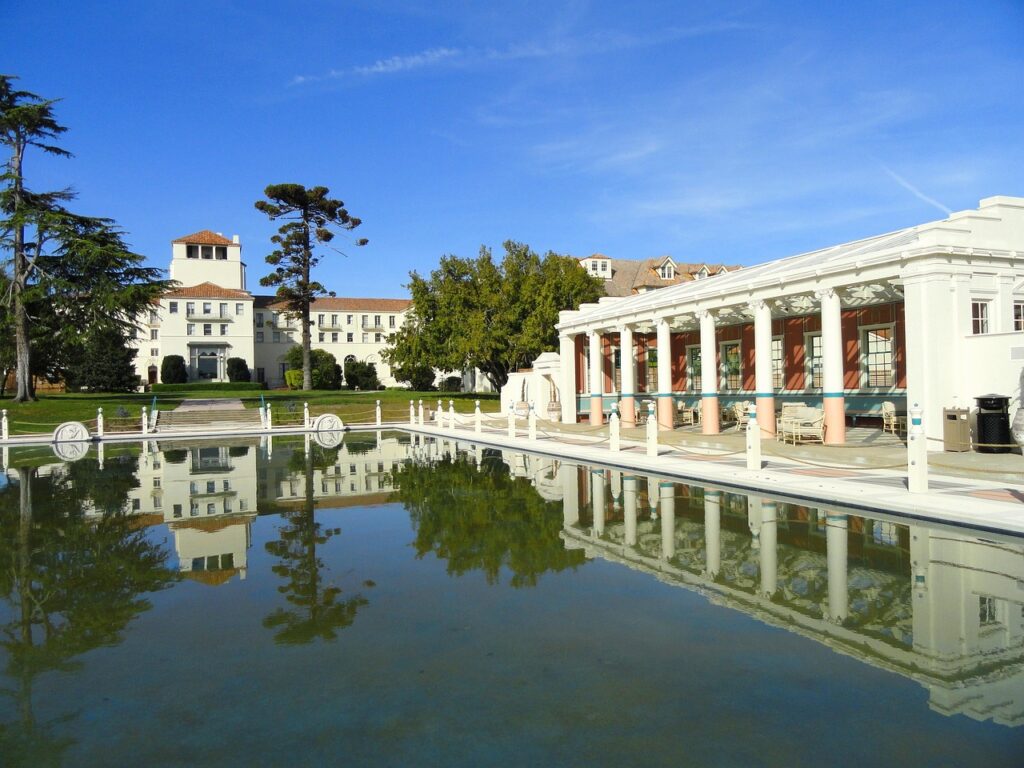
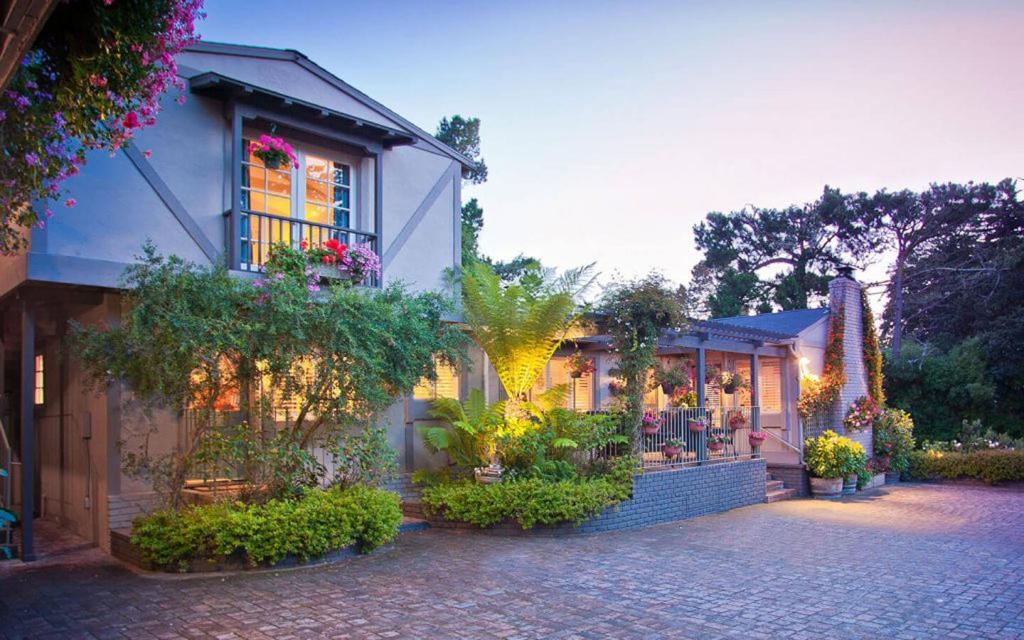
Every house here seems straight from Andersen’s fairy tales—with fancy roofs, carved windows, balconies, and lovely little gardens full of flowers. All around are pines and the ocean.
If you have time and interest—stop by nearby Monterey; everyone raves about the big Monterey Aquarium. We didn’t make it—saving it for next time :)
Most homes here are cozy private inns where you can spend the night if you wish. For example, like the one in the photo.
Where to stay in Monterey:
- Monterey Pines Inn≫ – A wonderful spot for a short stay. Pets allowed for a reasonable extra fee. Convenient location, easy parking—it’s better to leave your car here and walk to various places for coffee, shopping, and meals.
- Bide-A-Wee Inn and Cottages≫ – A small cottage that is cute and cozy—fairy-tale-like. Close to the beach and the 17-Mile Drive. Clean and comfortable.
- Carmel Country Inn, is lovely both outside and incredibly cozy inside. Morning coffee on the terrace—couldn’t be better for a romantic breakfast on your trip.
Race along the Big Sur coast

Almost no one lives here, and nature is so dramatic that you keep stopping the car to see how the ocean crashes into the cliffs—a new stunning panorama around every bend. A few years ago a major landslide happened on one part of Big Sur and the road closed. Now it’s open again and they’re finishing the coastal reinforcements—everything is safe.

If you wish, you can spend the night in one of the campsites. But remember that you need to book a place in the campsite in advance – several months in advance. It is unlikely that you will be able to arrive and put up a tent on a free spot. Americans love to travel by car and take care of their vacation in advance.
Where to stay on Big Sur:
- Fireside Inn on Moonstone Beach≫ -The price is standard for a motel, but the quality is like a 3-star hotel. The rooms are clean, with good beds, there is a pool, clean grounds. A good place to spend the night after a trip to Big Sur.
- Bluebird Inn≫ – Large and comfortable rooms. Quiet city center. Many restaurants nearby. Close to the beach.
- We spent the night outside of Big Sur in the suburb of Pismo Beach. At the beginning of the large resort is the Motel District, which has several nice motels. We booked a motel The Palomar Inn a small cozy room that cost $50.
TIP:
Camping on the coast is quite expensive – a place for a tent for two and parking for a car costs from $ 60 at a private campsite. It is forbidden to pitch tents wherever you want in US national parks, and spending the night in a car on the side of the road is also not recommended – there are signs almost everywhere that this is prohibited.
But we saw a few cars on the side of the road with travelers sleeping in them early in the morning. I think if you stay late at night and wake up early – as an option to save money or if there are no places in the campsite. In extreme cases, if you are woken up in the middle of the night by the police – you can say that you made a forced stop due to fatigue, and then move to another place.
Say hello to sea lions and seals

Along the California coast there are plenty of sea lions and seals. They feel comfortable here—they are protected by law, and some have even made their home right in downtown San Francisco on Pier 39.
On the shore near San Simeon thousands of elephant seals—a type of the seal family—gather. Their bulky bodies cover vast sandy beaches, and tourists have safe viewing platforms to watch the animals in their habitat just 10 meters away. They don’t smell very pleasant, but watching their spats, movements, and occasional fights is fascinating!
Death Valley

After the cool coast, we headed to the hot, dry Death Valley—a national park on the border of California and Nevada.
What’s interesting here? It’s the lowest point in North America. There are beautiful canyons and salt lakes, true desert, and sand dunes.
You must see sunset and sunrise in Death Valley—it’s fantastically beautiful, and believe me, it’s worth the night in a tent or hotel in the desert.

Visiting Death Valley National Park is ticketed. The minimum payment equals a 7-day stay—$30 per car, including 1 to 5 people. Pay at one of the ranger stations—near Zabriskie Point or at the valley exit at Stovepipe Wells.
What can you see in Death Valley?
Golden Canyon

Walk 2.5 km through a canyon shimmering in every shade of yellow and red. The end point is the Cathedral Rocks, which resemble an organ in a huge cathedral looming overhead.
If you do the Golden Canyon hike in the evening or early morning, go a bit farther and climb up to Zabriskie Point. From there, you’ll get fantastic views of Death Valley. At sunrise and sunset, the valley is ablaze with bright colors under the soft sun rays.
Tip:
It’s best to enter the canyon no later than 10:00 am—after that, temperatures soar (up to 36–40ºC), and you risk overheating. We walked it at noon and I had heatstroke.
Badwater Salt Lake

A huge white expanse covered in salt crystals. Every day, hundreds of tourists walk across the lake bed dried out by the heat. This is the lowest point in the USA—minus 85 meters below sea level. Temperatures are extreme—be sure to bring a hat and lots of water. It’s very hot!
See the “moving rocks” at Grandstand

One of Death Valley’s greatest mysteries is the movement of rocks and boulders across the dry Grandstand lake bed. Unfortunately, we didn’t get to this spot—after spring floods, the road was washed out and closed for repairs.
Visit the Mesquite Flat Sand Dunes

These huge dunes are just before Towne Pass at the valley’s exit. It’s always busy, but the dunes are so big there’s room for everyone—you can run in the sand and take awesome photos.
Tip:
Before visiting Death Valley, fill your gas tank—there are only 2–3 gas stations and fuel is more expensive than usual. Also bring plenty of water: there are only a couple of stores 50–80 km apart. Restaurants are rare—if you plan to camp, bring food.
Where to stay overnight in Death Valley:

Accommodation in Death Valley varies in price depending on location and type—hotels in the valley center are more expensive, while those at the entrance or exit are much cheaper.
- Panamint Springs Motel & Tents≫ – Great location near Death Valley, also convenient if you plan to go to Yosemite/Lake Tahoe. For the price (especially compared to other nearby hotels), this place is perfect.
- The Ranch At Death Valley – A real oasis in the desert of Death Valley and a surreal experience. Wonderful pool for cooling off at night before bed. The ranch comforts are amazing for being in the middle of a desert.
- Shoshone Inn≫ – Although a bit pricier, this hotel is worth the extra money. Historic architecture, beautiful surroundings, and especially a natural pool/hot springs nearby, open to guests. The rooms are nice, comfortable, and clean. In the morning you get coffee and bagels with jam. There’s also a good restaurant/bar just across the road.
Personal experience:
It’s better to plan two nights for visiting Death Valley. The first night you can stay outside the park. We decided to stay in the small town of Pahrump, 40 km from Death Valley in Nevada on the border with the national park. Accommodation here is much cheaper than in valley hotels. We chose the casino hotel Saddle West Casino Hotel.
At the end of our Death Valley visit we stayed at the only free campsite – Emigrant Campground, which is near Towne Pass. The campsite was small and almost full of car-campers with tents. But there were toilets, water, tables, benches, and trash bins—it was all clean. The rest we had—food, wine, tent, and sleeping bags. Campground coordinates on Google maps.
Sequoia National Park

This natural park and reserve is in the southeast of the Sierra Nevada mountains. It’s famous for the “Giant Forest,” where giant sequoias—trees thousands of years old—grow.
You can also see giant trees here and in other California national parks, for example, Redwood Park up north.
Entry is paid – $35 for 7 days per car, for 1 to 5 persons.
What to see in Sequoia National Park

There are several great hiking trails in Sequoia Park. If the weather is good and there’s no mountain fog, you can walk the Trail of 100 Giants Trailhead among the giant trees.
Feel tiny at the base of the world’s largest sequoia—named General Sherman. The tree is enormous—84 meters tall, with a trunk at the base 31 meters in circumference. These sequoias are older than the Roman Colosseum; they’re like silent giants who have seen almost everything life has to offer (except, maybe, the dinosaurs).
Where to stay near Sequoia Park:
- Silver City Mountain Resort≫ – Unusual location. It’s an hour’s drive from the main park road. What’s special is the pure, clean environment, and the restaurant is one of the best in the US. We stopped here for a meal—it was delicious! Note that the last 90 minutes are on a winding road, mainly downhill. Drive carefully and prepare for unforgettable experiences.
- Sequoia Village≫ – Very convenient location, as the hotel is just off the highway and 15 minutes from the Sequoia park entrance. Great value for money considering the location.
- The Parks Inn≫ – Close to the Sequoia National Park entrance. Lovely open-air area, has its own pool, and the breakfasts are delicious!
Yosemite National Park

Yosemite is a valley in the Sierra Nevada mountains, carved by an ancient glacier. The green valley is surrounded by high cliffs, from which powerful waterfalls plunge.
We woke before dawn to get into the valley for sunrise and see the first rays of the sun illuminating Yosemite.

The road into the valley passes through a long tunnel, at the end of which is a viewpoint. From here, you get a panorama of waterfalls, dominated by the mighty El Capitan. The view is fantastic!
Yosemite Valley is an incredibly beautiful place. When you look from the viewpoint at this wonder of nature, you almost have to rub your eyes. It feels like a dream. But it’s real, and it’s easy to get here by car—about 3 hours from San Francisco.
Entrance to the valley is paid—$35 for 7 days per car, valid for 1 to 5 people.
What can you see in Yosemite Valley?

Visit the Glacier Point overlook. In summer you can walk or drive here. It offers a gorgeous view of the valley.
Take one of the scenic mountain trails. For example, to Yosemite Falls, which crashes down into the valley near Campground #4. The trailhead is here and the round trip to the top takes 7–8 hours. It’s not that difficult, a pleasant trek where you’ll see and hear the roar of the waterfall.

Or take a simpler walk—the Mist Trail, which leads to Vernal and Nevada Falls. It takes about 5 hours up and down. There are many more people here, especially on weekends—it’s not difficult even for kids or seniors.
Tip:
Bring a raincoat—the waterfall is close to the trail, so you will definitely get soaked.
Stroll through Yosemite Valley—this is the simplest form of active rest without climbs. Along the way you can see the famous El Capitan rock, walk through flood meadows with wild orchids, and, if you wish, swim in a mountain river with views of waterfalls.

More information: Yosemite Park in California – how to prepare for your visit and what to see in the valley
Overnighting in Yosemite Valley
First, you can stay at one of the Curry Village hotels in the valley. Yes, there are starred hotels, but also restaurants, a store, and even a Starbucks. But note that for April–August they’re fully booked—reserve at least six months ahead.
On Booking.com you’ll find a few hotels and campgrounds in Yosemite Valley:
Second, you can stay at a hotel outside the valley. It’s cheaper, but every morning you’ll have to queue for entry and find parking, which is not easy in warm months. Cars are often left far from trailheads and tourists walk or use free shuttles.
Hotels and campgrounds cost less outside the valley—all around its perimeter:
- Rush Creek Lodge at Yosemite≫
- Yosemite View Lodge≫
- Inside Yosemite Mountain Beauty≫
- Yosemite Bug Rustic Mountain Resort
Third, you can stay in one of 13 campgrounds in the valley. These cost $12–26 with a reservation. Campground #4 is $6/tent/night. But you only get a spot if you arrive early as others are leaving, and try your luck in the “First-come, first-served” line. You might be lucky or not. You can’t wild camp in Yosemite—rangers patrol, check tent tags and parking slips.

Remember that wild animals come into the valley. Don’t be surprised if a chipmunk sneaks into your tent or a deer runs by. Bears visit too. Don’t leave anything edible or fragrant in your car or tent. Bears can smash car windows, break doors, or enter tents uninvited.
There are special steel food lockers for storing food. Instead of trash cans, Yosemite Valley uses metal containers with special locks. And it’s always clean—there’s a $1000 fine for any litter! Rangers enforce the rules, so it’s spotless despite the crowds.

What you must do before traveling to California
- First, get a US visa (if you need it).
- Second, find a cheap ticket—you can fly to San Francisco and back for $300 if you search in advance—3–4 months early you can buy a much cheaper ticket than at the last minute.
- Third, don’t skimp on life insurance—medical care in the US is very expensive. It’s better to buy insurance than to pay thousands of dollars for a doctor’s visit. The easiest way to buy insurance is online at HotlineFinance.
- Traveling in the USA is impossible without a rental car. Car rental prices there are reasonable, and fuel costs less than in Europe. You can find a rental car on DiscoverCars, compare options and reviews, and choose the best one.
Useful articles and links:
- San Francisco from a bird’s eye view
- Road trip through California
- Autumn in New York – 10 of the most beautiful locations
- Dolomites Alps – trekking the most beautiful routes


