Skiing with children in the Dolomites: the perfect region for a family ski holiday with stunning views and affordable prices.
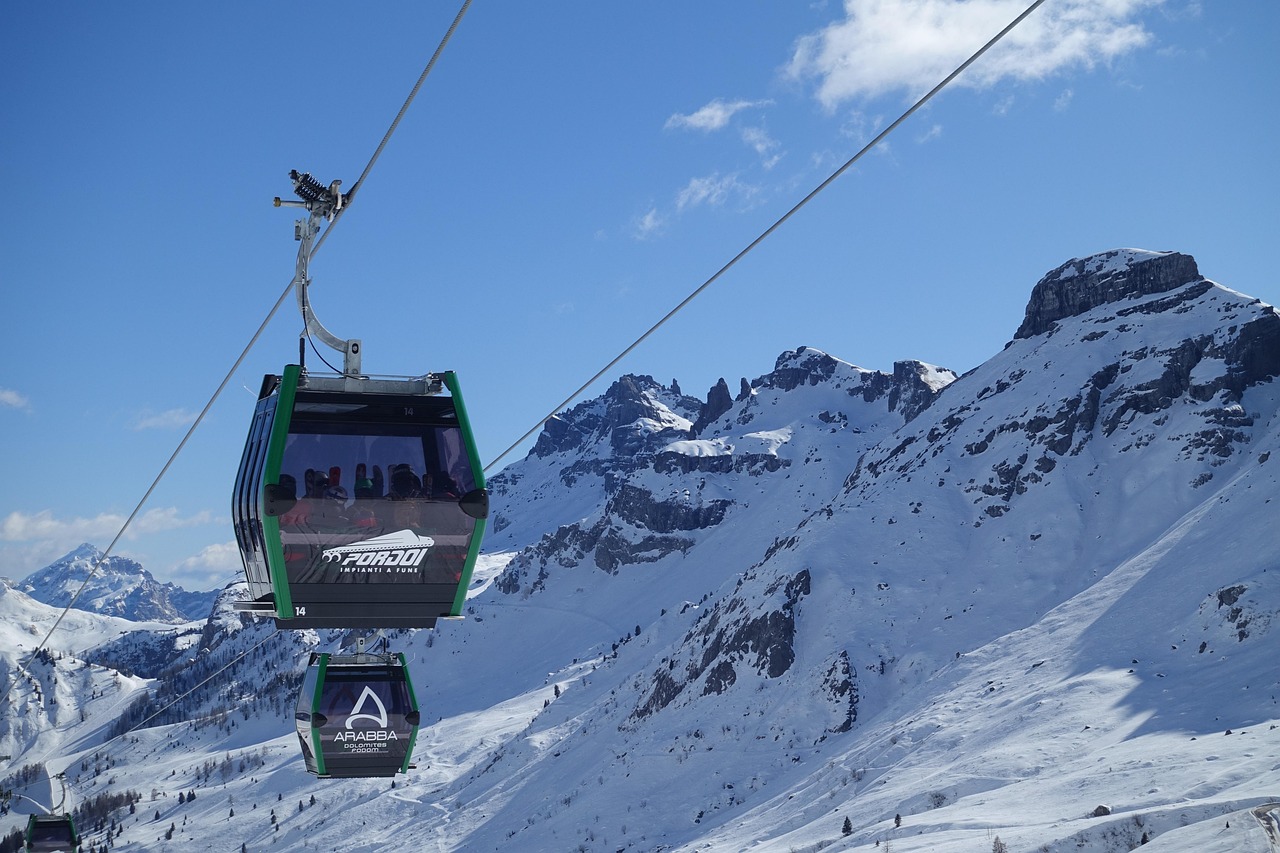
The Dolomites are one of the most comfortable regions in Europe for family ski holidays. Here you’ll find easy, wide slopes, modern lifts, children’s areas, world-class ski schools, and unforgettable UNESCO landscapes.
In 2026, part of the Dolomites will host the Olympics, which means crowds, high prices, and restrictions. But there are plenty of quiet and truly family-friendly resorts that remain accessible and comfortable.
Why Italy is the best choice for skiing in the Alps
The Dolomite Alps are an ideal region for beginner and expert skiers alike, while still being relatively budget-friendly compared to neighboring Swiss resorts.
All Alpine resorts—Austria, Switzerland, Italy—offer an almost identical (and high) level of service. But only in Italy will you find the perfect combination of relatively low prices for accommodation and ski passes, beauty, and delicious food.
A mild climate, well-groomed slopes, and reasonable prices—this is what sets the Dolomite Alps apart from other ski resorts. An extensive network of lifts linking 12 ski areas will keep you from staying in one place.
In addition to skiing, visitors can expect great tourist services and a wide variety of entertainment. The Dolomites are the perfect region for skiing, and the best place to get to know northern Italy, by visiting Milan, Verona, and Venice along the way.
When is the best time to ski in the Dolomites?
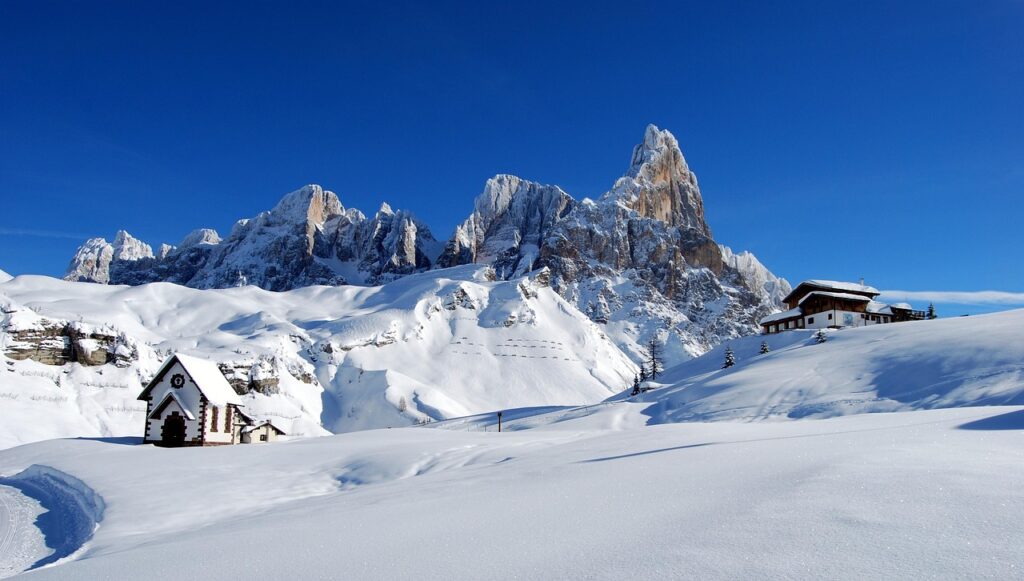
In general, in the Alps, the ski season is from November to early May. November, April, and May are for glacier skiing or high-altitude slopes, which is not suitable for beginners and children. So focus on the classic regular season: December – March.
If you choose resorts with 100% snowmaking, the best time for skiing is:
- December before Christmas, because there is already winter snow, minimum prices, and almost empty slopes.
- Christmas and just before it, because many spend the holidays at home, and there are still not many people. Prices are already high, but it’s still not crowded.
- January after New Year’s holidays—perfect: few people, prices drop, plenty of snow.
- March, especially after the 20th—also a good season, when almost no one is left on the slopes and prices are much lower. The sun may warm the slopes though, and after lunch the snow gets slushy. But the first part of the day is great for skiing.
The best ski period for a trip with children is spring break (end of March) and Christmas week.
Slopes and features of ski areas in the Dolomites
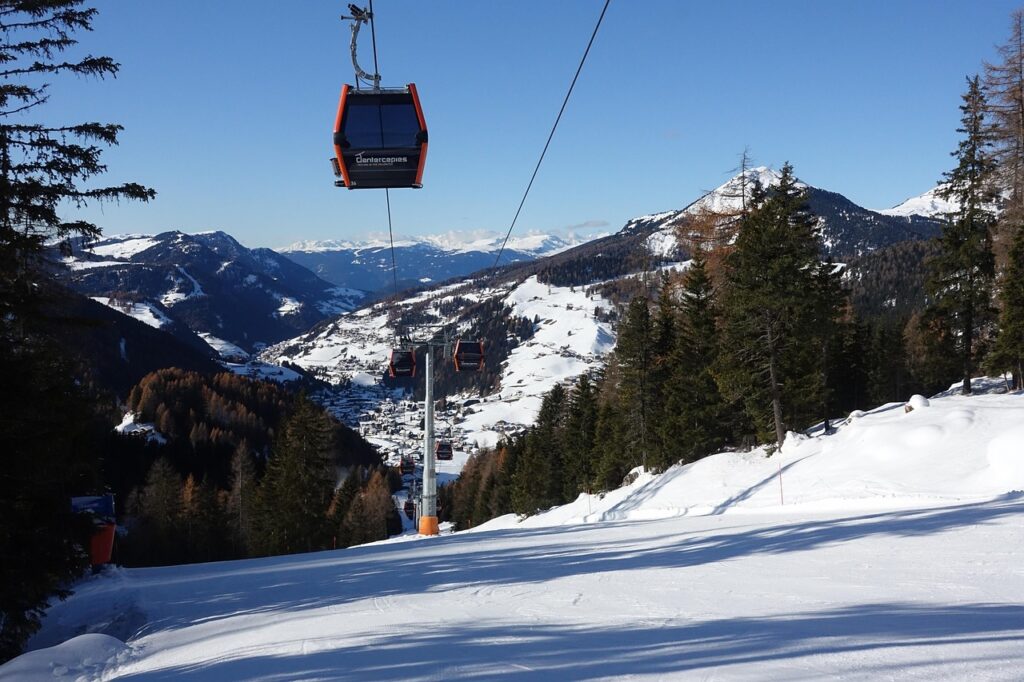
The Dolomites have 1,220 km of slopes and 12 ski areas (resorts) connected by a single ski pass. These resorts are: Cortina d’Ampezzo, Kronplatz – Plan de Corones, Alta Badia, Val Gardena/Alpe di Siusi – Gröden/Seiser Alm, Val di Fassa-Fassatal/Carezza, Arabba/Marmolada Fiemme/Obereggen, San Martino di Castrozza/Passo Rolle – Pass, Valle Isarco – Eisacktal, Alpe Lusia/San Pellegrino, Civetta.
Slopes for beginners and advanced skiers won’t let you get bored, the surrounding scenery is always stunning, and transfers between resorts are organized by special ski buses, Skibus (more on that below).
Please note that in winter 2026, the Olympic Games will be held in the Dolomites, and some resorts will be occupied with competitions and packed with fans.
Which resort to choose for a family holiday
The question always arises—which is better, or cheaper? If you want better, it’s all about the Italian Dolomites. Ski resorts here have large ski areas and modern lifts.
But if you and your family are skiing for the first time, the number of slopes doesn’t really matter. At first, you’ll be using the blue slopes for learning. If you can already ski a bit, variety will be important because the conditions on the slopes can vary, so it’s good to have options.
It’s better to choose a large ski area (that’s more than 100 km of linked slopes, connected not only by ski pass, but with ski-in/ski-out access). For this, the Sella Ronda ski area is ideal.
The best resorts for a holiday with kids are those with lots of different runs in the forest zone and at the edge of the forest. But more on that below.
Details about holidays in Sella Ronda Dolomites ski areas
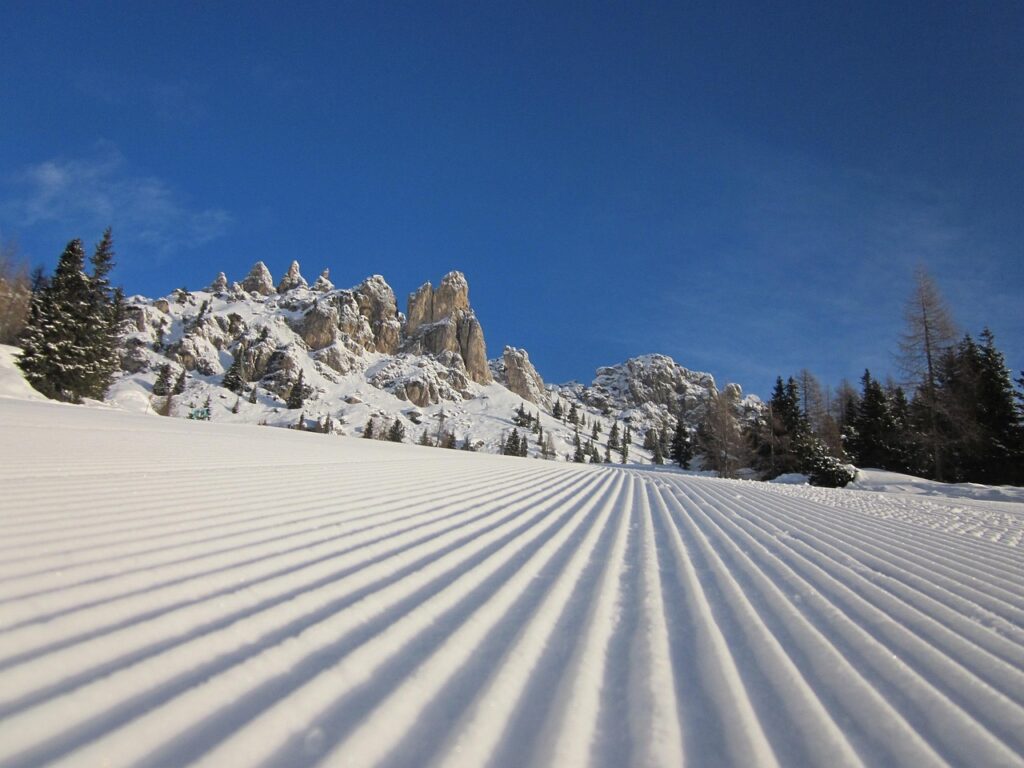
The Sella Ronda ski area runs through the four valleys of the Dolomiti Superski region—Val Gardena, Alta Badia, Val di Fassa, and Arraba—via the Campolongo, Sella, Gardena, and Pordoi passes. Val Gardena, Val di Fassa, Alta Badia, and Arabba/Marmolada are connected by lifts—totalling 500 km of combined slopes. Others require transportation in between. You can come here year after year and discover new slopes—there’s no way to try them all in one trip. The diversity here is simply crazy!
- Val Gardena (the most expensive of all areas, but with plenty of slopes of varying difficulty)—the best option if your family wants a good balance of runs for kids/beginners and opportunities for advanced adults.
- Alta Badia (plenty of blue slopes—perfect for beginners)—come here if you can’t ski yet and book instructors in advance, who will quickly get you started. It’s an ideal place for first steps on skis and a relaxed holiday with comfort and mountain charm.
- Arabba/Marmolada (too much shade and black slopes—not for the faint-hearted)—these are slopes for professionals and those with more “mountain” experience. If you have children—choose the gentle slopes of Monte Cherz, otherwise be ready for tough runs.
- Val di Fassa (perfect for prices and variety)—in the Val di Fassa valley, skiers who are already steady can test their beginner skills. There aren’t any true “green” slopes, but the fairly gentle part of the slope will suit beginners. A good choice for those who want stability, mountain breakfasts, flexibility, and convenient accommodation.
You can live anywhere and ski anywhere—just travel around by ski (that’s the main point of Sella Ronda). This is for those who already know how to ski and have got their kids comfortable on skis.
Val Gardena
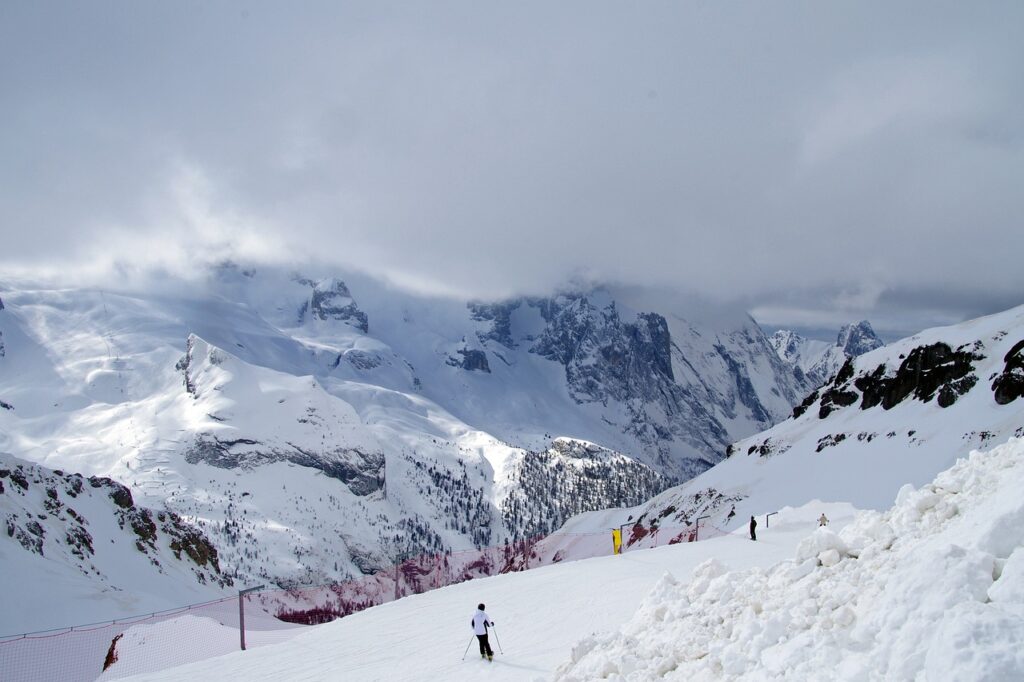
General information
- Val Gardena is one of the most famous ski valleys in the Dolomites, part of the Dolomiti Superski network.
- This area together with neighboring Alpe di Siusi has about 181 km of slopes, including 52 km “easy” (for beginners), with an overall split of 28% easy / 59% intermediate / 13% difficult.
- Lifts: about 77 systems in total: chairlifts, gondolas, drag lifts, and cable cars.
Why this is suitable for families and beginners
- There are enough “blue” runs and gentle slopes for learning and relaxed skiing.
- It’s possible to combine skiing in Val Gardena with Alpe di Siusi, which gives flexibility depending on weather and preferences.
- Many ski schools, equipment rental points, and hire shops—convenient for first-timers.
- Well-developed infrastructure: villages where you find accommodation, shops, rentals, eateries—everything is close.
What to pay attention to
- Some slopes are red and black—for experienced skiers. But families with children can simply choose the easy sectors.
- Due to popularity (Val Gardena is the so-called “gateway to Sella Ronda”) there can be a lot of people—it’s better to plan skiing on easy slopes in the morning or late evening.
Where to stay – hotels and apartments in Val Gardena
Garni Cir – Excellent location near the slopes. Delicious breakfast served from 7:30 to 9:30 – ideal for morning skiing. Room and bathroom are great and impeccably clean. Best of all—the balcony with an incredible view of the mountains.
ArtHotel Anterleghes – Gardenahotels – Perfect location—in Ortisei, the Val Gardena and Dolomites village. Very tasty food, modern decor, spa and ski room. The cherry on top—a great personal mini-ski bus service you can book at any time to get to the hotel from the lift.
Val di Fassa

General information
- Val di Fassa / Carezza is one of the big Dolomiti Superski areas, with a wide range of slopes and modern lift infrastructure.
- The area has about 150 km of slopes (total for the valley), though some are under different subzones—families and beginners should choose the lowest ski areas.
Why this is suitable for families and children
- Many areas have beginner slopes and easy descents—suitable for learning.
- Ski schools and kids’ programs—for children of different ages and skill levels.
- Well suited for families who want to combine skiing and rest: there are shelters, cafes, relaxation zones, mountain huts with food.
Features
- There are both blue and red routes for those who already have skiing skills—great balance for families with both active and less-experienced members.
- There are also snow parks and freeride zones—for teens and young people.
Disadvantages
- The area is quite large—may require a car or careful planning of logistics.
- If the weather is bad on high slopes, it’s better to stay on safe lower levels.
Hotels – apartments in Val di Fassa
Inter Hotel B&B – Excellent place: room is modern and fully equipped with all amenities. Check-in is convenient and access is clear. There is available parking. The staff are polite and helpful. Breakfast is great. You can also order a hearty dinner on site. Good location near the Pozza di Fassa spa and lifts to the Catinaccio mountain range.
Residence Anda – Excellent apartment location. The apartment is very spacious, with two bedrooms and two bathrooms—ideal for families. There’s also a large balcony, living room with sofa and table and chairs, and a small kitchenette. Large free parking. Great views from the balcony—mountains/gondola/chairlift. Spacious rooms and well-equipped kitchen. Friendly and helpful staff.
Alta Badia
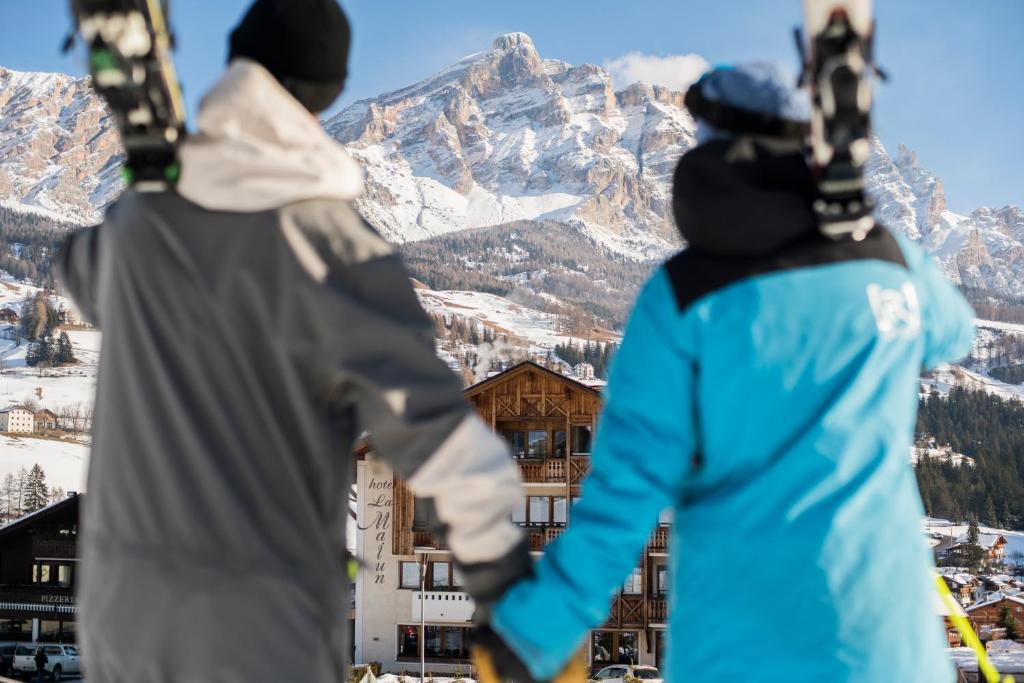
General information
- Alta Badia is another part of Dolomiti Superski, with 130 km of slopes in total.
- Official data: 116 slopes (10 drag lifts, 30 chairs, 10 gondolas, etc.) at altitudes from 1,324 to 2,778 m.
- Distribution of slopes: 74 km (57%) — easy, 47 km — intermediate, 9 km — difficult.
Why it’s suitable for families and beginners
- High share of easy slopes, making it ideal for learning and relaxed skiing.
- Comfortable infrastructure: traditional mountain villages, family-friendly hotels, restaurants serving local cuisine; an atmosphere combining coziness and mountain flavor.
- Good combination of beginner runs + options for more experienced skiers—so the whole family can enjoy the holiday.
What to keep in mind
- It’s best to choose a hotel closer to the lifts and convenient slopes—for ease with children.
- In snowy seasons the slopes can get busy—it’s best to opt for less popular days or ski early/late.
Hotels-apartments in Alta Badia
Ciasa Verena – Perfect location—next to the lifts, in the center of Corvara with plenty of shops and restaurants and beautiful views. Spacious rooms, tasty breakfasts, cozy atmosphere.
Ciasa de Zeno – Clean and tidy apartment with three bedrooms—great for a big family or several families with children. The apartment has all the amenities for comfortable living and cooking. Beautiful spacious terrace with a great view.
Arabba / Marmolada
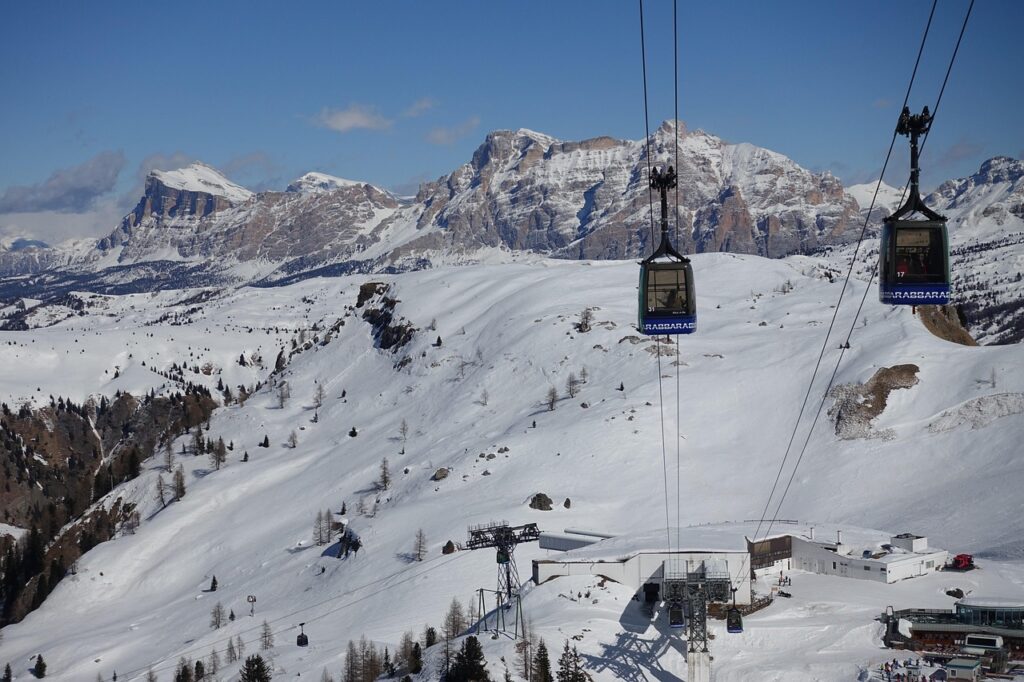
General information
- Arabba–Marmolada is a ski region with 44 slopes (63 km) and 26 lifts. Of these, 23.6 km—easy (about 37%), 30.5 km—intermediate, 8.9 km—difficult.
- Total altitude — from 1,446 to 3,342 m (Marmolada is the highest peak of the Dolomites)
Why this can suit families and beginners
- There is a Monte Cherz sector with gentle, easy slopes—good for teaching kids and first runs.
- If you want—the view of Marmolada opens from here and there are options for more advanced skiers—but the family can pick easy zones.
- Less popular compared to the “Sella Ronda” zones—fewer crowds, calmer atmosphere.
Features
- Highest point—the Marmolada descent (for experienced skiers)—gives a real “mountain” feeling. But it’s better avoided if with kids.
- For families: it’s best to choose accommodation close to Monte Cherz or in the Arabba valley—to have easy access to gentle slopes and spend less time traveling into the mountains.
What to pay attention to
- If you go up high—you need experience or an instructor; for kids and beginners—stay in the valley or on lower areas.
- Consider the weather: on Marmolada, conditions can change—have backup plans.
Where to stay in Arabba / Marmolada
Agriturismo El Cirum Pelmo – Lovely apartments with a view of the Dolomites. The apartment is clean and spacious, has everything needed, and the beds are comfortable. Beautiful spot surrounded by nature with a wonderful view.
Hotel Garni Royal – A little gem in Arabba. Located close to the town center, this small hotel has newly renovated rooms of a very high standard with a view of the valley. There is a ski room with heating—so your equipment dries every evening, and parking on site.
Ski pass prices 2025/2026
| Area / resort | 1 day — adult / child (if there is a discount) | 7 days (≈ 6–7 days) — adult / child* |
|---|---|---|
| Val Gardena & Alpe di Siusi | € 77–86 / € 50–56 Val-Gardena.com | ≈ € 364–404 (adult) — for 6 days in the 2025/26 season Val-Gardena.com |
| Val di Fassa / Carezza | € 58–71 / € 41–51 (children/youth) snowstash.com | 6-day: price varies depending on the season; approx. € 330–380 (adult) snowstash.com |
| Alta Badia | € 77–80 (adult), children ≈ € 56 (if child rate) skicorvara | 6-day pass: € 364 (off-season) / € 404 (peak) skicorvara |
| Arabba / Marmolada | € 73 (adult) / € 51 (junior) / € 37 (child) dolomiti.superski | 7 days: € 392 (adult) / € 274 (junior) / € 196 (child) dolomiti.superski.org |
* Prices may vary depending on the season (low / high), and purchase online or on site. For the best rates it’s recommended to buy skipasses in advance on the Dolomiti Superski website.
Tips for preparing a family trip to the Dolomites
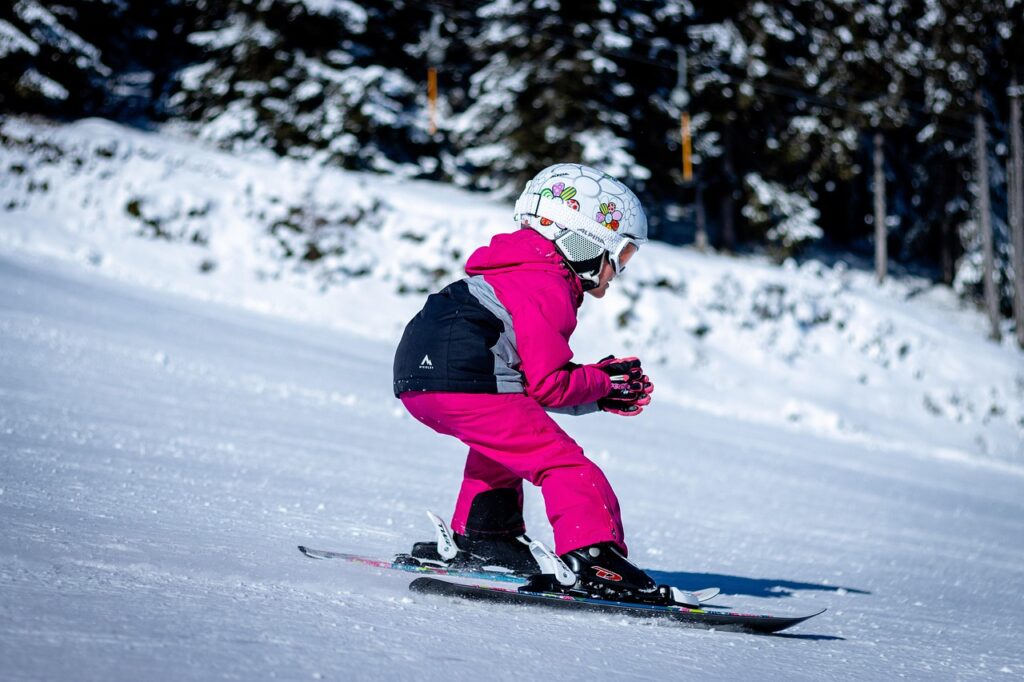
If you are traveling with children, you should know the answers to the following questions.
Which resort to choose when traveling with children?
The question arises—should you pick a higher or lower resort? It all depends on your and your children’s skill level. If you are ready for steep slopes and can manage in bad conditions, choose a glacier resort. But if you’re a beginner—don’t go up there. High-altitude slopes are great in good weather. But the weather is changeable; there could be a cold snap or heavy snow even in milder conditions. Don’t take risks if you’re not confident, and especially don’t drag your kids up top.
Even just with gray skies and no sun, skiing becomes unpleasant because you can’t see details on the snowcover. There’s also altitude sickness at high elevations—it can get bad if you immediately ascend above 3,000 meters.
So there’s no need to chase the highest resort. Ideally, the resort slopes are in the forest—at the border of trees and the alpine meadow—and above, on the open slopes. In bad weather, you can just ski lower.
From what age can you take children skiing to actually ski?
I’ve seen plenty of small children, for example five-year-olds, confidently skiing on mountain slopes. So, parents who love to ski try to get their children on skis starting around age five. Getting them on skis means hiring professional instructors to do it. Should you start a child even younger? It’s considered that kids under 5 don’t have the muscular development for this kind of load. The child tires quickly and lacks confident coordination (which is important for safety). If you start learning at age 8—you can teach a child in a few days, and then go skiing together.
Do kids need to learn with an instructor?
If you are skiing for the first time (adults or children)—it’s best to take an instructor who will teach you. You can start in a small group—it’s cheaper. Groups for kids and adults are different. Then, for a day or two, book a private instructor who will quickly get you skiing confidently. First, it’s about safety, and second, you’ll quickly move up to the next level for more fun.
What to save on—and what not to?
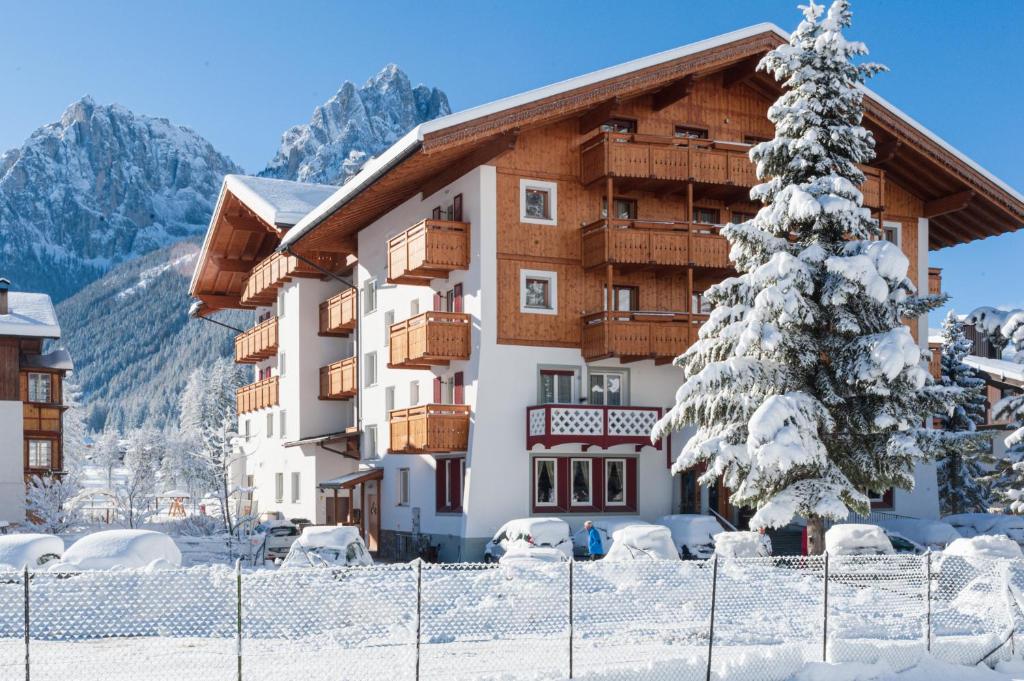
- If you’re a beginner, absolutely don’t skimp on an instructor. This is your safety and your ability to get real enjoyment.
- Equipment – if you’re a beginner, you might not need to buy your own skis right away. First learn with rentals, and then decide whether or not to buy. But a helmet is mandatory for everyone—in Italy, for example, you won’t be allowed on the lift without one. We bought our own; they don’t take up much space in the car, and it’s more hygienic to wear your own, given that heads sweat.
- Medical insurance – never skimp on sports insurance. It could save you a lot of money for an emergency evacuation, or even your life in an emergency. Also, make sure your policy includes personal liability coverage, because in Europe, in a collision with another skier it might be very useful.
- Accommodation – you can save by staying in apartments with your own kitchen. You’ll save on hotel stars and dinners/breakfasts by cooking together as a family. Or look for accommodation that offers full or half board—it can also be cheaper than hotels plus restaurants.
- Smaller resorts often offer package deals for accommodation + ski pass almost at the price of the ski pass alone.
- At restaurants for lunch, ask for the menu of the day—for a small price you’ll be offered first+second course and a coffee or wine.
- Look for resort deals. Many resorts offer interesting discounts—seasonal, family, age-related, for online purchases, discounts from hotels (1 day free), early booking (sometimes up to 30%).
- Logistics—compare what’s more advantageous for your family: to come by car, or fly to Milan, Verona, Venice and rent a car. Or take a transfer to the resort and use the free ski bus—it all depends on where you’ve booked your accommodation.
Useful materials on journeys6senses
- Where to stay in Milan: districts and tips — a good base and starting point if you fly into Milan airport.
- Venice – independent travel for three days – for those flying into Venice airport.
- Verona – what to do in Italy’s most romantic city – this magical city is sure to be on your route.
Car rental—budget options at Rentalcars.com
Hotels – I always book through Booking.com
Insurance can be purchased at Hotline.Finance.