
What to see in Petra – main sites and routes you can cover in 1-2-3 days, ticket prices, unique features of this place and planning tips, what to see and how many days to spend. Plus information about accommodation and restaurants in Petra.
Petra – one of the New Seven Wonders of the World, is an archaeological monument over 2500 years old.
Petra was the capital of the Nabataean Kingdom and during its heyday was a magical oasis attracting caravans from across the Middle East. Once a wealthy metropolis, it is now Jordan’s main tourist attraction.
Petra impresses and amazes—in spite of its huge popularity, it is truly worth your attention in Jordan. Temples and tombs carved out of sandstone, the remains of a once mighty city, a beautiful canyon of natural stone walls—one of the New Seven Wonders of the World astounds with its monumentality.
Here is how to make the most of Petra, how to see the most iconic points in two days, visit the viewpoints, and not get “overwhelmed” by all the impressions.
Road trip in Jordan – route, main sights and costs of the trip
How to Get to Petra

Petra is located near the town of Wadi Musa – 235 km from Amman and 125 km from Aqaba.
- The road from Amman to Petra starts on the Desert Highway, after Hashemiyah you turn onto road 814, then via the King’s Highway to Wadi Musa.
- The route from Aqaba to Petra also starts on the Desert Highway, then in the Abu Al-Luson area you need to turn onto the King’s Highway and follow it to Wadi Musa.
Transport options:
- We rented a car and drove straight to Petra after arriving by plane.
- You can book a transfer from Amman to Petra.
- Or a day tour to Petra, or if you wish a ready-made tour from Amman to Petra, Wadi Rum, and the Dead Sea.
How much do Petra tickets cost and what are the options
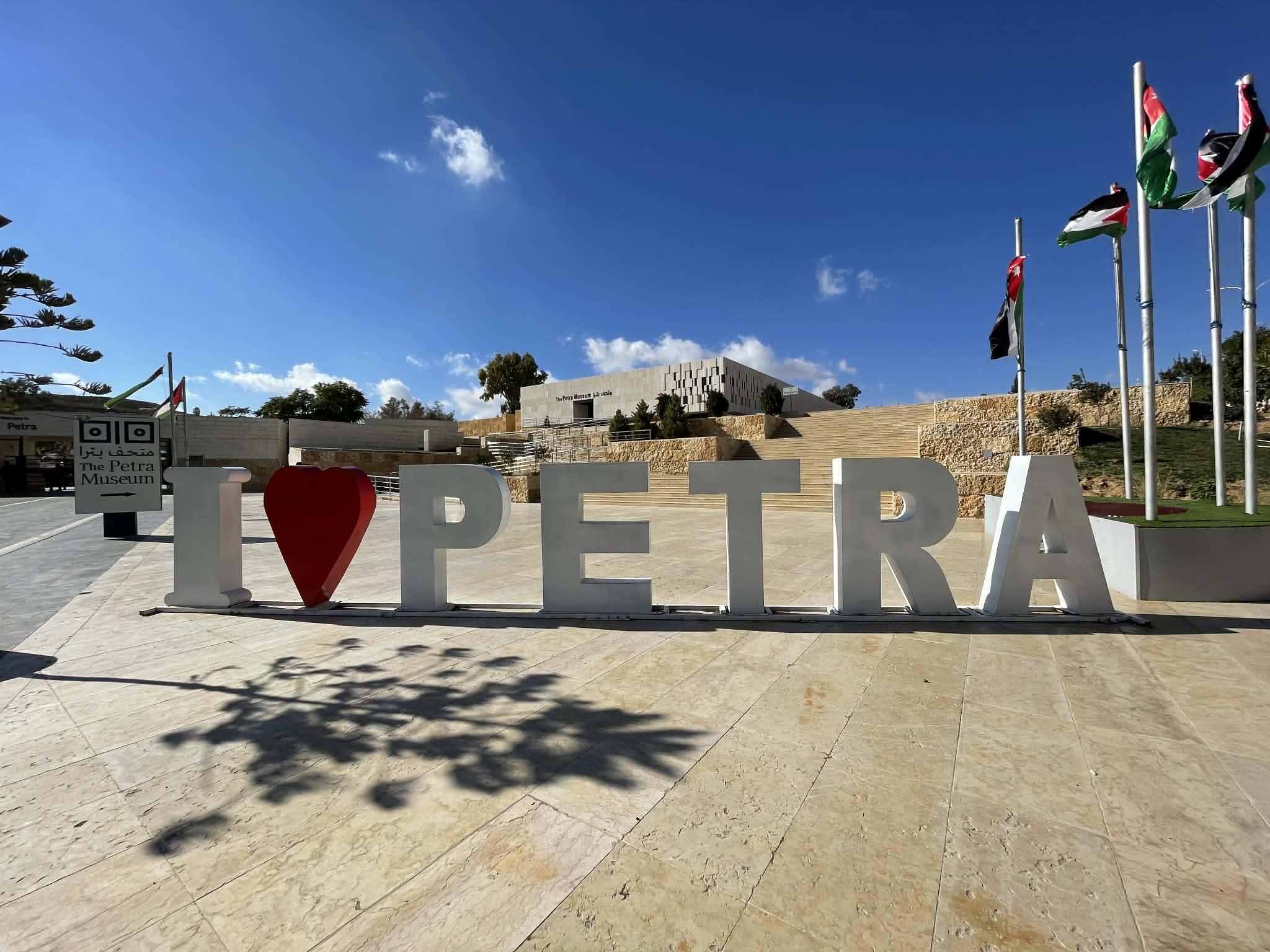
A ticket to Petra is one of the largest expenses on your trip. These are among the most expensive outdoor museum entry tickets I have ever encountered.
Cost is 50/55/60 JOD – 70/78/85$ for 1/2/3 days, respectively. If you pay by bank card at the box office, add +2% to the ticket price.
Visitors with two- or three-day tickets must use them on consecutive days.
Tourists visiting Petra without staying overnight in Jordan (tours from Sharm El Sheikh or Israel) – 90 JOD.
Is it worth coming to Petra for just one day (if you are traveling by car)? I believe not – why?
You won’t have time to see the main sites (not to mention ALL), simply because they’re far apart.
Accessibility, Services, and Safety in Petra
Most Petra routes are designed for a healthy, active person – basically anyone can handle the simple routes. Or you can use the services of donkeys or camels, which are offered everywhere.
However, if you want to see more, you’ll have to do a lot of walking. There are often stairs up to hilltops. In one day we walked 16-18 km, but we didn’t use local transport services.
Accessibility
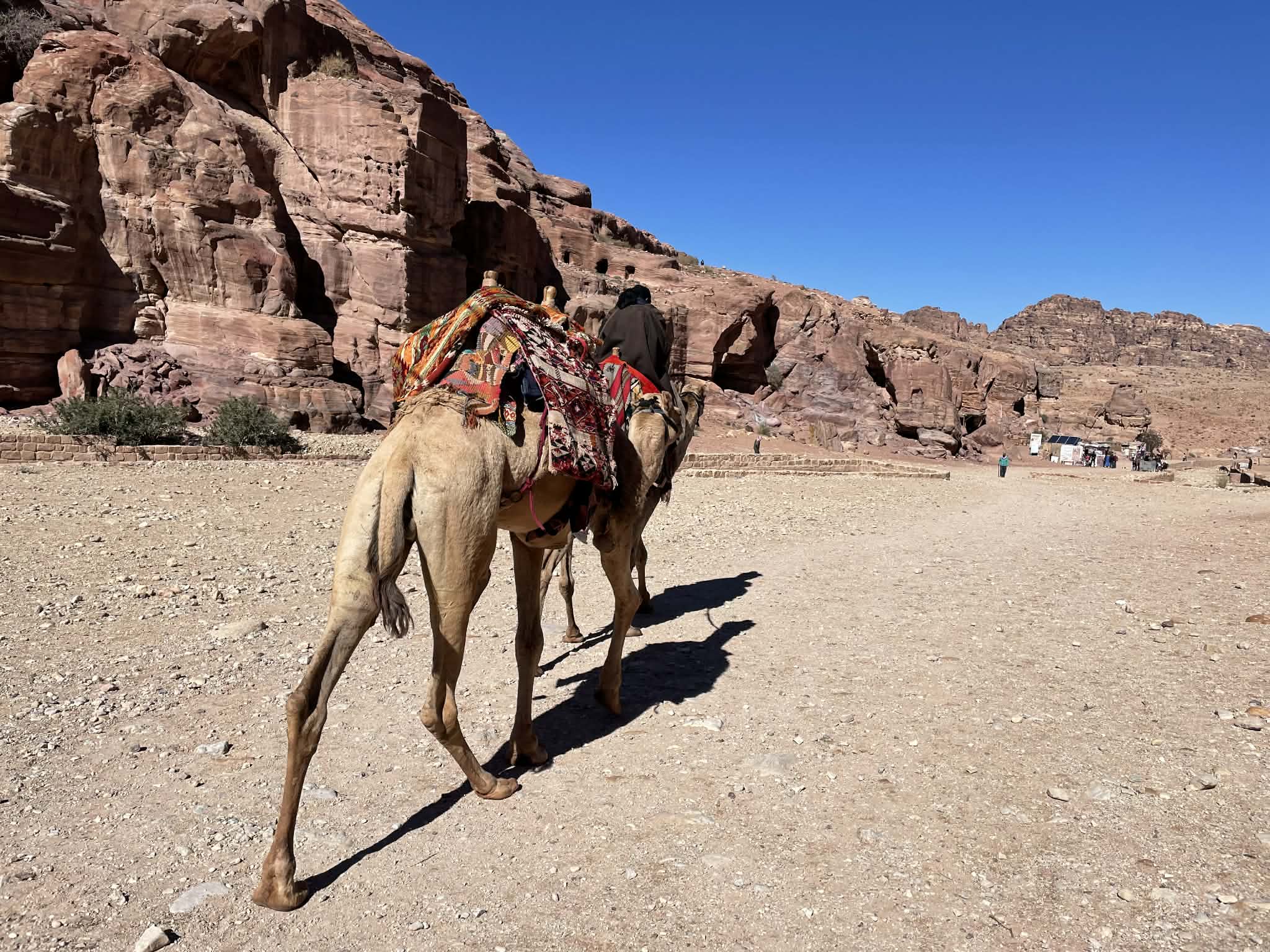
For those who find it difficult to walk long distances, climb stairs, or scramble over rocks, there are options:
Horses – you can ride a horse from the main entrance to Petra to the start of the Siq canyon (1 km). Everyone will try to convince you it’s included in the ticket price. That’s both true and untrue. The horse owner will ride you, then demand a substantial tip (10–30 JOD depending on their boldness). You could refuse, but why make a scene? Just know in advance and decide for yourself whether to ride the easiest part on a horse. In my opinion, don’t fall for this trick!
Club micro electric bus – this can only take you along a section of the Main Route – from the start of the Siq canyon to the Treasury. Costs 15/25 JOD one way/round trip. Club vehicles operate daily 07:00–17:00.
Camels and donkeys – you can ride them along various segments and routes. For example, donkey/camel from the Treasury to the Main Temple costs 10–20 JOD, from there to the Monastery is the same again. You can bargain. In the low season with few tourists, Bedouins (especially late in the day) drop prices – you can ride a donkey or camel for 5 JOD.
Of course, if you have health issues, don’t climb the rocks, but donkeys can take you up to many viewpoints: for example to the Monastery (a long and strenuous climb into the hills), the Royal Tombs, and the Palace Temple. Also on the Al-Khubtha trail – leading to the upper viewpoint over the Treasury. Donkeys also carry tourists here, so nothing is impossible – bring cash and your bargaining skills!
Safety

There are no fences, guardrails, or barriers anywhere in Petra. And I’m glad they haven’t installed them – these would spoil this open-air museum. In Jordan, they aren’t worried about this, so the ancient monuments look as they should – without nets, fences, etc.
Security wise – police are stationed at many locations, so everything is quiet and calm.
If you’re not confident in your abilities or feel dizzy – just don’t try the upper viewpoints and stick to the easy trails.
Bedouins in Petra are both friendly and persistent. They live inside the archaeological site and tourists are their main income. Most often, if you politely refuse with a smile, they smile back and immediately lower the price on everything. But some get annoyed (we did meet a few – mostly women). Kids will chase you – “give me money and biscuits!” Sometimes they follow for a while begging. Some offer souvenirs and postcards – many foreign tourists are touched and can’t resist buying.
Services in Petra
There are small cafés at the main route points where you can get tea, juice, and snacks. These spots have toilets. You can also buy souvenirs in Petra – if you bargain a bit, you can get magnets, jewelry, and incense for next to nothing. Bedouins want to sell so badly, they’ll drop the price by several times. Just bargain!
The Visitor Center has free brochures and maps and a free toilet.
Before the entrance to Petra you can also visit the Petra Museum – it’s included in the ticket price.
What to Take With You to Petra
- Clothes – according to the season, but dress in layers so you can take off a layer if it gets hot or add one if it gets cold.
- Shoes – comfortable sneakers for all-day walking (with non-slip soles, in case of rain).
- In your backpack – water (a must) and snacks (optional), since there are cafés inside Petra where you can eat and have tea. But water is a must! If rain is in the forecast, bring raincoats. It can pour down from the canyon walls soaking you in minutes (and sometimes you’ll even have to wade).
- Headwear – hat, sunglasses. It can get very hot during the day.
What to See in Petra in One, Two, or Three Days
To see the main highlights of Petra, one full day is enough. This means you should arrive at opening (8:00) and leave before 17:00 in winter or 19:00 in spring and fall (before sunset). But in my experience, perfectly planned trips never happen. Try as we might, we arrived at Petra only by noon. By the time we dropped bags at our hotel and bought tickets, half the day was gone. So we bought two-day tickets right away.
One-day tours are usually for those coming in an organized group. I can only sympathize: pay 50 JOD = $70 for a three-hour run through Petra – not exactly worth the money. But it’s possible, just like sightseeing tours in large cities (Paris, Vienna, Prague, etc.).
So I’ll list the main attractions you can realistically see in one, two, or three days in Petra. There’s no point in describing all routes in Petra – you can read about them on the official website – Visit Petra. There you’ll also find descriptions of difficulty levels, average time, and all major sites.
It’s much more useful before your trip to understand what you might have time to see in 1-2-3 days. The route descriptions use ideal time estimates. In reality, you need to allow for rest stops, your fitness, the weather, and other factors that affect how quickly you can get around Petra.
But first, here’s what you can spot during your visit to Petra.
Bab Al-Siq
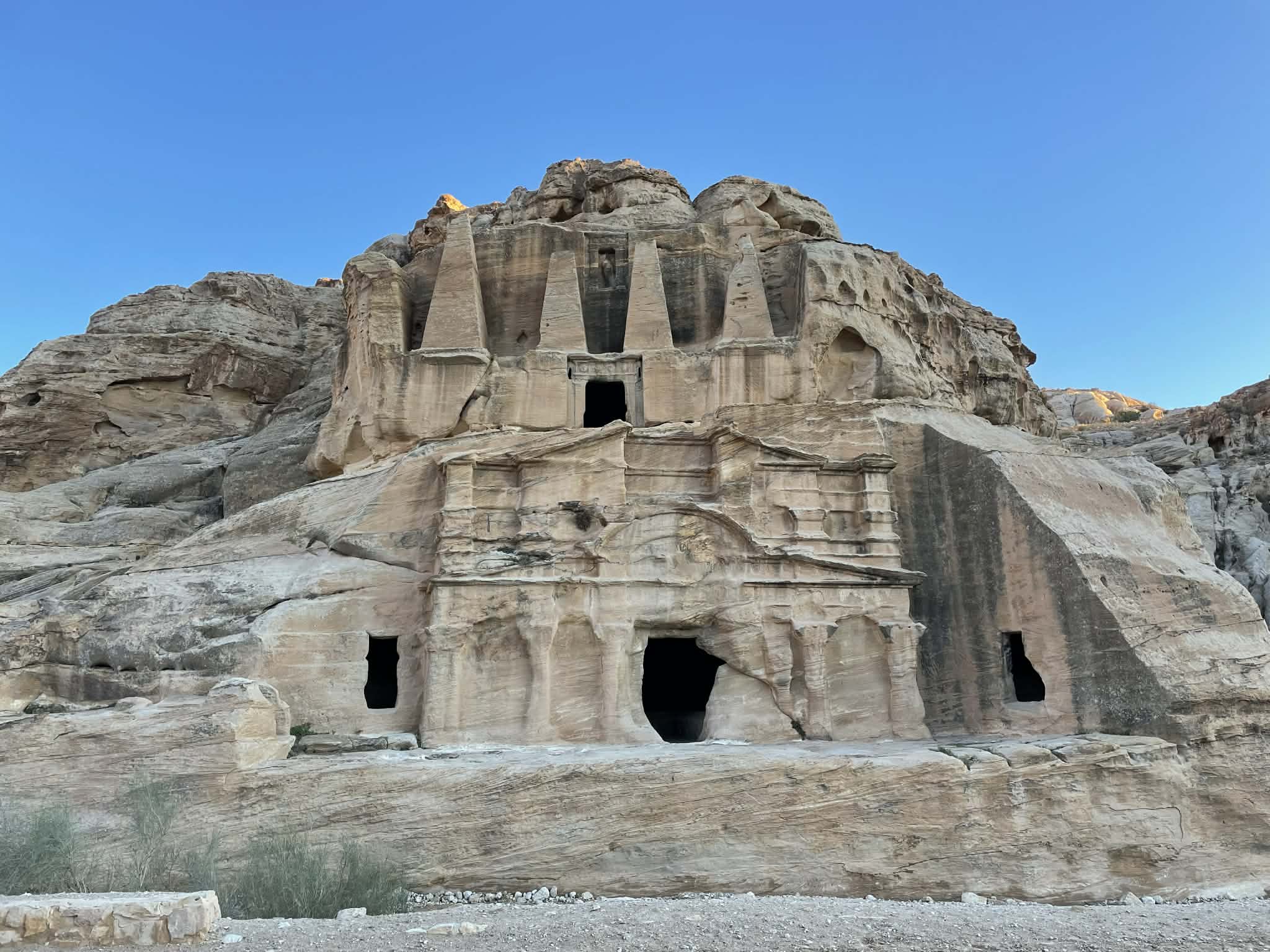
Just upon entering Petra you will see three huge carved rocks – the 1st-century Obelisk Tomb and four pyramids. The statue marks a burial chamber for five people, and below is a banqueting hall, the Triclinium.
An inscription in Nabataean and Greek on the rock refers to a funerary monument meant for Abdomanchus and his family in the 1st century.
The Siq

The Siq is a gorge and the ancient main entrance to Petra, starting from the dam and ending at the Treasury. The narrow entrance is about 1200 meters long, up to 12 meters wide, and 80 meters high. On both sides of the Siq are channels that carried water from Wadi Musa into the city.
Ceramic pipes carried this water along the right channel, while on the left side locals could filter water at various points. The dam prevented floods, and locals could draw water from there. The water was considered sacred—hence the statues and carvings of gods along the Siq.
The Treasury (Al-Khazneh)
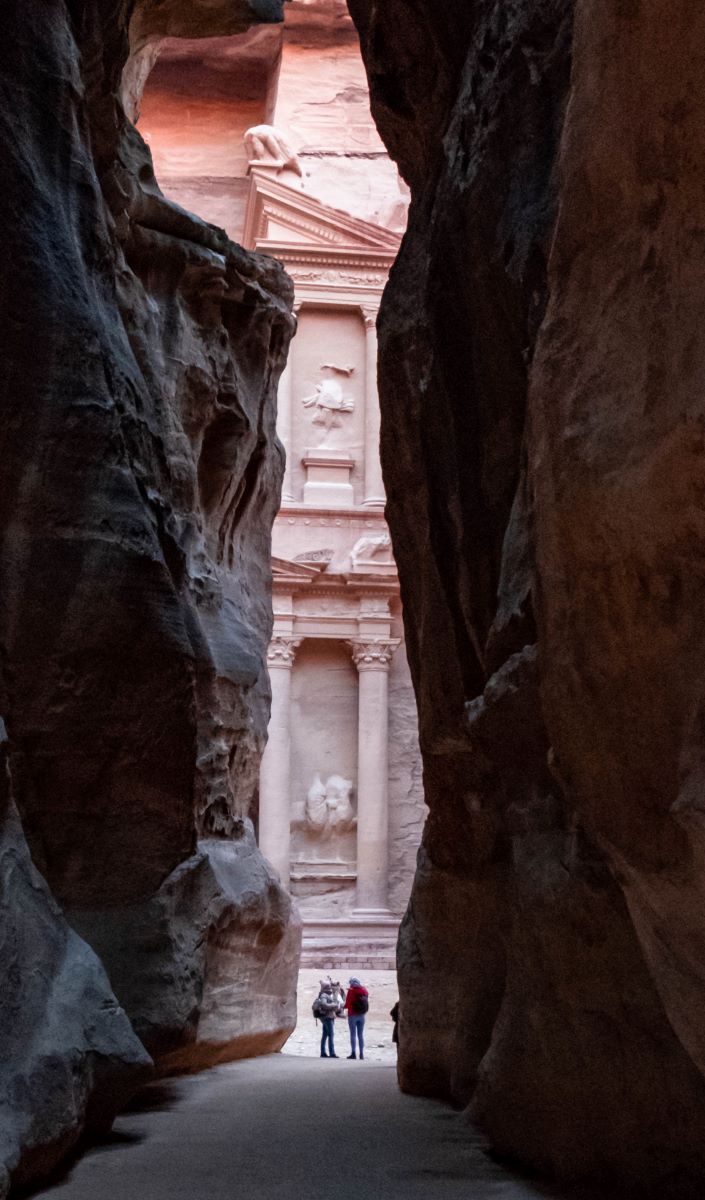
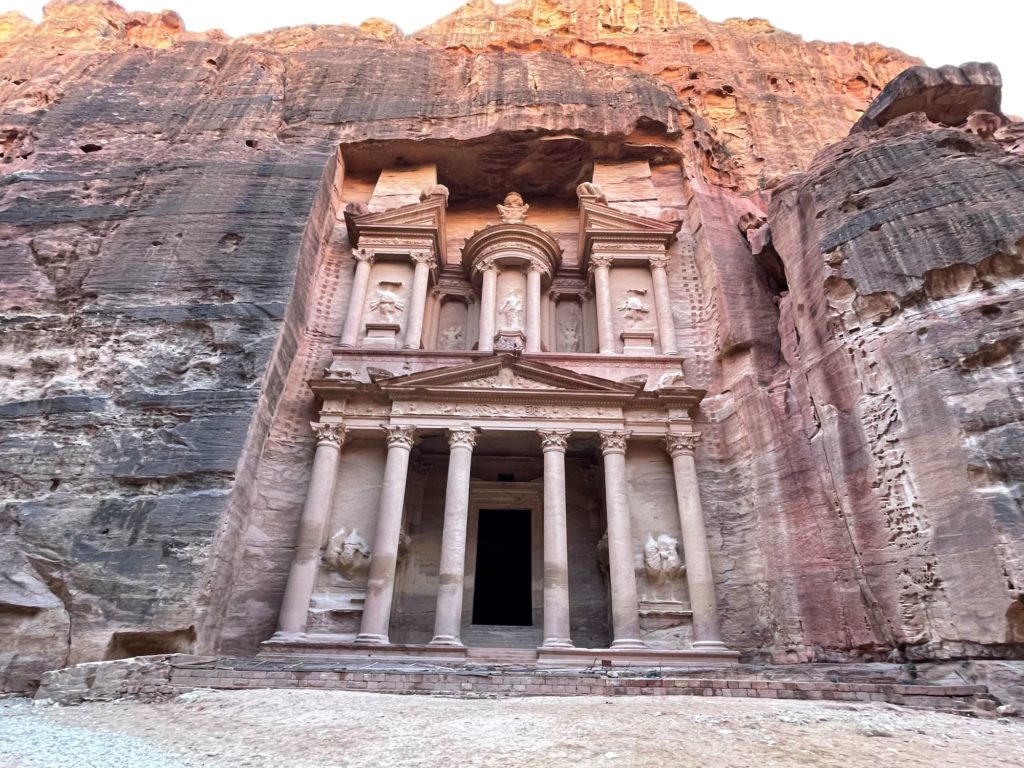
When you exit the Siq gorge, you’re greeted by one of Petra’s most spectacular sights – Al-Khazneh. This magnificent facade almost 40 meters tall features elaborate decorations: friezes, figures, and more. Legend says the Treasury held the riches of a pharaoh.
It’s believed to date from the 1st century BC, is two stories tall (25 meters wide, 39 meters high), and contains three chambers. Recent excavations found a cemetery beneath it, suggesting it was either a temple or a place for preserving valuables.
Street of Facades
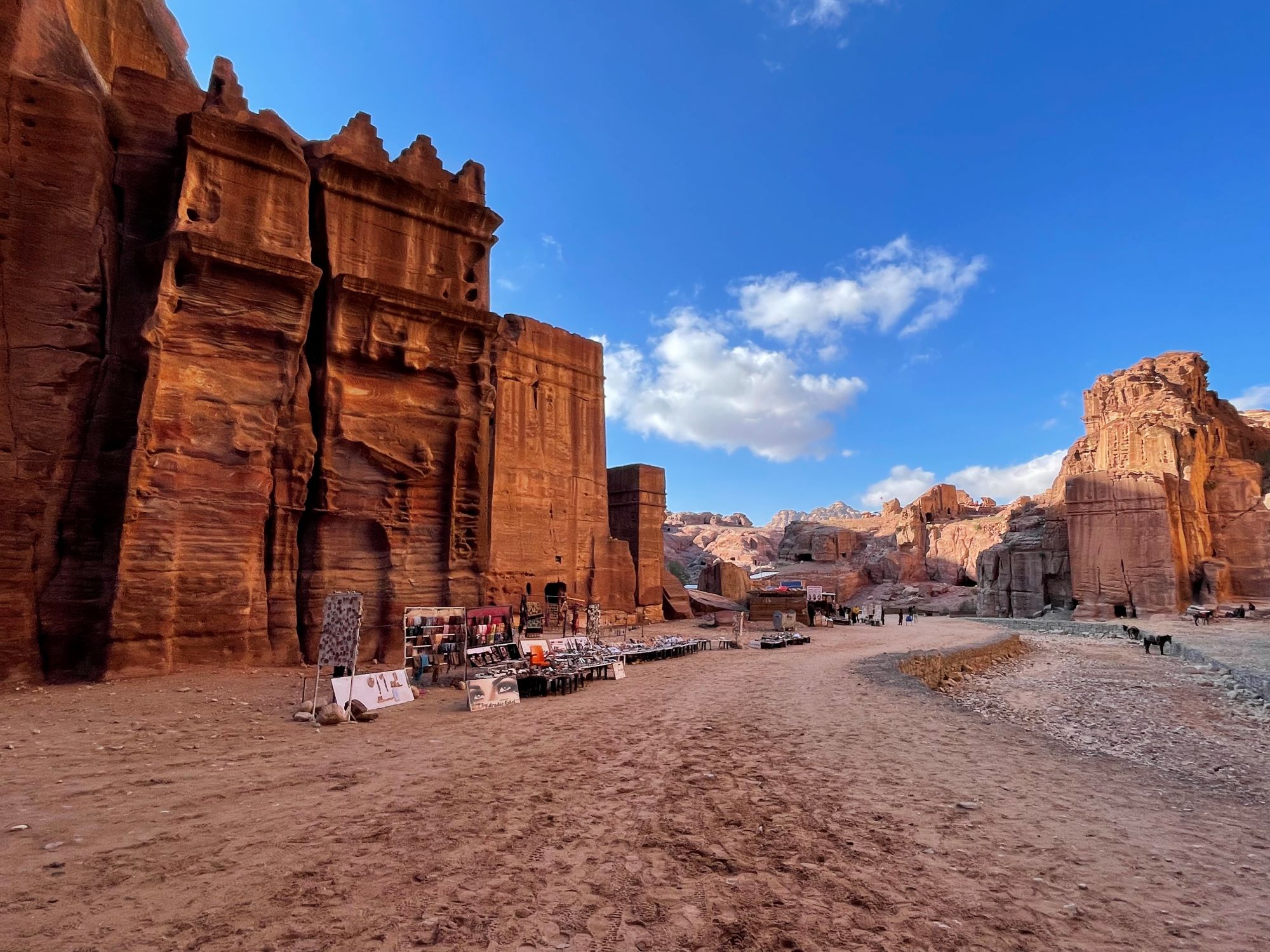
Next to the Treasury, after exiting the Siq, you’ll find this street and a row of Nabataean tombs carved in stone. There are several ornate Nabataean burials, though some are ruined by time and the elements.
Historians believe these are the resting places of Petra’s officials and even royal family members. Aneisho’s Tomb, a minister of Queen Shaqil II of Nabataea, faces the outer Siq.
Theater
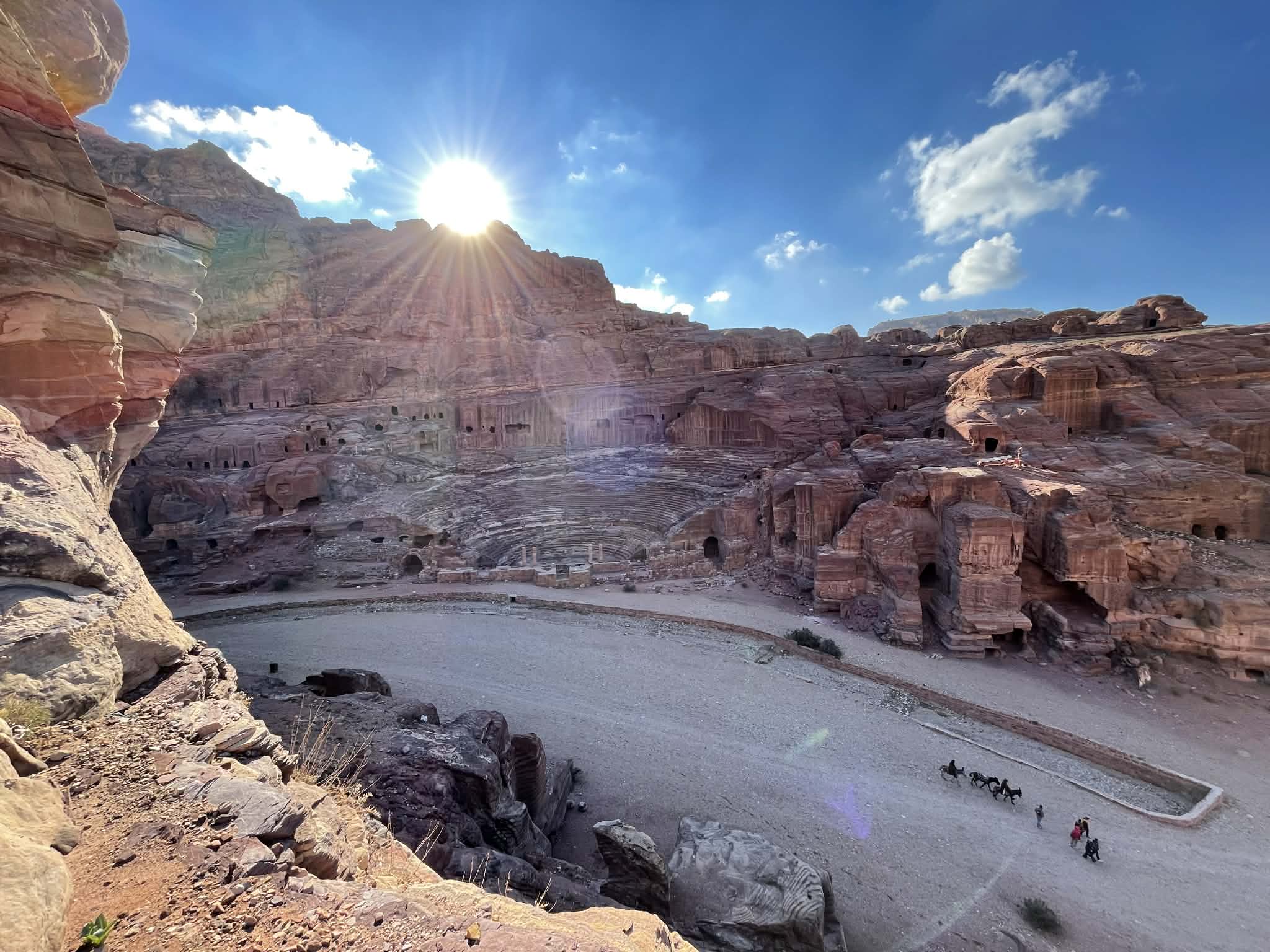
Opposite the Nabataean tombs is the huge amphitheater. Ancient times had many large amphitheaters, but Petra’s theater with three tiers of seating and passages between, seated only 4000 people. It is located beneath the High Place of Sacrifice and carved into the mountainside.
It dates from the time of Aretas IV, whose reign began in 4 BC; he ruled for thirty years. The back wall of the stage was later rebuilt by the Romans.
Royal Tombs
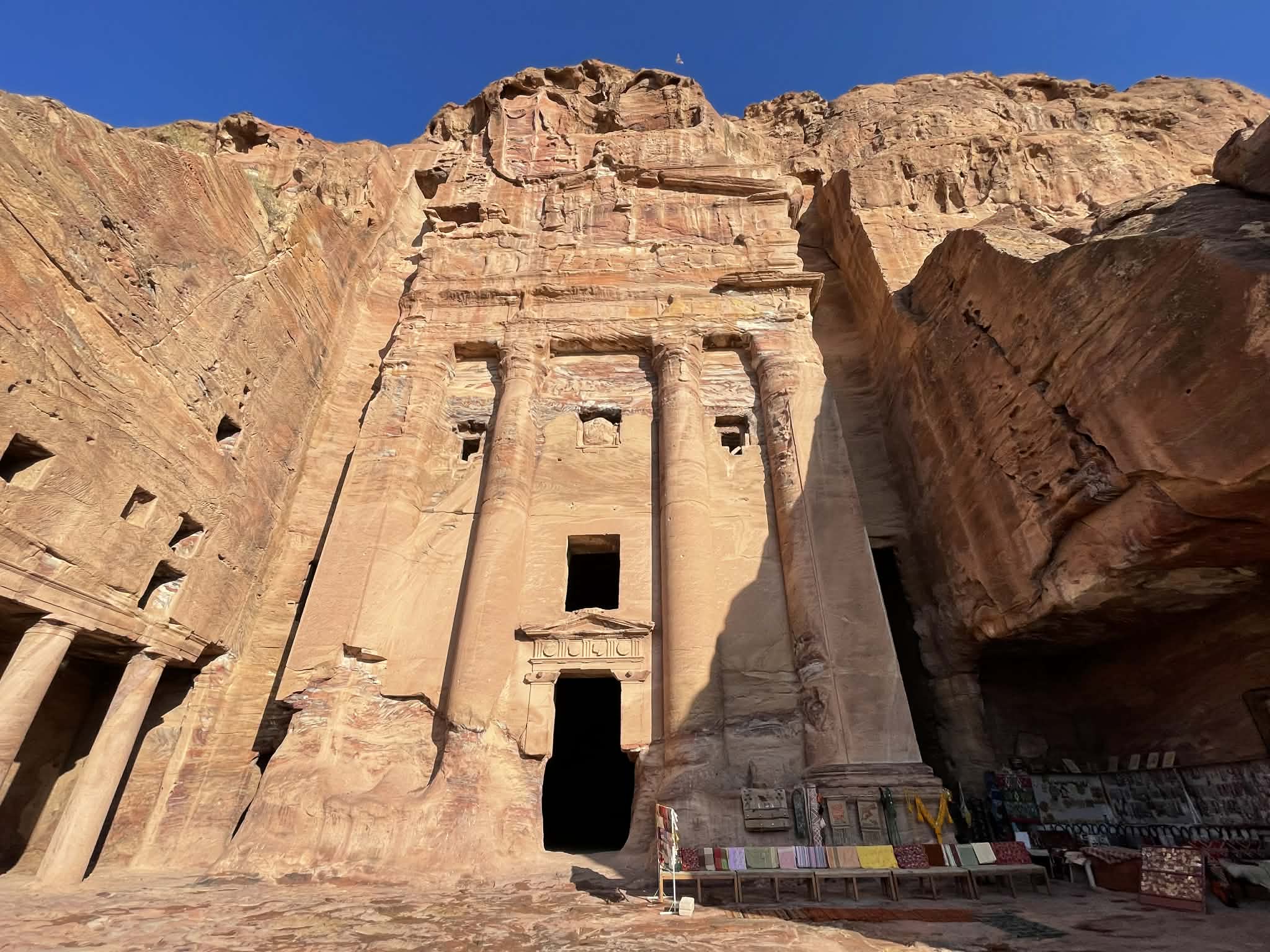
Petra has several royal tombs, and you can stroll through them; you should do so:
- The Urn Tomb was built in AD 70 and features a courtyard with colonnades on both sides. High on the facade are three niches with small burial chambers, and four centuries later it was converted into a Byzantine church.
- The Silk Tomb to the north is similar in age and got its name from the bright colors of the rock. The facade measures 11 by 19 meters, with a central door and four columns.
- The Corinthian Tomb is larger at 27.5 x 26 meters and consists of four rooms. It was used for purification with basins in front and to the sides.
- The Palace Tomb is the largest; 49 x 46 meters with 12 columns, 4 gates, and 18 pillars.
Great Temple
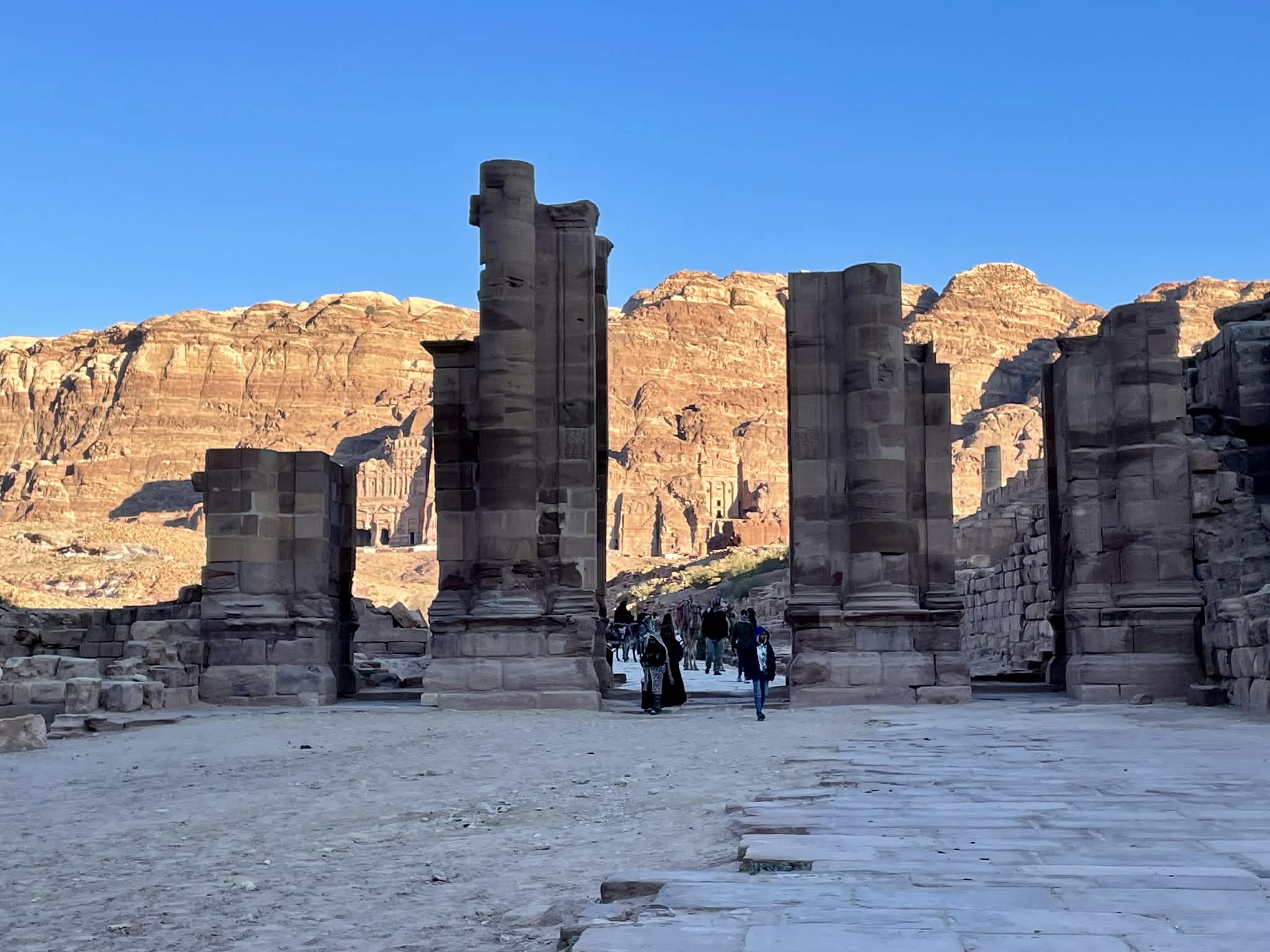
The “Great” temple complex is of archaeological and architectural interest. Excavations by Brown University have been ongoing since 1993. The red and white exterior contrasts sharply with Petra’s pink-red rock. It dates to the late 1st century BC and was expanded later in the 1st century AD.
Monastery
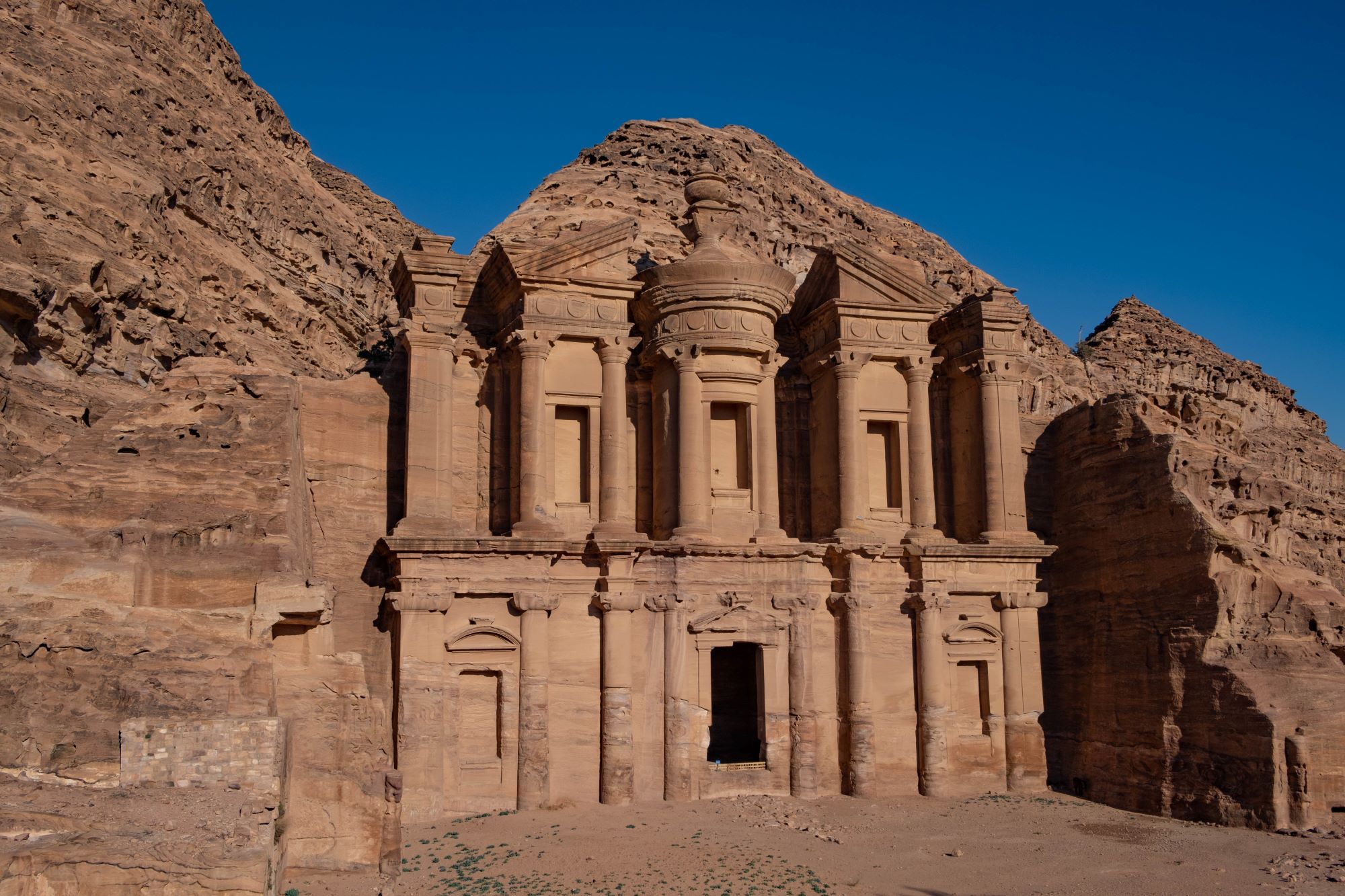
The Petra Monastery is huge—47 meters wide by 48 meters high. It was built in much the same style as the Treasury except for its external sculpture. Inside are two benches and an altar at the rear. It’s thought to have been used for religious gatherings dating to the reign of Rabel II, in the 2nd century AD. The Byzantines used it as a Christian chapel; carved crosses are still visible on a back wall.
Petra by Night
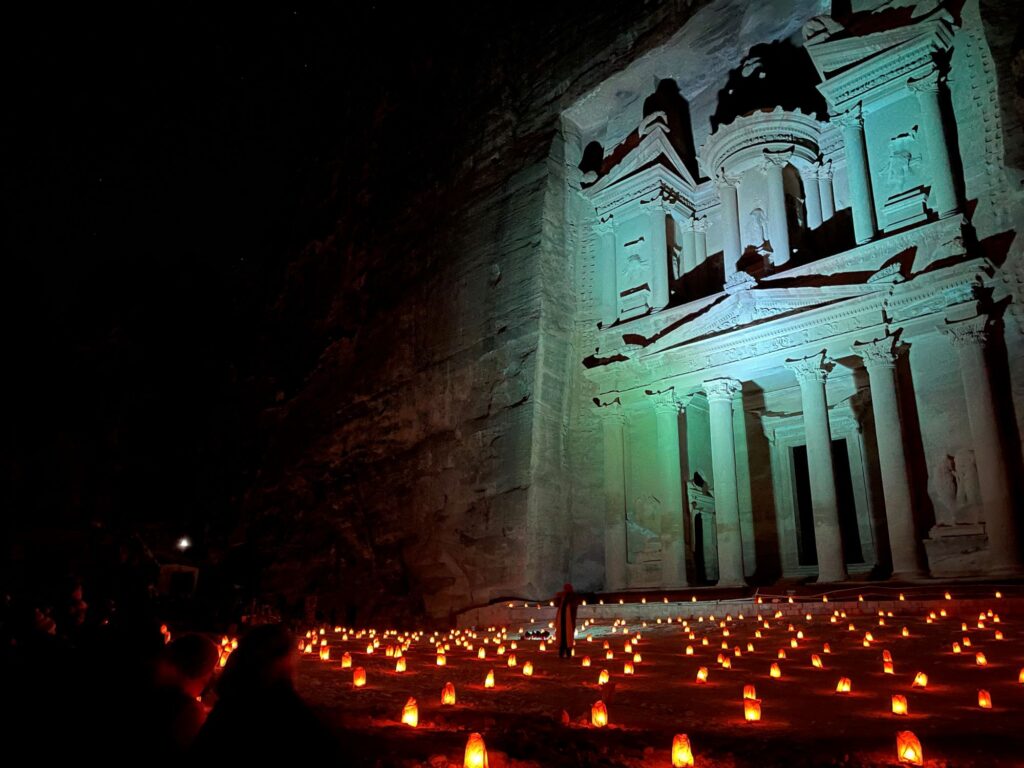
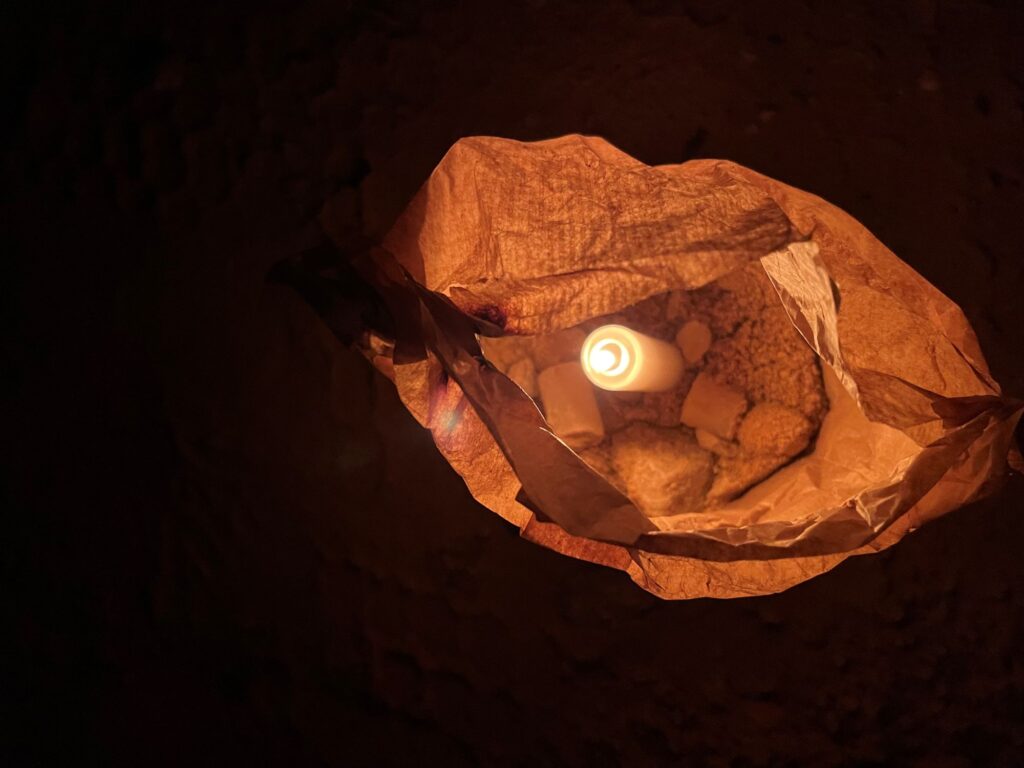
The night show in Petra is gorgeous – the city is lit by candles. About 1,500 candles are set out along the narrow gorge from the Siq to the Treasury. The tour lasts two hours and is offered three times a week beginning at 20:30 from the Visitor Center. It is only conducted with an authorized guide.
The Petra Night Show is a chance to see part of the stone city illuminated by a thousand candles. The route runs from the main entrance through the Siq to the Treasury—about 2 km lined with burning candles in paper lanterns. The scene is incredible!
Along the Siq there’s mystical music; at the end, you’ll see the Treasury illuminated by 1,500 candles. Mats are spread out for tourists to sit and listen to stories and legends of Petra told by a Bedouin with flute music. Tea is served, and you can take photos and enjoy the rocks under the stars and candlelight. It’s a magical way to explore the world wonder at night.
- The night show in Petra is not included in the entry ticket price.
- Price is 30 JOD = $42 and cash only! Children under 10 are free.
- The night show runs Mondays, Wednesdays, and Thursdays weekly.
- Starts at 20:30 – lasts 2 hours.
- You can only attend the night show if you have a daytime ticket to Petra – for at least one day.
- Advance reservations are not possible.
- There is an unlimited number of tickets – in high season, it can get crowded.
Hiking Routes in Petra
Petra has three popular hiking trails. The only real limitation for an active person who routinely walks 10–15 km a day and climbs 5–9 flights of stairs is time! That’s why I keep saying – plan at least two days for Petra.
Main Route
Main route: the Siq canyon, Treasury, Amphitheater, Street of Facades, Royal Tombs, Colonnade, and the Great Temple.
Route length – 5 km one way (8 km round trip)

Time – to see all these listed sights will take at least 3–4 hours. If you stop for tea, souvenirs, and breaks – add another hour. If the Bedouins talk you into the viewpoint above the Treasury (not the topmost), add another hour up and down and for photos.
Take note: At the Treasury, you’ll be mobbed by young Bedouins offering to guide you to a mid-level viewpoint for great shots of this iconic monument. They claim to have private viewpoints with carpets and cushions. They ask for 20 JOD – and will drop to 5 JOD for two.
Actually, you can reach the highest viewpoint for free if you circle round on the surrounding route.
Route to the Monastery (Ed-Deir)
Distance – 3 km one way
Time – 1 hour one way
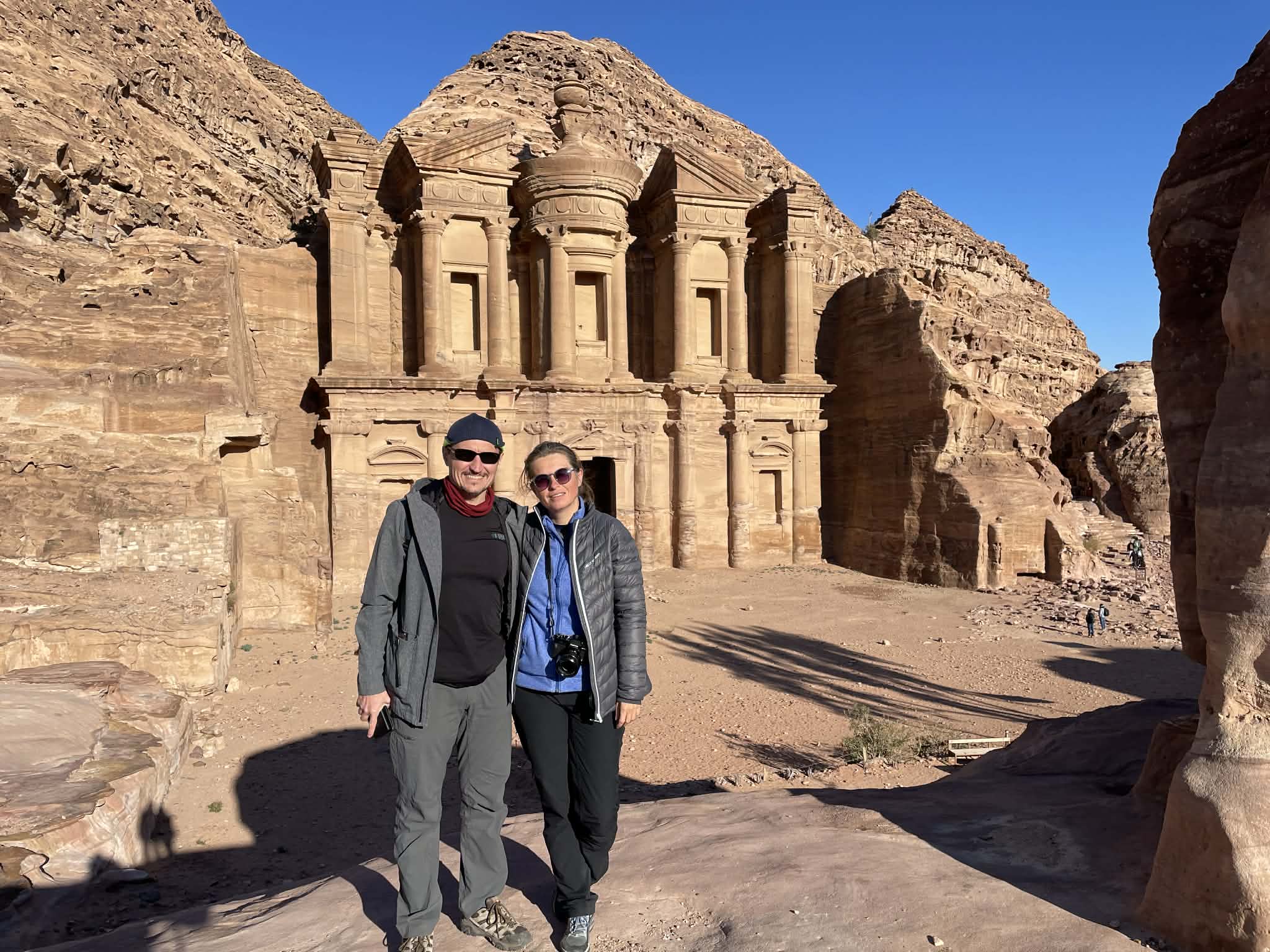
If you begin exploring Petra early in the morning, you can add another route – to the Monastery Ed-Deir. Time and stamina permitting, this is doable – we managed it. That’s about 3 km one way, all uphill on stone stairs. And then you have to come back down the same way – you’ll be tired!
Across from the Ed-Deir Monastery there’s a café serving cheap tea and snacks – a good place to rest, enjoy sunset on Ed-Deir’s facade, eat, and head back down.
All told, in one day you can hike a minimum of 10–12, maximum of 16–18 km, some of which you can cover by donkey or camel.
In two days, you can hike the above – Main Route and Monastery Route. And add many branches to various viewpoints. For example, on the Monastery hike you can add the upper trail to the Ed-Deir dome – Back Door hiking route to the Monastery. Or from there hike to the desert viewpoint.
Important! A licensed guide from the Petra tourist center is needed for this trail.
Al-Khubtha Trail
Time – about 1.5 hours round trip
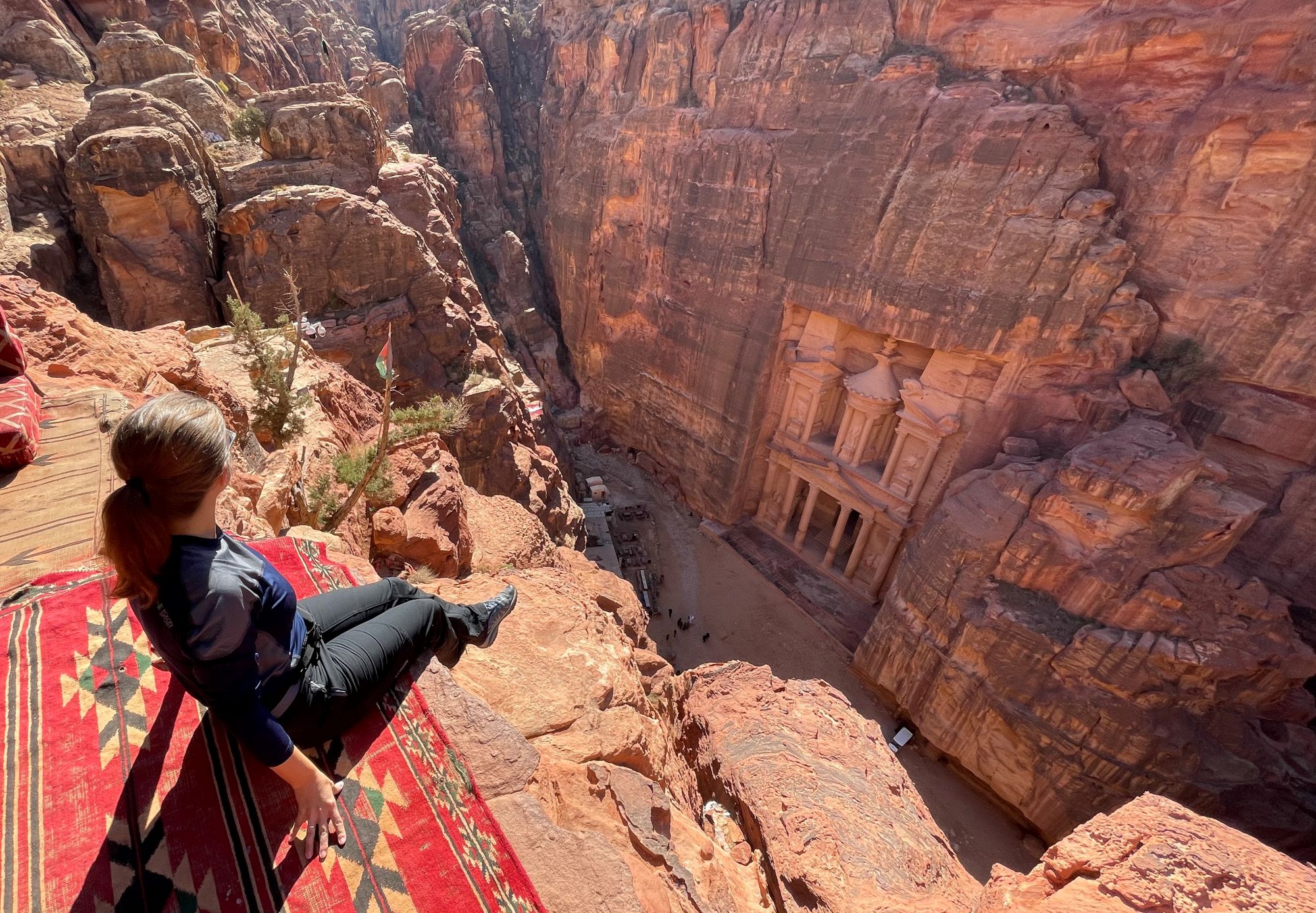
Additionally, hike the Al-Khubtha Trail – it leads past the Royal Tomb up the rocks to the viewpoint above the Treasury. On the way are tea houses, guides may offer tea and a helpful donkey. Just follow the trail markers up—first stairs, then partly over rocks—to another tea house directly above the Treasury. Tea is optional.
Route to the Ruins of Al-Habis Fortress
This is another easy hike before you climb to Ed-Deir Monastery – take the route up to the ruins of Al-Habis fortress. There are two trails—red, simple and fast, blue is also not hard but gives a great canyon view where the Petra trail mountain valley passes below. The blue route passes a beautiful tea house overlooking the canyon.
The Al-Habis trail is less traveled near the top, so be careful. However, the views of Royal Tombs, Colonnade, and the Great Temple are stunning!
Route to the High Place of Sacrifice
Route length – 3 km one way.

You can also add the High Place of Sacrifice route. It’s past Petra’s main route. To get there, you climb up a steep rise, but your reward is amazing views. Route length – 3 km one way.
The trail starts between the Colonnade and the Great Temple, outside the Siq gorge. At the High Place Trail sign, head up Nabataean stairs. At the upper viewpoints, there’s a panorama of Petra. Then the route continues to Wadi Farasa and the Lion Fountain, Triclinium Garden, Roman Soldier Tomb, Renaissance Tombs, and Az-Zantur excavations. Follow the main path to the Street of Facades then turn left, before reaching the Theater, where stairs lead to the High Place of Sacrifice.
Al-Madras Route (Indiana Jones Trail)
Only allowed with a local guide – 500 m each way
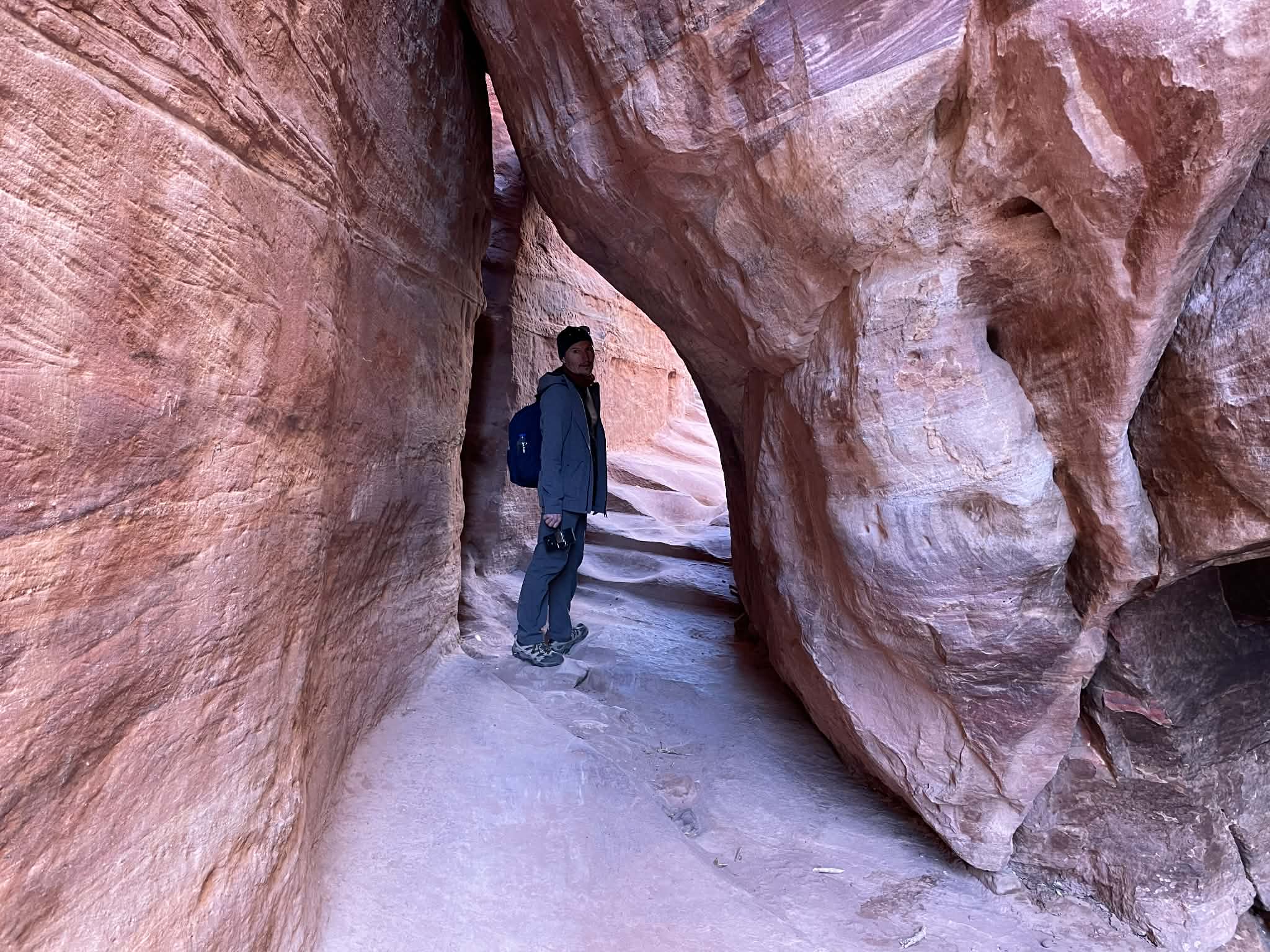
This trail is short, but unmarked on the map, no signage, and lots of dangerous segments.
Before entering the Siq you must turn left and cross the stream bed. The path heads into the hills through beautiful rocky scenery. At the end, there’s an alternative viewpoint over the Treasury. If you wish, you can combine the Indiana Jones trail – from Al-Madras – with the High Place of Sacrifice route.
What else to see near Petra
- Little Petra – located 10 km from main Petra. Still free, as it was only recently opened to tourists. Allow a full day to explore Little Petra.
- Tomb of Aaron (Moses’ brother) – only accessible on foot through mountains and canyons. You can shorten the route by jeep (10–20 JOD). Walking takes 5–6 hours. Pilgrim groups with guides use this route – don’t get lost.
- Montreal Castle (Shobak) – 30 km from Wadi Musa, you can drive and visit the Crusader-era ruins. Official site.
Accommodation and Restaurants in Petra
All hotels are in Wadi Musa, near the entrance to Petra. In low season, accommodation is quite affordable – for 30–40 Euro/night for two you can get a decent city hotel in Petra. Chain hotels – Hilton, Marriott – cost more as usual: from $150 per night for a double room.
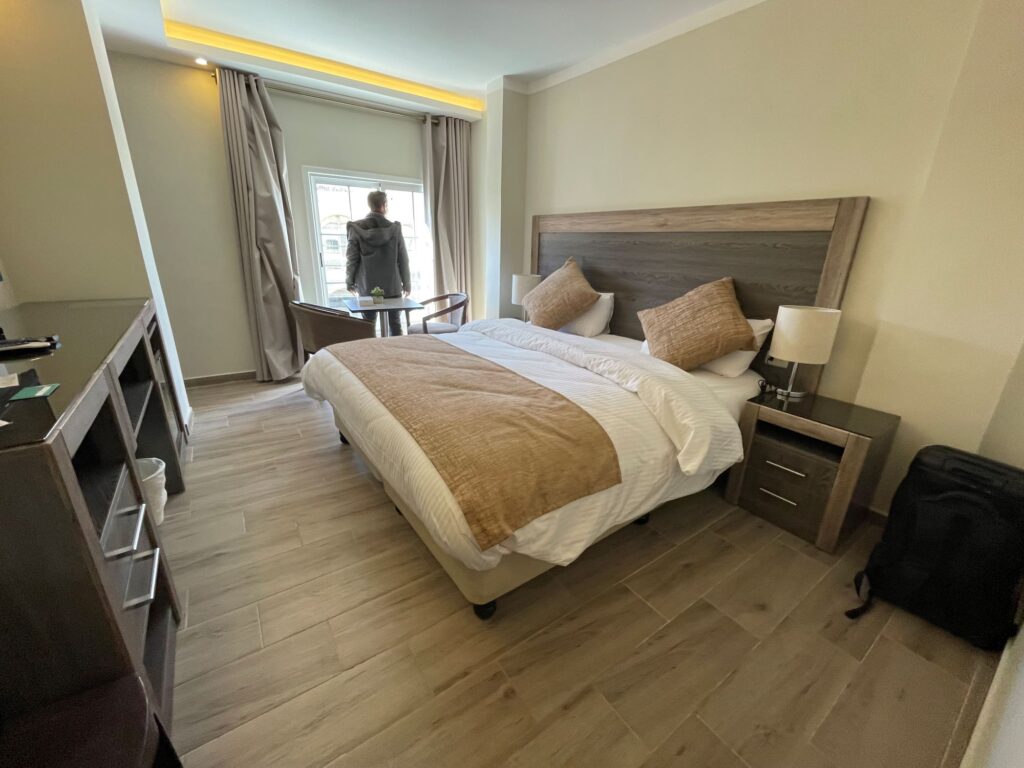
We stayed at Moses Residence – great hotel, attentive owner, comfy beds, hot shower never failed, heated by air conditioner. It’s in the center of Wadi Musa, 1.5 km from Petra’s entrance – we drove. There are lots of good restaurants in this part of town, and there’s a bank and stores for all necessities.
Other good options near Petra:
- La Maison Hotel ⋙ – Good location, close to the Visitor Center. Many restaurants and mini-markets nearby. Easy to change money. Perfect strategic base for exploring Petra.
- Mövenpick Resort Petra ⋙ – stunning hotel, gym, great pool and spa, wonderful terrace and rooftop restaurant with sunset views over Petra. Location is best in Wadi Musa, right by the entrance.
- Petra Main Gate ⋙ – Perfect location next to Petra Museum entrance. No parking problems—park right on the street or in private parking.

Next to our hotel was a great restaurant Al Wadi Restaurant. The starter is the best bread and hummus in Jordan. We ordered camel kebab, Jordanian dishes – maqluba (chicken on a bed of rice and veggies), and another tasty dish with small meat pieces in stewed vegetables – galaya. Tasty fresh juices. Prices are above average, but the quality is worth it!
Useful articles and links:
- Wadi Rum Desert – Martian branch in Jordan
- Top 10 things to do in Jordan in one week
- Warm week in February – where to go for a winter vacation
We rented a car from DiscoverCars – I wrote about it in detail here – what car we had, the rules and driving features in Jordan.
Green Card and Travel Medical Insurance for trips abroad – online at HotlineFinance
Hotel and apartment bookings – Booking.com


