

What to see in Berlin in 3 days on your own: Reichstag, Berlin Wall Memorial, museums of the German capital.
Berlin is different from any other city in Germany. It is like a quilt made of different regions and cultures. It is believed that Berlin is a city for young people who like to party day and night in clubs and trendy cafes. But for art lovers, there is a huge selection of cultural events, exhibitions, and theaters.
In Berlin, you can also just walk or go for a boat ride, drink coffee in third-wave cafes. The choice of entertainment is huge, everyone will find something to their liking.
When to go to Berlin

Ideally, it is better to go to Berlin in spring or summer. October is already a rather chilly month, but autumn in Berlin is a pleasant time to walk in the parks and streets and warm up in the countless cafes.
Transport in Berlin

Berlin is literally riddled with public transportation routes. The transportation network includes two types of trams(Tram and M), subways(U-Bahn), buses, trains(S-Bahn), and trains(RE, RB). As well as ferries(F). There are bus stops at every corner with the possibility of changing to another mode of transportation.
The fare depends on the tariff zone into which the city is divided: A, B and C. A ticket for zones A and B is enough to get around the city center. Zone C is only useful for traveling to Potsdam and Branderburg Airport.
Transport fares in Berlin
- Berlin has a single ticket system for all types of transportation. A two-hour one-time trip for Zone A costs €3.2, and within AB zones – €3.8. During this time, you can change vehicles, get off and on countless times. Exception: you cannot return to the starting point, i.e., drive back.
- Short distance ticket – allows you to travel up to 6 stops inclusive by bus or tram. Valid only in one vehicle, transfers are not allowed. The price of a full ticket is €2.2. The ticket is valid only in AB fare zones.
- How to save money: buy a ticket for 4 trips – Einzelfahrausweis . For zone AB it costs € 10 in AB fare zones, € 13.2 in BC fare zone, € 14.4 in ABC fare zones. This ticket allows you to make four trips on public transport within the city of Berlin for 120 minutes one way per trip.
- The Tageskarte is a 24-hour pass that allows you to travel all day long with unlimited use of any public transport in Berlin. The ticket is valid from the moment you first use the transport and compost it until 03:00 am the next morning. Valid for one adult (not necessarily a parent) and up to three children aged 6-14. The price of a full card for 24 hours is €9.5 in AB tariff zones, €9.9 in BC zones, and €10.7 in ABC zones.
- Kleingruppen-Tageskarte – group ticket (up to five people) – € 29 in AB fare zones, € 30 in BC fare zones, € 31 in ABC fare zones.
- 7-Tage-Karte – a seven-day pass: € 39 in AB zones, € 40 in BC zones, € 46 in ABC zones. These turns can be used if you need to travel by ferry in Berlin.
Where to buy tickets and see the schedule
Tickets can be purchased from vending machines with a BVG sign at any metro station or from a bus driver. It is better to have small bills with you or pay with a bank card.
Schedule: On weekdays, the metro and S-Bahn run until 00.30 or 01.30, depending on the line, and at night they are replaced by night buses and trams. On Fridays and Saturdays, all transport runs around the clock without interruption. For more information, visit the official BVG website.
Berlin WelcomeCard

Berlin WelcomeCard is a special ticket at economical rates. In fact, this is a ticket for an unlimited number of public transport rides in Berlin, the same for Berlin and Potsdam for 2, 3, 4, 5, 6 days. This card also offers discounts of up to 50% at more than 150 Berlin attractions and cultural centers. This includes guided tours and bicycle tours of the city, boat trips, visits to museums and theaters, restaurants and clubs, discos and souvenir shops.
Berlin WelcomeCard for 48/72 hours – valid for one adult and up to three children aged 6 to 14 for 48/72 hours, entitles you to an unlimited number of trips within the validity area. The price of the card for 48 hours is €25 in AB tariff zones, €30 in ABC zones. The price of the card for 72 hours is €35 in AB tariff zones, €40 in ABC zones.
Details – www.berlin-welcomecard.de
Tips for using public transportation in Berlin:
Be sure to pay your fare!
In Berlin, controllers often and always enter a bus or subway car unexpectedly. They don’t have special uniforms and are difficult to identify, so you can’t jump out at the last minute at a bus stop. The conversation with stowaways is short: a fine of €60 or a call to the police if the “hare” refuses to pay.
Don’t forget to validate the ticket, otherwise you will face a fine in case of control. Validators are located at bus stops – these are small yellow or sometimes red boxes. In buses and trams, this can be done directly inside.
Download the Öffi or VBB apps before your trip. They can be used to build public transportation routes.
What to do in Berlin

To visit as many museums as possible, head to Museum Island. All the most important museums of the city are located here: Alte Nationalgalerie, Altes Museum, Bode Museum, Neues Museum, and Pergamon Museum (the latter is closed for restoration).
In the fall and winter, the queues are much shorter than in the summer, and it’s good to wander around the museum’s halls in rainy weather. Full information on opening hours and prices on the museum’s website.
The Anne Frank Center is a museum that highlights the crimes of Nazism during World War II. Its creation in 1998 was facilitated by the success of the traveling exhibition The World of Anne Frank. The museum’s exposition will not leave you indifferent – it reflects the story of the life, suffering, and experiences of a young Jewish girl who fled with her family from Germany to the Netherlands. Anne Frank died in 1945 in the Auschwitz concentration camp at the age of fifteen. Schedule and prices on the museum’s website.

Buy coffee and take a boat ride around Berlin. Prices for adults start at 17 euros. Boats run from 10:00 and every hour at 18:00. www.reederei-riedel.de .
Helmut Newton Museum, dedicated to the life and work of the photographer. His clothes, photo accessories, photographs – everything is carefully collected and creates a very personal impression when visiting the museum. Find schedule and prices on the museum’s website.

You can climb the Berlin TV tower and see the whole city from there. The tower is located in the heart of Berlin on Alexanderplatz square. Upstairs, there is traditionally an observation deck and a restaurant.
Opening hours: March-October from 9:00 to 24:00, November-February from 10:00 to 24:00.
Adult tickets cost €22.5, children’s tickets (3-16 years old) cost €13.5, and students get a 20% discount.
www.tv-turm.de
What to see in Berlin for free
If you have only one day, for example, between flights, you just want to walk around or see something in Berlin for free. No problem – I tell you where to go.
Museums for free
Tourists and residents of Berlin can now visit the city’s 60 museums during the first Sunday of the month, the culture senator announced.
Popular museums such as the Altes Museum, Gemäldegalerie and Pergamon Museum, as well as smaller gems such as the Werkbundarchiv, the Decorative Arts Museum and the Knoblauchhaus Museum, are included in the list of museums to visit. This diverse array of options ensures that there is something for everyone, from history buffs to art lovers to those looking to discover hidden treasures.
Dates for free Sunday visits to Berlin museums:
- February 4, 2024
- March 3, 2024
- April 7, 2024
- May 5, 2024
- June 2, 2024
- July 7, 2024
- August 4, 2024
- September 1, 2024
- October 6, 2024
- November 3, 2024
- December 1, 2024
Street art
The open-air East Side Gallery is actually the remains of the Berlin Wall. Berlin’s famous graffiti is located in the Friedrichshain district, which can be reached on foot in half an hour from the city center. Crowds of tourists gather here to look at the drawings painted by artists from all over the world right on the concrete wall. Yes, the healing Brezhnev and Honnecker are located here. The landmark is the Ostbahnhof metro station (lines S5, S7, S9, S75).

Don’t miss the Berlin Wall Memorial, dedicated to the history of divided Berlin and the Berlin Wall, between the Bernauerstrasse and Nordbahnhof underground and train stations. It’s also worth visiting the memorial museum across the street, which contains documents, photographs, and a lot of history about what Berlin was like and how life was like in the divided city from 1961 to 1989.

The Holocaust Memorial is a very heavy and powerful place, not far from the Brandenburg Gate. Just come here to honor the memory of the Jews who died during World War II.

It is also free to visit the Reichstag dome. It offers a great view of the city, plus a free audio guide that tells you about the history of the Reichstag and other Berlin attractions.

The only condition is that you need to register in advance (one or two months in advance) on the official website www.bundestag.de. At the time specified in the confirmation, come to the visitor center with your passport and printed invitation (Scheidemannstraße, near the eastern entrance to the Reichstag).

Nearby is the famous Brandenburg Gate, one of the symbols of Berlin. They often host free concerts and fairs.
Walking around the city
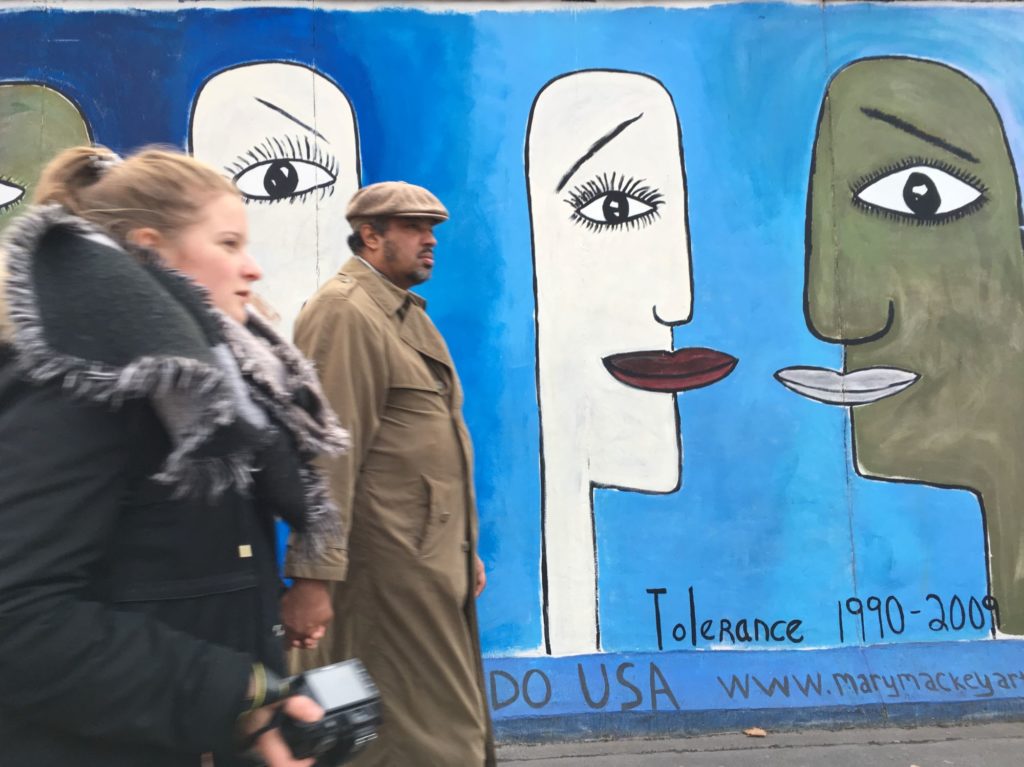
Fans of contemporary art and street art will be interested in visiting the Urban Nation gallery. Unlike a conventional museum, the facades and walls of the building are canvases, and the structure itself is an independent work of art. Visitor paths stretching throughout the two-story interior will allow you to observe the exhibited works both from a distance and up close.
Open: Tuesday-Sunday from 10:00 to 18:00. Bülowstraße 7.
Plan a route through Berlin’s graffiti and street art in advance. For example, in Google Maps already shows the main places of interest. The Urban Nation project was created as an international union of street artists who are provided with dedicated spaces to showcase their art. Several of these buildings are located on the Bülow Street section, between the U2 Bülowstraße and Nollendorfplatz metro stations.
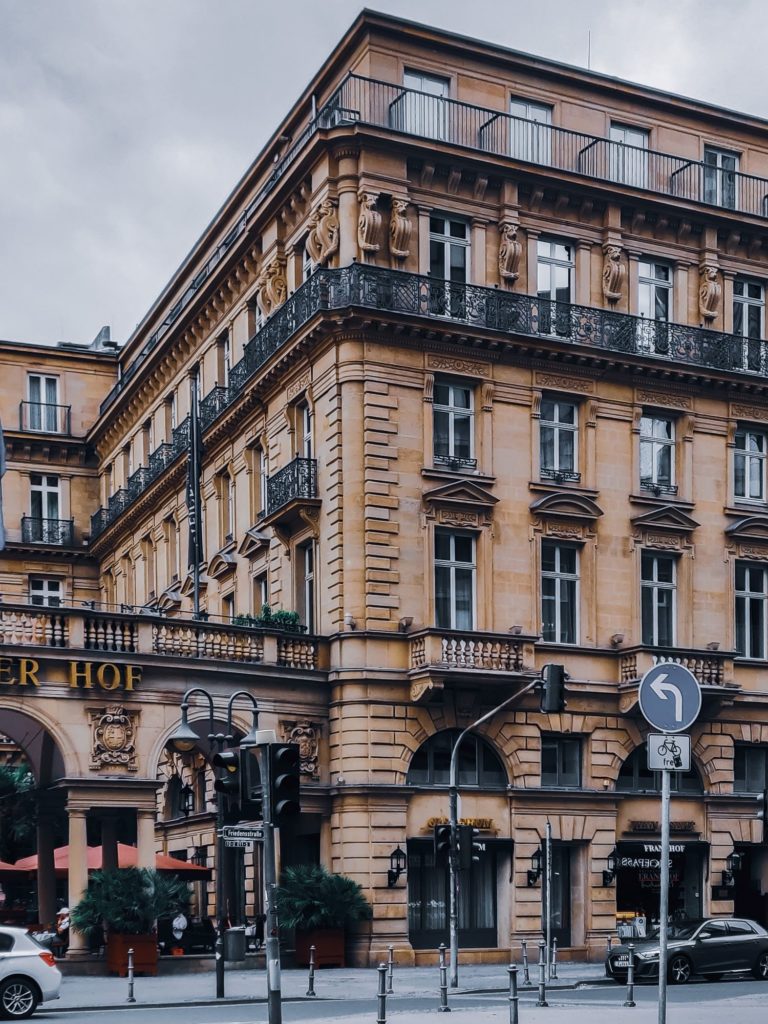
The Hackescher Hof is an architectural complex of eight courtyards interconnected by a single building. On the ground floors there are numerous galleries, cafes, cinemas, and small shops. The complex has two entrances: from Rosenthaler 38 and Sophienstraße. Please note: in order not to disturb the locals, all establishments and the entrance to the courtyards are closed at night.
Where to stay in Berlin
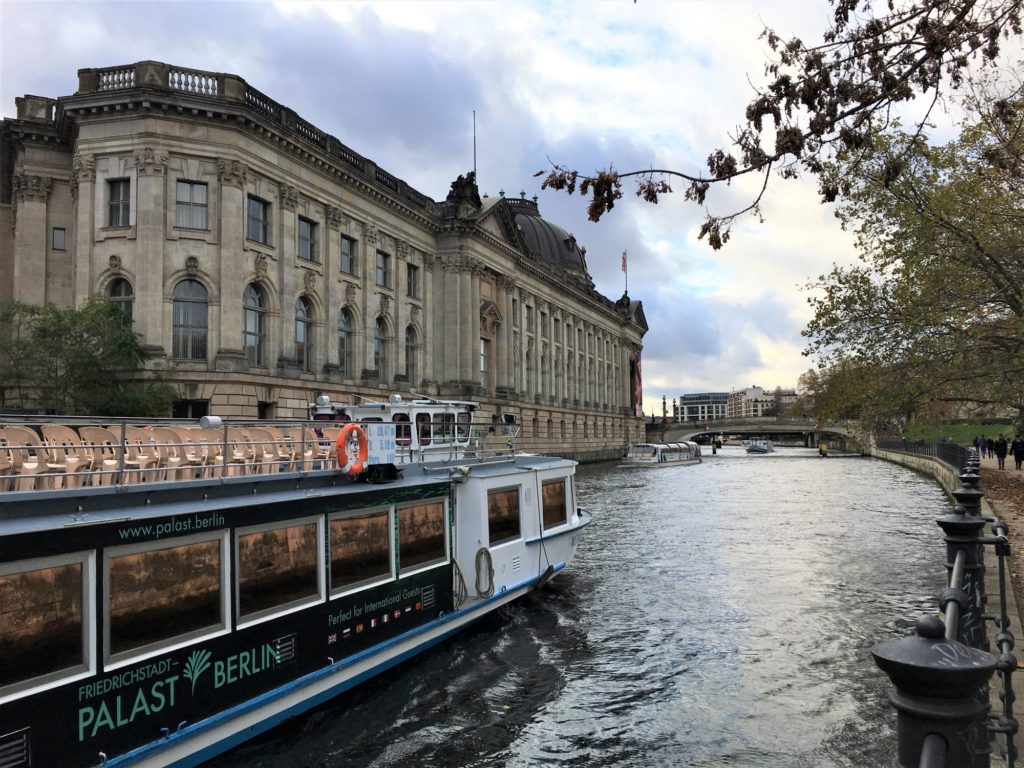
The most pleasant areas for tourist life in Kreuzberg, Neukölln, Prenzlauer Berg and Mitte. It is the center of cultural life, cafes, and restaurants, and you can constantly be in the epicenter of events.
Mitte – is the historical and postcard center of Berlin, where the main attractions are located: Museum Island, Unter den Linden promenade, Brandenburg Gate, Reichstag, Alexanderplatz. Nearby is the Spandau suburb, a cult place for shopping and dining: it is around the Hak Courtyards that you should look for new collections and gastronomic trends. It’s no wonder that the most luxurious hotels in Berlin are located here.
The northern Mitte is adjacent to the Prenzlauer Berg where nothing was built or repaired during the GDR, and after the fall of the Wall, free artists moved into the abandoned pre-war houses, but now the modern bourgeoisie lives in the neighborhood. This area will appeal to tourists who are looking for the following criteria: calm, clean, lots of restaurants and cafes.
Kreuzberg – panel houses, bars and cheap housing, nightclubs that are known to young people all over the world.
What and where to eat in Berlin
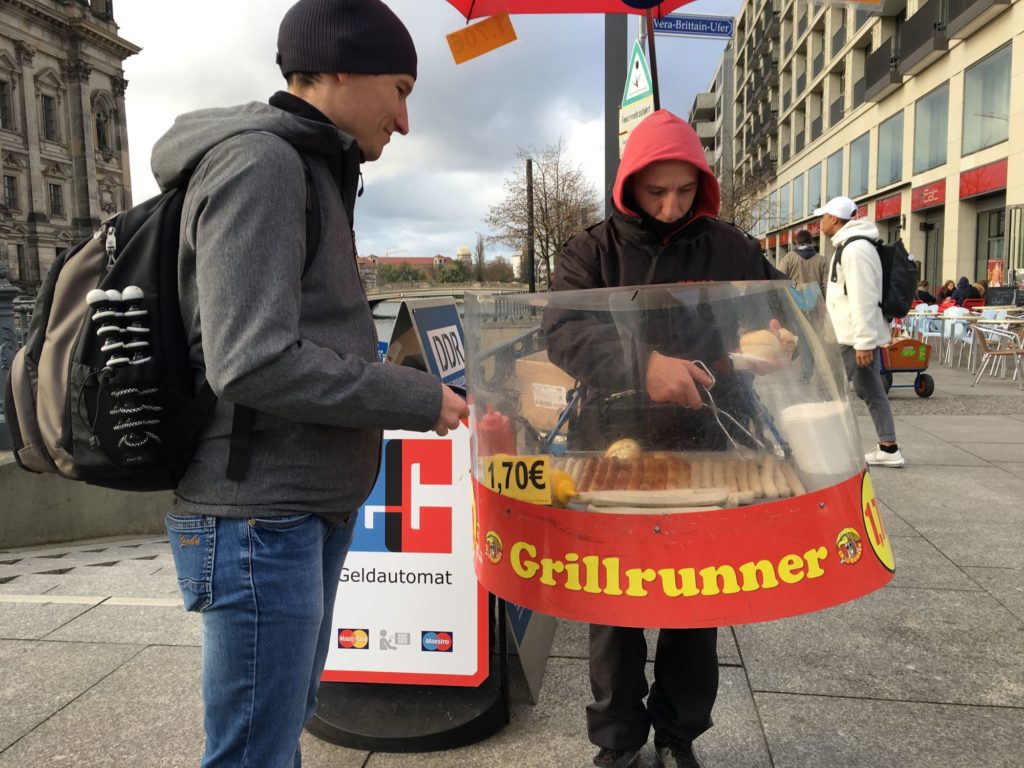
Berlin has long been the most popular place for young people to hang out. Now it is also a young gastronomic capital, where it is interesting not only to walk through museums and streets, but also to try street food and sit for hours in trendy cafes. A few days spent in autumn Berlin will satisfy your cultural and gastronomic needs for six months ahead.
Berlin fast food will save you from the city while walking around the city. The most famous dish is the Karrivurst, one of the main symbols of Berlin. These sausages, fried in butter and flavored with a sauce of sweet peppers and tomato paste, even have their own museum in Berlin. The sauce is poured over hot, freshly fried sausages, cut on the sides. In cold weather, you can’t think of anything better. The price of currywurst starts at €5 per serving, and some of the best are prepared in a kiosk under the Eberswalder metro station, U2. Please note that you will have to wait in line at lunchtime.
A glass or bottle of beer is perfect with the carrivourst – don’t forget that we are in Germany. Beer prices in bars start at €3.5 per 0.5 liter. Turkish dener and Lebanese falafel compete with sausages in Berlin, plus a huge number of fast food eateries serving oriental and Asian cuisine.
Getting to Berlin
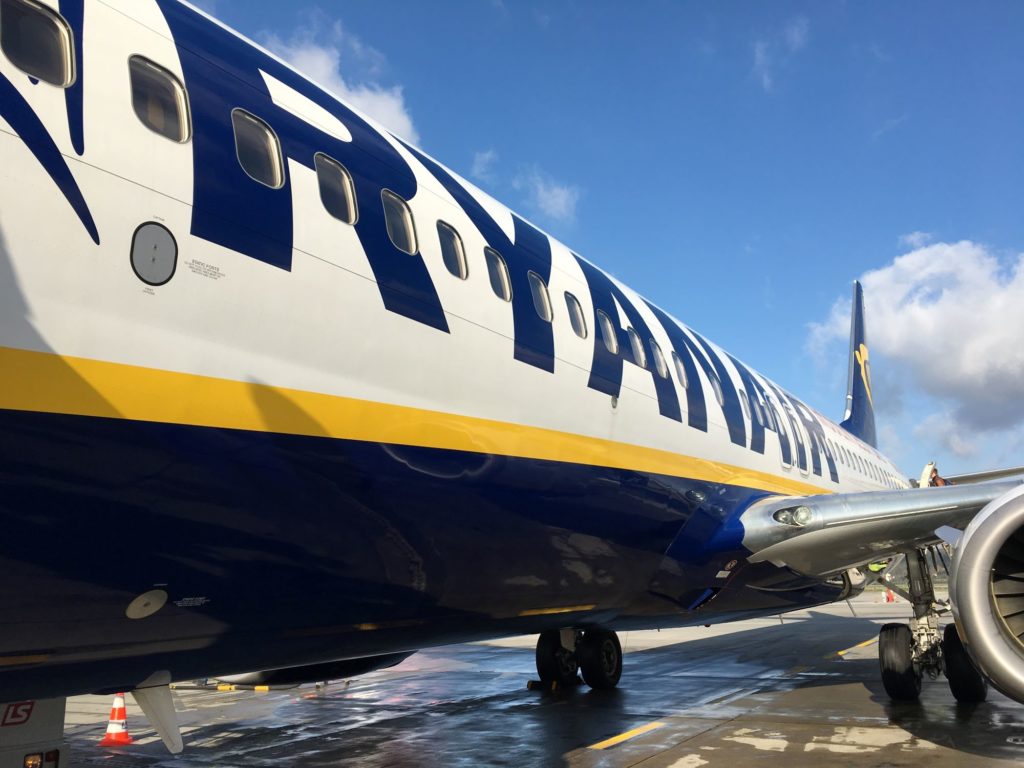
Brandenburg Airport can be reached by regional trains or the city train. The airport is a five-minute walk from Berlin-Flughafen Schönefeld station on trains RE7, RB14 or RB22. Take the S45 or S9 lines to the Flughafen Berlin Brandenburg station. The cost of a single ticket for the ABC zone is €3.8.
Useful articles and links:
- Venice – a small trip for three days
- Thermal spas in the Czech Republic – thermal complexes for family vacations
- 49€-Ticket – a new travel card in Germany (information updated on 2024)
- Nuremberg in winter for two days – what to see in the most beautiful Christmas city in Germany
Booking of hotels and apartments – Booking.com