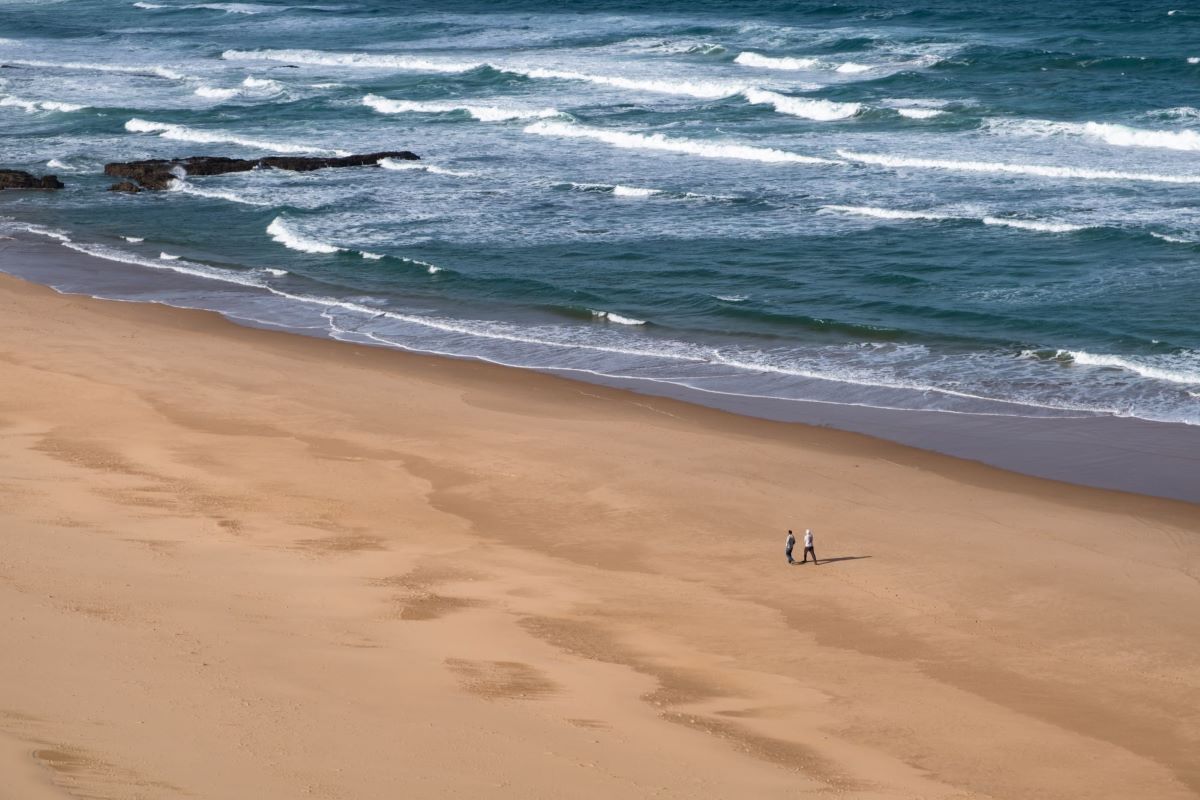
Alentejo is a region of Portugal that is not very well promoted in terms of tourism. It is the largest region of Portugal and an agricultural center, with mountainous countryside planted with cork forests, olive groves, vineyards, and all kinds of crops. White villages and towns by the ocean, some of the best beaches in the country, which are almost unknown to everyone but the locals, on the vast and dramatic stretches of the Costa Alentejana and Costa Vicentina.
If you’re looking for beaches with more locals and surfers than tourists, with wild nature and incredibly beautiful cliffs and dunes above the ocean, I recommend choosing the wild shores of Alentejo. This is the place for those who want to experience the real Portugal, leisurely explore the vast beaches and relax in the idyllic countryside by the ocean.
Where is Alentejo located?
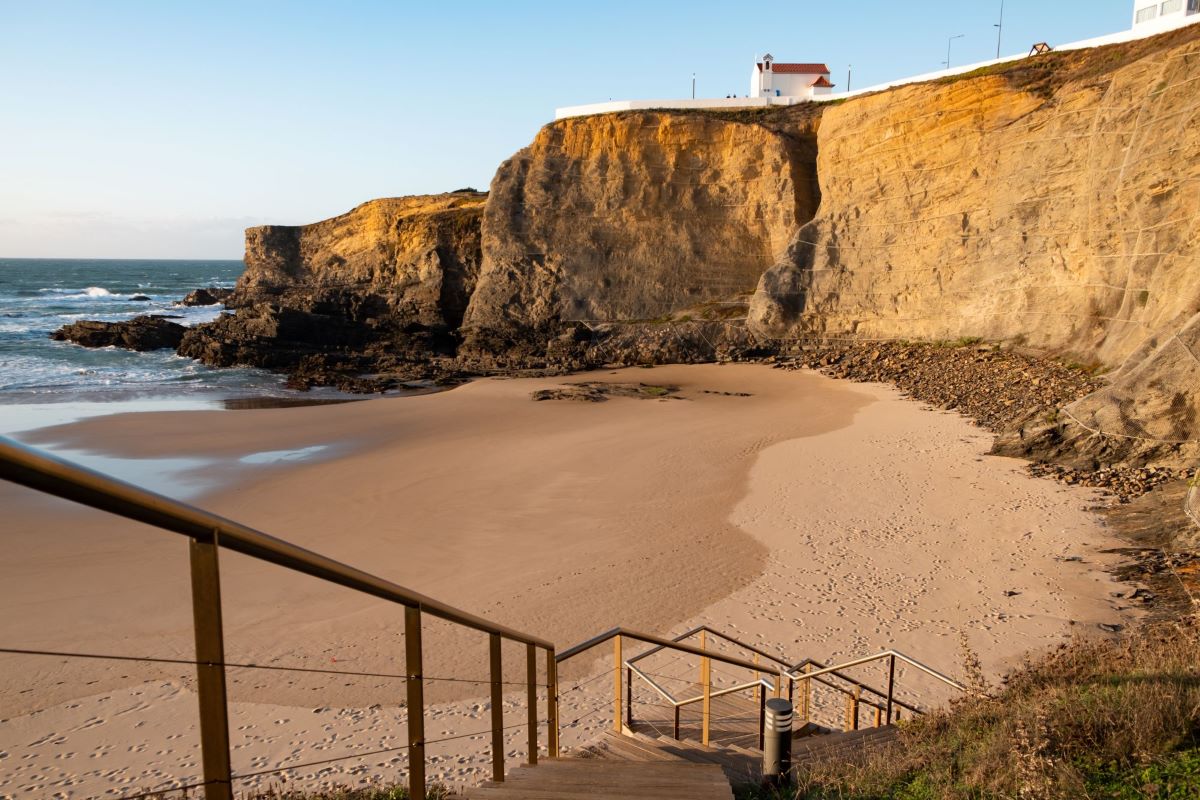
If you look at a map of Portugal, you will see this region starting just below Lisbon and extending hundreds of kilometers south to the beginning of the Algarve and then eastward to the Spanish border.
The capital of the region is Evora, a UNESCO World Heritage Site. The west-south Atlantic coast is also almost as sparsely populated as the rest of this vast region, with only 7% of the country’s population living there. The rest of the region is mostly open countryside with a few smaller towns and many tiny villages.
For visitors, it makes sense to divide Alentejo into two separate categories: the coast and then everything inside it. The coastal areas offer excellent beaches, which, even in the midst of the summer high season, can often be empty or uncrowded.
But this is what makes this part of Portugal so valuable, and it continues to be one of Portugal’s best-kept secrets. It’s also great to be alone with nature and watch the amazing sunsets in the ocean.
How to get around along the Alentejo coast
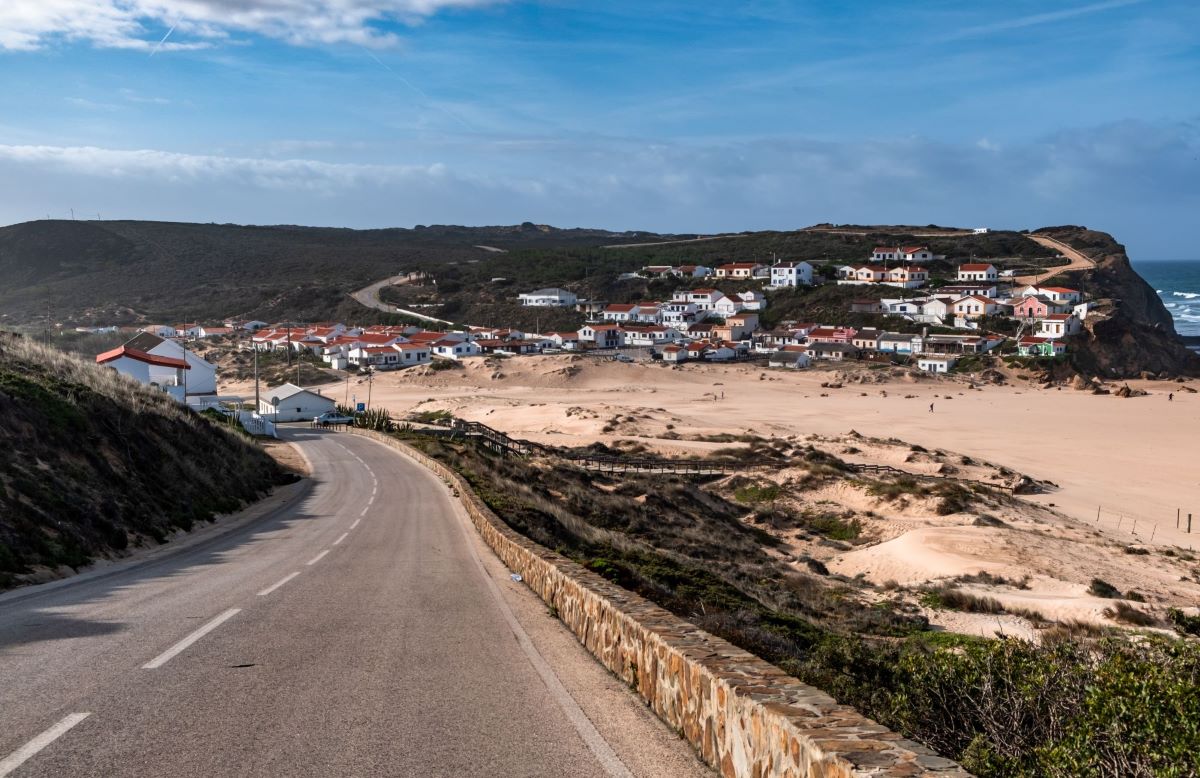
I once walked most of the coast of this region on foot – read about the Rota Vicentina route.
Back then, I realized that transportation was difficult there – you could either walk or travel by car. I have rented a car in Portugal several times – the most favorable options were found on DiscoverCars. Here you can choose exactly the car you need and compare prices from different rental companies.
It is a sparsely populated region, and distances between cities and other attractions are often considerable. Despite the fact that there is decent public transportation (bus) between the major cities of the region and a fairly good connection to Lisbon.
Traveling between cities and smaller towns, and especially to rural areas, is difficult and time-consuming without a car. So having it will allow you to see not only the cities where the bus goes, but also remote and beautiful beaches.
When is it better to go – the season
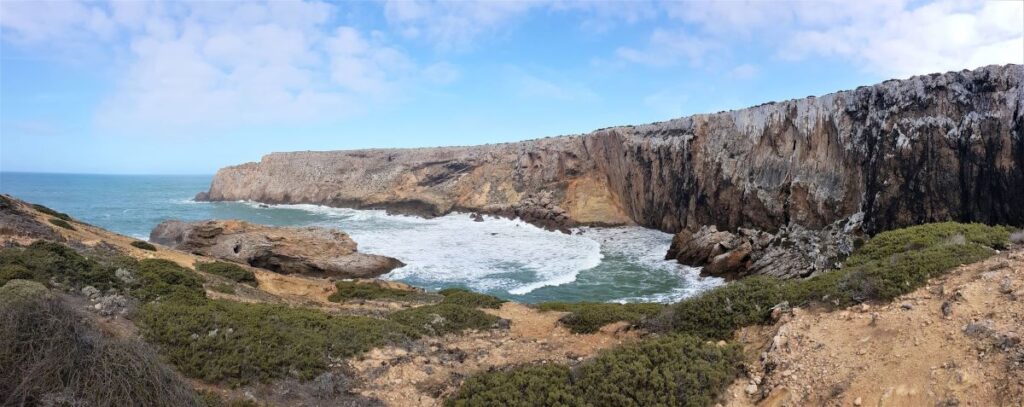
The best time to visit Alentejo is spring or fall.
In the second half of April and early May, there are mostly sunny days with weather favorable for outdoor activities and sightseeing throughout the day. May is usually quite hot and you can already try swimming in the ocean.
The same goes for the fall: starting in mid-September and lasting until early November, it’s the perfect time to visit Alentejo.
The crowds are also much smaller in spring and fall, although it is certainly not the low season.
You can come here in summer only to swim in the ocean (it is undesirable to travel inside the country, as the region is dry and sunny). In the summer months, temperatures in cities far from the ocean can reach +40℃, making exploring the region more of a burden than a pleasure.
Recommend for reading: The best time to visit Portugal
The best beaches and cities on the ocean in Alentejo
I spent a week on this coast and it was worth it to see all this beauty! The nature here is just incredible, and in addition to just lying by the sea, you can learn to surf, SUP or some other board for riding the waves. In the towns I’m going to talk about, there are surf schools and rental shops where you can find everything you need.
Here is an approximate route for this trip:
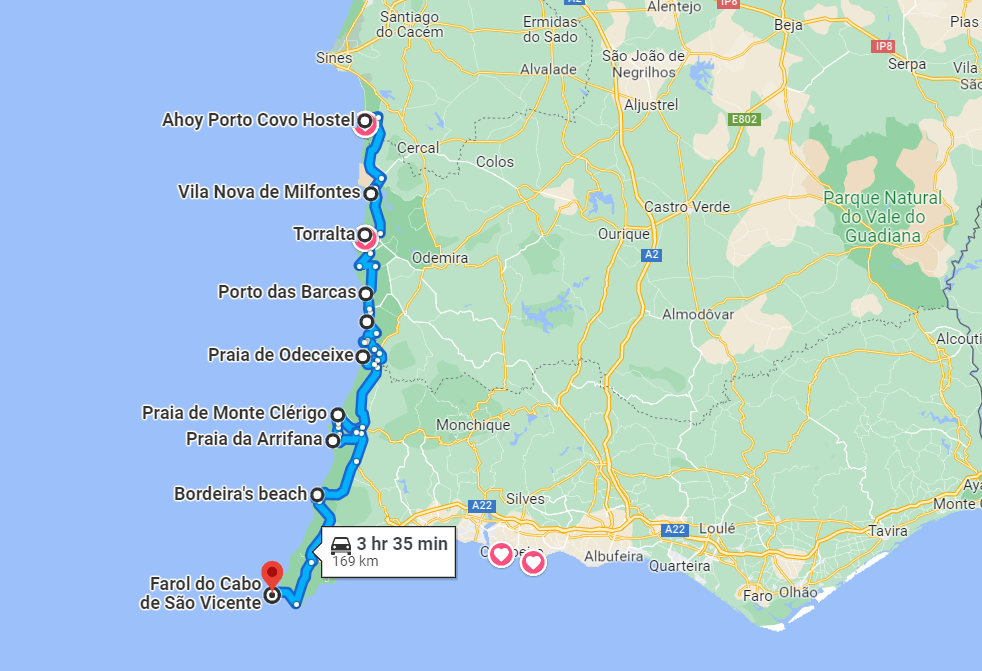
I should say right away that I spent the night in each of these towns, because the sunset on the ocean is something you need to see in a calm state, without planning anything else.
Porto Covo

Start your exploration of the Alentejo coast from Porto Covo. It’s a nice little town with great beaches – a great place to relax and do some active walking by the ocean. Here is the coastal part of the hiking route Rota Vicentina. And this section of the trail is especially popular for its beauty and magnificent views.
Where to stay in Porto Covo:
- Ocean House Alentejo – is a house where you can rent both one and several rooms. Very clean, good breakfast on the outdoor terrace is included in the price.
- MUTE Hostel – is a cool hostel with its own pool, where you can spend the night in a dormitory room or rent a private room.
- São Torpes by Campigir – is a campsite with wooden bungalows near the beach, a good place for outdoor recreation.
Vila Nova de Milfontes
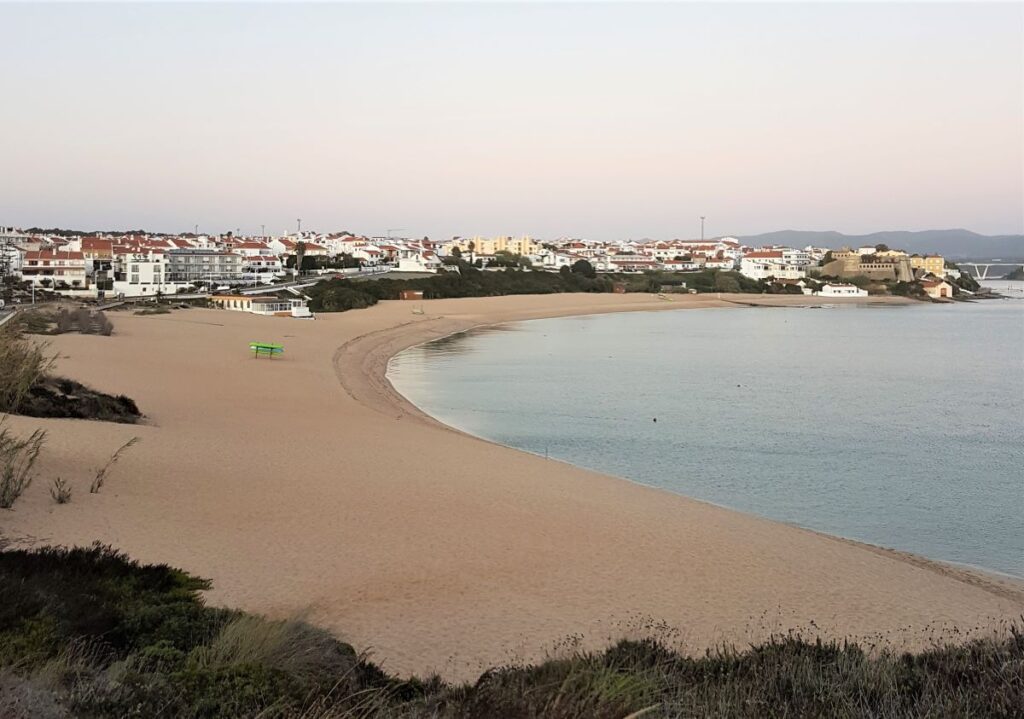
Continuing down the coast to the south, you will reach Vila Nova de Milfontes. This town is located between a rocky outcrop into the ocean and the Mira River. It’s one of the most beautiful coastal cities, and the view is magnificent. The city is surrounded by large white sand beaches and hidden coves.
The beach – Praia da Franquia– can be ideal for relaxing in the first months of summer, when the water in the ocean is still cool. Praia da Francia is a fantastic place for families, as the waters at the mouth of the Mira River are more protected. There are no waves here, which makes it a great place for families with children. And also for those who want to try SUP (stand-up paddleboarding), kayaking or canoeing.
Where to stay in Vila Nova de Milfontes:
- Casa Do Adro Da Igreja Turismo De Habitação – is a guest house with nice rooms, located 100 meters from Milfontes Beach.
- Villa Eira – is a very stylish hotel in the center of Vila Nova de Milfontes near the beach.
- Hotel HS Milfontes Beach – is a guest house with a private pool in the center of Vila Nova de Milfontes.
Almograve

Further south is the coastal city of Almograve. It is a popular place where Portuguese families spend their weekends. Because of this, the city beach gets really crowded on Saturdays and Sundays. It has good facilities (showers, beach rentals, restaurants, etc.) and a wide, large beach, so it’s a great choice for families.
As in any coastal city, there are many other beaches in the area (mostly wide and sandy). There will be much fewer people there, so if you have a car, you can choose any one that suits you.

There is also a beautiful lighthouse Farol Cabo Sardão on the road between Almograve and Zambujeira do Mar. Do not forget to see it – it is located near the village of Cavaleiro. Not far from it, there is a gathering place for fishermen called Porto das Barcas, which is actually a bay where they keep their boats and fishing and crabbing equipment. This is where the awesome fish restaurant is located – A Barca Tranquitanas. I highly, highly recommend ordering lunch or dinner here – the octopus and langoustines are perfect!
Where to stay in Almograve:
- LODGE & HIKE AMOGRAVE – very nice rooms for a low price.
- Al Casa Paquito – is a great place to relax after an active day at the beach or walking by the ocean.
Zambujeira do Mar
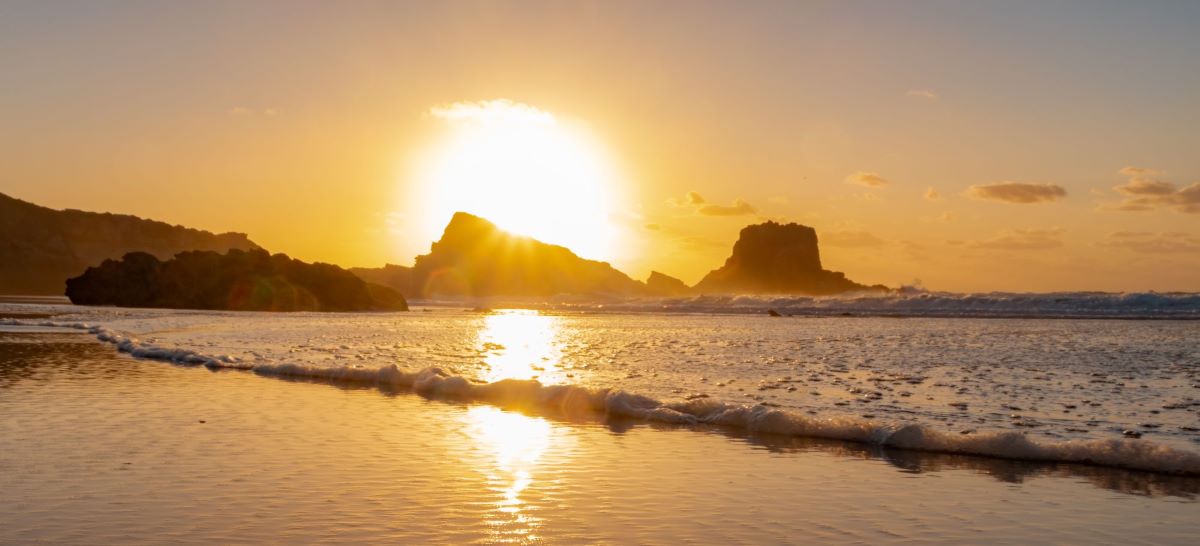
I liked this town and the beach the most – it had the most magnificent sunset on the ocean that I have seen on the Alentejo coast. Zambujeira do Mar has been a place that attracts surfers for some time now, so the atmosphere in the city is quite different from Almograve.

The beaches around the town are hidden in small coves behind high and dramatic cliffs. Sometimes the rocks look like the backbone of a dinosaur or fairy-tale dragons. I especially liked these rocks on the beach of Praia da Baía da Arquinha.
I really liked Zambujeira do Mar – I fell in love with these places completely and forever!
Where to stay:Zambujeira do Mar:
- Hostel Nature – stayed here and it was the best hostel on this coast where you can feel at home and have a good rest.
- Casa Al Mare Zambujeira do Mar – is a stylish, nice vacation home in the city center.
Odeceixe
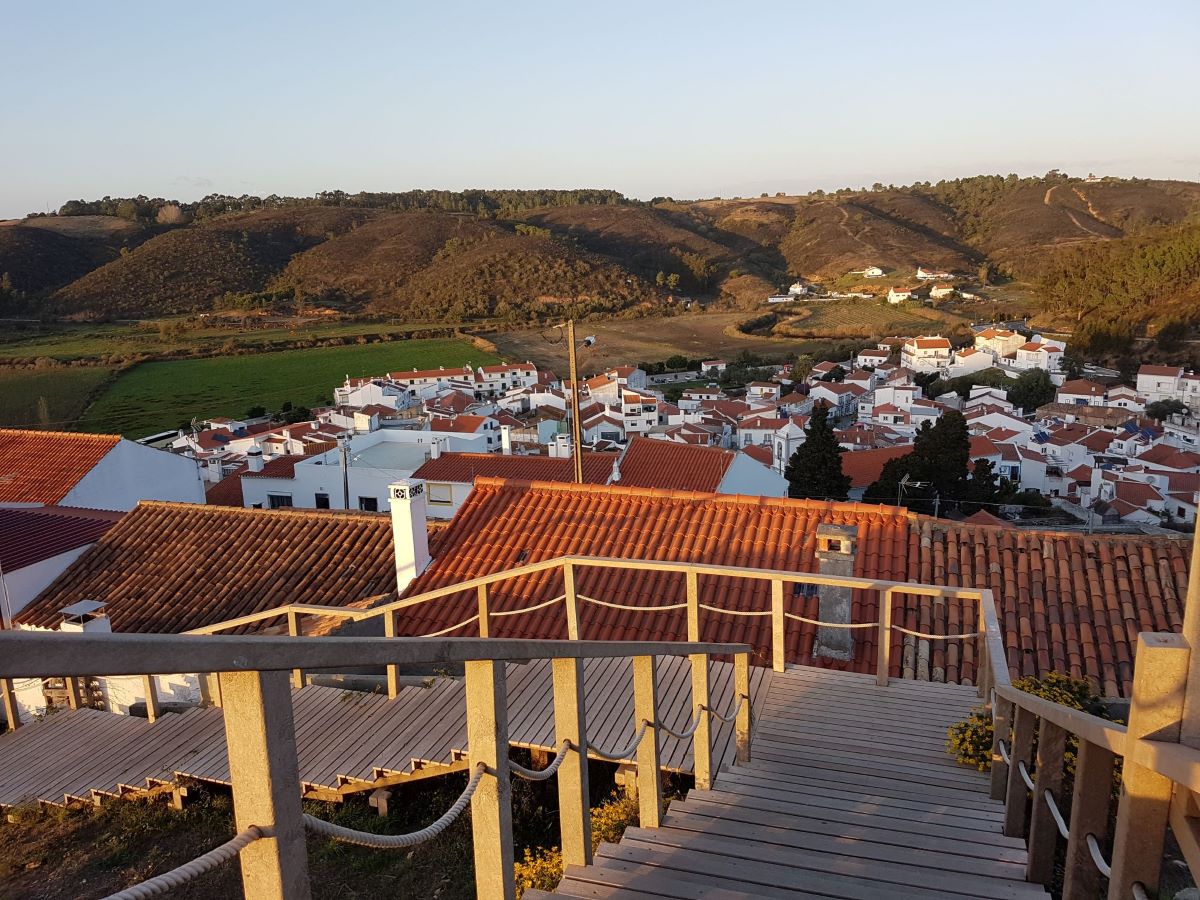
Speaking of beaches, pay special attention to Odeseixe, where one of the coolest music festivals in the country takes place every year. Odeceixe is a nice little town that is nicely situated on a hill a few kilometers from the neighboring beaches of Praia de Odeceixe and Praia das Adegas.
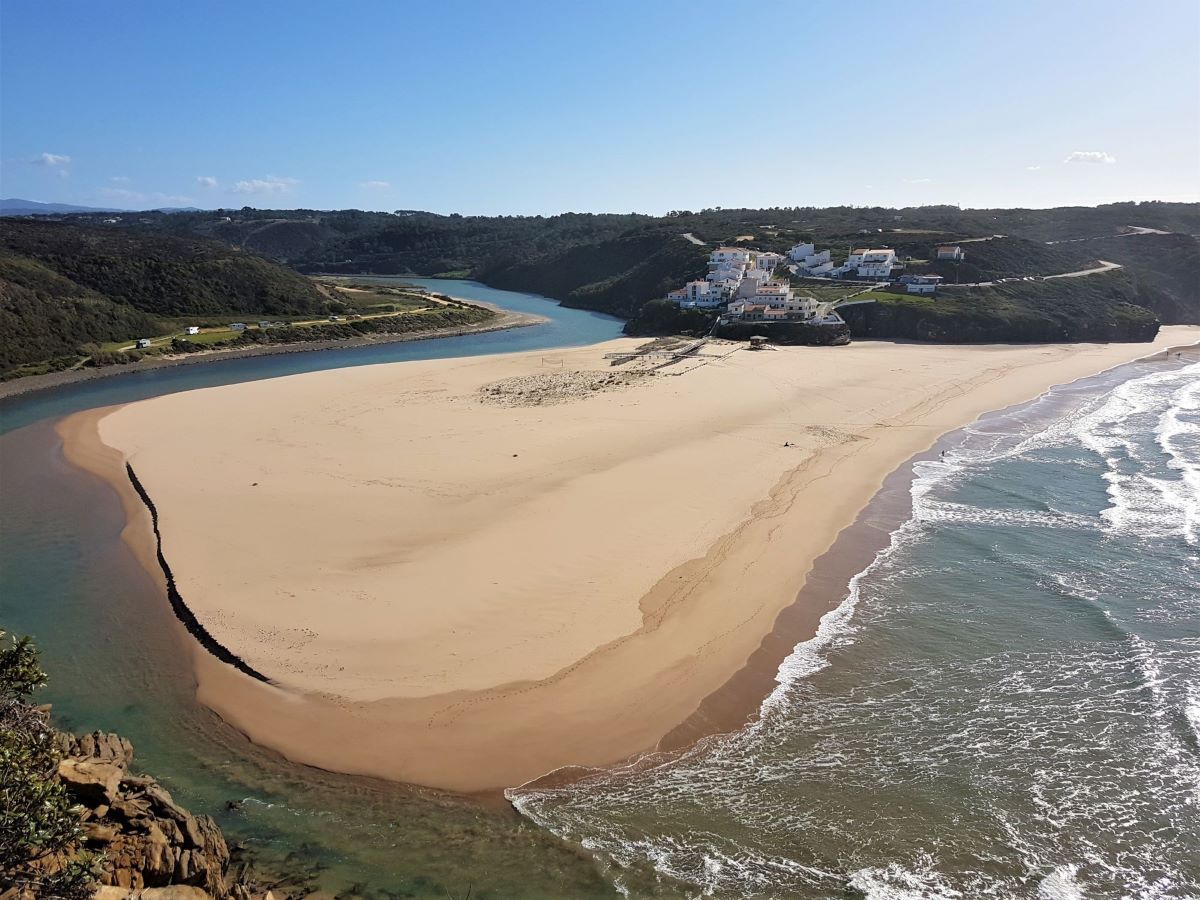
Praia de Odeceixe is a beach, a huge spit of sand washed by ocean waves at the mouth of the Ribeira de Seixe River. The beach is surrounded by majestic cliffs and has a great location at the mouth of the river, which allows you to swim without big waves. Therefore, it is also a good family option, as small children can swim on the quiet river bank. On the beach itself, located 3.5 km west of Odeceixe, there are dining and lodging options, as well as a surf school.
Praia das Adegas, located 350 meters south of Praia de Odeseixe, is one of the four official nudist beaches of the Algarve and the only one on the west coast of the region.
Where to stay in Odeceixe:
- Casa Dorita – is a cool hotel with cheap rooms near the beach of Praia de Odeceixe.
- PEDRA DOS CORVOS Beach House – apartments for a family of 4 people 10 minutes from the beach.
Aljezur
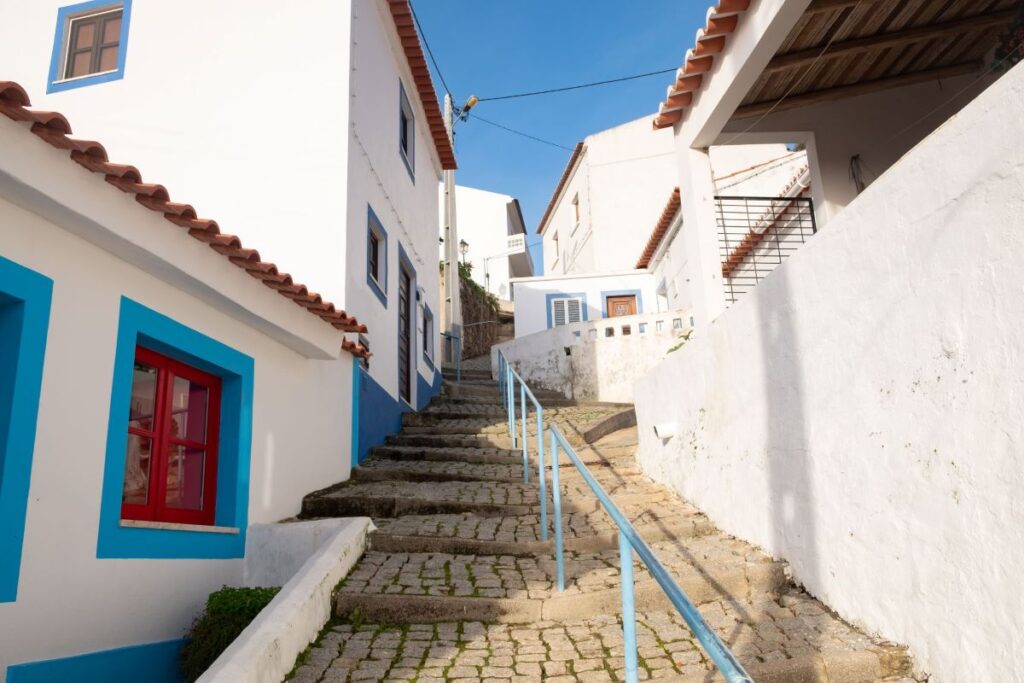
Further south, you will reach the river town of Aljezur, which boasts a 10th-century castle on top of a hill. There is nothing to see in the city, but the seaside villages and beaches of Monte Clerigo, Amoreira, and Arrifana are nearby. Both beaches are absolutely spectacular.
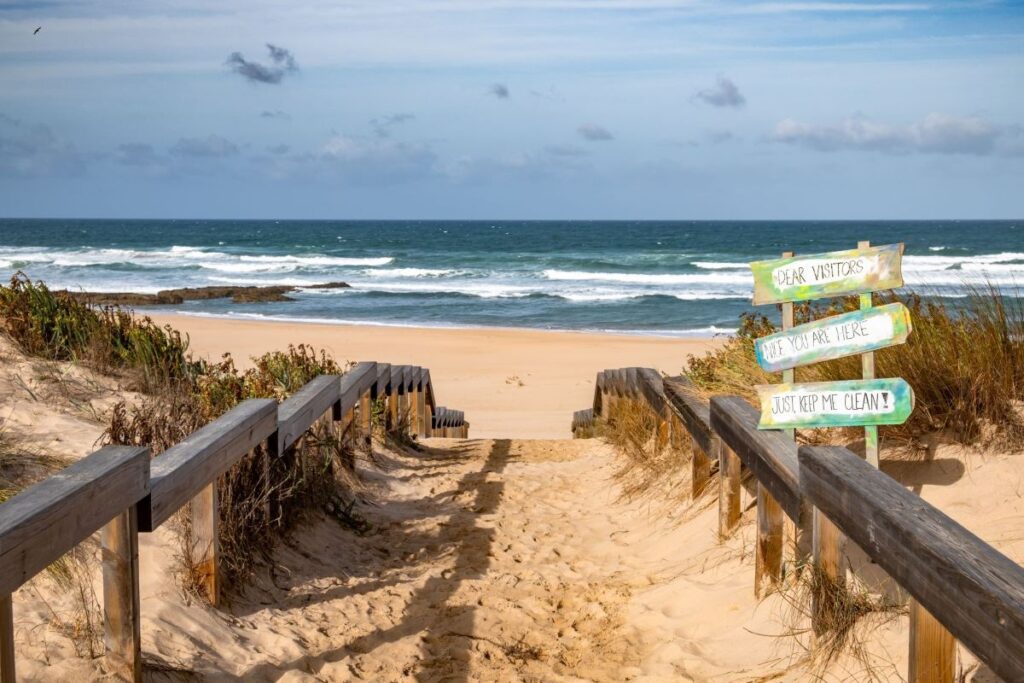
Praia da Arrifana is a beautiful crescent-shaped bay surrounded by rocks, located 10 km southwest of Aljezur. It has a small fishing harbor and a coastal peak. The beach is extremely popular with surfers of all abilities. There is a small restaurant on the beach and other restaurants are located on the cliff top near the ruined fortress.
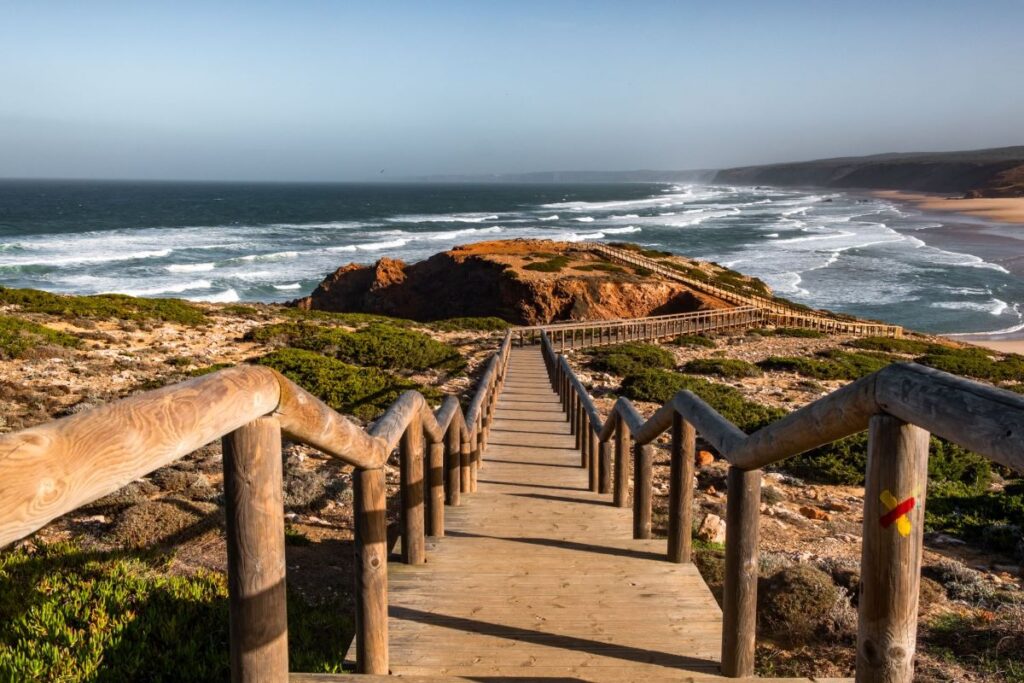
Praia da Amoreira Aljezur is a wide beach on the north side of the river mouth, surrounded by wild dunes, located 9 km northwest of Aljezur. You can also get to the beach from the southern end (near Praia do Monte Clérigo) on foot by wading through the river. There are bars and restaurants in the northern and southern parts, but no other establishments.
Praia do Monte Clérigo – one of the symbolic beaches southwest of Aljezur (8.5 km from the city), Monte Clérigo is a huge sandy strip with a relaxed surfing atmosphere. Behind it is a small village with lively bars/restaurants and low-rise houses where you can stay for a rest.
Where to stay in Aljezur:
- Arrifana Destination Boutique – is a hotel 300 meters from Arrifana Beach with beautiful ocean views.
- The Lighthouse Hostel Arrifana – is a cool hostel for surfers and those who like to spend an evening in good company.
- Ideal Summer cabin 1 km from Arrifana beach – A small house-cabin with private facilities and a swimming pool.
Carrapateira
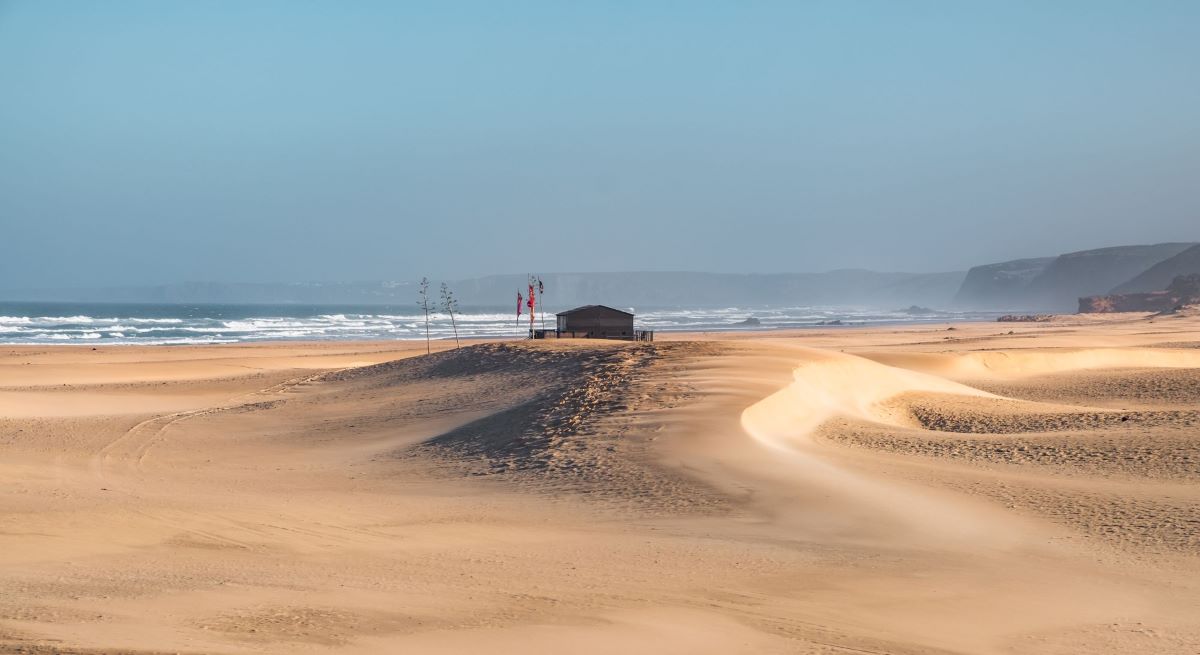
The small surfing village of Carrapateira is a must for visitors – surfers or otherwise. It has incredibly beautiful beaches and long walking paths for those who enjoy walking along the ocean. And there are some really beautiful wild beaches near Carrapateira.
Praia da Bordeira is a beautiful beach bordering the river on the south side, which often forms a shallow warm-water lagoon. I came here on foot from the side of the Aljuser and even crossed this river in a ford. The beach is an incredibly giant strip of sand that merges into the dunes. And in the northern part of this beach there are red rocks – be sure to see them, they are incredibly beautiful!
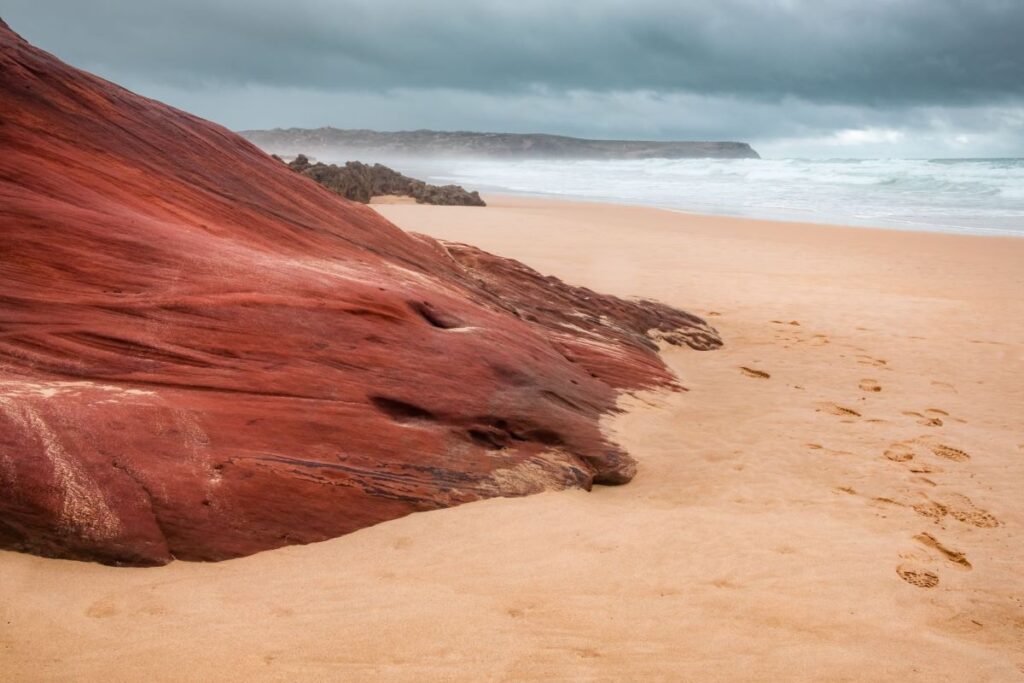
Praia de Vale Figueiras is one of the most remote beaches on the west coast. This wide, magnificent sandy strip has an unearthly beauty, backed by layered rocks misted in ocean spray. It can be reached via an uneven, partially paved road that runs about 5 km from the main road at a point 10 km north of Carrapeira (take the northern of the two turns). There are no conveniences.
Where to stay in Carapateira:
- Casa Da Estela – I stayed at this guesthouse – I am very pleased with the quality and cleanliness, there is everything you need for an independent vacation.
- Casa Luminosa – is a pleasant and stylish place to relax. There are separate rooms, you can rent several rooms for a company or family.
- Carrapateira Lodge – nice rooms in the center of the town, with a delicious restaurant opposite.
Costa Vicentina
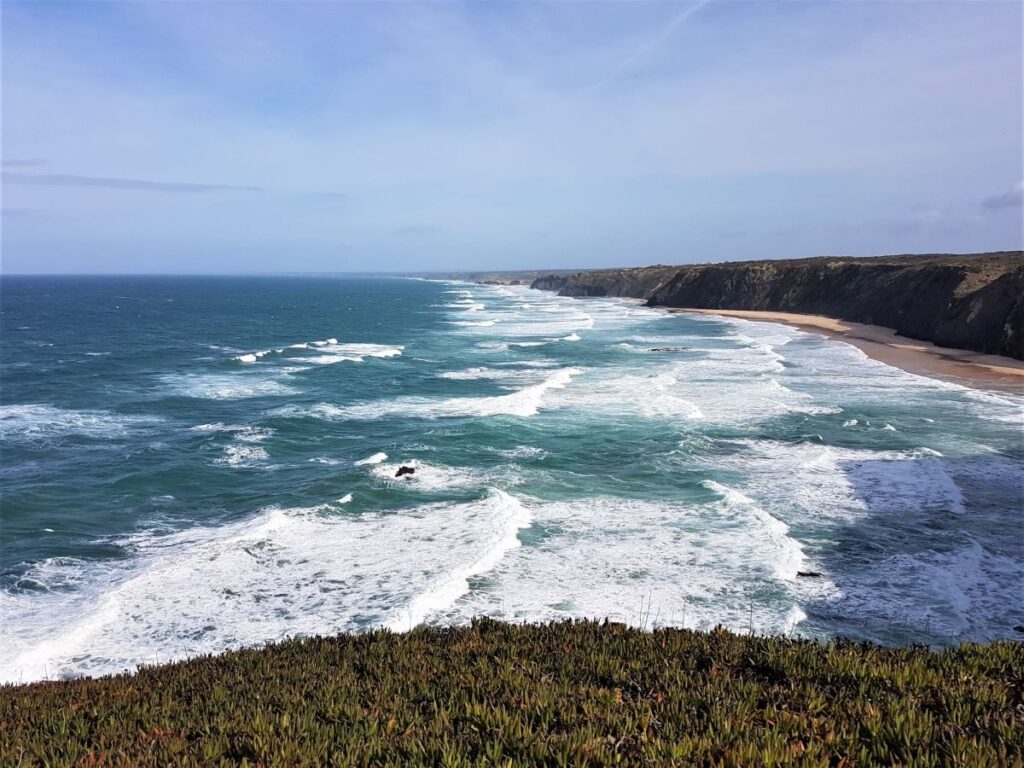
In the extreme northwestern corner of the Algarve is the Costa Vicentina, offering spectacular views and exquisite beaches. This area is popular with surfers. The water can be rough with strong currents, so it is important to be careful when swimming.
Most of this coastline is part of a protected area of a natural park Sudoeste Alentejano and the Costa Vicentina. So it’s surprisingly free of development and also has excellent hiking opportunities.
The beaches and nature of this coast are what can make your visit here a highlight. But there are also some nice cities where you can stay or make short stops while traveling.
Cabo San Vincente
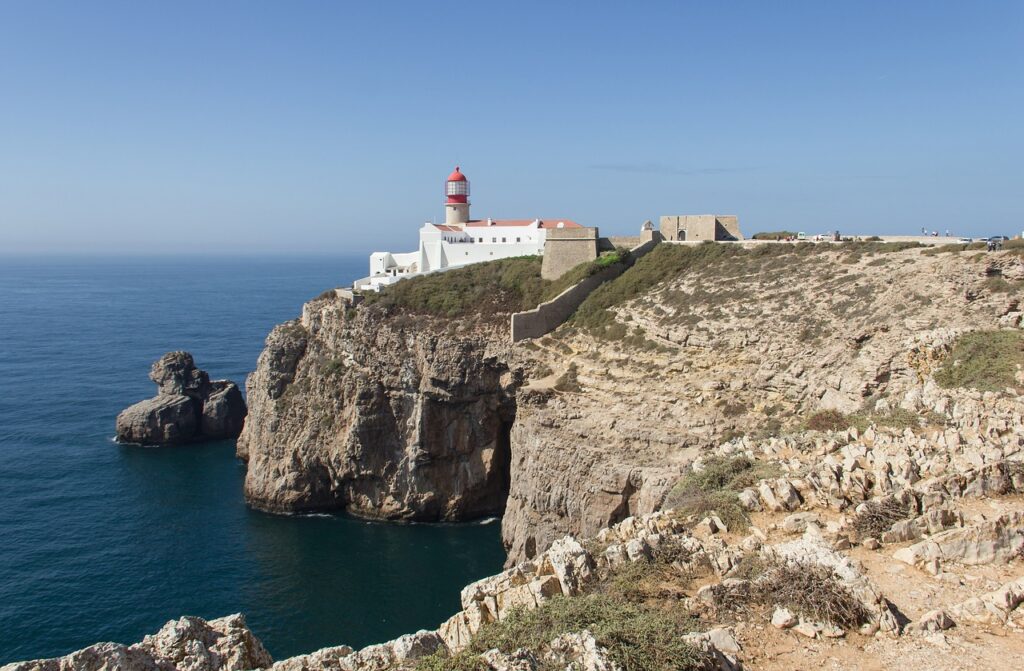
The cape is a famous place since the time of the Phoenicians and known to the Romans as Promontorium Sacrum, received its current name from a Spanish priest who was tortured by the Romans. The old fortifications, destroyed by Francis Drake in 1587, were later pulverized by the 1755 earthquake.
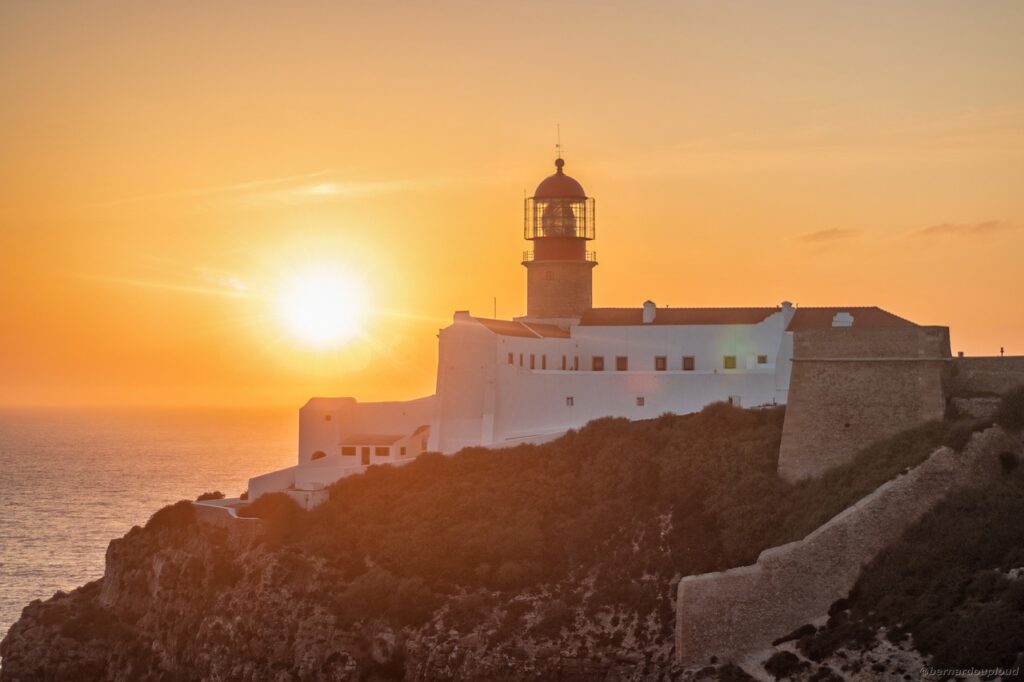
The Red Lighthouse – Farol de San Vicente contains a small restaurant where you can have a glass of wine at sunset. The lighthouse complex on Cabo de São Vicente also contains a small but excellent museum. This museum gives you a good overview of the history of Portuguese maritime navigation. It displays copies of the 1561 atlas folios, and provides information about the lighthouse’s history.
This extreme southwestern point of Europe is a barren promontory that was the last piece of home that Portuguese sailors once saw as they sailed into the unknown. It’s a spectacular place: at sunset, you can almost hear the hiss as the sun hits the sea.
Useful articles and links:
- 10 tips for those traveling to Portugal for the first time
- Top 20 places to see in Lisbon
- Cascais – a beach resort near Lisbon
- The best beaches near Porto
Find train tickets in Europe conveniently on Trainline
Booking of hotels and apartments – Booking.com