Seville – what to see in two days: Alcazar, Plaza de España, Tobacco Factory, tapas bars, Guadalquivir River, where to stay and how to get to Seville.
Seville is the capital of Andalusia and an incredibly beautiful city that I really liked. Unlike the royal Madrid, Seville seemed to me brighter, calmer, and even more sincere. The buildings decorated throughout the city with azulejo ceramic tiles depicting patterns ranging from Arabic geometric patterns to images of the Virgin Mary give the city an oriental flavor that I fell in love with while in Morocco.
We spent two days in Seville, at the end of our of our trip to Andalusia. And despite the fact that Seville was the last city and we were already a little tired, this city managed to surprise us with a crazy variety of beautiful buildings and palaces, a beautiful embankment of the Guadalquivir River, numerous tapas bars and modern buildings such as Seville Mushrooms and the Seville Tower.
I’m going to tell you how to enjoy Moorish architecture, fast-paced flamenco, and delicious tapas while spending a perfect weekend in Seville.
When is the best time to go to Seville?
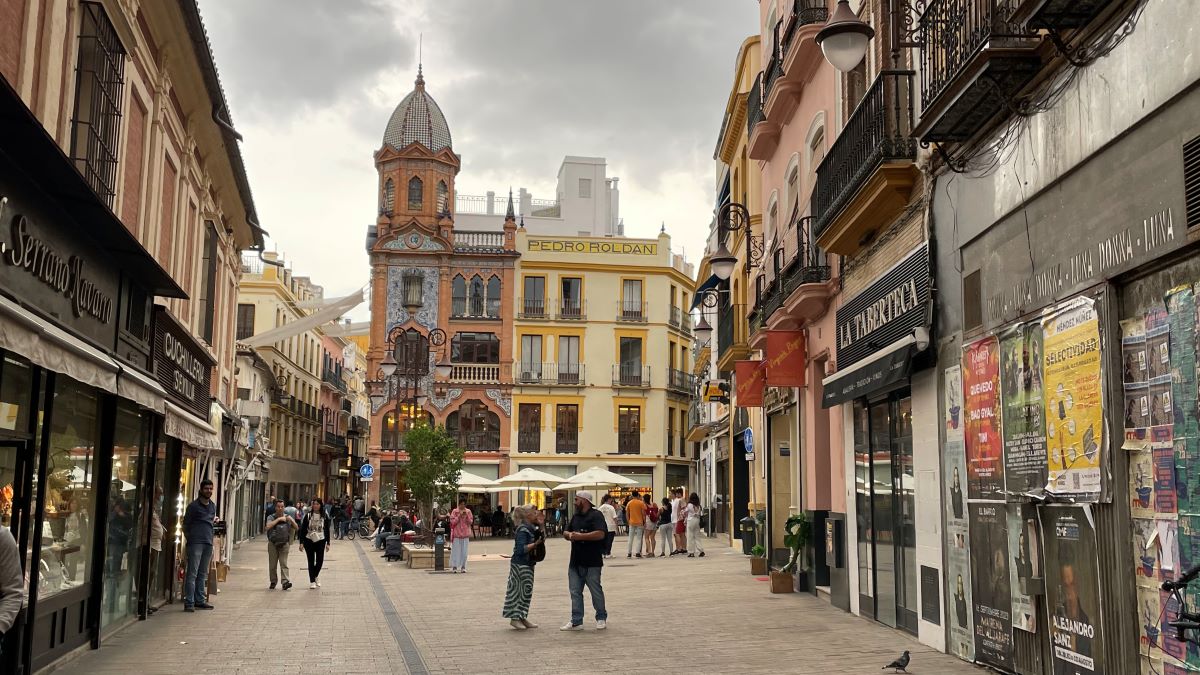
Seville and the rest of southern Spain are extremely hot in summer. The temperature can reach +45℃, and sometimes even higher (in 2023 it was +50℃). Nevertheless, it is an incredibly popular time to visit because summer is a vacation time. The heat here is insane, but you’ll benefit from an air-conditioned hotel at night and daytime tours of Seville’s cool palaces.
If you are flexible in your travels, go here in spring or fall. I visited this city in May, I was lucky and it was quite cool – +22℃ and a little rain, which is exceptional weather for May. During these seasons, there are fewer people, shorter lines, and pleasant temperatures for walking and sightseeing. If you have to choose between summer and off-season, it is better to visit Seville in November than in July or August.
Square of Spain – Plaza de España
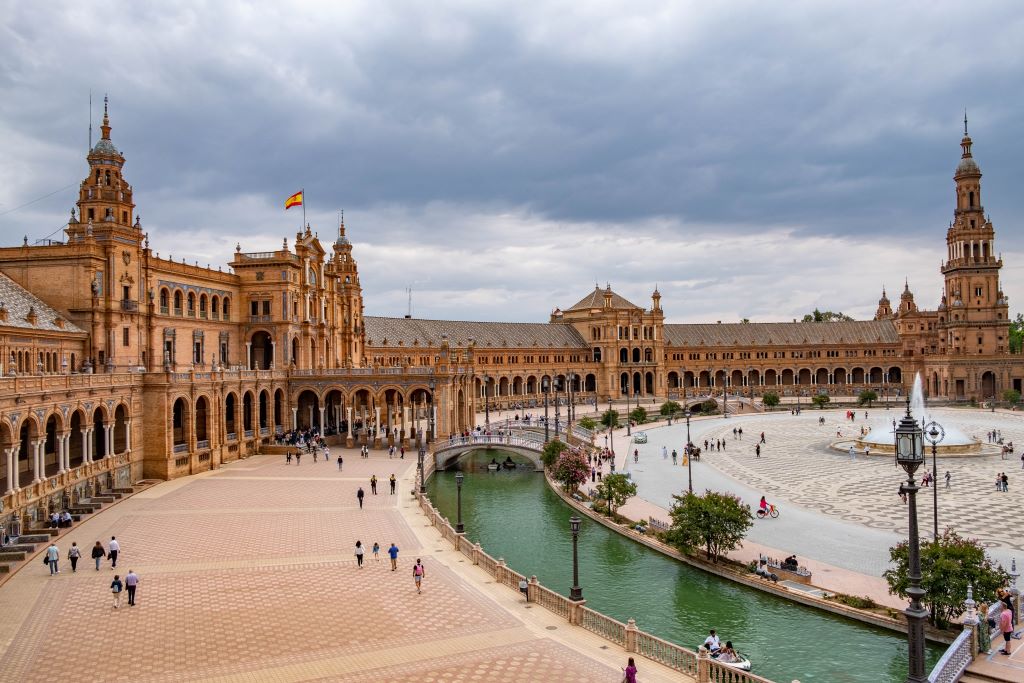
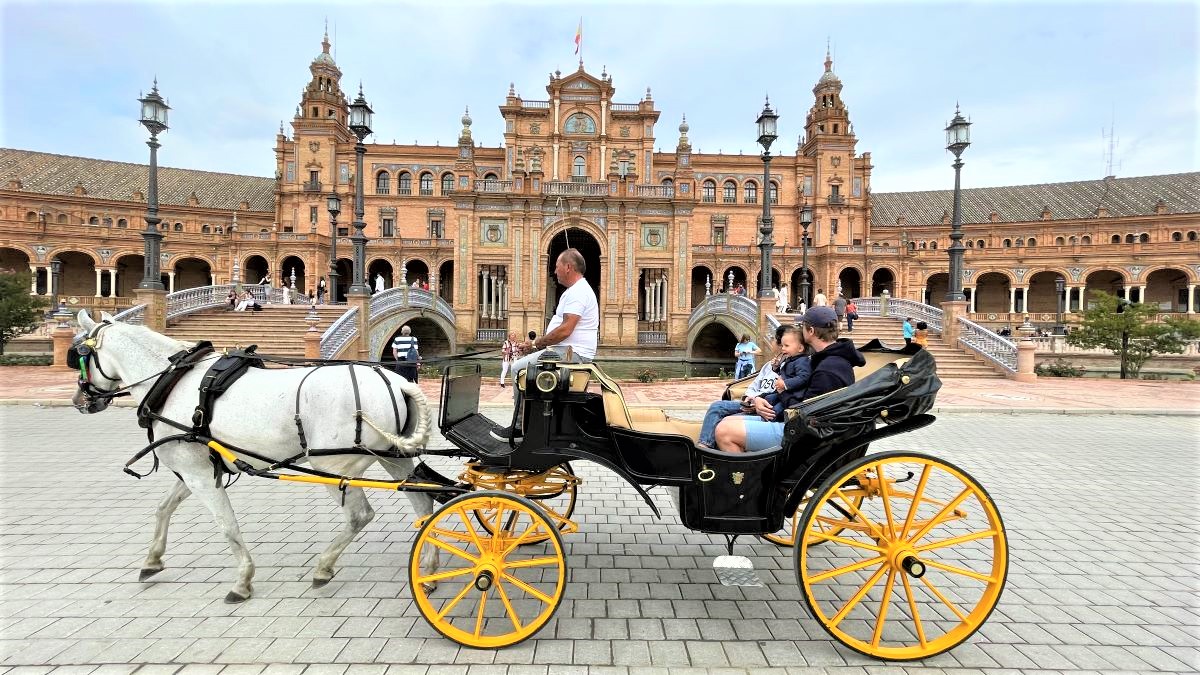
We started exploring the city from Spain Square. This gigantic semicircular brick building with a large area was designed for the 1929 Exhibition. The building is decorated with 48 portals decorated with ceramic tiles depicting scenes from all the provinces of Spain.
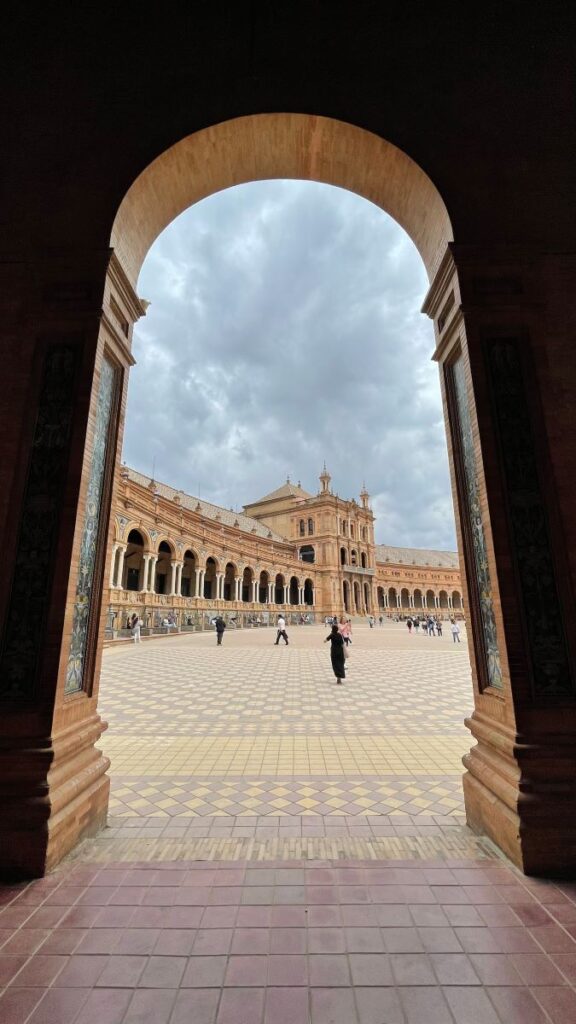
Despite the insane popularity of this place, I really liked Plaza de España. Because it’s really beautiful here – you can go up to the second floor of the building for free to see the insanely stunning view of the square.
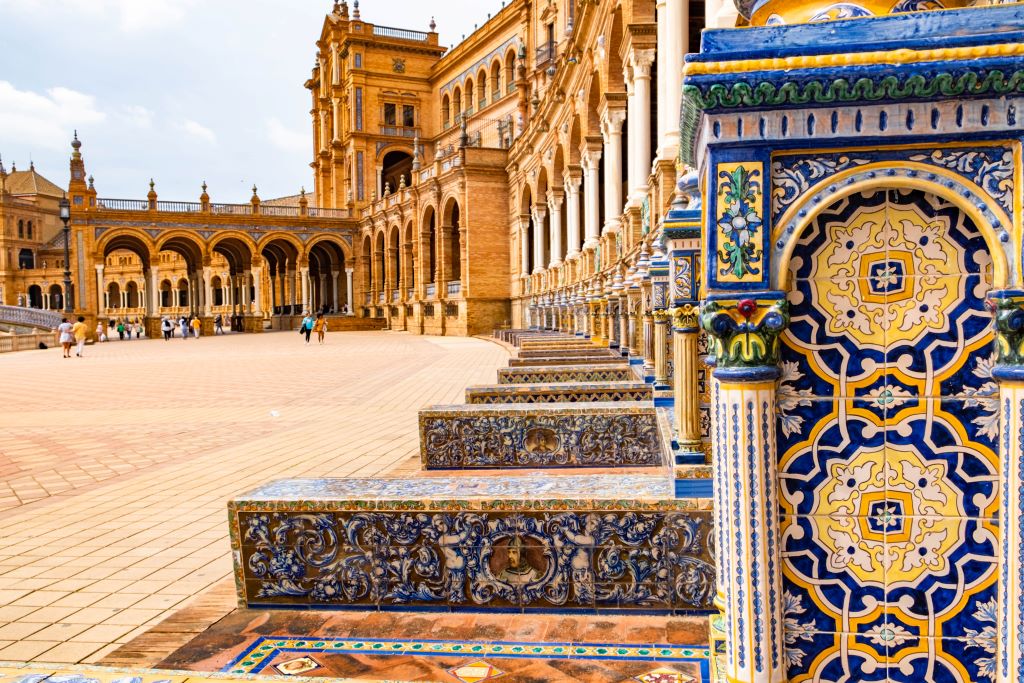
If you have extra money, take a boat around a beautiful canal. Or just cool off with a huge fountain to splash on you on a hot day.
We also saw a free flamenco show here. Under the roof of the exhibition center building, you can see flamenco dancers performing daily at the main entrance.
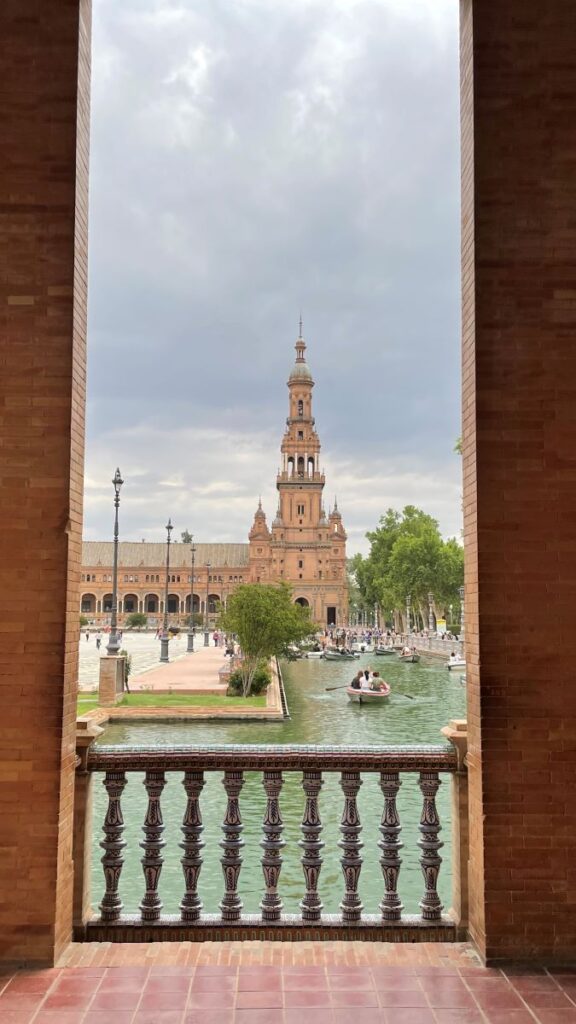
There is a beautiful Maria Luisa Park around the Plaza de España, which I also recommend walking through (at least on the way there or back). I was impressed by the pond with birds and the huge fichus trees, which are definitely more than 100 years old, judging by their strong, powerful roots.
Explore the Santa Cruz neighborhood
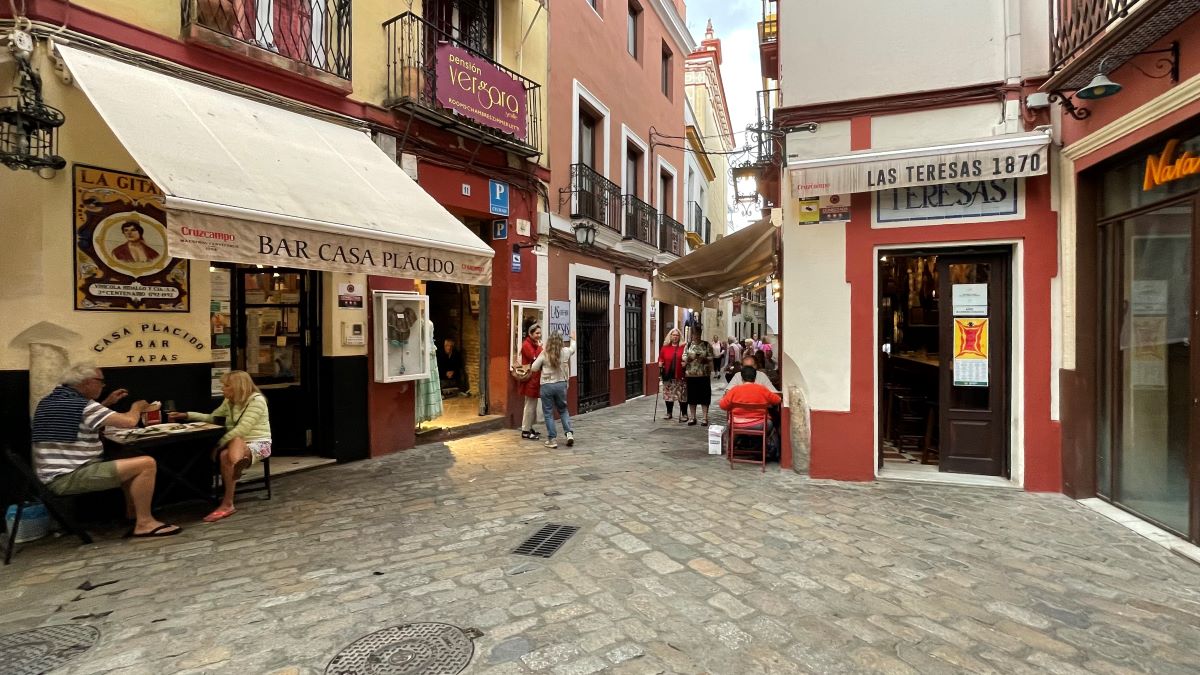
To see the old part of Seville, dive into the charming alleys of the Barrio Santa Cruz neighborhood. This old Jewish neighborhood is the heart of Seville, with shops decorated with Andalusian tiles selling everything from clothes to art, and tapas bars serving food and drinks throughout the day.
As you wander around, you will inevitably discover some of the city’s oldest churches, former palaces, and flowers blooming in orange-tree-lined courtyards.
Visit the best palaces of Seville
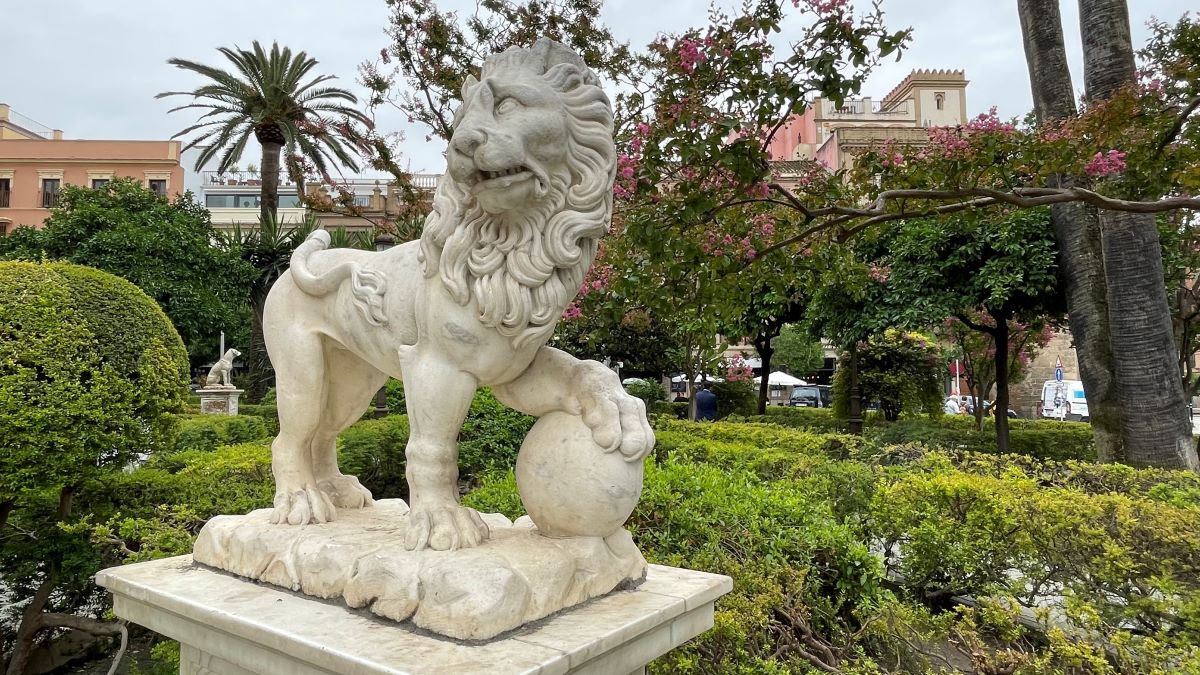
After walking in the fresh air of Plaza de España, it’s time to go to one of Seville’s palaces to see the beauty of Moorish architecture from the inside. In addition, three of Seville’s most famous palaces are free to visitors on Monday afternoons/evenings.
The Royal Alcázar is a magnificent blend of Moorish, Gothic, Mudejar, and Renaissance styles: its tiles and stucco rival the Alhambra Palace in Granada for exquisite craftsmanship. See the bougainvillea-filled gardens, royal pavilions, and cool tiled halls as seen in Game of Thrones, and in the morning, grab a bite to eat at the palace’s garden café while watching the local peacocks stroll by. Book free and paid tickets online in advance.
The smaller 16th-century Palace of the Countess of Lebrija has magnificent Roman mosaics, and the Palacio de Las Dueñas was the favorite palace of Spain’s most prominent aristocrat, the late Duquez de Alba. Free tickets from 4-6 pm in winter and 4-7 pm in summer. Check each palace’s website for up-to-date information.
Feel the awe of Seville Cathedral
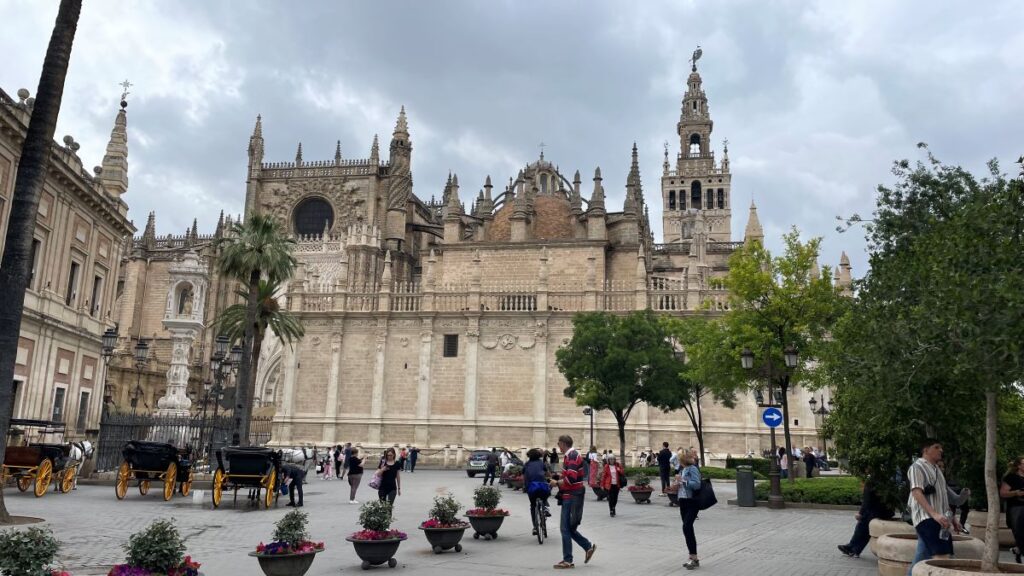
In Seville, you should definitely see the Cathedral of Seville – the largest Gothic cathedral in Europe, created to inspire awe among the faithful of the 15th century. The huge carved golden altar is a masterpiece. Other highlights include Columbus’s tomb and the Giralda Bell Tower.
The colossal scale of the basilica is impressive (it is the largest Gothic cathedral in the world), with high ceilings and endless amazing works of art. You should not miss the exquisite tomb of Christopher Columbus, which is lifted by four knights, and the ascent to the Giralda Tower, a famous bell tower that used to be a minaret.
Buy a ticket to the cathedral in advance to avoid standing in line. Entrance is free at 15:45 on Thursdays (tickets must be booked online in advance).
Seville mushrooms – Metropol Parasol
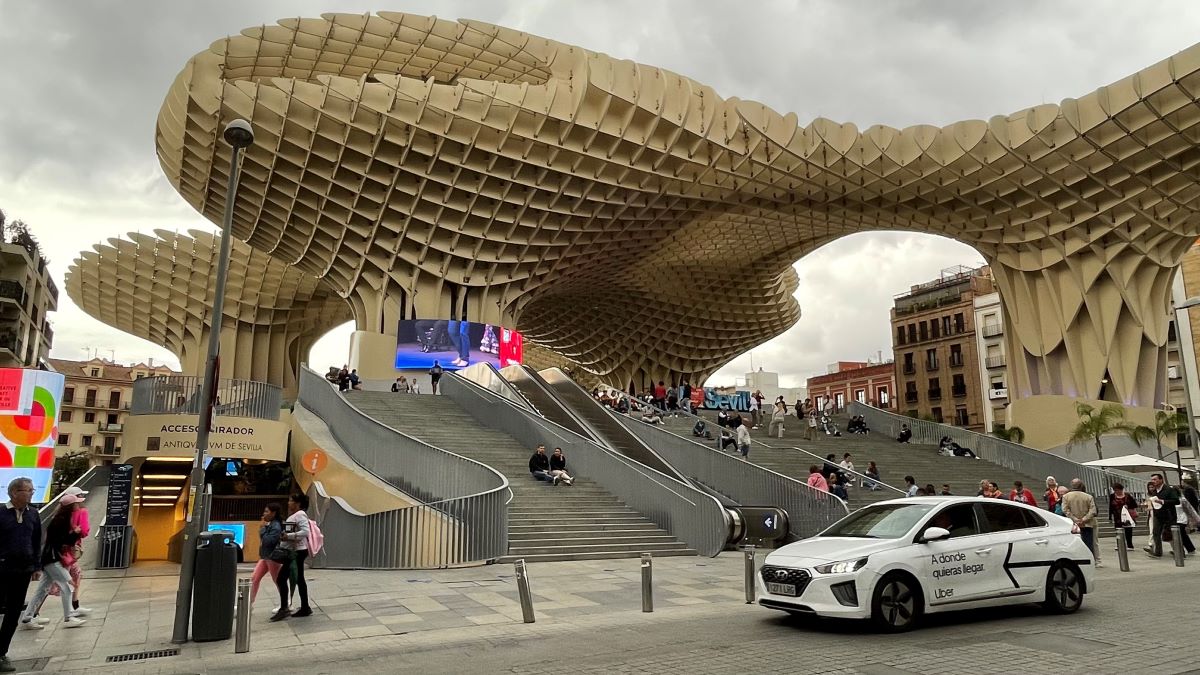
Then walk up Calle Sierpes, admiring the amazing array of fan and shoe shops, to Metropol Parasol. The building, which looks like six giant mushrooms – locals call it Las Setas (Mushrooms) – is the largest wooden structure in the world. Take the elevator to the top and follow the undulating walkway to see expansive views of the city’s rooftops, looking at panels that explain what’s where on the horizon. Tickets for Metropol Parasol cost 12 euros, buy them online on the website.
Walk along the Guadalquivir River embankment
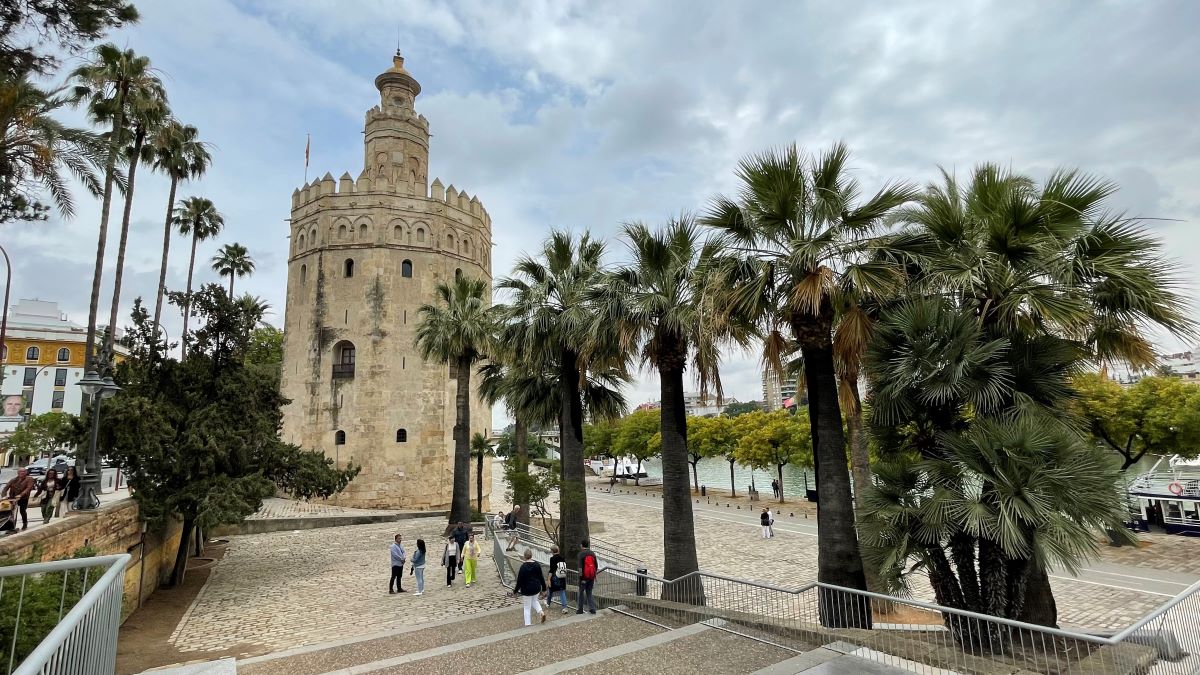
If you want to feel the atmosphere of the once-port city, head to the Seville waterfront. First, there is the Torre del Oro tower. This 13th-century Moorish tower in the old port is now a naval museum where you can learn about the city’s maritime heritage (kids will love the ship models). All the ships departed and arrived here during their voyages to and from the New World (including Columbus’s).
Secondly, take a walk along the Guadalquivir River in the evening sunlight. Stop for an ice-cold Cruzcampo beer and some tapas on the Mercado Lonja del Barranco terrace. This is a modern market along the river where you can grab a bite to eat or sit outside with a drink. At this gourmet market in an elegant Eiffel-designed building, feast on jamón Iberico, oxtail croquettes, and salmorejo with black squid (a chilled Andalusian soup).
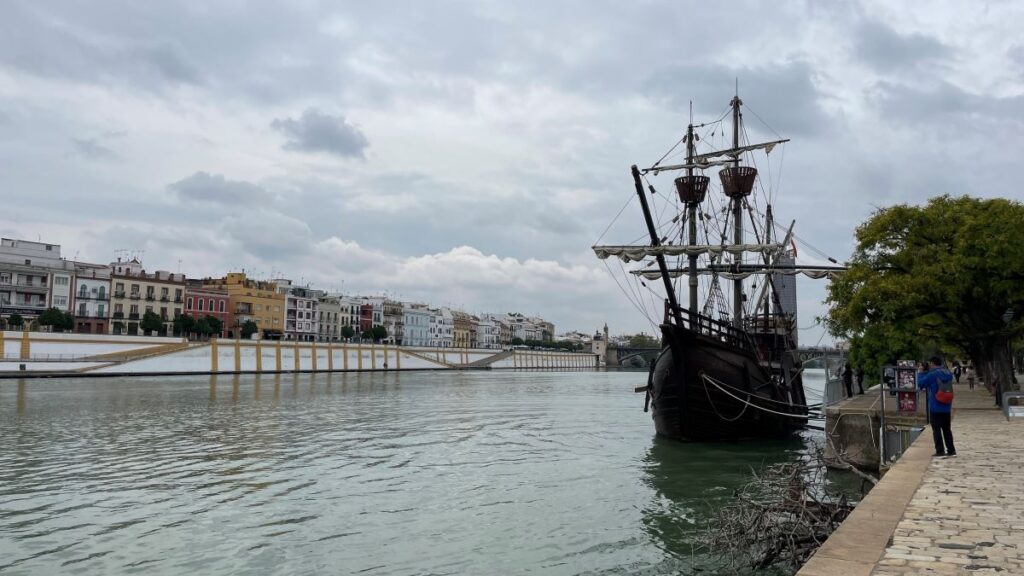
Next, cross the Triana Bridge to a simple gypsy neighborhood (where we lived during our stay in Seville) and continue along the riverfront to the city’s tallest building, the Torre Sevilla.
If you’re lucky and there are seats available, you can go up to the panoramic terrace on the 37th floor for a refreshing drink with a beautiful view. The glass-walled bar on top of the tallest building in Andalusia has predictably high prices (6 euros for a glass of wine), but they are worth it – you won’t see such a breathtaking 360-degree panoramic view anywhere else.
Visit Antigua Fábrica de Tabacos
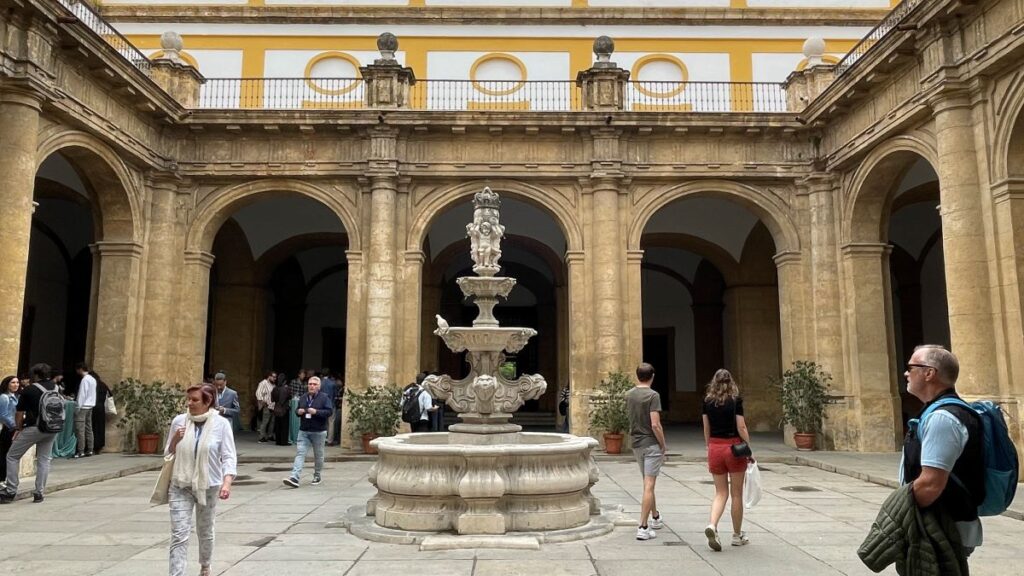
Much of Seville’s phenomenal wealth comes from its extremely lucrative monopoly on trade with the Americas, including tobacco. When the Fábrica de Tabacos opened in 1758, it employed 6,000 people. The women made cigars and cigarettes by hand, and Roma gypsies from Triana also worked here, inspired by the author of the opera Carmen, Bizet, who used the image of the fiery tragic heroine.
Today, the huge stone building is part of the University of Seville, and free exhibitions are held inside (we visited one of them.) You can join a free tour, usually on weekday mornings – check the CICUS website for up-to-date information.
Tip: there is an inexpensive student cafe and free toilets inside the factory – keep this in mind.
Flamenco evening show in Seville

We visited the Flamenco show in Cordoba. You can read about it here: Cordoba, Spain – what to do and see in two days. But if you want to see a real (not street) Flamenco show, you can do that in Seville too.
Watch an early flamenco show at the Casa de la Memoria. The intricate lightning-fast foot movements of the dancers will leave you breathless. In addition to the hour-long concert, you can see an exhibition telling the story of this Gypsy-Spanish music. Also you can see the dance costumes of Flamenco dancers. The ticket price is 20 Euros.
Or visit the converted coal factory La Carbonería in Santa Cruz, which hosts live flamenco performances every night. Check out the latest program on La Carbonería’s Facebook page.
Surfing tapas bars in the Triana area
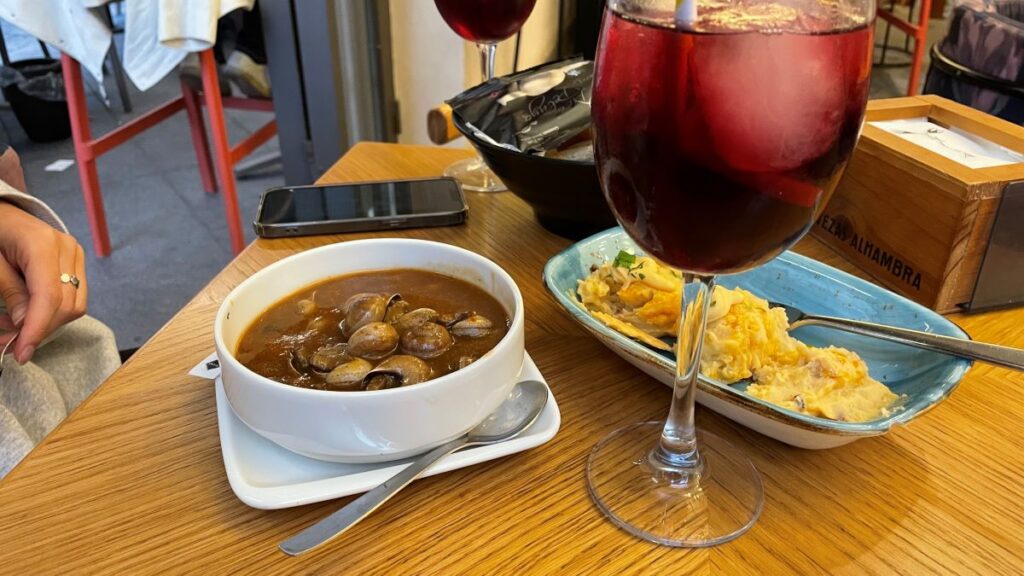
In the evening, go for tapas in the Triana neighborhood. It’s located on the other side of Guadalquivir – opposite the historic center. Once upon a time, sailors and workers lived here, and famous bullfighters and flamenco stars came from here. And now it’s the epicenter of evening parties and bars.
We went to Antigua Casa Diego, a tapas bar that doesn’t have an English-language menu but offers traditional Andalusian snacks. We especially liked the caracole snails in spicy sauce – it’s the season in May, so be sure to try them. Tapas in Seville cost an average of 2.5-3.5 euros, and two or three will be enough to fill you up.
Where to stay in Seville
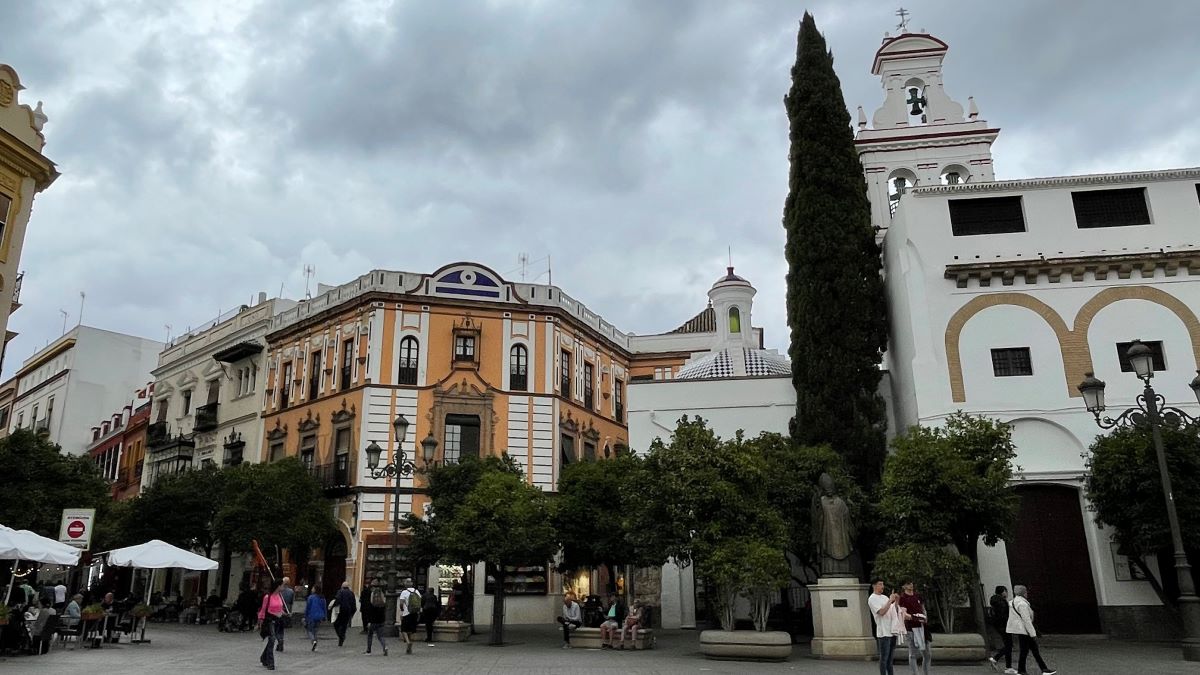
The best hotels and hostels are located in the Old Town, in the center of Seville. It’s also more convenient to get to the airport from here – the Especial Aeropuerto (EA ) bus. It runs every 30 minutes from 4:30 am of the night. But if your flight is at 6 am, you will have to call a taxi which costs about 25 euros.
- Apartamentos Reyes Catolicos 14≫ – is a self-catering apartment in the center of Seville. Excellent deal for those who prefer to prepare their own breakfasts and dinners.
- CASA17 Santacruz Suites≫ – is a great hotel with nice rooms and a nice price for the center of Old Seville.
- Hotel Alabardero≫ – is a hotel in a historic building with a beautiful patio. You can book without a prepayment if your plans change.
Getting to Seville
Seville’s San Pablo Airport is located by 20 minutes by taxi from the city center. It has direct international flights to more than 40 destinations, including London Stansted and Gatwick, Paris, Rome, Amsterdam, Brussels and Munich.
If you are planning to travel to Seville from other cities of Andalusia – it is convenient to buy a train ticket from the railway company Renfe. If the all train tickets are sold, it is just as comfortable to use the buses of the Spanish carrier Alsa.
It is convenient to search for a car for a road trip on Rentalcars.com. It has all the rental offices located at the country’s airports.
Useful articles and links:
- TOP city hotels in Dubai
- Ronda, Spain – 10 things to do in the white city on a cliff
- Winter in Dubai – a review of my trip