
Winter in Lisbon: what to see, where to go and what to see in the city and surroundings, how to combine walking with public transportation routes, what to bring from Lisbon.
Last winter, after visiting Porto, we traveled to Lisbon and Sintra. We wanted to see Portugal’s capital and the extreme westernmost point of Europe, Cape Cabo de Roca.

If you only have three days, there’s still plenty to see if you get your itinerary right and settle in closer to the center. The trick is that Lisbon is located on hills, and you have to combine attractions located in each neighborhood. And if you’re a slow walker, take public transportation.
Here are some city routes and recommendations for transportation and cafes in Lisbon.
Transportation in Lisbon

First, let’s deal with public transportation – it’s very helpful in reducing the time it takes to travel between areas of the city. Plus, it’s a real treat to ride vintage streetcars and funiculars, instead of stomping down slides and hills on your own.
And for those who like to walk a lot and for a long time – Lisbon will be a great workout for breathing and calf muscles. The city is spread over the hills and won’t let you relax ))))
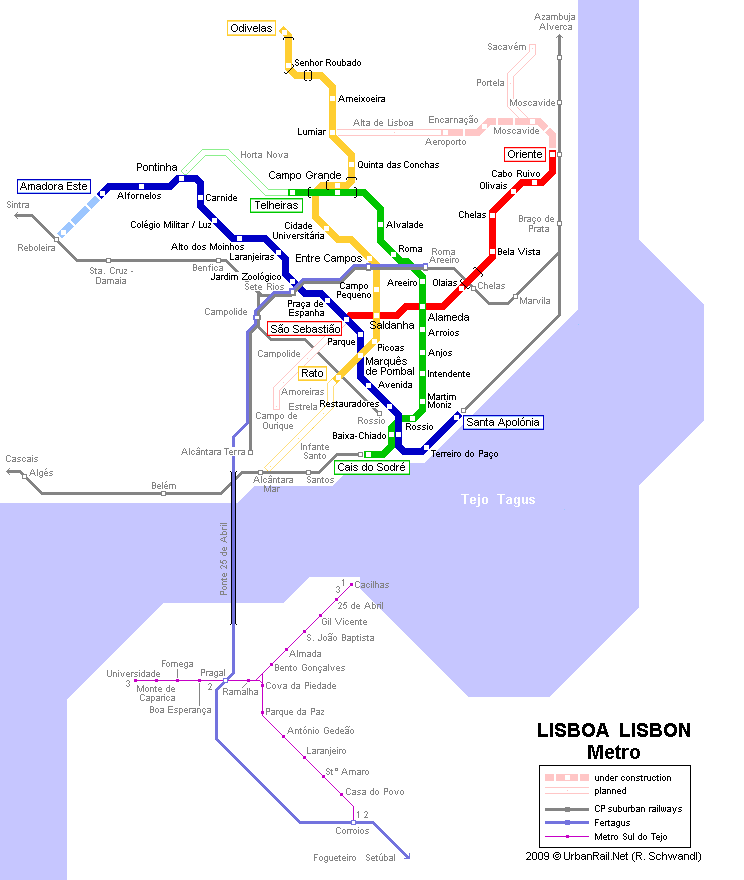
For those who, due to health or age, can no longer race up and down, I recommend buying a single Viva viagem card. The card costs 0,5 € and is valid for a year. Viva card can be bought in special machines and cash desks at metro stations, platforms and railway stations.
A separate Viva card is purchased for each passenger. When you enter the subway or bus, the card is validated – thus charging you for the trip.
What is the card for?
The Viva card is topped up either with trips or with a cash deposit – ( 3 to 40 €) via the Zapping system.
The first option is suitable for those who plan to travel occasionally rather than frequently – a regular prepaid trip costs 1.50€. One trip is valid for one hour from the time of validation. You can make transfers (including to another mode of transportation) within an hour.
The second option is more convenient, as a trip on the Zapping system costs less. 1,34 € around the city on the subway, 1,35 € by ground transportation, and to the suburbs (Sintra or Cascais). 1,90 €. In this case, the trip is also not more than an hour, but you will not be able to transfer from one transpoort to another for the same price – you need to validate the card each time and each time you will be charged for transportation.
If you’re in Lisbon for a few days and want to catch everything, buy a daily pass for €6.4. Simply put that amount on your Viva card, indicating on the machine’s scoreboard that you are buying a daily pass. The first turnstile or validator where you activate it will start counting down the next day. The next day, if necessary, top up the card with another 6.4 €.
The daily pass includes unlimited use of the metro, streetcars, including ancient streetcars, funiculars – elevators Lavra, Bika, Gloria. Having this map you can even go up the tourist elevator – Santa Jushta.
If you need to use the ferry across the Tagus River Transtejo, a daily pass will cost – 9,55 €.
If you plan to visit Cascais and Sintra on a daily pass – it will cost – 10,6 €.
Calculate in advance how beneficial these two types of passes are to you – it may be cheaper to buy separate tickets.
Remember that with a daily pass you can use all types of public transportation without limit!
Tram №28E – what to see on the rout

Don’t deny yourself the pleasure of riding the №28 tram, getting off at stops near major attractions:
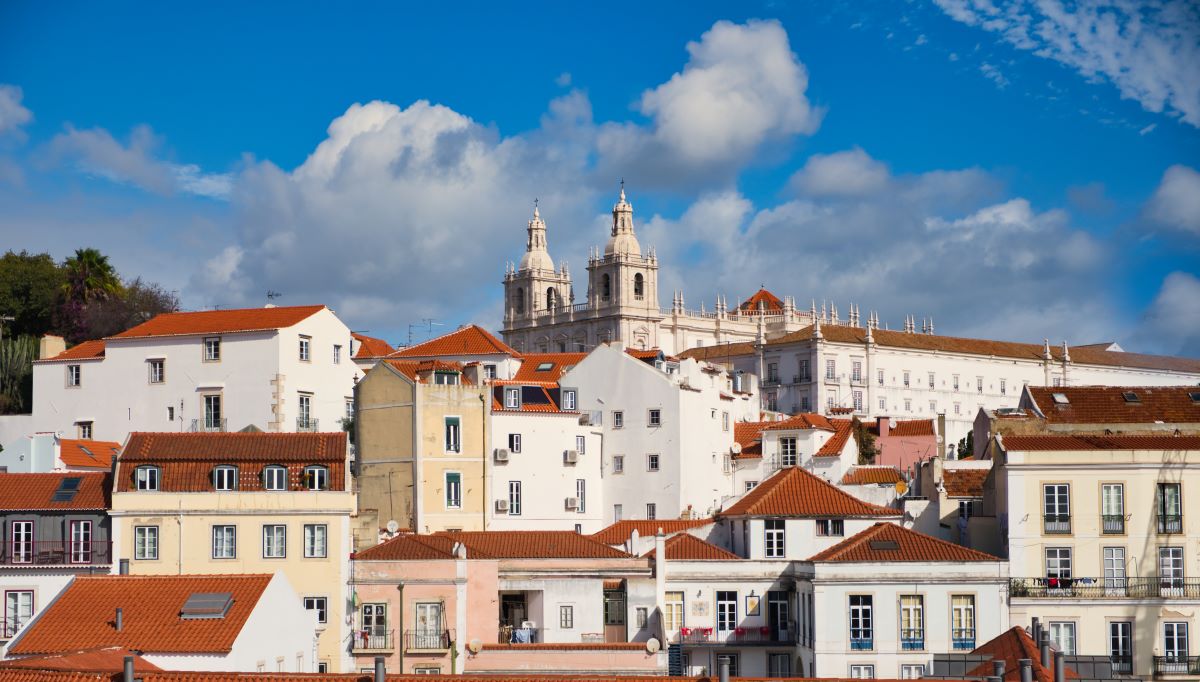
– St. George’s Castle overlooks the city from the top of the hill. The streetcar passes by, the summit itself will take a bit of a climb up ladders. The castle itself is an ancient ruin, of which only the walls have survived. But the observation deck at the castle is worth a visit – it offers a postcard view of Lisbon.
– The Santa Luizia observation deck, which offers the best view of Lisbon’s red roofs and its oldest part, the Alfama neighborhood.

Alfama
Descend the narrow staircases into the heart of Alfama and you’ll discover old Lisbon with crooked houses where people still live. Here, local grannies sell ginjinha, a cherry liqueur poured into chocolate shots, right out of the windows. Drink it and the colors become brighter and more cheerful with candies spills into your mouth – the price is 1-2 €.

Take the elevator back to the Santa Luisia observation deck and re-board the 28E tram to head down to the city center. This is where the front part of Lisbon is located.
On the way, you can stop by Lisbon Cathedral.

Get off the streetcar in the Place de Commerce at the Arc de Triomphe on Augusta Street. Here you will feel that you are in the capital – beautiful, pompous, royal.

– Not far from the square is the San Jushta Elevator, a beautiful structure designed to take locals up to their homes on the hill where the Baixa neighborhood is located.
Address: R. do Ouro, 1150-060 Lisboa.
The San Jushta elevator is a popular tourist attraction. That’s why there are huge queues outside it even in the evening. The observation deck at the top of the elevator can be accessed completely free of charge if you come there on foot from R. Dom Pedro de Menezes

And there are no lines for the funicular elevators, and you can ride it with a Viva daily pass. Get off at the Rua de São Paulo / Bica stop – here the Bica cable car terminus is hidden behind an inconspicuous door. You can ride it up and down.

And if you go to the opposite end of streetcar route 28E, you can see the Basilica of Estrela. Get off at the terminus at Praxeres Cemetery, located on the hill overhanging the April 25 bridge. From here you have a great view of the Tezha River and the opposite bank.
The cemetery closes at 4:30pm – don’t be late for sunset!
Recommended to read: Algarve – the best beaches in Portugal
The best on the Tram №15 route
Take streetcar 15 to the 25 April Bridge, which sprawls over the Tagus River and connects Lisbon to the suburb of Almada.

Under the bridge is a creative space, the LX Factory. The former factory site is now home to a huge number of stores and cafes. Street stalls sell hand-made items ranging from jewelry and clothing, to tableware and furnishings.

At the bridge you can walk along the embankment, see from afar the statue of Christ on the opposite bank. Walk to the futuristic building of the MAAT Museum of Art and Architecture. It’s a very unusual building. It has an observation deck on its roof, with views of the Tagus River and the 25 April Bridge.

The museum is within easy reach of the Santa Maria de Belém promenade. It is said that this is where the famous pâtel-de-natou cakes were invented. Café Pasteis de Belem claims to have the most proper pasteisches. Although they are delicious everywhere and are much cheaper than here (asking price from 2 € per piece).

In the evening, head to one of the cafes in the Bairro Alto neighborhood, which is home to many different bars, restaurants and stores. Fado are traditional Portugal ballads. You can listen to them in cafes or buy a ticket to the Tivoli Theater, where professional Fado performers perform on weekends (tickets from 20 €).
What to see in Lisbon’s suburbs

While in Lisbon you should definitely plan a visit to Cape Cabo de Roca, the geographical edge of Europe. It is a two-hour drive from the capital. There is a lighthouse on the cape, incessant waves and a relentless wind blowing. But what sunsets and ocean views!
– In addition to the Cape, it’s worth a day in the famous Sintra – a former royal country residence, with stunningly beautiful parks and palaces.
– The colorful Pena Palace is somewhat reminiscent of Snow White’s castle: red and yellow crenellated turrets, high walls and a huge park (admission 7,5 € in the park, 14 € park + palace).

On the neighboring hill is the castle and landscape park of Quinta da Regaleira with mystical underground wells, Masonic towers and grottoes (entrance to the park is 6 €).
Transportation to Cape Cabo da Roca: from Cais de Sodre station take the train to Sintra(2,25 € one way), then bus 403 from Sintra(4,1 €).

We went to Sintra and its surroundings by car. Renting a car in Portugal is one of the most inexpensive in Europe – a two-seater Smart cost us about 40 € for three days.
You can rent a car through an aggregator that selects the most interesting prices.
Recommend to read: 10 destinations for a day trip from Lisbon
Where to eat in Lisbon

The most popular tourist spot to eat Portuguese food is Timeout Market. This market is located in the Cais do Sodre neighborhood. The reconstructed 19th-century building houses dozens of food courts, where you can find dishes whatever your soul desires.
You can try everything from seafood, meat and vegetables to the famous Portuguese sweets are prepared here.
Please note: many restaurants offer specials of the day – you can eat for 10-15 € (includes a glass of wine or beer).

Be sure to eat at one of Alfama’s cafes. Nestled in one of the houses on the first floor is my favorite cafe, Lisboa Tu e Eu. Order the traditional sardines with jacket potatoes, beer and eat a portion of vegetable salad generously dressed with balsamic dressing. The price is 12 € for everything. Authentic atmosphere is assured. If all the tables are occupied, you will have to be careful not to elbow your neighbor.

Chain coffee shops A Padaria Portuguesa sells pastries to suit all tastes, coffee and freshly squeezed juices. Exceptionally tasty and inexpensive are the pastel de nata, Portuguese baskets with baked custard. A cup of coffee is €1.5, pastel de nata are €1 each. But in regular supermarkets, you can buy four of the exact same pastel de nata for €1. A set lunch of potatoes with chicken chop and salad costs 10 €.

At one of the local places-they’re called tasca. You can order a salad. At O Cantinho do Bem-Estar, a salad of the same name with tomatoes, onions, lettuce and fresh cottage cheese costs 4.5 €. Grilled dorada fish with vegetables and rice – 33 € (dish for two people). Shrimp in garlic-tomato sauce – 16 € per serving.
What to bring from Lisbon

In the Alfama neighborhood, local grannies sell Ginjinha right out of their windows. It’s a cherry liqueur that’s poured into chocolate shot glasses. A chocolate shot of Ginjinha costs 1-2€. A set – a bottle and 6 chocolate shots – from 8 €.
You can buy such a set at A Ginjinha shop (address: Largo São Domingos 8, 1100-201 Lisboa). During the day, there are lines lined up and in the evenings there is usually no one here. Open from 9:00 a.m. to 10:00 p.m.
Cork trees are grown in Portugal . Cork is a national treasure and trees are protected by law. Buy souvenirs made of cork: purses and cup holders, mouse pads and various kitchen utensils (from 2-3 €).

The souvenir shops sell canned sardines. A jar with the year of your birth can cost – from 14 €. There’s not much point in such a souvenir. But Portuguese sardines in oil, tomato sauce, and even chili sauce are actually very tasty. You can buy the same thing, but without the colorful packaging and in the supermarket at a price ten times lower – 1.5 €.
I was also carrying pateyshi – for those with a sweet tooth, it’s the best gift ever. At Timeout Market, you can buy these cakes in special shipping containers. Cost 1 € per piece, the cardboard box contains 6 pâtisseries. At the airport security check, they are let through without any problems and can be stored without refrigeration for up to three days.

Useful links to prepare for traveling:
Rent a car – inexpensive car rental options in DiscoverCars
If you’re planning Lisbon for a couple of days, it’s ideal to book accommodation on Booking.com
What else to read:
- Life hacks for finding tourist accommodation in Lisbon
- Cheap accommodation in Porto
- Beaches near Lisbon – where to relax, walk and surfing