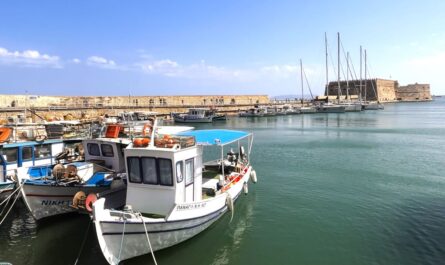

There is my impressions of a trip to Rome in winter for three days. And recommendations: where to go and what to see, where to eat delicious and inexpensive food, in which neighborhoods to stay, and what to see outside Rome.
For a long time I put off going to Rome – this was my eighth Italy trip. I felt like he was going to disappoint me. I’m so glad it turned out exactly the opposite way. Rome is absolutely “my” city, just like Istanbul or Lisbon. This is the place where I would love to come back as it will be possible.
So I decided to tell you what Rome is good in winter and what you can do in a full three days in this majestic city.
I recommend to read: Seven districts of Rome – where it is best for tourists to stay
Season – when is the best time to go to Rome

In general, in spring and fall it is ideal to go to Rome/ This time it is not cold and not yet hot.
Rome is hot in the summer, and the stones heat the city even more, exuding sweltering heat even at night.
In winter – fine, especially if you live in a northern country with real frost. And if you are looking forward to warmer weather in winter/ And if, like us, you get to Rome on sunny dry days, it will be just perfect!
We were lucky – we were in Rome in mid-December. The daytime temperature rose to +15 degrees, and as soon as the sun went down to +4. It was enough to throw on a light jacket and a scarf and then it was comfortable.
Also, in winter, Rome does not have many tourists and no queues – perfect, isn’t it?

If it is rainy, you of course will need an umbrella and a lot of good mood for walks. A traveling companion with whom you can drink wine in an Enoteca and warm up in an Osteria or pizzeria.
How to get to Rome
There are many airlines flying to Rome. The cheapest and most convenient option for us were Ryanair or Wizzair
How to get from Fiumicino Airport to the center of Rome
Fiumicino Airport is an international airport located 30 km from Rome. Despite being quite a distance from the city, there are several options for getting to or from the airport fairly quickly or inexpensively. Talking about the major modes of transportation.
The fastest is the Leonardo train

The fastest way, with no traffic jams and no stops, is the Leonardo high–speed train. Runs from Fiumicino Airport to Roma Termini Railway Station daily from 6:23 to 23:23. In the opposite direction – from Termini Railway Station to Fiumicino Airport – from 5:35 to 22:35. Travel time is 32 minutes. The schedule can be seen on the official website TraneItalia.
A ticket for a one-way trip costs 14 Euros. Children under 12 are free when accompanied by an adult with a ticket. No baggage restrictions. You can buy your ticket in advance online – on the TraneItalia website. Or at the railway station in a vending machine (you can pay by cash or bank card).
Fara Sabina train plus subway

There are connections to the airport, but it’s quite confusing and not the fastest way. A branch of the Regionale FR electric train line that runs in the direction of Fiumicino Aeroporto – Fara Sabina/Orte. The train makes the following stops in Rome: Roma Nomentana, Roma Tiburtina, Roma Tuscolana, Roma Ostiense, Roma Trastevere. From it you can take the metro or bus to get anywhere in Rome.
The ticket fare is 8 Euros and a single metro ticket costs 1.5 Euros.
The most inexpensive are the shuttle buses

There are shuttle buses from the airport to Rome from several companies: Terravision and SITBusshuttle.
- The Terravision bus is a direct, non-stop service to Roma Termini Railway Station.
- SITBusshuttle – also goes to Roma Termini Railway Station, but makes a stop near the Vatican. This is convenient for those who have booked a hotel or apartment near the Vatican.
The price of the ticket of the shuttle-bis is half of the Leonardo train. But the bus takes at least an hour, and maybe longer if there’s traffic. If you’re not in a hurry, you can save money.
The cost of a one-way trip is 8 Euros, If you buy a round trip ticket – 6 Euros each way. A round-trip ticket with an open date. That is, you can use it to return to the airport at any day and hour. You can buy tickets for the shuttle buses on this website.
Where is the bus stop at Fiumicino Airport?
At the end of Terminal 3 – follow the arrows to platform #12, 13,14 – buses to Rome are parked here.
Where is the bus stop at Termini Railway Station?
On the side of the train station at Via Giovanni Giolitti 38, near the entrance to the Savini Tartufi | Mercato Centrale food court.
How to get from Fiumicino Airport to Rome at night?
Again, there are several options. The first is the Cotral bus .
The airport stop is in front of Terminal 2. The bus to the airport leaves from the Piazza dei Cinquecento stop (opposite the National Museum) and makes the following stops:
- Tiburtina Station
- Cornelia Station
- Eur-Magliana Station
- Ostia – Piazza Sirio
- Ostia – Piazza Stazione
Schedule:
Weekdays: 1:45, 3:45, 5:45, 10:55, 15:30 and 19:05.
Saturday: 1:45, 3:45, 5:45, 3:30 and19:05.
More information on the Cotral bus company website.
As an option to order a cab in advance through the service KiwiTaxi – For a company of four people a cab will cost about 50 Euros. This is cheaper than the nightly cab fare that cost at the airport (from 70 Euros).
What to do in Rome in winter?
In the span of three days, we managed to explore three distinct itineraries. We dedicated the first two days to traversing Rome on foot, reserving our third day for a train excursion out of the city.
This approach ensured that we didn’t succumb to the usual fatigue that often plagues visitors to large urban centers. However, everyone can craft their own routes based on their unique preferences. Allow me to share the places that left the most profound impressions on me.
Vatican City and St. Peter’s Basilica

Our hotel was conveniently located just three blocks from the Vatican. As soon as we checked in, we wasted no time and headed to explore the Vatican by night. But access to St. Peter’s Square is not permitted during the evening hours. However, in the morning, you can leisurely visit the square and even enter St. Peter’s Basilica for free.

Visiting St. Peter’s Basilica during the winter months is a delight as there are minimal queues. However, for those planning a summer trip to Rome, I recommend an early morning visit to the cathedral. St. Peter’s Basilica opens its doors at 7:30 am, and taking this proactive approach will spare you from enduring long lines, affording you the opportunity to explore the cathedral with relative solitude.

Upon entering the cathedral, we were genuinely taken aback by its intricate decoration. It’s evident why St. Peter’s Basilica serves as the heart of the Catholic religion, as it emanates a palpable aura of power and authority, reminiscent of an institution that holds sway over a significant portion of the world. The treasures within, including an array of remarkable works of art, can be appreciated simply by stepping foot into this hallowed sanctuary.
You can buy tickets online to the Vatican Museums and the Sistine Chapel:
St. Angel’s Castle

Every day we walked past this beautiful place, but when I saw the castle from St. Angel’s Bridge – I cried for some reason. The sun was shining, and statue of the angel was looking at me, and I felt like I was in paradise. I guess I’m so influenced by the nice weather and beauty.
The castle St. Angel’s now is a museum which houses works of art and historical artifacts. This castle was originally the mausoleum of the Roman Emperor Hadrian. And then it became a prison, and the only person who managed to escape from this fortress was the Italian sculptor and jeweler Benvenuto Cellini.
By the way, there is a small souvenir market near the Castle of the Holy Angel – there are great postcards and nice little things that cost 1 euro each in winter.
The Colosseum – the symbol of Rome

Visiting the Colosseum is an absolute must, and I strongly recommend to buy a ticket to explore the inner chambers of this monumental structure. While the exterior of the Colosseum is striking, the interior reveals the incredible work of ancient architects and engineers, leaving you in awe of their ingenuity and craftsmanship.

It’s truly astonishing to think that in ancient times, they employed elevators to orchestrate scene changes within the arena of the Colosseum! Beneath the Colosseum’s arena, a labyrinth of concealed chambers housed an array of actors, including wild animals, humans, and gladiators.
What’s more, the arena was equipped with mechanisms that could raise trees onto the stage at precisely the right moment in the performances. This reveals that the Colosseum served not only as a gladiatorial battleground but also as a multifaceted theater stage. The Colosseum left a profound and lasting impression on me.

How much does it cost: 18 Euro ticket to the Colosseum and it also includes a visit to the Roman Forum. The ticket is valid for 24 hours. That is, you can split a visit to two museums into two days.
We went into the Colosseum at 3 pm and went into the Forum the next morning. I think it was good to separate two visits because we not overloaded with impressions and information.
Tickets are only sold online at the website. And remember – there are no big lines there in the winter!
Alternative Colosseums in Roma

Interestingly, Rome boasts more than one colosseum. The Marcello Theater, often confused with the Roman Colosseum, is the authentic Colosseum constructed in 12 BC. It served as the prototype for the world-renowned symbol of Rome—the Roman Colosseum. However, there are notable distinctions between the two. Today, the upper levels of the theater are fitted with rooms where people reside, making it an interesting juxtaposition with its ancient counterpart.
Among the Roman coliseums, there is another notable one called the Square Colosseum, commissioned by Mussolini. Situated in the EUR district, it offers a distinct architectural style. If you’re pressed for time but still want to catch a glimpse of it, you can spot the Square Colosseum from the shuttle bus that shuttles you to and from the airport. It’s clearly visible from the road, allowing you to appreciate its design without making a dedicated visit.
Pantheon
Pantheon – translated from ancient Greek means temple of “all the gods”. It is the only ancient temple in Rome that has survived to this day in almost pristine condition. Inside is a fantastically beautiful spherical dome, which legend has it helped Nicolaus Copernicus finally formulate his heliocentric theory of the structure of the universe.
Roman ruins and SEALs

Do you know what struck me most about Rome? A fusion of historical and cultural layers. How ancient columns prop up modern buildings, and how ancient Roman pieces of aqueduct fit into new homes, emphasizing the connection of the times. Walking around the city you come across Roman ruins here and there. And some of the ruins are home to dozens of cats.

In Piazza Largo di Torre Argentina you can hang out for a couple of minutes looking at the ancient Roman columns. And trying to count the number of cats that live among the ruins.
Viewpoints in Rome
As everyone knows, Rome was built on seven hills. It makes sense to climb some of them to see the red roofs, domes of cathedrals, spires of columns and tops of the most important sights of the “eternal city”.
We walked around a few Roman hills, with cool views of the city. All of them are free and if you want, you can manage to get around them on foot if you’re only in Rome for two or three days.
The dome of St. Peter’s Basilica

From here you can get the most stunning view of Rome. And the paid climb to the cathedral dome is worth the money – trust me!
We decided to go up to the dome of the cathedral to see Rome from above. There is a fee to climb the dome – 8 and 10 Euros. For 8 Euros you can walk up 551 steps, for 10 Euros you can take an elevator up to the dome and then walk up another 231 steps.
The view from the dome of St. Peter’s Basilica over Rome is spectacular, especially in good weather. There was no line at all, very few people on the dome either. We spent more than half an hour gazing at the beauty of Rome and no one interrupted us, no one pushed us – once again I was glad we came to Rome in winter.
Pincio Hill and Piazza del Popolo

Pincio Hill – located just above Piazza del Popolo. There is a beautiful park upstairs, which is so huge that it would take hours to walk around it. We only walked through the park along the observation deck as there wasn’t much time. Saved it for next time.
Spanish stairs

From it, the view of Rome is an overgrown picture. But if you walk down from Pincio Hill, you’re sure to get to the top of the stairs. Take a picture at the top landing, then go down and compare the view of the stairs from below. And, as they say, feel the difference.

In Rome, as in Venice now there are many prohibitions. Now, if you want to take a photo while sitting on the stairs – don’t be surprised if the police chase you down. Until a few years ago, you could sit on the Spanish Steps and take a picture with your legs stretched out spectacularly. It is now banned and there are police on duty near it at all times.
Capitol Hill

It offers different views – depending on which side you look at Rome from. If you climb the steps of the monumental Vittoriano, the view is of Piazza Venezia and the ruins of Trajan.
If you go around the side of the Capitoline Square and go around the Palace of the Senators, you will get a beautiful view of the ruins of the Roman Forum. Yes and the square itself, designed by Michelangelo is located on a hill, before climbing a beautiful view of the staircase and statues.
In the square is the Fountain of the Goddess of Rome in the Capitoline Square. It is framed by two figures symbolizing the rivers Nile and Tigris.
Palatine Hill

You can only get on it if you buy a ticket to the Roman Frum and Colosseum. But I’m sure you will – to visit Rome and not see the Colosseum would just be sacrilege. So, the Palatine Hill is on the grounds of the open-air museum, the Roman Forum. The view is awesome! The Colosseum is visible, the Arch of Titus and the all-too-familiar ruins of the ancient Forum will be at your feet.
Janiculum Hill
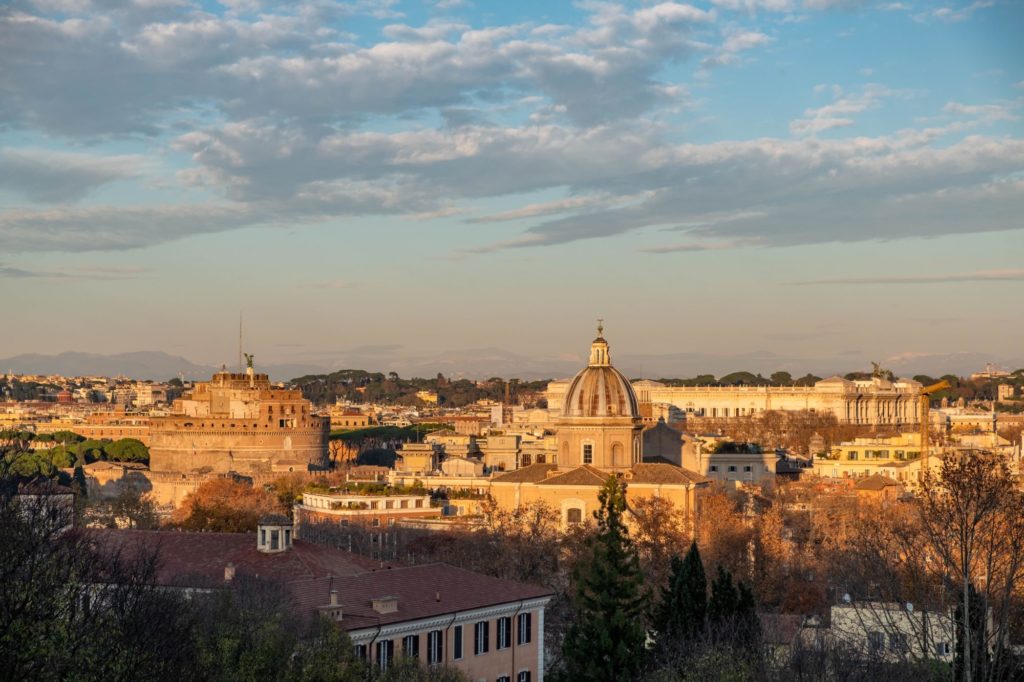
Above the pretty neighborhood of Trastevere is the picturesque park and the Janiculum Hill. It has, in my opinion (and in the opinion of many Romans, for that matter) the best view of the city.
It’s worth climbing up here not only for the almost panoramic view of the whole city. Upstairs is one of the most beautiful fountains in Rome, the Aqua Paola Fountain, which is as beautiful as the Trevi Fountain. Indeed, tourists don’t know about it.
Roman fountains
The fountains are another of Rome’s ornaments, worth stomping the streets and climbing the Roman hills for. We didn’t get to see all the Roman fountains – nor was that our goal. But some did see it.

Trevi Fountain is the most famous, popular, hyped. It is difficult to photograph in winter because of the low sun and harsh shadows. There were not as many people at the fountain as there are in the summer and tourist season. The huge fountain is striking primarily because it is squeezed into a small square and flows out of the Palazzo Poli building.
Attention: from the 1 of Friday Rome introduces a fee for visiting the Trevi Fountain

Turtle Fountain – located near the Jewish Quarter in the small and cozy Piazza Matei. Very nice and not pompous.
The Piazza Barberini is home to the Triton Fountain, as chic and sprawling as the square itself.
From eating spiritual food to enjoying Italian cuisine
Where to eat in Rome? Oh, it’ll be good anywhere! Generally speaking, Rome and food do dangerous things to those who like to eat a lot and a lot. I thought I was going to burst from gluttony!
I’ll tell you where it was delicious for us, and also where it was tasty and inexpensive.

Breakfasts in Rome are usually a cup of coffee and fresh pastries, croissants included. In general, I love Italy also for the fact that in any hole they will make you a good classic coffee. Not the third, fifth or tenth wave, but the classics: if cappuccino, then with the right foam, if espresso – its sip will be scalding bitter with a slight sourness, but such that it will put a dead man on his feet.

I also adore Italians for not drinking coffee on the go. Yes, I do that myself often in the park walking my dog, enjoying the walk. But I don’t like to drink coffee on the run, rushing through errands. And Italians do not drink it on the go – only in cafes, standing at the counter – el banco, or at a table, lounging in the warm sun, but paying coperto – a percentage for service (2-3 Euros per person).
So where to eat in Rome?
Ristorante Carlo Menta (Via della Lungaretta, 101) – in the Trastevere neighborhood. Well very tasty and very democratic prices. Pasta, pizza, lasagna, antipasti and draft wine. We had 20 Euros worth of food rolling out of the restaurant. Be aware, there may not be seating – students and locals come here for lunch and dinner.

Bibi Brace (Via Germanico, 170c) – This osteria was two blocks from our hotel near the Ottaviano metro. Tiny and almost homely, cooked by the owner behind a glass partition. Roman cuisine, but with an unconventional approach. I took pasta with black truffle, Tolik chose braised tripe – fantastically delicious! The average check is 35-40 Euros for two people with draught wine.
Pasticceria Boccione (Via del Portico d’Ottavia) – Kosher pies in the Jewish Quarter. The bakery operates a takeaway, there may be a queue! Ricotta and cherry pies – mmm, delicious!

Baccanale (Piazza Campo de Fiori, 32) is a great restaurant in the Ponte neighborhood, located in a lively square with a market and flea market in the mornings. It’s a very combative place, but that’s the Roman flavor. Delicious and relatively inexpensive – artichokes in Roman style for 5 Euros, pasta carbonara – 12 Euros, half liter carafe of wine – 8 Euros.
What are the prices of food in Rome’s cafes and restaurants?
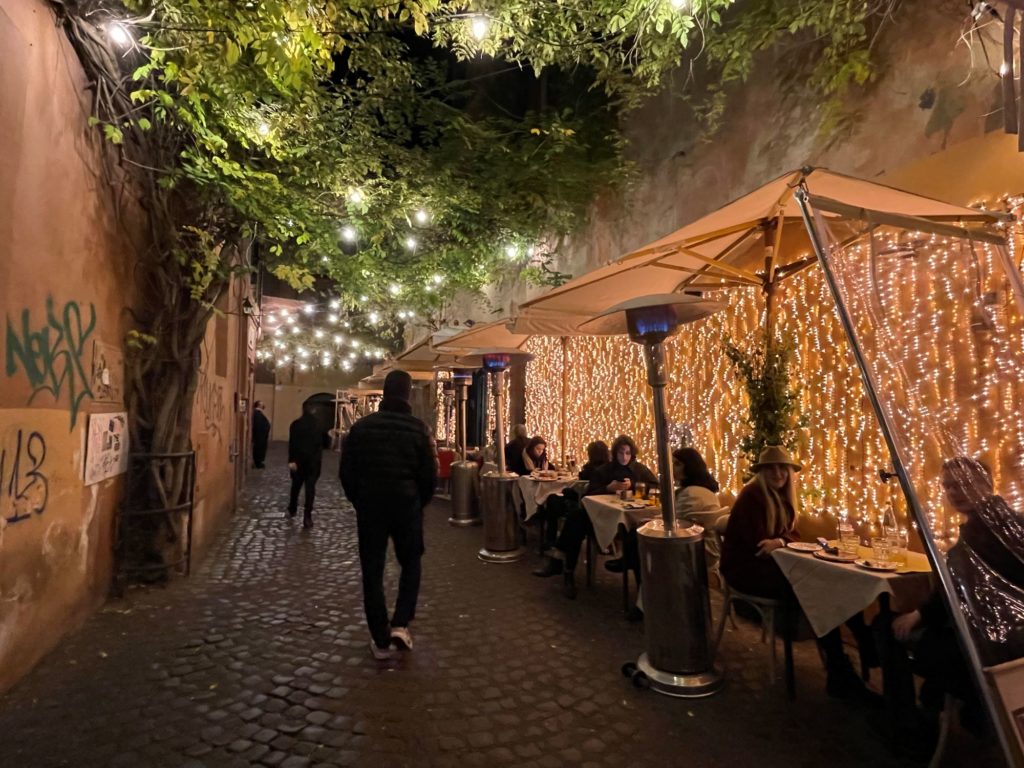
I can’t say that restaurants in Rome are very expensive. The average check for two people with a hot dish, appetizers and wine was 30 Euros. One tourist restaurant with a great view on the observation deck – came out to 50 Euros. But we realized that we were paying for the view, although the food was above reproach (pheasant stew with chestnuts – 10 Euros, wild boar stew – 10 Euros).
- Coffee – 1-2 Euros depending on the view from the cafe
- Pizza – 8-10 Euros
- Pasta or risotto – 12-15 Euros depending on type
- Antipasti: carpaccio, artichokes, marinated olives and anchovies, Caprese salad – from 5 to 10 Euros
- Meat or fish dishes – 12-15 Euros.
In Rome (as in all of Italy), almost all establishments have specific lunch and dinner times: lunch from 12:30 to 15:00, dinner from 19:30 to 22:00. Many establishments close forsiesta from 15:00 to 19:00 or 19:30. But many tourist cafes and eateries are open non-stop.
Where to stay in Rome – which neighborhood is best for you?

The most budget-friendly option is hotels near Termini Station. But this place is, frankly, dirty and kind of fussy and uncomfortable. Although there is a selection of nice 3-4 star hotels with good service. Only every morning you’ll have to go outside, and it’s not very cozy. But the transportation is excellent: buses to the airport, trains, subway, bus stop of many city routes right in front of the entrance to Termini Railway Station.
Hotels in the center – around the Trevi Fountain and the Spanish Step s will be more expensive. But the atmosphere here is nicer too – everything is conducive to walking.
We stayed near the Vatican – in the respectable Prati neighborhood, but slightly away from the center and main attractions. Our hotel was just off Via Cola di Rienzo, a favorite shopping spot for Romans. Very good choice: convenient infrastructure – Ottaviano metro and airport shuttle stop. Plus it’s a 15 minute walk to the Vatican and Castel Sant’Angelo.
Where would I choose a hotel next time? Definitely either in quiet Trastevere or in the Campo dei Fiori area. It’s totally authentic Rome, with quiet courtyards, cozy narrow streets. It’s the kind of Rome that few tourists see – there are more locals living here, renting out apartments and not many hotels.
I recommend reading it:
- Venice on your own in three days
- Sicily itinerary by car
- Tropea – complete guide about the rest of the best beaches of Calabria, Italy

Useful links for travelers:
Rent a car – inexpensive car rental options in DiscoverCars
Hotels – traditionally booked through Booking
Railroad ballets in Europe are conveniently searchable on Trainline